READ
Rowan Vale 是一个小海港镇的码头修复工人,这是他普通而真实的一天:清晨咖啡、湿木板上的工作、午休、黄昏码头、酒吧日记、回家与狗相伴,以及假期时学会暂时放下修缮的手。
Cover Feature — A Harbour-Repair Man
The Harbour, Slowly Lighting Up
Rowan Vale 是一个小海港镇的码头修复工人,这是他普通而真实的一天:清晨咖啡、湿木板上的工作、午休、黄昏码头、酒吧日记、回家与狗相伴,以及假期时学会暂时放下修缮的手。
TAt half past six in the morning the harbour has not fully woken. Fog drifts up off the water, wearing the masts down to pencil lines, turning the distant lighthouse into a pale grey smear of light. The café windows are beaded with condensation. Rowan Vale sits by the glass, a cup of black coffee in his hand, the local newspaper spread on the table, still carrying the smell of fresh ink. Two colleagues argue beside him about the weather, about a dock plank that worked loose again yesterday. He glances up now and then, adds a word in a low voice, then lowers his eyes again.
His breakfast is always more or less the same: eggs, toast, coffee that is too strong. He does not like to talk much, but when the others laugh he allows himself a small laugh too — one that never quite reaches his eyes, just a brief movement at the corner of his mouth, enough to acknowledge the conversation. Outside, the first fishing boat moves slowly out of the harbour. The diesel engine's low, steady note comes through the glass, like the harbour clearing its throat at the start of every morning.
The wind comes up off the water mid-morning, carrying salt and the smell of wet timber. Rowan kneels on the damp dock planks, one hand pressing down on an old pile, the other checking whether a brass fitting still grips. His toolbox lies open beside him, a pencil tucked behind his ear, the back of his gloves chalked with sawdust and the first rust of the morning. He works slowly, but steadily. Each screw, each knot, each crack gets a second look — as if he is having a private conversation with that particular piece of wood, making sure it can still hold.
Others call it slow. He calls it responsible. Out here by the sea, things that are only roughly right get torn apart by storms. He has seen it happen: one bolt not tight enough, one knot improperly tied, then after a big wave a fishing boat drives into a railing that has come loose. He says none of this aloud. He just gives every screw one more half-turn, checks every knot one more time.
Section 08 — Off Duty
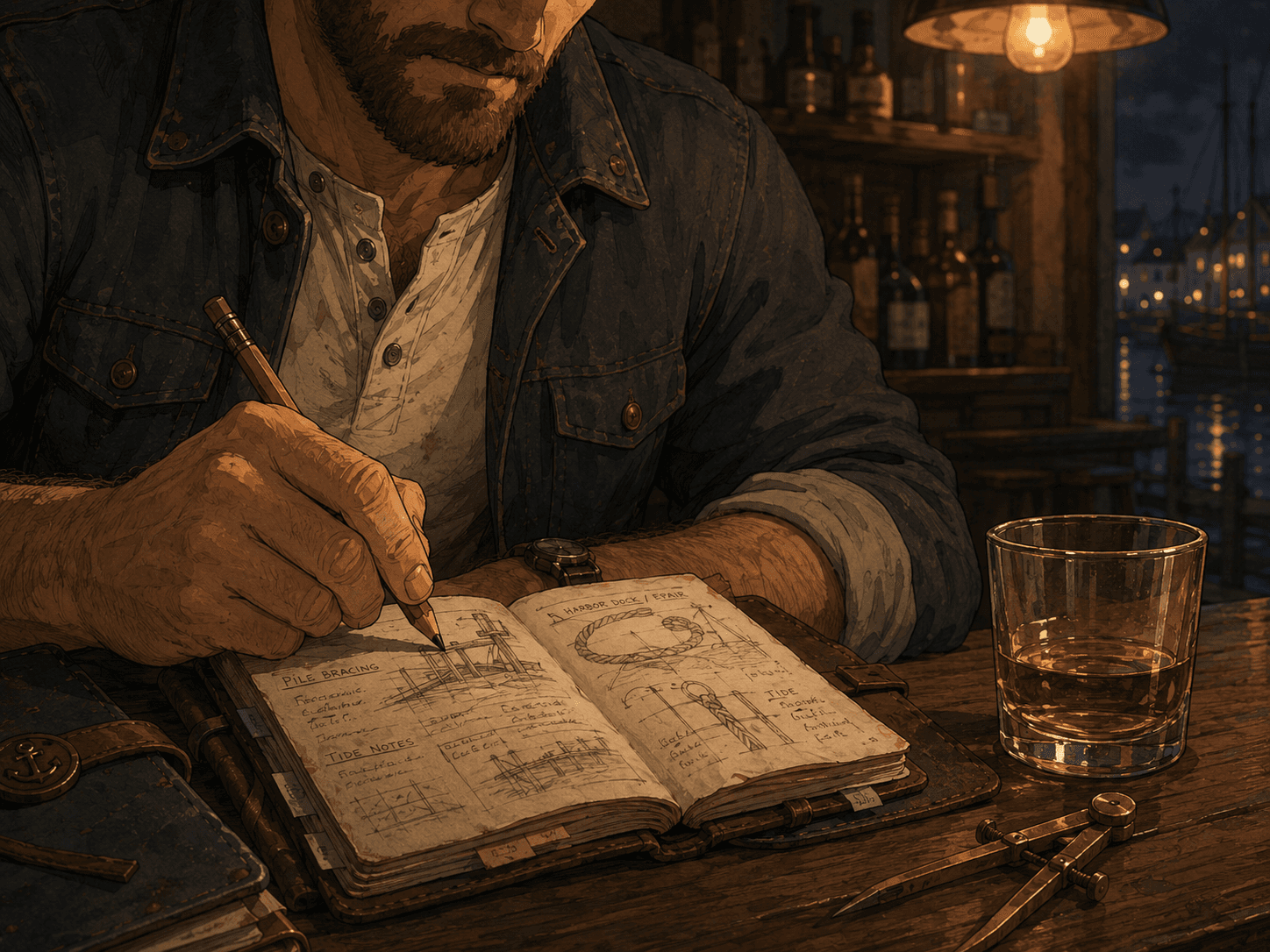
The Day He Learned to Stop Fixing
On the one day nobody needed him, Rowan Vale spread a towel on the beach, lay down, and spent the first twenty minutes checking a crooked railing in the distance. Then he put his arm over his eyes. The sea did not ask anything of him. The sun did not ask anything of him. He stayed.
This is how he learned to take a holiday: inspect first, then allow himself not to repair. The wind carried away the smell of fresh paint and left the wood's true colour behind — salt-bleached, honest, unhurried. He fell asleep to the sound of waves turning pages.
Off Duty · the beach, a green swimsuit, and a railing he decided not to fix
He believes broken things can be repaired. Wood can be replaced, hinges re-oiled, knots re-tied. People may not be quite so simple — but he tries anyway.
Seven Years on the Same Docks, and He Still Says Good Night to the Water
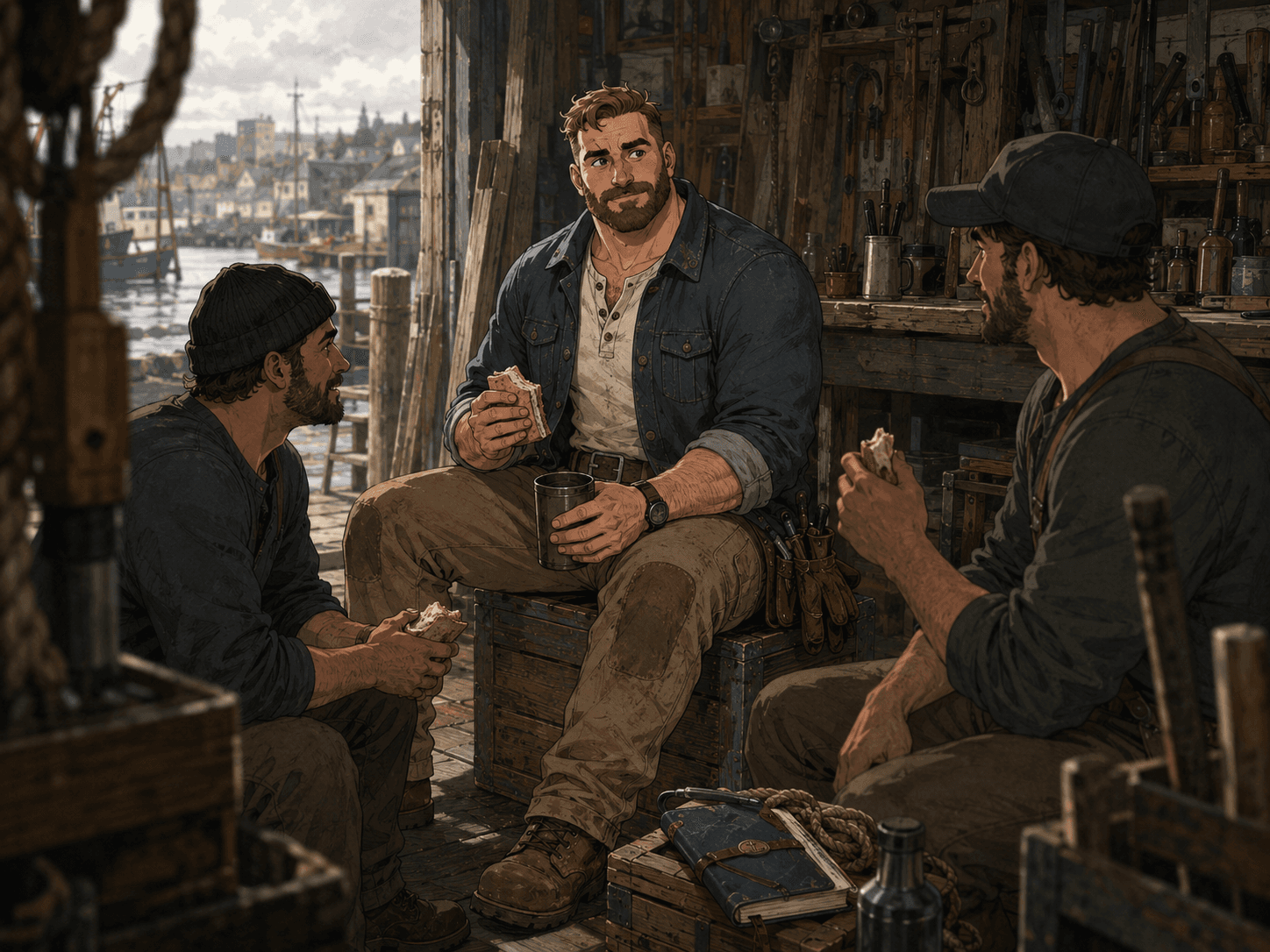
Lunch break is only twenty minutes. Inside the repair shed, a temporary rain sheet has been rigged overhead; tools hang from every wall; ropes lie coiled in the corners waiting to be needed. Rowan sits on an overturned wooden crate, sandwich in hand, a thermos on the planks beside his boot, threading a thin ribbon of steam. Two colleagues are running through the jokes from last night at the bar. He listens with a slight frown, as if uninterested — though actually he is just waiting for them to finish. After a moment he passes the other half of his sandwich to the young new worker without any comment, saying only: the wind will pick up this afternoon, don't go up on the scaffolding on an empty stomach.
The young worker takes it looking slightly stunned, uncertain whether to say thank you. Rowan has already bent back over his own half, biting in. The conversation ends there. That is the way he shows he cares. He is not good at explaining things; he mostly just fixes whatever needs fixing.
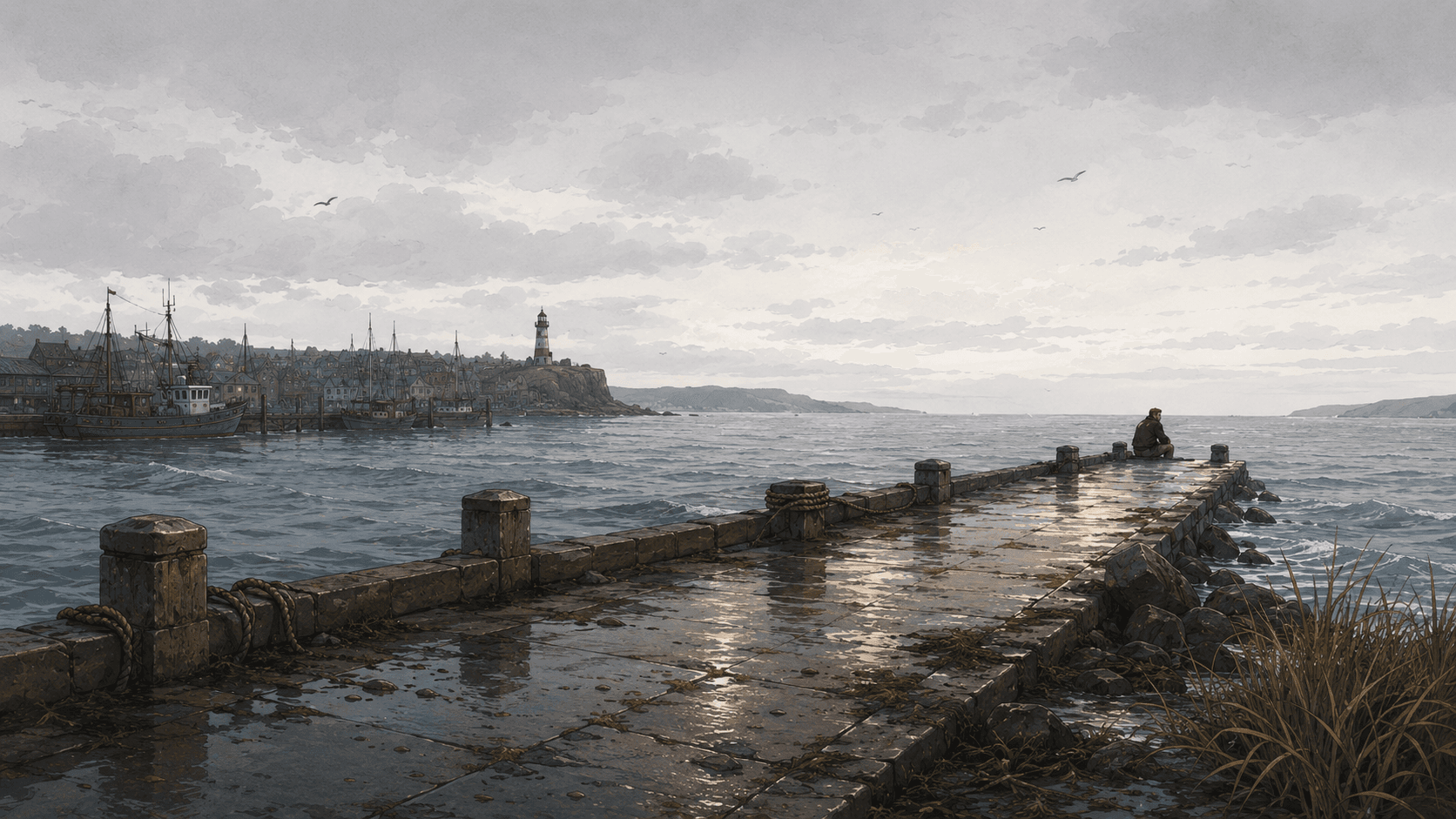
When the sun goes down the dock finally goes quiet. Workers drift off one by one; their footsteps on the planks grow faint and then disappear. The water slowly tears the orange light apart, again and again. Rowan leans against the railing with a coil of rope over one shoulder and does not leave immediately. He does not often say he is tired, but he stands there now, waiting for all the footsteps to fade, letting the wind move across the scar on his face, until he has turned himself back into someone who is ready to go home.

CREATE
How This One Was Made
From a character sketch to six finished plates: fix a style, draw three boards, keep the same man across every frame.
A Quiet, Lived-In Hand

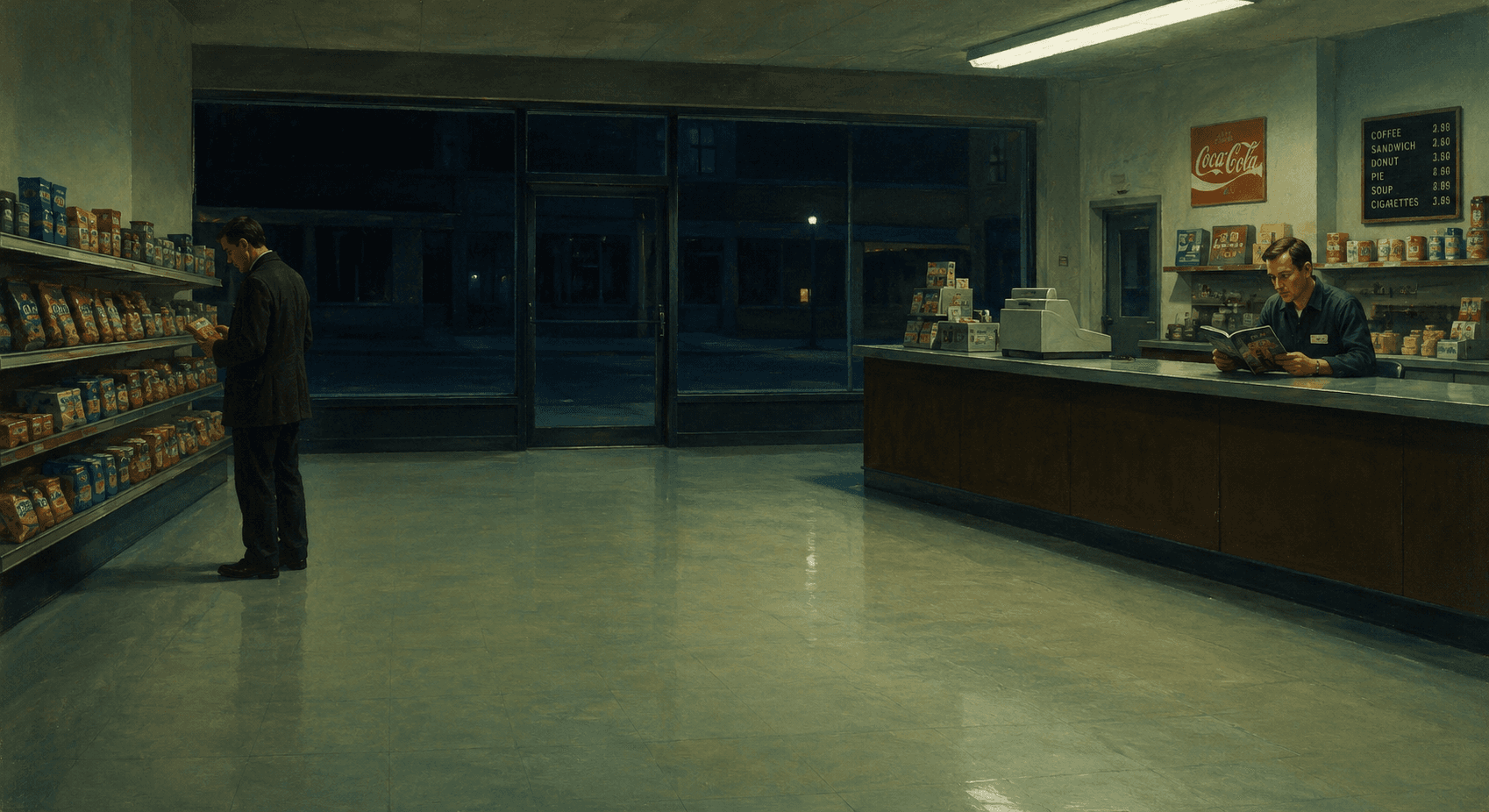
The illustrations carry the weight of damp timber and cold coffee rather than pictorial drama. Lines are unhurried, shadows earned rather than imposed. Every spread aims for the feeling of a page torn from Rowan's own field repair notebook — salt-edged, smudged at the margin, honest about its subject. The palette is the harbour's own: grey-blue fog, rust-warm lamplight, the amber of a whisky glass in a small bar.


Character · World · Composition
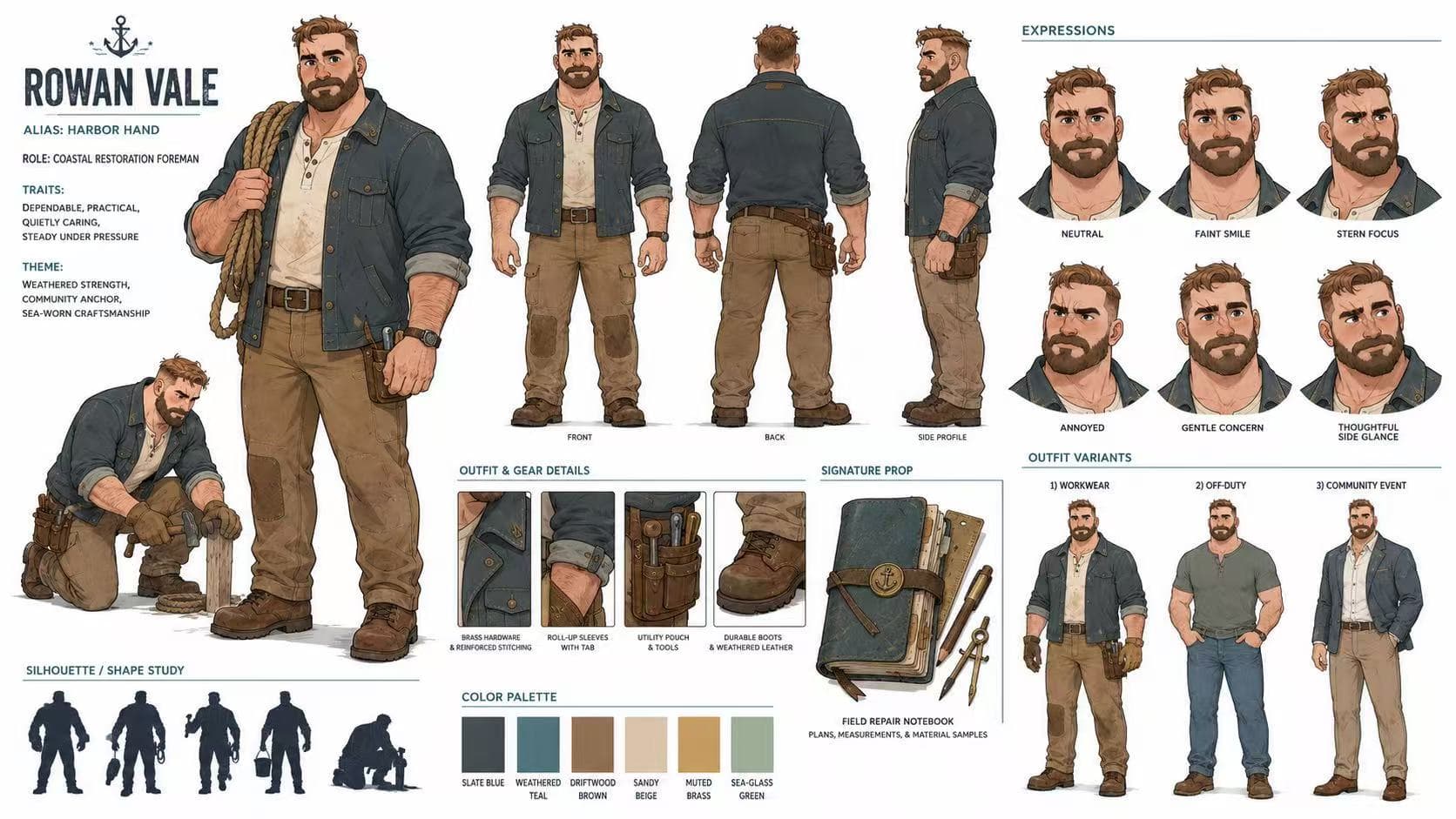
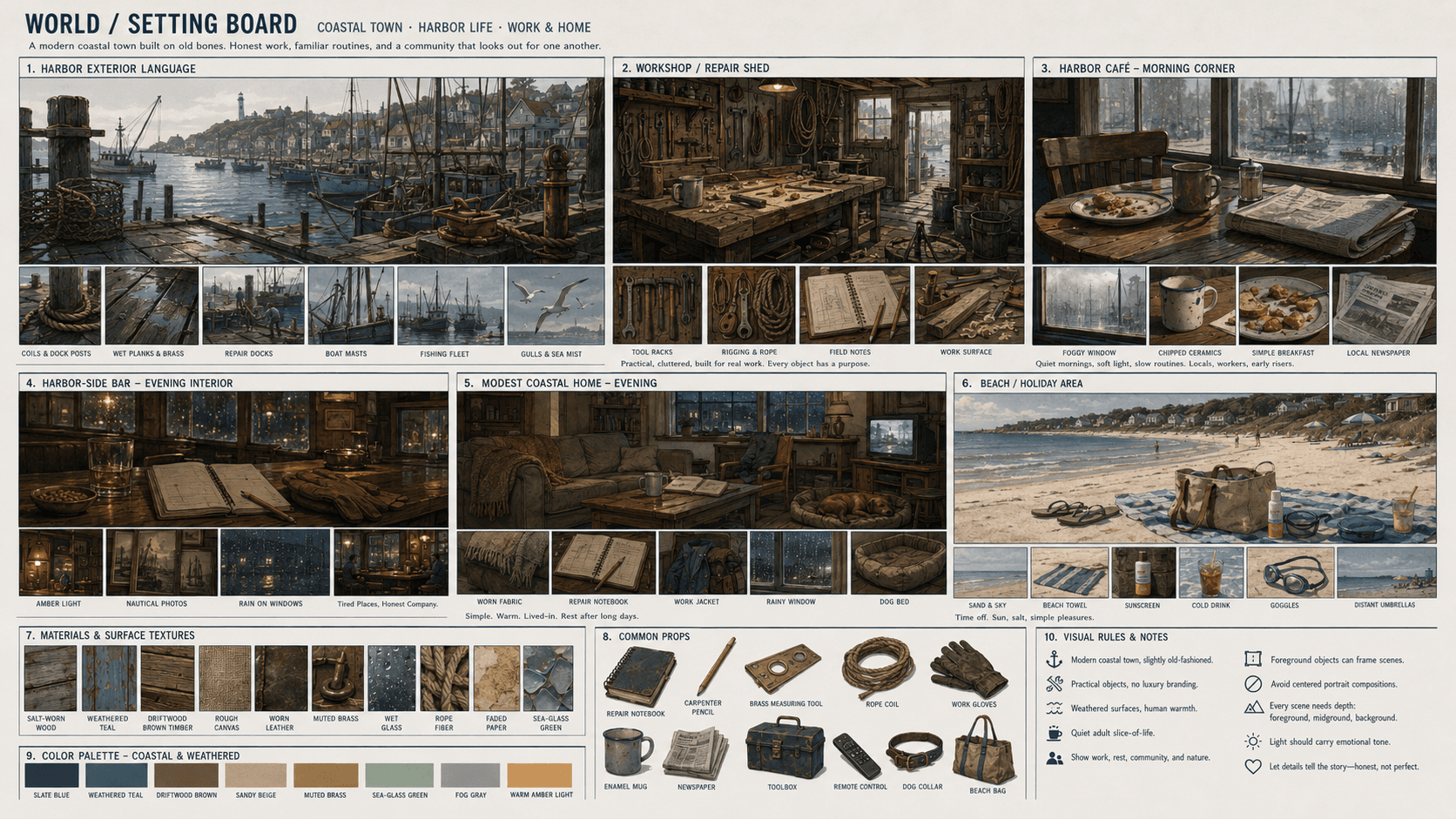
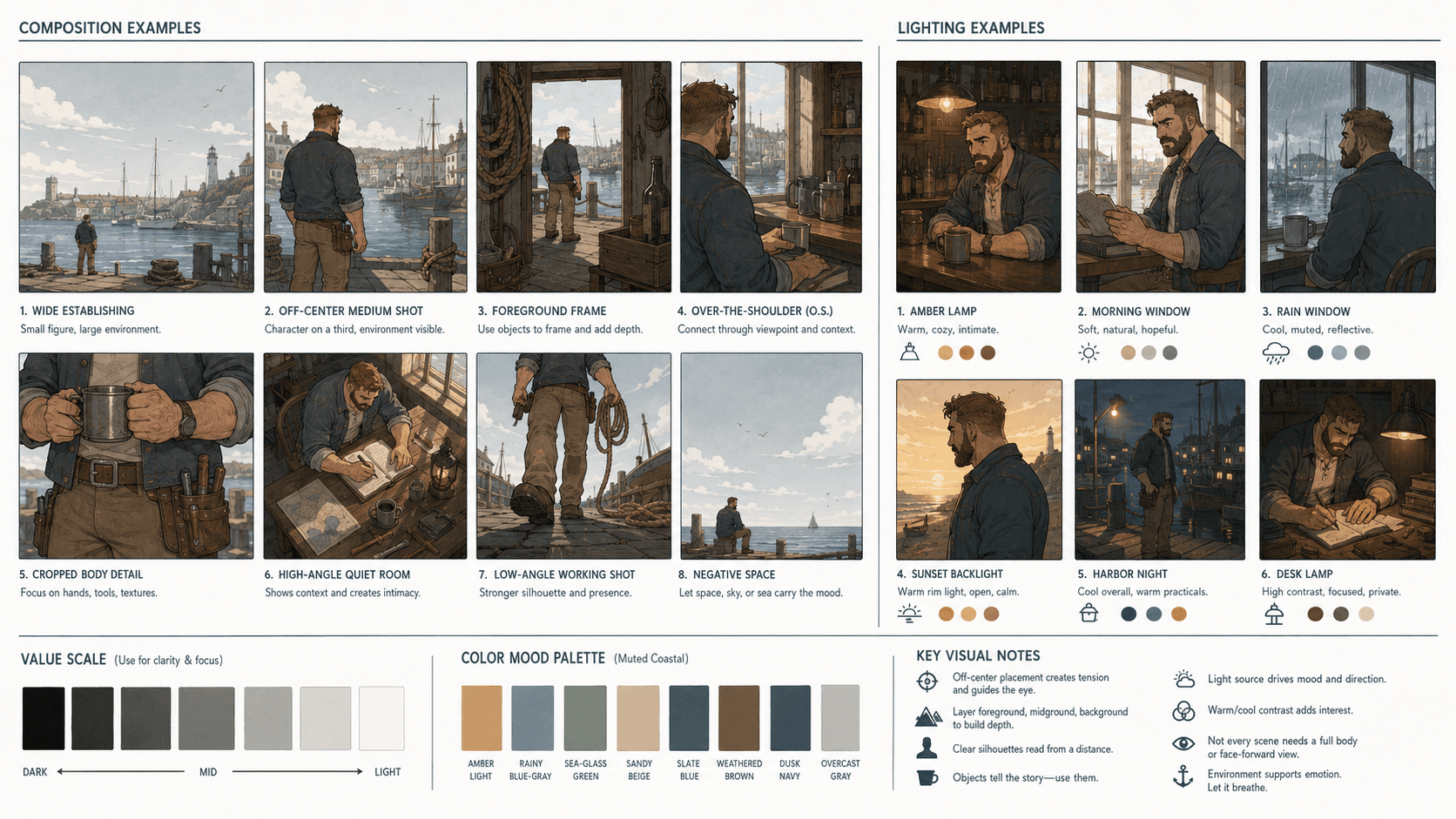
Process Credits
Bound at Last
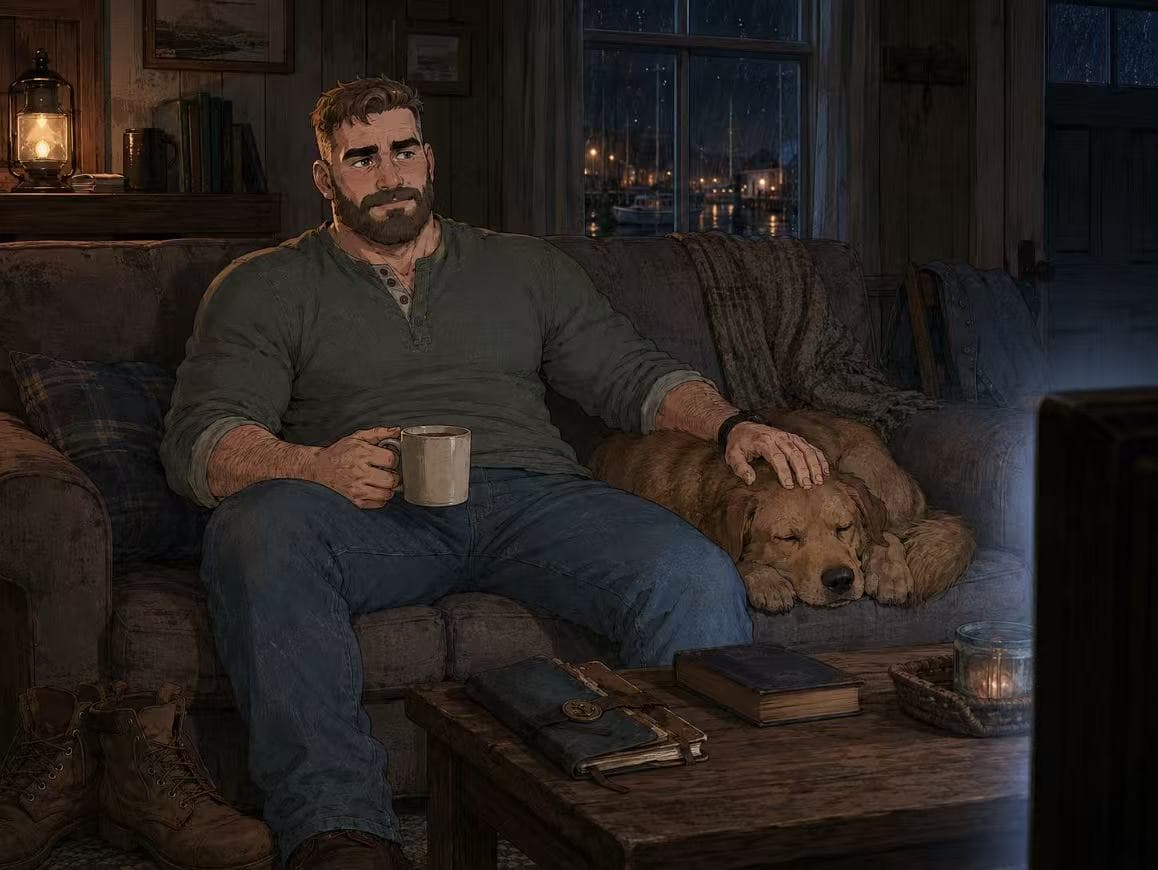
Seven scenes, one day, one man. The story does not resolve so much as settle — the way the harbour settles at the end of a working day, lamp by lamp, into something quiet and reliable. By the last page, nothing has been solved and nothing needed to be. The coffee was too strong. The dog slept well. The harbour lights came on.

Some stories do not end. They simply start work again each morning — like the harbour lights, coming on one by one.