A Bend in the River · Companion Guide
大河湾
殖民遗产正被丛林与水泥同时吞噬,一个印度裔中间人在新旧秩序的夹缝里旁观一切崩塌,独自登上雾中汽船离开。
The opening: a rusted shutter, a shop no one enters
A shutter rusted shut. Paint flakes off it in patches, the sign above has faded to a gray-green, and behind the door sits a grocery no one visits. Cast-iron balconies on either side weep rust, vines climb the base of the walls, and a French trading-house plate from the colonial years is still bolted where it always was — but the whole street is empty enough that you can hear yourself breathe. After a long moment the door eases open from the inside, just a crack, and a hand streaked with rust-gray dust reaches out, braces against the shutter, and hauls it up. The man standing in the doorway is young, sent from the East African coast by his uncle to take over the shop. His name is Salim.
The first time I read this far, I stopped short too: this is not how an African story usually opens. No drums, no canoe, no plunge into deep forest — just a shop about to fall apart and an empty street outside it. This book is not about Africa in the jungle. It is about a town being forgotten, and an order being forgotten with it.
What kind of book this is
A Bend in the River came out in 1979. Its author, V.S. Naipaul, won the Nobel Prize in Literature in 2001. Naipaul was born in Trinidad to a family of Indian descent, and this novel is widely regarded as one of his major works. It is often set against Conrad's Heart of Darkness — both send a narrator up a river into the African interior, but where Conrad wrote the terror of the colonial era, Naipaul writes the emptiness left behind once the colonizers are gone. It belongs to the postcolonial social epic, and no account of how the late twentieth century imagined Africa can skip past it.
Who is Salim, who is Nadia, and who is this 'Big Man'
Salim is the novel's narrator and its central figure. He comes from a Muslim trading family on the East African coast, one steeped in the old Indian Ocean commerce, and that background decides everything about his position: he is a leftover of the economic order colonialism built, and the new rulers keep him around only because he is useful — neither side ever treats him as one of their own. He cannot rally a tribe the way a local African can, and he has no escape route the way a European does. All he can do is maneuver.
Nadia, a teacher, becomes his lover. She comes from a prominent local chief's family, studied in Europe, and came back wanting to open a school in town — someone trying to carry modern learning back into the interior. Her brother was once a man of standing in the region, sidelined by the new regime after independence. She herself soon discovers that teaching children to read and keep accounts cannot hold back what is pouring in from outside.
The 'Big Man' is the dictator of the town, and really of the whole country. He almost never appears in person; he exists mostly as rumor, decree, and the uniformed youth guard that carries out his will. But what he has done to this town shows on every street: he declared the river bend of his choosing the 'heart of the nation,' shipped in concrete workers from elsewhere, put up rows of monuments, and cut wide, empty boulevards in the style of Soviet and East German cities. The whole fabric of the town has been rewritten to look like him.
Taking over: the shop comes back to life, and a lover arrives
After Salim takes over, he slowly brings the shop back to life. His method is not revolution — it is the plainest kind of businessman's living: noting which supplier will loosen a price and when, keeping a line open to the dictator's own purchasing agents, trading whatever is still worth trading with Raymond, the Frenchman who runs the vineyard estate next door, an old man left over from colonial times who never got out. Raymond is one of the few people in this town Salim can actually talk to — a man trapped in his own memory of the old Africa, contemptuous of the new order and powerless against it. Their late nights on the estate veranda are one of the few warm passages in this book.
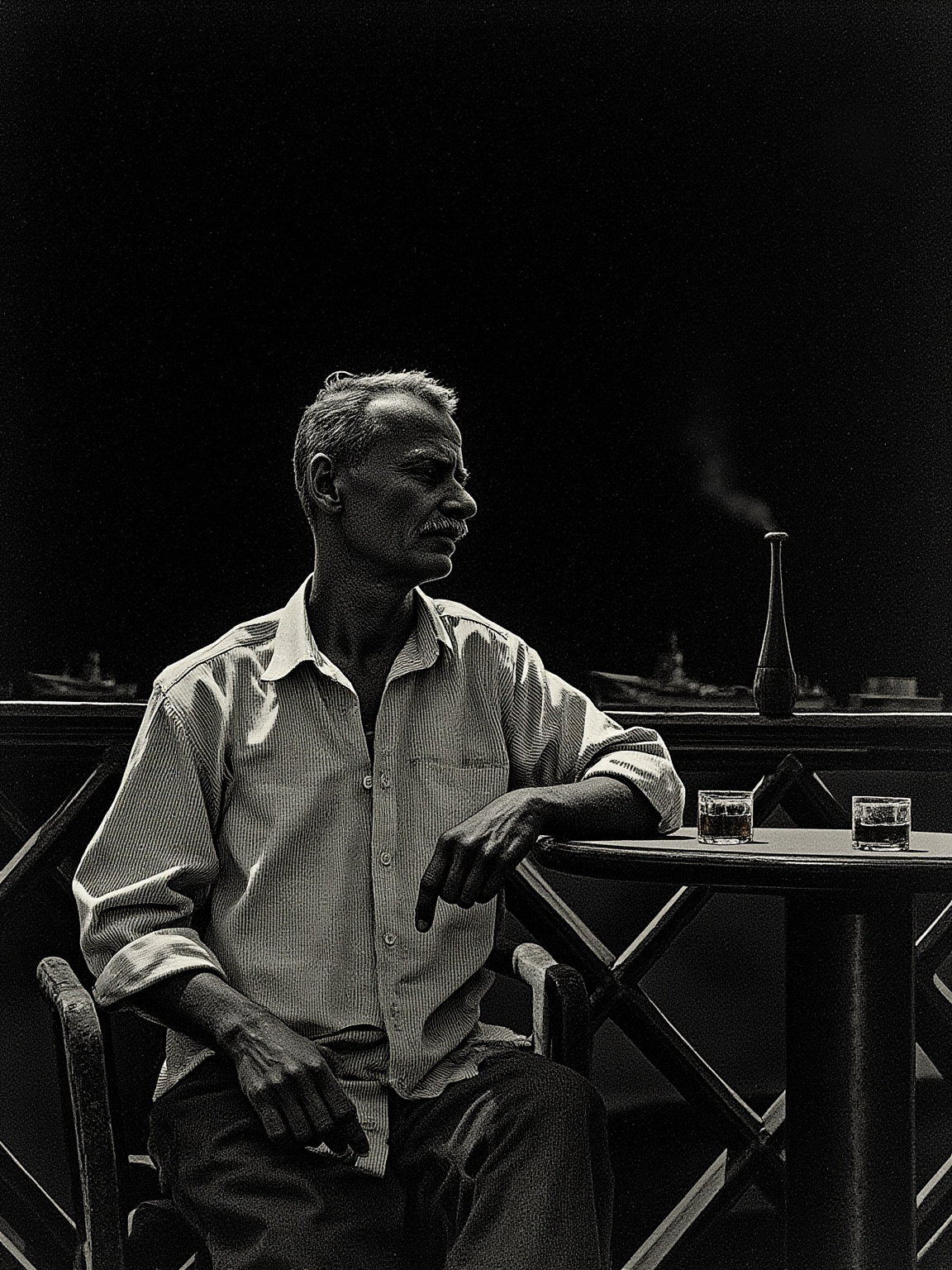
The world is what it is; men who are nothing, who allow themselves to become nothing, have no place in it.
世界就是世界;一个人若甘愿一无所有,他在世上便无处可容。
金句 · 第1章 · 接手店铺
It is in this same stretch of time that Nadia enters his life. She wants to come back and do something real; he is a man doing business in this place. The two of them come together partly out of feeling and partly for warmth — each hoping that being joined to the other might hold back what is collapsing outside. That hope was not the mistake. The mistake was believing it could actually hold.
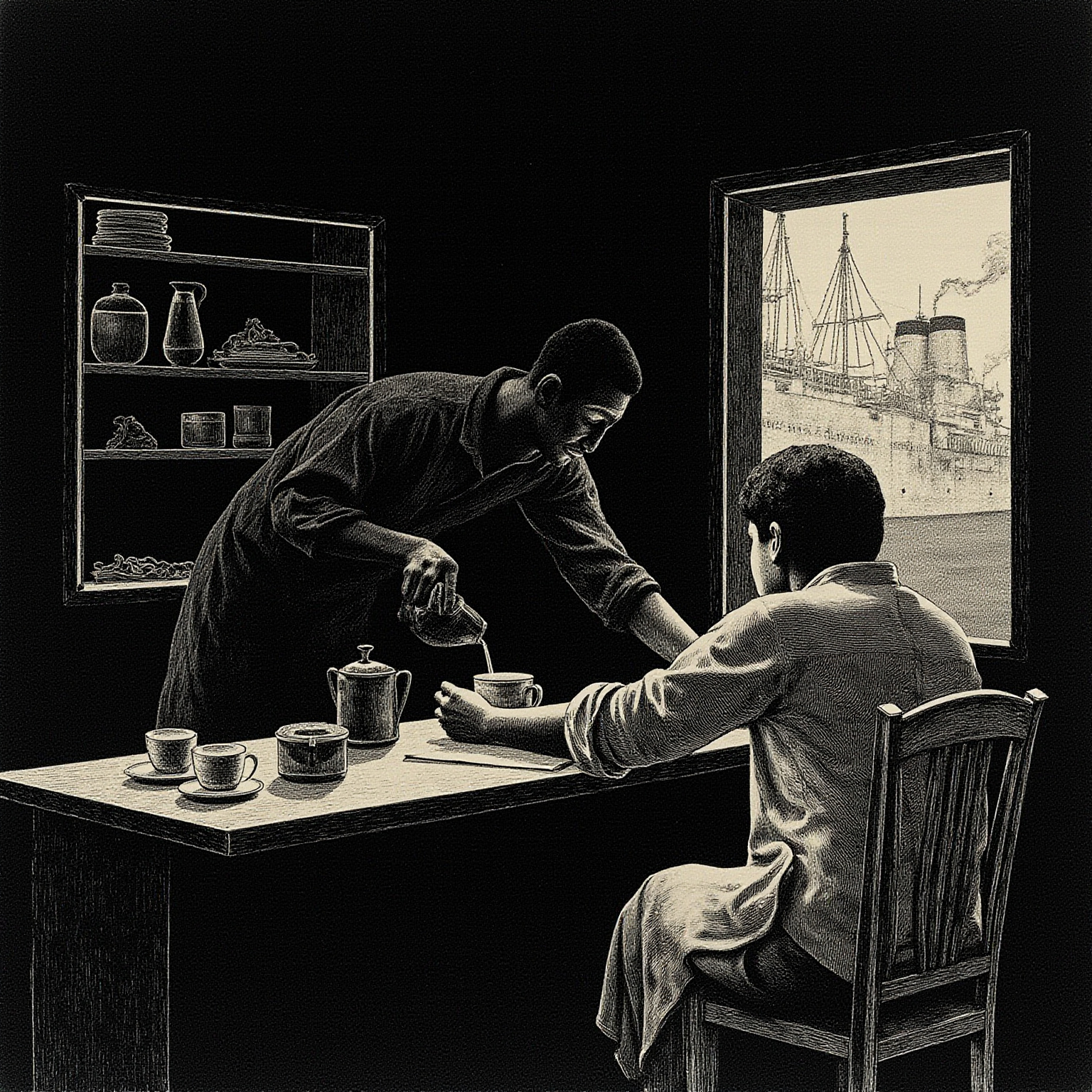
It was a kind of love, perhaps, that we had; it was part of the life of the town, and we were both involved in it.
那或许也是一种爱;它是这座小镇生活的一部分,而我们都被卷了进去。
金句 · 第8章 · 与娜蒂娅同居
The 'Big Man' rewrites the town: from a rusted shutter to an empty boulevard
The real turn comes when the Big Man decides to remake this river bend into the 'heart of the nation.' Construction crews move in, a stretch of the old street is cut through, a row of shops with cast-iron balconies is bulldozed, and a line of concrete monuments goes up at the end of the new boulevard. Every day when Salim steps outside he sees the same scene: on one side the old colonial buildings being swallowed back up by vines and rust, and on the other a boulevard, new and wide and empty of everything but wind. Two kinds of desolation, standing side by side.
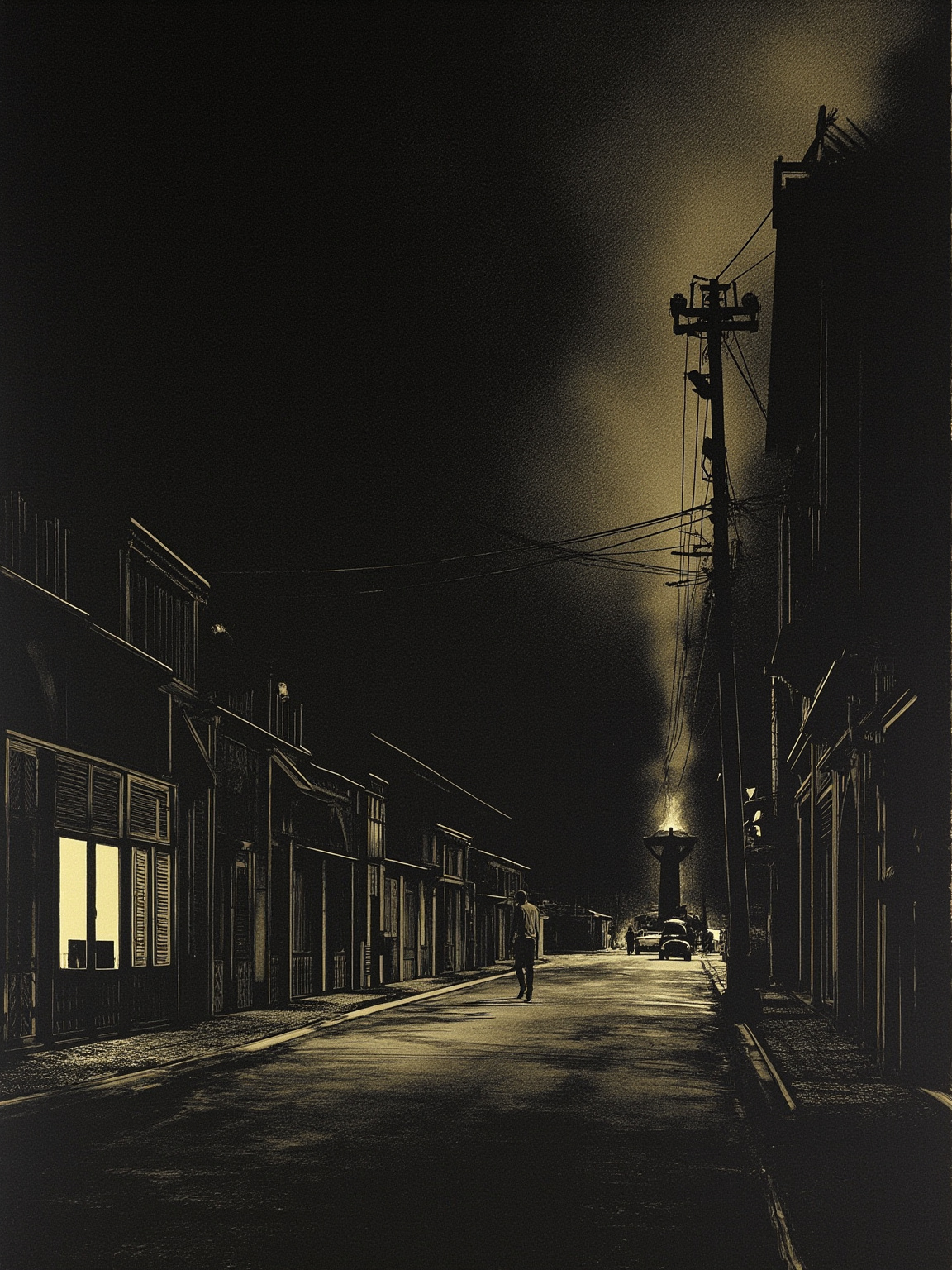
The new buildings were very big, and very ugly; they stood in the middle of the town like monuments to an idea that had no use.
那些新楼极大,也极丑;它们立在镇中心,像一座座纪念碑,纪念的却是一个毫无用处的念头。
金句 · 第11章 · 国家的心脏
His business, oddly, improves for a while — the new construction needs supplies and cash flow, and his network as a middleman finally earns its keep. But he knows exactly why: not because he has done anything right, but because the Big Man still needs him today. Being needed like this unsettles him more than not being needed ever did.
The old order loses ground, one by one: the priest, the chief, the woman who wanted a school
What gets rewritten is not only the street front. The old parish priest had been there since colonial times, and after independence he was caught between both sides, trusted fully by neither. Later, something happened to him outside town, at a time nobody wants to describe in detail — people in town only lower their voices when his name comes up. Salim knows, and knowing is all he can do. The chief's daughter Nadia was the one who had wanted to keep the school running; the youth guard came for her, humiliated her in public on the street, and she could not go on. The old order's ethics are pulled out one sheet at a time, and what fills the gap is not a new order. It is fear.
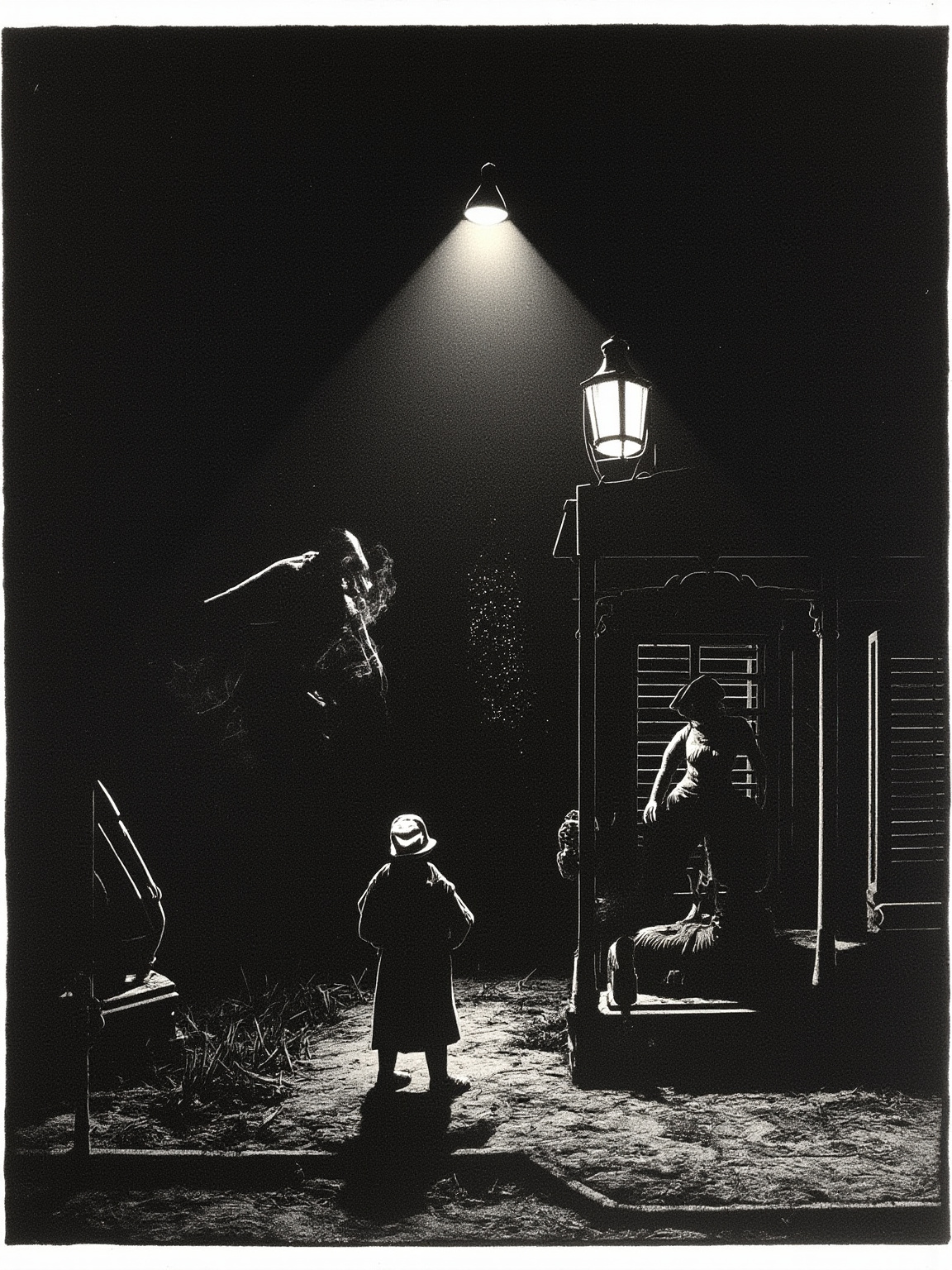
It was no longer a question of the priest. It was a question of the whole town; of how a town can change around you while you go on doing the same things.
问题已经不再是神父了。问题在于整座镇子;在于你还在做着同样的事,镇子却已在你周围面目全非。
金句 · 第14章 · 旧秩序的失势
Naipaul never writes these things head-on. He does not write the gun barrel, the chase, the scream — he writes the shop's power gone the next morning, a street corner nobody walks down anymore, the look in Nadia's eyes when she comes back to Salim's rooms. That restraint is harder to sit with than direct violence would be.
The break: love could not hold against the collapse around it
Two people who had hoped to hold onto some dignity through each other, in the end, could not hold it. The break does not happen in the bedroom — it happens in an air already pressed flat by everything around them. Their relationship had long since been warped by the collapse outside, and at a certain point that outside pressure simply pours straight in, and whatever they had been using to hold it off breaks along with everything else. Naipaul has Salim witness it again and again, and retreat into the shop again and again — and watching is itself a kind of taking sides, siding with the ugliest position there is. What Salim loses is not only his lover. It is the last small piece of private space he had believed he could still keep.
The steamer in the fog: what he carries away is not redemption
The ending is the novel's most famous image. Salim boards the river steamer alone. As the boat pulls slowly away from the river-bend town, thick fog rises off the water and eats the shoreline away piece by piece — the silhouettes of the monuments, the sign of the old colonial trading house, the concrete guards still standing at the end of the empty boulevard, all of it dissolving into the dusk. What he carries away is not redemption, not a story he can bring back and account for. It is a clear-eyed, almost cold understanding of this land, and of his own place as a man permanently in between.
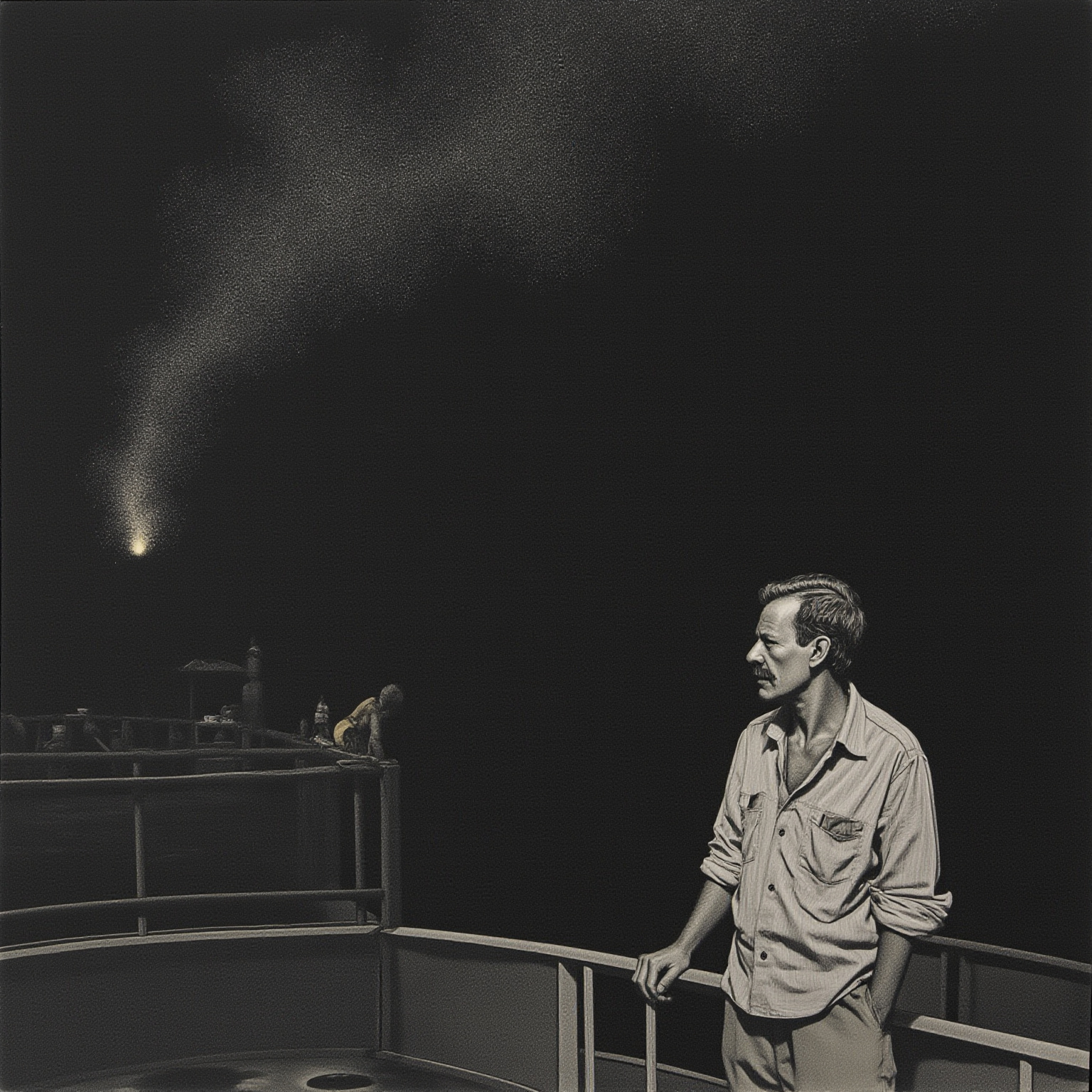
The river was in flood; the mist lay over the water; and as I watched, the town at the bend in the river began to disappear.
河水正在上涨;雾气铺在水面上;我望着望着,河湾处那座小镇开始一点点消隐。
金句 · 第16章 · 雾中汽船
What this book is actually saying
On the surface, this is a book about the disillusionment of postcolonial Africa — the colonizers leave, the order they built collapses with them, and what replaces it is not order at all but the strongman spectacle of a 'Big Man,' rewriting an entire town in concrete statues and wide empty boulevards. The priest, the chief, the woman who wanted to run a school — the old ethics are stripped away layer by layer, and what arrives instead is nothing but layer upon layer of self-worship.
One layer deeper, it is a book about the impossibility of the middleman's position. Salim is neither European nor local African; he is a leftover trader of the Indian Ocean network, an interface between the colonial economy and local society. That interface was useful under colonial rule, and after independence both sides use him as a tool — pulled close when he is needed, dropped the moment he is not. That is what makes this book a tragic template for 'in-betweenness' in the postcolonial world: belonging to neither side, and consumed by both at once.
Where it succeeds, and where it draws fire
What makes it work is its coldness. Naipaul never lets Salim turn lyrical, never lets him rail against anything, never lets him arrive at a sudden reckoning — he only lets him witness, again and again, retreat into his own business, again and again, and glance back from the edge of that business at what is collapsing behind him. That distance is the book's strength, and also what has drawn criticism for decades: critics argue the distance ultimately puts Naipaul himself on the colonizer's side, turning the novel into a 'clinical report' filtered through one strong personal viewpoint rather than the voice of Africa itself. That argument is part of what you cannot skip when reading this book.
Why it is still worth reading the book once you know the plot
What an explainer can give you is the map: who is who, what happens, an ending that fades into fog. What it cannot give you is the feel of Naipaul's sentences on the page — how the fog spreads across the water, how the vines creep, inch by inch, over the ironwork of a balcony, how the power fails on an ordinary morning, how Nadia's eyes turn overnight from hope into something else. None of that is plot. It is texture, and the only way to get it is to read it yourself, line by line.
More than that, already knowing what happens frees you to watch closely how it is written. Every retreat Salim makes, every excuse he quietly builds for himself, stands out all the more sharply — and by the time you close the book, you will find that steamer in the fog no longer belongs only to him.
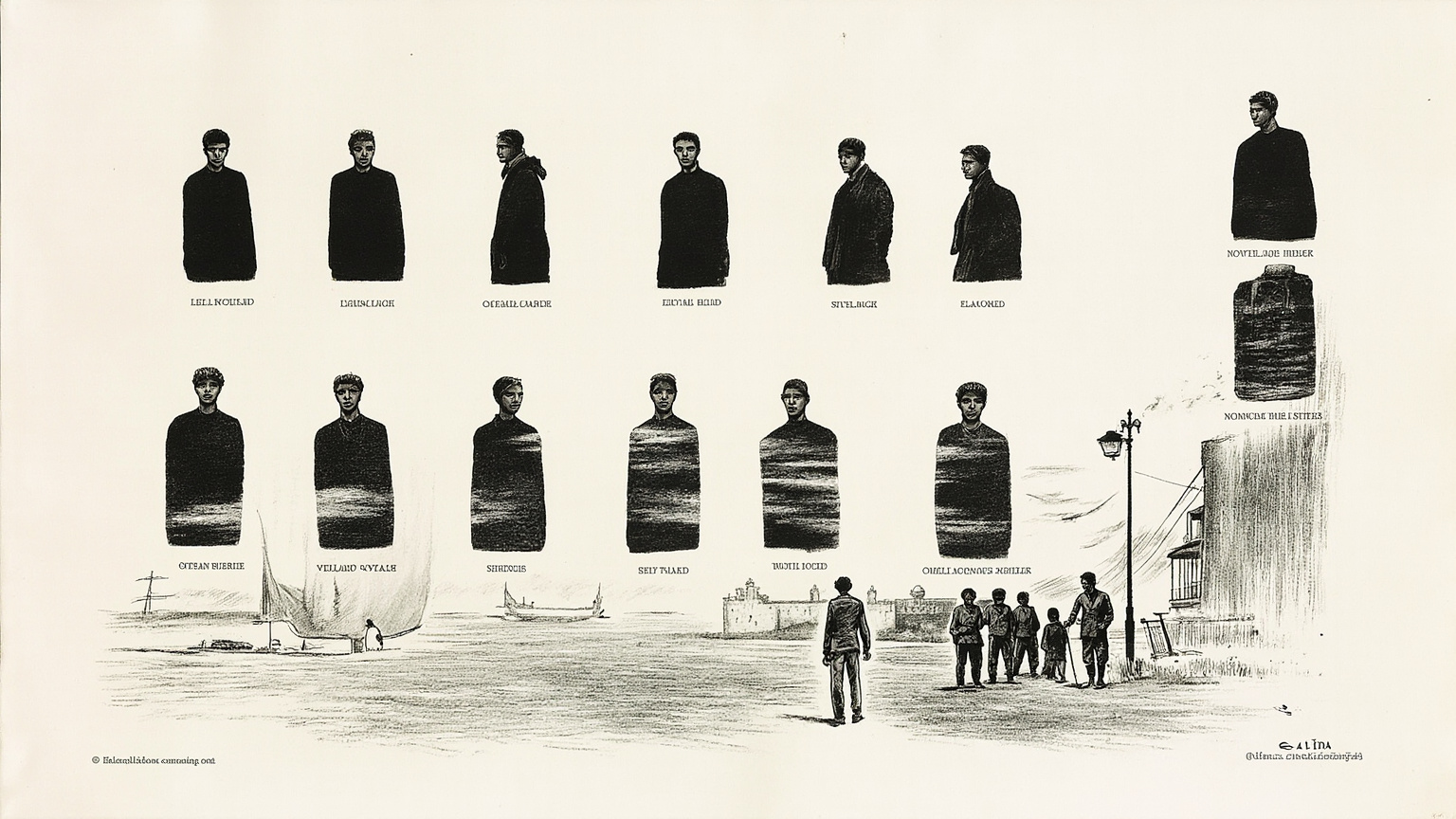
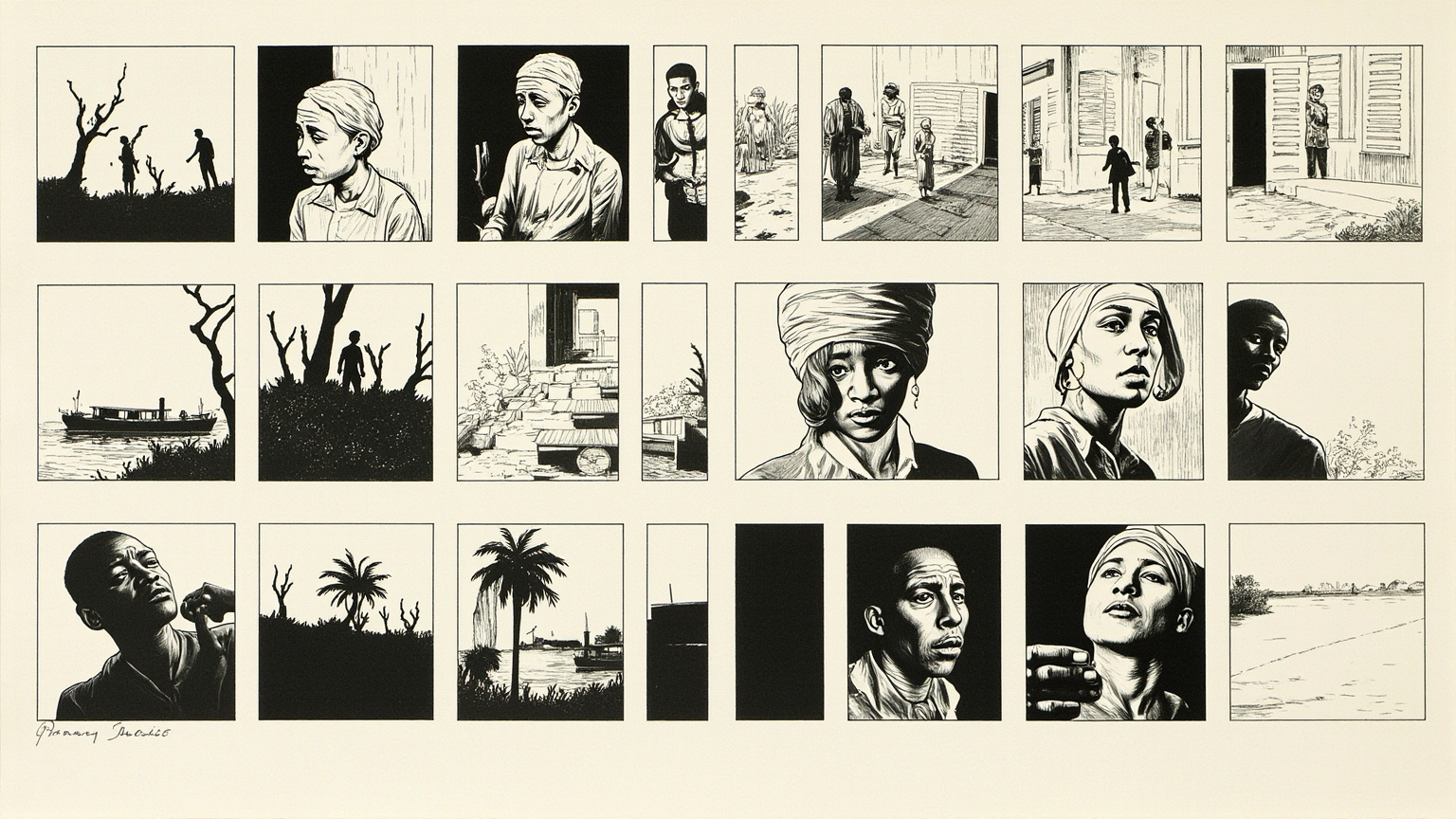
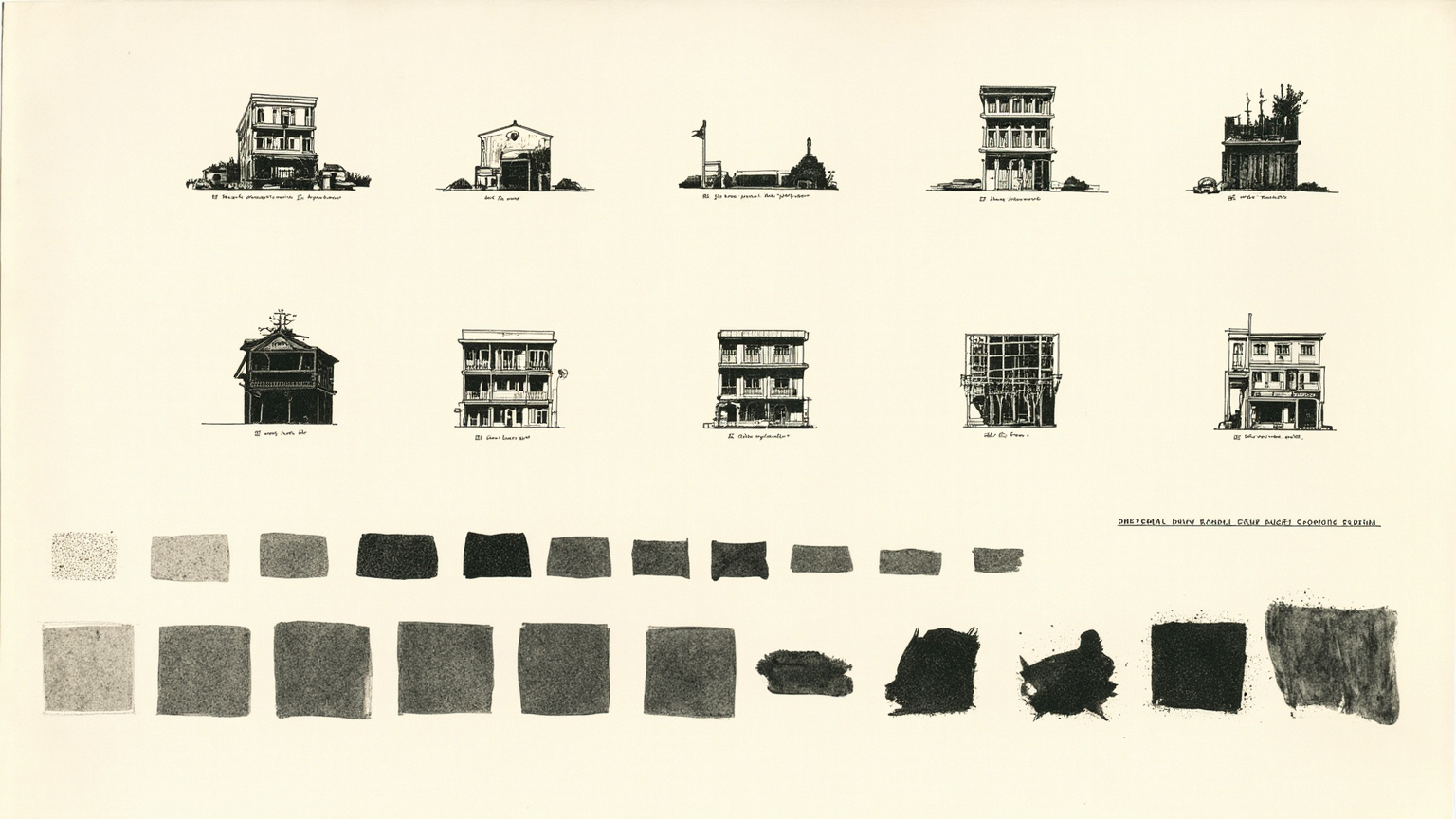
Art Direction4 plates
Before the guide was written, this book got a visual foundation — every illustration you just read grew out of it.