Alec Forbes of Howglen · Companion Guide
霍格伦的亚历克·福布斯
1840 年代阿伯丁郡的乡绅少年,在长老会的恐惧与伪善之间,第一次撞见了死亡与信仰。
One — A Scottish Childhood, Never Too Late to Read
A small cross rests in a boy's open palm. The room is very quiet. This is the quietest scene in Alec Forbes of Howglen — and almost the cruellest. A girl named Annie has just closed her eyes beside him, and he never manages to say Don't go. This book is the story of the years before that moment: how the boy became someone who could hold that cross at all.
The author, George MacDonald, is better remembered now for At the Back of the North Wind and The Princess and Curdie — that grey-blue northern sky, cold wind and all its mercy, which later hung over his fairy tales, first drifted over the roof of this realist novel. MacDonald was still young when he published it in 1865, drawing on his own boyhood in Aberdeenshire, Scotland. Read as a novel, it is the record of a boy's passage from village to university. Read as a key, it is the way in to understanding how this pioneer of Scottish fantasy climbed out of a Puritan shadow and into a world of fairy tales.
Two — Howglen's Low-Roofed Farmhouse, and Its Grey Air
The story opens on a low-roofed stone farmhouse, a stone bridge and mill in the fog, moorland and river valley — the Aberdeenshire countryside, renamed Howglen for the book. The brightest corner of the house is the hearth, where grandmother Jean Forbes sits, known to everyone as Granny Janet. She tells the story of Pharaoh and the Israelites crossing the Red Sea, frightens the children with ghost stories at night, and quietly plants the first seed of good and sin in a child's mind. The family gathers around that fire: the silent, stern father, Thomas Forbes, and a boy they call Alec.
Alec is stubborn, sensitive, and quick with a sense of justice — the kind of child who elsewhere might earn a few scoldings and nothing worse. But in Presbyterian Scotland in the 1840s, the first wall he runs into is the village school run by Mr. Campbell. The classroom is easy enough to picture: chalk dust, wooden benches, a cane that could come down on the desk at any moment. Alec gets mocked and surrounded by his classmates, for his accent and for not knowing how to behave.
Three — The Only Ally: Red-Haired Eric
The boy who charges in and takes the blows for him is red-haired, built like a young bull, named Eric McCombie. MacDonald gives him the nickname Cob, a rough country name that suits him exactly. From then on the two run together — playing truant, going hungry — and one night they wander too far onto the moor and lose their way, huddling against each other until dawn. That night is where everything good in Alec's childhood begins.
He had never had a friend before; and the having a friend changed the whole world to him.
他从来没有过一个朋友;一个朋友的出现,把他的整个世界都改了。
金句 · 第13章 · 坎贝尔先生学校附近
A misty night on the Scottish moor: two thin boys huddle against a rock in the heather for warmth, the outline of a stone bridge and mill just visible in the distance. The red-haired boy has taken off his coat and laid it over his friend's shoulders; at their feet lies a half-eaten loaf of bread. The whole scene is cold and quiet.
Four — Annie: First Love, First Helplessness
This is where Alec's cousin Annie Grant enters. She is the first person he ever wants to protect — motherless since infancy, fostered out to a Presbyterian deacon named Mr. Bruce. Mr. Bruce is all moral thunder in the pulpit; back behind the counter he wears a different face, starving her and making her kneel in the name of discipline, wearing a foster child down with cold words. Annie hoards scraps of food and slips them to Alec out on the moor; Alec sneaks off at night, without the adults knowing, to see her.
These secret meetings are Alec's first experience of love, and his first experience of being unable to protect someone. MacDonald does not write it up as puppy love — he writes two children crouched behind a haystack, Annie breaking the half oatcake in her pocket in two, Alec taking his half and swallowing it without a word of thanks. It is a very concrete kind of dependence, one with an empty stomach behind it.
At the end of a country lane in thin morning mist, two children stand under a crooked old willow. The girl presses something quietly into the boy's palm; he crouches beside her, the fields beyond pale and grey, their clothes washed thin and white. Neither face is smiling, but both are calm — no bruises, no tears.
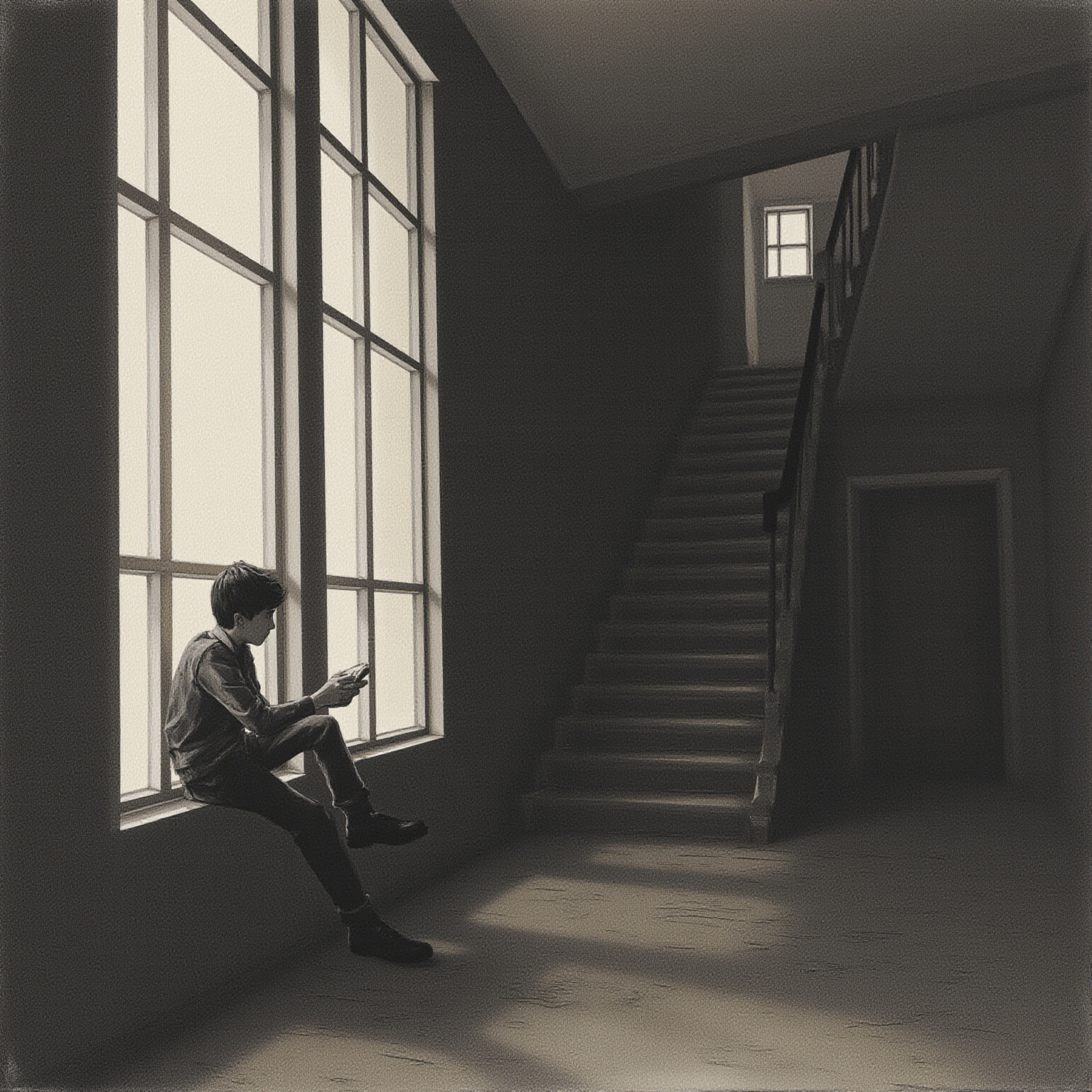
It was the earliest love he had ever known—the love that comes before the love of woman.
这是他生平第一次懂得了爱——那是远在男女之情之前,先来造访人心的那种爱。
金句 · 第21章 · 草垛后的相会
Five — A Night in the Barn: Has God Left Me Behind?
The spine of the whole story is Alec's night of spiritual crisis. A fire-and-brimstone travelling preacher comes through the village and, in his tent, describes hell and eternal damnation in vivid, physical detail — and Alec is flattened by terror on the spot. He does not go home. He crawls alone into the family barn and sits out the whole night in the hay, knees pulled to his chest. One question grinds through him over and over: Am I one of the chosen? Or am I the kind that gets left behind?
MacDonald writes this night without mercy. It is a whole child, for the first time, staring straight at the idea of a death beyond death. This kind of religious terror can read as excessive today, but set it back inside the air of Presbyterian Aberdeenshire in the 1840s and it is close to ordinary — this repeated interrogation of whether one is actually saved was simply what a sensitive country boy breathed.
Six — Annie Is Gone, and Boyhood Ends
Years of cold cruelty in the Bruce household finally break Annie's health. She takes to her bed, and Alec is called to her side. MacDonald's touch here is very light — Annie, her fingers already without much strength left, presses a small cross into Alec's hand, says almost nothing more, and closes her eyes.
A small cross from someone he loved — and Alec's childhood is formally buried.
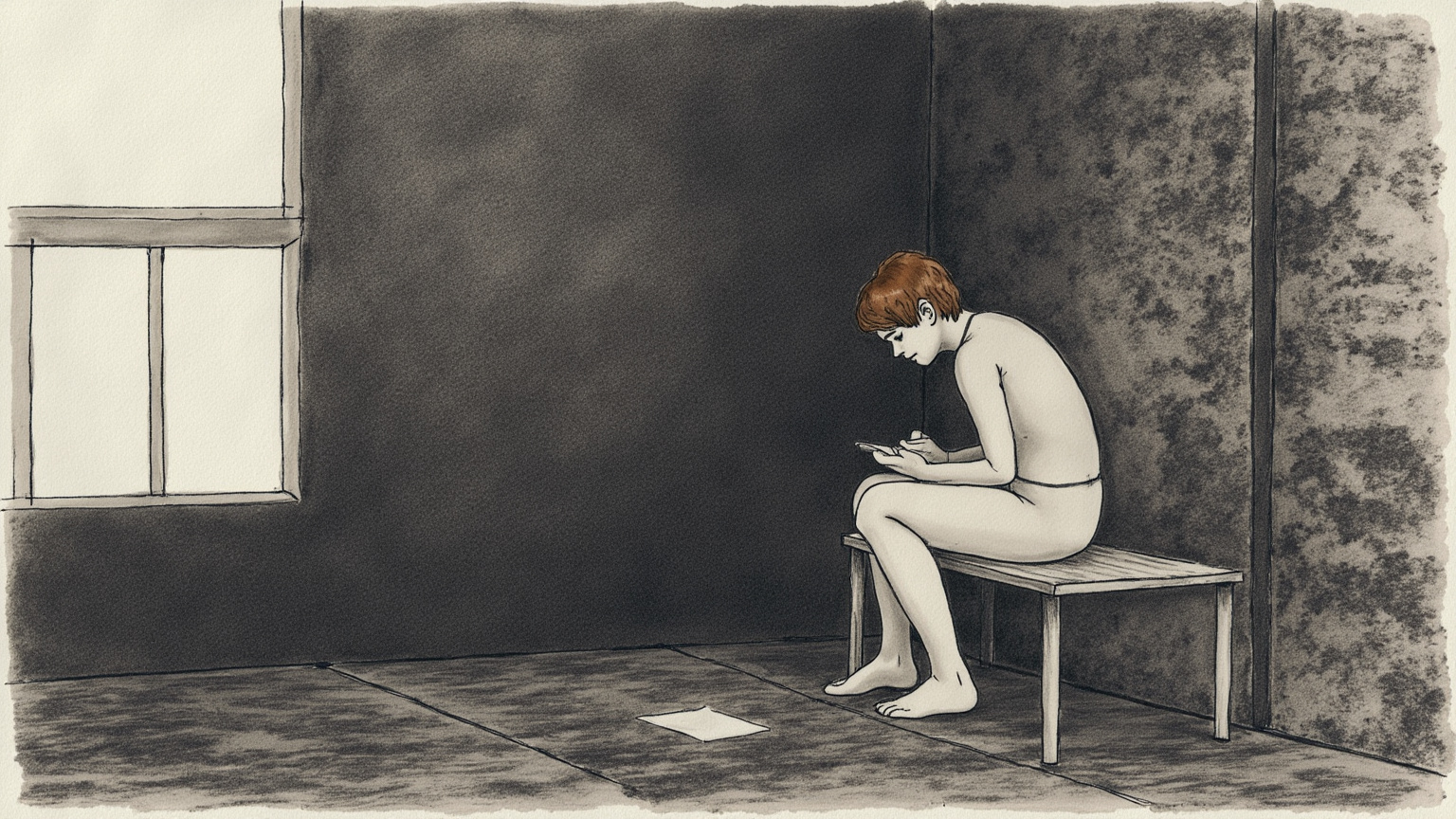
She put the little cross into his hand, and closed her own upon it—and then she died.
她把那枚小十字架放进他的手心,自己的手指也轻轻合上——然后她便去了。
金句 · 第26章 · 安妮弥留
A country bedroom on an overcast afternoon, the half-open window letting in pale grey light. On the bed the girl lies with her eyes closed; the boy kneels beside her, both hands cupped around the small wooden cross she has just placed in his palm. The white sheet on the bed hangs rumpled to the floor.
Seven — Edinburgh's Cobbled Streets: Forging Himself Anew
His father sends the boy to Edinburgh University. It is a complete displacement — out of a world arranged for him and into a world where he has to judge for himself. The towering tenements of Edinburgh's Old Town close overhead into a grey wall; Alec rents a garret room where he can hear rain on the slate roof at night. He starts sitting in on debates, reading more widely, walking a road nobody has laid out for him.
A rainy night in the Old Town of Edinburgh: a narrow, deep close, squeezed on both sides by tall grey stone tenements. A dim oil lamp hangs on the wall; a young man hurries along the cobbles under a broken umbrella, and in the distance, toward the university, the corner of a dome shows through the rain.
The person who changes him at university is Dr. Duncan. This gentle, learned professor is the exact opposite of Elder Bruce back in the village: the same faith is on display from the lectern, but the warmth behind it is entirely different. Dr. Duncan does not threaten a child with sin, or trade the promise of salvation for a student's obedience — he simply lays faith open on the table and lets Alec walk into it on his own.
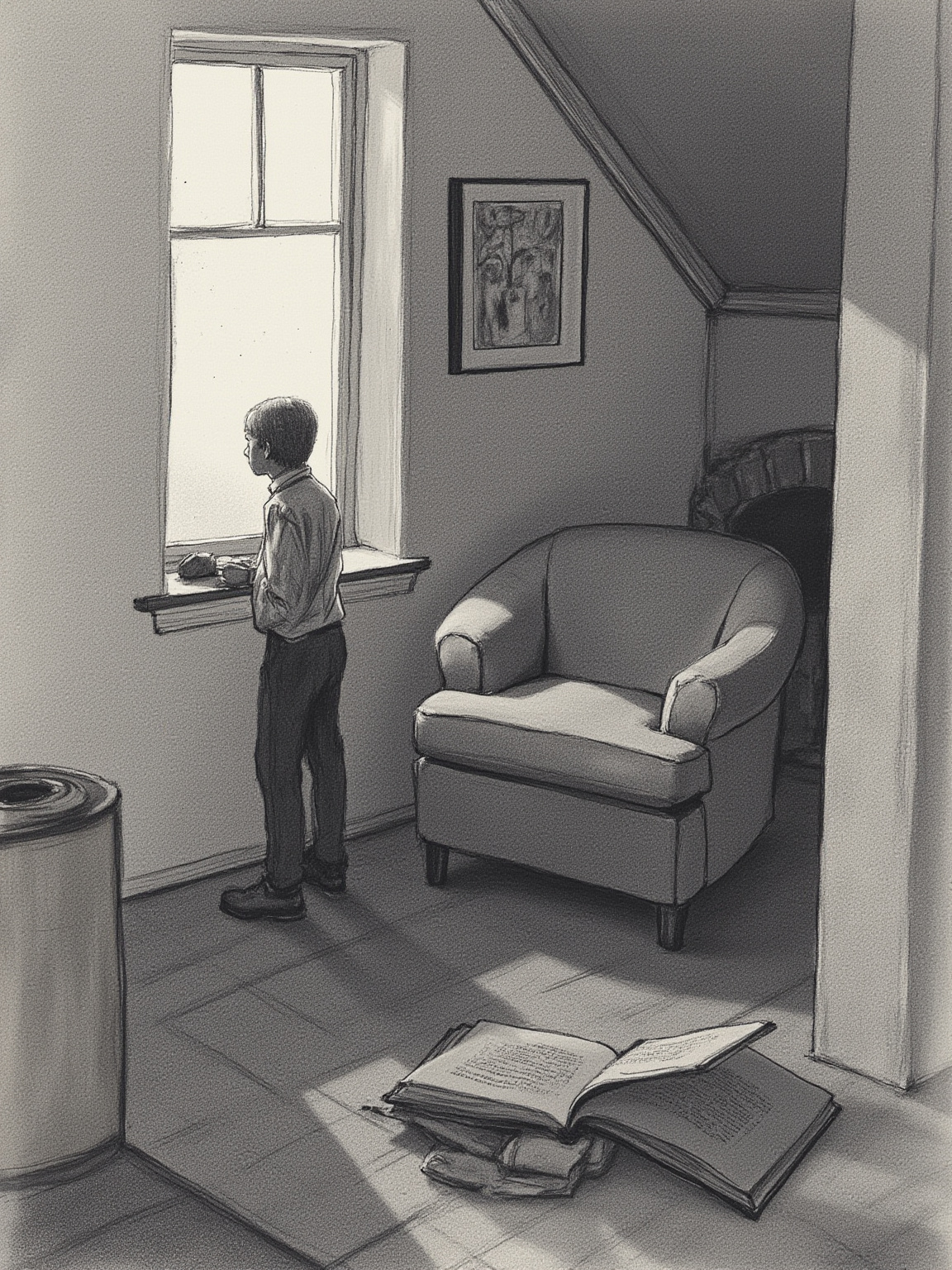
It is not by terror that men are led to the feet of the Good Shepherd.
把人领到好牧人脚前的,从来不是恐惧。
金句 · 第33章 · 邓肯博士书房
A dimly lit corner of a university lecture room: the old professor, gowned, sits behind a desk turning the pages of a large open book, a teapot and two cups beside him. The young man sits across from him, listening closely, a small wooden cross worn smooth clutched in his palm. Between them the mood is steady and unhurried.
Over his years at university, Alec repeatedly takes apart the things that weighed on him back at Howglen — Annie's death, Bruce's hypocrisy, the terror of that night in the barn — laying each one out in the light to look at again. He stops kneeling to acknowledge God only because he was frightened into it, and stops pretending that night never gnawed at him. In the end he chooses his own way of quietly taking hold of both faith and grief. When term ends, he walks back down the same cobbled street and returns to Aberdeenshire, to Howglen.
In the churchyard at Howglen, he walks alone to Annie's grave. The cross in his pocket has been worn smooth; he sets it at the foot of the headstone and stands there a long time, without crying, without saying anything large. Wind comes in off the moor and flattens the heather low. Only now does Alec Forbes turn the last page of his childhood — he turns and walks back, in the silence of a young man who can bear loss, toward the lit windows of home across the yard.
Eight — Why This Book Still Gets Read
It is good in three ways. First, the boy's faith is never installed as a correct answer — it is beaten out slowly against terror and doubt, and that kind of interior diary holds up in any era. Second, Mr. Bruce's hypocrisy and Dr. Duncan's kindness are the two faces religion wears in the hands of real people, and MacDonald never plays judge — he lets a child work out the difference across an entire life.
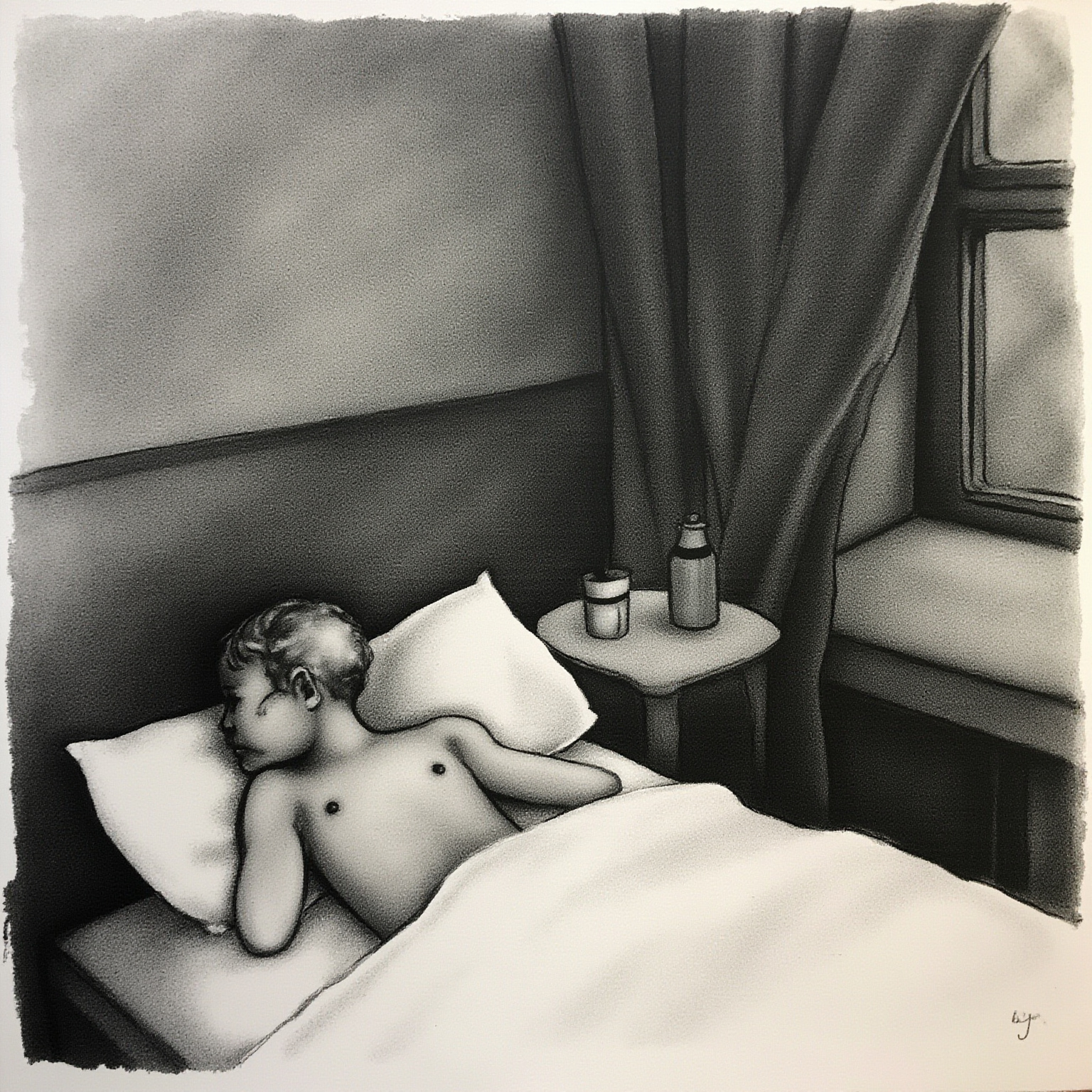
He was no longer a child; he had begun to be a man.
他不再是一个孩子了;他开始成为一个大人。
金句 · 第38章 · 告别霍格伦
Third, and easiest to miss: that Scottish grey-blue light — the stone farmhouse, Bible stories at the hearth, moorland in the fog, the towering tenement garret in Edinburgh — is carried over intact by MacDonald into At the Back of the North Wind, The Princess and Curdie, and Lilith. Reading this novel is like getting the earliest blueprint of that later fairy-tale world.
This is a novel about losing a childhood, but what it fits to that loss is not an elegy — it is a quiet that can be lived in afterward.
Nine — You Know the Ending. Read It Anyway.
I have drawn you the map of this book as far as this. But a few things no explainer can give you. First, the damp, musty smell of the air that MacDonald writes into that night in the barn, the rough scratch of hay against Alec's face — you only get that by sitting through those pages yourself. Second, the exact tone Granny Janet uses at the hearth telling the story of the Red Sea, the way she works faith into a story and a story into a child — that warmth, too, only the text itself can give you.
Third is the fine grain of how Alec actually gets from a child frightened out of his wits by religion to a young man who wears his faith and still lives well inside it. I can only tell you that he gets there. The path he takes, every footprint along it, you have to turn the pages yourself to see.
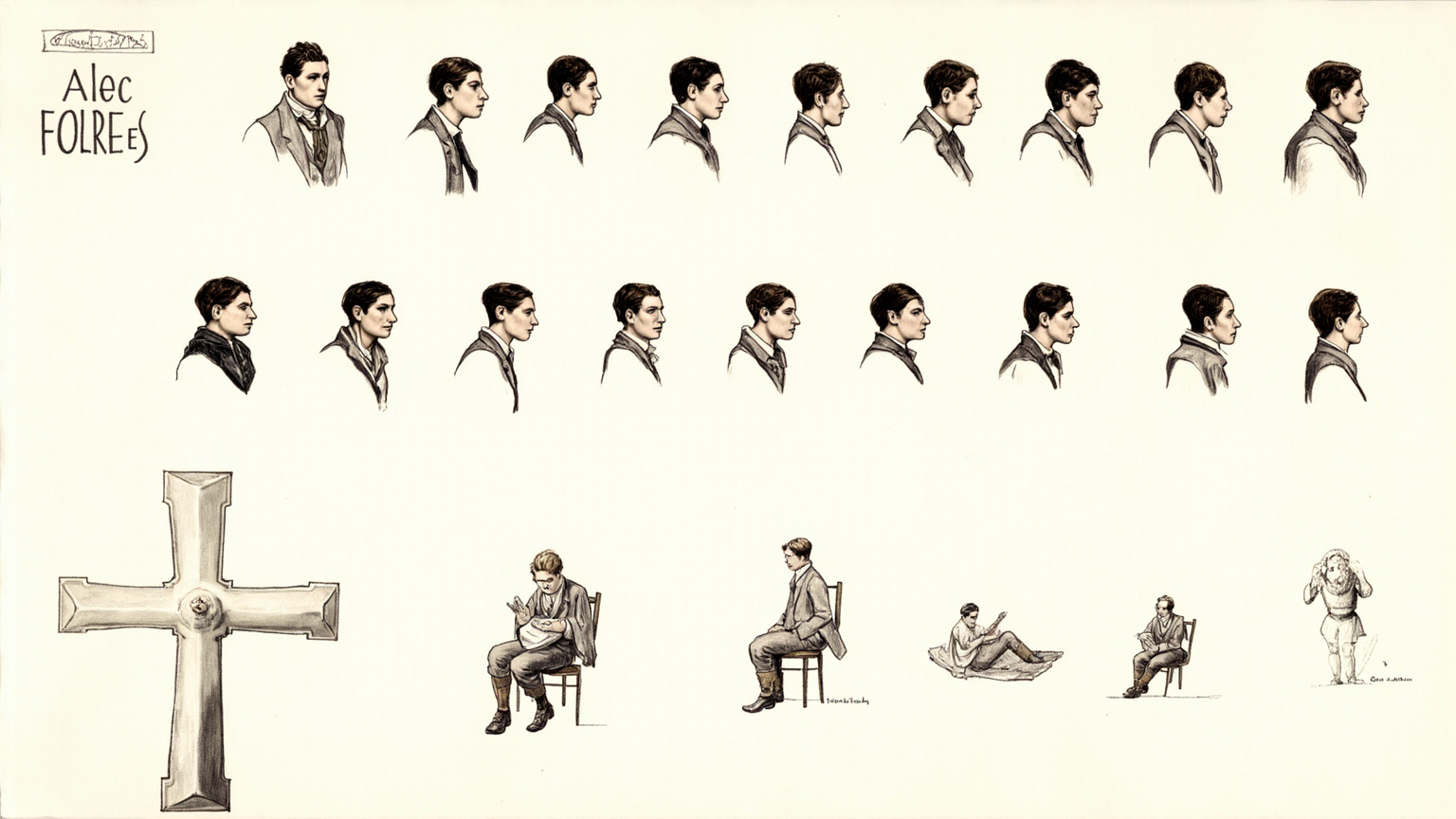
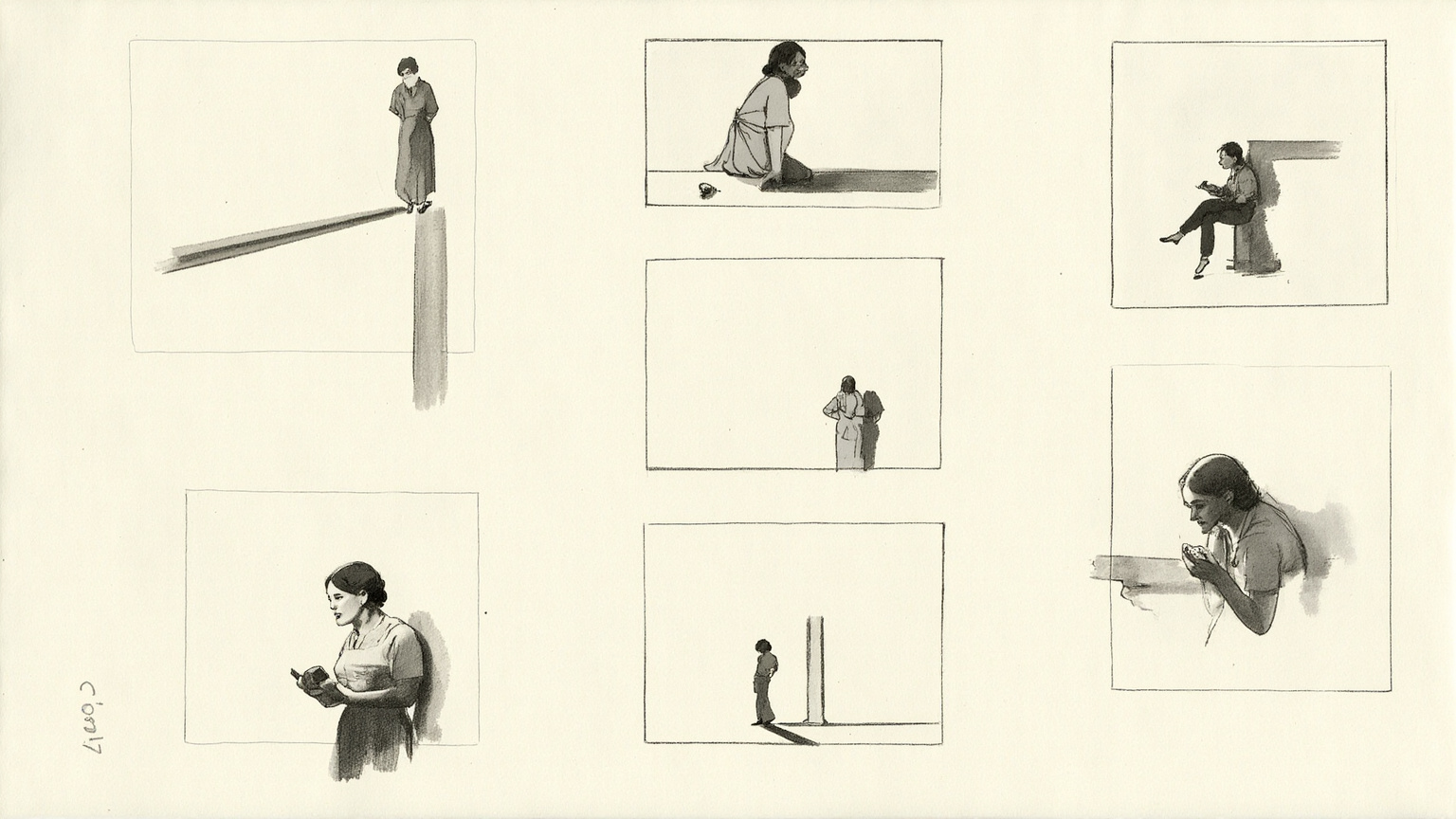
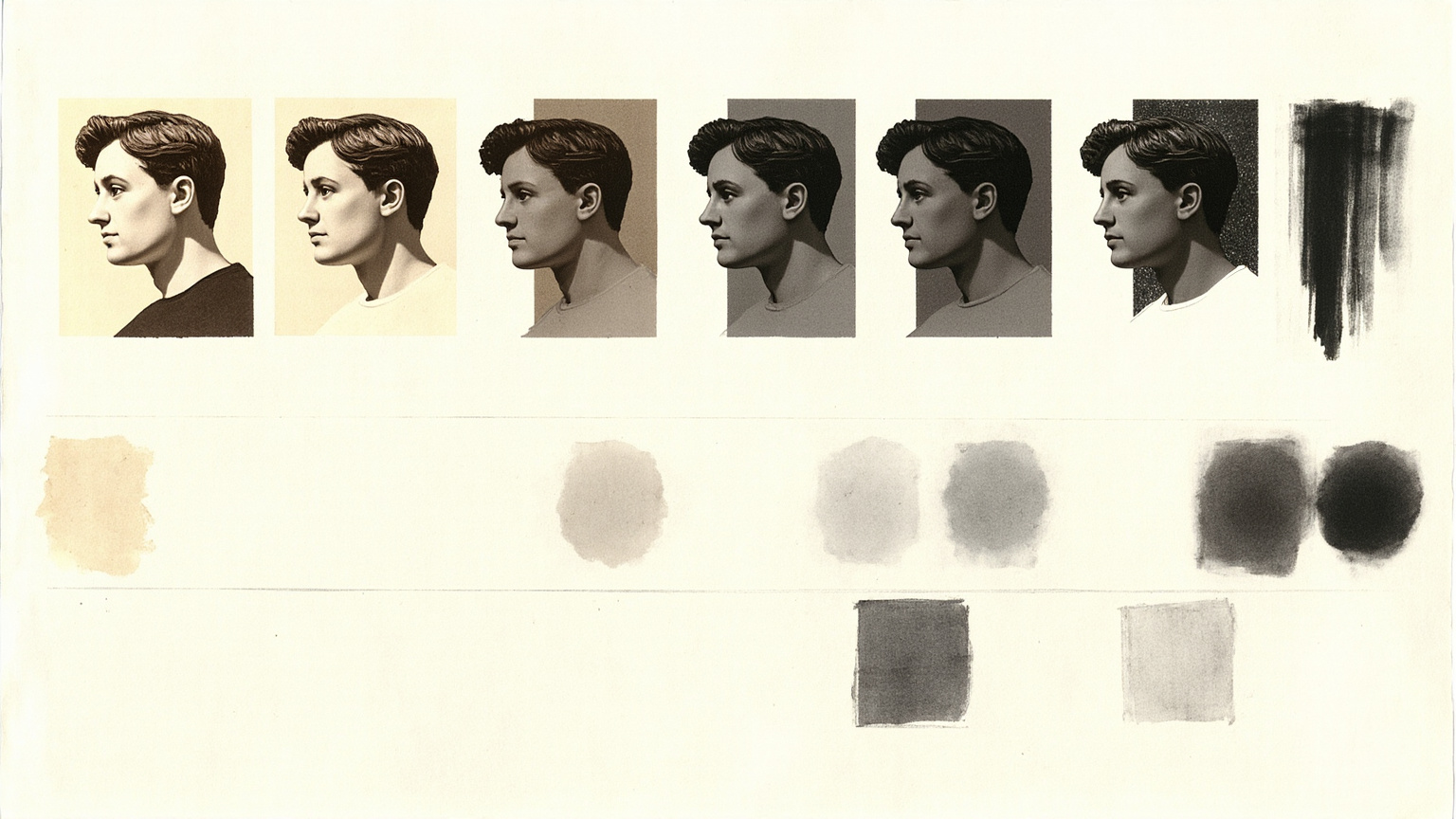
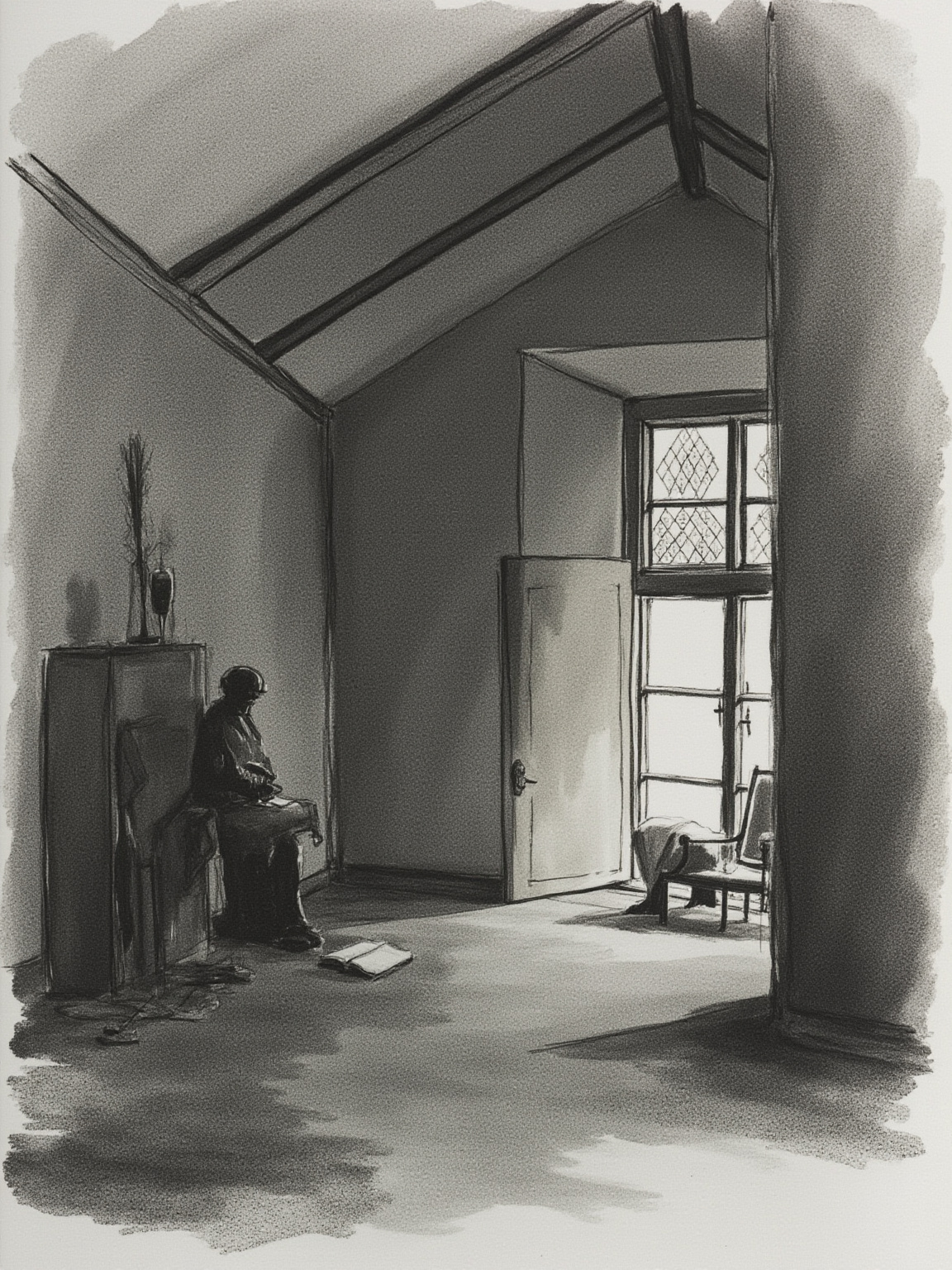
Art Direction4 plates
Before the guide was written, this book got a visual foundation — every illustration you just read grew out of it.