Amalia: A Romance of the Argentine · Companion Guide
阿玛利亚
独裁当权、秘密警察充斥街巷的布宜诺斯艾利斯,一对青年在殖民式客厅里偷来一段爱情——而门外那根系着的黑马与一声门环,正数着他们最后的倒计时。
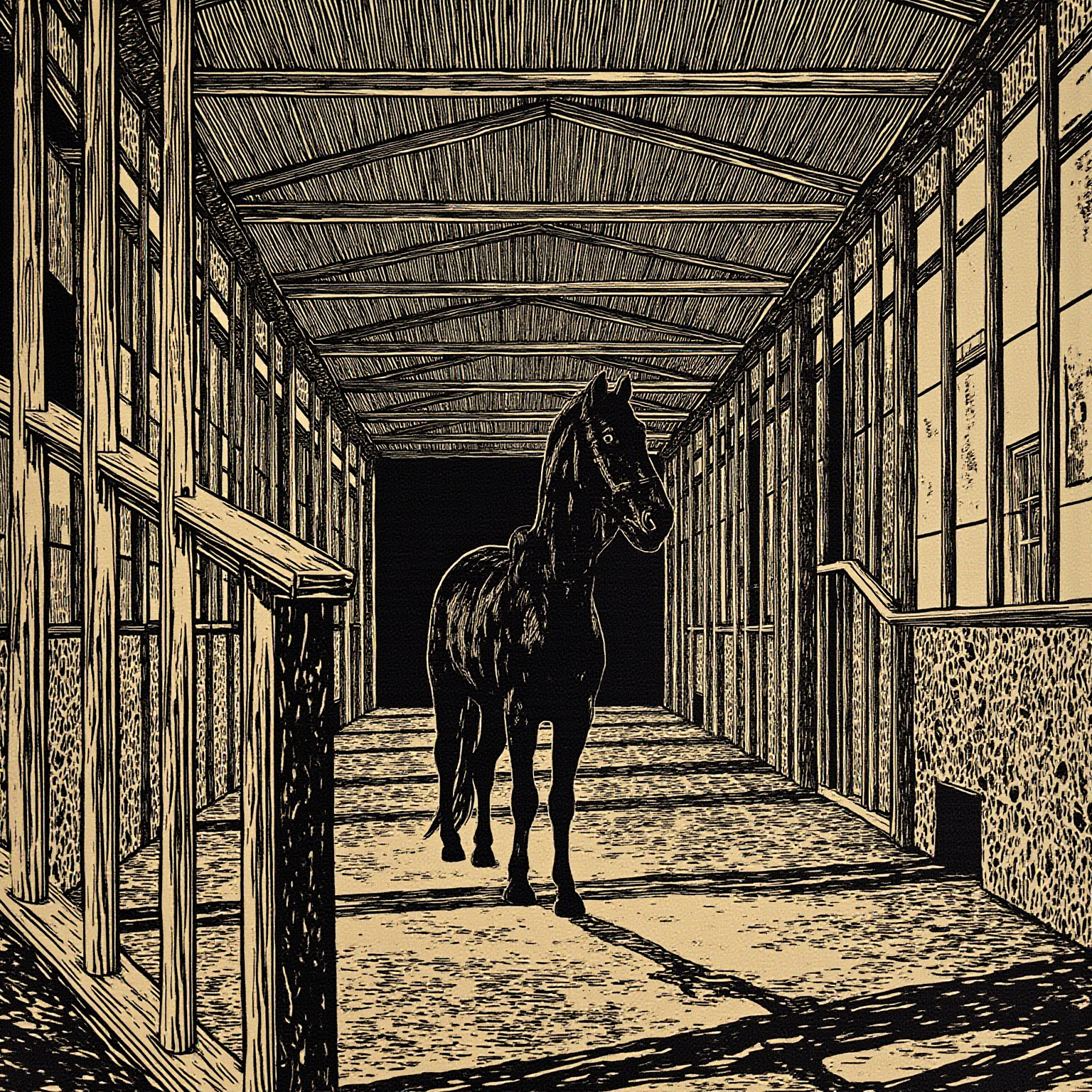
A black horse stands tied in the stable, unridden all night. Next door, the lady of the house blows out the last candle in the parlor and lays her fan on the piano lid. She has just seen off two young men, who were meant to vanish before dawn down the post road to Montevideo. The clock strikes one, and the door knocker sounds. She knows, walking to answer it, that she will never see them again.
José Mármol wrote this book in the middle of the nineteenth century. It is widely credited as Argentina's first novel, and as the source of Latin American political thriller writing itself: informants, surveillance, the knock at night — nearly the whole repertoire grows out of these pages. An Argentine student opening it in the twentieth century reads a love story and an indictment at once, and the two never come apart.
The cast is short. Amalia is a beautiful, courageous young woman of Buenos Aires; her cousin Daniel, young and upright, is the family who keeps watch with her in the white colonial house. Eduardo, a young dissident forced into hiding, is the uninvited guest she takes in one night. Rosas himself never appears on the page, yet he seeps into every corner like the cold outside the door; his men, the death squad known as the Mazorca, are announced without a word — by an empty stable, a tied black horse, a cloak left hanging on a nail.
The world of the story runs on one rule: the bolt on the door is the most valuable thing in the house. The Federalists are in power, and everyone is required to wear a red sash, a red waistcoat, a red ribbon in the hair — red is not decoration, it is an order stamped on every body in the city. If you are a dissident, you are already in the ground or hiding at the back of someone's parlor, waiting for the next round of hoofbeats to pass. In Amalia's courtyard the orange trees grow under a trellis, the mate gourd steams on the stove, a French book lies open on the arm of the sofa — colonial propriety is the last decent resistance this city has left, on a night ruled by tyranny.
I. The Red City, and the Man Hidden in the Parlor
Rosas, the Federalist dictator who has ruled Argentina since 1835, has dyed all of Buenos Aires red. The Mazorca moves through the night knocking on doors, seizing people, cutting throats — none of it needs a reason, only a note a neighbor sends to the authorities. It is one such sweep that drives Eduardo into Amalia's parlor. Amalia and her cousin Daniel talk it over and take the young man in under their own roof — the last place left in the whole city where he can still catch his breath.
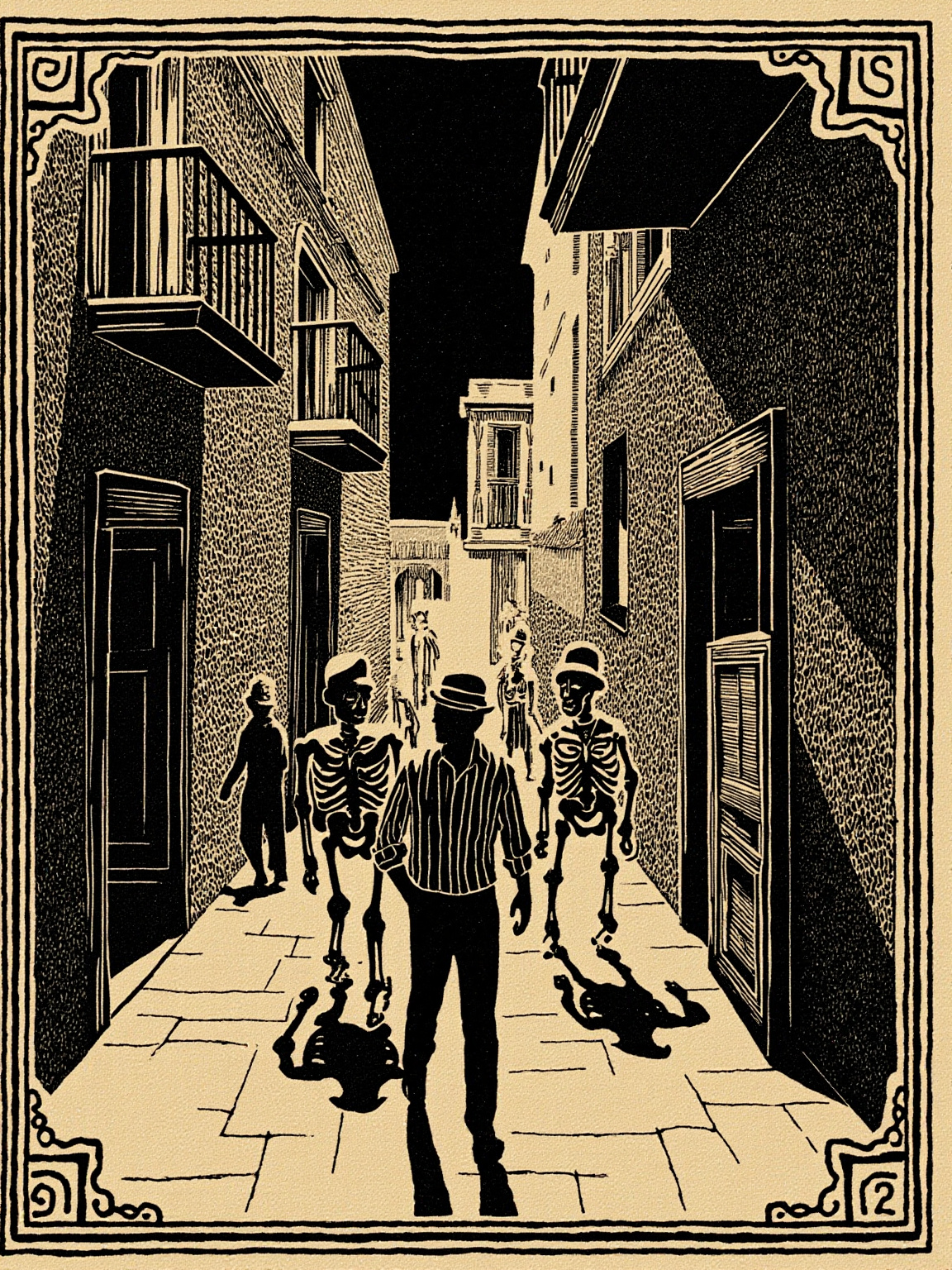
Buenos Aires was a city dyed in blood.
整个布宜诺斯艾利斯被染成了一座红色的城。
金句 · 第一幕 · 红色的城
Sheltering him is dangerous enough on its own. Daniel and Amalia, working in turn, hide him in the parlor with its candlesticks and piano — the last scrap of European propriety left standing in Buenos Aires, and it now serves as both cover and weakness at once. The mate gourd steams on the table, old family portraits hang on the wall, and outside the door hooves keep passing.
II. Candlestick, Fan, and a French Poem Recited Half from Memory
What the book truly does well is write terror into the everyday. Three people sit in the parlor, keeping up proper manners — the lady of the house fanning herself, Daniel reciting a poem in French, Eduardo pretending to turn the pages of a book he cannot actually read a word of. Outside is a night that could break the door down at any moment; inside is candlelight, the click of a fan, the low notes of a piano. The two sounds tangle under the same roof beam, and neither can pretend the other isn't there.
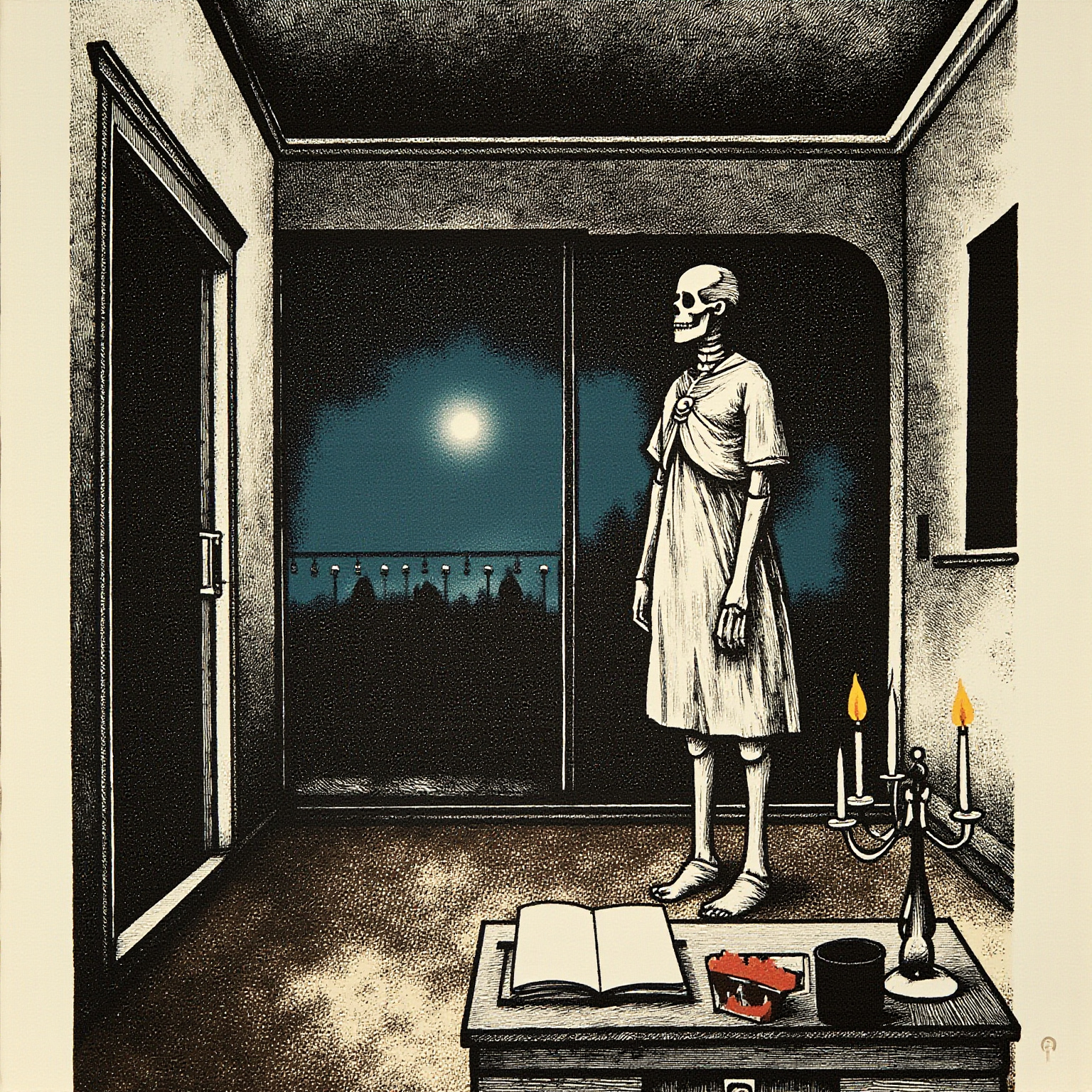
The terror of tyranny had entered even the most intimate of conversations.
暴政的恐怖,连最私密的低语都不肯放过。
金句 · 第二幕 · 烛台、扇子,与一首背了一半的法语诗
The first time I read a passage like this, it stopped me — a man in hiding, written like a dinner party. Eduardo grinds through this tension day after day: he can neither leave nor be seen; he wants to stay alive, and knows this is barely a life. But he is still a young man not yet thirty — Amalia tucks his shawl into place, Daniel fields a question at the door on his behalf, and in the space of a day or two, that gratitude quietly starts to answer to another name.
III. A Love Made of Fear
Fear is the strangest rival in this book. The Mazorca could break down the door at any moment, so every whisper between these two, every glance traded across the mate gourd, comes with its own countdown attached. Amalia knows it plainly: every step closer to Eduardo is a theft from tyranny's own pocket. Love becomes resistance here — not because love can topple anyone, but because it makes a young man forced underground willing to rewrite his own escape plan, again and again, for someone else's sake.
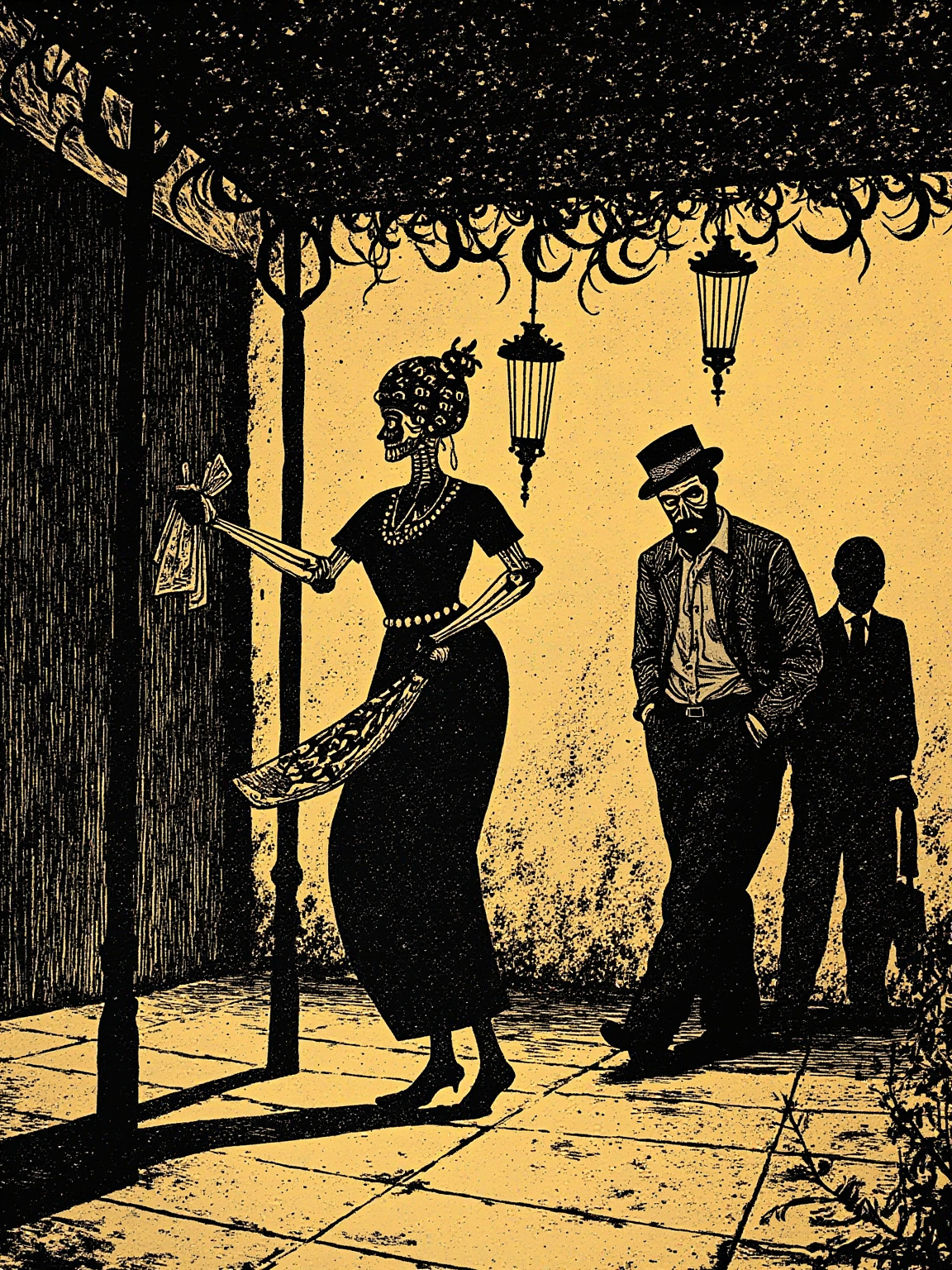
Love, in those days, was a conspiracy against the tyrant.
在那样的年头,爱情本身,就是一桩反对暴君的密谋。
金句 · 第三幕 · 恐惧里的爱情
This is Mármol's real skill. He sets a romance inside a night when the whole country is shaking, and makes it carry far more weight than two people alone should have to bear. The reader cannot read it as mere romance, because the hoofbeats of the men making arrests are right next door; and cannot read it as mere indictment, because the heat between these two young people when their eyes meet is not something you can fake on the page.
IV. The Last Time He Gripped the Reins
The escape plan is pieced together inch by inch, the three of them huddled around the candle. Montevideo lies across the river, where there is no red order, no arrest waiting overnight. A post road, an unremarkable carriage, some hour before dawn — they have even rehearsed in their minds the first breath of air on the other side. The plan is walked through again and again in Amalia's parlor, and each time, in their heads, they check the black horse in the stable once more.
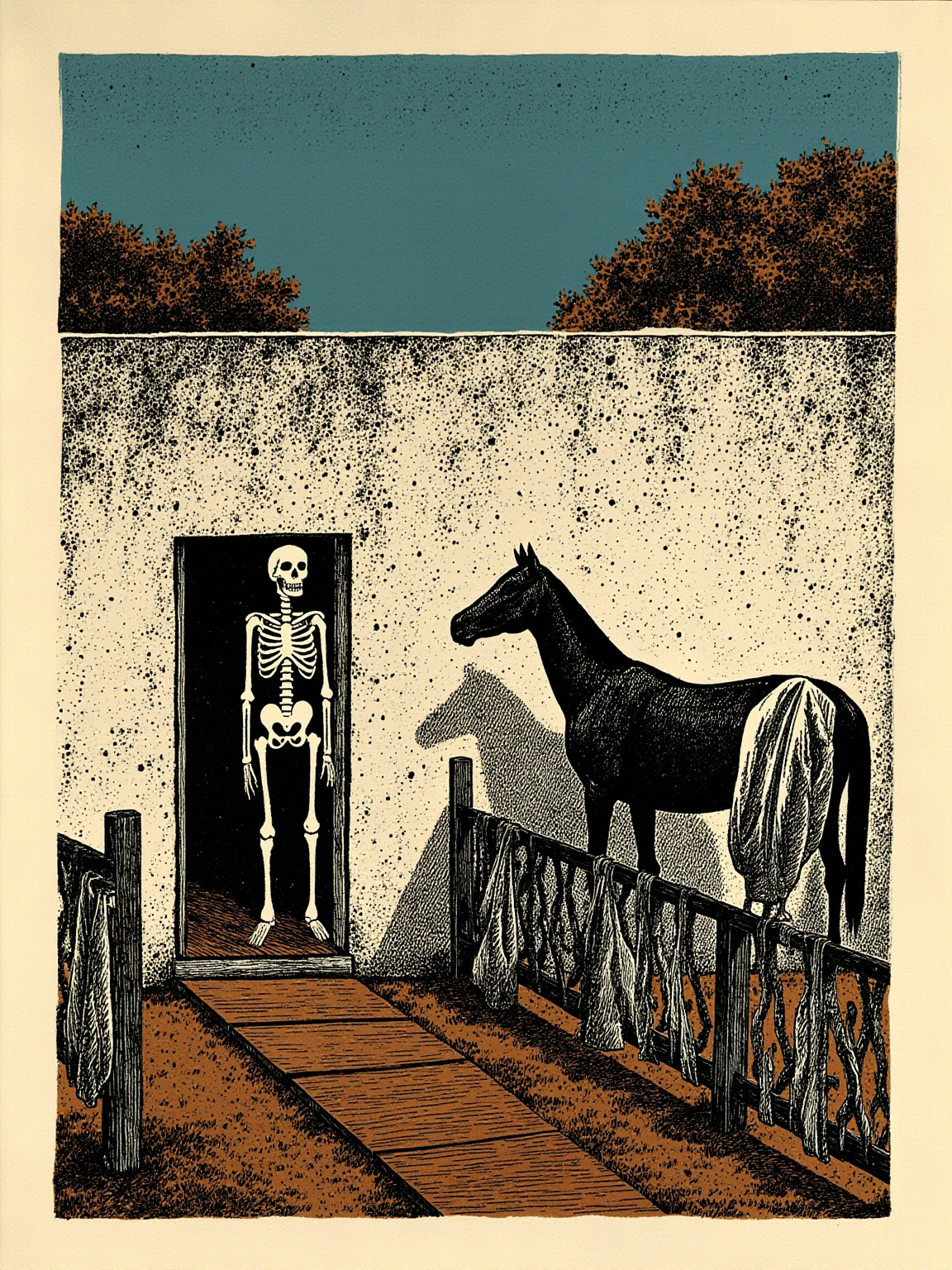
There is a certain pleasure in dying when one can no longer live as a free man.
当一个人不能再像自由人那样活着的时候,死反而是一种慰藉。
金句 · 第四幕 · 最后一次攥紧马缰
But that night, it happens at the one hour they aren't ready for. The death squad comes earlier than expected — and in Rosas's Buenos Aires, arriving early was the only thing you could ever really count on.
V. After the Hoofbeats
Mármol allows himself only a few lines for the ending. The two young men are taken by the death squad and never come back. Amalia lives — the rest of her life spent in this white colonial house, where the orange trees still bear fruit in the courtyard, the piano still stands, and red is still pinned to every neighbor who steps outside. She simply knows that the two names missing from this house will never again be spoken aloud by candlelight.
The tyranny does not content itself with killing: it pursues the living with its iron hand.
暴政从不以杀人为满足,它还要把铁手伸向活下来的人。
金句 · 第五幕 · 马蹄声之后
The cruelest thing about tyranny is not that it kills. It is that it forces the living to keep pretending, again and again, that life can go on as before.
Why This Book Still Cannot Be Skipped
Mármol himself was an exile — driven out of Buenos Aires in his early thirties, he wrote this book like a thrown spear from Montevideo. He was not remembering; at the moment he set the words down he was still hating, still running, still waiting on a dawn that had not come. That makes the love story in that colonial parlor something more than tragedy from the start — it is a manifesto wrapped inside a real and tender feeling. Romantic novels learned from Walter Scott how to write an age into a single life, but few writers have made the private and the national bite into each other this tightly.
Its influence runs deep in the structure of later work. Every Latin American story since that has written a secret police, a knock in the night, a neighbor turning informant, can trace its line back to this book. Argentine high schools kept it on the required list for years — not because it is an easy read, but because it compresses a whole stretch of history into a handful of candlelit conversations, so that no later generation can wave away that bloodshed as merely political.
Worth saying plainly on subject matter: this is political terror, not romance for its own sake, and its violence belongs entirely to the state machine turned against dissidents. Mármol writes with real restraint — the death squad is never staged as the butcher at center stage; it always enters through objects with no one standing beside them: an empty stable, a tied black horse, a cloak left hanging on a nail. That restraint is itself an indictment. The most concrete shape tyranny takes is often the things it leaves behind, refusing to be put away.
Knowing the Ending, the Book Still Rewards Reading
A guide can tell you that the two young men will die, that the Mazorca will come that night, that red is an order pinned to every body. But there is one thing no guide can give you — you have to open the book yourself and sit in that parlor: how the candle flickers, how the mate gourd rattles, how quietly the fan folds shut, which inch of cloth Amalia's fingers cross when she tucks the shawl around Eduardo. All of that Mármol built nerve by nerve in nineteenth-century Spanish. It lives only in the original — and that is exactly why this book is still being printed.
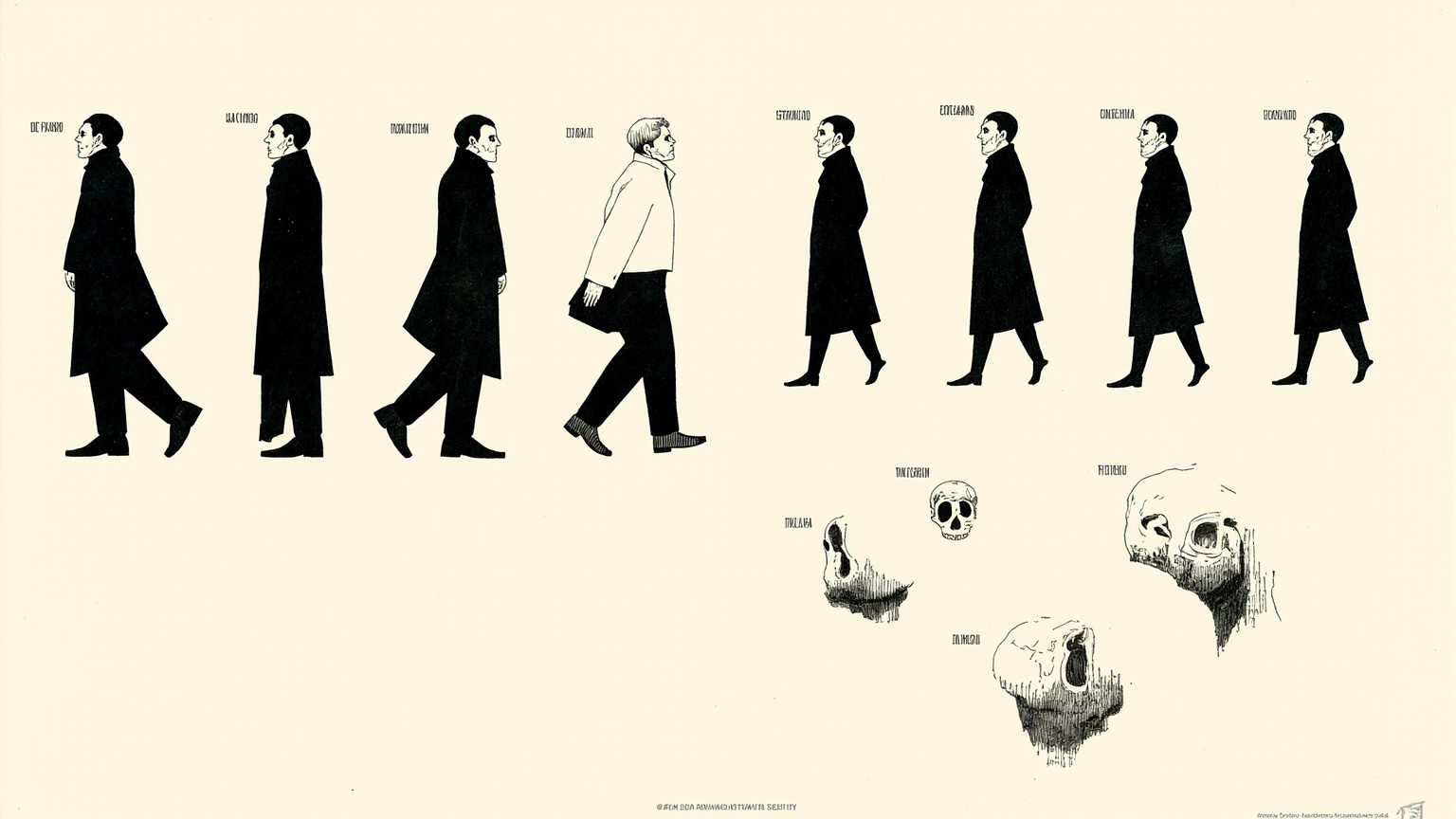
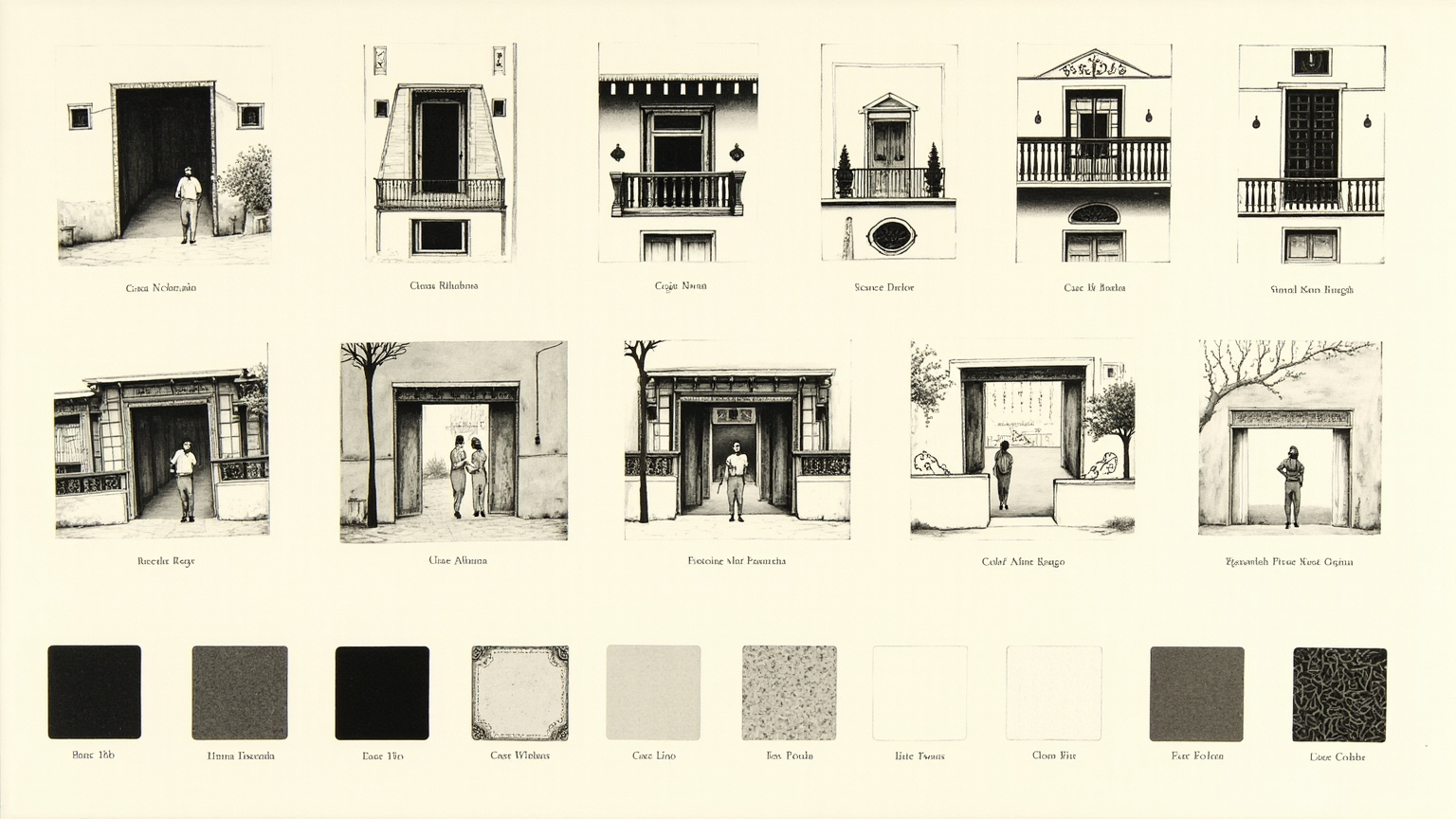
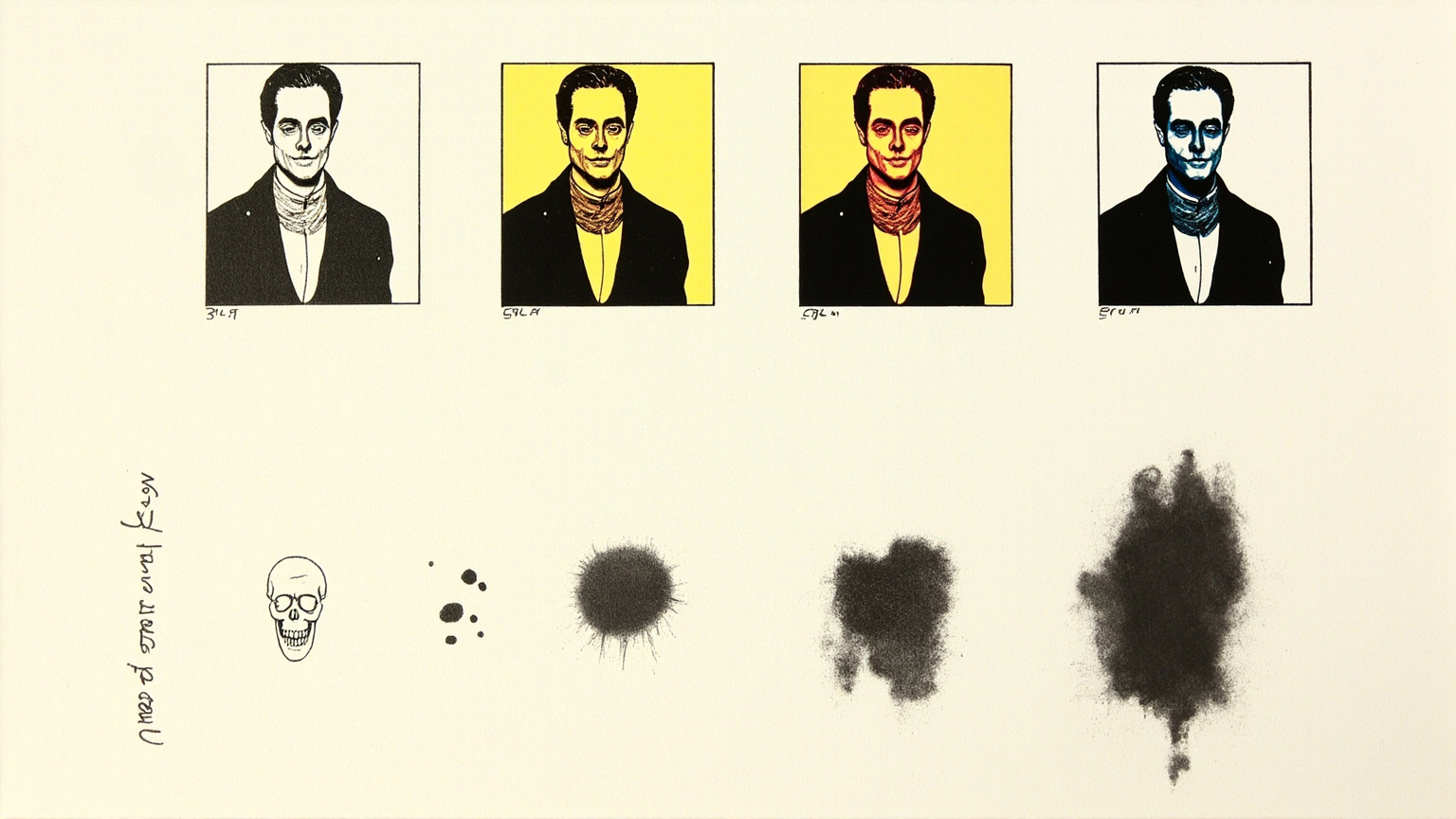
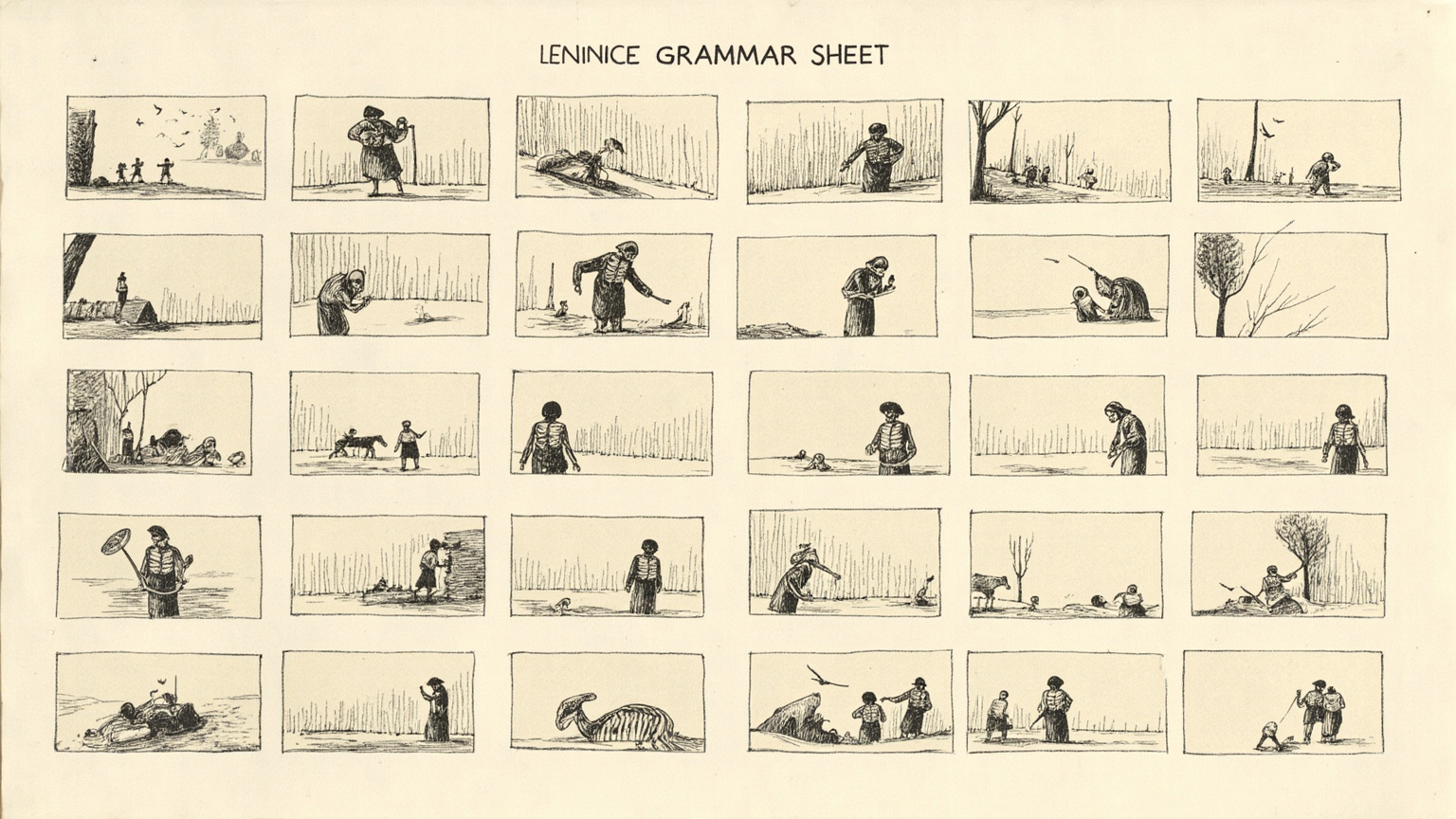
Art Direction4 plates
Before the guide was written, this book got a visual foundation — every illustration you just read grew out of it.