American Indian Stories · Companion Guide
美国印第安故事集
一个苏族女孩在金色草原与灰墙走廊之间,用英文记下了自己民族的声音——不是和解,是两副骨架在同一个身体里并立。
The Sound of the Falling Braids
One winter night sometime in the 1890s, in the assembly hall of a boarding school in Virginia, white matrons stood with scissors and called the Indian girls forward one by one. The braids fell and were swept into an iron dustpan. She wrote that what stayed with her was not the snip of the scissors but the sound that came after — iron striking iron, when someone later pushed that basket of black hair into the fireplace with a poker. The poker sent the braids into the fire. She did not cry that night. But that was the night she learned what it meant to be remade.
What This Book Is
American Indian Stories was written by Zitkala-Ša, born Gertrude Simmons Bonnin. Published as a collection in 1921, it comes in two parts. The first is her autobiographical essays, tracing a Dakota Sioux girl's path from the reservation, through a boarding school, to a voice that finally speaks in English. The second, Old Indian Legends, sets down the oral stories of her own people in English, centered on that cunning spider-god Iktomi. It stands among the earliest mature autobiographical prose written by a Native American author, twenty years ahead of Black Elk Speaks. It put a Dakota Sioux woman's voice into English, on the page, for the first time, inside the history of American literature.
The People, and Two Worlds
The narrator, Zitkala-Ša, took a name that means Red Bird. As a child she lived on a reservation on the northern Great Plains — the conical hide tipi, the horses, the creek bank, the bow rack. Her teachers were her mother and her grandmother. Her mother taught her table manners, taught her to share what was in the bowl, taught her to notice which way people were walking. Her grandmother told the story of Grandmother Wolf with a gravity that made the whole family sit still and listen, and that was how a way of seeing the world passed from one generation's mouth into the next generation's ear. Her companion was a boy from the camp, the one who raced her across the prairie, horse against horse, jumping the gullies, each of them riding to win.
The other half of her world was an industrial boarding school run by white administrators back East. There were matrons in uniform and high collars, keeping order by bell. There was a well-meaning white Christian teacher who first told the small girl this was the place where an Indian child could learn the white man's wisdom, and only later did the girl see that line for the varnish it was. There was the "big mother" who sent her, one summer, to work as a servant in a rich white woman's house, where she was stripped of her own name and called only "our Indians," and spent her days minding a baby, washing windows, whitewashing walls, forbidden to speak to anyone in the house. Iktomi belongs to the other world, the old friend who keeps turning up there — a figure with a man's shape and eight legs, who talks, who is greedy and foolish, forever tricking someone and forever getting tricked himself, the comic hero of the Sioux's own oral tradition.
A Childhood on the Prairie
When the light lay gold across the grass, she and that boy rode. What she remembered of the contest, she wrote later, was not who won and who lost — it was the wind pouring into her ears as the horse ran, the freedom of her body pressed flat against its back. She recalled, too, that everything she would ever write had its root in stories told aloud like this one, not in a church, not in a textbook.
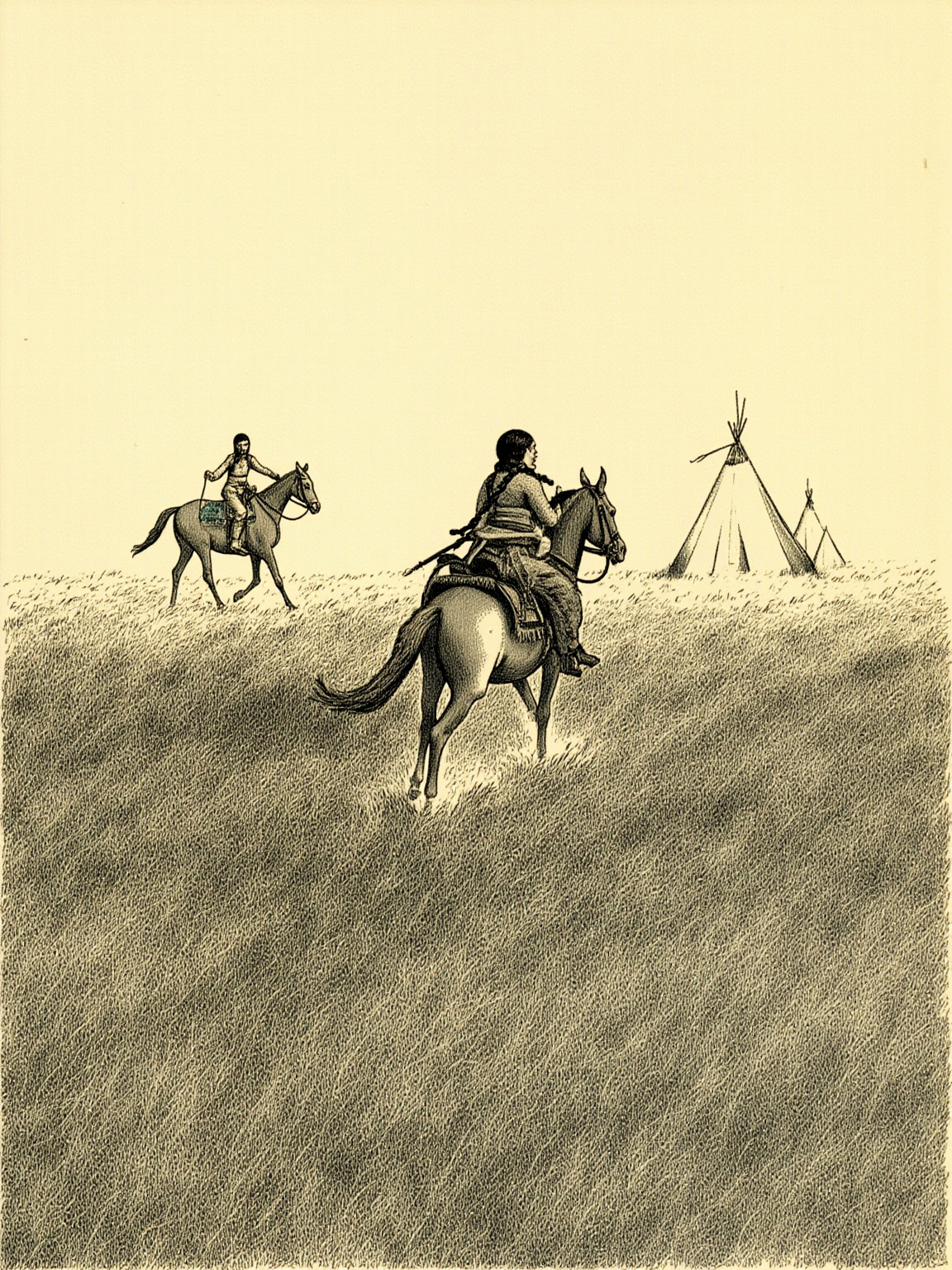
I stood very straight on the bare ground with my mother's hand in mine, and watched the golden sunlight playing on the open prairie.
我直直站在光秃的地上,母亲的手握在我手里,看着金色的阳光在无边的草原上嬉戏。
金句 · Impressions of an Indian Childhood · 草原童年
The Day She Left the Reservation
On the day arranged by the white Rotary society, her mother stayed on horseback. She leaned down, lifted the child off the horse, and set her into a stagecoach waiting on the prairie, without ever dismounting. The child did not cry either. This was not a scene of tearful parting. It was a duller cut, and a deeper one. She wrote later that this was the true dividing line between two worlds: the world in front of her could from then on only be remembered, never lived in again.
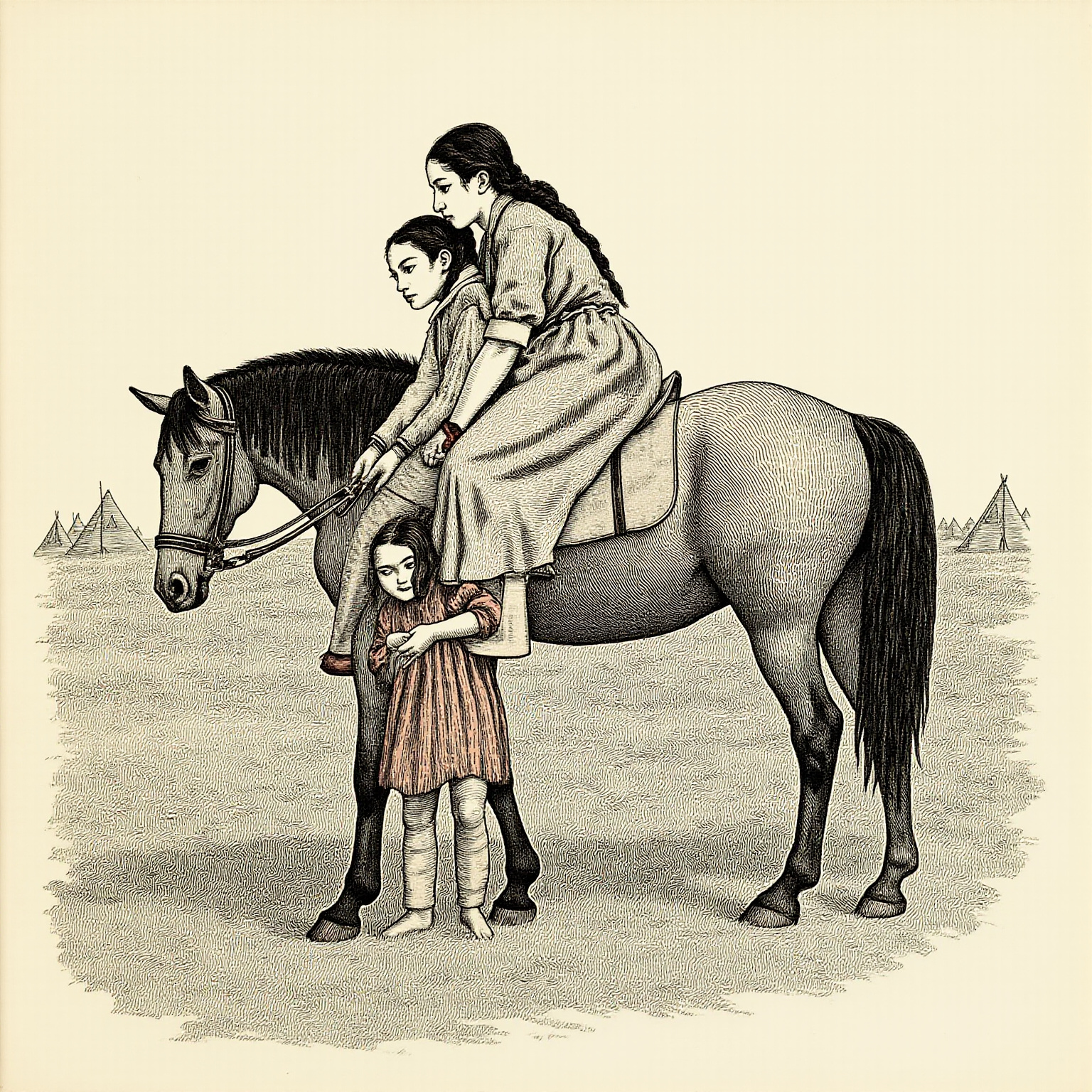
I cried aloud, and no one heard me; and in my great agony I prayed for relief, but no relief came.
我放声大哭,却无人听见;我在极度的痛楚中祈求解脱,而解脱并不来临。
金句 · The School Days of an Indian Girl · 离开保留地
The Night the Braids Were Cut
They lined the girls up in the hall, the bell rang, and the white matron held the scissors. She writes the cutting not as a scene of blood and flesh but as what came after: the basket of black hair on the floor, pushed into the firebox with a poker — and it was that sound, iron against iron, that stayed with her at night for years afterward, louder in memory than the scissors' click ever was. What she is writing is the violence of an institution, not an assault on the body. The difference matters.
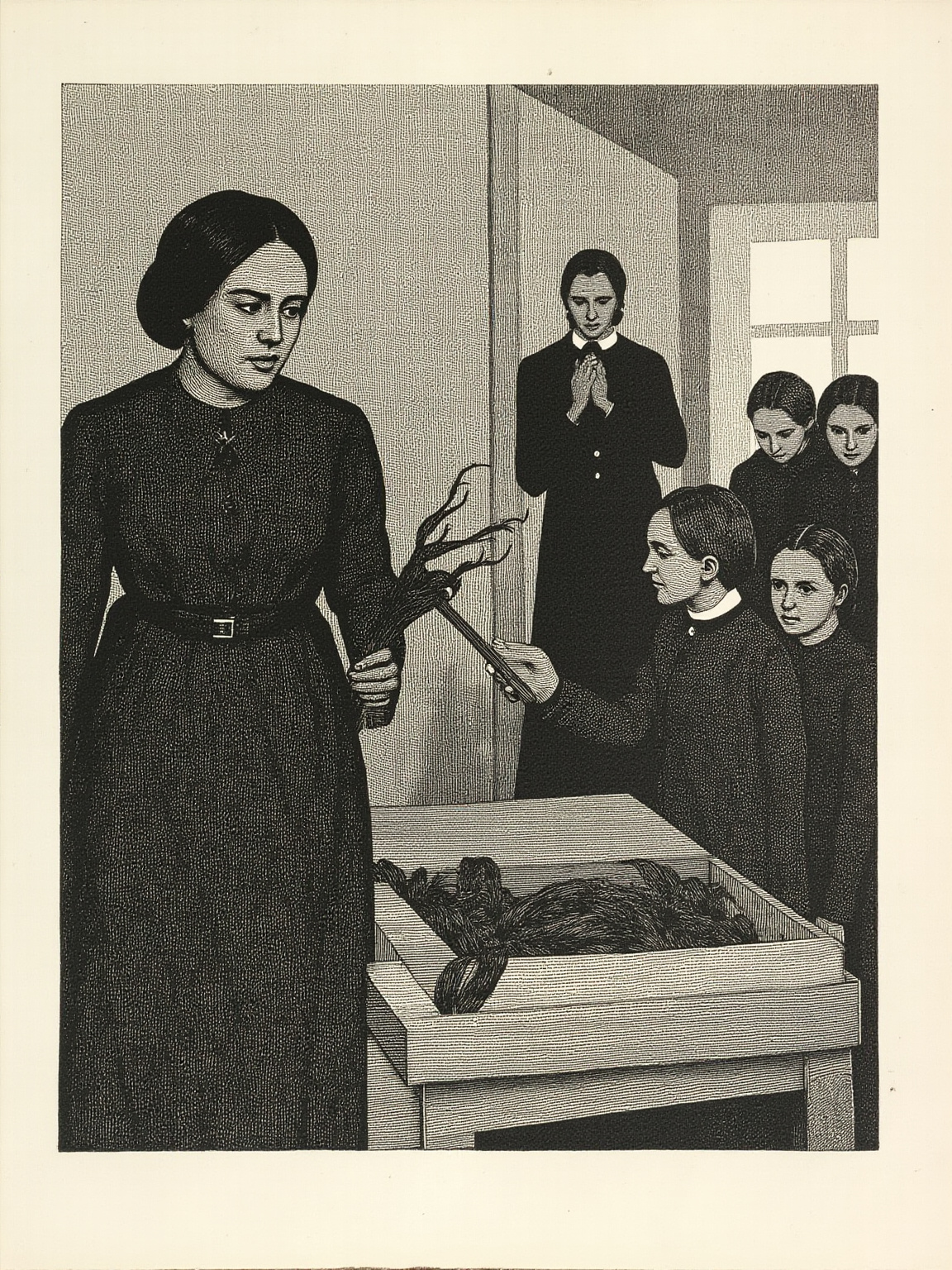
For the first time I tasted the metal of the scissors against my throat, and the heavy clatter of the shears falling into the tin pail.
那是我第一次尝到剪刀抵在喉间的冰凉金属味,听见铁剪沉落进铁皮桶里的那一声钝响。
金句 · The School Days of an Indian Girl · 剪辫之夜
Discipline, and Small Refusals
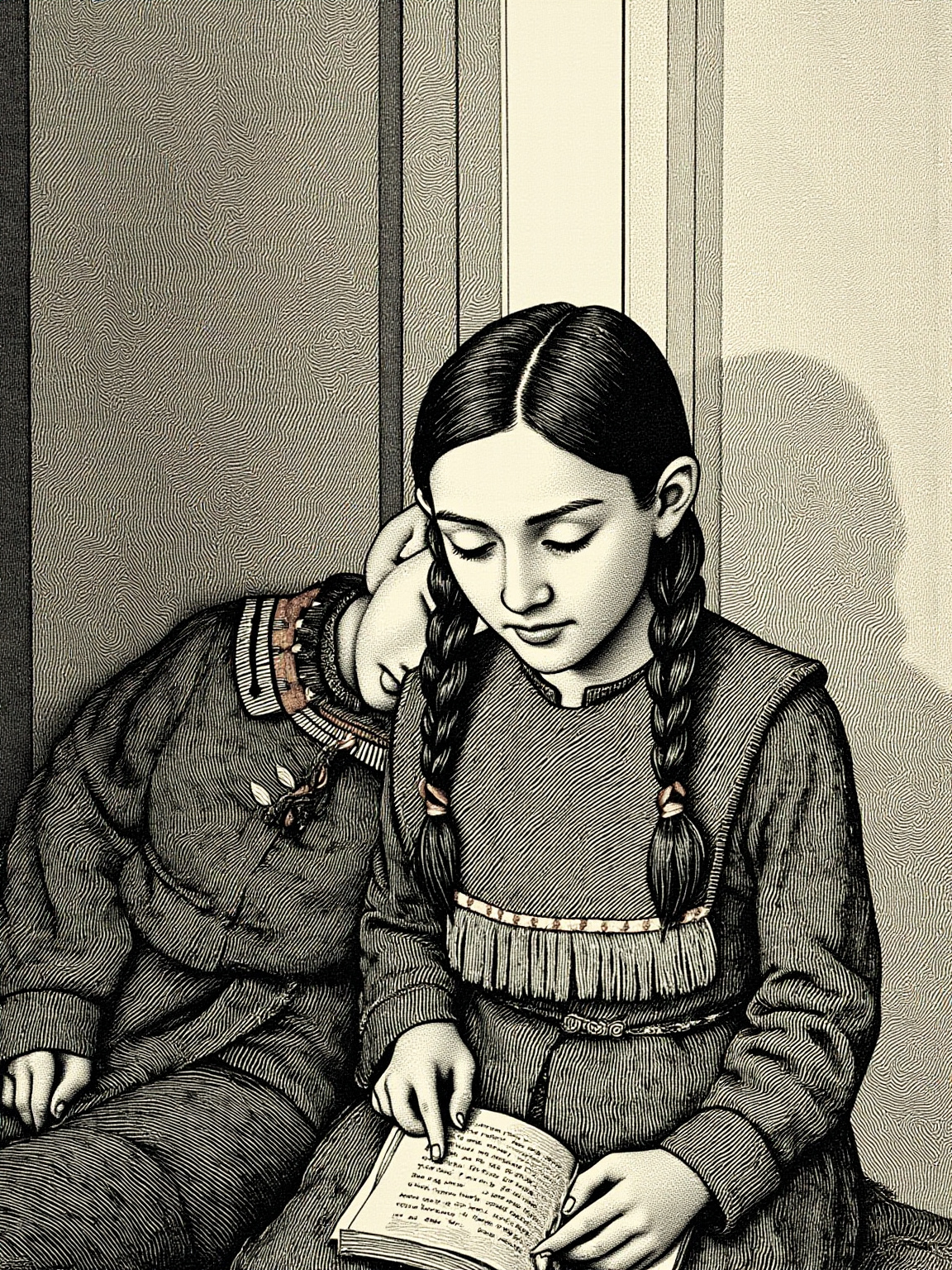
She was given an English name, forbidden to speak her own language, drilled in the pronunciation of English verse. In a second-year recitation, she put herself forward for a part on stage, and a white teacher pulled her back for it, calling it defiance of the bell. She and another boarding-school friend hid a notebook and taught each other words from their own language in secret. None of this is heroic in the grand sense. It is small, and it is how a person keeps herself alive.
The Summer She Was a Servant
White philanthropy ran something called the outing system: over summer break, Indian students were sent to work in white households. That summer she was sent to a wealthy woman's house to mind a baby, wash windows, whitewash walls. The lady called her "our Indians." She scrubbed cups alone in the back kitchen, forbidden to speak to anyone else in the house. She went from being one of "our Indians" to being the one who looked after "my children" — and the distance between those two phrases was one she never crossed, the whole summer through. Reading this passage stopped me too. I hadn't known that the word charity could cut this precisely, in a context like that one.
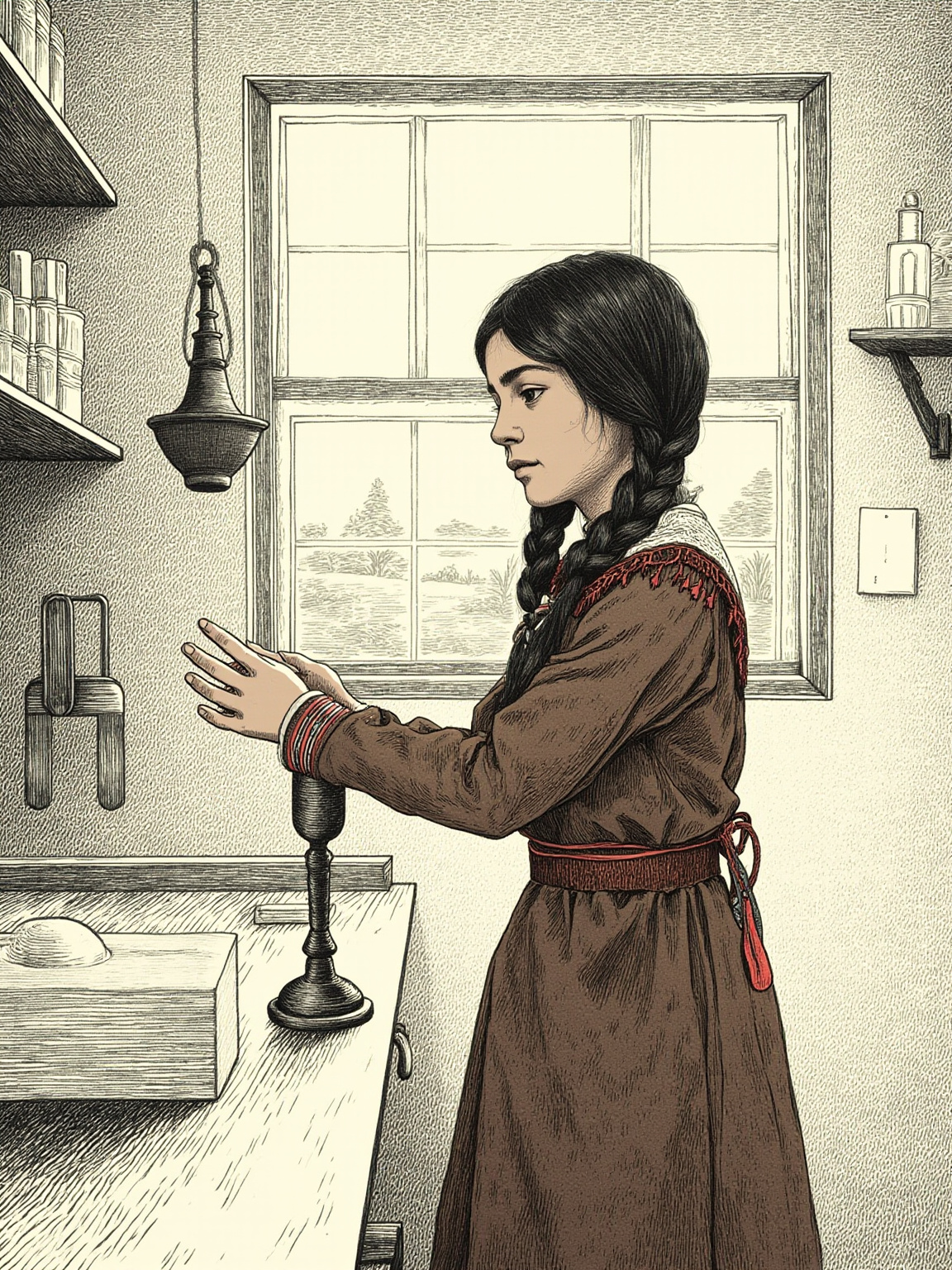
I was a slender, brown-faced girl, with black hair and eyes, working for her bread in the kitchen of a white woman.
我是一个瘦削的、面色棕黑的女孩,黑发黑眼,在一位白人太太的厨房里为一口面包而劳作。
金句 · The School Days of an Indian Girl · 暑假佣工
She Begins to Speak in English
Back at school, a white teacher asked her to speak to a white audience about Dakota Sioux stories. She agreed, and then found that the power to decide what to say, how to say it, and who to say it to was not hers. That became the seed of the essay "An Indian Teacher Among Indians" — an old Dakota monk addressing a room of white students on how we understand the world, and she wrote that reversal of roles without any mercy. Later she went to the New England Conservatory of Music to study violin, and under the pen name Zitkala-Ša she sent work to The Atlantic Monthly between 1900 and 1901. That is the mark of a writer finding her own voice — not because either side won, but because she had to learn to write from inside the space between two worlds.
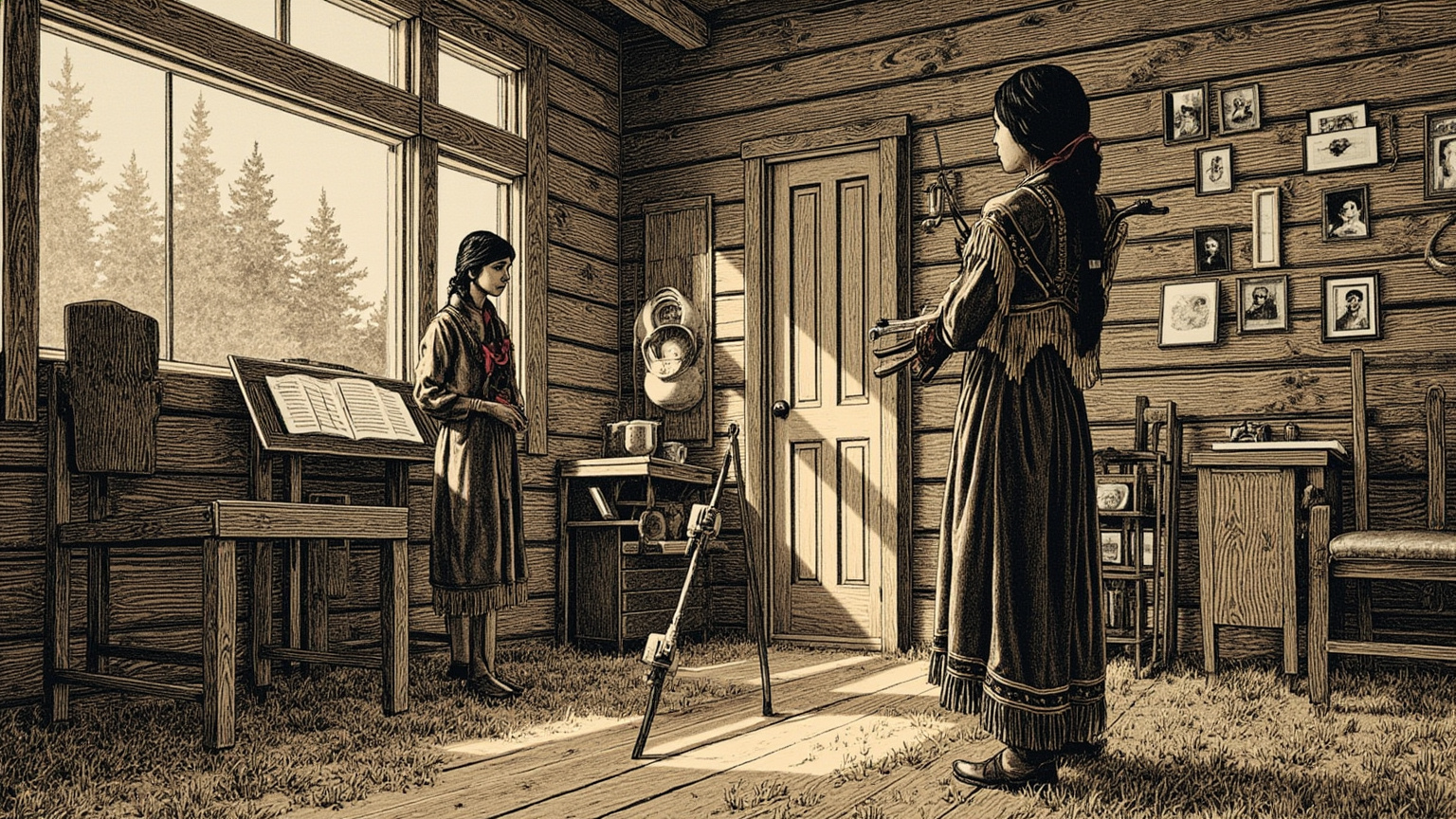
I was no longer a silent listener; I spoke and acted; and the old missionaries who had been so long at the Sioux reservations were astonished at my audacity.
我不再是沉默的旁听者;我开口,我行动;那些在苏族保留地住了多年的老传教士们,竟被我的胆大所震惊。
金句 · An Indian Teacher Among Indians · 印第安教师
Old Stories, New Words
The second part, Old Indian Legends, is Sioux oral tradition that she set down in English herself. Iktomi appears most often: he wants fire and can never manage to steal it, he tricks a buffalo, he carries an umbrella and thinks himself very fine, and each of his four adventures ends with him made the fool. This is Sioux humor on its own terms, not a wood-sprite out of a European fairy tale and not a Disney-style cartoon. He dresses, talks, and acts like a Sioux man, comic with an undertone that can catch in your throat. That Zitkala-Ša set these stories down in English was an act of preserving her culture, and, as she herself knew clearly, an act of transformation too: the voice survived, but the vessel carrying it had changed.
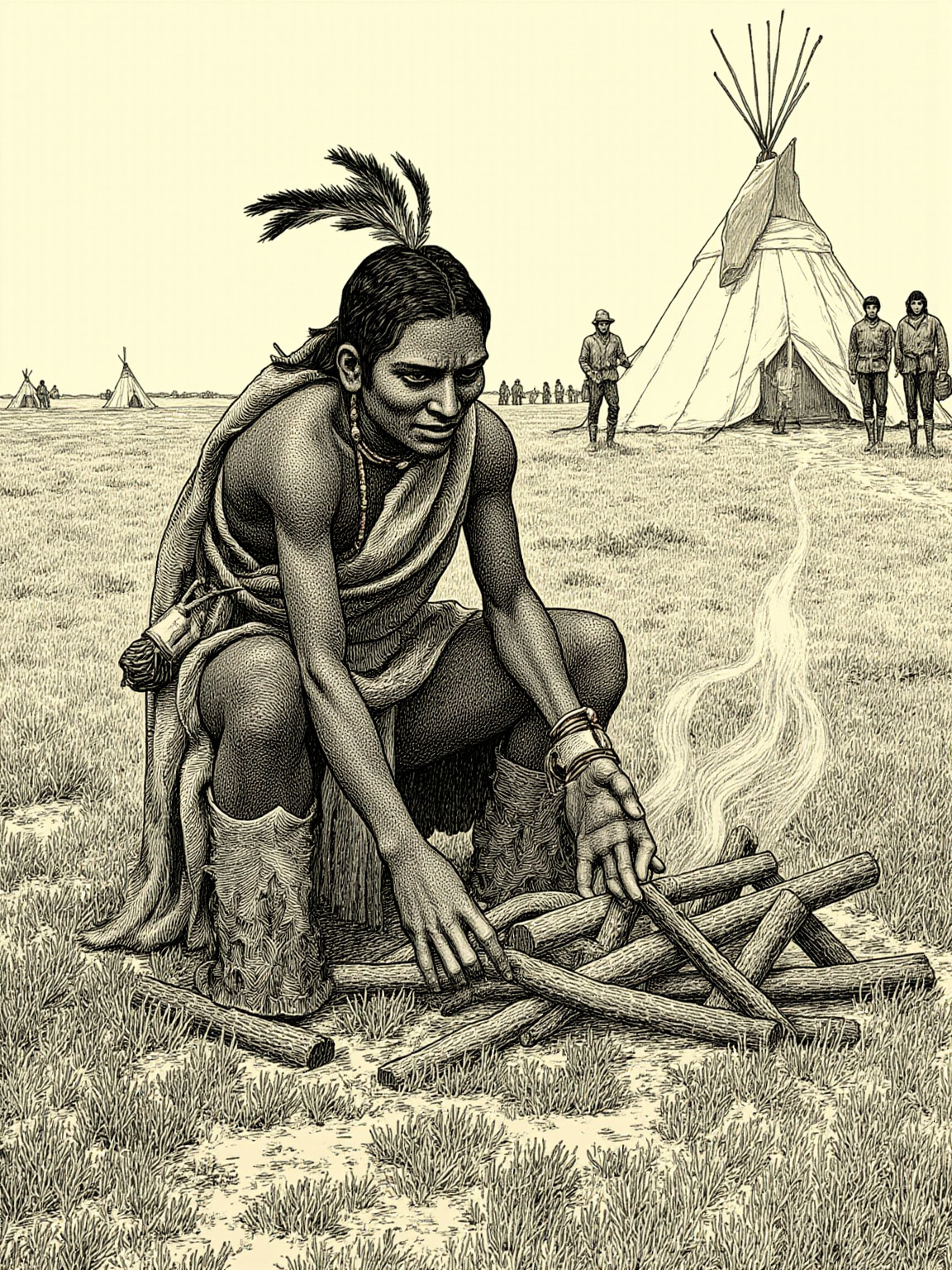
These stories are my own thoughts, written in the English language, yet wearing the native dress of my people.
这些故事是我自己的思想,以英文写就,却身着我本族自己的衣裳。
金句 · Old Indian Legends · 序言
Why It Is Worth Reading
The pull between two worlds is the spine of this book: the gold-lit prairie set against the cold gray-blue of the boarding school, her mother's and grandmother's spoken stories set against the matron's bell, her own people's name for her set against the English name she was given. She never lets one world swallow the other, and she never closes the book with a gesture of reconciliation. The night of the cut braids has no close-up of blood and flesh. The summer as a servant has no speech of accusation. She is restrained almost to the point of coldness, and every detail carries weight because of that restraint. It stands as an early landmark of Native American life writing, and it remains a text no one can skip when discussing cultural trauma, charitable institutions, or the politics of language today.
She was not erased by either world. She lived in both at once — and that is what makes this book impossible to sit still with.
Why Read the Original, Even Once You Know the Story
An explainer gives you the map. The text itself is the land. The restraint in this book's prose — the night of the cut braids reduced to one sound, iron on iron, the summer of servitude reduced to the grain of a countertop she wiped, the prairie childhood reduced to the direction a horse's mane whipped in the wind — none of that survives being retold secondhand. You have to go to the page yourself and pause where she pauses to breathe. And the oral stories, the voice that is both kept and transformed once it is set down in English, are something no explainer video can give you. In the second half, every one of Iktomi's tricks runs on the rhythm of a story told aloud, and you only laugh once you have read it yourself.
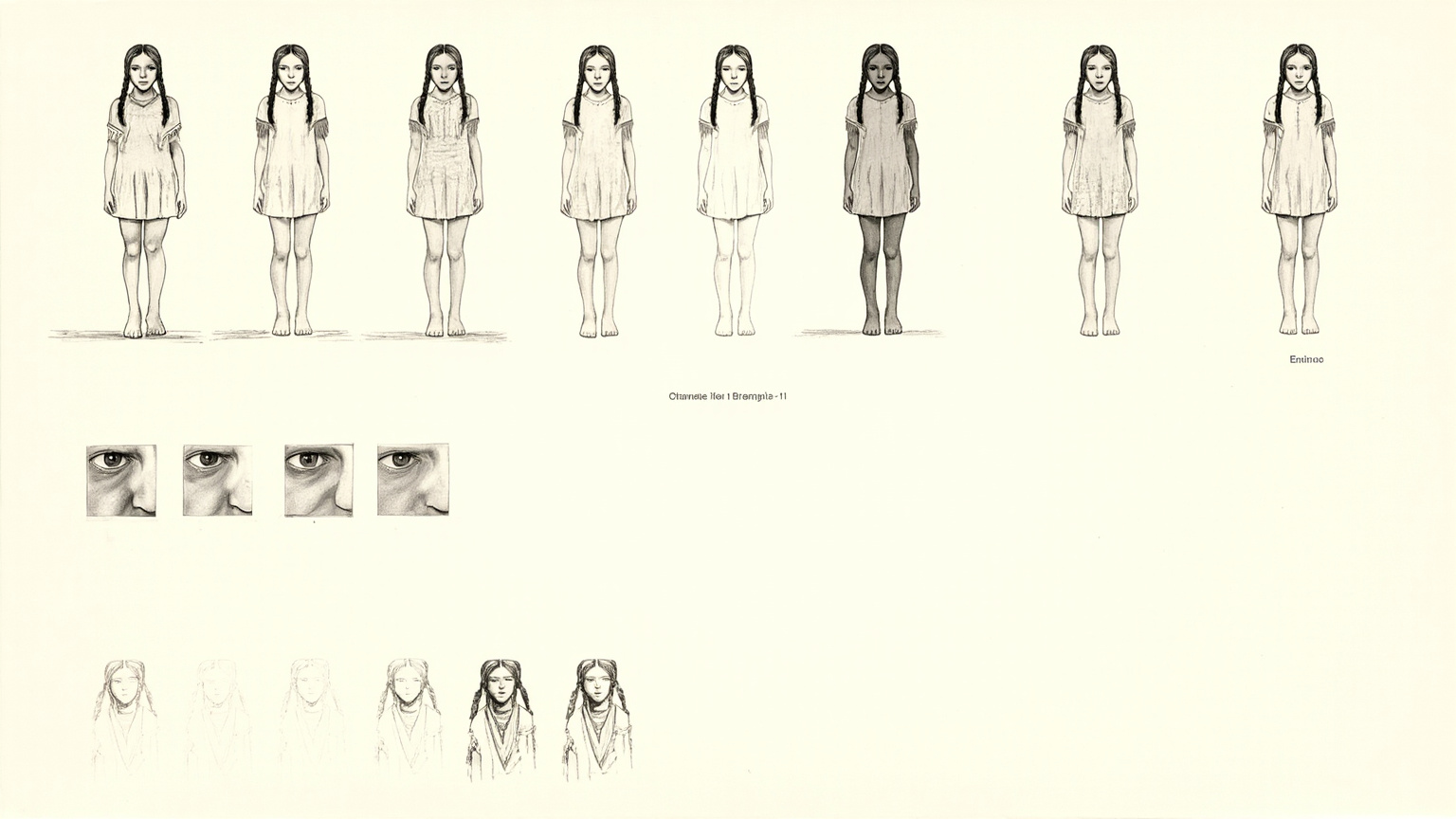
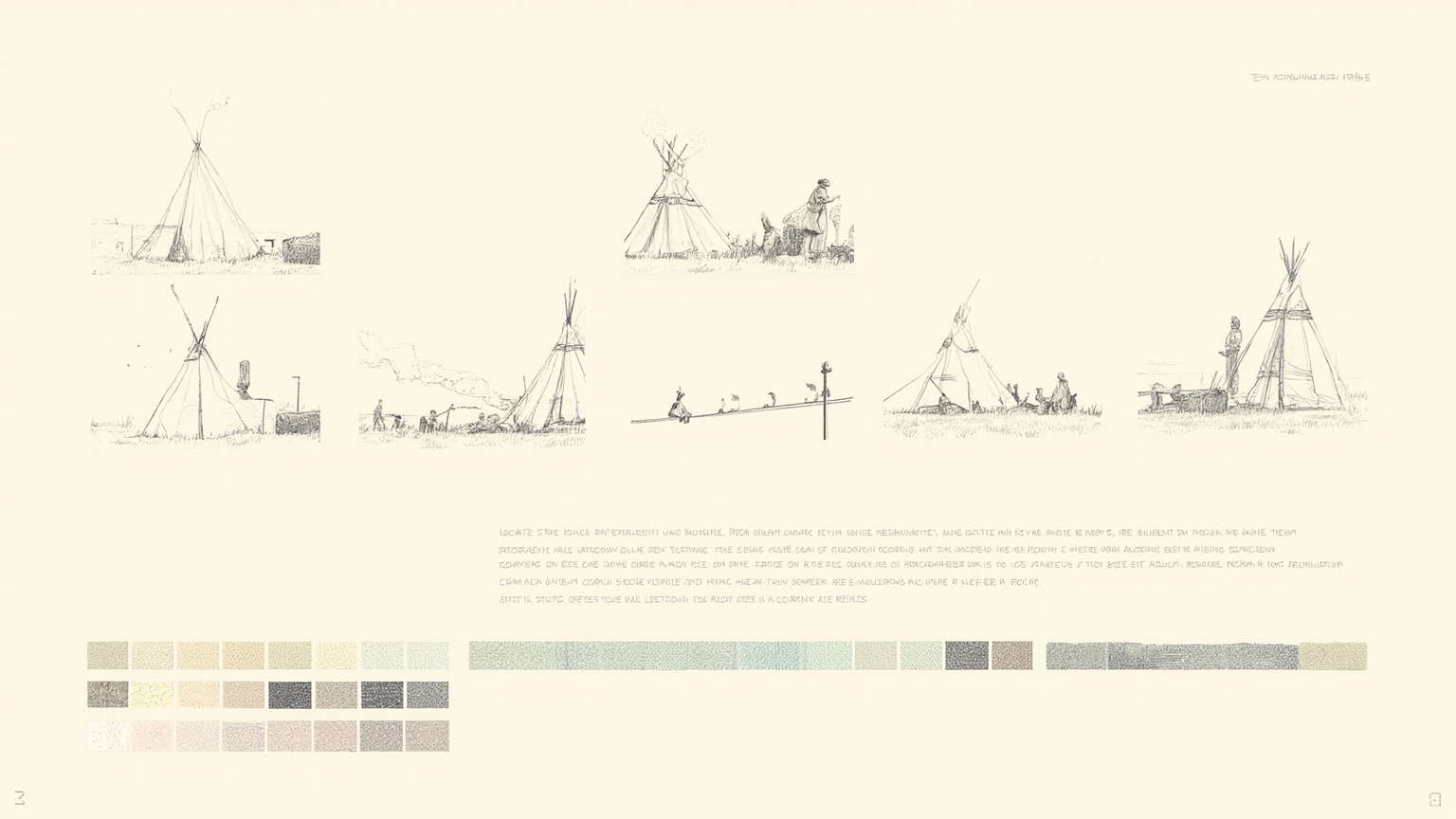
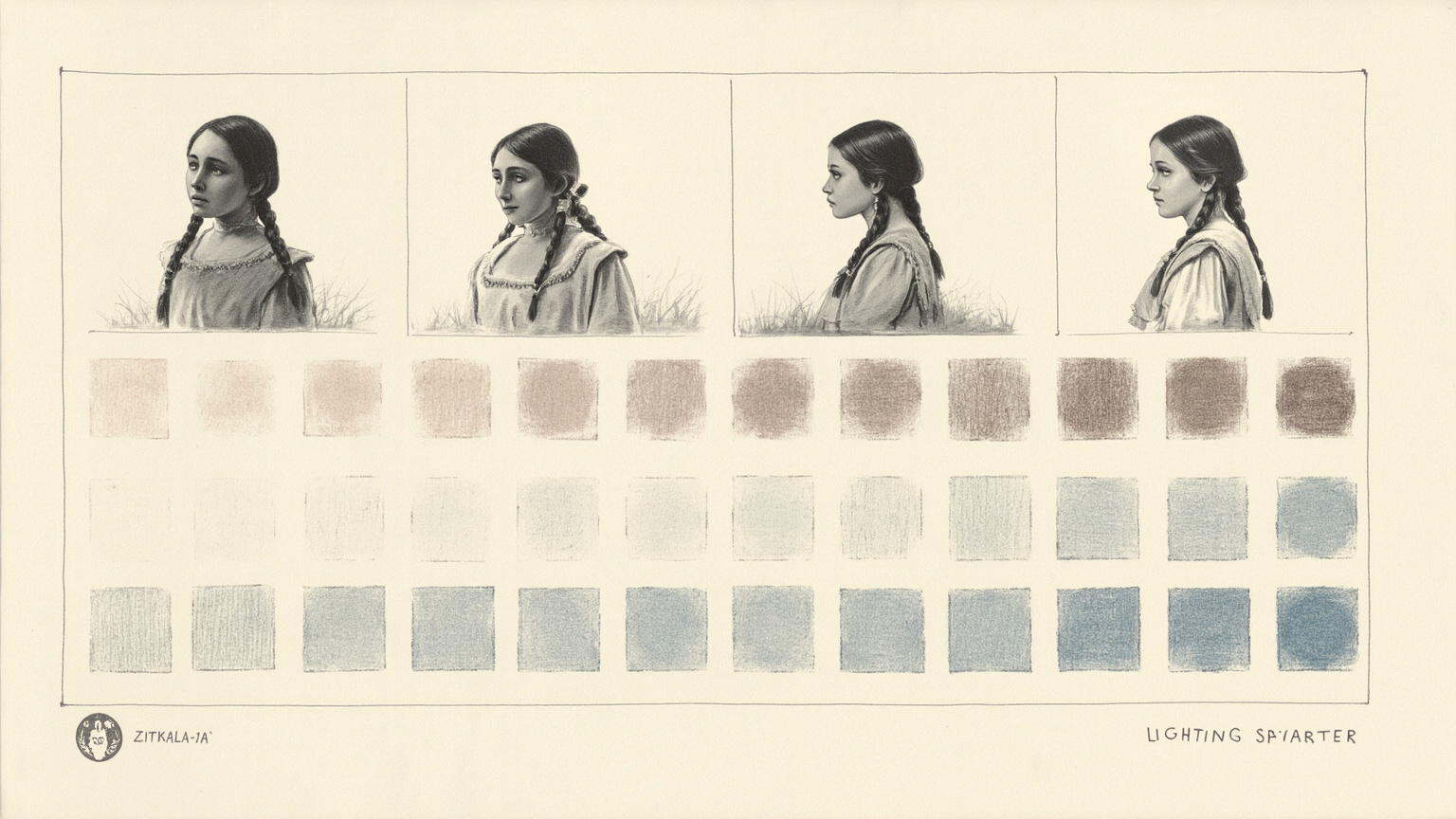
Art Direction4 plates
Before the guide was written, this book got a visual foundation — every illustration you just read grew out of it.