The Diary of a Young Girl · Companion Guide
安妮日记
一座倾斜天花板的阁楼,一本红白格日记本,一个十三岁女孩在沉默中用两年把自己写了下来。
A Bookcase Door Couldn't Hold Her Voice Back
Somewhere in that old red-brick row house on the canal, a bookcase doubles as a door. Push a row of fake spines and the whole thing swings open without a sound, revealing a narrow staircase behind it. At the top is an attic with a sloped ceiling, a small round window, and heavy black curtains. Anne Frank called it the Annex. She hid there from July 1942 and kept writing until August 1, 1944 — two years and one month. Eight days after that last entry, the Gestapo came.
What This Book Is
The Diary of a Young Girl isn't a novel, and it isn't a memoir written after the fact. It's a diary that stops mid-stride, cut off the day the Gestapo broke in, written by a thirteen-year-old named Anne Frank. She never meant it for anyone else: it was letters to an imaginary friend she called Kitty, meant only for herself. After the war, her father Otto Frank, the only one of the eight in hiding who survived, prepared the diary for publication. It came out in Dutch in 1947 as Het Achterhuis (The Annex), and has since been translated into dozens of languages and assigned in classrooms for generations. A teenage girl's private diary became one of the most widely read firsthand accounts of the Holocaust. That's what makes it strange and singular: the lens never turns to the barbed wire of a camp. It stays fixed on a girl turning pages in an attic.
Eight People, One Attic
Packed into the Annex were the four Franks: Otto, his wife Edith, and their daughters Margot and Anne. Otto's business partner Hermann van Daan came too, with his wife Auguste and son Peter. In November 1942 a Jewish dentist named Dussel joined them, bringing the number to eight. By day, no one could make a sound. Downstairs was the Opekta warehouse, with workers moving in and out; one footstep overheard and the whole hiding place would be finished. So their days ran backward: sleep and whispers while the sun was up, lights and the radio only after dark. The Annex held plain bunk beds, one desk they all shared, a wall plastered with clippings of Hollywood stars, and a map of the world. Food came out of tins, doled out by ration. The curtains were thick enough to block out any light, though now and then a sliver of reflection off the canal slipped through a gap.
Anne was thirteen then, at that most tangled age. She and her mother could barely finish a conversation without friction. Margot, three years older, did better in school and made less noise, the kind of child who spared her parents any worry. Anne resented that, and secretly envied it too. Otto was who she was closest to in the Annex. On her thirteenth birthday he gave her a diary with a red-and-white checked cover, and on the spot she decided this was who she'd write to: Kitty.
The Summer She Went Behind the Bookcase
Going into hiding was not planned. In July 1942, Margot was the one who received the summons: the Nazis were calling her up for a labor camp. Otto began arranging everything that same night. The next morning Margot left first; Anne and her parents followed, each carrying one small bag, walking in through the company's front door as if nothing were wrong. They didn't dare arrive together, in case it gave the workers downstairs something to wonder about. That was how a thirteen-year-old's entire childhood ended, in one clean cut.
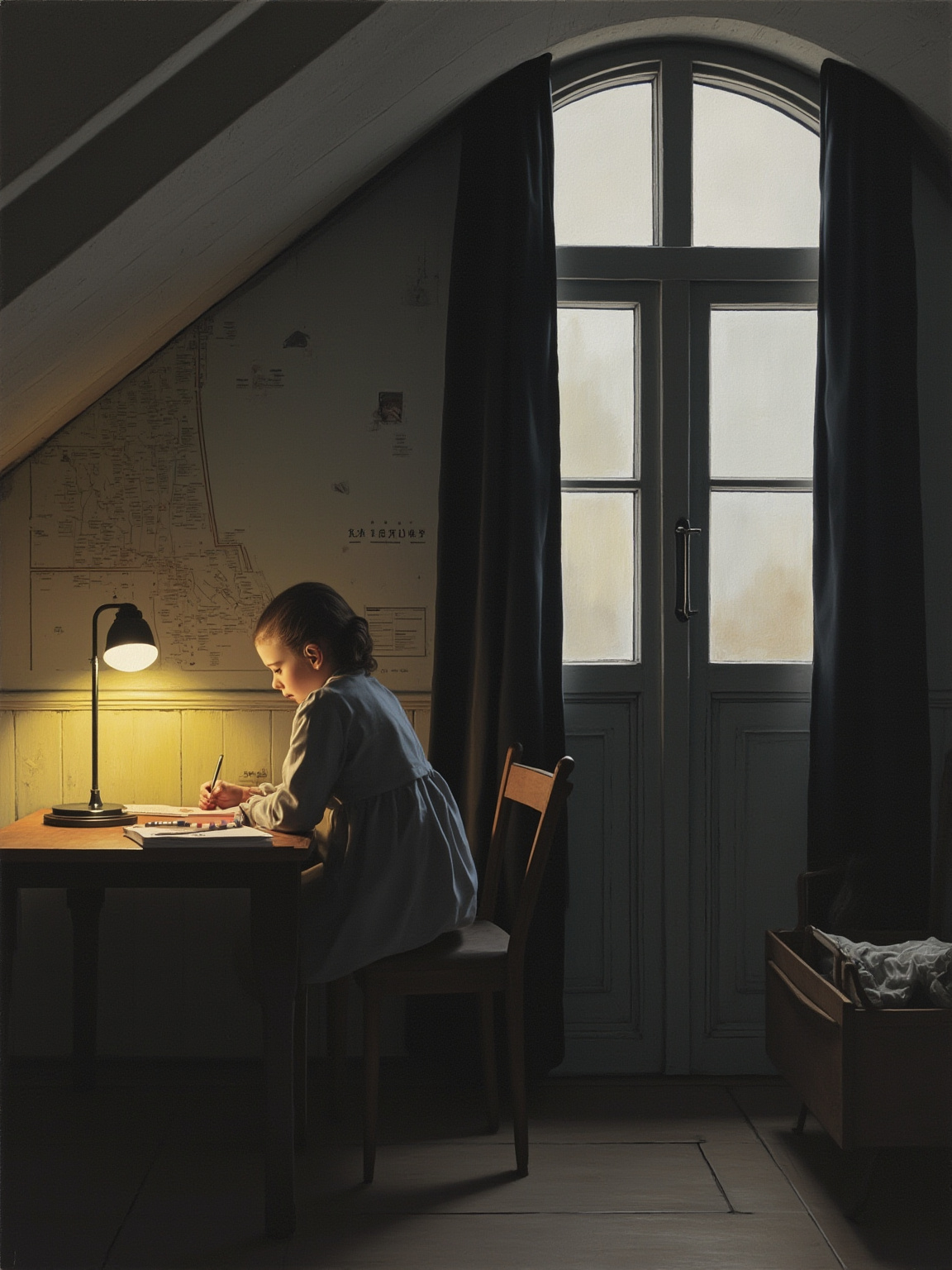
I don't think I'm going to be back here for a while, and yet I can hardly believe that this is all really happening to me.
我不敢相信这一切真的发生在我身上,可我又确确实实地站在这里,穿着一身不合适的衣服,背着一个沉甸甸的书包,往一个叫密室的地方走去。
金句 · 1942年7月8日 · 躲进密室的早晨
She would return to that morning again and again in the diary: what she wore, which bag she carried, the weather on the street, what her mother said, whether her father looked back. Every detail stayed sharp in her mind, because it was the last ordinary day a child would get to keep.
Kitty, Listen to Me
That red-and-white checked notebook was Otto's birthday gift. Anne turned it into a person almost immediately, a girl named Kitty, and started writing in letters: Dear Kitty, today... Dear Kitty, I can't take it anymore... That small act of invention is the tender hinge the whole book turns on. A girl locked in an attic, with no one her own age to confide in, made a blank notebook her only friend. She griped to it about her mother's favoritism, complained about Dussel's fussiness over cleanliness, wondered aloud about the spring rain outside the window, and confessed she wanted to grow up to be a journalist or a writer. Her letters to Kitty run tender to the point of innocence one moment and startlingly grown-up the next. It catches you off guard: what you're reading is a child forced to live ten years of growing up inside two.
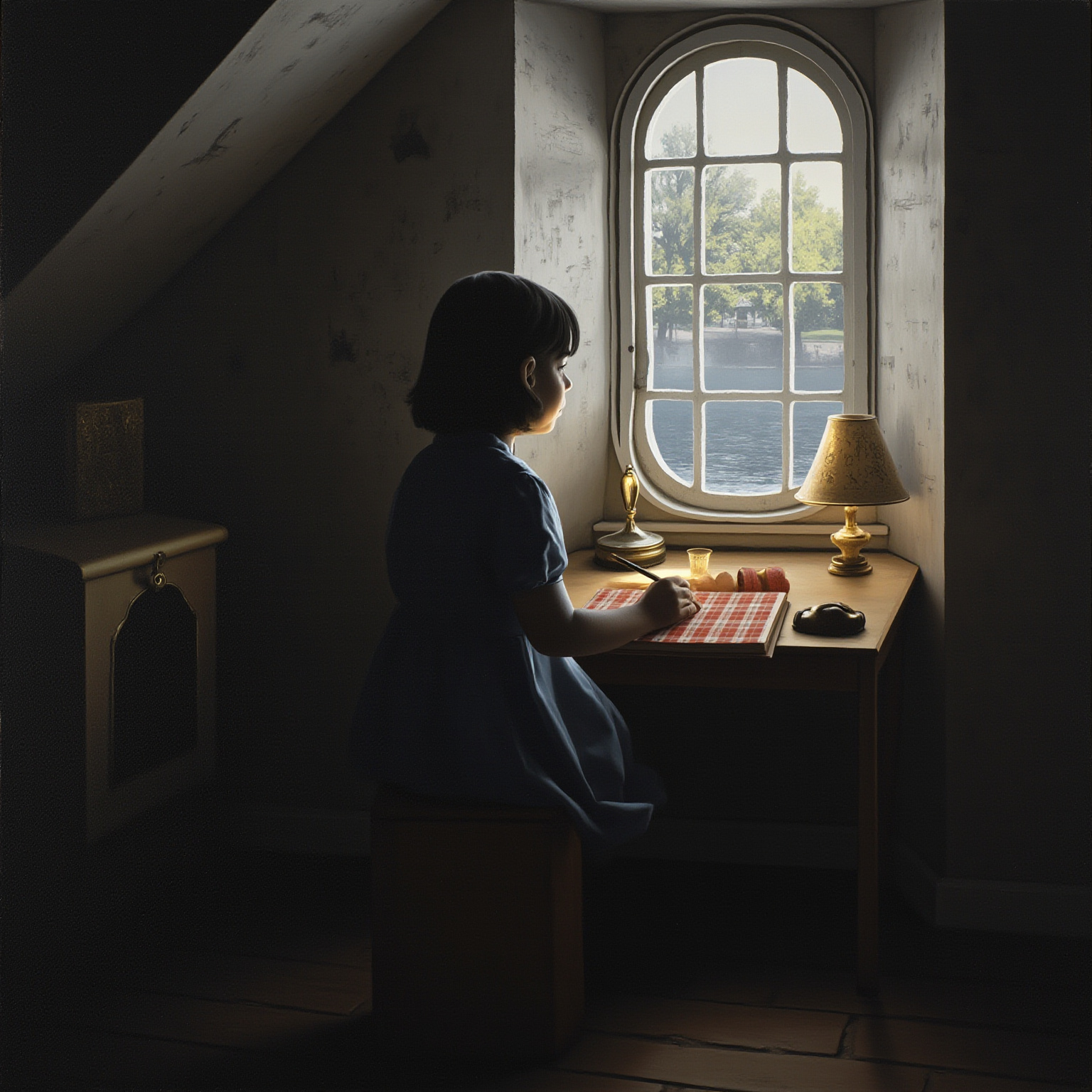
Dear Kitty, I haven't written for a few days, because I didn't feel like it; there is so little to say that I can't possibly fill a whole page.
亲爱的基蒂,我已经好多天没动笔了,不是不想写,是日子太满,满到装不进一张纸里。
金句 · 1942年 · 给基蒂的第一封信
Silent by Day, a Voice Only at Night
The rule of the Annex was blunt: no sound, ever, during the day. If a pen dropped, you held your breath to pick it up, because anyone downstairs in the warehouse might hear. So the daylight hours were dead silent. Eight people spoke under their breath, walked on tiptoe, signaled with their eyes instead of words. Only at night, once the workers had gone home and the building emptied out, did they dare switch on a light, warm up the rationed food, or turn the dial on the old radio to catch the BBC's war news. Good news from the front, and Anne's pen would take off that day: spring was coming, the tulips were about to open, the Allies would win, she was sure of it. Bad news, and she folded straight back into that small huddled shape in the corner of her bed. Hope and fear traded places on the same page, for two years.
Forced to Grow Up in an Attic
Two years is not short. For an adult, that's twenty-four months. For a thirteen-year-old girl, it's nearly the whole of adolescence. Anne and her mother came close to a real break in the Annex. She filled long stretches of the diary trying to explain why she couldn't love her: too critical, too cold, too quick to make Anne feel unseen. She wrote about Margot too, admitting her sister was the better one while a quiet rivalry kept nagging at her anyway. She wrote about her changing body, about the fright of her first period, about watching a stranger slowly take shape in the mirror. Taken on their own, these are ordinary teenage worries. Written under a blade that could fall at any moment, they carry an entirely different weight.
Her growing closeness with Peter van Daan is the diary's other quiet thread. Peter was a little older, quiet and withdrawn, and before they went into hiding the two had barely spoken. At first Anne was almost afraid of him; she found him odd, unresponsive. Then small things drew them together: a borrowed book, sitting across the little attic table from each other, teasing a stray cat that had wandered in, and one rainy night when the distance between them kept closing. Anne wrote the whole arc (misreading him, curiosity, the first flutter of feeling, an awkward first kiss) with a shy, careful precision, confessing to Kitty her own confusion, doubt, hope, and the moments she pulled back. For a girl growing up in secret inside a hidden attic, this one boy her own age was as much of the outside world as she could reach. Reading it softens something in your chest, and tightens something else.
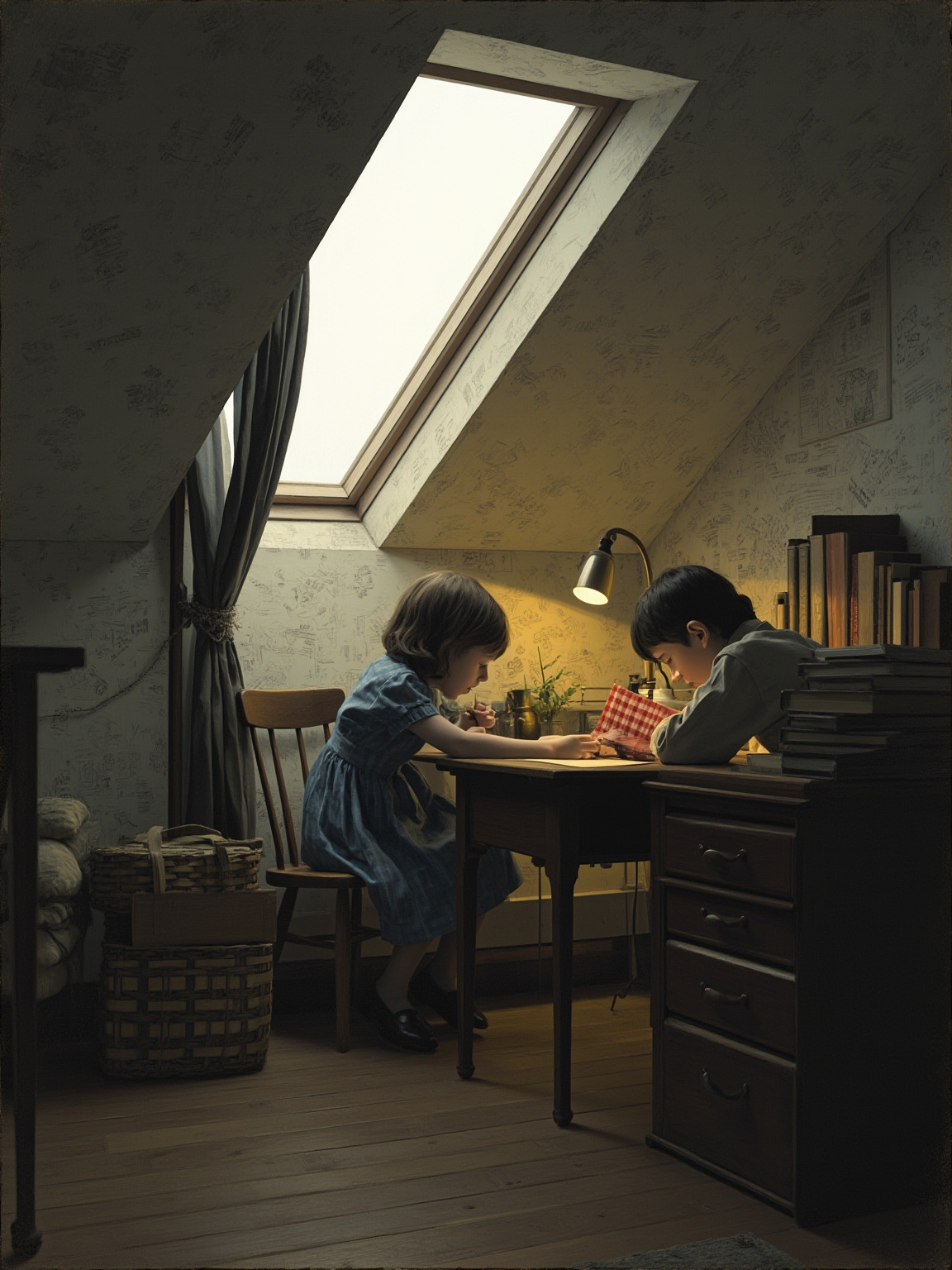
I feel myself turning into a person who is always on the alert, who is afraid of everything, and who trusts no one.
我觉得自己正在变成另一个人——一个永远竖着耳朵、什么都怕、不敢信任何人的孩子。
金句 · 1944年 · 关于恐惧与成长
Writing Was Her Only Window
There was no window in the Annex she could lean out of. Her diary became one instead. In her letters to Kitty she kept circling the same question: who am I? A Jewish girl? Someone locked away? The Anne who's going to be a journalist, a writer, someday? Kitty took on different shapes to hold the question: friend, sister, another version of herself. At one point she even went back and edited herself. Rereading her early entries, she judged them too shallow, too full of complaining, and crossed out passages, wrote new ones in. She started dreaming of shaping these diaries into a real book after the war, one she'd call The Annex. Writing wasn't just a record of her days. It was the one territory she owned outright. There, she wasn't anyone's difficult daughter or anyone's Jewish neighbor. She was Anne.
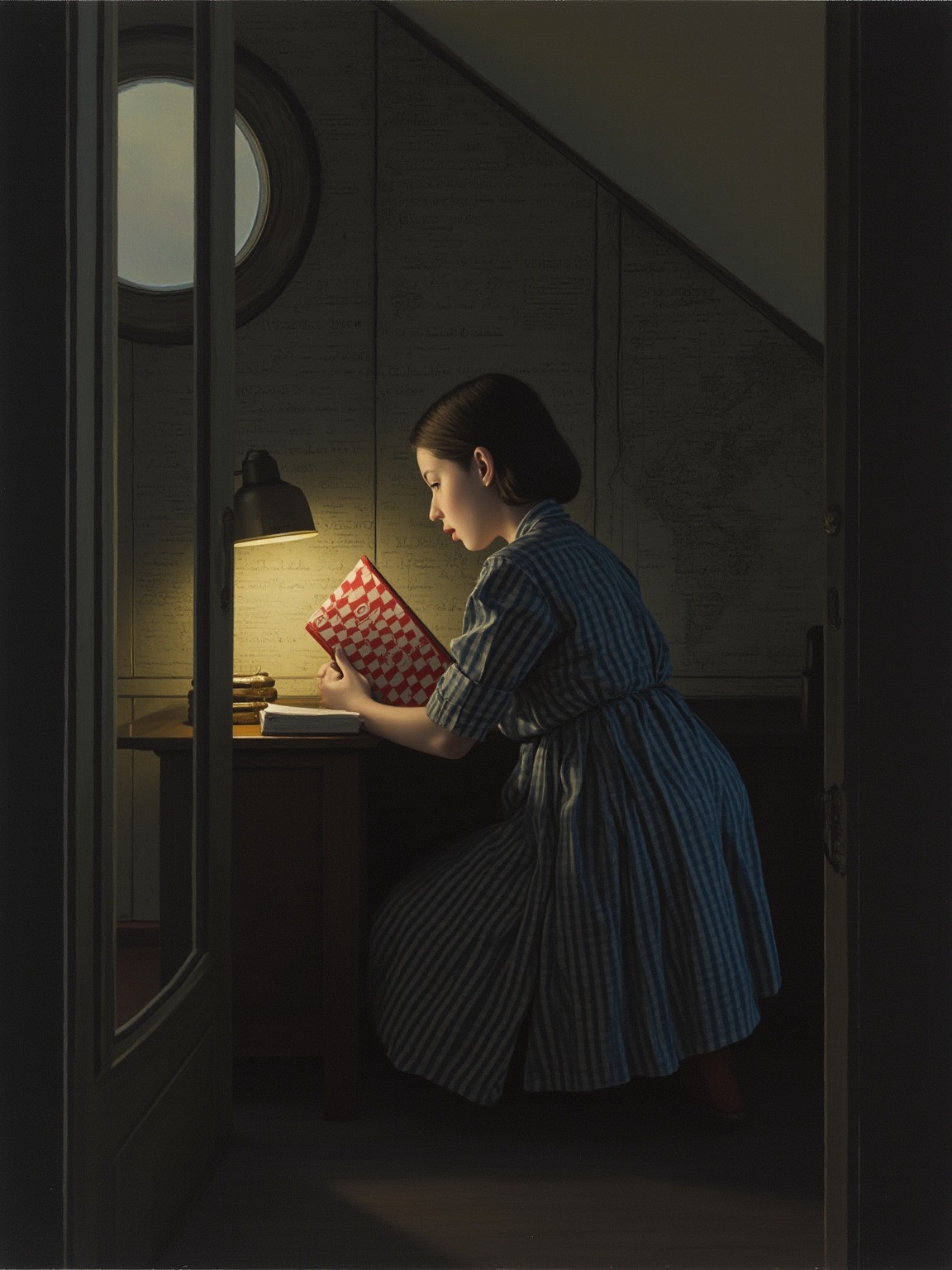
I want to go on living even after my death — and therefore I am grateful to God for giving me this gift, this possibility of developing myself and of writing, of expressing all that is in me.
我想在我的肉体死去之后仍然活下来,所以我感谢上帝赐给我这份礼物——让我能成长、能写作、能把心里所有的东西都说出来。
金句 · 1944年4月5日 · 关于写作的梦想
The Page That Stops Mid-Sentence
On August 1, 1944, Anne wrote her last entry. There's no premonition in it, nothing unusual, just the ordinary things: thoughts of Peter, of the world outside, of what might come after the war. Three days later, the Gestapo arrived. Who tipped them off has never been settled with certainty. All eight were taken and scattered across different camps. That's where the diary ends. Not because its author finished it. Because someone cut it off.
What happened next belongs to a story the diary never got to tell. Edith died of starvation at Auschwitz. Margot and Anne both died of typhus at Bergen-Belsen in early 1945; Anne was fifteen. Otto was the only one who came back. He returned to that empty attic in Amsterdam and, among the things left scattered behind, found his daughter's diary.
The Pages Survived. She Didn't.
It took Otto years to work through the diaries and decide they were ready for the world. They came out in Dutch in 1947 as Het Achterhuis. The English translation, The Diary of a Young Girl, later carried it into the English-speaking world, and from there it spread into dozens more languages. You can buy it anywhere today. It's been adapted into plays, films, animation, assigned in classrooms, read until its pages soften at the corners by one generation after another. A girl's diary that was never meant for anyone else became one of the most widely read firsthand accounts of the twentieth century.
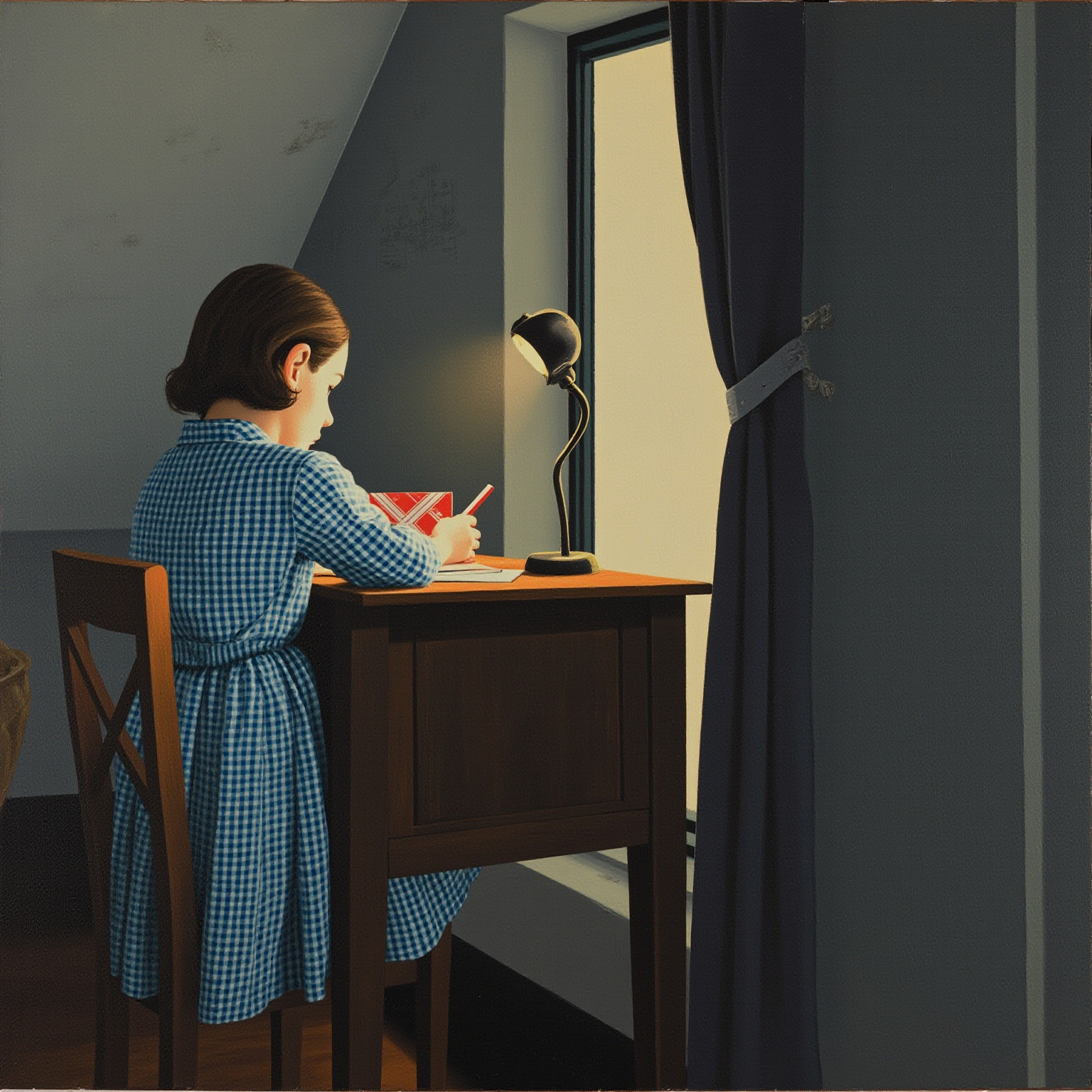
Whoever is happy will make others happy too — that's how I have come to feel.
一个快乐的人,也一定能让他人快乐——这件事,是我在这间阁楼里一点一点学到的。
金句 · 1944年 · 关于快乐与希望
What This Book Is Actually About
What makes The Diary of a Young Girl so powerful is that it uses the most private form there is to do something entirely public. It never depicts the genocide directly: no swastikas in the Annex, no barbed wire, no crematoria. What it shows is a Jewish teenager growing up over two years in hiding, falling for someone, fighting with her mother, listening to the BBC in secret at night, imagining a future for herself. A reader opens it expecting to eavesdrop on a girl's private thoughts, and somewhere past the halfway mark realizes that beyond this attic, the world outside is sending people just like her, one by one, to the gas chambers. That's where the tension snaps into place: you think you're reading about an ordinary girl, and she could be taken away at any moment. It's that collision of the everyday and the horrific that keeps generations of readers from being able to put the book down.
It's also a fable about paper itself. A child too afraid to walk downstairs ended up surviving through nothing more than a red-and-white checked notebook.
A thirteen-year-old girl went behind a bookcase door and spent two years writing herself onto the page. She never came back out. Her words did.
Why It's Still Worth Reading the Diary, Even Knowing How It Ends
A guide like this one can tell you what happened, where they ended up, why the book matters. But there are things you only run into by turning to the actual text. First, her language. Sentences she wrote at fourteen are clean enough to stop you mid-read, the kind that seem to grow straight out of a teenage mind, and they still carry weight in translation. Second, her rhythm. The diary doesn't move by event, it moves by mood: she'll spend three pages in a row venting about her mother, then dispatch some enormous piece of news in a single line, and no summary can reproduce that unconscious pulse. Third, the texture of the Annex itself: tins clinking together, a sliver of canal light through a gap in the curtain, the toasted smell of rationed bread being cut, the one second the footsteps downstairs suddenly stop. These are the small, unsummarizable things that give the book its actual flesh. You already know how her story ends. What you don't know yet is how she lived through it, one day at a time.
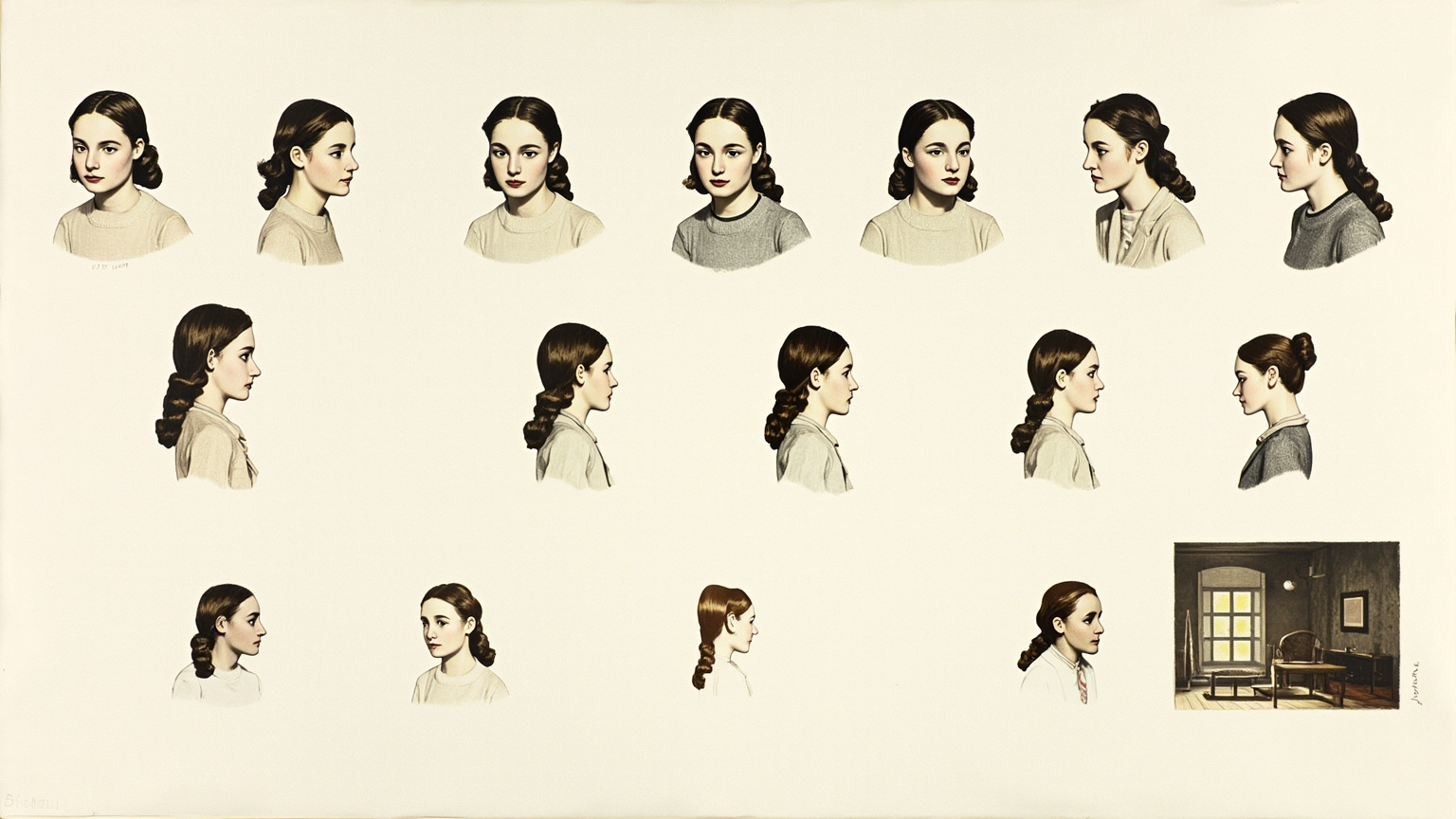
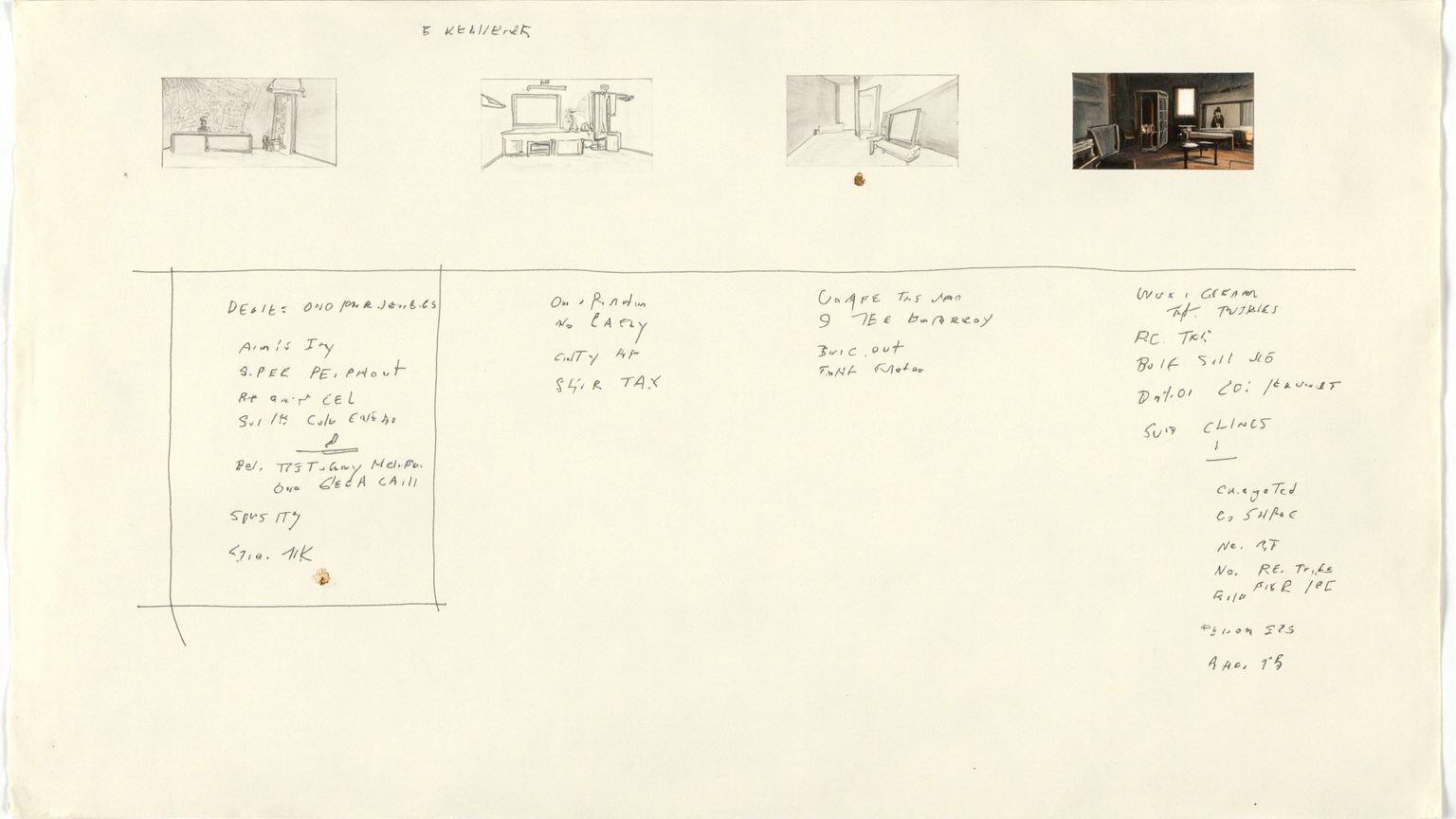
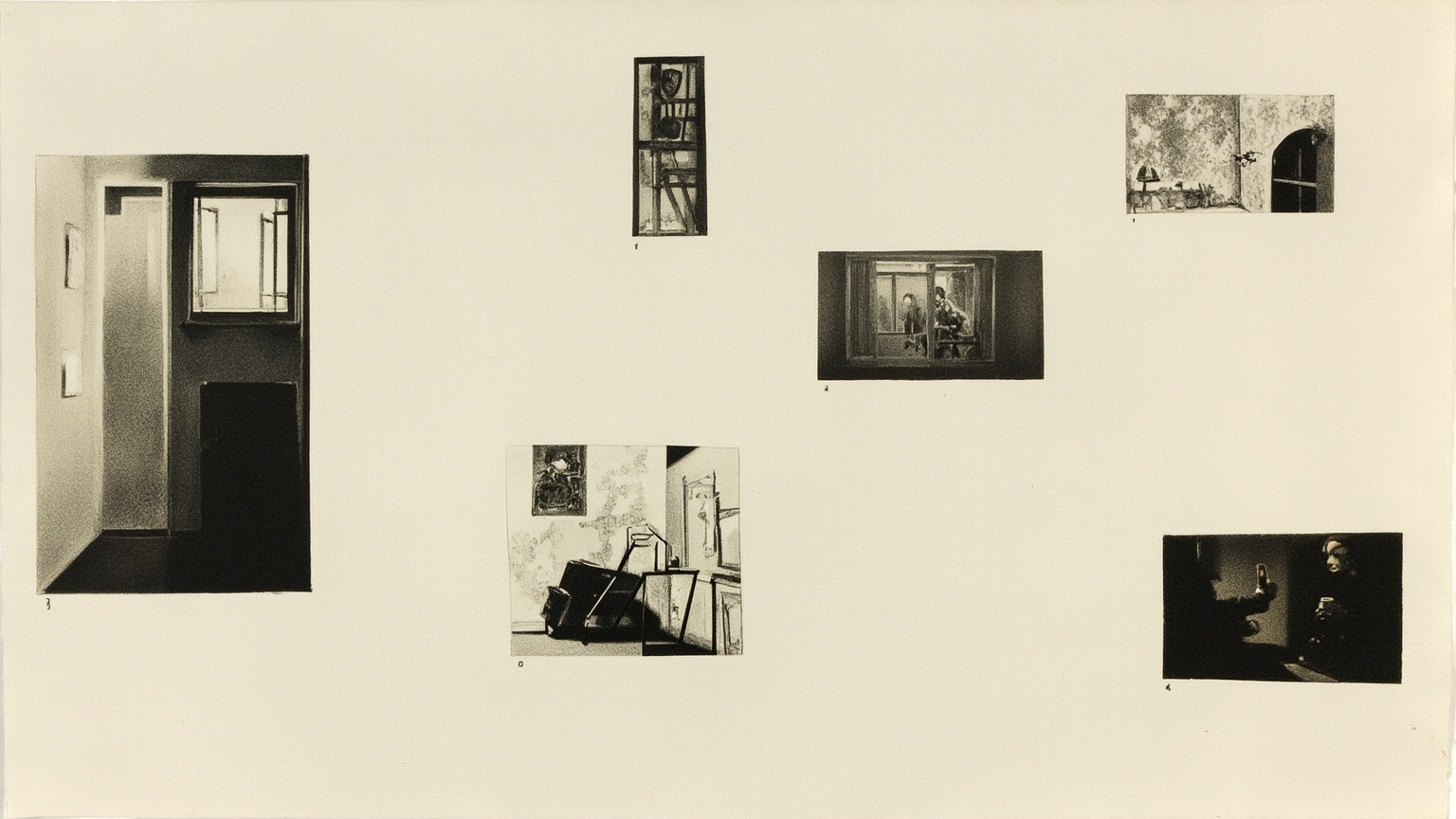
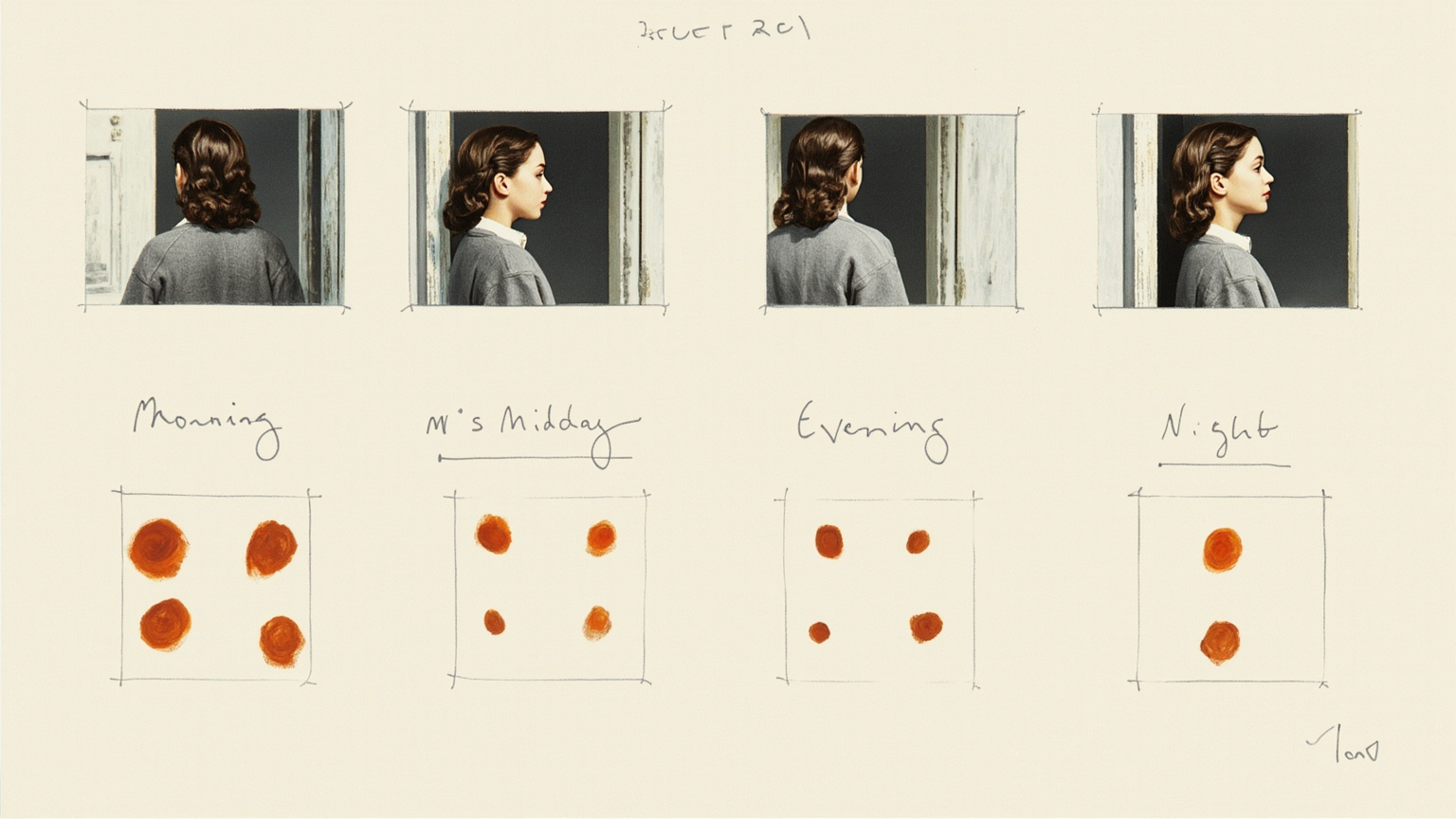
Art Direction4 plates
Before the guide was written, this book got a visual foundation — every illustration you just read grew out of it.