Antigone (Ἀντιγόνη) · Companion Guide
安提戈涅
一捧干土撞碎王令,两个不肯退让的人把所有爱他们的人都拖进了石窟
Opening: A Handful of Earth
Before night had fully lifted, Antigone quietly carried a handful of dry earth to the wilds outside the city. She scattered earth on her brother Polynices' body—once, twice, again. No grave was dug, no mound raised. With only that small pinch of dry earth in her palm, she performed for him the final duty the living owe the dead.
This was the most fundamental Greek piety: to bury the dead, to let the soul enter the underworld. The newly crowned King Creon had just issued a decree—Eteocles, who defended the city, would receive honorable burial; Polynices, who attacked it, would be left exposed for wild dogs, and whoever buried him would die. A girl was about to take a handful of earth and defy this royal edict.
What Is This Book
Antigone is a play by the ancient Greek tragedian Sophocles, first performed around 441 BCE at the Theater of Dionysus in Athens. Sophocles lived in that confident, expansionist, argument-loving Athens under Pericles. He wrote more than a hundred tragedies in his lifetime; only seven survive complete, and Antigone is one of them.
It is remembered because it takes a seemingly simple moral question—whether you should obey a law you disagree with—and splits it cleanly in two, giving validity to arguments on both sides. Hegel used it as a case study in philosophy class, and since then, every discussion of civil disobedience, of conscience versus the state, has almost invariably dragged it back out. Twenty-five hundred years later, it is still alive.
Characters and World
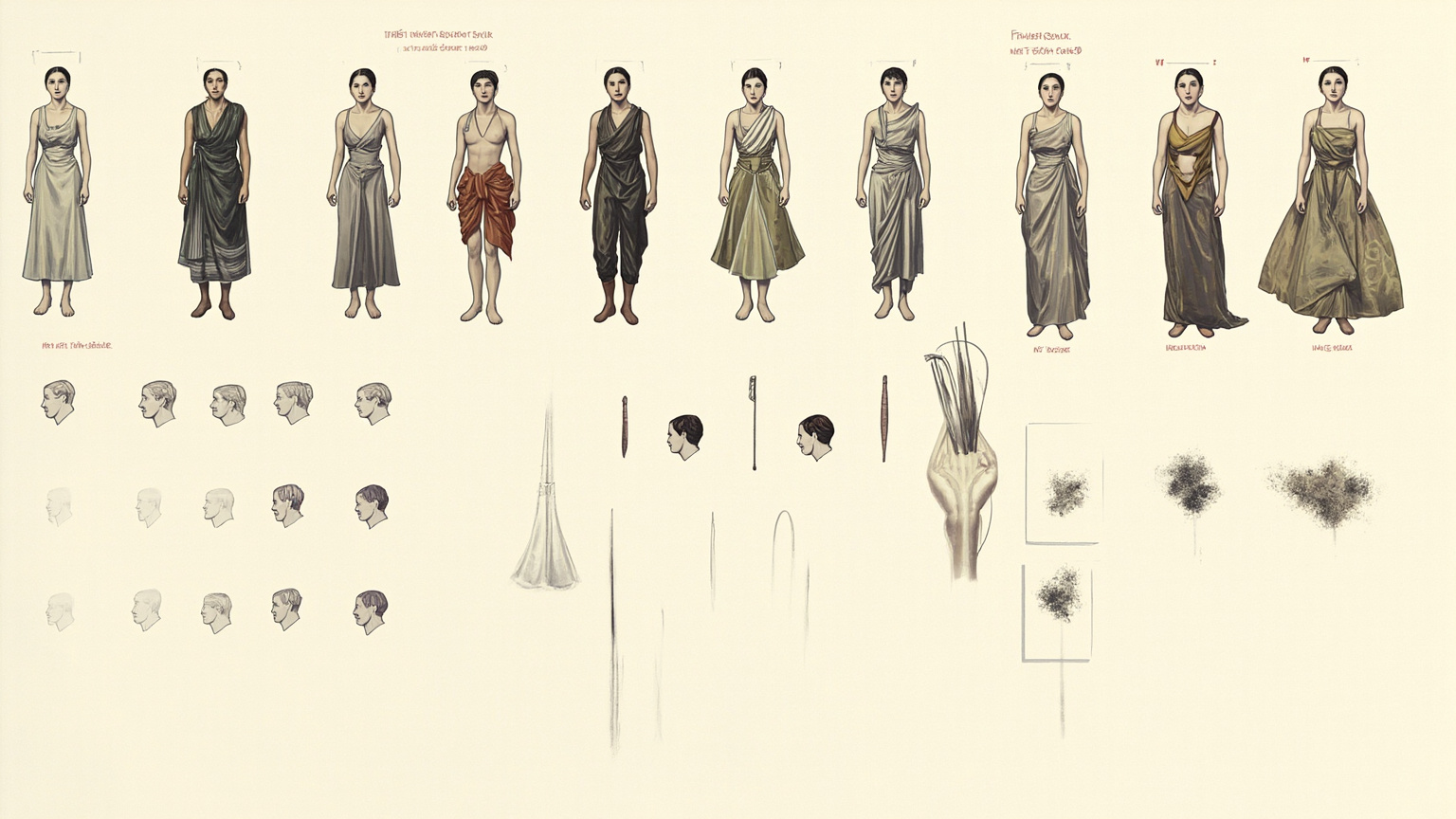
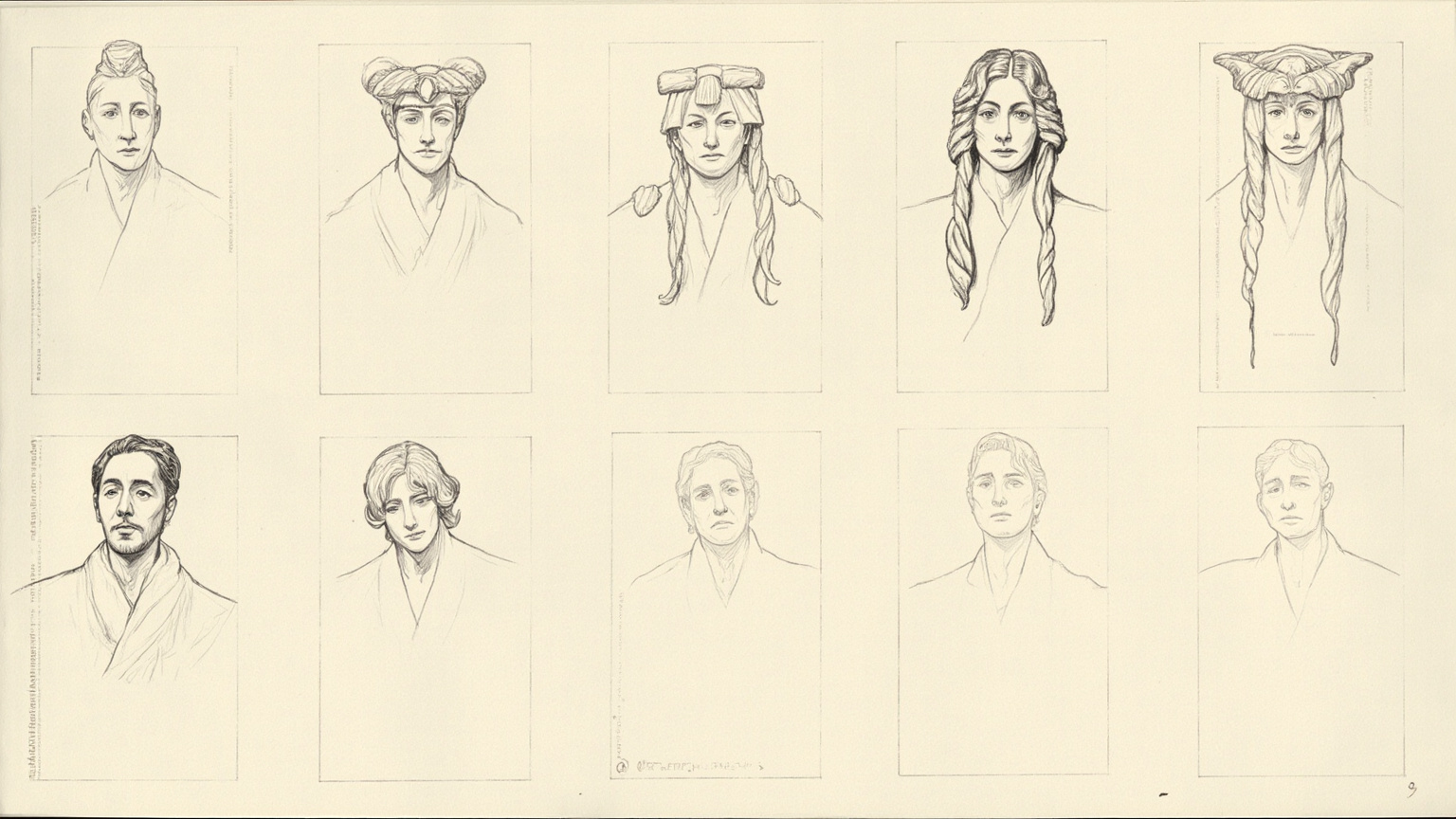
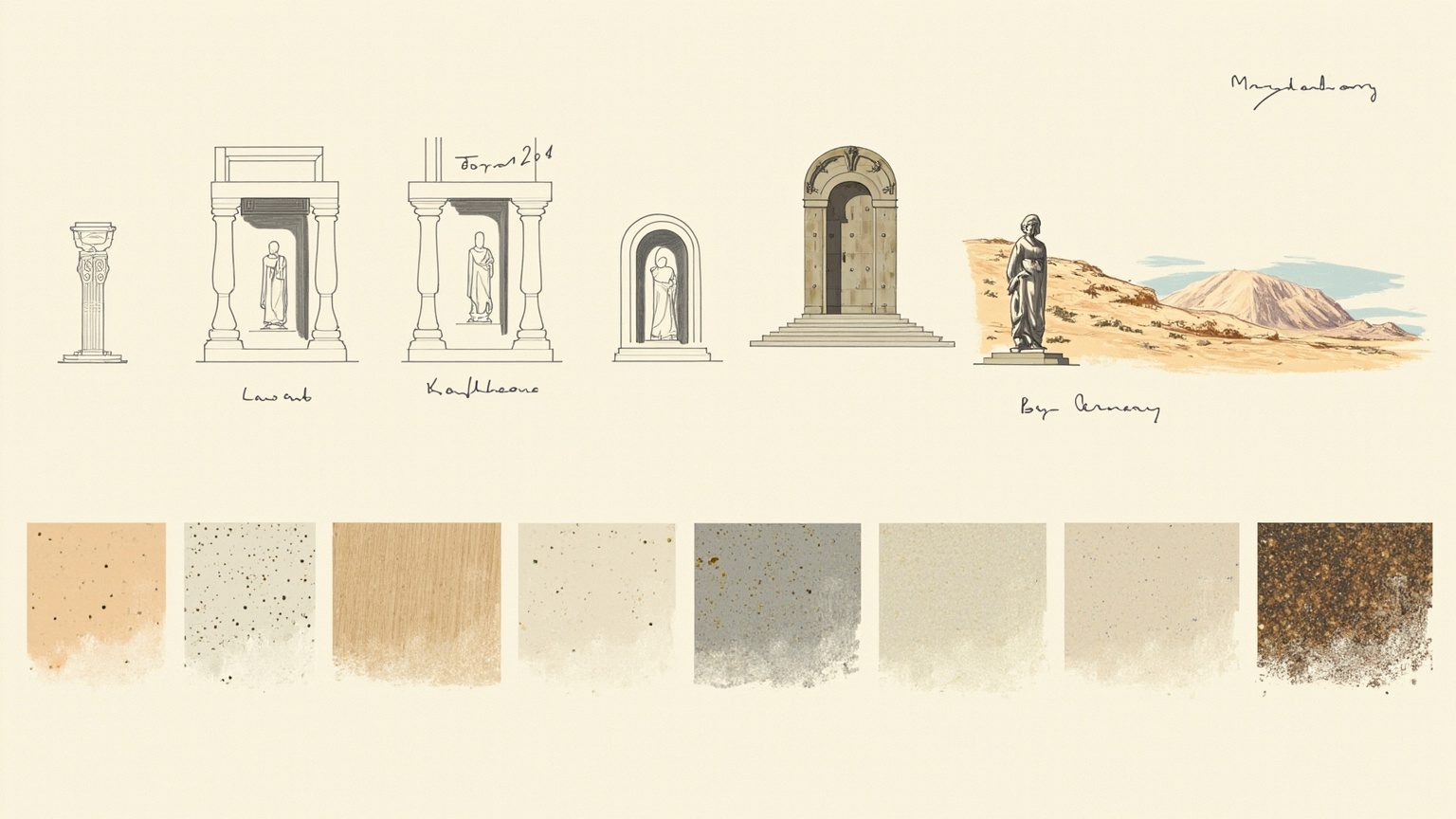
The world is set outside the gates of Thebes in the age of myth. Behind lie bronze doors and a palace propped on Doric columns; beyond the walls, a dusty wasteland and the exposed body of a brother. Order is guarded by the chorus—twelve elders of Thebes in white robes and masks, the voice of the city's traditional wisdom.
Antigone, daughter of King Oedipus, royal blood, will hard as stone. She defies her uncle Creon's decree to fulfill the duty of blood and divine law—her brother cannot lie exposed in the wild; that is divine law, not royal decree. Her sister Ismene at first dares not join her; she is not wicked, just a person held down by fear. Creon, the new king of Thebes, Antigone's uncle, represents civic order and human-made law; his stubbornness is as hard as Antigone's, yielding not a single inch. His son Haemon, Antigone's betrothed, pleads with his father from filial duty, love, and reason, and when his pleas fail, he leaves in anger. The blind prophet Tiresias is the mouth of divine will—when he finally speaks, the city's disaster has already pressed to Creon's door.
The King's Decree and a Handful of Dry Earth
The story begins after the curse on the house of Oedipus. The two brothers—Eteocles guarding the city, Polynices leading the attacking army—kill each other at the city gates, both dying in mutual combat. Creon, succeeding as their uncle, issues his first royal decree: the defender shall be buried, the attacker shall lie exposed in the wild for birds and beasts to tear. Whoever violates this dies.
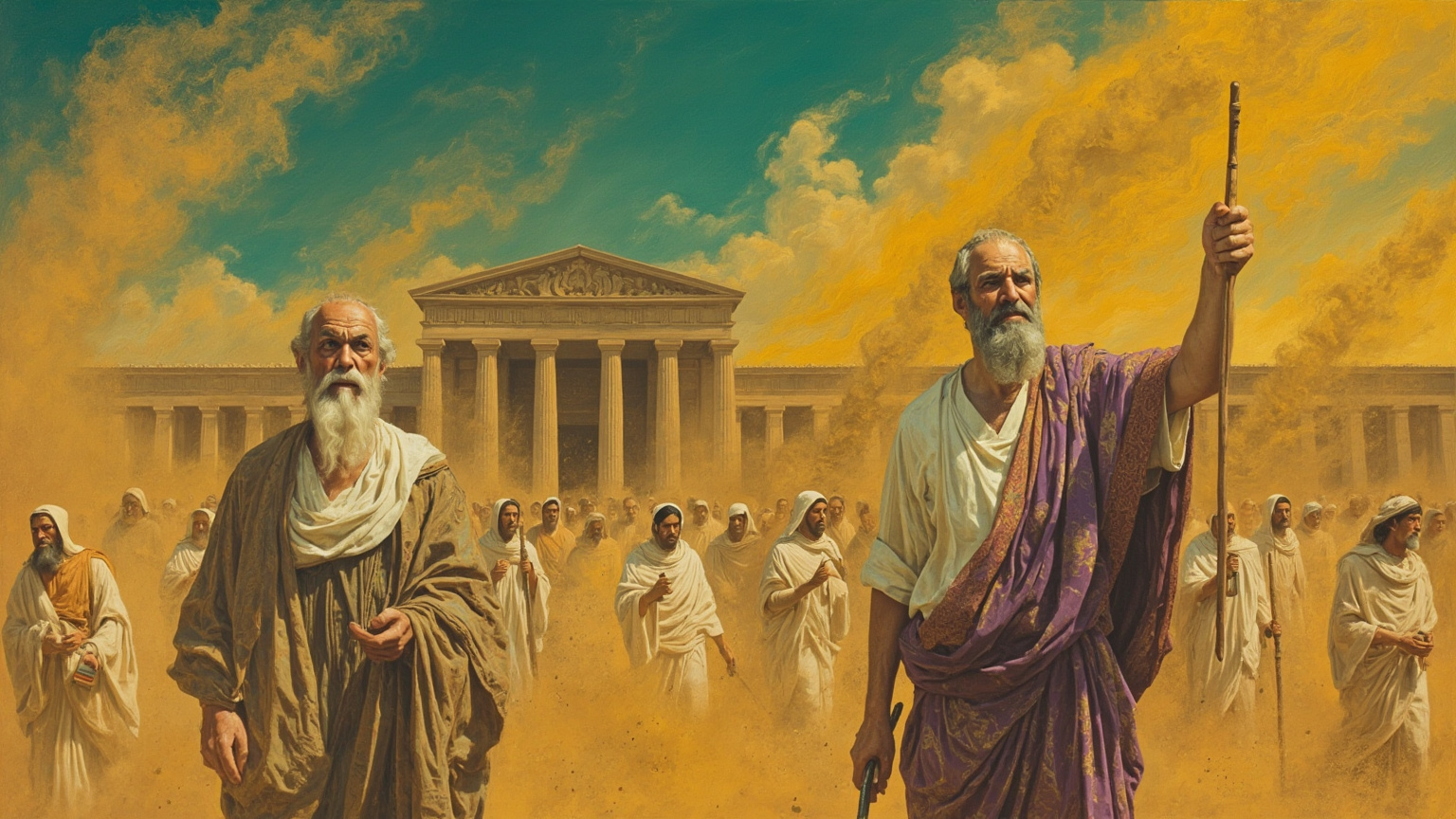
I did not think your proclamations had such force, that a mortal could override the unwritten and unfailing statutes of heaven.
我不认为你的一道谕旨就能废去那亘古不变的、源自天神的、不可违拗的不成文法。
金句 · 第二场 · 王前抗辩
Antigone intends to break this decree. She brings no pick, no shovel—only a handful of dry earth and a little water. She scatters it over the corpse, then covers it with a thin layer of ash—this is what the Greeks call a symbolic burial, sufficient to keep the dead from lying exposed under the sun. She slips out of the palace at dawn, returns at midnight, and is discovered by the city guards through her footprints in the dust.
The scene where the guard is brought before the king is brilliantly written—a low-ranking minor official, unsure who did it, afraid of implicating himself, yet unable to stay silent, muttering while watching the king's expression, portraying to life the face of a small bureaucrat crushed under power's weight. He does not know that the girl he denounces is standing right there in the palace.
Two Laws Collide Before the King
Antigone is brought before Creon. She does not flee, does not argue. Before the chorus, before her uncle, she speaks directly: your decree is not established by Zeus; there is no unwritten law in this city that says to throw dead kin to the wild dogs. She admits she broke the decree—not from ignorance, but because that decree cannot override divine law.
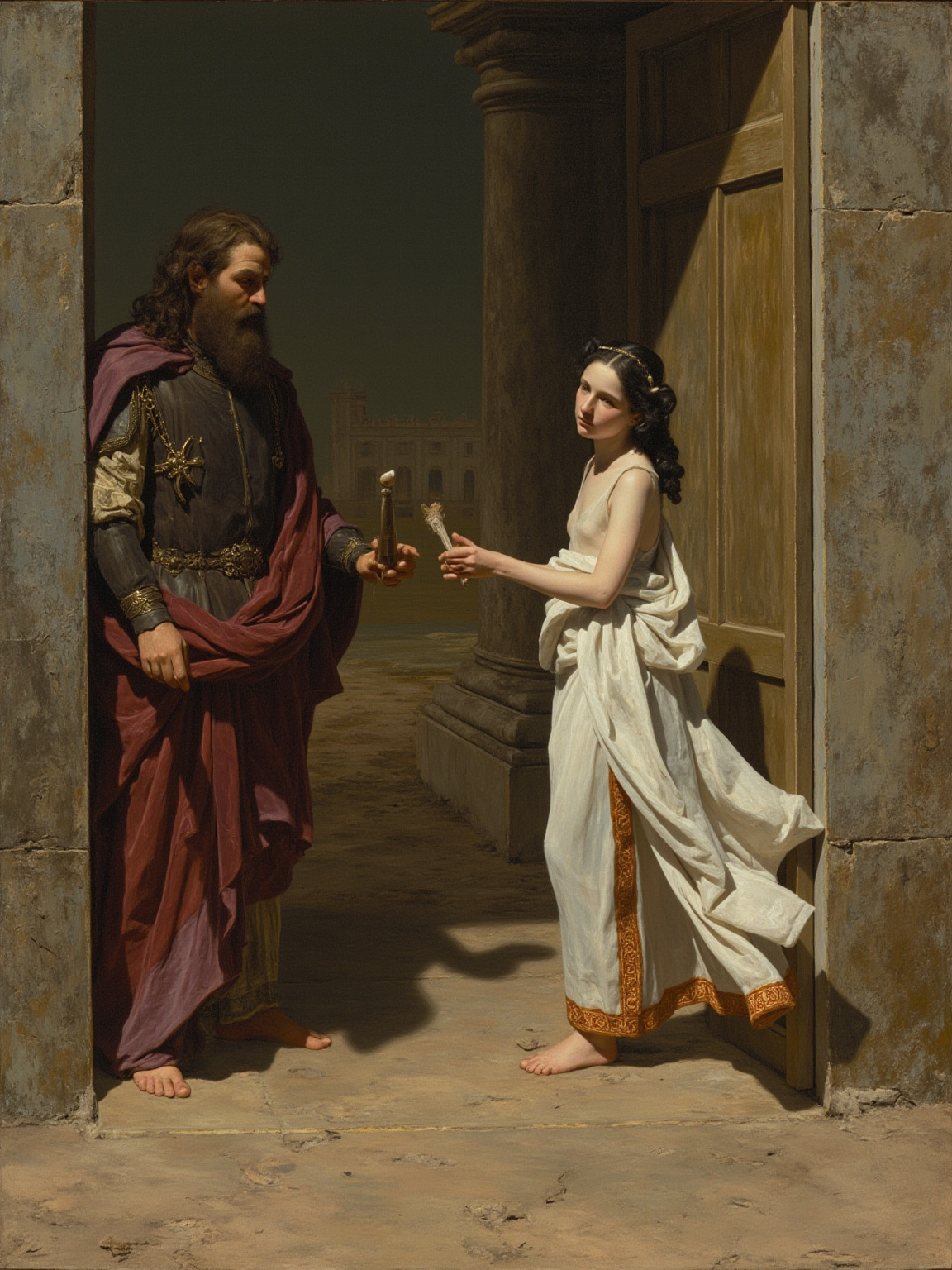
It is not my nature to join in hatred, but in love.
我生来不是为恨,而是为爱。
金句 · 第二场 · 两种法对撞
Sophocles' mastery in writing this confrontation is that he does not make Antigone a victim. She is aggressive. She lists which of the dead can be replaced and which cannot: a husband outside the walls can be remarried; children can be remade; but once parents enter Hades, they can never return—in other words, the irreversible debt of blood kinship is heavier than a marriage contract, with no chance to redo it. Creon's response is equally hard—he cannot lose, because losing would mean anyone can henceforth challenge the city's order. He sentences her to live burial: locked in a stone cave outside the city, to starve slowly.
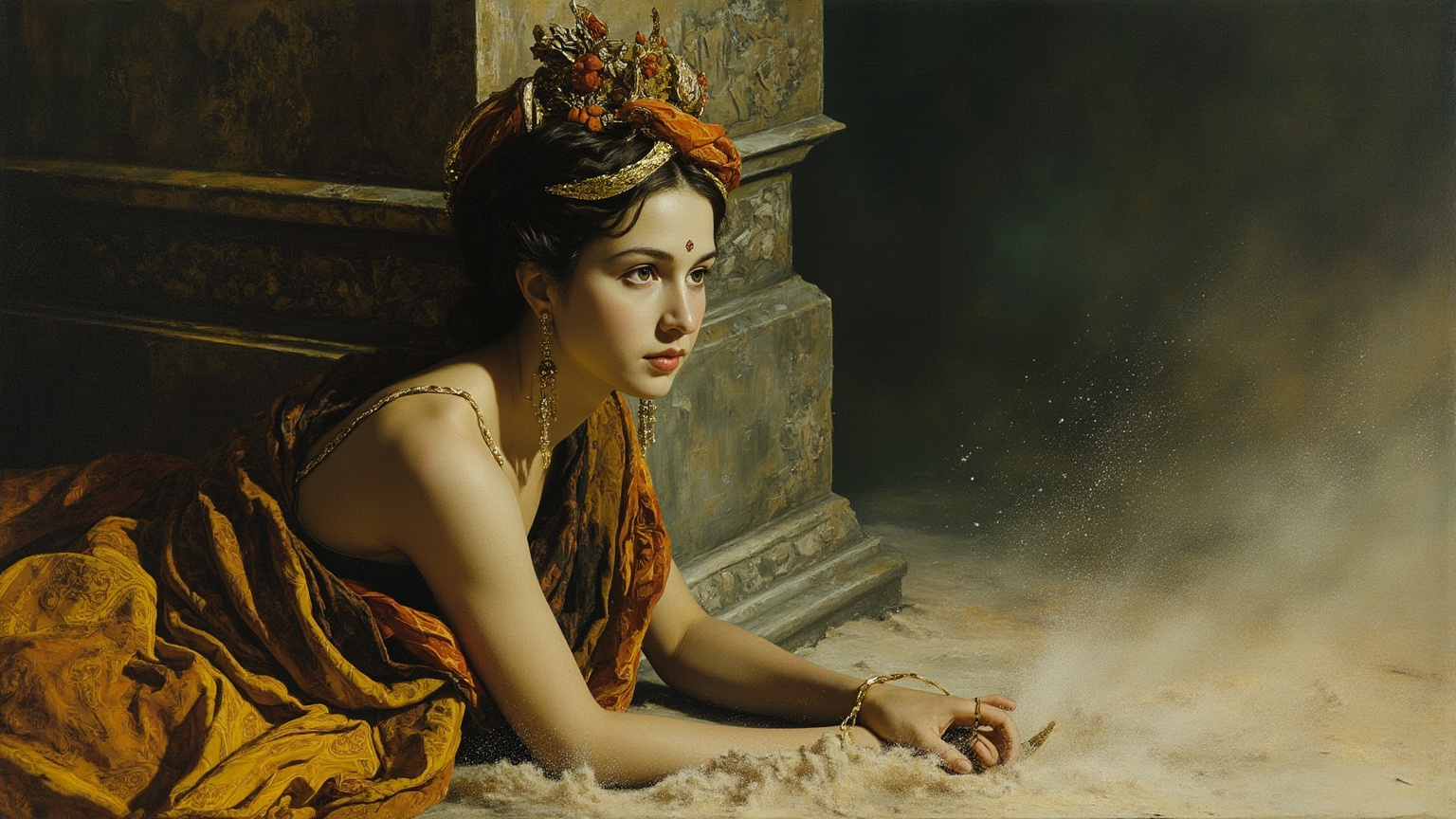
If I have erred, it is the error of a son who honors his father.
错也罢,对也罢,孝顺的孩子只有一个罪名。
金句 · 第四场 · 海蒙之诤
The interest of this scene is in its construction. Sophocles doesn't have the two sides shouting slogans at each other — he lets two stubborn people inch toward each other sentence by sentence, like two walls pressing against each other at the foundation. You can hear the wood splintering.
Son, father, and the city's honor
Haemon rushes to the palace to reason with his father. He doesn't shout — he argues calmly: the city is whispering that Antigone shouldn't die like this, that a woman who refuses to leave her brother's body exposed is no criminal. Creon only grows angrier — in his logic, if a son defers to a woman, then the king can't even manage his own household, let alone the city.
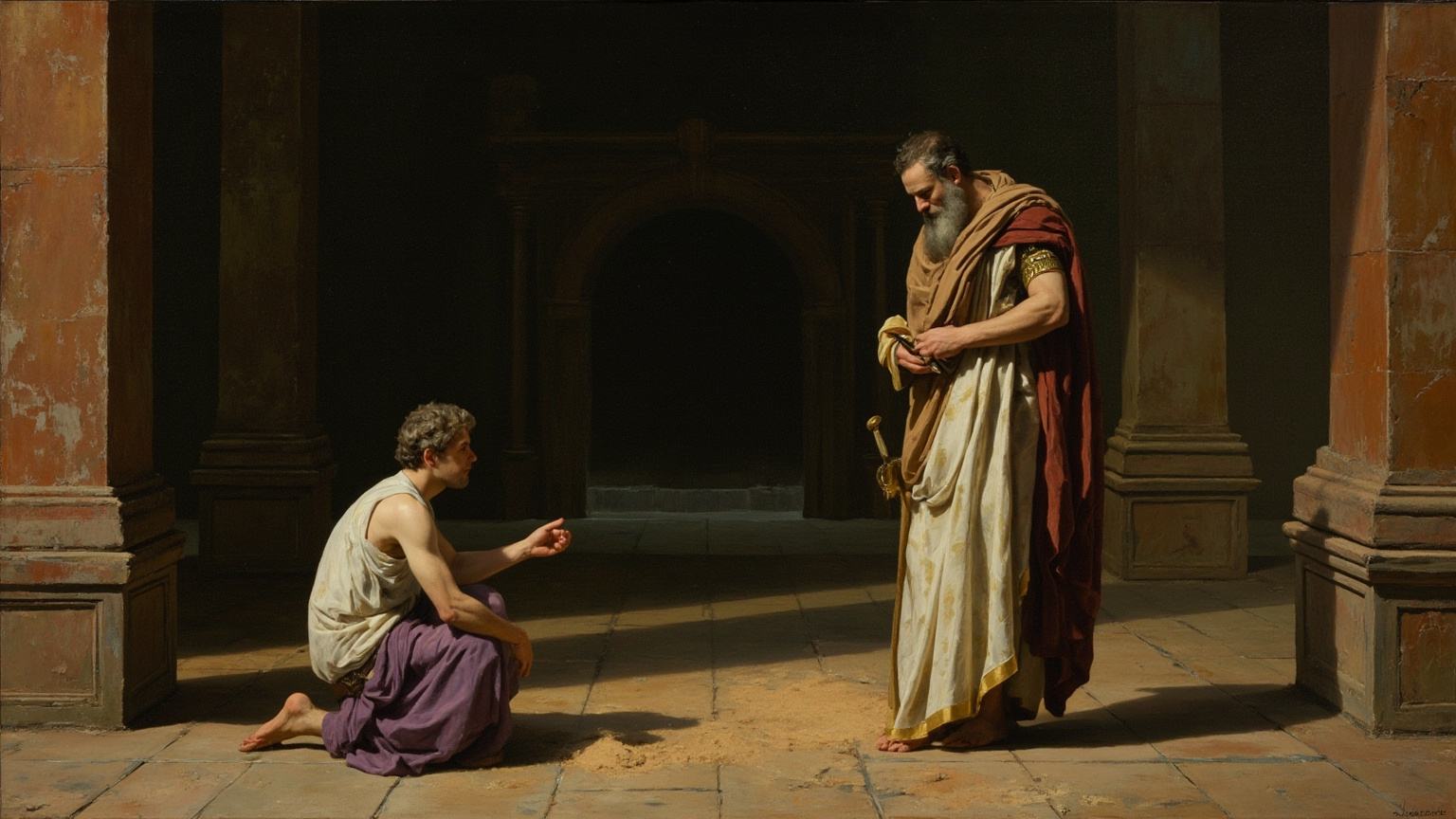
Nor can any man be called evil who has been the ruin of his own house.
谁亲手毁了自己的家,你就不能再说他是坏人。
金句 · 第四场 · 父子决裂
At the end of their argument, Haemon drops one final line: don't expect me to come back to bury you. He turns and walks out. For the first time, Creon falters — he begins to wonder if he's truly pronounced the wrong judgment. But he can't stop now. A king who backs down when his own son looks him in the eye makes a joke of the throne. He grits his teeth and pushes the sentence through to the end.
The blind man's final warning
Creon holds out until the third scene, when he finally comes up against the blind prophet Teiresias. The prophet stands there and tells him without emotion: the city's altars are piled with bird-dropped carrion, the birds can't carry it all, the altars are fouled; the whole city is in tears; the gods are enraged. Let him stop.
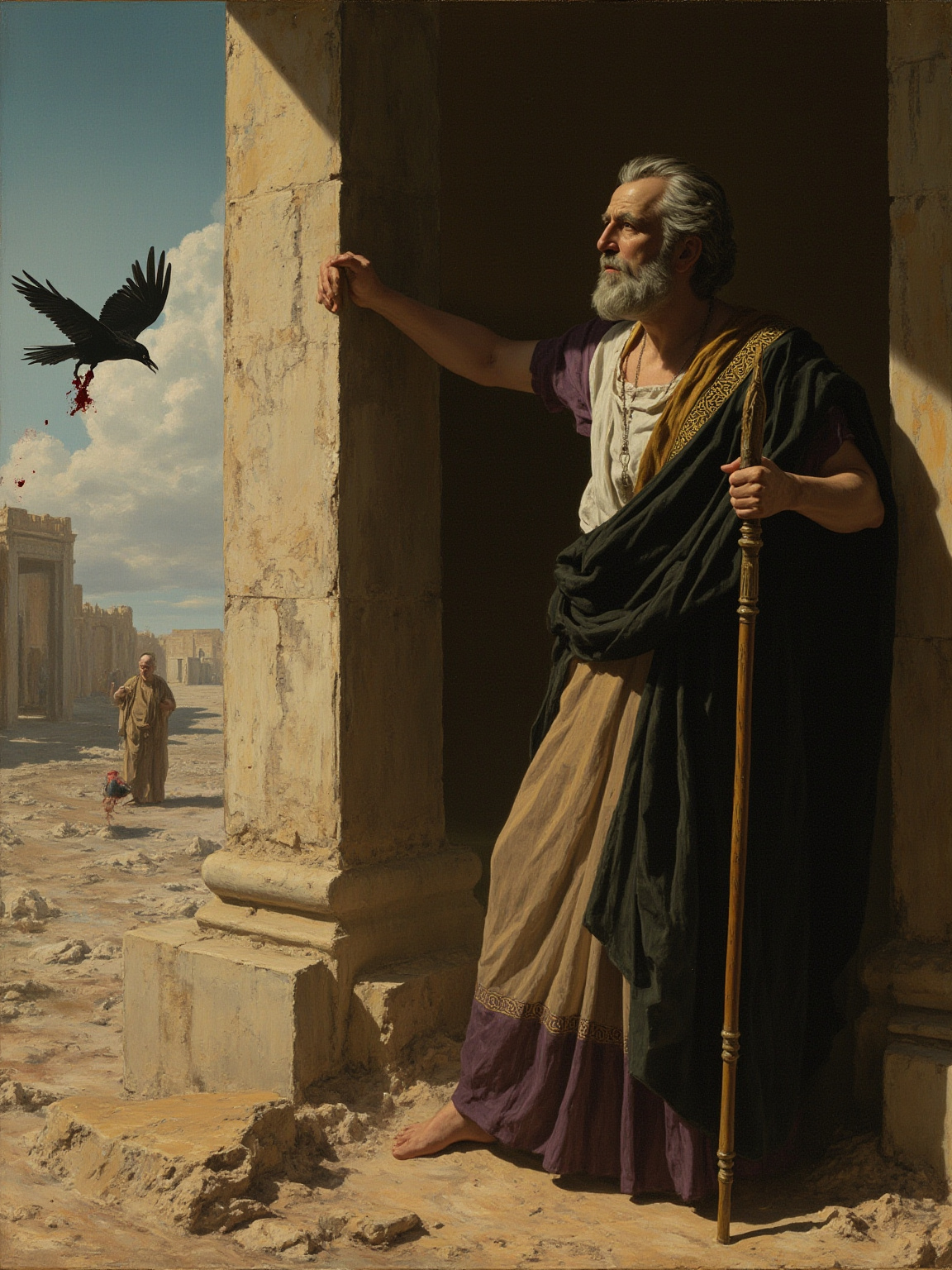
Wisdom is by far the foremost part of happiness, and reverence towards the gods must be inviolable.
智慧是幸福的第一要素,对神明的敬畏绝不可亵渎。
金句 · 第五场 · 先知警告
Creon's first instinct is to insult the old man — he suspects the prophet has been bribed, that he's speaking for the enemy. This stroke writes Creon even more harshly: he's not wicked, he's terrified, terrified that admitting error is worse than persisting in it. Only when the chorus reminds him that the prophet has never spoken falsely does Creon finally relent: I'll go at once.
The cruelest cut of the tragedy is that no one is wrong — and then it grinds everyone to dust.
The Cave, the Silk Ribbon, the Sword
By the time Creon reaches the cave, it is too late. Inside, Antigone has taken her own silk scarf down to the underworld, hung it on the rock face, and hanged herself. Haemon rushes in, sees this, says nothing, draws his sword, and drives it into his own stomach. He dies embracing his fiancée; father and son never see each other face to face.
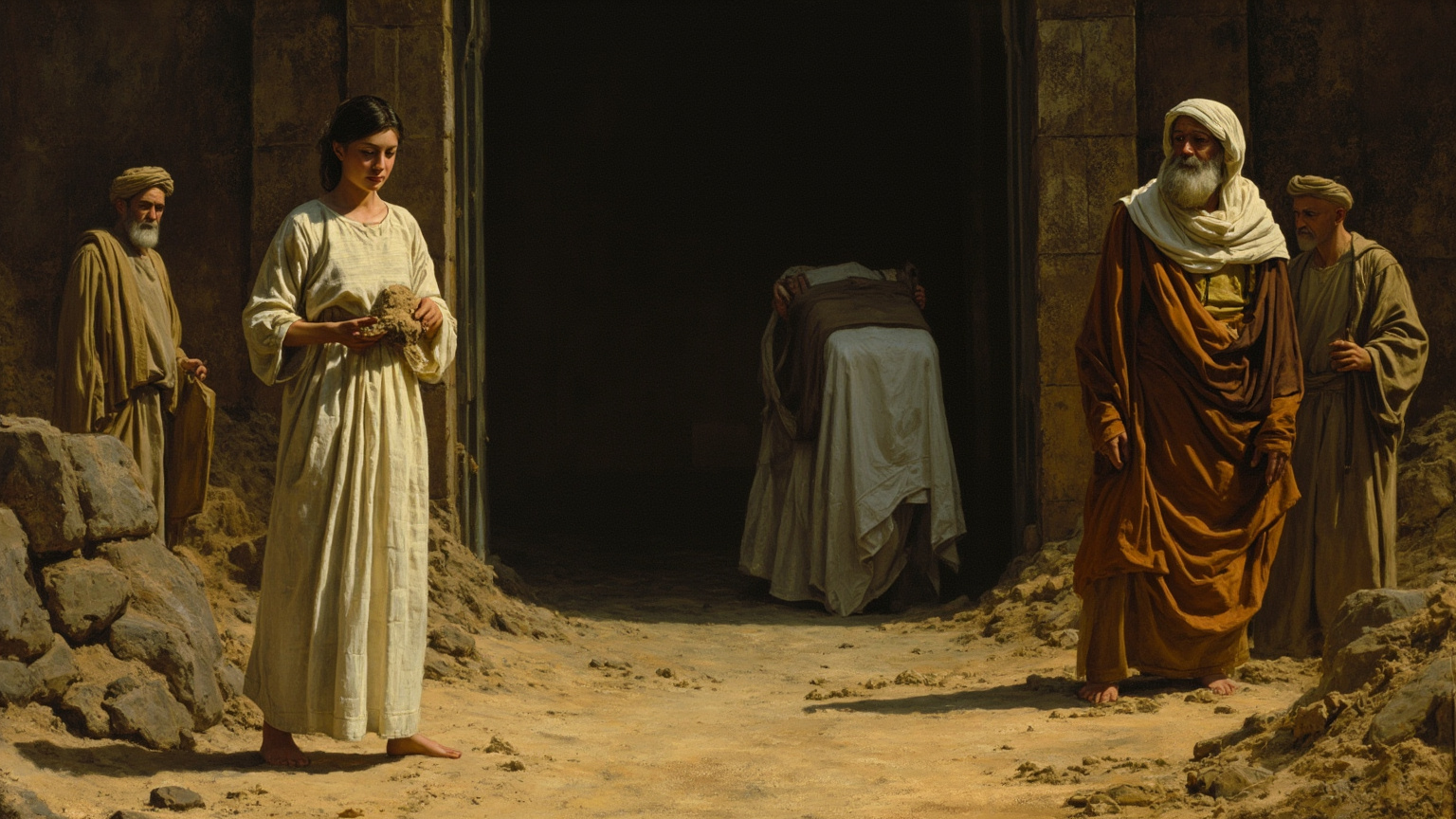
No one can deliver from calamity the man whom fate has marked.
凡是命定要遭祸的人,谁也救不了他。
金句 · 出场 · 克瑞翁悲叹
When the news reaches the palace, Creon's wife Eurydice does not weep or make a scene. She returns to her inner chamber, closes the door, and by the time others enter she has killed herself with a sword. Her only dying words are a curse — pinning the man who destroyed their son in place. She is the coldest character in the entire play, even her dialogue reduced to a single line.
The final scene has Creon enter carrying his son's body. The chorus asks what he will do next; he answers in a hoarse voice that nothing can stop fate from falling on a man. He wants to die, but he does not die. A king survives, to bury all the bodies alone — this is the Greeks' cruelest ending: letting the murderer live to suffer the punishment.
What It Is About and Why Read It
Antigone looks like a story against tyranny on the surface, but that is not its core. It is about two kinds of rightness colliding. Divine law — blood ties, the dignity of the dead, the unwritten laws of the gods — has its logic. Human law — civic order, political stability, the authority of royal decree — has its logic too. Sophocles will not let us take a side, because the moment we do, the other side immediately looks equally valid. The tragedy explodes within this structure where both sides are right but one must fall.
Another of Sophocles' feats is that he makes stubbornness as hard as the protagonists themselves. Antigone is stubborn; Creon is stubborn; in the end their stubbornness shatters everyone. It is not a story about who is right and who is wrong. It is a story about how stubbornness drags people into the mud. Hegel explained it as a clash between two ethical substances; later existentialism, Marxism, and feminism have all dug into it, each era finding something new — this is why it has survived twenty-five centuries.
Even today it still cuts deep. Should conscience obey a law you believe is wrong? Should royal power override blood and religion? Does a woman have a place in a male-dominated city? These questions have been asked for twenty-five hundred years without answer, and Sophocles has no intention of answering them for us. He simply lays the questions out as corpses and lets the audience sniff them for themselves.
Why Read the Text
The commentary gives a map; the text is the land. The play's lines are extremely short—each one like a blade, and reading aloud versus silent reading are two completely different things. To understand that hardness in Antigone's defiance, you have to hear her cry out "I was not born for hate, I was born for love"—that stark sentence ringing in your ear. To understand how filial piety and rupture are only a paper apart, you have to hear Haemon trap his father line by line. The cave scene especially demands to be read on the page—the original Greek version has a rhythm so crisp it's almost cruel, the kind of silence in the audience when an actor speaks it on stage is a sharp intake of breath. This is the part commentary can never replace.
Two unyielding people collide, dragging everyone who loves them into the grave. This is not a story of tyranny—it is a story of stubbornness.
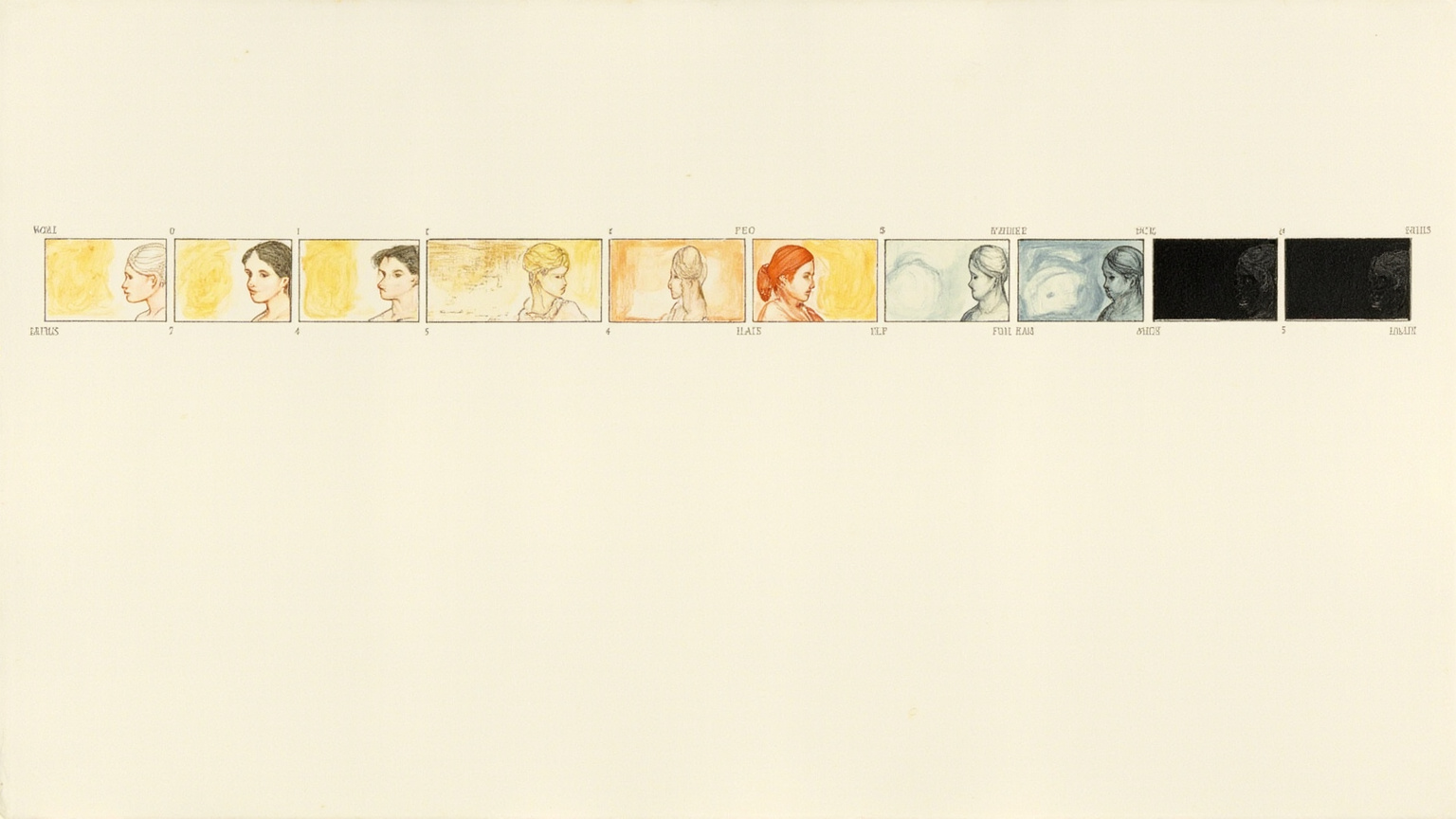
Art Direction4 plates
Before the guide was written, this book got a visual foundation — every illustration you just read grew out of it.