Arch of Triumph (Arc de Triomphe) · Companion Guide
凯旋门
巴黎最伟大的胜利纪念碑脚下,藏着整座看不见的流亡者之城。失籍外科医生在雨夜的地下室缝合伤口,用余生的复仇与爱撑过开战前最后那个冬天。
Opening
A basement window still lit, set into an alley behind the Arc de Triomphe in Paris. Inside, a German surgeon stripped of his nationality is stitching up a refugee who cannot even give his own name. No license, no passport, no name of his own — only a pair of hands that still remember who he used to be. This 1945 novel fixes its camera on that window: underneath the monument to victory sits an entire city that nobody can see.
What kind of book this is
The German who wrote it was Erich Maria Remarque, better known to most readers for All Quiet on the Western Front. Arch of Triumph is his other face: the trenches become the Paris streets of a war not yet declared, and the young soldier becomes a surgeon scarred over every inch of him. The novel first appeared in English, in New York, in 1945; Remarque was living in exile in Europe at the time, and English was the tool at hand. It has lasted for two reasons. One is how far it pushes that 'not yet being struck but already having nowhere to run' suffocation. The other is a grown adult love affair that takes shape carefully, through winter nights, in a cheap hotel room.
People and the world
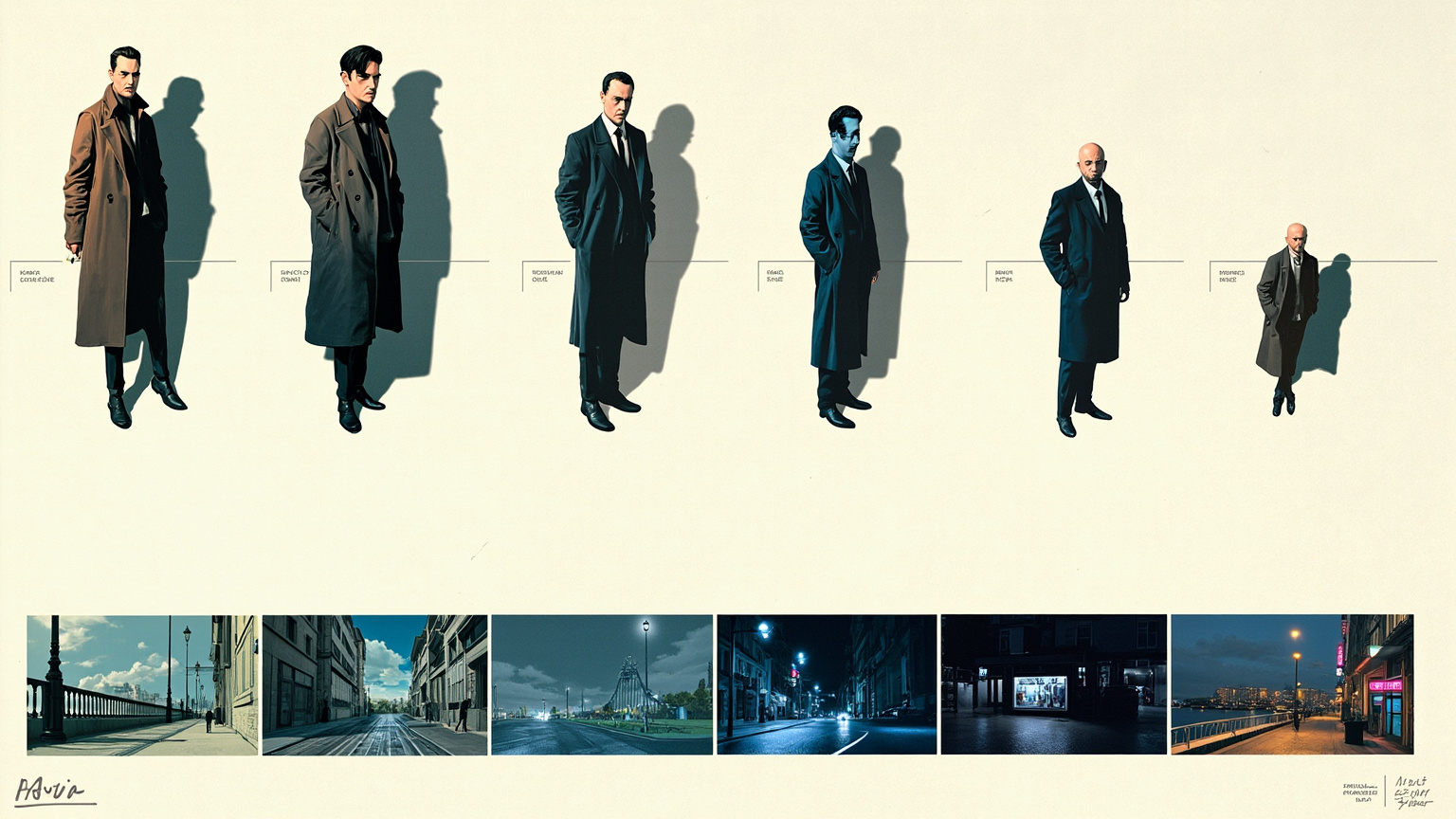
The lead is Ravic — once called 'God's scalpel,' a surgeon at the very top of his field, now a man without a country, hiding out in Paris. He was tortured in a concentration camp and stripped of both his citizenship and his license to practice; once he got out, he began operating in secret, in a basement off an alley near the Arc de Triomphe, on refugees who cannot pay. He rents a room in a cheap hotel on the Left Bank, its window facing a damp, cold courtyard, and at night he keeps watch over a plan for revenge and a love he does not dare admit to. The rules of his world are hard ones: police checkpoints can stop him on any street for papers, and getting caught means deportation back to Germany. He survives on a forger named Siegfried who deals in false papers, and on a glass of brandy with Alex, his heavyset friend next door.
The woman is Joan — a Paris local, mysterious and unsteady, carrying an old wound left by a man who did not love her back. She and Ravic do not meet romantically at all: she swallows an overdose of sleeping pills in a cheap hotel, Ravic pulls her back from the edge, and then she vanishes from the hospital for days before coming back to him on her own. The villain is Haake, one of the Gestapo officers who tortured Ravic in the camp. In the autumn of 1938 he slips back into Paris under a false name, keeping an apartment near a bridge in Montmartre with a French woman. From the day Ravic runs into him on that bridge, he carries a vow he never speaks aloud.
How the plot moves
It is late autumn 1938, and the Paris rain will not stop. Ravic's clinic is a basement off a narrow alley behind the Arc de Triomphe, and outside the window there is always the wet slap of passing footsteps. Every patient is a refugee without a country: no papers, no money, afraid to cry out in pain too loudly in case the police outside hear. What Ravic takes in return is not money but trust. An old Serb pays with half a bottle of homemade plum brandy; a Polish woman has nothing to give at all, so he writes a line in his ledger, crosses it out, and moves on to the next operation. His Paris is this buried city, one building away from the Champs-Élysées, and nobody knows it is there.
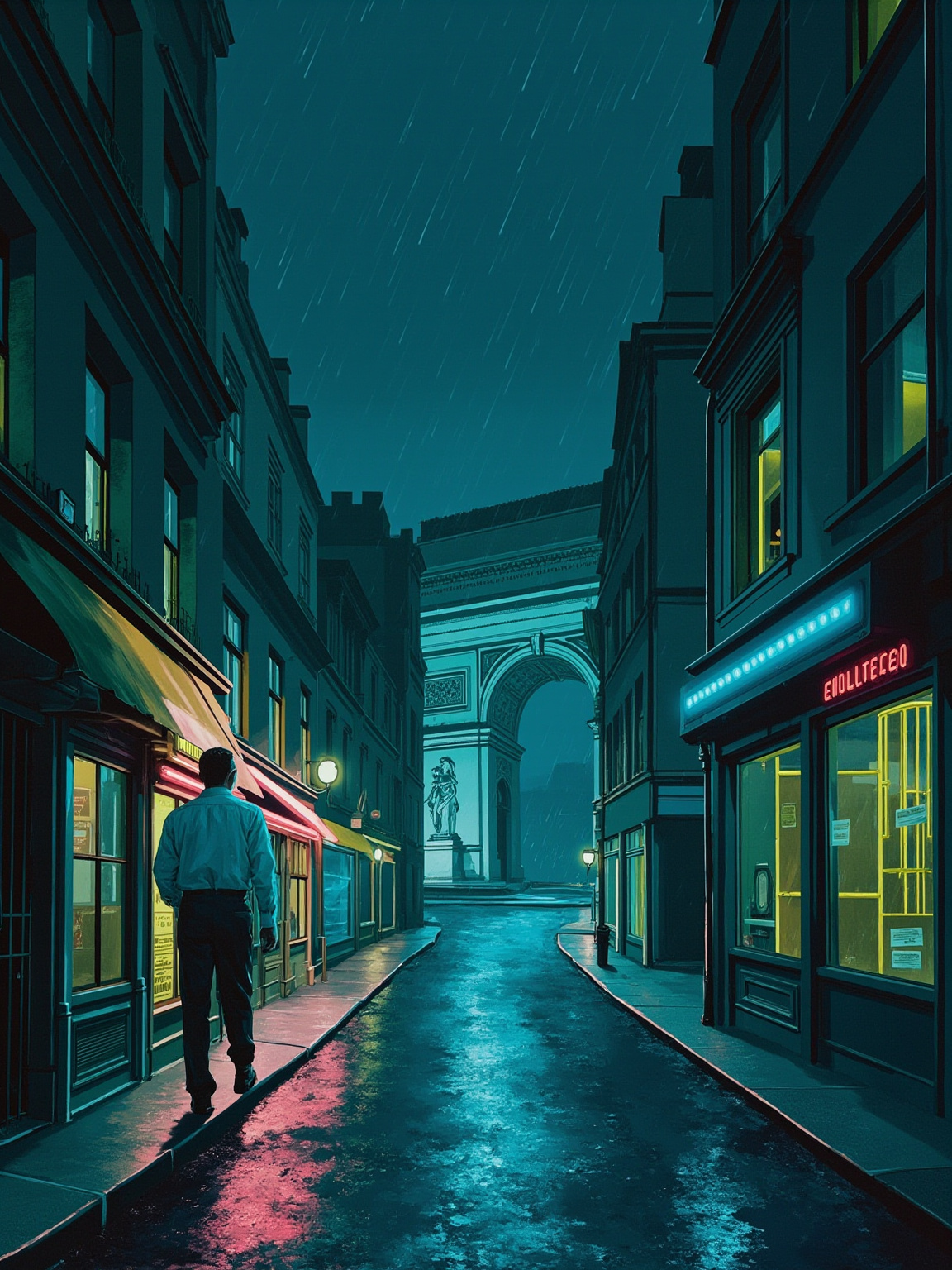
He had no country, no name, no papers—only his hands remembered who he had been.
他没有国籍,没有名字,没有证件——只有一双手还记得自己曾经是谁。
金句 · 开篇 · 无籍之人
The night he saves Joan, he has just finished an operation he had no business doing, and back at the hotel the owner drags him up to the third floor. Joan is lying on the cheap bed, empty pill bottles scattered around her, her breathing almost gone. Ravic does the thing he is best at: pulling someone back from the line where life ends. She wakes up in the hospital and then vanishes for days, with no explanation. Ravic assumes that is the end of it. Then she knocks on his clinic door, coat collar turned up, like a wounded pigeon that flew back on its own. This is Remarque's way of staging a meeting — not love at first sight, but a dying woman and the man who saved her, checking again and again through the Paris winter whether the other is still there.
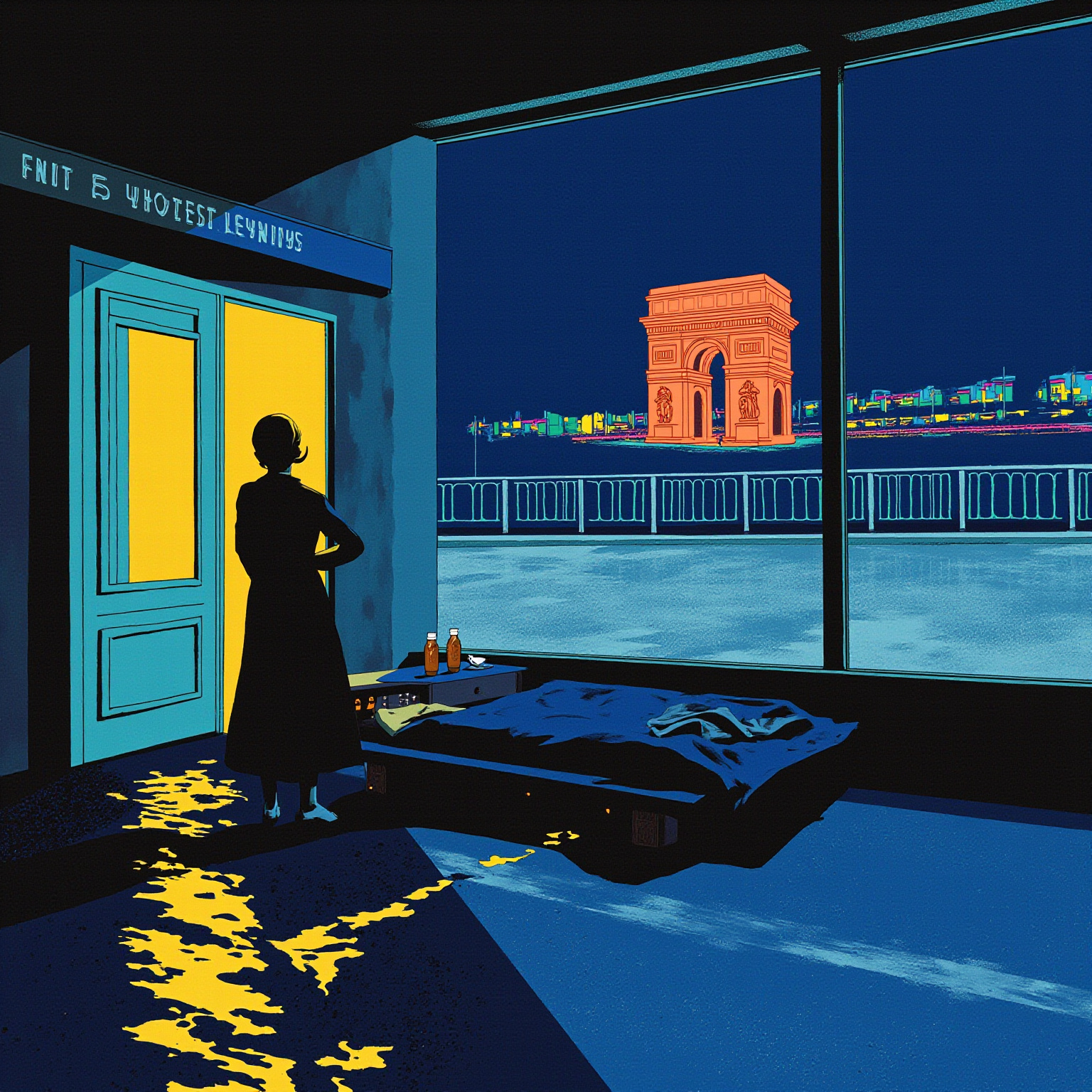
She opened her eyes, and he knew at once: he would never be rid of her again.
她睁开眼的那一刻,他立刻知道,自己这辈子再也没法把她从命里摘出去了。
金句 · 第3章 · 廉价旅馆的抢救
It is drizzling in Paris the day Ravic runs into Haake on the bridge in Montmartre. A violinist in pince-nez is playing something out of tune at the foot of the bridge, and as Ravic passes him, a man comes toward him from the other end: an iron-gray hat, a black coat, the particular way of walking Ravic has only ever seen in the camp. His feet stop dead in the middle of the bridge. People move past him on either side, and he cannot hear any of it. Haake does not recognize him — how could he, a ghost stripped of every identity he ever had? But Ravic recognizes Haake. From that day he starts following him, swearing an oath, running the revenge plan over and over in his head. This thread is the novel's other spine. Love runs warm, revenge runs cold, and the two forces race through the same city side by side.
On the nights they drink together, it is always Alex who speaks first. He is a short, heavyset Central European refugee, pince-nez on his nose, slow to talk and loyal to a fault. The friendship between him and Ravic is the kind only exiles have, the same-trench kind: no need to explain why you couldn't sleep last night, no need to explain why the false passport in your pocket has been torn up and remade again. The other regular is Siegfried, a legendary forger in the Paris refugee circles, able to fake a medical certificate, a green card, a visa, anything at all. He stands for the whole gray economy of exile Paris in 1938: decent men pushed into crime. Remarque keeps this friendship scene restrained. There is no sentimentality, just three men drinking brandy in one small room while the rain outside says everything they will not.
The love between Ravic and Joan grows through the winter nights of 1938 and 1939. A warm yellow lamp burns in a cheap hotel room along the Seine, rain falls on the street outside, and puddles hold the broken reflection of a neon sign across the way. Joan hands over her own mystery piece by piece — a man from her past, a memory lost and then recovered; she does not fail to understand love, she is afraid of it. She disappears on her own terms and comes back on her own terms, as if testing over and over whether a door can still be shut. Ravic carries something heavier. He is learning to trust even as he holds on to his plan for revenge. Two people already scarred all over, in the last months before the end of the world, carefully learning again how to leave a key in someone else's hand. Remarque never writes this feeling as a declaration. He writes it as gesture: a letter pushed back into a drawer, a hand pulled out of his sleeve. What happens in the gap between those two motions is the whole of their story.
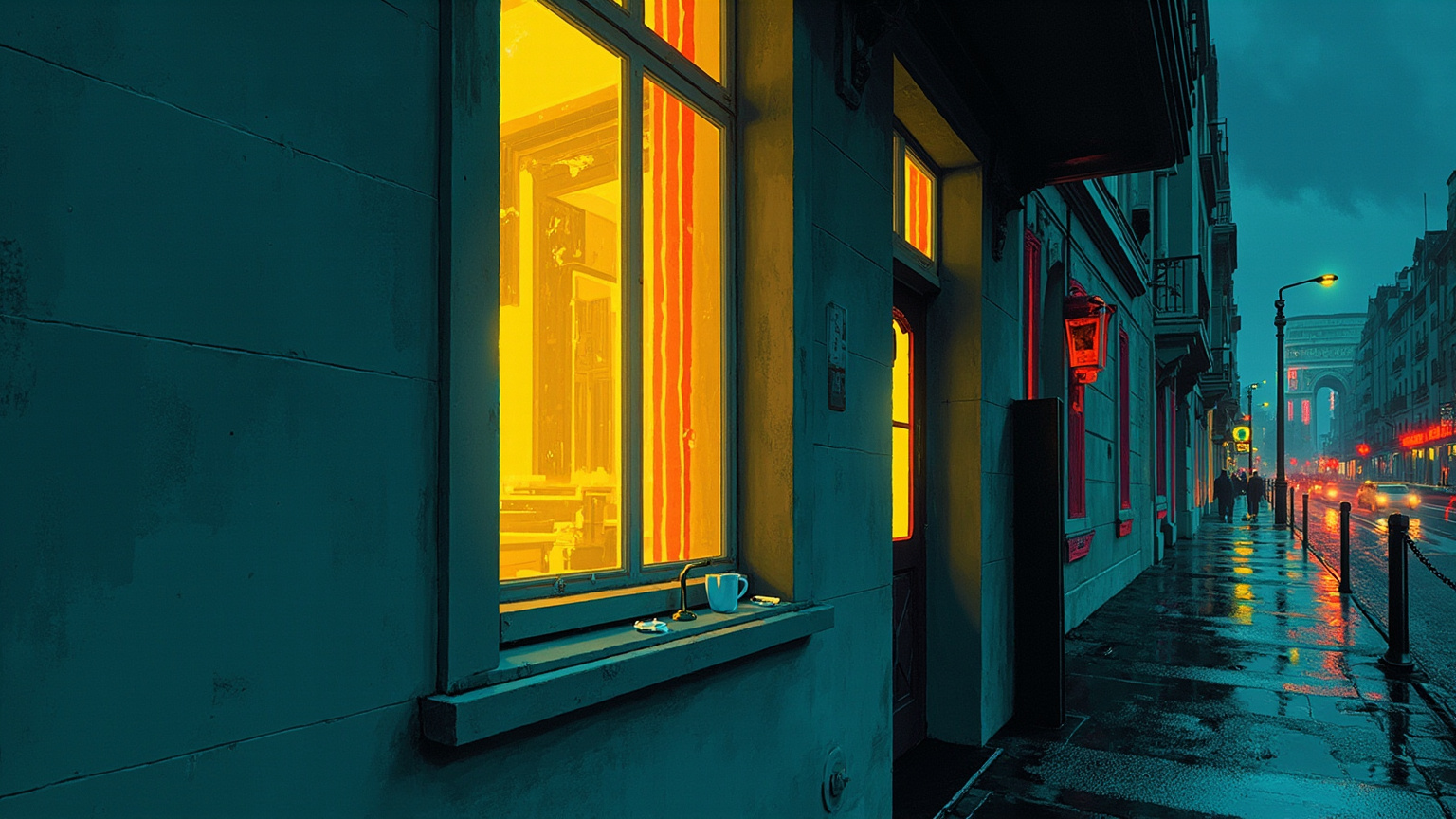
Two people without a country found, for one winter, a country in each other.
两个没有国度的人,在一个冬天里,把彼此当作了故土。
金句 · 第9章 · 冬夜的爱情
By the autumn of 1939, the window is closing. Europe is running out of that last uneasy warmth of not yet officially being at war. Checkpoints multiply on the streets, and the danger of Ravic being handed back to Germany hangs over him like a blade. He and Joan pass through a stretch of time that is tender and, at the same time, braced for separation at any moment: she starts organizing the gauze and instruments in his clinic, and he starts teaching her how to look like an uninvolved passerby when the police stop her. The end has not arrived, but everyone can smell the powder. That 'not yet being struck but already having nowhere to run' suffocation is the pressure Remarque writes better than anyone.
On the eve of France's fall in 1940, Ravic finishes what he swore to do. He does not use a scalpel, does not fire a gun. With the calm only a doctor has, he gets Haake to swallow sleeping pills himself, then shoves him naked into a sewer opening. He does not want Haake dead at once; he wants him fighting to survive until morning, in the mud and the dark. The passage is written with total restraint, almost like a medical chart: dosage, procedure, result, the way a surgical record reads. When the revenge is finally done, Ravic feels no pleasure, only emptiness. The real storm, German troops entering Paris and refugees fleeing all over again, has already rolled over him and everything he wanted to protect.
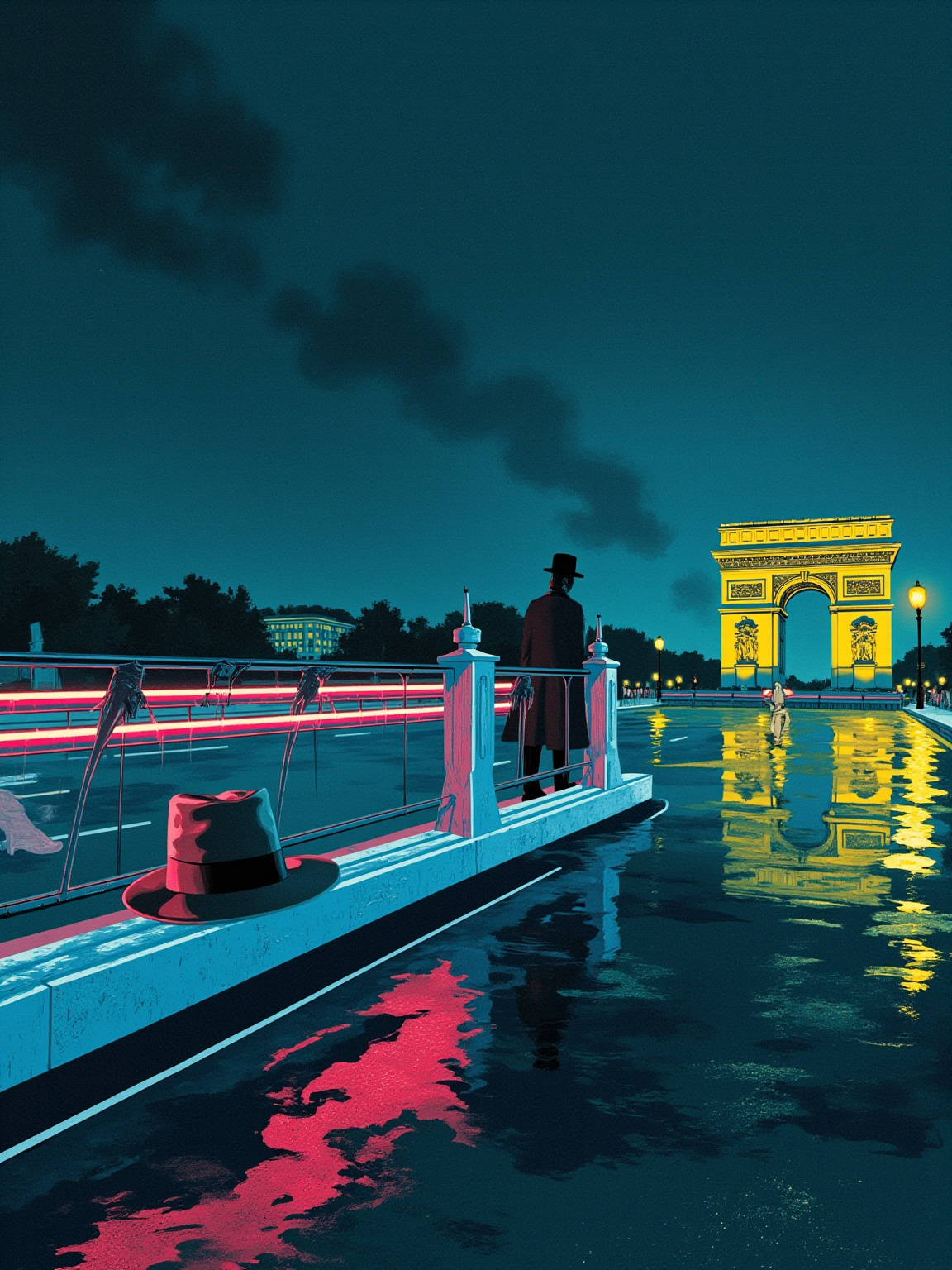
He did not kill him. He let him drown slowly in the filth of his own forgetting.
他没有杀他。他只是让他在自己的遗忘里,一点一点地溺毙。
金句 · 第14章 · 复仇的手术
Ravic walks Joan to the station for the last train south. The platform is jammed: refugees, locals, suitcases, crying. He waits for her outside the platform gate and she does not come out. She is lying just outside it, shot twice in the chest, killed over an old affair of her own by a man who has nothing to do with Ravic or his exile. She falls into his arms, blood soaking into the coat he never had time to button. Only then does he learn she was carrying his child. The Germans have not yet officially entered Paris. Ravic lays her down, stands up, and walks back alone, past the Arc de Triomphe he has walked under a thousand times, into a city about to fall, still under rain.
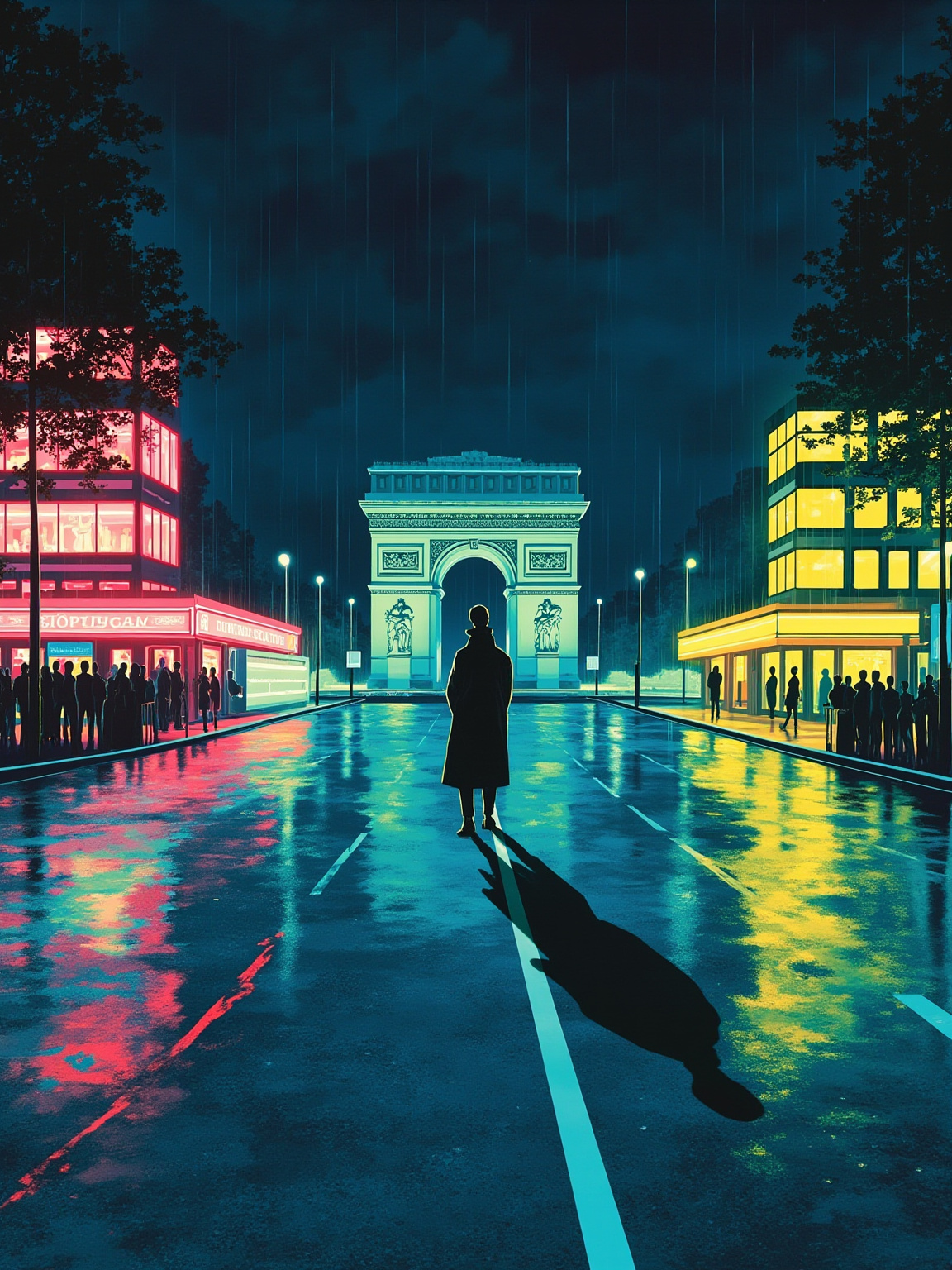
The war had begun without a sound—and it ended her without a word.
战争悄无声息地开了头,也悄无声息地带走了她。
金句 · 结章 · 火车站外
Theme and craft
What the book is really about is 'what is left once everything has been taken from you.' Ravic has lost his citizenship, his license, his name, his safety, and is left with only a pair of hands. A surgeon's hands after his license is gone become a motif that keeps returning across exile literature. Can he still operate? Can he still save anyone? Can he still prove who he is? The revenge plot works against type. It is not the cathartic kind. It is medical, cold, almost bookkeeping in its precision: how much dosage, how many steps, what result. The moment the revenge is done, Ravic realizes what actually crushed him was never Haake, it was history itself. That coldness is exactly what sets Remarque above the ordinary revenge novel.
Using the Arc de Triomphe as a visual motif is the book's smartest design choice. Under Paris's greatest monument to victory sits an entire invisible city of exiles, victory and ruin separated by no more than a single alley. Remarque uses the arch as the book's fixed camera position: every time Ravic walks under it, he is walking through one more act of pretending everything is normal. For readers today, the book maps out a different kind of exile, not geographic, but the suffocation of standing in a city and feeling that 'there is not one corner here that belongs to me,' once your identity has been stripped away. That suffocation still reads true for anyone today who has been denied a visa, stripped of a license, or had their status revoked.
The night his revenge finally landed, he thought he'd won. The real loser is whoever still believes winning is possible.
Why read the book itself
A guide gives you the map. The book itself is the land. What cannot be summarized here is the warmth that slowly rises in a cheap hotel room on a winter night: the exact moment Joan hands him a key for the first time, the moment she stops vanishing on him. Remarque is not writing the outcome of a love affair. He is writing the whole clumsy process by which two already-scarred people relearn trust, one winter at a time. The anticlimax of that medically calm revenge scene, the empty street stretching out under the Arc de Triomphe in the closing rain, none of it lands the way it should until you feel the pacing across those actual pages. Now that you know the plot, the texture and the physical weight of the prose are worth reading for on their own.
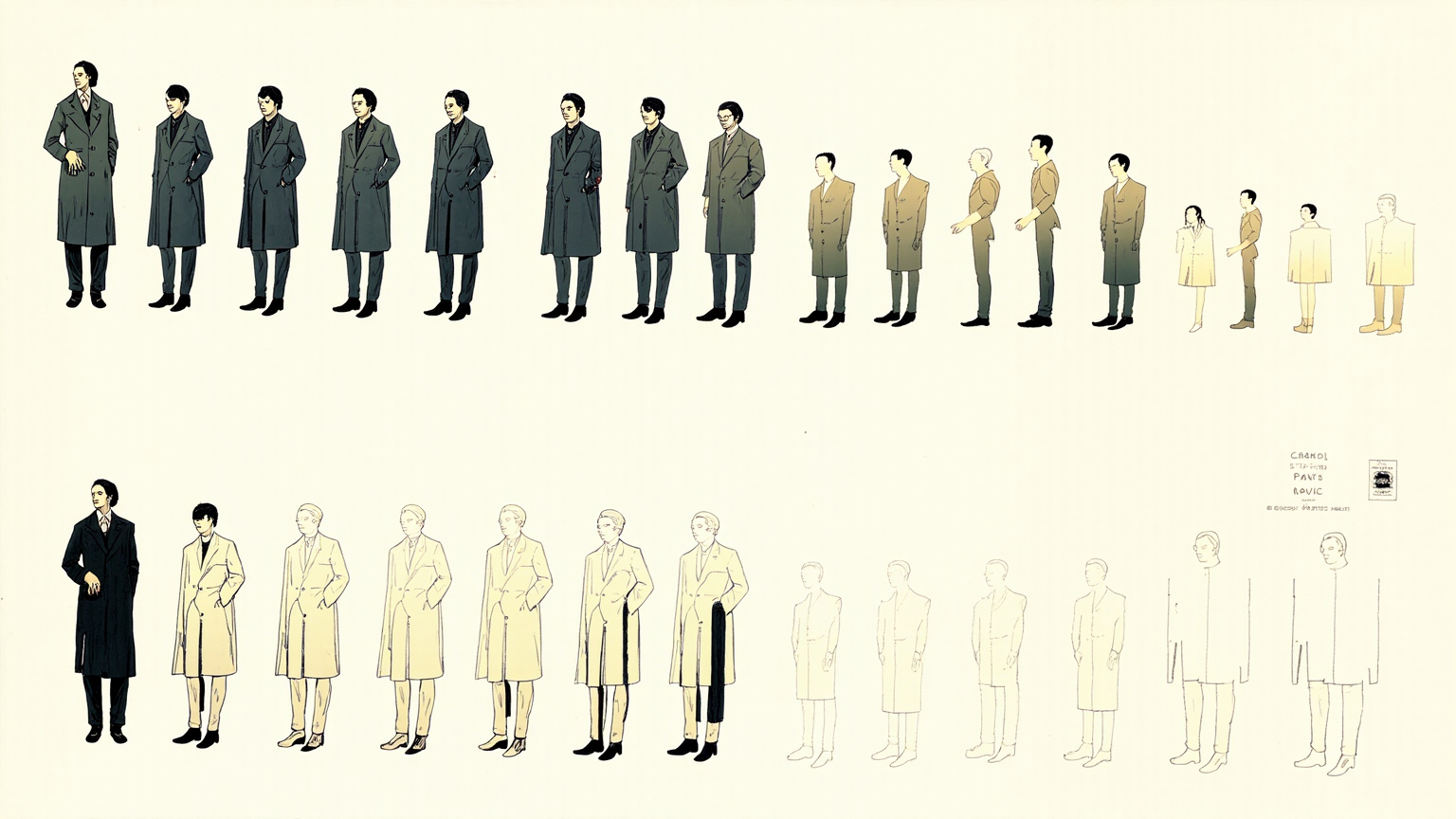
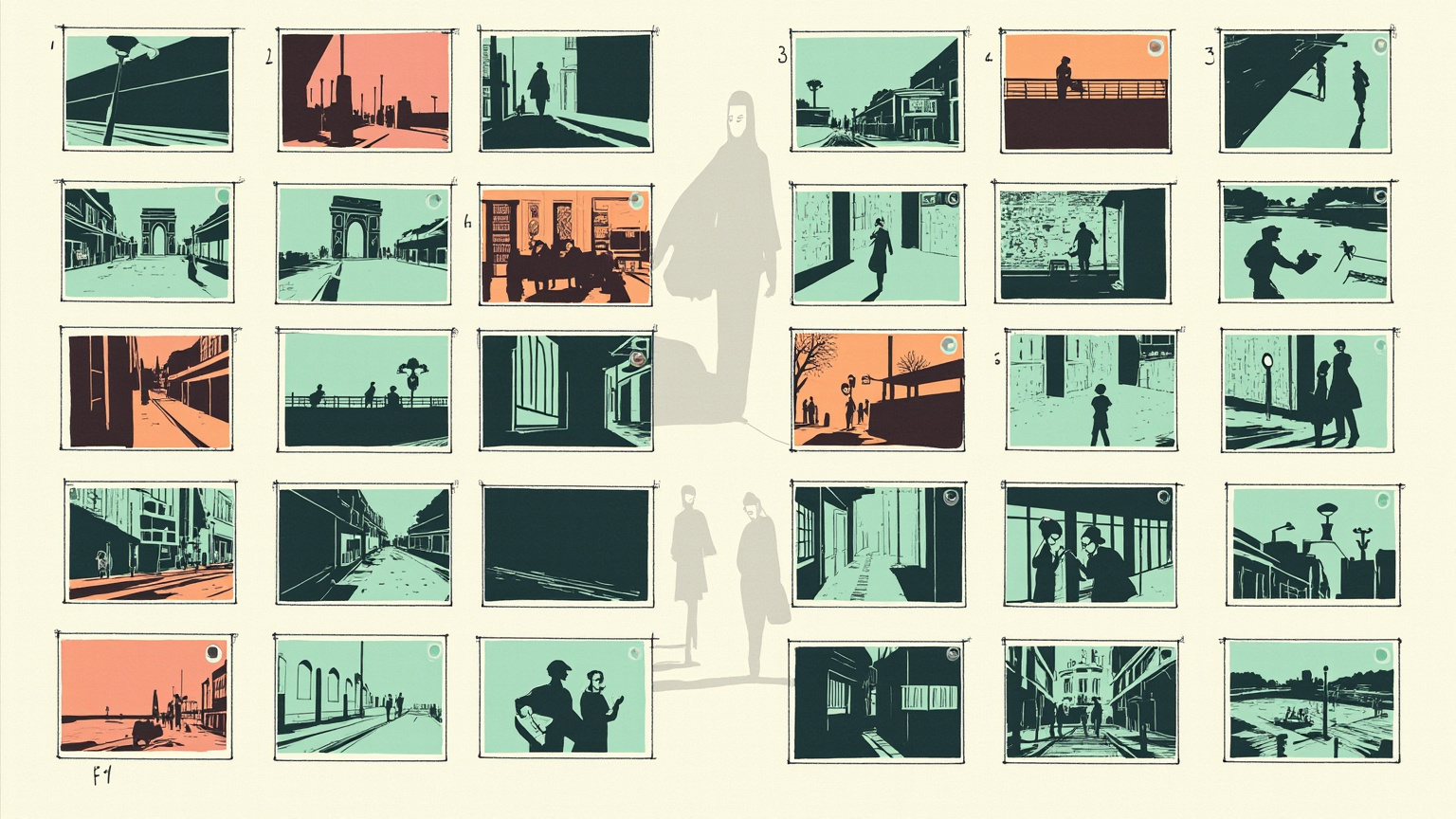
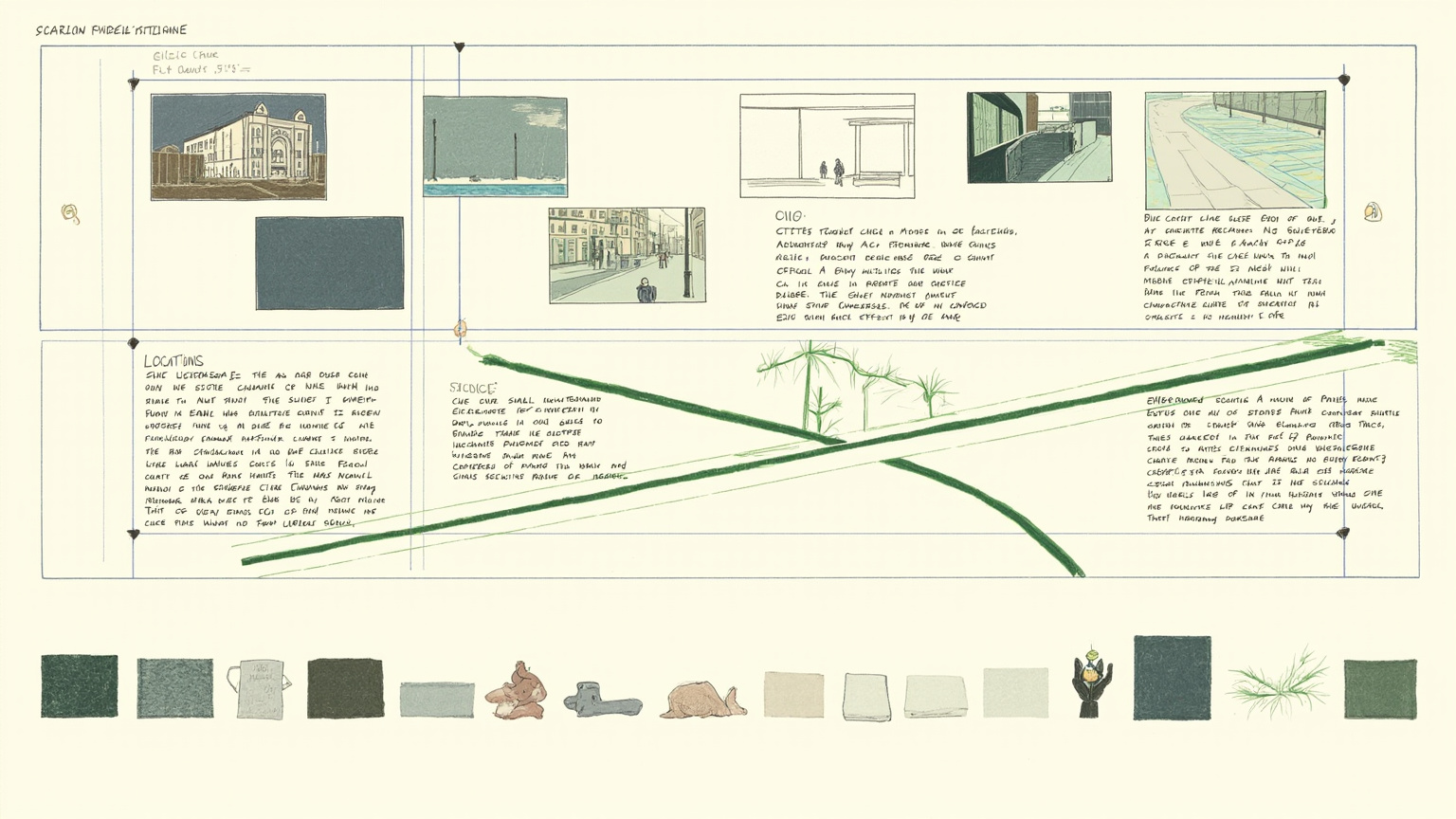
Art Direction4 plates
Before the guide was written, this book got a visual foundation — every illustration you just read grew out of it.