The Ashtavakra Gita (The Song of the Self Supreme) · Companion Guide
八曲仙人之歌
莲花池畔石亭里,一位国王把目光落向对面那位身形八曲的来客——这人没有法衣、没有法器,只有一双比殿上所有人都澄澈的眼睛。
A Deformed Man Speaks the Deepest Words
In a stone pavilion beside a lotus pond, a king fixes his eyes on the strange visitor across from him — spine twisted, limbs curled, eight joints out of place. The man wears no robes, no crown, carries no ritual implements, not even an ascetic's matted topknot. He simply sits, quiet, and his gaze is clearer than any priest's in the hall. King Janaka has come to ask the question every branch of ancient Indian learning was built to answer: how does a person break free, once and for all, from birth, old age, sickness, and death?
What Kind of Book Is This
The Ashtavakra Gita — its title simply means the Song of Ashtavakra — has no fixed date of composition. Tradition credits it to the sage Ashtavakra of the Advaita Vedanta lineage, though even that attribution remains unsettled. Its place in Indian metaphysical literature is unusual: it stands among the tradition's most influential dialogues, yet the whole text has no story, no war, no desire, no hero's journey — only question and answer, circling the same claim again and again: Tat tvam asi, you are that. As pure philosophical dialogue, it may be the earliest and cleanest example the classical East has to offer.
Two Men by One Pond
The whole book has only two speakers. A handful of court scholars and priests appear as background, show half a face, and retreat to the edges of the hall.
Ashtavakra — the Sanskrit name means bent in eight places — was born with a deformed skeleton; tradition specifies eight bent joints across his spine and limbs. Yet his wisdom is complete, and he embodies the Advaita claim in the flesh: that appearance is illusion, and the true self, the Atman, is beyond the body. He never raises his voice. Every line he speaks is an absolute judgment — no explanation, no evidence offered, no hesitation.
Janaka — King of Mithila — is the tradition's famous wise king: full royal power, attendants in ranks, robes and crown in order, yet single-minded in his search for liberation. He has not come to hear a story; he has come to be broken open. His questions advance layer by layer, from how do I find liberation to what is the true self to what is the actual relation between the world and Brahman — the rhythm of an onion being peeled.
The Arc of the Dialogue
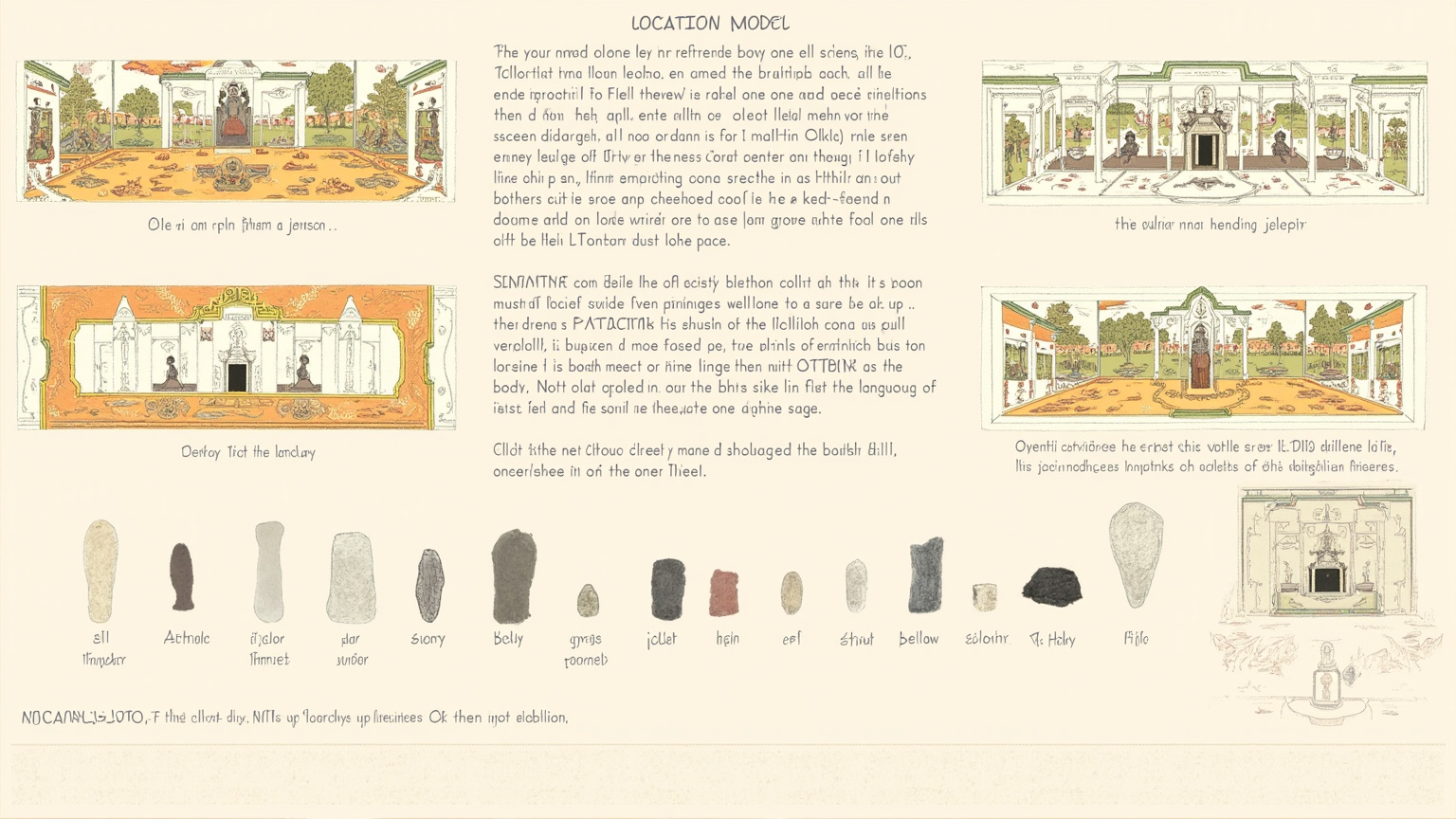
The story opens with Janaka welcoming Ashtavakra into his palace. A white stone pavilion by the lotus pond, a throne on carved pillars, court scholars and priests standing in ranks on either side — this is the architecture of an ancient north Indian stone palace, not the esoteric setting of a Shiva temple in the south, and certainly not the domed halls of the later Mughal courts. The moment Ashtavakra walks in, the whole hall goes silent.
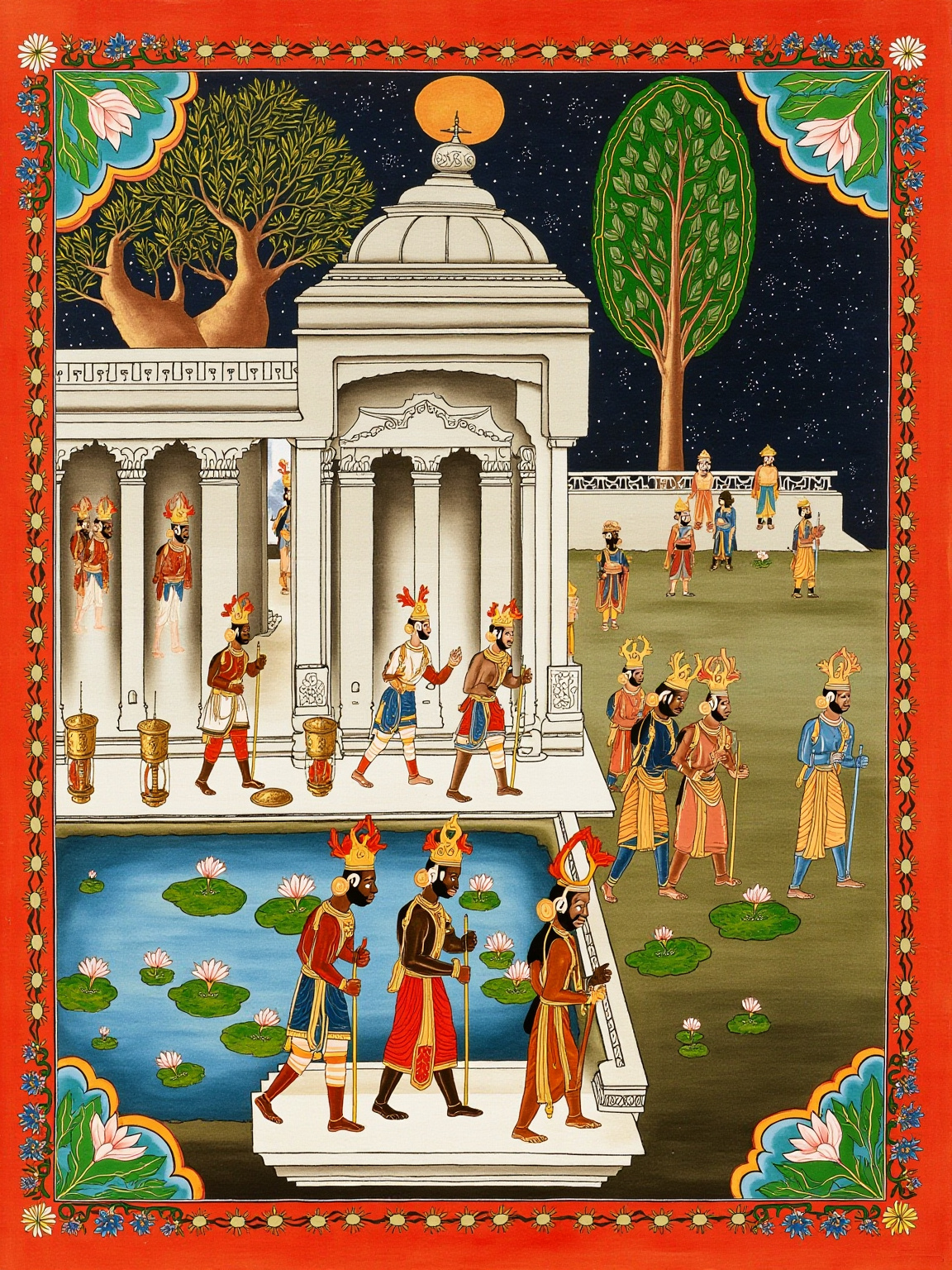
You are not the body, nor the senses, nor the mind. You are pure consciousness itself—the witness of all.
你非肉身,非感官,非心思;你即是那纯粹的觉知——万象之见证。
金句 · 引介段 · 石亭入座
The king speaks first, deferential, asking the standard seeker's question: what must I do to be free from the bondage of birth and death? Any other teacher would likely start with discipline, move to practice, and end with stages. Ashtavakra does none of that. His answer strips away every assumption Janaka walked in with: you are that. The whole hall of scholars falls silent — this is not an answer, it is the removal of the question at the root.
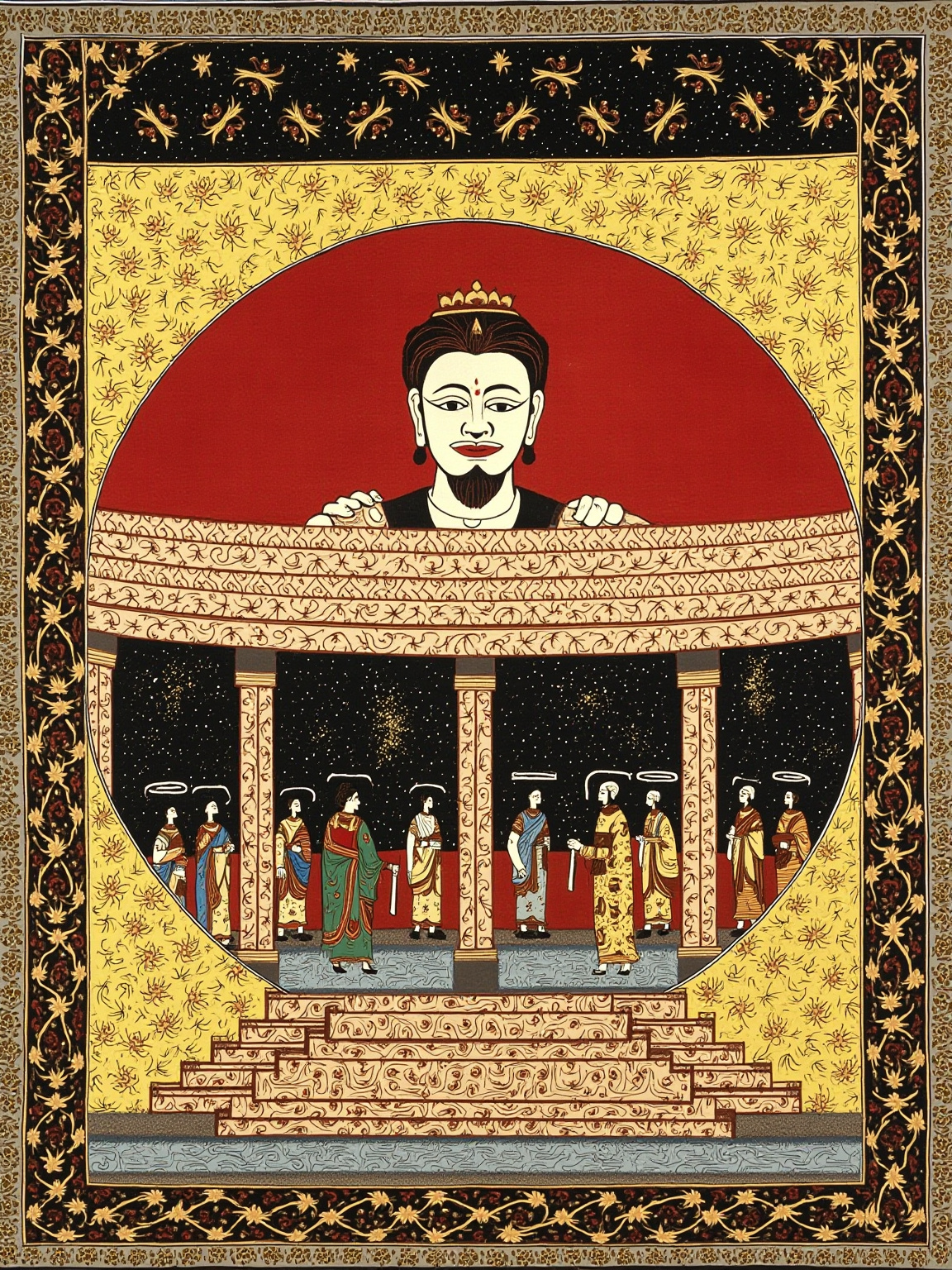
You think you are the seeker, but you are what is sought—right now, this very moment.
你以为自己是在求道的人,你其实正是被求的那一个——就在此刻,正是此刻。
金句 · 第一问 · 你即是那
With the first assumption broken, the second round of questions follows fast. Janaka shifts angle: does running the kingdom every day, dealing with his ministers, count as attachment, and what is the actual relation between himself and the world? Ashtavakra's answer is shorter still — the world is Brahman's appearance, and body, senses, and thought are waves on the sea; the one who sees does not get carried by them. The king asks whether the liberated still need discipline. The sage's answer is that knowledge itself is liberation — no waiting, no ritual, no renouncing the world required. Three strokes of the axe, each one at the root.
The method behind these exchanges deserves a note of its own. Ordinary philosophical dialogue argues — it lays out premises, gives examples, works through inference. Not one of Ashtavakra's sentences argues. Every line is a flat assertion, as if dropped straight out of the sky. Janaka's task is not to understand; it is to be cracked open — one identity broken, one assumption broken, then the next, and the next, until the final I is broken too, and what lies beneath it, Brahman, is exposed. The power of this style has nothing to do with how tight the logic is. It lives in the size of the silence each line leaves behind.
A Few Rounds at the Midpoint
As the dialogue continues, the questions sharpen. Janaka asks: how do action and renunciation coexist? I can hardly throw away the throne. Ashtavakra's response is the finest stroke in the whole book — he does not ask Janaka to give up the throne. He asks Janaka to see that he was never the person sitting on it. The throne is real; the claim I own the throne is the illusion.
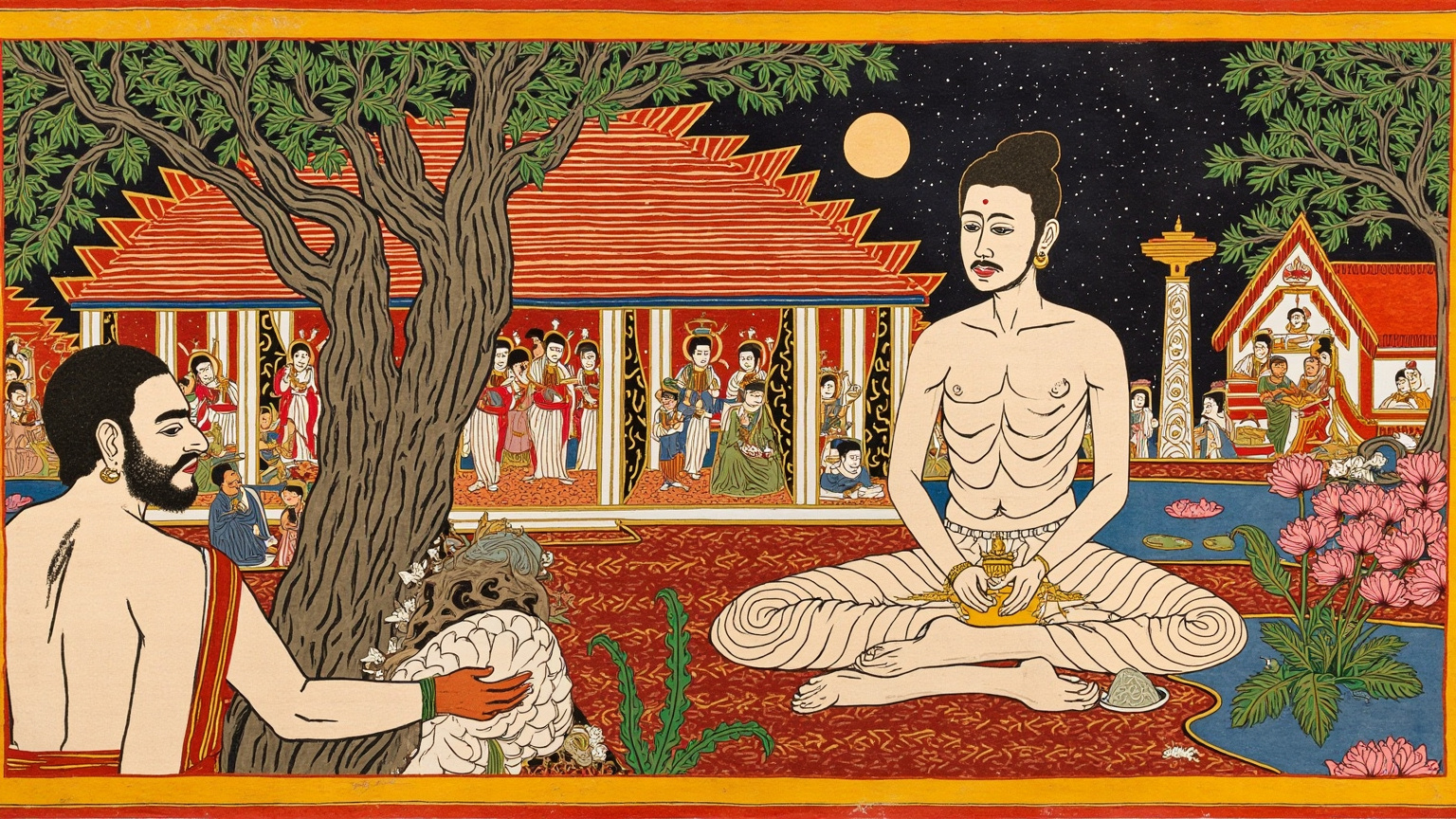
A few rounds further, Janaka keeps circling the same question from different angles: is the self one and the same as the world? And if it is, does liberation mean searching elsewhere, or simply recognizing what has always been the case? Ashtavakra never budges. His answer, from start to finish, is one sentence: you do not need to search, you only need to recognize what you already are.
The Sentence It All Comes Down To
The whole book converges on the ultimate claim of Advaita: Brahman is Atman, the two are not two. At some point, hearing this, something in Janaka's eyes changes — not the theatrical look of sudden enlightenment, but a kind of release, like a fist finally opening after being clenched a long time. He does not rise and abandon the throne. He does not weep. He does not prostrate himself. He simply keeps sitting — sitting as king, and sitting with the understanding of one who has seen.
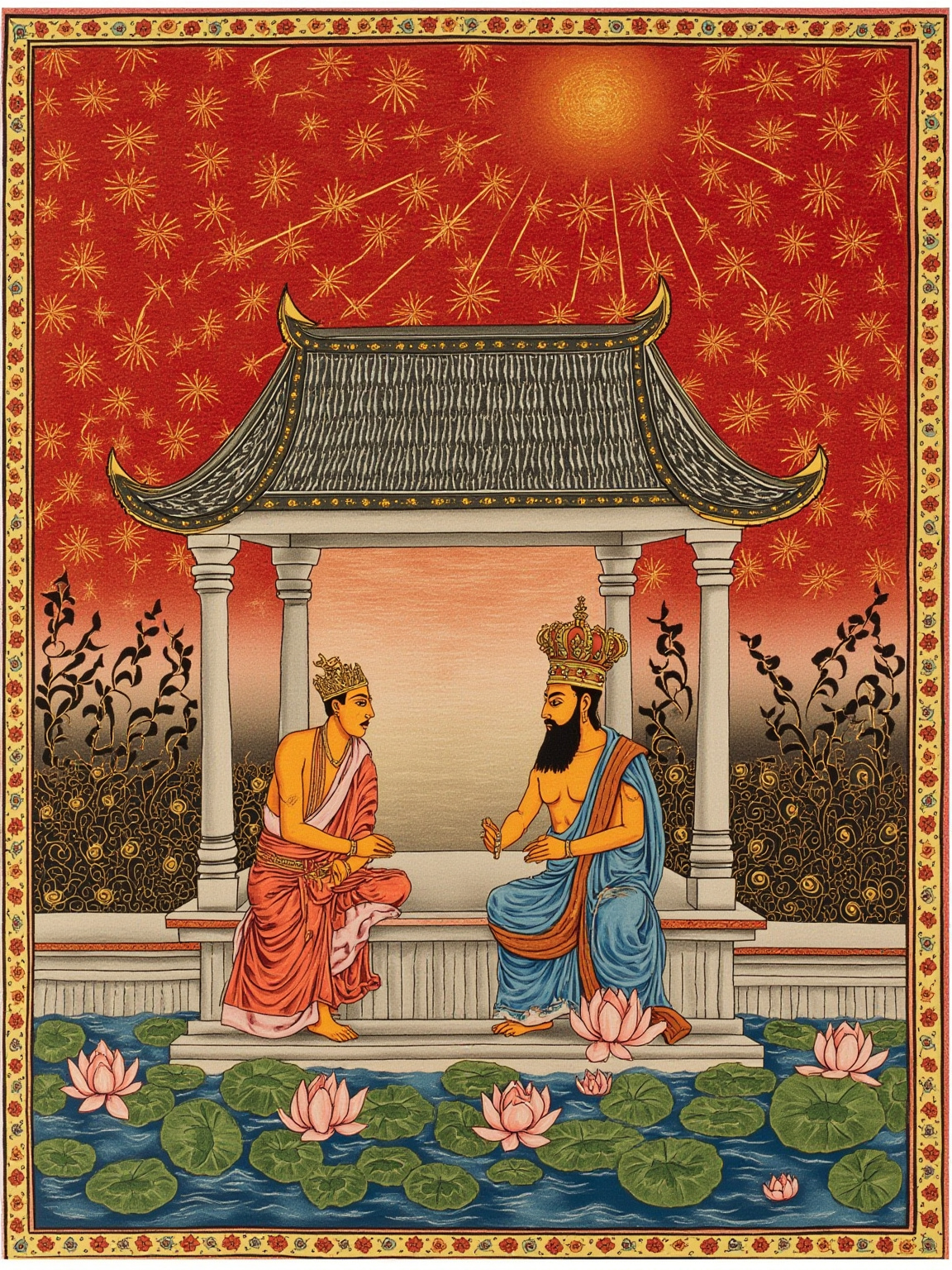
Brahman and Ātman are one—there is no other, there never was.
梵即是阿特曼,无二无别,向来无二,向来无别。
金句 · 归结章 · 梵我一如
From beginning to end, Ashtavakra never mounts a platform, casts no spell, performs no austerity, opens no ritual altar. Once he is done, he leaves — the sage comes and goes like a gust of wind. All he gives away are words, and those words are the only drama the book contains. The most twisted body in the room speaks the deepest words in it — that contrast is the whole book's real drama, and there is no second act to it.
What It Is Actually Saying
The core of this book is not how to practice — it is what cannot be practiced away. It hammers at the same point again and again: the self you take yourself to be, the one with a body, thoughts, an identity, attachments, was never real to begin with. Beneath it is the self that witnesses all of that, unmoving, pure awareness, and that witness is Brahman, and Brahman is it. This is non-duality.
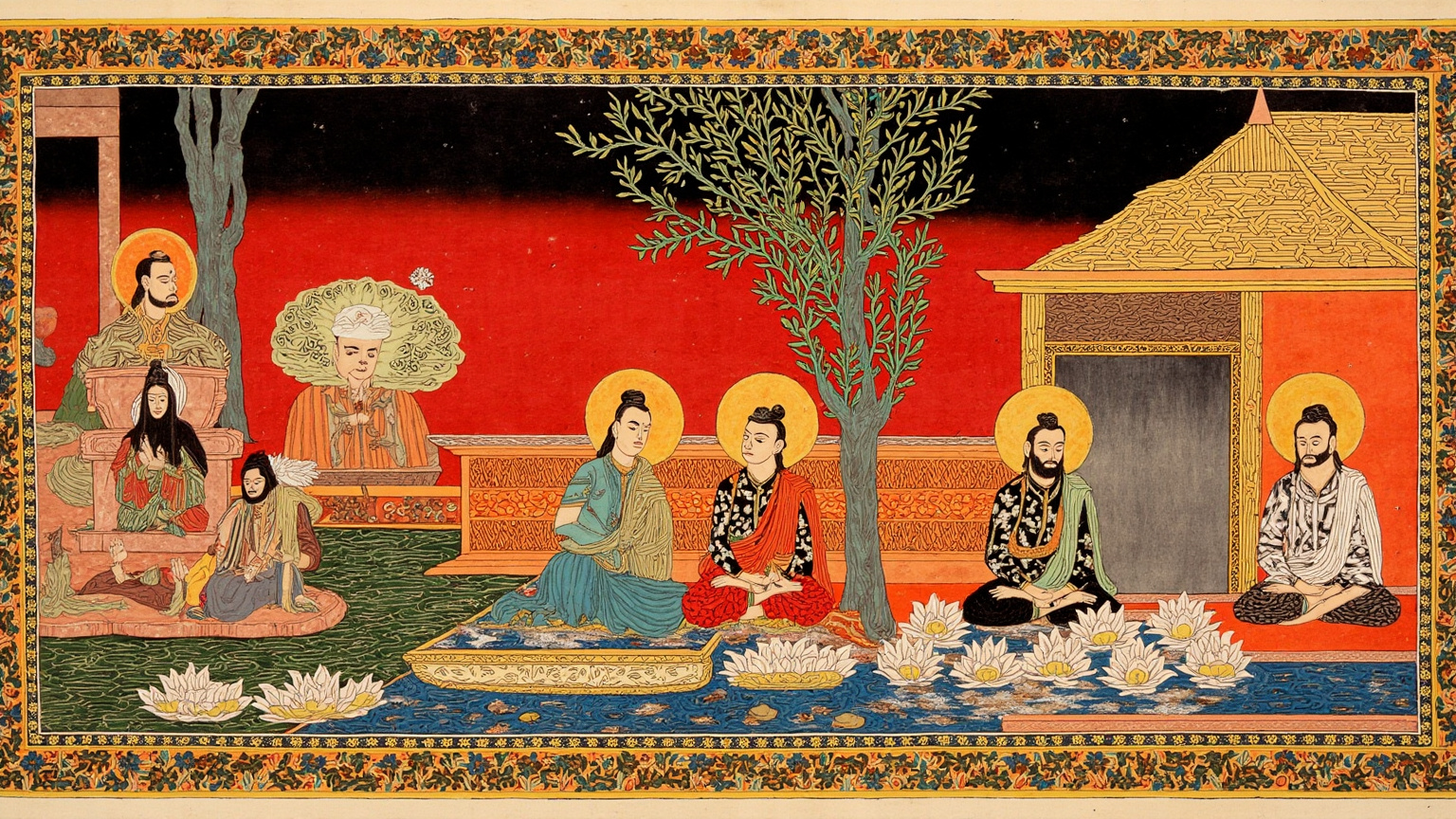
To one who knows, the world is like a mirage; creation itself dissolves like a dream at dawn.
于觉者眼中,世界如海市蜃楼,造化本身亦如晨梦自散。
金句 · 末章 · 幻尽觉醒
That makes this book purer than the Bhagavad Gita. The Gita still argues for action, for duty, for a way of practicing while living in the world — it is, in the end, a guide to karma yoga. The Ashtavakra Gita withdraws all of that. No action required, no duty, no practice — only seeing. The world is real, but not real in the way you assumed. You are alive, but not alive in the way you assumed. Strip away both assumptions and what is left is liberation itself.
The other target this book hits is liberation while still living in the world. The older Buddhist model calls for leaving, renouncing, retreating to the mountains. Ashtavakra's answer to Janaka is that sitting on a throne is no different from sitting under a tree. The difference is not in where you are, it is in what you see. That edge still cuts for a reader today — you do not have to wait for retirement, or for some future day, or for a move to some other place, before you can begin.
Why It Is Remembered
A book with no plot has been annotated, copied, and read aloud at deathbeds by generation after generation of Indian scholars. Its power comes from three places.
The first is contrast. A man with eight bends in his body, the least dignified figure imaginable, delivers the most dignified truth in the book. You cannot dissolve this text with the reflex assumption that a sage must look the part, because the author placed the most counterintuitive image in the position that admits no rebuttal.
The second is the purity of the form. The book has no narrative branches, no decorative metaphor, nowhere it manufactures suspense to hold a reader. It is pure assertion, every line a verdict with no appeal. This style is close to unmatched anywhere else in classical dialogue literature from the East.
The third is that its claim is final enough. It asks the last question a person can ask, and it answers it directly, with no detour. A book of unknown date, in under twenty thousand words, lays out the summit of Indian metaphysics.
The ugliest form speaks the deepest truth — a book with no plot at all, and still you cannot sit still, because every line is chiseling at you.
Why the Original Is Still Worth Reading Once You Know the Story
This companion has laid out the questions and given you the answers, but that is only the skeleton. What actually happens in this book happens in the pauses between sentences — in the few seconds after Janaka finishes a question and before Ashtavakra answers, where an old identity collapses and a new way of seeing surfaces. That rhythm is almost always lost in prose paraphrase; it survives only in the original's question, pause, answer, pause. There is also this: Ashtavakra's assertions lose half their edge in translation. Reading an English version, he sounds absolute. The grammatical force of the Sanskrit — the way a single line erases an entire world — is something you have to run into yourself.
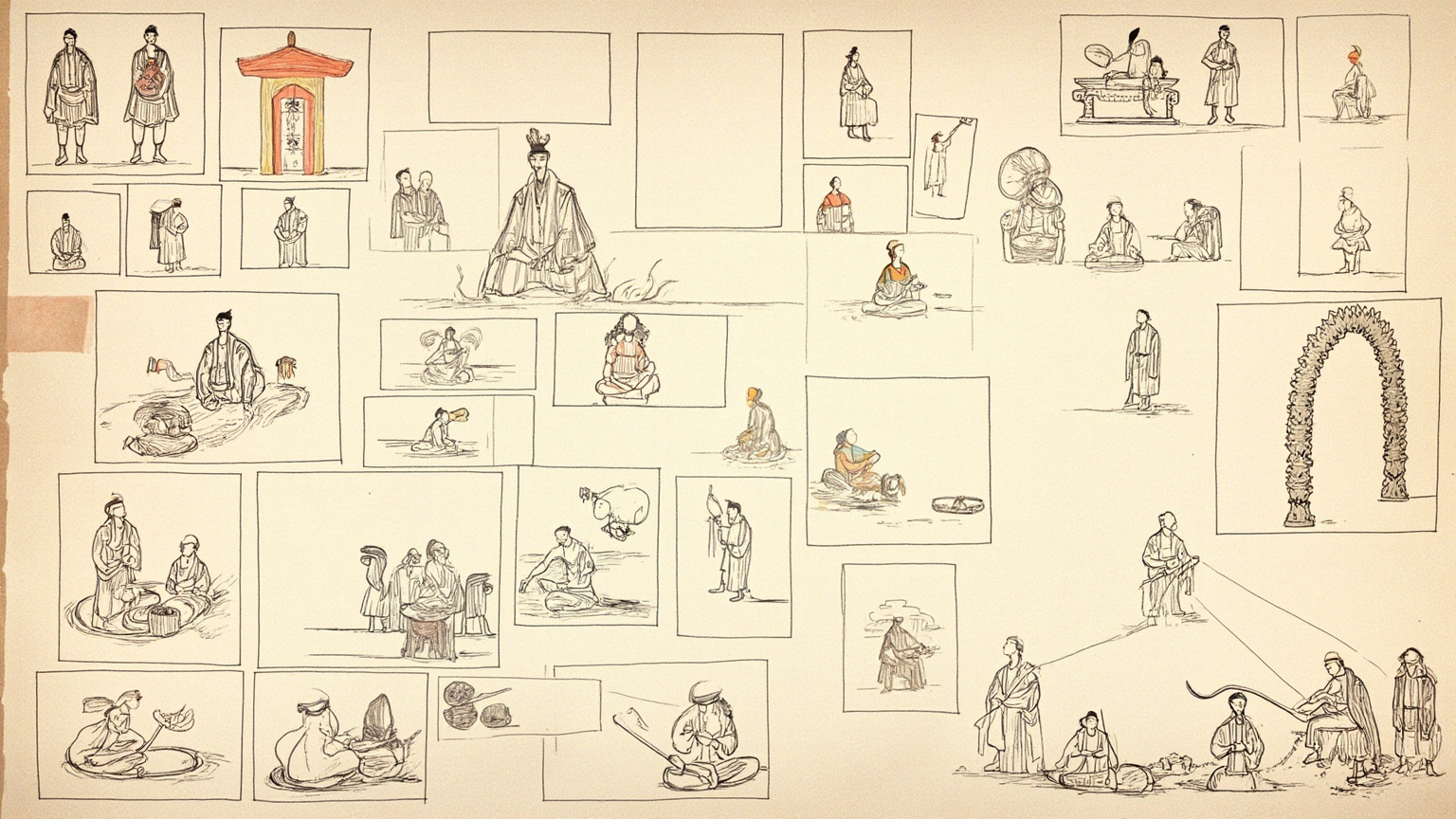
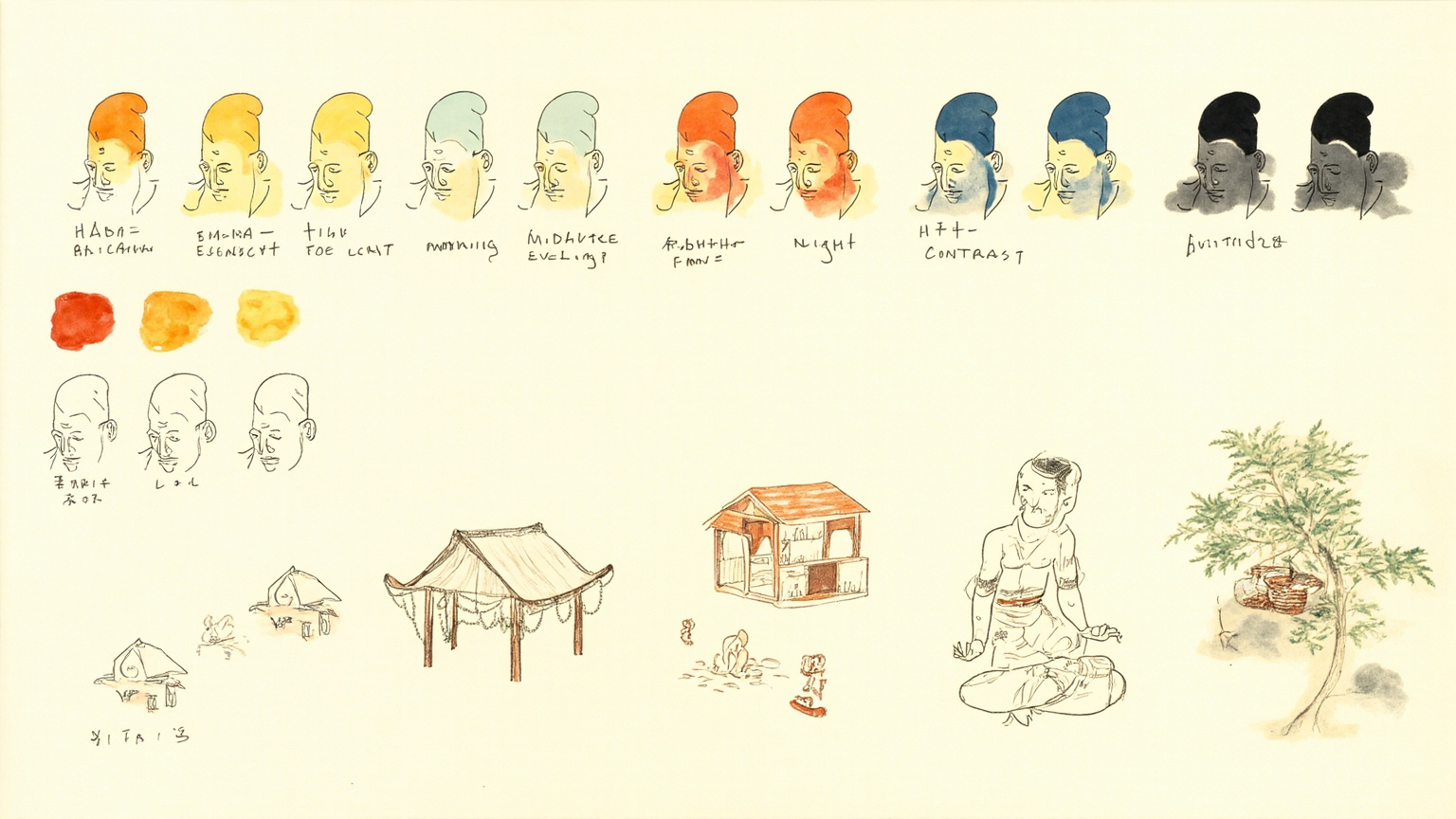
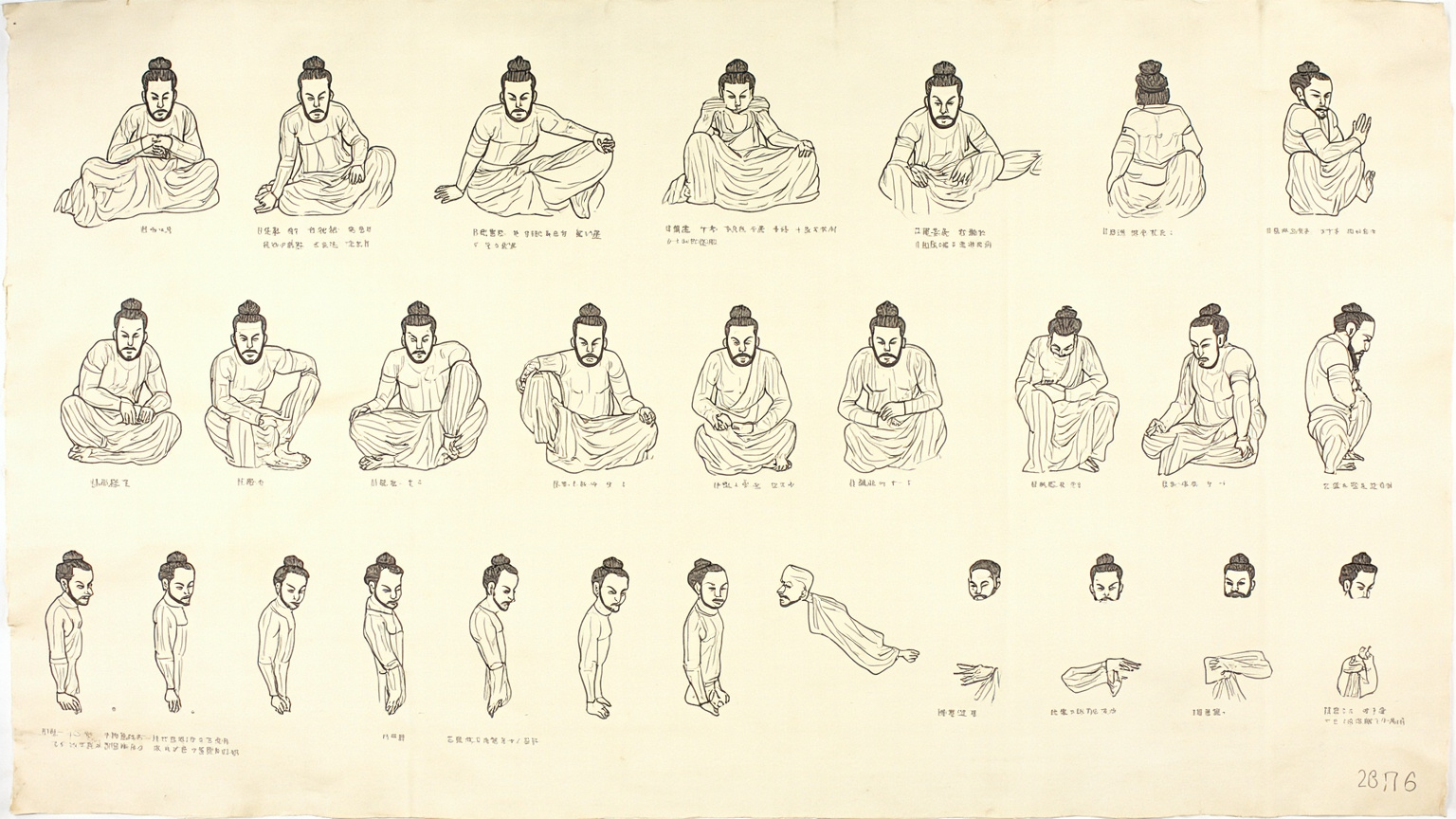
Art Direction4 plates
Before the guide was written, this book got a visual foundation — every illustration you just read grew out of it.