The Baburnama (Bāburnāma) · Companion Guide
巴布尔回忆录
一个十二岁的小君主在斋月里记下自己,此后一生反复被逐、一路向南,把失国与瓜田、败仗与葡萄架写进同一种平稳的墨色。
I. Opening: A Boy Writes Himself Down in Ramadan
An old manuscript, and its first page reads: in Ramadan, at the age of twelve, I became ruler of Fergana. Three facts laid side by side — a holy month, a boy, a small valley in Central Asia. The writer does not say how grieved he was, how frightened he was. He simply stacks the date, the age, the place, the way a man keeps accounts.
The man keeping the accounts was Muhammad Babur, a direct descendant of Timur and the future founder of the Mughal Empire. He wrote his memoirs in Chagatai, which he himself called "Turki," and kept writing almost until he died. The book outlived him by a long way. His grandson Akbar had it translated into Persian and handed to court painters, who illustrated it in four separate manuscripts. Those paintings are scattered now across the Victoria and Albert Museum, the British Library, and the National Museum in New Delhi, and they are still there.
II. Why This Book Is Remembered
In the history of world literature, the Baburnama is often set beside Caesar's Commentaries on the Gallic War. In the history of Chinese literature, it stands as something close to a precedent for the emperor's own memoir written in his own hand. Within the Islamic world, as autobiography, it was the first of its kind, and for a long time the only one. A prince repeatedly lifted up and dropped by fortune wrote it line by line himself, with no scribe standing in for him, recording even what he ate on the night of a defeat and what bird he happened to see. English translators later shelved it beside the memoirs of Augustine, Rousseau, Gibbon, and Newton — and a Central Asian ruler's memoir earning a place on that shelf is itself a kind of verdict.
III. People and World: A Few Figures Along the Road of Migration
There is only one protagonist: Babur himself. The story opens with the sudden death of his father, Umar Sheikh Mirza, who died the year Babur turned twelve. The boy king inherited a small patch of the Fergana Valley and a heavy pedigree — descent from Timur. His rivals are just as clearly drawn. Muhammad Shaybani Khan, founder of the Uzbek Shaybanid dynasty, drove him out of Samarkand twice. Ibrahim Lodi, Sultan of Delhi, was the man he finally fought and defeated in India. Around him moved a circle of poet friends and advisors, the most famous of them the older Chagatai poet Ali-Shir Nava'i, to whom Babur devotes a whole section of the memoir — part tribute, part a way of placing his own lineage within a culture.
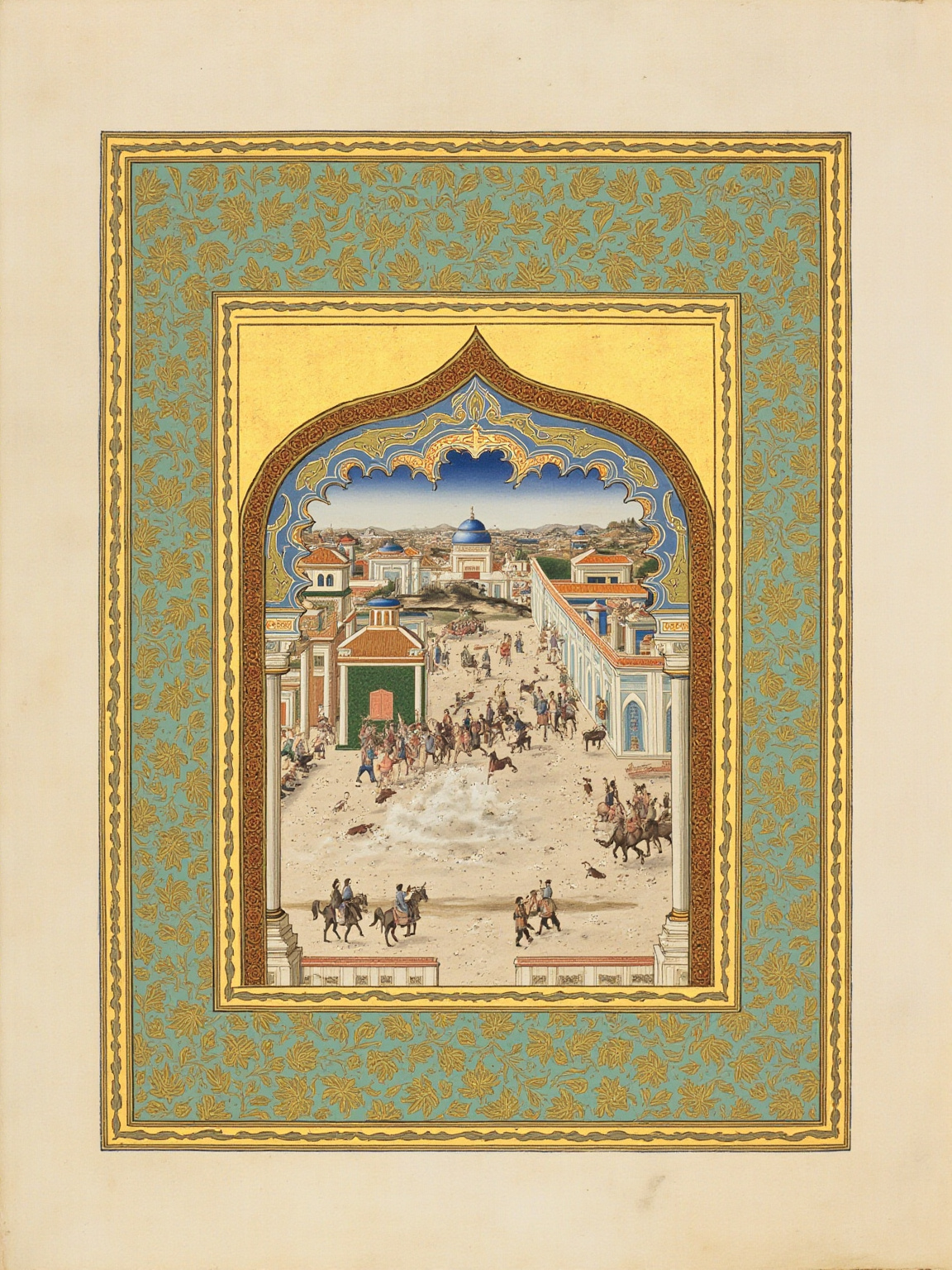
In the month of Ramadan, in the year 899, I became ruler, in my twelfth year, in the province of Fergana.
回历八九九年斋月,我十二岁,在费尔干纳做了统治者。
金句 · 开篇 · 费尔干纳继位
The world of the book runs as one line of migration from northeast to southwest: the apricot orchards and melon fields of Fergana, the blue domes and madrasas of Samarkand, the irrigation channels and vine trellises of Kabul, the snow passes of the Hindu Kush, and finally the plains of the Punjab in northwestern India — monsoon rain, matchlock guns, war elephants, dense forest. It is not a settled line. It is a line walked by a man driven off it again and again, and setting out again each time.
IV. Crowned at Twelve, Losing Samarkand Twice
The opening pages read as young as a boy who has not yet grown a beard. Not long after Babur secured his footing in Fergana, he marched south on Samarkand — the old Timurid capital, the seat his grandfather's line had once ruled from. The first time, he took it and was pushed back out. The second time, he took it again and was driven out again, this time by the Uzbek chief Muhammad Shaybani Khan. Put together, the two occupations lasted under two years. Central Asia's old world closed to him for good after that, and the road behind him, the one that ran from Transoxiana into Samarkand, was cut.
The tone he takes toward these two losses is strange. There is no color laid on, no self-pity; winning Samarkand back and losing it again reads as flatly as a note on the weather that month. The English translator Stanley Lane-Poole later remarked that the man's character on the page comes across as fresh, buoyant, and undisguised. A man driven from his homeland who does not wail on the page — that alone is worth noticing as a matter of craft.
V. Kabul: Finding Footing, and a Silence With No Words in It
In the early sixteenth century he swung far to the east and came down in Kabul. The mountain city's ruler invited him in, and Babur took it as his new base. With Central Asia's door shut and South Asia's still far off, he rebuilt the irrigation channels outside the city, put up the vine trellises, and began to make Kabul home.
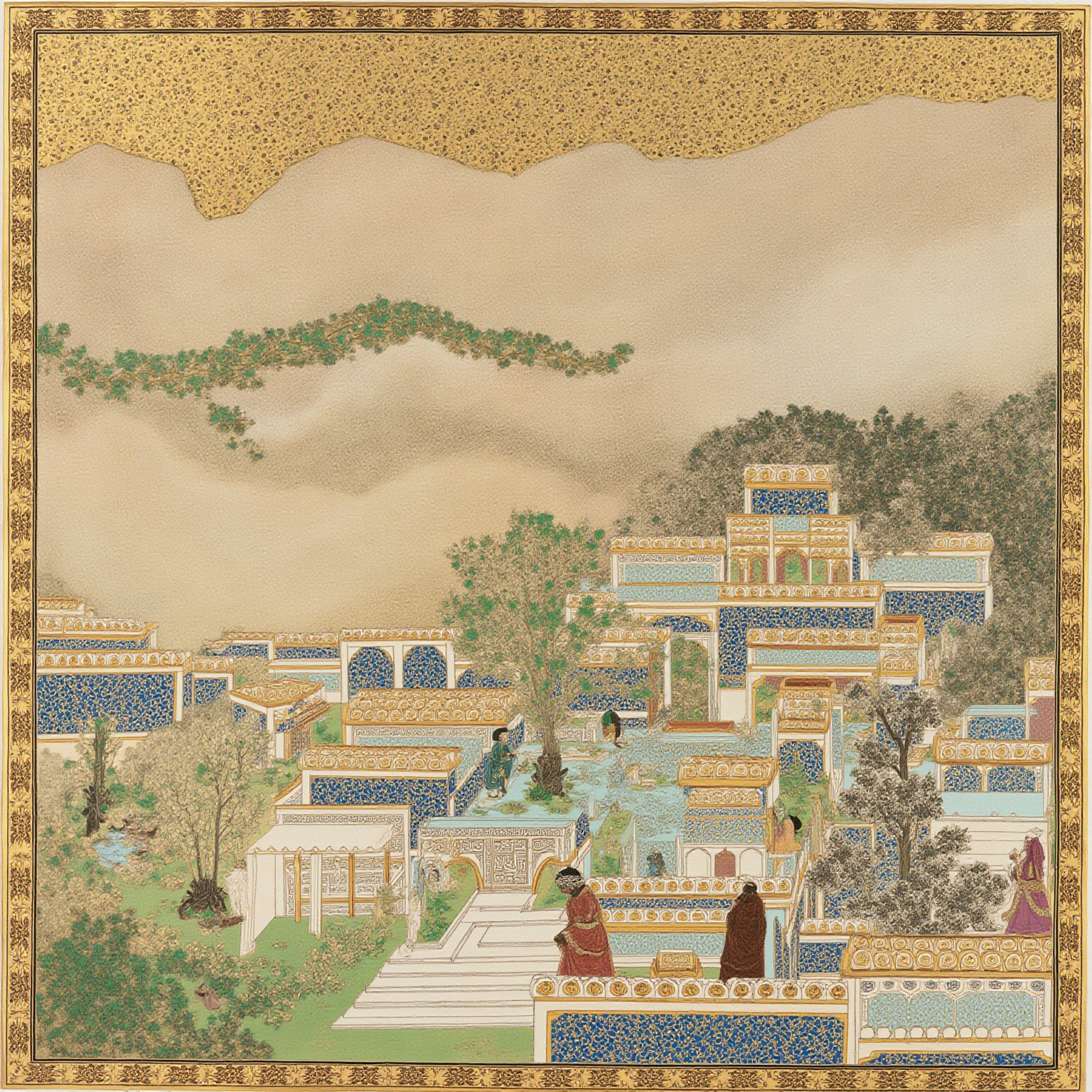
Kabul had a pleasant climate and an abundant harvest; the people were good-natured, and the disorder of the times was at an end.
喀布尔气候宜人,岁收丰足,民风温厚,连年扰乱至此止歇。
金句 · 喀布尔章 · 落脚新都
But here the manuscript falls silent for more than a decade, roughly from the first years of the sixteenth century into the start of its second decade — the pages go nearly mute. Scholars generally agree that he spent these years still building up Kabul and campaigning around it, and simply never picked up the pen to record it. When later writers tell Babur's "success story," this stretch gets smoothed into a rising line. In the book itself, though, those missing years are a seam that says nothing at all.
When the pen comes down again, more than ten years later, he is already a seasoned, middle-aged ruler, and his prose has grown far steadier than it was at the start. Looking back, that pause has a strange effect. The book opens when he is twelve, falls silent for a decade after a few dozen pages, and when it speaks again, the voice belongs to someone else: the boy keeping accounts is gone, and a man used to making decisions has taken his place.
VI. A Naturalist's Self-Portrait: Melon Fields, Irrigation Channels, Peacocks
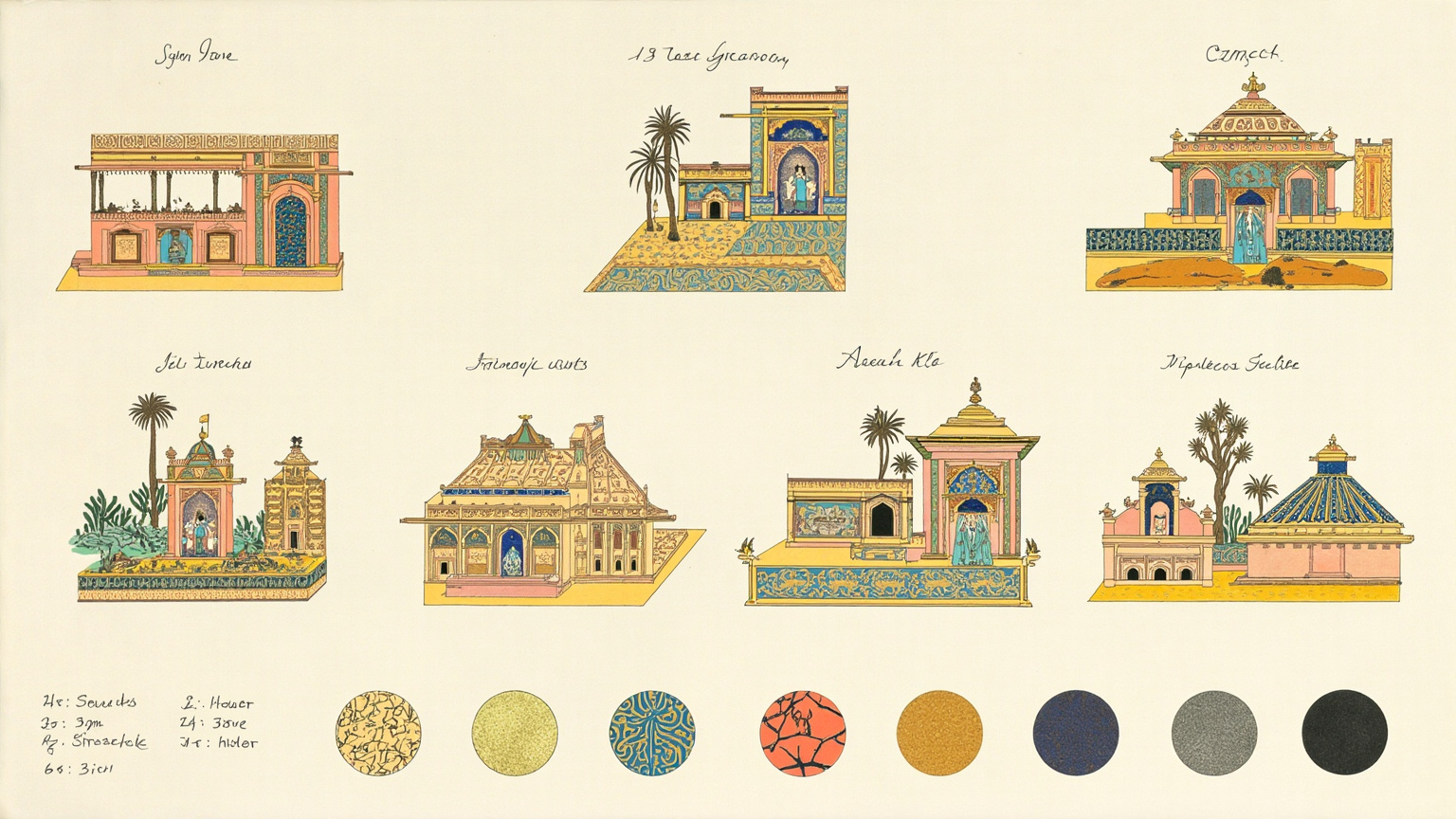
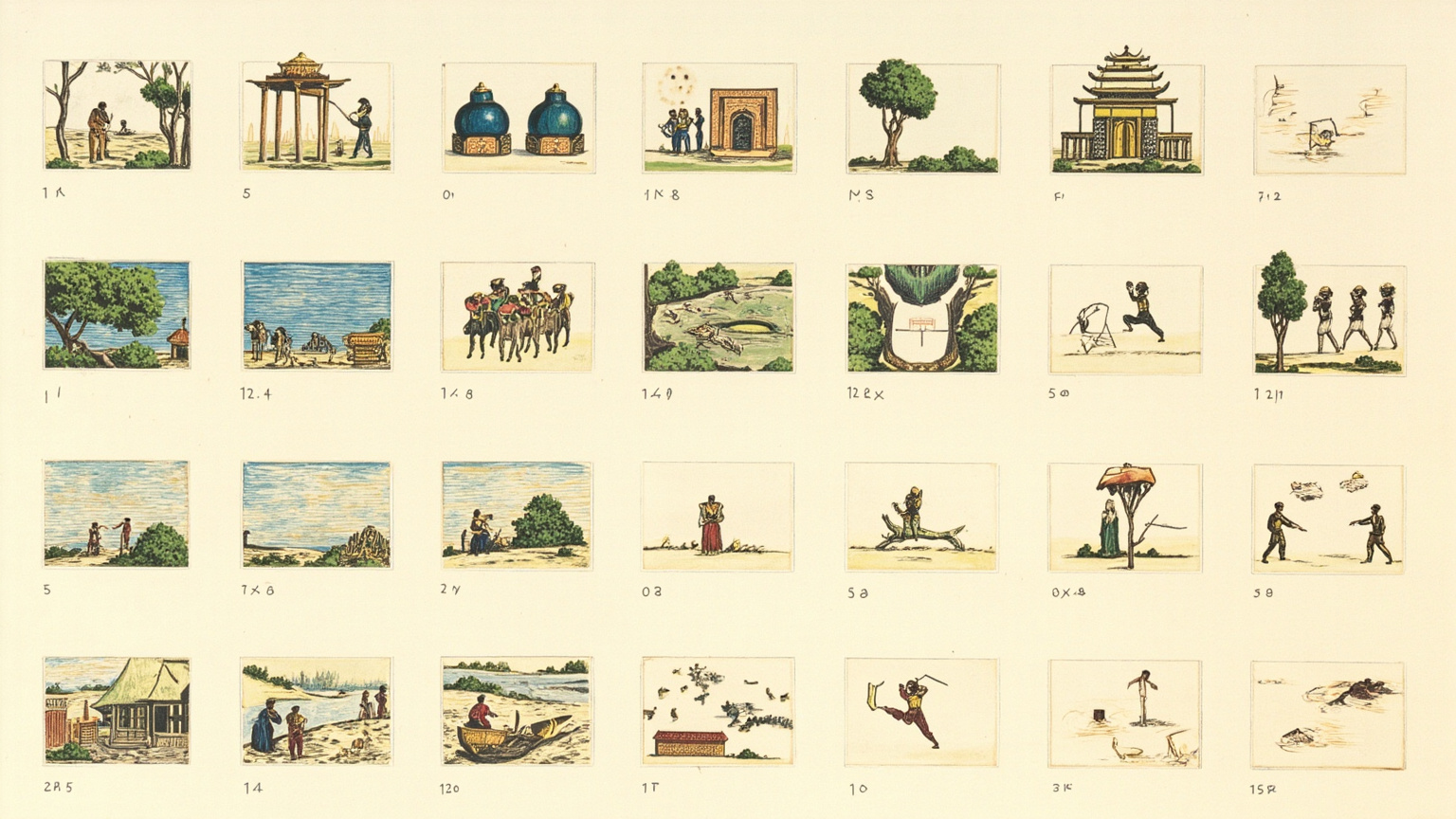
What actually stops a reader in this memoir is not any battle but the way it looks at the world. Writing about Fergana's apricots and melons, he notes which hillside grows the sweeter melon and when it ripens. Writing about Samarkand's domes, he notes which madrasa's tilework is a blue cold enough to notice. Building the irrigation channels outside Kabul, he notes how the water bends around a stone and how its course changes at night. In India he writes about the local peacocks, the monsoon rains, the counting systems craftsmen use, the loading sequence for a matchlock — dozens of pages detailed enough to serve as a field guide.
Chinese readers coming to this book tend to treat it purely as founding-dynasty history. It is also one of the earliest firsthand natural histories of the Central Asian and South Asian borderlands. Military victories sit next to fruit, defeats sit next to vine trellises. Welding an emperor's own account to a local field guide like this is rare anywhere in world literature.
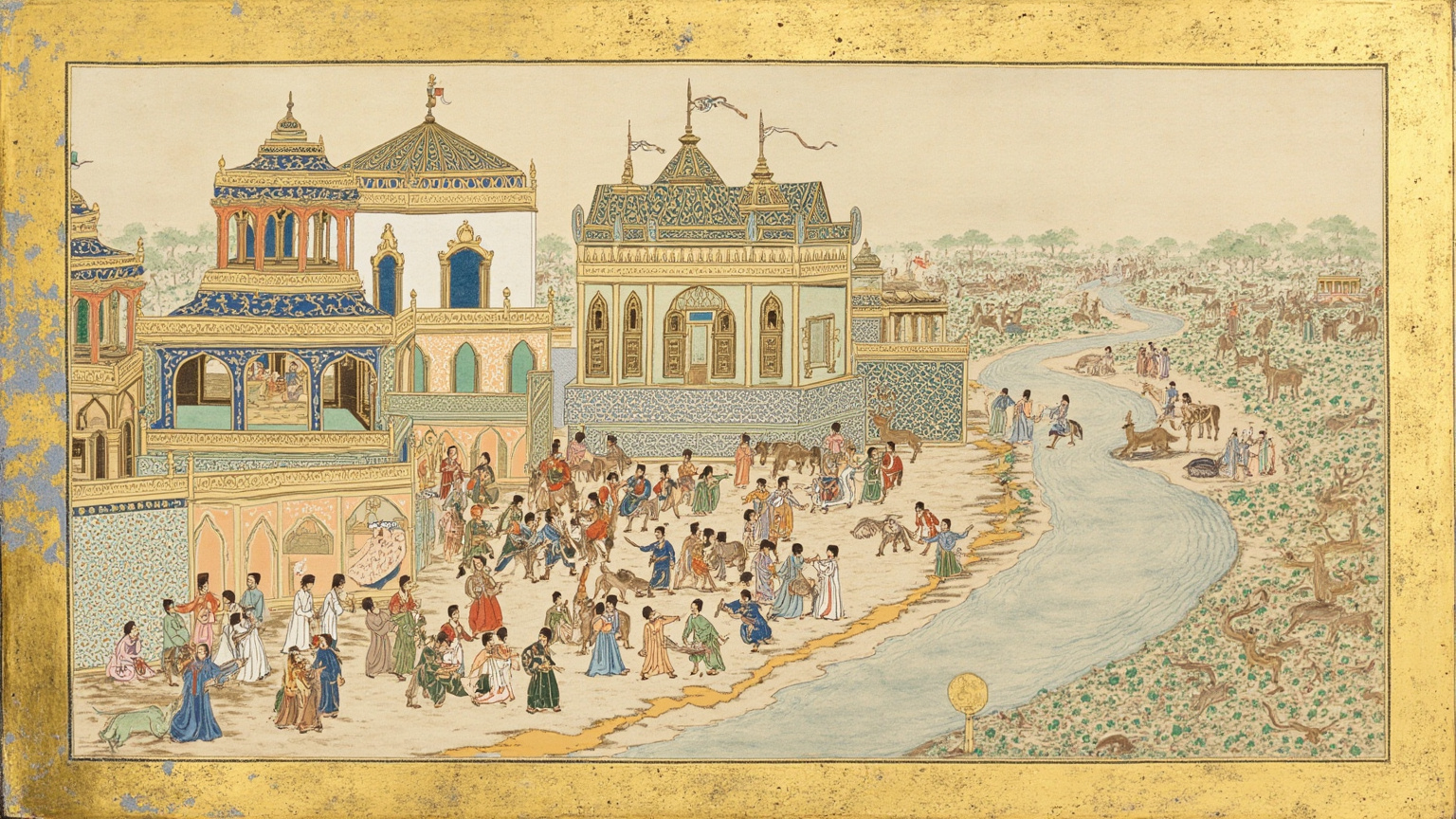
The melons of Fergana are plentiful and very good; the apricots also are good, though they ripen later than those of Samarkand.
费尔干纳的瓜又多又好,杏子也佳,只比撒马尔罕的迟熟一些。
金句 · 博物志章 · 记瓜与杏
VII. Panipat: Matchlocks and War Elephants
On the twentieth day of a Ramadan in the 1520s, Babur brought his matchlock carts and war elephants against Ibrahim Lodi, Sultan of Delhi, on the plain of Panipat north of the city. Matchlocks were new; war elephants were old. Binding the two together in one army was, in today's terms, an asymmetric tactic. The sultan's army broke, and Lodi himself was killed. It was still Ramadan, and Babur did not let his men break the fast. He records that too, the calendar of religion and the calendar of war stacked on the same day.
After the victory, he had an award ceremony held near Senper, the campaign's starting point, at what the text calls Sultan Ibrahim Square, staged with full formality in the manner of the old Timurid court in Central Asia. Histories give this battle a few lines. The memoir gives it real weight: he knew it was the single most important fight of his life, and he wrote out even the toast himself.
What followed is called, in the history books, the founding of the Mughal Empire, but Babur himself never reaches for a grand word for it. He simply writes down the places he won, one after another — Agra, Delhi, the old sultanate now flying his flag — and folds in, almost in passing, India's rainy season, its peacocks, its local castes.
VIII. Five Years in India: The Last Pages, Written in the Monsoon
Across these five years in the 1520s, he came south from Kabul into India five times. Not long after the last of these campaigns, illness took hold of him, and near Agra he dictated the final pages. The memoir breaks off shortly before his death. The book is unfinished, but it does not collapse — it stops on some specific, concrete thing, not on a grand summing-up.
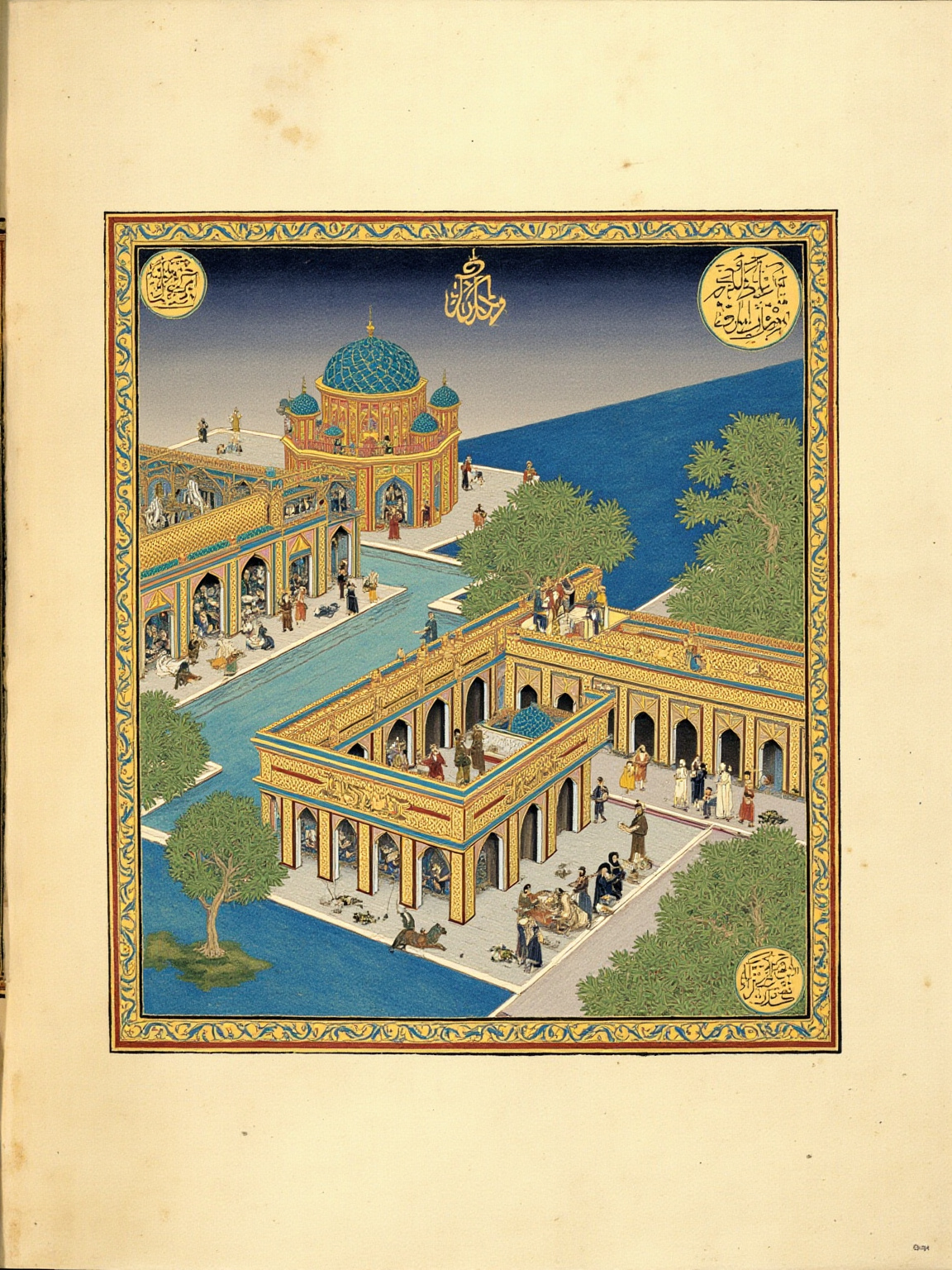
Between the infantry and the enemy we placed our artillery carts, and behind them we stationed our matchlock-men in their carts.
步卒与敌阵之间,架起我们的炮车;炮车之后,再列火绳枪手的车阵。
金句 · 帕尼帕特章 · 列炮
These five years are also his India, the part of the book set there. He salvages the look of medieval northwestern South Asia in diary-like entries: which birds return to roost before dark, whose well water runs brackish, which merchant caste deals only in one kind of cloth. His passage on the monsoon is famous. He describes the rain the way a man might who was seeing that much water fall for the first time, a wetness that wraps around a person. The hand that wrote that wetness is the same hand that drew up the battle lines at Panipat, and the switch between them makes him look at once like a general and like a traveler pocketing everything he sees.
IX. Where the Writing Succeeds: Restraint, and a Devotion to Ground
Victory and defeat are set down in the same even voice — this is the impression most readers carry away from the book. The tone he uses to describe losing Samarkand twice is nearly the tone he uses to describe rebuilding a canal in Kabul. He does not weep, and he does not boast. He places a defeat right after a passage about the apricot blossoms doing well that spring, and lets the feeling take on the sweetness of the orchard.
Another trait worth remembering is his fixation on ground itself. A typical royal memoir gestures vaguely at terrain: "this was a plain." Babur will tell you this stretch of land has brackish water, that stretch grows apricots two weeks earlier than anywhere nearby, whose irrigation channel was built on which day and collapsed on which. This is not curiosity for its own sake. He had to live there, had to understand the soil under his feet, and behind that need sits the sensitivity of a man driven out again and again, always asking where he might finally be allowed to stay.
X. The Painters' Second Invention: Akbar and the Illustrated Manuscripts
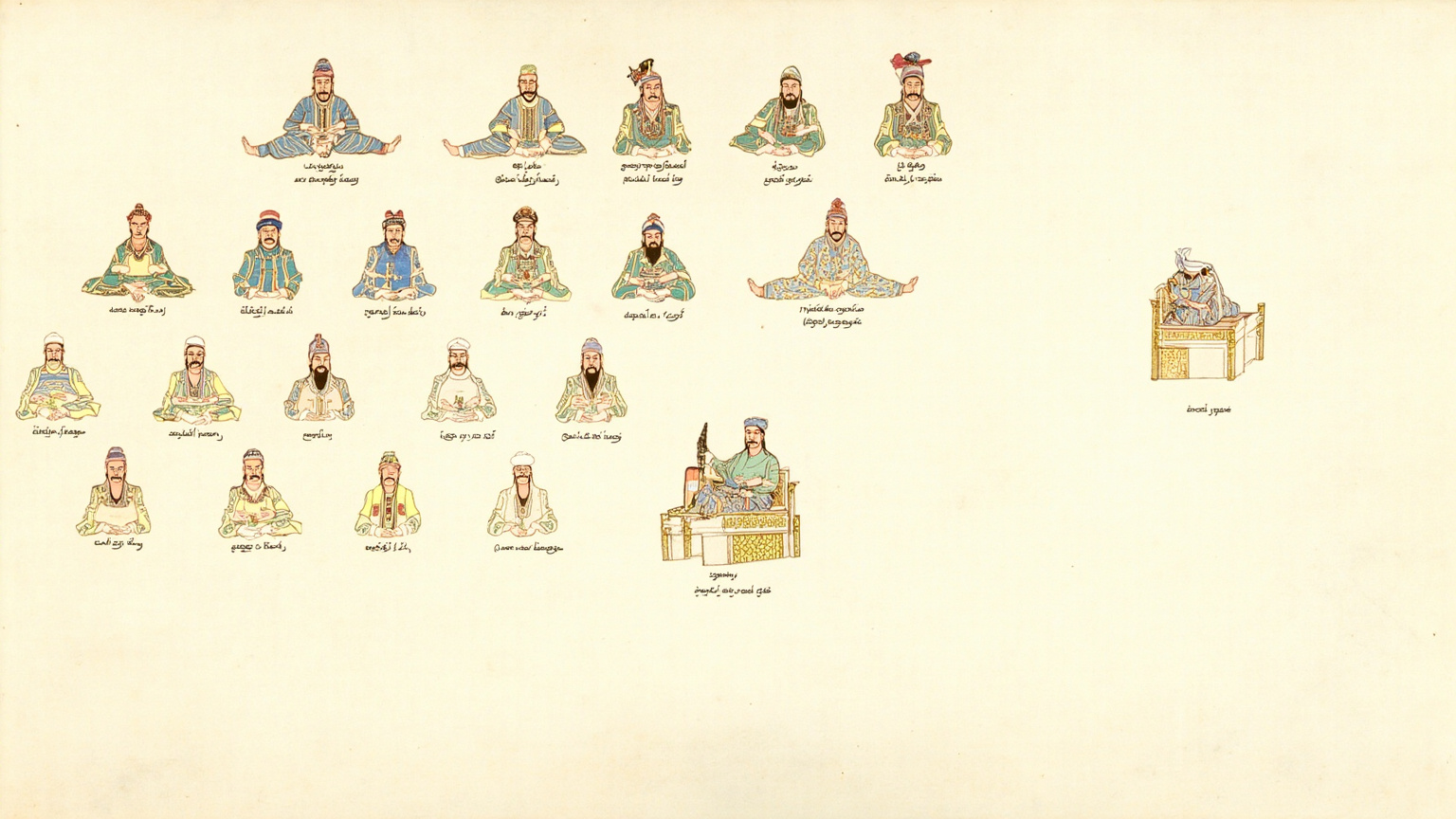
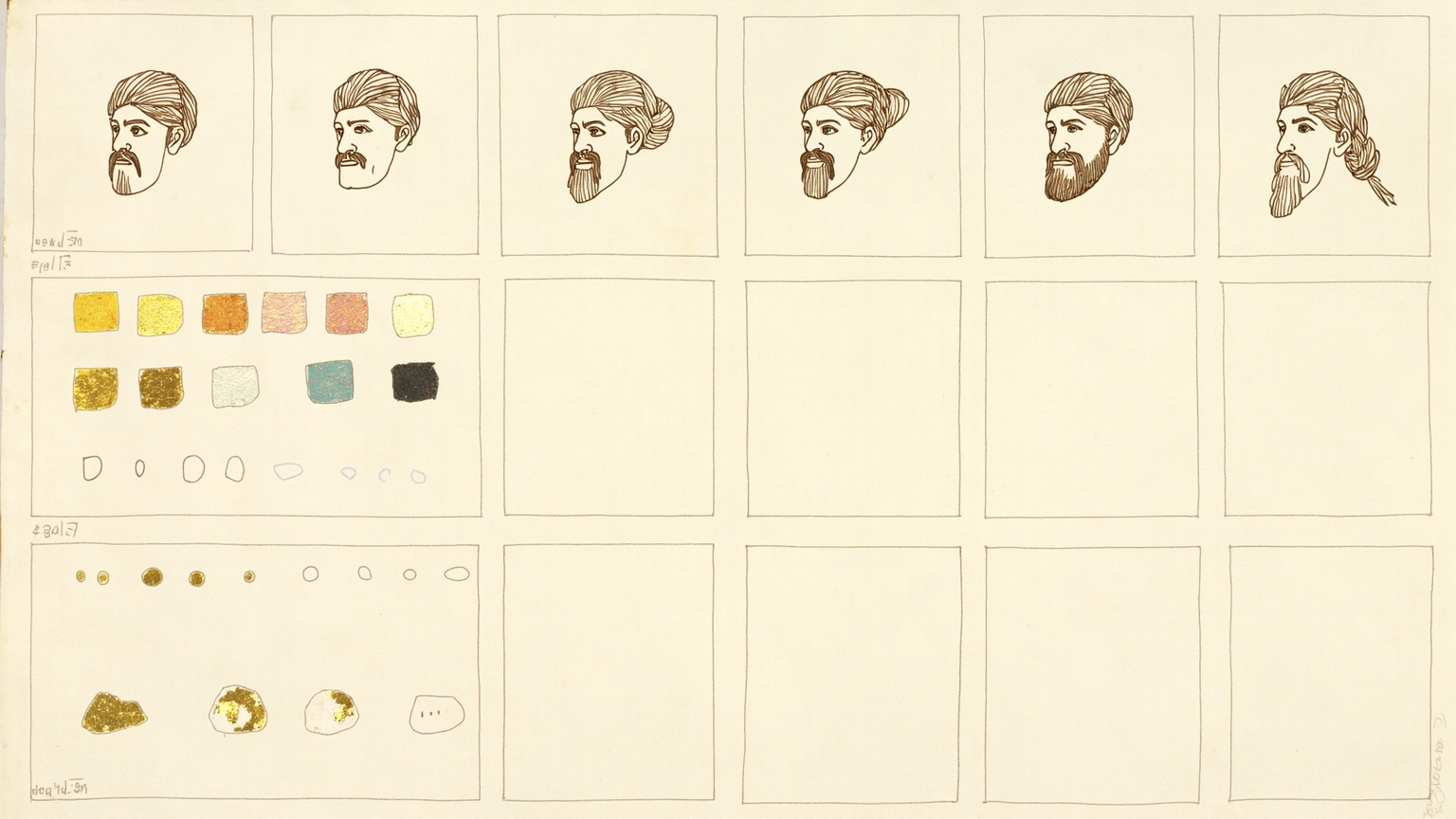
After his death, his grandson Akbar became Mughal emperor. In the late 1580s and early 1590s, Akbar had his courtier Abdul Rahim translate the entire Chagatai memoir into Persian and handed it, section by section, to court painters to illustrate. In their hands Babur acquired a fixed, standard face: round-cheeked, a drooping beard, a Central Asian turban, a long-sleeved robe under a short-sleeved coat. That face is not what Babur actually looked like. No one painted him in his own lifetime. The painters invented it from imagination at the end of the sixteenth century.
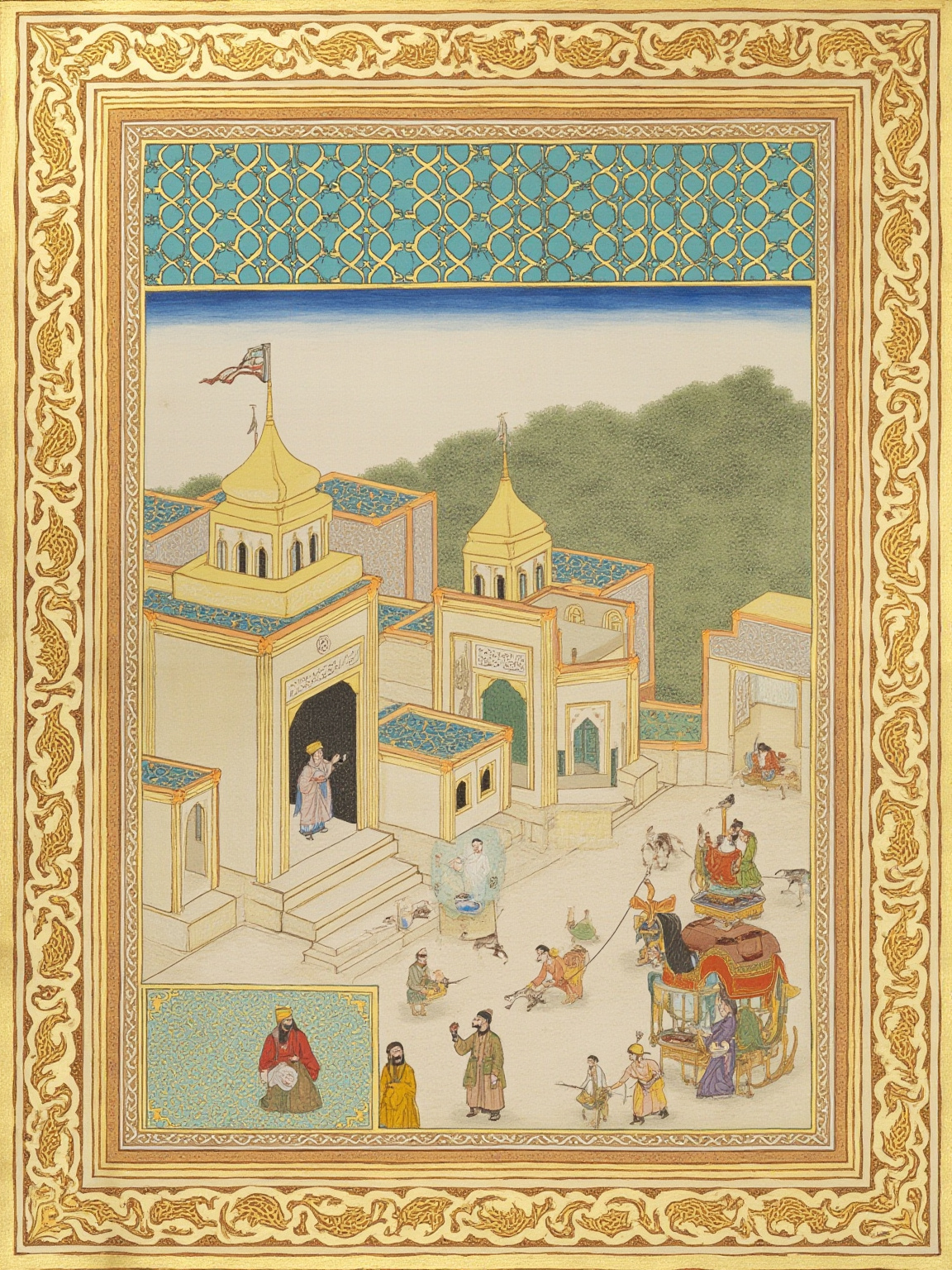
I had a great desire to see the portrait-painters give a true likeness; in the end they produced the round face and small beard that are now known.
我本盼画师能写真容,到头来定下来的,便是那张今日人尽皆知的圆脸与短须。
金句 · 阿克巴插图本序 · 定型之像
That is the interesting part. His own prose is restrained to the point of near transparency, and yet the painters of his grandson's court supplied him with a thoroughly dramatic portrait. When we picture Babur today, what usually comes to mind is that painted standard face, not the blurred outline his own words leave behind. An author reinvented by the painters who came after him is not a common event in either literary or art history.
XI. Why Read the Text Itself, Once You Already Know the Plot
A guide like this one can hand you the skeleton: the line from Central Asia to South Asia, the five big events, the rivals, the gaps in the record. But what actually rewards a reader is everything that happens between the bones of that skeleton — which bird he hears on a summer night in Kabul, the moment a peacock stops him cold by opening its tail, the way one of his poets argues back at him. None of that shows up in a skeleton. Only the text has it.
He writes a lifetime of failure and a lifetime of founding an empire the same way he notes whether the melons were ripe that month. The oldest autobiography ever written by a ruler begins with a man eating melon.
Art Direction4 plates
Before the guide was written, this book got a visual foundation — every illustration you just read grew out of it.