Buddhacarita / Buddhacharita (Acts of the Buddha / Life of the Buddha) · Companion Guide
佛所行赞
一个被爱围困的王子学会看见老病死,然后独自走进夜里——宫廷诗人用两千年仍没被超过的克制,写完一个人如何起身。
A White Elephant's Hair and a Prince Behind Walls
The story begins with a dream. Queen Maya dreams of a white elephant descending from the sky, its trunk brushing her right side, and she conceives. Later the prince is born from that same side, not from a birthing bed but from a mother standing upright. Buddhist paintings have repeated this detail for two thousand years; almost no one remembers it was a poem that wrote it first.
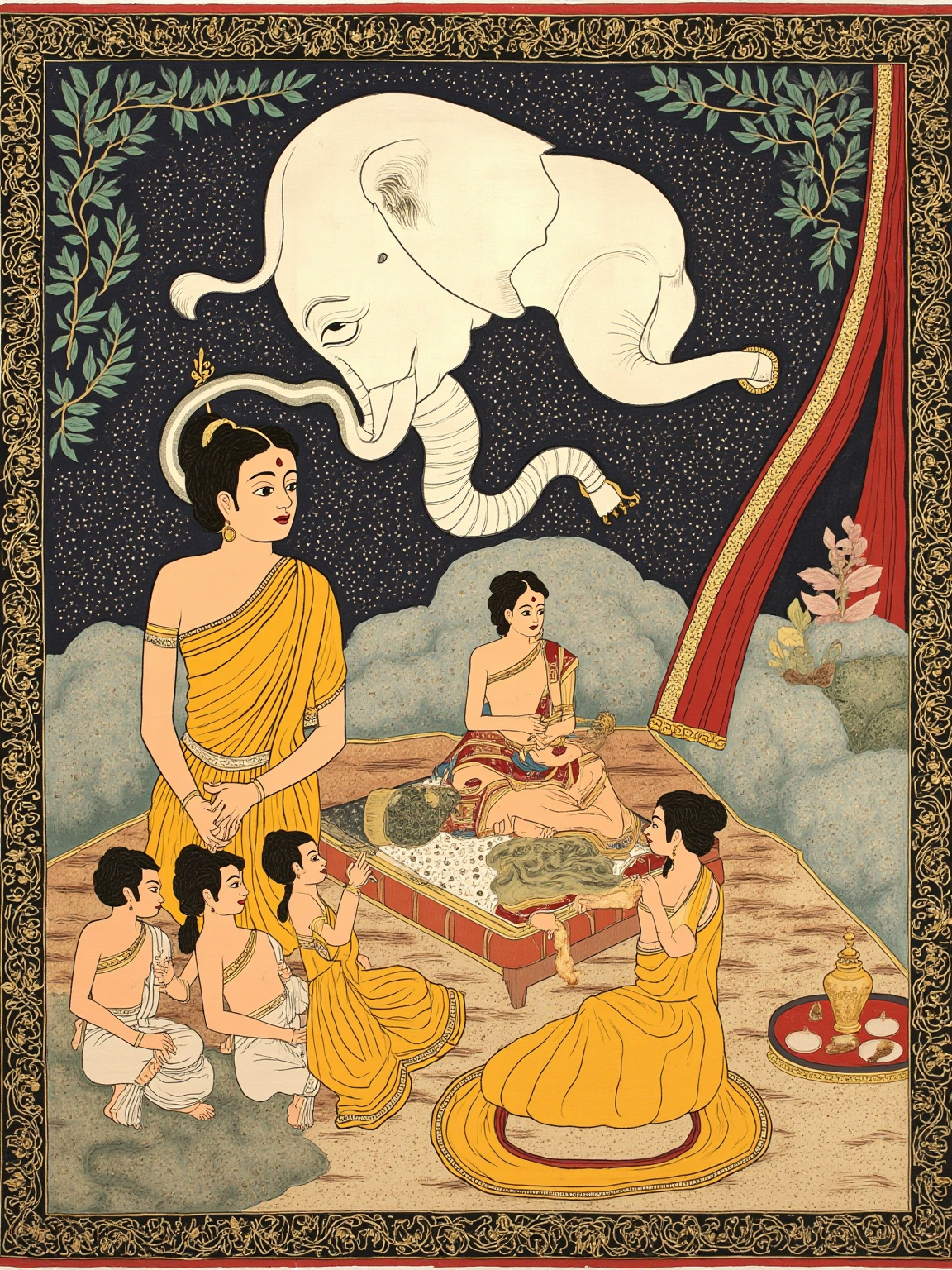
A white elephant descended through the air and with his soft trunk gently touched her right side.
白象自空而降,以柔软的长鼻轻触其右胁。
金句 · 卷一 · 降诞因缘
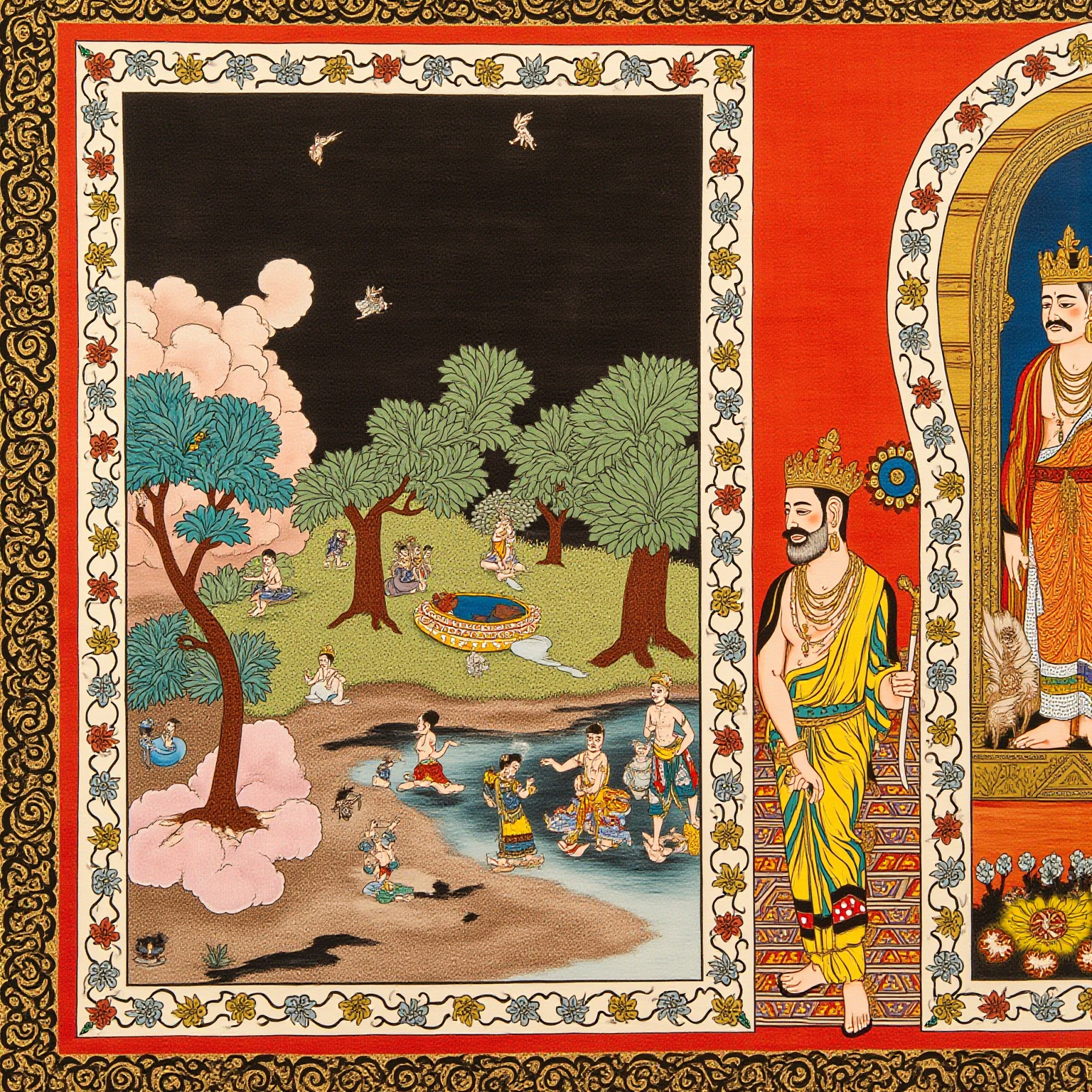
King Suddhodana soon sent for Asita, a sage from the mountains, to read the child's future. The sage looked and wept: he saw an infant marked with all thirty-two signs of greatness, destined to leave the household life and reach awakening. The moment the king heard the words leave the household, he acted. He raised the palace walls another story and shut out anything that might suggest age, sickness, or death. Inside were musicians, lotus ponds, silk canopies, and the young wife Yashodhara. This is the book's first wall, and it was not built of stone but of a father's love.
Four Gates, and the World Comes Crashing In Four Times
The prince grew old enough to ride out of the city and see it. At the eastern gate he met a bent old man. At the southern gate, a man groaning in sickness. At the western gate, a coffin carried past and mourners wailing behind it. Three gates, three things, age, sickness, death, that he had not laid eyes on in more than twenty years of life.
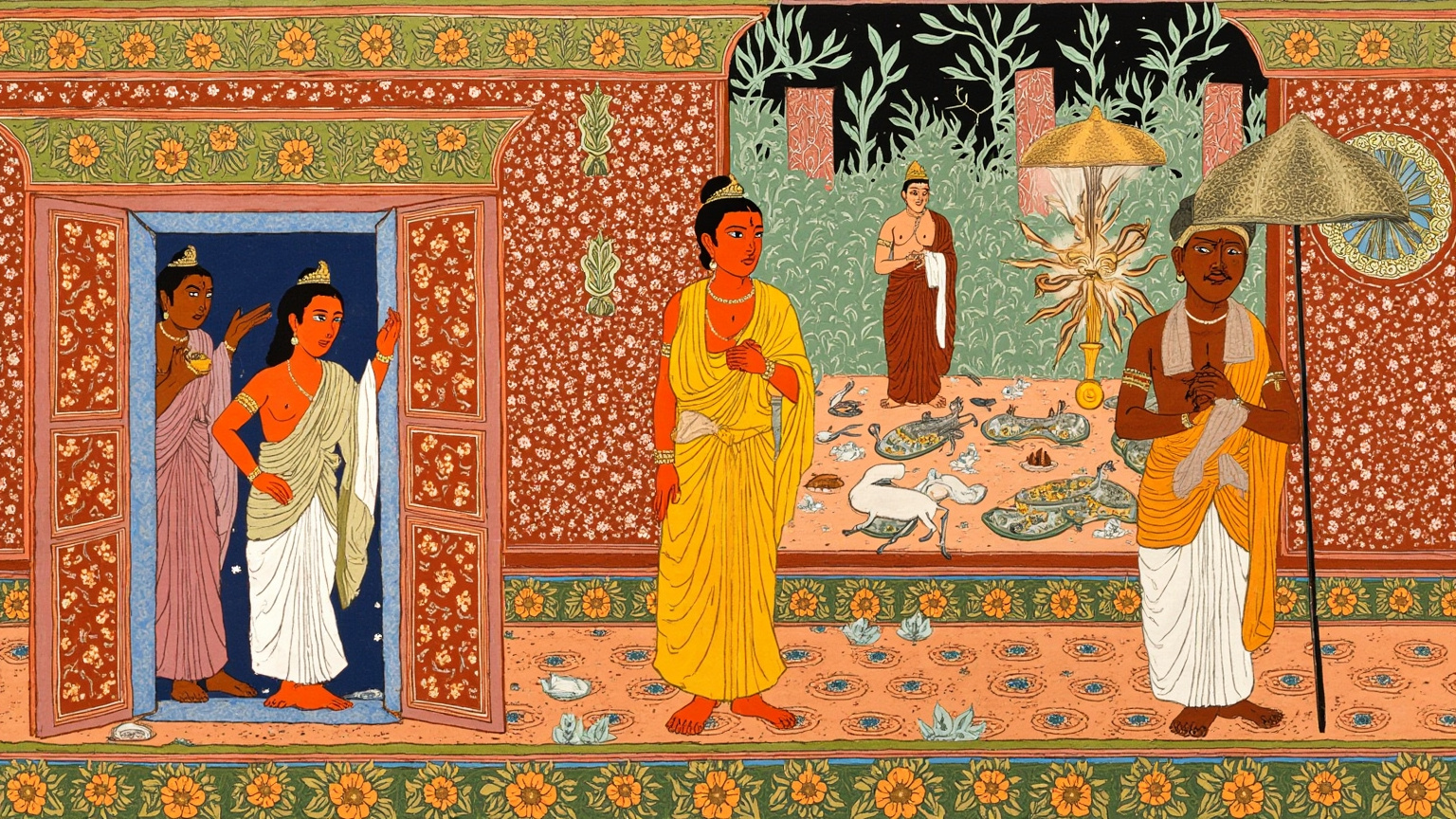
Through the eastern gate he saw a man bowed and broken by old age; through the southern, one consumed by sickness; through the western, a corpse borne away with weeping.
东门见老人伛偻,南门见病人呻吟,西门见棺木抬过,哭声相随。
金句 · 卷一 · 四门出游
At the fourth gate, the northern one, things were different. A wandering monk stood there, shaved head, robe, alms bowl, at peace. For the first time the prince saw someone who was not being dragged along by anything, someone who had simply chosen his own road. Something in him gave way. Back in his chambers that night, he laid out what he had seen, piece by piece: so people age. So people fall sick. So people are carried off in the end to be burned or buried. And so someone can stand outside all of it.
Midnight Over the Wall: A White Horse and a Muffled Earth
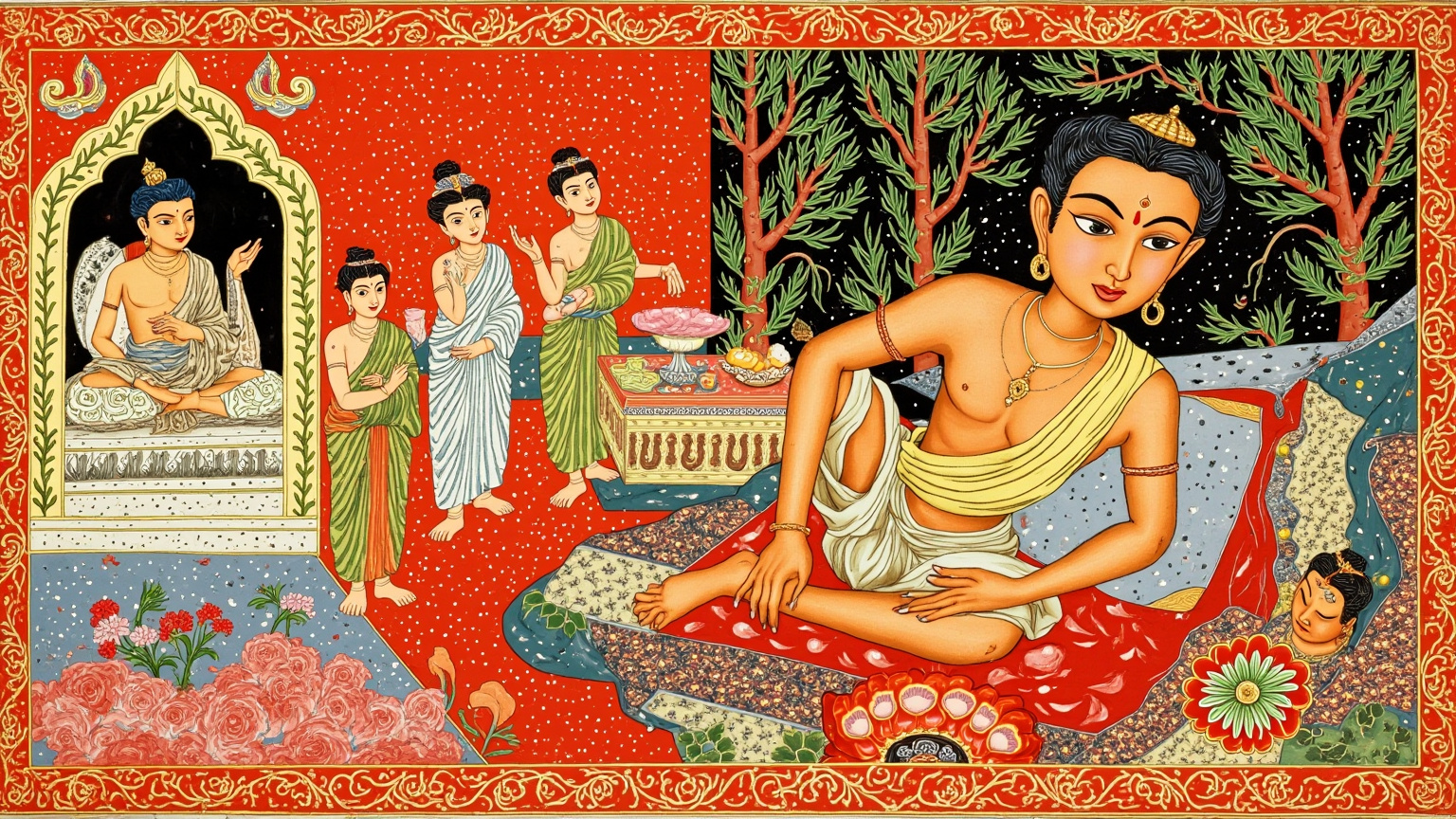
The night of his leaving is written with great restraint. The music and dancing in the palace stop, everyone falls asleep, and the prince rises. He wakes no one but his charioteer Chandaka, and leads the white horse Kanthaka out through the palace gate. Hooves should have made noise. The legend says the gods reached down and pressed the ground still, muffling every step. When the palace guard failed to catch him, it was not because the horse was fast. It was because the night itself and the will of heaven were working together.
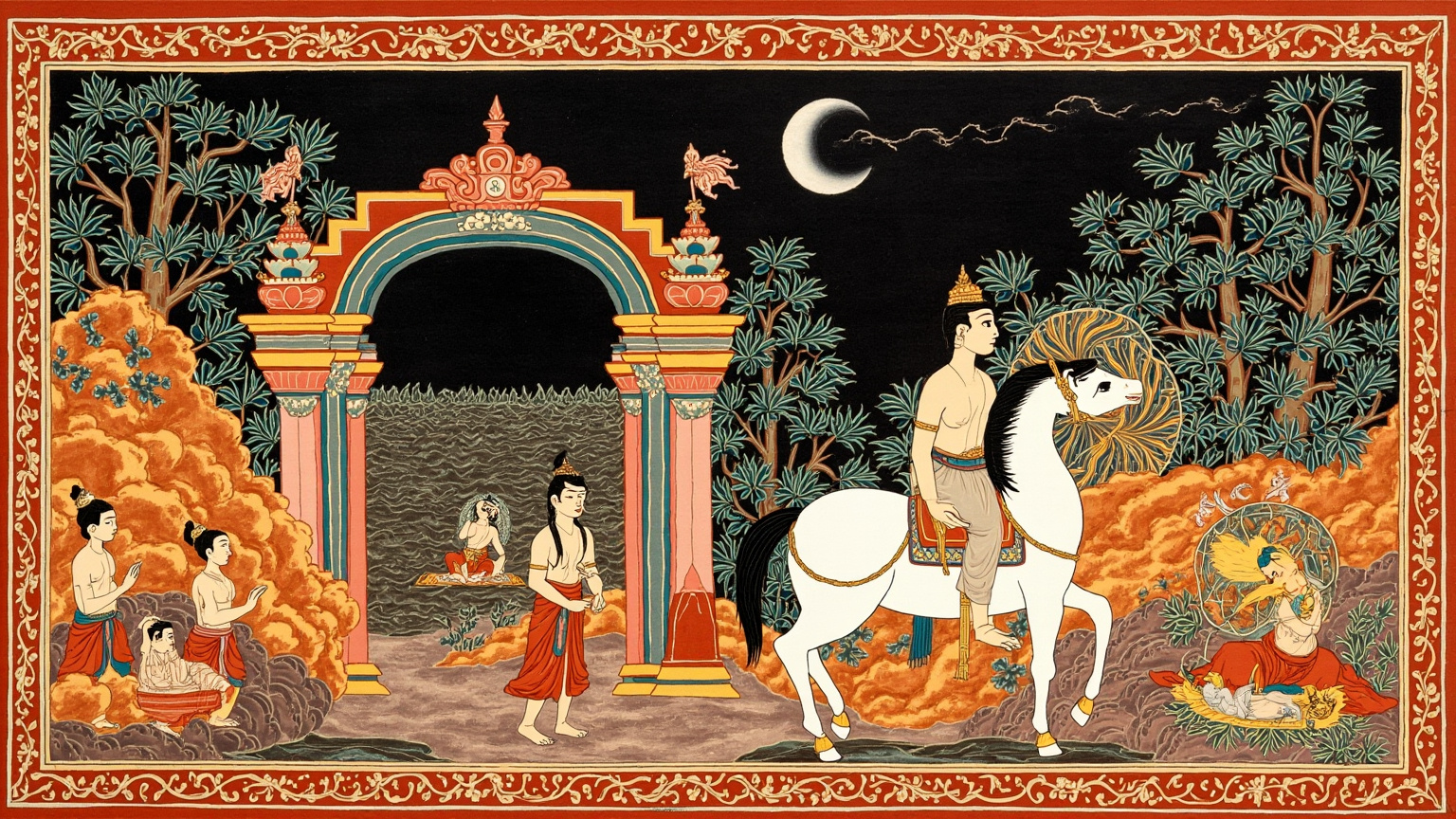
The city's pleasures grew stale to him, even as the dancers wearied and the night drew still.
宫中华灯未歇,而他的心已倦于众乐。
金句 · 卷一 · 夜半逾城
Six Years in the Snow Mountains: Starved Nearly to Nothing, and Still Not the Way
Book two shifts the scene. The prince cuts his hair, puts on an ascetic's robe, and walks alone to the forests of austerity at the foot of the snow mountains. He first seeks out two renowned teachers, Arada Kalama and Udraka Ramaputra, and studies meditation under each. When he has learned all they can teach, he finds it is not the way: a person can enter deep absorption and still not get free, still not solve the real problem of age, sickness, and death. He takes his leave.
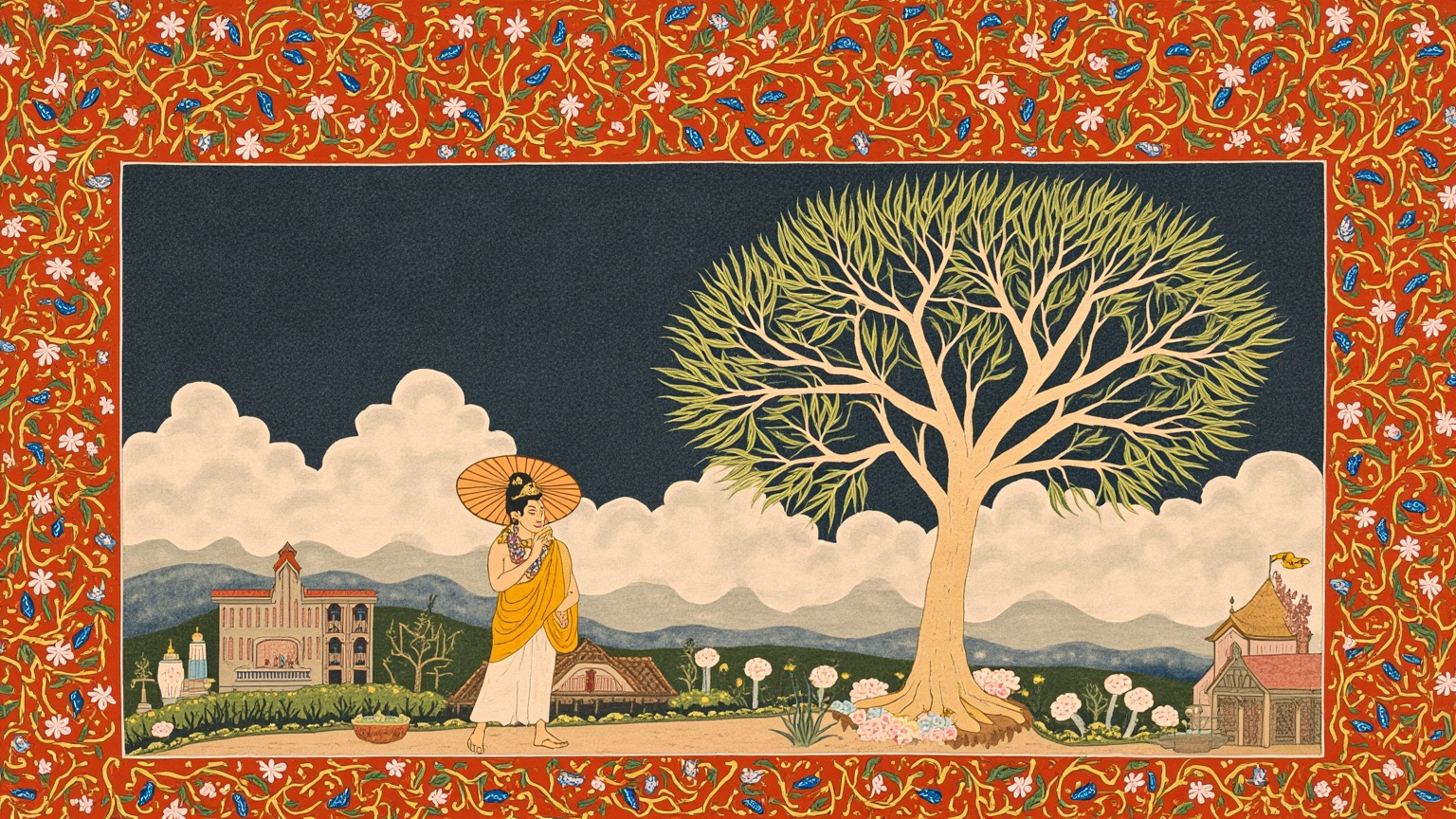
So he goes to the banks of the Nairanjana River and takes up extreme austerity alongside five ascetic companions, eating a single grain of sesame, a single grain of wheat, each day, a phrase that later passed into common speech. His body wastes away inch by inch, nearly to the point of death. Ashvaghosha does not describe the ribs, the bare body, the spectacle of self-punishment. He compresses it into a handful of words: less food, a wasted frame. This is the book's second act of restraint. He knows that writing more would turn suffering into a display, so he does not, and the reader ends up imagining that wasted body more vividly than any description could manage.
A Bowl of Milk-Rice and the Look Beneath the Bodhi Tree
Six years pass, and he has attained nothing. The prince stands up, and that is the crucial action here, not collapsing but standing, and walks toward a bowl of milk-rice offered by Sujata, a cowherd girl by the Nairanjana. The five ascetics see him eat and take it as a sign he has given up; they turn and leave. This is the moment later retellings most often ruin, with Mara sneering from the sidelines or the monks storming off in disgust. In Ashvaghosha's own telling, it is nothing more than a misunderstanding among companions.
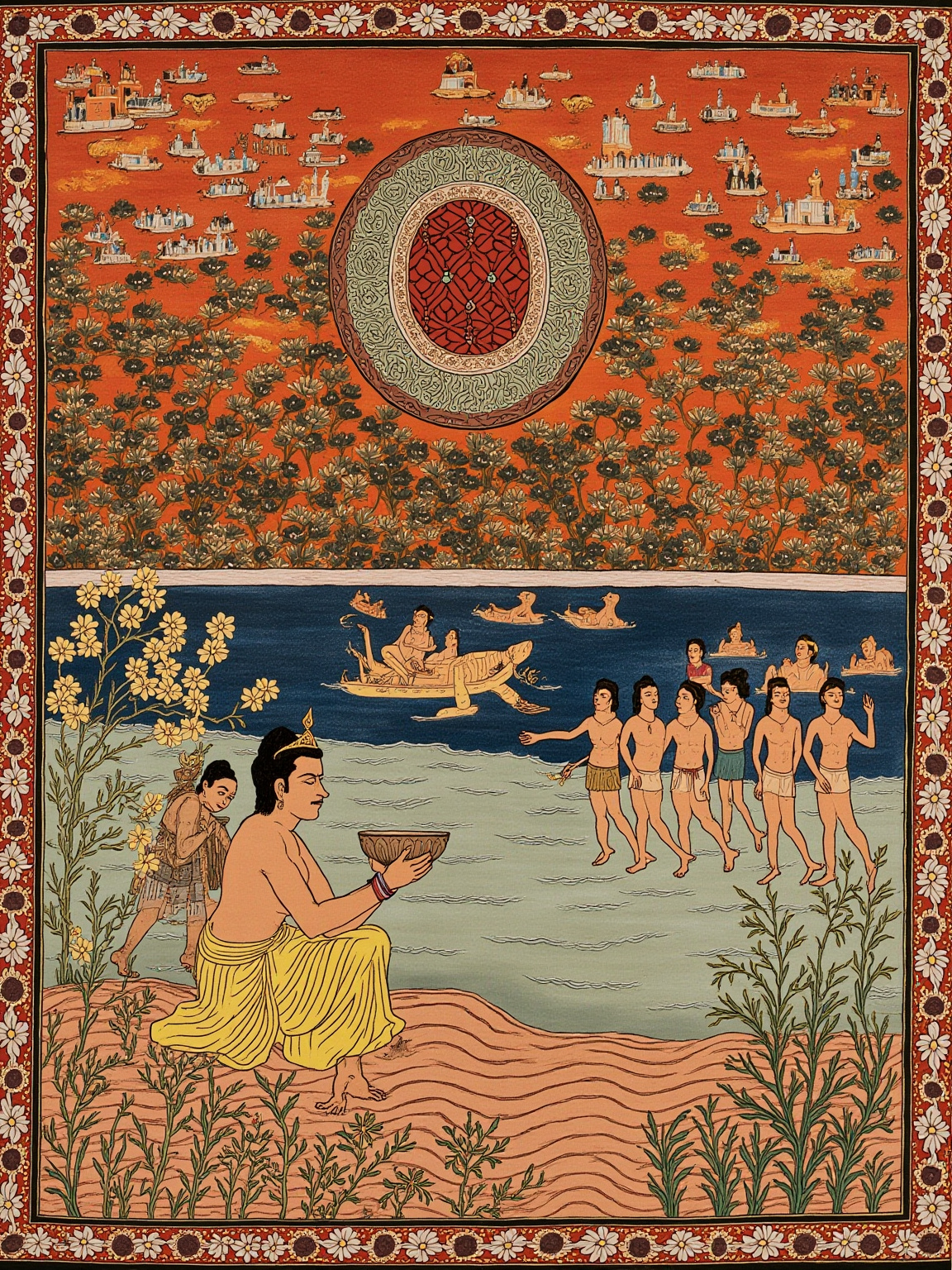
He fed his body on a single sesame and a single grain of rice, until his limbs were worn thin and the light of his flesh was all but spent.
日食一麻一麦,身形消瘦,皮骨相连,光泽几尽。
金句 · 卷二 · 尼连禅河畔苦行
Then he walks to a pipal tree, spreads a seat of auspicious grass, and sits down. What happens next, Mara sends his three daughters to tempt him with desire, then leads his own army against him, is where Ashvaghosha's restraint is most startling in the whole book. The three daughters try seduction, and he dismisses it in a single line. The army attacks, and he subdues it through meditation, without a word about weapons or monsters. There is no battle under that tree, no rivers of blood, only a seated man and a war no one can see.
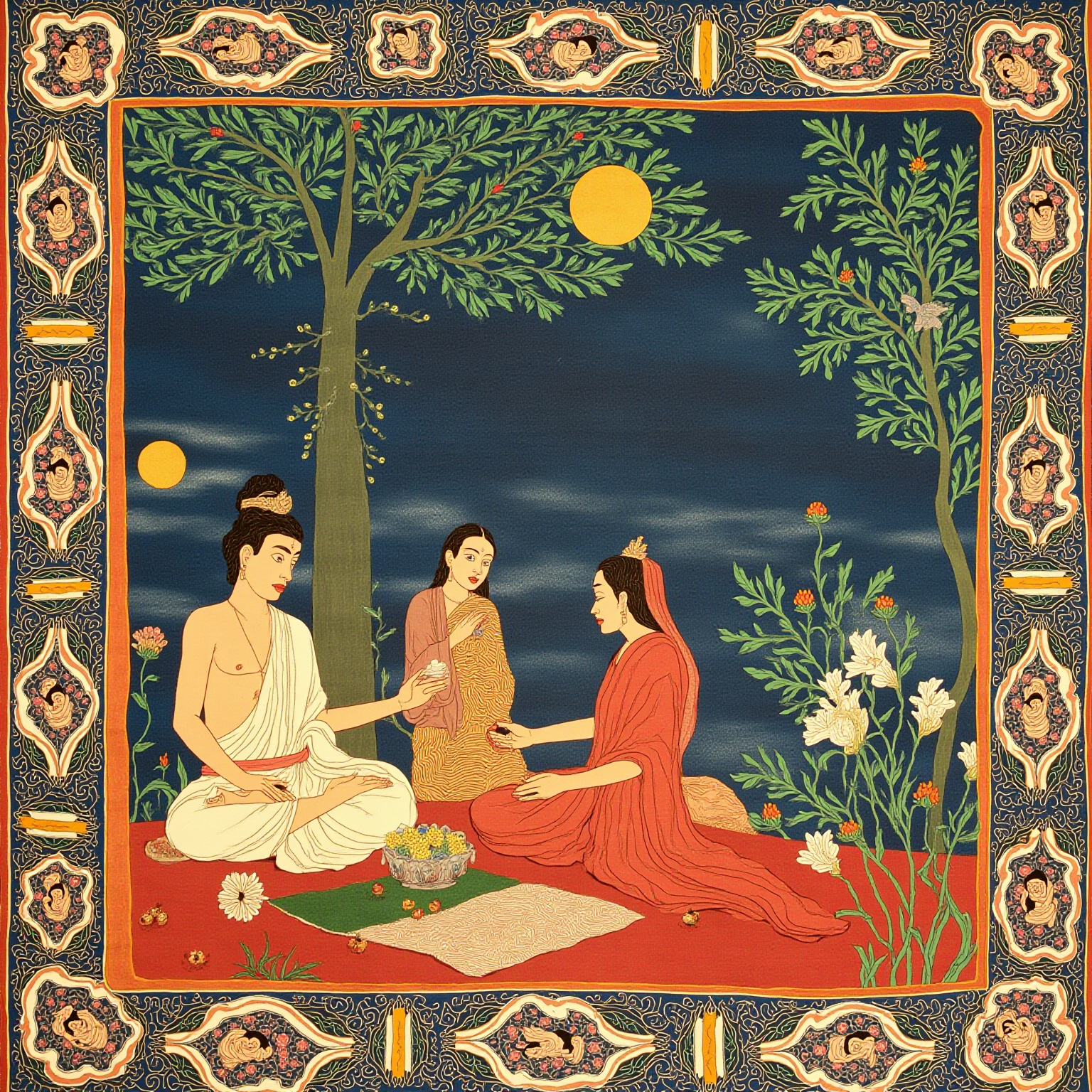
The temptresses came with all their arts, and he stirred not; the demon host arose in wrath, and he was unmoved.
魔女以诸妍姿来试,禅心不动;魔军奋威而来,定力如山。
金句 · 卷三 · 菩提下降魔
As night gives way, he attains unsurpassed awakening. Ashvaghosha does not write of blazing light or heaven and earth shaking. He writes that the man opened his eyes.
The two scenes every retelling of the Buddha's life is tempted to overplay, the demon army's assault and the temptation of the three daughters, are swallowed whole by Ashvaghosha in two lines. That is the instinct of a court poet: knowing what not to write is harder than knowing what to write.
Deer Park: One Turn of the Wheel, Five Men Become Monks
The first thing the Buddha does after his awakening is go find the five men who abandoned him. On a morning at Deer Park, he teaches them the Four Noble Truths and the Eightfold Path: suffering, its cause, its ending, and the path to that ending. Life is suffering, suffering has a cause, suffering can end, and there is a way to end it. The five men hear this, shave their heads, and put on the robe, and from that moment the word sangha exists. Buddha, dharma, and sangha, the three jewels, are now all in place. This is the founding scene of Buddhist biographical literature, and the source image behind the entire monastic order across East Asia.
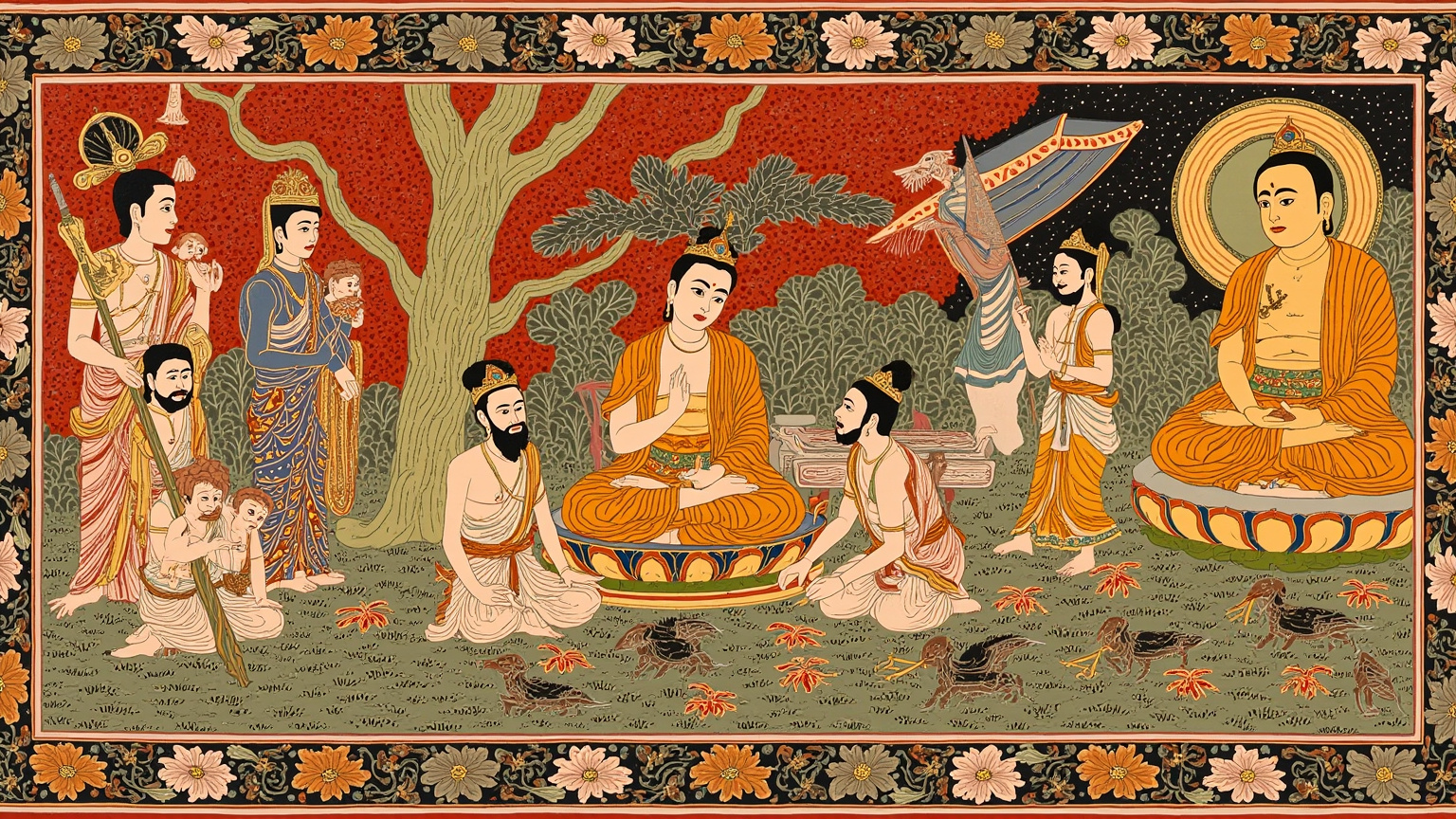
He set in motion the Wheel of the Law for the sake of those five who had wandered from him, and they became the first of his ordained.
为彼五人,初转法轮;彼即披剃,为最初之僧。
金句 · 卷三 · 鹿野苑初转法轮
Ashvaghosha writes almost nothing supernatural into this first turning of the wheel. No flowers rain from heavenly maidens, no golden lotus rises from the earth, only five men listening to a few words. It's the same technique he used for the battle under the bodhi tree: pull the miracle back down to earth.
A Life of Teaching, Closed Between Two Sala Trees
Across books four and five, the Buddha travels with his disciples teaching everywhere: Rajagriha, Vulture Peak, Jetavana in Shravasti, Vaishali. Shariputra, Maudgalyayana, and the three Kashyapa brothers all come over to him in turn; countless kings, ministers, rival ascetics, and laypeople find their way to liberation under his guidance. This is the section of the book that reads most like a ledger, dense and fast-moving, but Ashvaghosha keeps it under control. He never lingers on the content of any single sermon, disposing of most conversions in a sentence or two, and saves the real space for the turning points in his protagonist's own inner journey.
The final passage returns to impermanence. Outside the city of Kushinagara, in a grove of twin sala trees, the Buddha gives his disciples one last lesson: let the precepts be your teacher. Then he passes into final nirvana. His disciples cremate his body, and envoys from eight kingdoms come to divide the relics, each carrying a share home to raise a stupa over it.
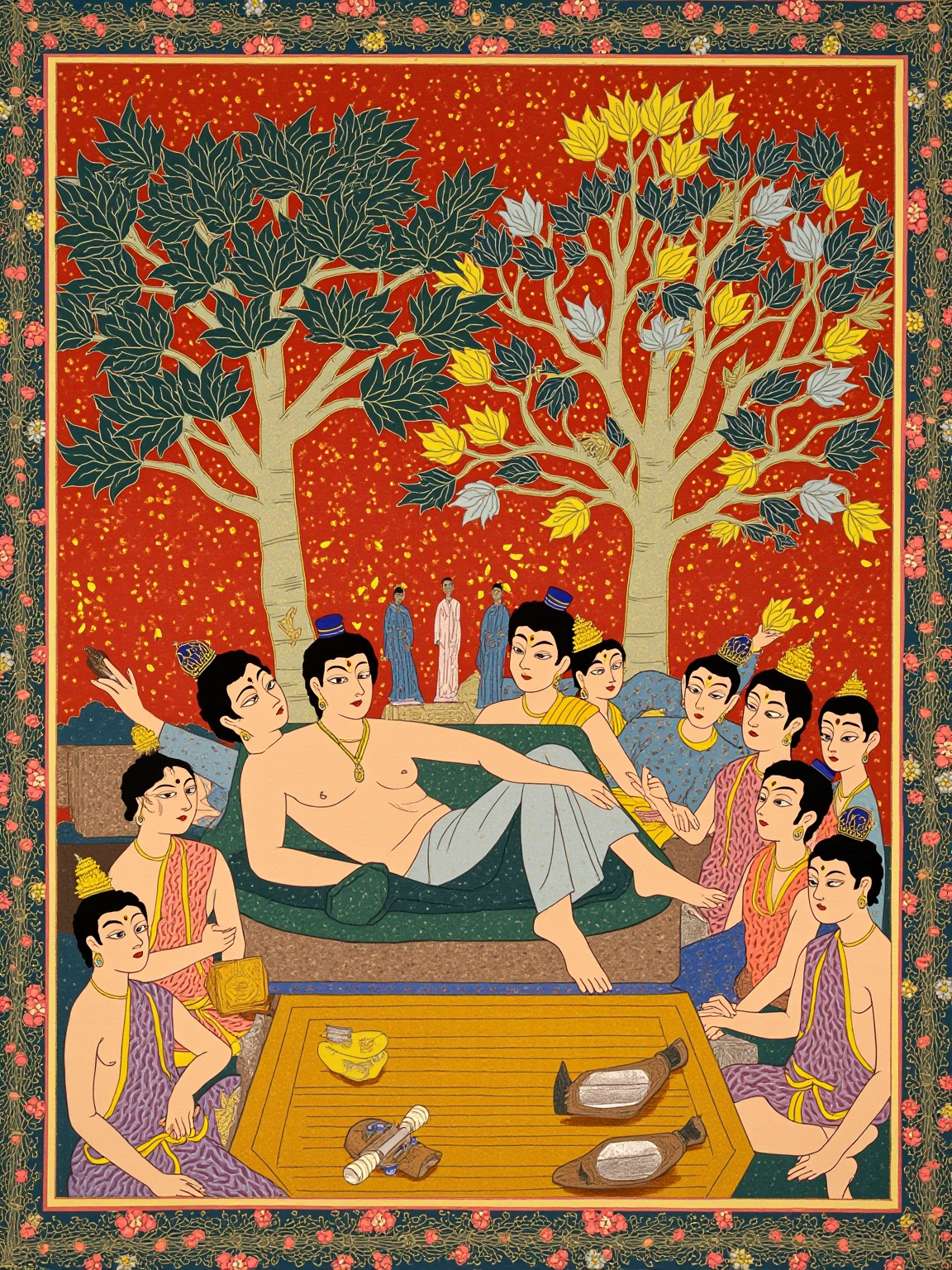
Between the twin śāla trees, with his disciples gathered round, he spoke his last teaching and passed into the final peace.
罗双树之间,弟子围绕,遗教已讫,入于寂灭。
金句 · 卷五 · 双林涅槃
The five settings close the circle here: palace, forest of austerity, bodhi tree, Deer Park, the twin trees. From a prince kept deliberately cut off from the world, to an awakened man closing his eyes in front of everyone.
What This Book Is Really About
The Buddhacarita is not a sutra. It is a poem. It takes a religious narrative and casts it in the form of a court epic: love, war, intrigue, dialogue, psychological turns, all of it is here. It pulls a story that could have been told through miracles back down into a human one: the bodhisattva's awakening is not thunder and lightning, it is a seated man opening his eyes. Every Buddha biography after this poem follows the same five-part shape: palace, renunciation, austerity, awakening, final nirvana. The four gates, the awakening under the tree, the relics divided eight ways, all the scenes a reader already half knows, trace back in written form to this one book.
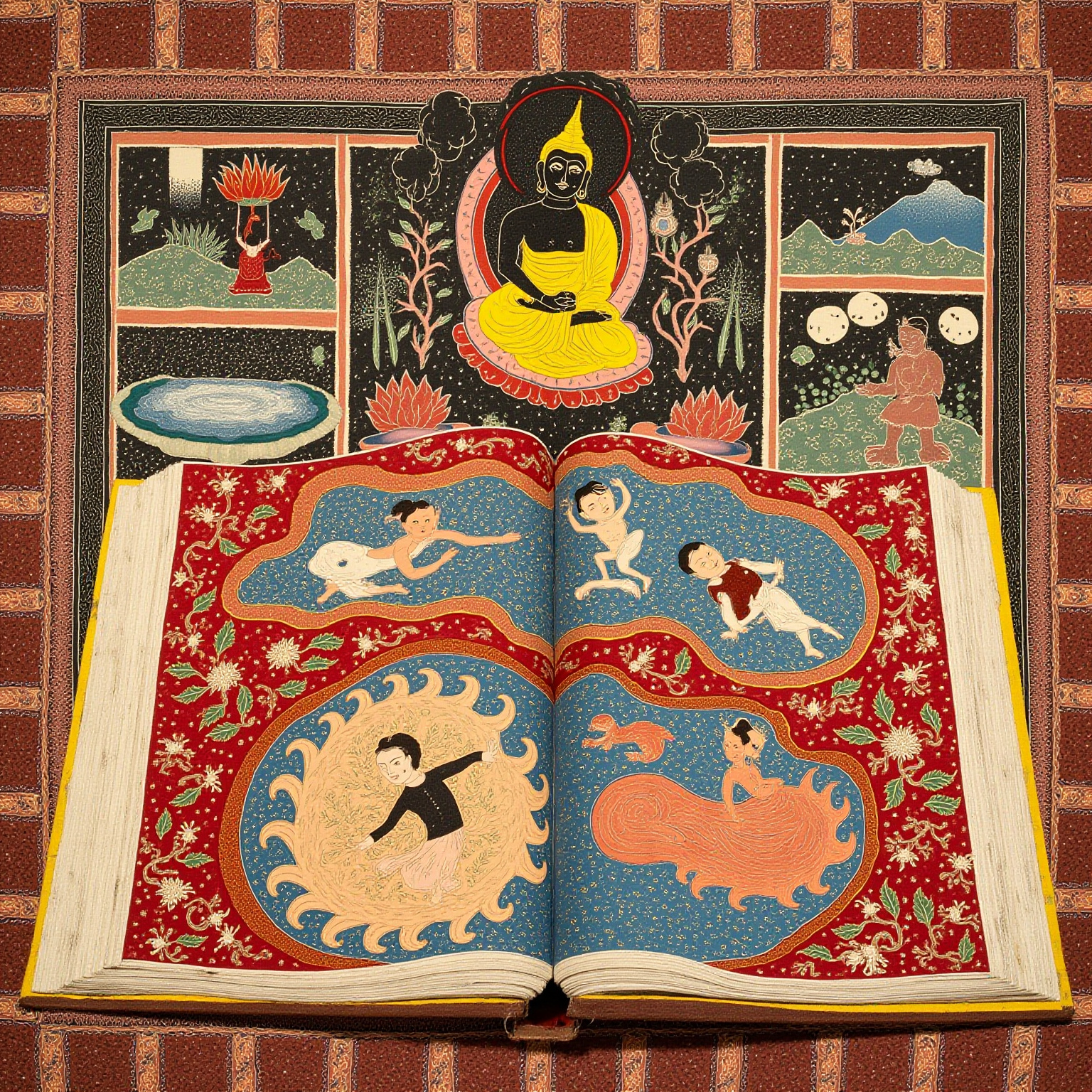
Why has this story been rewritten for two thousand years? Because its central conflict, how a person moves from being enclosed by love to choosing to walk away from it, is not a problem that belonged only to ancient India. What makes Ashvaghosha so accomplished is that in the first complete verse biography of the Buddha, he already gave the answer its most restrained possible form: a wall is still a wall no matter how high, a gate is still a gate no matter how many there are, and a person walking out the door only ever does it once.
Why You Should Still Read the Poem Once You Know the Plot
Understanding a story and understanding a poem are two different things. The plot you can take from a page like this one. But that quiet drop in the writing, the moment the music stops and everyone falls asleep, only the original text can catch you on.
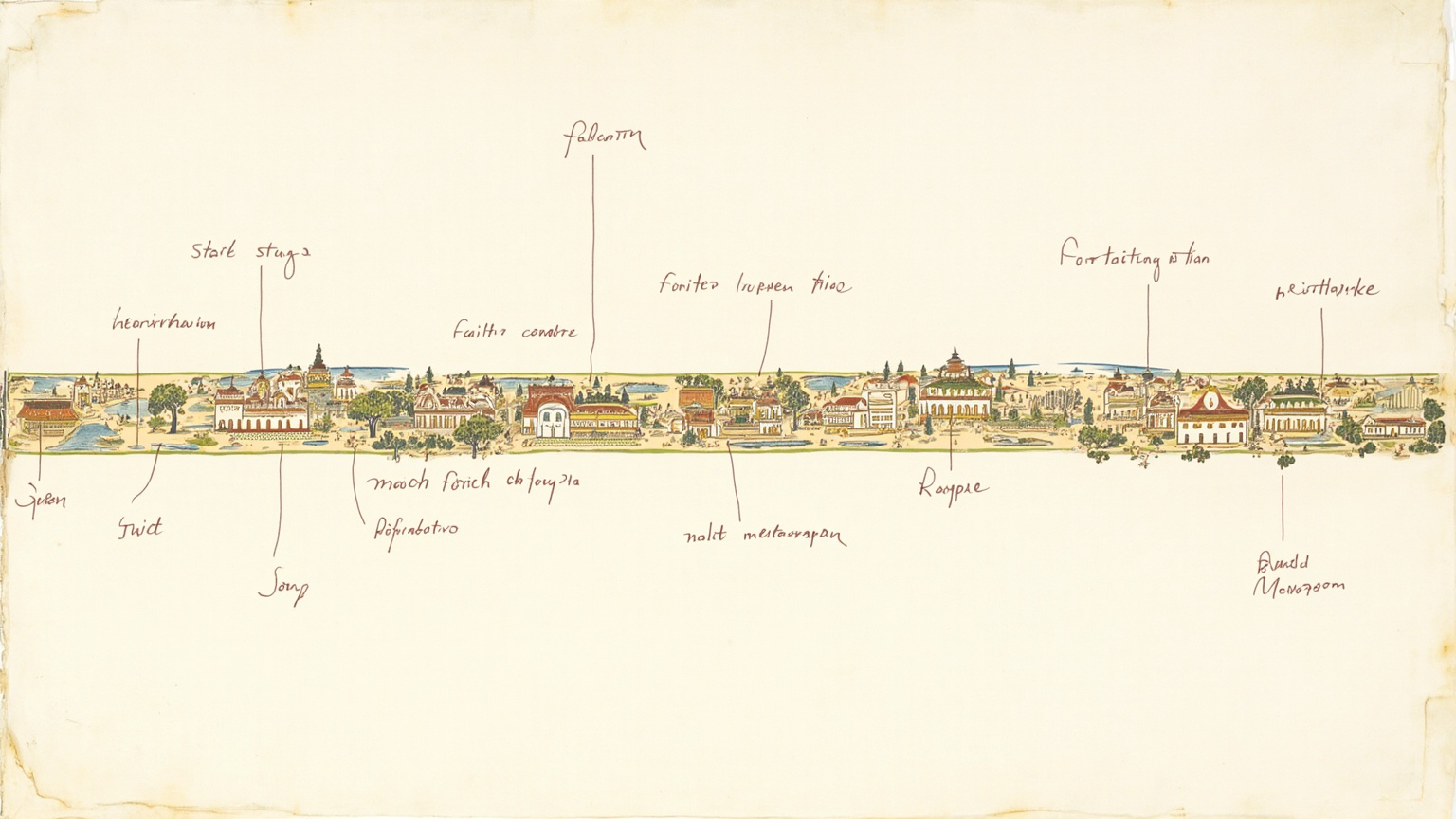
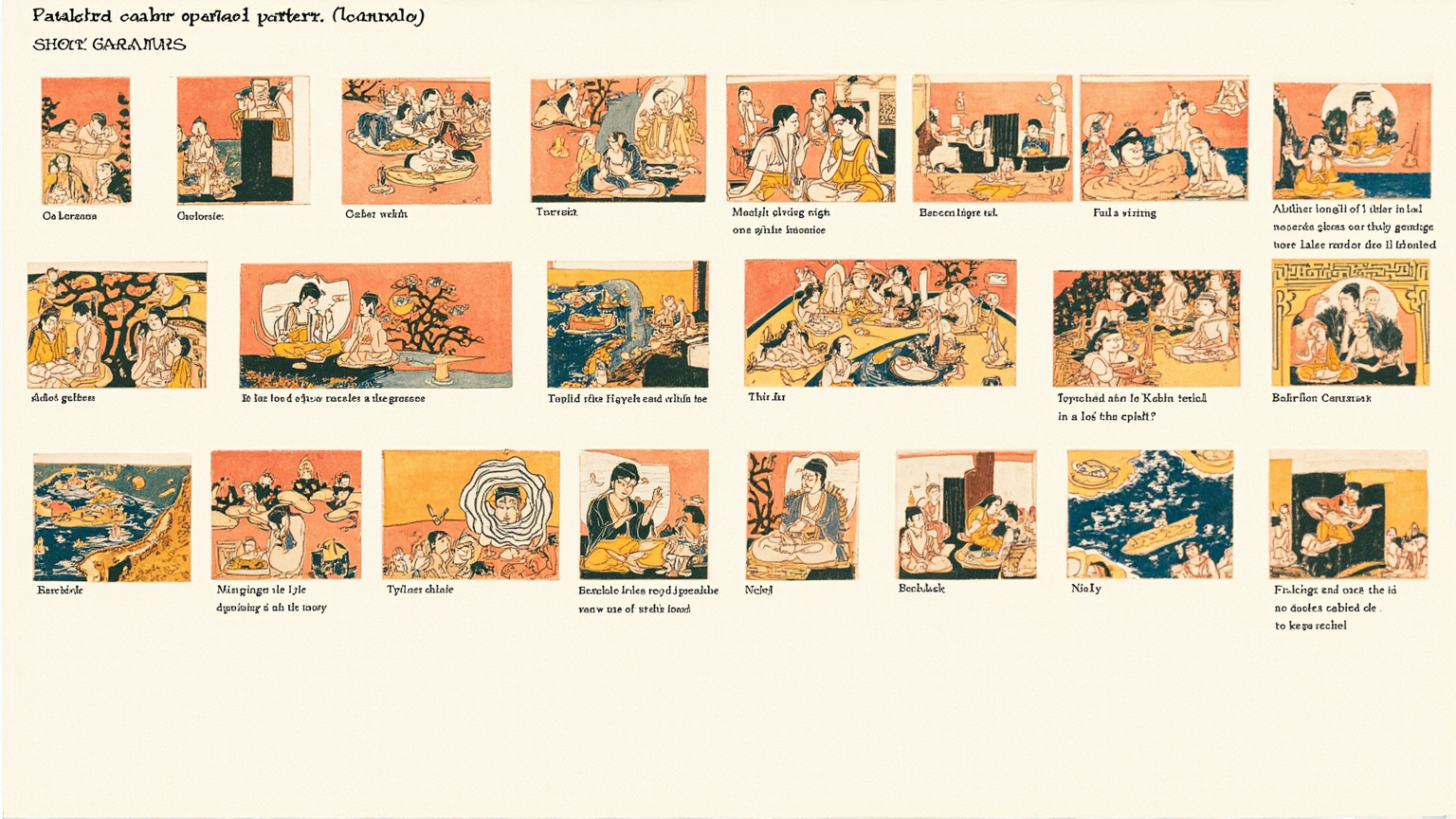
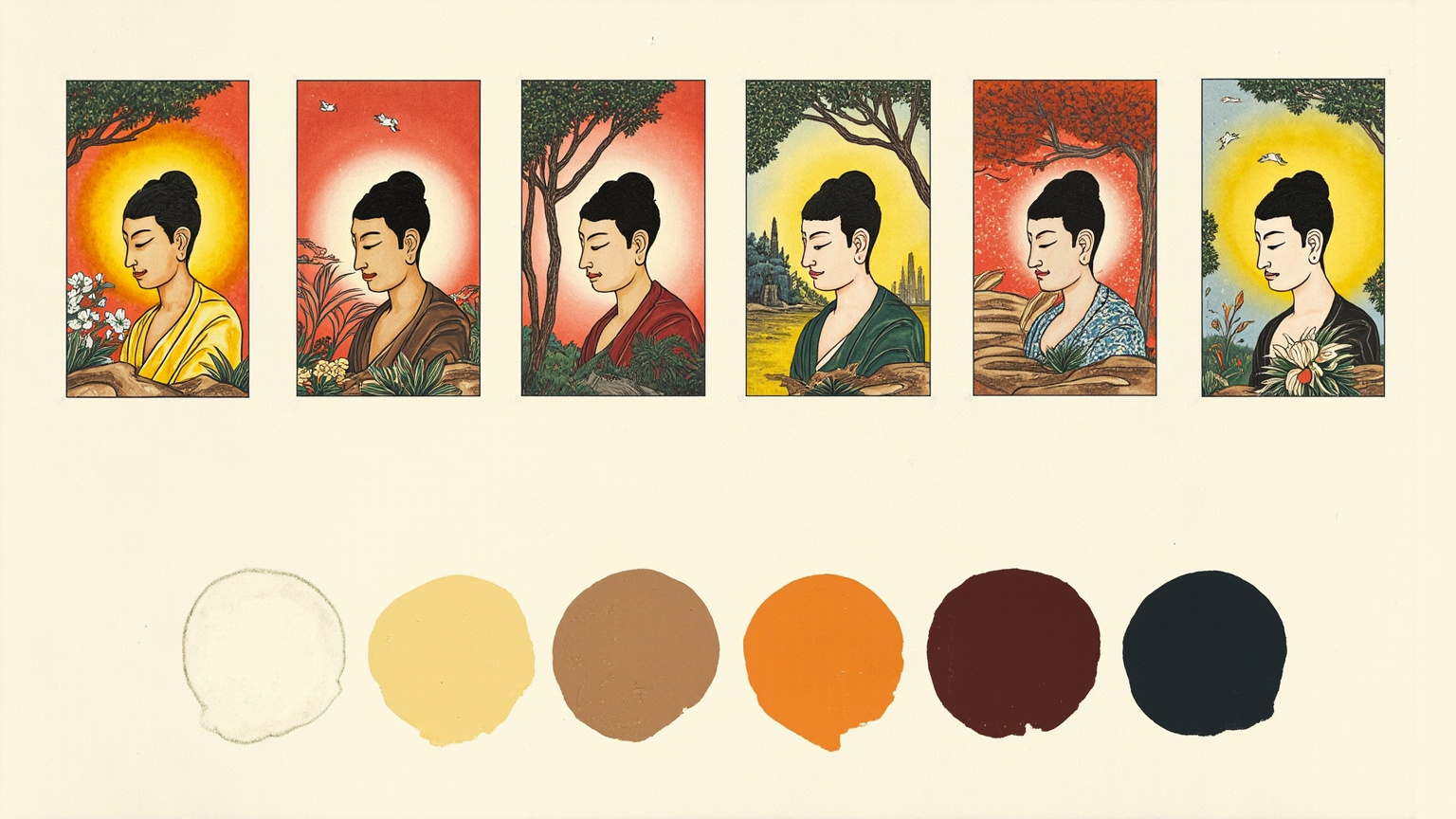
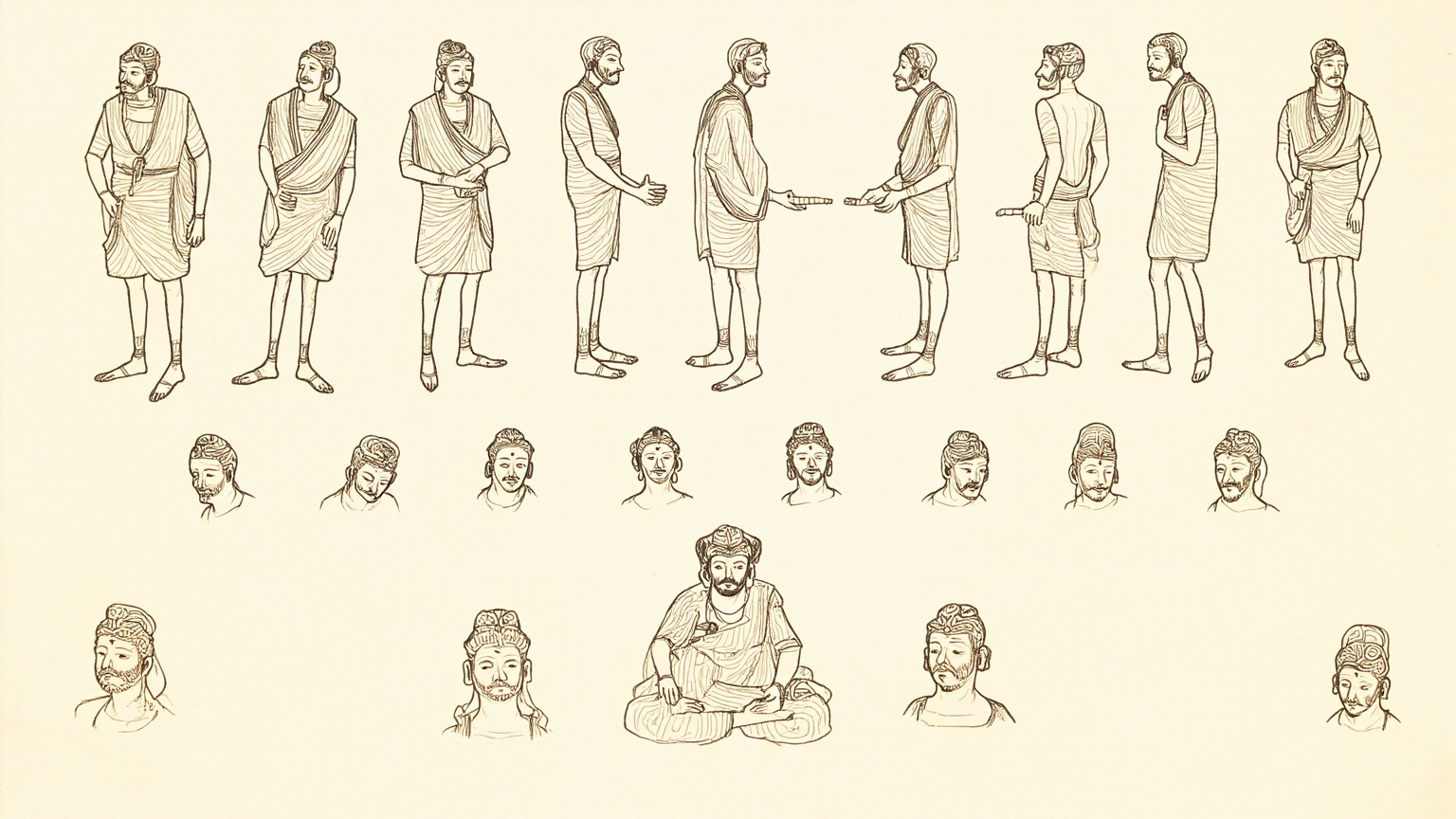
Art Direction4 plates
Before the guide was written, this book got a visual foundation — every illustration you just read grew out of it.