Lao She's Martian fable of 1933, writing national character as science fiction
Text and illustrations produced by the pipeline
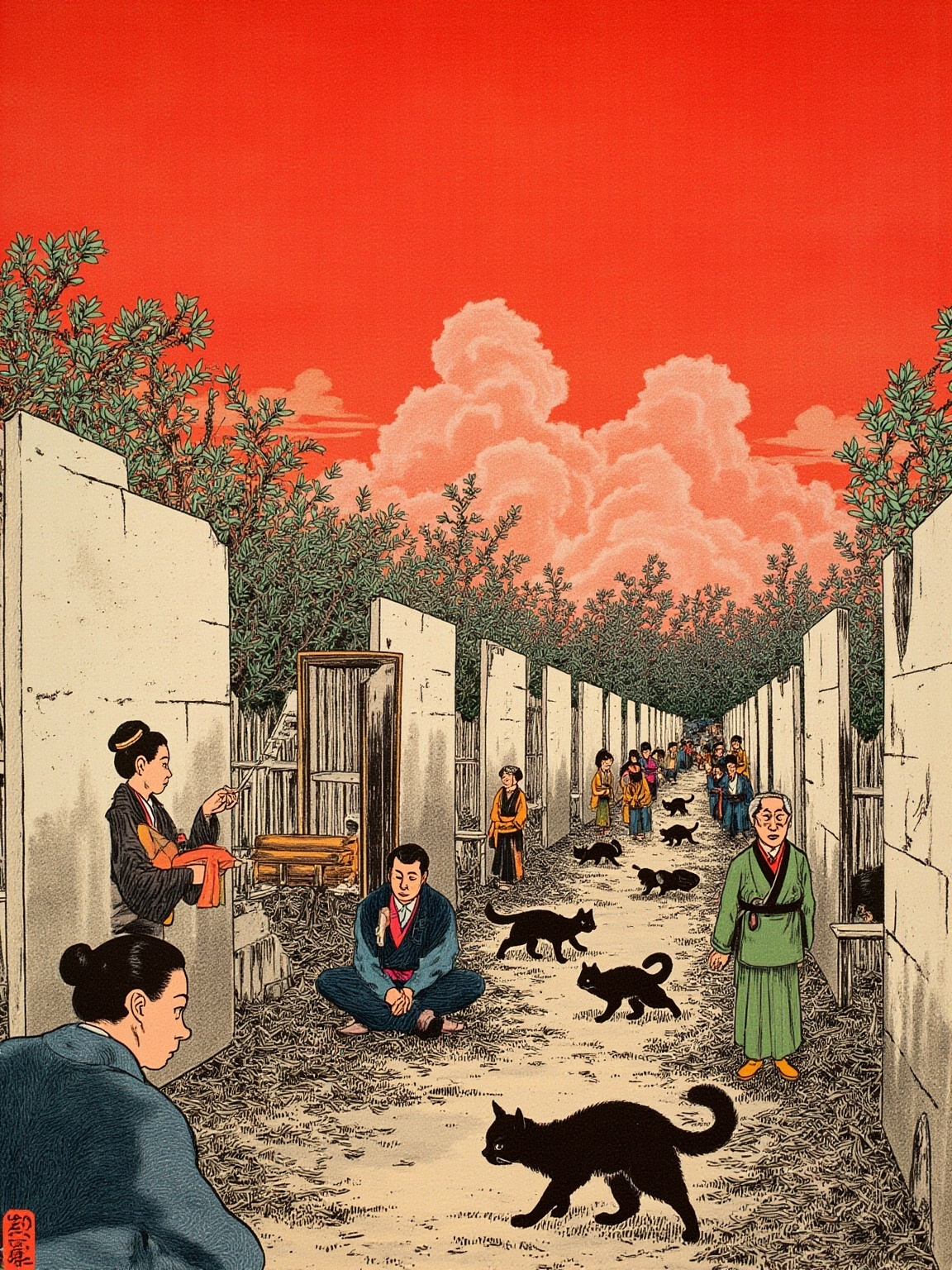
A plane plows into the red soil of Mars. The pilot climbs out and finds himself surrounded by a crowd of Cat People, long-furred, upright, wrapped in robes. He has survived the crash. What he sees next will be harder to survive.
This is Lao She's Cat Country, written between 1932 and 1933. An Earth plane crashes on Mars, and the survivor is led by the Cat People into a decrepit capital called Cat City. From that day he keeps a diary, a record of a plant called reverie leaf, and of how it feeds a civilization rotten down to the bone.
In 1932 Lao She was in his early thirties, writing in Shanghai. He ran the whole novel as a magazine serial in one stretch, and the Xiandai Book Company issued it as a standalone volume the following year. It stands apart in modern Chinese fiction: no one else had turned the national character into science-fiction allegory. Lao She opened that road alone, with a tone so cold it reads like an outsider working a scalpel, cutting through a wound layer by layer.
The book did not sell well at home. It found its audience abroad first: in 1970, William A. Lyell's English translation, titled Cat Country, appeared overseas well before the novel was rehabilitated in China. It sat neglected in its own country for decades before it was canonized. So don't mistake it for a novel that was a household name from the start.
The book has only one kind of protagonist: an unnamed narrator the text simply calls I. He's a Chinese man fallen from Earth, a first-person witness who is both outsider and insider at once. His eye is cold. Everything he sees comes out in the voice of a travelogue, peeling back the absurdity one layer at a time.


This is how Cat City falls. The army scatters before it ever engages. The people descend into chaos with no one to organize them. The whole city has already rotted through from the inside; the outside force only needs to give it a light push. He stands outside the ruins, watching a few Cat People run past him without a word, their eyes entirely empty.
For an ending, Lao She gives us only two sentences. After the nation falls, two Cat People are left on the ruins, caged together, and they bite each other to death. A civilization, rotten all the way through, will not even spare its own kind. He closes his diary and walks off into the depths of the red sky. This isn't a happy ending, and it isn't the tearful lament of a fallen nation either. It reads instead as cold treatment, nothing more.
A guide is a map. The text is the land. What I've given you here is only the skeleton of the plot and a way of reading it. What Cat City actually smells like, what color it is, what moves in it, you have to go smell that for yourself. The dusty sweetness at the edge of the reverie-leaf forest, the tiredness of a blackboard wiped clean only to be written over again with new words, the empty footsteps on the street the night the army breaks and runs, none of that is on the map. It's only in the original.
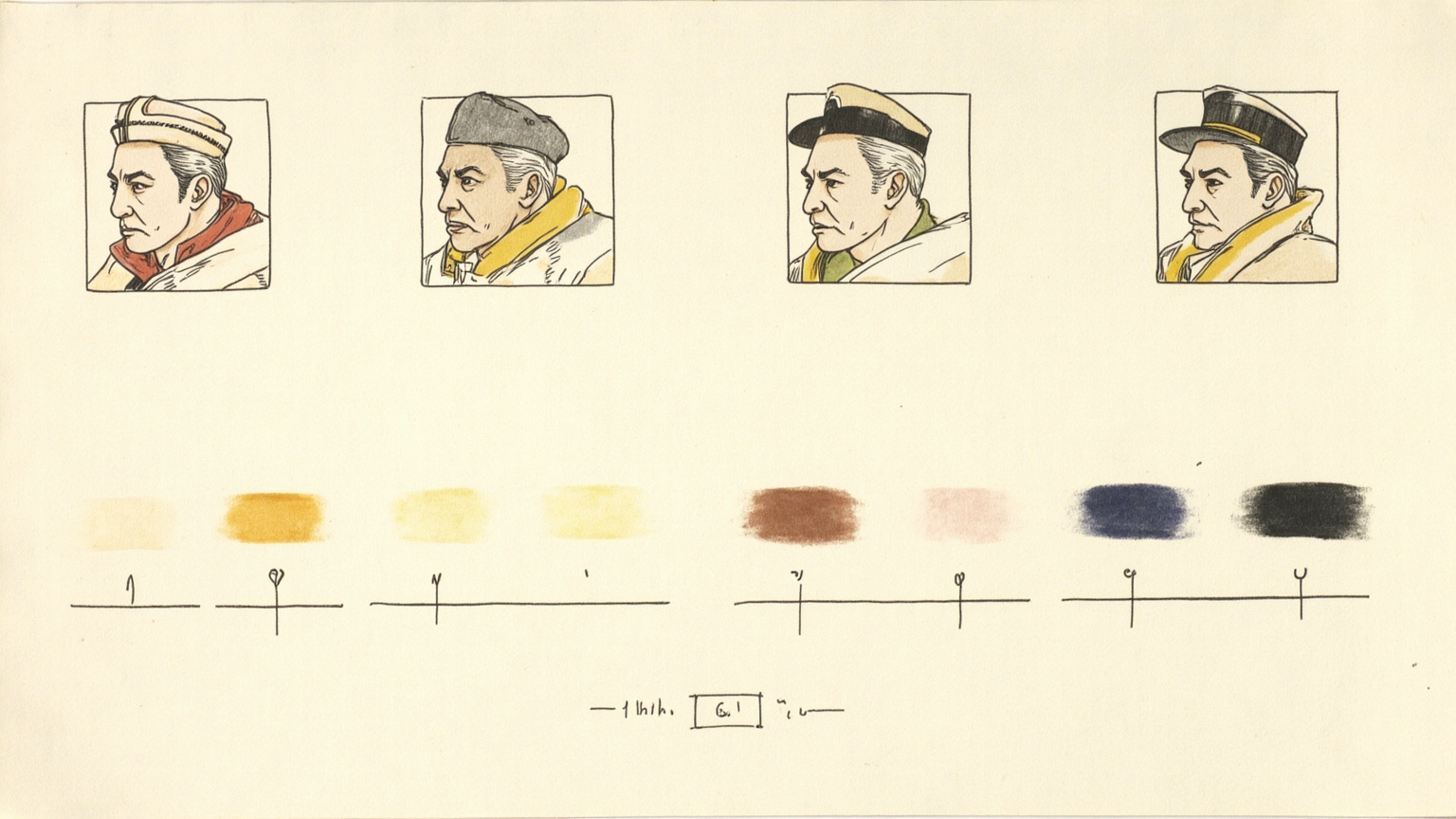
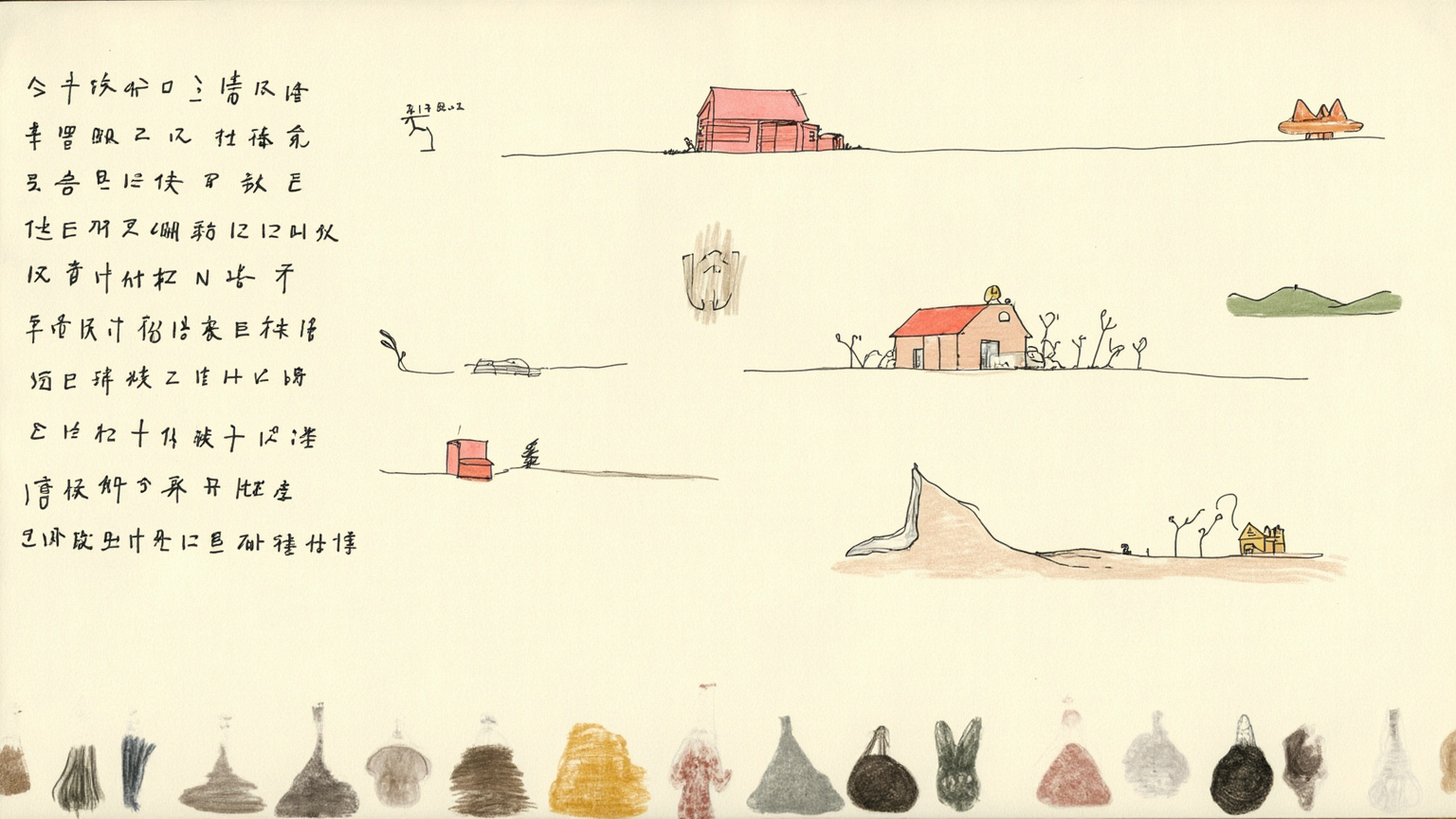
Before the guide was written, this book got a visual foundation — every illustration you just read grew out of it.
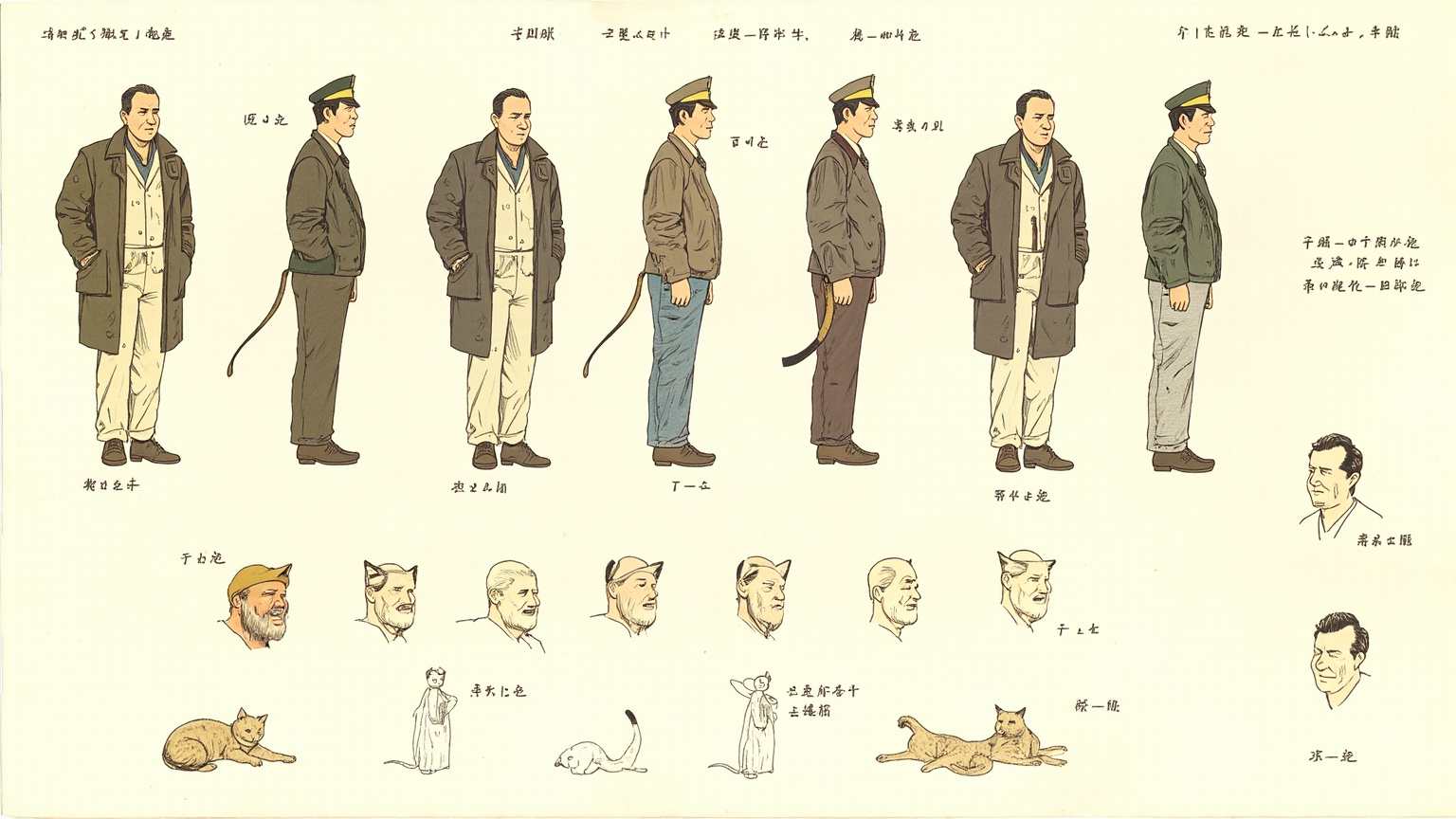
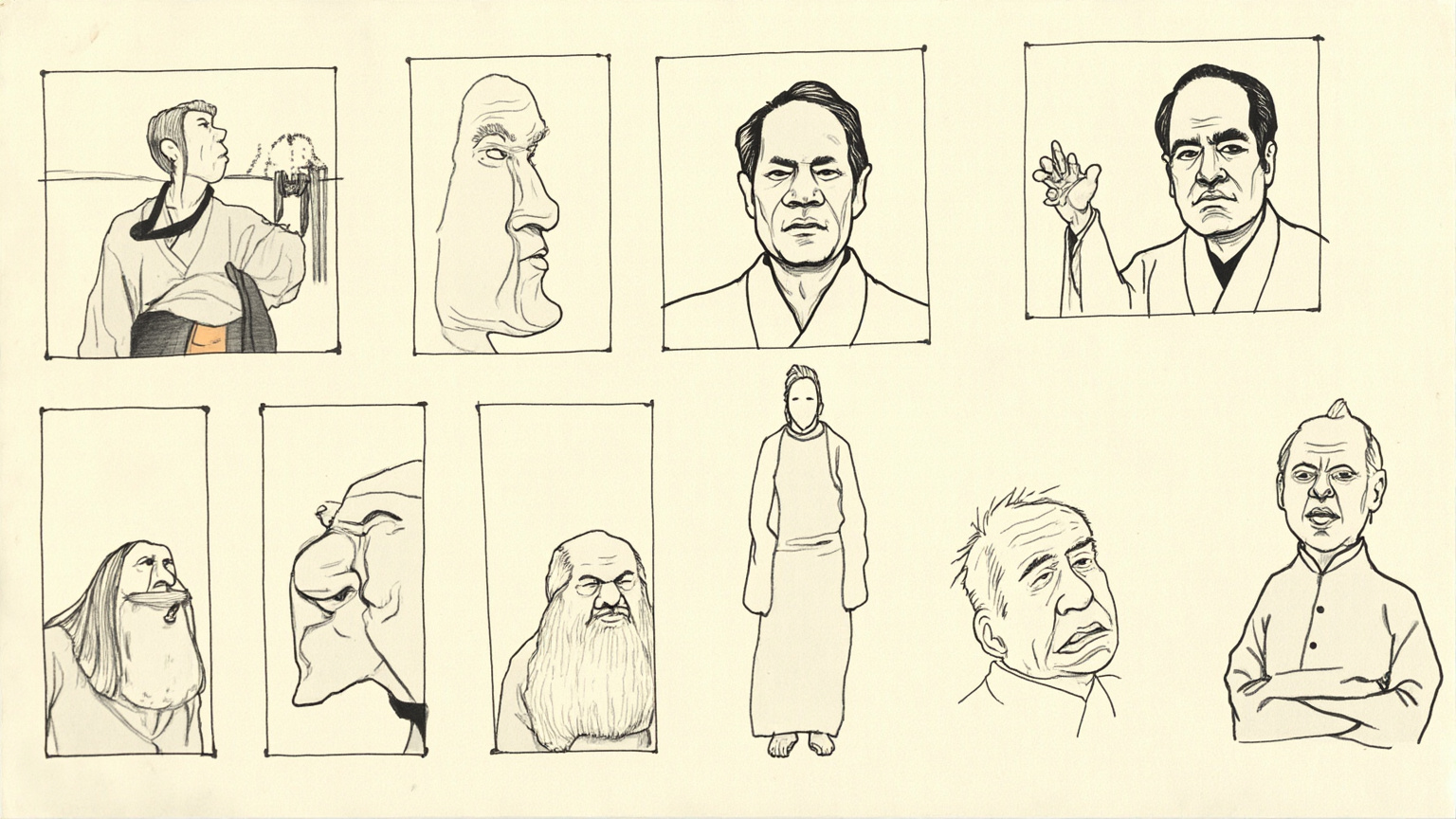
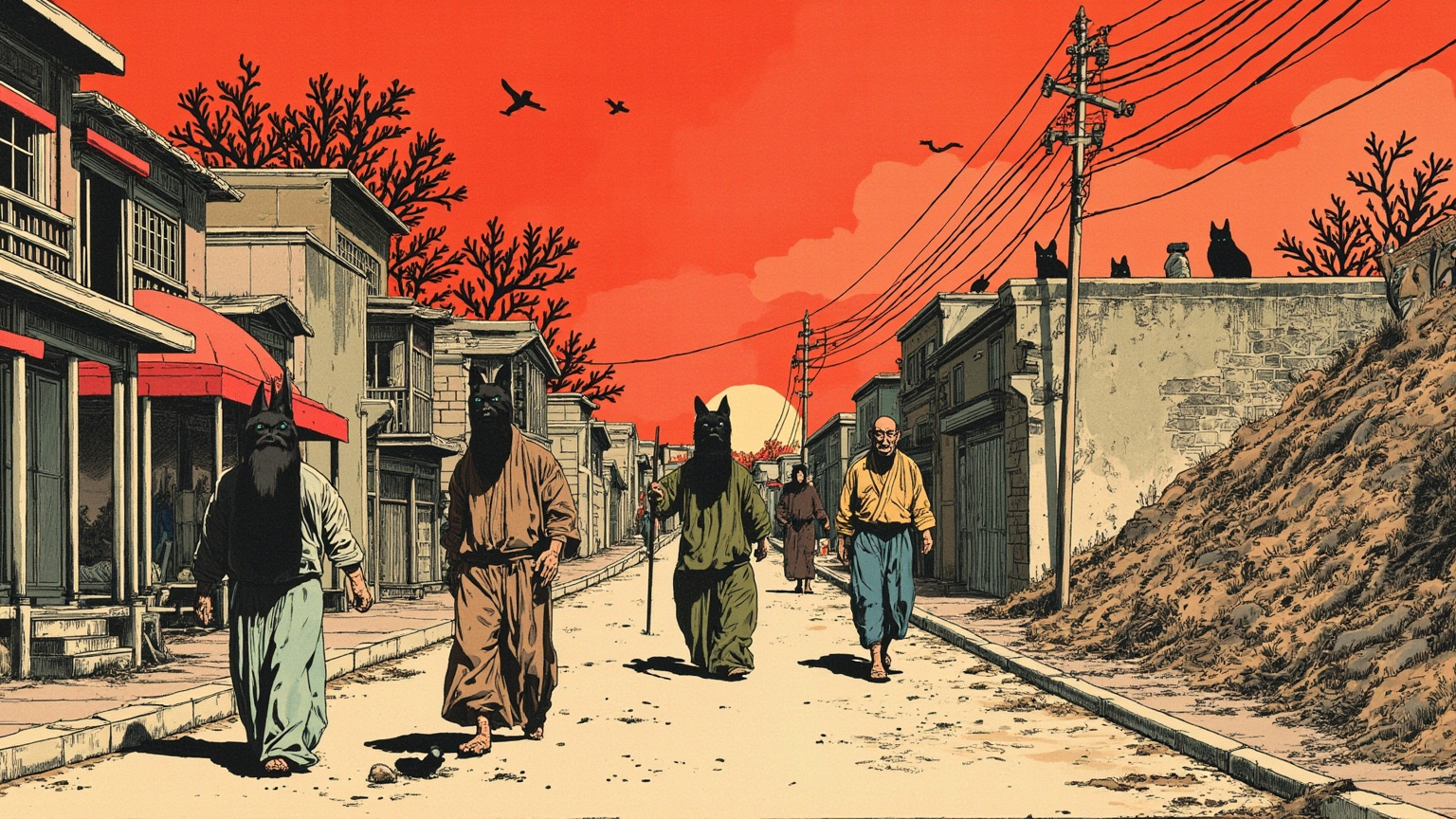
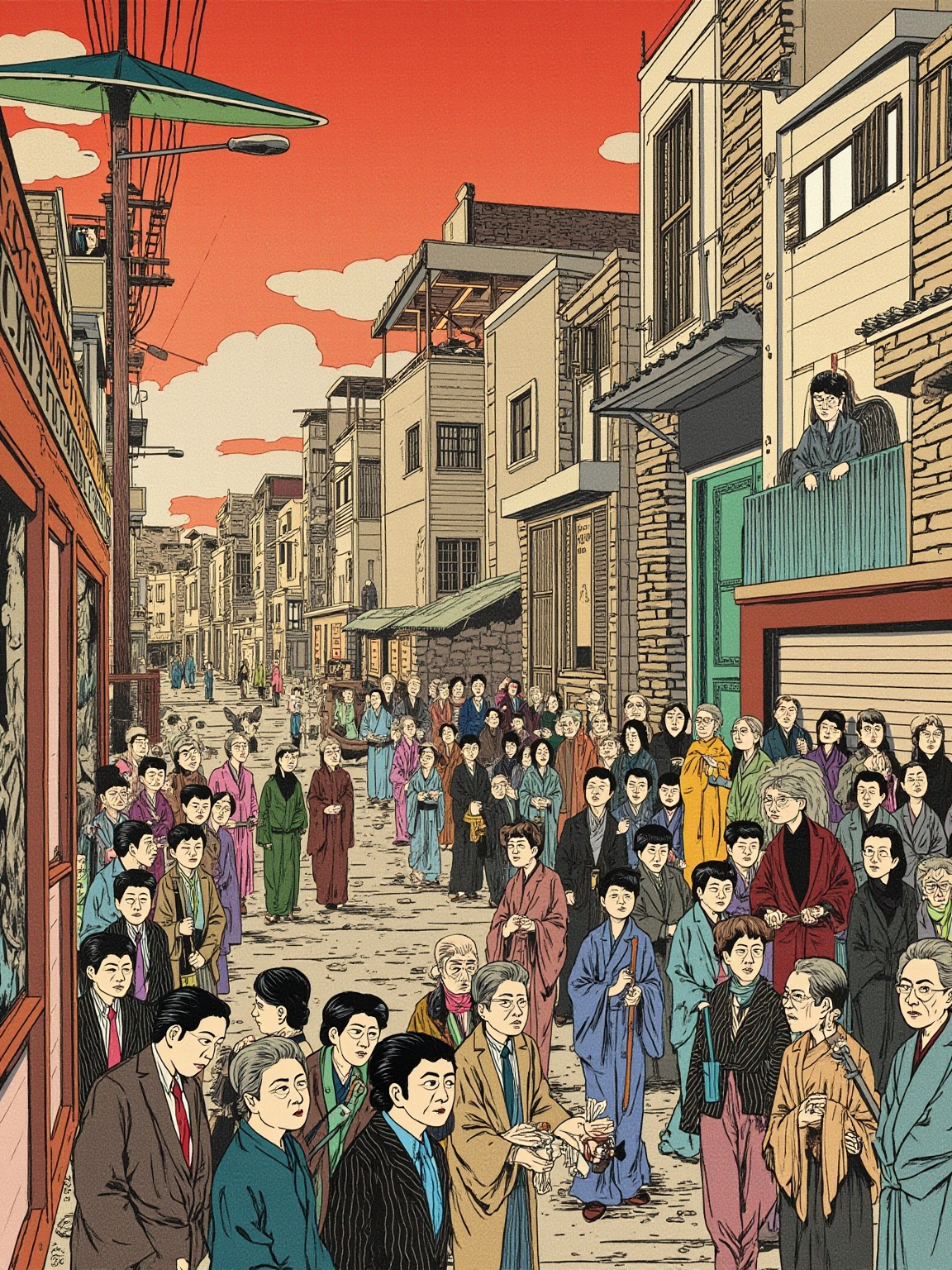
Around him move the Cat People. Lao She isn't writing individuals; he's writing types: the ruling class that lives off its monopoly on reverie leaf, women like the minister's wife included; the students who can recite the word new and do nothing else; the soldiers who bully civilians and bolt at the first sign of an enemy; the ordinary old men robbed and trampled in the street. The Cat People's appearance is kept uniform throughout, long fur, large eyes, upright posture, robes, with nothing that would let a reader pin them to any real-world ethnicity.
The whole of Mars is built to look nothing like screen science fiction: no aircraft, no sense of the future, only the reverie-leaf forest outside the city walls, windowless houses standing in rows, low hills on the horizon, and a red sky overhead. This is Lao She's Mars. Strip away the science-fiction skin and what's underneath is the rotting corpse of an old world.
The day his plane comes down in the red dirt, the Cat People carry the narrator into Cat City like a curiosity. He's stunned the moment he arrives, not by alien terror but by a dispiriting familiarity. The houses are old houses, the streets are old streets, the people are old people. This scene sets the key for the whole book: Mars is only scenery. What Lao She is writing about is the ground under his own feet.
Within days of settling in, he finds the city's soft spot: reverie leaf. The forest outside the walls is the whole city's lifeline. The leaf can serve as food or as narcotic. Whoever controls the forest grows fat and idle on it; everyone else uses it to go numb. This isn't a realistic drug so much as Lao She's monument to opium, an allegory for a narcotic of the spirit. He takes the image only this far and no further. He never lingers on scenes of smoking; the symbol is all he wants.
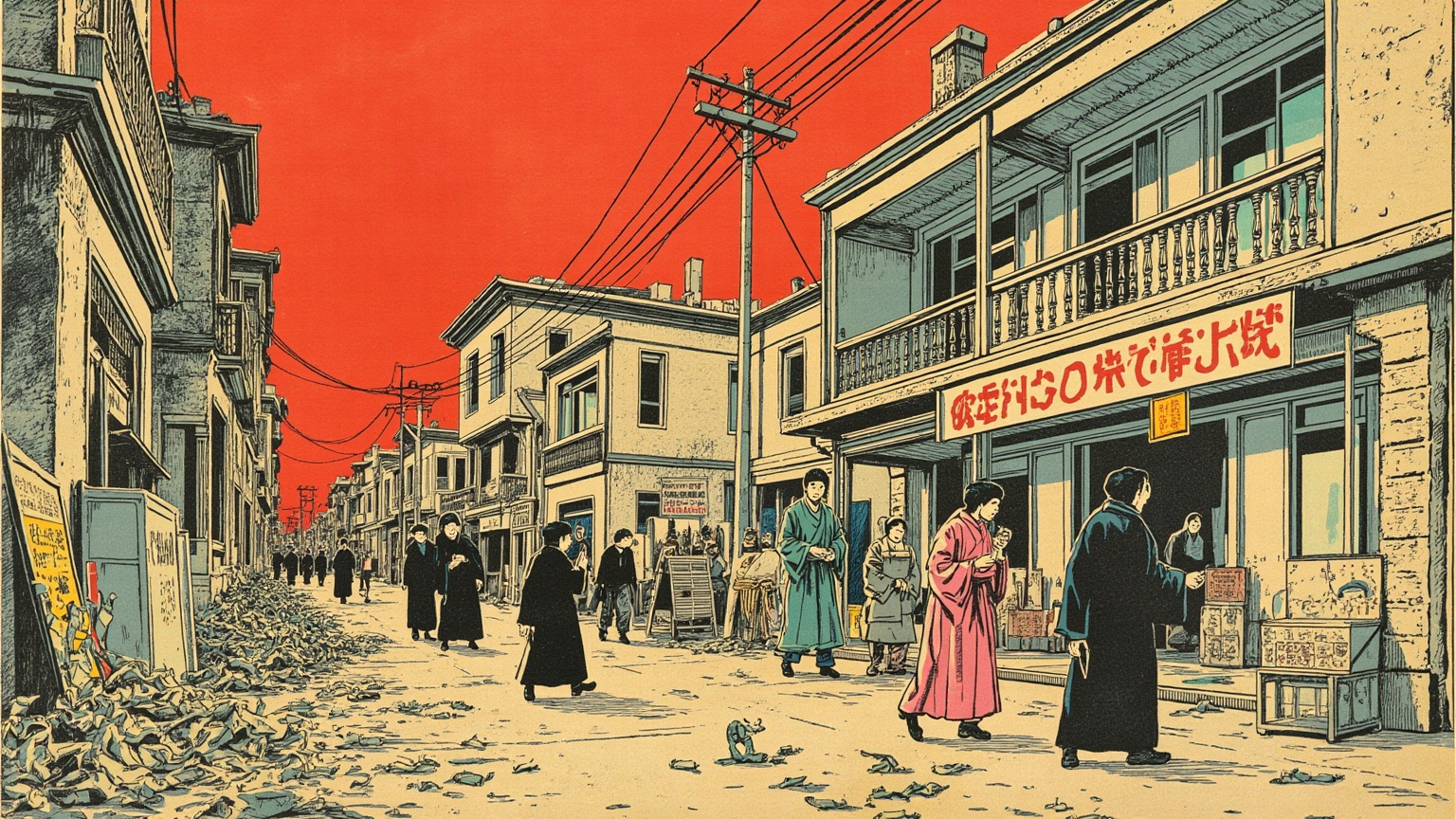
Turn that one key and the whole city rattles apart. The schools are open, but the sign on the gate advertises diplomas for sale. The museum stands full of empty cases, their contents long since carried off by the city's own people. Students in the latest fashion cluster on the street, mouths full of the newest terms, then turn around and fight over reverie leaves to chew. Lao She never scolds them. He just makes the narrator keep watching.
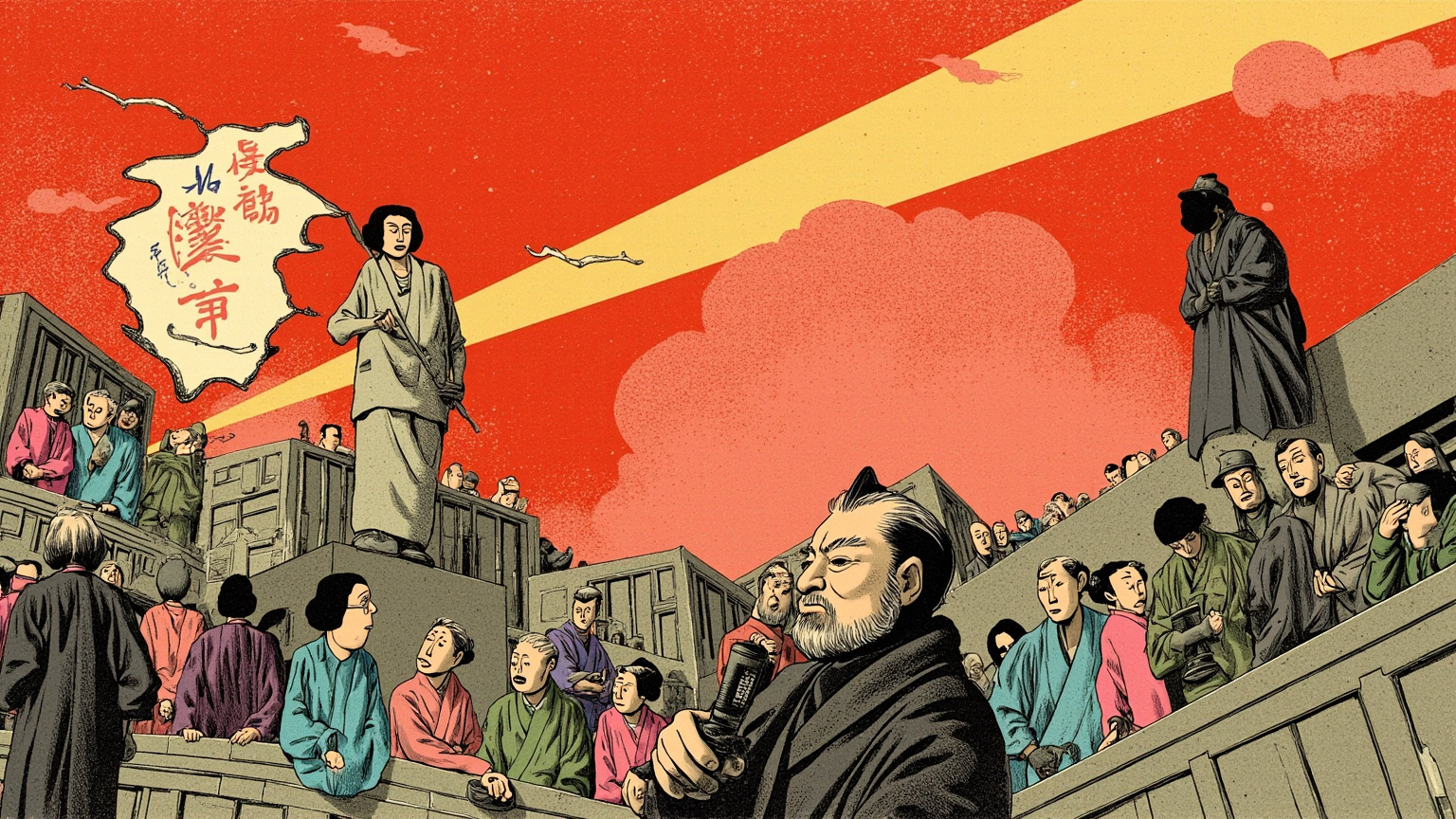
The part that hurts most is the section on soldiers. Cat Country's army is vicious guarding the reverie-leaf forest and rough with civilians, but let a foreign enemy show up and they outrun everyone. Lao She never writes an actual battle. He writes a collapse: overnight the troops scatter, the forest goes unguarded, the city gates stand unopened. A military built only to put down its own people turns out to be hollow the moment it faces an outsider. This is his cleanest cut.
The self-styled progressives at the schools are even harder to watch. The word new never leaves their mouths, new vocabulary, new institutions, new spirit, but ask them to actually do something and they turn straight to fighting over reverie leaves, selling diplomas, taking the shortcut. Lao She's own generation had just lived through the New Culture Movement, and had seen too many new words sitting on the same old mud.
The foreign enemy is called the Dwarf Soldiers. Lao She deliberately withholds what they look like, what language they speak, any feature that would mark their ethnicity. He lets them appear only at a distance, a dark mass of silhouettes pressing toward the city wall. The choice is deliberate. This is allegory, not an accusation aimed at any one people, and the various readings later generations have pinned to it were never part of Lao She's plan.
What this book is really about is how a civilization rots from the inside. Reverie leaf stands for opium, but it reaches further than the drug: it is any food for the mind that leaves a people numb. The school stands for the new learning, but it reaches further too, it is anyone who can recite new words and never lifts a hand to do new work. The army is an army, but it stands for any power structure built to bully its own people and defend against no one. Cat Country is a mirror turned back on itself. The figures standing in it are not Martians. They are Lao She's own people.
As craft, Lao She relies on the narrator's watching eye to strip the absurdity back one layer at a time. He doesn't shout slogans, doesn't spill melodrama, doesn't ask you to cry. He makes you look. Scene is set against scene, and the reader is left to draw the conclusion alone. That restraint is rare in modern Chinese fiction. Lu Xun works with a short blade in Old Tales Retold; here Lao She works with a longer, slower needle.
Lao She doesn't write Mars for the future. He borrows an empty lot to set his own old society back down and look at it again.
Read it today and the story of rot hasn't aged. When a paralysis of the spirit feeds a whole nation into walking corpses, when new words sit on nothing but old mud, when an army facing a foreign enemy only turns to bully its own people, change the skin and this structure fits any era. That's why the book keeps getting reread. The skin is Martian. The bones are evergreen.