Celebrated Cases of Judge Dee (Di Gong An) · Companion Guide
狄公案
一盏昏黄油灯、一块青砖公堂、一个乔装郎中的县令——武周告密成风的夜里,清官以惊堂木抽丝剥茧。
Opening: the gavel comes down
The oil lamp sputters, and the gavel comes down on the magistrate's bench. Judge Dee has barely settled into his new post, and already the drum outside the courtroom has sounded three days running. A widow kneels before the bench with a written complaint in hand, a merchant with a grievance behind her, and behind him a suspect dragged in by the attendants, chains scraping across the flagstones. This is not one unlucky morning. It is how the novel always opens: the magistrate has just taken his seat, and the cases are already piling up.
Celebrated Cases of Judge Dee is the story of what happens under that lamp, on those flagstones: how a seventh-century Chinese magistrate takes a stack of murders apart one by one. Di Renjie himself did not write it. The historical Di Renjie was a celebrated statesman under Empress Wu's Zhou dynasty; this novel is the work of an anonymous Qing-dynasty writer who borrowed his name. But it was this underrated, unsigned Qing novel that caught the eye of the twentieth-century Dutch sinologist Robert van Gulik, who reworked it into the English Judge Dee series that swept the West, and became the root of the Chinese branch of world detective fiction.
What kind of book this is
Celebrated Cases of Judge Dee was written around the Qianlong era of the Qing dynasty, in vernacular Chinese, in the gong'an mold: court-case fiction built around a magistrate solving crimes, something like a Chinese cross between courtroom drama and detective story. It belongs to a category literary history buried for a long time — a Qing-dynasty commercial printing, author unknown, kept alive mostly through Republican-era reprint houses like Wangjitang. It never had the popularity of its contemporary The Three Heroes and Five Gallants. But no classical Chinese novel has shaped world detective fiction more, because Robert van Gulik took it as his source text in the mid-twentieth century, and out of that came the Judge Dee that Western readers know.
Characters and world: the people of the yamen
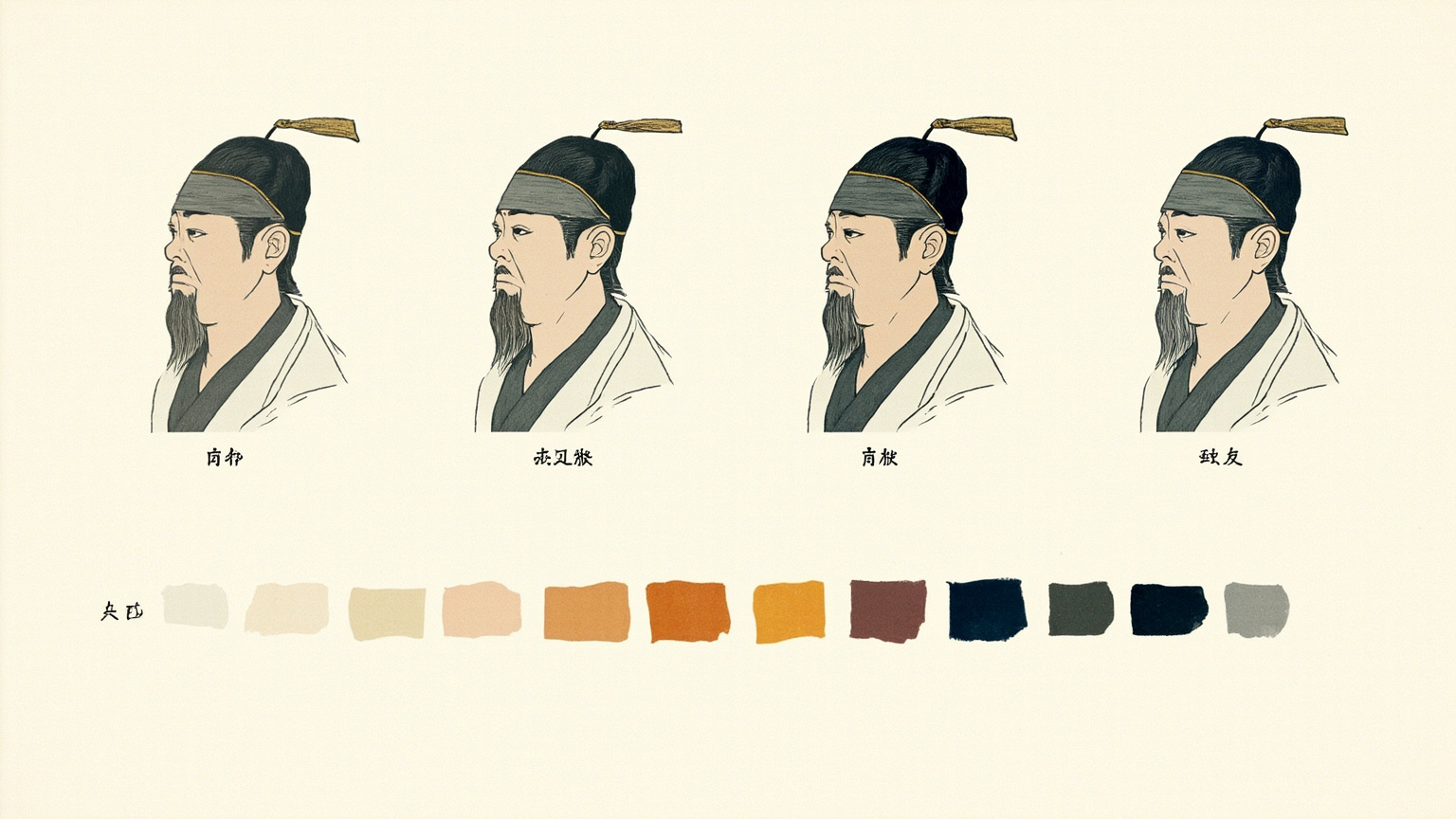
Judge Dee is the magistrate himself, and that is the biggest difference from Western detective fiction: he is not a private investigator but an officer of the imperial court. On the bench he wears a black or dark teal round-collared robe with wide sleeves, a gauze cap trimmed in red, a tablet at his belt. Off the bench he sheds the robe for the plain clothes of a physician, a fortune-teller, or a traveling merchant, and slips into the inns, abandoned temples, and inner chambers where the crimes happened. He is presiding judge and private detective at once, one man wearing both hats.
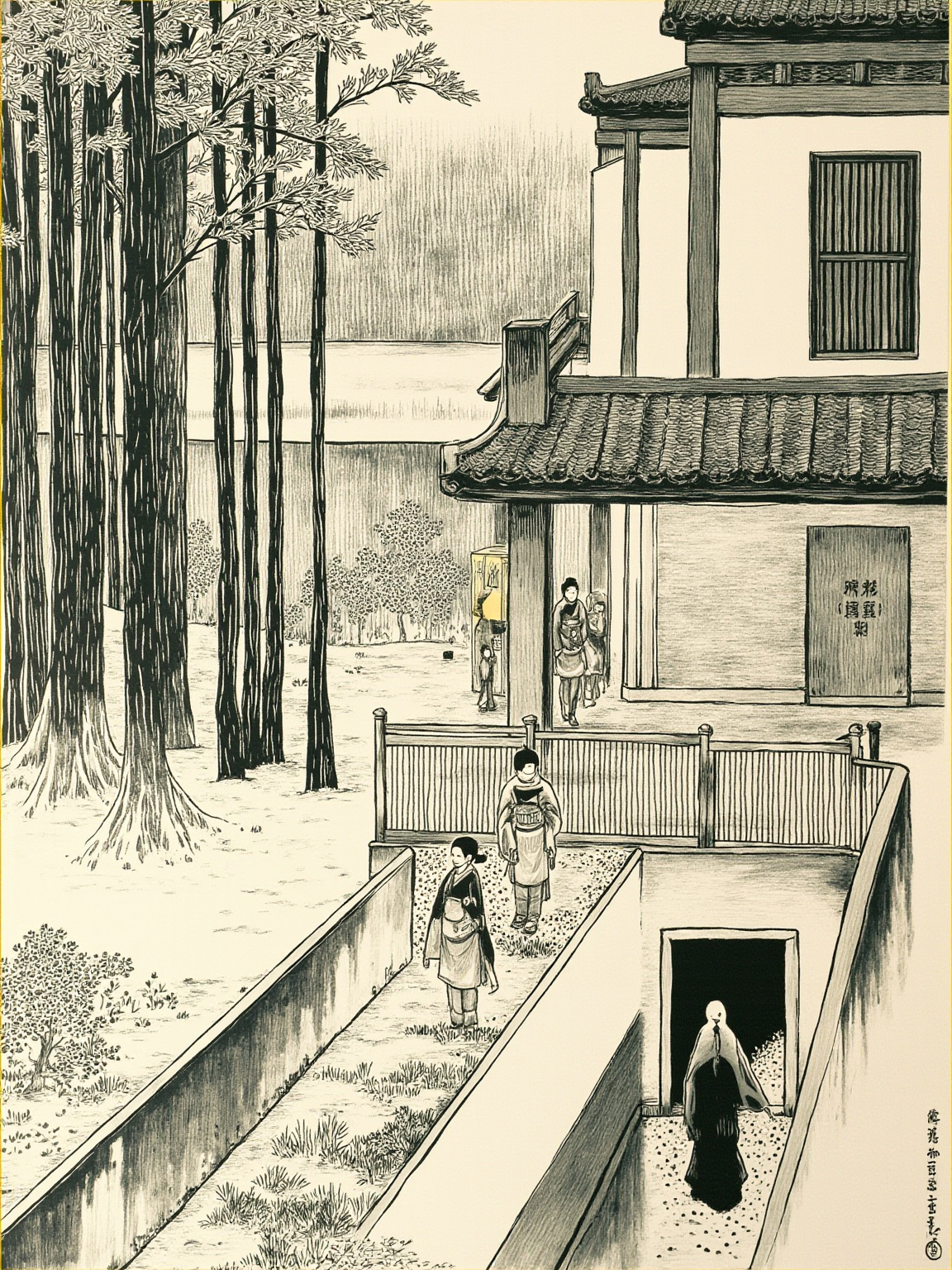
Behind the magistrate's desk the single oil-lamp sputtered; on the blue-brick floor three prisoners knelt in a row, their chains clinking each time they breathed.
公案之上孤灯如豆,青砖地上三犯并跪,铁链随呼吸轻响——新任县令狄公端坐案后,纱帽红缨下目光如水。
金句 · 开篇 · 县衙公堂
A fixed cast turns around him: four personal attendants who work in pairs, taking blows for him, making arrests, keeping watch through the night; a legal secretary seated to one side who drafts verdicts, records testimony, checks the statutes; a coroner whose whole job is examining the dead, kneeling to recite the inquest report aloud. Before the bench kneel the suspects under guard, accomplices in the cangue, and the wives, concubines, maids, and servants dragged in one after another to be questioned. The gong'an convention where one crime brings an entire household into court is the norm here, not the exception. The visual center of this world is always the yamen: the bench, the case-file cabinets, the seal box, the oil lamp, the gavel — a palette of browns and blacks with the occasional flash of vermilion from the magistrate's seal.
The plot: three cases at once, one closing as another opens
The story begins with a magistrate newly arrived at his post. Judge Dee has barely taken up the seal, and the courtroom drum sounds three days running: several cases breaking at once, plaintiffs lined up on their knees before the bench, crying out their grievances. This is the novel's standard opening. No easing in, no breathing room. The cases are simply there, piled in front of the magistrate, from the first page.
Judge Dee's response runs on two tracks at once. On the bench, the gavel comes down and the coroner steps forward first with the inquest report, not a dissecting table or a microscope but the coroner kneeling to recite what he found while the legal secretary writes it down as testimony. Then comes the site re-examination, the confrontation of suspects, the reversed confessions, peeling back layer after layer in five stages. Off the bench, he sends the four attendants out to make arrests and keep watch through the night, while he himself sheds the official robe and goes undercover as a traveling physician or fortune-teller, working his way into the inns, abandoned temples, wayside hostels, and inner chambers where the crimes happened, drawing out hidden witnesses through quiet observation and careful questions. This is where the book is written with the most skill: the two tracks advance together, the daylight of the courtroom locking against the shadow of the undercover work, with the reader caught between them.
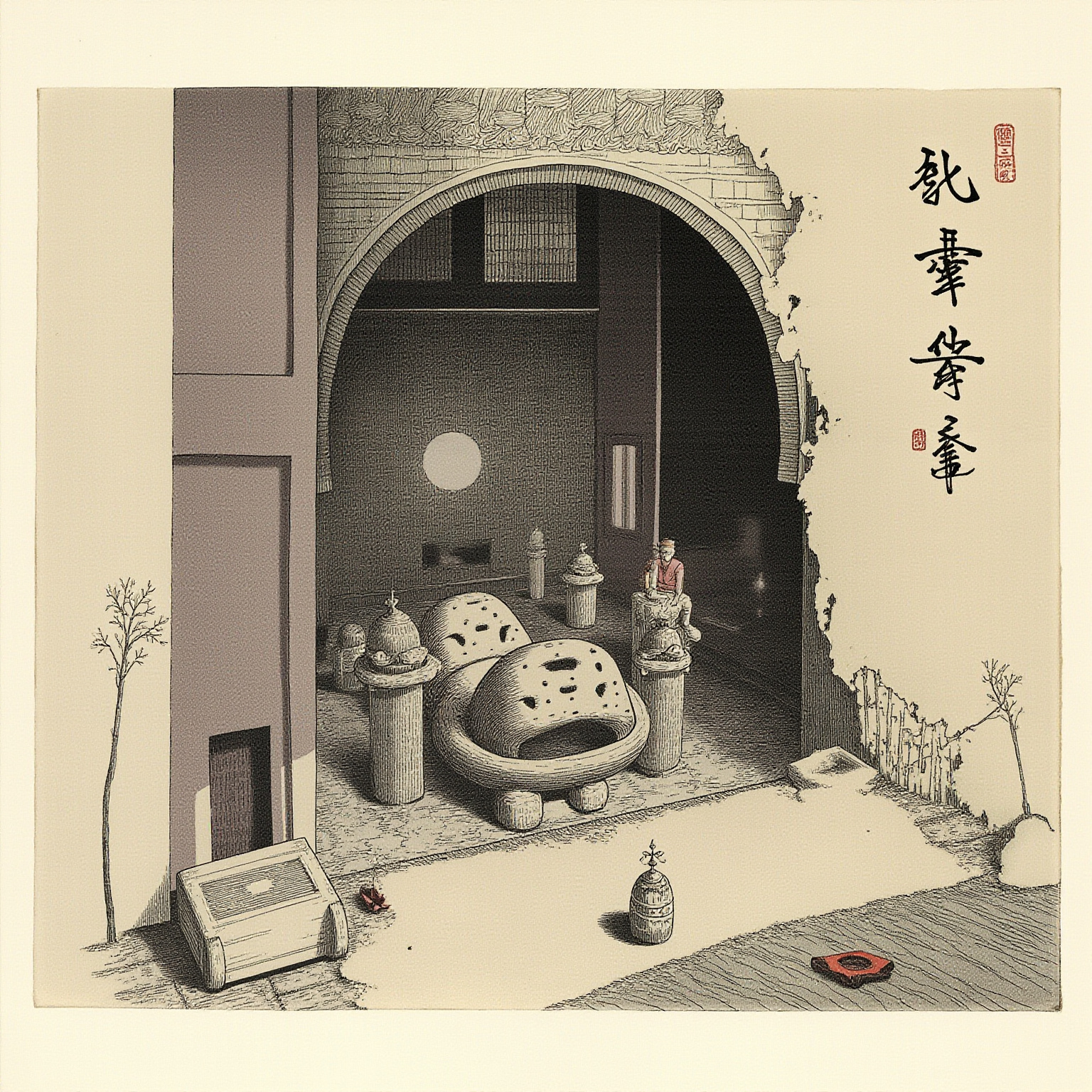
He struck the sounding-block once; the hall fell silent, and even the widow's sobbing stopped as though cut with a knife.
惊堂木一拍,堂上寂然,寡妇的哭声也像被刀齐齐斩断——仵作膝行上前,低头呈上昨夜所填的尸格。
金句 · 第一案 · 公堂尸格呈供
The three cases advance in interleaved fashion: murder for money, murder born of an illicit affair, a disappearance with a substituted corpse. Different in kind, but sharing the same presiding magistrate. The structure resembles a linked collection of short mysteries, but it is tighter than a story collection. A witness in one case can turn out to be a suspect in the next, and a clue from one crime scene gets pulled back out on the bench during a later trial. The author never gives any single case a full-length treatment of its own; instead the three cross and lock along the axis of Judge Dee, and the pacing ends up tighter for it than a single straight-line plot would be.
By the final case, the author widens the frame. Denunciation, false testimony, forced confessions under torture, even collusion within the bureaucracy come into it. The climate of informing that marked the last years of Empress Wu's reign is real history sitting under the fiction. To pass judgment on the bench and bring down the true culprit, Judge Dee has nothing like a private detective agency behind him, only the legitimacy of court procedure and the authority carried in the sound of the gavel. This case is written with the most weight, because it puts the real difficulty of an honest official on the table: how a man of integrity untangles the truth inside a bureaucracy addicted to informing. That, more than any single murder, is what the book is actually about.
The climax is the moment of judgment on the bench: the gavel comes down, and the truth is out. The guilty are taken into custody to await sentence. But the novel does not end there. The drum sounds again, and the next plaintiff is already kneeling before the bench. That is the book's real structure: one case closing only for another to open, no single mastermind unmasked at the end, no final net closing on a killer. What it suggests instead is that an honest magistrate's work never stops. I will admit the ending caught me off guard the first time. You expect the net to close, and instead you get the opening of the next case. Looking back, that is exactly where this book parts ways with Western detective fiction.
As craft, the book is startlingly modern for its age. Three cases running in parallel, courtroom and undercover work on two tracks, revelations peeled back layer by layer: these are standard moves in mystery fiction today, and this novel had already mastered them. Its visual restraint is just as unusual. An autopsy comes through the coroner's kneeling recitation, an interrogation through shadow and the crack of the gavel, never a direct close-up of torture or a corpse. That kind of unpeeling by lamplight is more unsettling than any graphic forensic tableau, because it leaves the horror to the reader's own imagination.
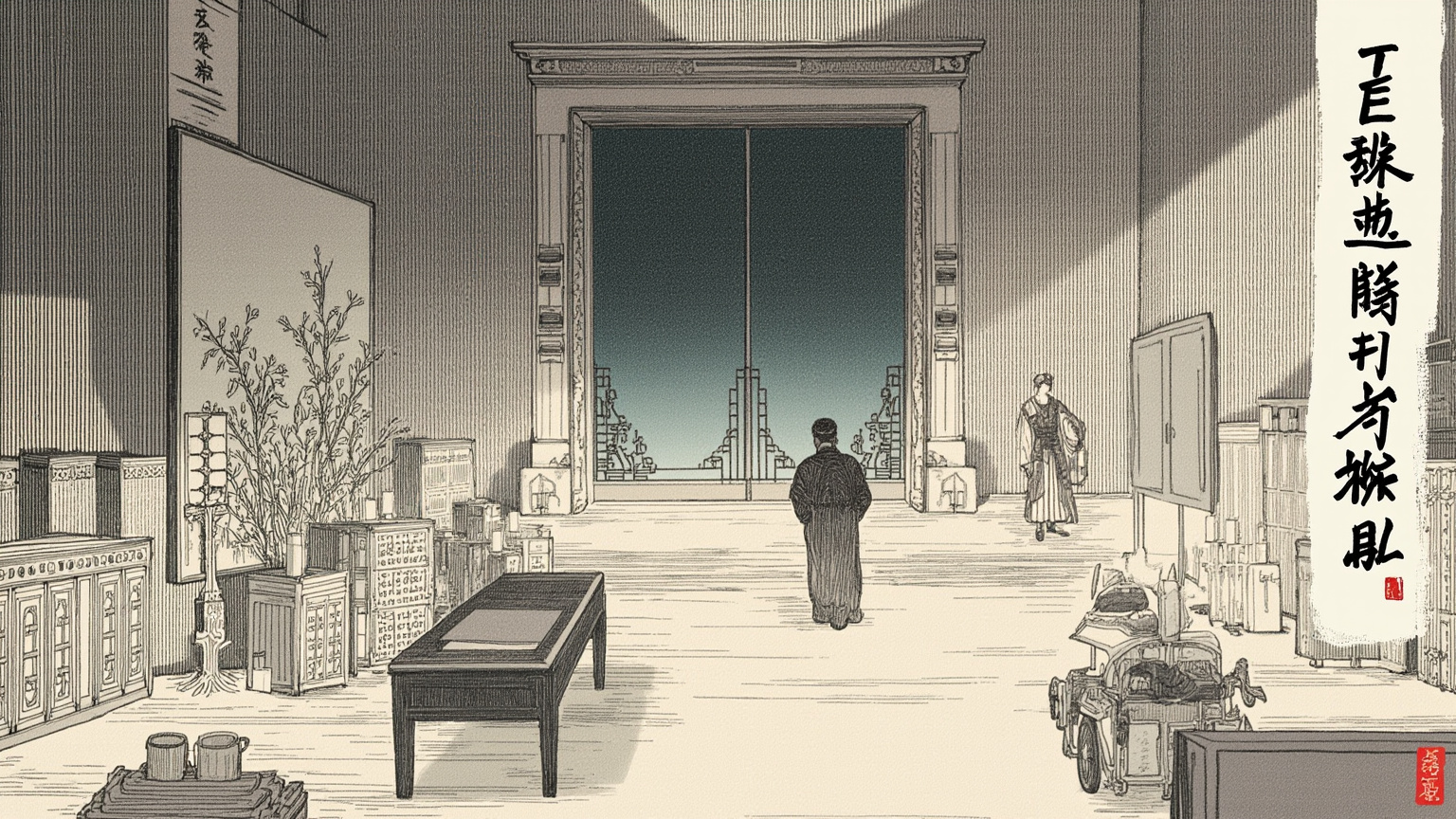
Slipping off his official robe, he became a wandering physician; in the inner courtyard the widow did not know that the man taking her pulse was the magistrate himself.
褪下官袍换上青布长衫,他便是云游郎中;内宅深处寡妇垂泪诉说,不知执她手腕诊脉之人,正是昨日公堂之上那位惊堂木一拍的人。
金句 · 中段 · 乔装暗访内宅
The undercover scenes are the most vivid stretch of the book. Judge Dee poses as a physician to get into the inner chambers where a magistrate could never be admitted; poses as a fortune-teller to draw out testimony, because women trust fate more than they trust an official; poses as a traveling merchant to blend into the inns, because inns take anyone. Each disguise carries a small, deliberate misalignment: he has to act as though he is not investigating anything, while getting a witness to hand him the truth unasked. That trick of playing dumb to draw out the truth is a detective technique unique to gong'an fiction. Sherlock Holmes never does it. Neither does Watson.
When the last of the three cases closes, Judge Dee settles back onto the bench, the legal secretary sets down his brush, the coroner withdraws, the attendants lead the prisoner away. The oil lamp is still burning, but the hall is already empty, only the magistrate left, facing his own official seal. The drum for the next case is already on its way.
Theme: the honest official, the master detective, and the lamp on the bench
What this book is actually about is not how Di Renjie solves crimes, but why premodern China needed a magistrate like him at all. Empress Wu's reign was an age of rampant informing and routine torture, where an honest judge had only his own perception and the procedures of the court to untangle the truth. The book never paints that political backdrop directly, but the reader feels it pressing underneath. What it offers is a distinctly Chinese idea of justice: no detective agency, no microscope, no fingerprint comparison, only a courtroom, an oil lamp, and a magistrate who refuses to torture his way to a confession.
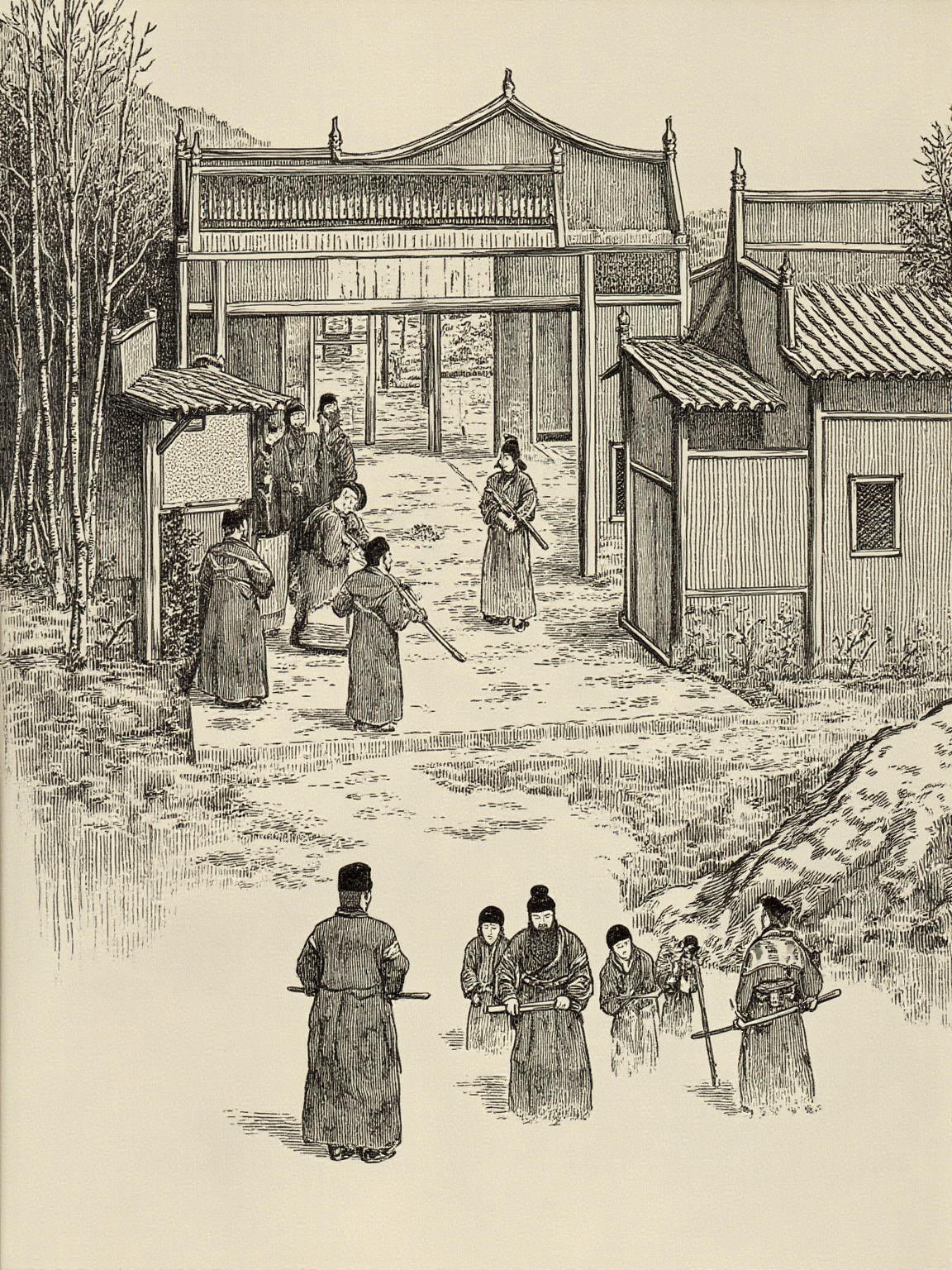
When the last false witness was dragged out, he lifted his brush, set down the verdict, and the seal-box on the desk gleamed a single drop of cinnabar red in the gloom.
伪证者被拖下堂去的刹那,他提笔定谳;昏灯之下案头那方官印匣,唯独一点朱红,亮得像暗夜里滴下的一滴血。
金句 · 末案 · 公堂定谳
Seen this way, Celebrated Cases of Judge Dee is the root of the Chinese branch of world detective fiction. On a shelf that runs from Western detectives (Conan Doyle, Christie, Collins) to modern Japanese honkaku writers like Higashino, Matsumoto, and Takano, it is the only entry point into premodern Chinese court-case fiction. Fill in the world map of detective fiction with it, and the missing piece turns out to have been sitting here all along.
Sherlock Holmes has the microscope and the method of deduction. Judge Dee has an oil lamp, a gavel, and a magistrate willing to play the fool, a detective technique found nowhere else.
Why read the book itself
A companion guide gives you the map. The book itself is the ground. Three things specifically, this guide cannot give you. First, the delicate tension of the disguises: Judge Dee as a physician listening to a widow's weeping, as a fortune-teller drawing the truth out of a servant girl. That rhythm of playing dumb to get at the truth only comes through in the dialogue of the original, not in any summary of it. Second, the courtroom confrontations after the gavel falls, a suspect recanting, a witness turning on another, an inquest report challenged on the spot. The pleasure of watching that unravel layer by layer gets flattened the moment you reduce it to a plot summary. Third, the gothic texture of brown and black lamplight: the rhythm of Qing-dynasty vernacular prose, the corners the oil lamp never reaches, the chill of the yamen's side hall late at night. That is something you can only get by opening the book yourself.
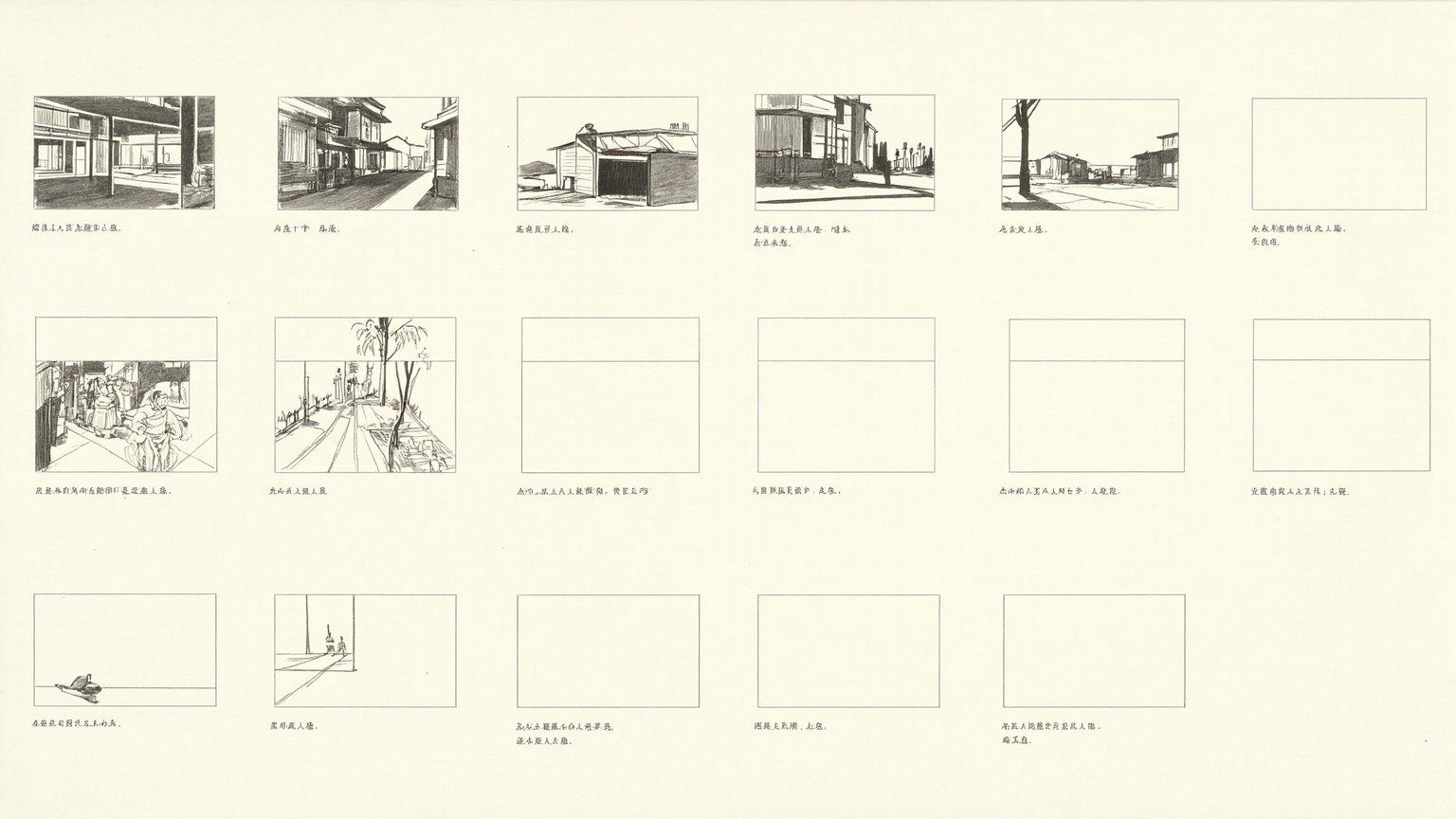
Art Direction4 plates
Before the guide was written, this book got a visual foundation — every illustration you just read grew out of it.