Cyropaedia (The Education of Cyrus) · Companion Guide
居鲁士的教育
米底紫金宫里的波斯外孙,猎场上学会先压住自己,回故土把所学的节制锻成一个帝国。
A Wolf Cub Sent Into the City of Purple and Gold
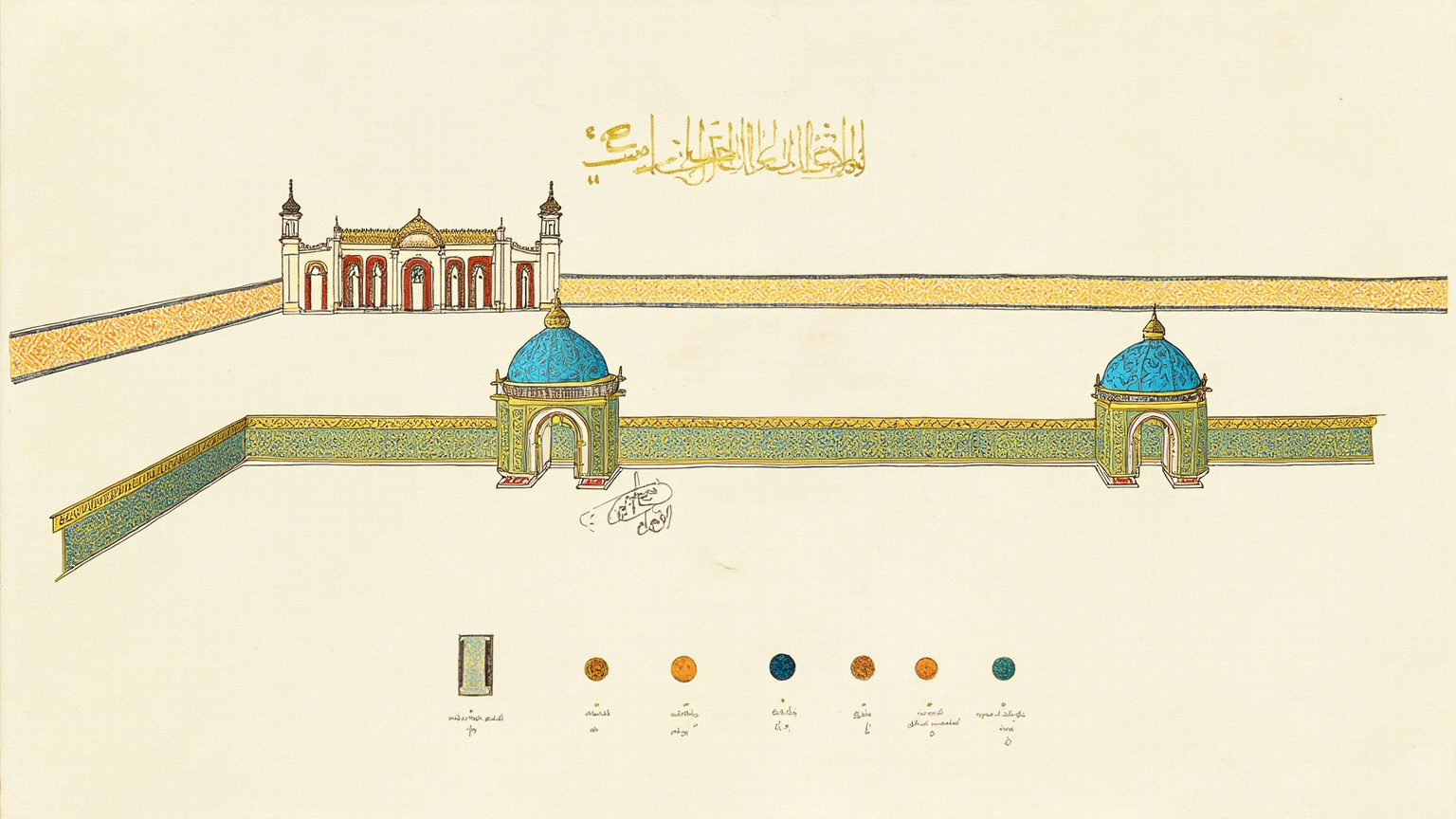
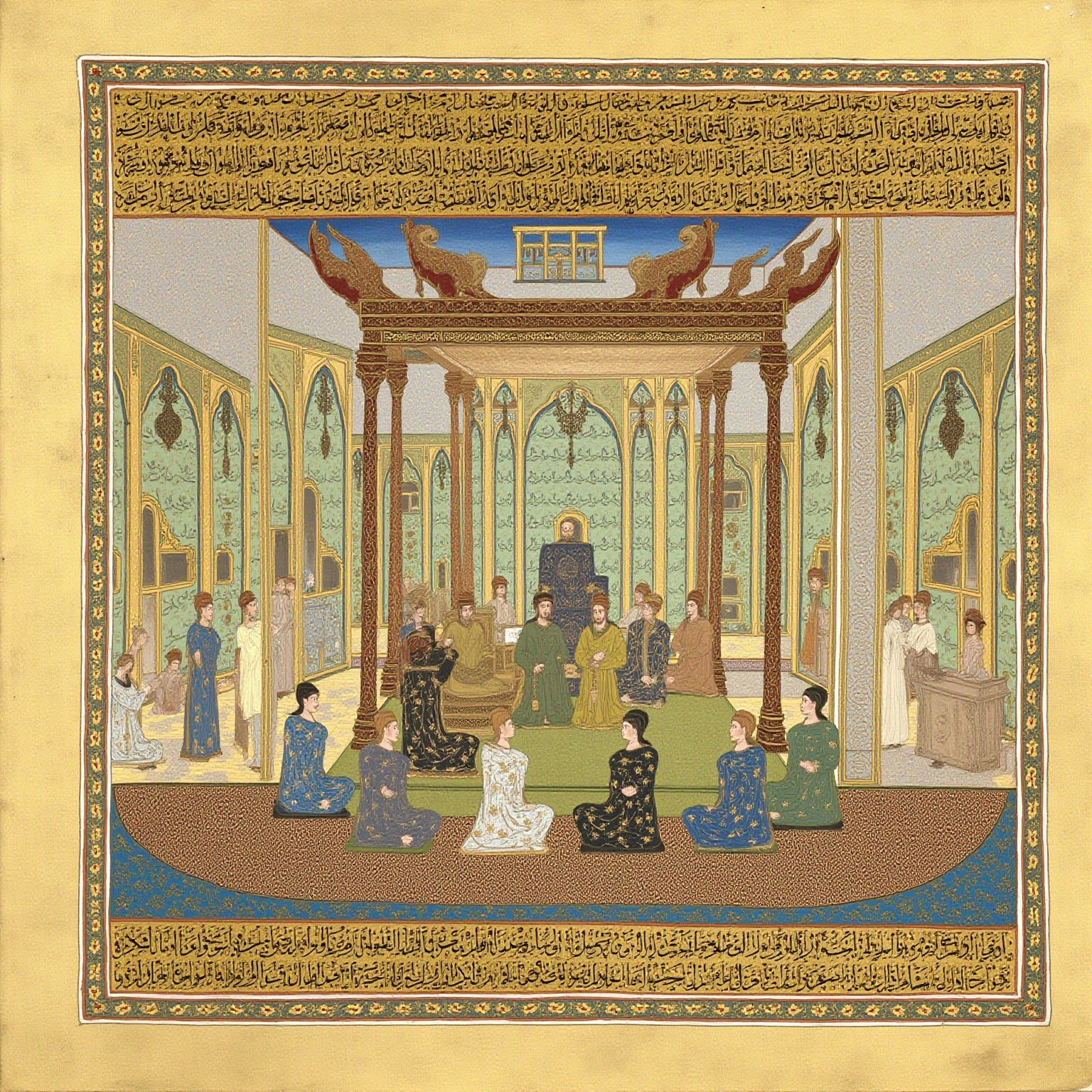
A boy from a Persian tribe is led by the hand into Ecbatana, capital of the Median empire, a city built inside seven walls, each a different color: royal purple on the palace walls, columns of solid gold, roofs sheathed in silver tile. He is barely past ten, sent to keep his grandfather the king company. And to be educated.
The image is itself a metaphor: a young prince from an austere tribe, walking into the most extravagant court in the Near East — and the author names this errand The Education. Written more than two thousand years ago in ancient Greek, the novel turns an Eastern boy's coming of age into the West's first fable of how a ruler is made.
What Kind of Book Is This
The author, Xenophon, was born in Athens sometime in the later fifth century BCE and studied under Socrates. He fought wars, lived in exile, and led the retreat of the Ten Thousand back to Greek soil — yet nothing wrote a political fable more coolly than he did. The Education of Cyrus, composed in the early fourth century BCE, is his portrait of the ideal ruler and one of the sources of the Western philosopher-king tradition. Everything that followed, from The Prince to the manuals for educating princes, still works within the frame Xenophon set for the genre.
It is remembered because it was the first to treat the making of a ruler as a question of political philosophy in its own right. What the boy learns at court, what he endures on campaign, how he puts it to use once he returns home — all of it is laid out in order. It is a novel and a fable at once, a history and a textbook.
Characters and World
The hero, Cyrus, is a young prince of the Persian Achaemenid house; his mother, Mandane, is a Median princess. He is sent to the court of his grandfather, Astyages, king of Media, and grows up there as a grandson among Median princes. The peer who clashes with him most and respects him most all the same is the haughty young prince Sacas; the uncle who fights at his side and later succeeds to the Median throne is Cyaxares — a man the book keeps making look faintly ordinary next to his nephew.
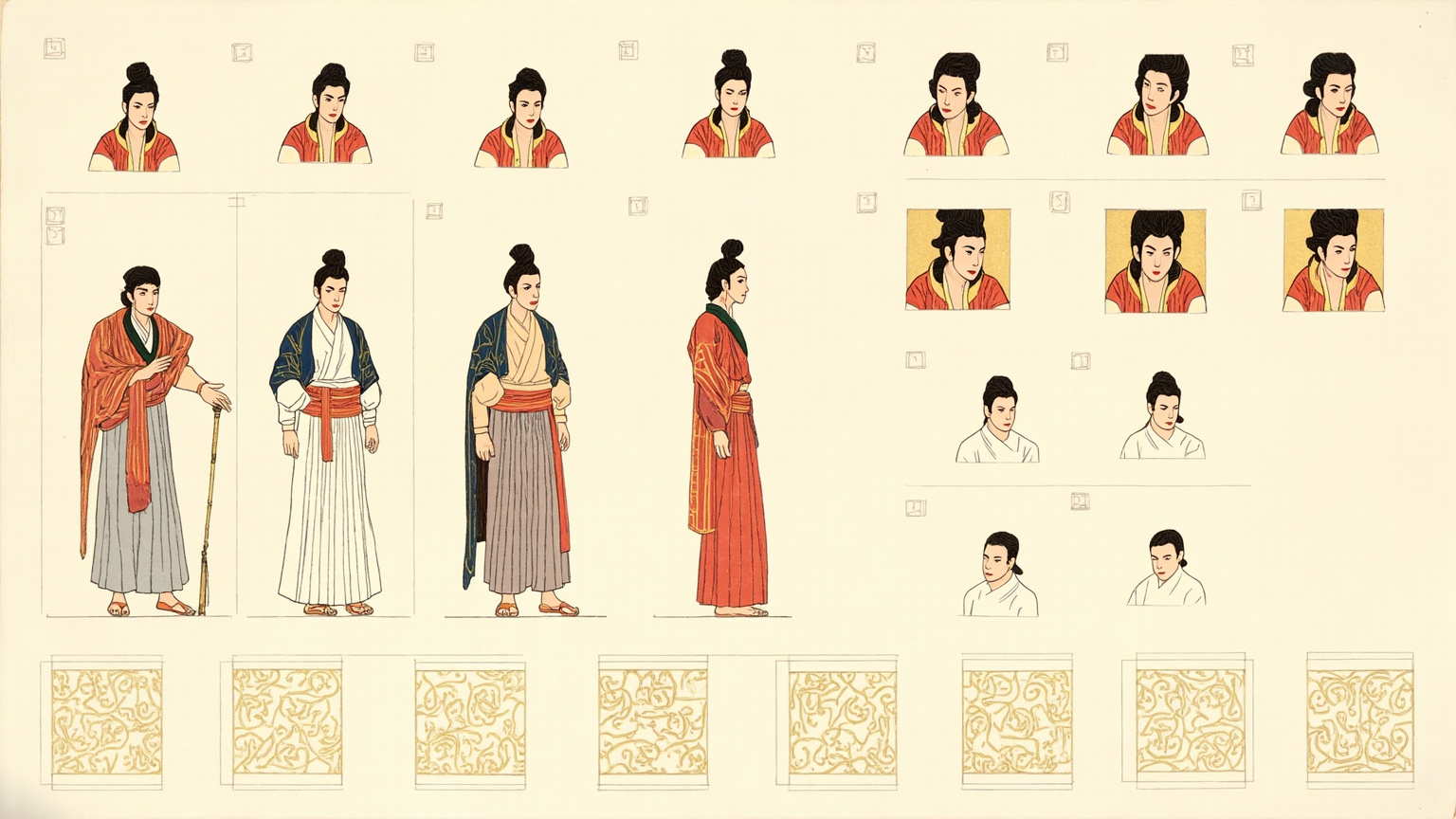
The story moves through two entirely different worlds. The first half unfolds in Media — the seven-walled palace of Ecbatana, purple and gold, elaborate headdresses, ritual and hunting and diplomacy passed around with the wine cups. The second half returns to Persian soil — tents, campfires, tribesmen in crimson trousers, everything plain and martial. The gap between these two pictures is the spine of the whole book.
The Deer Hunt: The Boy's First Test
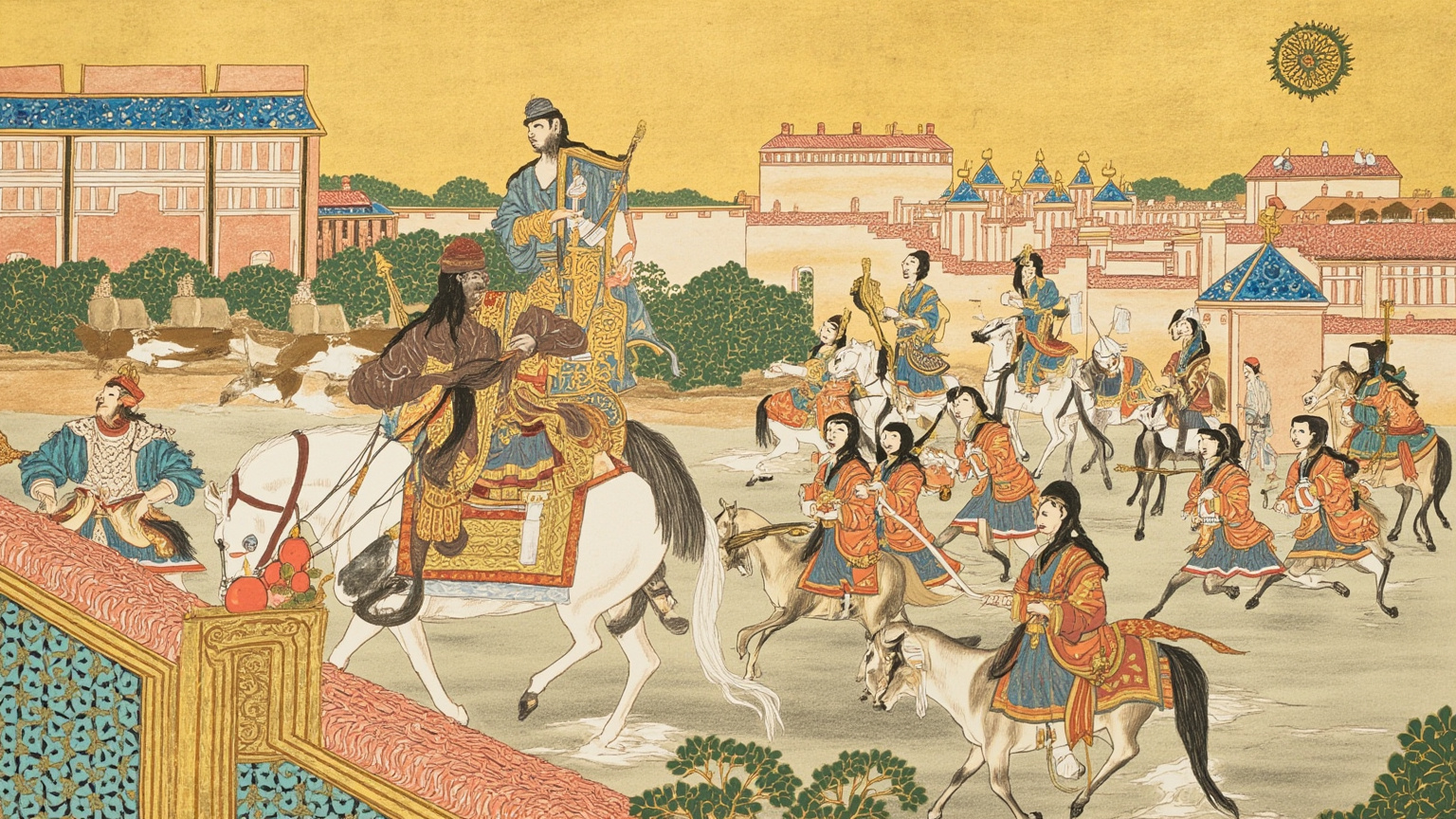
Cyrus's first moment in the Median court comes in a hunt Astyages stages for the boys. Two parties are sent out to run down a single stag, Sacas leading one, Cyrus the other — as much a hunting party as a live test of a boy's command. Sacas grows impatient and spurs his horse straight in. Cyrus holds his line, sends his men forward on foot to close in quietly, and only lets his arrow fly at the last moment. The stag is carried back to the palace, and Astyages hands the prize to Cyrus's side on the spot.
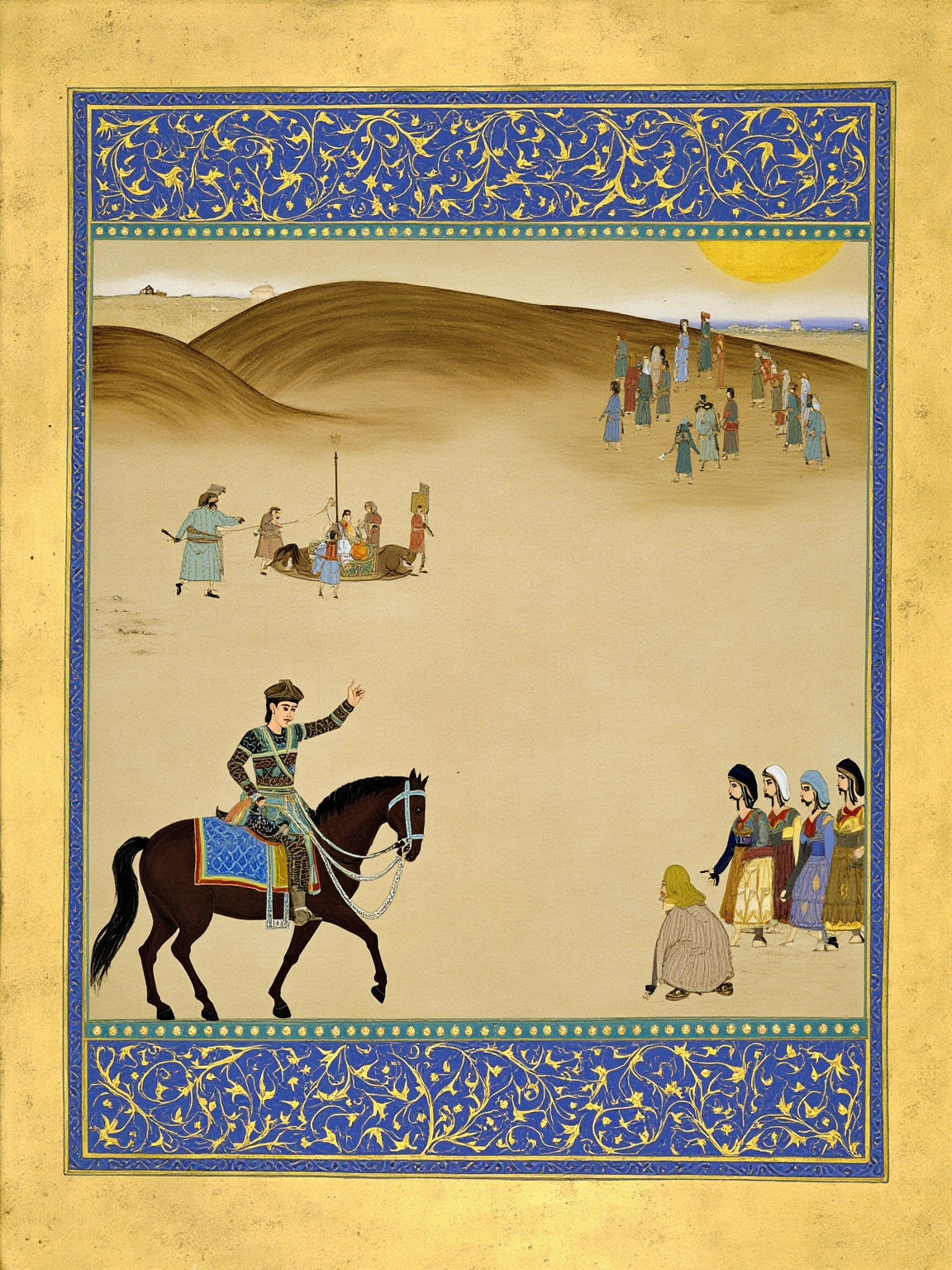
He was thought to be, and was, a king over his companions in boyhood.
他在少年时代便已是同伴中的王者,且人们也如此认定。
金句 · 卷一 · 群猎围鹿
What matters in this scene is not who hit the stag but that restraint is written as a king's virtue. What Sacas loses is not the shot but his temper. That is unusual for Greek literature, where heroes generally win by daring. Xenophon has a Persian boy win his first round by holding himself back.
To War with His Grandfather: Restraint's First Campaign
When Astyages later takes the field in person, Cyrus rides along. It is the boy's first sight of a real army in formation, of envoys, of the dividing of spoils after battle. His uncle Cyaxares holds nominal command, but at the decisive moments it is Cyrus at his side — holding down the urge to charge to the front, going instead to comfort the wounded, giving away the prize Astyages awards him to his uncle's men.
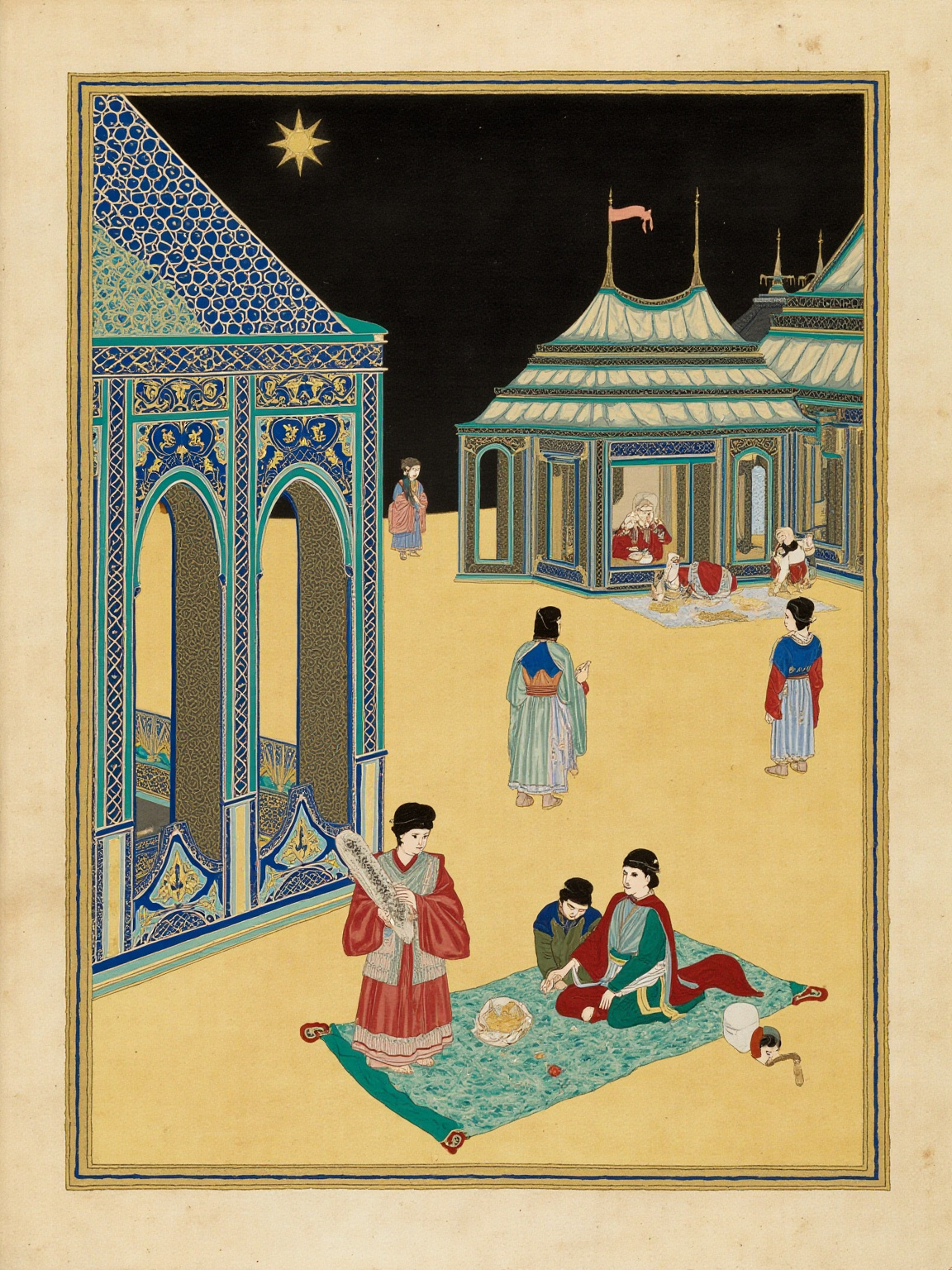
Self-control, he said, was a noble thing, and to be honoured above all else in a king.
节制,他说,是君王身上最值得尊崇的德性。
金句 · 卷一 · 随外祖出征
Xenophon has Astyages praise him for it directly: self-control, foresight, knowing when to yield. This is the first time the book hangs sophrosyne — the core Greek virtue of restraint — on an Eastern boy. In the hand of a student of Socrates, a Persian can hold the most Greek of virtues. The touch is light, but it carries weight.
Homecoming: Luxury Falls Away, Plainness Takes the Stage
A little older now, Cyrus returns to his own Persian tribe. One moment he is a boy against purple palace walls; the next he is standing among leather tents and campfires — a people poor but martial, sharing meat and drink, sitting together to debate, with no gold or purple in sight but a rough kind of equality instead. It is the most dramatic visual turn in the book. Cyrus carries home the manners and tactics of the Median court, and pours his own people's plainness back into himself.
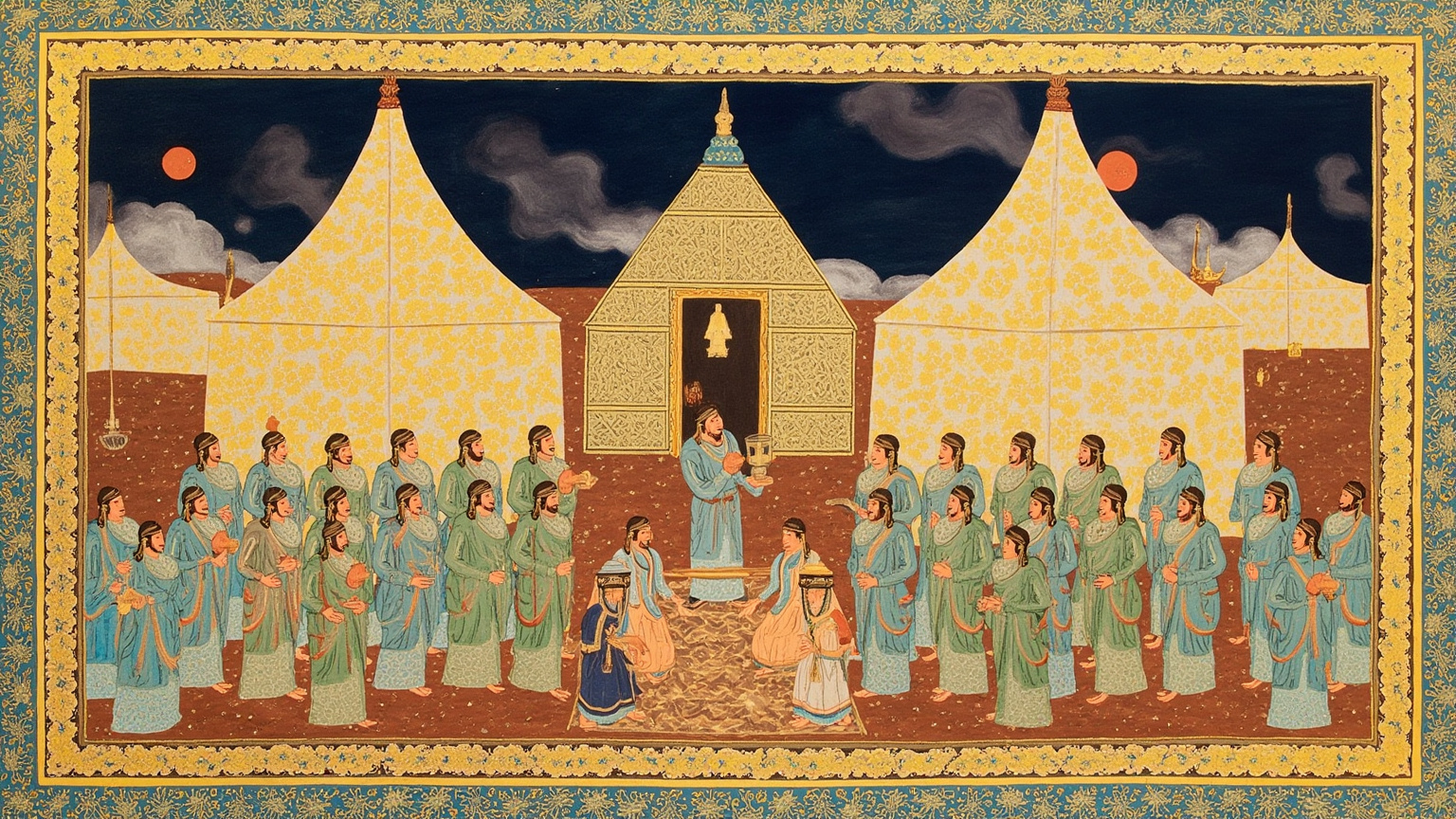
They shared the same cup of wine, and the same table, and the same tent, and the same table—though it was a rougher one now than the gilded one they had left behind.
他们共饮一爵,同帐同席——只是酒器已褪去米底的鎏金,换作了波斯的陶盏。
金句 · 卷二 · 归国
The twelve Persian tribes raise him up as their leader. He picks a bodyguard from among his own age-mates and drinks from the same cup as they do — not as ritual but as habit: the same food, the same ranks, the rewards handed straight down the line. This is education stretched from the court into the art of rule. What he learned in Media about winning people with generosity now becomes a working method of governing.
Conquest on Every Front: Forging Upbringing into Empire
The scene shifts to the battlefield. Cyrus leads the Persian tribes into Media — a war against his own grandfather — and Xenophon writes it with restraint: the Median king is deposed but treated well, the court left unlooted. Next comes the defeat of Croesus of Lydia, the king legend made rich enough to bathe in gold, and then the siege of Babylon. Through it all Cyrus keeps veteran Persian elders at his side as counsel; the balance between storming a city and receiving its surrender is a matter of judgment, not the sword.
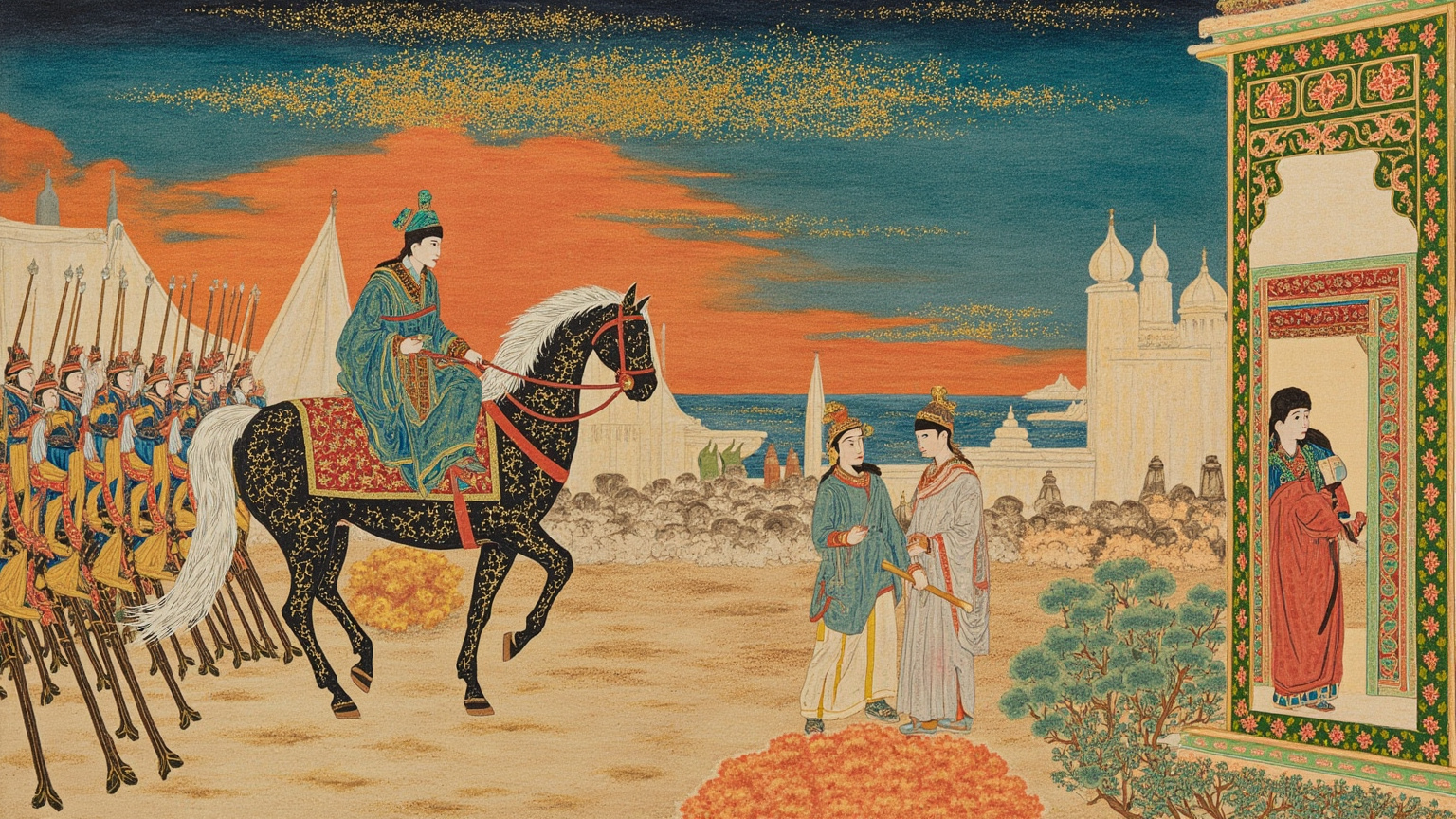
For to be loved, he said, was the surest pledge of safety, and to love, a nobler reward than to be loved.
得人之心,他说,是最稳的保障;而能爱人之心,比得人之心更贵重。
金句 · 卷四 · 南征北讨
The craft shows itself here: Xenophon is stingy with tactical detail and generous instead with how to treat prisoners, how to settle those who surrender, how to give every commander his due. What he writes is statecraft, not battle — a completely different road from Herodotus, who piles up one marvel after another.
Statecraft: Order After Conquest
Once the empire takes shape, Cyrus does not sit back to enjoy it. He divides the vast territory into provinces, keeps competent local officials in place, and replaces only the top commanders. Every man who served him is rewarded, but none is allowed a private army. None of this is warmth — it is politics. He stitches together what he learned about winning loyalty at the Median court with the martial plainness he brought back from his own tribe, and turns it into a governing method that can be repeated.
Remember that the king is one who rules men, not one who lords it over slaves.
要记得,君王的本分是治人,不是役奴。
金句 · 卷八 · 临终训示
Through Cyrus's mouth Xenophon states his own creed for the ideal ruler: others first, himself second, reward and punishment kept exact, the state held as a duty rather than a possession. It is a seed of Greek political philosophy planted inside an Eastern fable.
Themes and Craft: Why Restraint Is a King's Virtue
One Greek word runs through the whole book: sophrosyne. It is not abstinence — it is knowing when to hold your hand, when to give ground, when to think of others first. Cyrus holding back on the hunting field is sophrosyne; giving away his prize is sophrosyne; sharing power with those who surrender is sophrosyne too. Xenophon stacks this one virtue onto scene after scene until the reader cannot miss it.
A rarer theme is civilizing through manners exchanged both ways — the Persians learn ceremony and tactics from the Medes, then thin out Median extravagance with their own plainness. This mutual East-learning-from-East motif is uncommon in Greek writing; most texts of the period paint the East as either decadent or despotic, but Xenophon lets the current run in both directions.
In form it is quasi-history — history on the surface, fable underneath. Xenophon never pretends this is fact; what he wants is a biographical model of the ideal ruler. So there is no need to check each battle against the record — just follow Cyrus from scene to scene and watch where he holds back and where he acts. It is the earliest source text in the West for a political philosophy of childhood and youth.
More than two thousand years ago, Xenophon made mastering yourself the first lesson of kingship — and in a coming-of-age novel today, that lesson still holds.
Why the Text Is Still Worth Reading Once You Know the Plot
The plot is only the skeleton. What this book cannot really be replaced by is the particular restraint Greek writers brought to an Eastern court — laying out a hunt, a council, a deathbed charge in relief-carving strokes, giving no more than they have to, so the image holds harder than anything painted in heavy color. Only by opening those spare, old passages yourself can you feel that aftertaste of having said everything while seeming to say nothing. Read the guide and you get the arc of a clever boy's growing up. Read the text itself and you get a Greek philosopher's unresolved question, asked again and again: what kind of person deserves to rule another.
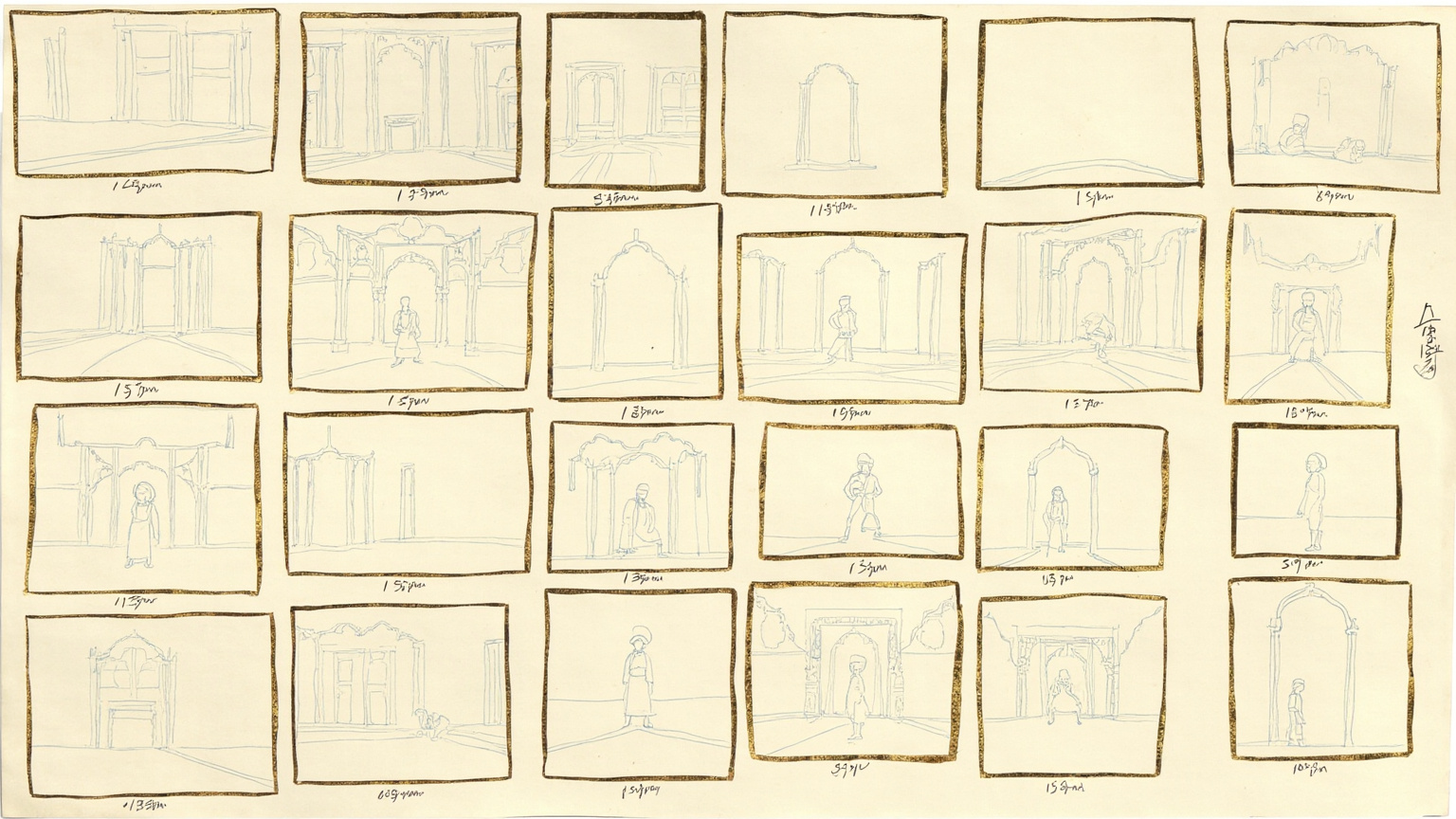
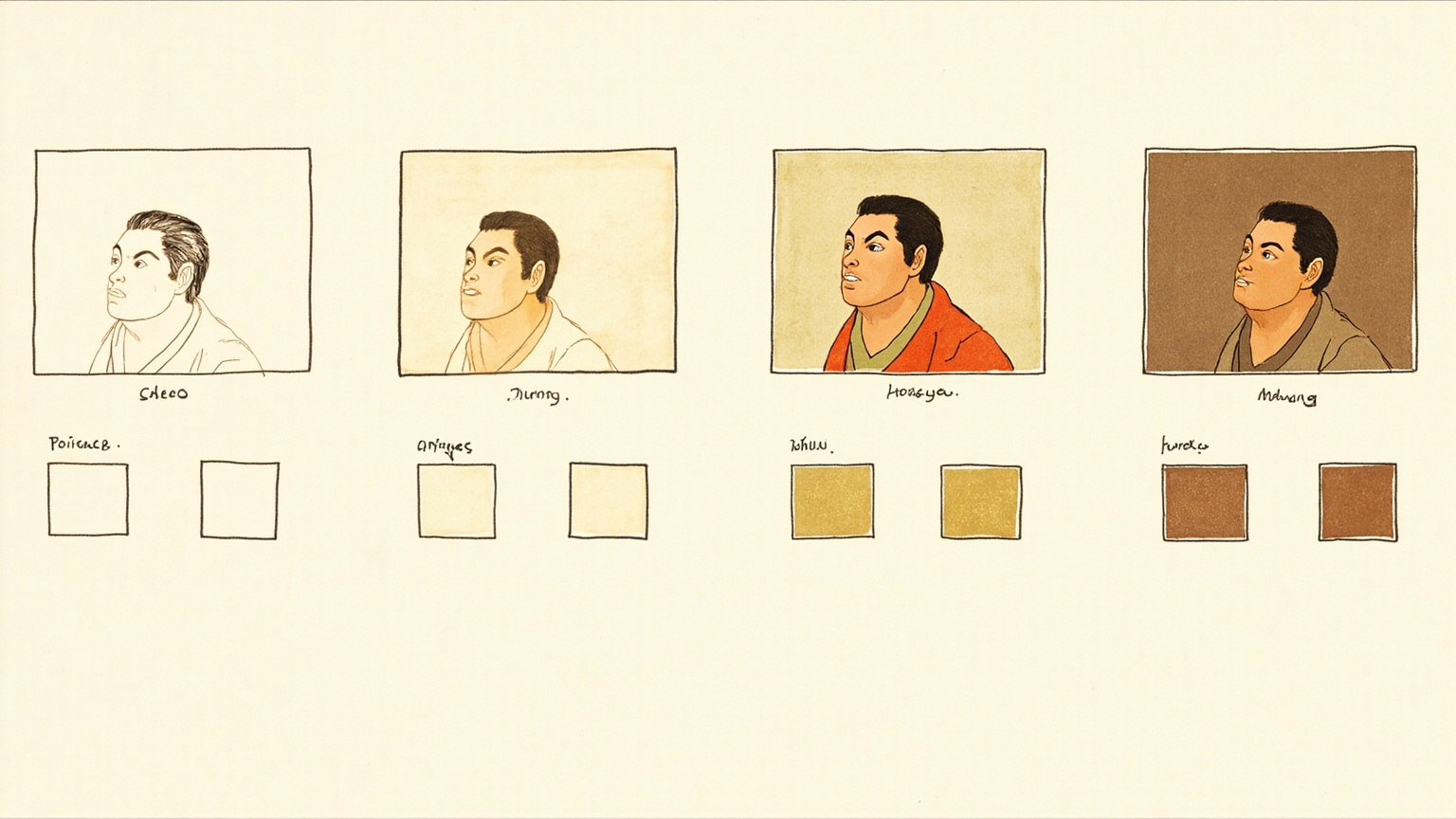
Art Direction4 plates
Before the guide was written, this book got a visual foundation — every illustration you just read grew out of it.