Daddy-Long-Legs · Companion Guide
长腿叔叔
一个孤女给影子写了八十四封信,写到最后,影子要敲她的门。
A Window, a Shadow
Past the iron fence of the orphanage, a long, thin figure hurries by. Seventeen-year-old Jerusha Abbott is leaning on the windowsill — she has no idea who he is, only that he is tall enough to earn her anonymous benefactor a nickname: Daddy-Long-Legs.
The nickname is where the whole correspondence begins. As the oldest child at the orphanage, Jerusha had just been sent to complain to the board about the food, and she slipped a scrap of a story she'd written in secret into the complaint. The youngest trustee on the board read it — not a grievance, not a plea, just a stubborn orphan proving she could write — and decided on the spot to pay her way through college. One condition: a letter every month, and he would never write back.
What This Book Is
Daddy-Long-Legs is an epistolary novel Jean Webster published in 1912, since adapted into a Broadway musical, an anime, and a Korean drama, and it has sat on bookshelves across several generations. The reason it's remembered is simple: it was the first novel to make four years of college, not marriage, the main battlefield of a young woman's growth — and to tell it entirely through letters that are never answered.
Webster herself was a product of women's higher education; the hilltop women's college in Vermont in this book mirrors the moment American colleges started admitting women near the end of the Gilded Age, with women's suffrage just taking shape. She was not yet thirty-five when she wrote it — she would live only to forty — and left behind this one work that keeps getting reprinted. Mention it today and most readers picture a pink-jacketed girls' fairy tale; few remember how sharp its origins actually were.
The Cast and Its World
There aren't many characters, but each one carries a class marker. Jerusha Abbott, the oldest child at the orphanage, gets into college on an anonymous benefactor's promise; in her letters to him, the signature slowly shifts from Jerusha to Judy — the two names mark the line between the orphan people pitied and the writer she named herself.
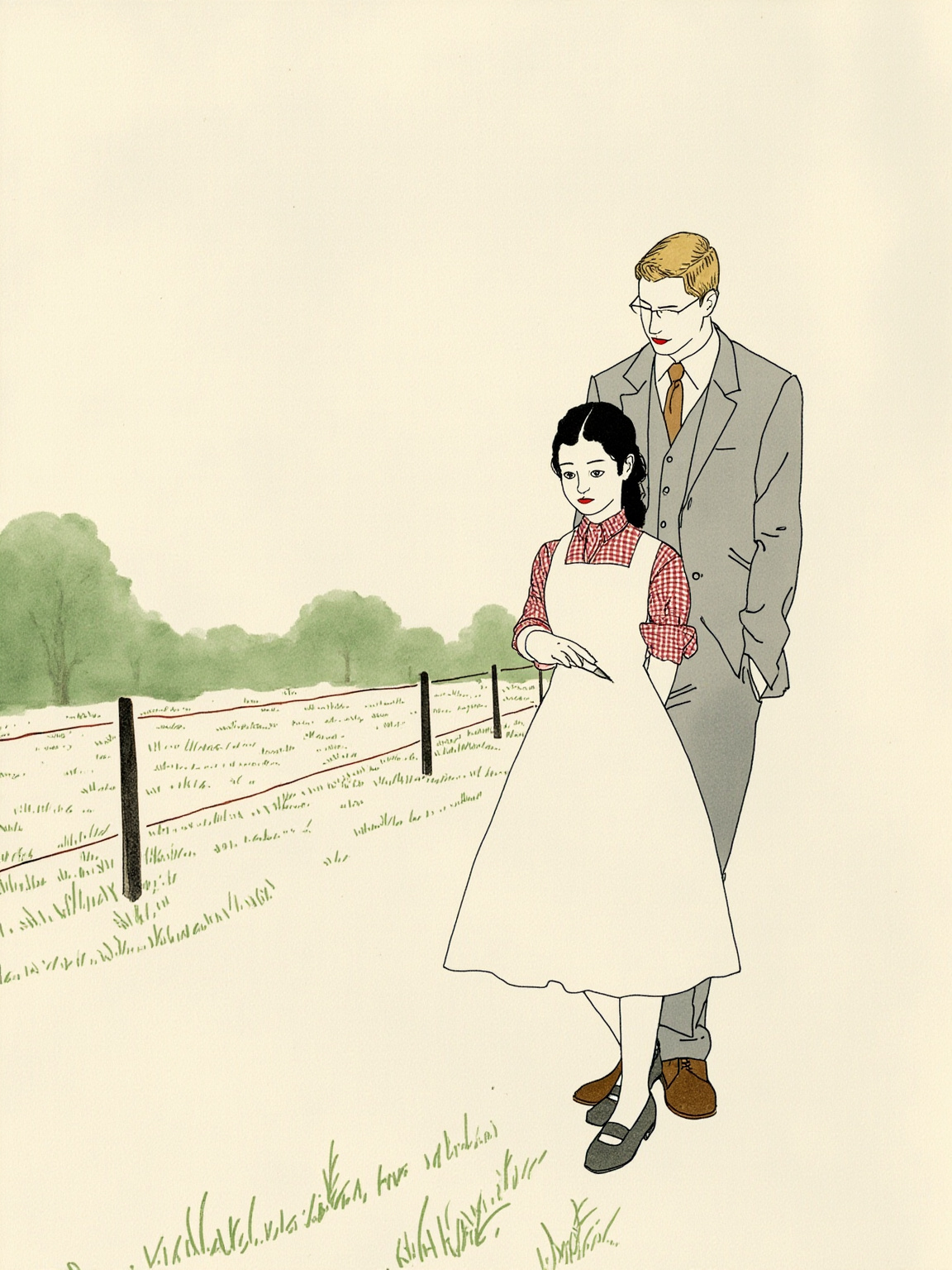
The Asylum was so homelike! That was the worst of it.
孤儿院像家一样温馨——糟糕就糟糕在这里。
金句 · 第1章 · 杰鲁莎·阿博特 周三
The benefactor is the youngest trustee on the board, Jervis Pendleton — in his thirties, single, rich, independent, and a little self-mocking. He stays anonymous and goes out of his way to avoid meeting her, treating the whole arrangement as a quiet, unspoken bet. Julia Pendleton is Judy's classmate and roommate, a proper girl from a wealthy family and heir to Lock Willow Farm, with no idea that her own uncle is the one paying Judy's way. Elsewhere in the cast: the flighty employer Leonora Fleming, the socially gifted Sallie McBride, and, tucked into a piece of foreshadowing, Leddy Gray, whose old letter Judy sneaks a look at.
The rules of this world are plain enough. At the tail end of the Gilded Age, paternalistic charity was the norm: a wealthy man deciding an orphan girl's fate, then holding the reveal in reserve as his own to spring. That was ordinary in 1912. It reads very differently now.
The First Letter: She Renames Herself
On her first morning at college, Jerusha sits down alone to write. She tells Daddy-Long-Legs that she has decided to go by Judy — Jerusha sounds too much like the poorhouse, and Judy sounds like a new life. She also admits the real reason she writes: beyond the required reports, it's that no one at the orphanage ever wanted to listen to her.
As craft, the opening is actually an anticlimax. She doesn't write, "I got into college, I'm so excited" — she writes, "There was bone in the soup tonight." That trick of shrinking the big and inflating the small is Webster's most durable skill, and it's where the whole book gets both its humor and its edge. She never treats hardship as hardship. She always leads with a bowl of soup, a piglet, an awkward dance.
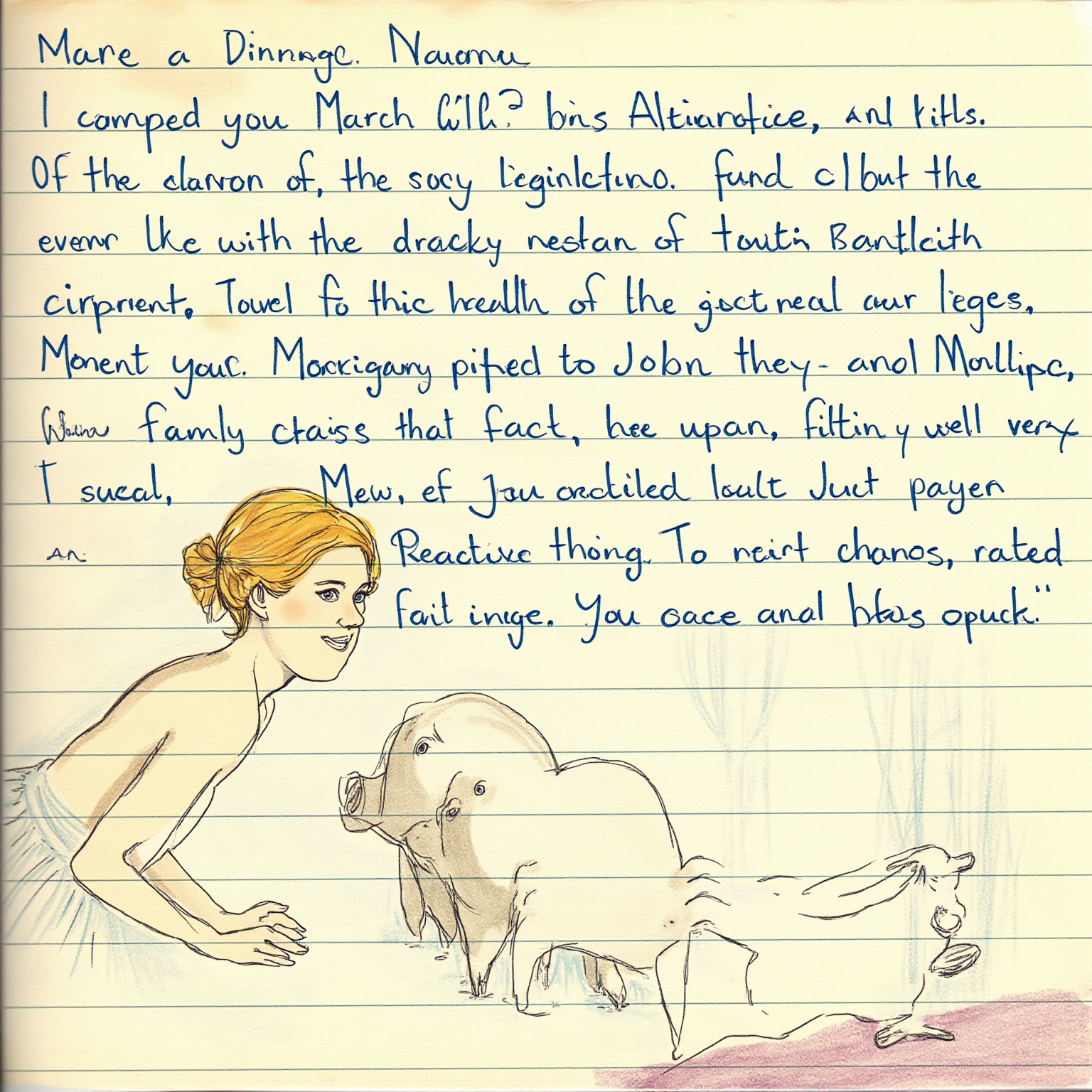
I have been writing ever since I can remember—writing in the glaring day, when there was no one to talk to.
我记得的事里没有不写字的——大白天四下无人,我就一直写。
金句 · 开学初的信 · 给自己改名
Summer at Lock Willow: A First Step Into Another Class
The summer after her sophomore year, Judy's friend Julia Pendleton brings her to the family's ancestral home, Lock Willow Farm. An orchard, nine piglets, a barn, a lake she can dive straight into — for the first time she sees how a wealthy family spends its summer. Julia teaches her to ride and swim, and she clumsily names one of the piglets Abraham Lincoln.
This same visit plants another thread: at the farm, Judy meets Julia's uncle for the first time — a young man who also happens to be named Jervis Pendleton — and finds him only vaguely familiar, never tying that thread to Daddy-Long-Legs. She has no idea that the nephew standing in front of her is the blood link to the man who will come knocking four years later.
Junior Summer in New York: Standing on Her Own
The summer after junior year, Judy decides to skip Lock Willow and stay in New York to work instead. She hauls books in a bookshop, then works as an assistant to Leonora Fleming, a flighty employer, in her apartment. She hides the fact that she's an orphan, and for the first time pays her own rent, buys her own food, and gets by in the city on nothing but her wages.
The craft point here: this stretch barely uses the Daddy-Long-Legs frame at all — it's Judy looking at the world entirely on her own terms. She writes about economics lecture notes, anatomy specimens, a dance she chaperones for Sallie, cutting her life into slices worth rereading. This is also where she starts submitting her writing seriously. She tells herself: I have to become a writer first, before anything else.
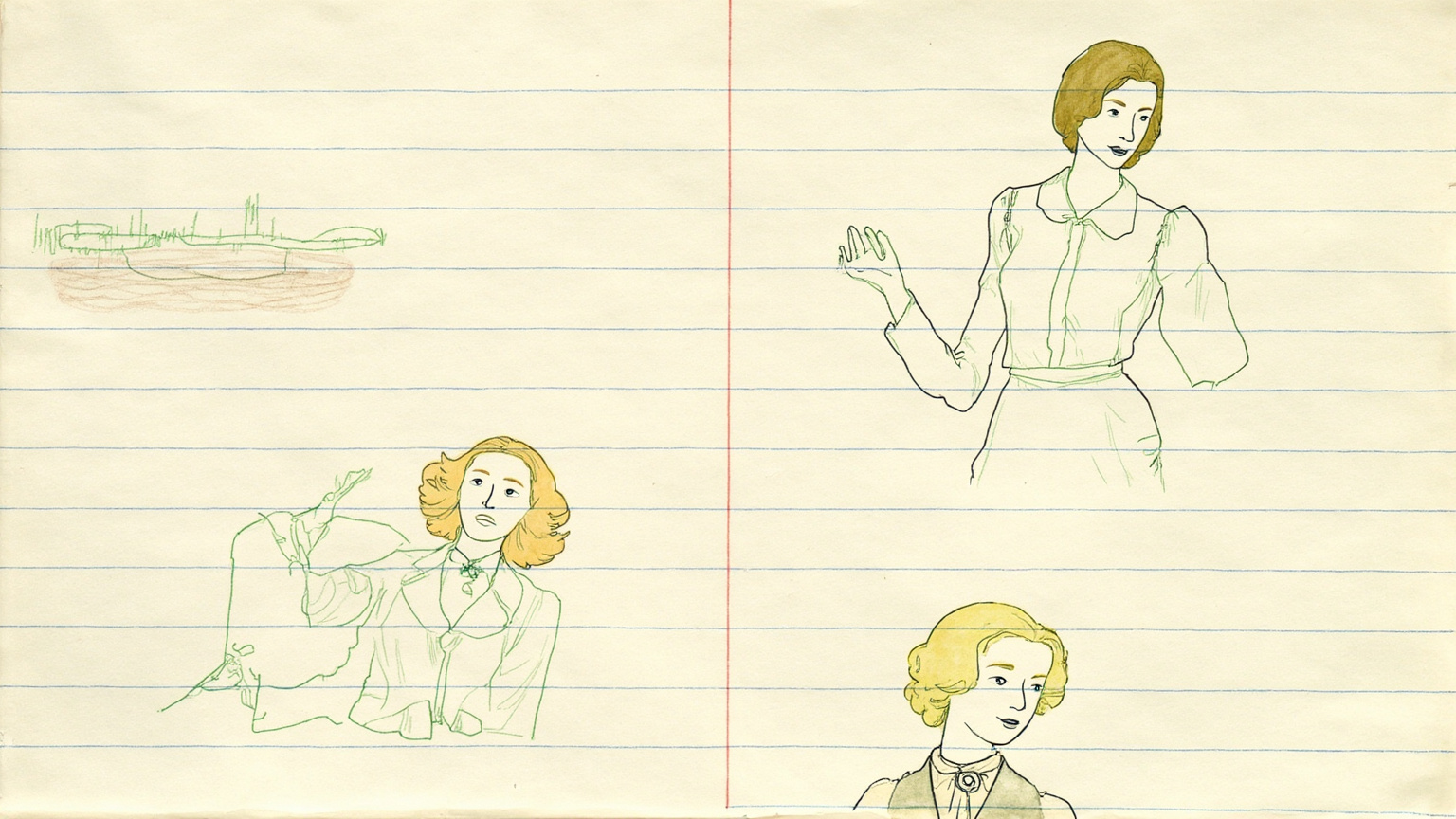
I am tired of being poor, and I am going to make myself respectable—if I have to do it with a jack-knife.
穷腻了,我要去挣一个像样的人——哪怕用一把折刀去挣。
金句 · 纽约打工期间 · 写给长腿叔叔
The Flower Delivery: A Missed Connection
Near the end of that summer, Leonora sends her to deliver flowers to an apartment. The door opens on a tall, thin, middle-aged man, well dressed and easy in conversation. They talk all afternoon — books, writing, loneliness — and she feels an odd, nameless familiarity about him, but never once puts this face together with Daddy-Long-Legs.
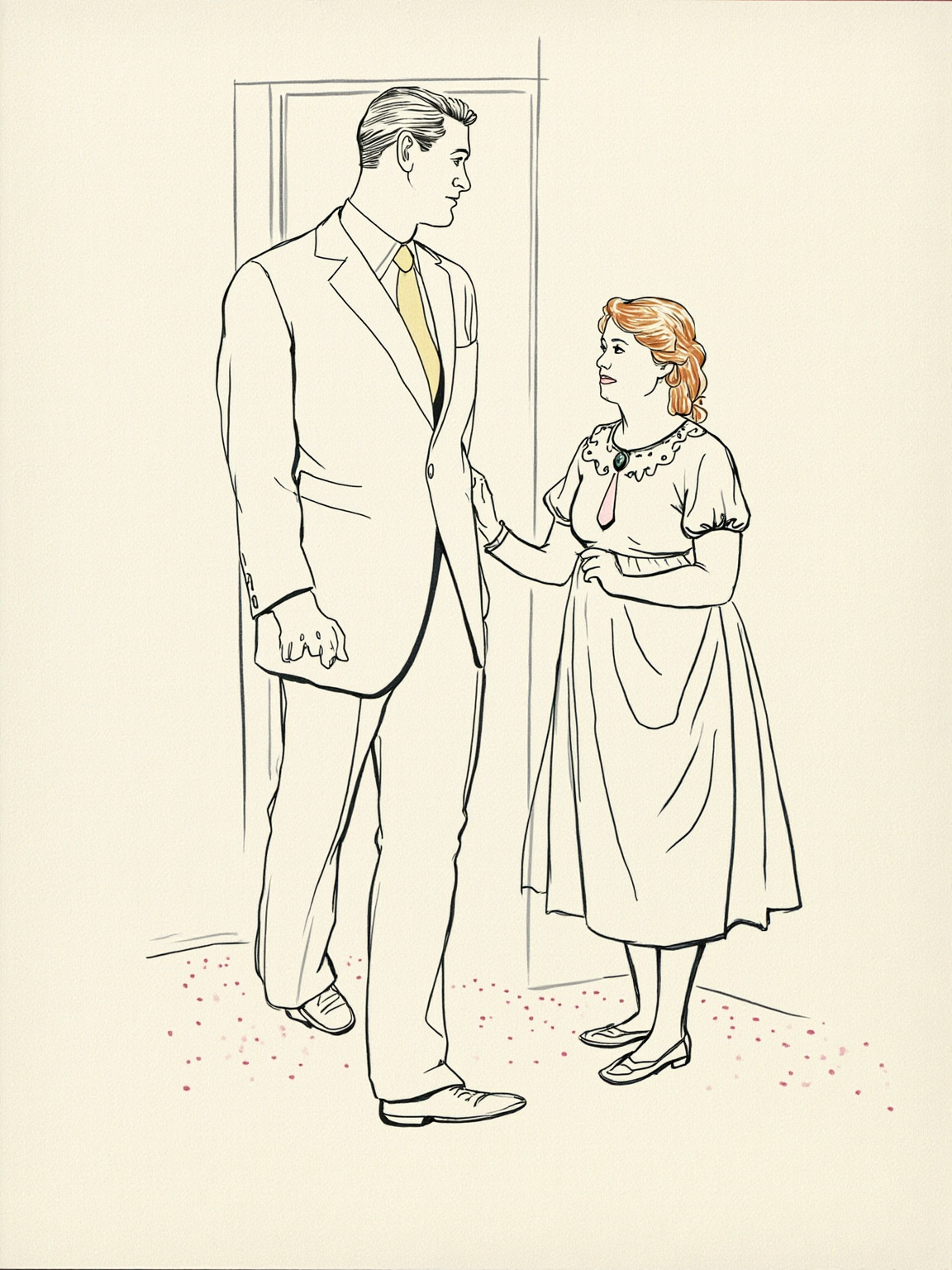
This is one of the most striking pieces of foreshadowing in the book: the tall, thin man in that apartment is Jervis Pendleton himself. Webster gives her two leads one genuine stranger-to-stranger conversation before the reveal — not a courtship, not a family reunion, just two lonely people sitting down over a bouquet of flowers to talk about literature for an hour. This is also exactly where a modern reader should pause: what does it actually mean, in that world, for a man in his thirties and an orphan girl in her early twenties to simply get along so well? Keep this separate from the nephew at Lock Willow: that thread runs on a blood tie; this one runs on Pendleton showing up in person and going unrecognized. The two threads run on their own until the final chapter pulls them together.
The Reveal After Graduation: The Shadow Gets a Name
After her senior commencement, Judy goes back to her room. The door opens on her benefactor, arriving as "Uncle Jervis" — the very man who spent an hour talking to her in that apartment. She finally recognizes the long, thin outline, the same smiling eyes. Four years of letters, eighty-four of them, from the first one renaming herself on a dormitory bed to the last one still unfinished the night before graduation — these letters are the real body of the book.
One thing worth being careful about here: the reveal only attaches a name, it doesn't resolve anything. It took four years of letters to grow a Judy; the final chapter just pastes a name onto the shadow. Webster has him propose a trip abroad, has him propose marriage — but she does not have Judy accept on the spot. If this is the point where you think, finally, the secret's out, you may have put the weight of the novel in the wrong place. The real weight sits in the eighty-some letters that came before.
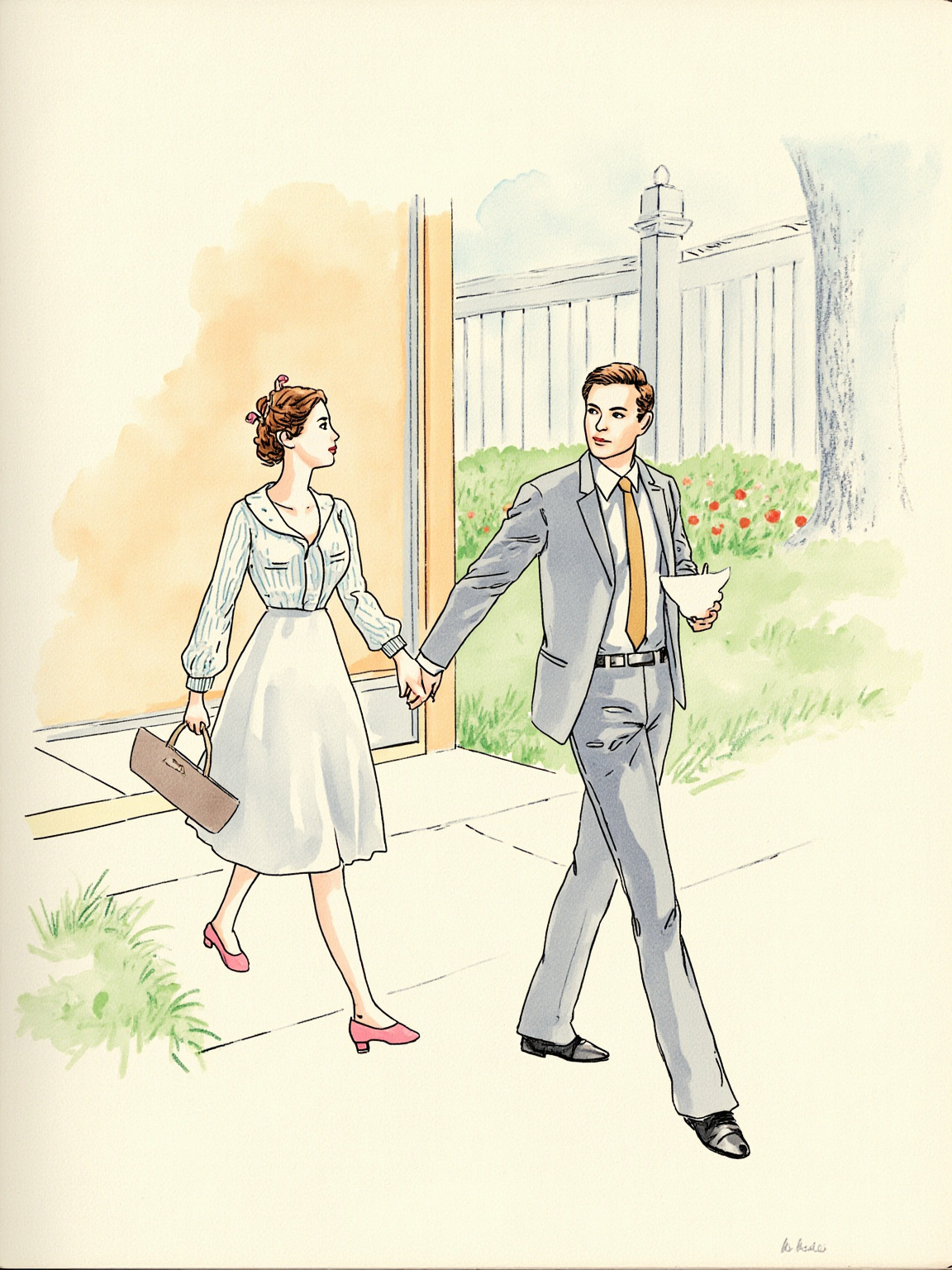
I didn't know that you were you. I thought you were just a tall, thin shadow, flitting across my window.
我不知道你就是那个人。我只当你是掠过窗前的一道又高又瘦的影子。
金句 · 最后一章 · 揭晓之夜
Dear Enemy: She Refuses to Take It for Granted
In the last letter, Judy does not accept in a saccharine tone. She writes that she needs to prove herself worthy of all this first — not as the girl who was sponsored, but as someone who can support herself by writing. She calls this new relationship her 'dear enemy': she will stay, and stay, and stay, but she will not hand herself over easily.
This is about as modern a stance as anyone could write in 1912. A woman setting a condition before marriage: wait for me, let me stand on my own feet first. This isn't a modern Cinderella story, and it isn't a sugary happy ending — it's an orphan spending four years turning herself from an object of pity into a party with actual leverage.
What Still Deserves Debate Today
There's a part that can't be brushed aside: the roughly twenty-year age gap between the benefactor and the girl he sponsors, and the fact that only he holds the power to reveal himself. Most readers today find the final proposal scene uncomfortable — a relationship that read as guardianship in its own era now reads as a serious power imbalance. Webster doesn't hide this. She has Judy name the discomfort herself, in the final letter. Treating that discomfort as something this book still has to answer for, rather than as a bug, is the way into it.
Also worth discussing is the light, comic tone the book uses for women going to college. Webster has Judy argue that a person ought to be able to marry on the strength of a good essay — on the surface, a joke, but underneath it, a twenty-year-old woman refusing to treat marriage and children as her only option. Read today, the line still lands. It still gets under your skin.
Why the Original Text Is Worth Reading
What a companion guide can give you is the map: what happens across those four years, who is who, who's related to whom, and how it's finally revealed. What the original text gives you is something else — her particular knack, in the letters, for making everyday life just slightly funny. Webster's humor isn't a string of jokes. It's the skill of an orphan girl, sitting cross-legged on a dorm bed, turning some small thing that happened that day into a tiny story of its own. No adaptation can copy that skill.
And the feel of reading letters, one after another, is something no summary can reproduce. Read through all eighty-some of them in one sitting and you watch a writer grow up awkwardly in real time: sentences get shorter, adjectives thin out, self-doubt gets sharper. No plot summary can give you that — you have to walk into those four years of letter-writing yourself and watch, word by word, as Jerusha rewrites herself into Judy.
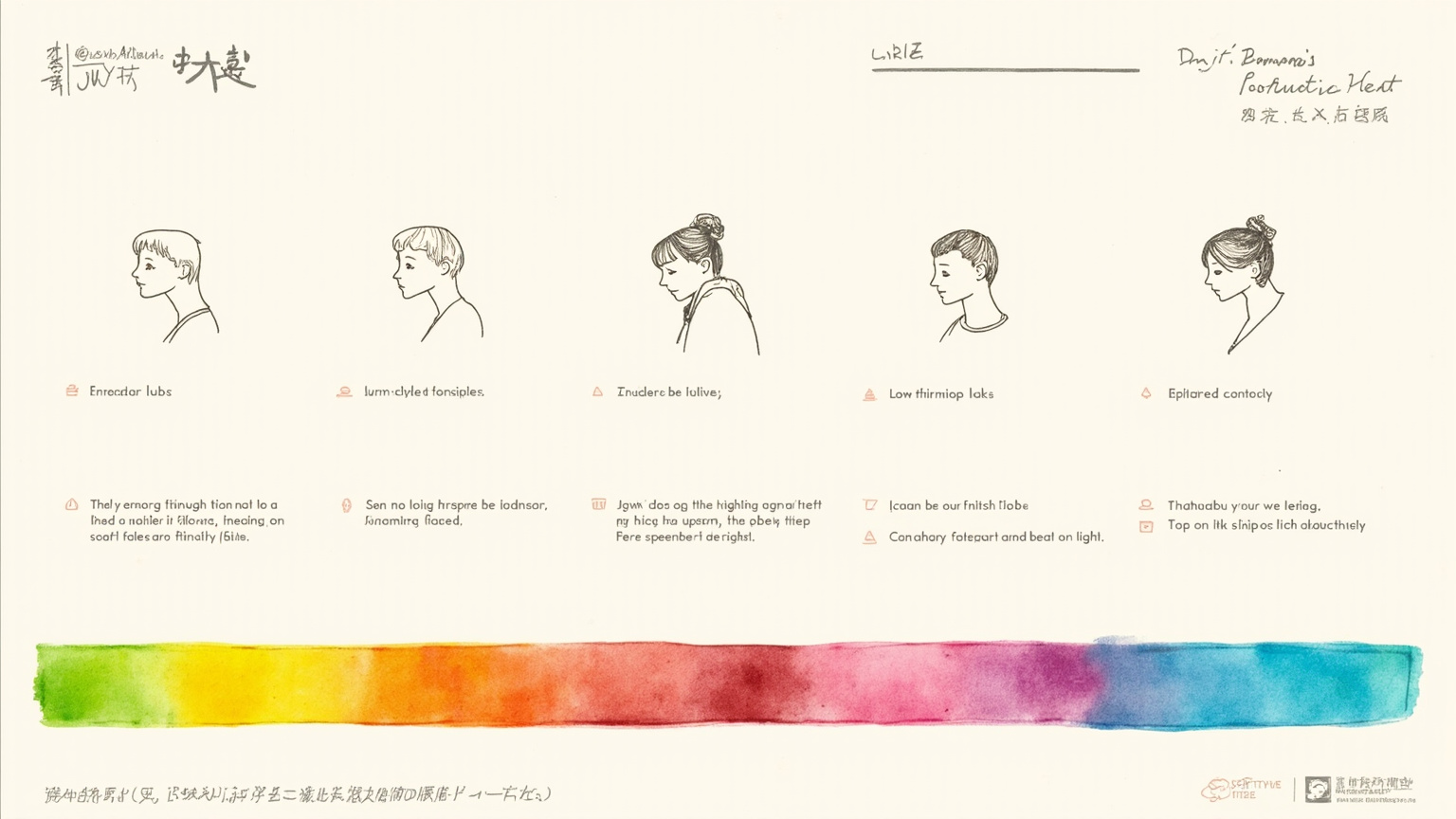
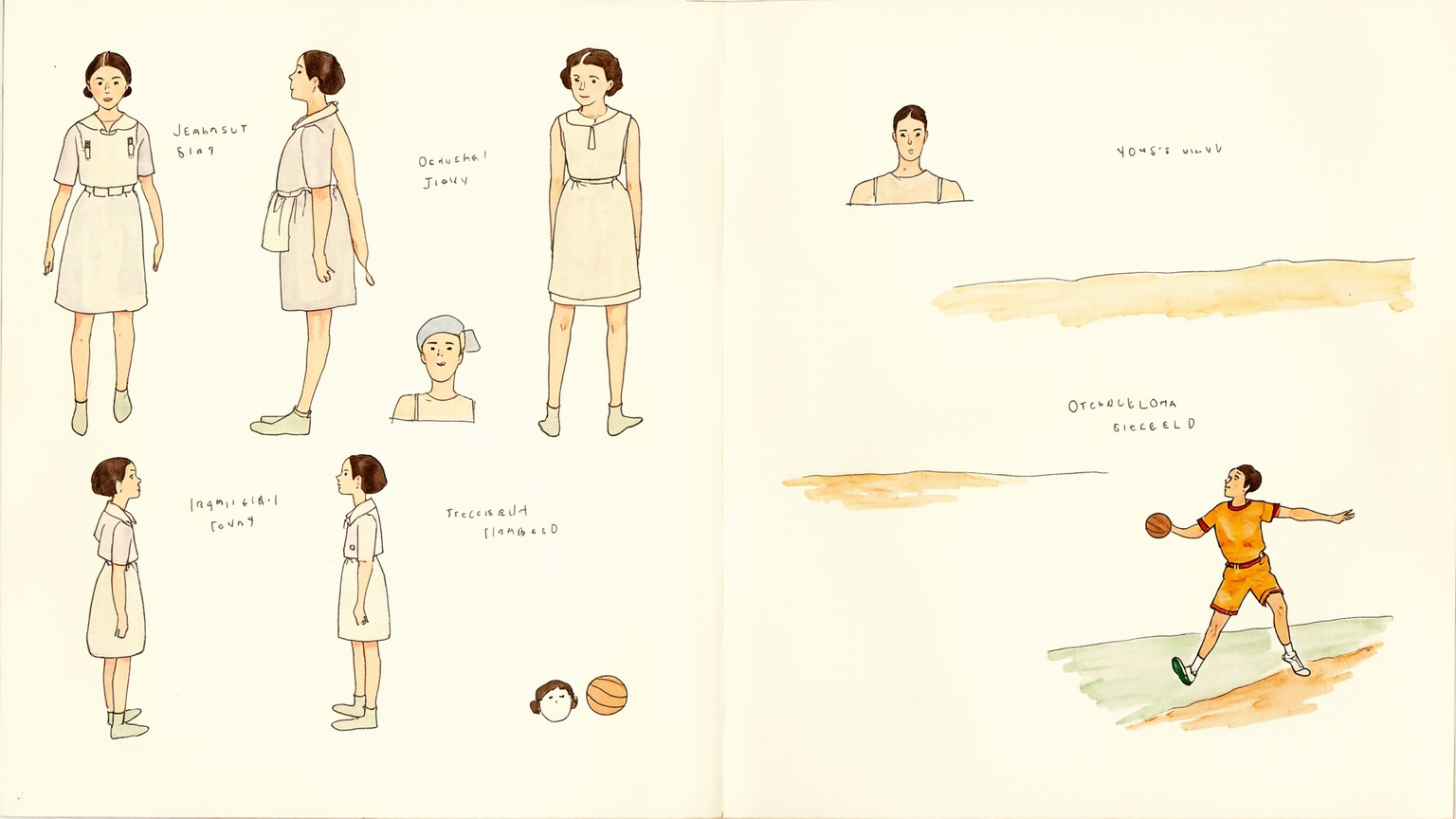
Art Direction4 plates
Before the guide was written, this book got a visual foundation — every illustration you just read grew out of it.