One man's verdict on the first half of his own life
Text and illustrations produced by the pipeline

On the fifteenth night of the seventh month, Zhang Dai went to West Lake to watch the moon, but he watched it differently from everyone else — he was not looking at the moon. He was looking at the people who had come to look at the moon. He sorted them into five kinds and studied each one in turn, more carefully than he ever studied the moon itself. Only after the noise on the shore had died down did he row out to the middle of the lake and look at a moon with nothing else in the way. A man who watches like that does not write a noisy chronicle.
Dream Memories of Tao'an came from the brush of Zhang Dai, born into wealth in the last years of the Ming. After the dynasty fell, he let his hair grow wild, retreated into the hills, and wrote in poverty, rescuing the first half of his life from memory one entry at a time, then passing judgment on it one entry at a time. He wrote it in middle age and after, around the mid-seventeenth century: a memoir in short prose pieces from the turn between the Ming and the Qing. Its place in Chinese classical prose is close to what Tsurezuregusa and Hojoki hold in Japanese letters — it records splendor and it records ruin, both in the shortest, most disciplined strokes. Watching Snow at the Mid-Lake Pavilion, the piece every Chinese schoolchild reads in a textbook, comes from this book.
This book has no protagonist in the usual sense, only one rememberer, one judge: Zhang Dai himself. He is the rich man's son who once sent a servant up a mountain at midnight carrying a chest of opera costumes, woke the monks of Jinshan Temple, staged a play, and left before they could even reply. He is also the old man in the hills, in coarse cloth in a broken house, waking to a rooster's crow with his head still on the pillow. The whole book is the comparison he draws between the first half of his life and the second.


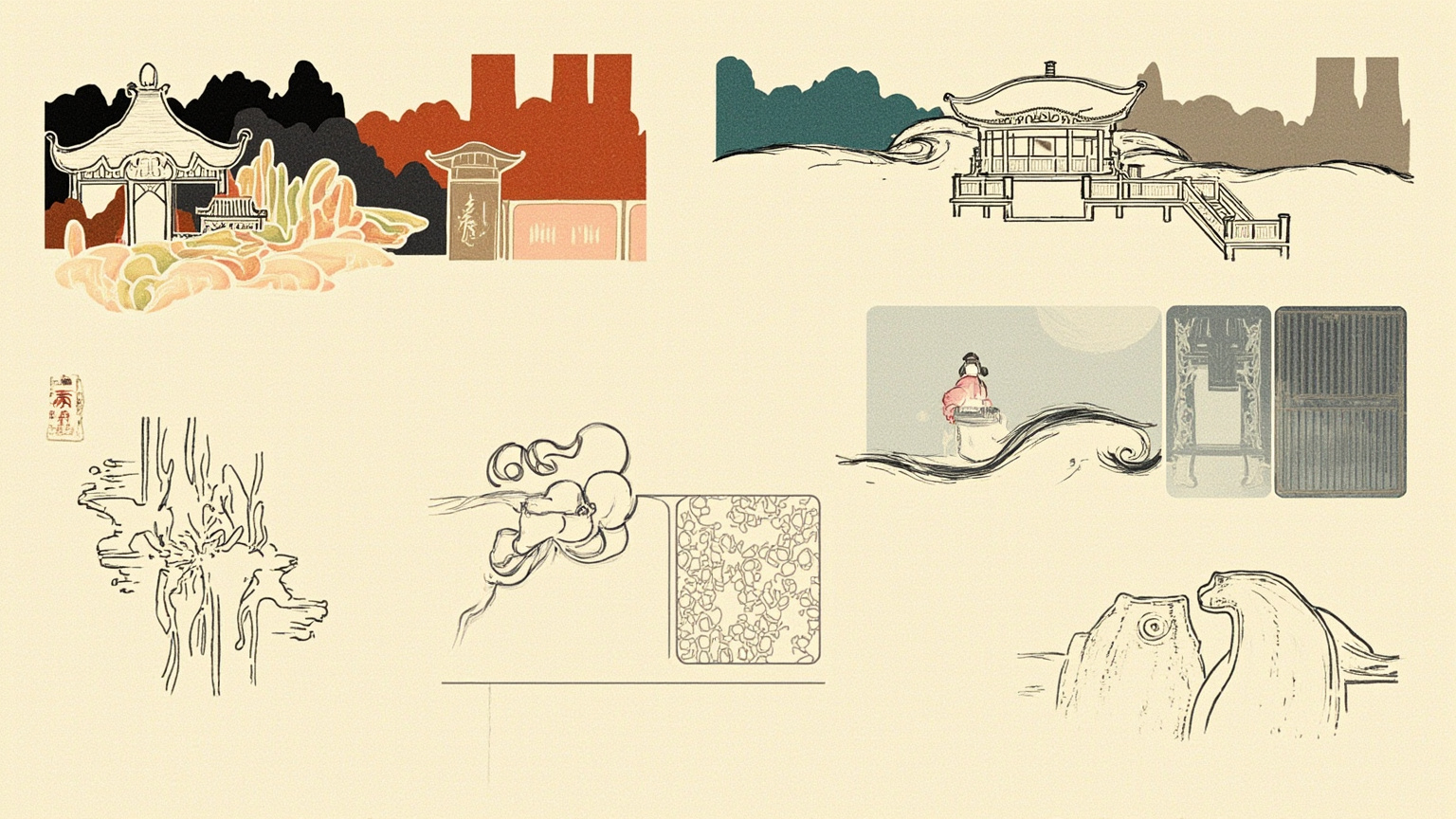
Before the guide was written, this book got a visual foundation — every illustration you just read grew out of it.


Around this central rememberer stand groups, not individuals: the five kinds of people watching the moon at West Lake on the fifteenth of the seventh month, the monks at Jinshan Temple jolted awake by gongs and drums, the boys running together through Shaoxing's lantern-festival streets, the fellow diners at the crab feast who insist a proper dish carries all five flavors at once, the friends who share an extra Mid-Autumn Moon with him when a leap eighth month gives them one and compose linked verses by its light. None of these people are characters. They are specimens Zhang Dai sorts, mocks, and fixes in place — he is always subtracting, writing an age at its fullest even as he teaches the reader how to take that fullness apart.
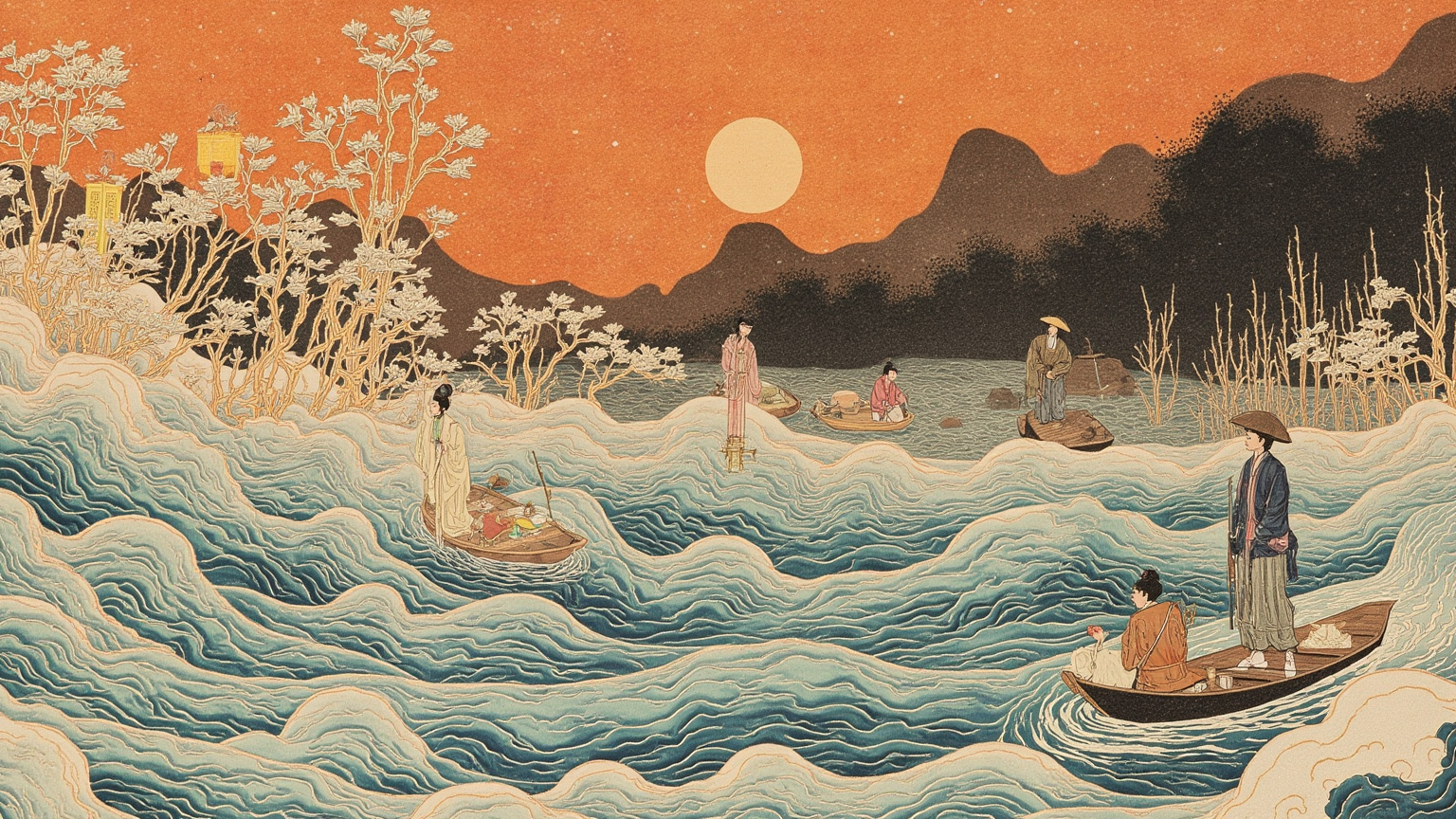
West Lake, Fifteenth of the Seventh Month is where the book opens. Zhang Dai sorts that night's moon-watchers into five kinds: grandees on tower boats with flutes and drums and tall official caps, refined men in small boats with light curtains, clean tables, and warm braziers, loud townsmen with wine and singing girls urging on the music, poor people with no boat and no cart, thin coats, just there to look, and hermits tucked into a small boat under the trees by Broken Bridge. He writes the first four kinds with a cold eye. Only the fifth is his own kind — himself. The trick of the piece is its shape: it looks like a study of other people, and it is really Zhang Dai locating his own taste.
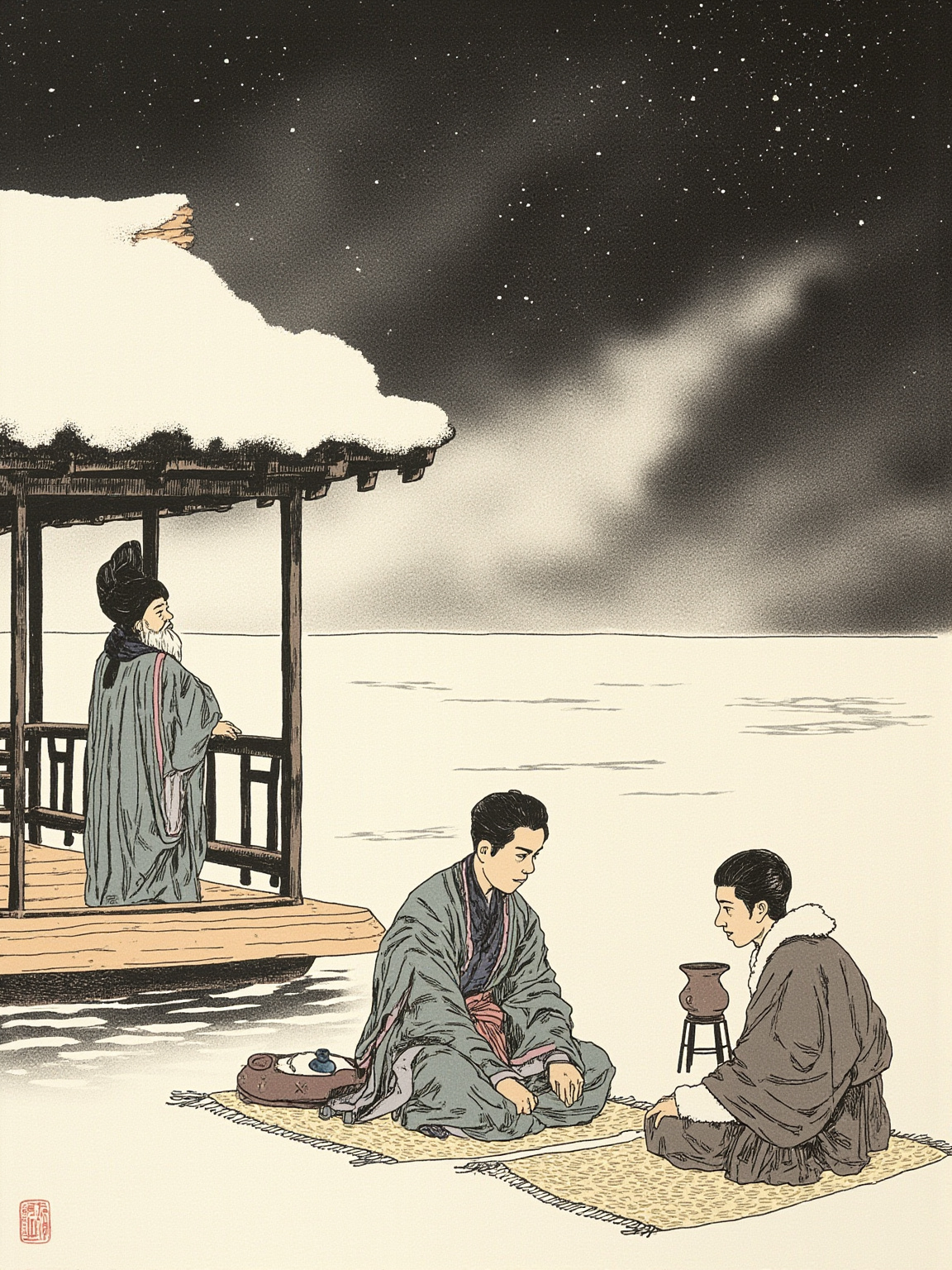
In the twelfth month of the fifth year of the Chongzhen reign, heavy snow fell. Zhang Dai went out alone to the Mid-Lake Pavilion to watch it, and found two men already there, sitting on a felted mat with a boy warming wine for them. He drank three cups with them and left. The two men, astonished, said they had not expected to find anyone else so strange as to be out here on the lake. This snowfall happened twelve years before the Ming fell, and it belongs to the first half of his life in memory — a reader could easily mistake it for a scene from an age of chaos and collapse, when it is in fact one of the cleanest nights Zhang Dai ever kept. All three men believed they alone were odd enough to be on the lake that night, and it was exactly that mistaken exclamation that let them recognize each other as the same kind of person. They were all wrong, and all right.
Traveling from Hangzhou to Jinshan Temple in Zhenjiang, with the moonlight fine and himself too restless to sit still, Zhang Dai had a young servant carry a chest of opera costumes up the mountain. Gongs and drums broke out at once, and the temple's monks scrambled up to see what was happening. The moment the play ended, he cast off and crossed the river again, not even waiting for the monks to thank him. Night Theater at Jinshan is the wildest single stroke in the whole book — night, moon, opera, temple, and boat all collide at once, and then he is simply gone, no explanation, no lingering.
The Shaoxing lantern festival, the crab feast in the tenth month, and the extra Mid-Autumn Moon of a leap eighth month: these three pieces are Zhang Dai pushing the pleasures of the late-Ming Jiangnan region as far into detail as they will go. The lantern festival runs for several nights straight, lanterns filling the streets, lantern sheds, opera stages, cockfights, fireworks, the whole city pouring its energy into light. The crab feast insists that all five flavors come through without a grain of salt or a drop of vinegar: stewed lotus root, boiled water caltrop, seasoned soup, peeled oranges, pounded chestnuts, sweetened milk, a whole seasonal spread built around the crab. When a leap eighth month gives the year a second Mid-Autumn Moon, he and his friends celebrate it all over again, drinking hard, writing poems, taking turns on assigned rhymes, not breaking up until the moon itself has risen and set. These three pieces read as calm, even ordinary, but they are doing careful work: repeating the pleasure of the festival, and also confirming something — that after losing everything, the man who knew how to enjoy himself has not entirely disappeared.
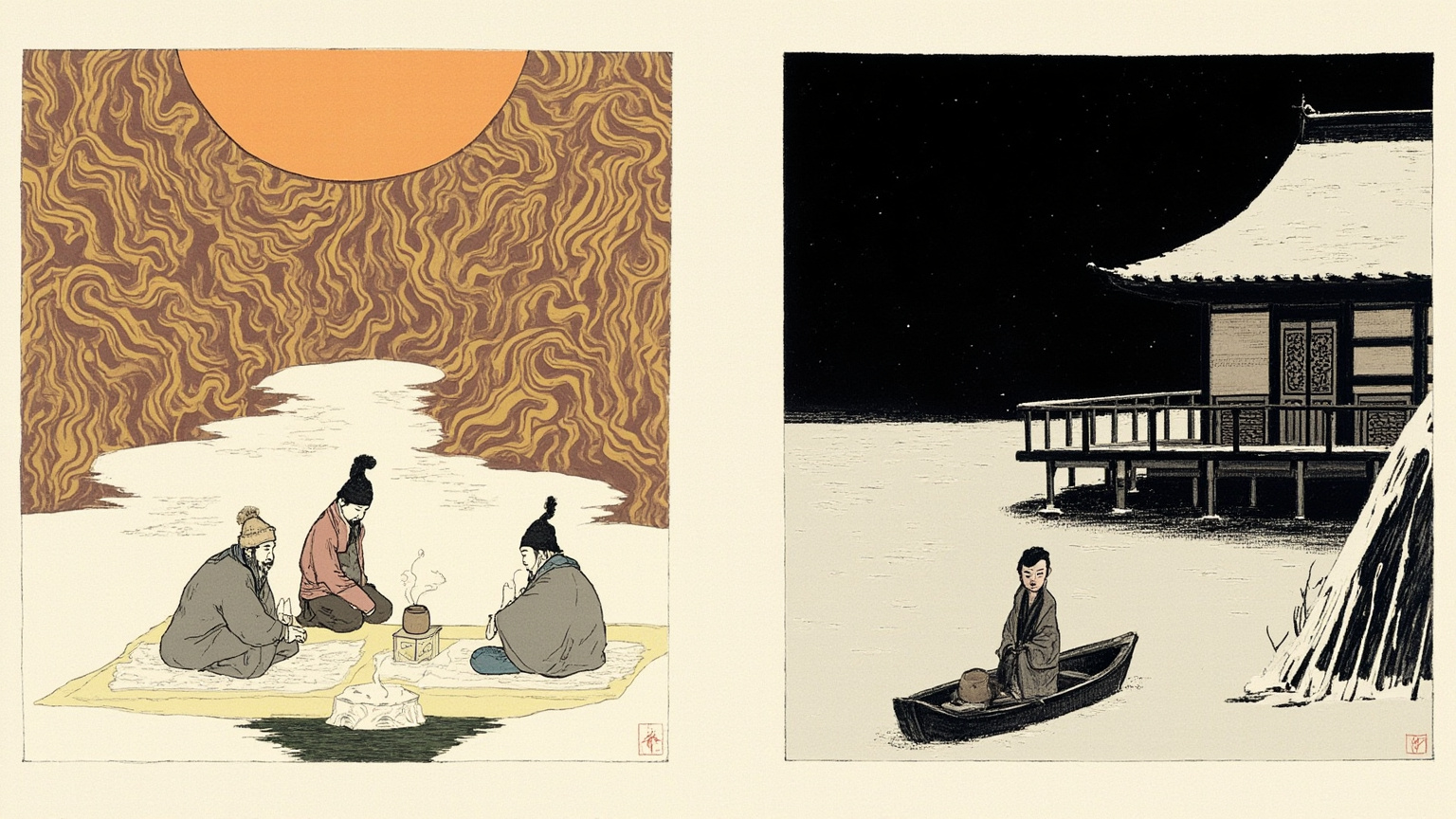
Then comes the cliff edge. After the Ming fell, Zhang Dai let his hair grow wild and retreated into the hills, falling from lanterns and snow into a broken house, coarse cloth, an old inkstone, a cracked earthen jar. The warm orange and clean white of the book's first half suddenly contract into the withered brown and cold gray of its second. This is the real structural tension of the book, not a turn in plot but the same man's life switching light abruptly. He writes the second half with exactly the same restraint as the first: how broken the house is, how coarse the cloth is, how empty the jar is, all rendered in specifics, without a single lament.
The second half of the book takes its pitch from one line: a rooster crows, his head still on the pillow, and the night air has only just cleared. That is Zhang Dai's own famous summary of what his later life became. It is not despair, and it is not serene acceptance. It is a very clear-eyed cold. That line explains why he could write the first half in such detail: without that earlier precision, this later cold would have nothing to be cold against. Two different kinds of light, laid over each other, from the same man's hand.
Looking back at the shape of the whole book: every piece is short and concrete — one way of watching the moon, one snowfall, one night of opera, one crab dinner, one extra full moon, one broken house. This is not a novel, and it has no dramatic conflict running through it. It is one man passing judgment on the first half of his life. The remembering is itself the reckoning. Fullness against bareness, warm orange against cold white, lantern festivals against a hut in the hills: these are the two extremes of light this book keeps setting against each other.
What this book is really about is the relationship between splendor and its collapse. The first half writes pleasure down to its finest possible grain; the second writes what it looks like to go on living after all of it is gone — that is the tension the whole book runs on. Splendor is not condemned here, it is recorded with precision. Collapse is not raged against, it is written down with a level head. The tension between the two comes from Zhang Dai himself: he is at once the man who knew best how to enjoy things and the man most able to let them go.
As a craftsman, Zhang Dai is constantly subtracting. The five kinds of moon-watchers in West Lake, Fifteenth of the Seventh Month, the choices of seasoning he keeps and discards in the crab-feast piece, the different ways of laying out mats to watch the lanterns in the piece on lantern displays: he writes an age at its fullest while teaching the reader how to take that fullness apart. For him, remembering is both a way of confirming what happened and a way of saying goodbye to it. Every short, concrete piece in this book is its own small reckoning.
A guide like this one gives you the map. The book itself is the land. Every piece here is short enough to read in three or five minutes, but the feel of Zhang Dai's actual sentences is exactly what a guide cannot hand you: how he lets a whole snowfall collapse into a single exclamation, how he tells the story of waking a temple full of monks at midnight as if it were nothing worth dwelling on, how he makes a broken house and coarse cloth read as vividly as a lantern festival. That physical sense, that texture in the writing, only exists in the original. Read it already knowing what happens, and you start noticing the other half-sentence he holds back in every single piece.
This book has only one protagonist: Zhang Dai himself. He isn't telling a story. He is judging himself — rescuing a lost world with one brush, then passing sentence on it, stroke by stroke.