The Epic of Köroğlu (Koroghlu / Gorogly) · Companion Guide
克罗格鲁
瞎眼父亲的账,化作少年手中的刀;石垒山寨上,四十匹灰马的风压过钦利贝尔的雪线。
A Flying Grey Horse, a Fortress of Stone
The story starts with a child's boyhood. His grandfather Jygalybek raised him in a corner of the Caucasus mountains, while his aunt Gülendam mended clothes by the hearth. The boy's name was Koroghlu, and the name itself carries two meanings that have traveled side by side for centuries. In the west — Turkey, Azerbaijan — kör means blind in Turkic, oğlu means son, so together the name reads son of the blind man. Further east, in Turkmenistan and Uzbekistan, the same name is pronounced Görogly, its root drawn from the Persian gur, grave, giving born of the grave. The same grey horse, the same mountain stronghold, sung for hundreds of years across two stretches of land — and both meanings are true. His father had been blinded by a local lord, a debt never written on paper but carved straight into the boy's bones.
As a boy he tamed a grey horse on a mountaintop, a horse that would later carry a name of its own — Gyrat. It was no ordinary animal: a pair of small wings grew from its flanks, letting its rider cross passes no other man would dare. He then raised a stone fortress on the peak, Çənlibel, or Chandybil, meaning narrow gorge — in practice a stronghold cut into the rock. From up there he looked down and saw the caravans, the highway, and the tent pitched on the flatland where his father's blood had been spilled.
The first time I heard this epic told, what stayed with me wasn't the fighting. It was the boy and the young horse standing side by side in the mountain wind. Oral epics rarely open a hero with a blade — the first stroke is usually the look that passes between him and his horse.
What Kind of Book This Is
No single author wrote this book. Generation after generation of wandering bards sang it into being — called aşık in Azerbaijan and Turkey, bakhshi in Turkmenistan. It took shape orally in the sixteenth and seventeenth centuries and was only gradually set down in writing from around the eighteenth century on. The versions we read today stretch across the whole Turkic-speaking world, from Turkey and Azerbaijan through Turkmenistan, Uzbekistan, and Tajikistan — a shared heroic narrative for the entire region. It stands alongside Manas, Jangar, and the Epic of King Gesar in the great lineage of Eastern oral epics, and it owes its first appearance in a concert hall to Uzeyir Hajibeyov's opera of the same name — a mountain song, carried into the opera house of a great city.
Characters and World
Only one figure in the whole epic truly stands on his own — Koroghlu himself. He is king of the mountain stronghold and a poet on horseback, both swordsman and singer. Around him ride his forty horsemen, men equally at home on a saddle or with a saz in hand, and it's this band that holds the stronghold together. On the other side stands Arab-Reýhan, a local warlord bound to Koroghlu by a generations-old blood feud; his aunt's abduction and the vengeance still owed to her are behind nearly every major battle in the poem.
The story is set in the world of the sixteenth century and after, when the oppressed took to the mountains and stood off against their lords for years on end. The historical scraps behind it point loosely to things like the Jelali revolts and the eighteenth-century Caucasian uprisings against Nadir Shah in Iran, but the poem flattens the timeline, keeping only the mountains, the highway, the caravans, the sieges. The reader doesn't need to know the year — only the geography: the stronghold above, the plain below, and the mountain pass where blade and song meet.
A Bride Fallen From the Sky
Koroghlu didn't marry an ordinary woman — he married the one from his dream. One night he dreamed of a fairy-like woman named Agaýunus, and woke with her face fixed in his mind. He came down from the mountain, mounted Gyrat, and followed the dream wherever it led: passes to cross, forests to cut through, men to kill, obstacles to break. In the end he brought her back to Çənlibel and held the wedding on the mountaintop.
This passage is told with a light touch, closer to a folk song than any other chapter in the poem. The author never bothers building a logic for the romance — it's just line after line of travel, a drawn sword, more travel, like camel bells jingling until you're suddenly home. Reading it, you understand something about oral poetry: it doesn't argue a feeling, it delivers a heartbeat, the moment the singer's own voice catches in the throat.
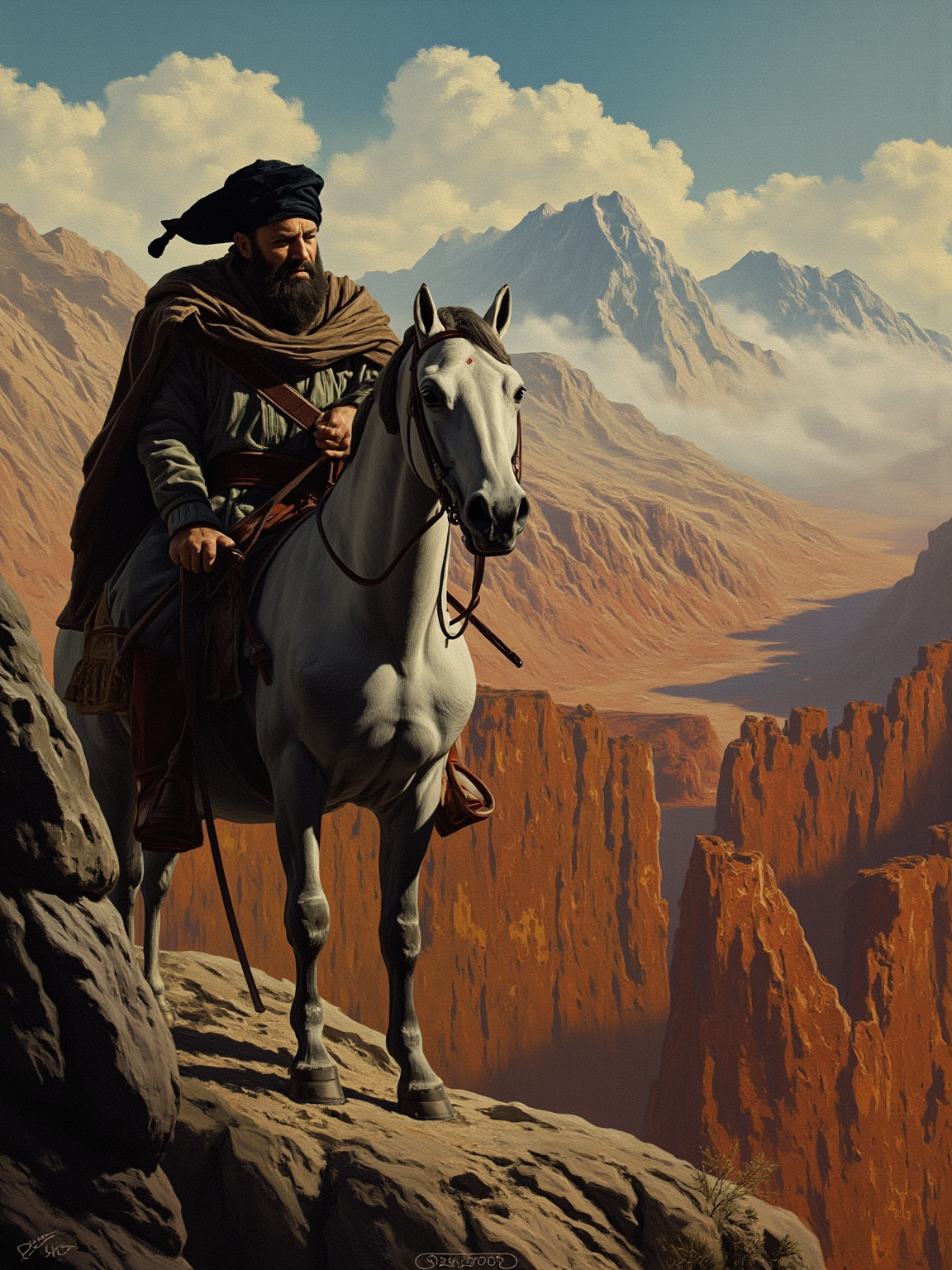
He rode where the dream had gone, cutting pass after pass, until home came round like the bell at the camel's neck.
他顺着梦的方向走,山口一道道地过,回家的时候,像驼铃摇着摇着就到家了。
金句 · 第7章 · 寻仙女的路上
A Blade Drawn for His Aunt
Not long after the wedding, his aunt Gülendam was seized by Arab-Reýhan's men. Koroghlu tore off his wedding clothes, put on armor, and rode down the mountain. From this chapter on, the whole tone of the poem drops — he's no longer the boy chasing a fairy in his dream, but a man collecting a blood debt for his family.
He chased them into Arab-Reýhan's own territory. A pitched battle, an ambush, torches set to the enemy's tents — his aunt was saved, but the debt wasn't settled. Arab-Reýhan was still alive, which meant the next chapter, and the chapter after that, would keep bringing hoofbeats back to the pass. This is where the poem's craft shows: the author never lets revenge close in one stroke. Instead he turns the enemy into half the hero — Koroghlu has to keep killing, and keeps being defined by that killing in return.
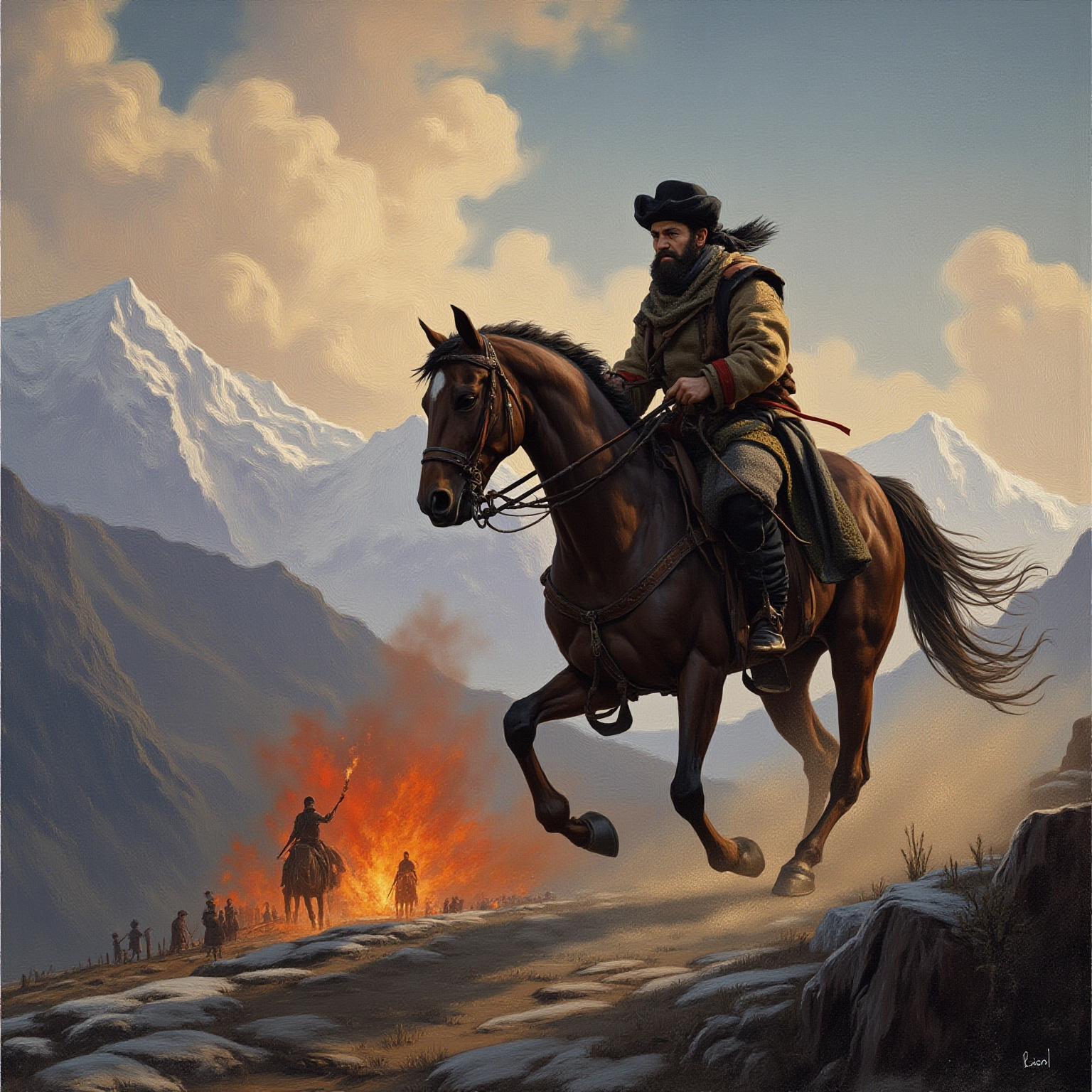
He tore the wedding robe from his shoulders and put on the armor of vengeance.
他把婚服从肩上扯下,披上了复仇的甲。
金句 · 第10章 · 替姑母拔刀
More Than One Man in the Stronghold
By this point, if the poem kept following Koroghlu alone, it would turn into a one-man show. The author quickly brings in two adopted sons: the boy Ovez, whom he freed from captivity and later arranged a marriage for, and Gorogly Hassan, a blacksmith's son whose body hadn't caught up with his nerve for the mountaintop. With these two additions, the whole shape of the stronghold changes — no longer one man's revenge camp, but a hall where many heroes gather.
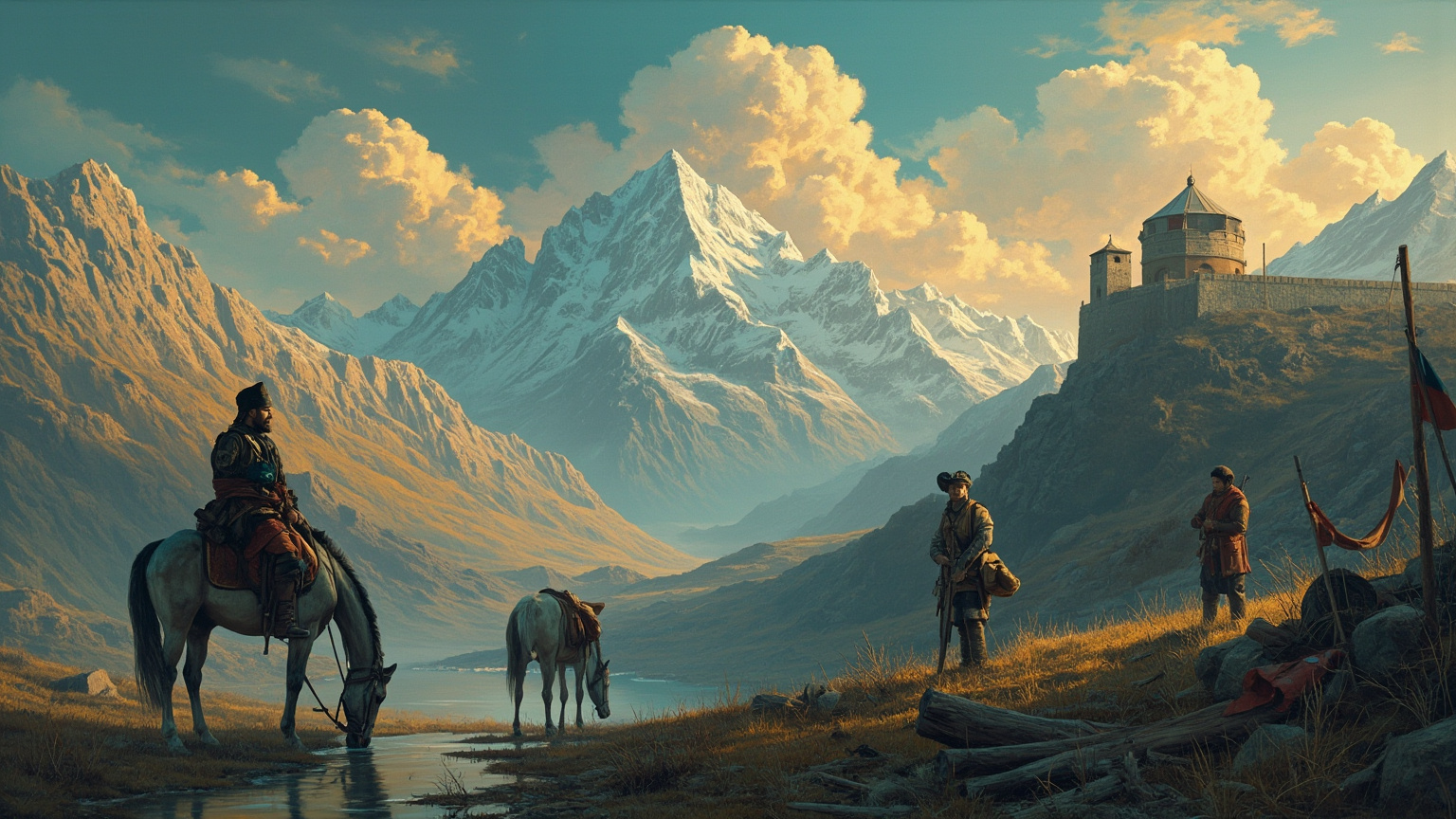
This is a very folk move — ordinary storytellers love adding young followers around a chief, a big brother needs little brothers, that's what makes an outlaw band feel real. Reading it, I had to smile: the whole ring of merry men around Robin Hood was apparently assembled the same way, everywhere, always.
Clashes on Horseback, a Standoff at the Stronghold
The middle stretch is nearly wall-to-wall action. Koroghlu and Arab-Reýhan trade attacks — one day he raids the enemy camp, the next an army marches on Çənlibel; the forty horsemen ride out in force, hooves slamming echoes off the rock. The poem doesn't stage its cavalry battles like modern warfare. It's closer to a dance on the steppe: two men, two lances, two horses circling in the pass, and whoever tires first goes down.
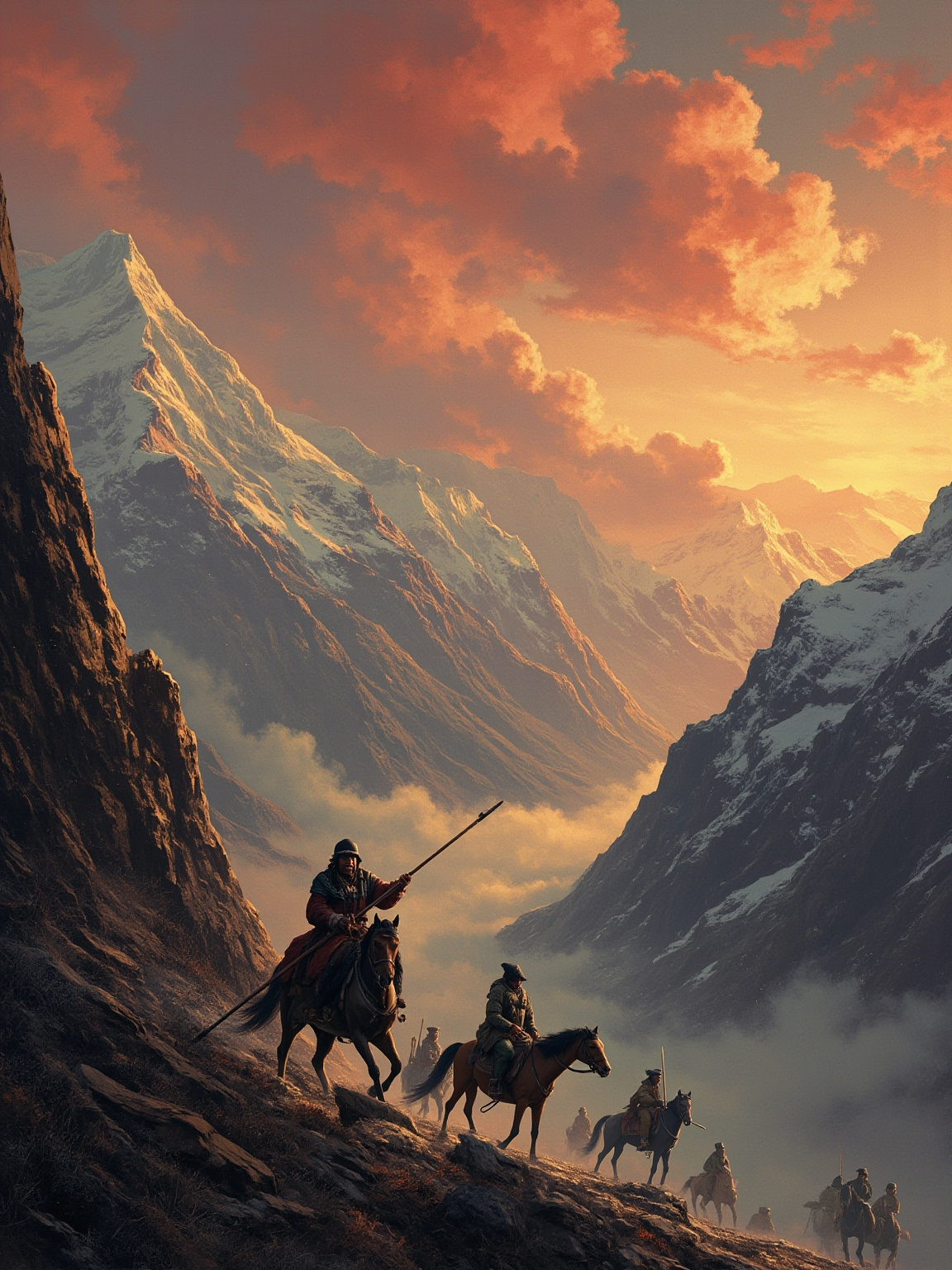
Forty riders pour from the gate at once, and the rocks take up the drumming of hooves.
四十骑手一齐冲出寨门,蹄声被岩壁接住,一程一程地还了回来。
金句 · 第17章 · 山寨对峙
The forty horsemen are the single best touch in the entire poem. They're not forty named, individual heroes — they're a collective, a number, a shorthand that puts the image of a whole company riding hard straight into a listener's head. Oral art loves this move: a number standing in for ten thousand words of description.
Withdrawal Into a Cave
The final chapter is short. Koroghlu grows old, hands the stronghold to the next generation, and withdraws into a mountain cave, never to come down again. Then one day the cave is empty — but the music at the pass plays on.
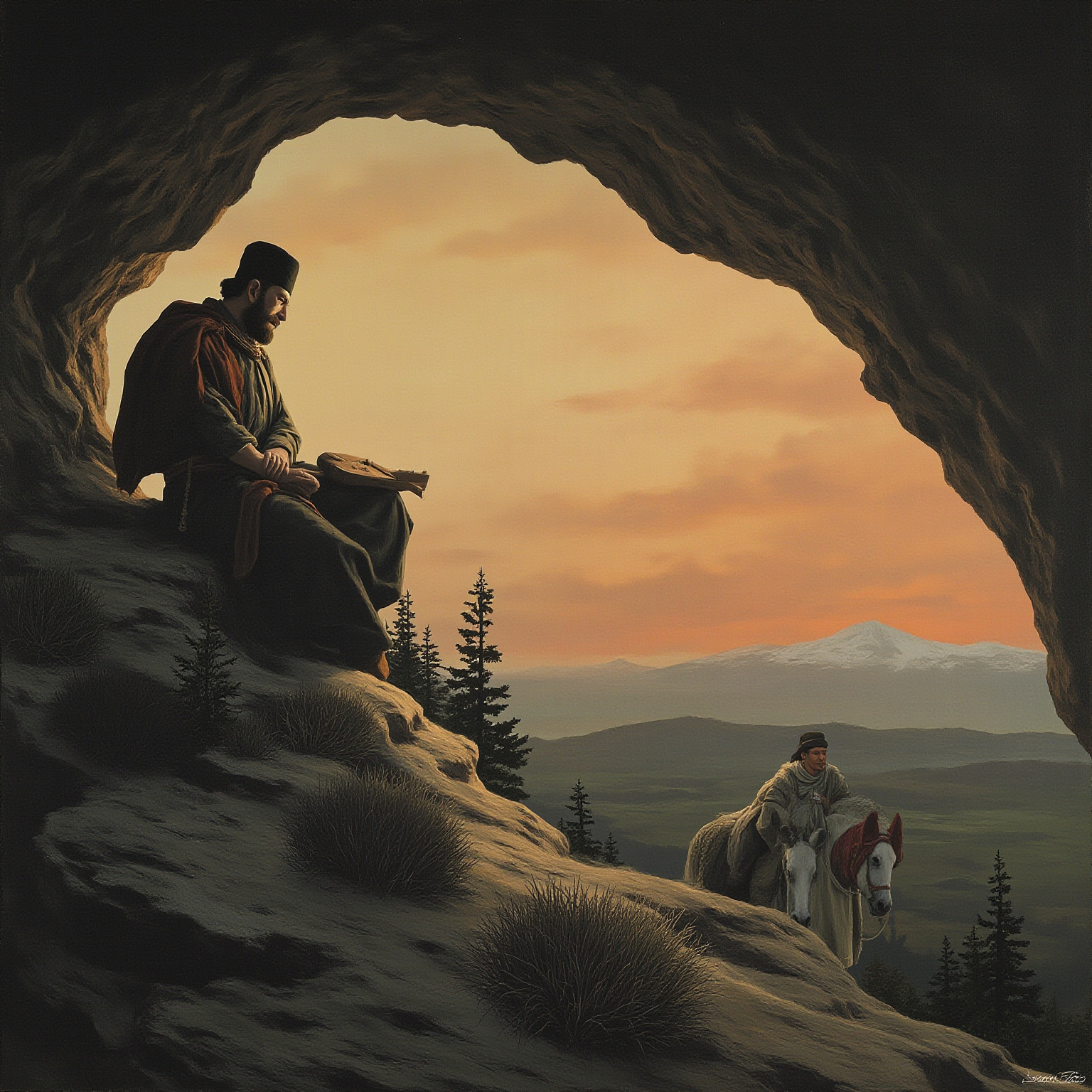
One day the cave was empty; on the mountain pass the saz still sang.
有一天,山洞空了,山口的琴声还在响。
金句 · 第24章 · 退入山洞
There's no drama to this ending — no final battle, no deathbed speech, the author doesn't even say what day he died. But reading it, you catch on something: even a hero grows old, and after a poem this long, it all comes down to four plain words — he is gone. The plainness of it is almost cruel.
What It's Really About
On the surface, it's about a mountain lord avenging his father and robbing the rich to help the poor. One layer in, it's about dignity — a family whose eyes were gouged out refused to kneel, and instead passed the debt down to a child, who turned that debt into a blade, and the blade into a song. One layer further in, it's about the power of oral tradition itself: no single author, no fixed text, just generation after generation of aşık and bakhshi carrying it forward on memory and strings, from Anatolia all the way to the Pamirs. That chain of transmission is the longest chapter this poem has.
Koroghlu's story was never written — it was sung, over and over. What you're reading isn't just a poem, it's what centuries of singers' memories look like, stacked one on top of another.
Why It's Still Worth Reading Today
For a reader today, the most striking thing about this epic is that it's alive. It isn't a specimen in a museum — singers are still performing it right now, in country taverns across Azerbaijan, Turkey, and Turkmenistan, plucking the saz or the dutar. Its core motif — the oppressed taking to the mountains against an unjust lord — is close to an instinctive story for anyone under the boot, from Robin Hood in England to the Water Margin in China to Koroghlu in the Caucasus. Underneath, they're all singing the same breath.
You Know the Plot — So Why Read the Original
A summary can tell you what happens, but it can't give you the music. The original is full of refrains, filler syllables, sound effects — hoh, hoh, or a galloping da-da-dum — the places where the singer catches a breath, where the rhythm lands on a horse's hooves. And in the moments he rides down through the pass, the language itself starts to jolt and lurch, something you have to feel to believe. You can know that Koroghlu saves his aunt, grows old, and withdraws into his cave, but you still have to sit inside that language yourself, to hear the wind pour into his ears the first time the grey horse takes flight.
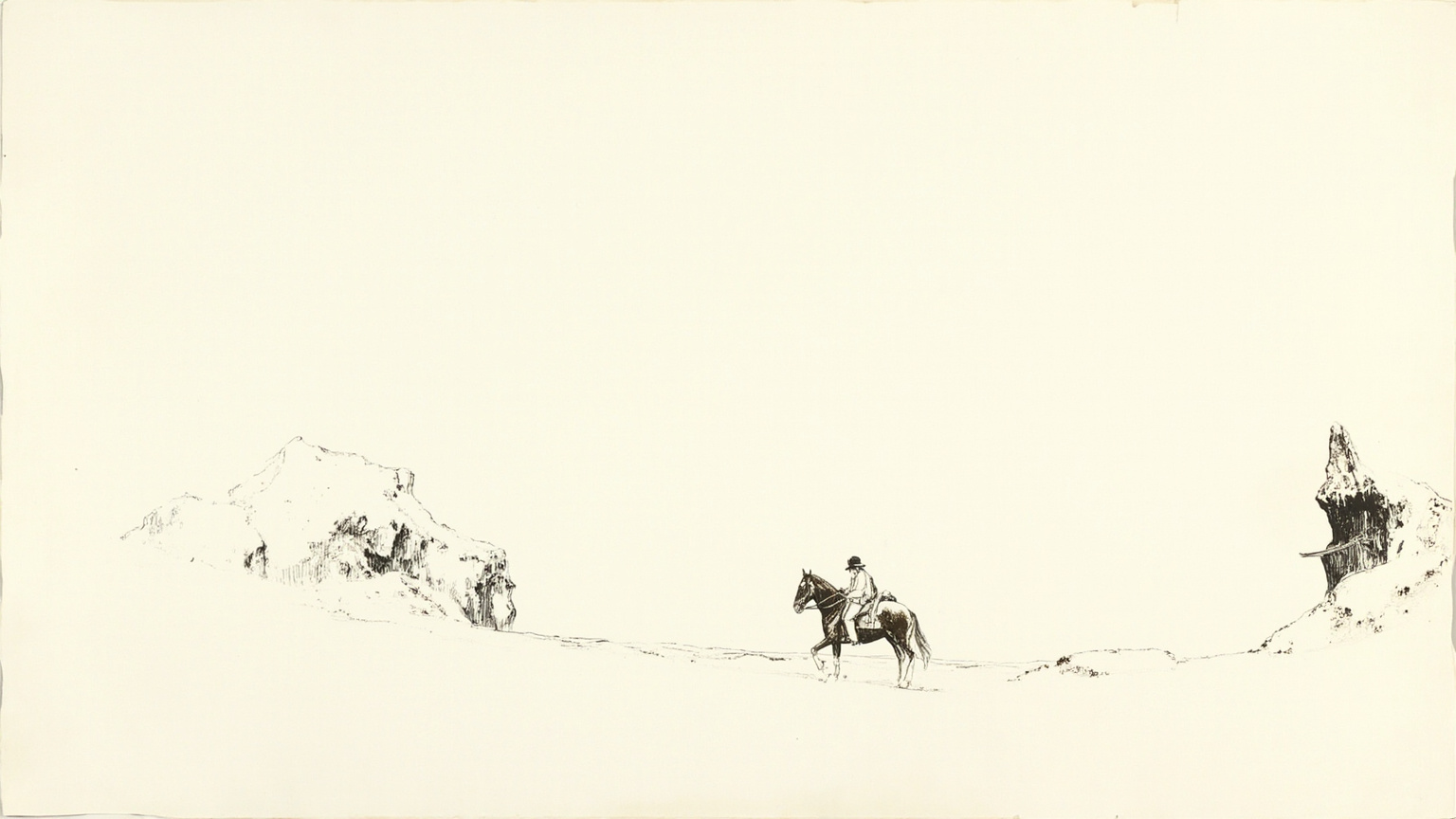
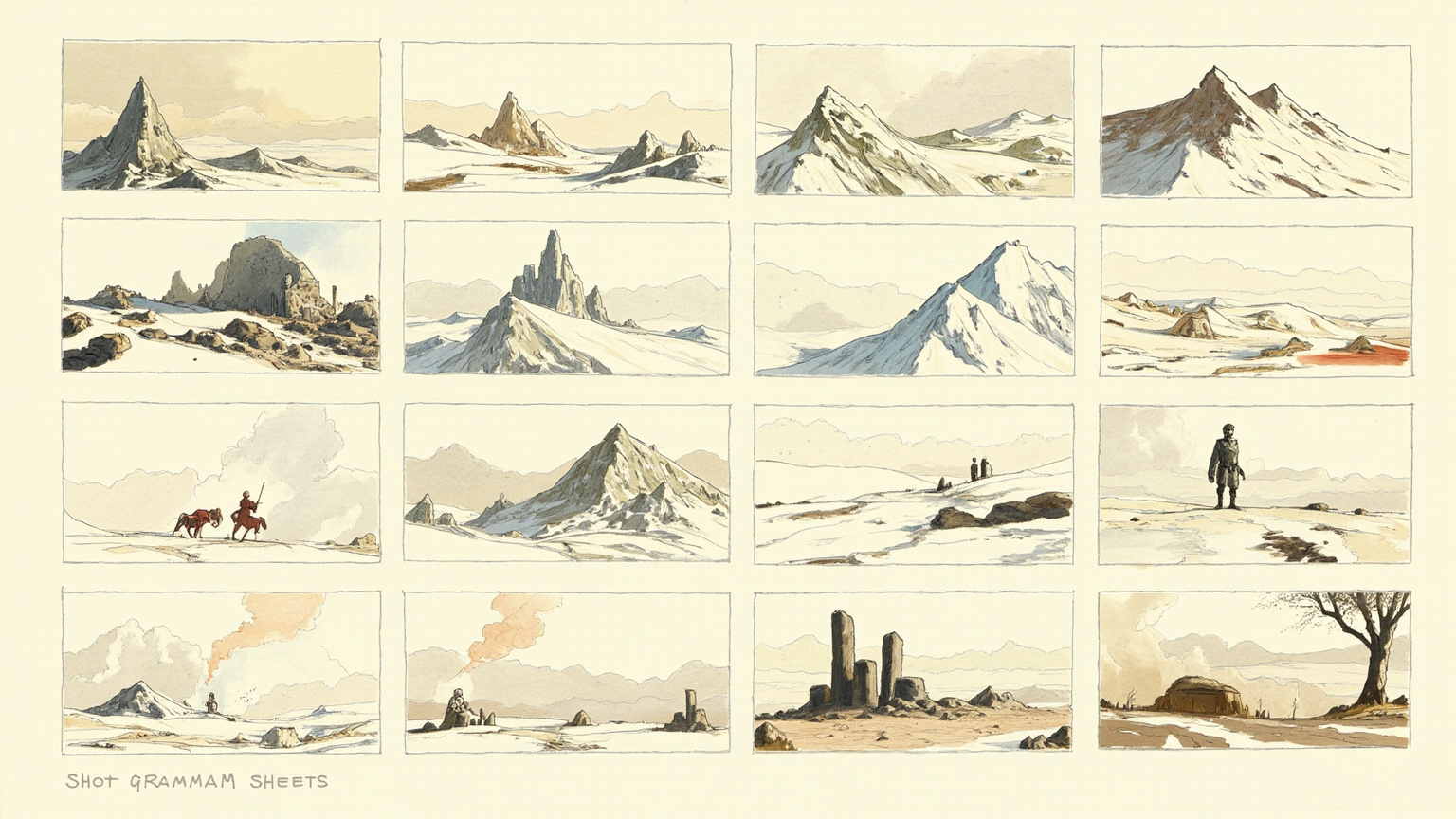
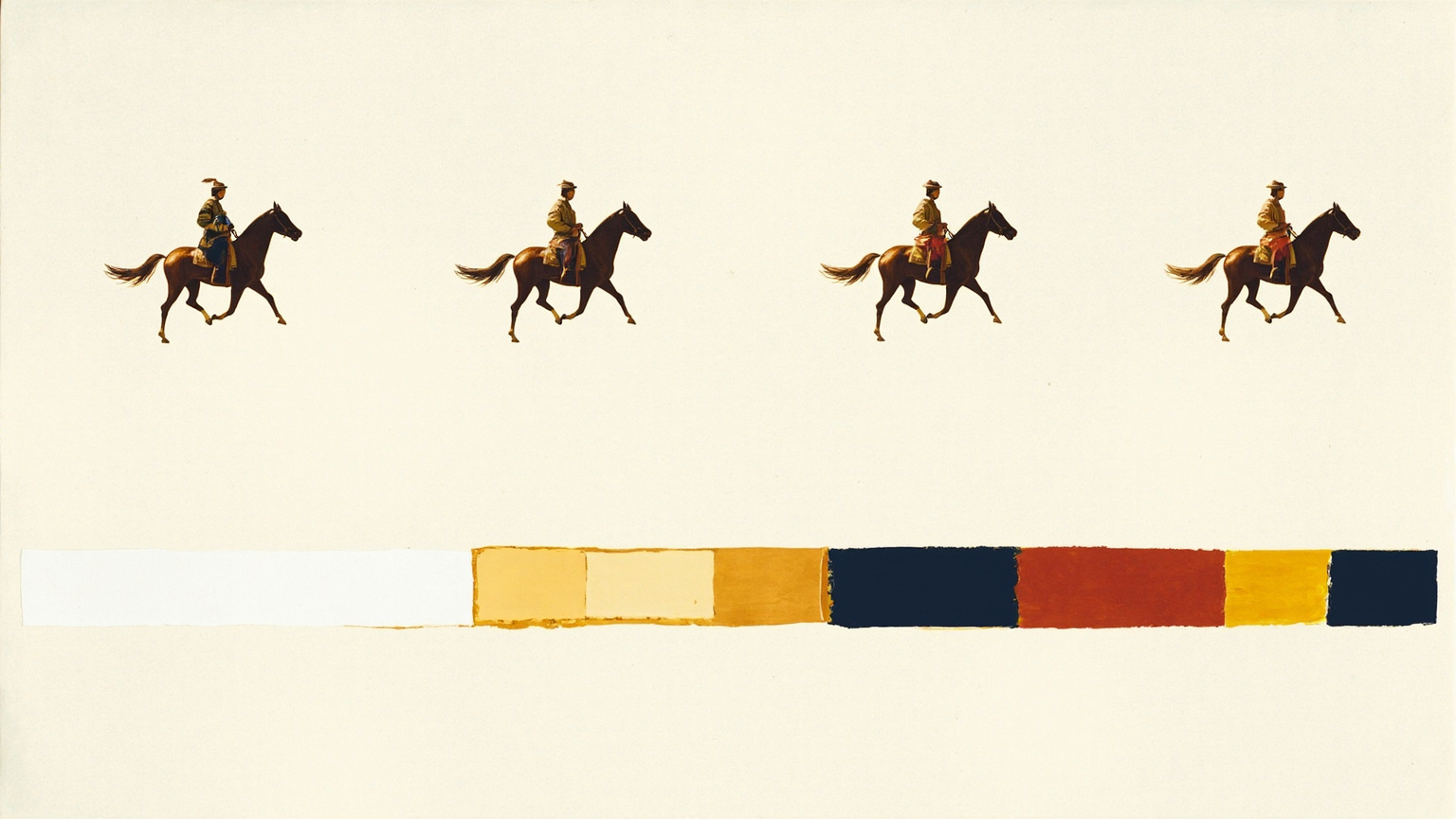
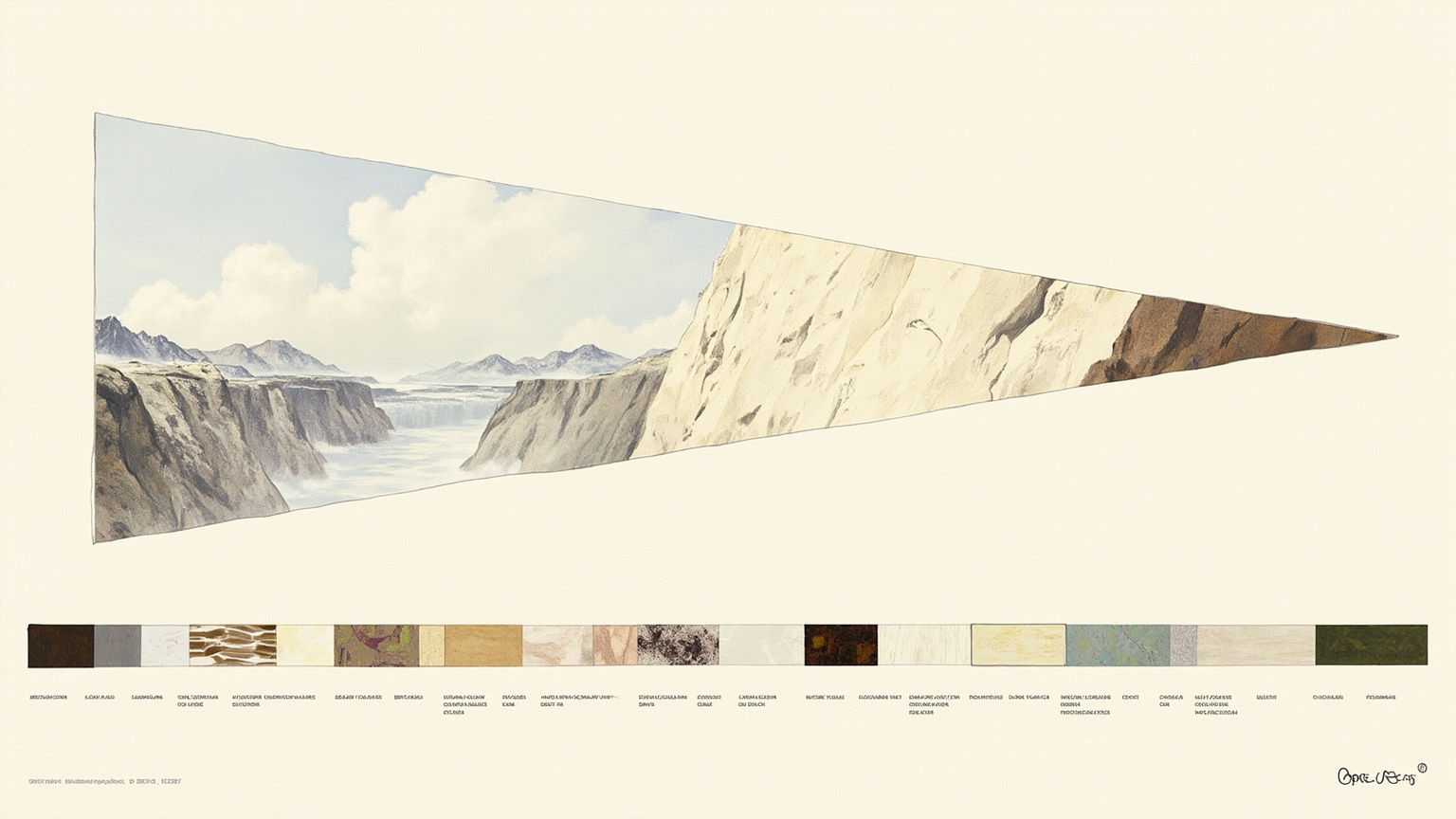
Art Direction4 plates
Before the guide was written, this book got a visual foundation — every illustration you just read grew out of it.