Essays in Idleness (Tsurezuregusa) · Companion Guide
徒然草
砚台前独坐的隐者,把无所寄的时光化作二百四十三段随想,在残雪与苔石间写下无常的闲寂。
Opening
In the grass hut on Mount Yoshida, a brush heavy with ink rests by the inkstone. A cicada drops from the green maple in the courtyard, lands on the white stone at his feet for the span of a breath, and is gone, and Kenkō set that single breath down on paper. Looking back some seven hundred years later, he wrote no chronicle, no love letter, only a string of very short pieces the later world would call tsuredzure, the drift of a mind with nowhere in particular to be: flowers need not be watched in full bloom, the moon need not wait for clouds to clear, a friend need not be spoken to the end, life need not be finished in every particular. This is how the book begins, and how it goes on living.
What kind of book is this
Tsurezuregusa — in Japanese, the title comes down to those two characters, tsuredzure: nowhere to rest, and yet not boredom. One of Japan's three great miscellanies, alongside Sei Shōnagon's The Pillow Book and Kamo no Chōmei's Hōjōki. Composed around 1330, it runs to two hundred and forty-three sections. Its author, Yoshida Kenkō, came from a family of low-ranking Shinto priests, served at court in his youth, took Buddhist vows in middle age, and spent his late years in a mountain hut in the hills northeast of Kyoto.
Its place in literary history is an odd one: there is no long narrative here like The Tale of Genji, and no distinctly feminine eye like the one in The Pillow Book, yet it became the source of an entire aesthetic lineage — the Japanese sensibility known as wabi and sabi, with its taste for the broken, the unfinished, the left blank. The roots of all that can be traced back to this book. Zhou Zuoren was the first to carry it into Chinese, and his line about flowers not needing to be watched in bloom has been turned over and over again in essay circles, in design circles, in circles devoted to the aesthetics of daily life.
Figures and the World
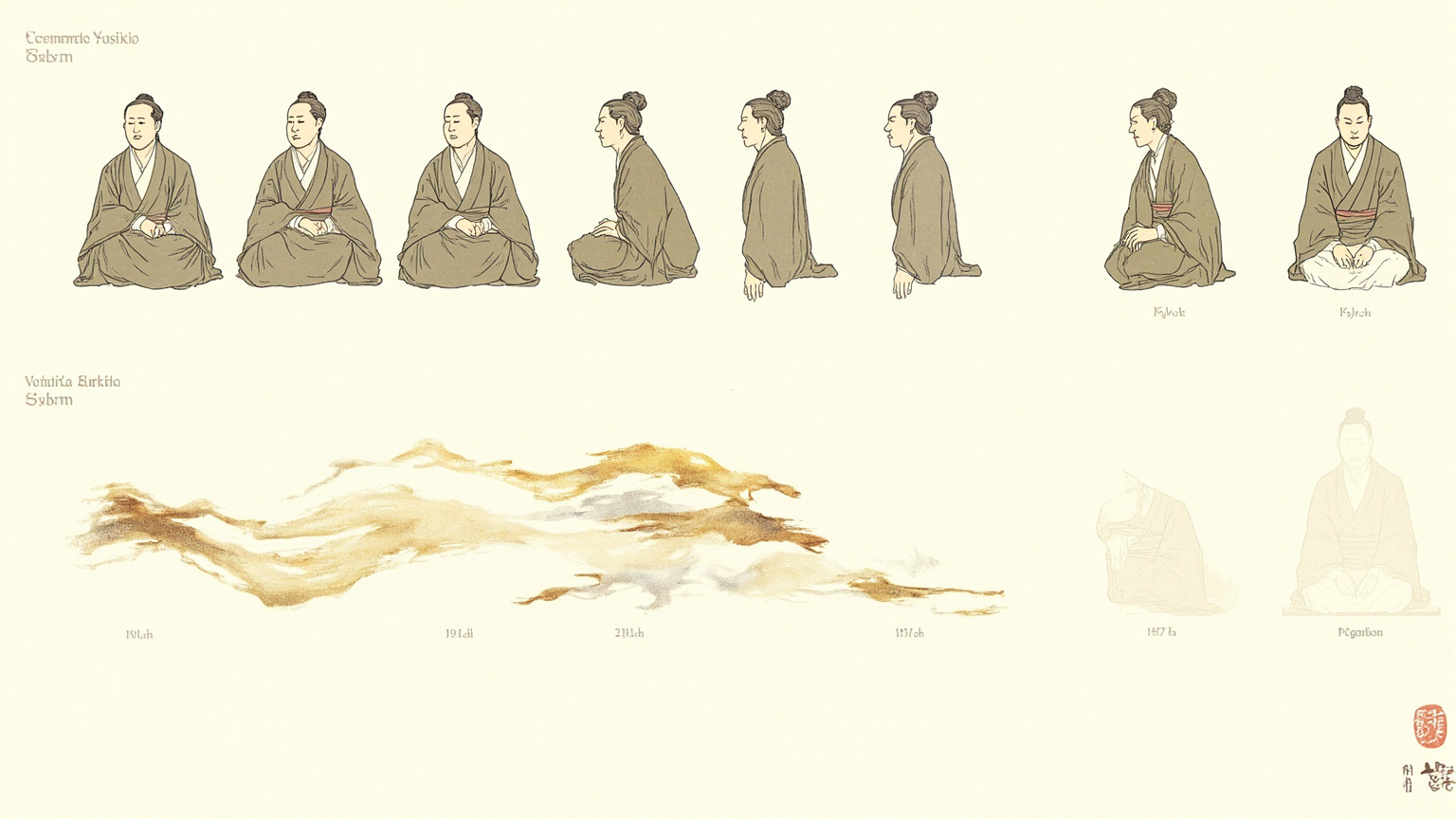
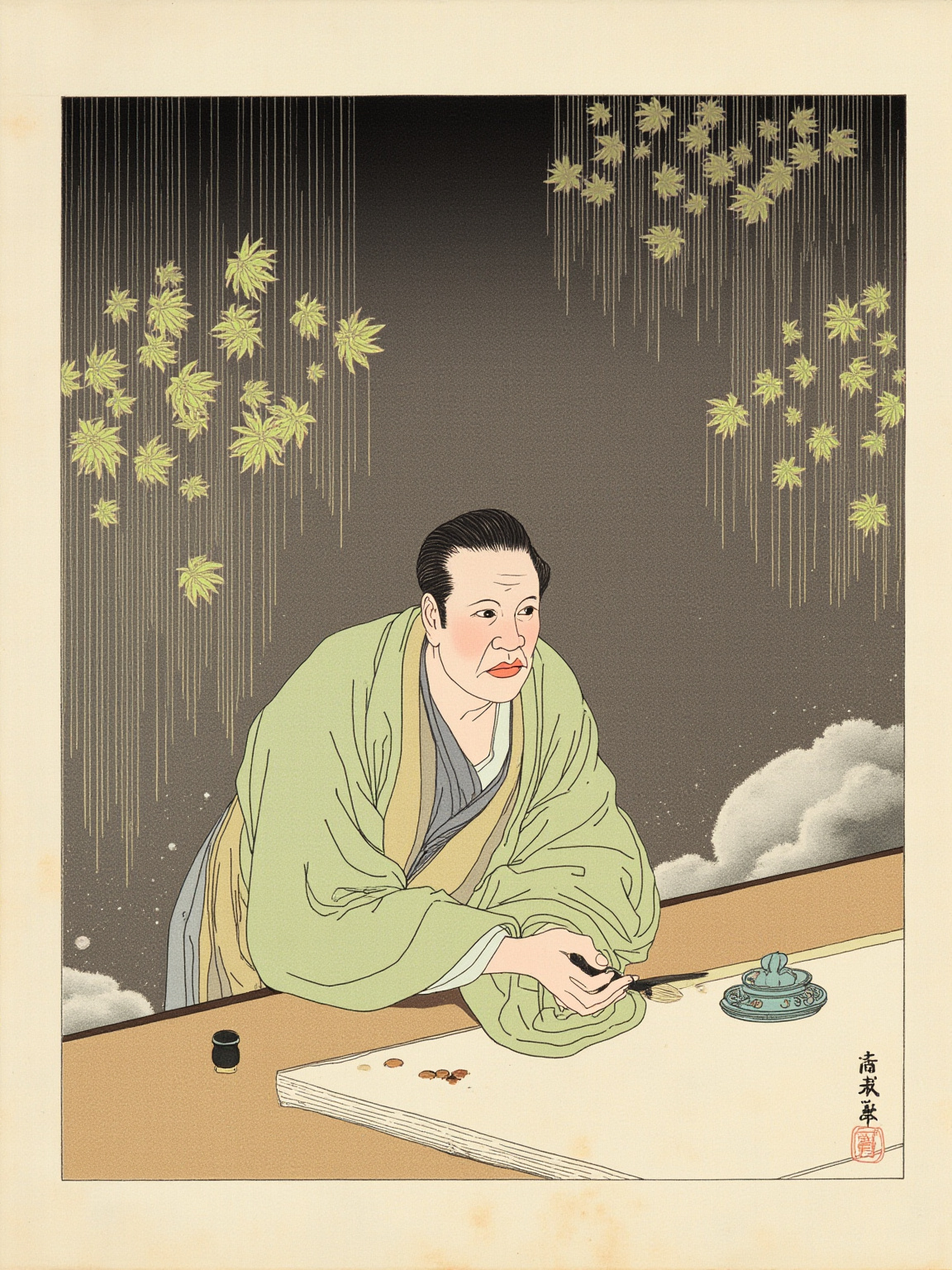
Kenkō is the only figure who is always present in this book. In every scene he sits alone at his inkstone — spare, literary, well-kept, anything but a ragged wild monk. He came from a family of low-ranking priests, served as a court official, wrote verse and knew the Buddhist canon; his withdrawal was not a corner to flee into but a choice made with eyes open. Every other named figure in the book is a passerby: the stubborn old monk of Ninna-ji who insists the wrong road he took was the right one; the craftsman who climbs to a dangerous height and, once there, says nothing at all; the priest hailed as the master of sugoroku. They are mouths Kenkō borrows, one after another, to say what he means to say.
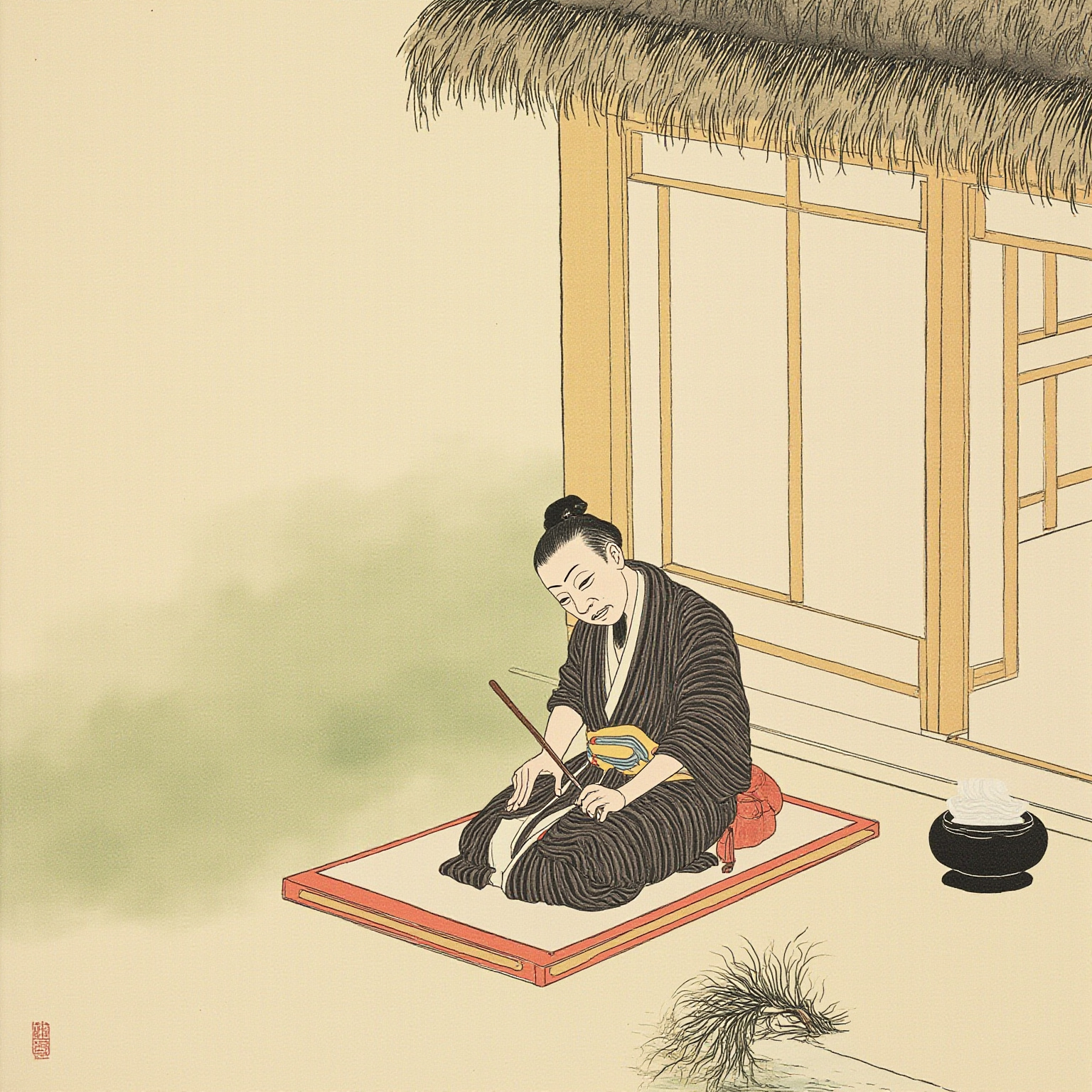
The book's world is the Kyoto of the early fourteenth century and the near countryside, and its time is the turning of the four seasons: spring cherries, summer rain, autumn grass and red leaves, winter snow and bare branches, with night moons, insect song, and moss on stone running through them all. The places never leap far: the grass hut, the stone steps of a temple, a path through the hills, an abandoned old house, and the curtain-hung court gardens of memory. There are no long journeys here, only the idle, faintly bitter, worldly-witted medieval Kyoto seen from a chair at an inkstone.
The Shape of the Book
One: 'Tsure-zare' at the Inkstone
Kenkō opens with a confession. With nothing to do and nowhere to be, he sits bored and jots down whatever scraps come to mind. That word tsure-zare, which gives the book its name, is the root of the whole thing. It is neither dejection nor emptiness, but a freedom with nothing to lean on. He gives himself no subject and no order. A cherry blossom about to fall today; an old memory tomorrow; a foolish thing a friend said the day after: he writes them all. Two hundred and forty-three passages, gathered like that.
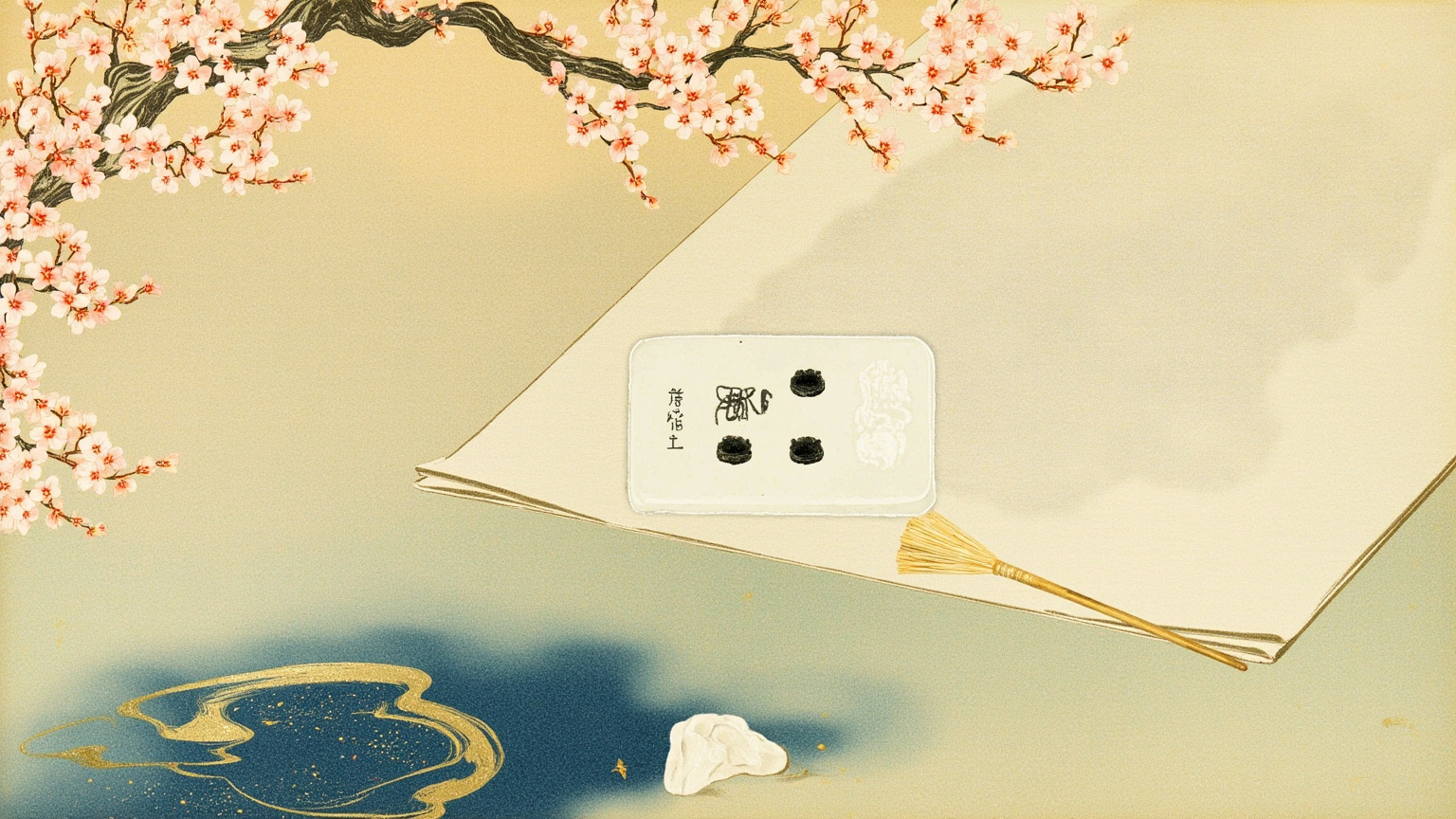
Sitting at my desk with nothing to do, I might note down whatever I happen to think of.
无聊之际,随意写来罢了。
金句 · 第1段 · 砚台前的徒然
Two: The Four Seasons and the Beauty of Incompleteness
Kenkō writes the four seasons, but he is not writing a manual for landscape painters. He writes petals drifting down onto water after the cherry blossoms have passed, red leaves falling one by one from the branches, a cricket that suddenly sings on a snowy night. He tells us not to fixate on elegance, and then tells us to listen. The most quoted line, 'flowers need not be seen only in bloom,' is usually read as carpe diem, but it is saying something else. Lingering, unfinished, on the verge of passing: the states we count as 'not yet at their best' are the ones most worth pausing over. The moon half-hidden by a cloud, a branch bowed under snow — these held the gaze of the ancients longer than any full moon or tree in full flower.
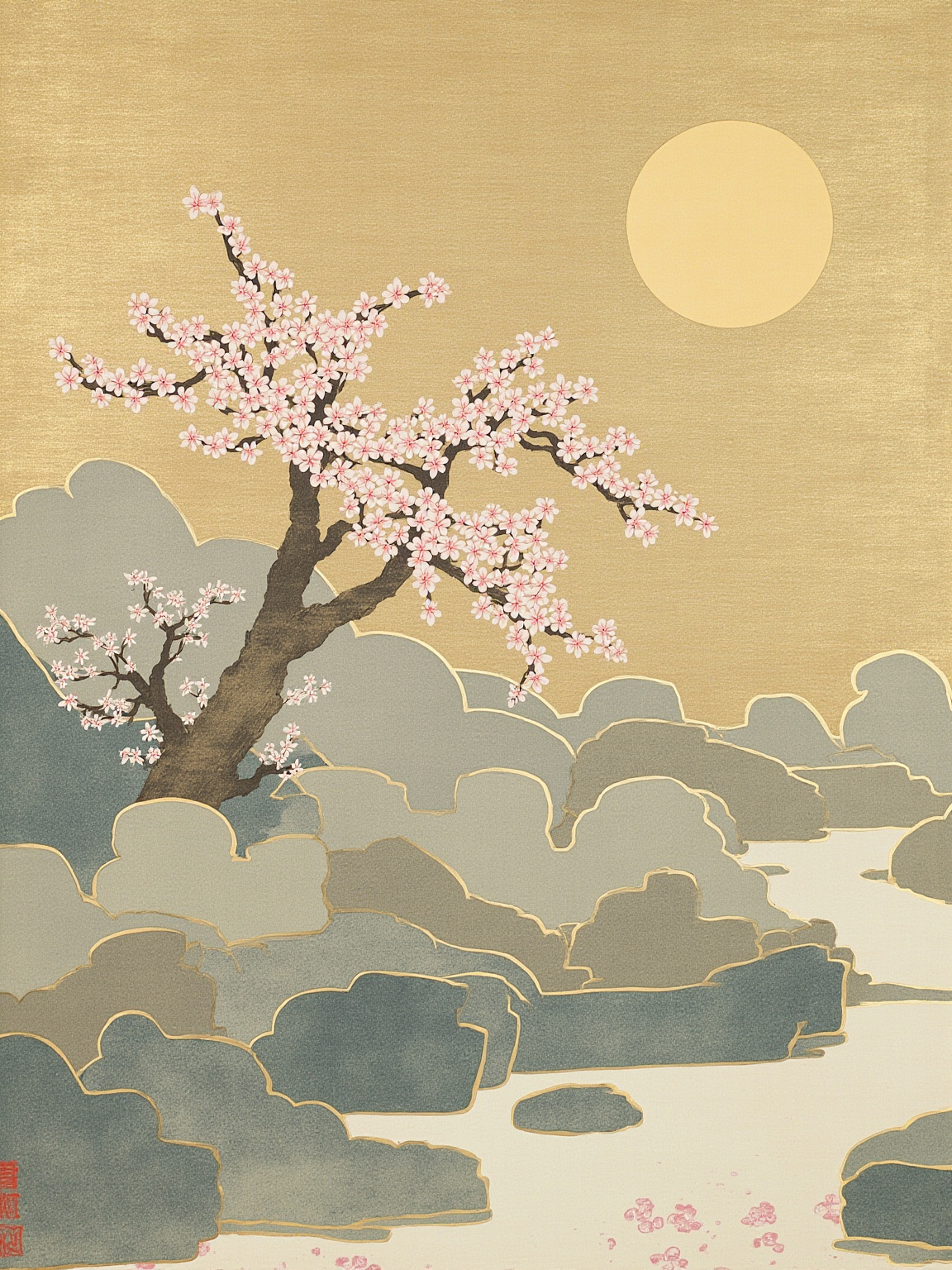
It is only the blossoms that scatter in the wind that have moved the hearts of men.
唯有随风飘落之花,方能动人心弦。
金句 · 第2段 · 不完满之美
Three: The Nostalgic Court
Kenkō is a measured nostalgist. He writes of songs heard in his youth, of the sleeve-scent clinging to court ladies' robes, of the garden seen through hanging curtains — all of it long since decayed past recognition. He does not rage against the loss. With a sympathy that does not cling, he holds a gentle vigil over a vanished elegance. There is no dramatic conflict here. Just a faint tightening of the lips at the inkstone, as he lingers over what is gone.
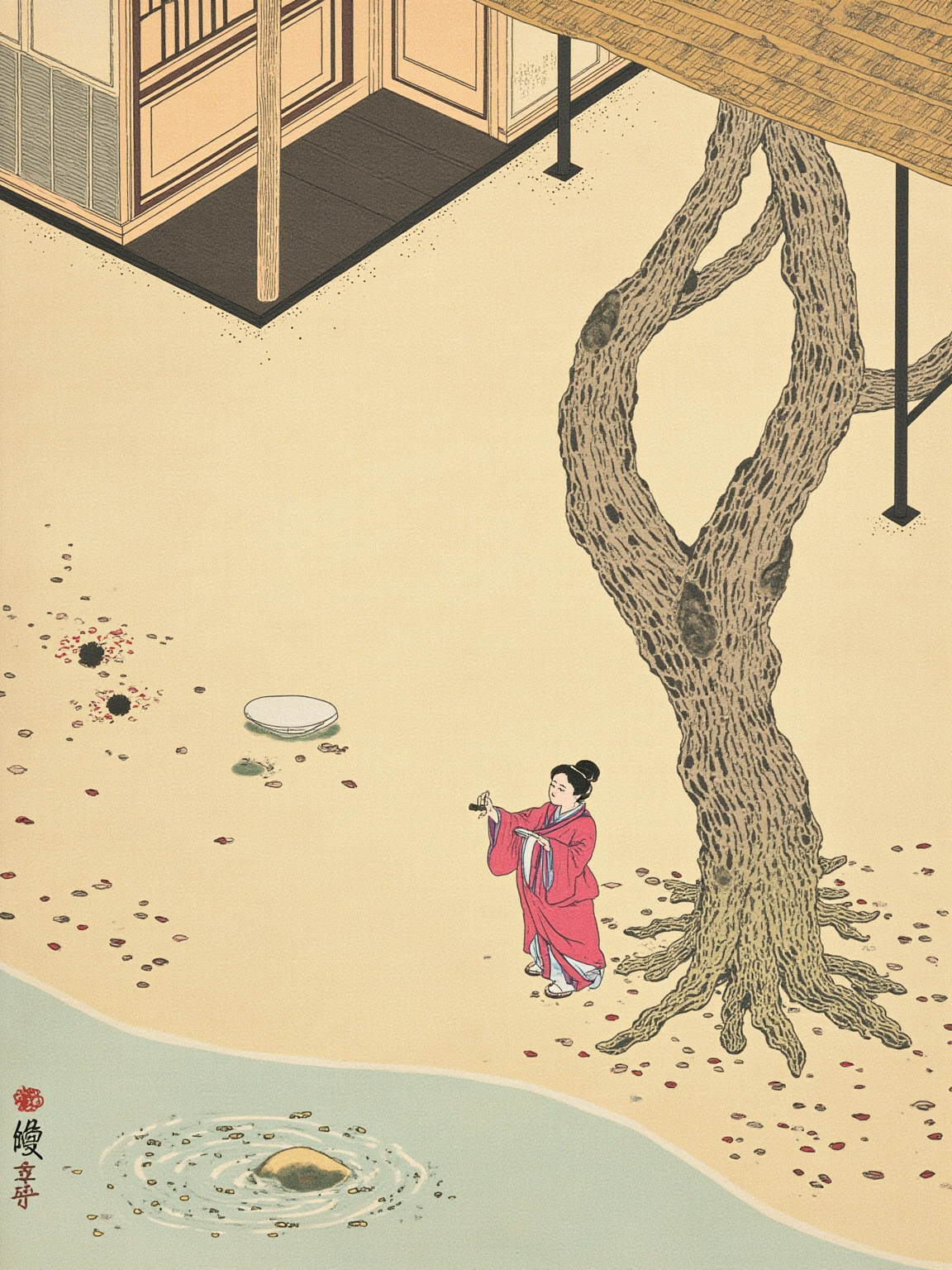
The age of the gods and of ancient emperors is no longer ours; we live in a later day.
神代已远,帝朝亦逝,我辈生当末世。
金句 · 第137段 · 怀旧的宫廷
Four: The Old Monk of Ninna-ji and His Stubbornness
One of the book's best-known vignettes. An old priest from Ninna-ji loses his way and meets a butcher who tells him he's walking in the wrong direction. The priest refuses to believe it and demands that the butcher retrace the mistaken road to prove the point. With no choice, the butcher trudges back along the wrong path with the old man. Kenkō writes the story down without drawing a moral, without sighing — he just lets the reader laugh. And once you've laughed, you think: we do this all the time ourselves. We've seen it clearly with our own eyes, and still we hunt for evidence to prove we didn't see it.
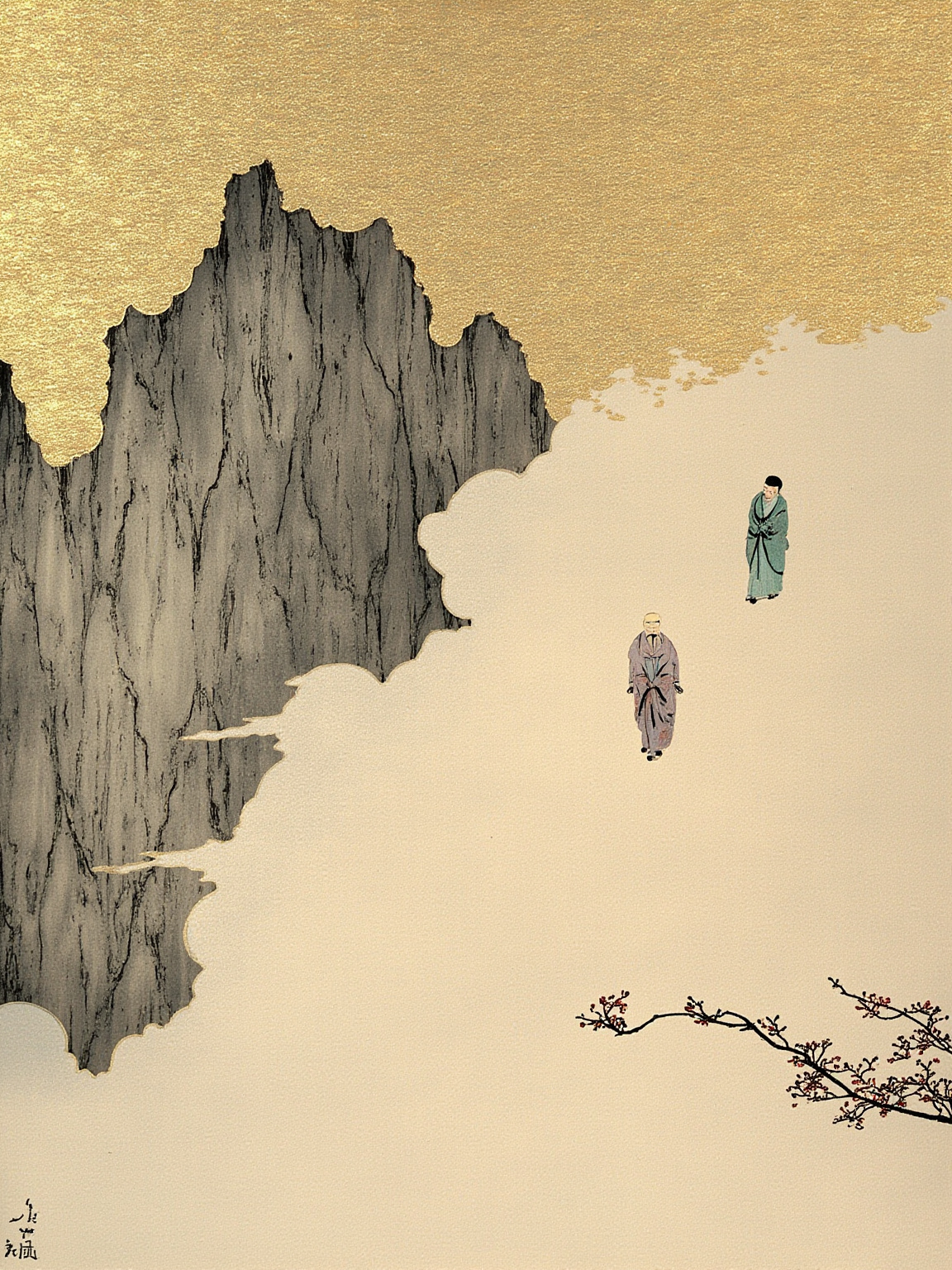
He who knows he is a fool is least foolish of all; we do most when we think least about what we do.
知愚者最不愚;不思于事,事亦自成。
金句 · 第82段 · 仁和寺老僧的固执
V. The Tree-Climber's Silence
The tree-climber's tale comes right after the Ninna-ji episode. This craftsman was a master at climbing trees. His son, before his father's eyes, made his way out to an extraordinarily high and perilous branch; everyone watching held their breath, but the father said nothing. Only when the boy reached the ground safely did he speak, unhurried, and offer the single line: to keep your silence at the highest, most dangerous point — that is the real skill. Kenkō records this passage so the reader can feel the measure of speech. Speak when speaking is called for; when it isn't, spare even your breathing.
VI. The Sugoroku Master's Margin
Sugoroku is an ancient Japanese board game. The book mentions a monk who was a master of it — every move left room; he never drove his opponent into a corner, and never drove himself into one. Kenkō borrows the board to speak of life: a person of real judgment doesn't push every move to the limit; they know when to stop and when to yield. Leaving margin isn't weakness. It's being able to see the whole board. This passage, taken with the one before it, comes down to something Kenkō keeps insisting on: measure.
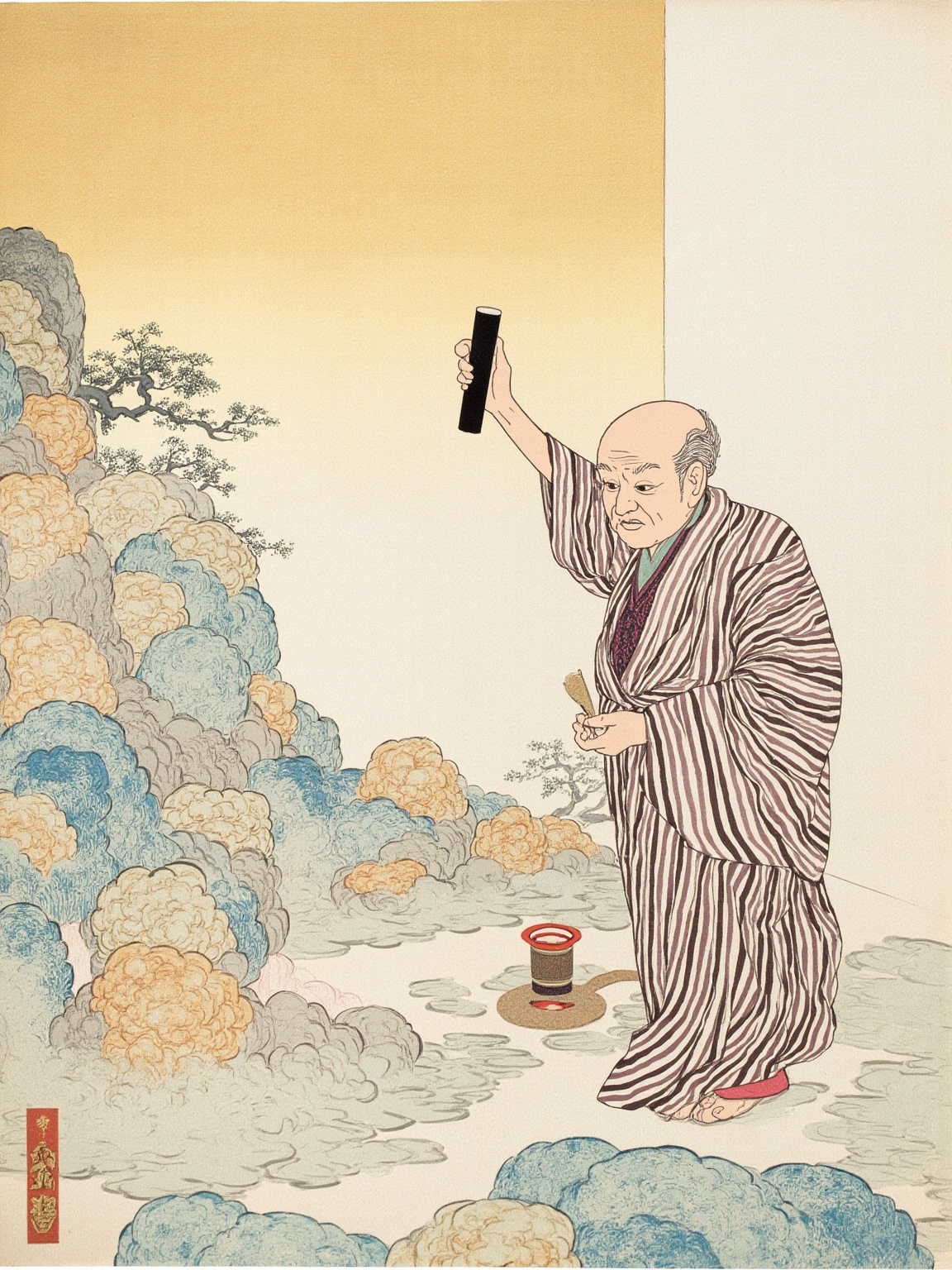
A man whose deeds surpass his words is one whom danger itself cannot dismay.
其事胜于言,纵临险地亦无所畏。
金句 · 第179段 · 爬树高手的沉默
VII. A Closing Between Moss, Stone, and Lingering Snow
The later sections carry a slightly heavier tone. Kenkō writes of death, of the scramble for name and gain, of the coolness between relatives and friends — but he never lets his voice turn harsh. He doesn't chant slogans, doesn't lecture his age. At the close of each short chapter he lays down a brushstroke of idle imagery: moss pushing up through snow, a waning moon at the temple gate, a room where you can hear your own breathing. He mocks himself. He watches coolly. He lets the people in his prose be both hapless and dignified. This is what makes Tsurezuregusa least like a "guide to life": it doesn't tell you what to do. It just sits with you for a while, in a grass hut on a winter night.
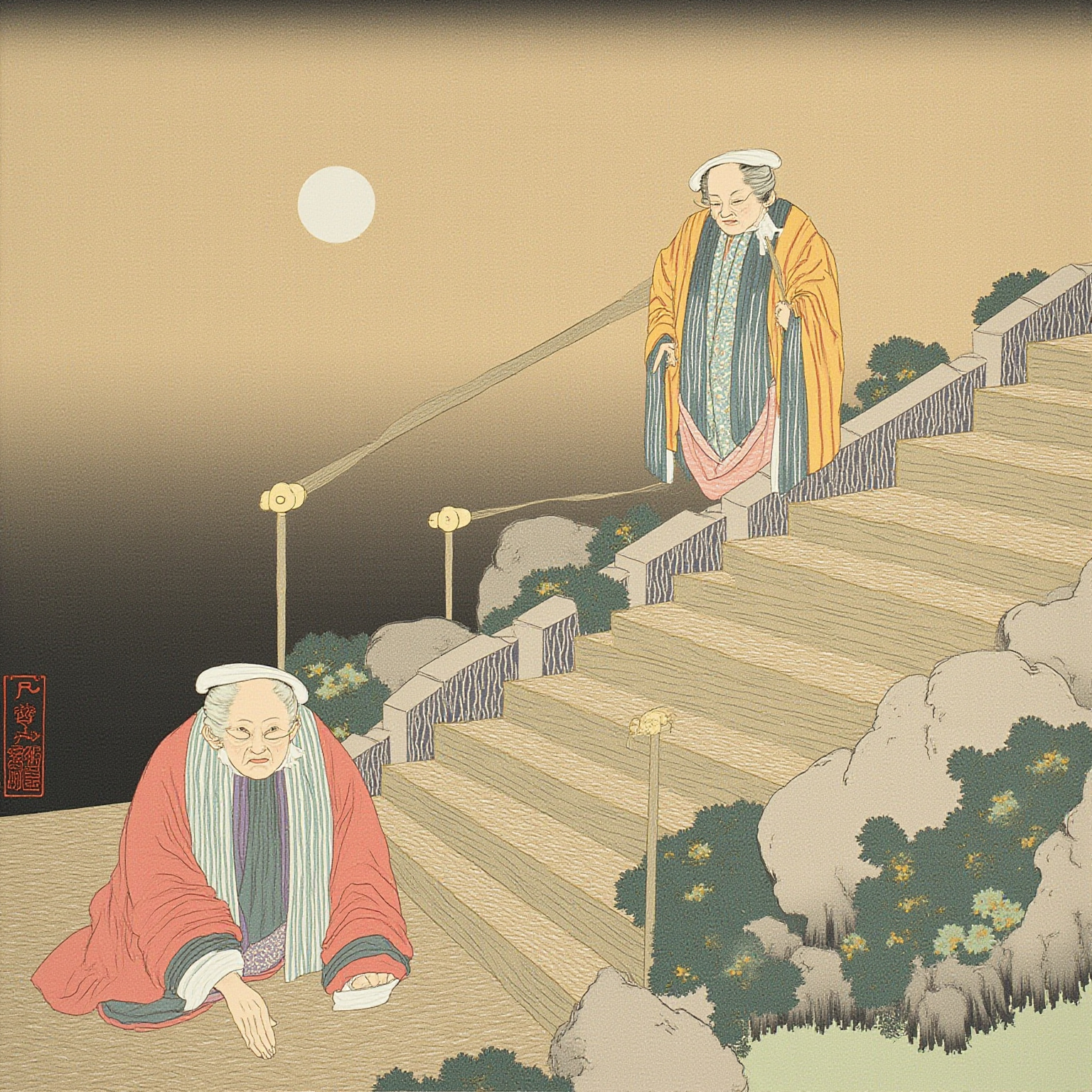
Were I but a fallen leaf blown by the wind, I should not be alone, I should not be wasted.
若为风中落叶,不复孤独,不复徒然。
金句 · 第137段 · 苔石与残雪间的收束
Themes and Craft
The recurring motif in the book is impermanence, but Kenkō's impermanence carries none of the weight of a Buddhist moralizing tract. He had seen the last shadows of the court, where traces of High Tang elegance still lingered; he knew the flowers before him would fall, the people around him would leave. He does not refuse it. He simply trains his eye on the petal as it drops, on the waning moon, on the moment that misses fullness by a hair. In this sense, the Tsurezuregusa is the earliest and most complete exemplar of what the Japanese call wabi-sabi: rather than reveling at the height of bloom, it tells us to linger where the petals begin to fall.
Stylistically, what sets it apart most is brevity. A passage runs anywhere from a few dozen characters to a hundred or two; each stands complete on its own, needing nothing before or after. So it is made to be opened at any page — today a passage on snow, tomorrow one on cherry blossoms, the day after a cold little joke, and each one works. This structural looseness is exactly why the book has not faded in seven centuries: it does not bind you, and you need not bind yourself to it. The first time I picked it up was on a winter train; I happened to flip to the passage about hearing insects on a snowy night. I read it twice and bought the whole book on the spot.
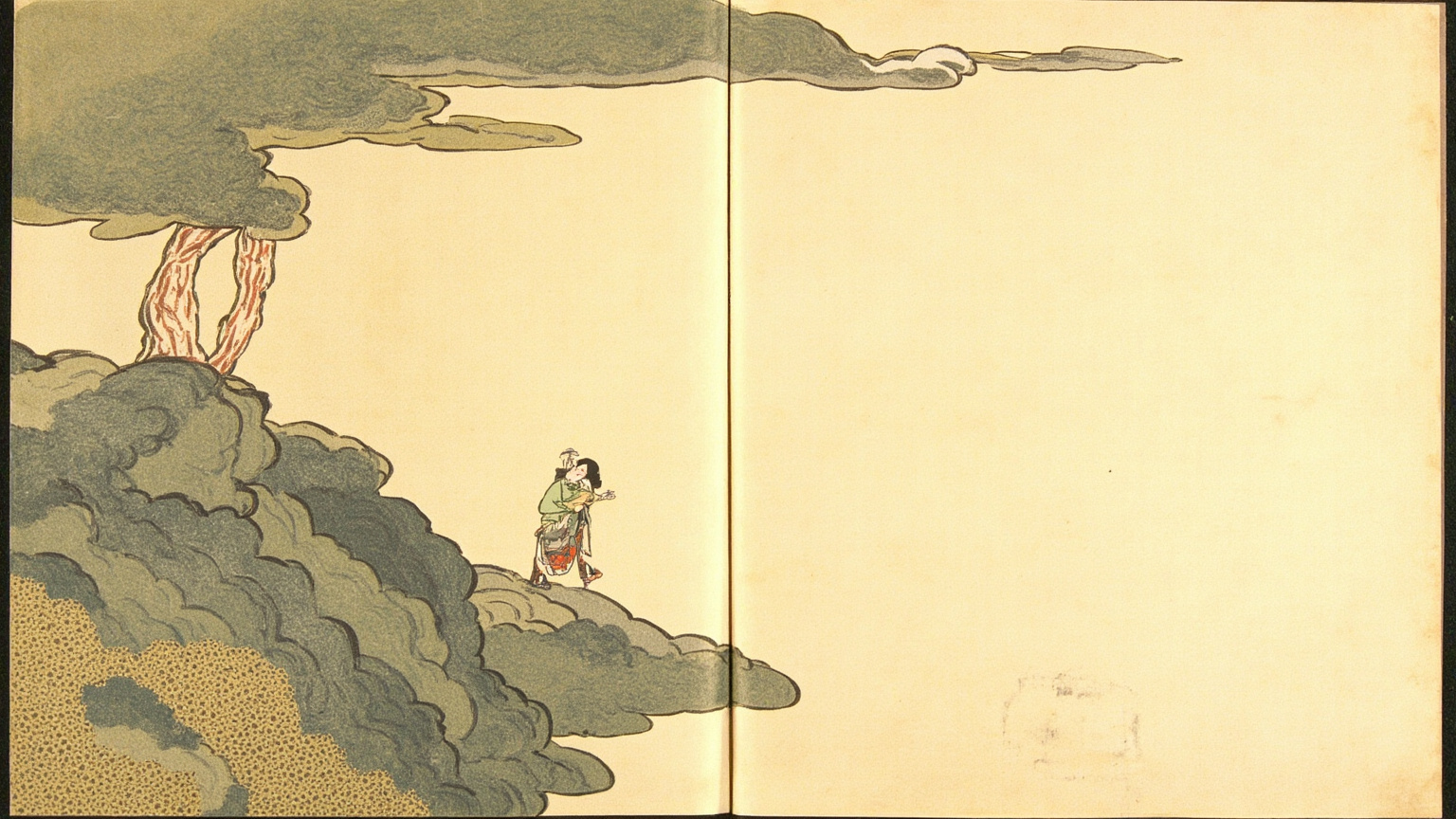
Again on technique: when Kenkō tells a story, he never finishes the job. The tale of Ninnaji temple carries no moral; the story of climbing the tree carries no judgment; the sugoroku anecdote is touched and left. The white space is where the reader does the work — after the laugh, after the held breath, before the next move is made. The line Kenkō did not write in those passages weighs more than the lines he did.
Why read it today?
The book has been talked to death, and those who talk about it often pluck out a single line, 'flowers need not be seen in full bloom,' and think they've understood it. The book's goodness is the kind that yields another layer with each reading. The first time through, you see the charming little tales. The second, you catch the tenderness hiding beneath the cool eye. The third, you notice that the recluse, when he writes about others, is writing about himself. Go read the original. A guide can only offer a map; what it cannot reproduce is the book's seasonal breathing, the precision of a sentence that cuts off midair, the faintly bitter humor of coaxing a laugh from a friend and then laughing along himself.
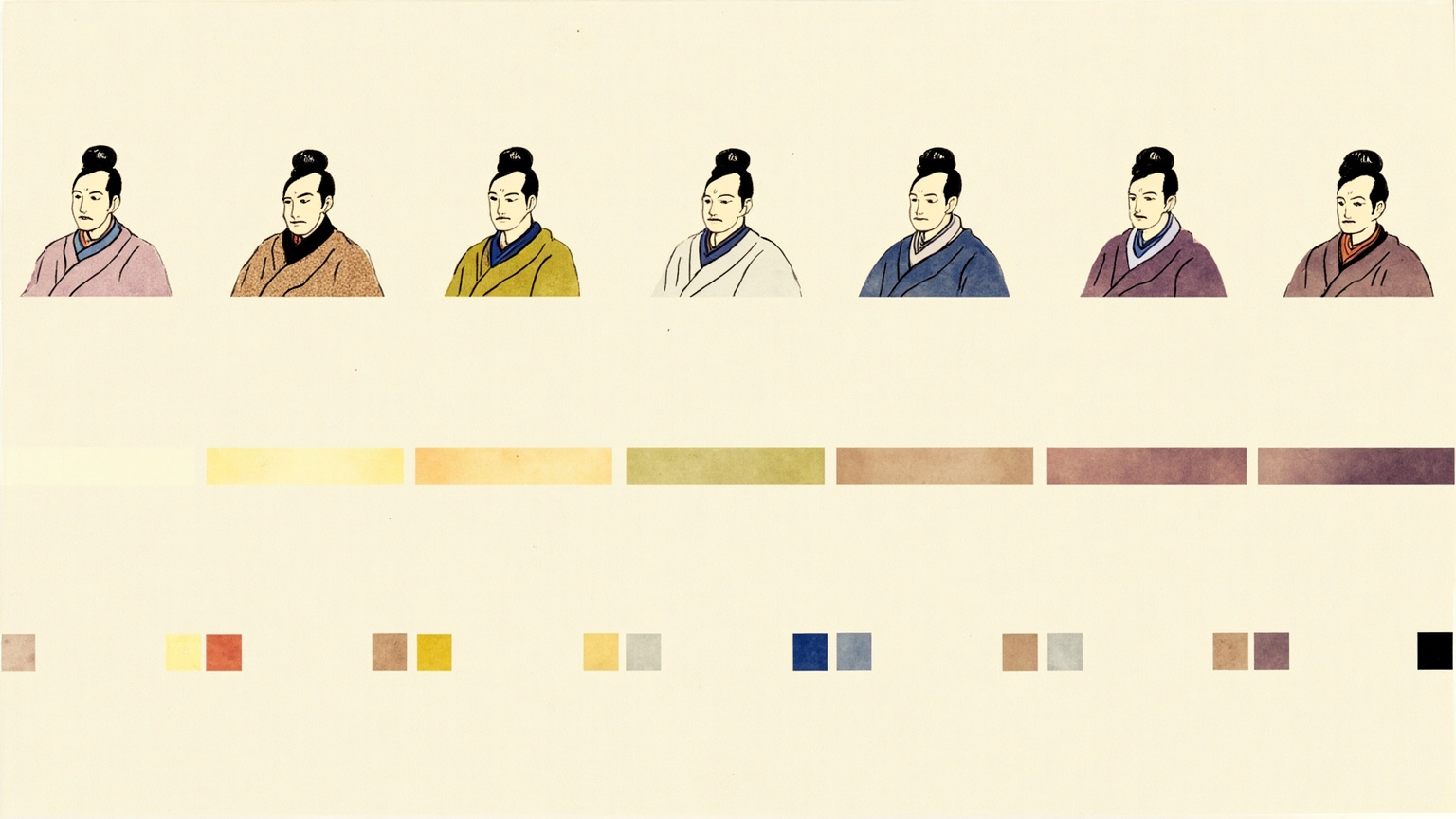
Art Direction4 plates
Before the guide was written, this book got a visual foundation — every illustration you just read grew out of it.