Fear and Trembling (Frygt og Bæven) · Companion Guide
恐惧与颤栗
一个承认自己走不进去的旁观者,替一位举刀又相信刀不会落下的老人写下了全部。
Opening: a knife, and an old man who believes it will not fall
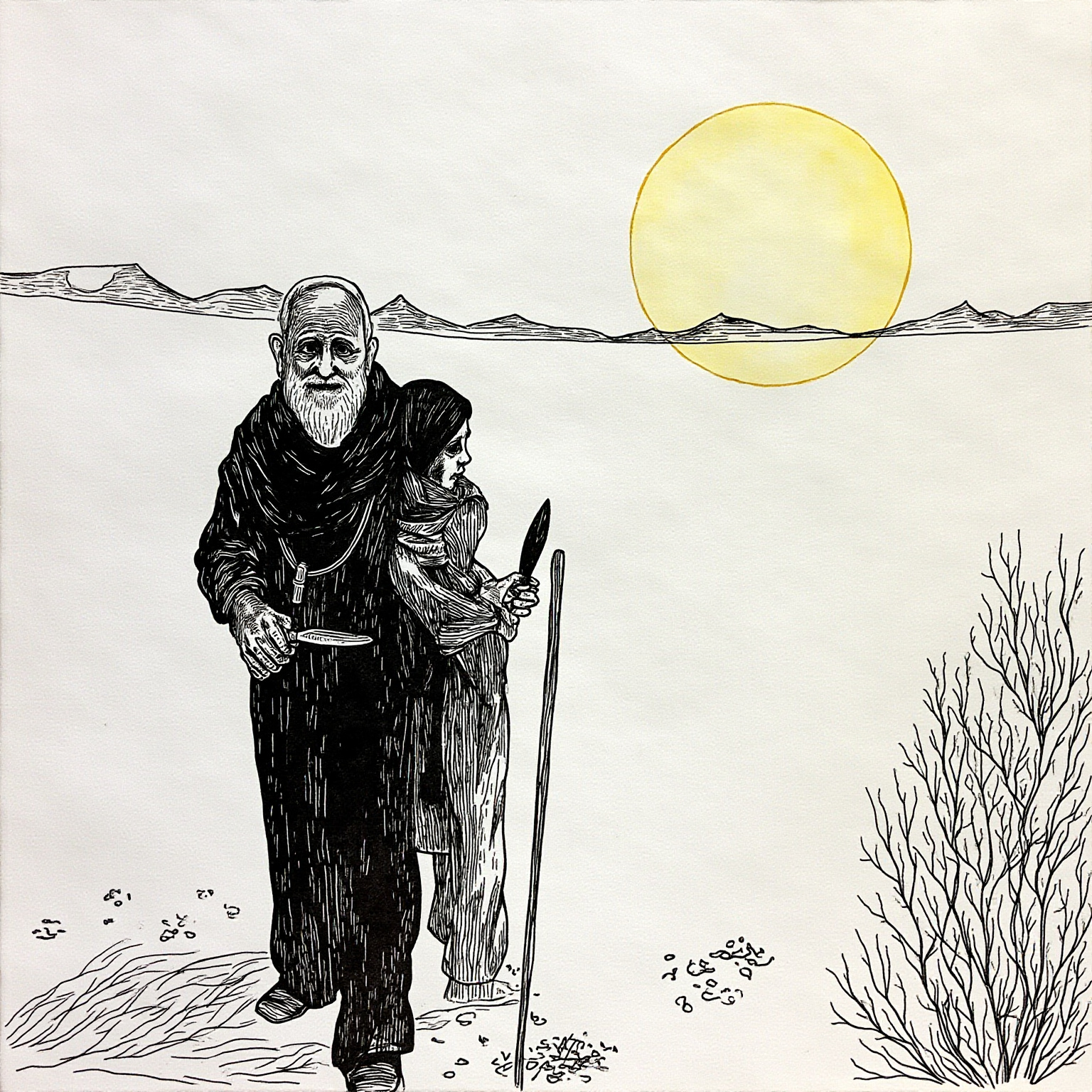
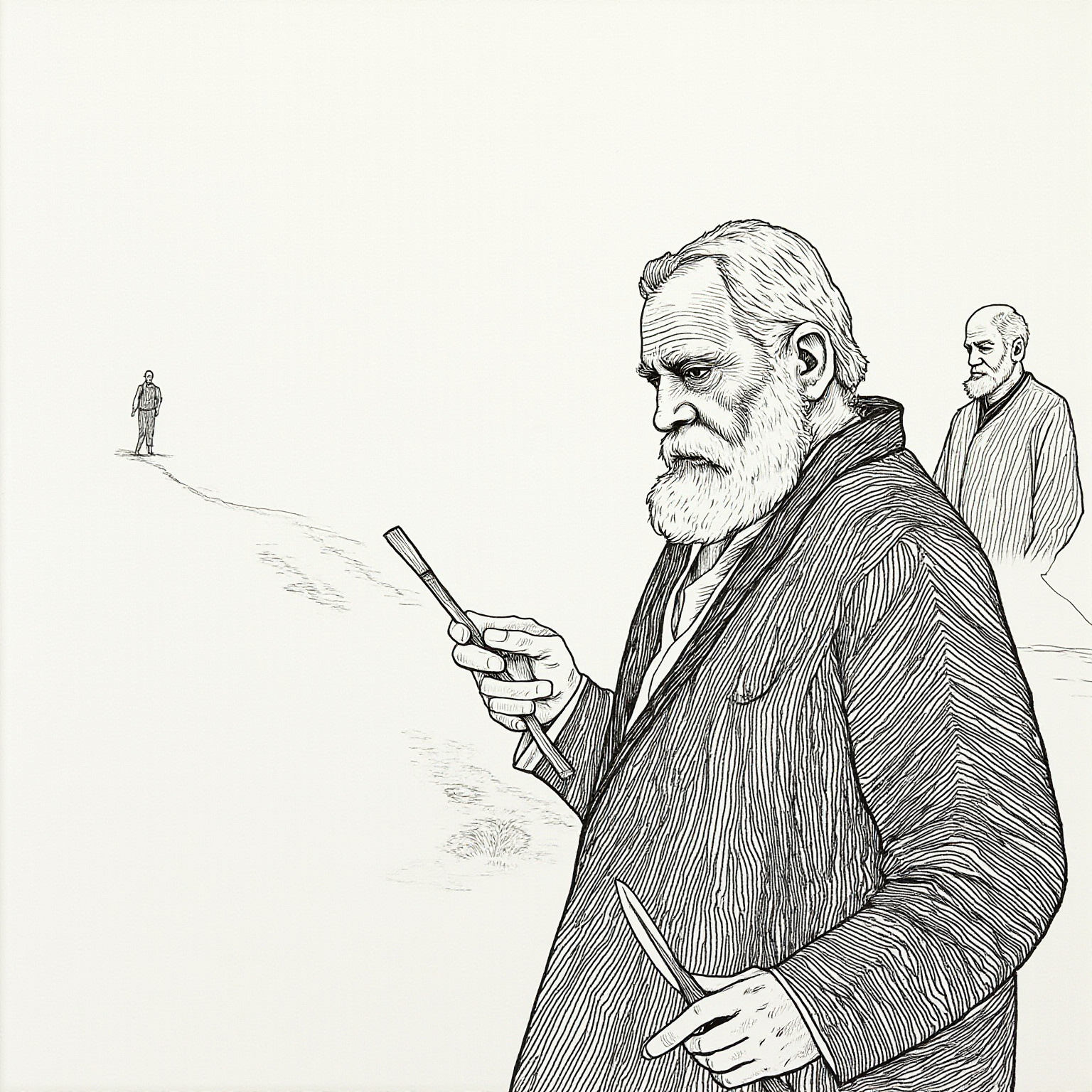
The old man raises the knife to his son's throat, an inch from falling. But what actually stops the book cold isn't whether the knife falls, it's that in the instant he raises it, he genuinely believes it will not fall, and believes that even after the offering is made, he will get his son back. This is not tragedy, not submission, and not the familiar creed that belief makes it so. It is the one problem this book alone poses: how a man on his way to kill his own child holds he must die and he must remain in the same two hands.
What kind of book this is
In October 1843, a Copenhagen publisher called Reitzel put out this slim volume of under two hundred pages. The title page carried a Latin pseudonym, Johannes de silentio, John of the Silence. The author's real name would not be on ordinary readers' lips for another hundred years: Soren Kierkegaard. It did not sell, and it was never built to. It is remembered instead because it minted a vocabulary for the modern self: by virtue of the absurd, the teleological suspension of the ethical, the single individual higher than the universal. Nietzsche, Sartre, and Camus all inherited these terms, and they became the ground tone of existentialism. Philosophy's histories place it near the source, one of existentialism's origins, arriving almost a century before the word itself. It is neither a treatise nor a novel. Kierkegaard called it, in his own phrase, a dialectical lyric, a strange form that circles the same event four times, rewriting it each time.
People and world: two times laid over each other
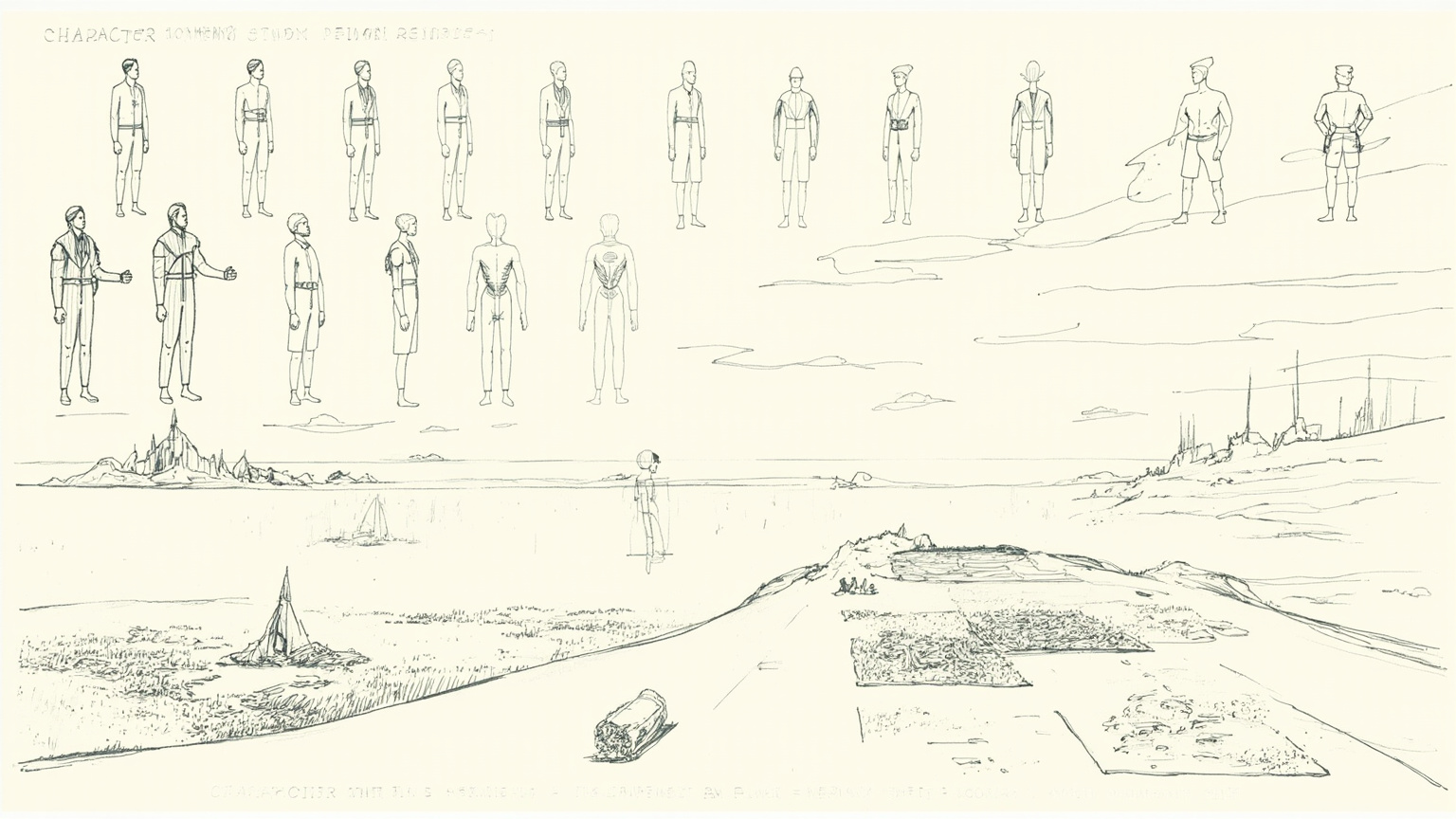
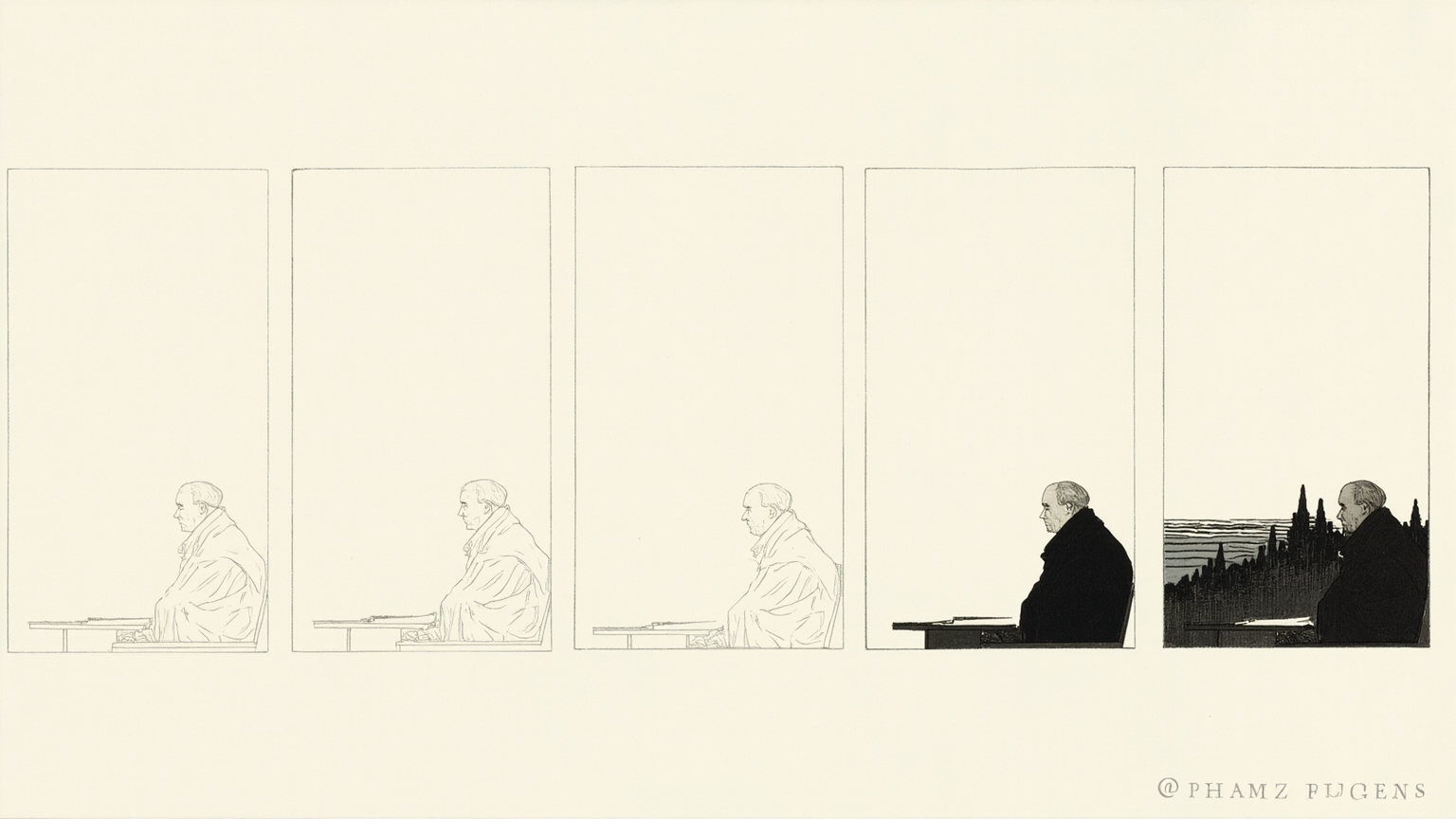
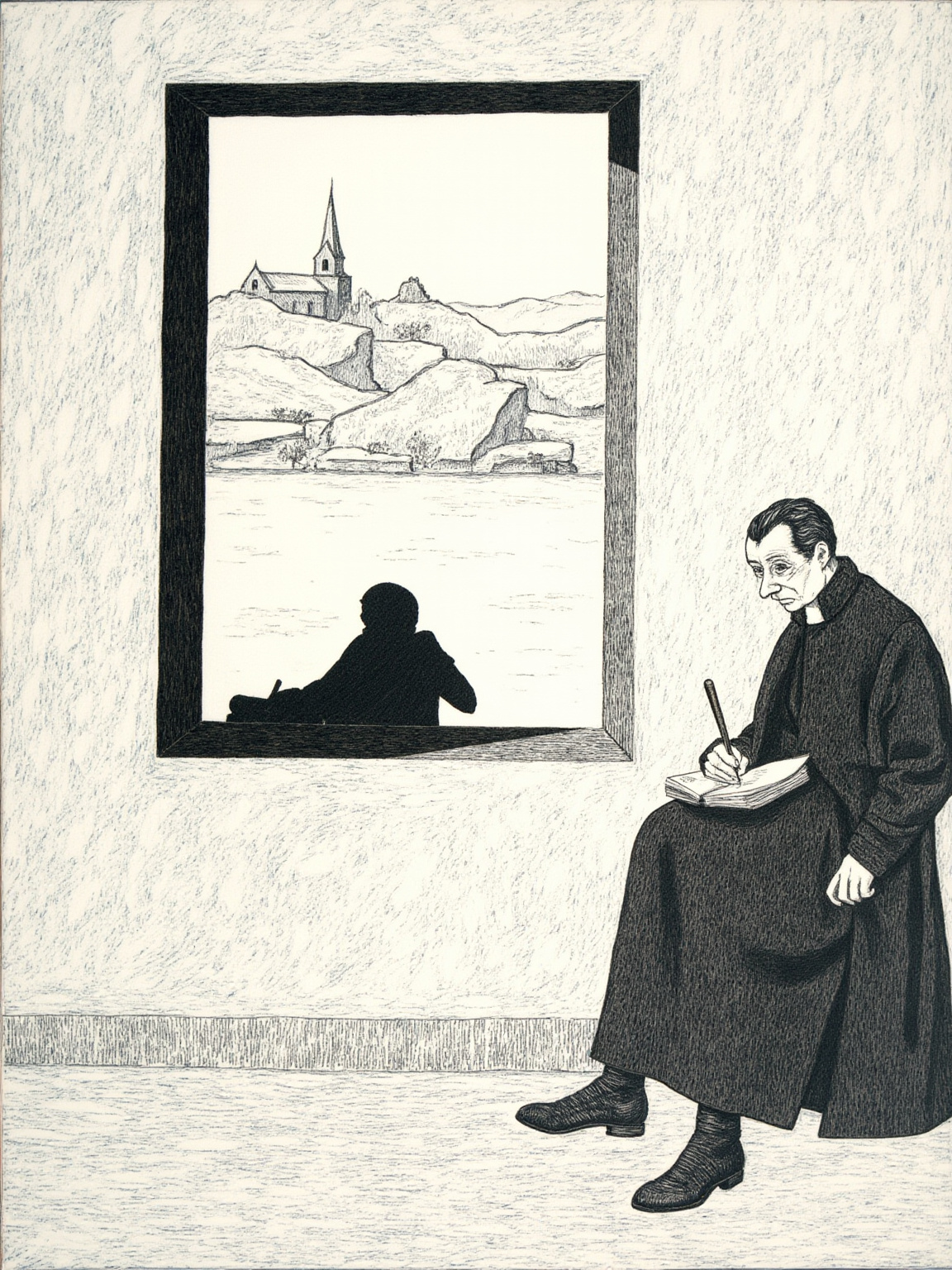
Two people occupy the book. One is Johannes, a man at a writing desk in some building along a Copenhagen canal, cobblestones and a verdigris church spire outside, the gray-blue winter light of the north falling through the window. He names himself John of the Silence because he writes about Abraham while admitting he cannot take Abraham's step himself. The other is Abraham, father of Isaac, the promised son born to him at a hundred. Genesis 22 records the command: take this child up Mount Moriah and offer him. Abraham never actually appears in the book. He is the man Johannes lifts out of Hebrew ethical judgment and rereads, again and again. Johannes's Copenhagen and Abraham's Moriah are the book's two layers, one the ethical self who is writing all this down, the other the stranger of faith it stares at but cannot reach. Neither layer replaces the other. That is the book's engine.
One more person stands outside the book: Regine Olsen, the Copenhagen woman Kierkegaard proposed to and then broke with, a year into the engagement. She never appears in the text, but many readers hear her in the shape of the knight of faith, a man who first gives up what he loves, then believes, by virtue of the absurd, that he will get it back. Kierkegaard himself, in a note he appended in 1846, told readers plainly not to pin any of this on him. Worth holding onto here: the biographical reading is one way in, not the last word.
I have not the courage to think it, and yet how else can one explain what the great Abraham did?
我没有勇气去想它,然而除此以外,又怎能解释伟大的亚伯拉罕所行的事?
金句 · 绪论 · 开场题词
How it unfolds: the same event, written four times
I. Exordium: four rewrites, each one ruled out
The book opens with an Exordium. Johannes rewrites the sacrifice of Isaac four times, and in each version Abraham is willing to obey, and in each one, something is missing. In the first, Abraham is morally sublime, but he has lost the absurd belief: once he offers the child, he no longer believes he will get him back. In the second, he is caught between the promise and the command, but he cannot keep silent. In the third, he carries off a tragic ethical feat, but by then he has already equated Isaac with certain death and can no longer reach the belief that he will be given back. In the fourth, he is reduced to an ascetic simply carrying out orders, and the difficulty of faith is erased altogether. None of the four is the version Johannes is after. They are not four equally valid positions sitting side by side, they are the same problem rewritten four times, and each rewrite forces him closer to the one version that actually has faith in it.
II. Eulogy on Abraham: what makes him great is not obedience but the absurd
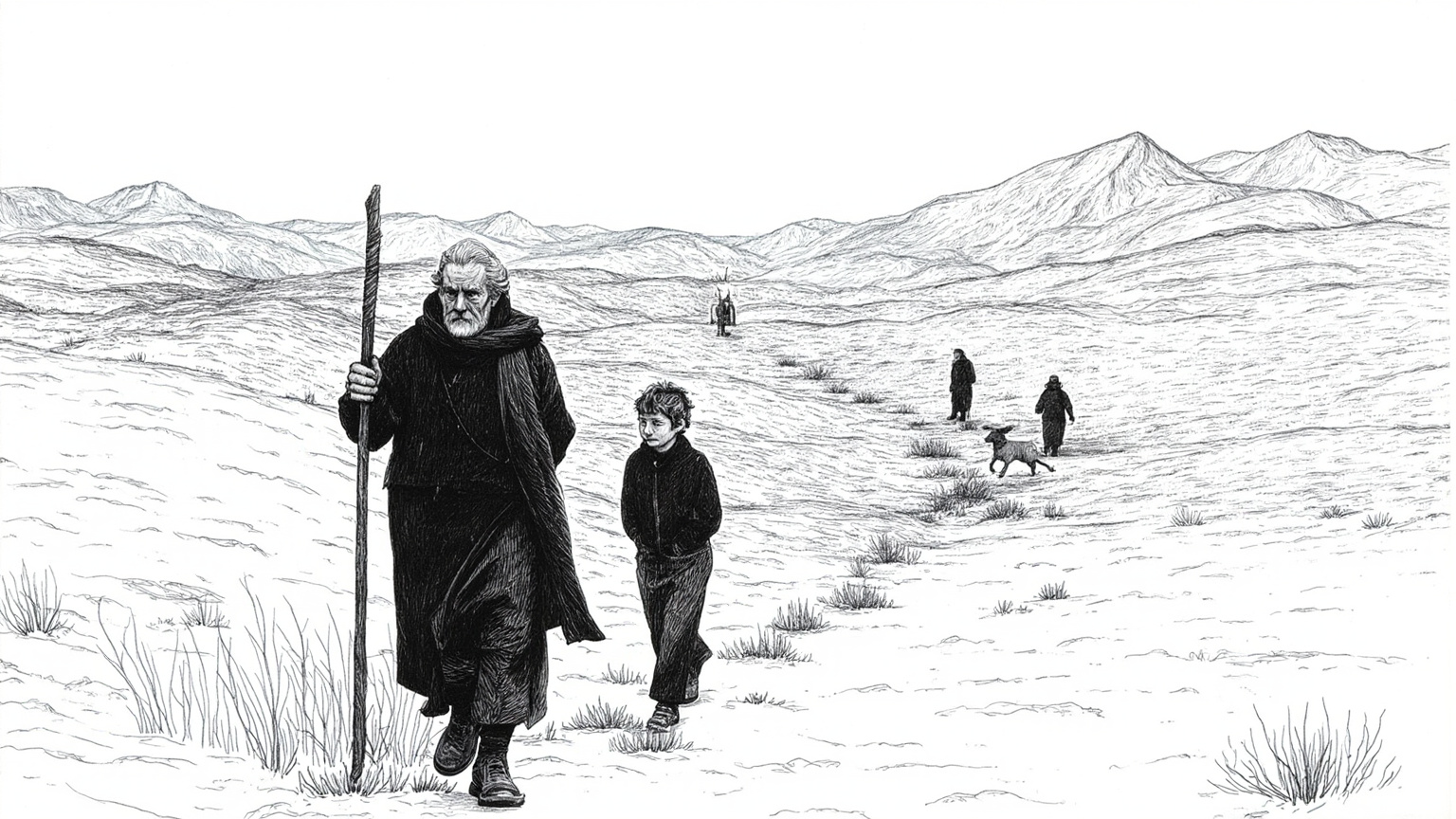
Next comes the Eulogy on Abraham. Johannes lifts the patriarch out of the ethical judgment the Hebrew tradition has passed on him and rereads him from scratch. The traditional reading calls Abraham great because he made an ethically defensible sacrifice, torn between command and love, a tragic hero. Johannes says no. His greatness is not obedience. It is believing that even as he offers Isaac up, he will get Isaac back, by virtue of the absurd. The man standing on Moriah with the knife raised is holding two contradictory claims at once: Isaac is being sacrificed, and Isaac will live on through his descendants, both true in the same breath. That is faith by virtue of the absurd.
Abraham is great by reason of his faith, which is a paradox—yet by reason of this very paradox he did not become a tragic hero.
亚伯拉罕之所以伟大,乃因他的信心——信心本是一个悖论;正因这悖论,他并没有成为一个悲剧英雄。
金句 · 亚伯拉罕颂 · 颂词之核心
This is also the line dividing Abraham from the tragic hero. The tragic hero completes himself in the sacrifice itself, expecting nothing back. Abraham completes himself the opposite way, he expects. With this single stroke, Johannes cuts Abraham out of the Greek category of tragedy altogether and sets him down somewhere ethical language cannot follow.
Faith is precisely this contradiction: the single individual as the single individual stands in an absolute relation to the absolute.
信心恰好就是这一矛盾:作为单一个体的这一个,与绝对者站在一种绝对的关系之中。
金句 · 亚伯拉罕颂 · 信仰之定义
III. Preliminary Expectoration: where the two knights part
Then comes Preliminary Expectoration. Here Johannes introduces the spine of the whole book: the knight of faith against the knight of infinite resignation. The difference is a matter of how many movements. The knight of infinite resignation makes one movement: he gives up what he loves, and after that he never expects to get it back. He accepts the loss as final. The knight of faith makes two movements. He also gives up what he loves, but immediately after, he believes, by virtue of the absurd, that he will get it back. Johannes admits it himself: he can understand the first movement; he cannot make the second. He can write the giving up, write that tearing loss, but he cannot write the smile that comes with believing the offering will be returned, that is a different smile from the tragic one.
This passage is the most honest sample of Johannes in the whole book, and the real mark of why the book sits at the source of existentialism: he does not pretend to understand; he only rehearses, over and over, standing at the threshold. That pushes the reader to the same threshold, to see exactly how deep the step is, and to find out whether they can take it either.
The knight of faith is the only happy man, the knight of infinite resignation is the one who performs the great deed, but the knight of faith is the one to whom it is given to possess the joy.
信仰之骑士是唯一幸福的人;无限弃绝之骑士完成那伟大的举动,而信仰之骑士蒙赐得以拥有那喜悦。
金句 · 初步吐露 · 两种骑士之分
IV. Three Problemata: cutting the net of ethics, one strand at a time
Pushing the problem this far is not enough. Johannes then fires off three Problemata, three questions that pull Abraham out of the net of ethics one at a time, each one driving ethics to a place it cannot follow. The first: is there such a thing as a teleological suspension of the ethical, a special moment in which a single individual, dealing directly with the absolute, can set ethics aside as a relative end without denying it outright? The second: is there an absolute duty to God, a duty higher than ethics, one that even universal obligations like a father's duty to love his son cannot override, and that holds only, one-sidedly, toward God? The third: can Abraham's silence toward Sarah, toward Eliezer, toward Isaac himself be ethically justified, must he withhold any explanation from the people closest to him in order to hold the act together? The three questions are not the same question. Suspension asks about the boundary of ethics. Absolute duty asks about the ranking of obligations. Silence asks about what cannot be communicated at all. Stacked together, they are what finally set Abraham down in the place ethics cannot reach.
Johannes keeps reminding the reader: granting this suspension does not mean ethics stops mattering. Ethics remains the highest universal standard, it is only that in the special moment a single individual runs into the absolute, the standard's reach is temporarily held back. This is the point in the book most likely to be misread as anti-ethical, and it should be pinned down: it is not against ethics. It relocates ethics.
V. Extension: the abstract conclusion comes down to Copenhagen's streets
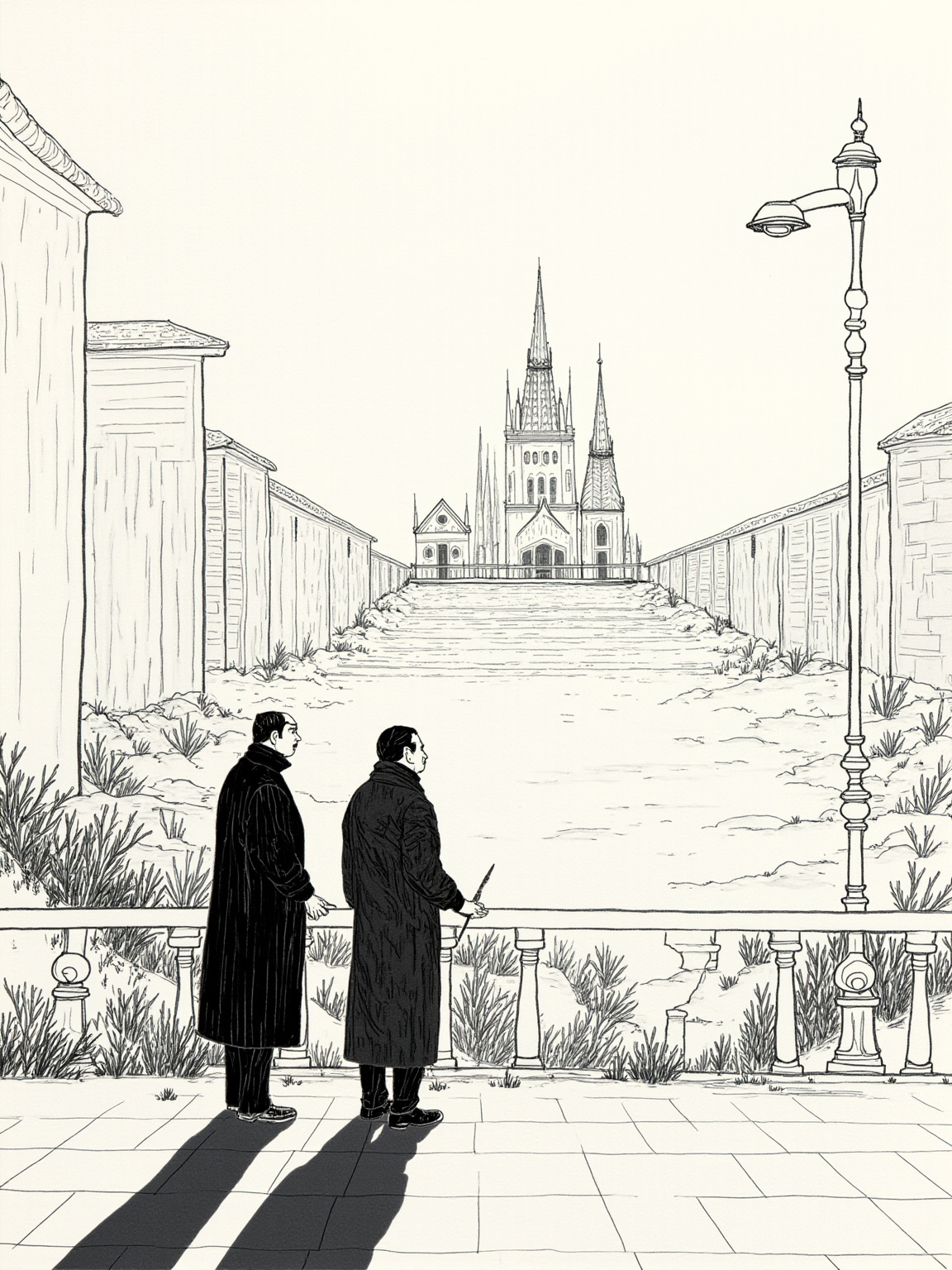
This is the section that explains why the book keeps being reprinted and keeps landing on general reading lists. Philosophy, for the first time, takes on the coloring of ordinary civic life instead of playing concept games from Hegel's lectern. Johannes says: the man who can believe, by virtue of the absurd, that he will get back what he loves, that man is the prototype of the modern individual.
The most honest thing about this book is not that it explains what faith is, but that it admits it cannot take the step itself, and writes about it anyway.
VI. Where Johannes de silentio stands himself
The pseudonym itself is part of the machinery. Johannes de silentio: the Latin name is a standing reminder that Abraham kept his silence with Sarah, with Eliezer, with Isaac. Johannes keeps a silence of his own with the reader: he tells the whole story and still does not finish delivering its meaning. The note Kierkegaard appended in 1846 made this pseudonymous distance official, instructing readers not to treat the pseudonym's voice as his own. In this book, author does not equal narrating voice.
Themes and craft: why this small book is remembered
There is one central confrontation: faith against ethics. Abraham's act cannot be judged by Hebrew ethics, Greek philosophy, or Hegel's universal, either there is a category beyond ethics called faith, or Abraham is not the father of faith at all. Johannes comes down on the side of the former. From there the book branches into a few threads: the absolute of the individual, in which a single person outranks the universal at the moment of meeting the absolute; silence and incommunicability, in which the situation of faith cannot be translated into ethical language; and faith by virtue of the absurd, in which the essence of the act of faith is believing the offering will be returned. This vocabulary passed directly into modern philosophy through this book, and discussions of the individual's claim to the absolute still cannot avoid it.
Either there is an absolute duty to God, or faith has never existed; either Abraham is mad, or the paradox of faith is the highest thing there is in the life of a man.
要么存在对上帝的绝对义务,要么信仰从未存在过;亚伯拉罕不是疯了,就是信仰的悖论乃人生所能达到的极致。
金句 · 主题与手法 · 全书对峙之结语
As writing, the book is also a formal experiment. Philosophy stops posing as a system and shows up instead behind a pseudonym, through rewriting, in the posture of admitting it cannot take its own step. This method of circling the same question without letting go is the source of existentialism's later anti-system tradition; the writing postures of Nietzsche, Sartre, and Camus all trace back to this first stroke.
The hook to send you to the text itself
A guide gives you the map. The text is the ground. Knowing that Abraham's knife never falls, knowing that Johannes admits he cannot take the step, knowing that the book is read as a source of existentialism, a guide can hand you all of that, the map-level facts. But Johannes's Danish carries a restrained tremor that only shows itself in the original sentences. The differences between his four rewrites are so fine they only register when you set the original passages side by side, word for word. And the quiet, solitary gait he gives the knight of infinite resignation has to be read slowly, in the gray winter light of Copenhagen. None of that travels in a guide.
There is one more experience a guide cannot supply: the moment Johannes pushes you to the threshold yourself. He does not decide for you whether you step into the room of faith. He only makes you stand at the door and watch the light leak out from underneath it. The feeling of closing the book after the last page is something you have to sit down at his writing desk to earn.
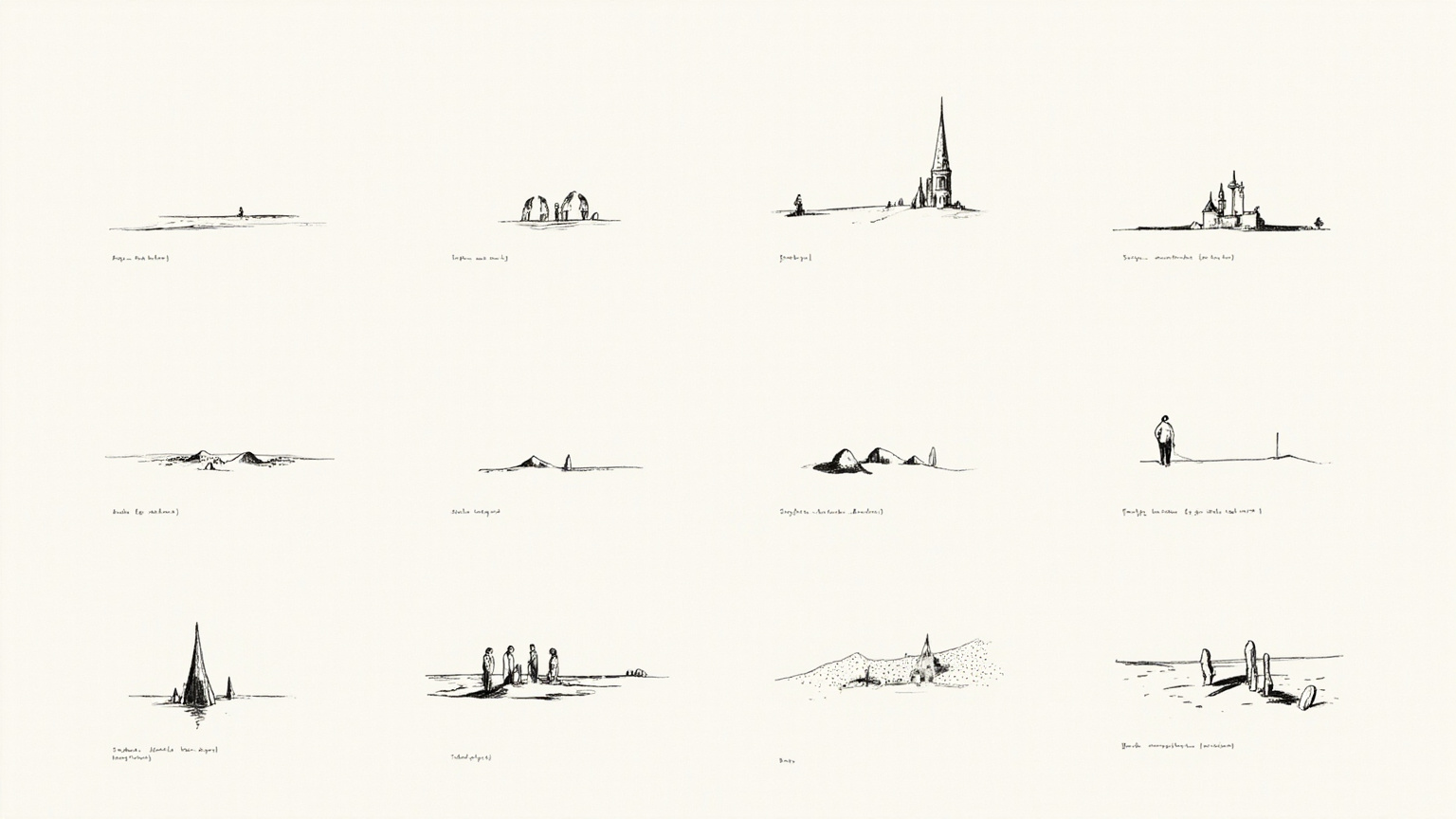
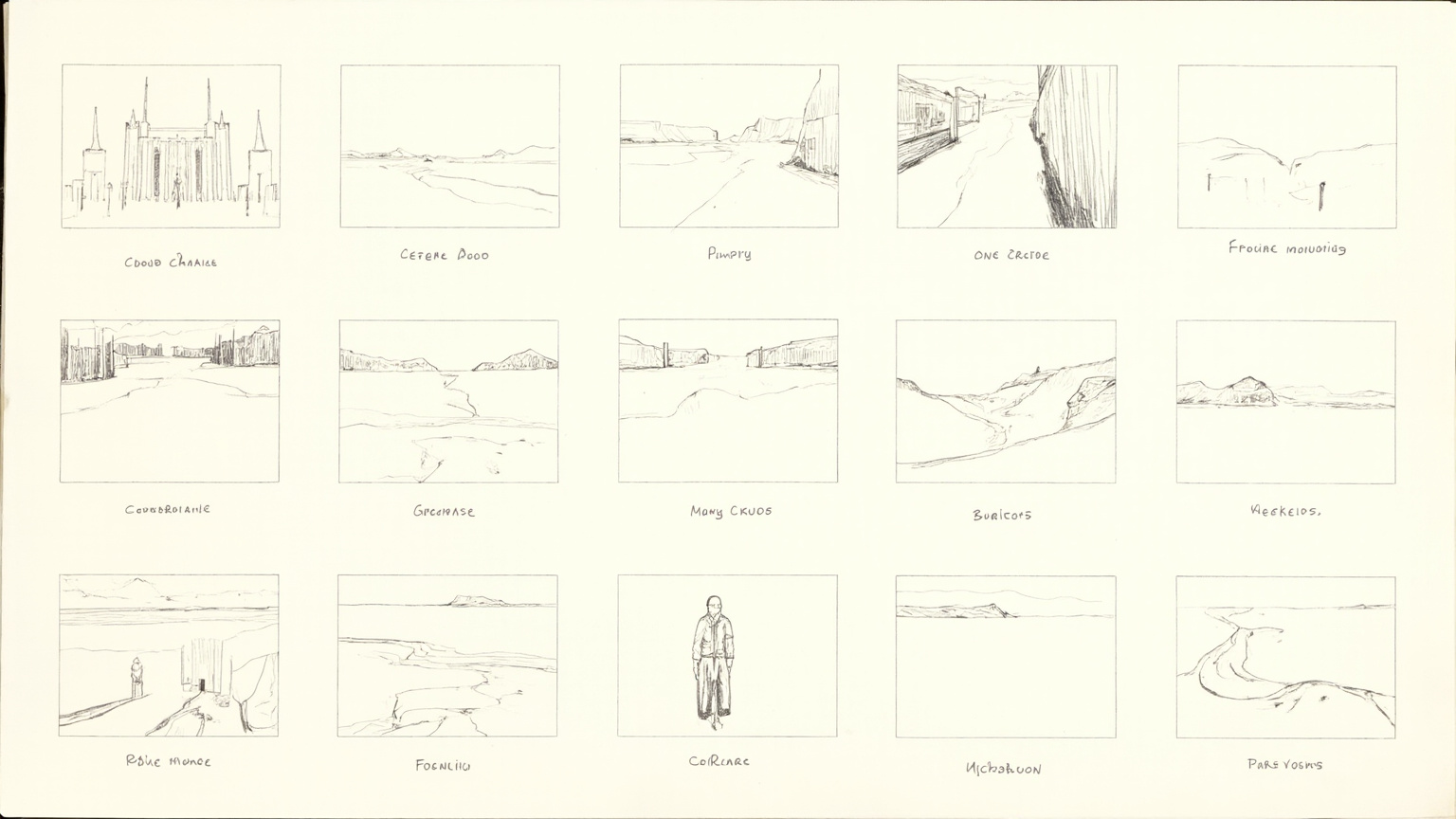
Art Direction4 plates
Before the guide was written, this book got a visual foundation — every illustration you just read grew out of it.