Foucault's Pendulum · Companion Guide
傅科摆
三个编辑把秘传传统编成一场玩笑,却在自己织出的阴谋图上看见了命运。
A Belt, a Typewriter, a Pendulum That Never Stops
A belt etched with strange symbols hangs a living man in a publisher's basement. It is the quietest death in this Eco novel, and the loudest one too — it turns several hundred pages of a joke written for laughs into a ledger of consequences. The book has a second killer, deep in the mountains of Brazil: a giant Foucault pendulum driven by a perpetual "molecular clock," forever swinging, forever drifting off course, forever falling short of the nail waiting beneath it.
What Kind of Book Is This
Foucault's Pendulum is the second novel Umberto Eco delivered, in the late 1980s, following the earlier The Name of the Rose. Eco was Italian, trained as a professor of semiotics, and had written academic papers, newspaper columns, and popular books explaining medieval aesthetics to general readers. So when he decided to parody conspiracy theory, he wasn't an outsider gawking at the spectacle — he went in holding a scalpel. Readers of serious fiction in the Chinese-speaking world have long filed this book under one heading: finish it, and you can never read a conspiracy thread the same way again.
Three Editors, One Publishing House, One Outline Meant as a Joke
The story opens in the mid-to-late 1980s in Milan. At a fictional publishing house called Garamond, three editors sit down to plan a popular series on the occult. The narrator, Casaubon, trained in comparative literature and semiotics, is the "I" of the whole book. Belbo, older than him, spends his free hours obsessively typing up a fictional archive on his Olivetti typewriter. Diotallevi, the third, is the one editor who genuinely understands Jewish mysticism. At first the three of them only want to build a reader's index — Rosicrucians, Cathars, Kabbalists, Templars, Freemasons, the Illuminati — a reasonable classification of secret-society literature scattered across too many sources.
A man calling himself a retired colonel turns up at their door. His name is Ardenti, and he hands over a map, which he claims to have stolen from the basement of the Temple of Themis in Paris — Freemasonry's grand lodge. The map charts the spread of a so-called Ylegnon Society across Europe and the world, branches crammed across the page like the legs of some sprawling creature. He adds that a guardian monster in that basement nearly killed him on the way out. The three editors should have laughed the map into a drawer, and they did laugh. But once the laughing stopped, they did something else: they picked the joke up and kept running with it.
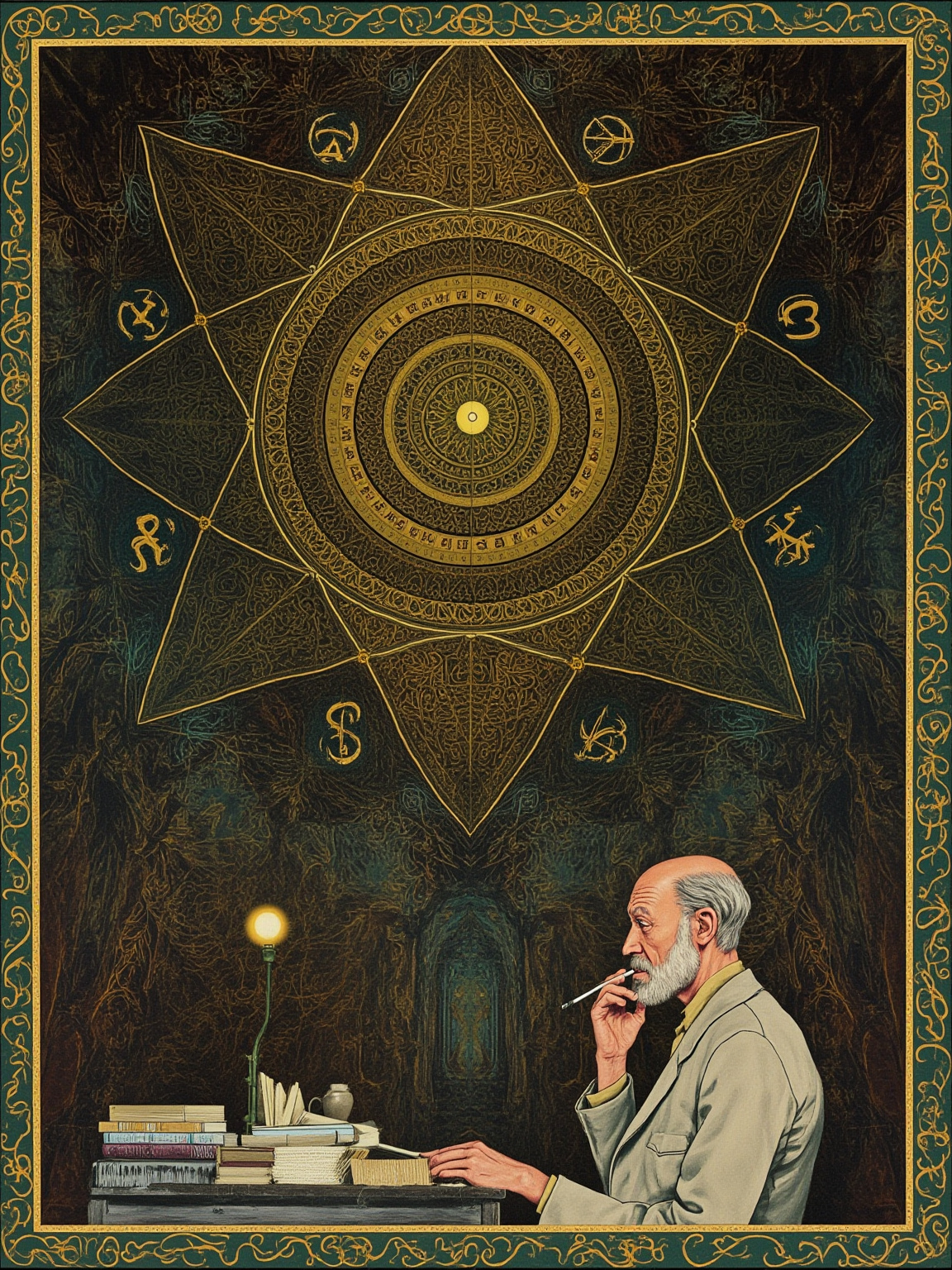
The Plan was a joke, but the world had begun to take it seriously.
计划起初只是一个玩笑,可世界已经开始认真对待它。
金句 · 第1部
How a Joke Became an Outline
It starts small: to make the map hang together, the three of them begin wiring every esoteric tradition they can find to every other one. Rosicrucians link to Cathars, Cathars to Kabbalists, Kabbalists to Templars, Templars to Freemasons — every historical tributary gets a thread run through it. It began as a joke, but a joke repeated seriously enough acquires its own momentum. Belbo gets hooked hardest of all — in his typewriter "manual" he expands the joke outline into a detailed index he can consult on demand, ready to flip to an answer for any question about any strand of esoteric history.
In my reading, this is where the book truly begins — not because the conspiracy is astonishing, but because it is so light and so reasonable. All three men were trained enough to know better; instead, it's exactly because they know so much that they're able to dress the joke up into a working system. Eco writes it carefully: he lets you laugh at the three of them while quietly making you reach up and scratch the same itch you feel reading a conspiracy thread yourself.
The First Time the Joke Leaks Into Reality
What happens next is the kind of thing that still gives Casaubon chills years later: Ardenti actually turns up dead in the basement of Garamond, in circumstances that stay mysterious, on a timeline that matches the rumors around his map all too well. The publishing project is shelved and the three men scatter. Diotallevi falls ill and goes into hospital. Belbo keeps adding to the web in his "manual." Casaubon leaves publishing to become a journalist. Garamond itself is quietly taken over by a shadowy outfit called Manfredian Editions — and the irony is that the people doing the taking-over look exactly like the kind of people the three of them had been writing about.
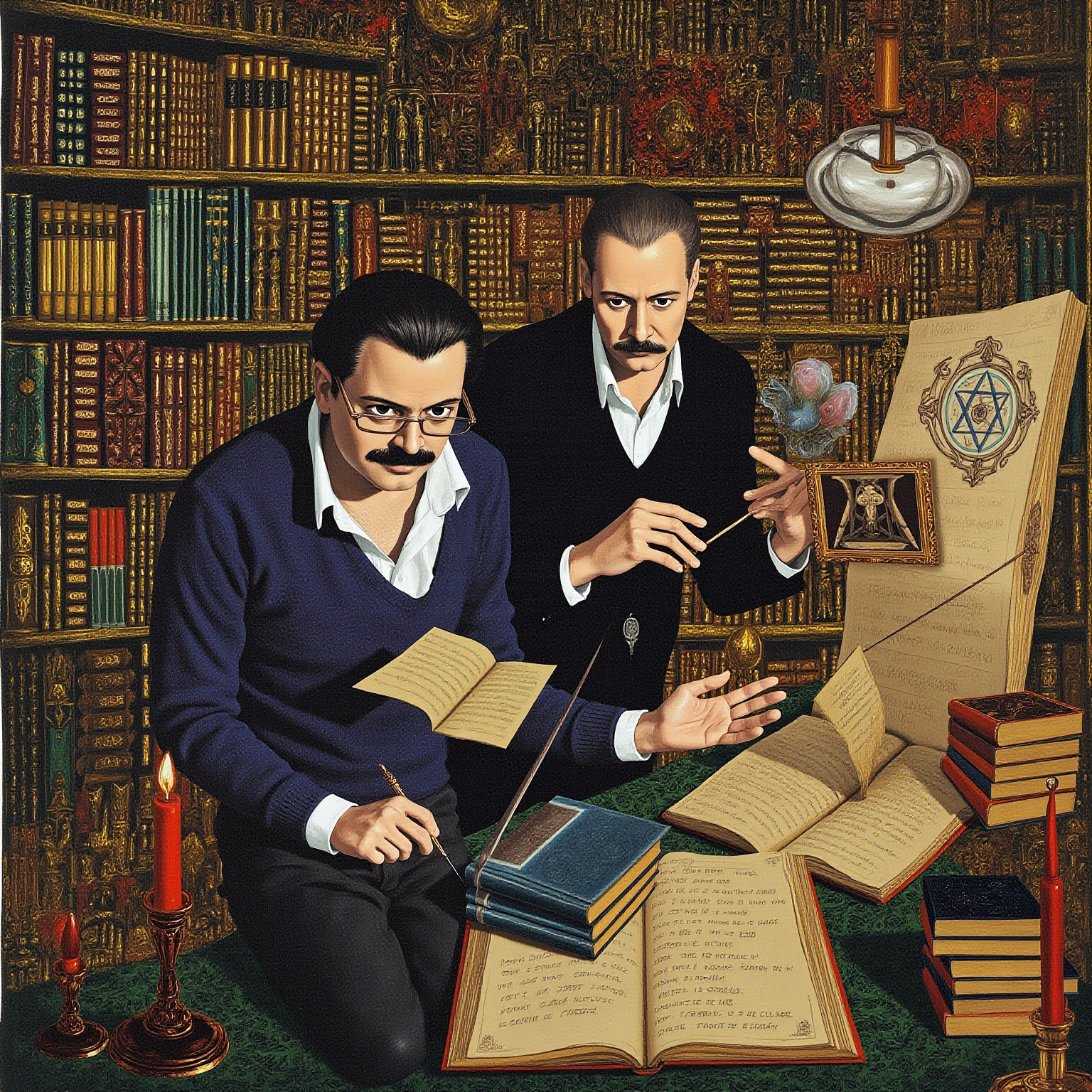
The map had returned to the place from which it had been stolen.
那张图回到了它被带走的地方。
金句 · 第2部
This is the exact point where the joke crosses over into reality. Until now, every strand of esoteric lore had lived on paper — Belbo could type it up laughing the whole time. Ardenti's death pins that paper back down to the floor.
The Lesson at the Hospital Bed
Diotallevi is the one editor who genuinely knows this material, and the one Eco trusts to carry the book's other pole. Lying in his hospital bed, he and Casaubon have the quietest and heaviest conversation in the whole novel: he talks about Jewish mysticism, about Kabbalah, about Pythagoras — number as the foundation of the world, every object carrying a hidden numerical relation to everything else. The conversation stands in direct opposition to the conspiracy "Plan" that Casaubon and the others cooked up: one is a false labyrinth built by taking symbols seriously, the other is an ancient truth uncovered by taking symbols seriously. Not long after this conversation, Diotallevi dies.
This is half of what the novel is really doing. The conspiracy "Plan" the three editors invent imposes a pattern on history from the outside; the esoteric tradition Diotallevi describes is a pattern that grows from the inside. Both sides believe symbols carry meaning — the only difference is where that meaning comes from. One man's death is what finally tears the two apart.
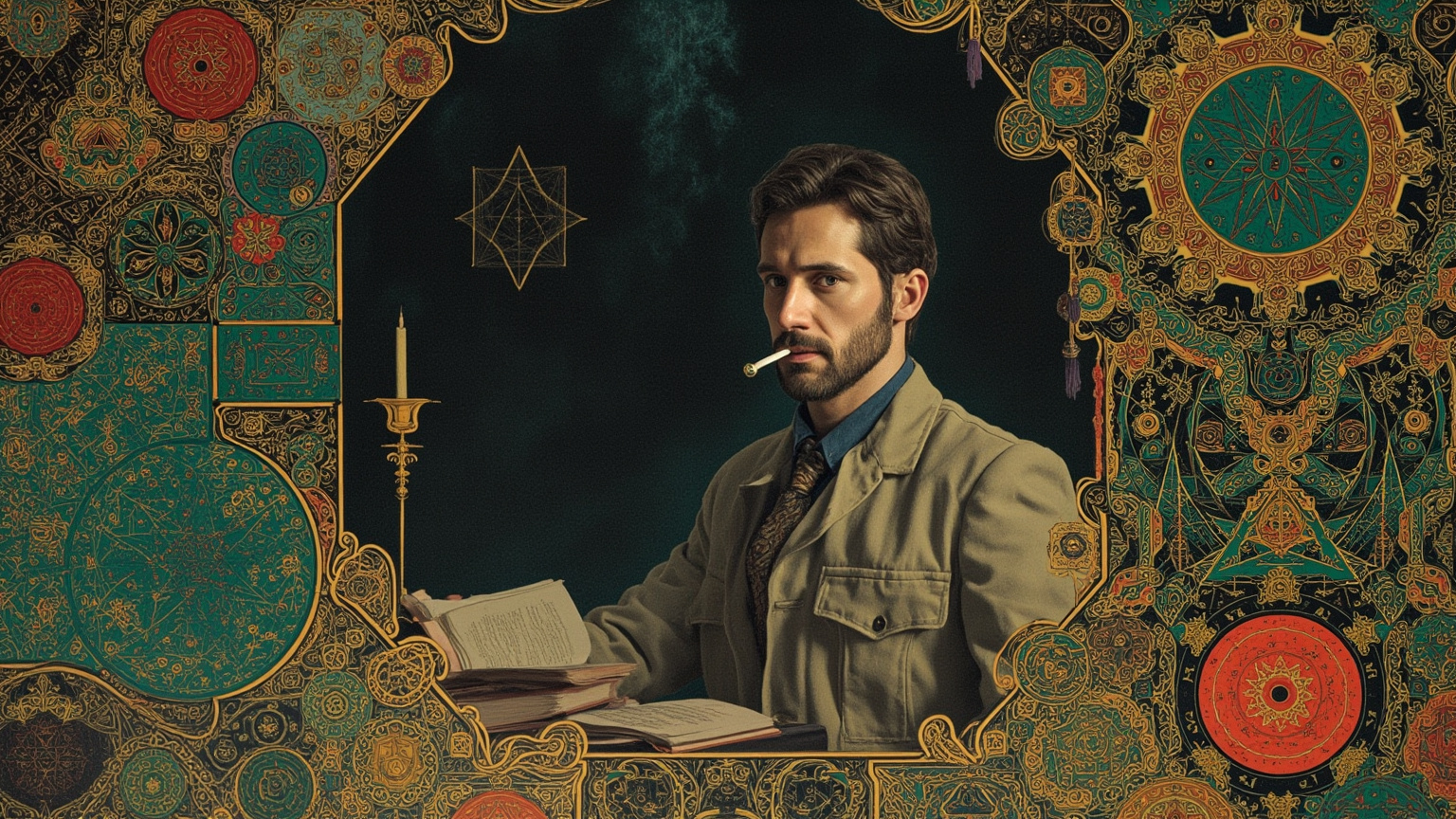
Numbers are the secret language in which the world speaks to us.
数字,是世界对我们说话的隐秘语言。
金句 · 第2部
The Temple Deep in the Mountains of Brazil
Years later, a temple calling itself "the End of the World" turns up deep in the mountains of Brazil. Inside sits something that shouldn't be physically possible: a giant Foucault pendulum, driven by a so-called "molecular clock" perpetual-motion mechanism. The bob is a metal sphere, and the nail it can never quite reach beneath it is the temple's holy relic. An invitation from an unknown sender puts this pendulum's "pilgrimage across the centuries" into the hands of Casaubon and Belbo — and it happens that their own "Plan" outline had already written this temple in.
On the flight to keep the appointment, Casaubon starts to wake up: the map, the joke outline, the people he'd assumed were only reading along with the manuscript — himself included — had all been set up in advance. Brighella, a courtly man with what sounds like a Swiss accent who claims to study figures like Mother Teresa, turns out to be the real owner of the whole network. Casaubon realizes he isn't the one solving the puzzle. He is the puzzle.
The Belt, the Hanging, and Vago Who Would Not Burn
The ritual's climax is Belbo's death. The manner of it matches, word for word, the "possible death" he'd sketched as a joke in the Milan basement a year earlier — a belt etched with runes. Eco writes the echo with no sentimentality at all: he simply lets the joke land on reality, unchanged. Casaubon takes the chance to slip out of the temple. In the woods afterward he runs into the caretaker, Vago, the novel's most ironic witness of all: the "Plan" calls for pilgrims to be burned alive, yet Vago hasn't been burned, and he's perfectly capable of chatting with a visitor in that visitor's own language. Even the burning, in other words, was staged.
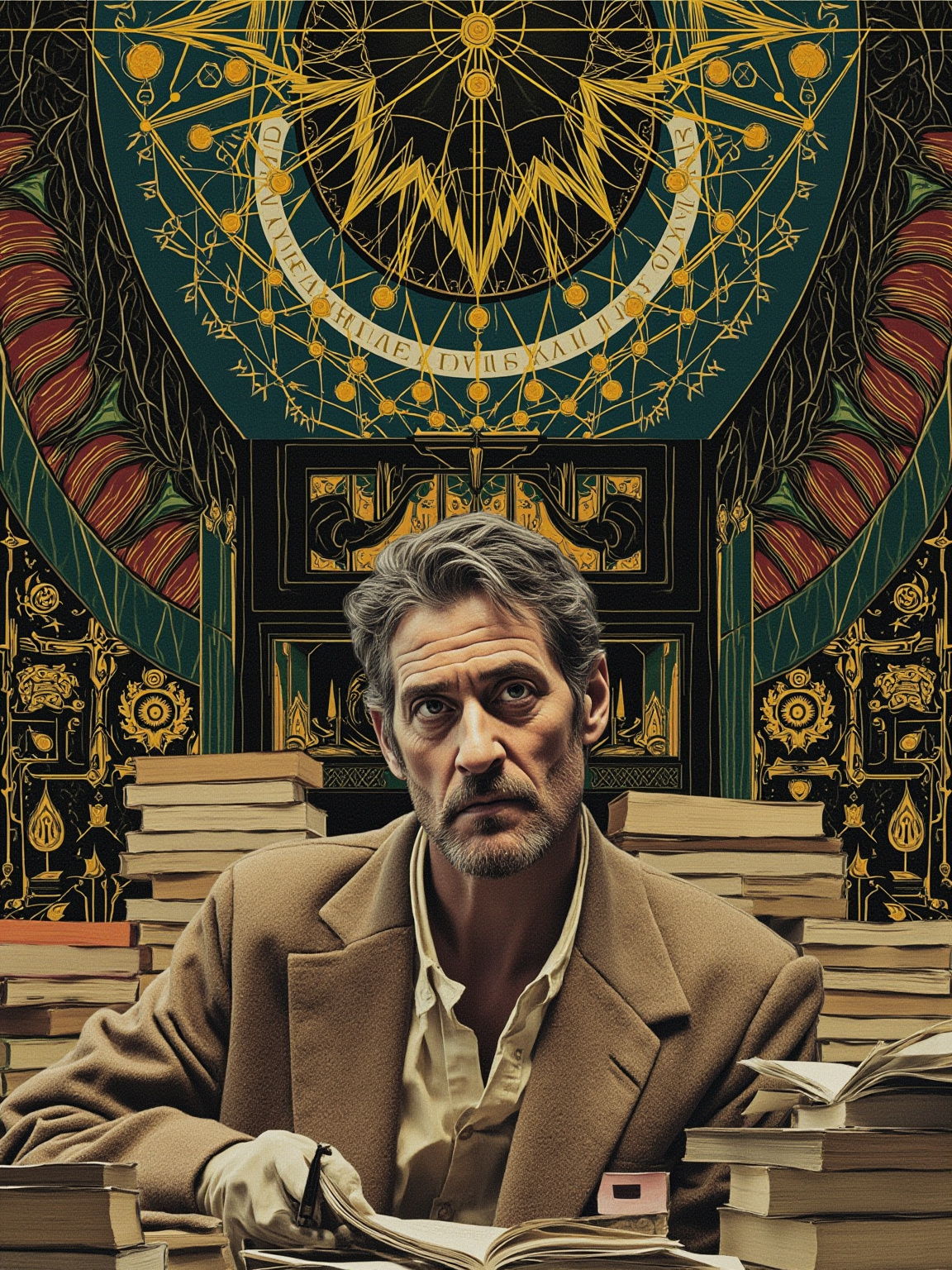
He had died as he had said he would die, as if the word had commanded the body.
他果真照自己说过的死法死去,仿佛话语已经命令了身体。
金句 · 第3部
Paris, the Last Pendulum
The novel's last scene has Casaubon sitting alone beneath the Foucault pendulum at the Conservatoire des Arts et Métiers in Paris. This pendulum is the real one — the device Léon Foucault used in 1851 to prove that the earth rotates. Its path keeps drifting, never repeating itself; what looks like a circle is really an endlessly reshaping flower. Sitting there, Casaubon looks back: the "Plan," that worldwide web of secret societies, had only ever existed in the jokes and hints he and his friends traded. But the joke had already swallowed people whole. Eco closes on a wry, allegorical line: to invent is to discover.
The most dangerous thing about a conspiracy theory isn't whether it's true. It's that once you've repeated it enough times, it starts making your decisions for you.
Why It Stays With You
Almost every conspiracy-theory discussion on the Chinese internet circles back to this book eventually. Faced with any "everything is connected" theory, you can ask one question first: is this just the Casaubon effect again? What makes Eco good at this is that he isn't standing outside mocking conspiracy enthusiasts — he wrote out the grammar of conspiracy itself: random events, plus suggestion, plus half-understood sources, plus finding exactly what you went looking for, equals one carefully built, meaningful labyrinth. He shows you, stroke by stroke, how the web gets drawn, where each line comes from, and exactly when the needle starts to drift.
The other layer that gets underrated is Jewish mysticism. Diotallevi's deathbed conversation keeps this book from being pure satire — on its other pole it sets down a serious, ancient body of belief about number as the foundation of the world. Conspiracy theory overproduces meaning from symbols, reading everything as a cipher; the Kabbalistic tradition is a different way of reading symbols, one that reads the world as sacred geometry. Both sides use symbols, both believe in a hidden order, and the only real line between them is who is inventing it and who is uncovering it.
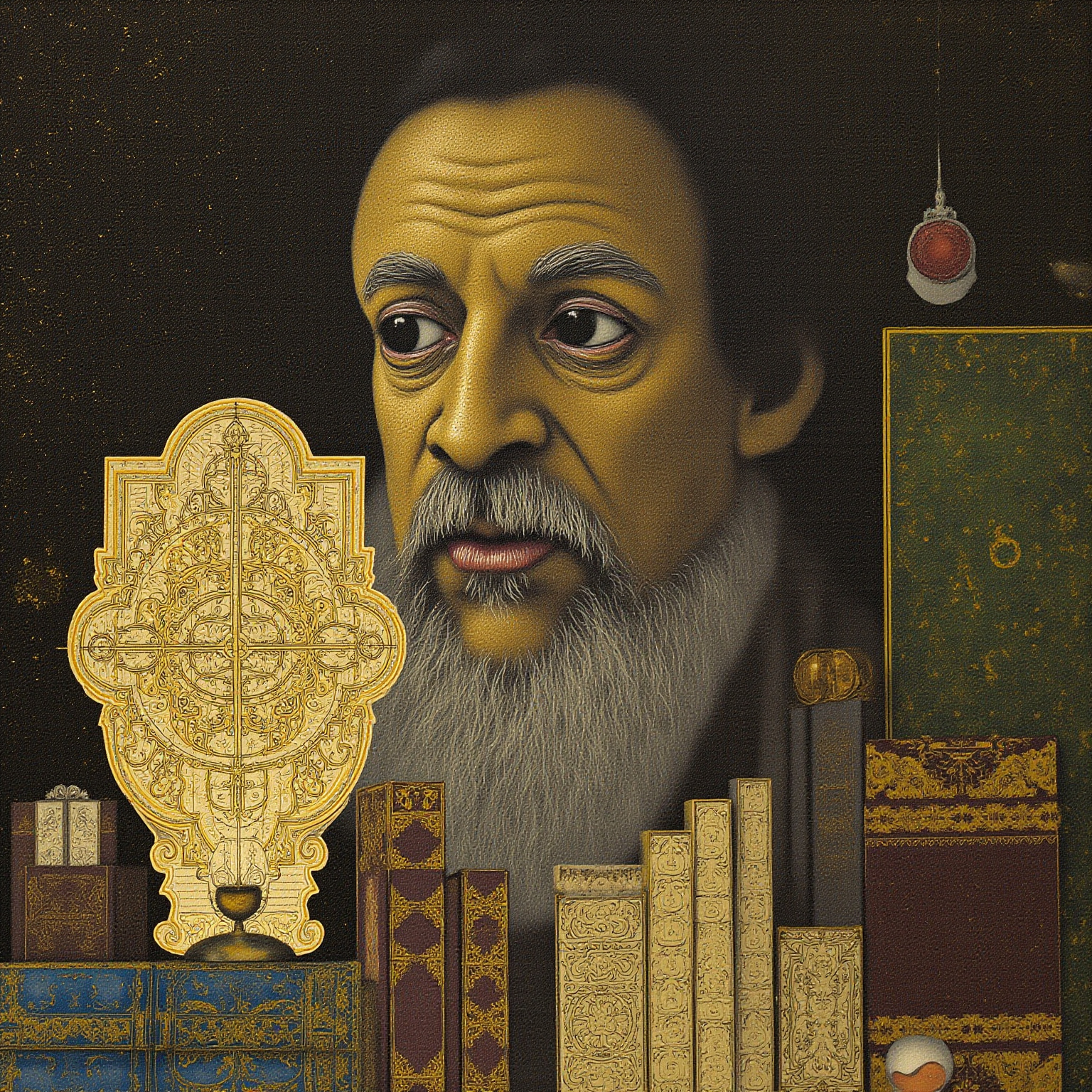
To invent is to discover; to discover is to invent.
所谓发明就是发现,而发现,也是一种发明。
金句 · 第3部
Structurally, the pendulum's physical drift is the book's invisible spine: every shift in its swinging plane matches another loop the narrator makes around the "Plan." On its own, this novel can stand in as the single clearest account of how a conspiracy theory talks itself into being true — and among serious readers, it's the Eco novel most often named right after The Name of the Rose.
Why Read the Novel Itself
A guide gives you the map; the novel is the territory — especially with a writer like Eco, who treats footnotes and asides as narrative in their own right. A summary will tell you what the Plan is. It won't tell you the damp air of that Milan office, the desk lamp warming old paper. It won't tell you which page Diotallevi turned to while talking about Pythagoras. It won't tell you what Belbo looked like laughing until he cried in front of his typewriter. None of that counts until you've turned to the actual line and felt your own mouth curl up with it. To read a book about how a joke swallows people whole, you have to laugh alongside them first, and then be afraid alongside them too.
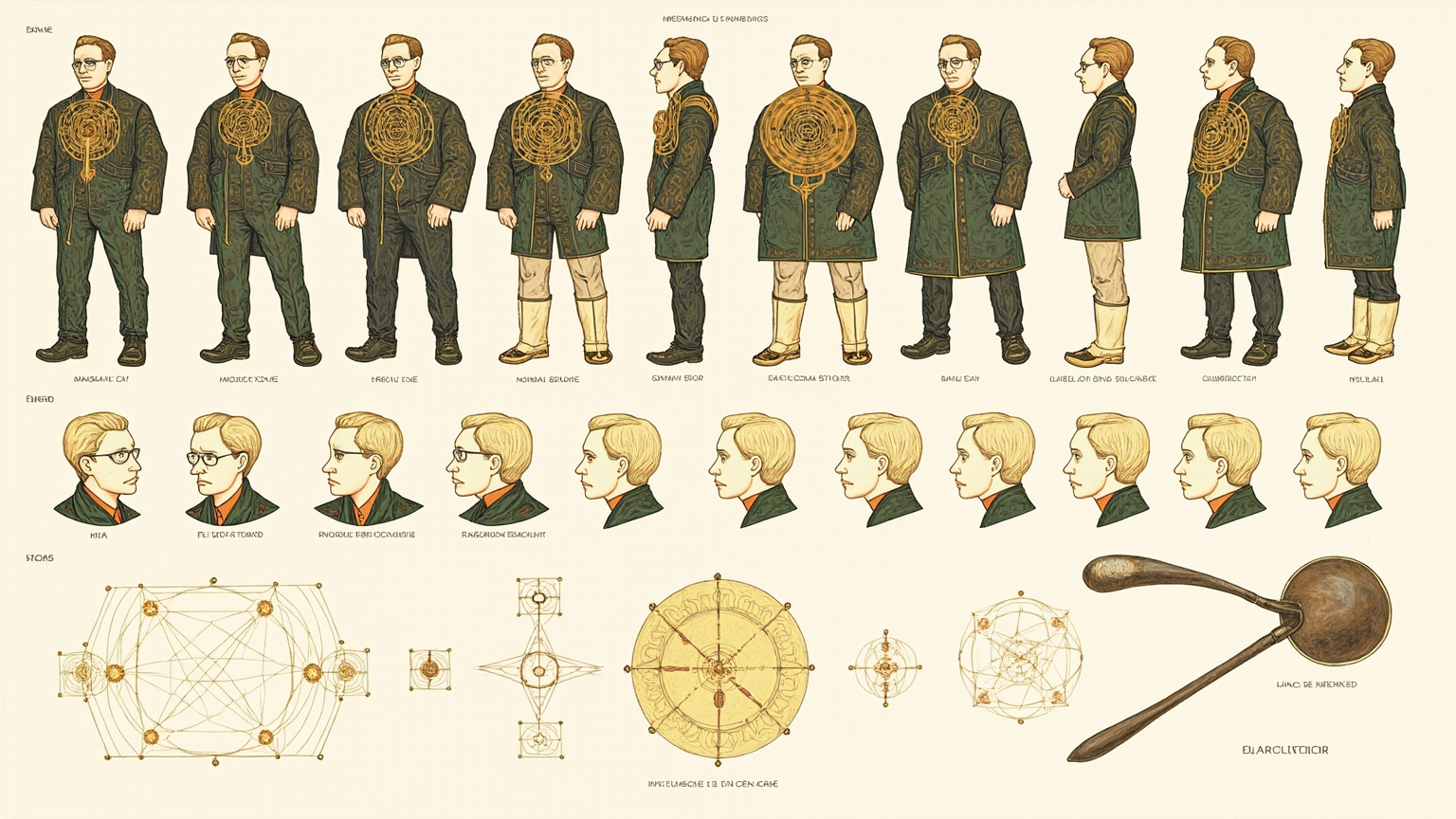
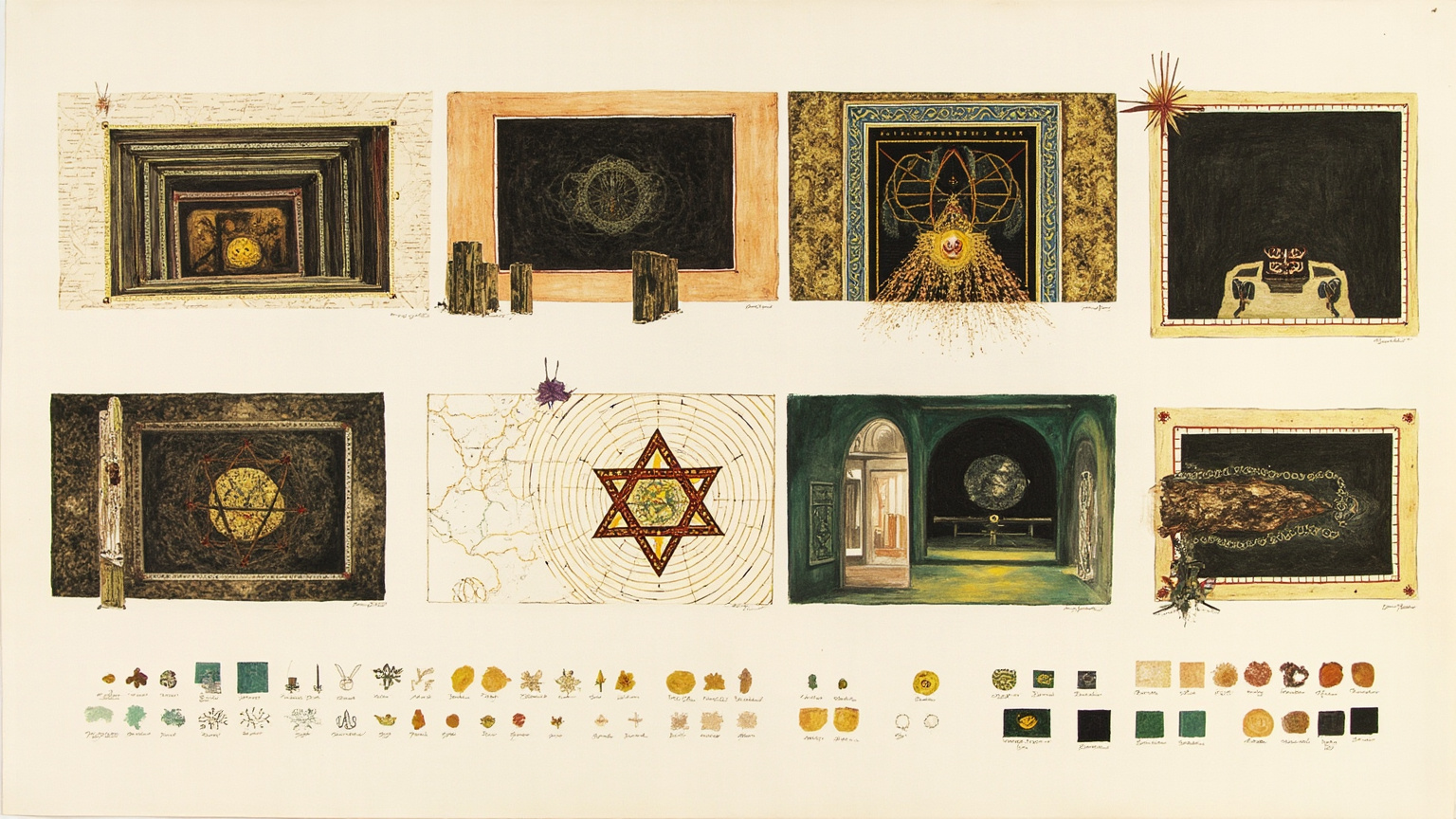
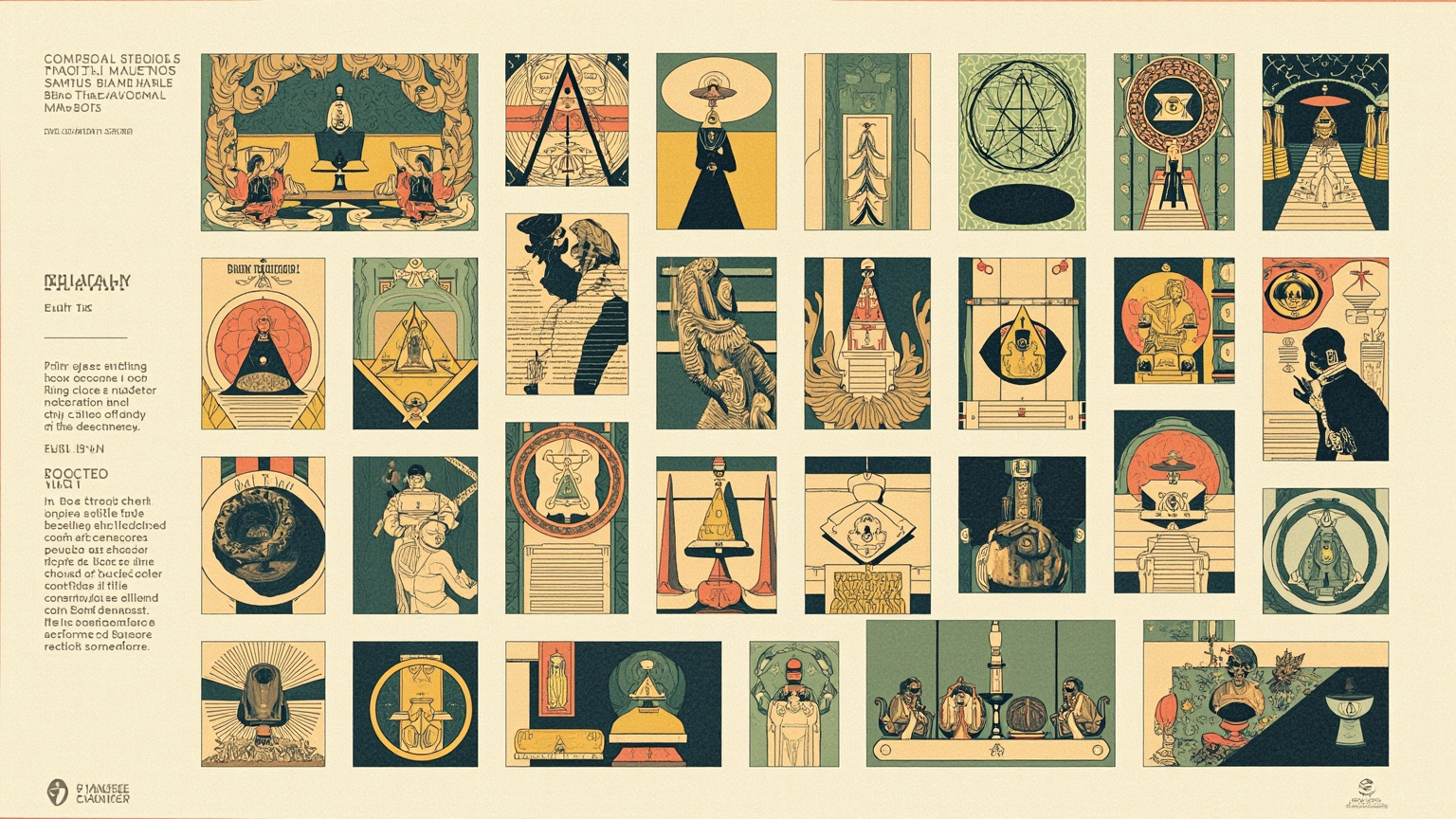
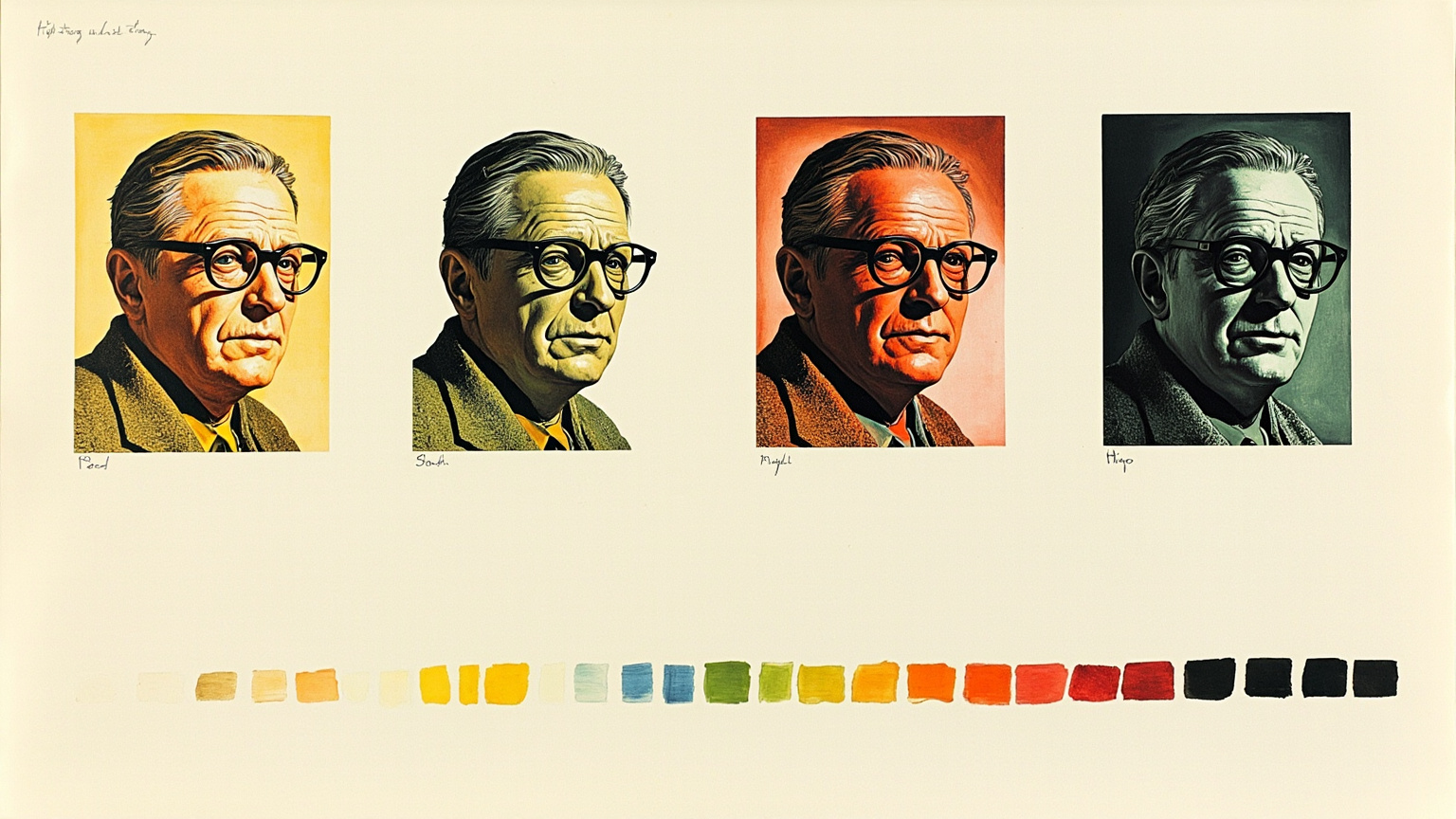
Art Direction4 plates
Before the guide was written, this book got a visual foundation — every illustration you just read grew out of it.