Haft Paykar (The Seven Beauties) · Companion Guide
七美人
萨珊国王以金银换得歌女,怒弃荒野后修建七色宫殿——七个穹顶、七颗星、七夜谜题,看纵欲之君如何被故事与哑谜教回王座
A Palace That Changes Color Every Day
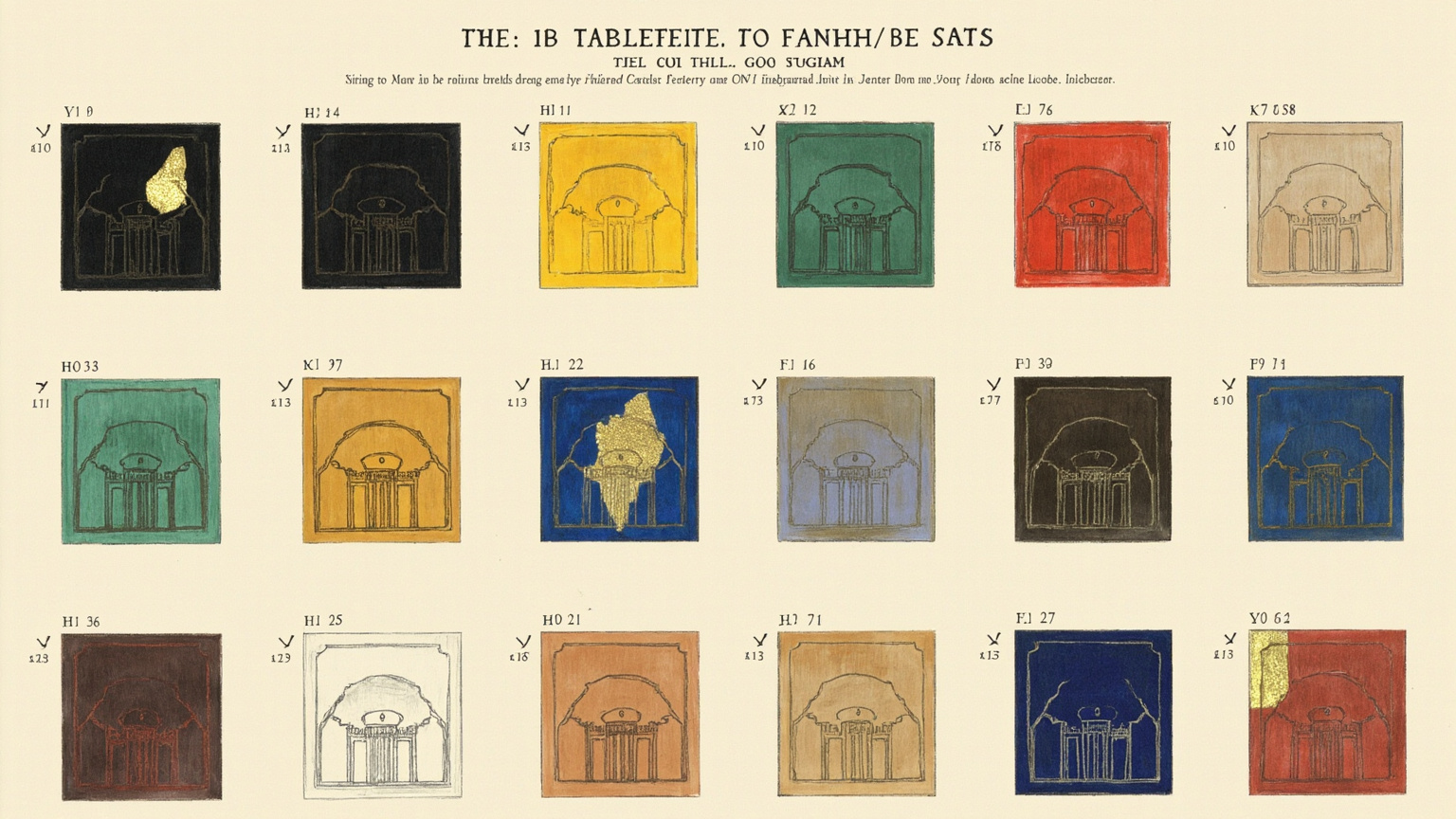
Seven domes, each colored for one of the seven celestial bodies known to the sky: black, yellow, green, red, turquoise, sandalwood, white. The king moves to a new one every day, and each day a princess from a different country keeps him company. This is not a pleasure house — it is a machine that forces astronomical time into an ethical space. The whole architecture of this Persian epic stands on these seven colored domes.
What Kind of Book This Is
The Seven Beauties — Haft Paykar in the original Persian — was written by Nizami Ganjavi (c. 1141-1209) around 1196, the fourth book of his Khamsa, the Five Treasures. The standard English translation is C. E. Wilson's 1924 edition, titled The Seven Beauties. Nizami stands alongside Ferdowsi, Saadi, and Rumi as one of the four great poets of Persian literature, and this volume is remembered for setting down two archetypes: it welds the week's seven days, the seven celestial bodies known at the time, and seven colors into a single three-part symbolic structure, and it plants the earliest ancestor of the riddle-courtship plot that Puccini would later give Princess Turandot. More than sixty poets writing in Persian, Turkic, and Urdu have since imitated the Khamsa, and the Persian miniature tradition has left behind a vast catalog of paintings showing the king listening inside his seven colored domes.
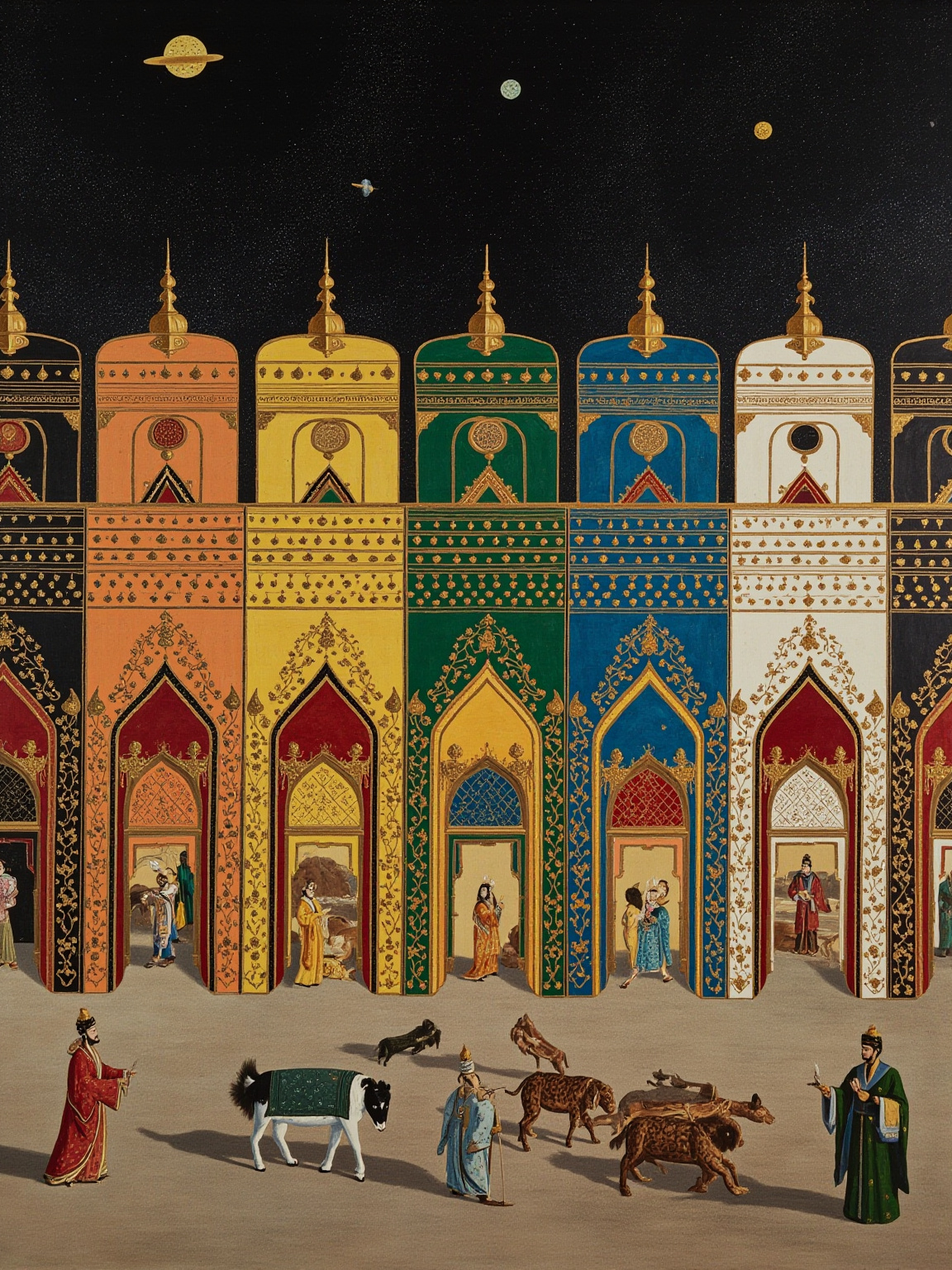
He gave his gold and his rank for a singing girl—yet what he truly purchased was the beginning of his undoing.
他以金银与王位换来一位歌女,可他真正买下的,恰是他败落的开端。
金句 · 开篇 · 以金换歌女
The King, the Singer, and Seven Princesses
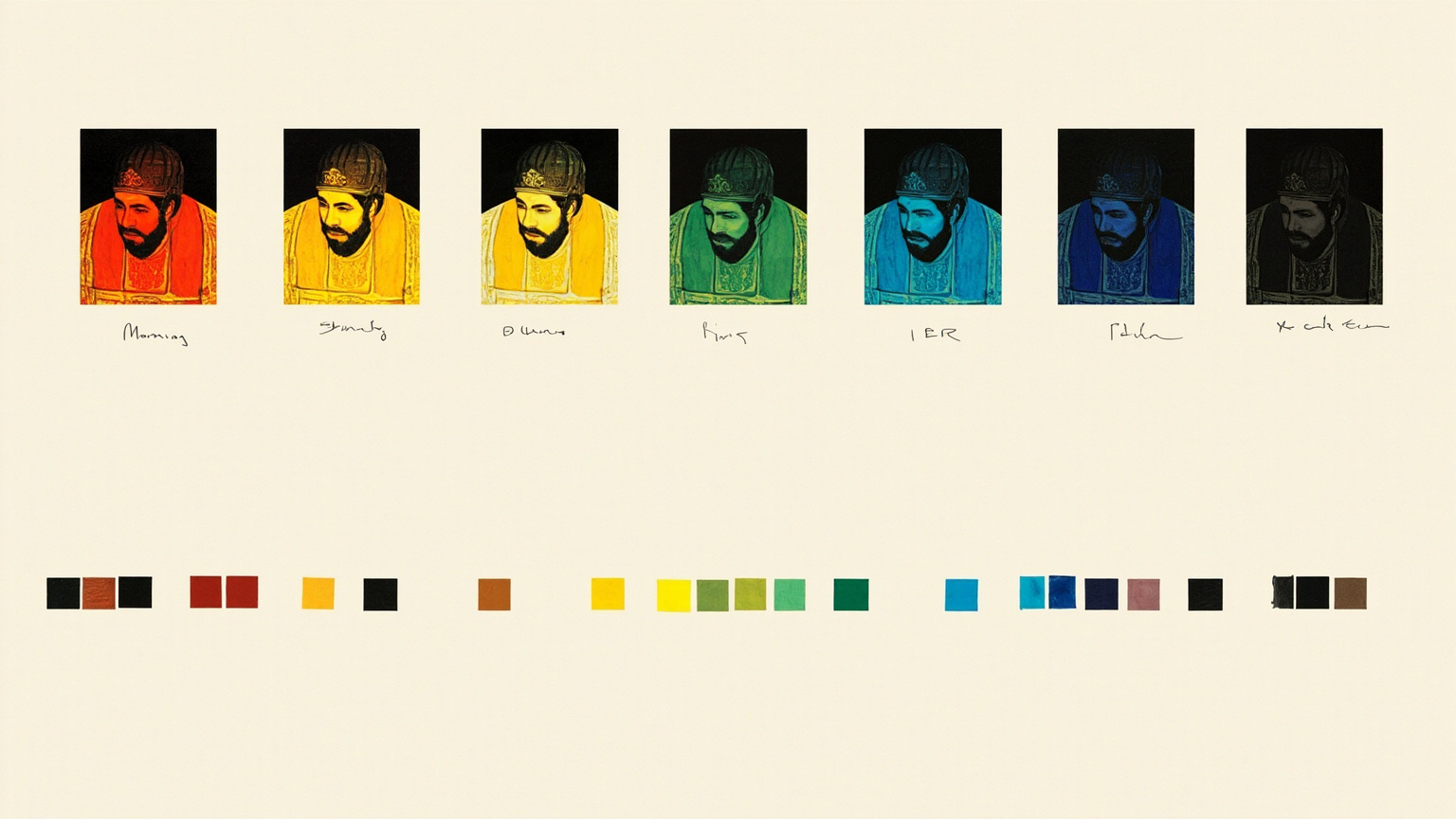
The protagonist is Bahram V, the Sasanian king known as Bahram Gur for his hunting on horseback, and the narrative center of the whole poem: a king given over to pleasure who must be educated. The emotional starting point is a singer named Fitna: she comes to court from far away, and she sings, dances, and plays music, and Bahram buys her from a merchant with rank and silver. Then come the seven princesses, one housed in each dome: the Black Dome (Saturn, Saturday), the Yellow Dome (the Sun, Sunday), the Green Dome (the Moon, Monday), the Red Dome (Mars, Tuesday), the Turquoise Dome (Mercury, Wednesday), the Sandalwood Dome (Jupiter, Thursday), and the White Dome (Venus, Friday), each dressed in silk to match her color. The princess of the Red Dome matters most — her riddle is what levers the entire arc of the poem.
A Singer Bought With Gold
The story opens with a transaction. Bahram V, the Sasanian king, buys a singer of extraordinary beauty, Fitna, from a traveling merchant, paying in silver and rank. The honeymoon hunt that follows is the most romantic and the most fatal scene in the poem: the king orders her to praise his skill as an archer, and Fitna says nothing; she will not play along. Furious, the king has her bound and left in the wilderness. Back at the palace, Bahram sits awake until dawn, sick with regret; he pines for her day and night and is soon bedridden. This is the switch that starts the whole machine — an ordinary physician has nothing for a king broken like this, so his ministers try something else entirely.
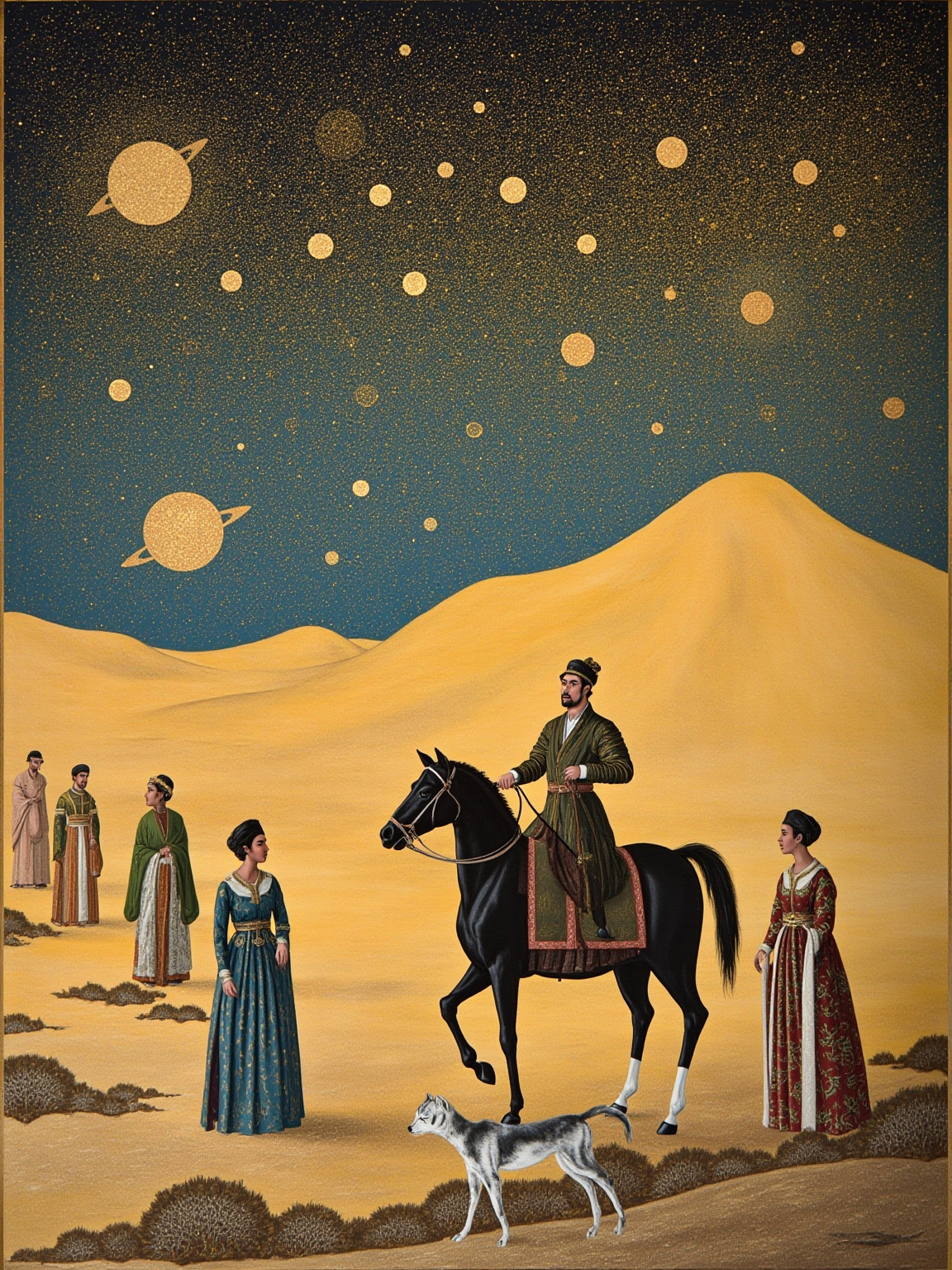
He bade her praise his skill; she would not open her mouth—and so the king cast her into the wilderness.
他命她赞他的箭术,她却一言不发——于是国王将她捆弃于荒野。
金句 · 蜜月同猎 · 沉默的歌女
The Seven Colored Domes Are Born
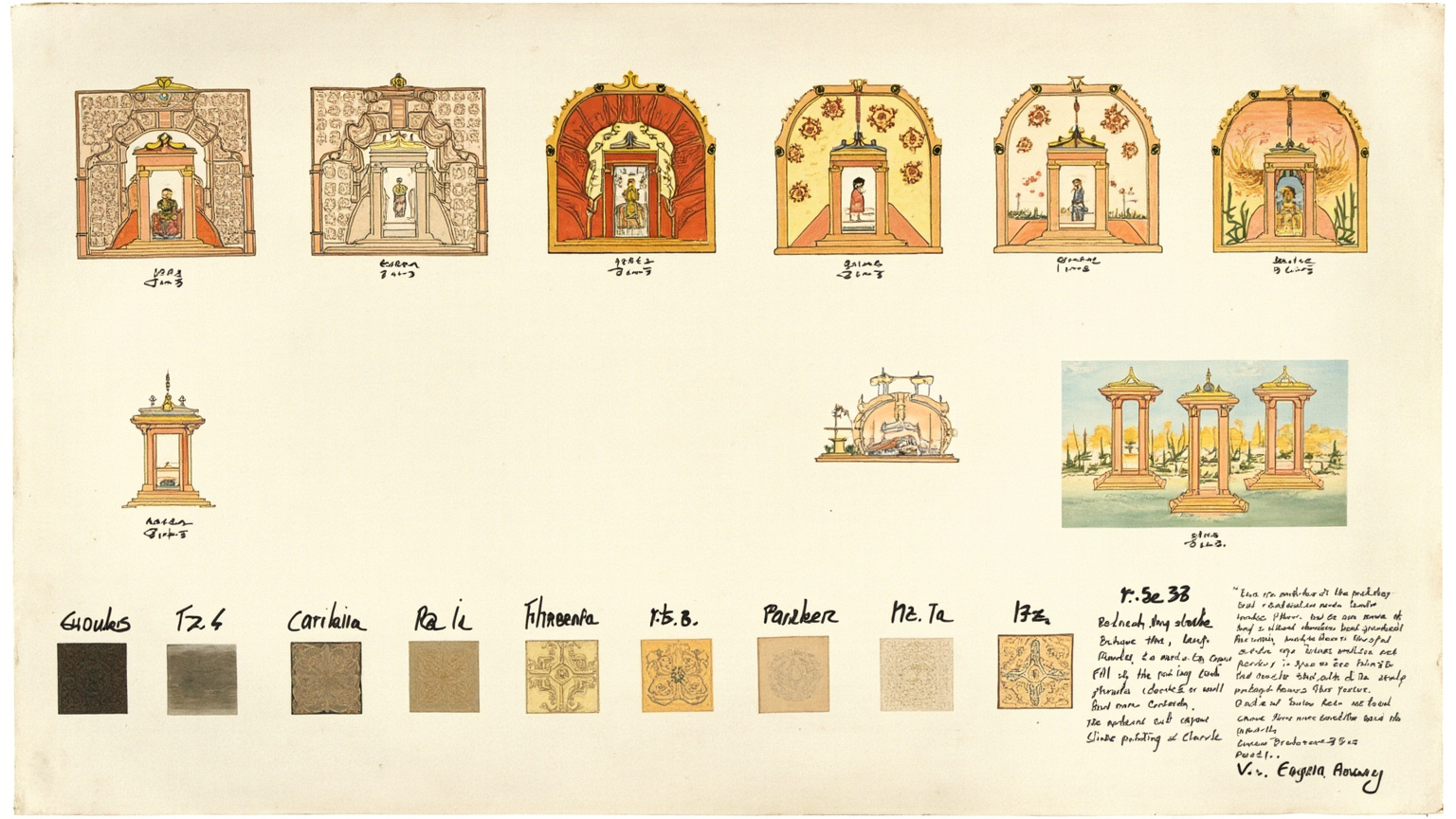
To cure the king's melancholy, his ministers propose something audacious: have craftsmen build seven domed palaces keyed to the seven celestial bodies then known, each a different color (black, yellow, green, red, turquoise, sandalwood, white), and bring in a beauty from each of seven countries to live in one dome apiece, so the king can move to a new one every day of the week. Nizami's real skill shows here: seven pleasure houses were never the point; he welds the week's seven days, the seven celestial bodies, and seven colors into one machine. Moving to a new dome each day means entering a new trial of color and star — sensory pleasure is bound to the wheel of ethical instruction from the very start.
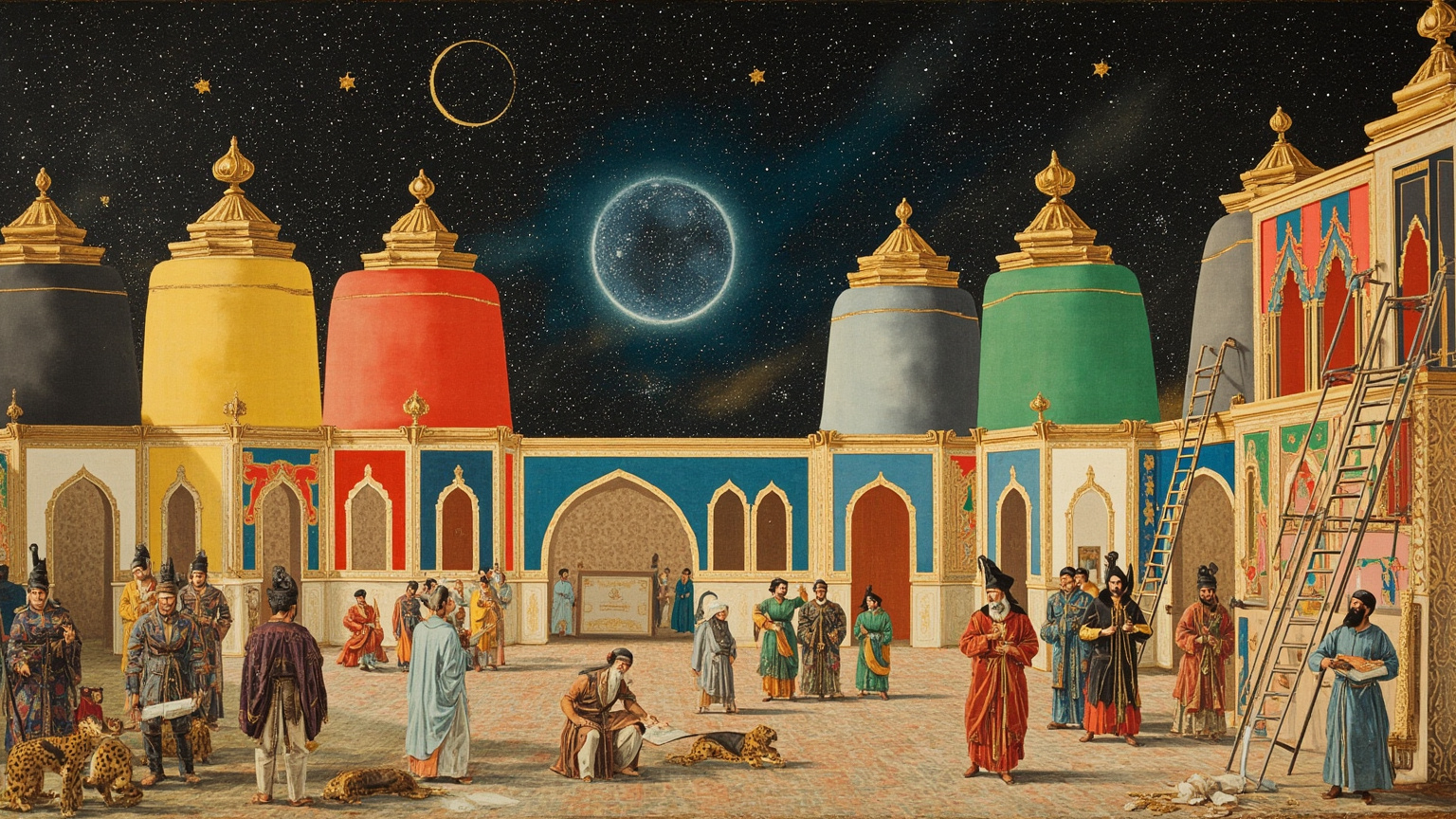
Seven domes they raised, each painted in the hue of a star—black, gold, green, red, azure, sandal, white—so that the heavens themselves might serve as a ceiling for the king's instruction.
七座穹顶依天上七曜之色而立——黑、黄、绿、红、青、檀、白——让诸天的拱顶,化作君王受教的华盖。
金句 · 七色宫殿的诞生 · 穹顶与七曜
The Frame of Seven Nights, Seven Stories
Building the palace is not the end of it. The ministers also bring in seven storytellers from seven countries to take turns entering the palace and telling the king tales. This is the engine of the whole poem: seven nights, seven stories, each one carrying inside it a tale from a distant land — India, the Slavic lands, Byzantium, Arabia. But six nights pass, and neither the pleasures nor the stories fully free the king. The craft of the frame lies exactly here: Nizami does not want seven good stories, he wants six good stories to fall short, so that the real mechanism for solving the problem is held back for the last night and the Red Dome.
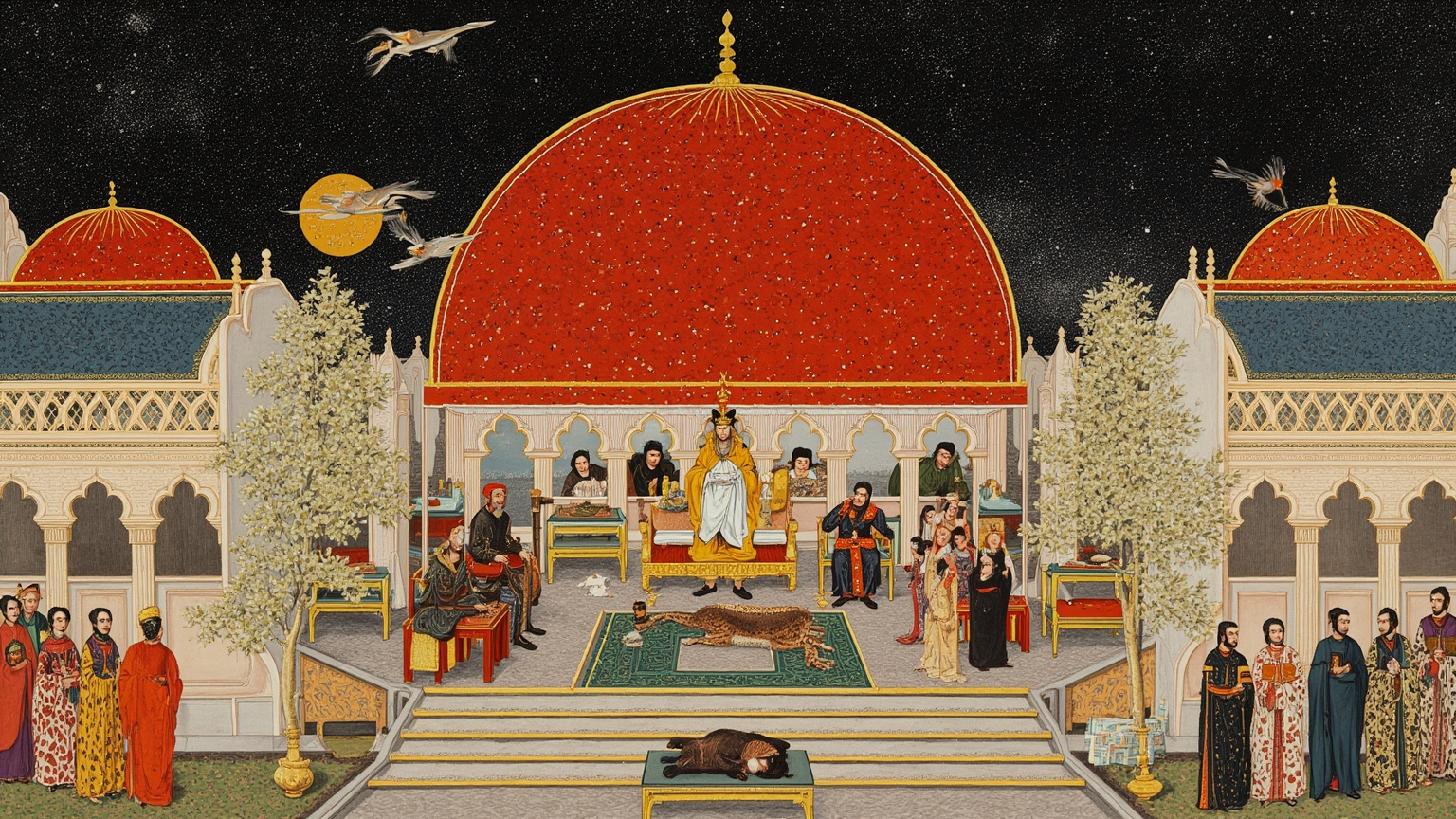
Storytellers from seven lands entered, one by one, to pour their tales into the king's ear—yet six nights passed, and his heart was still not loosened from its grief.
七邦说书人鱼贯而入,将各自的故事灌入君王耳中——可六夜过去,他的心仍紧锁于旧愁。
金句 · 七夜七故事的框架 · 说书人与国王
The Red Dome Princess's Fatal Riddle
The Red Dome belongs to Mars, and to Tuesday. On the fourth night, the true turning point of the whole educational arc, the Red Dome princess appears. Unlike the other six, who simply sit and listen with him, she sets the king a test: a riddle. A string of questions about pearls, learning, and self-control, where patience, learning, and self-control are all required to pass the first round. This is the device that turns Bahram from a man given over to indulgence into someone fit to actually rule — he has to answer correctly and hold himself in check before he can be called a king. The most direct ancestor of Puccini's Turandot, with her riddling princess who beheads the wrong answer and marries the right one, is this twelfth-century Persian princess, except Nizami has no scaffold here. The Red Dome princess is not testing life and death, she is testing whether a king can restrain himself before pleasure.
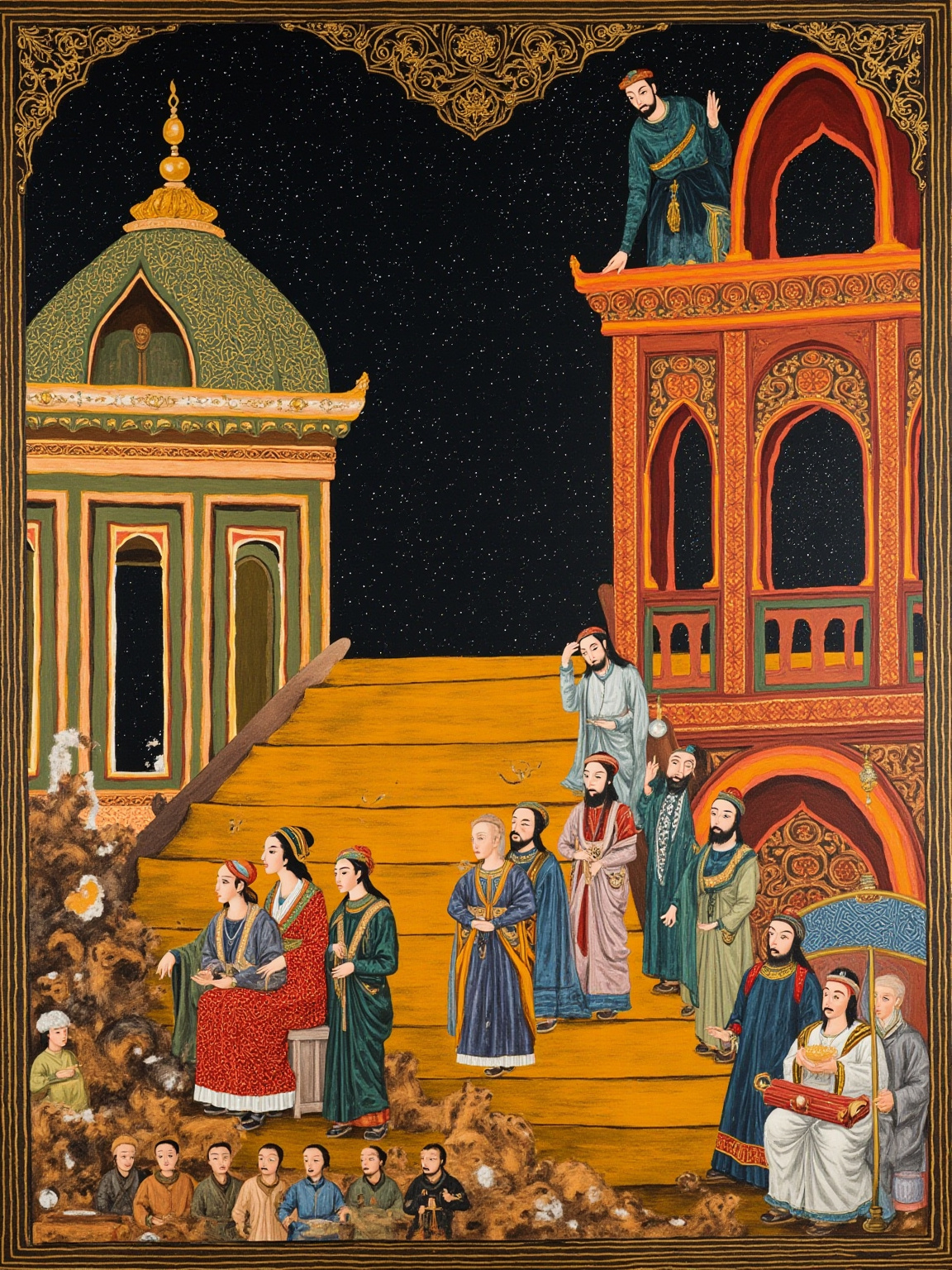
The princess of the Red Dome set riddles before him—not to slay, but to see whether a king could first answer aright, then sit upon his throne in stillness.
红宫公主将哑谜一道道摆在他面前——不为取命,只为试他能否先答得妥当,再坐得安稳。
金句 · 红宫公主的致命哑谜 · 教养之机关
The Red Dome princess keeps no scaffold — she sets her riddle not to kill, but to make the king answer right before he can sit steady on his throne.
The Seventh Night: The Missing Singer's Whereabouts
The final night's story reveals what happened to Fitna: she never died, someone saved her, and she has been hidden away ever since. The king sends for her at once. When they are reunited, Bahram's illness is finally, truly cured. A king mends himself through seven nights of stories, one riddle, and the whereabouts of a missing singer: this is the most elegant stretch of the educational arc Nizami has built. A king ruined by his own indulgence is first remade by architecture and story, then saved by love.
A Hunt Buried in the Marsh
But the poet does not let the story rest on a happy ending. After Bahram is reunited with Fitna, he does not stop: he takes her and his retinue out hunting again. Torrential rain floods the land, and the king, along with the ten thousand horsemen riding with him, sinks into the marsh and is lost. This is Nizami's irony, fully built: the king has passed the whole course of instruction, won back his singer, and believes he can start again, only to be swallowed, in the end, by the very hunting instinct and indulgence he never gave up. The educational arc does not end with the king becoming good. It ends with him seeing clearly that he can never fully stop himself — he is not cured, only buried by his own hand. Nizami uses no sword, no poisoned cup, no palace coup; he simply has the whole earth close over this king, and over the old desire he never broke, together.
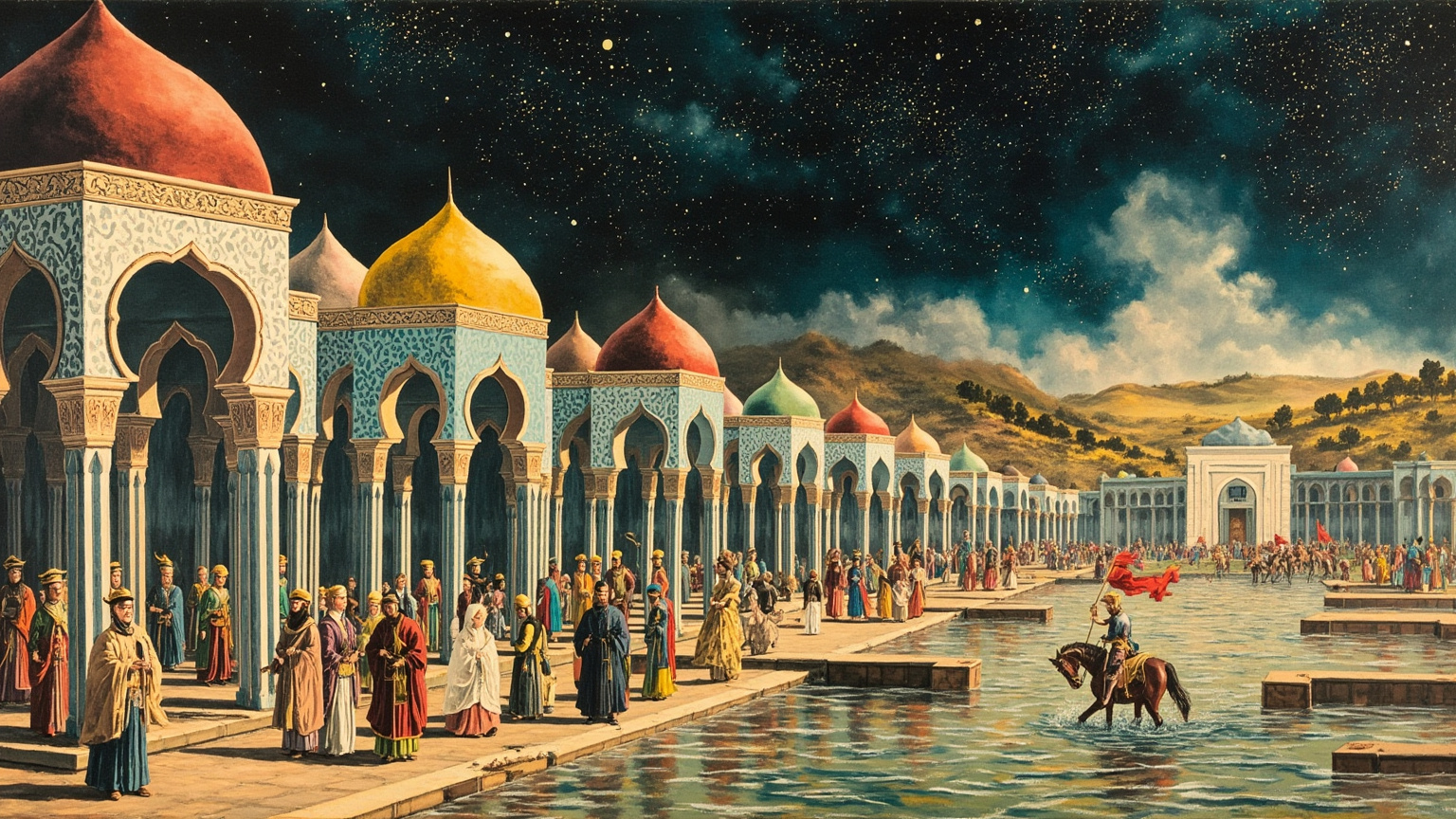
The rains came down, the plain turned to a sea, and the king with all his ten thousand riders sank into the mire—swallowed by the very earth that had once borne his hunt.
大雨倾盆,平原化作汪洋,国王与他的一万骑手尽陷泥沼——那片曾承载他纵猎的大地,终于将他吞没。
金句 · 终幕 · 出猎覆于沼泽
What It Is Actually About
On the surface, The Seven Beauties tells the story of an indulgent king's fall. Underneath, it tells the story of how a king is educated into kingship. Nizami, writing in twelfth-century Persia, deliberately chose the pre-Islamic Sasanian dynasty as his setting, placing his counsel to rulers inside a king who reigned before Islam, using the old dynasty's history to speak about the virtues a king must have: patience, learning, self-control. This continues the political counsel that runs through the whole Khamsa, and it belongs to one of the favorite subjects of the miniature painting tradition.
Why It Is Still Remembered
Three reasons. First, it forges a symbolic structure found nowhere else: the seven colored domed palaces crossed with the seven celestial bodies, the seven days, and the seven nights of stories, a structure no history of the frame narrative can skip past. Second, it plants the ancestor of Turandot's riddle-courtship plot: seven hundred years later, Puccini's Eastern princess can trace her lineage back to a Red Dome in Persia. Third, it demonstrates a rare kind of educational narrative: a king given over to pleasure who must be tamed by a princess's wisdom before he can be called a king at all, a genuinely anticlimactic move inside the Persian-Islamic court poetry tradition.
Why You Should Still Read the Poem Itself
A guide like this one gives you a map; the poem is the land itself. I can tell you the Red Dome princess sets a riddle, but I cannot make you hear the rhythm and texture of Nizami's actual Persian lines. He wrote the domes' architecture so vividly that miniature painters kept returning to it for centuries, and the geometry and sheen of that imagery is worth reading for its own sake. Inside the seven nights of stories, Nizami's telling carries whole subplots drawn from India, the Slavic lands, Byzantium, and Arabia, and I have not unpacked a single one of those distant legends here, precisely because they deserve to be read slowly, in the text itself. One more thing: no summary, however careful, can match the way the Persian renders the king's kingdom closing over the marsh, the whole earth written like a mouth shutting. And the simplest reason of all: this is a twelfth-century epic still being reprinted, still being painted into miniatures, still imitated by more than sixty poets. That alone is worth a quiet afternoon, letting the seven domes light up one by one in your head.
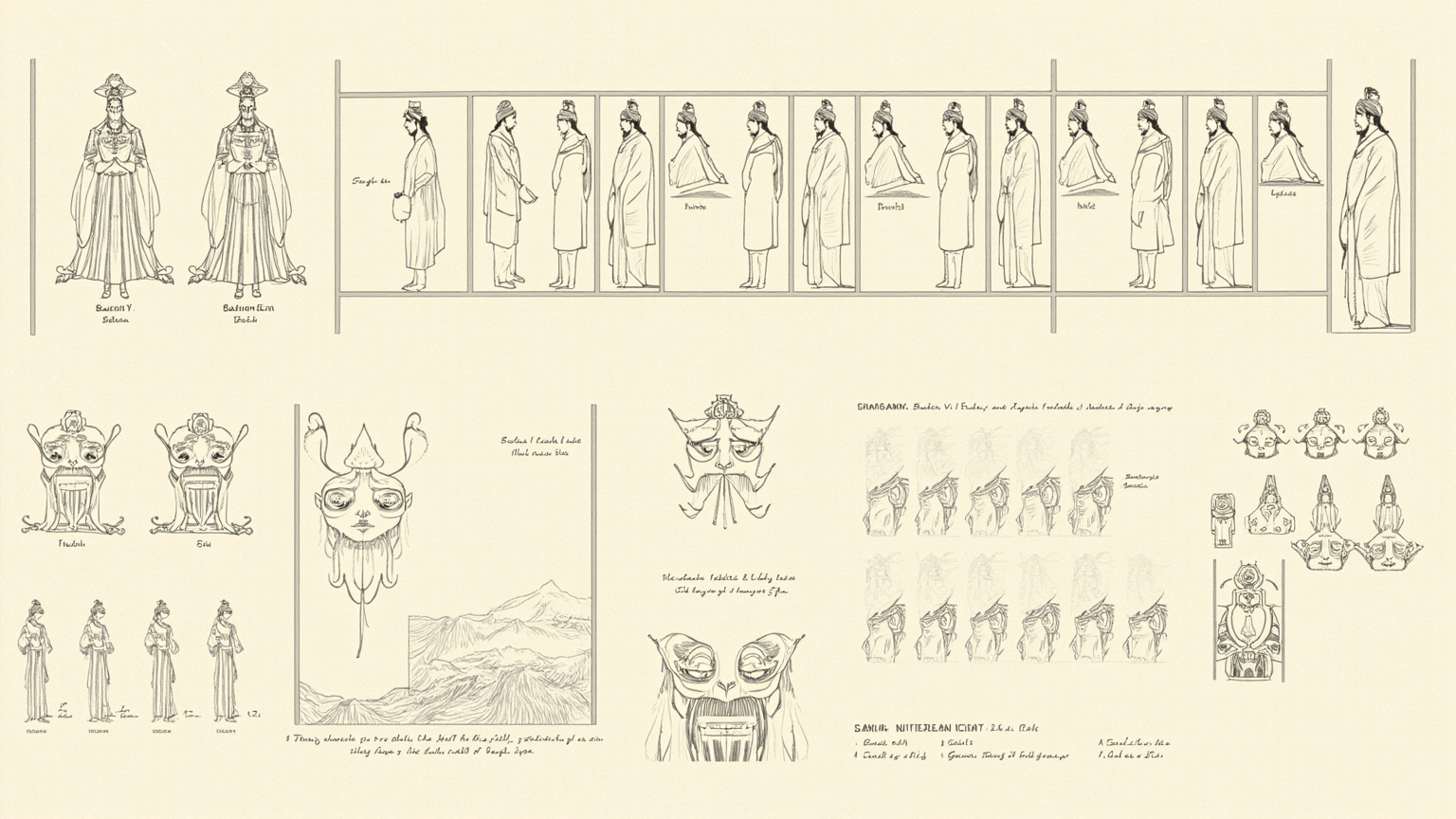
Art Direction4 plates
Before the guide was written, this book got a visual foundation — every illustration you just read grew out of it.