Heimskringla: The Chronicle of the Kings of Norway · Companion Guide
挪威列王传
一个十三世纪冰岛人用一代人的工具,为一群他不认识的国王补完一部从神到人的编年长卷
The hook: a drinking horn, blood, three kings
The horn goes down the table, and the hand pouring it is shaking. At the far end sits a young man just back from England, his name Harald Hardrada. He has sold his sword to the Greek emperor in Constantinople, cut men down in Syria and Sicily, and now he is home to take the crown from his nephew. He wins it. Six years later he sails for England after a bigger crown, and in the autumn of 1066 an English army stops him on a bridge in Yorkshire. He and most of his Norwegian expedition die there. A few days later another English army beats another Norse one at Hastings, two defeats less than twenty days apart. This is a real timeline pressed between the pages of Heimskringla, written by a man who was nowhere near it, sitting in a timber hall in Iceland.
This same writer had already decided, before he set pen to page, where Hardrada's early legend would sit. He writes out a Norwegian king named Olaf first, nearly a third of the whole book, and only then circles back to fill in what came before and forward to what came after. He does not write in chronological order. He writes in the order he judges right. This is the most unsettling thing about the book: on its surface a roster of Norwegian kings, underneath it the choices a thirteenth-century Icelander made while sorting out his ancestors.
What kind of book this is: a thirteenth-century Icelander's family tree for all of Scandinavia
Heimskringla was written sometime in the 1220s or 1230s by the Icelandic poet and historian Snorri Sturluson. He also wrote a book you may have heard of, the Prose Edda: one governs myth and the craft of verse, the other kings and territory, the subjects never overlap, but the same hand wrote both. Its place in literary history is simple to state. It is the finest example of the king's saga as a genre, and it is the source of nearly every piece of common Viking-Age knowledge that survives today: that Harald Fairhair unified Norway, that Olaf is the patron saint of Norway, that Harald Hardrada died at Stamford Bridge. Whenever anyone says the word Viking today, Snorri is standing behind it.
The title Heimskringla was only fixed by Swedish and Latin translations at the end of the seventeenth century, taken from the manuscript's opening words in Old Norse, kringla heimsins, the circle of the world. Snorri never named his own great work himself; the name we use today comes from an opening line almost nobody remembered. Most of the original manuscript burned in the Copenhagen fire of 1728, and the single leaf that survives is known to scholars as the Kringla leaf. What is left to us is a house whose roof has already burned off.
Characters and world: a board that runs from the fjords to the eastern Mediterranean
In this book's world, characters line up by throne, not by temperament. Once the mythical age closes out, the first Norwegian ruler with a name and a face is Halfdan the Black, father of Harald Fairhair. Fairhair is the book's first real protagonist within the Norwegian royal line, and once his story ends it leaves behind a hundred years of sons fighting sons across five generations, the opening scene every account of the Viking Age has reached for since. After Fairhair, the two most important names are both Olaf: Olaf Tryggvason, Norway's first officially Christian king, and Olaf the Saint, his spiritual successor and the book's central axis.
After him comes Haakon the Good, brought home from England, one of the more entertaining of the sagas; then Harald Hardrada, whose story runs all the way to the shores of the Mediterranean; then Sigurd the Crusader, who sailed the Norwegian fleet to the waters off Palestine; and last the young Magnus Erlingsson, who in 1177 defeated the rebel Birkebeiner, at which point the book simply stops. The geography here runs from the fjords to Constantinople, Sicily, Syria, and the coast of Jerusalem. This is not the history of one country. It is the whole world a medieval Norseman could reach.
How the plot moves: gods come down, men go up, the dynasty scatters and gathers again
The whole book opens with Ynglinga saga, a pseudo-historical preface. Snorri takes Odin, chief god of Norse mythology, down off his altar and turns him back into a man, a chieftain who leads his people north from Asgard on the shore of the Black Sea and settles in Scandinavia. His descendants rule in Sweden for twenty generations, sliding by degrees into tyranny and kin-slaying, until one branch flees north across the sea and becomes the ancestors of Norway's petty kings. What is worth watching in this section is the demotion at work: a god rewritten as a chieftain of flesh and blood, a genealogy rewritten as the start of political history. The reader has crossed from myth into the human world without noticing.
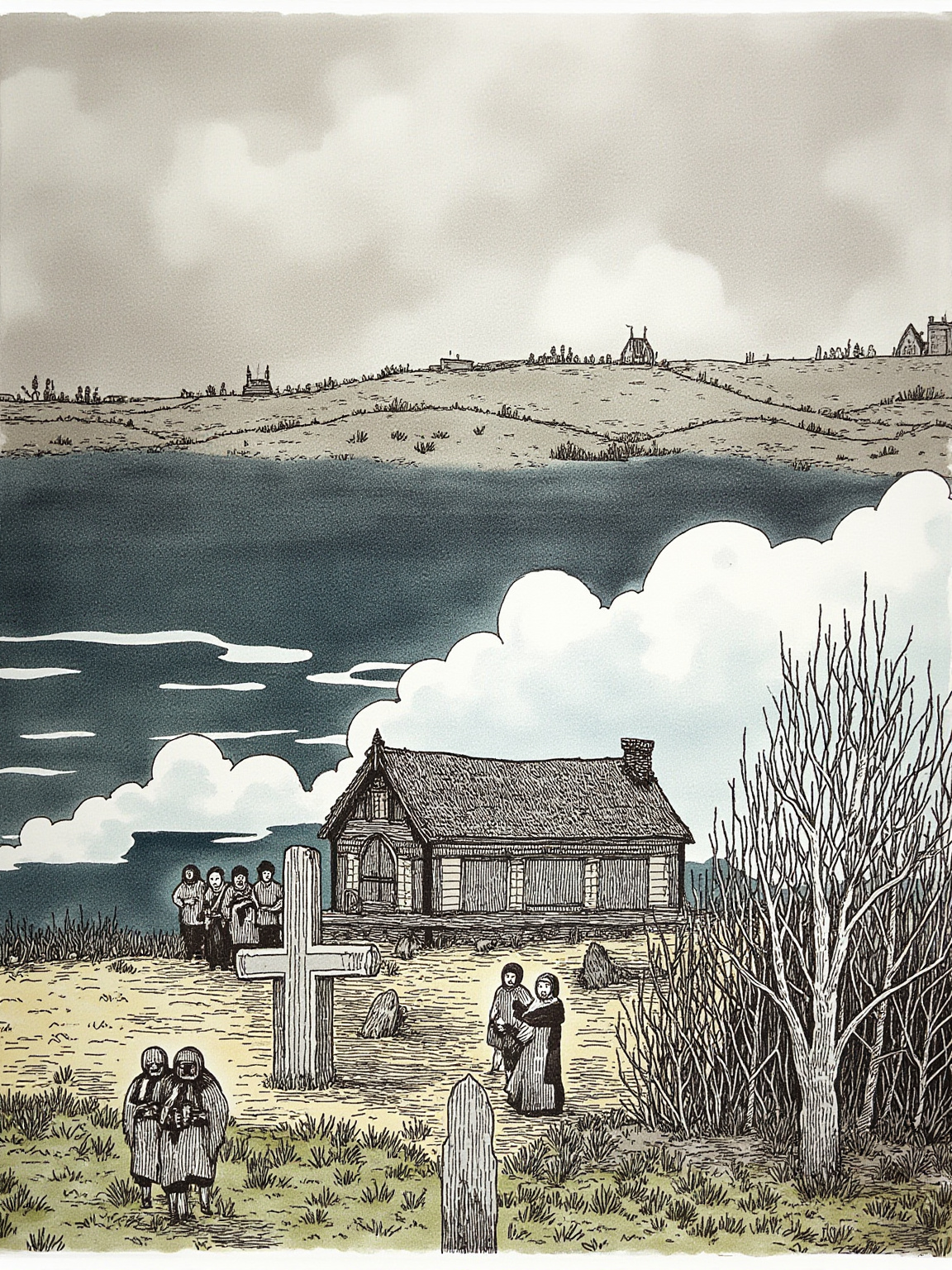
Odin was a man of great wisdom and magic; he came from the land of the Turks, and with him came a great company of people.
奥丁是个极具智慧与魔法之人,他来自突厥之地,身后跟着大队的人马。
金句 · Ynglinga saga · 北迁之神
Once the book leaves the mythical age, the first man to hold the Norwegian throne securely is Halfdan the Black; his son Harald Fairhair is the true founder of the kingdom. The saga says he raised an army and unified the whole country for the sake of a woman, the original of a plot every later Norse epic about a Viking hero fighting for love would borrow. Fairhair closed his fist around Norway, but what he left his sons was five separate roads to war. Sons fighting sons for five generations became the background hum of Norwegian royal history from then on. What is worth watching here is an anticlimactic unification: Fairhair's victory is not the end of the story but the start of a larger disaster.
The axis of the book is Olaf the Saint. He reigned fifteen years, the first half a Viking raider with blood on both hands, the second half a serious statesman who won back his kingdom and established Christianity and a lawful government. Snorri writes his turn from raider to lawgiver with patience and restraint, and lets his sainthood be completed by two events working together: his death in battle, cut down amid a coalition of pagan enemies, and the miracle after death, flowers and fragrance rising from his coffin when it was opened. This is not the ending of a hero's biography. It is the ending of a saint's life.
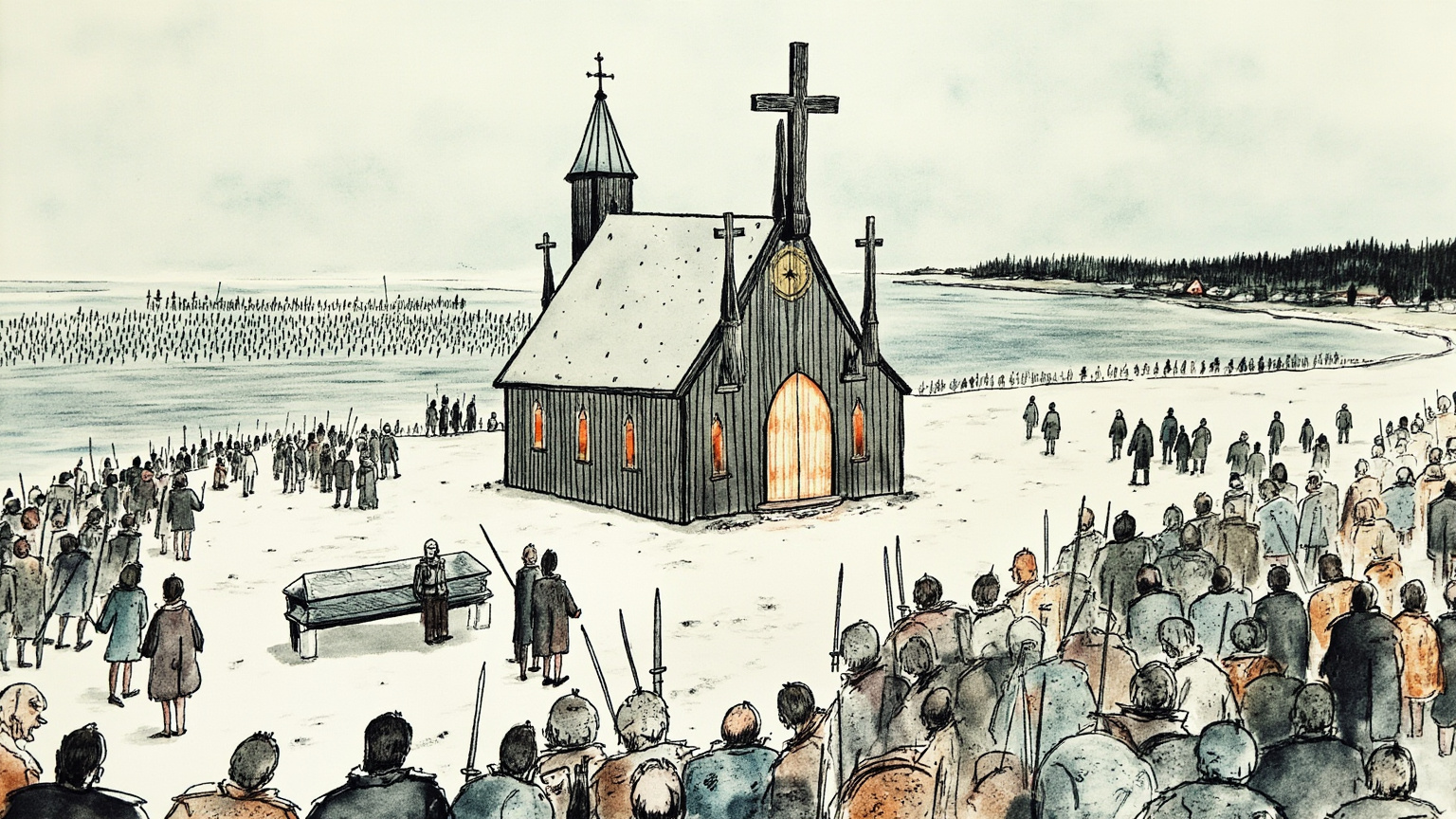
King Olaf became strong and mighty; he was stern in his wrath against those who opposed him, yet he was a zealous champion of the true faith.
奥拉夫王既强且威,对抗者面前怒容冷峻,于正道之上却是一位奋发的守护人。
金句 · Óláfs saga helga · 圣王之立
Olaf Tryggvason enters right after Olaf the Saint, Norway's first officially Christian king, the man who brought the faith back from England himself and then pushed it on the whole country. He is Olaf the Saint's spiritual predecessor, planting the seed of the great conversion still to come. What is worth watching here is a transitional protagonist: he gets less space than Olaf the Saint, but he carries the crucial turn that takes the whole royal narrative from paganism into Christianity.
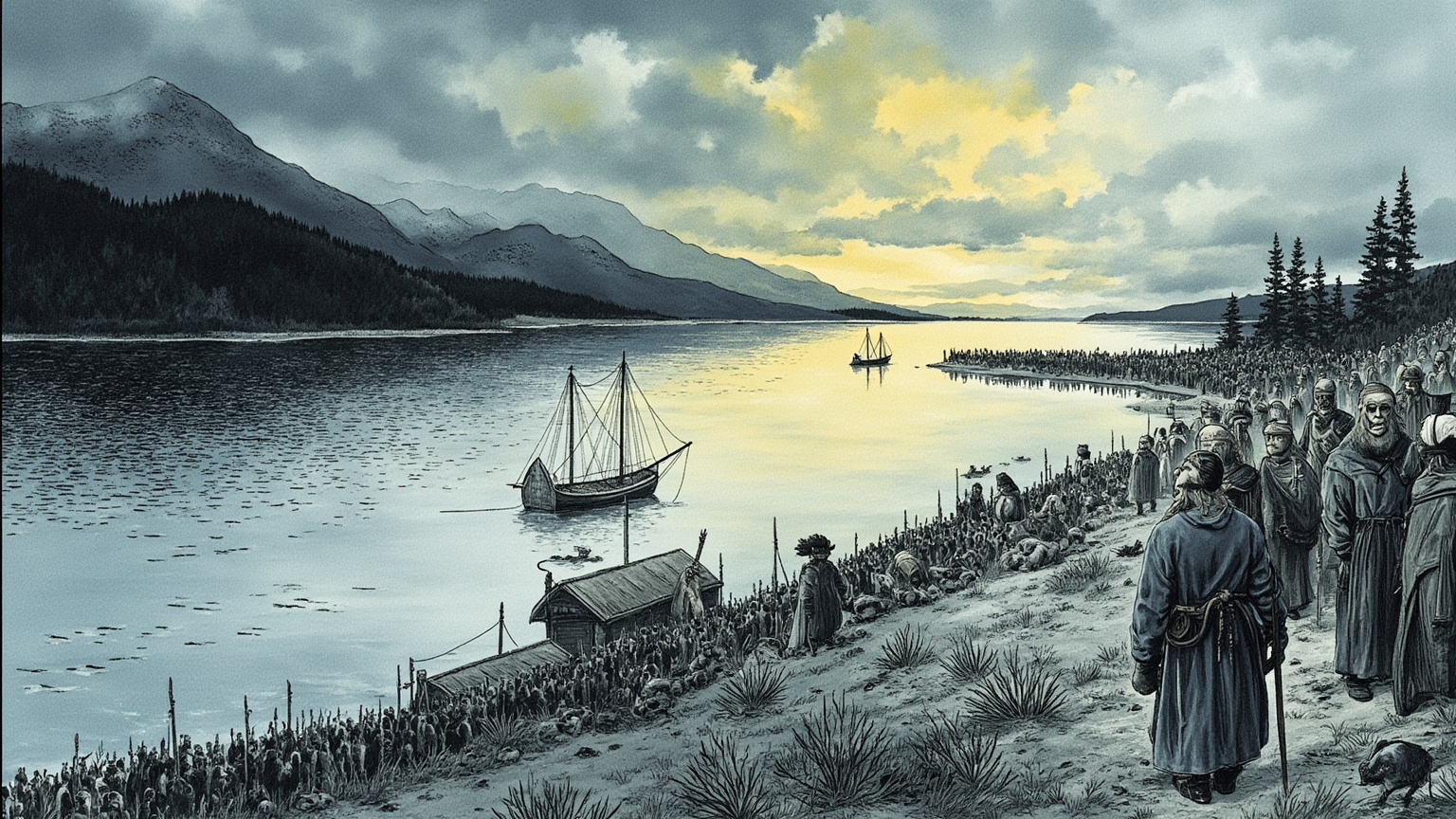
Olaf Tryggvason stood up in the ship's bow and called loudly to the people, bidding them accept the true faith.
奥拉夫·特里格瓦松立在船首,朗声向众人宣讲,要他们领受那真实的信仰。
金句 · Óláfs saga Tryggvasonar · 船首的呼召
Harald Hardrada's section reads almost like a stand-alone adventure story. Exiled as a young man, he goes first to Constantinople to serve the Greek emperor in the Varangian Guard, then to Syria and Sicily to fight his wars; he earns a reputation, saves money, brings home an entire set of Norman-style mercenary habits and tactics, wins the fight for the crown back home, and finally dies in England. In late September 1066 his army is stopped at Stamford Bridge in Yorkshire by the forces of King Harold of England and nearly wiped out. That defeat came only days before Hastings. English-language history textbooks almost never write about it, yet it fills some of the most vivid pages in this book.
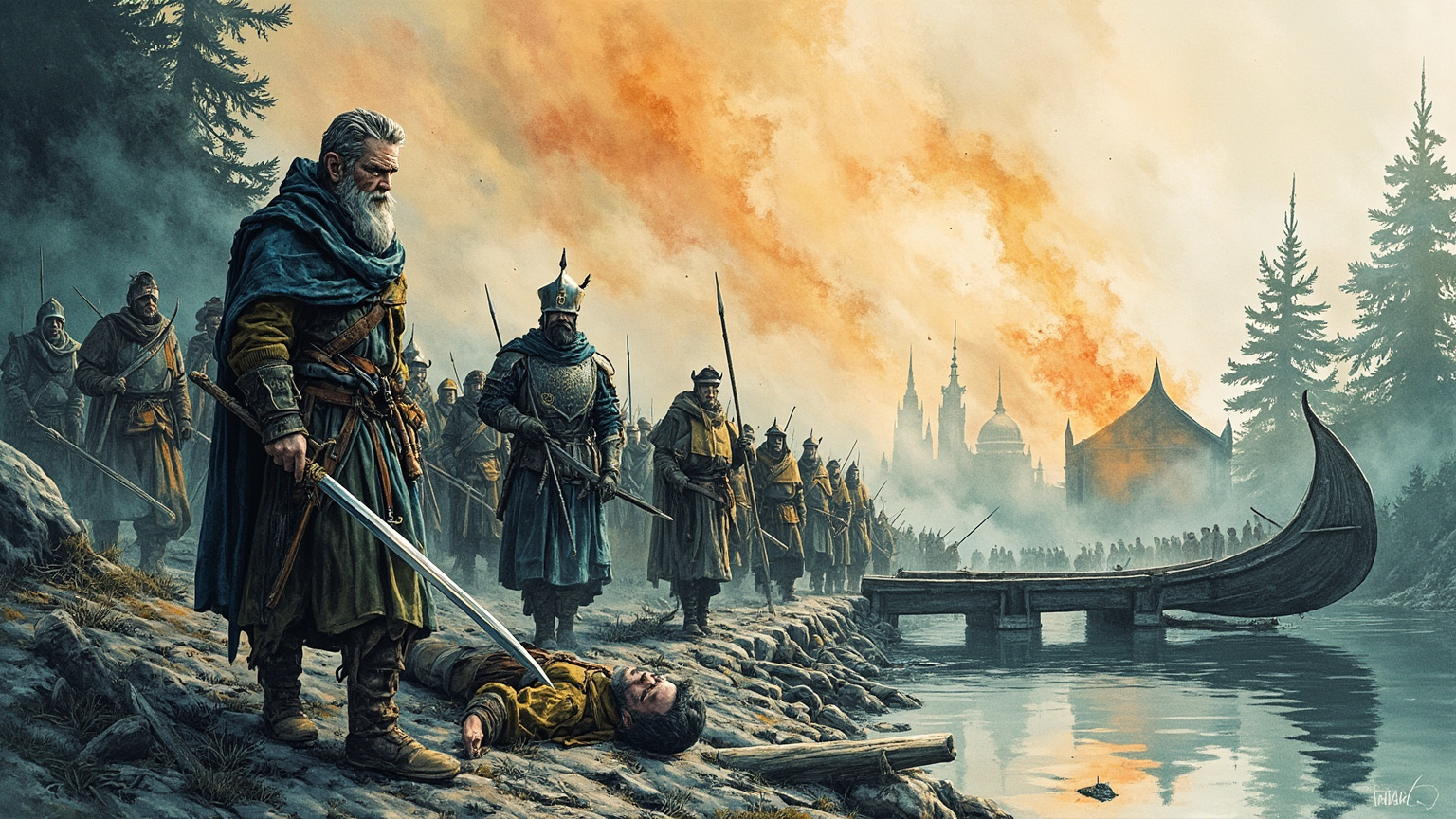
Harald went eastward to Constantinople, and entered the service of the Greek king, and there won great renown.
哈拉尔东行入君士坦丁堡,投身希腊王麾下,于彼处赢得了赫赫声名。
金句 · Haralds saga Sigurdarsonar · 御林军之前
Further on comes the section on Sigurd the Crusader, the king who sailed the Norwegian fleet all the way to the waters off Palestine and fought Arab Muslim pirates there. Given the way the book calls his own men Vikings, this chapter effectively carries that label across to the Mediterranean. It is the farthest point on the book's map, and the page where the Norse diaspora is pushed to its limit.
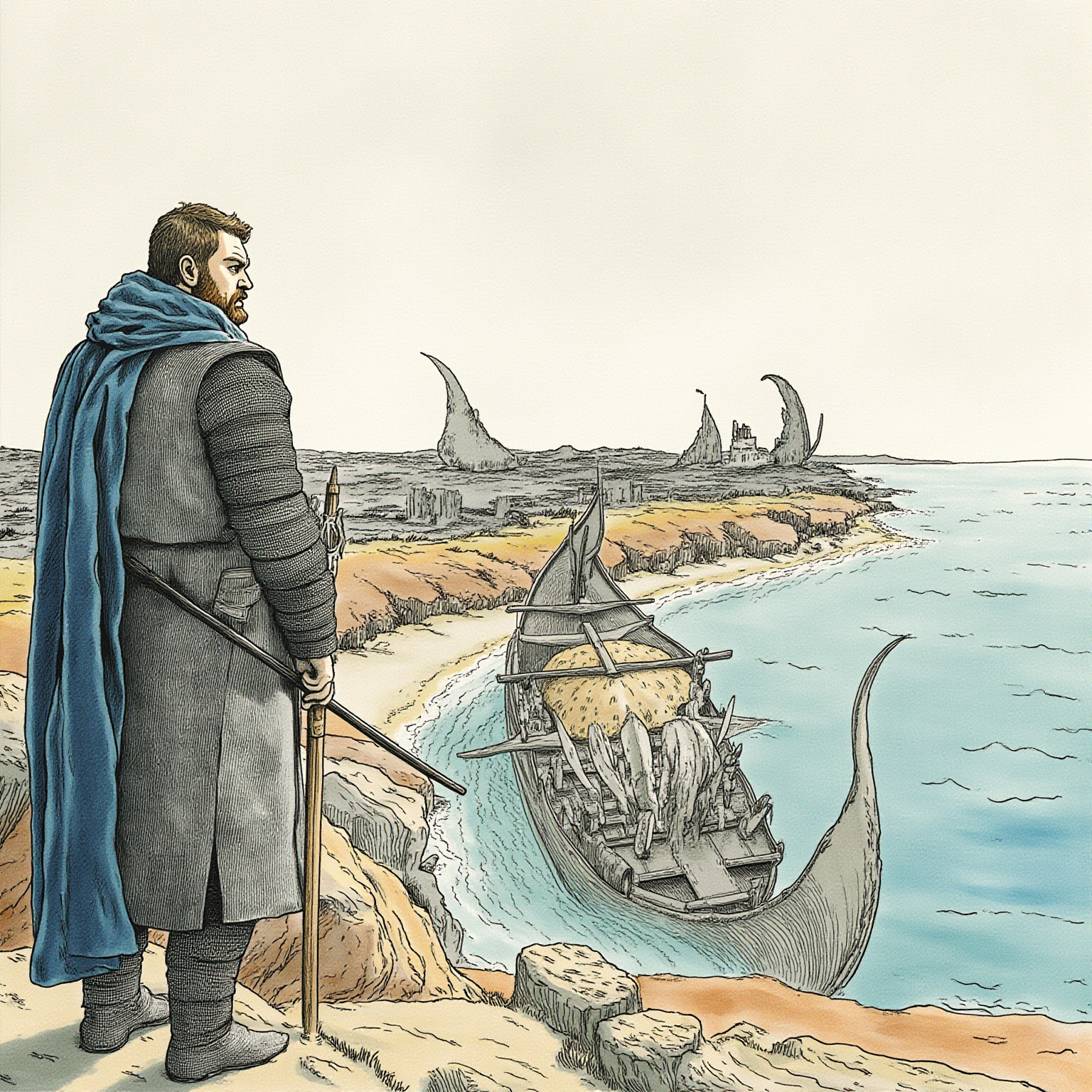
King Sigurd sailed with his fleet to the land of the Saracens, and there was a great battle on the sea.
西居尔王率舰队南航至于撒拉森人之境,海上一场大战由此而起。
金句 · Sigurðar saga Jórsalafara · 巴勒斯坦海面
Last to appear is the young king Magnus Erlingsson. In 1177 he defeats the rebel Birkebeiner, an insurgent band made up mostly of farmers and local strongmen, named for the birch woodland where they went into hiding. The saga stops right there, snuffed out like a candle in the wind. The cutoff is almost certainly deliberate, leaving the book at a point that runs straight into Sverris saga, the account of the rise of the Sverre dynasty, as a kind of prequel. You reach this page expecting another one to follow. There isn't.
Theme and method: a history that was assembled
What this book does best is the assembling. Snorri had no complete historical record in hand. What he had was a handful of now-lost histories of kings, an oral tradition passed down through generations, and a large body of court poetry, verses composed for kings as a kind of running record, traceable back to the events themselves. He melted these wildly different materials into a single self-consistent prose epic. That is the root reason scholars before the mid-nineteenth century believed he was writing true history, and it is also why, once saga criticism was founded in the early twentieth century by the Weibull brothers and the Norwegian historian Edvard Bull, mainstream scholarship changed its answer to a mixture of fact and fiction. Bull's own line on it is the famous one: we must give up every illusion; Snorri's grand epic bears no deeper resemblance to the real conditions of the age it describes. That sounds harsh, but set it against what a thirteenth-century Icelandic poet actually had to work with, and this was the best material available to him.
That act of assembling is itself worth watching as craft. R5 praises Snorri as a critical historian well above the ordinary standard, his deep grasp of court poetry underwriting his ability to weigh sources against each other. R3 and R6 treat the book as the highest example of the king's saga, and its structure is often read as a triptych: Odin's demotion, Fairhair's unification, and Olaf the Saint, three panels forming the axis of the whole book. There is another layer of reservation, from a school of thought holding that the motives Snorri and other saga writers of his time give their characters reflect the politics and society of thirteenth-century Iceland more than the age the sagas claim to describe. The first time I read that claim it stopped me too, but set it down and it makes sense: what Snorri had on hand was the assembly rock and the family feuds of thirteenth-century Iceland, and when he wrote the inner life of a ninth-century Norwegian king, that was the only reference he had.
There is one more thing worth watching: a gradual shift from myth to man, from pseudo-history to historical fiction to history, that is the book's real structure. It opens rooted in myth, with Odin still a god; further on, myth and fact interweave, but the narrative grows steadily more historically credible as it goes, until the chapters on Olaf the Saint and Harald Hardrada arrive at something close to a picture you can cross-check against other sources. In other words, the book itself is a credibility curve running through the history of the Norwegian monarchy.
The hook to send you to the text itself: the map is not the land
This companion guide has handed you a map, but the land itself is not here. What you can only find in the text is Snorri's particular gift: classical objectivity, realistic psychology, a believable rendering of cause and effect. It is how he can write a king's death in five hundred words so that it reads as an accident and a tragedy at once. It is how he threads a piece of court poetry into his prose, letting it work as both a historical source and a metaphor. It is the moment Olaf the Saint's coffin is opened, and the fragrance seems to rise straight off the page. Read the whole thing and you will find that this book is really a thirteenth-century Icelander, working with every scrap of human memory he could get his hands on, writing a pretty good set of biographies for a line of kings he no longer had any claim to rule.
Snorri is not writing the history of Norway. He is using every tool a thirteenth-century Icelander had to put together a pretty good set of biographies for kings he never met.
Art Direction4 plates
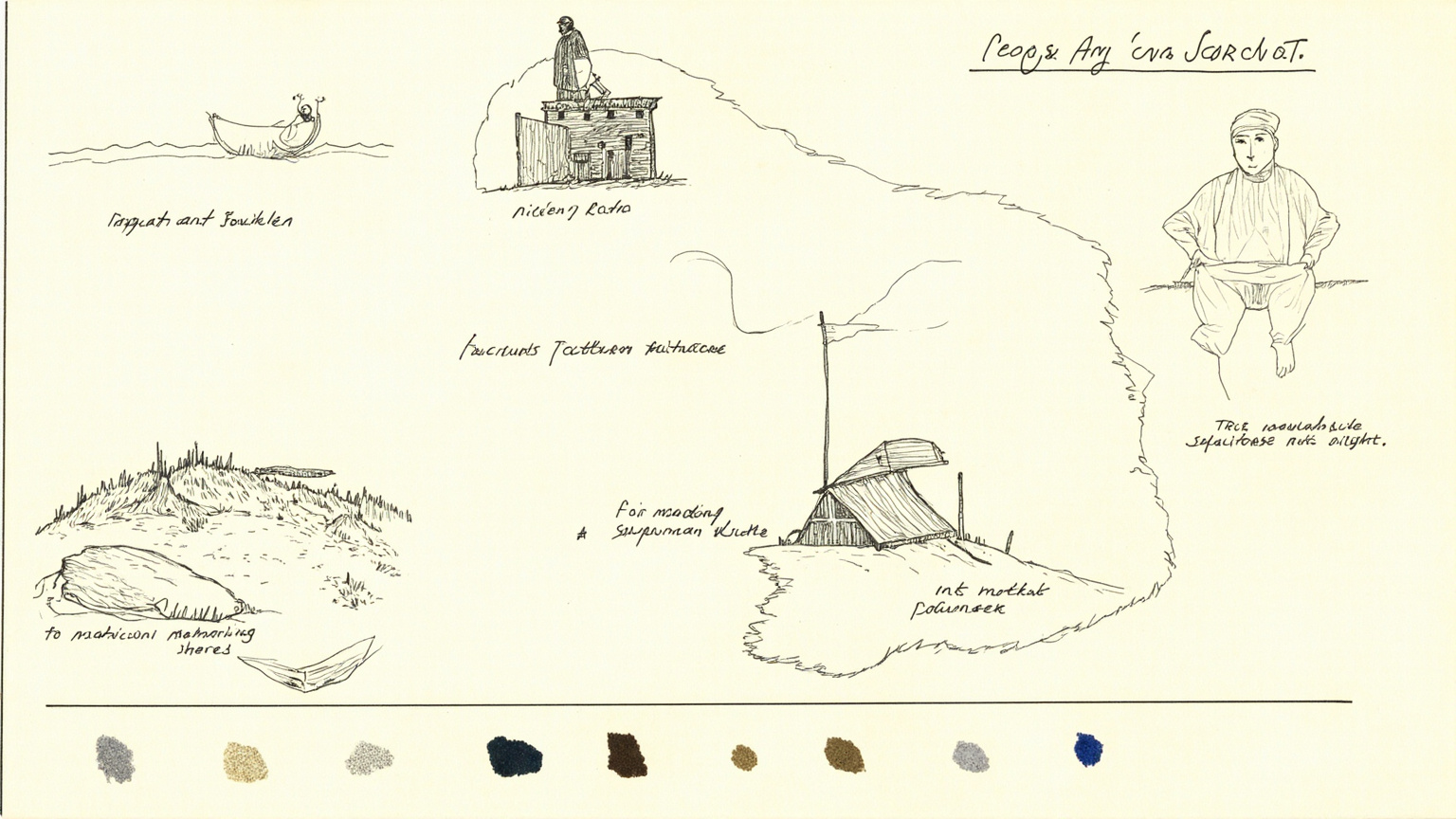
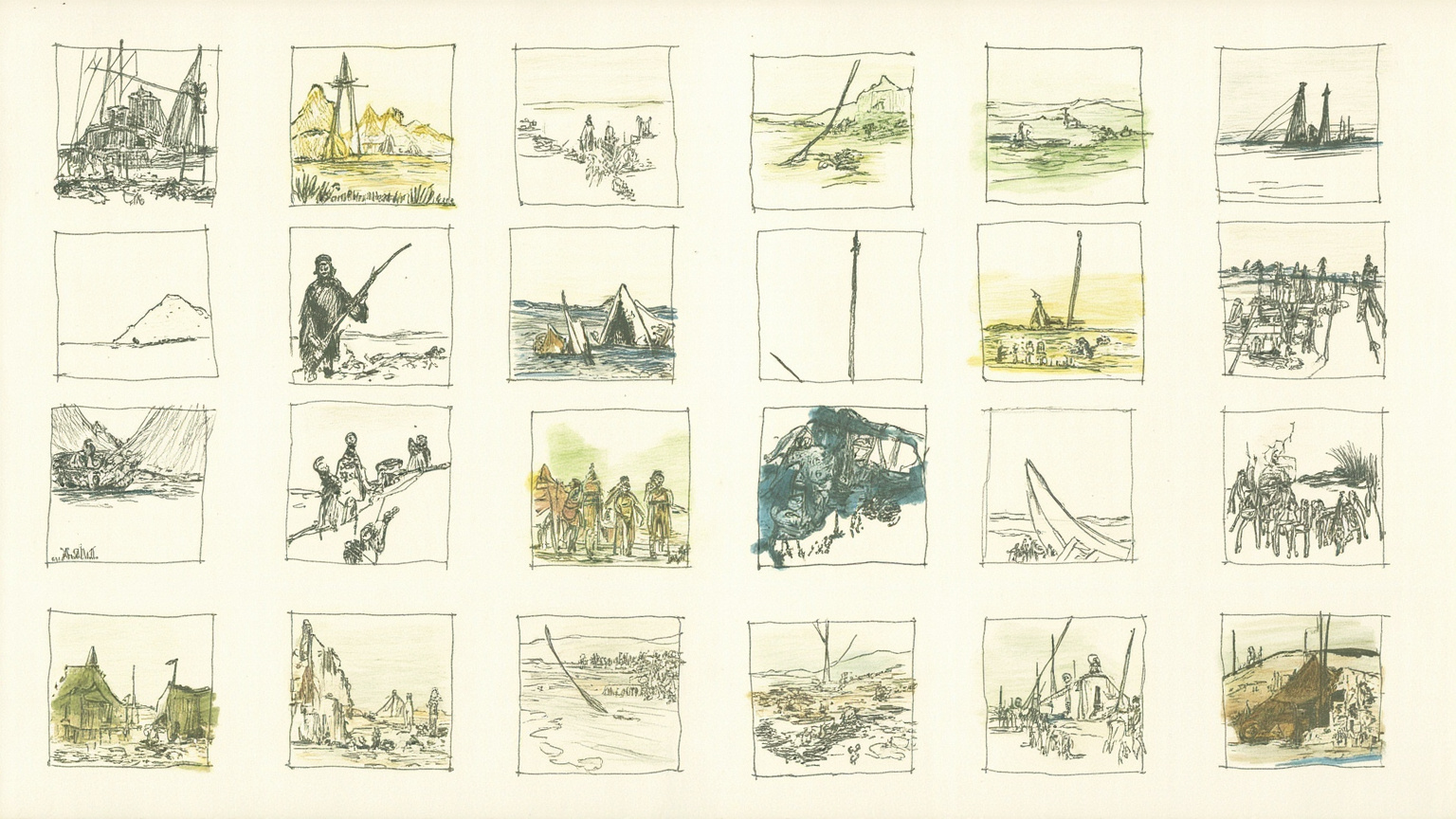
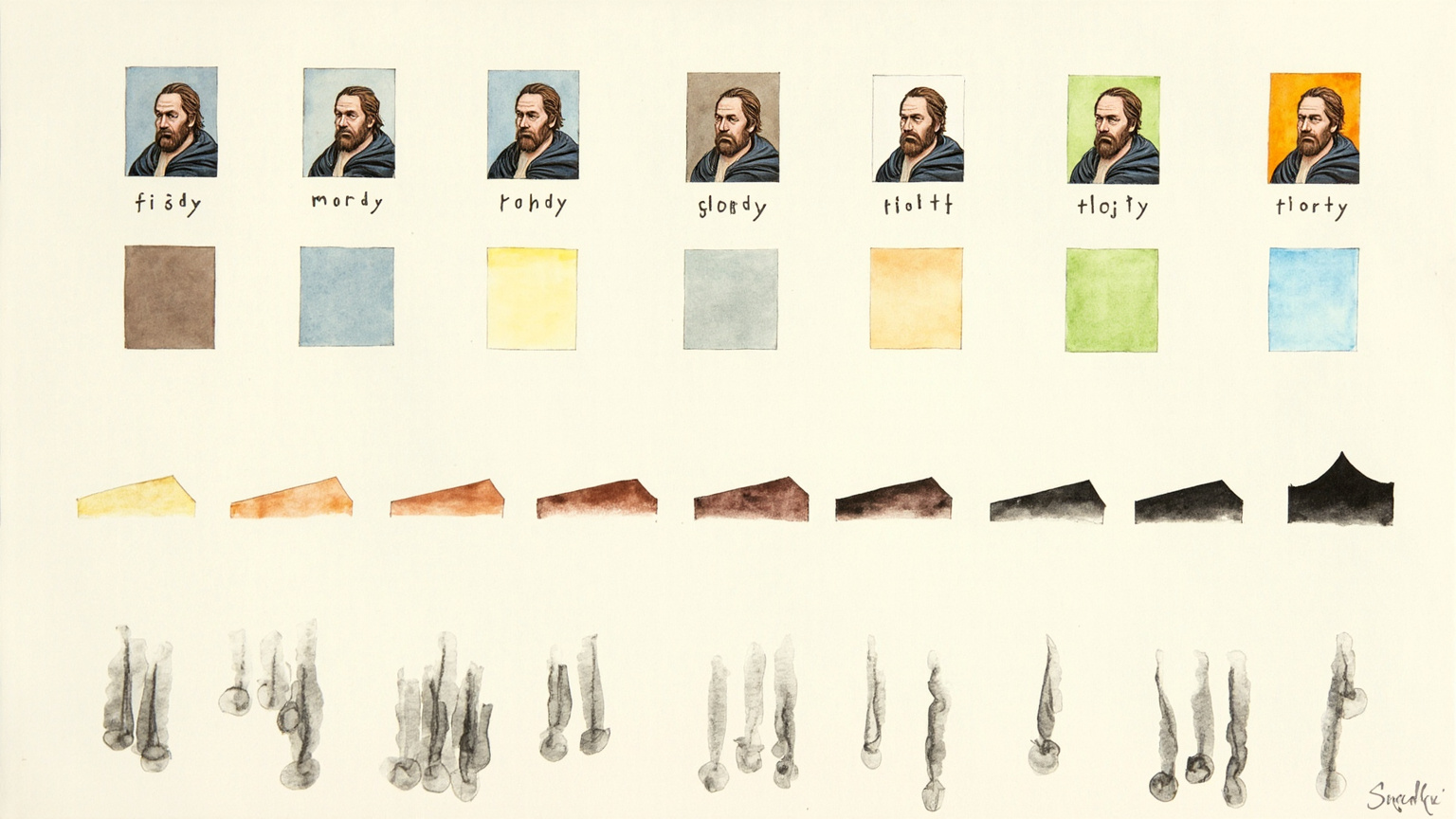
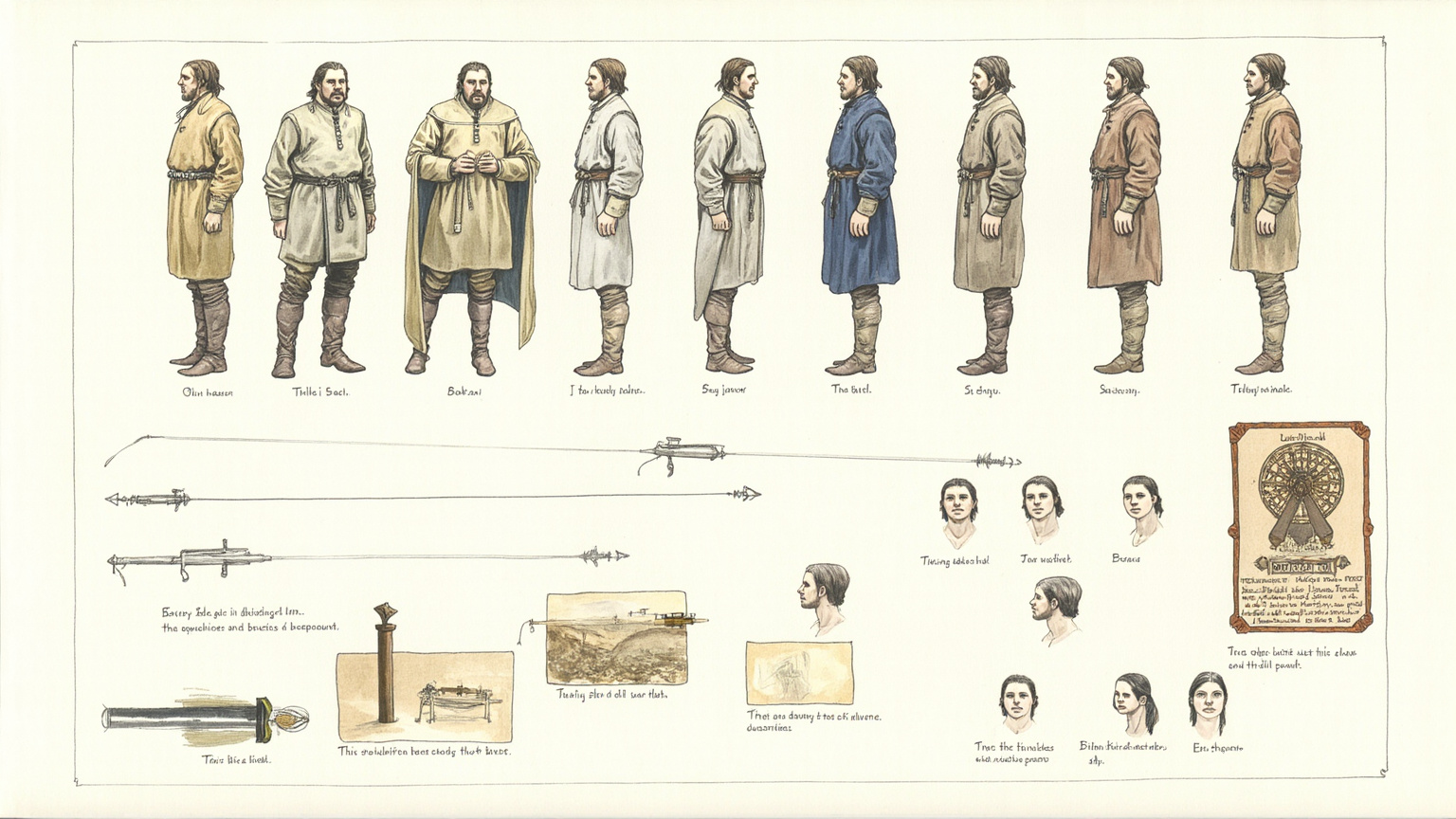
Before the guide was written, this book got a visual foundation — every illustration you just read grew out of it.