Hikayat Abdullah (حکایت عبدالله) / "Abdullah's Story" · Companion Guide
阿都拉传
一个抄书匠之子,凭一双清醒的眼睛,把马来文学从神话拽进了河口与麻袋。
A Palm-Leaf Manuscript, Opened
The small rustle of a palm leaf unfolding can outweigh a whole library. This book starts with one leaf: a boy in early nineteenth-century Malacca, led by his father to a bound palm-leaf manuscript, and from that moment a single thread runs on: learning to read, copying manuscripts, teaching, translating, writing. Whose study he later worked in, whose papers he copied, whose printing press he set type at matters more than any of the famous names in the book. The book is Hikayat Abdullah, by Munshi Abdullah. Munshi means teacher in Malay, and he earned the title teaching soldiers in an Indian barracks to speak Malay.
What Kind of Book This Is
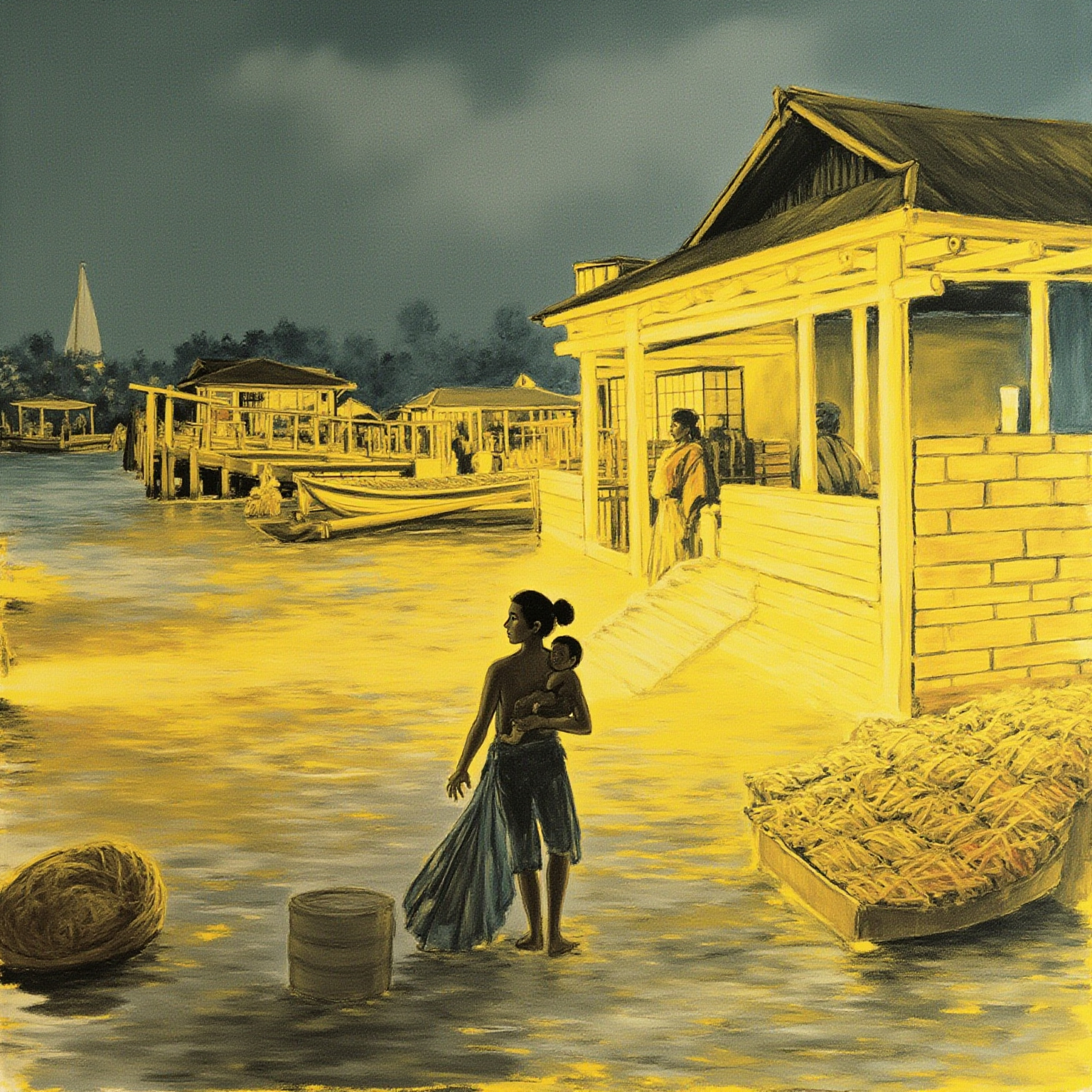
It is a watershed in Malay literary history, the first publicly signed autobiography written in contemporary colloquial Malay about contemporary life. The lithographed edition appeared in 1849, at a time when Malay writing was still the courtly classical hikayat: genies, princes, myth. Abdullah wrote none of that. He wrote the warehouses he had actually seen, the sacks, the old Portuguese fort being torn down, the wooden jetty going up at the river mouth. That single choice pushed an entire generation of Malay writers onto a new road.
People and World
There is only one thread to follow: Munshi Abdullah himself. Born in Kampung Pali, Malacca (today's Kampung Ketek), to a father of mixed Tamil and Yemeni descent who worked as a scribe and tutor. One line of introduction is enough: his father's tradition of copying and teaching passed down to him, and he carried it into colonial offices and missionary studies. So the protagonist of this story is not some white official, but the boy who copied that official's papers. His father is the one who brings him in. Two other figures appear later: Raffles, the key figure in the founding of Singapore, for whom Abdullah worked as a scribe, and Sultan Hussein of Johor, the last shadow of the old Malay order still standing at that river mouth.
The world is the Straits Settlements in their earliest form. Malacca still had its old Portuguese and Dutch brick houses along the river, atap-roofed villages strung along the water. Singapore had only just been cut out of the jungle: wooden jetties, warehouses, sacks, barrels, coils of rope piling up on the shore one by one. After the monsoon passed, the drying grounds smelled of dried fish and salt. More people move through this world than get named: East India Company officials, sepoys in the Indian barracks, British and American missionaries, Chinese merchants, the camps of the Tiandihui secret society, the fading shadow of the Malay court, and Abdullah himself. One man's eye carries the whole book, start to finish, as a bystander moving through it.
From Malacca to Raffles's Side
The story begins with a sickly child. Old Malay custom handed such children over to be raised by someone else. Abdullah first sat on rush mats at a low desk in Quran class and memorized the whole text, then learned Malay calligraphy and manuscript copying from his father. One thing in the writing is worth pausing on: he never casts himself as a prodigy. He simply writes a boy who memorizes scripture, then holds a bamboo pen, then is finally trusted to copy a complete volume for his father. His father's trade was his first classroom.
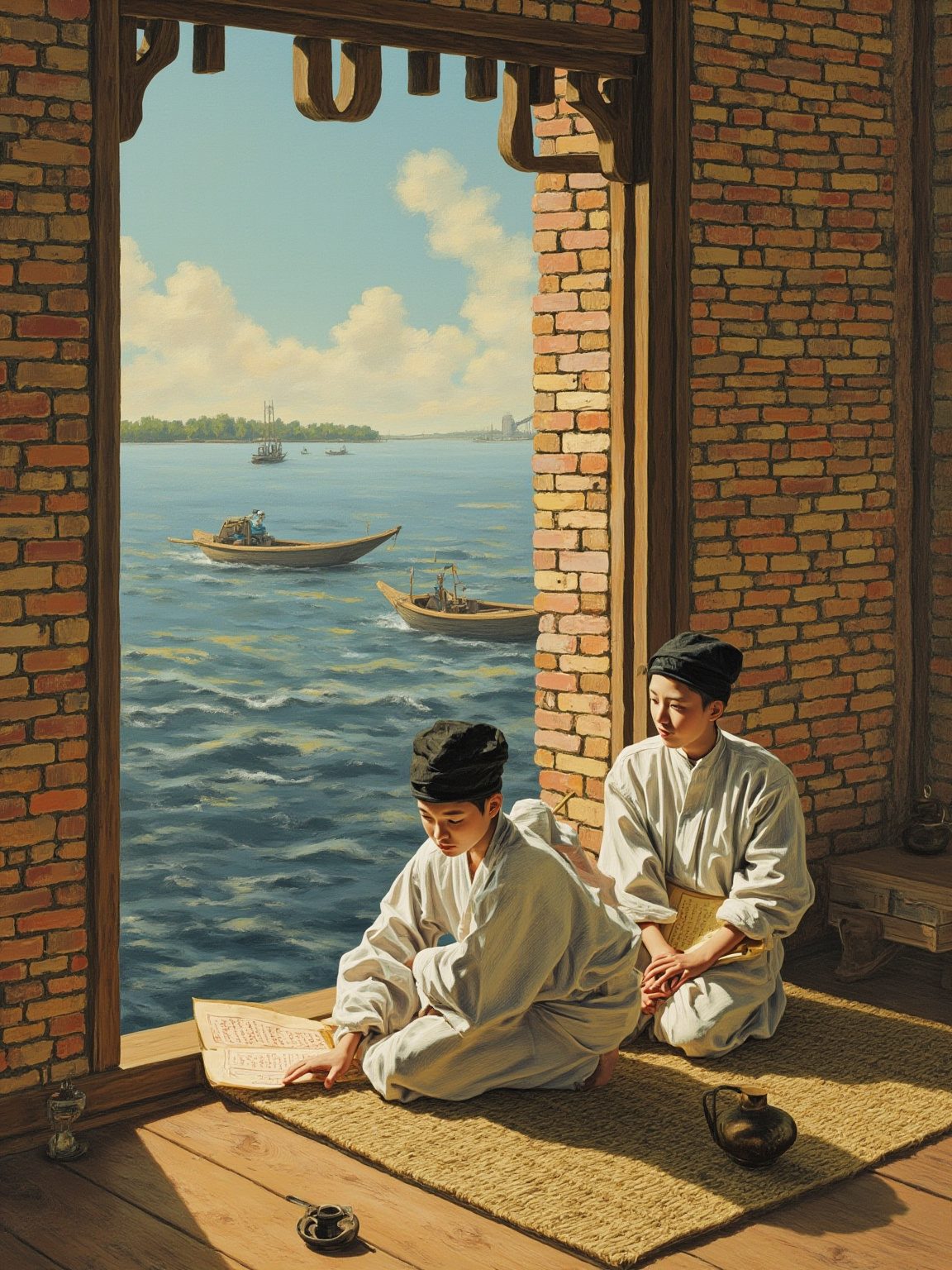
My father's hand set mine upon the reed; from that hour I was a scribe's son before I was anything else.
父亲的手把笔杆按到我掌心,打那一刻起,我便是抄书人的儿子,先于我成为任何别的什么。
金句 · 自传开篇 · 父授笔
In his teens he went first to the Indian barracks in Malacca to teach the sepoys Malay, and this is where the name Munshi comes from. Barracks, parade ground, soldiers speaking Hindustani and Tamil, and he stood among them working out Malay by gesture. Soon he was working in the studies of missionaries and merchants, then was called into a colonial office as a clerk, and finally sat at the desk of Sir Stamford Raffles, copying his papers. From 1815 he translated the Gospels for the London Missionary Society: the same boy now carrying one language into another. He changes desks three times in a single stretch of the story, and that pace was simply how fast the Straits Settlements moved in those years.
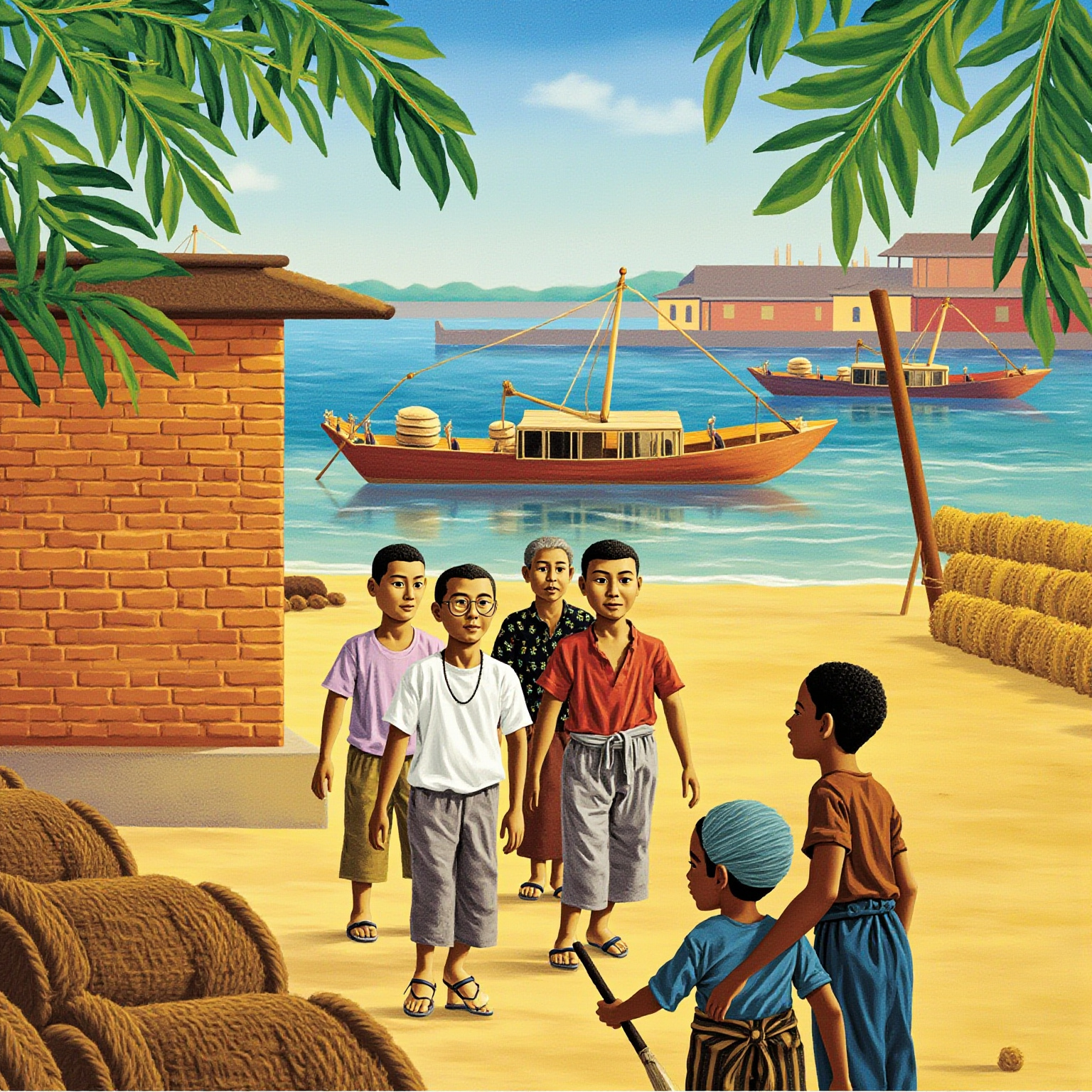
I walked between sepoys who spoke Tamil, and Englishmen who had no Malay; the tongue I taught them was the only ground we owned in common.
我走在说淡米尔语的印度兵与一句马来话都没有的英国人中间,我教的这一门话,是我们脚下唯一共有的地。
金句 · Munshi之得名 · 兵营教书章
Singapore's River Mouth Rises Out of the Jungle
He happened to be standing right there as Singapore's river mouth rose out of the jungle. He was present the day the Singapore Institution was founded. He heard the noise from the Malacca side when A Famosa, the old Portuguese fort, was pulled down. He caught a distant glimpse of Lord Minto, the Governor-General of India, from somewhere in the crowd during his visit. What makes his angle unusual is that none of it reads like an official's account of his own achievements — it reads like a local boy who copies that official's papers, standing outside the office listening to carpenters hammer nails, counting which number sack was being carried off a boat at the wharf.
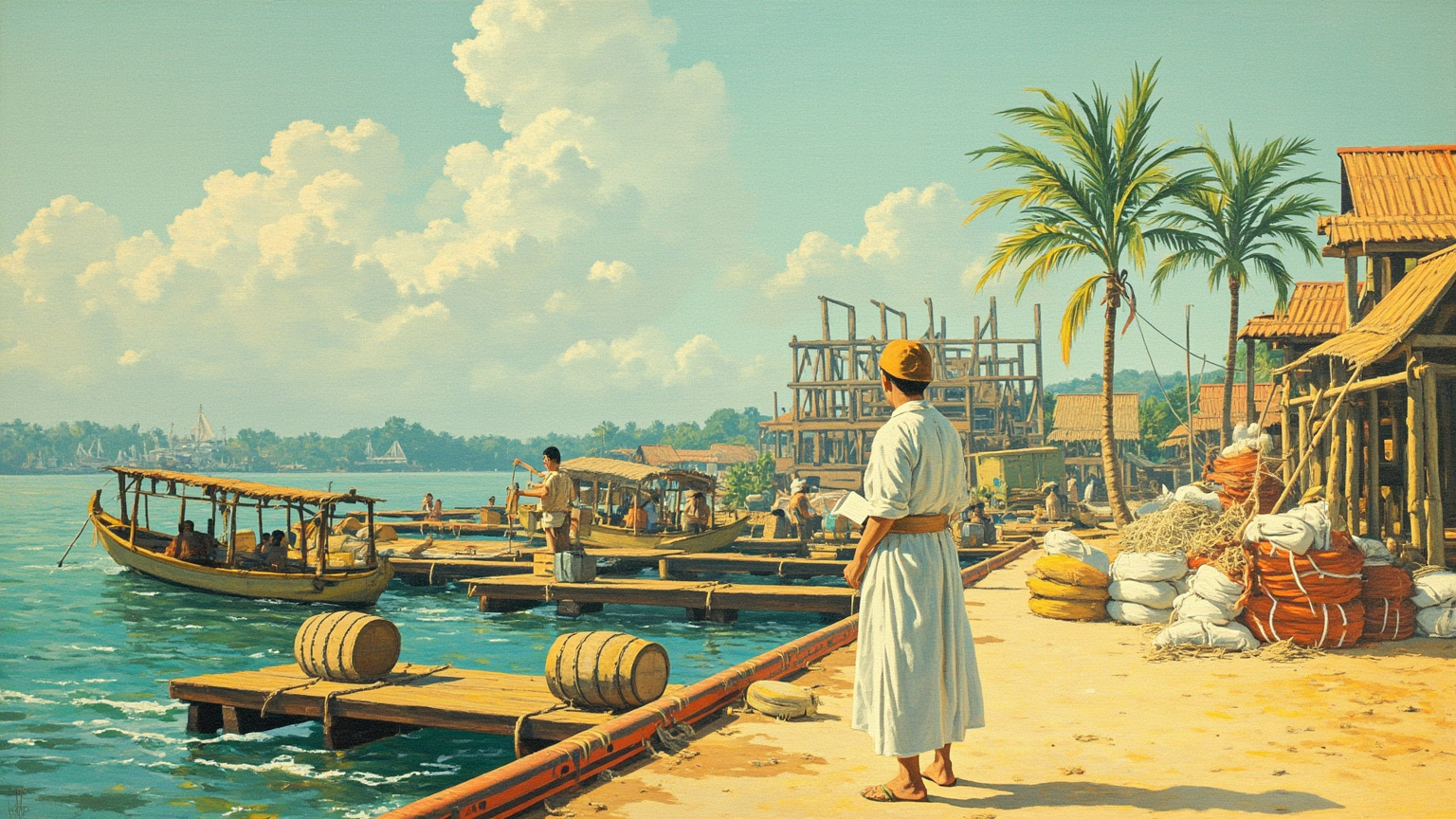
The river rose out of the forest; planks, godowns, sacks and coir-ropes followed, and a port stood where none had stood before.
河口是从林莽里站起来的;木板、货栈、麻袋与椰绳一件件跟上,一座从无到有的港口就这么立住了。
金句 · 新加坡开埠章 · 河口初成
He did not only watch construction sites. He walked into Tiandihui camps in inland Singapore, where the Chinese secret societies still carried the air of an outlaw brotherhood at that river mouth. He witnessed the slave trade firsthand — a Manggarai family torn apart by their Bugis owner, Balinese and Bugis women sold to Chinese, Indian, and Malay buyers. These are the quietest chapters in the whole book. He does not pass judgment. He simply writes down what he saw: who was standing where, who was being led off and to where, when the boat came in. His voice is most restrained here, and that is exactly why these pages carry the most weight.
An American Missionary Said 'You Should Write This Down,' and He Did
In 1837, an American missionary named Alfred North read an account Abdullah had written of a voyage along Malaya's east coast, and wrote him a note — the gist of it was, you should write down your own life. Abdullah did not hesitate long. Between 1840 and 1843 he wrote the autobiography in contemporary colloquial Malay, and the first lithographed edition appeared in 1849. That is how plainly a book can be born: no grand motive, just one writer giving another a push.
But he chose something more consequential than simply writing it down: he refused to write in courtly classical Malay. All the ornamentation of the classical hikayat, the genies battling, the flying carpets, the divine pronouncements, he kept off the page. What he wrote instead were sacks on a wharf, a bound palm-leaf manuscript, an afternoon of a father teaching his son to hold a pen. That choice alone was a paradigm shift in the history of written Malay. I stopped short the first time I read this part too: he was not writing a good book. He was changing the language itself.
Once the Port Had Taken Shape, He Sailed for Mecca
The book was out, his name made, and he did not stop. In his later years he kept working at the American Board's mission press, setting type, printing gospels. In 1854 he boarded a pilgrim ship in Singapore bound for Mecca. As the ship sailed west he wrote an account of the voyage from Singapore to Jeddah: the ports, the wind, the prayers along the way. When the ship reached Jeddah he came down with cholera and never finished the last stretch of the journey. He was about fifty-seven or fifty-eight. A scribe's son, who started at a palm-leaf manuscript in Malacca, ended at a sickbed in Jeddah.
What the Book Is Actually Saying
It is doing at least three things at once. First, it pulls Malay literature out of the courtly, mythologized classical hikayat and lets a contemporary Malay writer put his own observations into print in colloquial Malay. Second, it leaves behind a one-of-a-kind local eyewitness record of the early nineteenth-century Straits Settlements: not a colonial official's account of his own achievements, not a faceless mass of laborers, but the clear-eyed curiosity of a scribe's son moving among everyone at once. Third, standing between the Malay-Arabic tradition and British colonial and Euro-American missionary circles, he became one of the earliest bilingual go-betweens: copying papers for Raffles, translating gospels for the London Missionary Society, setting type at the American Board's mission press, and finally writing his own life in Malay. Walking back and forth between these desks, he wore a new road into the ground.
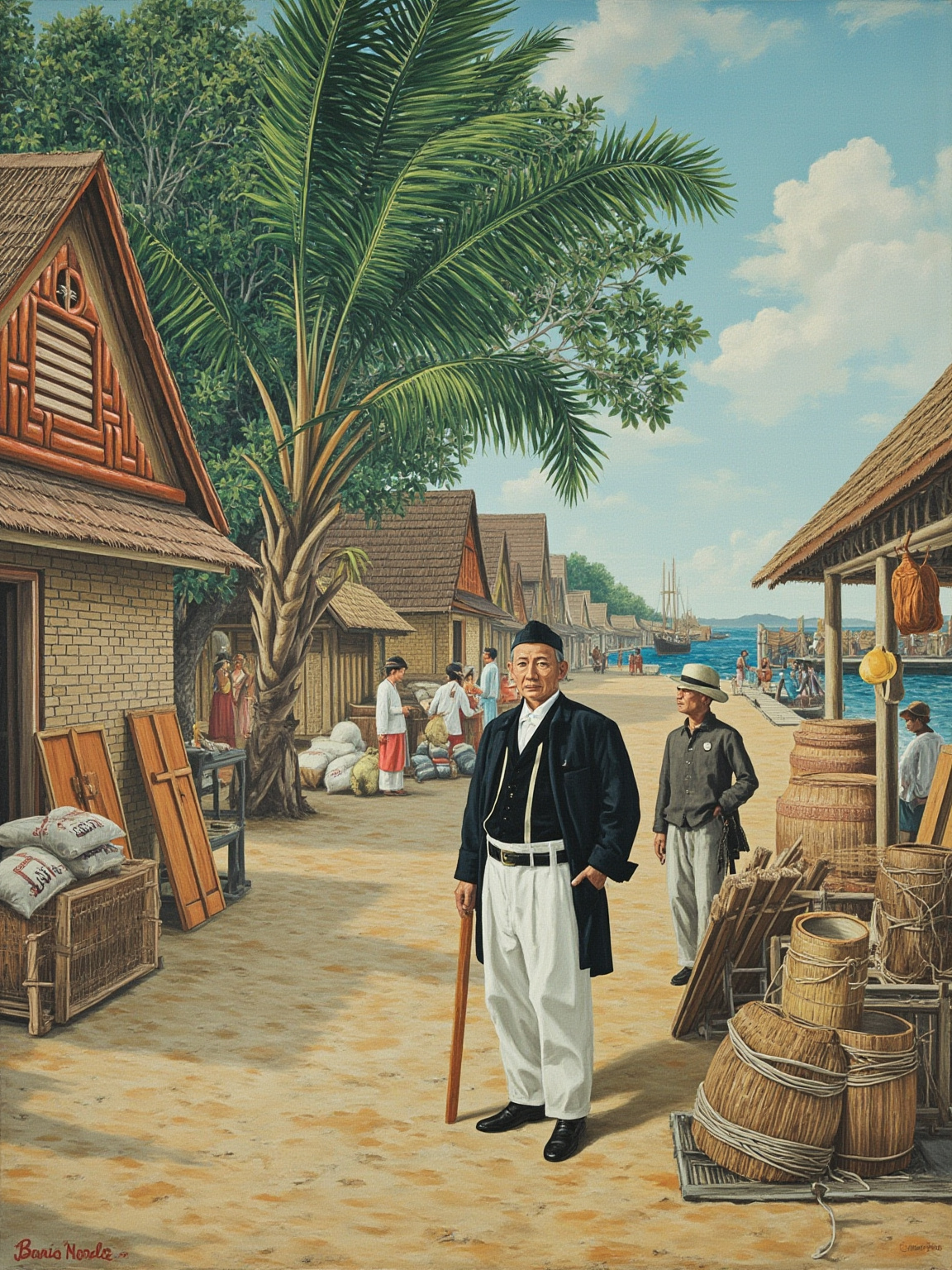
A stranger in a white hat wrote me a single line: write down what you have seen. I sat, and the old tales fell away.
一位戴白帽的陌生人替我写了一句话——把你见过的写下来。我坐定,旧日的传说就此让到了一旁。
金句 · Alfred North 致信章 · 落笔自传
He was also sharply, relentlessly critical of the old Malay order, the Kerajaan, and argued that Western education was the way forward for society. That stance has made him a contested figure in the Malay-speaking world ever since, but it is not the whole of this autobiography. Its larger achievement is that, for the first time, a local man put what I saw into an officially printed book. That fact carries more weight than which side he stood on.
What to Watch in the Writing
He writes seeing itself cheap and unadorned. No chapter builds atmosphere out of piled-up adjectives — only objects, people, actions: sacks, a wooden jetty, a palm-leaf manuscript, a woman being led away. He passes judgment almost never; the action speaks for itself. That restraint is rare in colonial writing of the period, a genre that usually fills every page with moral posturing. He simply doesn't.
Let the words be of this market, this jetty, this sack of grain — let them be of the thing my hand has touched.
让字句从这座市集、这座栈桥、这一袋谷子来——让它们从我手所触到的事物里长出来。
金句 · 写法自白 · 告别宫廷 hikayat
Another thing to notice: he writes the autobiography like the growth rings of a port. The founding of the Singapore Institution is one ring, the demolition of A Famosa another, Lord Minto's visit another, the slave trade another. He doesn't lay events out in flat chronological order; he treats them as stations he happened to pass through, each one caught at whatever was happening there when he arrived. The book ends up reading less like a memoir and more like a boy who grew up at a river mouth, taking one frame at a time of everywhere he walked through.
Why Read the Original
What a companion guide can give you is a map: who is who, what happened in which year, where the book sits in literary history. But Hikayat Abdullah holds something no map can give you: the quiet of that boy's first time sitting before a palm-leaf manuscript, the nerves of the first time he stood at Raffles's desk copying his papers, the give of the ground underfoot the first time he walked into a Tiandihui camp. This book isn't driven by plot. It's driven by physical sensation: the feet, the eyes, the hands of a man moving through a river mouth. Knowing what happens is exactly why you need to go to the original and walk every one of his stops yourself.
That is how plainly a book can be born: no grand motive, just one writer giving another a push.
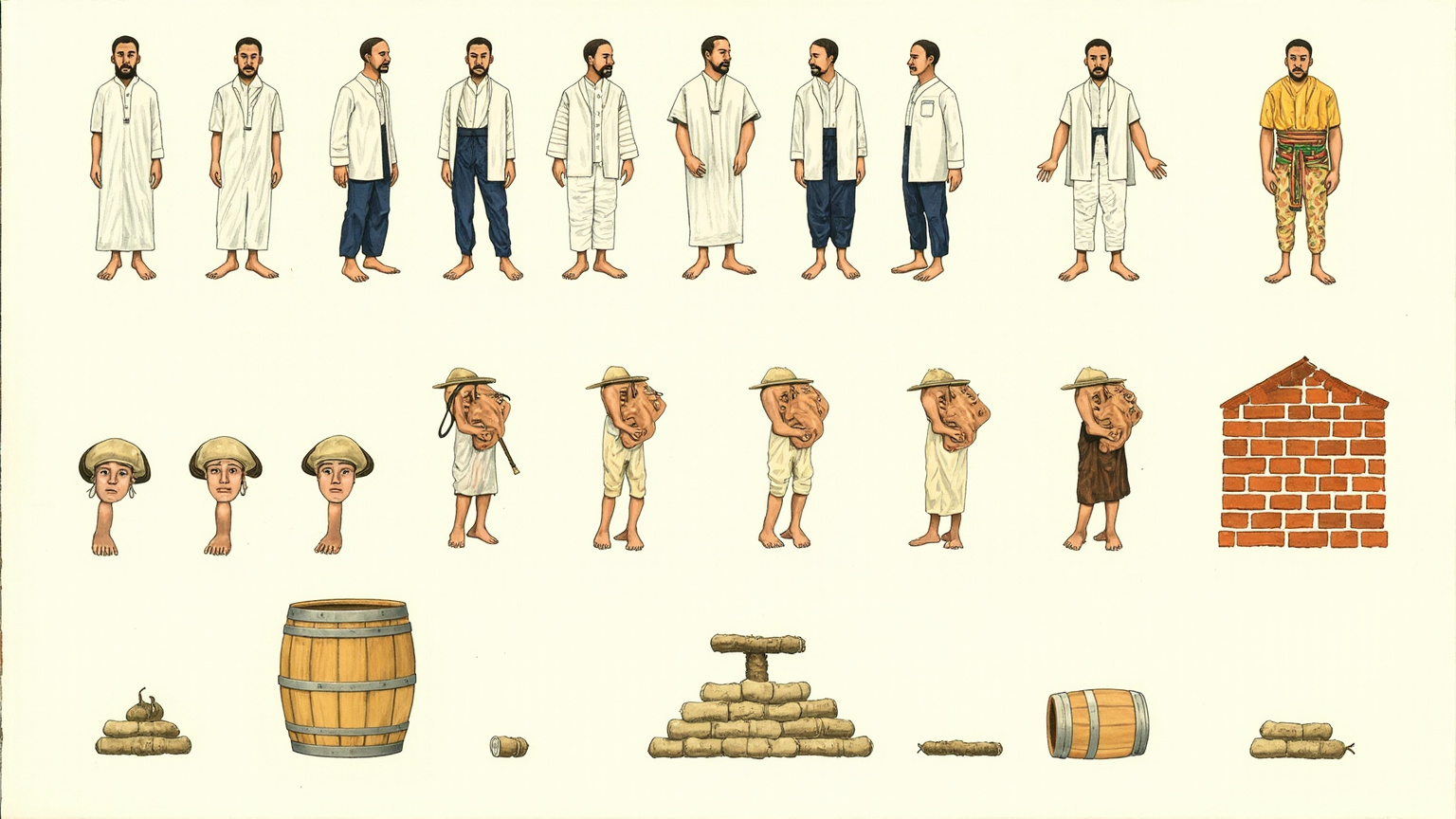
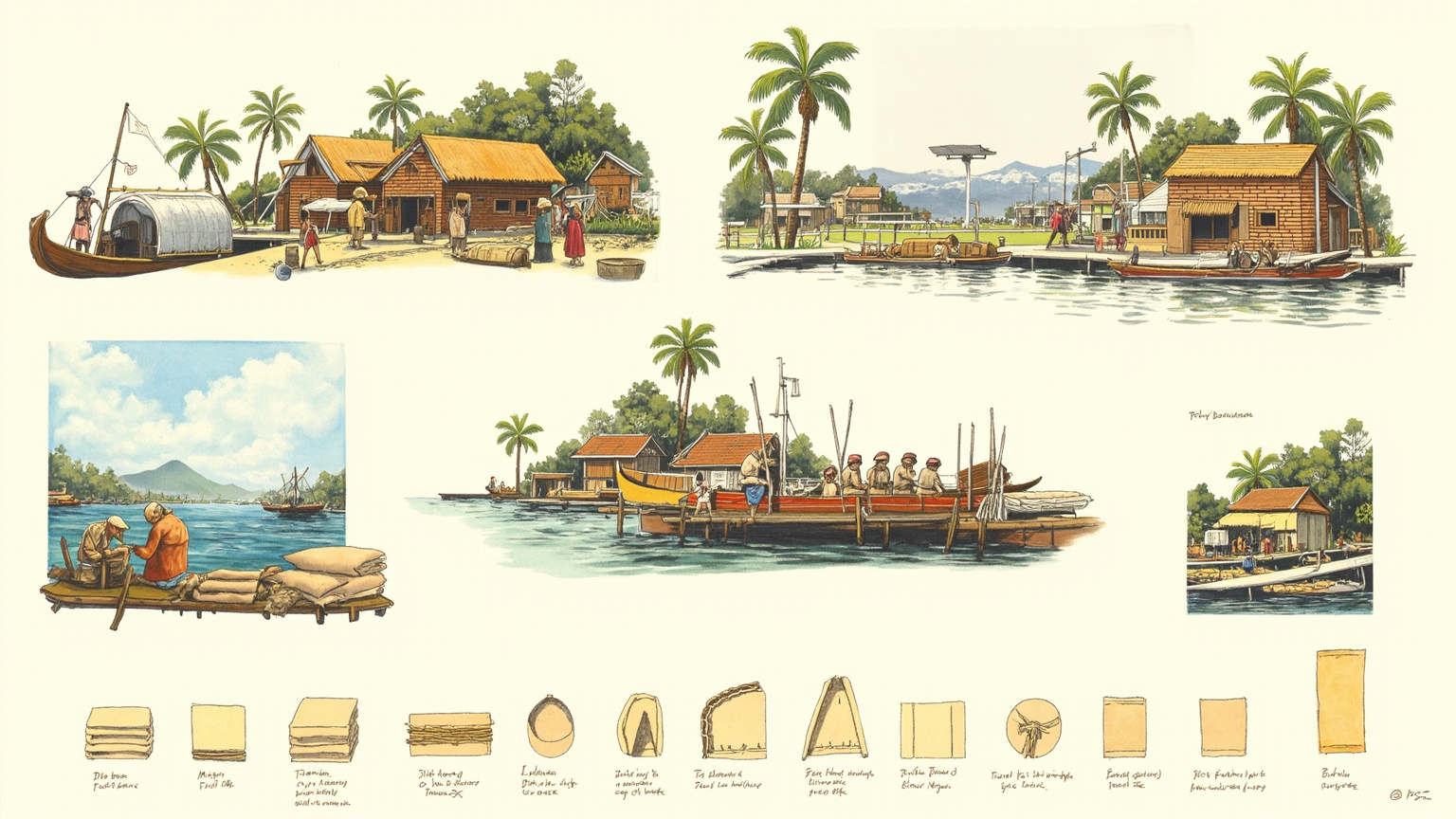
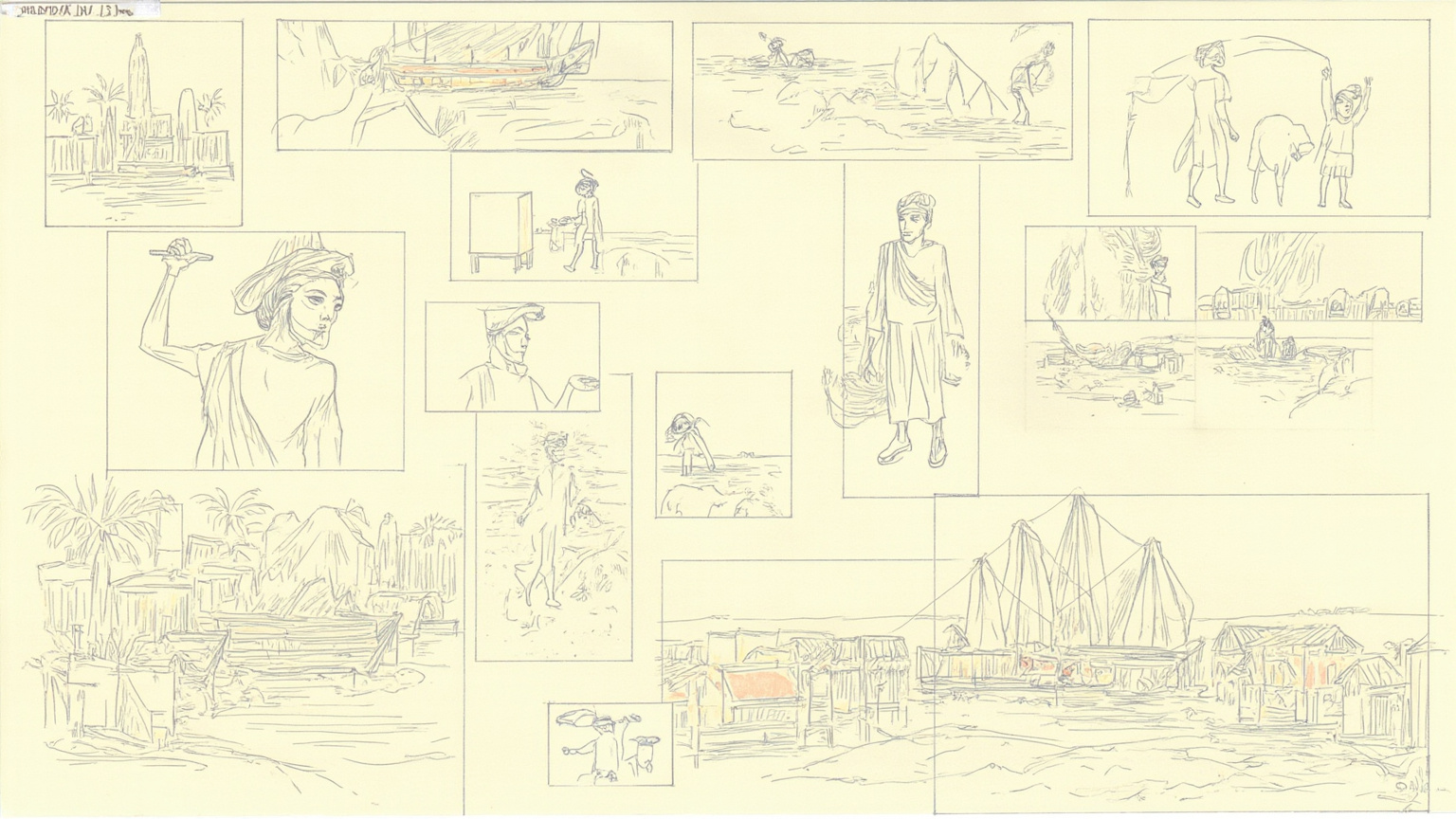
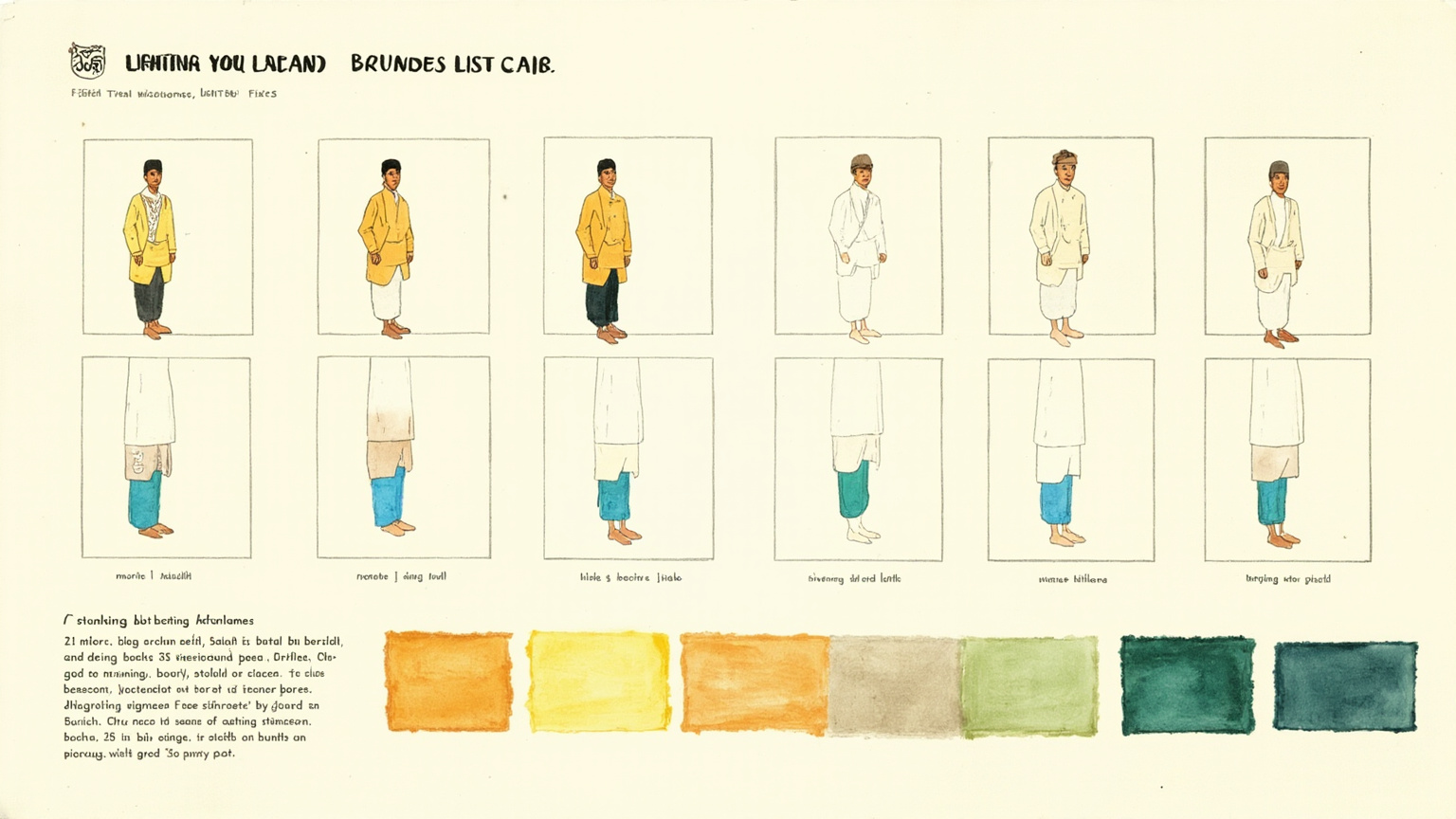
Art Direction4 plates
Before the guide was written, this book got a visual foundation — every illustration you just read grew out of it.