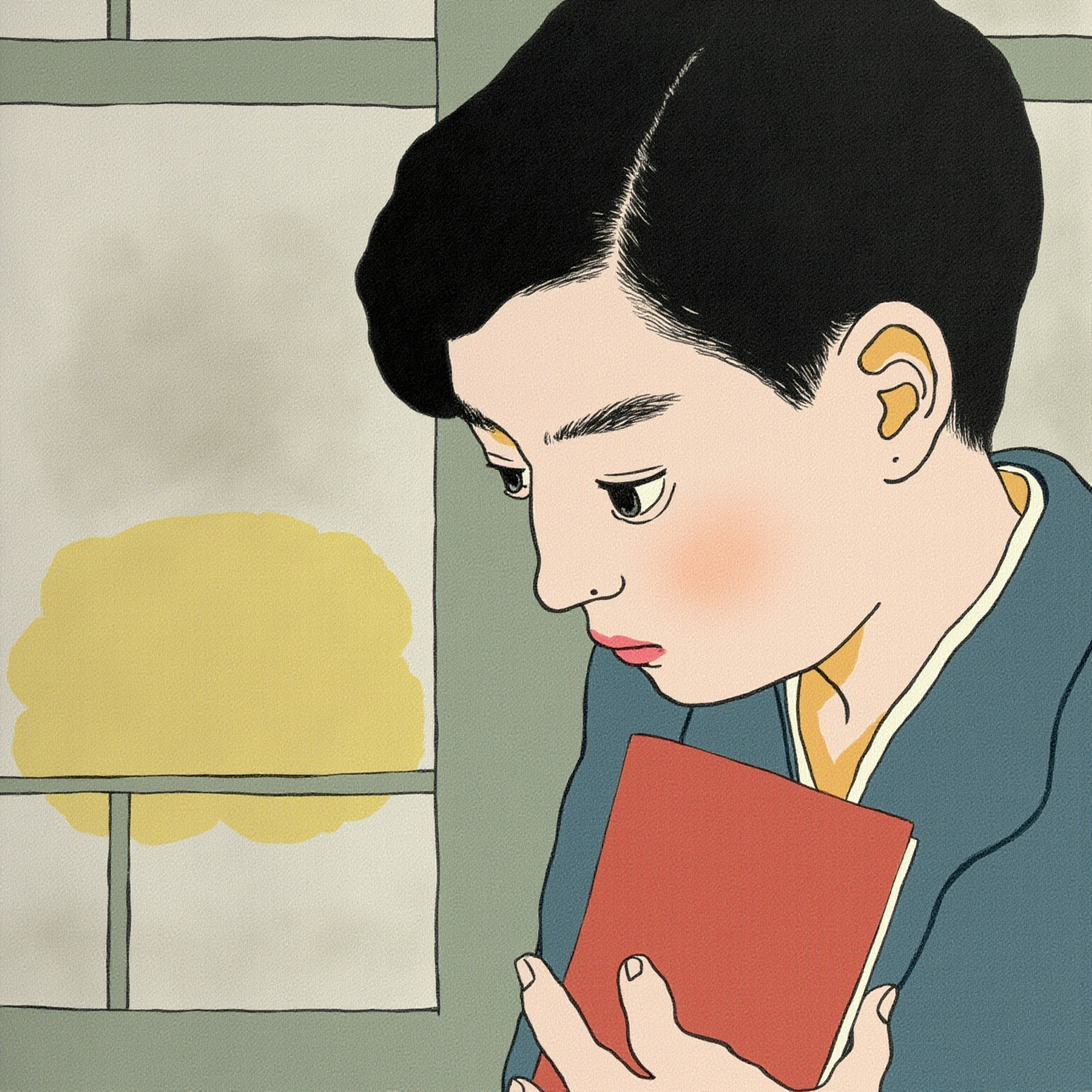
Tokyo, 1937: a boy owes a promise he cannot bear to look back at
Text and illustrations produced by the pipeline

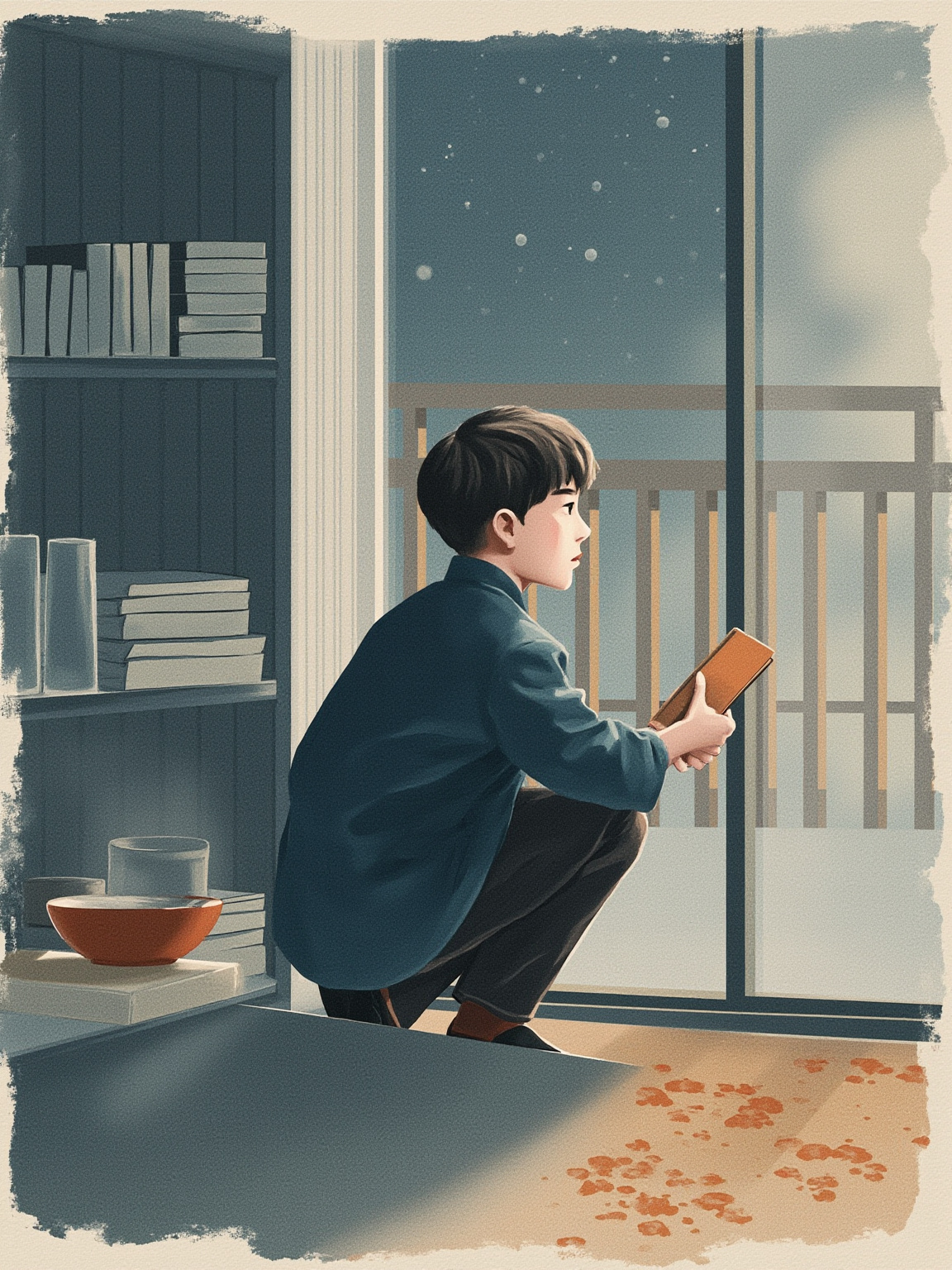
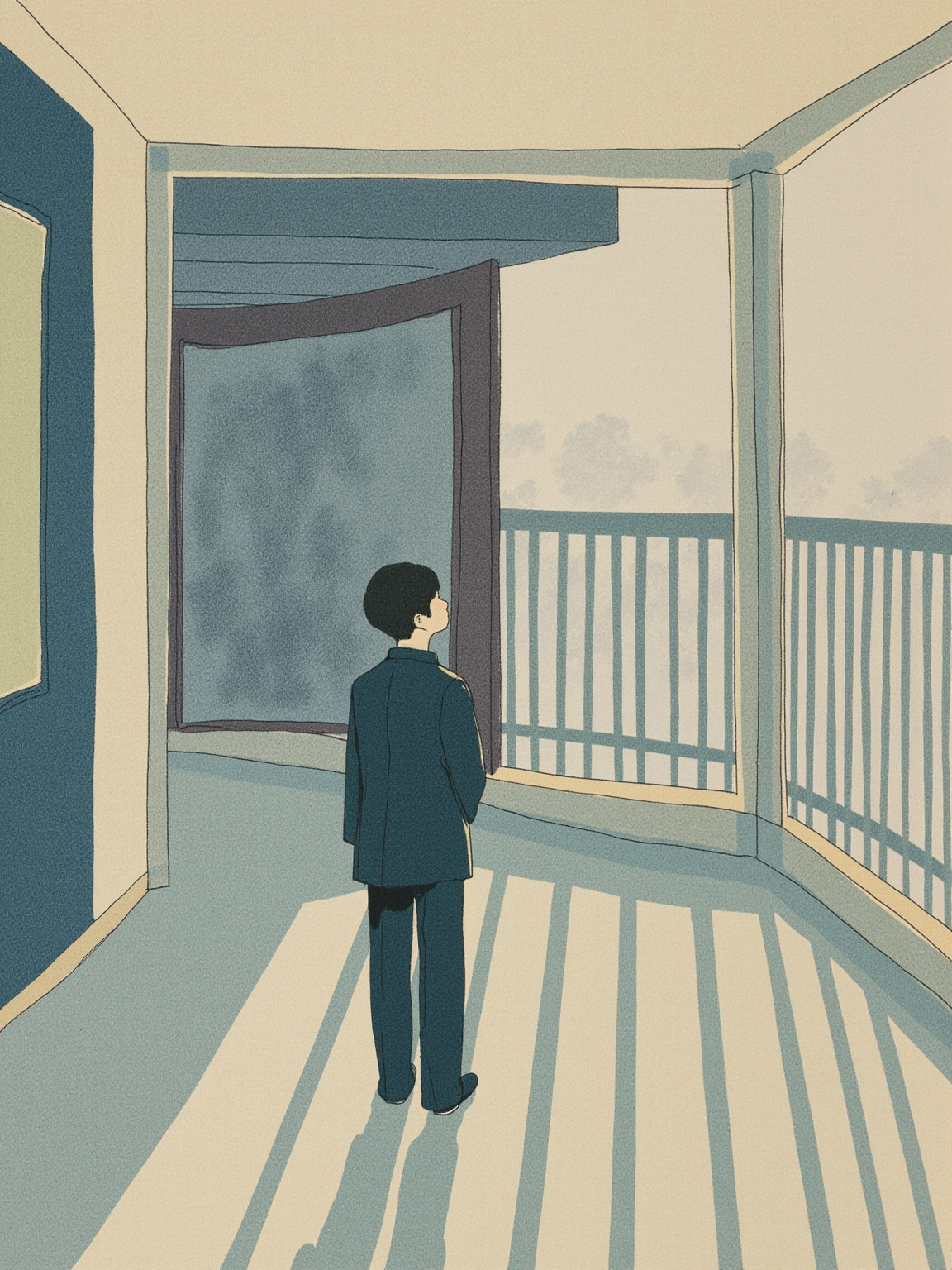
The rain has just stopped. Honda Jun'ichi stands on the roof of a department store looking down at Ginza, the streets still slicked with a sheen of water, umbrellas converging from every direction and scattering again, no one glancing up at him. A strange feeling comes over him: the crowd moves like molecules, each on its own path, and the world does not need him in it. It is the first time, at fifteen, that he dimly understands he is not the center of the world.
In the notebook, his uncle writes down a name for him: Copper, short for Copernicus — the boy whose head was full of strange ideas in Night on the Galactic Railroad. From that day on it sticks: Honda Jun'ichi, a new first-year at Tokyo Middle School, becomes Copper.
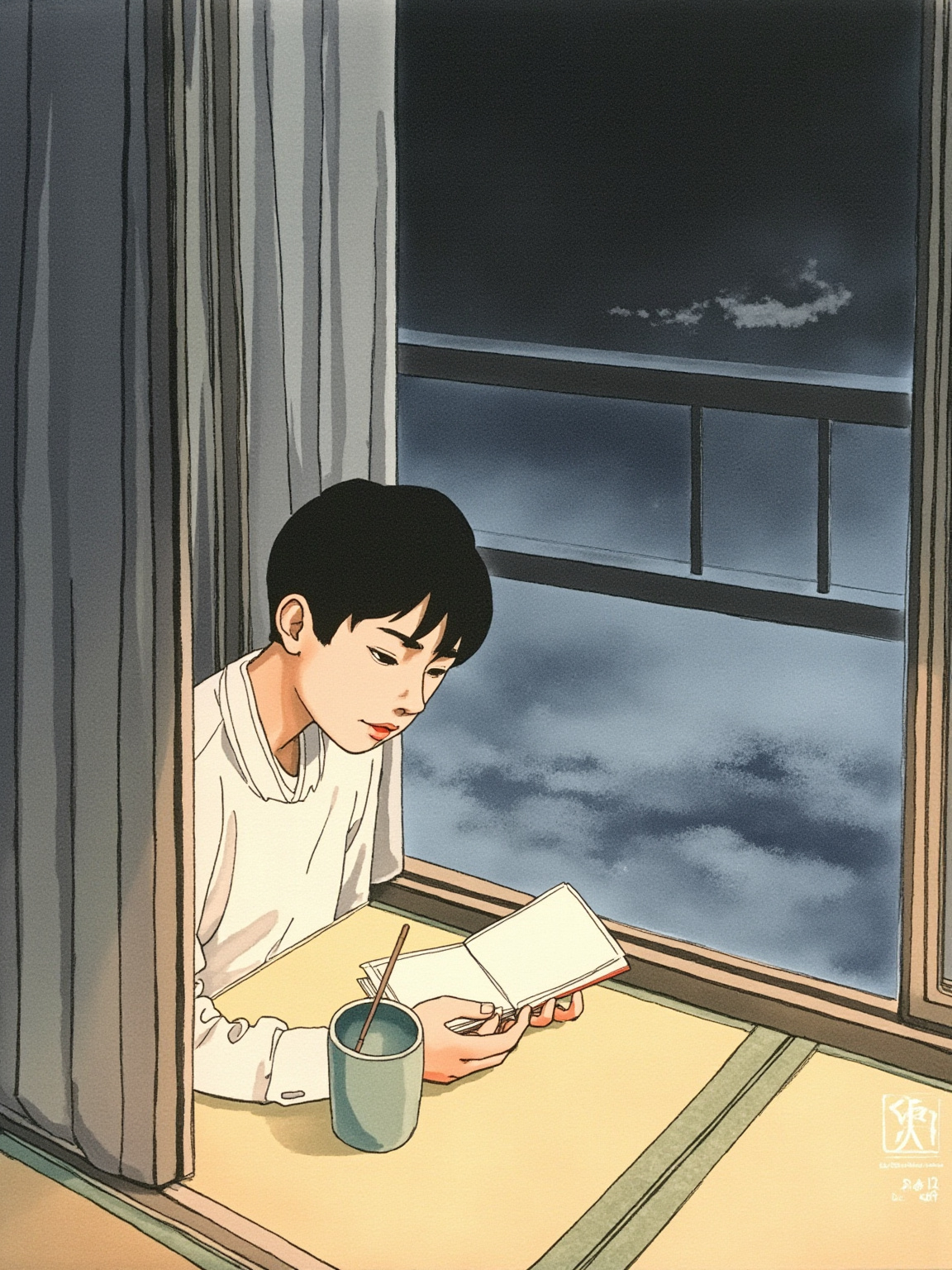
The book's author, Genzaburo Yoshino, came from a family in the fish trade and became a widely read, warm-hearted editor and publisher. Published in 1937, this novel for young readers never turns into a book of lectures in his hands. It becomes a notebook instead — the uncle gives Copper a plain, unadorned notebook and tells him to write down whatever runs through his head, then answers him, letter after long letter, in the same pages.
The uncle never lectures. He writes about Newton, about molecules, about production and consumption, about why a person cannot set himself up as the center of the universe — but every letter starts from some concrete thing Copper has actually seen. This is a rare way to talk to a child in a book meant for children. It reads less like instruction and more like a grown man who happens to write letters, walking beside a boy through the hardest stretch of road he has yet faced.


The uncle writes that a person makes most of his decisions without even noticing he is making them. What matters is not the cowardice in that moment — what matters is whether you are willing, now, to open your eyes and look straight at it. You owe Kitami something, so keep that debt on the record. The next time you face something like it, you will at least know you have run before, and you can decide whether to run again.
At the end of the letter, the uncle writes one line in the notebook, not raised, almost spoken to himself: How do you want to live your life.

The boy is not fed a lesson. He is walked through one. The uncle's posture is to crouch down, not to stand above him and point. That way of talking to a child is, if anything, getting rarer in books written for children today.
What it is really about is how a person lives alongside his own cowardice. Over the course of a life you will do wrong, you will run, you will owe someone something you cannot repay. Growing up does not mean becoming someone who no longer does wrong. It means becoming someone who, having done wrong, is still willing to face himself. Read today, this idea lands even harder than it must have then — our own shelves are crowded with heroes and winners, with lists of how to succeed, and precious few books willing to sit down with a boy and talk honestly about the moment he failed himself.
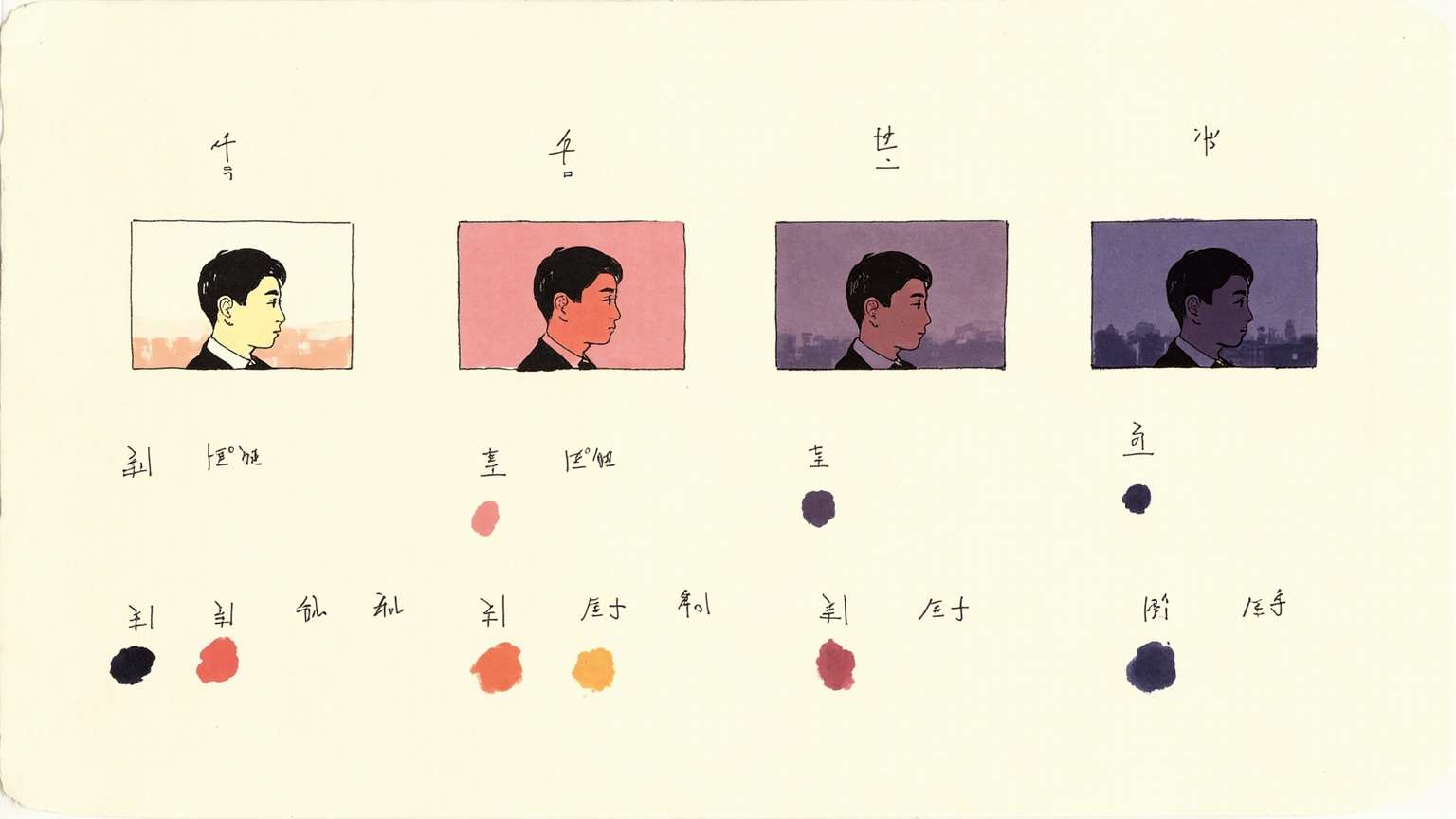
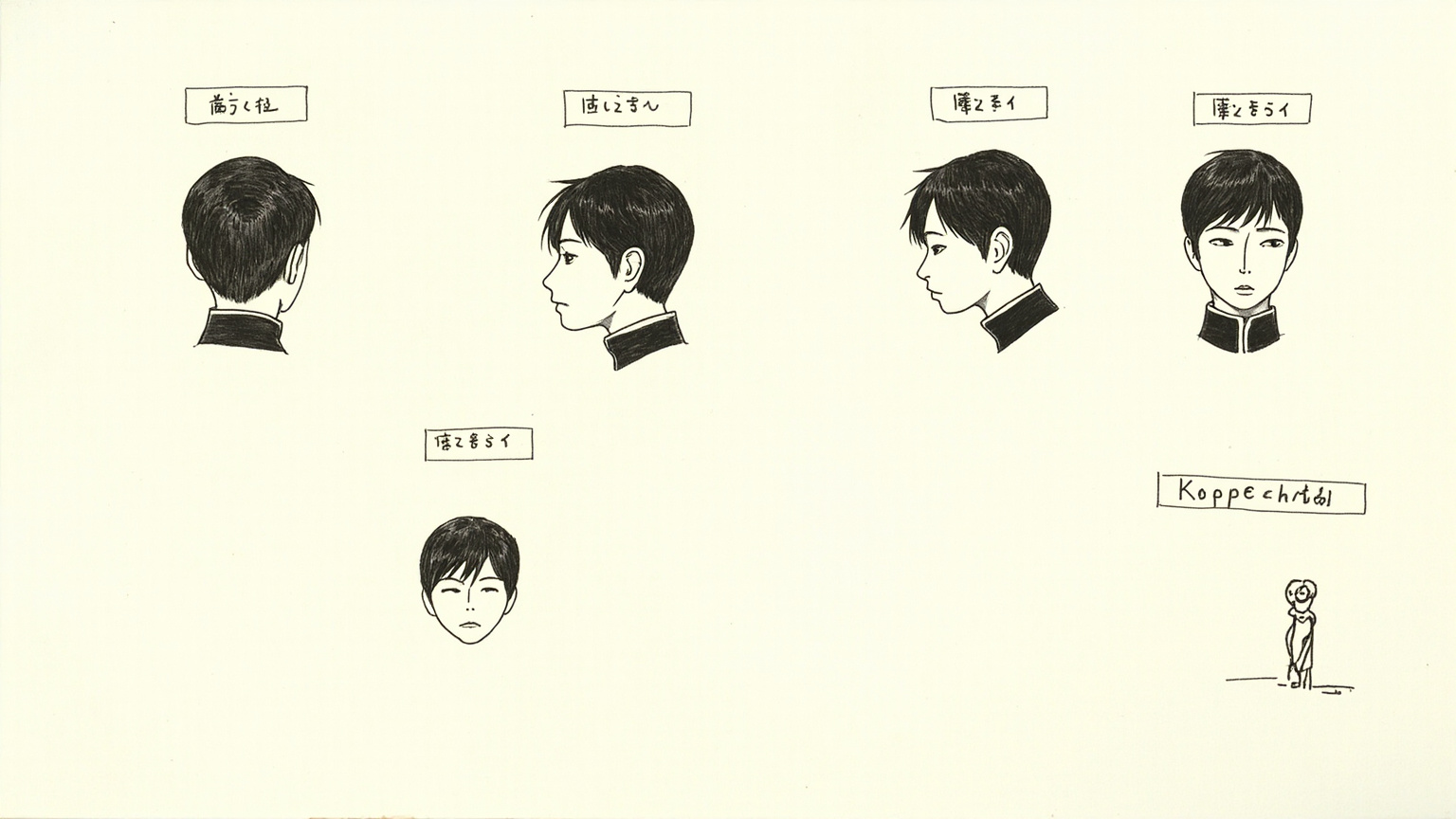
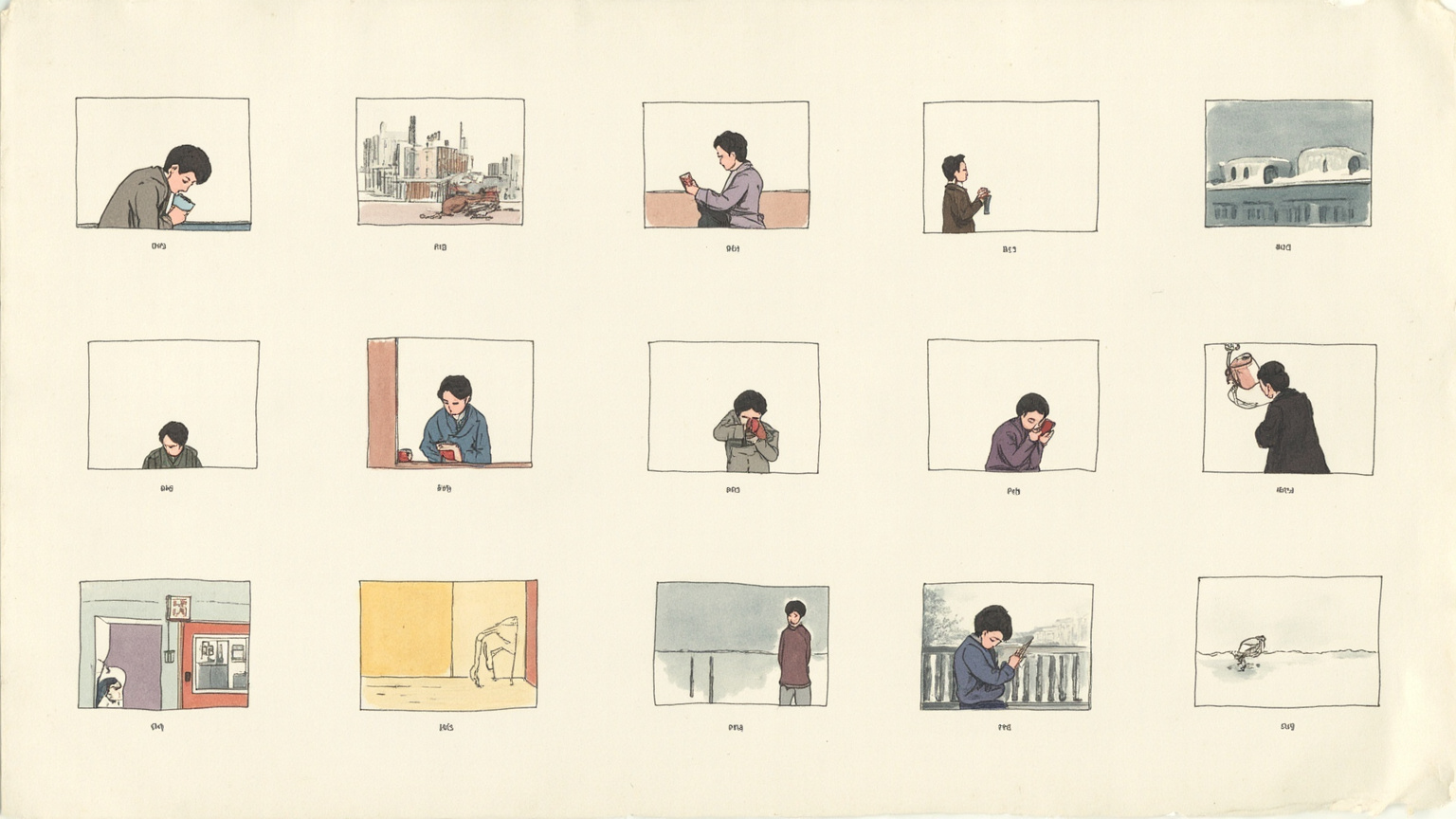
Before the guide was written, this book got a visual foundation — every illustration you just read grew out of it.
Over breakfast, Copper finds himself staring at an ordinary block of tofu. The man who makes it is up before dawn. The farmer who grows the soybeans bends over his field for hours. The cart driver who hauls the beans travels a long road. The shop that sells the tofu calls out on the corner all day long. Only then does he understand: this thing he eats every morning has an entire chain of people behind it, and he does not know a single one of them.
Then comes the business with his classmate Mizutani. Mizutani does well in school and his family has money, and that money is exactly what draws the whispers behind his back. Listening to the gossip, Copper thinks seriously, for the first time, about what money is, what poverty is, and whether being born into a poor family is anyone's fault at all.
On the walk home he passes the tofu shop on the corner, the fried-food stall, the little grocery, and watches these small tradespeople still working under dim lamps well after dark. Dimly, the boy understands that he is not living alone — that an invisible rope runs between him and every one of them.
Copper has a close friend named Kitami. One day a group of upperclassmen corner Kitami in the hallway and start pushing him around. Kitami turns and looks back at him — a look Copper will never forget as long as he lives. Something turns over inside him, and he tells himself: tomorrow, I will stand up. Tomorrow, I will speak for Kitami.
Tomorrow comes. Tomorrow goes. He stands there, his lips move once, and nothing comes out.
It is the quietest, sharpest cut in the whole book. Yoshino does not make Copper the one throwing punches, does not give him some scheme of cruelty to plot. His debt is simple, and it is heavy: he made a promise and did not keep it. That is cowardice — the gap between the boy who believed he would be brave and the boy who, when it counted, said nothing.
Copper writes the whole thing down in his notebook. What he expects in return is a scolding, or a long lecture on right and wrong. That is not what he gets. His uncle writes back, in the same notebook, a long letter.
The year this book comes out, speech in Tokyo is tightening by the day, and the whole country is sliding toward a larger war. An editor chooses this moment to write a book for boys, and what he puts in it is not heroism, not victory, not dying for the nation. It is this: do not make yourself the center of the world, see who stands behind the tofu you eat, keep the promises you make to people, and decide for yourself what kind of person you mean to become.
In that era, this stance alone is a rare thing. It is not an act of resistance so much as an act of protection: the seriousness of treating a person as a person.
The hardest thing for a boy is not doing wrong. It is whether, afterward, he dares to look himself in the eye.
In Japan it has gone through printing after printing for more than eighty years, and generation after generation of young readers has treated it as a kind of moral bedrock. I suspect it has lasted not because its ideas are especially new, but because it grounds those large ideas in things a boy can actually see: rain on a rooftop, a block of tofu at the corner of a table, a head that would not lift in a school hallway.
It also carries an ethic most people have long since forgotten: that people are connected to one another. A block of tofu, a street, a school, a classmate getting pushed around — everything he assumes has nothing to do with him turns out to have everything to do with him. Read today, that old-fashioned seriousness feels almost like a courtesy we have not seen in a long time.
A guide like this one can tell you about the chain of people behind that block of tofu, tell you what happens to Kitami and what the uncle writes back. What it cannot give you is the warmth of the actual sentences. Yoshino's prose is clean, restrained, never reaching for your tears, and when he writes a boy discovering he is not as brave as he thought, not one word is wasted. The particular grief that belongs only to being fifteen — disappointed in yourself past words and unable to tell a single person — takes an entire afternoon on the page, an entire sleepless night, to arrive at. No summary gets you there in a few lines.
One more thing. The story takes place in 1937, and the boy walks on with his notebook and his debts toward a future he cannot see — a future we already know. Read the opening pages after you already know how it ends, and the boy's clear-eyed innocence about what the world is about to become carries a weight heavy enough to make your hands shake. That is something only your own first page can give you.