Instructions for Practical Living (Records of Wang Yangming's Teachings) · Companion Guide
传习录
一个睡在石棺里的中年人,半生问答被弟子抄成一部活着的经典——心即理、知行合一、致良知,至今仍在回响。
It Starts With a Stone Coffin
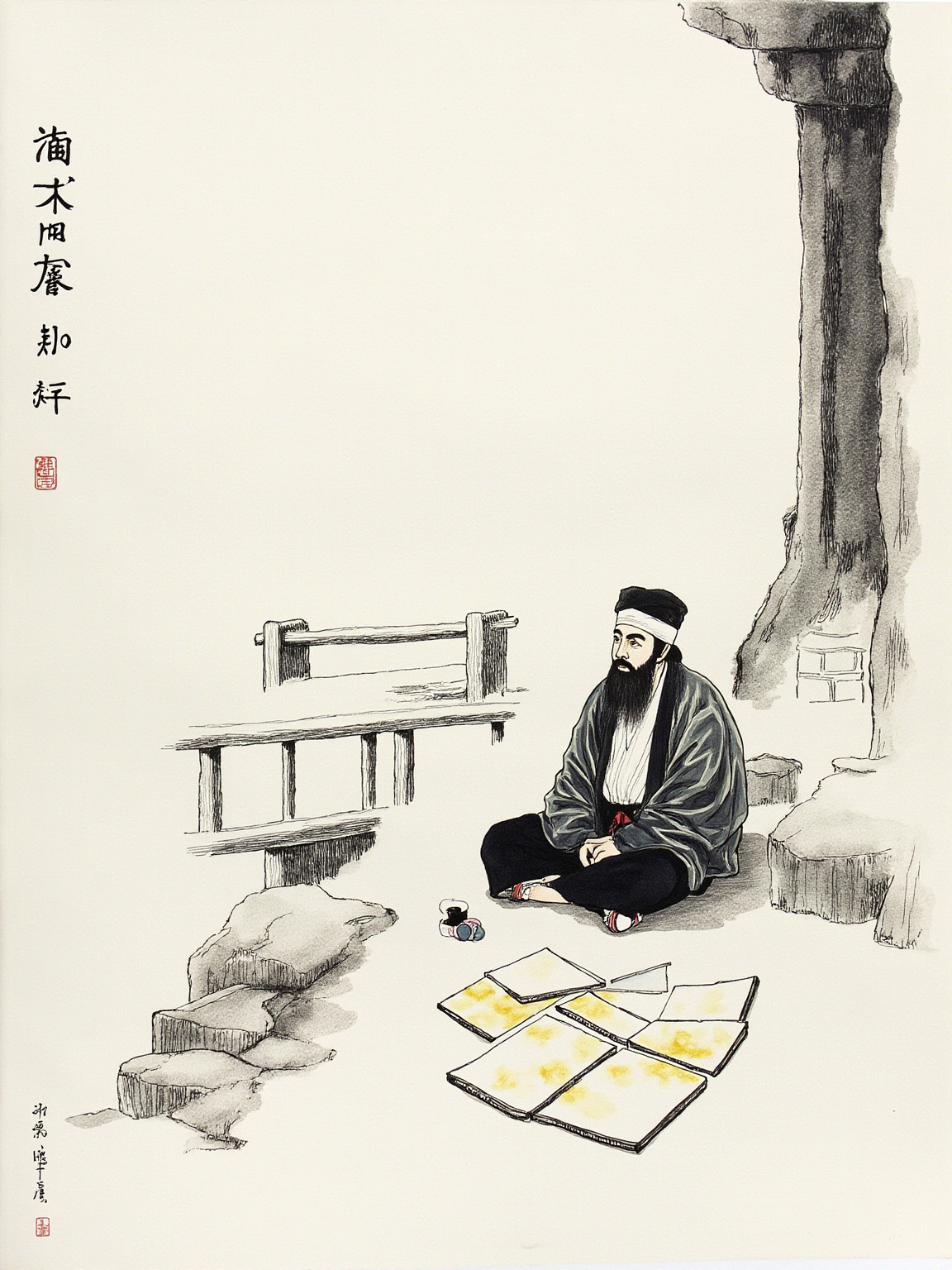
In the mountains of Guizhou, the air hangs thick with malarial damp. A middle-aged man, banished there by the court, sleeps in a stone coffin — not a figure of speech, an actual stone coffin, hard beneath him, the cave wall dripping overhead. By day he keeps company with the local Bo people, teaching them chess and how to hunt; by night he lights an oil lamp and works through the Book of Changes. One night he sits up and calls out: the way of the sage is already complete in my own nature — I was wrong to look for principle in external things. After that night, the whole course of Chinese philosophy bends.
The man in the stone coffin was Wang Shouren, known to history as Wang Yangming. Decades later his students gathered his questions and answers into a book called Instructions for Practical Living — transmission and practice, the sage's way transmitted, daily life practiced. First printed in Jiangxi during the Zhengde reign of the Ming dynasty, the book sounds like an antique today, but three of its phrases — the mind is principle, the unity of knowledge and action, the extension of innate knowledge — are still, right now, the most quoted philosophical slogans in the Chinese-speaking world. All of it starts with one night of sudden understanding in a cave at Longchang.
What Kind of Book Is This
Instructions for Practical Living is not a book Wang Yangming sat down and wrote — he never sat down and wrote a book in his life. It is a collection assembled by his students from their exchanges with him: Xu Ai and Lu Cheng recorded the earliest conversations; the middle scroll is Yangming's own letters; the final scroll and its appendices were pieced together afterward by his disciples, compiled over the following years by Qian Dehong and Wang Ji, after Yangming was gone. So when you open this book, what you find is a conversation in progress, not one man talking to himself.
Yangming was born in Yuyao, Zhejiang, and spent his whole life churning through officialdom and warfare — passing the imperial examination, flogged at court, exiled, suppressing a rebellion, ennobled as an earl, dying on the road home from campaign. The only time he ever truly stopped moving was when he was banished to a relay station called Longchang, in Xiuwen County, Guizhou. He taught in three places, each with its own weather: he first raised the banner of extending innate knowledge in Nanchang, Jiangxi; he argued that the mind is principle at Mount Kuaiji, near Shaoxing; in his later years he taught disciples in Nanjing and Chuyang. Three places, three moods, folded at last into the three scrolls his students compiled.
Who Was in the Room, Who Was Asking
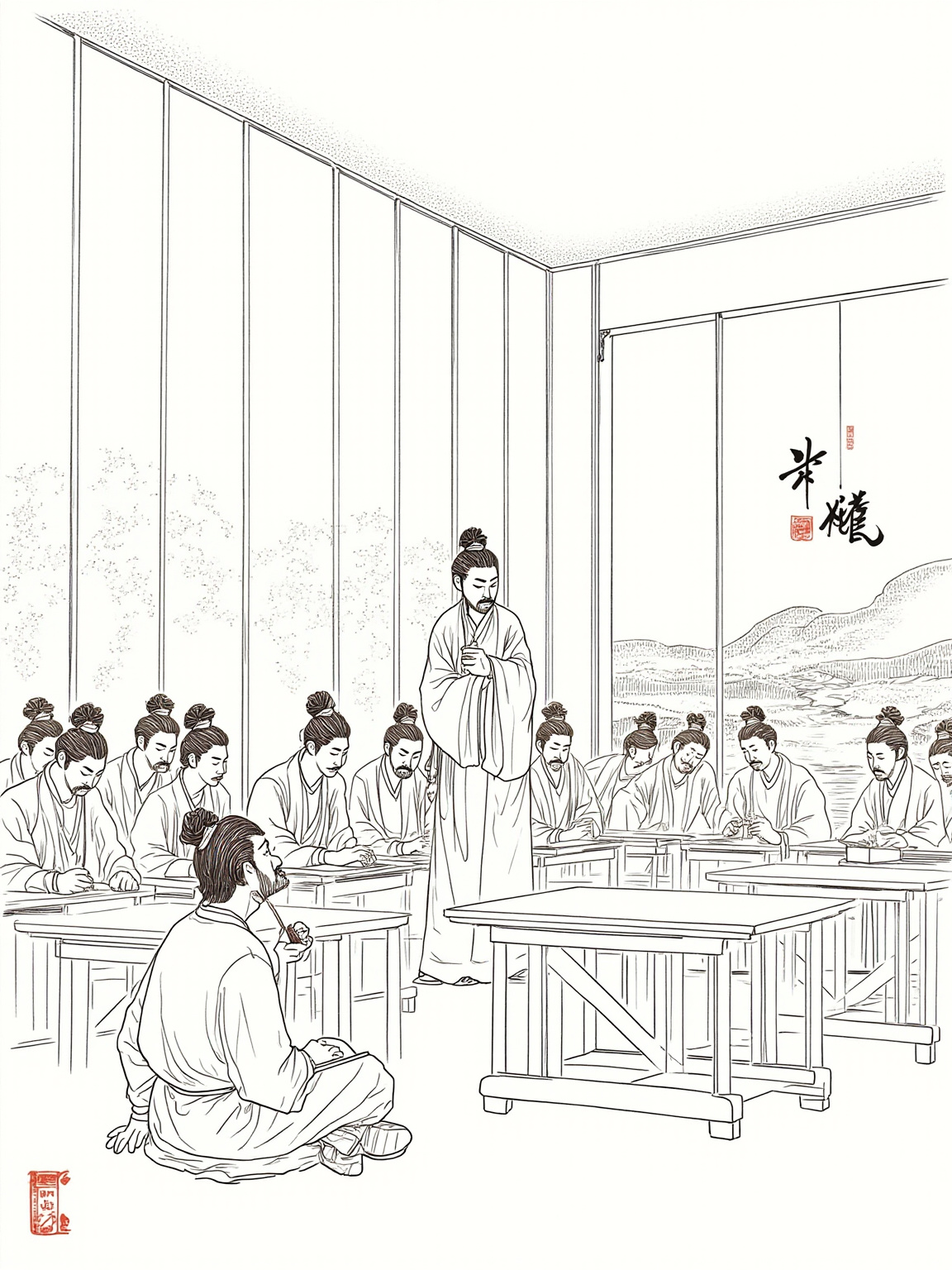
The people who appear most in the book are a small, recurring cast of disciples. The earliest is Xu Ai, Yangming's brother-in-law, who came to study with him at Shaoxing as soon as Yangming returned from Longchang — he died young, which is why the first scroll is so full of his exchanges with his teacher over the claim that the mind is principle. Lu Cheng, also at Shaoxing, kept pressing him on the feeling of commiseration and on the equilibrium before feelings arise. Xue Kan, from Guangdong, traveled the farthest — he arrived at Ganzhou around 1512 to study under him, became the key witness to the earliest formulation of extending innate knowledge, and was the man who pushed the first scroll of Instructions for Practical Living into print in Jiangxi.
The men who compiled the book were Qian Dehong and Wang Ji, called Yangming's two right arms in his final years. The two of them sat at the same table, asked about the same Four Sentence Teaching, and came away with opposite readings — one gradual, one sudden — and from that moment his school split into two lines. Then there are the letter-writers: Gu Dongqiao, a friend and peer, and two disciples from Yangming's later years, Nie Bao and Huang Wan — they enter the book through correspondence, stretching arguments that face-to-face teaching left unfinished into long letters. None of these people are minor characters. They are different voices in one choir, and together they give the book its depth.
A Night in the Stone Coffin: The Awakening at Longchang
In his early thirties, Yangming was banished to Longchang, in Guizhou, to serve as postmaster — a low-ranking post managing horses and carrying mail. When his attendants fell ill, he chopped wood and cooked for them himself, sang to keep his own spirits up, and slept at night in a stone coffin. That extremity forced a fundamental turn. Until then he had followed Zhu Xi's method of investigating things to exhaust their principle — principle sat inside the ten thousand things, and you had to work through them one by one. Now he understood otherwise: the way of the sage is already complete in my own nature; I was wrong to look for principle in external things. Principle was not in things. It was in the mind. Learning of the mind was born in a cave.
The Way of the sage is complete within my own nature; to seek principle in external things was the error of all my former seeking.
圣人之道,吾性自足;向之求理于事物者误也。
金句 · 龙场之夜悟道
You cannot overstate the weight of that insight. Before it, the mainstream of Confucian learning, from Confucius down through Zhu Xi, had placed principle in things outside the self — reading, investigating things, broad study, careful inquiry, a path that always pointed outward. After that night at Longchang, the direction reversed: you no longer had to search outside for principle, because everyone already carried innate knowledge within. It is the hinge point of the whole intellectual history, and the starting point for everything Yangming taught afterward.
The Mind Is Principle: The Break With Zhu Xi
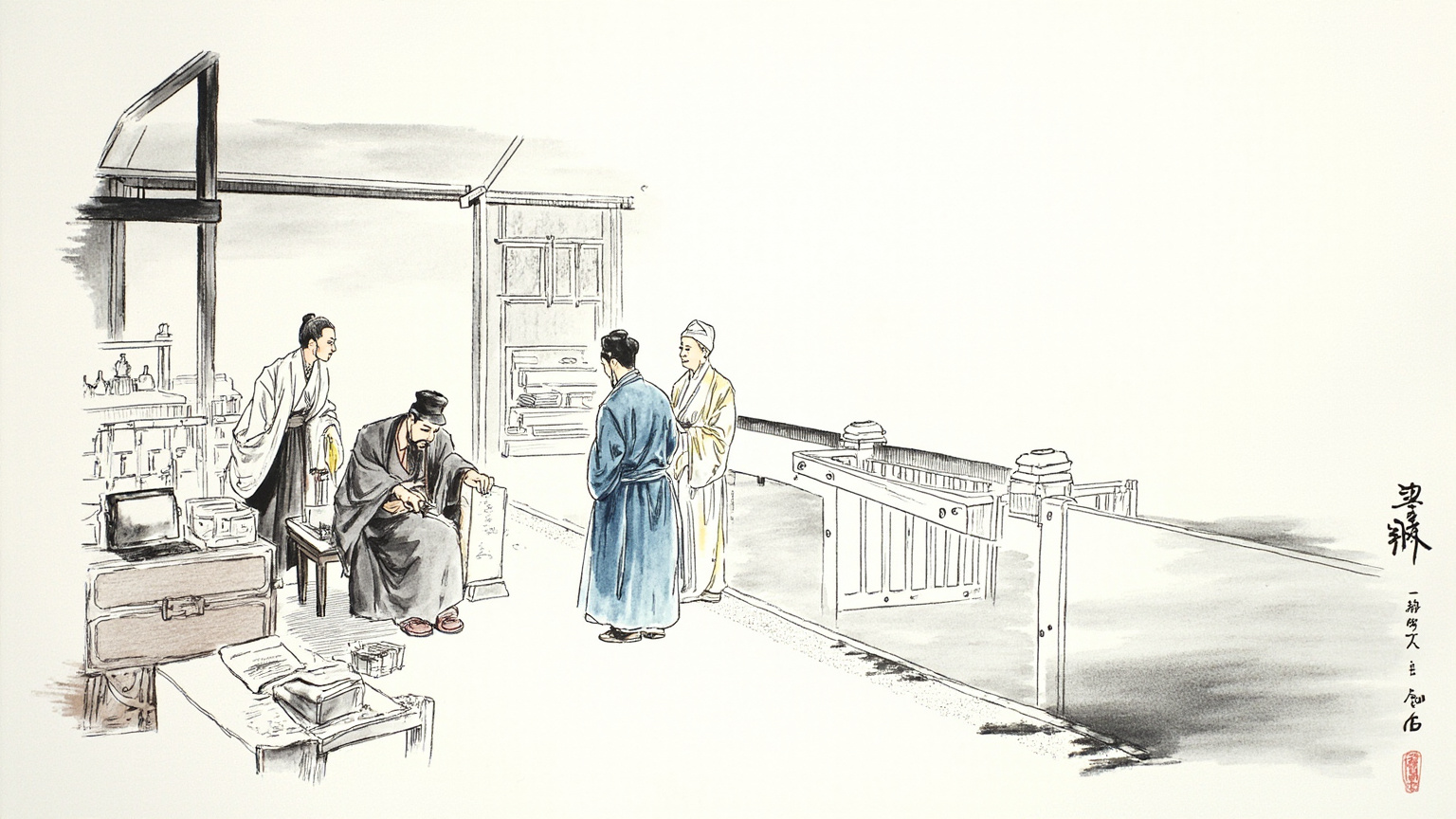
Back from Longchang, Yangming began teaching at Shaoxing. Xu Ai asked him: what is the real difference between the mind is principle and Zhu Xi's method of investigating things to exhaust their principle? Yangming answered plainly: Zhu Xi has people work out the principle in the ten thousand things first, then circle back and try to settle the mind — that path splits mind and thing in two. His own teaching held instead that the principle of the ten thousand things is already whole in the mind: there is no principle outside the mind, no thing outside the mind. Xu Ai pressed further — but what about the books Zhu Xi wrote, all of them? Yangming just smiled. Zhu Xi had those same truths in his own mind too, he said. He simply didn't trust them, and went looking outward instead.
There is no principle outside the mind, and there is no thing outside the mind.
心外无物,心外无理。
金句 · 上卷 · 语徐爱书
This break was more than a dispute between academic camps. Zhu Xi's teaching was the state orthodoxy, the officially sanctioned answer key for the civil service examinations — to say the mind is principle was to say the court's own doctrine was wrong. From the moment Yangming began teaching, he was marked for impeachment, false accusation, and more than one brush with death in the imperial prison. He had not chosen this path. It was the one he was pushed onto the moment he woke to it that night at Longchang.
The Unity of Knowledge and Action: Nailing 'Knowing Without Doing' to the Wall
The mind is principle argues over where the way is located; the unity of knowledge and action argues over how you actually walk it. Yangming once said, in obvious frustration, that people treat knowing and doing as two separate things, which is how you end up with people who talk about knowing while doing nothing at all — he called them men groping around in the dark. The problem he saw was plain: everyone claims to know, but nothing follows from it. Knowing without doing, in his view, is simply not knowing.
Knowledge is the beginning of action; action is the completion of knowledge. He who knows but does not act simply does not yet know.
知是行之始,行是知之成;知而不行,只是未知。
金句 · 上卷 · 论知行合一
So he arrived at his sharpest formulation: knowledge is the beginning of action, action is the completion of knowledge — the two were never separate to begin with, there is no before and after, no two kinds of effort. It sounds like common sense today, but set against Zhu Xi's framework of knowing first and acting later, it was a slap in the face. It was aimed squarely at people who read and understood principle and never once acted on it — officials, scholars, and, in his own youth, Yangming himself.
Extending Innate Knowledge: Pulling the Sage's Way Back to Everyone
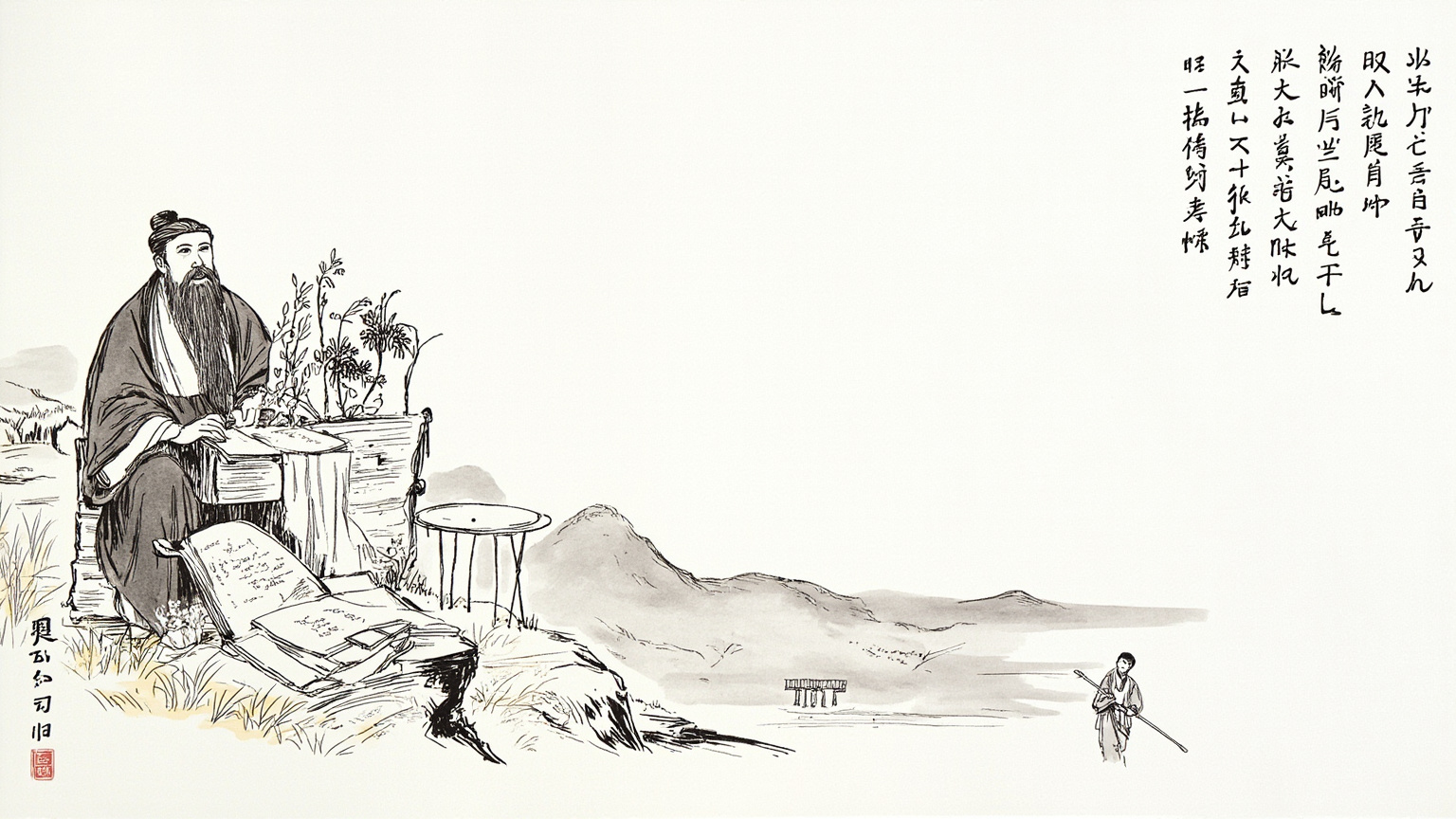
Around 1512, in Nanchang, Yangming stated the phrase extending innate knowledge for the first time in plain words, with his disciple Xue Kan taking it down beside him. It is the most startling turn in his whole teaching: innate knowledge is not learned. Everyone already has it — see your father and you know to be filial, see a child about to fall into a well and you feel the stab of alarm. That was Mencius's old claim; Yangming pushed its weight to the extreme. To extend that innate knowledge onto every affair and every thing, he said, is exactly what the investigation of things means. You already carry a sense of right and wrong. You don't need a sage to hand you a standard for good and evil.
To extend the innate knowledge of the good is the true meaning of 'investigating things.'
致吾心之良知于事事物物,便是格物。
金句 · 中卷 · 答顾东桥书
Extending innate knowledge was also Yangming's final rewriting of Zhu Xi's investigating things to extend knowledge. Zhu Xi said to investigate things meant investigating every blade of grass and every tree; Yangming said to investigate things meant correcting the things within your own mind — stripping away its crookedness to restore its original rightness. Eight characters, and the whole of the Great Learning is turned on its head. This is the sharpest edge of his teaching: if you are not grinding away at your own mind, you are just running around outside, busy over nothing.
Debating by Letter: Arguments Set Down on Paper
Face-to-face teaching had its limits, so Yangming worked out more of his thinking through letters. Gu Dongqiao, the Minister of Justice at Nanjing, argued with him repeatedly over the relationship between innate knowledge as already present and the actual practice of knowing and doing. Gu Dongqiao pressed a specific point: if innate knowledge is already complete in the moment, why does anyone still need to study? Yangming's reply cut through the tangle with an example. Take loving a beautiful sight and hating a foul smell: seeing beauty is knowing, loving it is doing — but the moment a person sees something beautiful, the loving has already happened. There is no gap where you first know it and only afterward come to love it. Seeing your father and feeling filial, seeing your elder brother and feeling deference, are just as immediate. Who can hold that kind of immediate knowledge and not already be acting on it? The letter opens by pinning the unity of knowledge and action to the plain truth of the senses, then unfolds across thousands of words, layer by layer, until knowledge and action can no longer be pried apart at the root.
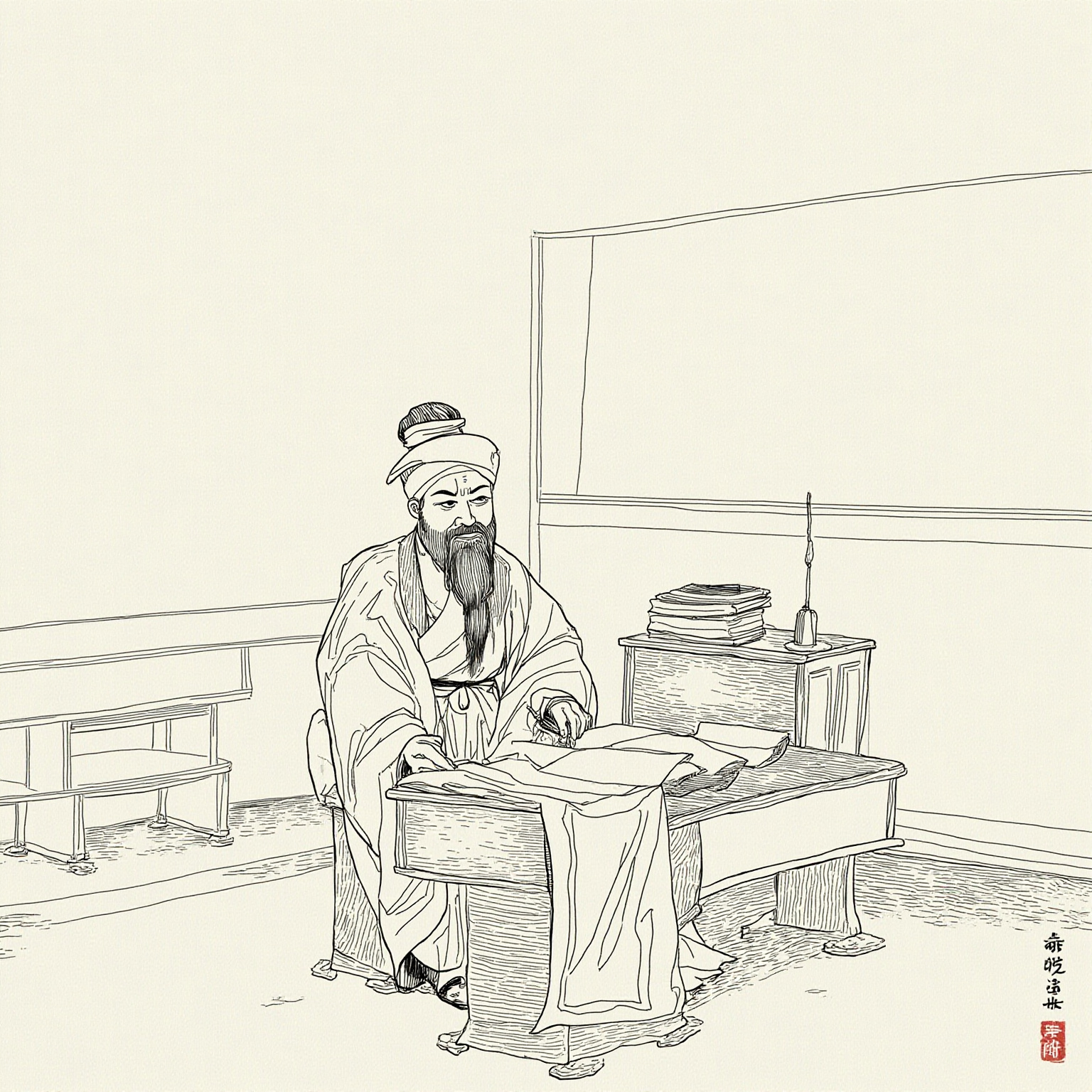
Only by practicing in the midst of affairs can the mind be tempered; sitting still in empty stillness is of no real use.
人须在事上磨炼做工夫乃有益;若只好静,遇事便乱。
金句 · 上卷 · 论省察克治
Nie Bao took a different road. He traveled from Yongfeng, Jiangxi, arriving in Ganzhou around 1517 to study under Yangming, and worked out on his own a doctrine of returning to stillness — arguing that innate knowledge is inherently still, that stillness before feelings arise is its true substance, and that effort should turn inward toward that stillness. Yangming wrote back to refute him: the stillness you're describing is already running through your own caution and apprehension — that wary, watchful feeling you get when you're afraid of straying off course is innate knowledge already at work, and there is no need to go build a separate stillness somewhere else. In one stroke, he pulled the independent substance Nie Bao had set up back into the effort of the present moment.
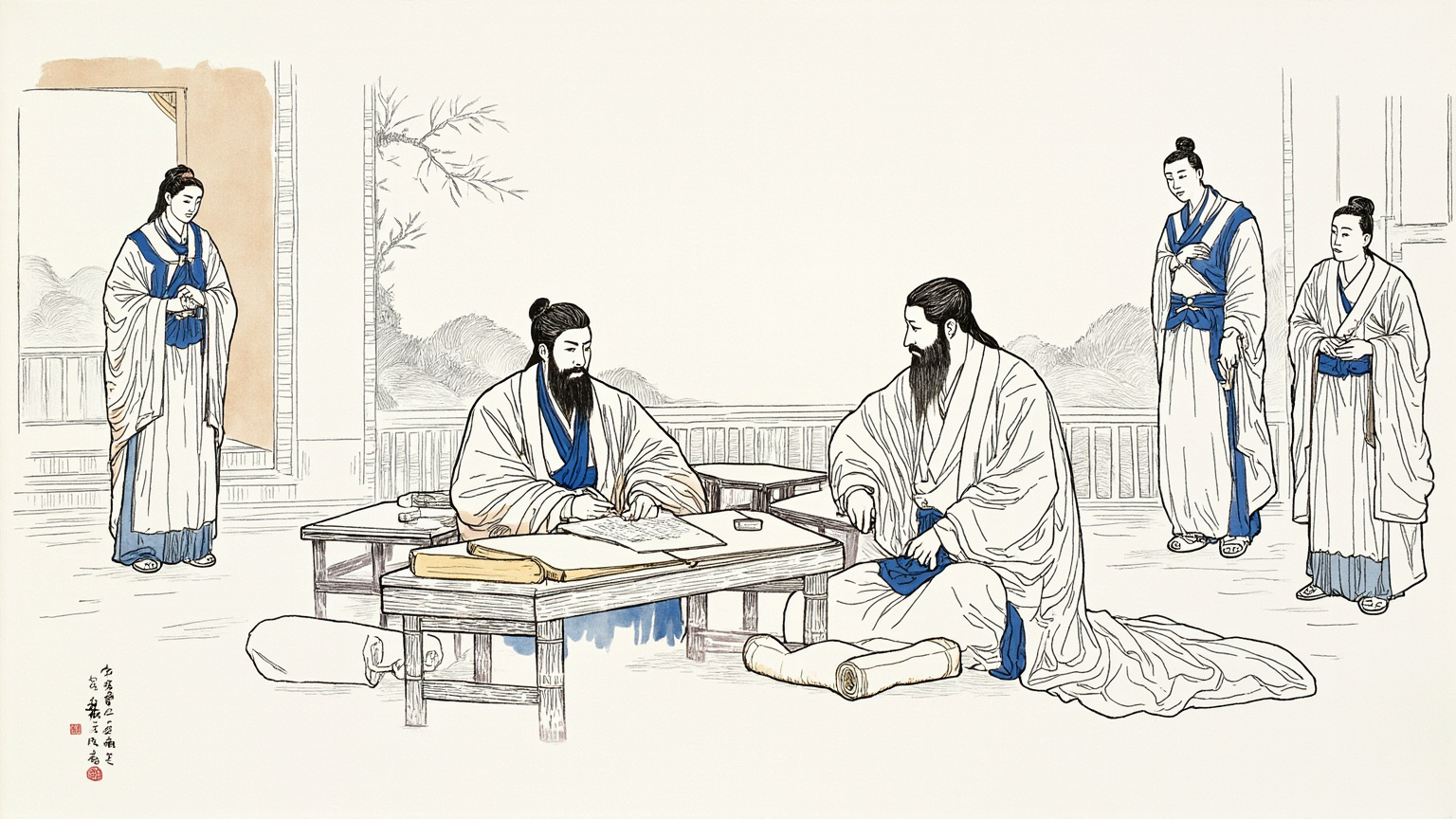
This is the part of Instructions for Practical Living that modern readers most easily skip, and the part I got the most out of reading. The recorded-sayings format looks scattered, but every exchange in it is backed by a long letter somewhere underneath — what Yangming was grinding at his writing desk was not prose, it was his entire system, revising itself.
The Last Lesson at Tianquan Bridge
In his later years, living in Nanjing, on the eve of setting out to put down a rebellion in Guangxi, Yangming was visited by Qian Dehong and Wang Ji. They raised the Four Sentence Teaching: the mind's original substance has neither good nor evil; when intention stirs, good and evil appear; knowing good and evil is innate knowledge; doing good and removing evil is the investigation of things. The two disciples sat at the same table and asked the same question, but came away in opposite directions. Qian Dehong held that good and evil are real, and that effort has to be grounded in doing good and removing evil. Wang Ji held that the mind's substance has no good or evil at all, and that intention, knowledge, and things are all, in that instant, empty of both. That night's conversation at Tianquan Bridge is where the sudden-awakening and gradual-cultivation branches of Yangming's school formally split.
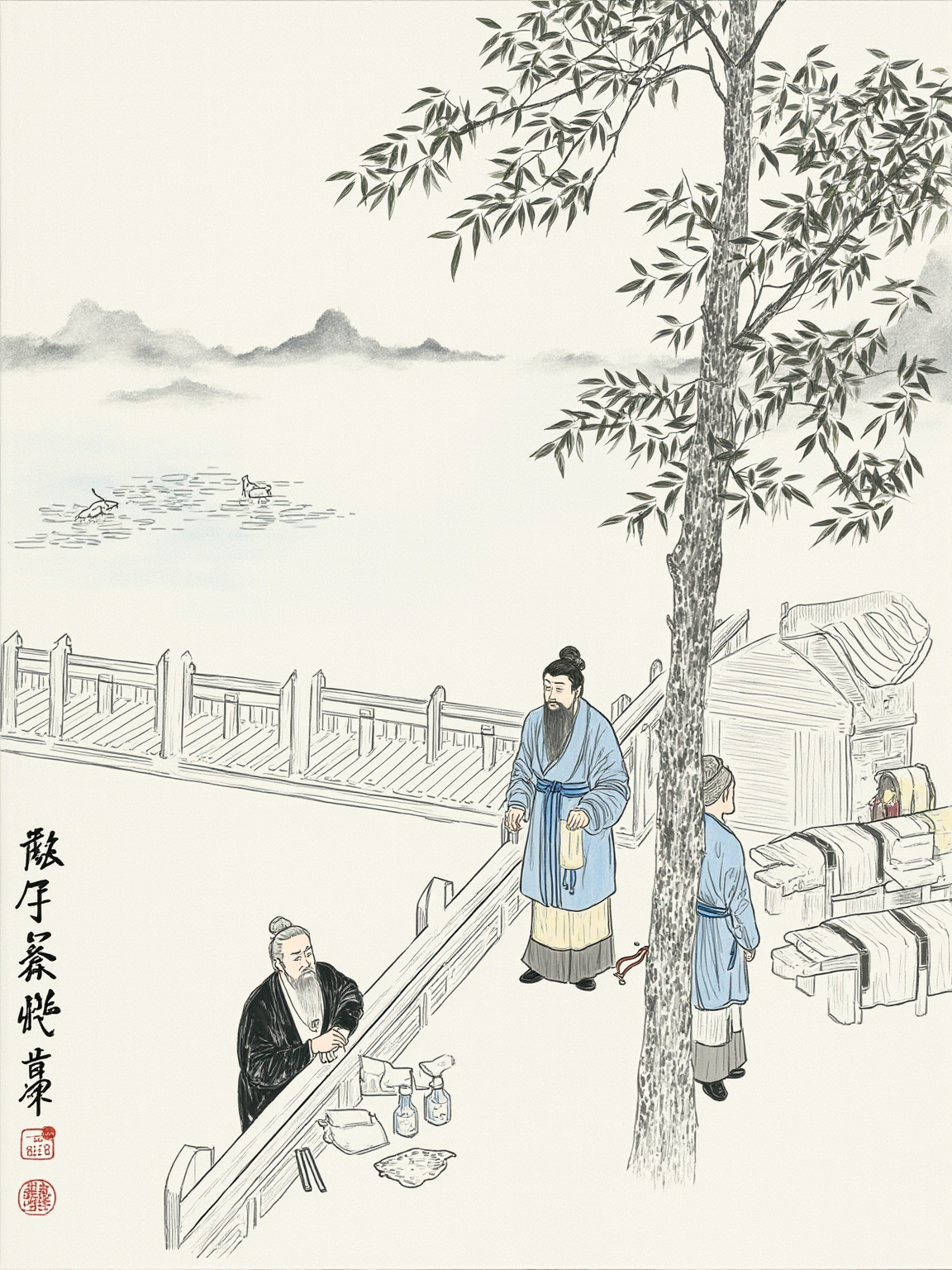
What Wang Ji has grasped is meant for those of the highest gifts; what Qian Dehong holds is the standard for those of middling and lesser gifts.
汝中所见,止接上根之人;德洪所见,是为中下之根而设。
金句 · 下卷 · 天泉证道记
Yangming listened to both of them and sighed — Wang Ji's insight, he said, was the road for guiding people of the highest natural gifts; Qian Dehong's was the discipline he had set down for everyone of ordinary ability and below. He declined to say which one was right. The four sentences were not a conclusion, they were a live question he could not settle and could not take with him — he set out south, and the following year he died on the road home, in Nan'an, Jiangxi.
My Heart Is Bright — What More Is There to Say
Withdrawing his troops from Guangxi in his final year, Yangming fell gravely ill on the road back to Jiangxi and stopped at Nan'an. Dying, he said to his disciple Zhou Ji: my heart is bright — what more is there to say. Those are the last words the final scroll of Instructions for Practical Living leaves us. After his death, Qian Dehong and Wang Ji began collecting and adding to the text, and the third scroll came with an appendix, Zhu Xi's Final Conclusions in His Later Years, setting their teacher's words beside Zhu Xi's own self-examination at the end of his life. What began as a record of a teacher and his students eventually grew into a founding classic of Chinese philosophy.
But after all this, when you actually open Instructions for Practical Living, it will still strike you as strange — these are just scattered exchanges, some of them over in two or three lines, so how do they hold up a classic? I wondered the same thing while reading it. Then it clicked: the recorded-sayings form is itself the spirit of the teaching. Learning of the mind insists that the moment is already complete — it doesn't ask you to work through a massive treatise, it asks you to grind at yourself in each single moment of question and answer. That is unlike the sprawling systems of Song and Ming Neo-Confucianism. It is compressed, fragmentary, and it does not wait for you.
Why It's Still Alive Today
The mind is principle, the unity of knowledge and action, extending innate knowledge — every few years these three phrases get dragged back out, from corporate pep talks to high school classrooms. That's no surprise, because they hit the same modern complaint: we understand the principles, we just can't manage to live by them. Zhu Xi's path of reading and reasoning through everything first no longer holds up — nobody actually has time to work out the principle in every single thing before turning back to how they should live. Learning of the mind says the opposite: you already carry a scale inside you, and pushing it out onto whatever you're facing is exactly what the investigation of things means. That message fits the modern moment unusually well.
But what matters more is the man himself. Yangming was no armchair philosopher — he fought wars, sat in prison, ran schools, put down a rebellion, and was still on the road when he died. A book of recorded sayings does not hold up a four-hundred-year reputation on elegant argument alone. It holds up because of the man standing behind it, a man who turned his own life into the answer and then let his students write it down. That is where Instructions for Practical Living gets its unusual force.
You Know the Story — So Why Read the Original
I'll admit it — this explainer has handed you the whole through-line. Which disciple asked what, how Yangming answered, which exchange came before the rebellion and which came at the deathbed — it's all above. But there's one thing an explainer can never give you: the feeling of sitting there yourself, reading two or three lines, and suddenly getting stopped by one of them. Take knowledge is the beginning of action, action is the completion of knowledge — hearing me paraphrase it, you'll nod along. But open the book and see Xu Ai's own record of what his teacher said in that moment, and you get something else — the sense of actually being there, the illusion that you too could have sat in the academy at Shaoxing and asked the next question. That only comes from reading it yourself.
There's another thing too — the real pleasure of the recorded-sayings form only reaches you if you read it directly. One passage is still on sincerity of intention, the next jumps to the equilibrium before feelings arise, and the one after that veers into the administrative business of putting down the Prince of Ning's rebellion. That is the real rhythm of how Yangming taught. He never smoothed the system out for his students in advance — he let it grow on its own, inside them. That is not something I can do for you.
Instructions for Practical Living is not a book a philosopher wrote for the world to read. It is a teacher and his students copying down the scene of their own lived experience. Finish this explainer and you have a map. Open the original, and you finally set foot on the ground.
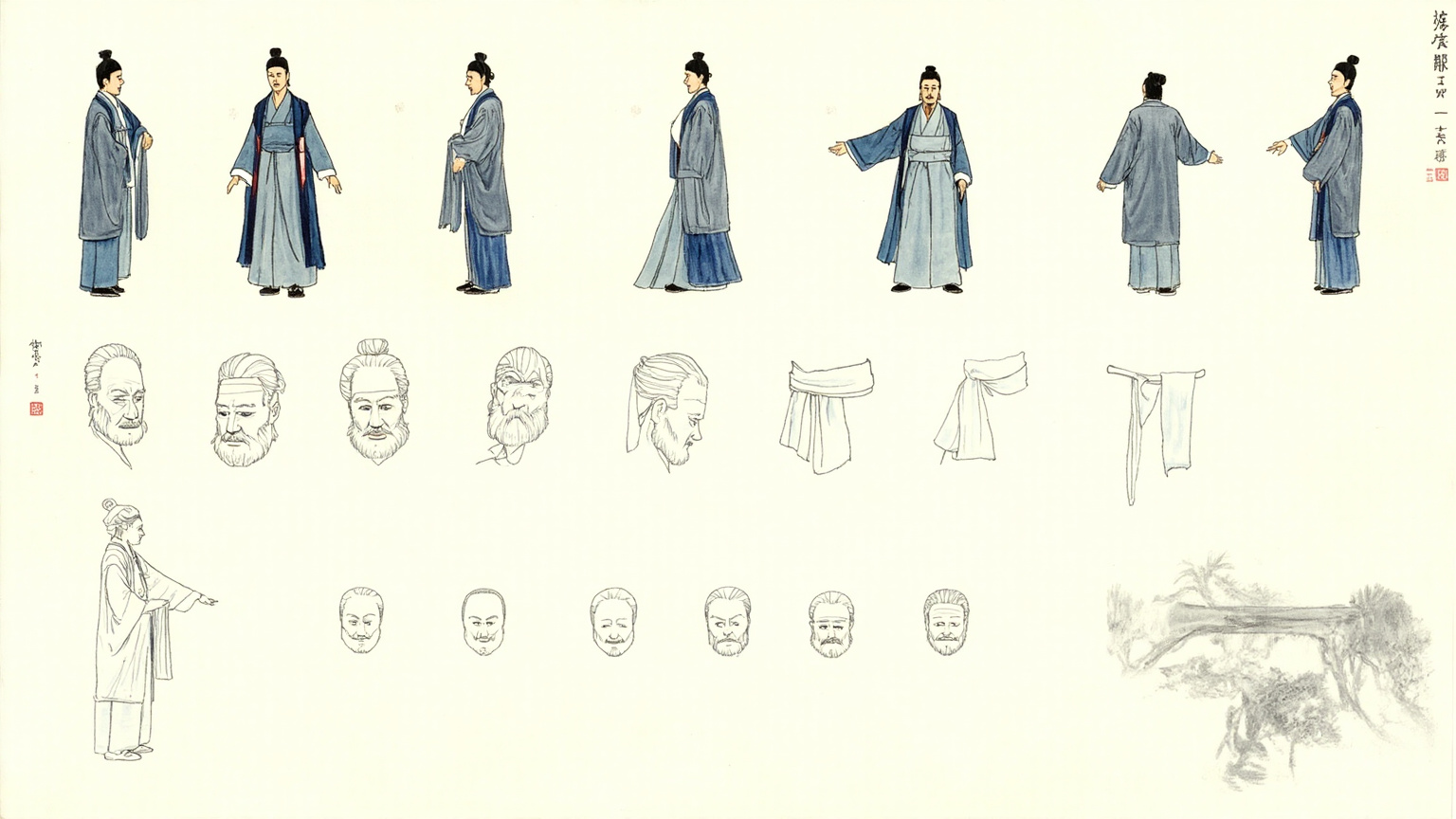
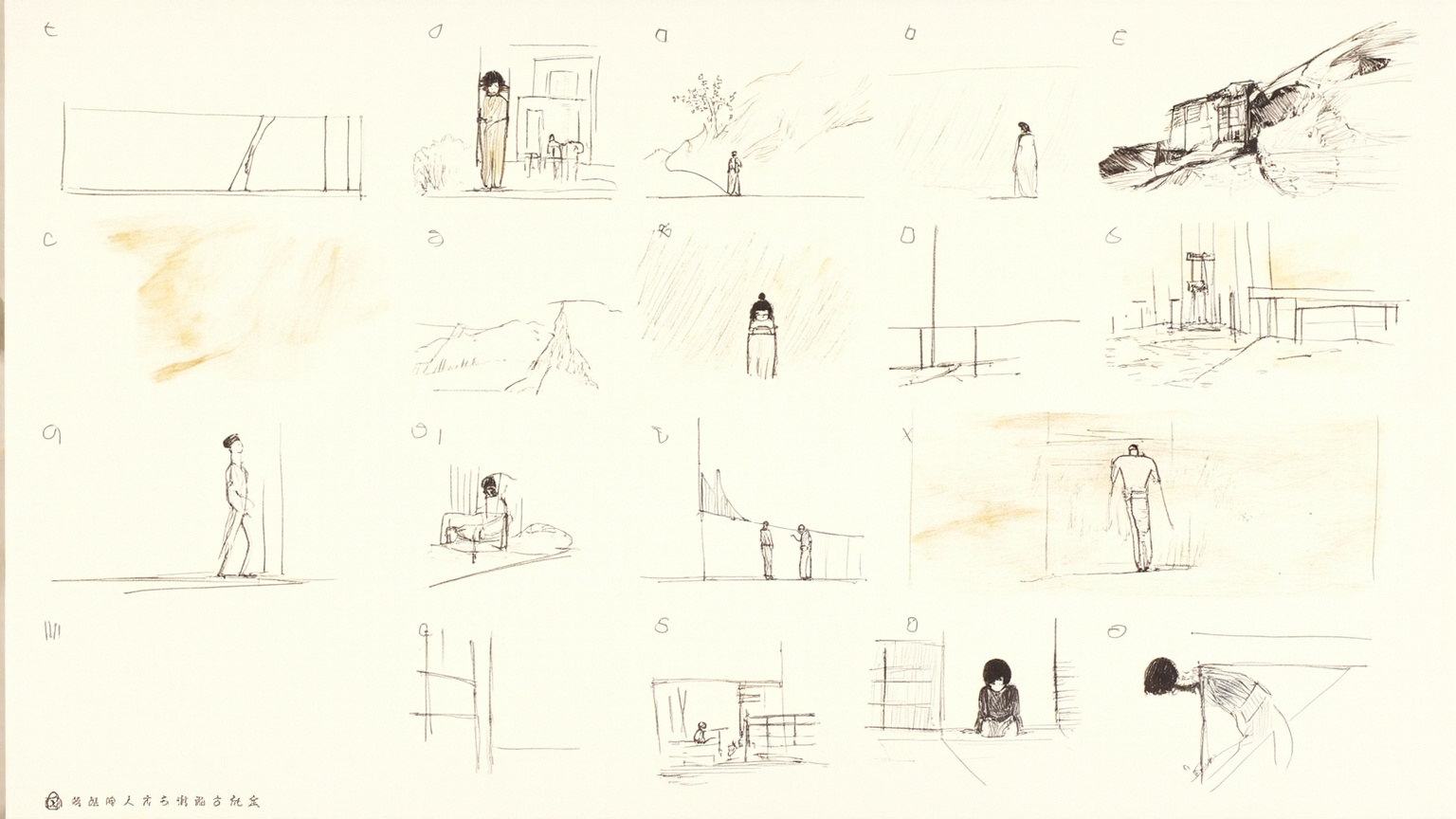
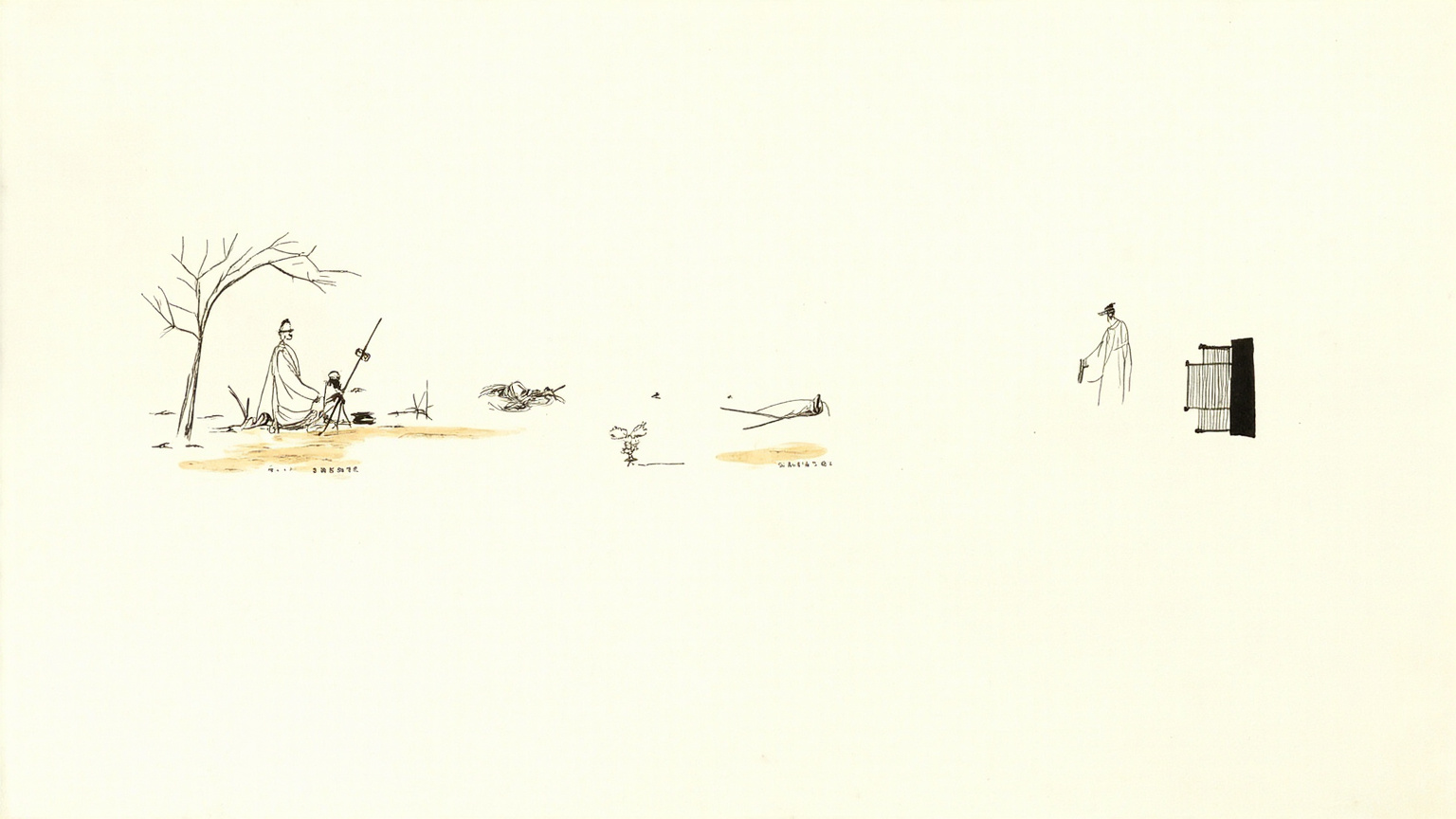
Art Direction4 plates
Before the guide was written, this book got a visual foundation — every illustration you just read grew out of it.