Jerusalem Delivered (La Gerusalemme liberata) · Companion Guide
耶路撒冷的解放
白甲覆面的女战士被爱人刺落马背,临终只求一汪洗礼的水——誓愿与情欲在十字军刀锋上撕扯
Opening
White armor covers her face. A woman warrior charges into a night raid. No one knows who is under the helmet — not even the young crusader commander facing her. He raises his lance and knocks her from her horse. She falls to the ground and asks him to lift her visor. He does. She asks him to baptize her.
This happens in an Italian poem from the end of the sixteenth century — not a history, not a painting, but a deathbed scene the poet staged himself. More than four hundred years later, painters have returned to it again and again, and opera, ballet, and drama have all fought to adapt it. The poet was Torquato Tasso. He was in his early thirties when he wrote it, and he was already at war with an invisible censor in his own head.
What kind of book this is
Jerusalem Delivered, La Gerusalemme liberata in the original Italian, appeared in Parma and Ferrara at once in 1581. It is a long narrative poem in ottava rima, twenty cantos, telling the story of the First Crusade's siege of the Holy City. But that is only the skeleton. Onto this frame Tasso grafted knightly romance, an enchanted forest, a witch's garden, an angel breaking a spell, everything that could keep a late-Renaissance Italian reader from putting the book down.
It stands alongside Ariosto's Orlando Furioso as the last great work of Italian chivalric romance. Both turn knightly adventure into something sweet and intoxicating; Ariosto's poem is wilder and more sprawling, Tasso's tighter and darker — he will not let you merely watch, he wants the story to hurt. Opera later inherited this way of writing.
People and world
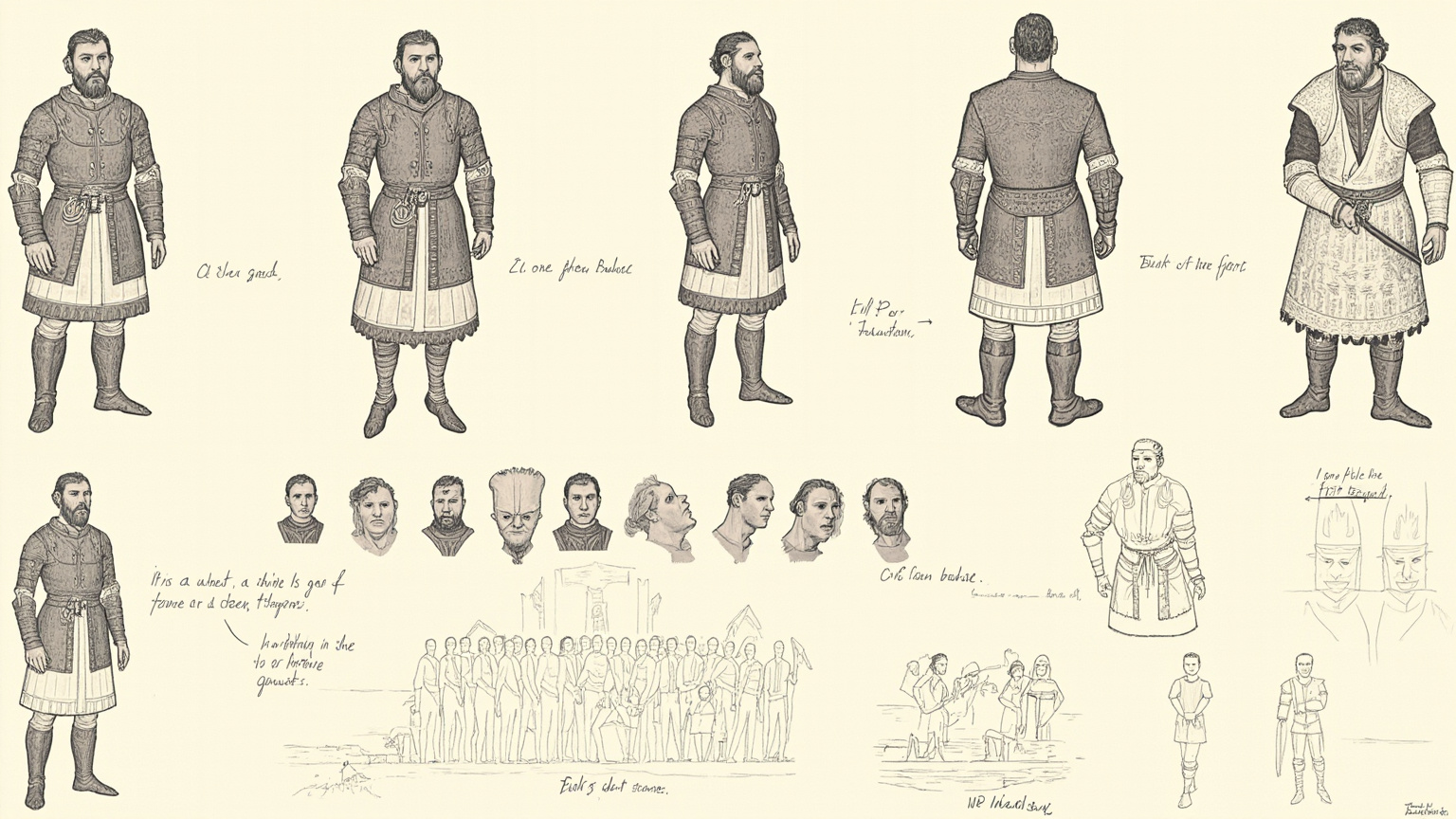
On the crusader side there are three central figures: Godfrey of Bouillon, the commander, steady as iron, the poem's spine; young Rinaldo, its best fighter and also the easiest to lure away by a woman; and Tancred, Prince of Galilee, the poet's clear favorite, because there is a crack in him.
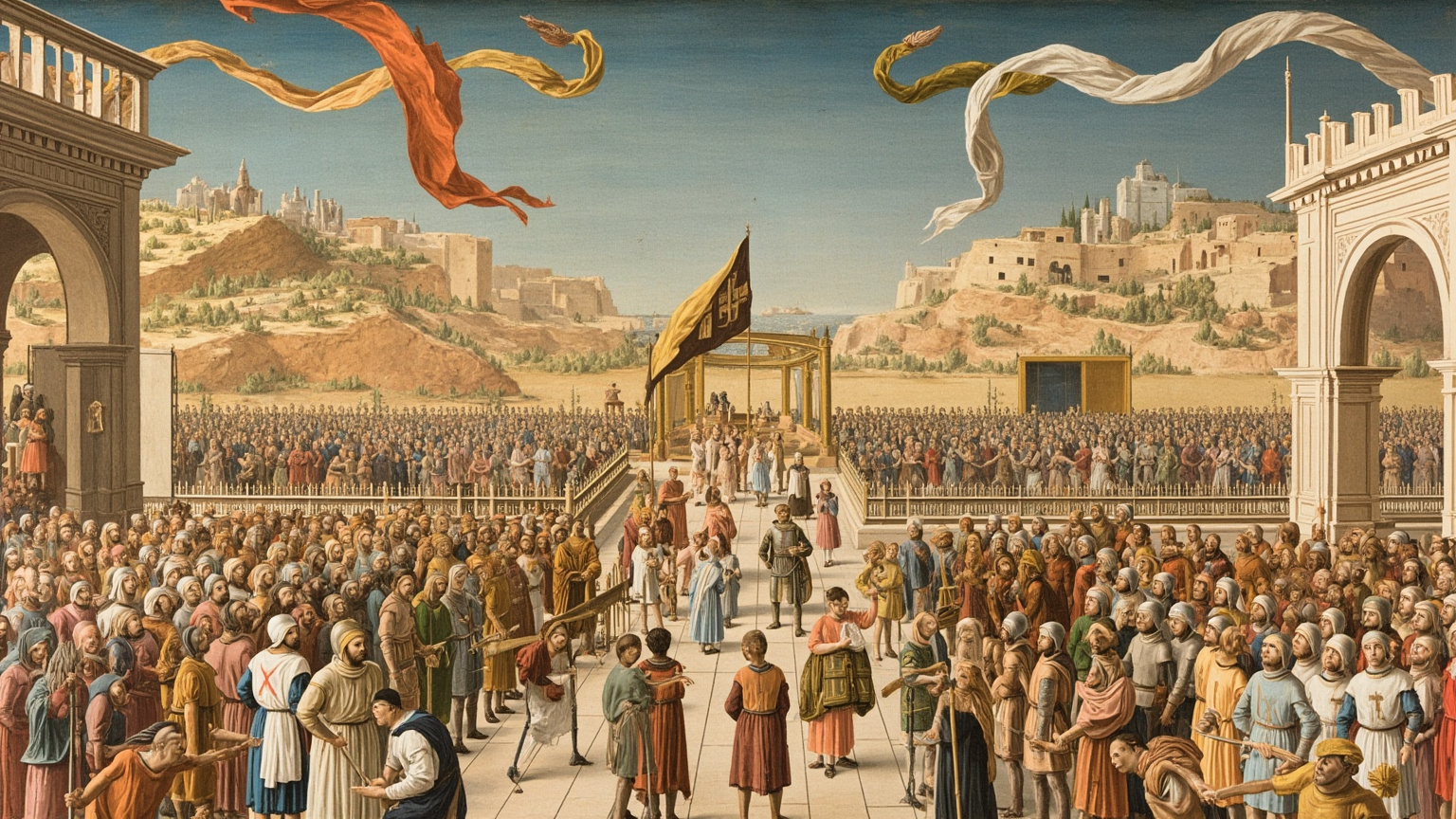
Of God, of Christendom, and of that chief / Godfrey, the captain and the pillar of their host.
上帝、基督教世界,以及那位全军主帅与支柱——戈弗雷多。
金句 · 第1章 · 天使降临托尔托萨
The defenders have exactly three central figures too: Aladine, the king who holds the city together on alliances and magic; the sorcerer Ismeno, who curses the forest and sets siege towers ablaze with his dark arts; and Clorinda, the woman warrior in white armor and a closed visor, who has fought Tancred more times than anyone can count without either of them knowing who the other is. And then there is the one who matters most — the witch Armida, sent by the enemy as a temptress, mistress of an island garden, Rinaldo's undoing and the passage in this poem readers most want to linger over.
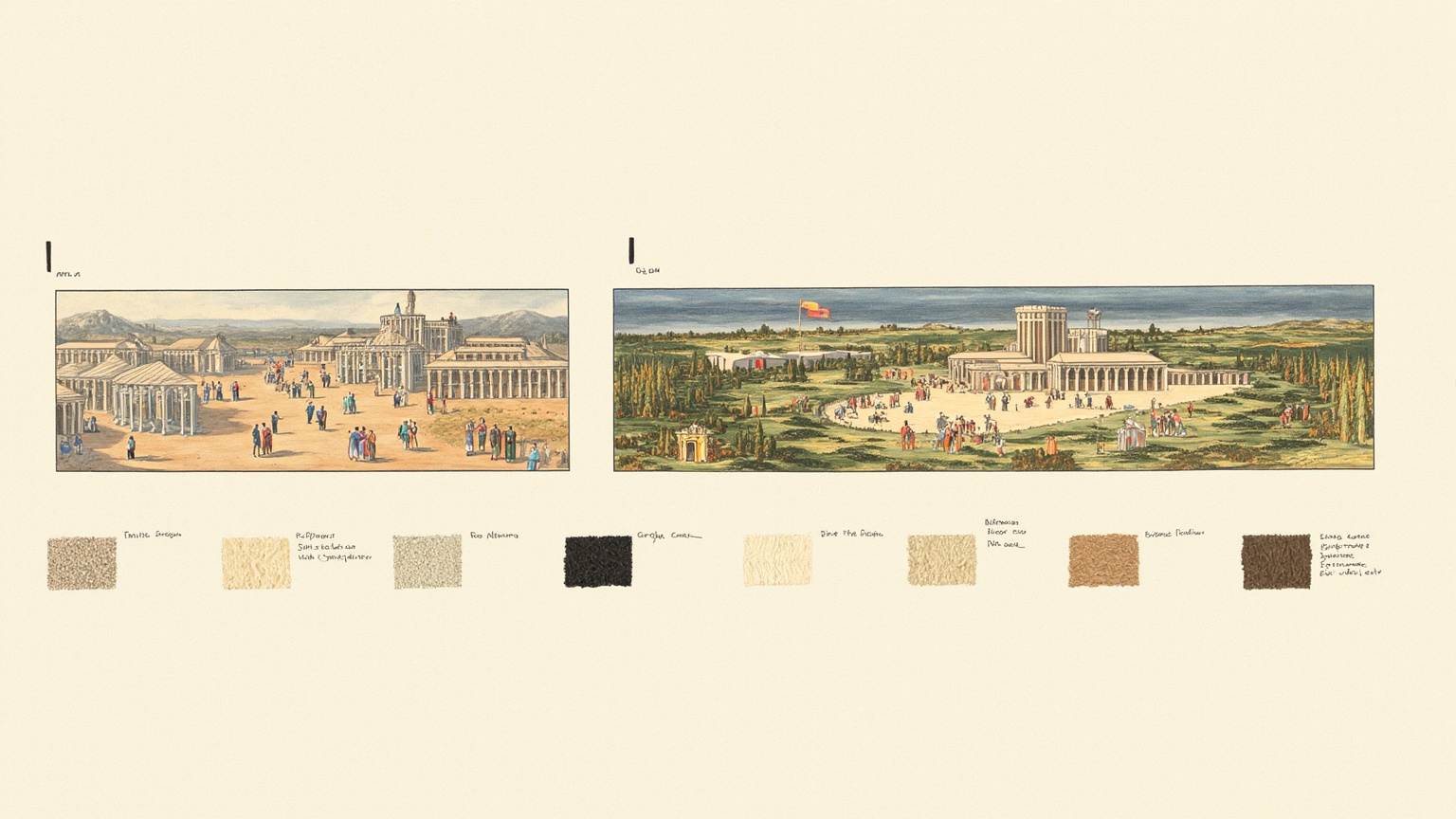
The world of the story has two layers. On the surface is the crusader siege of the Holy City: olive-terraced hillsides, a parched wilderness, a dust-gray fleet on the Mediterranean. Underneath is the Italian court of the Counter-Reformation, the refined court of the Este family in Ferrara, where Tasso wrote while religious conservatives watched over his shoulder and he cut his own manuscript to please them. That lower layer is the real reason the poem grew into the shape it did.
The commander takes charge, the crusaders gather
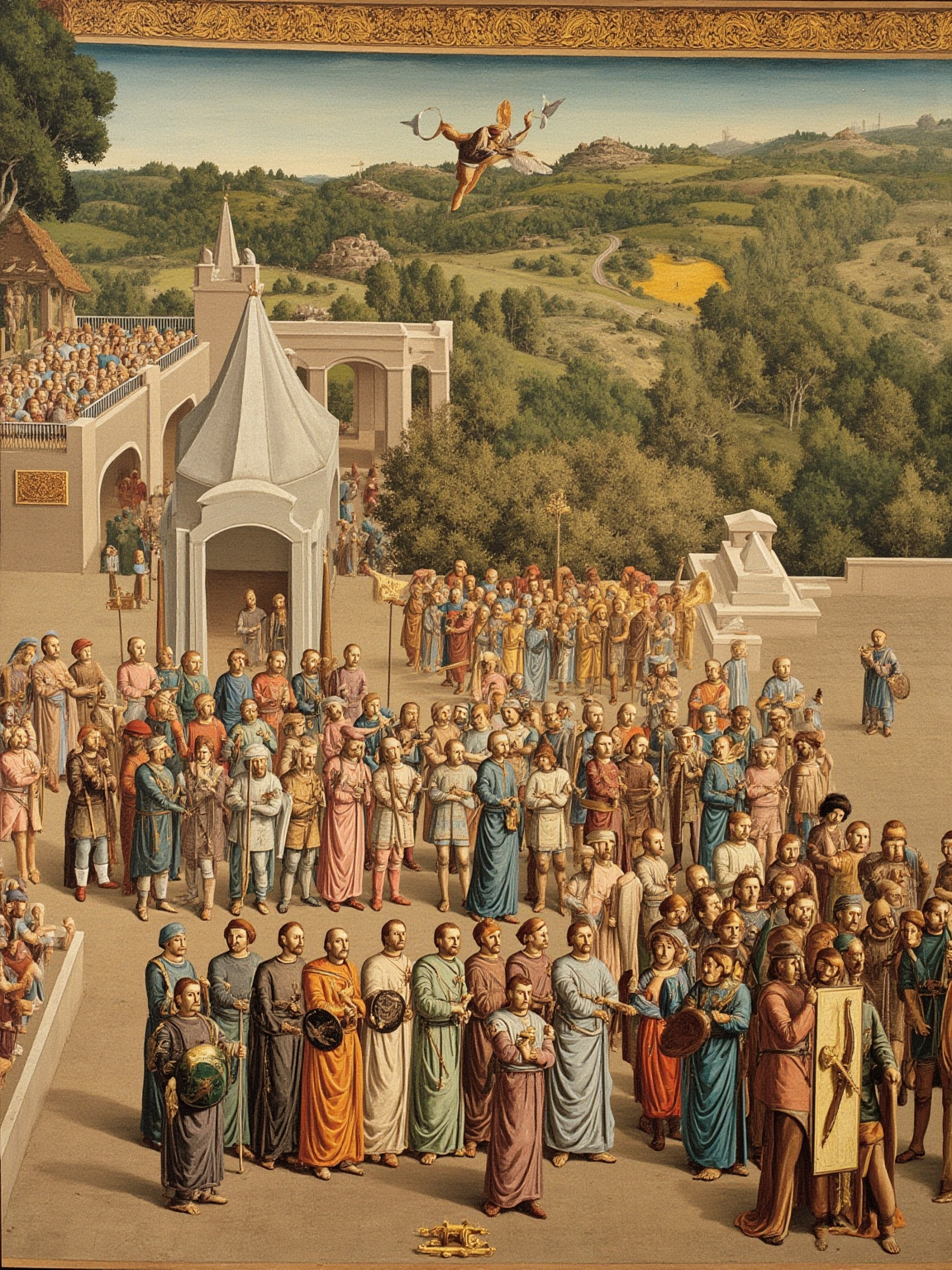
The poem opens with God sending an angel down to Tortosa, a small port city on the eastern Mediterranean coast. The commanders gather, and Godfrey is chosen to lead them. He reviews the troops, the assembled host answers the call, and the army marches on Zion. This is the most conventionally historical stretch of the whole poem, written solemn and stately, like a scene stitched onto a church wall-hanging: banners, armor, lances, drums.
This opening is not casual. Tasso wants the reader to believe first that this is a religious epic, then slowly pull them toward what he actually wants to write about — the human heart.
The enchanted forest and the woman in white armor
The defenders choose Aladine as their leader, and his first move is not soldiers but sorcery. The wizard Ismeno curses the forest the crusaders need to cut down — hack at a tree and it screams, hack again and it uproots itself and walks away. The whole forest becomes a living maze that drives the besieging army half mad.
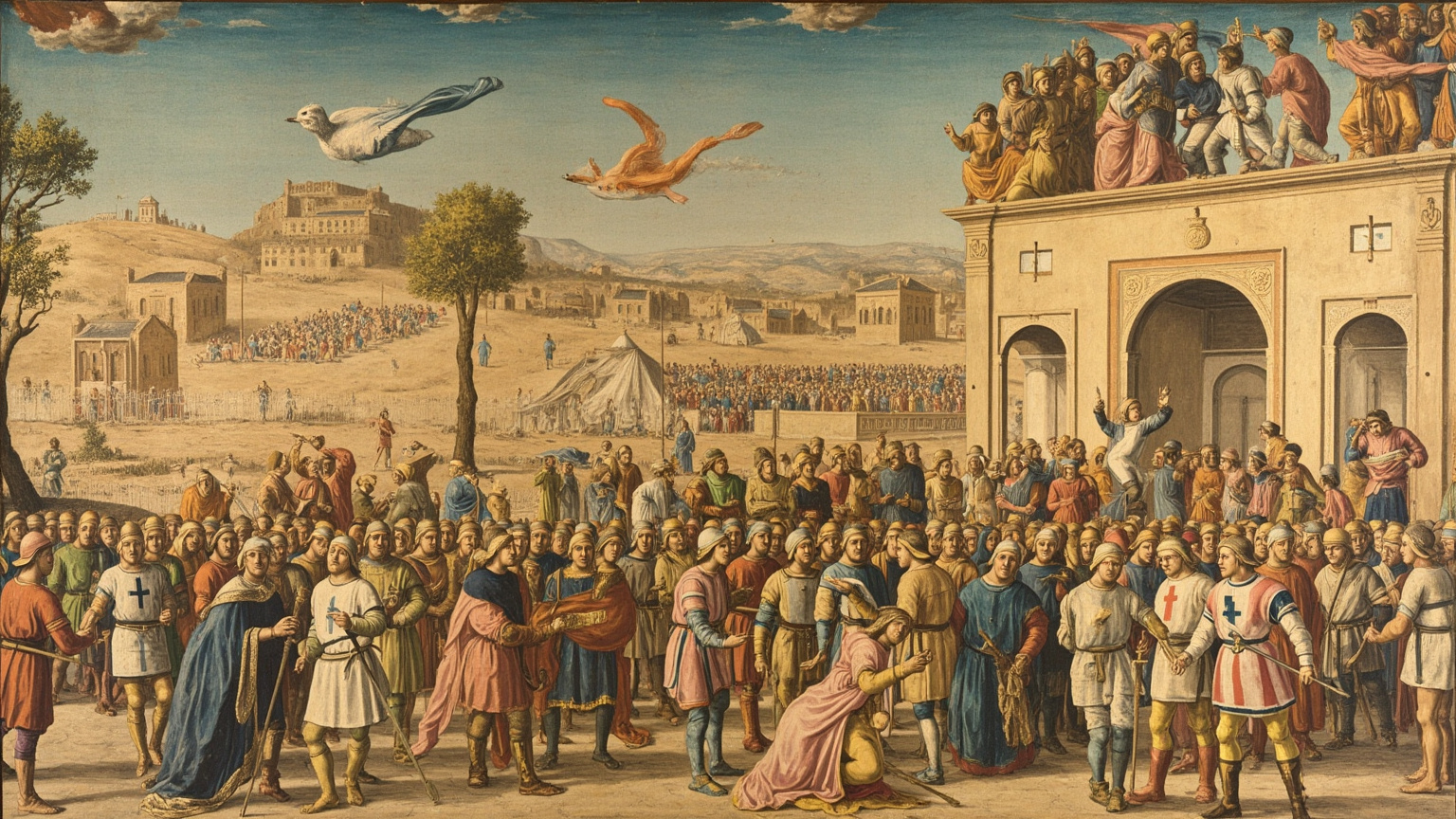
The enchanted trees moved, and the dark forest / Walked of itself, and every leaf spoke war.
森林自行移走,每一片叶子都在开口说话,说的全是战争。
金句 · 第13章 · 巫术森林
Clorinda enters against this backdrop. She wears full white armor, her face hidden behind a closed visor, and no one can see who she is. She and Tancred clash outside the city walls more than once, blade against blade every time, and neither ever lands the killing blow. Neither realizes who they are holding back from. Tasso is patient with this kind of mutual testing: armor creaking inch by inch, sweat falling drop by drop, and still neither one delivers the final stroke.
Then comes the night of the raid. Clorinda charges out again, and this time no one recognizes her. Tancred raises his lance and knocks her from her horse. She falls, still alive, and asks him to lift her visor. He does — and it is her.
With her last words, she asks him to baptize her. Tancred does.
Tasso's hand is merciless here. He has the two people who love each other most end each other's lives, then binds them together in that final instant with something deeper than love: a vow. Clorinda does not beg for mercy as she dies, does not weep; she only asks for the one thing she had refused herself in life. Painters have returned to this scene again and again, from Guido Reni to Poussin, all painting the same moment, the knight kneeling, his helmet set aside, the girl's eyes closing. No blood in these paintings, only light.
Armida's garden, Rinaldo undone
The witch Armida's entrance is the other heart of this poem. Sent by the enemy, she goes out armed with beauty and magic, first locking away a band of Tancred's fellow commanders in an enchanted castle, then leading Rinaldo alone to the island garden of delights she has built for him.
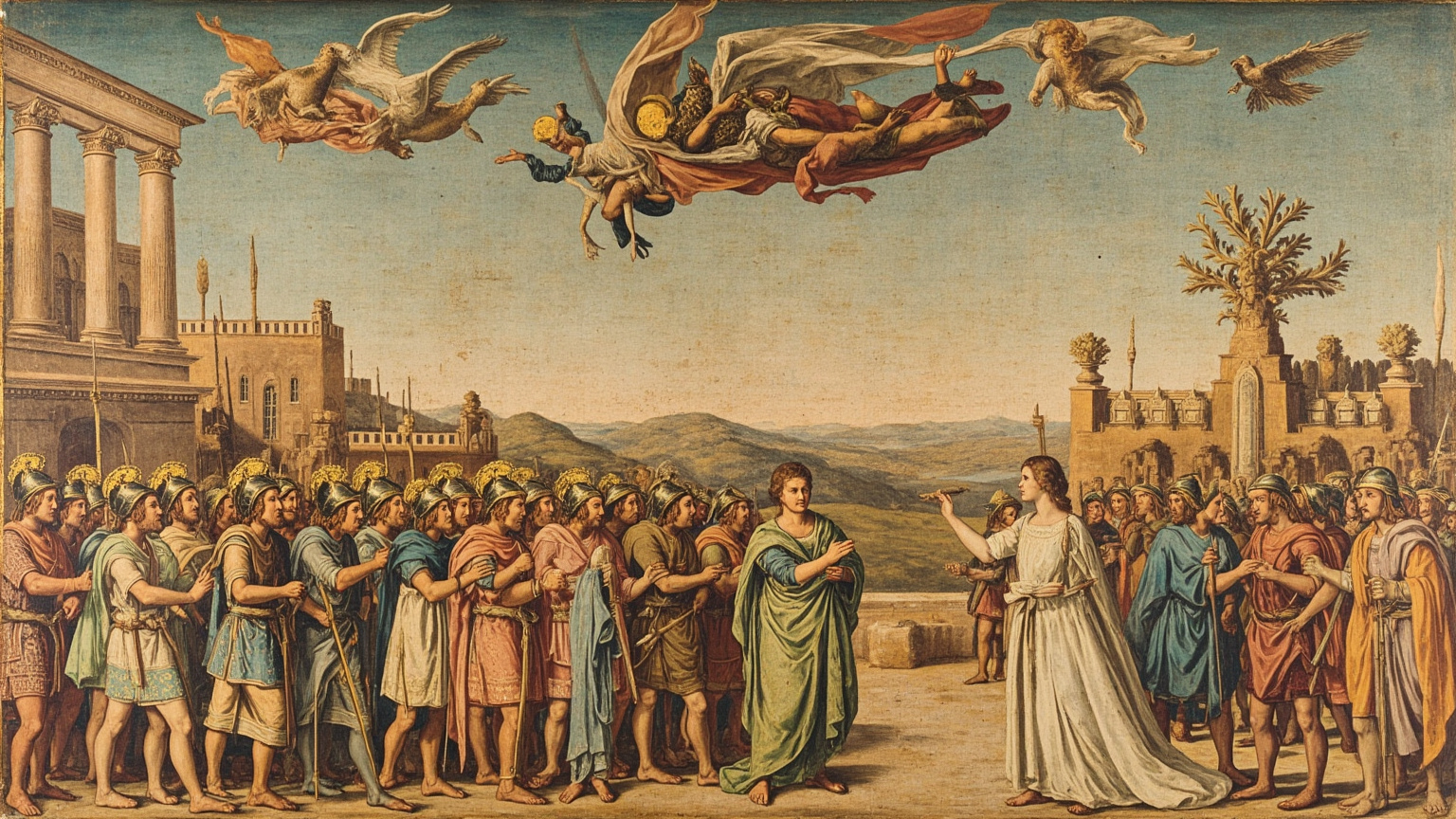
Here Rinaldo found a softer war, / And lost himself, and forgot his vow of glory.
里纳尔多在这里遇上一场更柔软的战争,他把自己丢了,连荣光的誓愿也一同忘掉。
金句 · 第15章 · 幸运园中的里纳尔多
This garden is where Tasso writes most freely. Pavilions, colonnades, fountains, fruit trees, the sea in the distance, but it should hold only architecture and scenery, no people. Rinaldo forgets to go home; he forgets every duty he owes as a Christian soldier. Tasso never tells us what passes between them. He holds back, describing only the garden's beauty, and lets that beauty stand in for everything he will not write. Every reader knows what happened there, but the poet refuses to say it outright. That restraint does more damage than any explicit scene could.
This is what drove religious conservatives to fury: to a late-sixteenth-century Italian reader, watching love triumph over religious duty was cause to pound the table. But Tasso would not cut it. He lets Rinaldo linger in the garden for cantos on end, then sends two old knights, Carlo and Ubaldo, on a long journey with a shield that shows the truth and a golden chain, to bring him back.
The shield of truth and the golden chain
Carlo and Ubaldo reach the garden. They do not fight, they do not scold. They do just one thing: they hold up to Rinaldo a shield that shows him the truth. He looks, and every illusion falls away. He remembers who he is, what he is meant to do, where he must return.
Tasso handles this with real skill. He does not wake Rinaldo through sudden insight, or tears, or a stab of conscience — he wakes him by making him see himself. The shield catches his reflection, and the garden's magic breaks. That does more than any sermon could, because it admits something true: people are trapped by their own eyes.
The golden chain works differently. The two old knights do not drag him away; they lead him out on a golden chain. The chain is soft, and Rinaldo follows willingly. That tells us he still has something tying him to the garden, still some attachment to Armida. Tasso will not let his characters become clean saints.
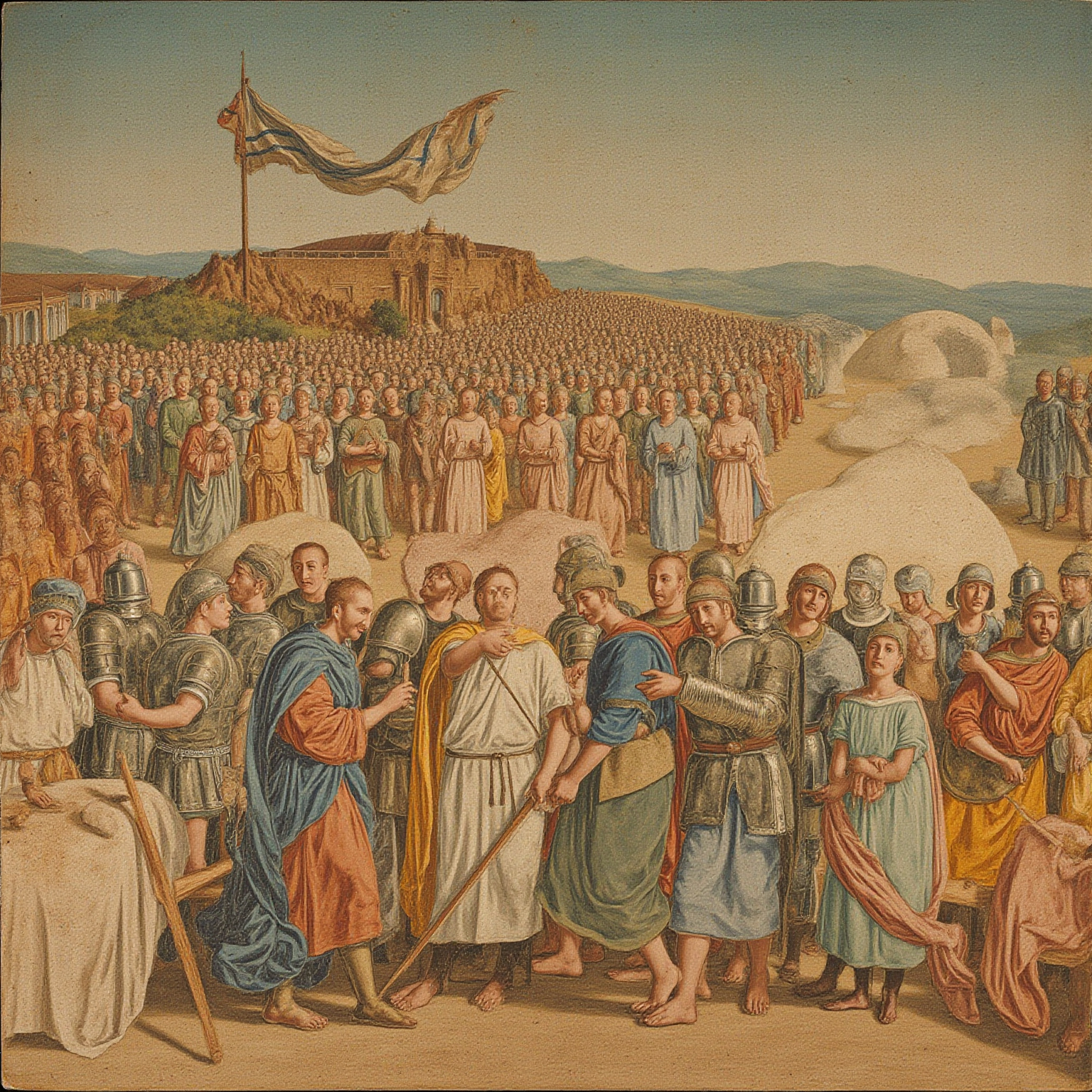
He saw himself in that true-speaking shield, / And all the magic vanished like a dream.
他在那面真言之盾里看见了自己,所有的幻象便如梦一般消散。
金句 · 第18章 · 金链与真言之盾
The angel breaks the spell, the siege towers rise again
Back on the main line of the story, an angel intervenes. With divine and angelic support, Godfrey breaks Ismeno's spell over the forest; the trees stop speaking, and the crusaders can finally cut their timber. The siege towers are rebuilt and rolled toward the walls. The defenders throw everything they have at them: fire, dark magic, boiling oil.
Tasso holds back when he writes the siege itself. He knows how this battle went; it really happened in 1099, and he cannot stray too far from it. He has already spent his energy on the psychological drama that came before, so the siege becomes a resolution to something already decided. But that choice reveals where Tasso's real interest lies: not in the siege itself, but in what runs through each knight's mind the night before it.
The Holy City retaken, the poem closes in a hymn
The walls fall. The crusaders pour in, and blood and tears are washed away together. Tasso closes the poem with a hymn of victory and devotion. This is the ending a religious epic is supposed to have: the Holy Land restored to Christian hands, God's will fulfilled.
But anyone who reads this far notices something: the poem's most moving passages are not set on the night of the siege at all. They come before it. Clorinda's death, Rinaldo's enchantment, Tancred torn in two: these are what Tasso is really writing about. The war is only the device that forces these people into positions where they have to choose.
Theme and method
The poem really has only one source of tension: the pull between vow and desire. To free the Holy Land, these knights must suppress their feelings, and yet Tasso writes those feelings with more weight than anything else, more ache than anything else. That is exactly why it was attacked so fiercely in Counter-Reformation Italy. Religious conservatives wanted an epic that glorified holy war; what Tasso handed them was an epic about the human heart set against the backdrop of holy war.
Between the love that binds him and the faith / That calls, the knight stands torn in two.
在牵引他的爱情与召唤他的信仰之间,骑士被劈成了两半。
金句 · 第20章 · 誓愿与情欲的撕扯
He pushes this tension to its limit by turning the battlefield inward, into the mind. Tancred's one second of hesitation before Clorinda, the glance Rinaldo throws back as the golden chain leads him out of the garden: these are not battle scenes, they are scenes of the mind. Later opera composers understood this instantly: this is exactly where recitative and aria belong. Monteverdi, Lully, Handel, Gluck, Rossini: more motifs were lifted from this poem than from any other epic.
There is another layer here too. This poem is an extreme record of what it meant to be a poet under the Counter-Reformation. To get it past the censors, Tasso revised and cut himself again and again, until it broke him, and he was confined for seven years in the asylum of St. Anne. In the asylum he wrote a second version, Jerusalem Conquered, closer to what the religious conservatives wanted, but it is generally judged a failure as poetry. A poet ruining his own work to get it past the censors: that, by itself, is a tragedy no one ever wrote, and it weighs more than anything in the poem itself.
What Tasso is really writing is not the war but the moment the war forces a knight to choose. The hesitation before that moment is worth more than the moment itself.
Why go read the poem itself
A companion guide gives you the map; the poem is the land. What this guide can never give you is Tasso's own sentences, that long-breathed, clause-within-clause syntax particular to sixteenth-century Italian, which loses half of itself in translation. And that lost half is exactly how Tasso's inward battlefield becomes real: he lets a sentence wind through three turns of semicolon and subordinate clause before it lets you breathe, so that the reader's breath falls in step with Clorinda's in the instant before she goes down. Then there is what Tasso refused to write at all, the bodies in the garden he would not describe, the death wound he would not paint, and that emptiness is itself a piece of craft. A guide can tell you what Tasso left out. But you have to read your way into that blank space yourself before you understand why he wrote it that way.
Art Direction4 plates
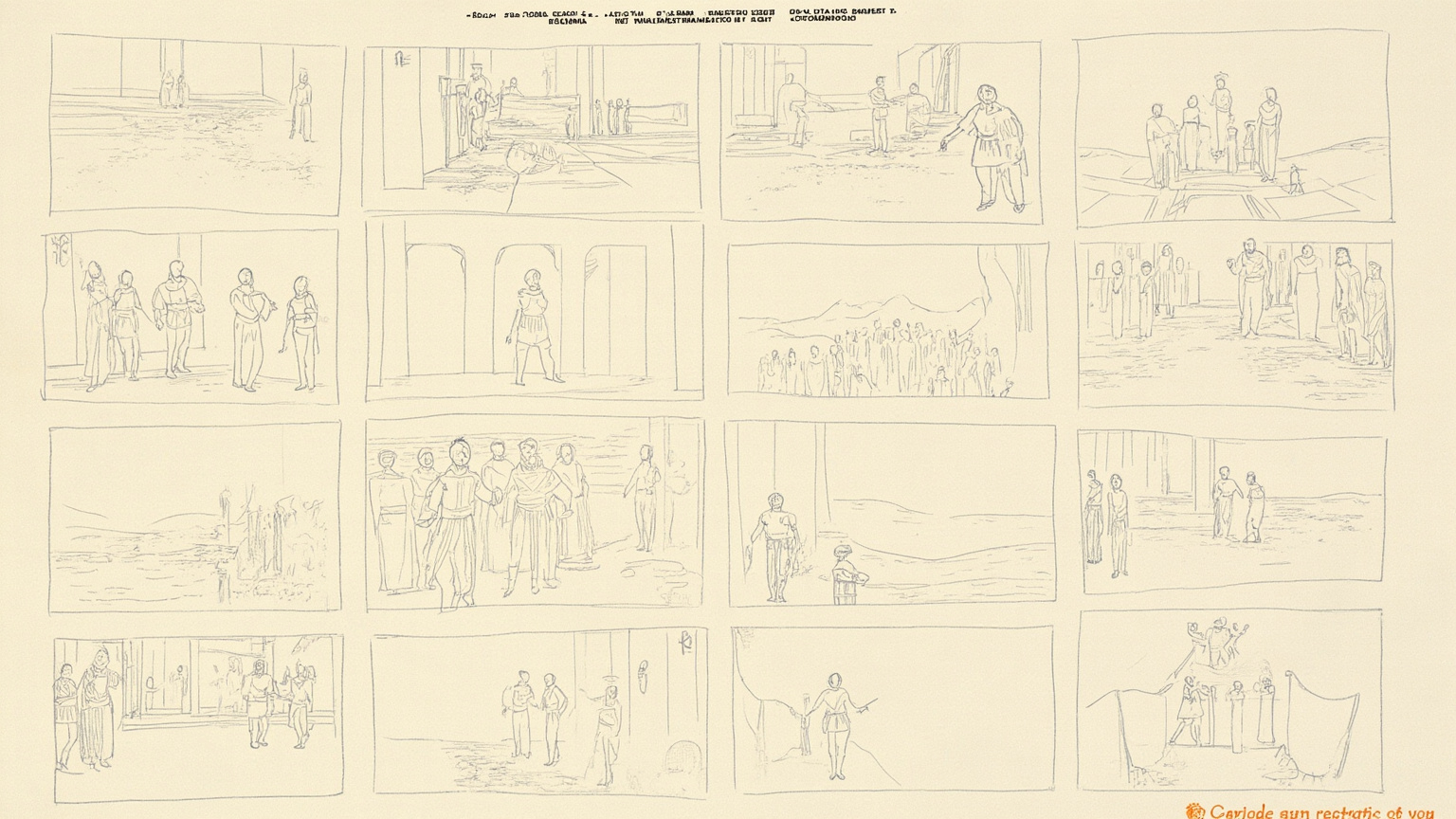
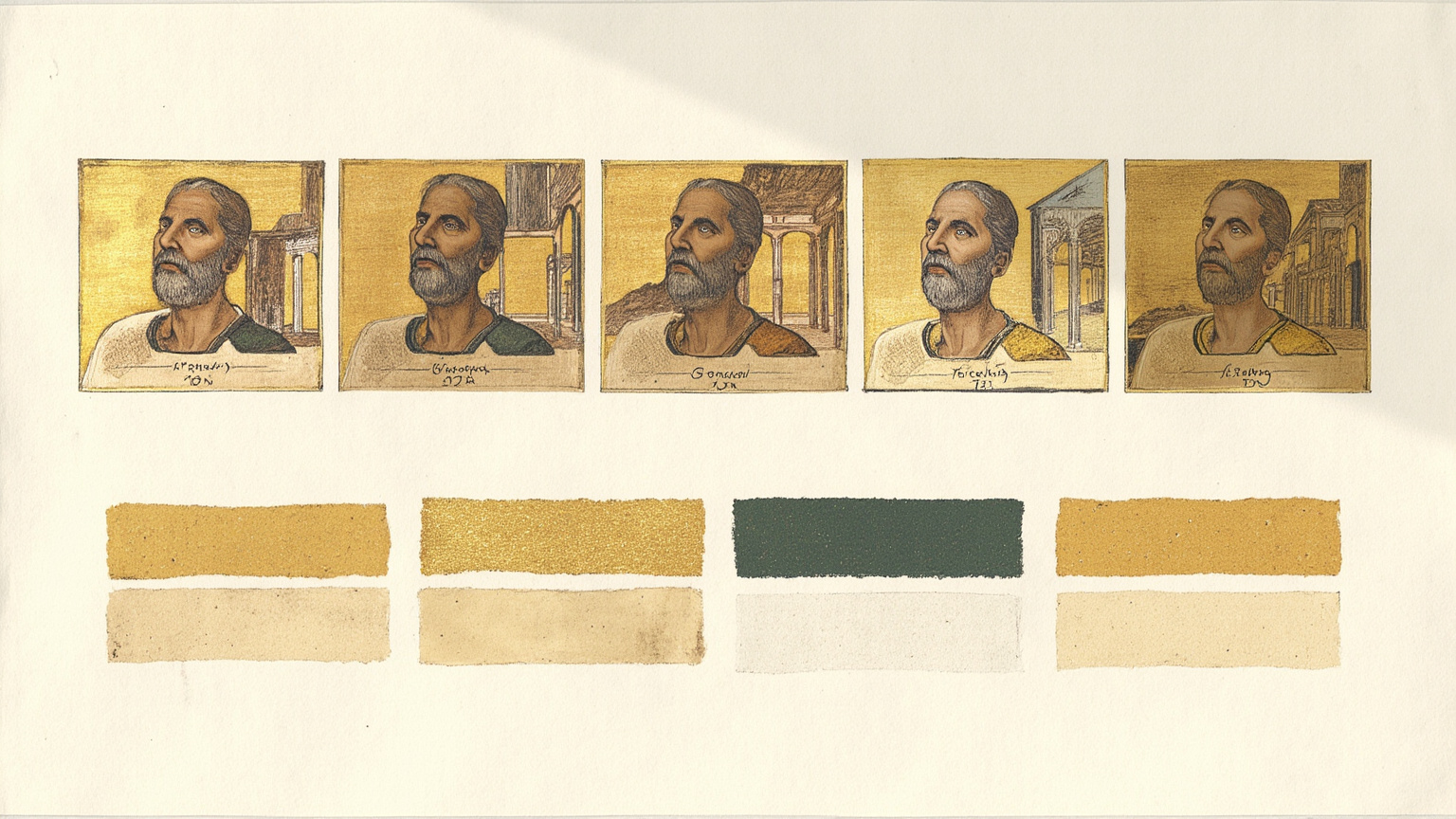
Before the guide was written, this book got a visual foundation — every illustration you just read grew out of it.