Jiro Monogatari / Jiro's Story · Companion Guide
次郎物语
一个没有席位的孩子,在无人替他的位置上,一根根接住自己的判断之骨。
Opening
A footpath worn pale by generations of feet leads into a farmhouse deep in the Chikugo Plain. Willow branches hang low, brushing the shoulder of a barefoot boy — his name is Jiro, sent here almost before he could walk, raised on rice from his wet nurse's stove and sleep on her straw mats. It is the first corner of the world he can call his own. A few years later, one word from his grandmother is enough to send him back, packed off behind the latticed doors of the main house. From that day on, the boy never again has a place that holds still under him.
What kind of book is this
Jiro's Story is the long novel Shimomura Kojin wrote under his real name, Shimomura Korokuro. It spans the war and its aftermath, serialized and published over nearly twenty years — beginning as a newspaper serial in the mid-1930s and finishing as an eleven-volume set in the early 1950s. Later generations of Japanese readers have treated it as the national coming-of-age novel: almost any account of what it felt like, inside, to be a boy moving from primary school into the old middle-school system eventually circles back to this book. It doesn't win you over with plot. It wins you over by showing a child's sense of self taking shape in unremarkable days, growing the way rice grows in a paddy — one joint of the stalk at a time.
People and world
The story unfolds in the Chikugo Plain of northern Kyushu, its real-world model somewhere between Kurume and Yanagawa in Fukuoka Prefecture, in the years from the end of the Taisho era into early Showa — the war still a long way off. Jiro is the younger son of a merchant family, sent out to a wet nurse in the countryside as a small child simply because no one at home had time to raise him. When he's brought back to the main house, he finds his grandmother's cold face waiting for him, his half-brother Hideo already the favored one beside him, and a mother — the young wife of a merchant household — too frail to protect him, caught between the grandmother and her own sickbed. His father is away for years at a stretch. Jiro becomes a child who belongs nowhere in particular. His wet nurse, a countrywoman who can't read or write, gives him his first taste of what home feels like. Mr. Fujii, a quiet young teacher at his primary school, hands him the first key to thinking for himself. And the housemaster at his boarding dormitory is the one who pushes him from an unruly boy toward the edge of discipline and self-control.
Plot line
I. The path by the wet nurse's house
Jiro's earliest world is the yard at his wet nurse's house: paddy fields, raised banks between them, irrigation ditches, the shadow of willow trees. Here he learns to walk, to eat, to read the tone in an adult's voice. The wet nurse has never studied a page in her life, but she reads people clearly enough. She doesn't teach Jiro his letters or lecture him on how to behave — she simply lets him grow in the dirt and the seasons. Years later, this remains one of the few places in Jiro's life that stays warm whenever he looks back on it.
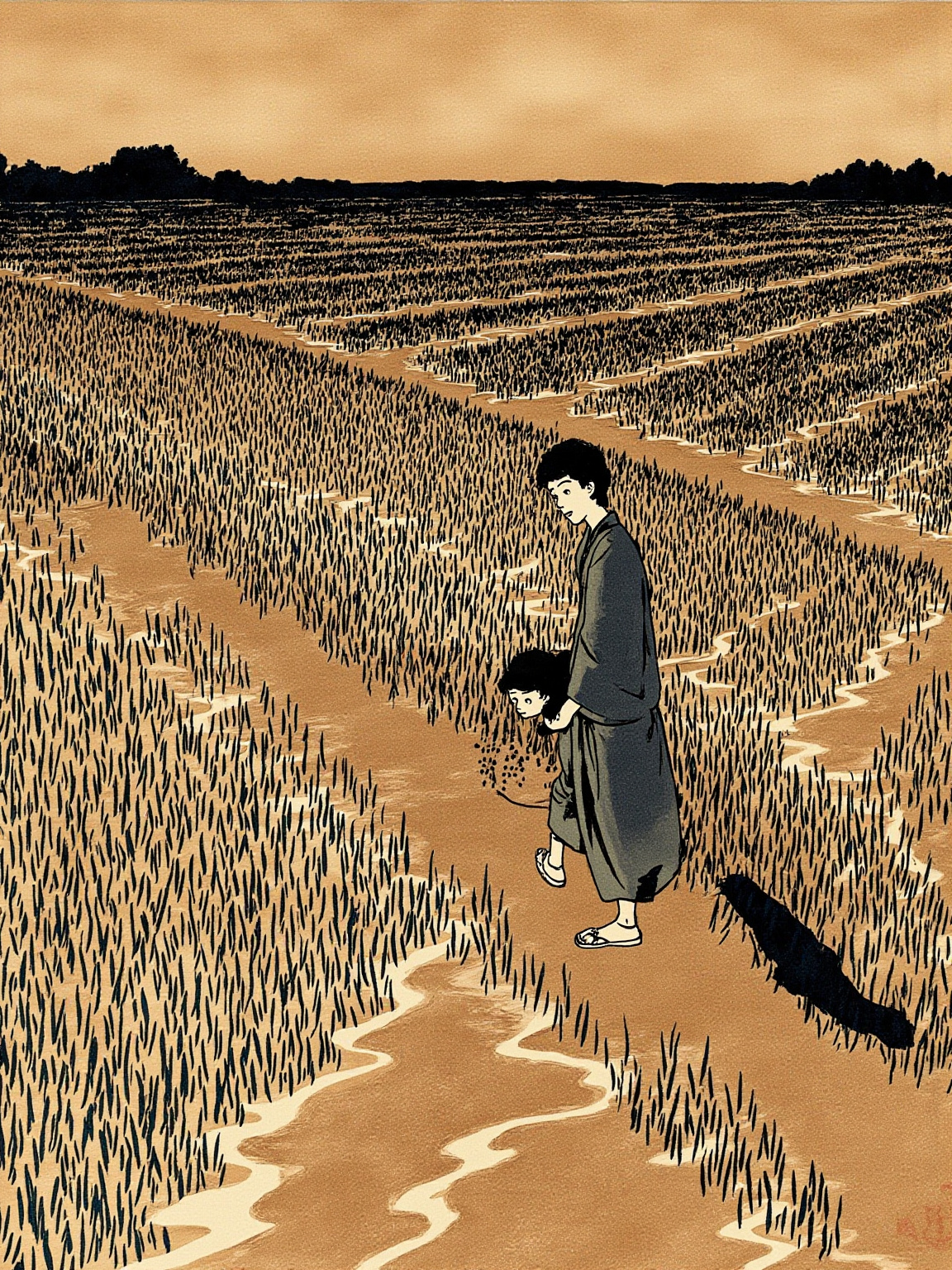
The world that first belonged to him was a yard — paddies, ridges, ditches, the shadow of a willow.
次郎最初拥有的世界,是乳母家的院子——水田、畦、沟渠、柳树的影子。
金句 · 第一章 · 乳母家的田埂
II. Back behind the lattice doors
One word from his grandmother, and Jiro is brought back to the main house. The footpath gives way to a bare earthen floor; the wet nurse's stove gives way to a straw mat in front of the family altar. A merchant household has a merchant household's rules, and behind its latticed doors sits the old order his grandmother presides over: Hideo is the elder son, the favored one; Jiro is the younger, and worse, the "wild child" fetched back from the country. His grandmother nails the word bokkee — Chikugo dialect for having no upbringing, no manners — into him, one sentence at a time. His mother's tenderness is squeezed between the grandmother and her own sickbed, his father is off living in a company dormitory, and there isn't a single person in the house who stands behind him without reservation.
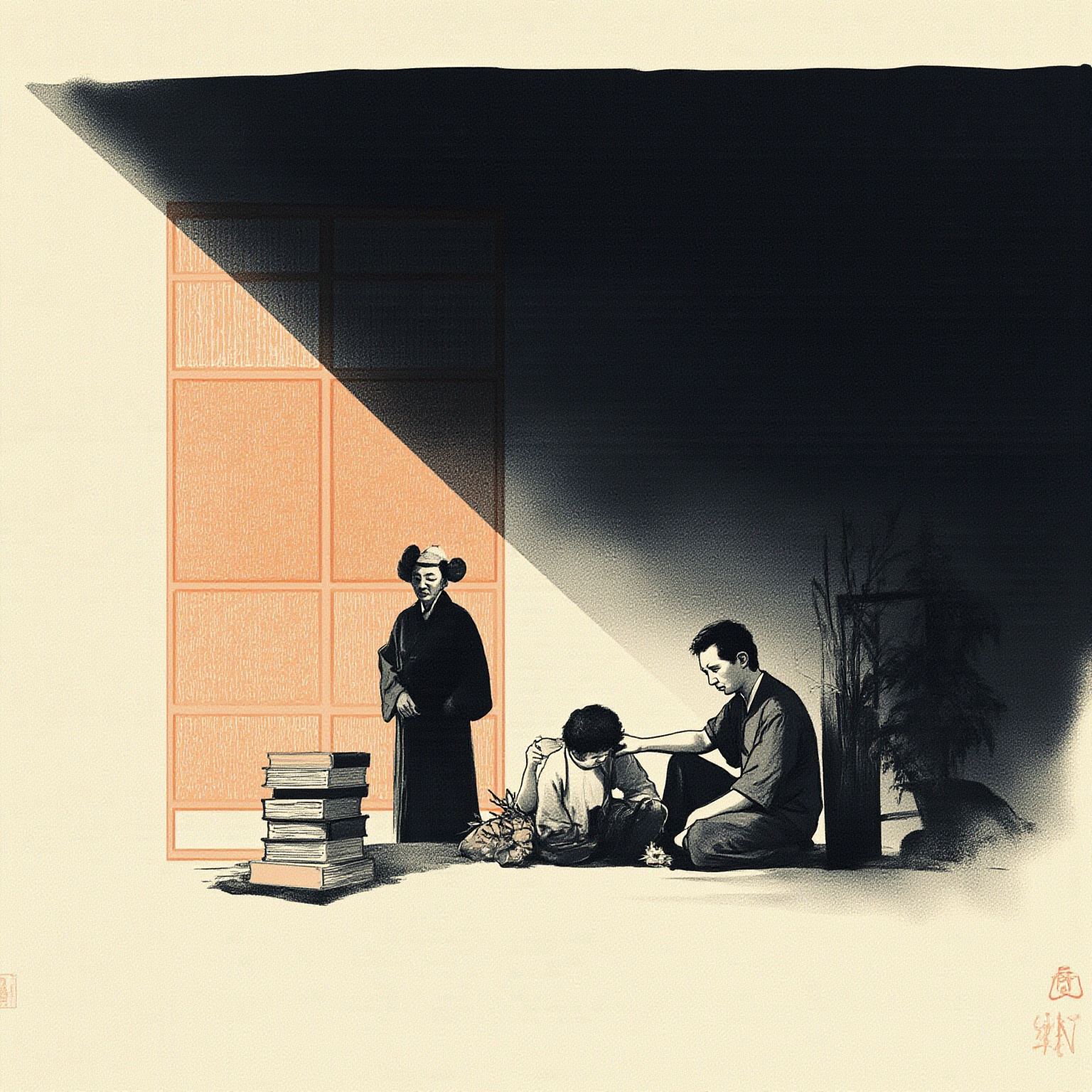
One word from grandmother, and he was called back behind the lattice doors — from the ridge to the earthen floor.
祖母一句话,他便被收回格子门内——从畦上,回到土间。
金句 · 第二章 · 格子门里
III. A funeral in the rain
His mother finally succumbs to her illness. This is the most restrained cut in the whole book — no melodrama, no wailing, just rain that won't let up, neighbors coming to help, a coffin carried out through the lattice doors, and Jiro standing under the eaves watching. From this day, what little tenderness he'd still had to lean on is washed thin by the rain. His father's brow sinks lower. His grandmother sits chanting before the altar. Hideo is still the favored elder son. Jiro doesn't cry out loud, doesn't lash out at anyone. He starts to understand something: in this house, crying gets you nothing, and neither does fighting.
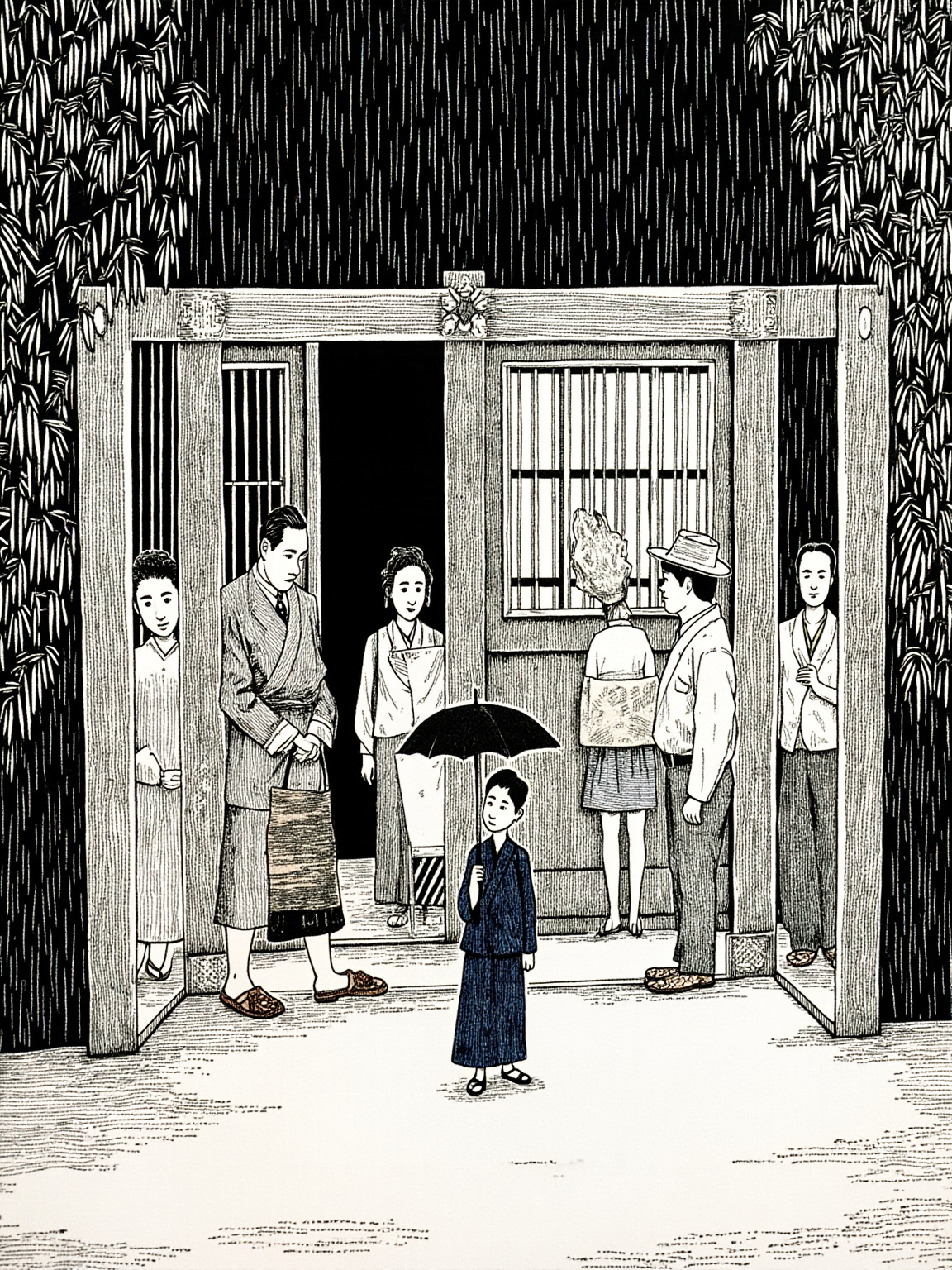
It rained and rained. The neighbours came to help; the coffin was carried out through the lattice. The boy stood under the eaves, watching.
雨下个不停。邻人来帮忙,棺木从格子门里抬出,次郎站在檐下看着。
金句 · 第三章 · 雨中的葬式
IV. Mr. Fujii's lesson
At primary school, Jiro meets Mr. Fujii. The teacher isn't harsh, isn't soft, doesn't say much — but he has one gift: he refuses to think for the children. Where other teachers stuff answers straight into a child's head, Mr. Fujii asks his question and then waits at the blackboard, waits until the silence turns awkward, waits until a child works out the answer on his own. For the first time, Jiro learns that thinking for yourself doesn't get you scolded. There are, it turns out, adults willing to hand a child the right to make up his own mind.
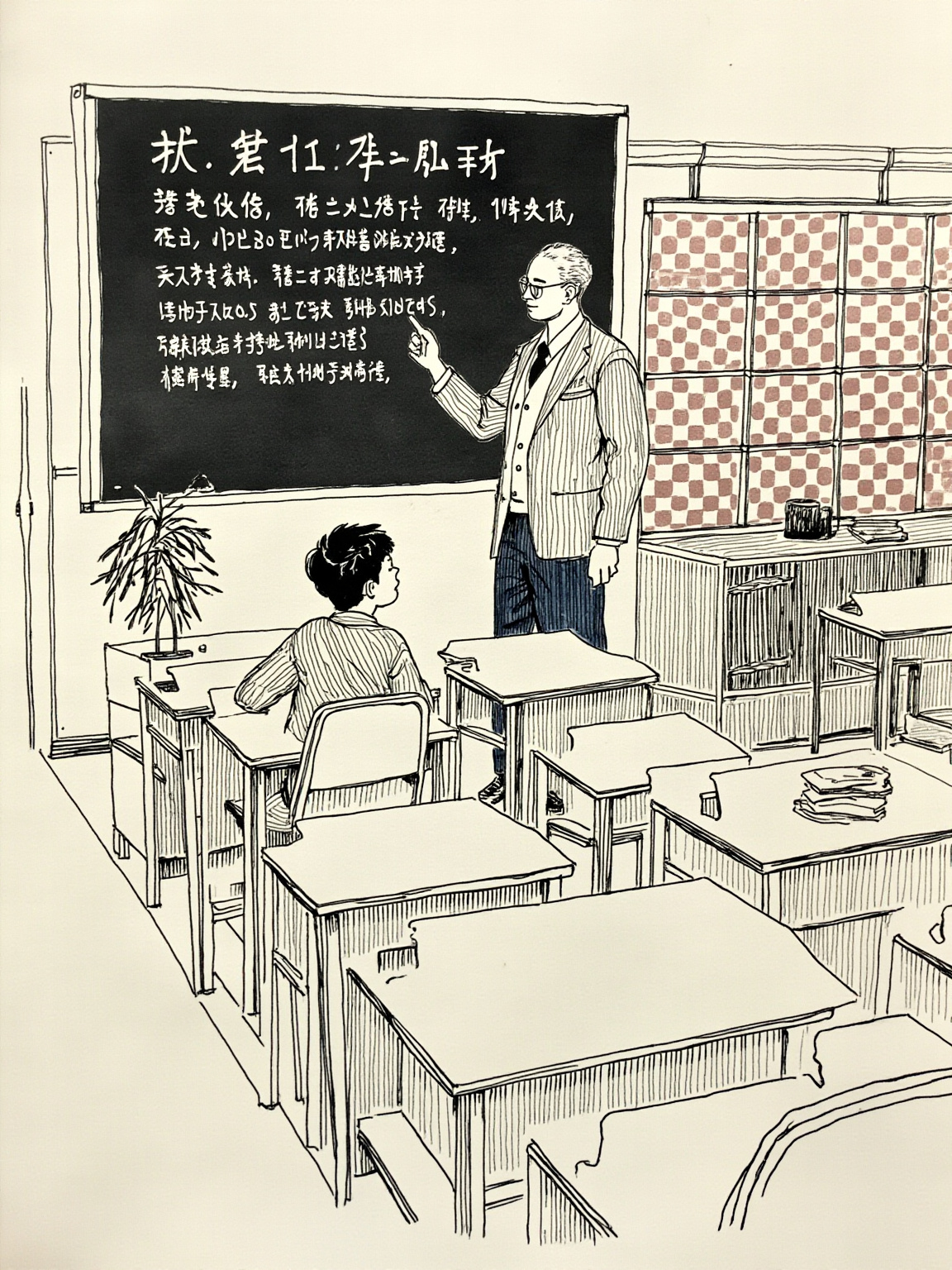
The teacher asked the question and then simply stood there, waiting, until a child found the words himself.
老师把问题说完,便站在黑板前等——等得空气发僵,等到一个孩子自己把话说出来。
金句 · 第四章 · 藤井先生的一课
V. The dormitory's hard rules
Moving up into the old middle-school system, Jiro enters a boarding dormitory. The housemaster is a hard case — he never lays a hand on anyone, but the rules are strung as tight as wire: wake-up, lights-out, study hours, comings and goings, all of it checked. The first few months grind Jiro down, and grinding down alongside him is Taiichiro, a boy straight out of the paddies, country accent and all, stubborn to a fault, but someone you can count on when it matters. Worn down by the same rules, the two of them slowly grow the same thing: patience.
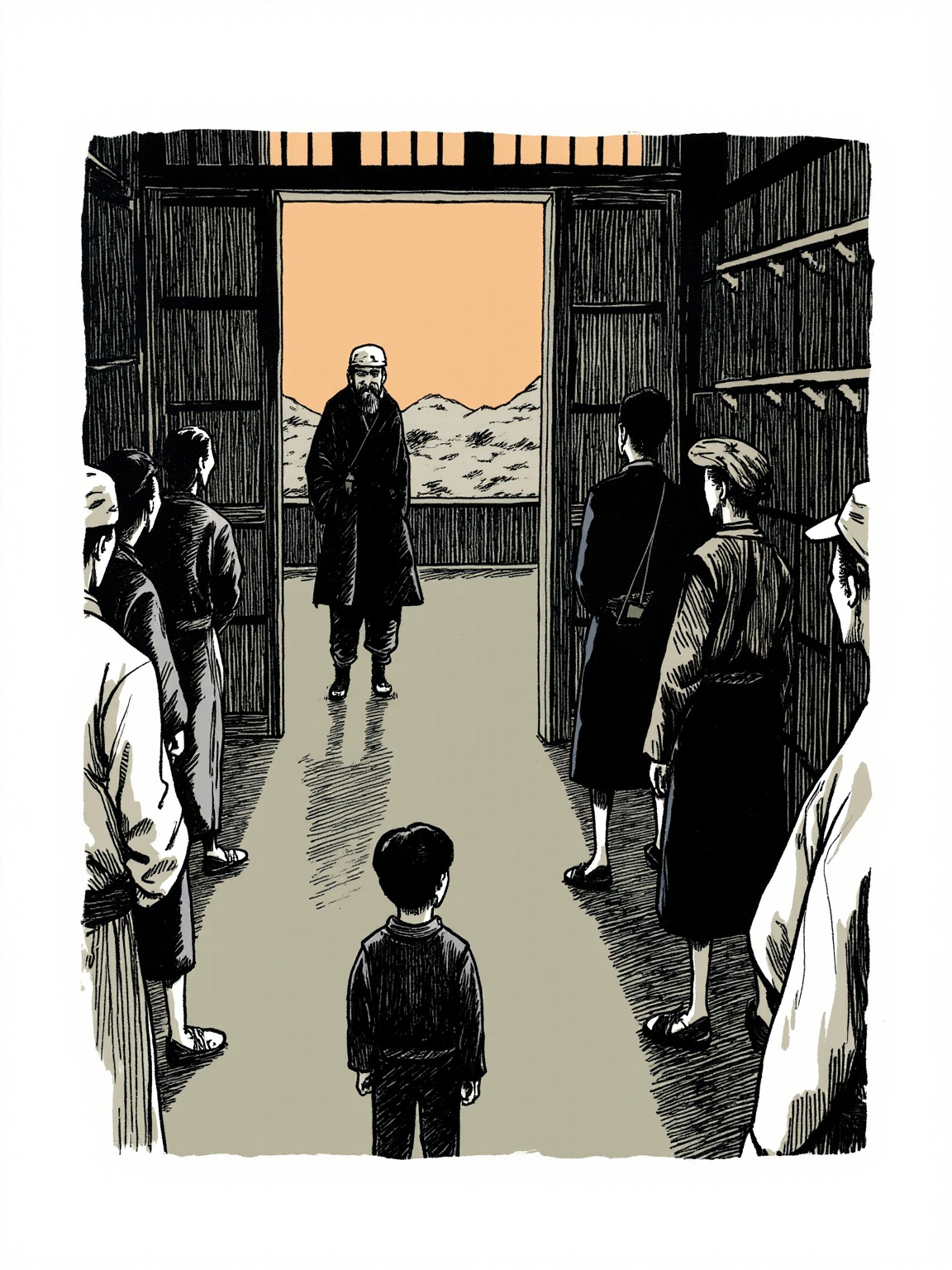
The house master's rules were plain as wire — rising, lights-out, study hours, coming and going, each item checked.
舍监的规矩,铁丝一般清楚——起床、熄灯、自习、出入,件件有人点检。
金句 · 第五章 · 寄宿寮的硬规矩
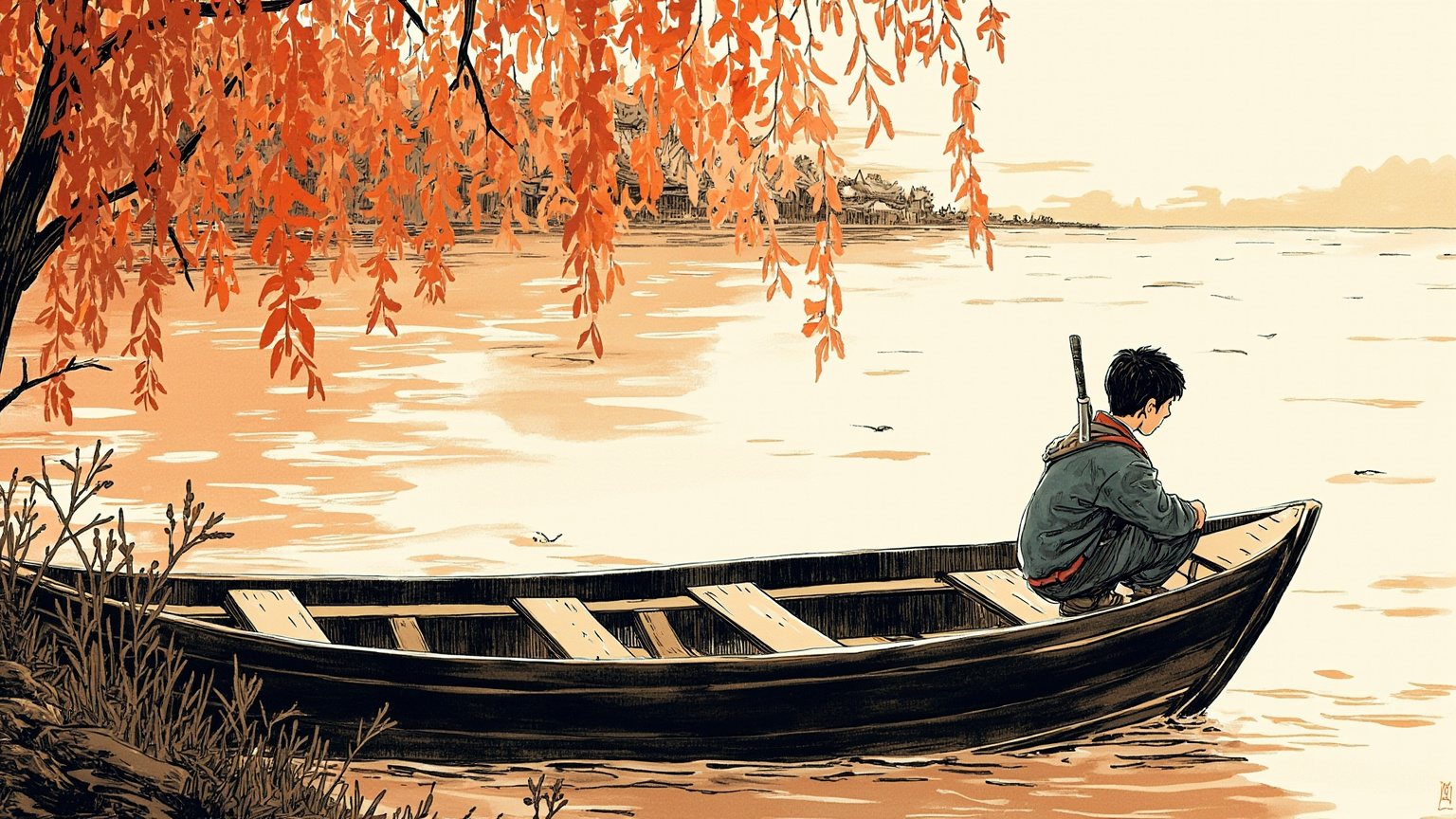
VI. Memories of earth and river
Planting rice, cutting rice, the Chikugo River rising, small boats on the water at Yanagawa — these images from around his wet nurse's house keep coming back to Jiro. Every time his mother's death anniversary comes around, every time the dormitory grinds him past what he can bear, he thinks of the raised bank by his wet nurse's paddy, the feel of willow branches brushing his shoulder. This memory of the earth isn't nostalgia. It's closer to a stake driven into the ground, giving him somewhere to stand even in a house where he never fit and a dormitory run on iron rules.
VII. A father sees his son again
In the second half of the novel, the father's presence starts to weigh more. One winter morning, sitting for once before the family altar, he watches Jiro sling his book bag over his shoulder and head for the door. He doesn't call him back. He simply looks up from the veranda — and in that one look, the small son his grandmother had branded bokkee is suddenly gone, and standing there instead is a boy whose shoulders have filled out. The father says nothing. He looks away. Jiro walks out through the lattice doors and finds, when he finally lets go of the book bag strap, that his palm is damp. From that single look on, he understands something: in that house, there is finally one adult looking at him as a person in his own right.
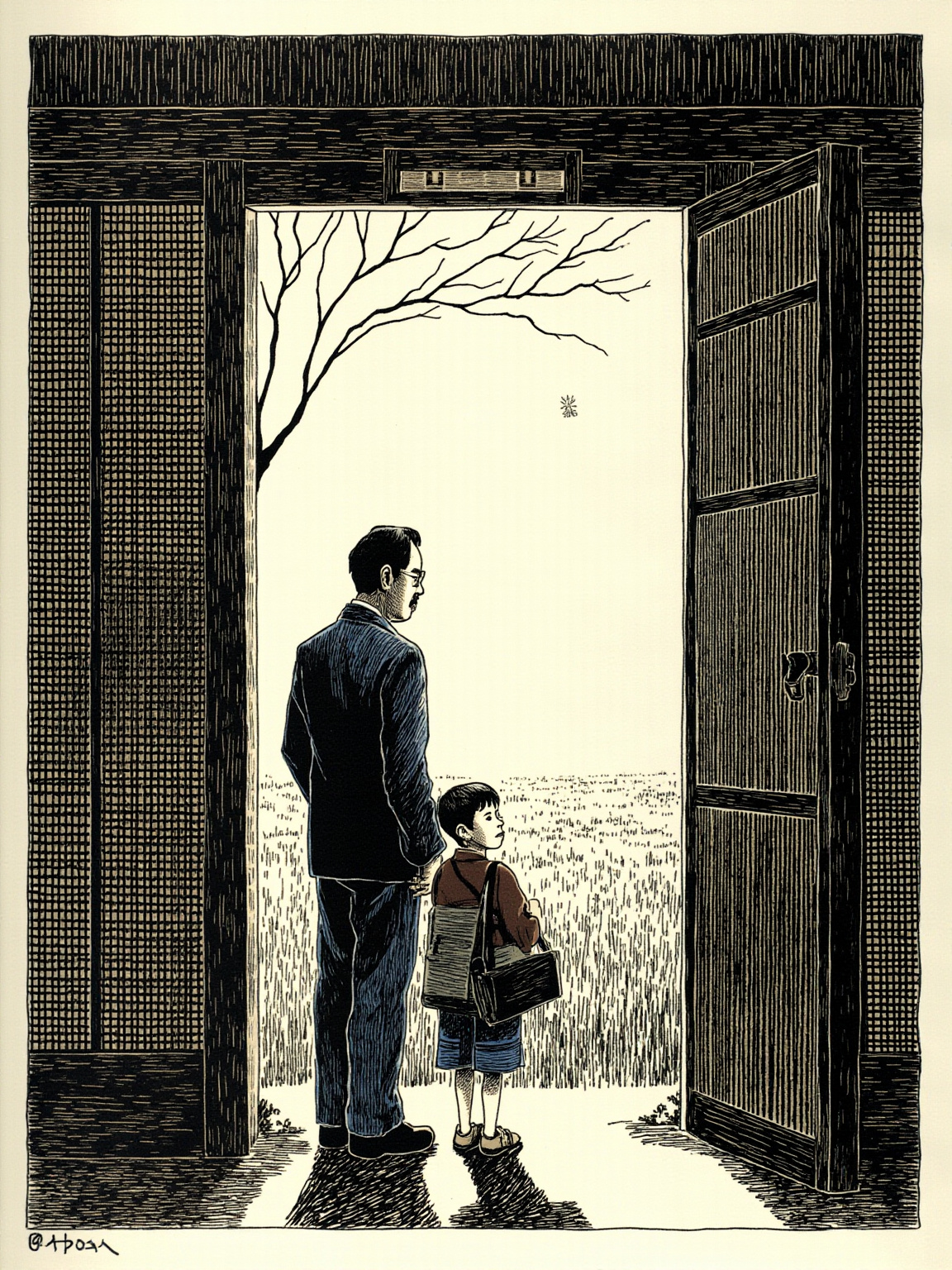
On a winter morning his father looked up from the veranda — and the boy grandmother had called bokkee was no longer there.
冬日的清晨,父亲从廊下抬眼望过来——祖母口中那个ぼっけえ的少年,已经不站在那里了。
金句 · 第七章 · 父亲重新看见儿子
Theme and method
What this book is really about isn't a suffering child's triumphant comeback. It's about a child who never had a seat at the table, and how he finds, in days with no one cheering for him, some ground to stand on. The author doesn't cry for Jiro, and he doesn't let Jiro cry out either. What he shows the reader instead is that growing up doesn't come in bursts. It's pushed up, day after day, by earth, by rules, by silence, by one small test and one offhand remark at a time.
Why it's still read a century on
First, an honest restraint. Every pain in the book has a clear source — the grandmother's cold face, the mother's death, the dormitory's rules — but the author never lets any of it spill past its own edges. Both the tragedy and the growth are pitched exactly right: any more and it would tip into accusation, any less and it would read as indifference. Second, the earth itself is written as a character. The wet nurse, the paddy banks, the willows, the river aren't just backdrop to Jiro's memories — they are, in effect, this child's first mother. Third, the book preserves, for the boys of modern Japan, the cleanest air of that era: the smell of chalk dust in a primary-school classroom, the whistle before lights-out in the dormitory, the muddy smell of a river rising in flood season. Television can't reproduce that air. Only prose can give it to you.
The first time I read the mother's funeral, I closed the book and sat still for a long while. It wasn't that I was moved — it was that flat, unadorned writing that caught me somewhere. Rain is written as rain, nothing more; a boy standing under the eaves is written only as a boy standing there, without a single word putting "I'm so miserable" in his mouth. That restraint, on its own, is one of the things this book teaches its reader.
Growing up doesn't come in bursts. It's pushed up by earth, by rules, by silence, by one small test and one offhand remark at a time.
Why read the original
A companion guide can tell you who got scolded, who died, who ended up in the dormitory. What it can't give you is that dull ache worn into you page by page — the whole chapter of the mother's funeral, where Shimomura Kojin never writes a single line of interior monologue and lets the sound of rain and the neighbors' footsteps carry all the feeling for you; the several dozen seconds of silence Mr. Fujii holds at the blackboard, where the prose genuinely stops moving; the father's one look from the veranda, where the author won't spend even a single verb of emotion, only the look itself, the turning away, a hand letting go of a book bag strap. Writing that refuses, page after page, to cry out on your behalf can't be caught secondhand — you have to go to the original. Reading it once you already know how it ends actually hurts more: in a boy who hasn't yet grown his bones, you'll see the shape you were in, once, in some house of your own.
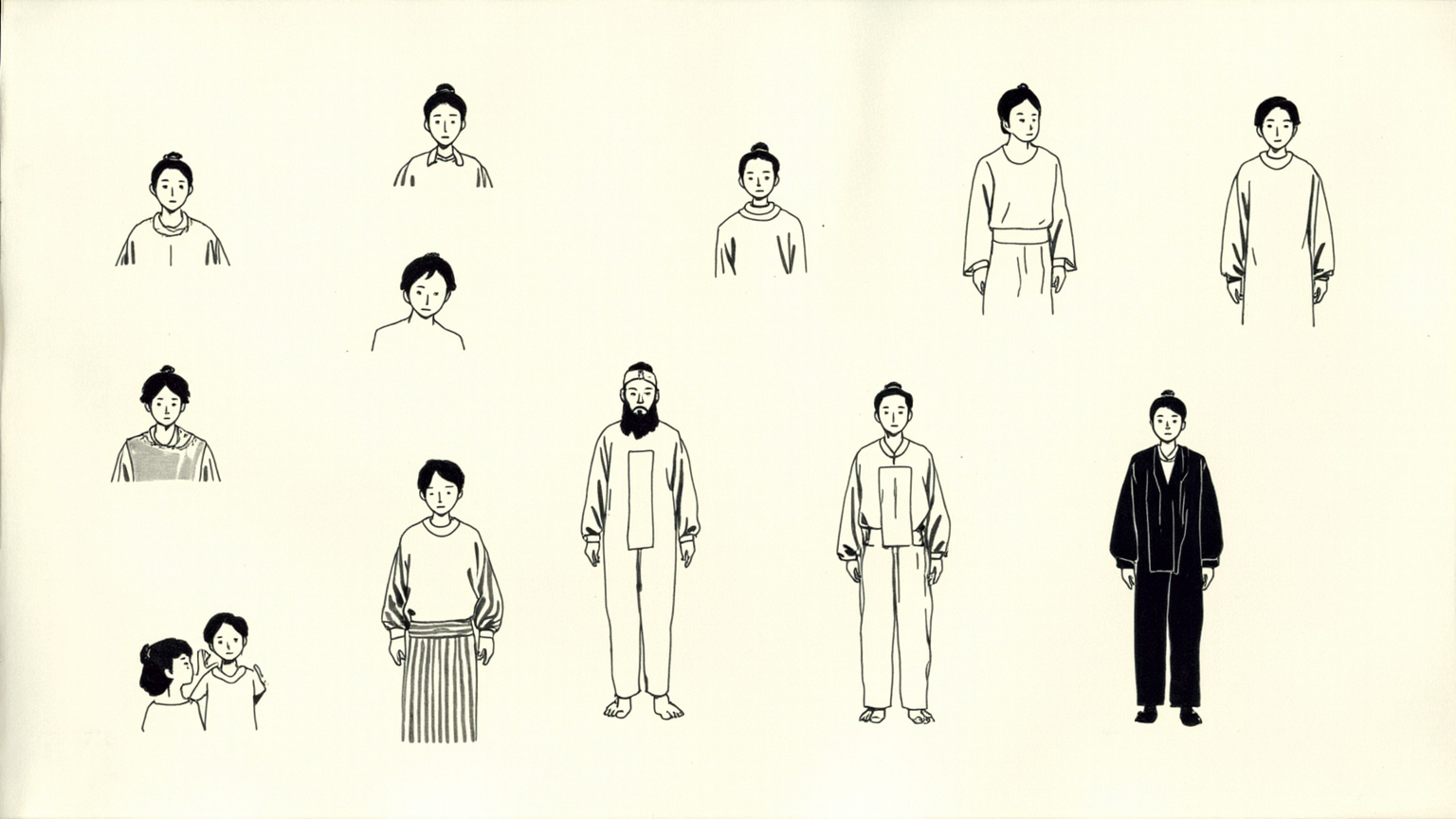
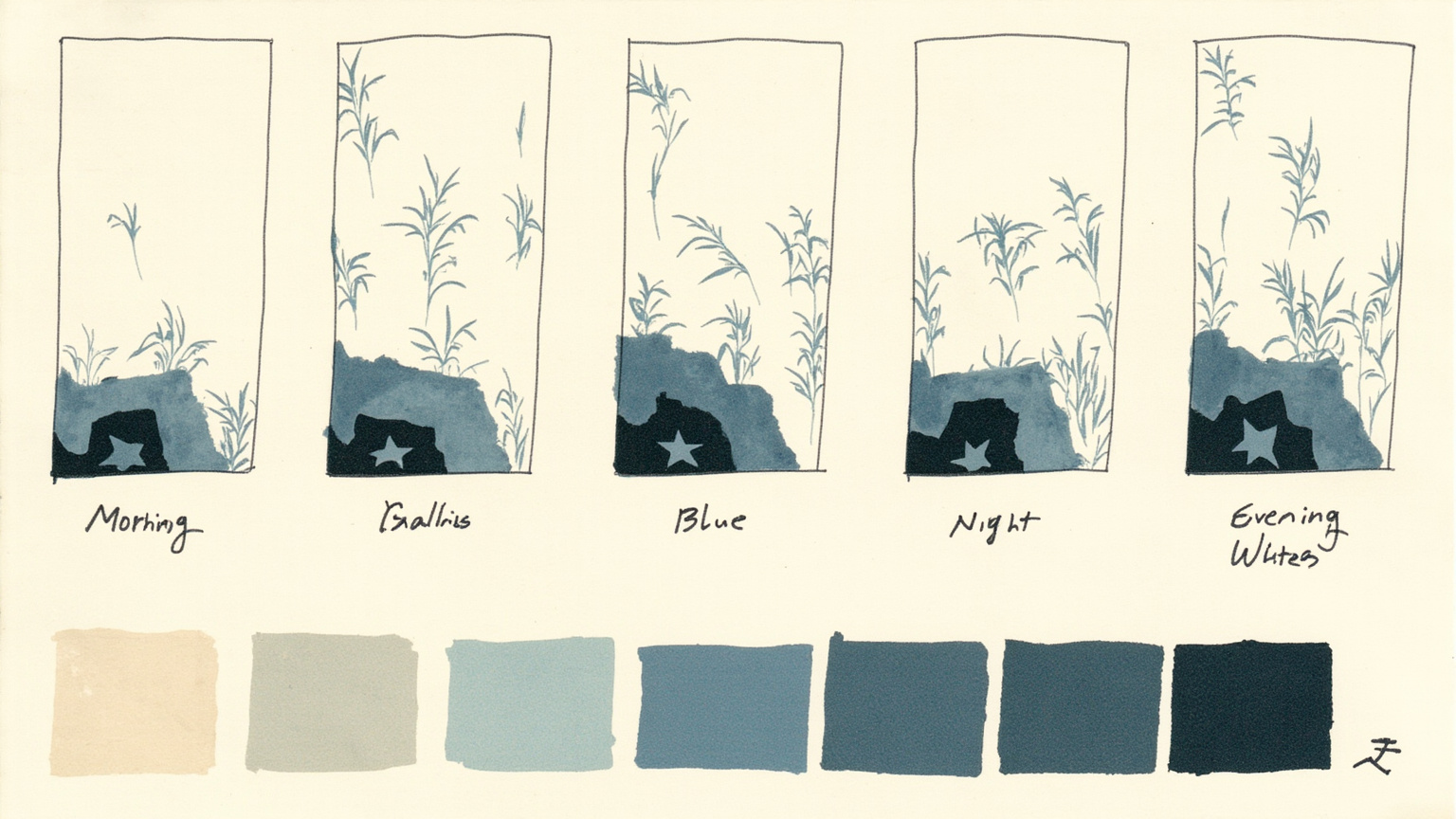
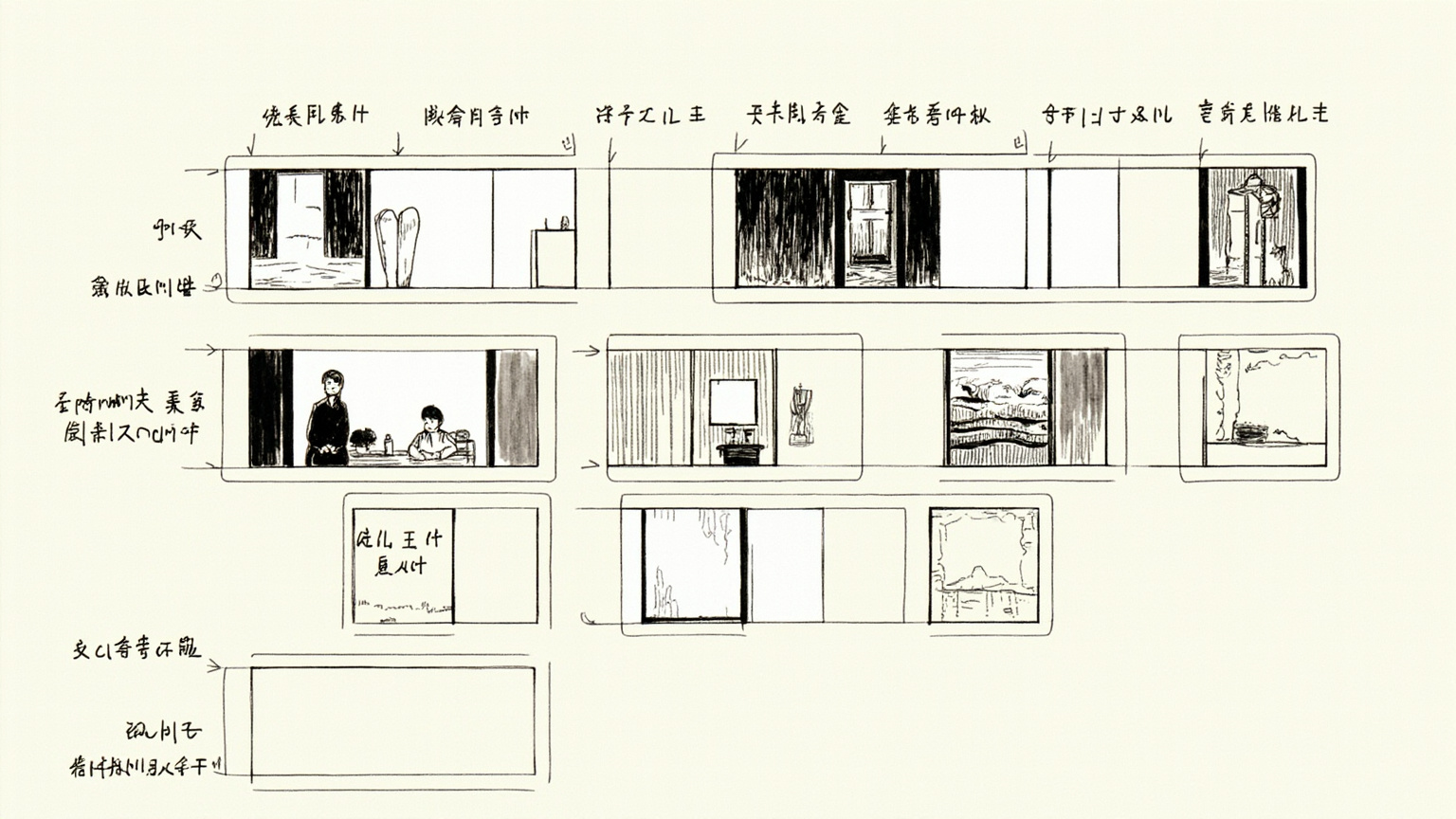
Art Direction4 plates
Before the guide was written, this book got a visual foundation — every illustration you just read grew out of it.