A Strange Case of Nine Murders (Jiuming Qiyuan) · Companion Guide
九命奇冤
雍正七年广东番禺一夜火光,八条人命;少年孤身北上告御状,撞的是宗族与官府两层壳子扣死的南国湿热。
I. Fire From the First Sentence
The flames arrive first. The shouting comes after.
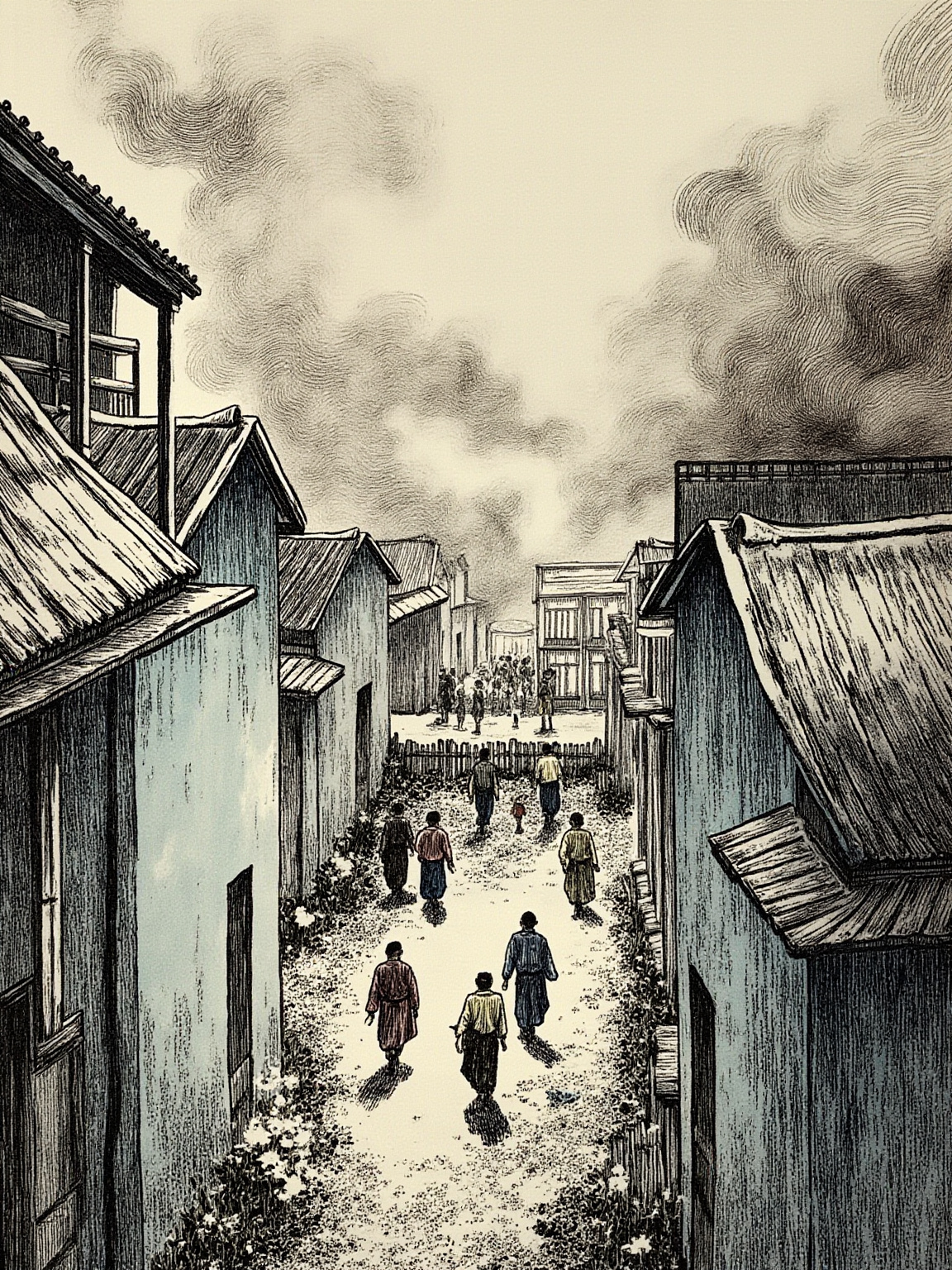
The flames came first; the cries of men came after.
火光先到,人声后到。
金句 · 第一回 · 火起梁家
Chapter one of Nine Lives, a Strange Wrong skips the throat-clearing. No pleasantries, no roll call of characters — it opens straight into the fire that burns down the Liang household, eight lives gone in a single night. Almost nothing in late-Qing chapter fiction opens this way. Other novels of the era like to start with ‘Now, as for the state of the realm...’ Wu Jianren refuses that. He throws the worst scene at the reader first, then works backward to explain who set the fire and why. Read the first three pages and you would swear you had picked up a translated detective novel. Get to page ten, and you realize this is something a Cantonese writer made for Cantonese readers, in the thirtieth year of the Guangxu reign.
II. Where This Book Comes From
The author, Wu Jianren (1866-1910), came from Foshan in Nanhai county, Guangdong, and styled himself ‘the man from Buddha Mountain’ — a pun on his hometown, whose name literally means Buddha Mountain. He was one of the heavyweights of late-Qing fiction, ranked alongside Officialdom Unmasked, Bizarre Happenings Eyewitnessed over Two Decades, The Travels of Lao Can, and A Flower in a Sinful Sea as one of the ‘condemnation novels.’ Condemnation meant attacking officials — but with restraint, with purpose, never as a slogan. Nine Lives, a Strange Wrong ran as a serial starting in October 1904 in New Fiction, the magazine Liang Qichao edited, and came out two years later as a standalone edition of thirty-six chapters from the Guangzhi Press in Shanghai. Hu Shi later praised it without reservation, calling it ‘the most tightly structured of all the old Chinese novels,’ and coming from Hu Shi that verdict carries real weight.
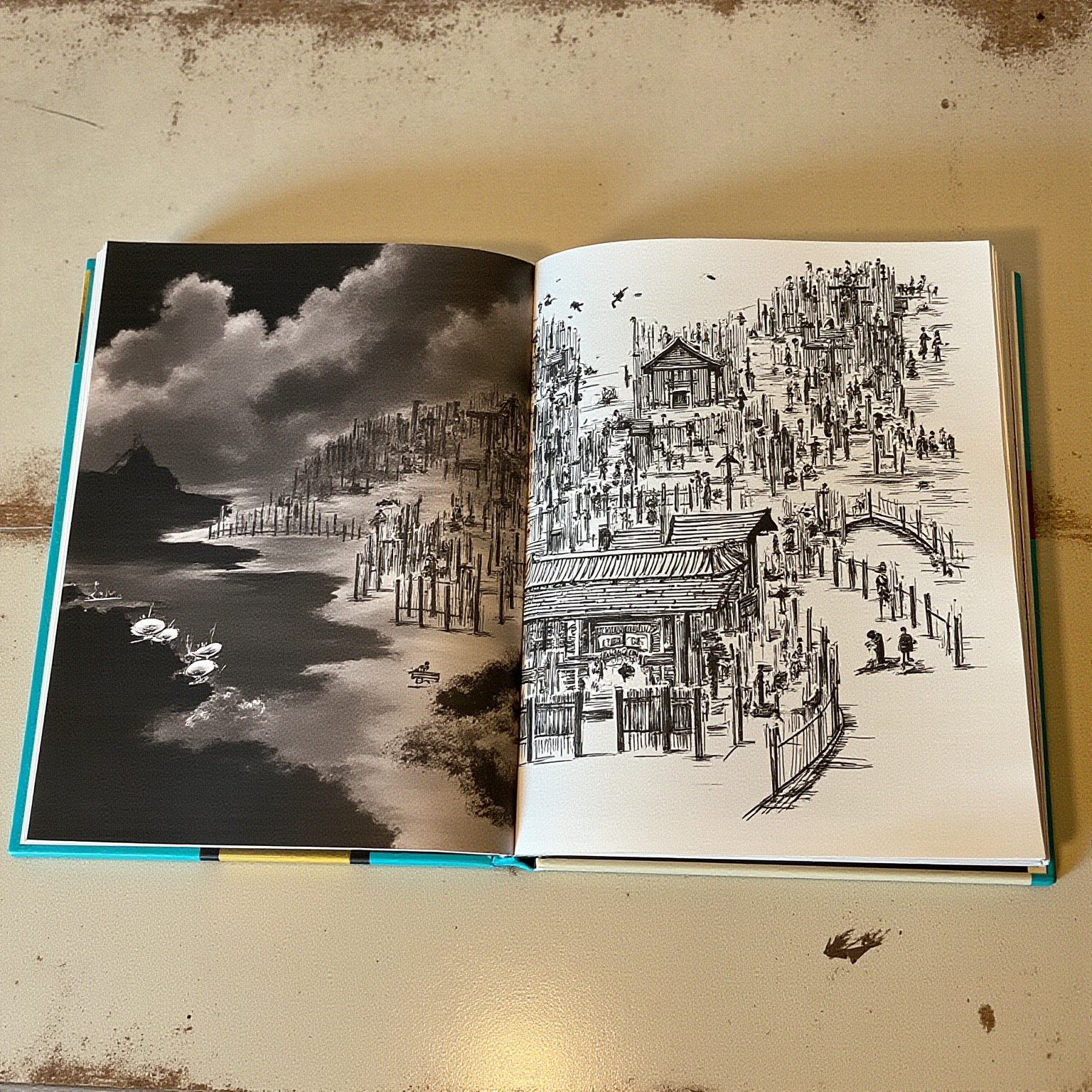
The book is built on a real case: during the Yongzheng reign, the Ling clan of Panyu, Guangdong, burned a family to death, seven corpses reckoned as eight lives once the count included an unborn child. An earlier book, Liang Tianlai's Warning to the Rich, had already told the story once. Wu Jianren rewrote the old case to say something about his own time — the corrupt officialdom of the late Qing. On the surface he is writing about crooked officials under the Yongzheng emperor; underneath, he is writing about the ground he stood on. ‘Corrupt officials cover Guangdong,’ he says, ‘until there is no daylight left to see by.’
III. A Cast Out of Guangdong's Wet Heat
The protagonist, Liang Tianlai, is the eldest son of the Liang family of Panyu, and stubborn to the bone. His cousin Ling Guixing wants to buy the family's ancestral house, claiming its stone chamber blocks the feng shui that would let a Ling ever pass the imperial examinations. Liang Tianlai will not sell — not because of the money, but because he cannot swallow the insult, and cannot bear to give up what his forebears built. That stubbornness is the spine the whole book is built on.
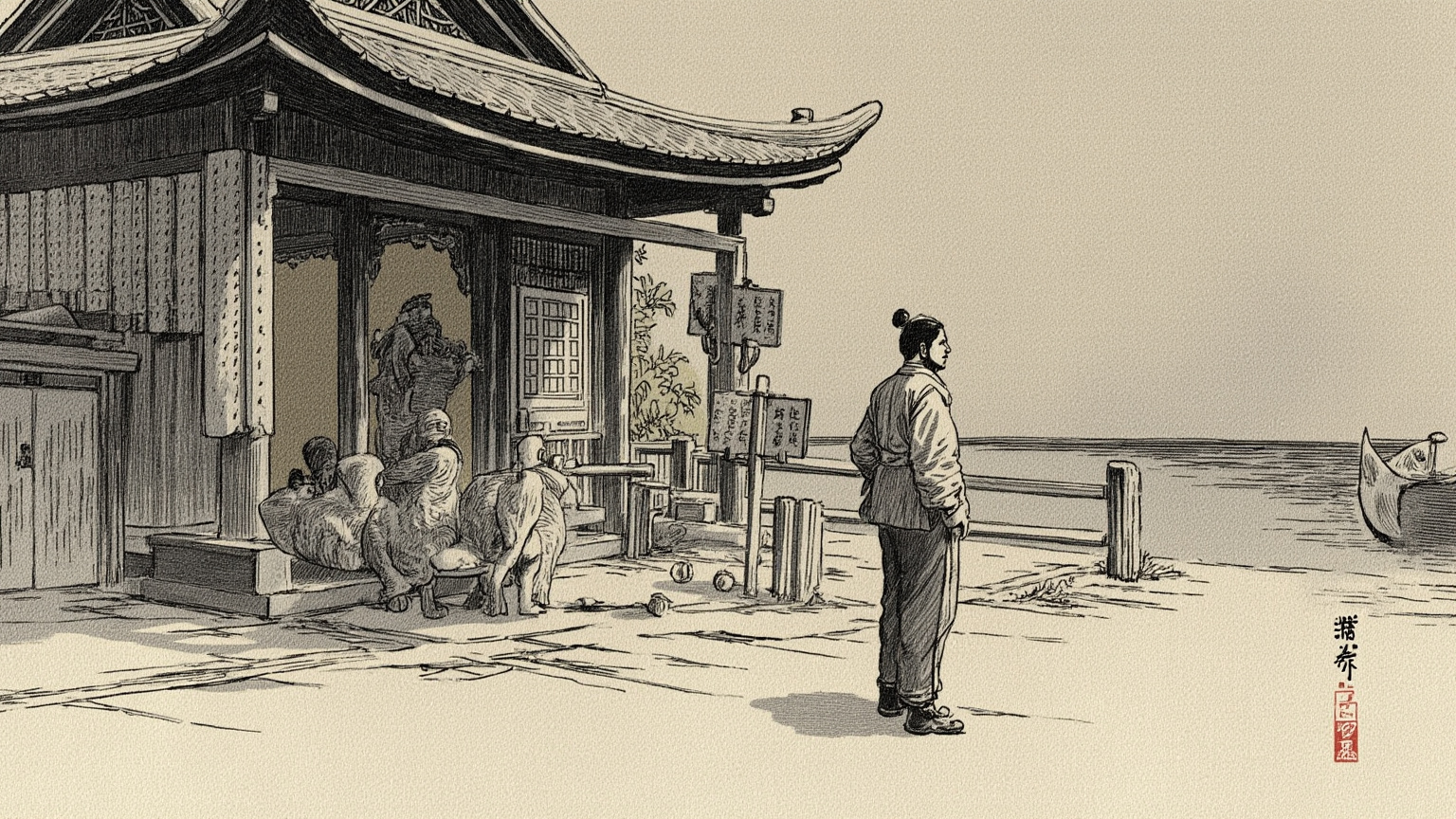
He would not sell the house — not for the silver, but for the pride in his throat and the bones of his forebears.
梁天来不卖——不是舍不得银子,是咽不下这口气,也是舍不得祖业。
金句 · 第二回 · 硬颈梁天来
The villain, Ling Guixing, is a wealthy man of Panyu and, by birth, a relative of Liang Tianlai's. A fortune-teller's idle remark — your family's feng shui is pinned down by the Liangs' stone chamber — is all it takes to send him spiraling. At his side is a strategist named Ou Juexing, also called Zongkong, who supplies nothing but poison: dig up the ancestral graves, cut down the trees, choke the fish ponds, tear down the wall, and when one scheme fails, reach for the next. Ling's own maid and his wife beg him to stop, and both hang themselves in despair. Not even the blood of his own household is enough to make him quit.
Two more people cannot be left out. One is Zhang Feng, a beggar who tips Liang Tianlai off in time to save his life, then takes the stand to testify for the Liangs, and is branded by the corrupt court as a man settling a private grudge and tortured to death with the ankle press, right there in the courtroom. That single death, added to the Liang family's eight, is where the nine lives of the title come from. The other is Kong Dapeng, the imperial commissioner sent down from the capital, who works the case alongside Judicial Commissioner Chen and eventually clears the Liangs' name. That is the whole world of the book laid out: a clan on one side, the machinery of the state on the other, and caught between them a countryman who will not bow and a pack of killers who will not let go.
IV. Feng Shui Ignites: One Idle Remark, Eight Lives
Where does the fire come from? From a single sentence.
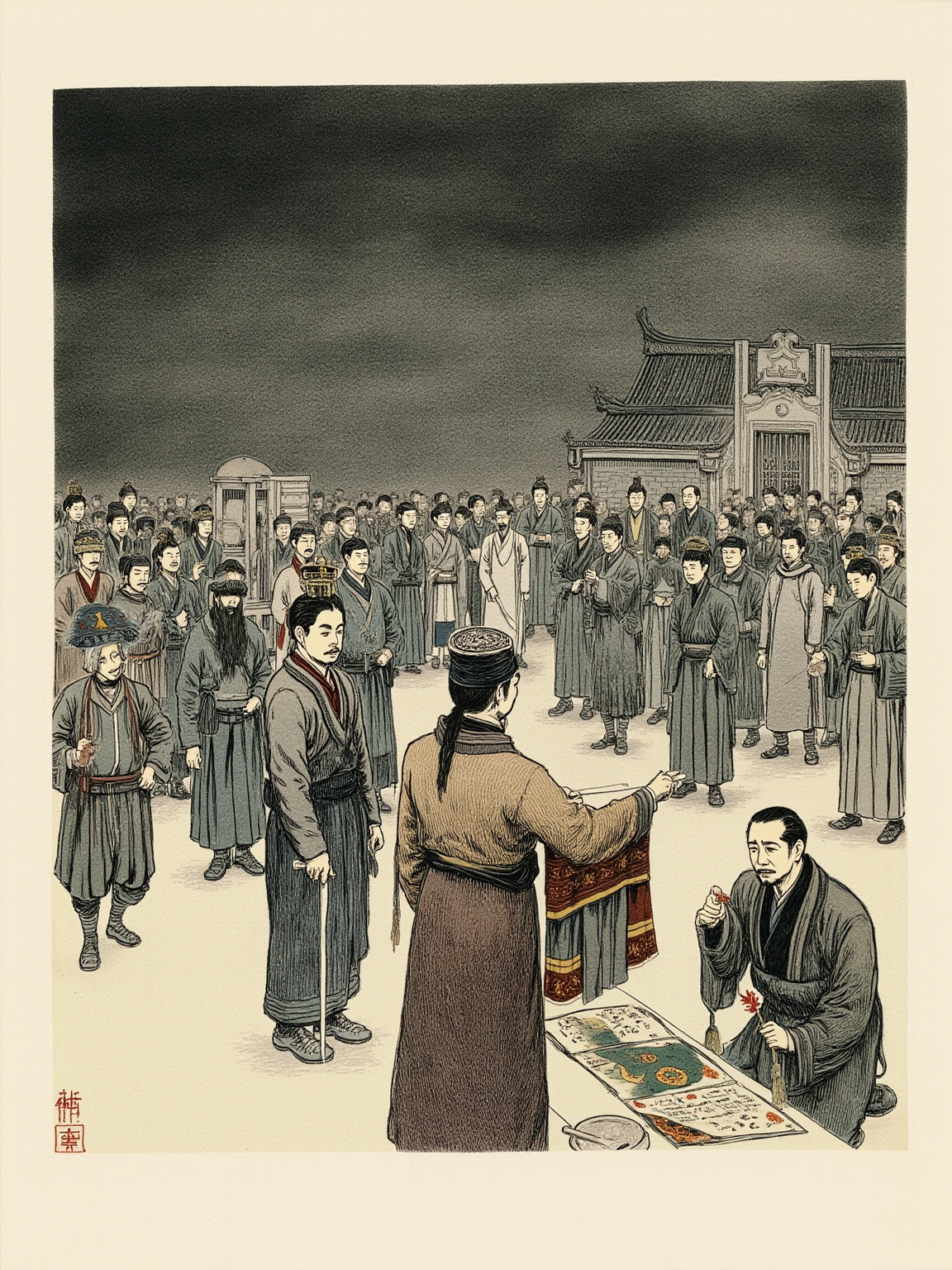
The diviner's idle word became the hinge on which eight lives turned.
算命佬一句闲话,竟做了八条人命的由头。
金句 · 第三回 · 风水起祸
Ling Guixing has failed the examinations again and again, and the failure sits in him like a stone. A fortune-teller counts on his fingers and hands him an answer: that stone chamber in the Liangs' ancestral house is blocking the star of literary fortune that belongs to the Lings. Ling Guixing believes it. He tries courtesy first, comes to the door offering to buy, and Liang Tianlai refuses. He brings the local government in to lean on him, and Liang Tianlai still refuses. His pride will not let the matter go, and his money cannot force it, so the resentment starts to ferment.
Wu Jianren's real interest here is not superstition itself but what a man does once he believes it. A rich man who has settled on an explanation has only one move left: make the obstacle disappear. Ou Juexing's entrance turns superstition into conspiracy. What he hands Ling Guixing is not another fortune-telling session but a set of blueprints: dig up the ancestral graves first, then cut down the trees, then choke the fish ponds, then tear down the wall. Every step is vicious, every step is technically legal, and every step leaves Liang Tianlai with no one to complain to.
V. The Night of Seven Corpses, Eight Lives
The night the Liangs burn is the night of a birthday feast. A gang of thugs breaks in under cover of dark, douses the house in oil, and sets it alight. Eight members of the household are reduced to ash before morning. The old coroners had a phrase for a case like this — seven corpses, eight lives — because one of the seven was a pregnant woman, so the count runs to eight. That is the bill the Liang family pays in a single night. Liang Tianlai himself is not home when it happens, saved only because a beggar boy named Zhang Feng got word to him first.
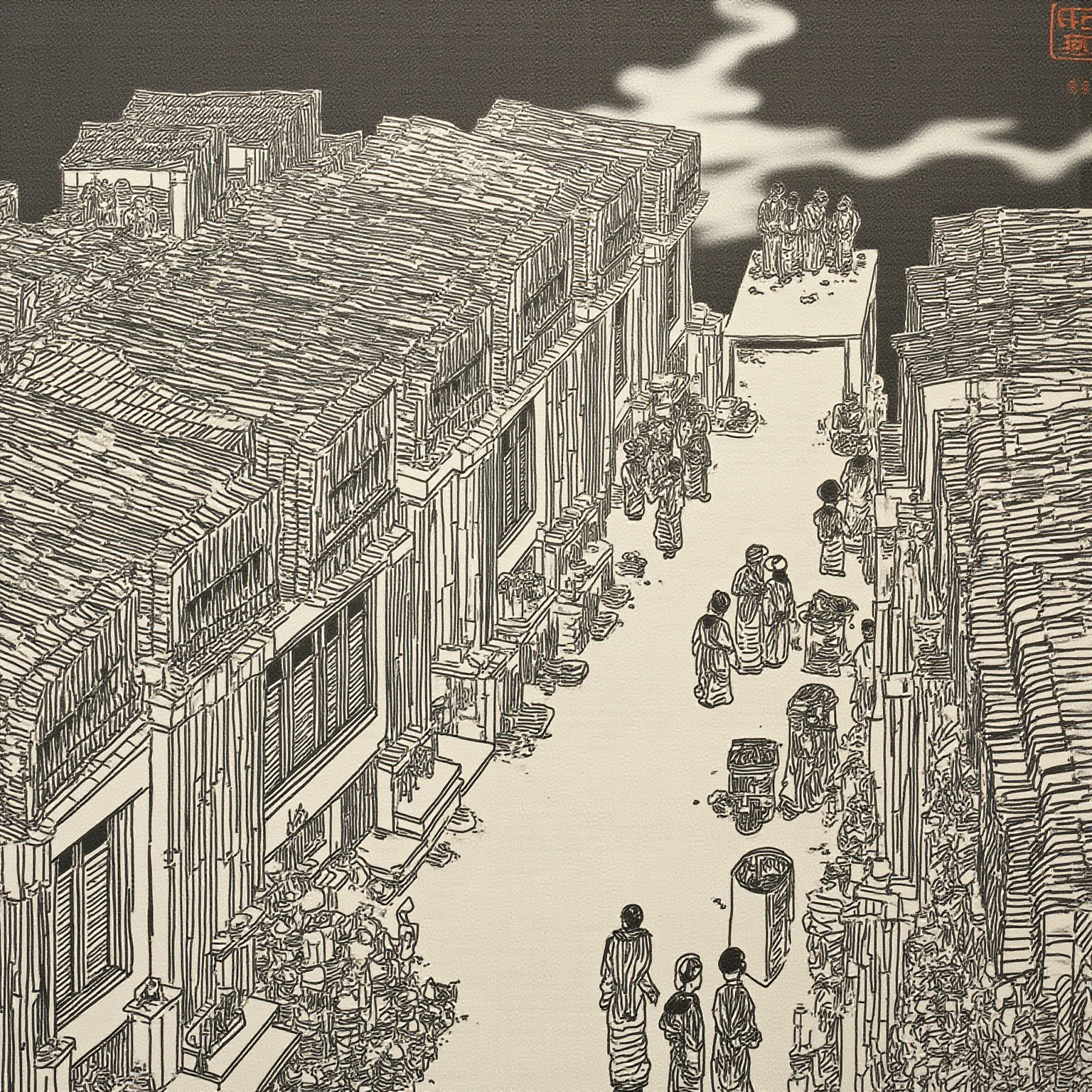
Here is where the craft bites: Wu Jianren does not build your sympathy for the Liangs first and reveal the killer after. He puts the fire and the deaths in chapter one and sends you forward carrying a single question — who did this? Only once the suspense is fully wound does he double back to lay out the old grudge between the Liang and Ling families. That is a move borrowed from the Western detective novel. He wraps it in the trappings of chapter fiction, still opening with the old formula, ‘now, as the story goes.’ Underneath, though, the skeleton is already modern.
VI. Nine Lives in Court: An Officialdom Money Can Move
Liang Tianlai takes his case to the authorities. From the county to the prefecture, to the provincial judicial office, to the governor's court, he climbs the ladder one rung at a time.
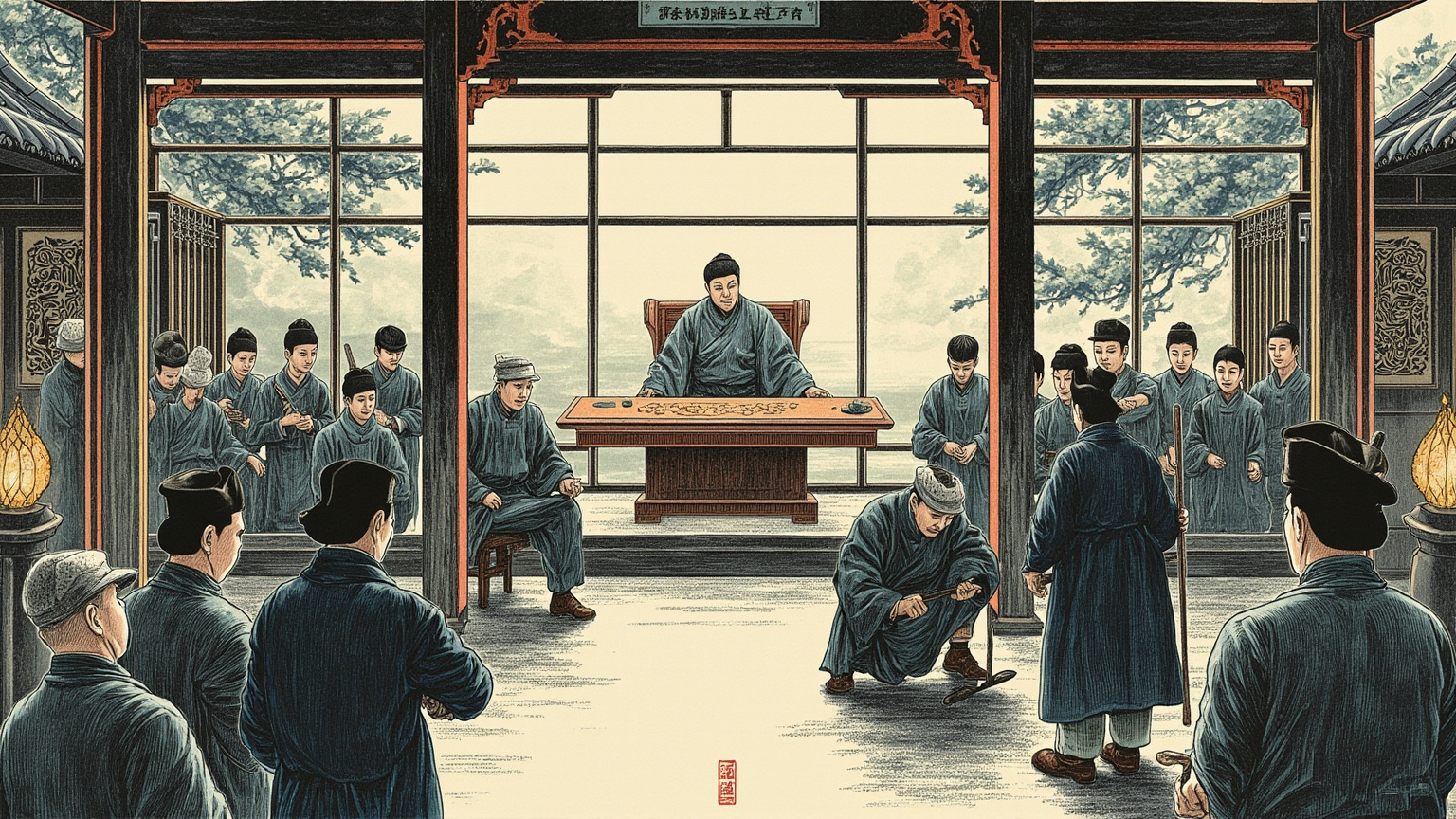
At every step upward, silver had gone before him; at every step, justice turned away.
每一级告上去,银纸都先他一步到了堂上。
金句 · 第二十三回 · 公堂九命
His real opponent is not Ling Guixing so much as the stacks of silver notes behind him. The Panyu magistrate breaks open the stone chamber to ‘examine the evidence,’ then rules against the Liangs; they appeal to the prefecture and lose there too; the judicial commissioner's office and the governor's court both rule against them in turn, and at every rung the Lings have already paid to be there first. Magistrate Huang is just the most visible link in the chain. What Wu Jianren is describing is a structure — an officialdom bought and paid for from top to bottom, not any one bad man.
What is unbearable to read is the scene of Zhang Feng's testimony. He opens his mouth to speak, and the corrupt magistrate declares he is settling a private grudge, then tortures the confession he wants out of him. The torture does not stop until Zhang Feng is dead, crushed in the ankle press in open court, in front of everyone. A man who stood up to testify for the Liangs is gone, just like that — the absurdity and the despair of that moment carry more weight than any adjective could add. His death, laid on top of the Liang family's eight, makes nine. That is where the title comes from: not exaggeration, but an actual count of the dead.
VII. North to Petition the Throne, South Comes the Commissioner
Guangdong has nothing left to give him. Liang Tianlai has one road left: go north alone, all the way to the capital, and petition the emperor directly.
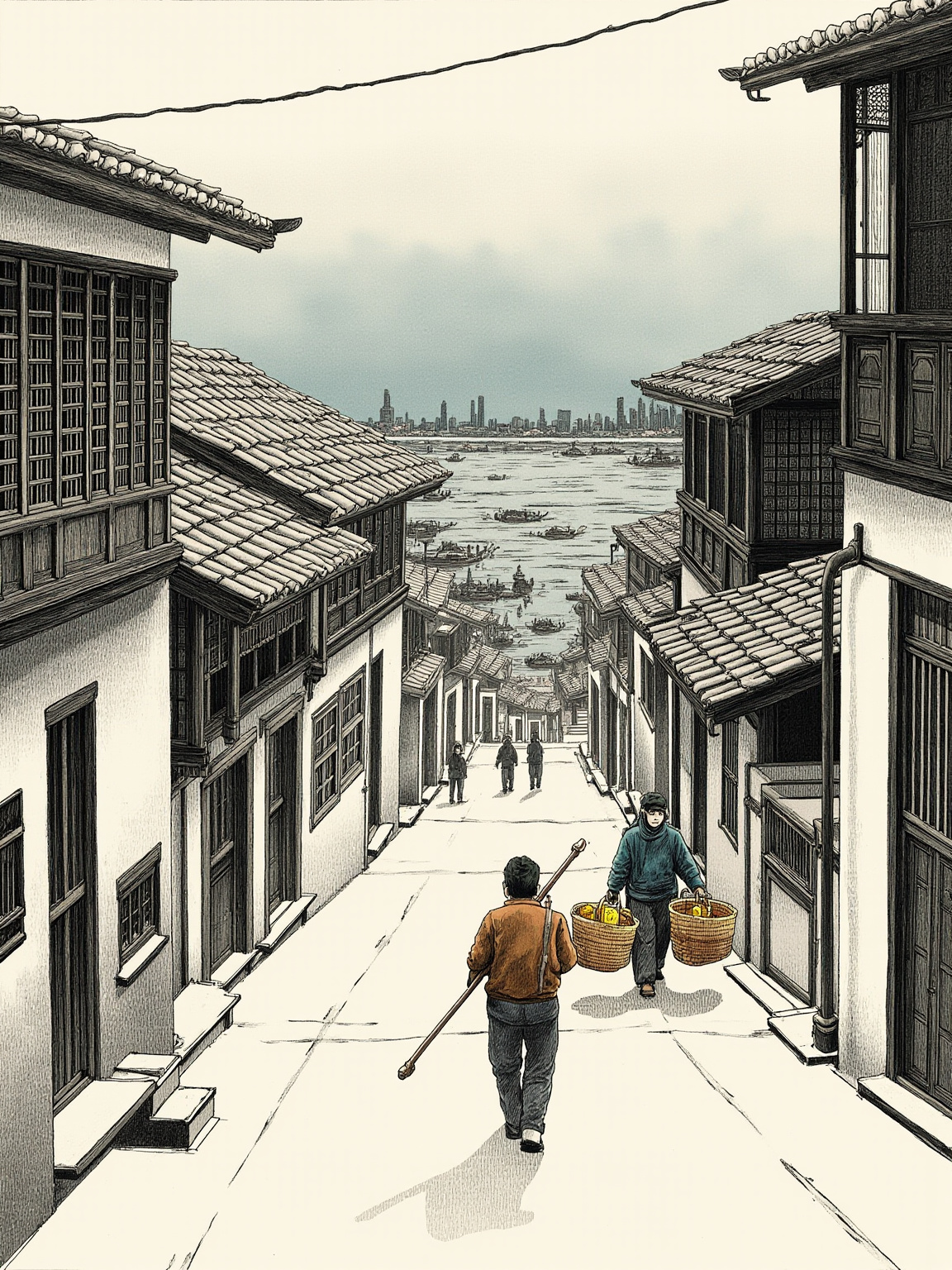
The road to the capital was long, and every league of it was hunted ground.
进京的路千里万里,每一程都有人等着动手。
金句 · 第三十一回 · 北上告御状
The road north is full of killers the Ling family has paid to hunt him down. Wu Jianren spends little ink on the chase itself; what he is after is not a martial-arts pursuit but the plain fact of an ordinary man with nowhere left to turn inside a broken system. The Yongzheng Emperor sends the commissioner Kong Dapeng south, and Judicial Commissioner Chen investigates alongside him, openly and in secret. Kong Dapeng holds real power in his own right, doubling as governor-general of the two Guangdong provinces, which is exactly why he can move the whole of Guangdong's officialdom. A monk named Donglai, working quietly inside the governor-general's own staff, lends his help as well. A civil official and a monk, one working in the open and one in the shadows — together they are finally able to overturn a case that had sat unresolved for years.
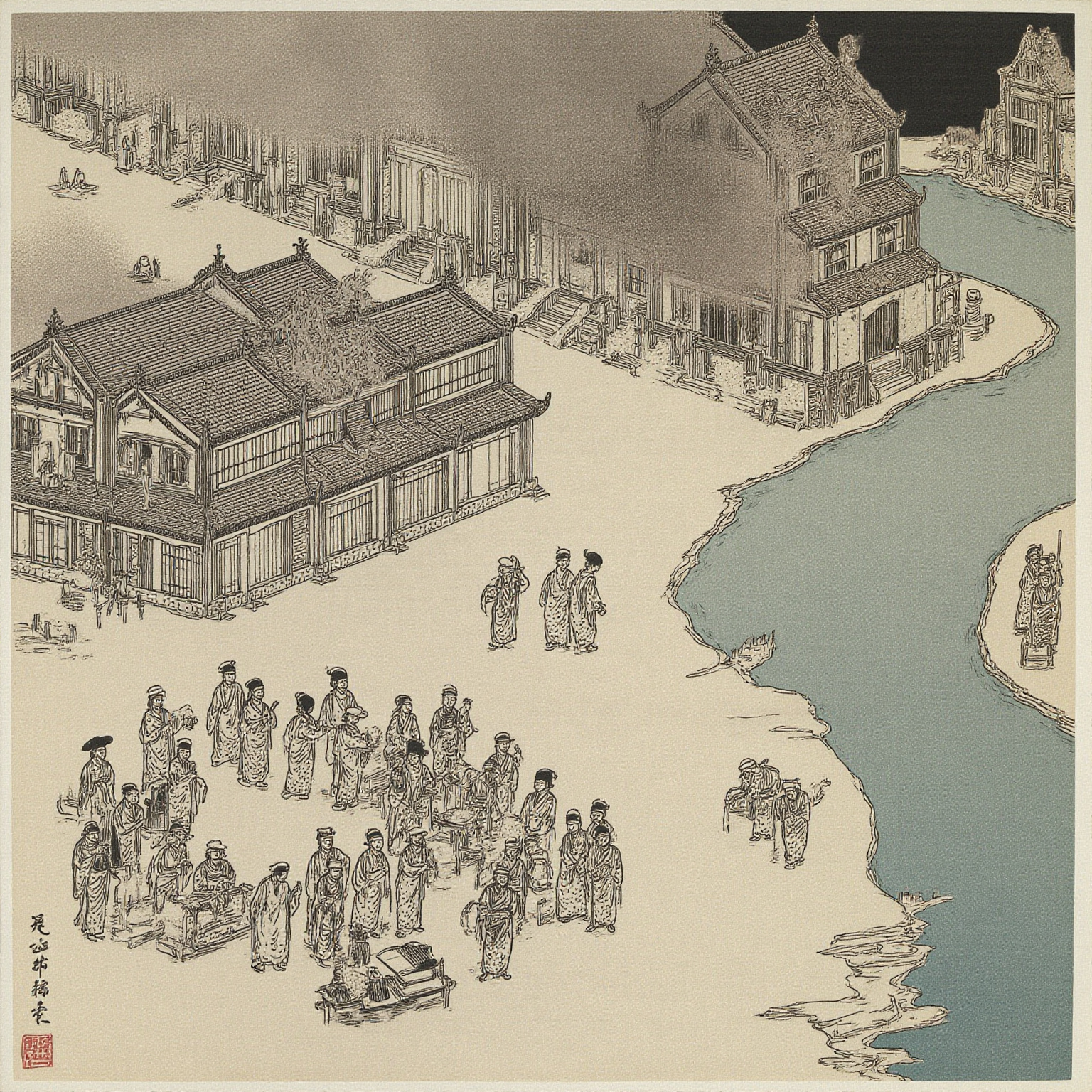
In the brightest of reigns, the darkest of cases — this was the ledger he had come to settle.
最清明的一朝,最黑暗的一桩讼事——他北上,为的就是把这本账算清。
金句 · 第三十六回 · 钦差南下
The ending holds no surprises: Ling Guixing and Ou Juexing are brought to justice, the killers are put to death, the officials who took bribes are caught one after another, and the Liang family's name is cleared. This is exactly the part critics keep returning to. Wu Jianren stages the darkest lawsuit imaginable inside what he insists was the most enlightened of reigns. The Yongzheng Emperor comes out of the book wise and blameless; every fault belongs to the corrupt officials below him. It is a way of attacking the present by dressing it as the past: he is going after the officialdom of his own day, while still leaving the emperor of his own day some face. Reformist criticism, and carefully restrained.
VIII. Where It Actually Earns Its Reputation
The first thing is structure. No one has managed to overturn Hu Shi's verdict — ‘the most tightly structured of all the old Chinese novels.’ Across thirty-six chapters, it burns first and explains after: flashback, several storylines running side by side, suspense wound as tight as it will go. Almost nothing in late-Qing chapter fiction had done this before. The scholar Guo Yanli traces this trick of opening on dialogue back to a French detective novel then newly translated into Chinese, The Serpent's Coil. A writer from Guangdong took the skeleton of the Western detective novel and fitted it inside the flesh of chapter fiction, and did it cleanly.
The second thing is what he chose to write about. He builds the novel on a real Guangdong murder case, sitting right at the intersection of clan loyalty, feng shui, examination ambition, and money, the exact pressure points of late-Qing Lingnan life. A fortune-teller's remark can cost eight lives not because the fortune-telling is accurate but because someone is willing to believe it. The courts reject petition after petition not for lack of evidence but because money outweighs evidence. Wu Jianren writes both of these truths down to the bone.
IX. Why Read It Today
It is not a psychological novel; its characters are not carved out along modern lines. It is not a strict detective novel either — deduction is not where its strength lies. Its strength is structure, is spectacle, is the sheer stubbornness of a writer determined to get the whole story straight. Most readers are stopped in their tracks first by that flashback opening: the fire in chapter one is one of the rare scenes in late-Qing fiction that grabs you by the collar before the story has even properly begun.
X. What No Guide Can Give You
But the flesh and blood of Nine Lives, a Strange Wrong you have to go and read for yourself. The wet heat of the Guangdong countryside — the courtyard of a wok-eared house, the ancestor tablets in a clan shrine, the smell of cane pulp around a sugar mill, the boats of the Tanka moored along the water — a guide can only hand you the nouns; on the page they come with a smell attached. And there is the rhythm Wu Jianren buries inside those thirty-six chapters: the fire arrives first, the reckoning comes after, and every chapter ends like a hard shove from behind. That feeling of being shoved forward as you read only exists in the original. Knowing the plot in advance makes the text more worth reading, not less, because this time you are reading for how it is told, not only for what happens.
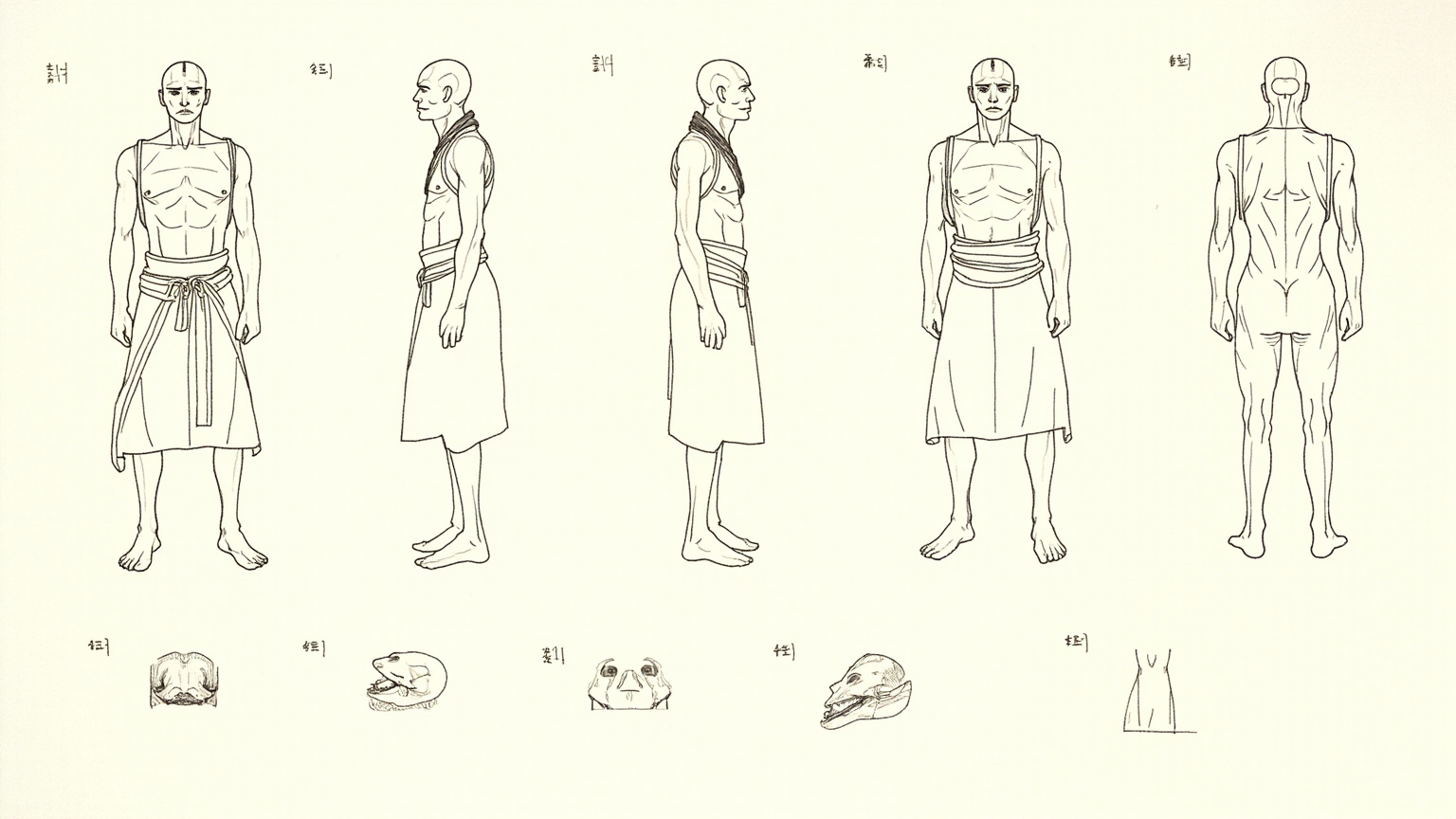
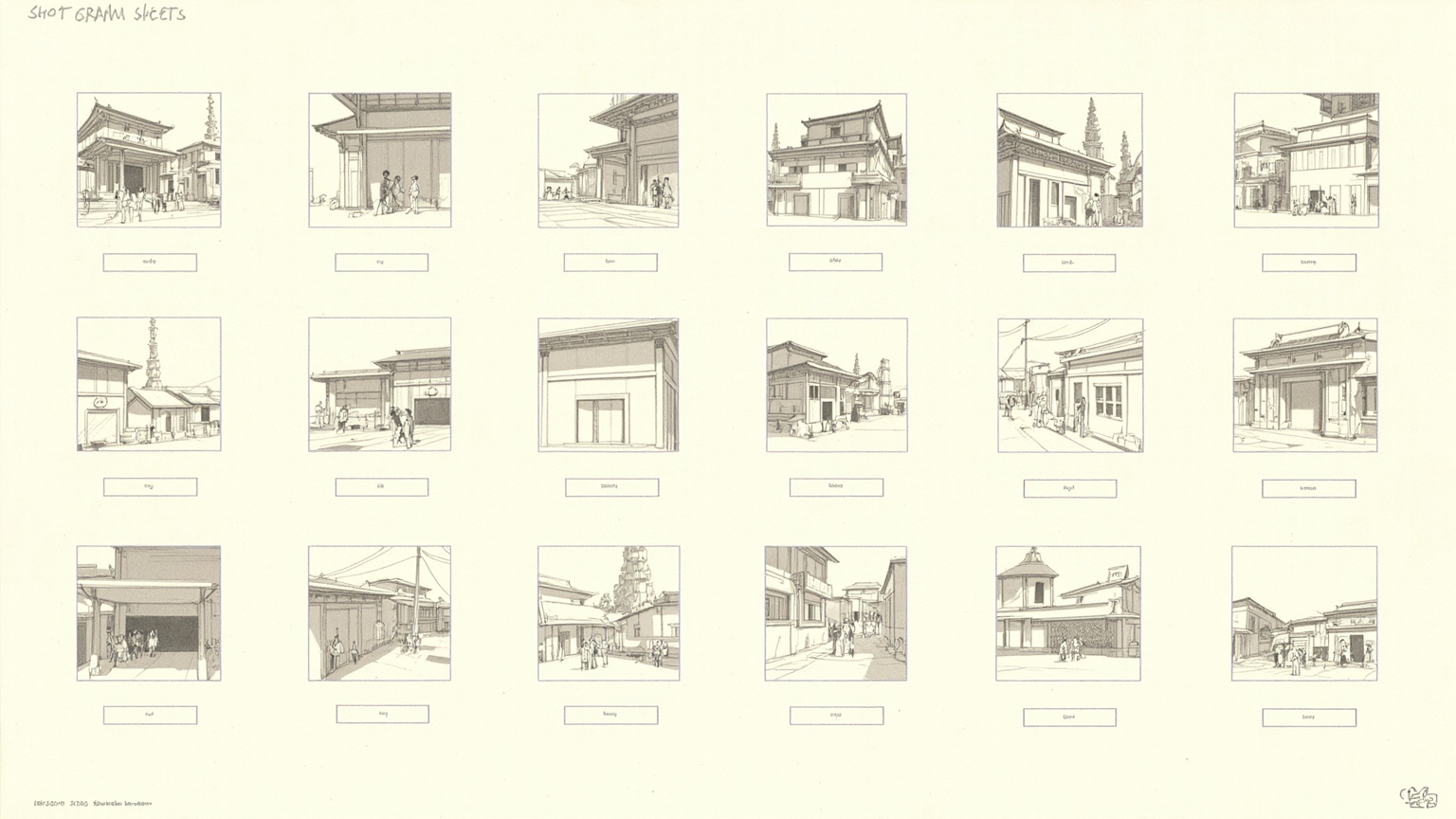
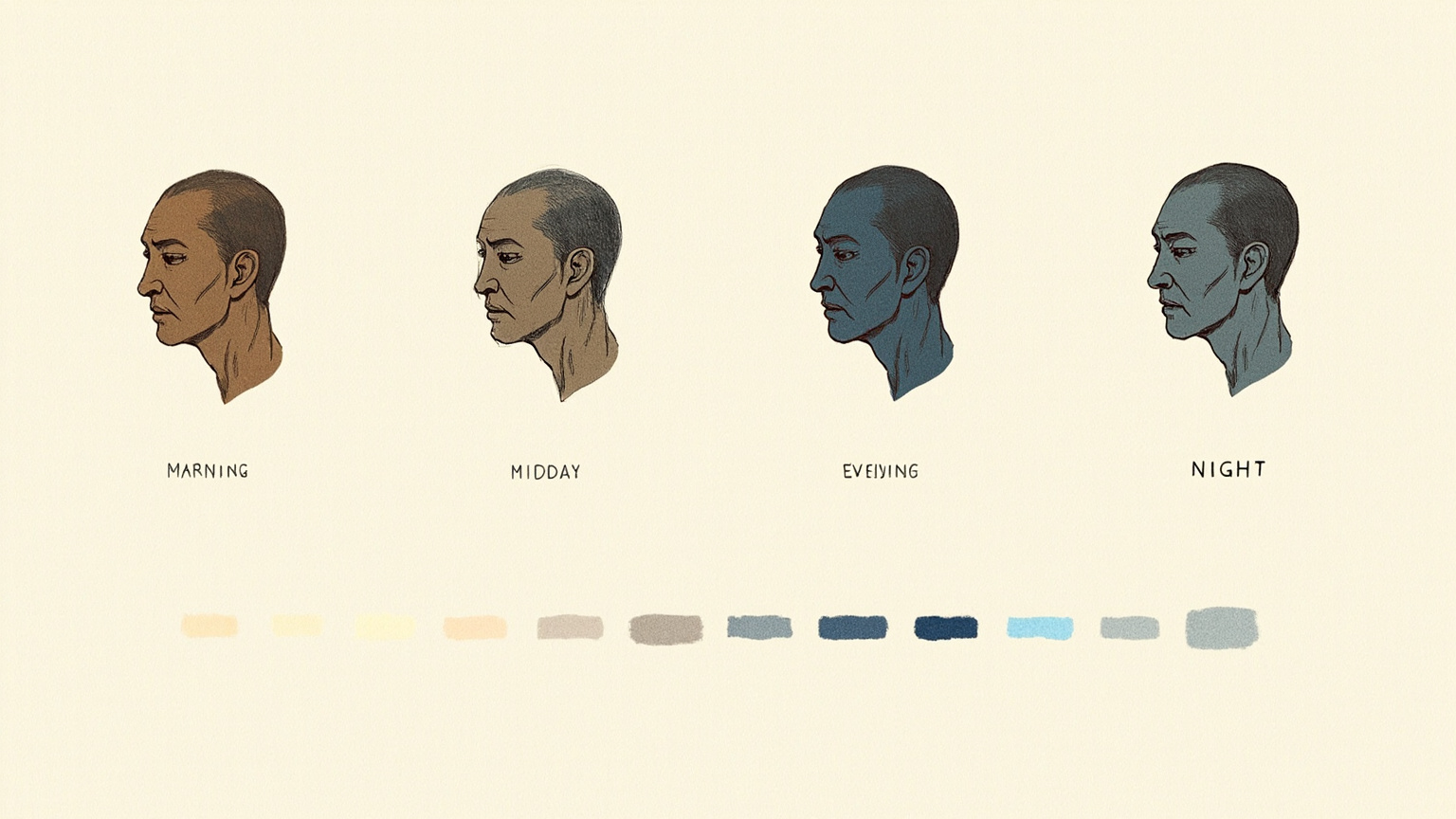
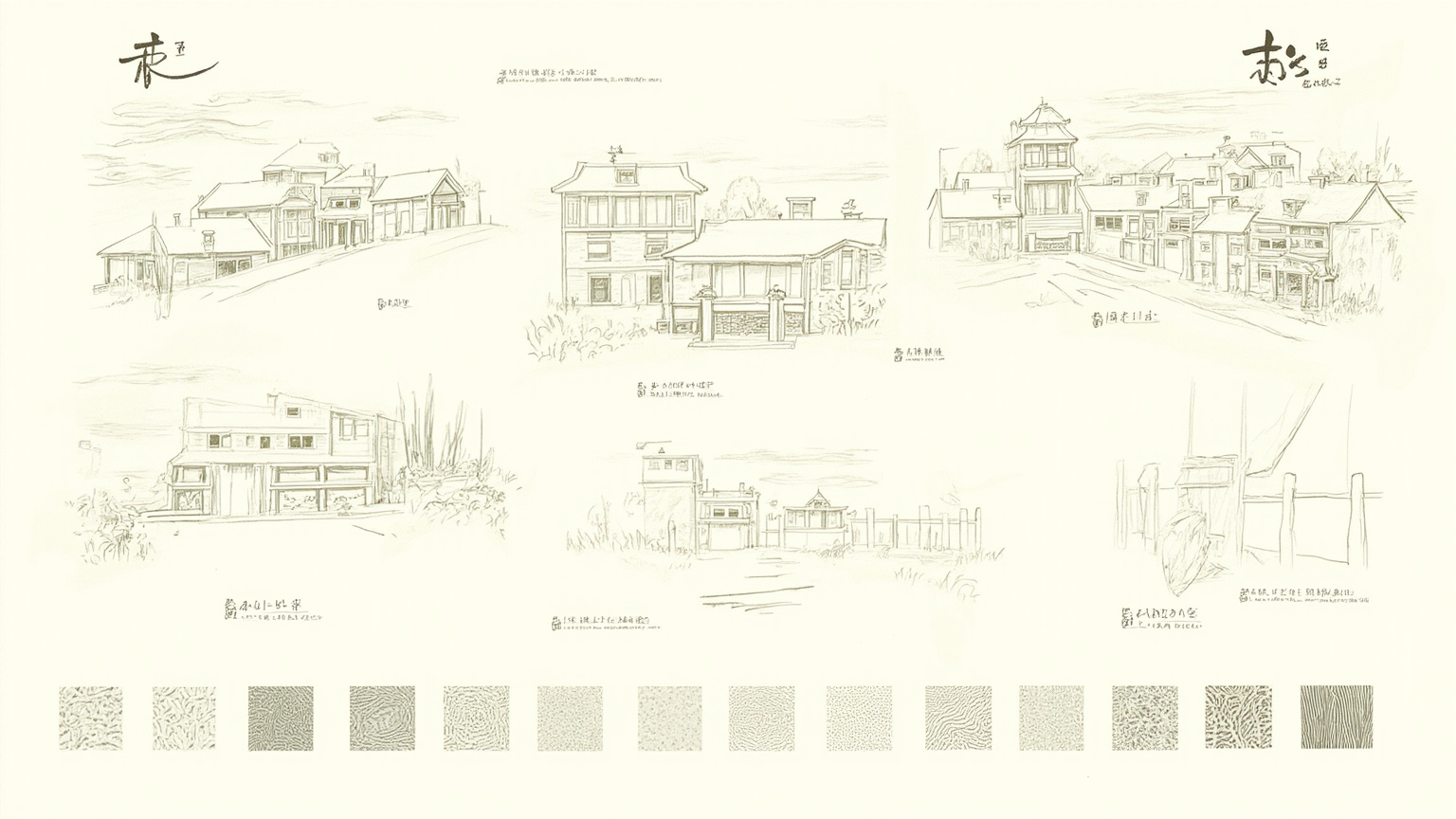
Art Direction4 plates
Before the guide was written, this book got a visual foundation — every illustration you just read grew out of it.