Kalila and Dimna (Kalilah wa Dimnah / The Fables of Bidpai / Kitab Kalila wa Dimna) · Companion Guide
卡里莱和笛木乃
一头无辜的公牛死在狮窟议事厅,构陷他的豺狼被从城墙最高处摔下——伊本·穆加法笔下最锋利的宫廷寓言,忠臣死于谗言的原型。
Opening
An innocent bull dies in the council chamber of the lion's den. His body is still warm when the jackal who framed him is thrown from the top of the city wall and comes apart on the stones below. This happens one evening sometime in the eighth century, inside a book called Kalila and Dimna — twelve hundred years later, George Orwell is still using the same skeleton to build Animal Farm.
Two jackals serving as the lion's counselors sounds like a fairy tale. Open the book and you find that every fold of the plot in that den — the suspicion, the false testimony, the last words before execution, the body thrown from the wall — is a rehearsal for every human court that came after. The book predates Orwell by twelve hundred years, Reynard the Fox by five hundred, and the frame story of the Arabian Nights by a full generation.
What This Book Is
Kalila and Dimna took its final form around 750 CE, set down by a Persian-Arab man of letters named Ibn al-Muqaffa'. He came from an old Persian family that had converted to Islam, moved through Basra, Kufa, and Baghdad, and reworked an Indian original into Arabic prose. None of it was his invention. The stories trace back to the ancient Indian Panchatantra, said to have been compiled for a prince by the sage Vishnu Sharma; in the sixth century the Sasanian physician Borzuya translated it into Middle Persian; more than a hundred years after that, Ibn al-Muqaffa' rendered it into the Arabic text we now read, folding in a good number of Persian and Arabic fables of his own along the way.
Three translations, three civilizations, one core of stories — the relay itself is the book's most hidden metaphor. A book about how stories carry other stories has itself been carried this same way.
The Cast of the Lion's Den
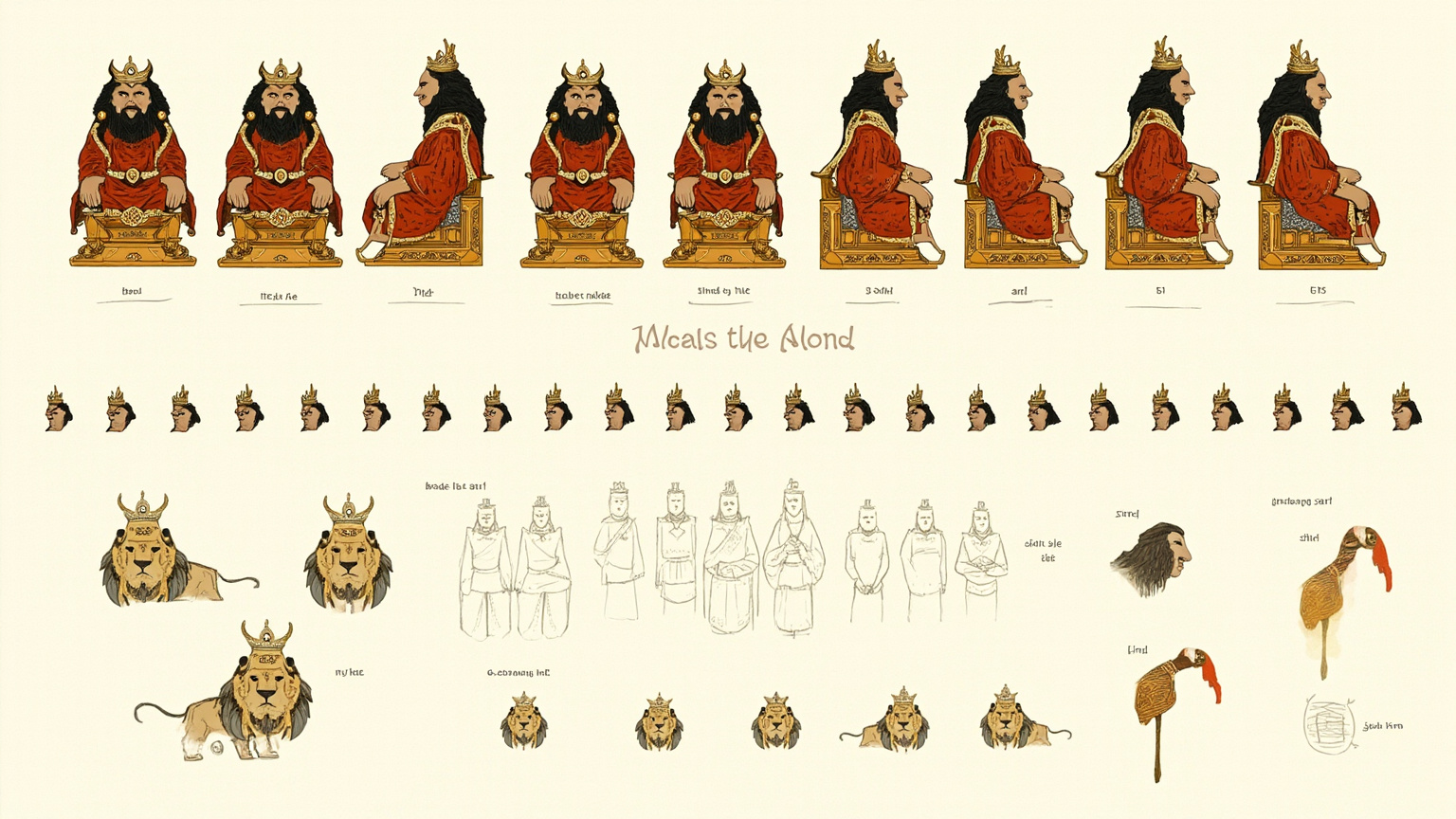
Dabshalim, the lion king, rules the den. He has a real sense of justice and a taste for good argument, but nothing clouds him faster than favor and flattery — the whole book is a portrait of a ruler this easy to steer. Dimna is the most dangerous schemer in the story, burning with ambition and never short of words, willing to use his own kinsman as a piece on the board to get ahead. Kalila, his older kinsman, has seniority but not appetite: he sees the whole game and refuses to move a piece in it, telling Dimna again and again not to stir up the waters of the court.
Shanzabeh the bull arrives with a caravan, new to the den — huge, strong enough to match a hundred oxen, and harmless by nature. He is an innocent favorite, and that is exactly what makes him a problem for Dimna. Ilqamar the crow leads the birds and specializes in one kind of story: what happens to loyal servants. The monkey plays the court fool, and his particular trick of feigned madness carries the book's sharpest irony — everyone else wears a mask, and only the fool is allowed to tell the truth.
Why Dimna Wants a Bull Dead
The story turns on a frame-up. The lion king has taken a new liking to the bull Shanzabeh, imposing and immensely strong, and it is starting to outshine the two jackal counselors. Dimna cannot stand it. Kalila tells him to leave it alone. He has already begun setting the trap.
First he works on the king, whispering again and again that there is treason in that bull's eyes. Then he produces a small animal willing to swear as an eyewitness — the setup is precise, each whisper laying ground for the next piece of false testimony. Shanzabeh does speak. He protests, frightened, but every word he says runs straight into a script that was written before he opened his mouth. The king believes the version he has already heard a dozen times, and Shanzabeh's defense becomes a struggle against a net that has already closed. Honest strength is smothered by a case built too carefully to answer. This is where the book's central motif, the death of the loyal servant, takes its full shape.
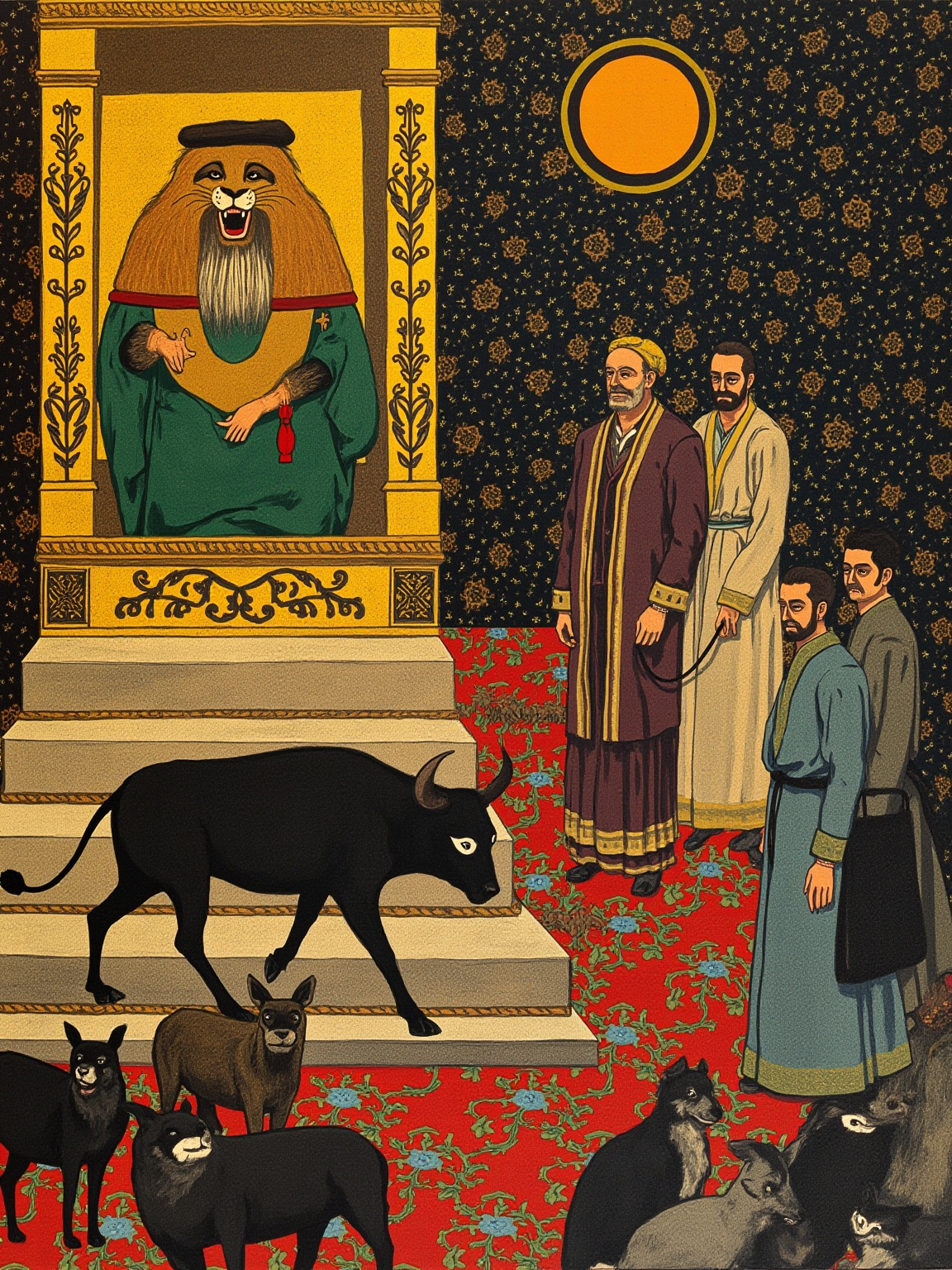
The king's ear is a throne room, and whoever sits in it rules the kingdom.
君王的耳朵,便是一座议事厅;谁坐进去,谁便统治这国。
金句 · 卷一 · 构陷之术
Here is the trick of it: the loyal servant is not cut down by a tyrant's own hand but worn away by a colleague's tongue. The king only signs his name. The blade is the mouth that sat across the table from him every day.
Last Words on the Wall
Once the truth comes out, the king is racked with regret and orders Dimna thrown from the highest point of the wall, his body left where it falls. Dimna's last request is to be allowed one final word of loyal counsel before he dies.
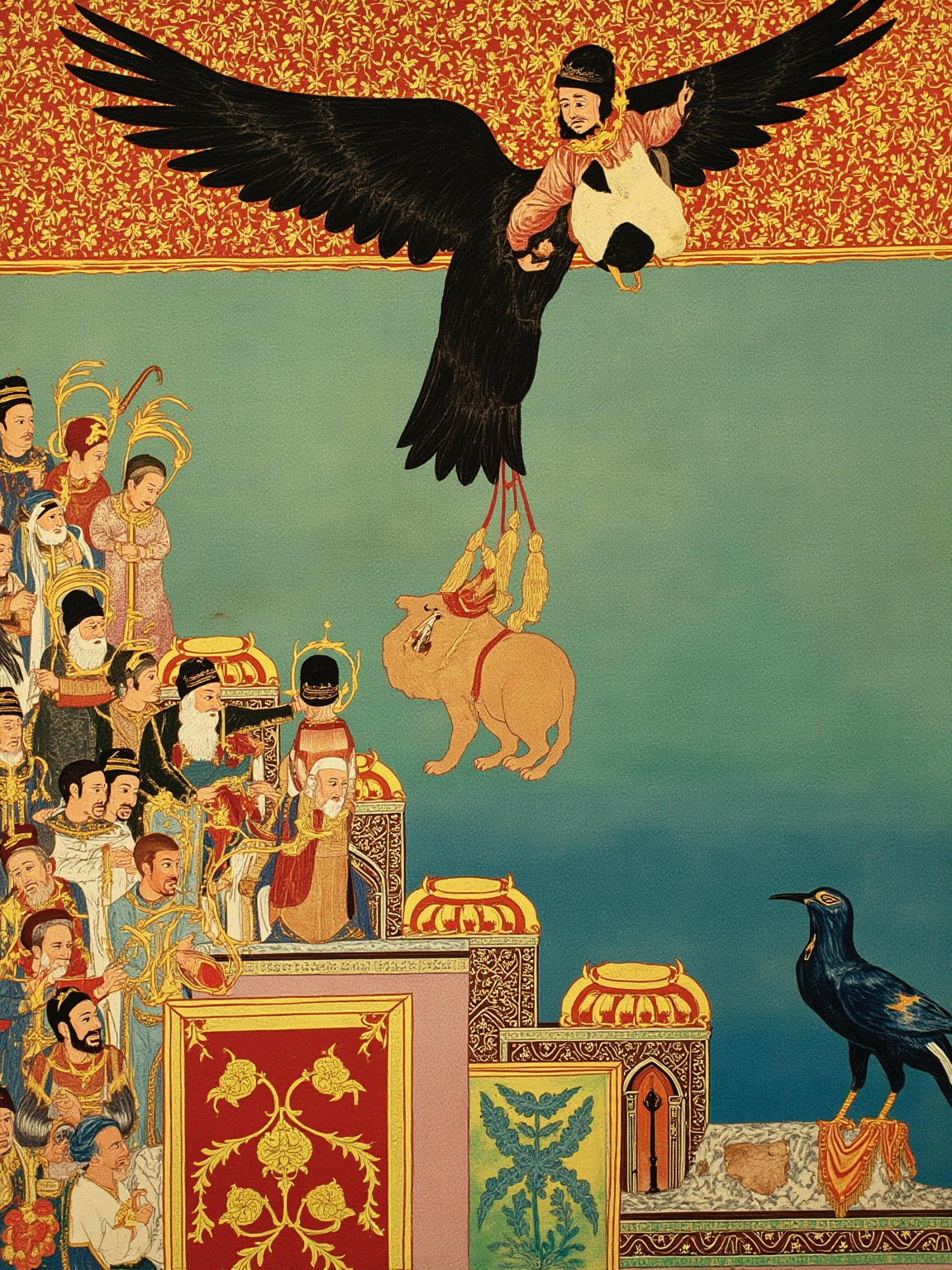
He asked but for one last word of counsel — the counsel that living men were forbidden to give.
他只求以最后一句忠言告别狮王——那正是活着的人被禁止说出的话。
金句 · 卷一 · 临刑遗言
Nothing is left on the stones below the wall, and in the council chamber another lecture on the danger of listening to flatterers has already begun. The whole court breathes an awareness that has come far too late.
The Other Side of the Bird Council
Books two and three bring in a new cast, but the subject has not changed: loyal servants and rulers who will not listen. Ilqamar the crow takes on the job of telling stories that might wake the powerful up, and he opens with two of the most famous nested fables in the whole book.
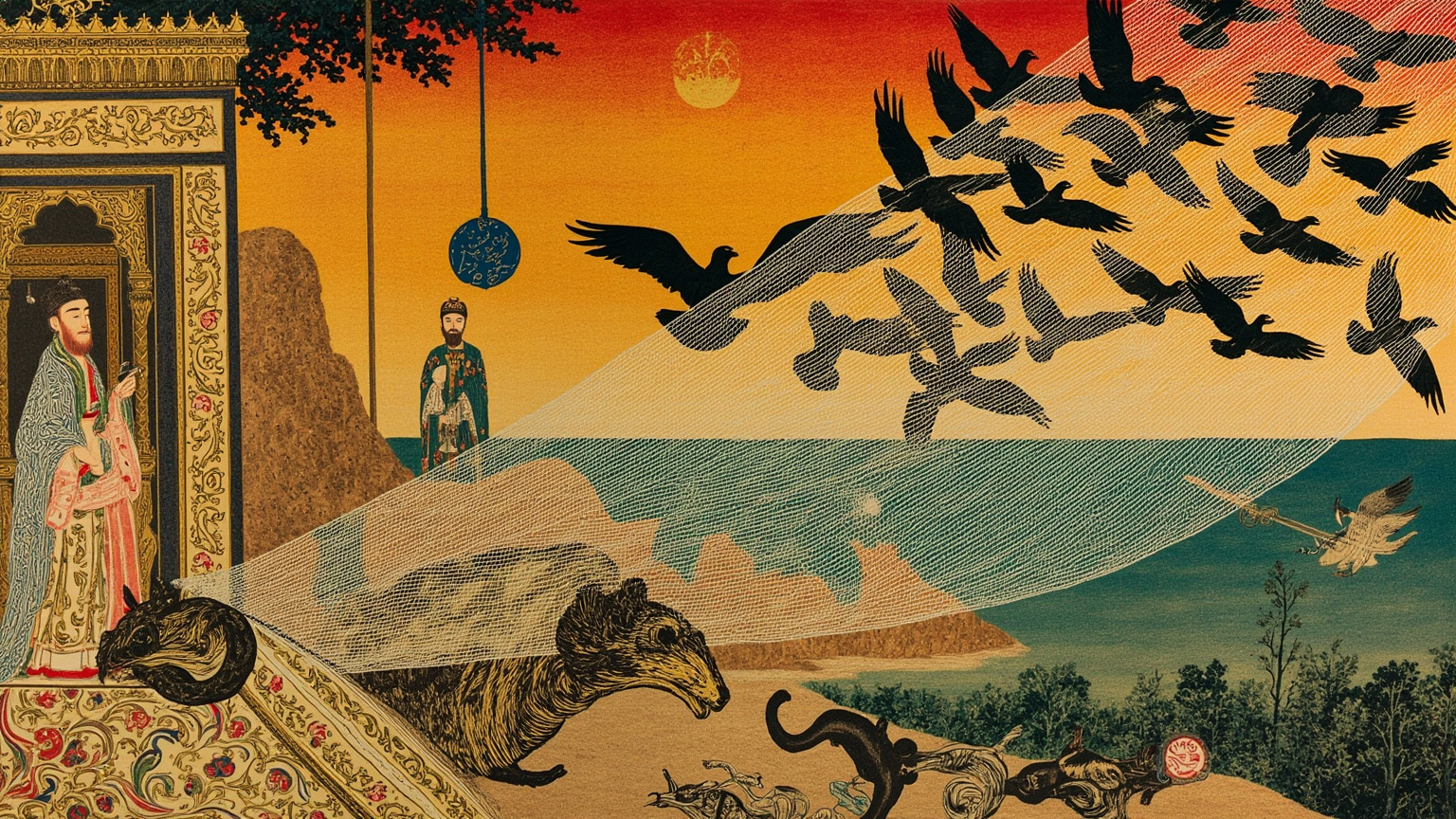
Lift the net together, or perish in it one by one.
合力同飞,抬走罗网;否则,一个个撞死在网眼里。
金句 · 卷二 · 鸽王与捕网
The first is the Dove King and the net. A flock of doves is caught under a hunter's snare, and in the panic every bird wants to bolt in its own direction, which would only kill them against the mesh. The dove king takes charge and tells them to fly together as one body, and the whole net lifts off the ground with them. It is the original parable of leadership in a crisis, and business schools are still teaching it a thousand years on.
The second is the jackdaws choosing a king. Another flock is trapped under a net, and one jackdaw announces that they need a king. So the birds pull one out from the hedge, a peacock, and install him with all the proper ceremony. The problem is that the new king is useless.
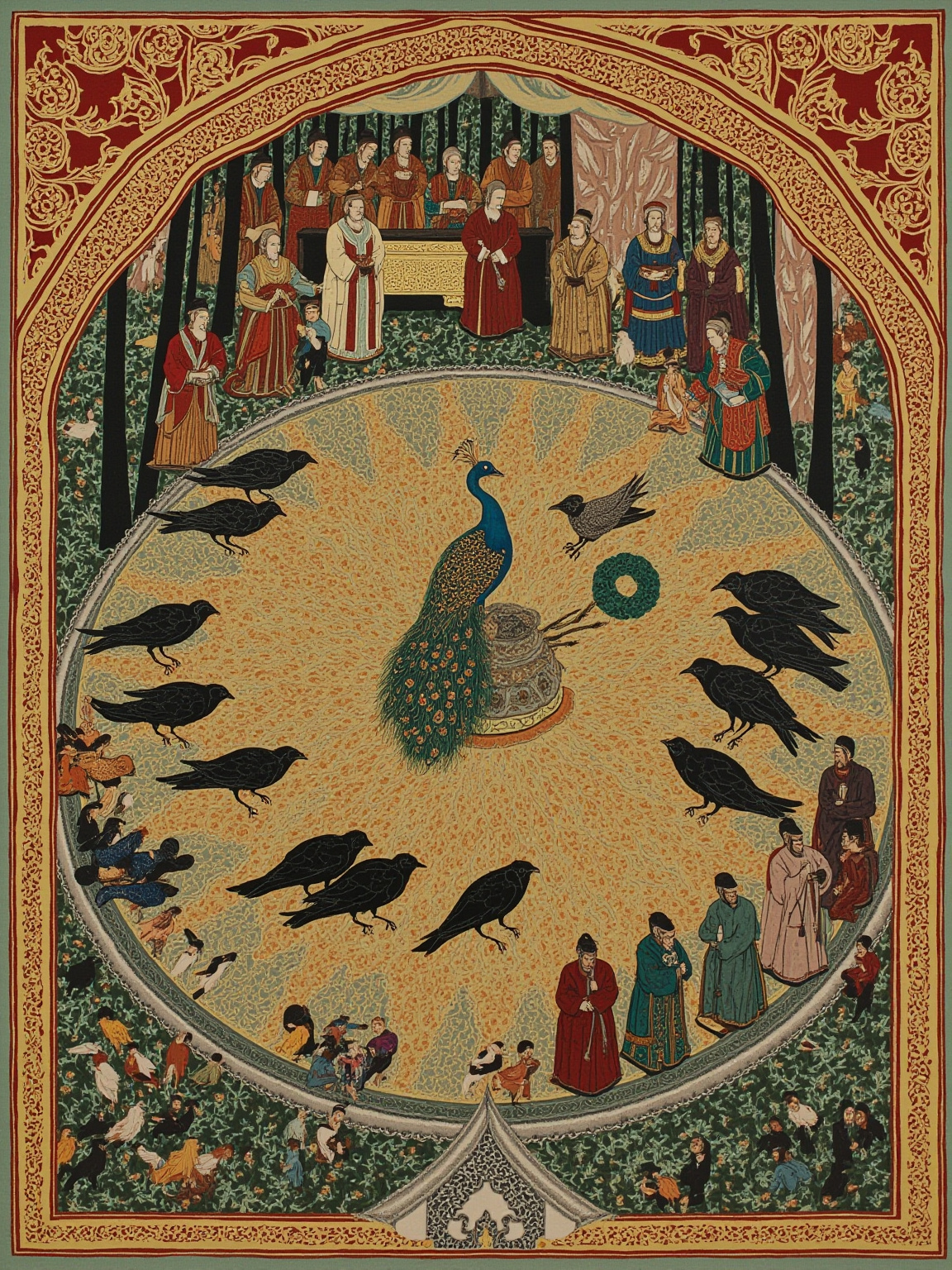
They crowned a king, and the king was beautiful — and useless.
他们立了一位国王,那国王仪表堂堂——却是个废物。
金句 · 卷三 · 穴乌选王
Ibn al-Muqaffa' takes the idea that political legitimacy is a performance and folds it into a bird story a few lines long, cleaner than any treatise on politics ever managed.
The Fool's Truth and Everyone Else's Mask
Books four and five turn toward self-cultivation and personal ethics, and the monkey takes center stage. This court clown speaks from behind a mask of feigned madness, and it turns out to be the book's sharpest register of satire. He tells the tale of the tortoise who dies trying to fly off with the wild ducks, the one about the monkey and the tortoise fighting over chestnuts, the one about the merchant who could tell real gold from fake. Each is short, and each cuts to the bone.
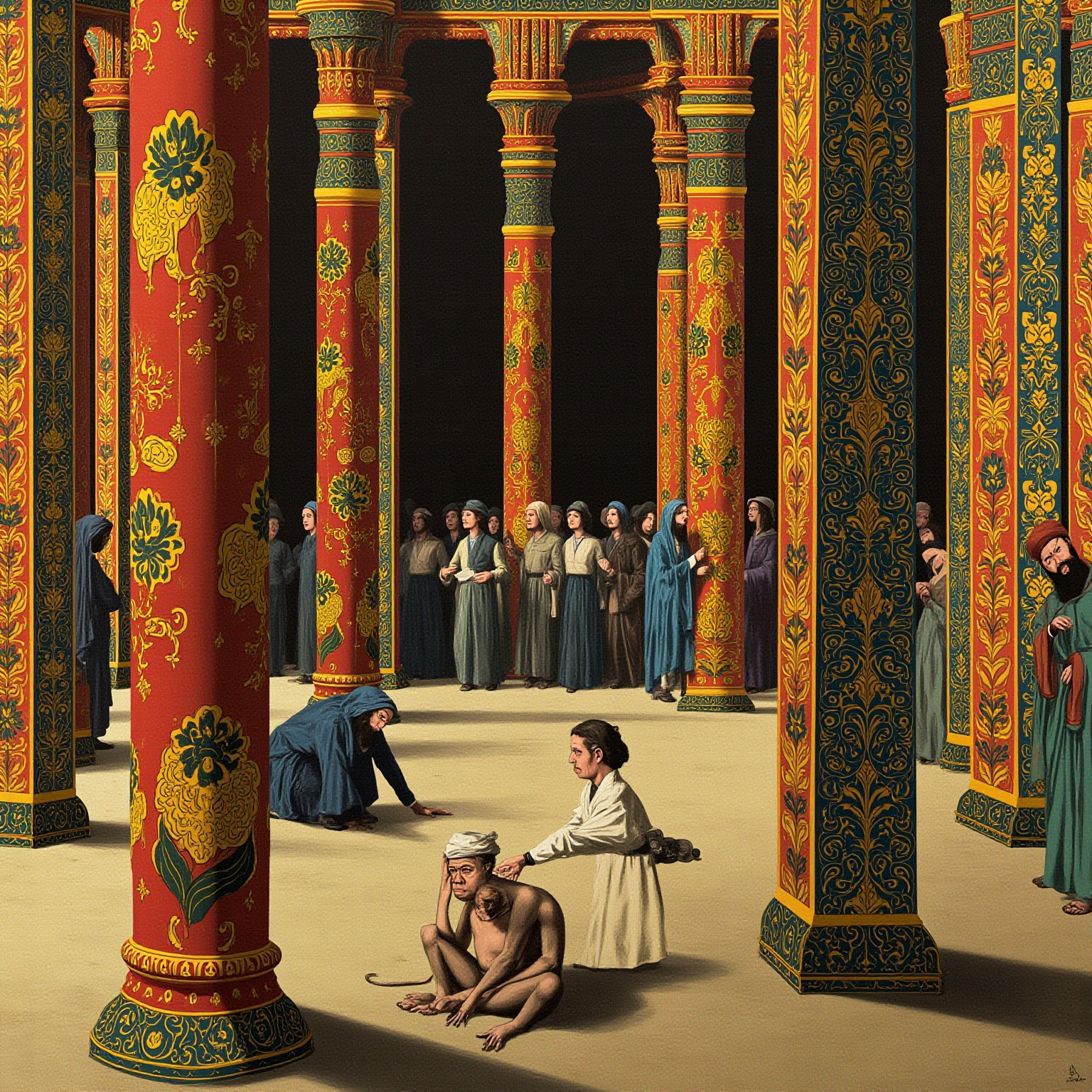
All men wear masks; only the fool is licensed to name what hides beneath them.
凡人皆戴面具,唯弄臣被特许念出面具底下的真名。
金句 · 卷四 · 弄臣的真话
Everyone else wears a mask, only the fool tells the truth. That figure runs from Ibn al-Muqaffa' down through the Ship of Fools in Western Europe, Shakespeare's court jesters, and the small animal in Aesop's fables that always blurts out the truth about the emperor's new clothes. It is more than a literary type. It is one of the oldest diagnoses of how power works: when everyone else must lie, the only person still allowed to speak the truth is the one permitted not to talk like a normal person.
The Author's Own Ending
Ibn al-Muqaffa' himself died early in the Abbasid period, said to have been executed on the caliph's order. The official charge was apostasy; the more believable story is that his writings mocking the powerful had finally cost him too much goodwill at court. He died for the book he wrote, in effect. A man who put down on paper that loyal servants die from slander ended up dying from slander himself.
The book entered the European rhetorical tradition through a twelfth-century Latin translation made in Spain, and then spread across Western Europe when John of Capua retranslated it from Hebrew into Latin in the thirteenth century. It is one of the earliest points where literature from the East enters European rhetoric, and it stands as an ancestor of every story-within-a-story technique that follows, in the Arabian Nights, the Canterbury Tales, and the Decameron.
What makes this book formidable is not that it describes court intrigue, but that it names a law: the loyal are not killed by tyrants, they are worn down by the mouths beside them — a law no one has managed to repeal in twelve hundred years.
Why Read the Original Text at All
A companion guide gives you the map. The text is the ground itself. What you cannot get around here is the texture of the storytelling. Open the passage where Dimna builds his case and you run into a voice that locks together clause by clause, almost airtight enough to pass for a legal brief. Turn to the page where the dove king persuades the flock to fly as one, and the rhythm changes completely, each line lifting the next like a prose poem. Turn again to the tail end of one of the monkey's fables, and he laughs to himself first, then turns the knife without warning, and the blade comes out from inside that laugh. A guide can tell you there is meat on these bones. The taste of it you only get by opening to the actual page.
Art Direction4 plates
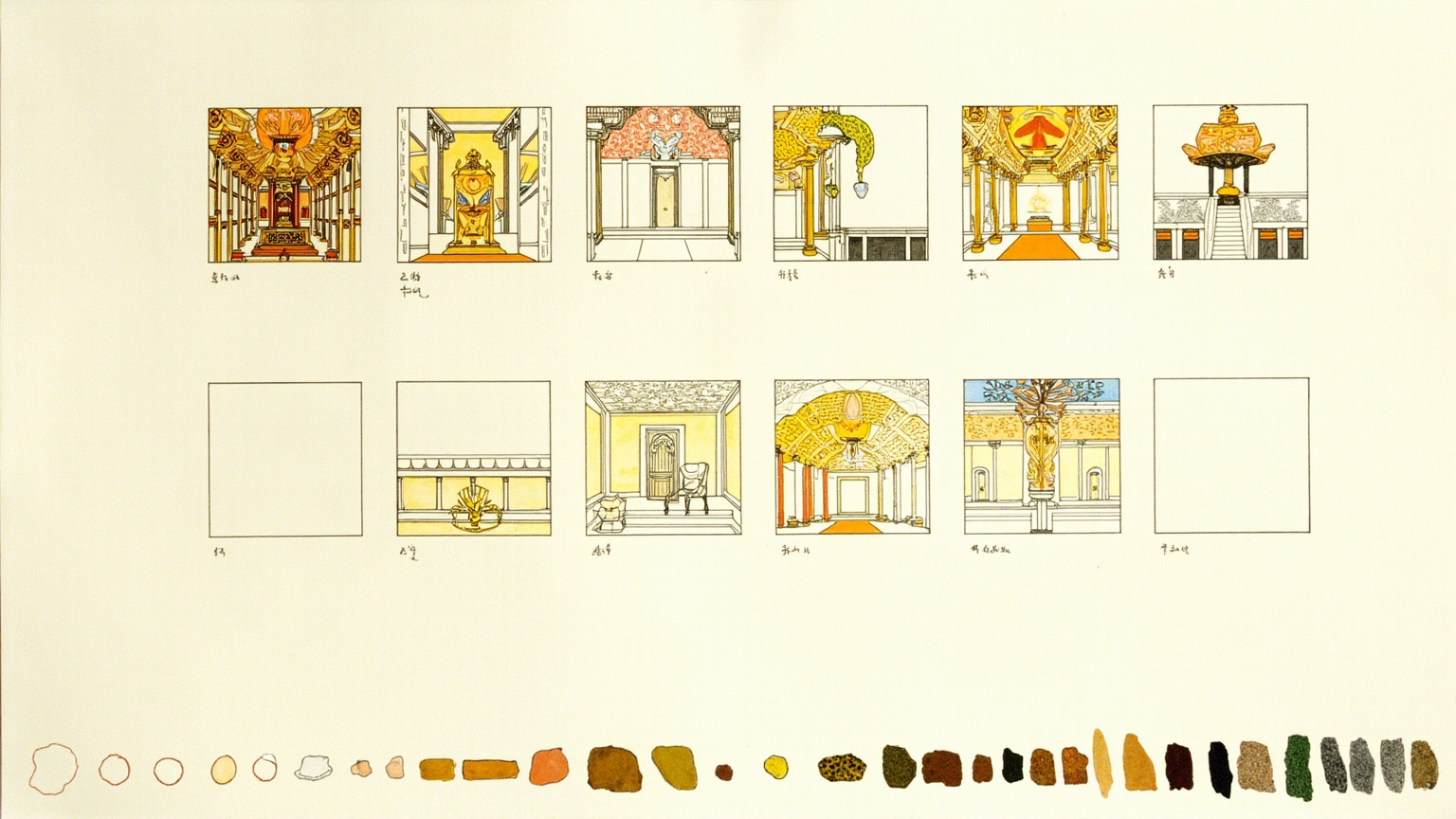
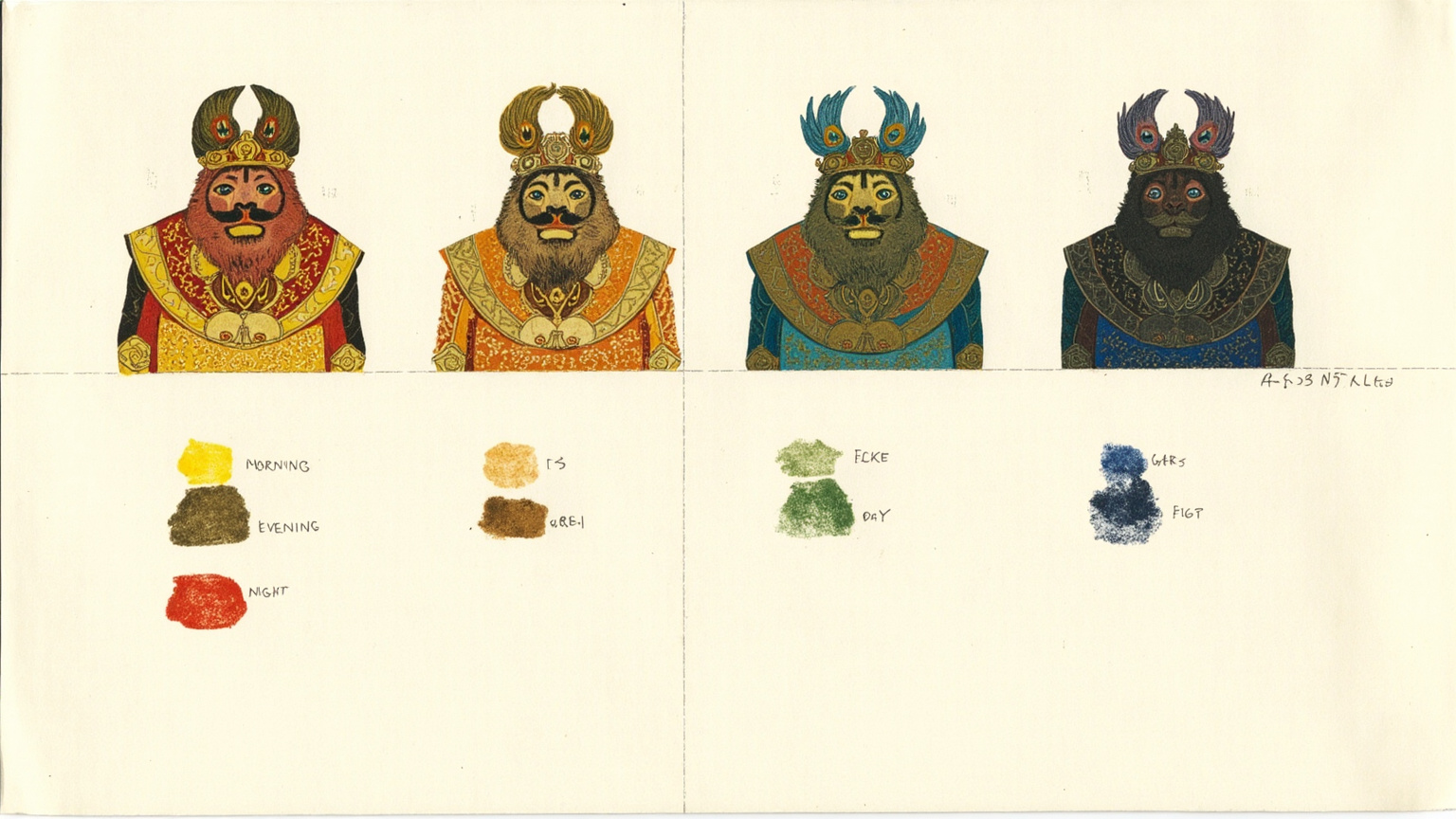
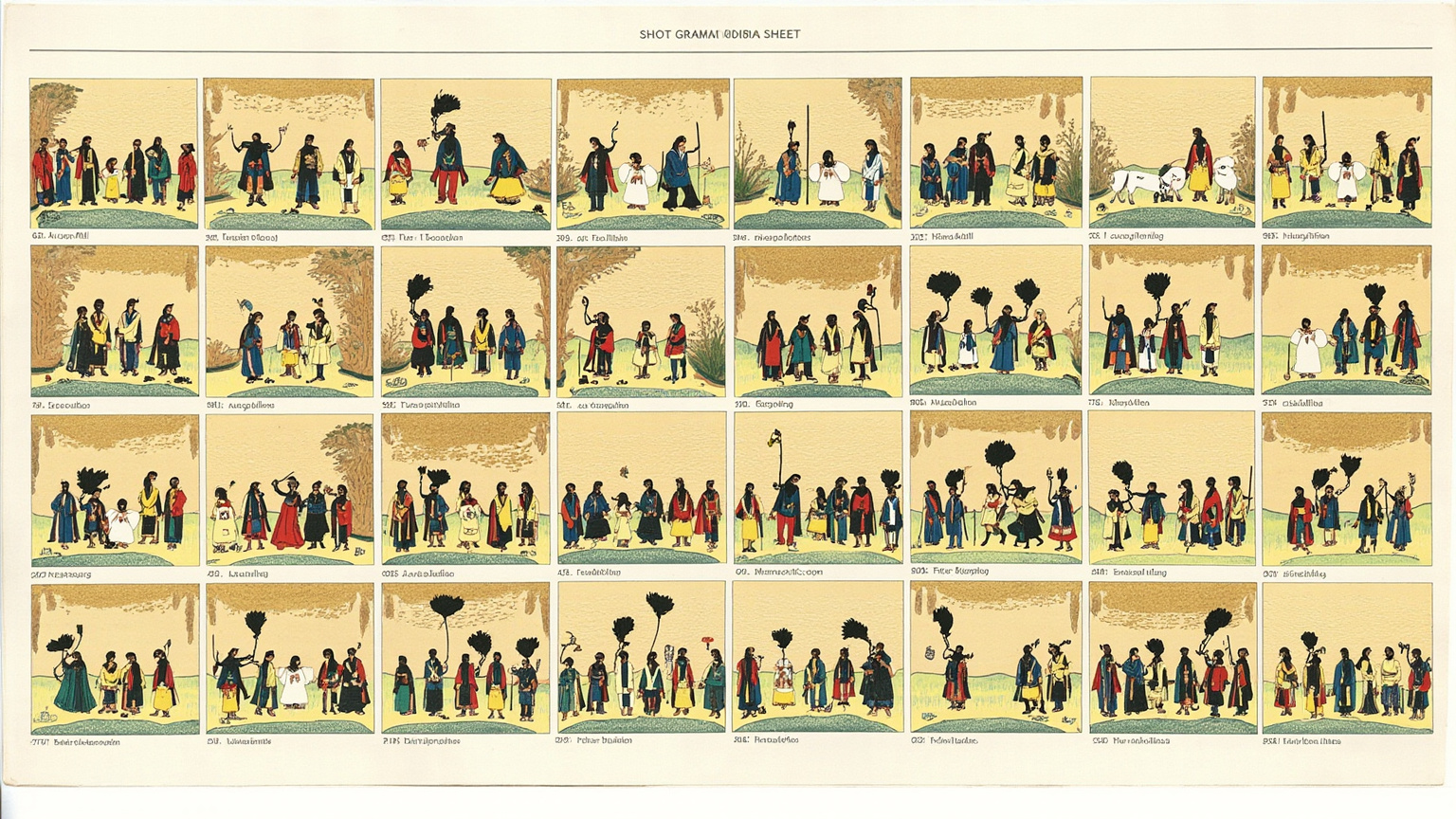
Before the guide was written, this book got a visual foundation — every illustration you just read grew out of it.