Kapalkundala (Bengali: কপালকুণ্ডলা) · Companion Guide
卡帕尔昆达拉
一个从未见过村子的少女,被从盐沼与红树林带进莫卧儿商镇的围墙庭院;一个旧人从阿格拉宫廷女扮男装归来,把她骗上了火葬场的祭台。
The opening image: on a sandbar, a sacrificial knife goes missing
The fog at the mouth of the Ganges hasn't lifted yet when a boat runs aground on a sandbar. The boatmen scatter, leaving a young merchant to spend the night alone on mudflats where wild animals roam. His name is Nabakumar, son of a merchant family from Saptagram, a trading town in western Bengal; he was on his way home from a pilgrimage to Gangasagar when the storm caught him. Stranded until morning, he runs into a wild-haired ascetic at the edge of the mangroves, who pins him down to offer him as a living sacrifice to the goddess. Then a girl comes out of the brush — bare feet on the salt mud, clutching the sacrificial knife she has just stolen from under the ascetic's pillow.
The girl is named Kapalkundala. She has never seen a village, never worn a sari, never worn an armlet; what fills her eyes is the sea wind and the wild fruit she picks and eats in the forest. And this is the girl who drags a merchant's son from Saptagram out from under a sacrificial knife. The image lays out almost the whole tension of the book at once: on one side a woman raised wild in the salt wind, on the other side courtyards, well-curbs, silk, and account books. Two different lights falling on the same pair of people.
What kind of book this is — one of the sources of the modern Bengali novel
The author is Bankim Chandra Chattopadhyay, who wrote Kapalkundala in Bengali in 1866, his second novel after Durgeshnandini. In the history of Indian literature, people remember Tagore, they remember Sarat Chandra; trace the line back one more step and it usually stops at Bankim — without him, the modern Bengali novel has no beginning. He was the first to make the novel, a form borrowed from Europe, actually work in Bengali, and Kapalkundala is the most widely read of his books: since 1866 it has been translated into English, German, Hindi, Gujarati, Tamil, Telugu, and Sanskrit, and adapted for the screen more than once.
In Bengali she carries two names — Kapalkundala before marriage, and by custom renamed Mrinmoyee after it. Within a few generations, the name Kapalkundala had itself become a fixed figure of speech in Bengali, used for women who do not belong to the human world, who will never flower on their own branch. That the name alone became a metaphor says enough about how much this book matters.
The characters, and two worlds
Lay the book flat and there are really only two groups of people: the wild island and the trading town. On the island side is the foster father, the Kapalik, an ascetic who lives among the mangroves and salt marshes and who, by his own logic, must offer a living person to the goddess; Kapalkundala is the foster daughter he raised in the forest with his own hands, a girl who has never seen a villager, and who runs through the whole book carrying two qualities — wildness and purity. On the trading-town side is Nabakumar Sharma, the young merchant of Saptagram; beside him is his sister Shyamasundari, one of the few people in the household who genuinely treats Mrinmoyee with kindness. Further out is Moti Bibi — Padmavati, the wife Nabakumar had married years earlier, who was cast out by his family the year her father converted to Islam, and who later took the name Lutufonissa at the Mughal court in Agra, rose to great power, then gave it up to come back and reclaim her former husband. One thread strings four people into two crossing tracks.
The author cuts the world cleanly in two. Kapalkundala's line runs through sea wind, sandbars, mangroves, places that never had a road. Mrinmoyee's line runs through courtyards, well-curbs, saris, armlets, the well-behaved human world. One world sits in the salt fog at the river mouth, the other inside the walled compound of a trading town. Between them there is room for exactly one bridge, and that bridge is the husband, Nabakumar himself — he is the one who has to carry his bride out of the salt fog and set her down beside the courtyard well.
How the plot runs: a boat opens it, a river closes it
Act one: a night on the wild island, and a stolen knife
By the moment Nabakumar runs into the Kapalik on the dune, the ascetic already has him pinned by the neck, the sacrificial knife resting at his knee. The girl who comes out of the brush is not there to help the ascetic — she takes the knife and drops it into a pool of salt water without a sound. The Kapalik lunges and finds nothing there. The sacrifice fails. It is the single most important scene in the book: a girl who says nothing turns the whole novel's direction with the plainest possible action. The writing is as clean as one cut through cloth — no interior monologue, no confession, just one physical act carrying the entire turn.
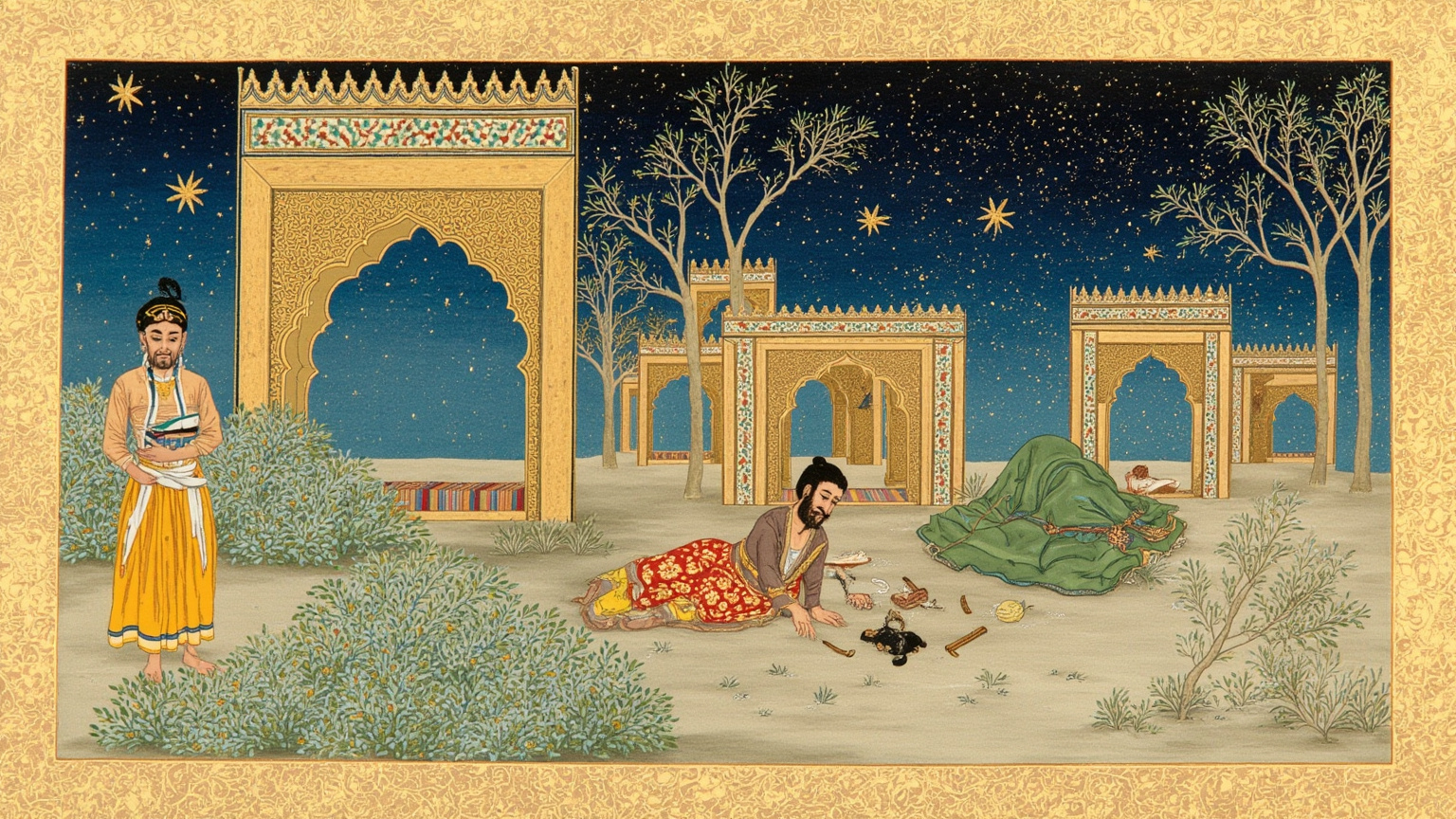
She had never seen a village; she had never worn a sari; she had never worn a bracelet. The sea-wind and the wild fruits of the forest were all her world.
她从没见过村落,没穿过纱丽,没戴过臂环;海风与林中野果,便是她全部的世界。
金句 · 第1章 · 沙洲上的少女
Next to enter is the village priest, Adhikari. The old man witnesses the two of them and marries them right there on the island — he holds firmly to a line that gets quoted again and again afterward: that for a woman, marriage is the only stepping stone to religion. At the time it sounds like a blessing. A few chapters later it sounds like a sentence. Adhikari is also the one who tells Nabakumar to take his bride away, out from under her foster father — a single cut that pulls the wild woman up by the roots from her own world and drives her into another one.
Act two: into the compound, jewels become alms
Something else happens on the road back to Saptagram: the caravan is attacked by bandits, and Nabakumar, almost in passing, rescues a woman being dragged off by the roadside. That woman is Padmavati, the future Moti Bibi. Once safe, she strips off all her jewelry and hands it to the newly married Mrinmoyee — the correct courtesy for a household of that standing, and also the seed of every betrayal to come. Mrinmoyee takes the jewelry, turns around, and gives it straight to a beggar on the road without a flicker of hesitation. It is a brutal touch — not because it proves she is kind, but because it shows she is simply not operating inside that logic of property at all.
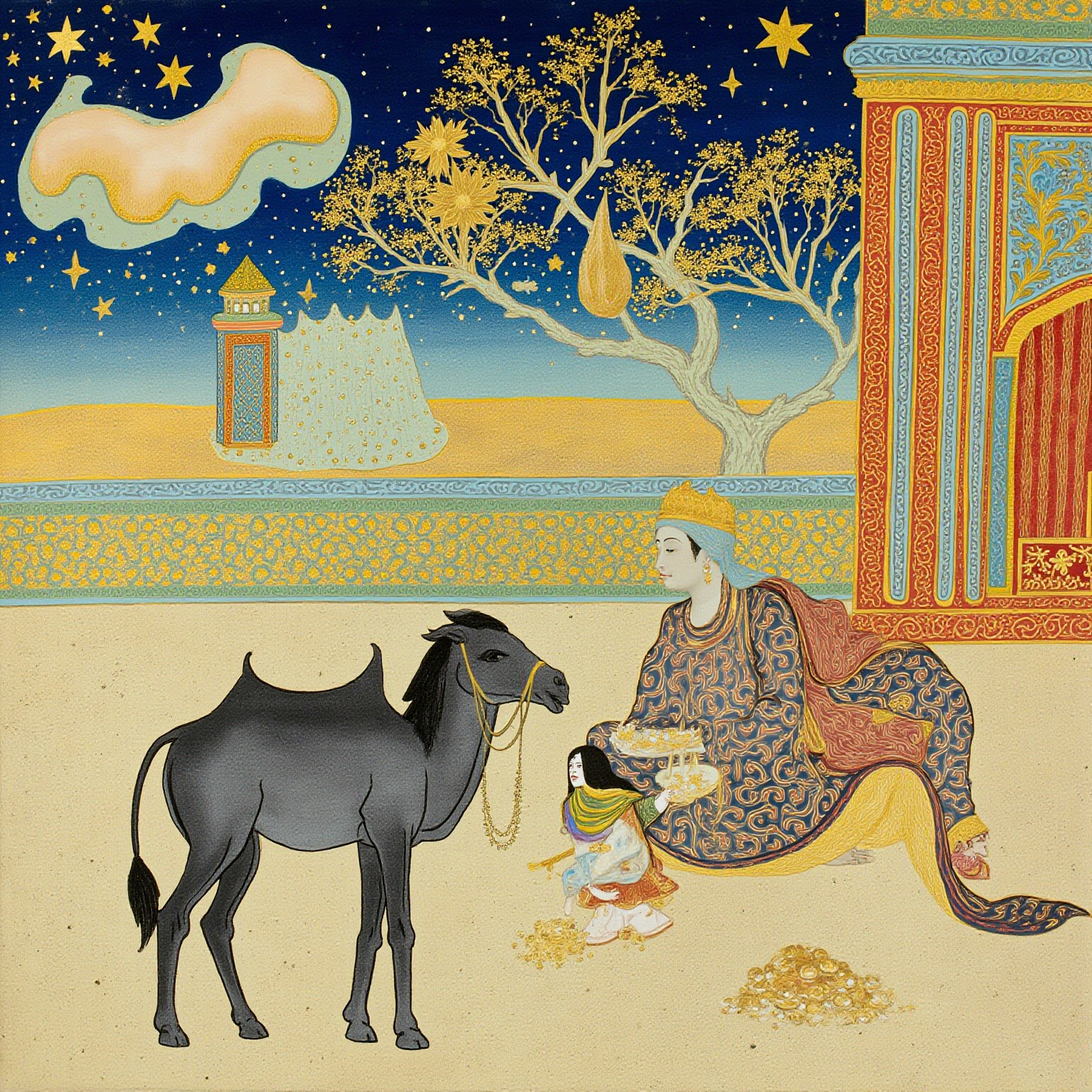
She had no notion of the worth of those gems; she bestowed them all upon a passing beggar-woman without a moment's thought.
她根本不知那些珠宝的贵重,一转身便悉数施予路过的乞妇,眼都不眨一下。
金句 · 第2章 · 珠宝与乞丐
The details of entering the compound get even more specific — the flagstones by the well-curb are as cold as well water, and the first time the bride steps on them she flinches back; the sari the household has laid out for her she cannot wear properly, and the moment the waistband tightens she wants to undo it; the sisters-in-law teach her to bow her head to her elders, and she bows her head but rolls her eyes upward — not out of defiance, but because she genuinely does not know that is the rule. Bankim writes her not fitting in not through tears or complaint, but through one bodily mismatch after another.
Act three: an old rival returns, and a trap takes shape
The scene cuts to Agra — in the courtyard of the Mughal court, peacocks fan their tails by the pool. Moti Bibi, going under the name Lutufonissa, sits in a seat of honor, listening in on Akbar's court affairs. This is a woman who rose entirely on her own mind — the original text has a phrase for it, all-penetrating intellect, meaning she reads people and situations the way a needle goes through cloth. When Akbar dies she drops her position and returns to Saptagram. Her reason for coming back fits in one line: she wants her household back.
What makes it dangerous is that she brings the Kapalik back with her — an ascetic after revenge and a woman after her husband, paired up. Two villains with entirely different motives join forces and set an ancient trap: have Mrinmoyee seen alone at night with a lover. Moti Bibi carries out the deception herself — she dresses as a man and steps into the role of that lover. In other words, the adulterer Nabakumar catches his wife with is the very wife he cast out years earlier.
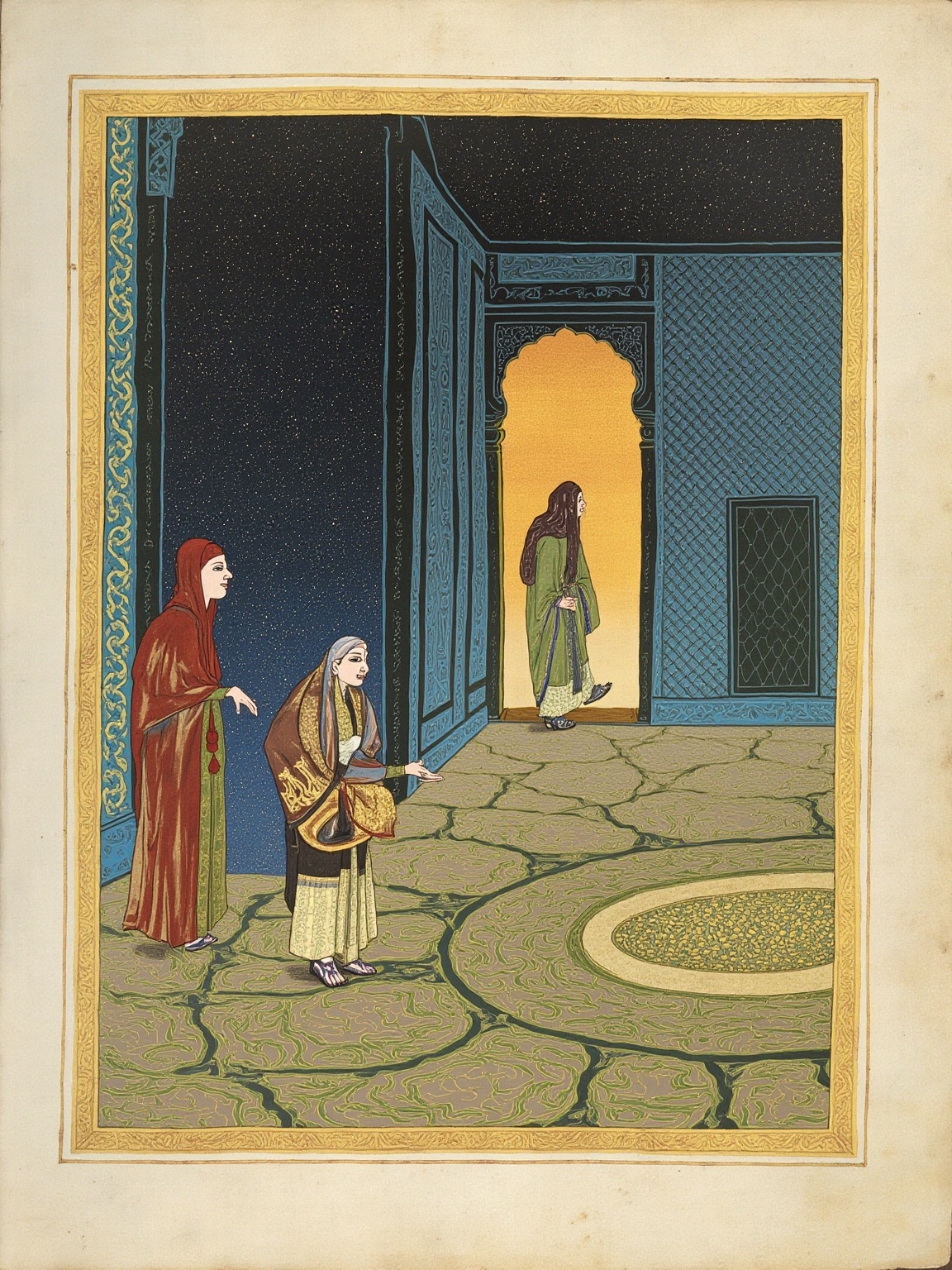
All-penetrating was the intellect of Motibibi; she had won the favour of Akbar by the sheer force of her mind.
莫蒂比比的智慧无所不透,她凭一副头脑便赢得了阿克巴的恩宠。
金句 · 第3章 · 阿格拉的孔雀庭
The cruelest part of the trap is that it needs no outside evidence at all — it only needs the husband to see it with his own eyes. Nineteenth-century Bengali fiction wrings more out of the power of seeing than most television does today.
Act four: a deceived husband sends his wife back to the sacrificial ground
Nabakumar is not a faithless husband. The whole middle stretch of the novel makes that clear — he is deceived, misled, caught by two ropes at once, the foster father's and the former wife's. Readers hate him at this point in the story, but looking back, nearly every move he makes is being pulled by someone else's hand. He is not stupid. He is simply outmaneuvered at the same time by the two people who know him best.
On the night the trap closes, he does it himself: he takes his wife to the cremation ground. For the Kapalik it is a rite of revenge; for Nabakumar it is cleaning house. The truth comes out right there on the sacrificial ground — not surfacing slowly, but the kind of reveal where everyone is already gathered and every mask comes off in the same instant.
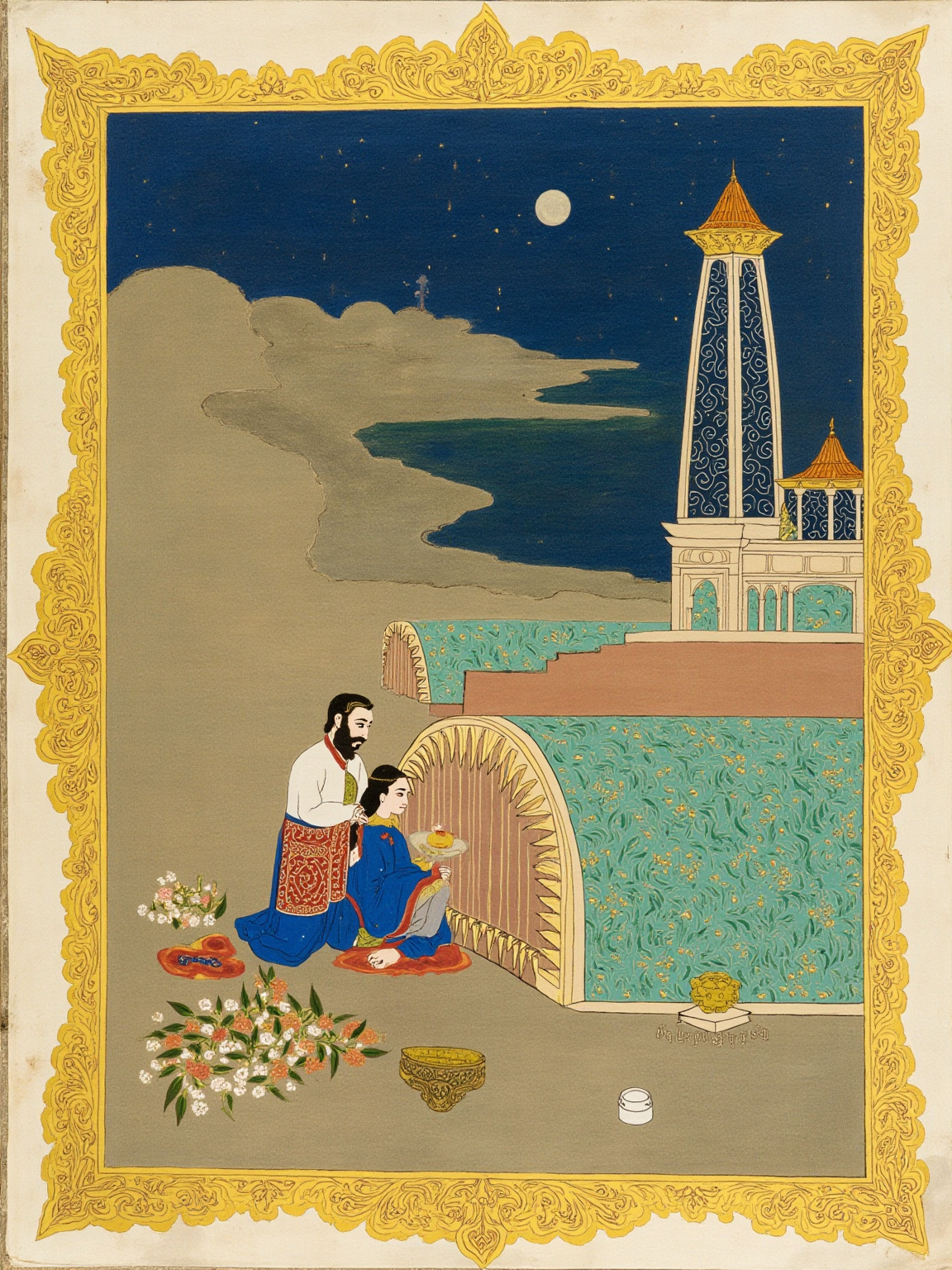
She would not return. She turned her steps toward the Ganga, and the river rose to meet her.
她不肯回头。她转身向恒河走去,而河水起身迎她。
金句 · 终章 · 恒河码头的盐风
One thing here is worth pulling out on its own — the truth doesn't come out through interrogation or confrontation, it comes out in the instant every pair of eyes meets. Bankim knows exactly how to build this kind of scene: no dialogue needed, the light shifts, and every thread laid down earlier snaps at once. That kind of dramatic tension was rare in Bengali fiction of the period, and it is exactly why the book keeps getting adapted for film.
Act five: the Ganges landing, where salt wind meets well water
Nabakumar begs her to come home. She refuses. This is not a fit of temper — it is instinct, the thread of not belonging to the human world that has run through her from the start, pushed to its end. She turns and walks toward the landing at the Ganges. The high water is washing over the stone steps; the steps give way under her feet and she falls into the river. Nabakumar jumps in after her without a pause. Neither one comes back up.
Marriage is the only stepping-stone to religion that woman has.
对女人而言,婚姻是通往宗教的唯一踏脚石。
金句 · 第1章 · 阿迪卡里的证婚
Bankim keeps the ending restrained — no thrashing, no cries, no wailing accusation. The two of them simply go under together. Sit with it after finishing and you notice the salt wind and the courtyard well, two entirely different kinds of light, finally running together in your head on their own: she goes back to the sea, and he jumps in after her, into the very water he had once meant to carry her away from.
What it is really about — why it is still being read a century and a half later
On the surface it is romance shot through with gothic — sandbars, storms, an ascetic, a royal court, a trap, a double death, the standard hardware of a nineteenth-century romantic novel. What actually holds the book up is that it forces two worlds of a completely different texture onto one couple: a woman raised wild in the salt wind on one side, the disciplined human world of the well-curb on the other. A single marriage tries to weld them together, and the seam cracks from the first page to the last.
Another reason the book is remembered is that it fixed a character type into the Bengali language — from then on, Kapalkundala meant a woman who does not belong to the human world. That is rare in literary history: plenty of characters make readers remember a story, but only a handful of names go on to live as adjectives. She is one of them.
There is another layer most readers miss — Moti Bibi, the woman who disguises herself as a man to spring the trap, is after one thing from start to finish: going home. She can drop Akbar's scepter without a second thought; she cannot drop her former husband. The real contrast the novel is drawing is not good against evil, it is worldly power against plain old feeling — you can bend an empire to your will and still not undo the fact that you were once cast out. Read this far and it becomes clear that the true villain of the book is not the ascetic; it is that particular grievance of someone raised up by power and then dropped by it.
Why you should still read the book, even knowing how it ends
Having already spoiled the couple's final moments, it is actually easier to make the case for why you should still read it. The reason is simple: what makes this book worth staying with is not the plot, it is the temperature the prose leaves on your skin. The salt wind, the bride's sari waistband that never fits right, the flagstones by the well gone pale with cold, the look on Moti Bibi's face as she watches the peacocks at court — none of that survives retelling. A retelling can only flatten it into a map. Once you have the map, whether you walk the road yourself is up to you.
Marriage was never the bridge that fuses two worlds into one — most often, it is only the first time two worlds are forced to stand face to face.
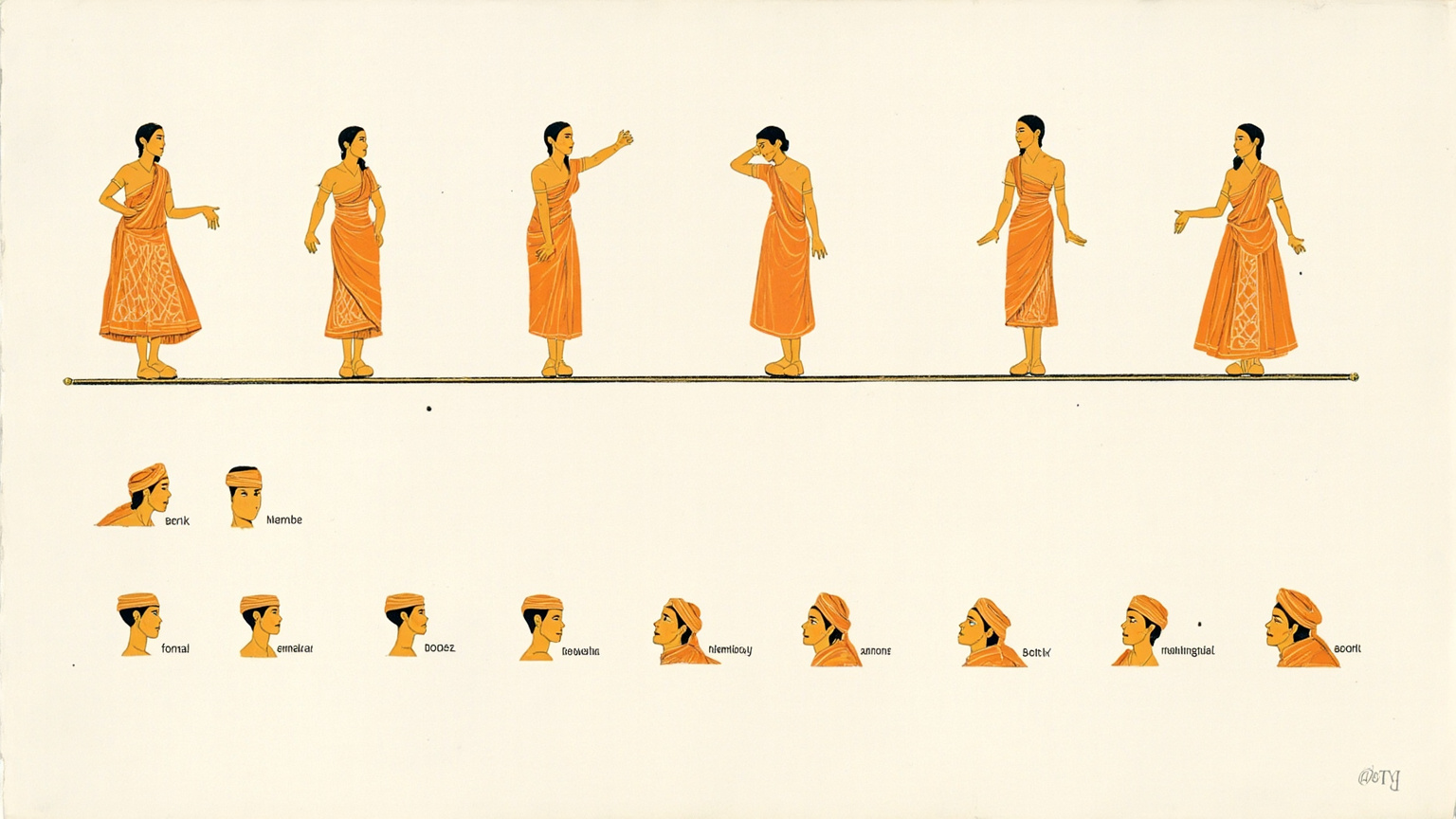
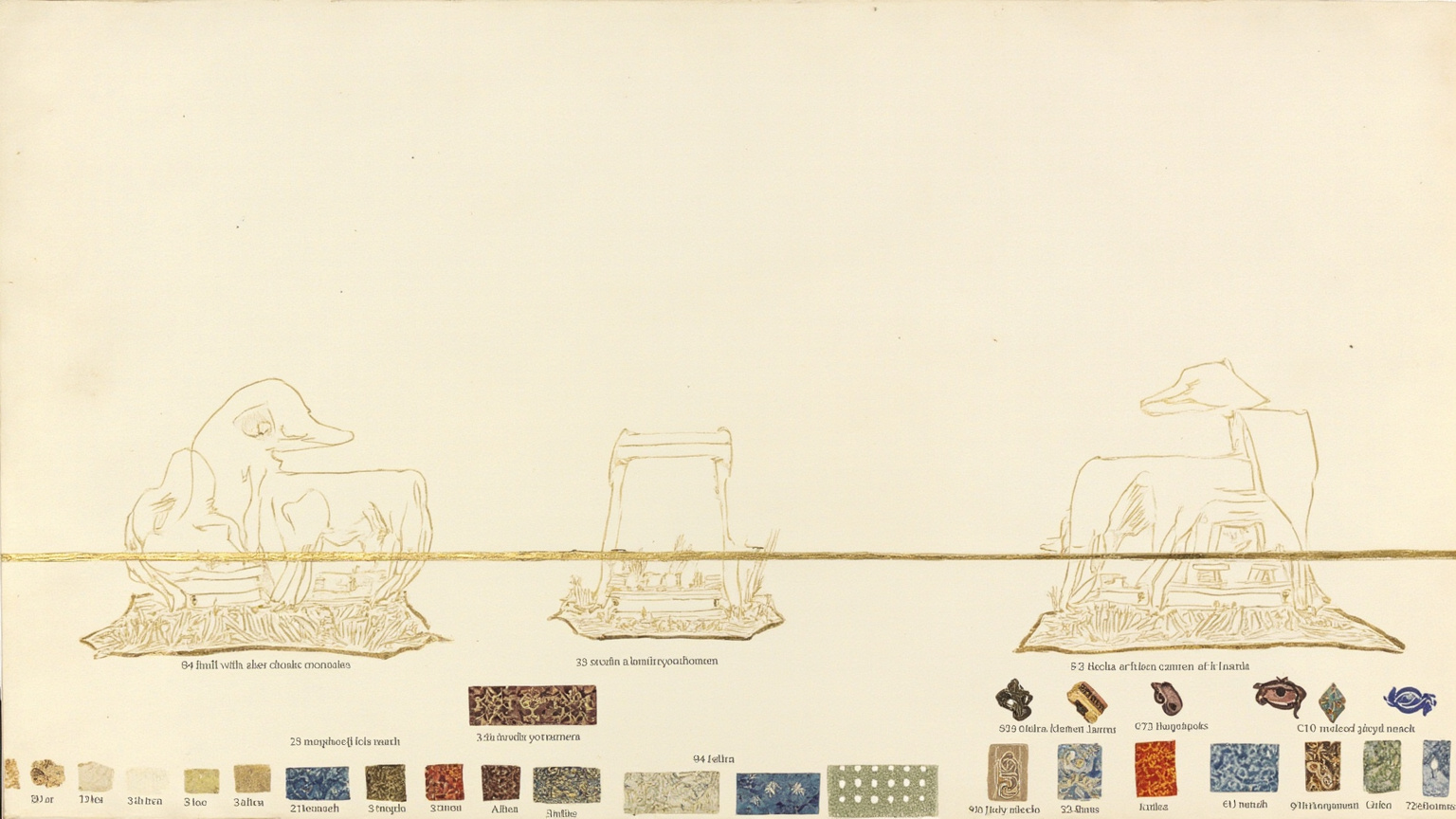
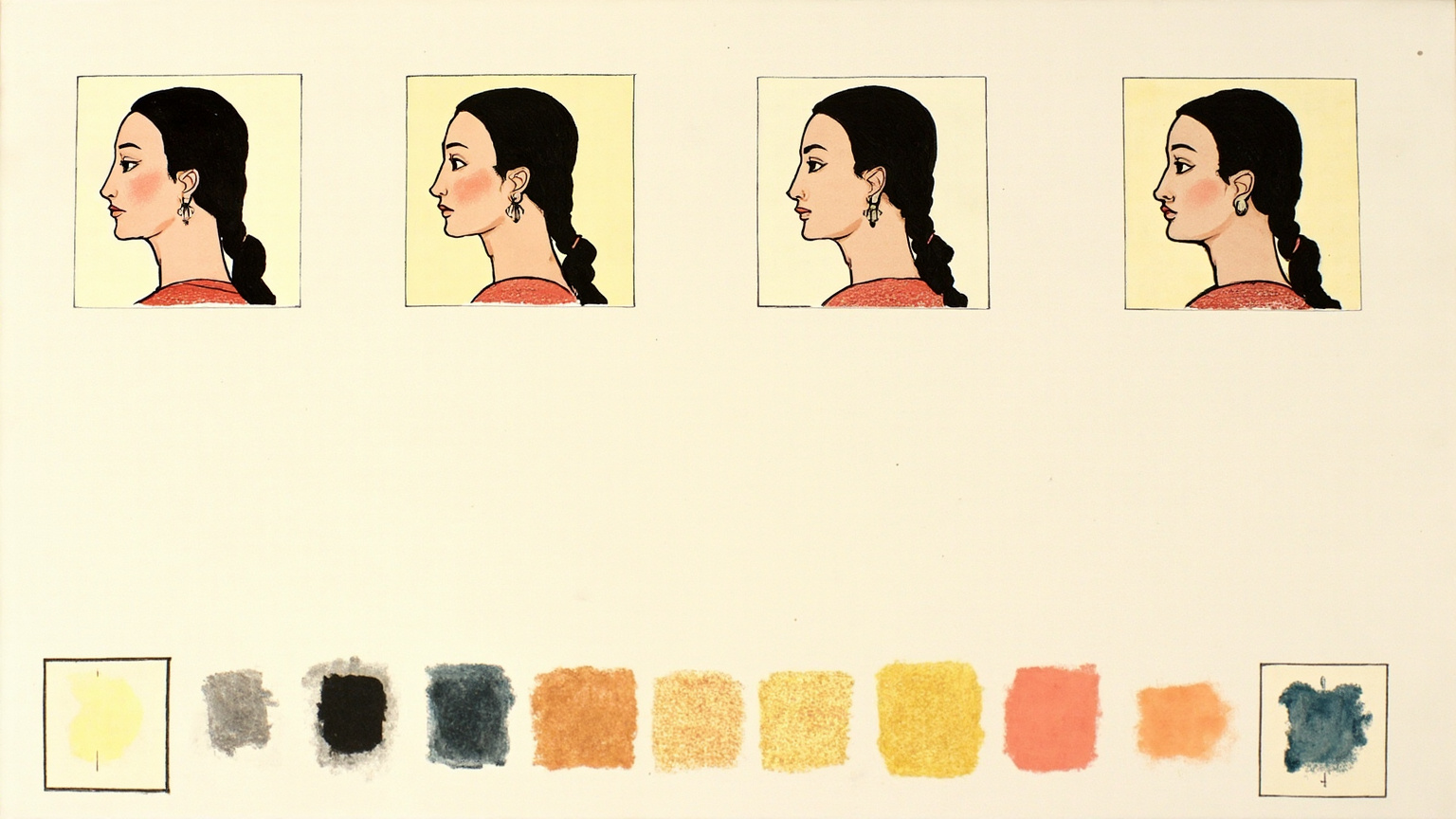
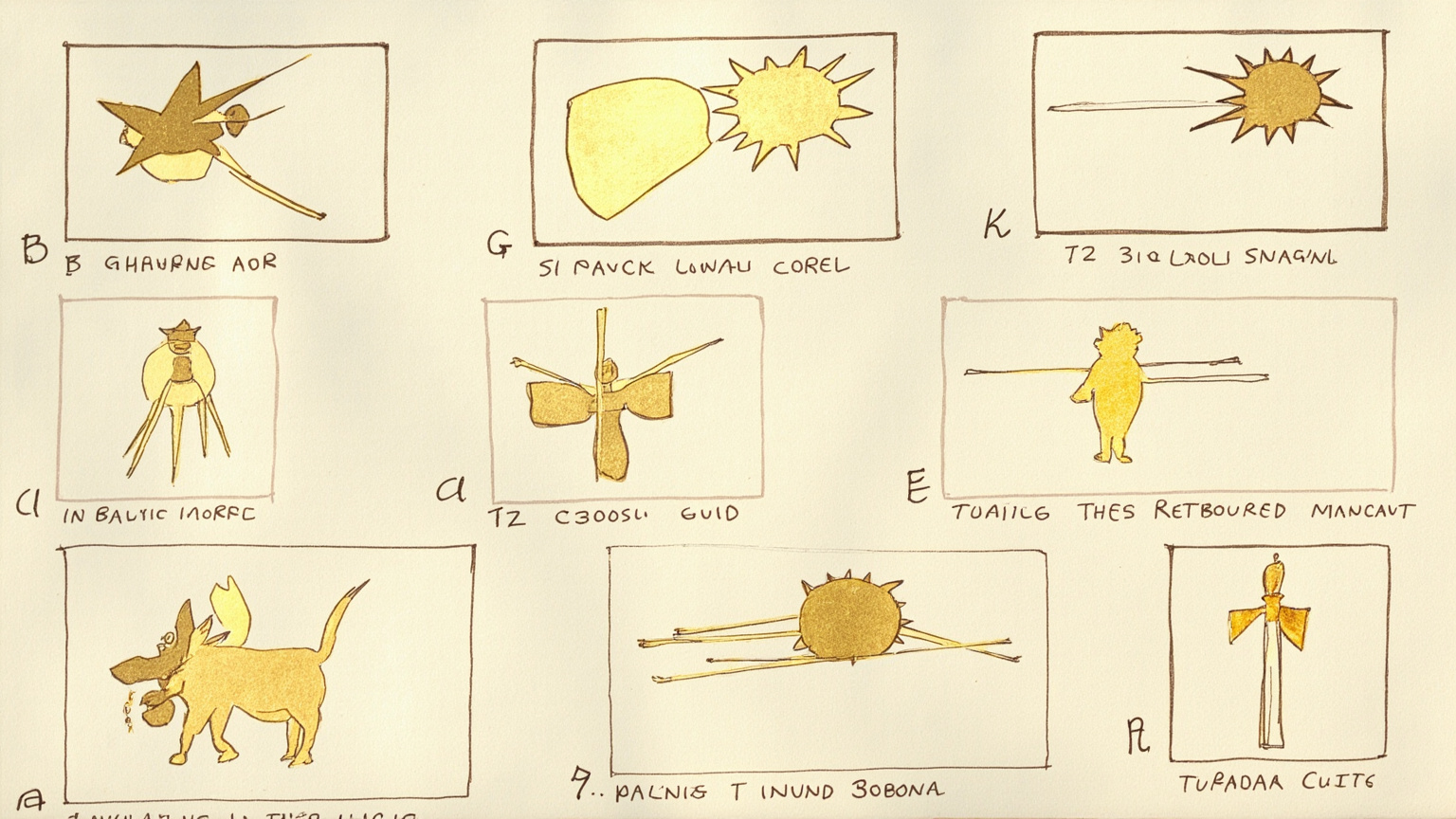
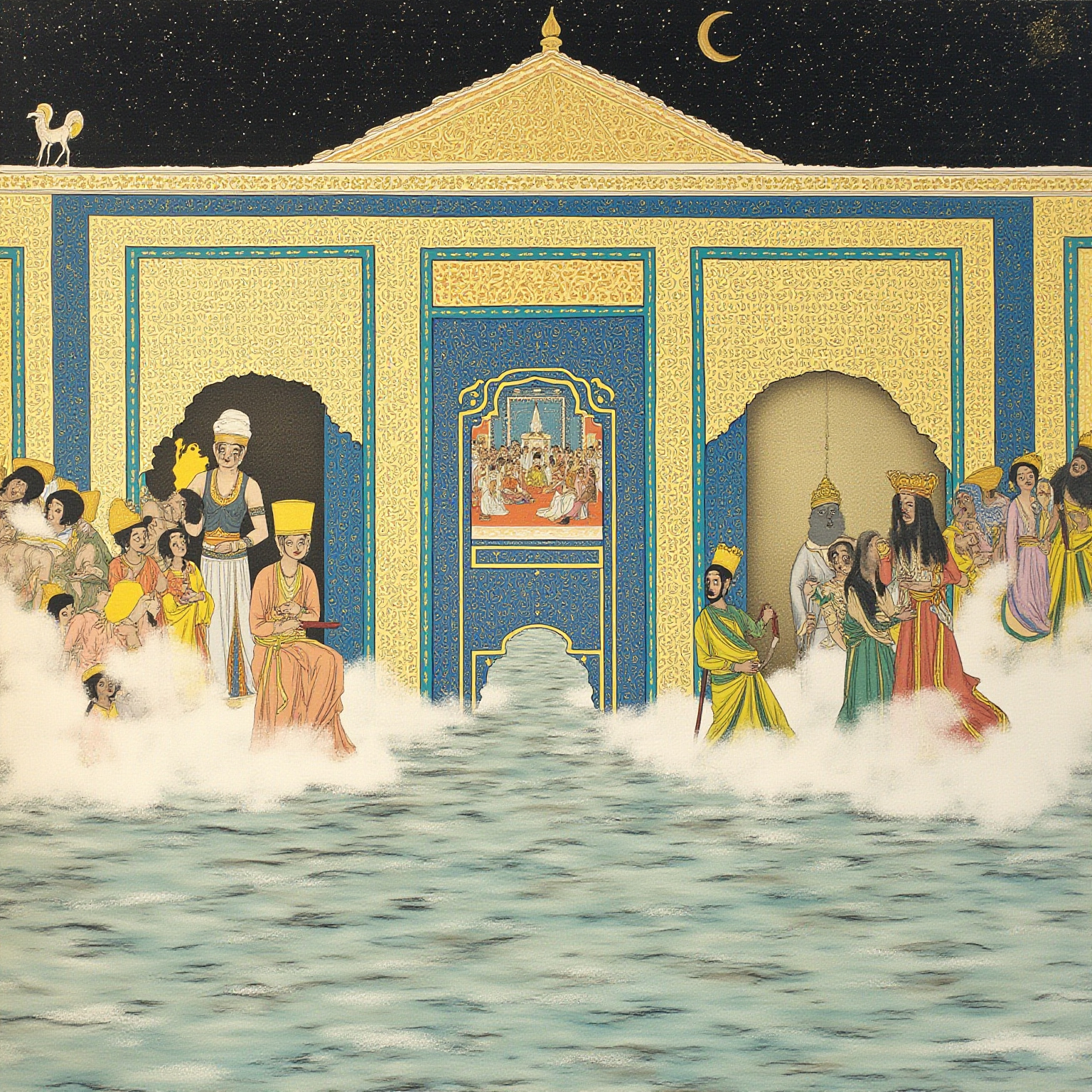
Art Direction4 plates
Before the guide was written, this book got a visual foundation — every illustration you just read grew out of it.