Kebra Nagast (The Glory of Kings) · Companion Guide
列王的荣耀
一位女王北上去听智慧,一块约柜南下来立新以色列——所罗门的血脉就此渡过红海。
Opening
A line of camels, loaded with gold and myrrh, comes out of the desert on the southern shore of the Red Sea. It is not headed for a market. It is headed for the Temple of Solomon. The woman leading it has heard that wisdom is waiting for her, somewhere far off.
This is not the passing mention of a distant queen you get in the Bible. This book makes her the engine of an entire history — her journey north, her journey home, her son, and the wooden chest her son carries back with him, which will decide whether an African highland has the right to call itself the new Israel.
What kind of book this is
The Glory of Kings (Kebra Nagast in the original Ge'ez, literally the glory of the kings) is Ethiopia's founding scripture. The text was fixed in something like its present form by clergy at Aksum around the fourteenth century, but underneath that it is a compilation of oral tradition far older than the fourteenth century — tradition credits the priest Isḥaq and others with the compiling. It was not written at a desk by some hermit. It is a living scripture, worked over and recited again and again by an entire highland church.
It is still recited in the liturgy of the Ethiopian Orthodox Church, and in Rastafari identity it is the theological basis for treating Haile Selassie I as a descendant of Solomon's line. The English-speaking world had to wait until 1922, when E. A. Wallis Budge, an Egyptologist at the British Museum, translated the Ge'ez original into English and brought the scripture into modern scholarship. One line to remember it by: this is African Christian civilization's own answer to the question of where it came from.
Characters and world
The book really has only three main characters; everyone else is passing crowd. Solomon is the wise king of Jerusalem, builder of the Temple — in this book he is less a character than the embodiment of divine order, the one who sets the rules rather than the one the story follows. The Queen of Sheba, Makeda, is the real engine of the narrative: she leads her caravan north to see that legendary wisdom with her own eyes. Menelik is their son, and the book's climactic figure — grown, he leads a company of priests south out of Jerusalem, carries the Ark of the Covenant back to Aksum in secret, and becomes the first king of Ethiopia's Solomonic line.
The world of the story runs on two threads. The northern one is an imagined tenth-century-BC Jerusalem, cedar beams, gold vessels, the Ark set in the Holy of Holies. The southern one is Aksum on the East African highlands, granite obelisks still standing, the first forms of Christian churches already taking shape. The Red Sea is where the two threads meet — the caravan goes north across it, the Ark comes south across it. The whole book is essentially a road from pilgrimage to nation-founding: it starts at Solomon's Temple and ends at the Chapel of the Tablet at Aksum.
How the plot moves
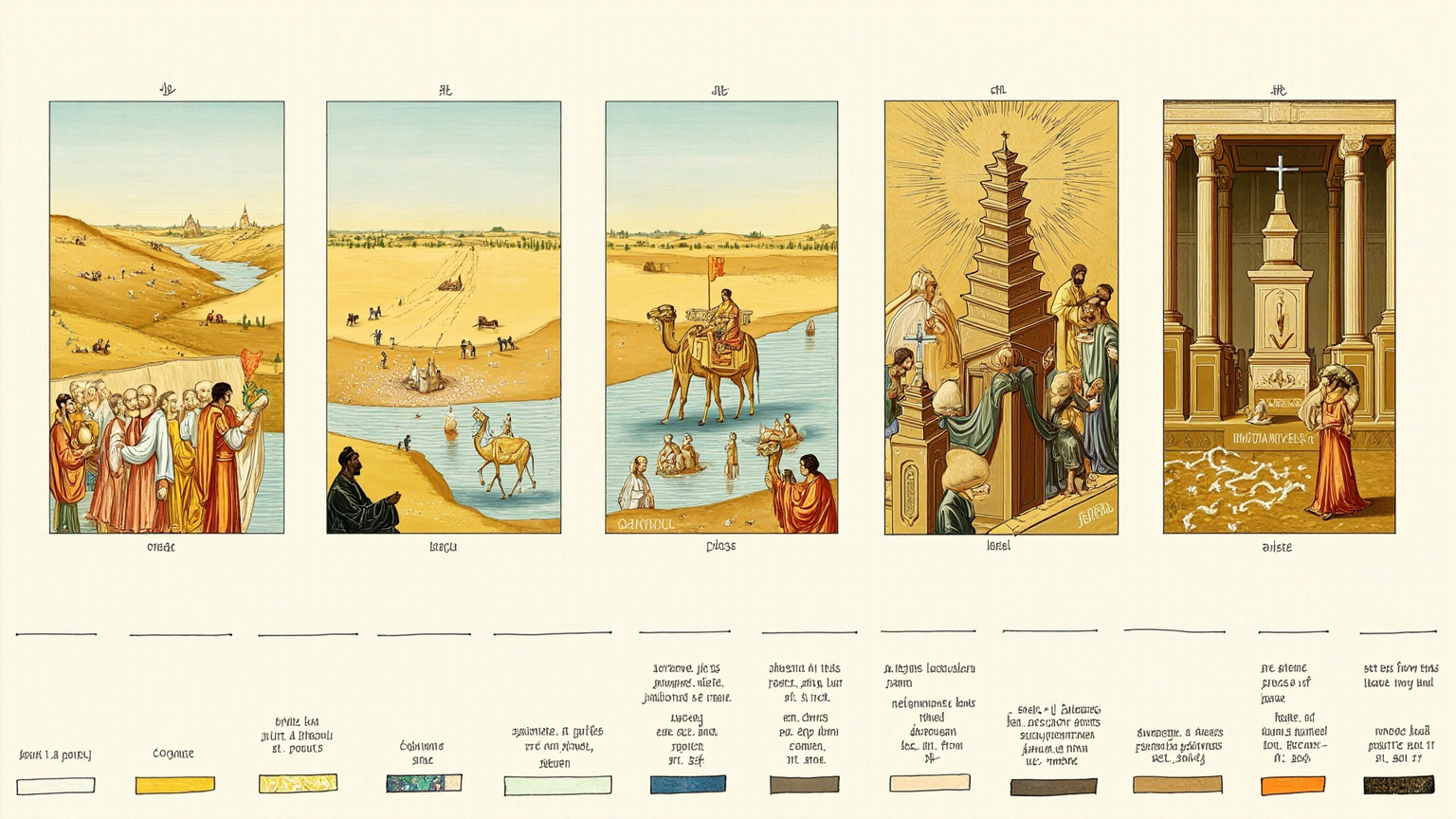
The engine of the story is a single journey Makeda makes. Hearing of Solomon's wisdom and fame, she leads a great camel caravan north out of the south herself, spices, gold, and countless gifts loaded on its back, and travels the Red Sea trade route all the way to Jerusalem. This is where the whole narrative begins: a queen coming in person to test a legend. What is worth noticing in the writing is pacing. The book spends real space laying out the size of the caravan, the formality of the audience, the list of gifts, so that by the time Makeda walks into the Temple, the reader already feels its weight.
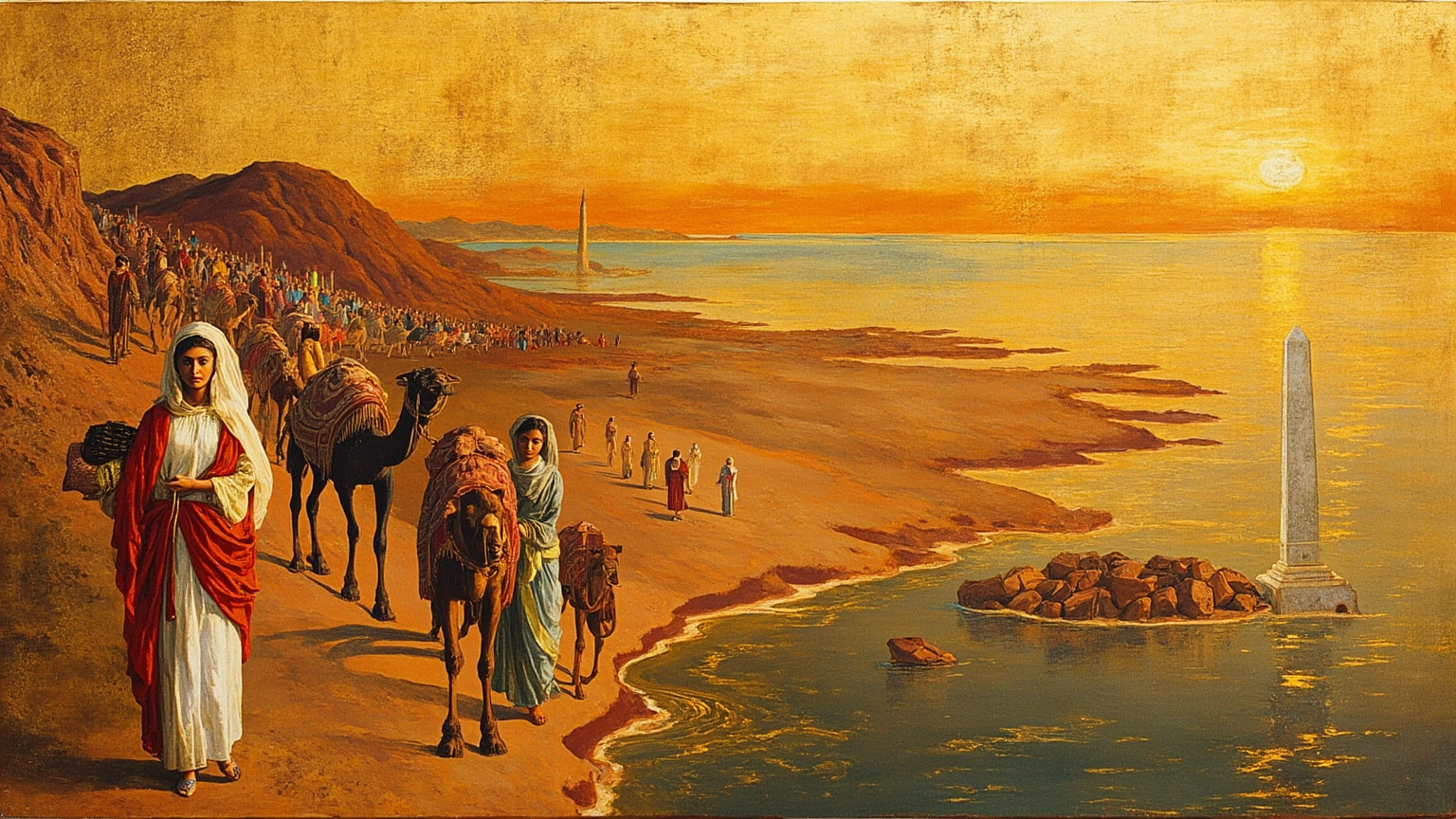
And she arose, and her servants with her, and they took their journey with camels that bare spices, and gold very much, and precious stones, and went unto Jerusalem.
她便起身,率领随从,驮起无数香料、黄金与宝石,踏上前往耶路撒冷的长路。
金句 · 第2章 · 商队北行
The question-and-answer scene in the Temple is one of the most charged chapters in the book. Makeda puts hard questions to Solomon one after another, and he answers them one after another. The text never gives the actual content of the exchange; instead it repeats, again and again, that whatever she asked and whatever he answered, nothing came out of it that failed to show wisdom and knowledge. That repetition is not laziness — it is a technique closer to liturgy, turning the weight of wisdom into something closer to a psalm. Faced with the splendor of the Temple and the wisdom of Solomon, Makeda is genuinely won over, and acknowledges the order as sacred.
Their union produces Menelik. The text handles this purely as function: Menelik is born, and the southward journey of the Ark is set in motion. Every other detail is passed over lightly, as if what the book actually cares about was never that night itself, but the two thousand years of bloodline that night sets running.
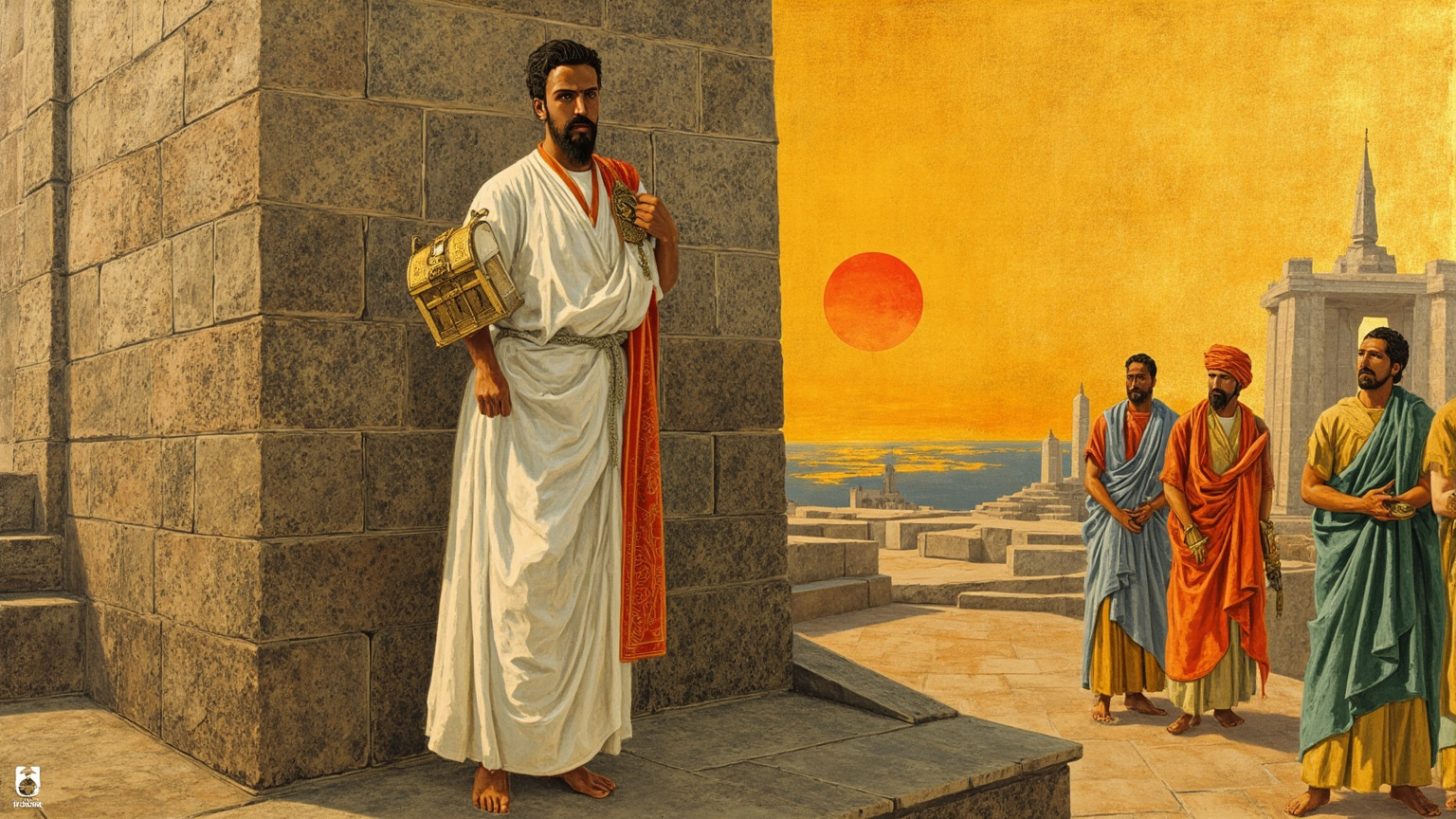
And Solomon answered her all her questions; there was not anything hid from the king which he told her not.
所罗门一一回答她所问的一切,没有一句隐秘不曾被她听见。
金句 · 第3章 · 圣殿问答
Once Menelik is grown, the story reaches its real climax. He leads a company of priests south out of Jerusalem, the most dramatic stretch in the whole book. The Ark is smuggled out of the Temple, escorted by priests and nobles sent by Solomon, tracing the Red Sea coast, doubling back south, dodging pursuers and hostile tribes, until it finally reaches Ethiopia. The text writes the whole journey as one continuously protected by divine will: angels give directions in dreams, visions appear in the clouds, and every close call is resolved by a miracle. What is worth noticing in the writing is a recurring beat: at every checkpoint there is a blessing and a promise, the way a pilgrim lights a candle at every stage of the road.
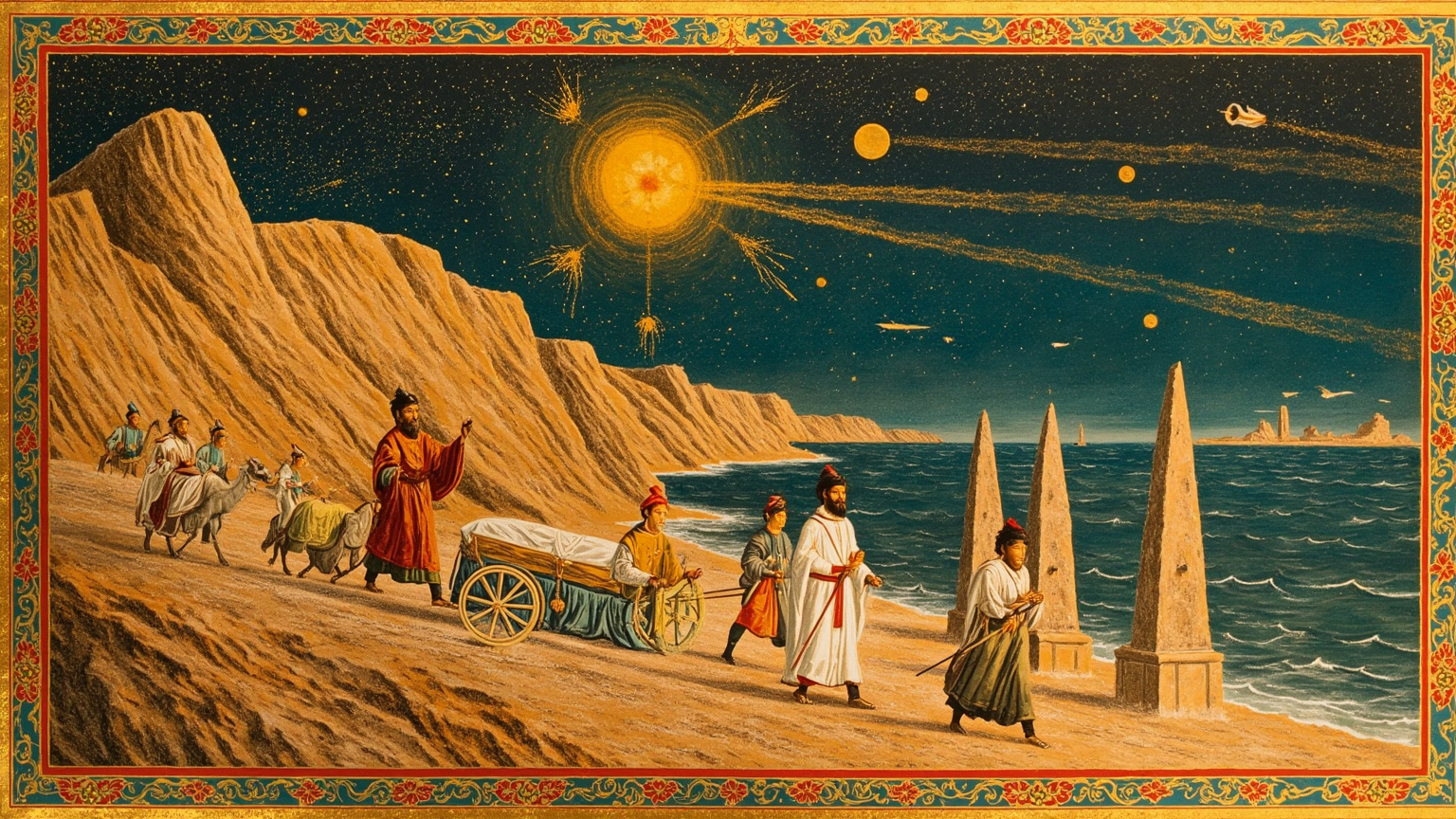
And the Tabernacle of the testimony of thy fathers was carried away by the children of Israel, even our fathers, and they brought it down with them into Ethiopia.
列祖的见证之帐被以色列人——我们的先祖——带走,一路护送下到埃塞俄比亚。
金句 · 第6章 · 约柜南迁
The Ark's arrival at Aksum is the narrative endpoint of the whole book. The text spends real space on the ceremony of welcome: the entire city of Aksum turns out, priests form processions, people lay down the road before it, and the Ark is carried into the Holy of Holies at the Chapel of the Tablet at Aksum. From that point the Ark is enthroned on the African highlands, and Ethiopia becomes the new Israel — the line of Solomon and David has not broken, it has simply moved. This is a mythic motif that runs geographically backward against the usual pattern of sacred relics traveling outward: the relic does not move east to west, it moves north to south, and comes to rest on a highland plateau.
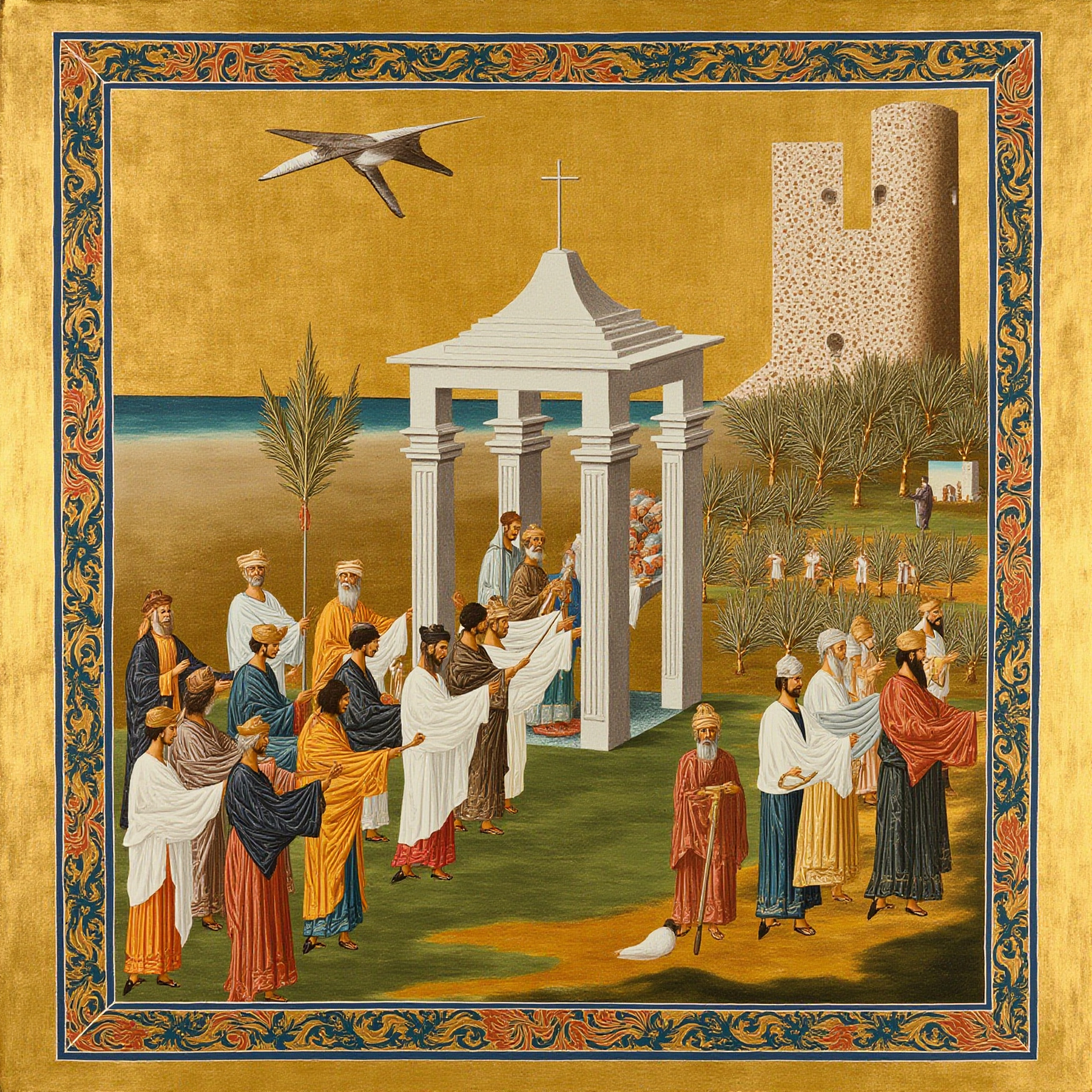
And they brought the Tabernacle of the God of Israel into the house of our Lord, and set it up at Aksum, in the Chapel of the Tablet.
他们把以色列之神的法柜抬入主殿,安顿在阿克苏姆的锡安山之塔。
金句 · 第7章 · 法柜安抵阿克苏姆
The closing section ends on blessing and oath. Any king of Aksum who guards the Ark and the line of Solomon will be blessed; any who betrays it will be cursed. This is not a decorative ending. It is the source that Ethiopian Orthodox and Rastafari politics and theology kept returning to for centuries afterward — every new king's coronation, every persecution of the church, could be traced back to these few lines. Every time I reach this part I feel a little disoriented: this book is not writing about the past. It has never stopped writing about the present.
Theme and technique
On the surface this book is about kingship and bloodline. Underneath, it is about a theological transfer of geography. The Ark used to be in Jerusalem; now it is in Aksum. The sacred center has not vanished, it has simply moved house. That means African Christian civilization does not need to borrow its light from Jerusalem — it is itself a continuation of that light. This motif of the relic traveling backward is extremely rare in world religious literature. Most traditions have the sacred object spreading outward from the holy place in every direction; this one has the sacred object being smuggled home.
The thing most worth saying about the writing is how liturgical it is. The text is not after dramatic conflict, and it is not after fine-grained psychology. It is after solemnity, repetition, and promise. The whole book moves at the pace of a Mass that runs for hours — question, answer, blessing, oath, one after another. You will not find the bloody court intrigue of the Book of Kings here. You will find a ceremonial narration that keeps declaring, over and over, that this is the will of God. That kind of writing asks a little patience of a modern reader, but once you settle into it, you find its power is not in drama. It is in weight.
Go read the text
What an explainer gives you is a map. The text itself is the land. I have already walked you through the caravan, the Temple, the Ark's journey, the welcome at Aksum, but there is one thing no explainer can give you: that unbroken, almost hypnotic sense of liturgy. Open Budge's 1922 translation and you will read every item on the caravan's gift list named in its paired Hebrew and Ge'ez terms; you will hear the responses the priests chant back and forth as they carry the Ark into the chapel, may the Lord come, as it was before. Half of that gets ground away in any retelling, but in the original it never stops sounding. There is also the density of detail — every gift the caravan carries, every vessel in the Temple, every garment the priests wear, all listed out for you in the original text, and that is a different kind of knowledge. I would point you to Budge's 1922 translation. It keeps the solemn cadence of the Ge'ez original, and it keeps the weight of the detail too.
Blessed are they that keep the Ark of the Covenant and the seed of Solomon, and cursed are they that break it.
守护约柜与所罗门血脉的人有福了;违背这约的人,必承受咒诅。
金句 · 第8章 · 祝福与立誓
The Ark did not stay in Jerusalem. A handful of people carried it in secret to the African highlands, and from then on that highland called itself the new Israel.
Art Direction4 plates
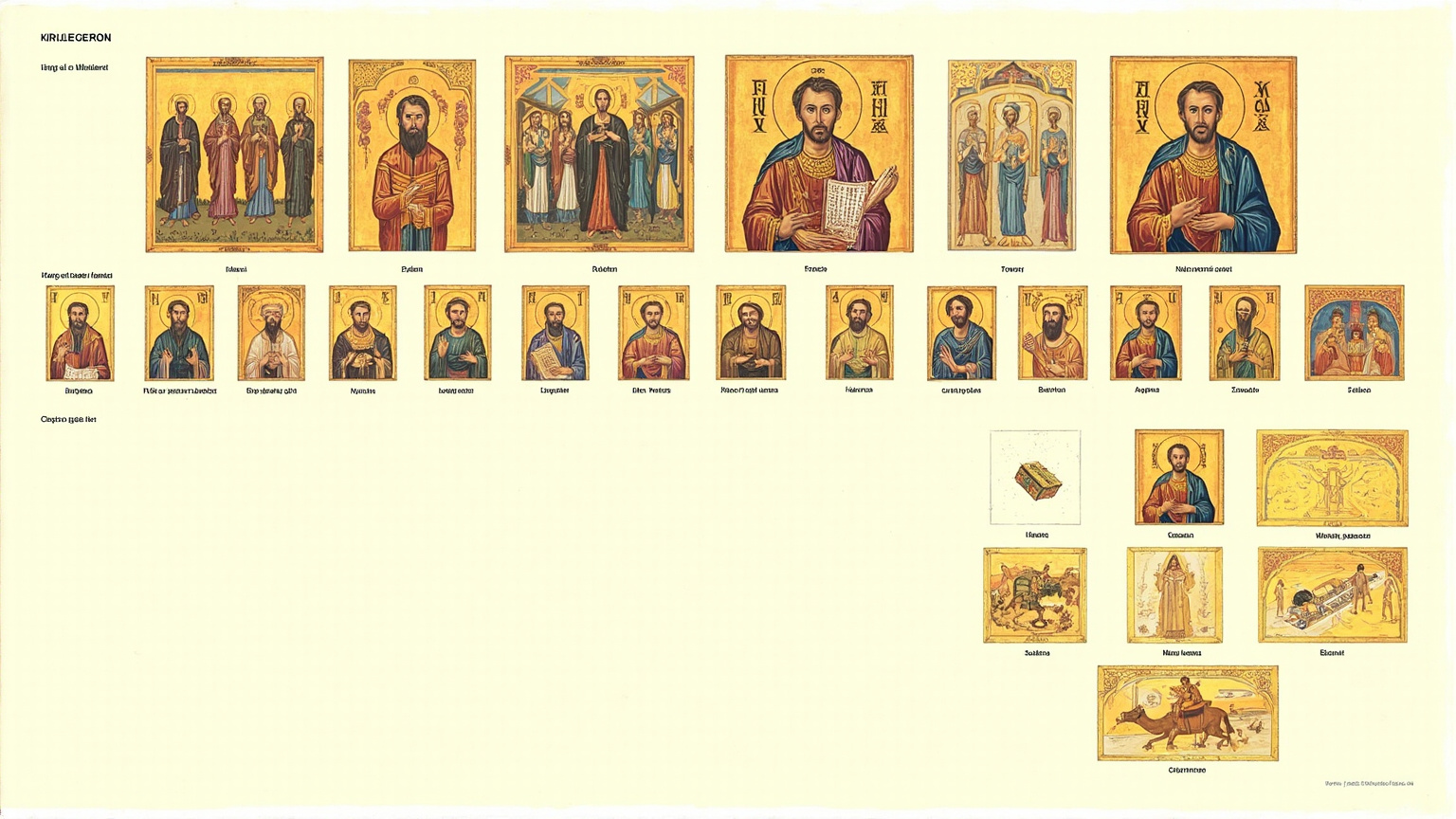
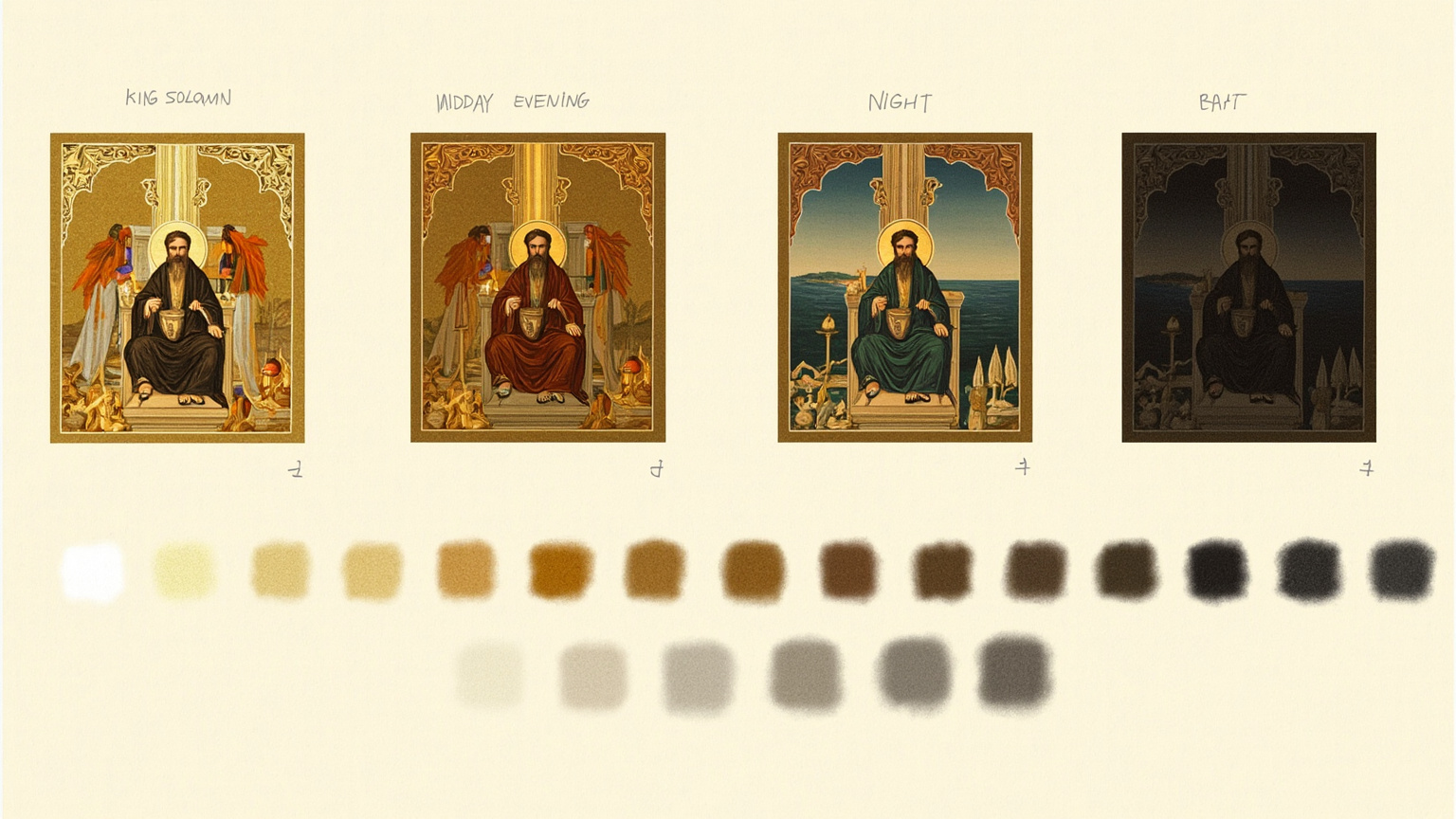
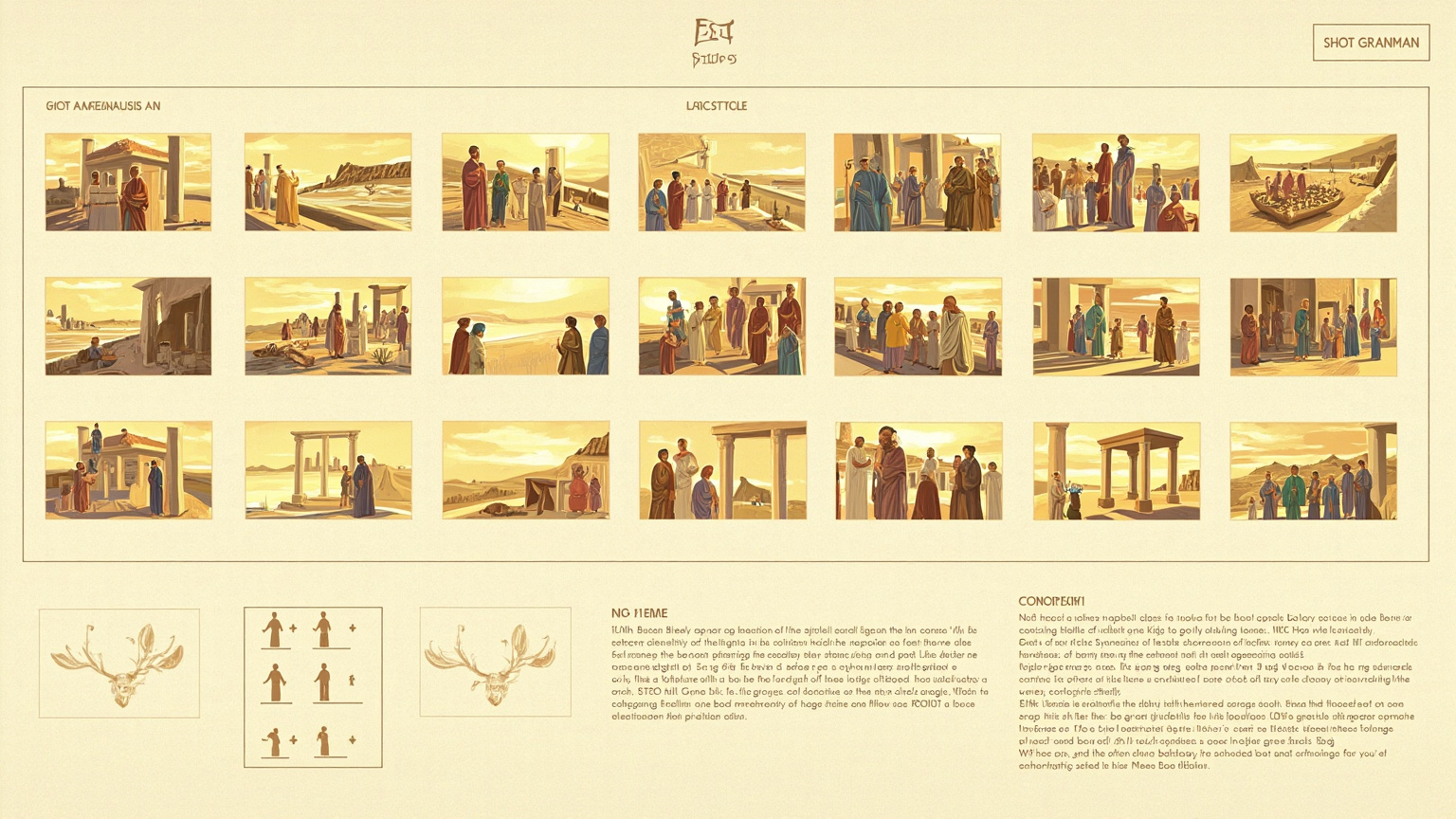
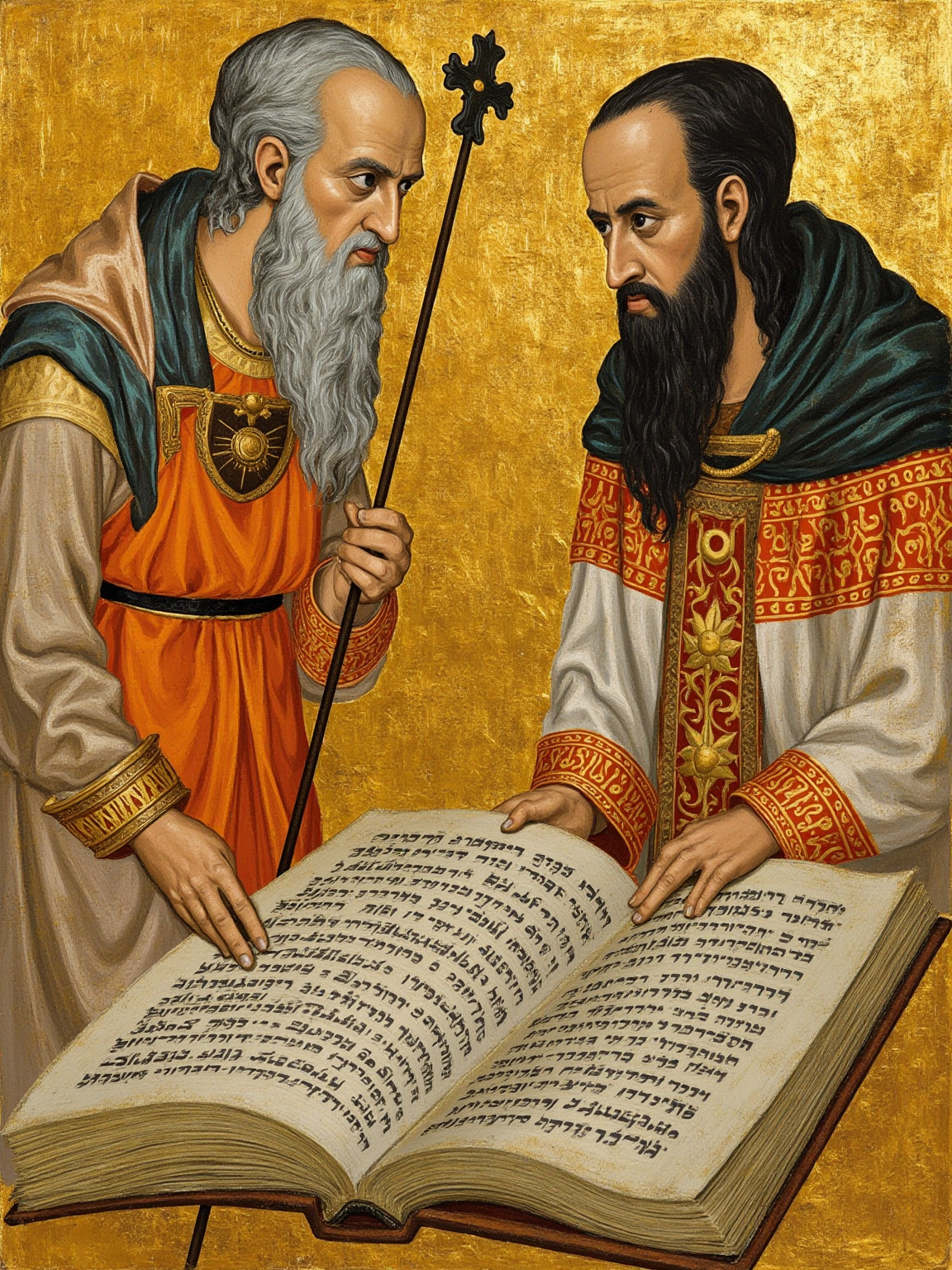
Before the guide was written, this book got a visual foundation — every illustration you just read grew out of it.