Khosrow and Shirin (Khosrow o Shirin / خسرو و شیرین) · Companion Guide
霍斯陆与西琳
萨珊国王以王座追逐亚美尼亚公主,无名石匠以凿山殉爱——三条命、一座山,谁赢得了诗心?
A black horse named Shabdiz snorts by the well. Its rider, Shirin of Armenia, has already jumped down and let the reins fall. This is no ordinary dismount: a princess who can break any wild horse has just met the one she cannot master. That horse will become the mount of Khosrow, king of Persia. Its rider will become his queen — and she will make a stonecutter tunnel through a mountain for her sake.
That is how the whole poem opens: a horsewoman losing her grip, and one envious glance.
What kind of book this is, who wrote it, and why it has lasted
Khosrow and Shirin is the masterwork of the twelfth-century Persian poet Nizami Ganjavi, written in the late 1170s as the second poem in his celebrated Khamsa, the Quintet. Across the Persian-Islamic world, the Khamsa holds roughly the place Dante holds in Italian: every educated person knows a few lines, and every miniature painter has illustrated at least one scene from it.
This particular volume was a favorite of painters. It is about love, and about power, and about a craftsman — three subjects enough to keep miniaturists busy for a thousand years. Nizami's Sasanian court gives them everything they need to draw: arches, inlaid tilework, horses, musicians. It is, at bottom, a poem built to be seen.
Three people, three kinds of love, one mountain
Three people stand at the center of the story.
Khosrow Parviz, king of Sasanian Persia, was the last of its great rulers: he inherited his father's throne, then was restored to it by his own generals. The poem gives him two faces. To Shirin he is a suitor driven mad by love. To Farhad he is a schemer smiling as he lies. The same mouth tells her, "I will conquer a kingdom and lay it at your feet," and tells another man, "She is dead" — only the second sentence is a lie.
Shirin, princess of Armenia, was raised in a mountain kingdom by her nurse Shakar, riding and hunting as well as any man, at home among the rose gardens. She is not a princess waiting to be married off. She maneuvers between two men — refusing Khosrow, then won back by him; carrying Farhad's shadow in her heart, yet never promised to him. In the end she becomes queen for real: crowned, and returned to the palace.
Farhad, an Armenian stonecutter with no title, plays music and cuts mountains, carving channels straight through rock — in his hands, stone behaves like clay. He is the half of this poem that actually breaks your heart: his love is his craft, and his craft is his love.
All three of them circle the same mountain, the same palace, and the same lie for the length of the book.
Meeting, chasing, seizing a bride — how the triangle gets wound tight
Not long after taking the throne, Khosrow saw Shirin in a scene the poem makes famous, and lost his mind over her on the spot. He sent envoys first; they were refused. He crossed the mountains himself; refused again. Finally he used a victory over a neighboring kingdom as leverage, forcing the Armenian king to promise Shirin to him. A king mobilizing an army to win one woman: that is the twelfth-century poet's most expensive way of writing the word smitten.
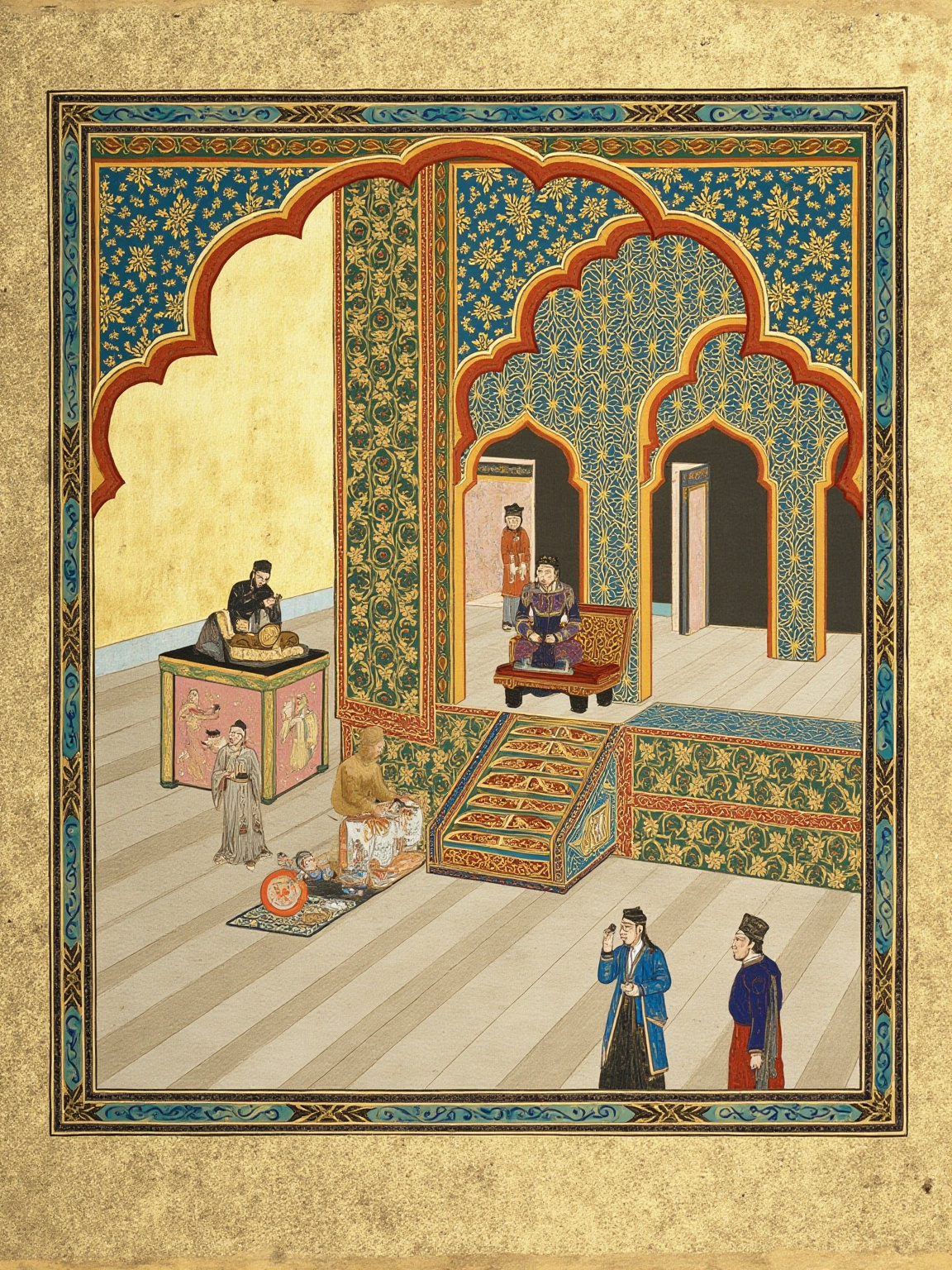
He saw Shirin, and the kingdom of his heart fell.
他一眼看见西琳,王国便在他心里沦陷了。
金句 · 序章 · 一见倾国
Shirin was not sitting idle in the Armenian mountains. She lived in a rose garden with her nurse Shakar, riding and shooting for company, sending envoys away and refusing to be seen when the king himself arrived. It is not that she felt nothing. What she refused was being treated like a trophy.
I am not a prize to be carried home on the king's saddle.
我不是能搁在国王鞍上、带回宫里的战利品。
金句 · 山中玫瑰园 · 公主之拒
The half of the soul that cuts mountains
On the far side of the mountain, someone else is standing.
Farhad was the finest stonecutter at the Armenian court, a man who could make music with hammer and chisel and seemed to speak the mountain's own language. He loved Shirin deeply, and she gave him warmth and real respect in return, though never her hand. Once Khosrow learned of this, he did what schemers do: he made a promise to Farhad's face. "Cut a tunnel through Mount Bisotun, and Shirin is yours."
If I could bring a river from the rock for her, I would count the mountain cheap.
若能为她从石中引出一条河,把这座山凿穿我也甘愿。
金句 · 凿山人卷 · 石匠的誓言
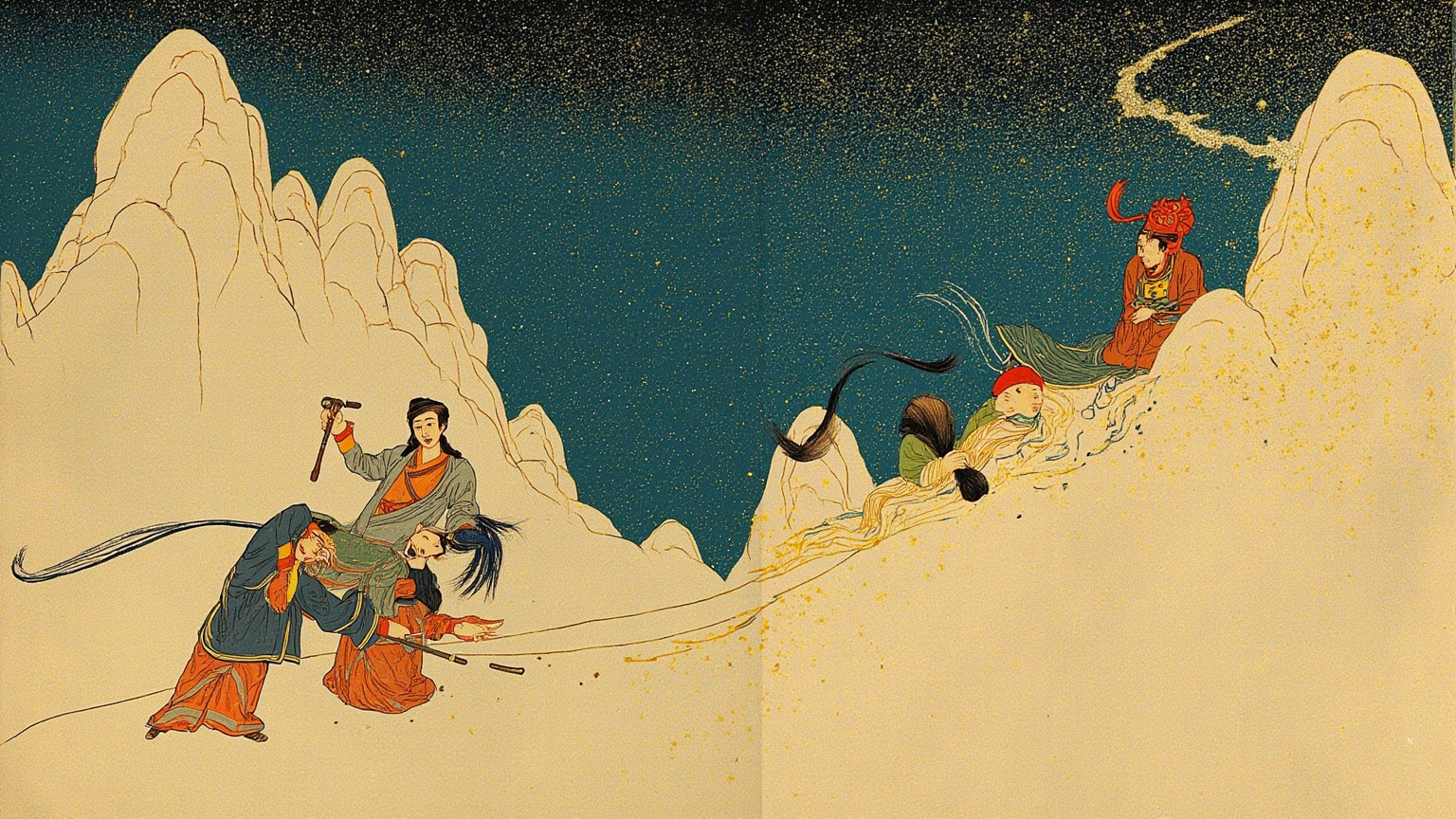
Farhad took him at his word. He went and cut. Blow by blow, foot by foot, the mountain gave way under his hands. More remarkable still, he carved a channel deep inside it for Shirin, the famous milk canal, a white stream of milk running out of what had been dry rock. This is the tenderest, most concrete image in the whole poem: a craftsman using the very tools he earns his bread with to cut his beloved a river.
Strike by strike the rock gave way, and in its wound a milk-white stream was born.
一锤一锤,山让了路;在它新裂的伤口里,一条乳白的河诞生了。
金句 · 凿山人卷 · 乳河渠
Afraid Farhad would actually finish the tunnel, Khosrow put out a lie: Shirin is dead. Farhad heard it and threw himself off the cliff.
From this point on, the poem's moral weight quietly shifts from the king to the man with the chisel.
A change of heart, a coronation, one more campaign
Shirin was brought to the Persian court, and within days she and Khosrow were quarreling. What angered her was the feeling of having been won like a prize, not the man himself. She stormed off, and her nurse Shakar followed, argued, protected her, and finally brought her back. At a palace banquet, the court musician Barbad, legend's finest Sasanian lute player, played a piece for the two of them. The music called Shirin back to the table, and back to her own heart.
She was crowned queen. This is the poem's warm interlude: gilded skies under painted arches, roses caught inside scrollwork borders, the horse Shabdiz grazing quietly in the royal stable.
The warmth does not last. Khosrow launches a war against the Byzantines for Shirin's sake, determined to bring her back a prize worthy of her. He succeeds: he takes Jerusalem and carries off the True Cross from Byzantine hands. This is the poem's double climax of power and love at once, a king whose empire now spans east and west, and a man still fighting a war for one woman. Standing together in the victory procession, the two of them make a picture so beautiful it is easy to forget the book is not finished.
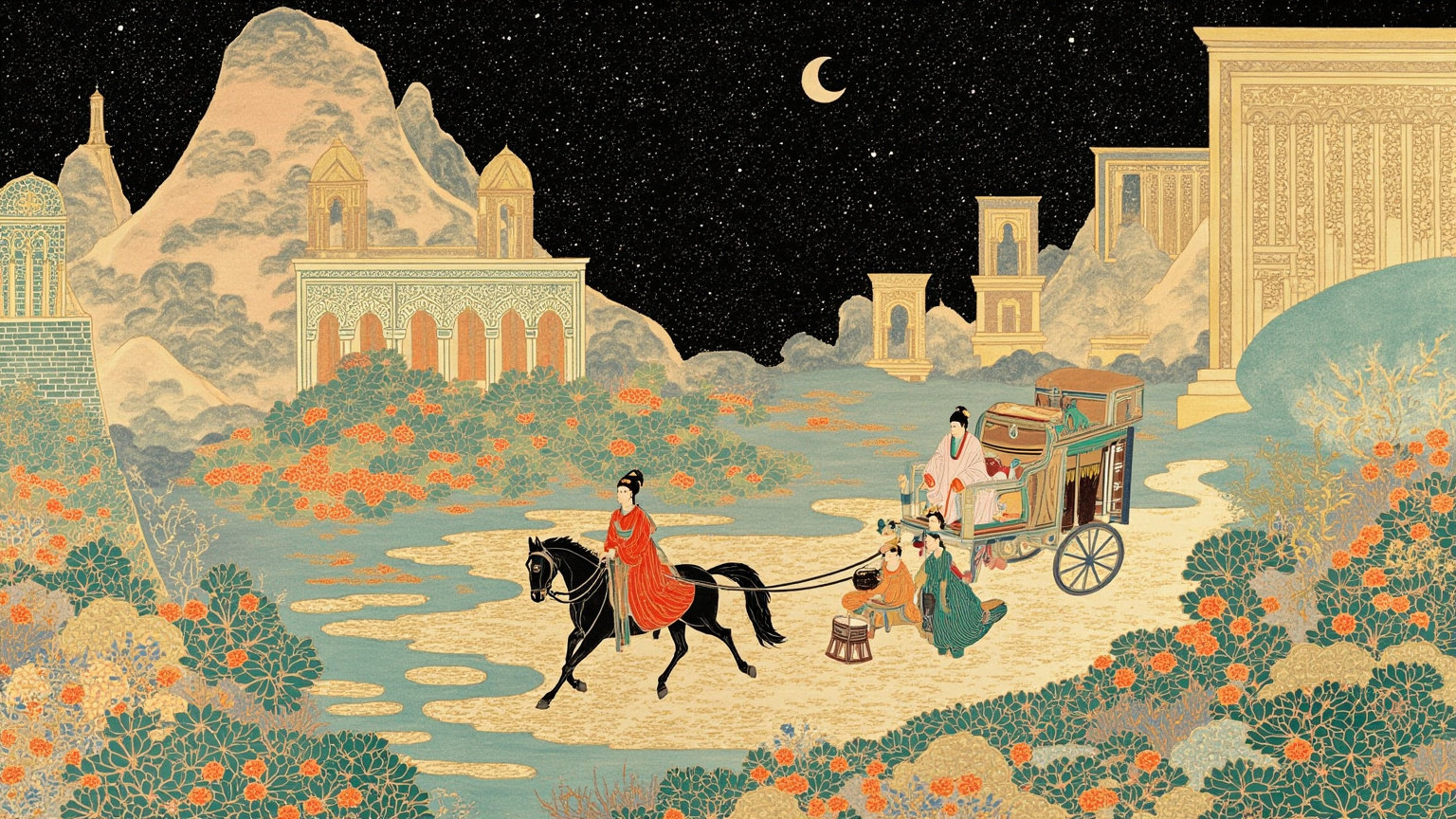
He took the True Cross for her, as though even the world's holiest wood must bow to love.
他为她去夺那具真十字架,仿佛连世上最神圣的木,也得为爱低头。
金句 · 远征卷 · 耶路撒冷之胜
A fall from a cliff, a killing of a king
Neither of the two facts the poem closes on is really new. Farhad had already fallen from the cliffs of Bisotun over a lie. Khosrow himself is eventually killed by his own blood, his own son striking the blow. Two deaths, two outcomes: a craftsman dying for love, a king destroyed by his own family. Both are stated in a sentence or two, with no scene built around them, and yet they recolor the whole book. The happy ending, a king who wins a war and wins his woman, was already undercut the moment the stonecutter jumped.
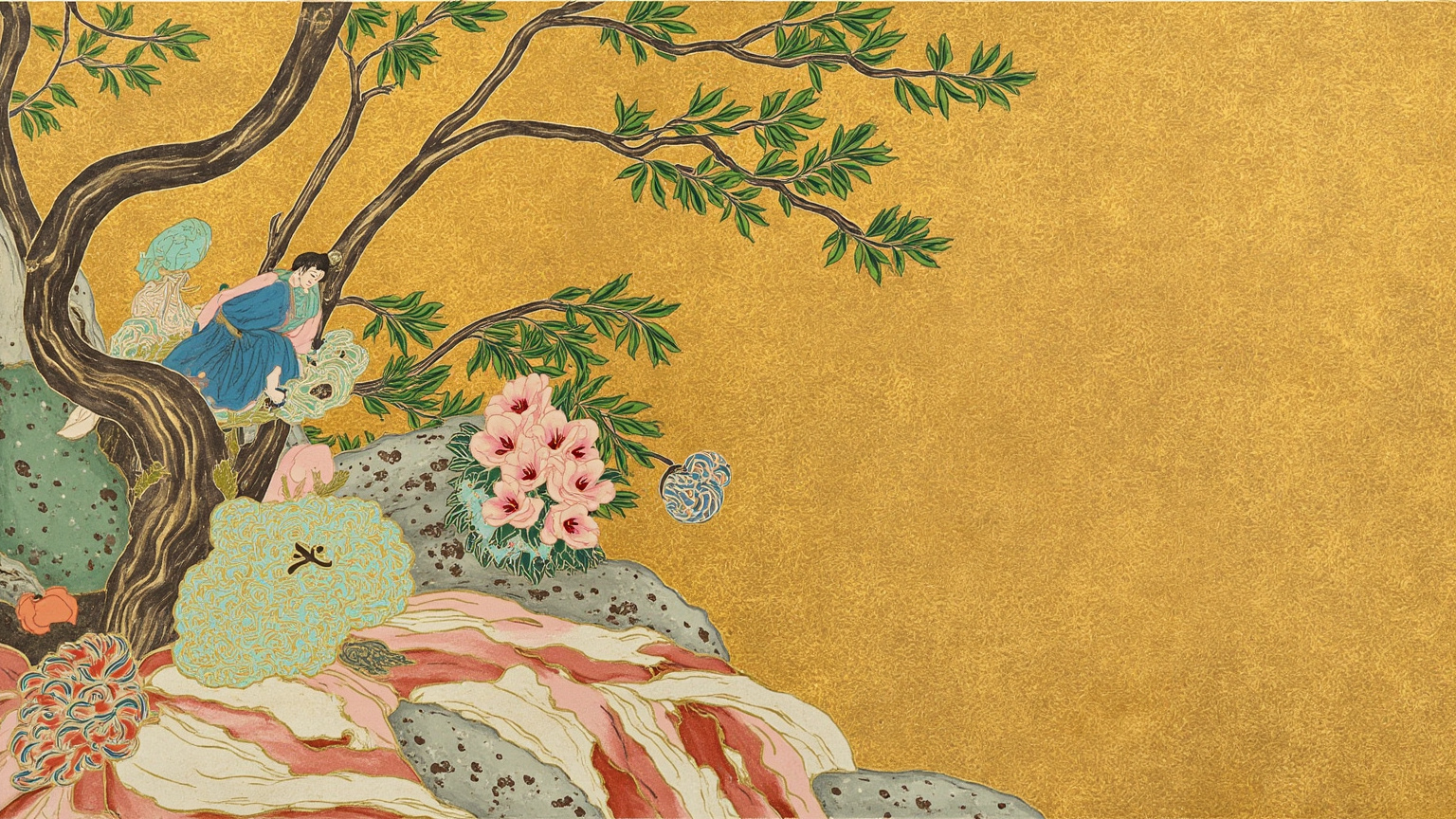
A lie was whispered from the throne, and a true heart leapt from the cliff.
王座上飘来一句谎言,一颗真心便从崖上跳了下去。
金句 · 终章 · 贝希斯敦之坠
This is where Nizami is at his sharpest. He lets the winner take everything, and slips the poem's real sympathy into the stonecutter's hammer.
Why it is remembered, and what it is actually saying
On the surface this is an old story of a king pursuing a princess. Underneath, it is really about three unequal kinds of love. The king pays for his with power: war, envoys, a lie. The princess's love is won across a stretch of refusal and reconciliation. The craftsman pays for his with his life, and with a canal cut through rock. Nizami never says which love ranks highest. He simply lets you see that the price is different, so the weight is different.
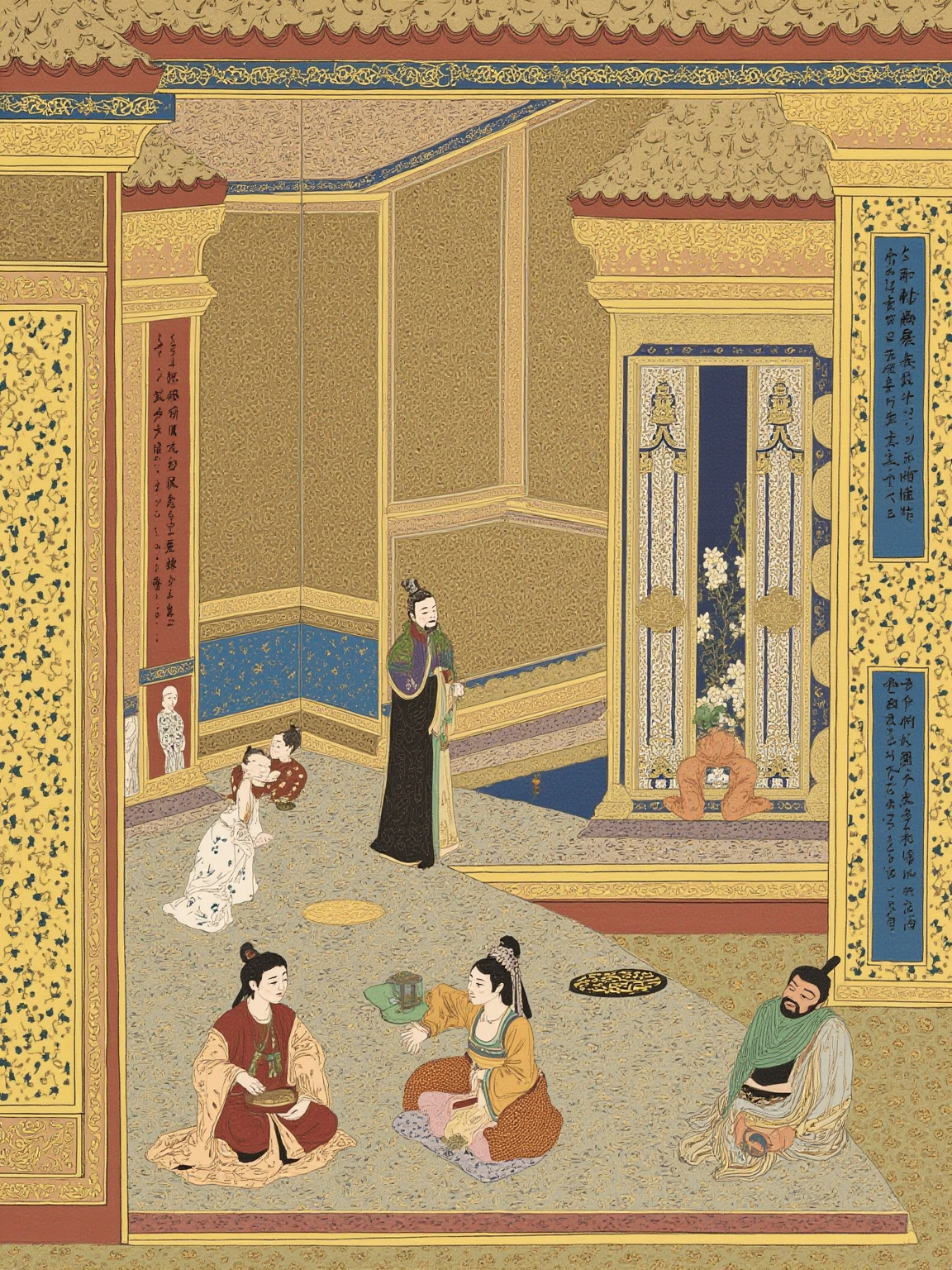
Its visual legacy outgrew the text itself. The whole vocabulary of the Sasanian court, arches, inlay, hunting scenes, horses, musicians, rose gardens, the chisel marks at Bisotun, the milk canal, handed later Persian miniaturists ready-made subjects. For a thousand years, painters in Iran, Azerbaijan, Turkey, and Central Asia kept returning to the same handful of moments, until this book's place in the history of images came to outweigh its place in the history of literature.
Opening it today, you are not just watching a love triangle play out. You are looking at an entire court world preserved in gold leaf and scrollwork. The book has lasted because everyone who opens it can still smell the roses in the picture.
You already know the plot, so why read the poem itself
The king wins everything, and the stonecutter wins the poem's heart — the secret of this book is not the ending, it's the second your own chest tightens at the false news.
A guide like this one can give you the map, the characters, the bones of the plot. What it cannot give you is Nizami's actual sentences: sixty-five hundred rhyming couplets of Persian verse that carry weight, sound, and rhythm of their own. Read the original and you can hear Farhad's hammer landing, blow by blow, on the poem's own rhyme. You can hear the word no, when Shirin refuses Khosrow, land half a beat heavier than it should, because the poet wanted it that way.
Then there are the sensory details no summary can carry: what Shirin smells riding through the roses, what sound Farhad hears from the water inside the mountain, what it sounds like from the king's chariot as the wheels behind him carry the True Cross over the paving stones of Jerusalem. None of that survives outside the original.
If you ever get the chance to read it properly, start by lingering on the Farhad section. Do not rush to the ending. Let that hammer keep landing in your ear a while longer — it is the true heart of this book.
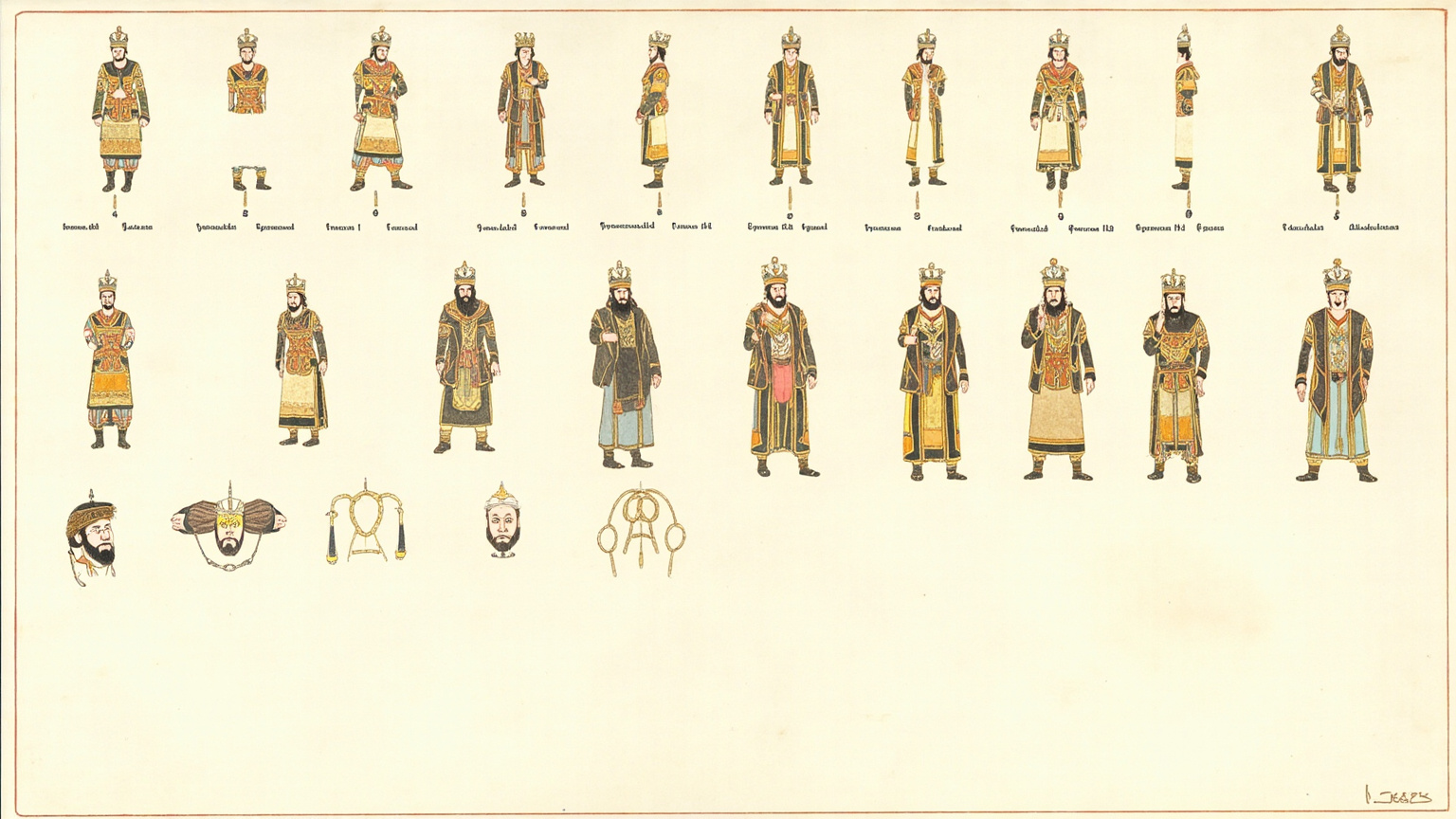
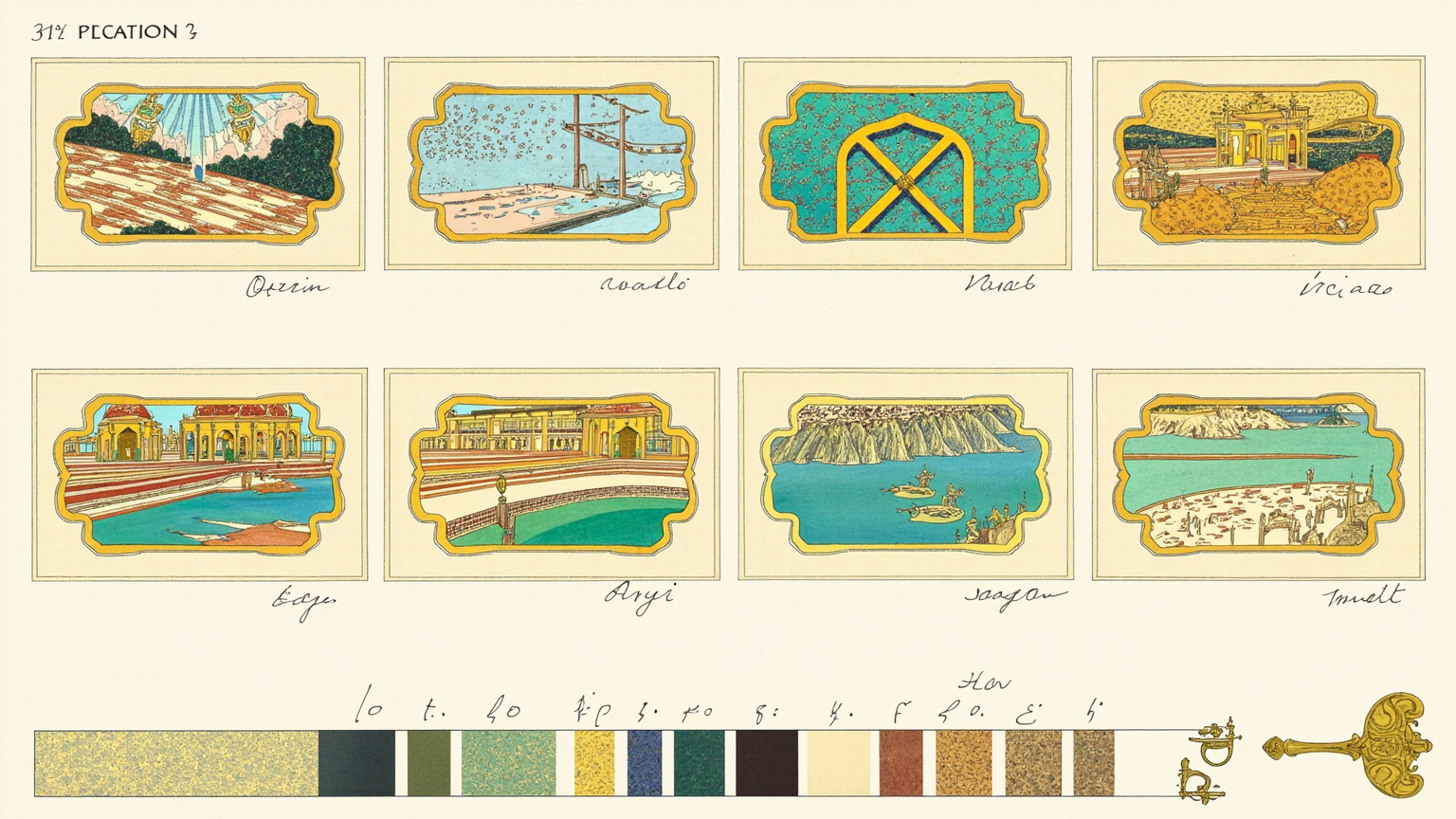
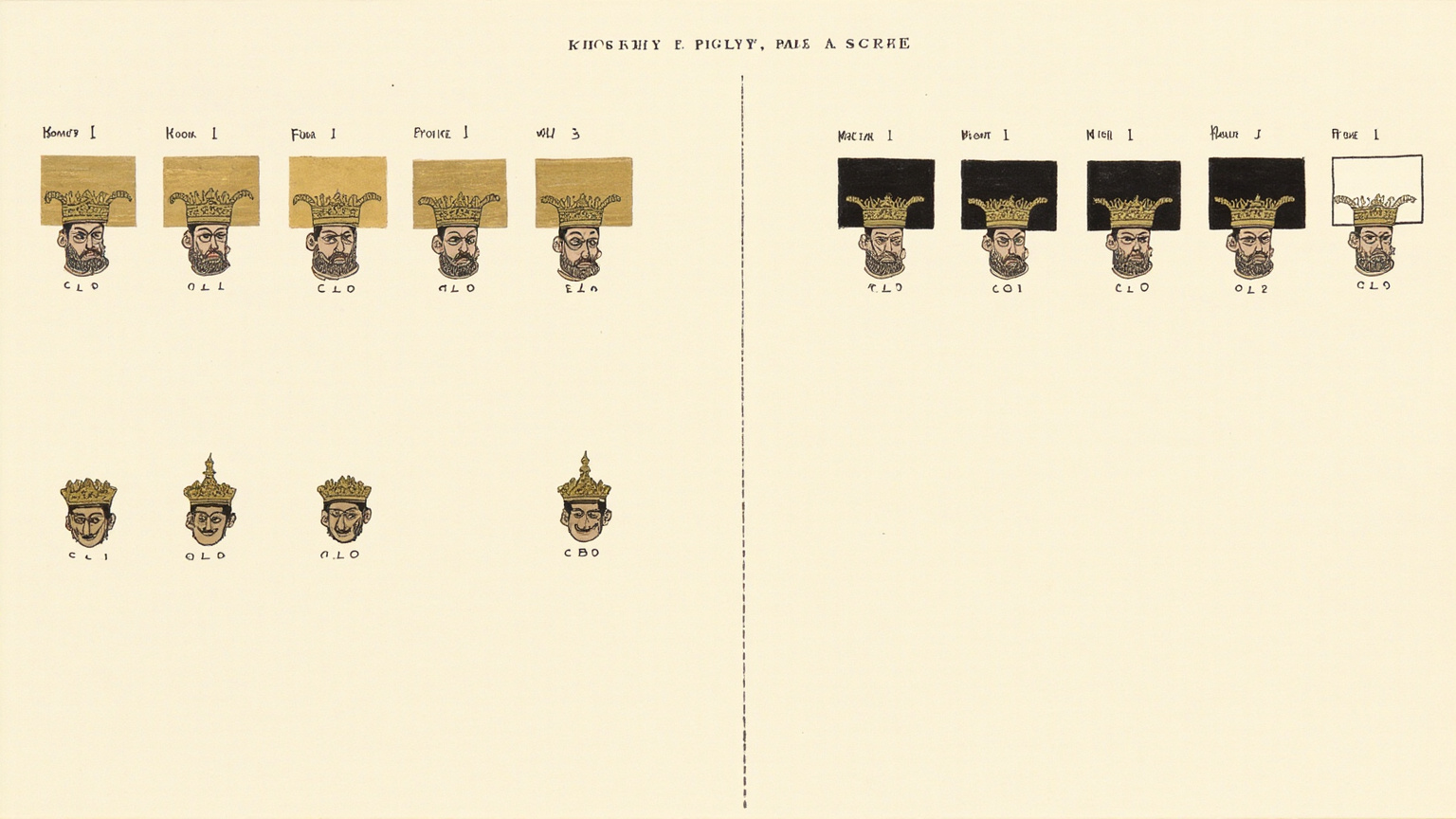
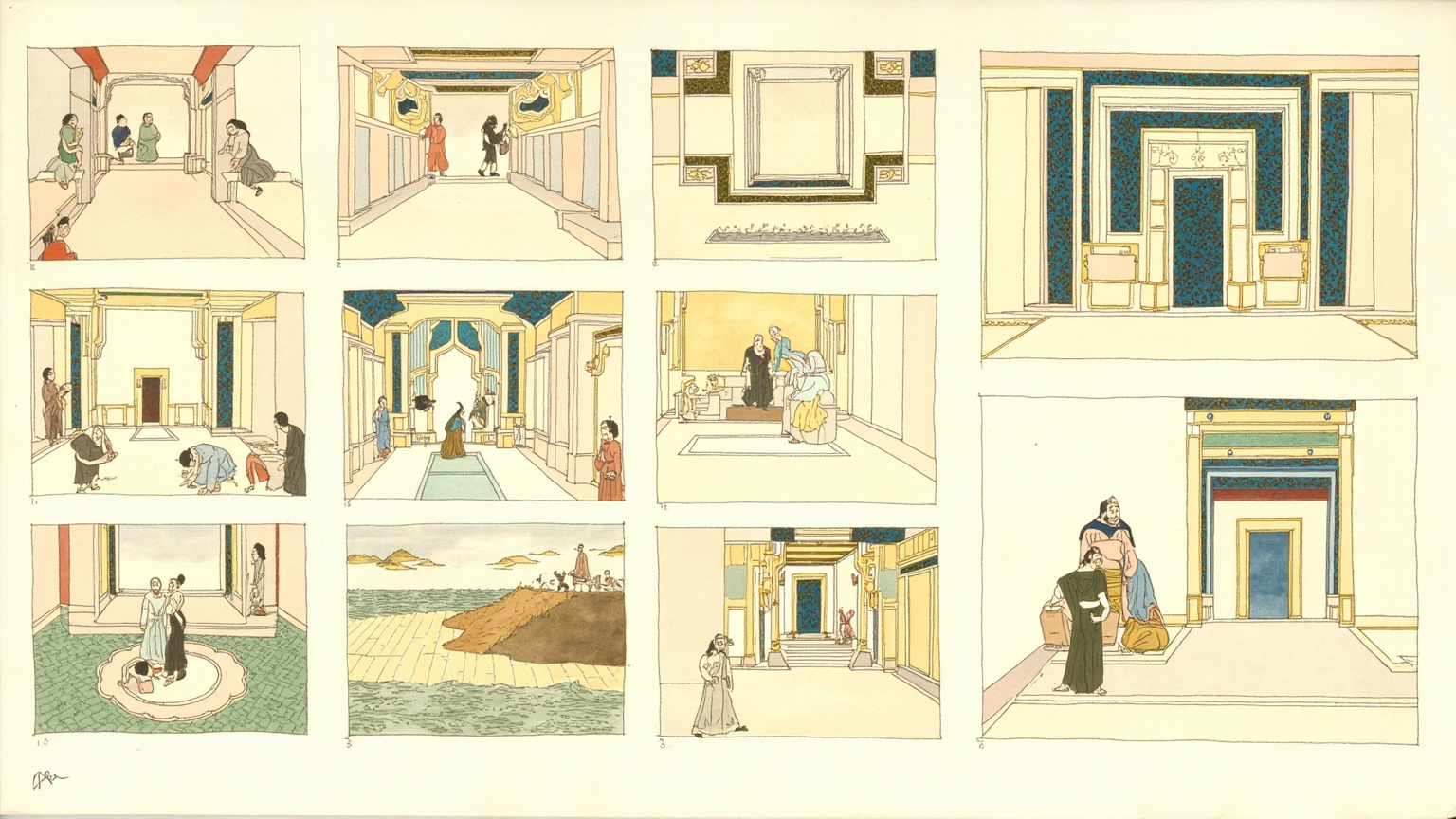
Art Direction4 plates
Before the guide was written, this book got a visual foundation — every illustration you just read grew out of it.