Kutadgu Bilig (Wisdom of Royal Glory) · Companion Guide
福乐智慧
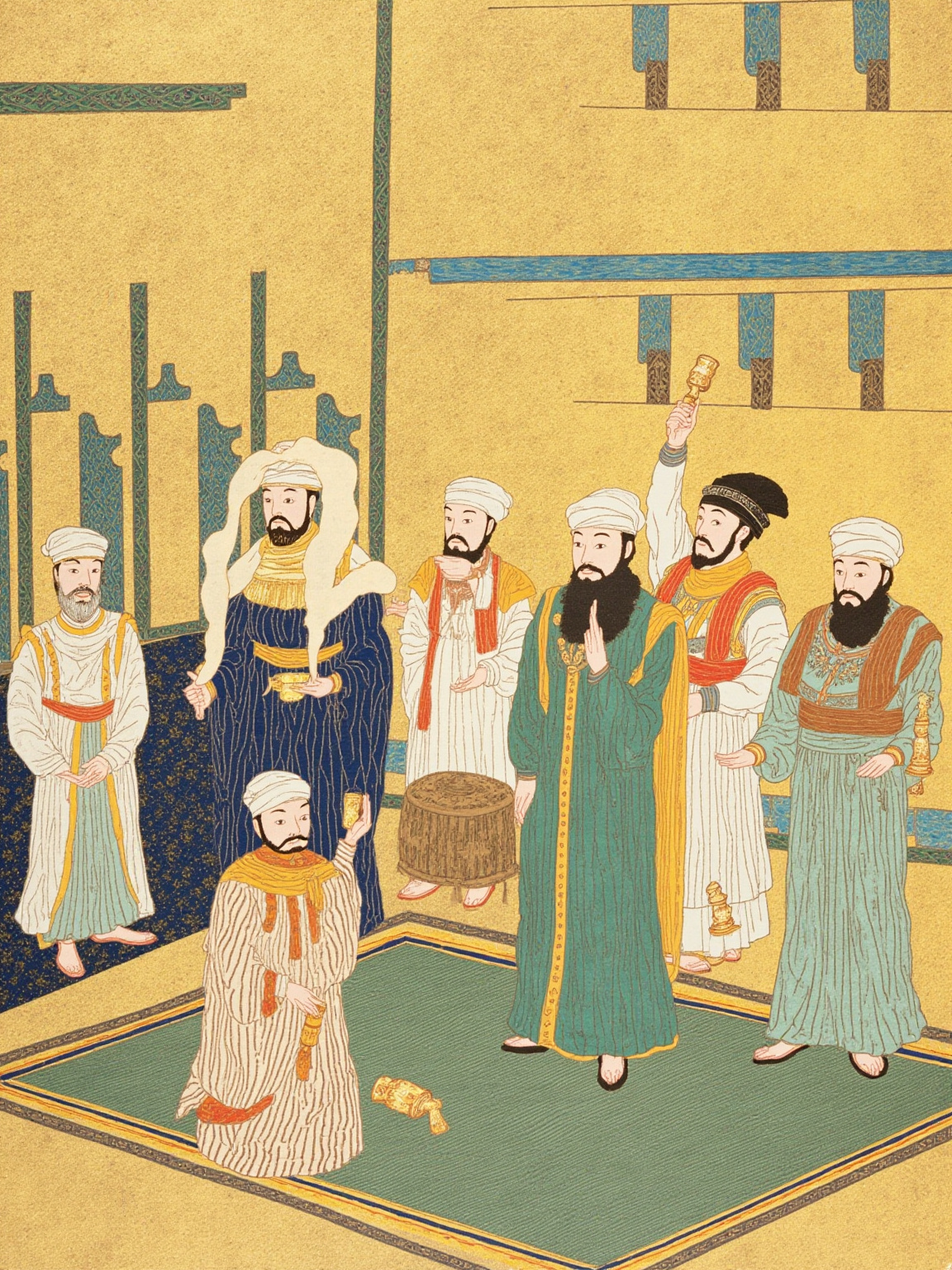
四个抽象理念化身入朝对坐,把公正、幸运、智慧、知足辩一遍——没有情节的诗,写下了整个王朝。
Opening
A long poem in rhyming couplets, written in the Old Uyghur script, lay on the desk of Tavghach Bughra Khan, ruler of the Karakhanid khanate. Its author had just turned fifty-one, and had pressed a lifetime of reading, travel, and caravans watched from the roadside into some thirteen thousand lines. The king opened to the first page and found no story — only four abstract ideas made flesh, sitting in a palace, talking.
Outside the city walls, caravan bells rang from dawn to dusk. Behind palace gates tiled in blue-green glaze sat the poet, born Aji Yusuf, though he would not carry the title Khass Hajib, Privy Chamberlain, until after he presented the book.
What Kind of Book Is This
Kutadgu Bilig is the first large-scale work of Turkic literature with a firm date attached to it, and the first long philosophical narrative poem in Uyghur literary history. It is written in masnavi form, in the Arabic aruz meter: two half-lines to a verse, one rhyme per couplet, the rhythm held tight throughout.
What has fixed its place in Chinese literary history is not the plot, which barely exists, but the way it works maxims of statecraft from the Han Chinese tradition, the kind found in the Di Fan, a Tang-dynasty manual of counsel for rulers, into the meter of Old Uyghur poetry. Its prose preface says as much: the work is adorned with the maxims of the sages of Chin and the poems of the scholars of Machin. The poem is, in other words, a meeting point on the Silk Road between Han Chinese and Old Uyghur traditions.
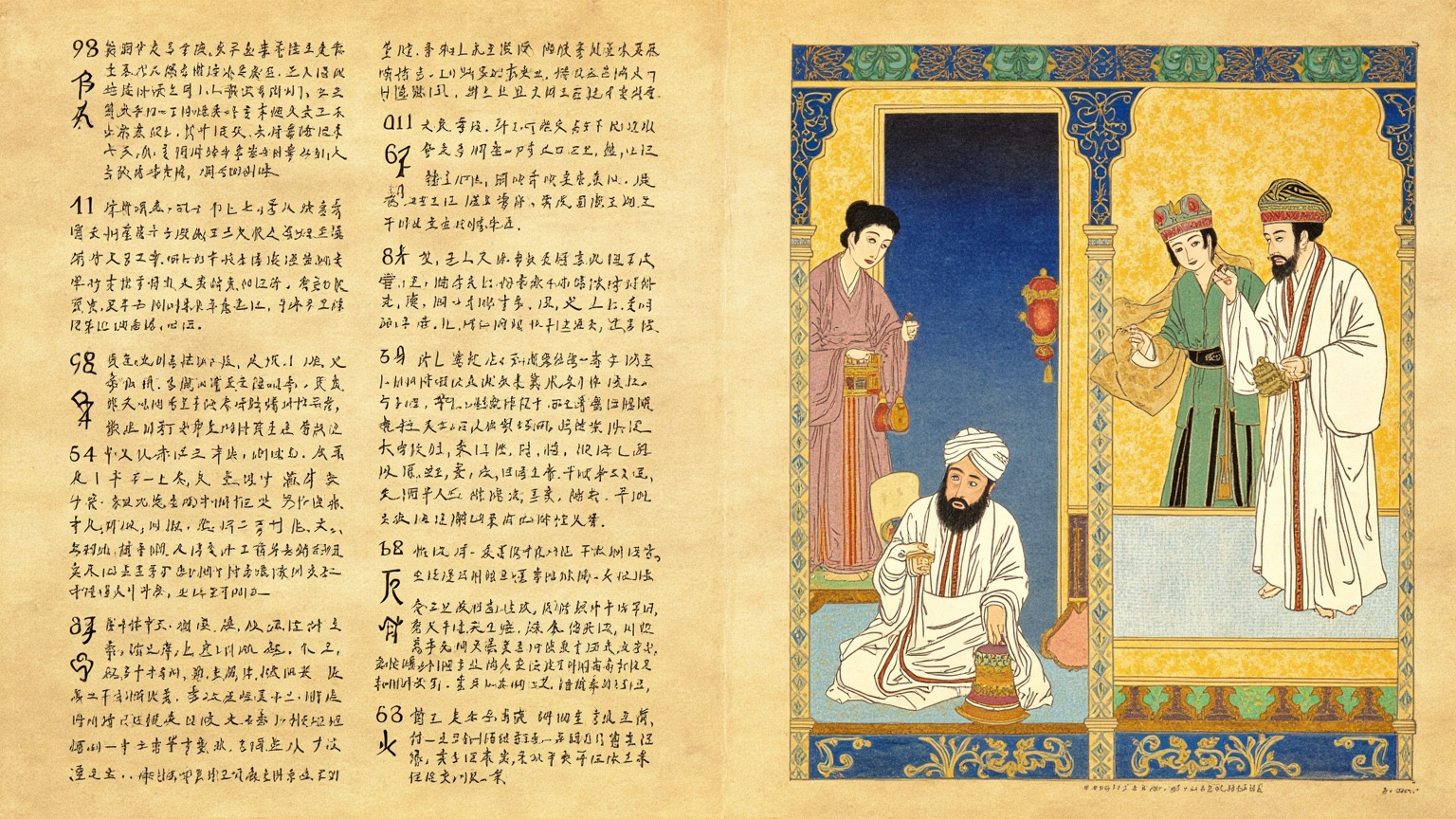
This book is adorned with the sayings of sages of Cathay and the verses of scholars of Machin, that it may be a beacon of happiness to the reader.
我以秦地哲士的箴言和马秦学者的诗篇装饰此书,愿它成为读者的一盏福灯。
金句 · 序言 · 以秦地箴言装饰此书
For a reader today, half its weight comes from scarcity: nothing else quite like it survives. The other half comes from scale — it lays out an entire Karakhanid world in verse.
Characters and World
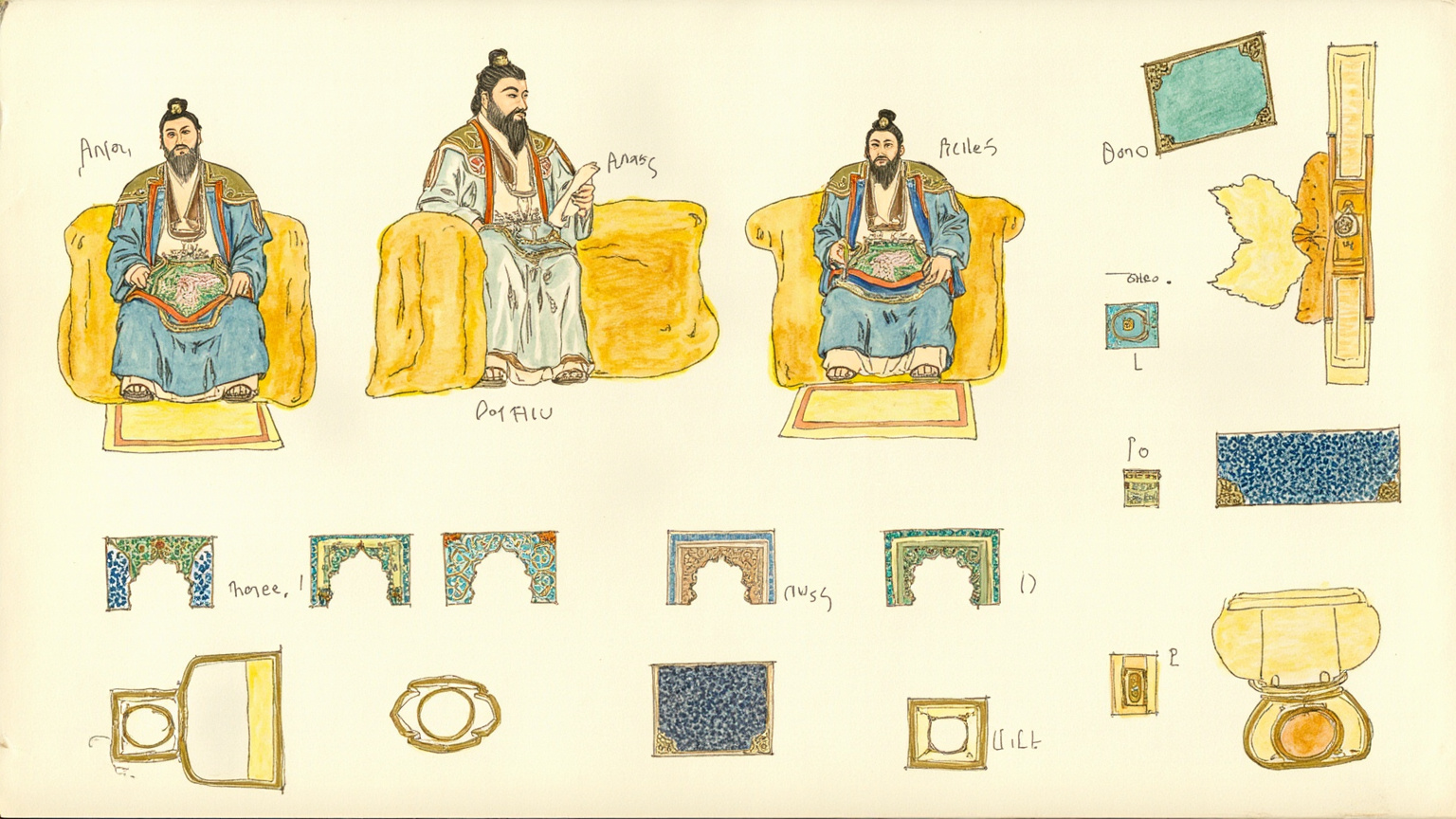
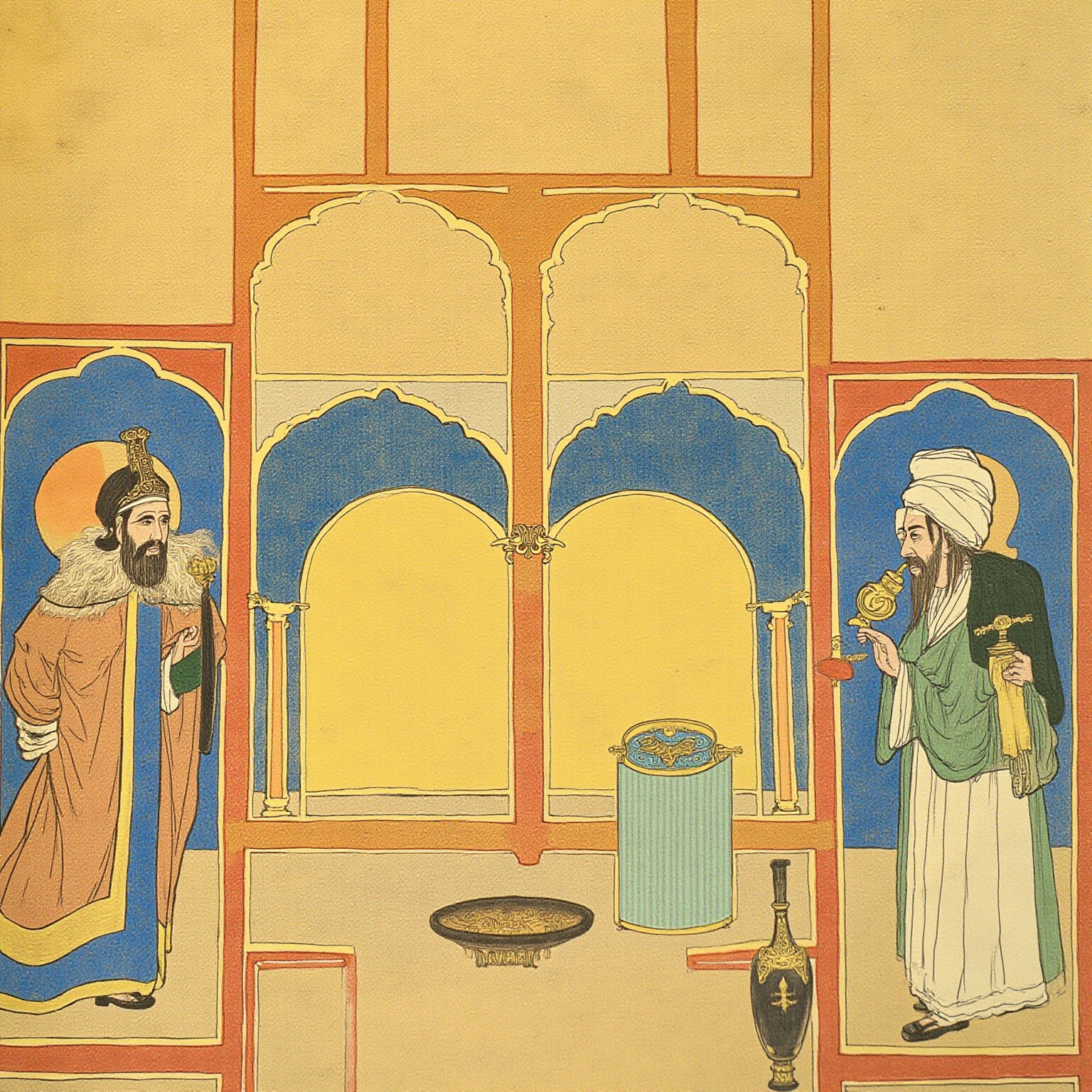
The four characters are not really characters — they are four ideas wearing human shape. The king is named Rising Sun, standing for justice and the rule of law; he wants a worthy minister so badly that the whole court seems papered with his summons for one. The minister is named Full Moon, standing for fortune; Rising Sun calls him to court and makes him vizier. Under his rule the kingdom prospers, and on his deathbed he recommends his own son to succeed him.
The vizier's son is named Highly Praised, standing for wisdom and reason. He takes his father's post as instructed, masters the logic of knowledge, and then travels three times into the wilderness to bring his kinsman Wide Awake back to court. Wide Awake stands for contentment and the world to come; he is a hermit, indifferent to office, and turns Highly Praised down three times, urging him each time to keep his mind on serving the state instead.
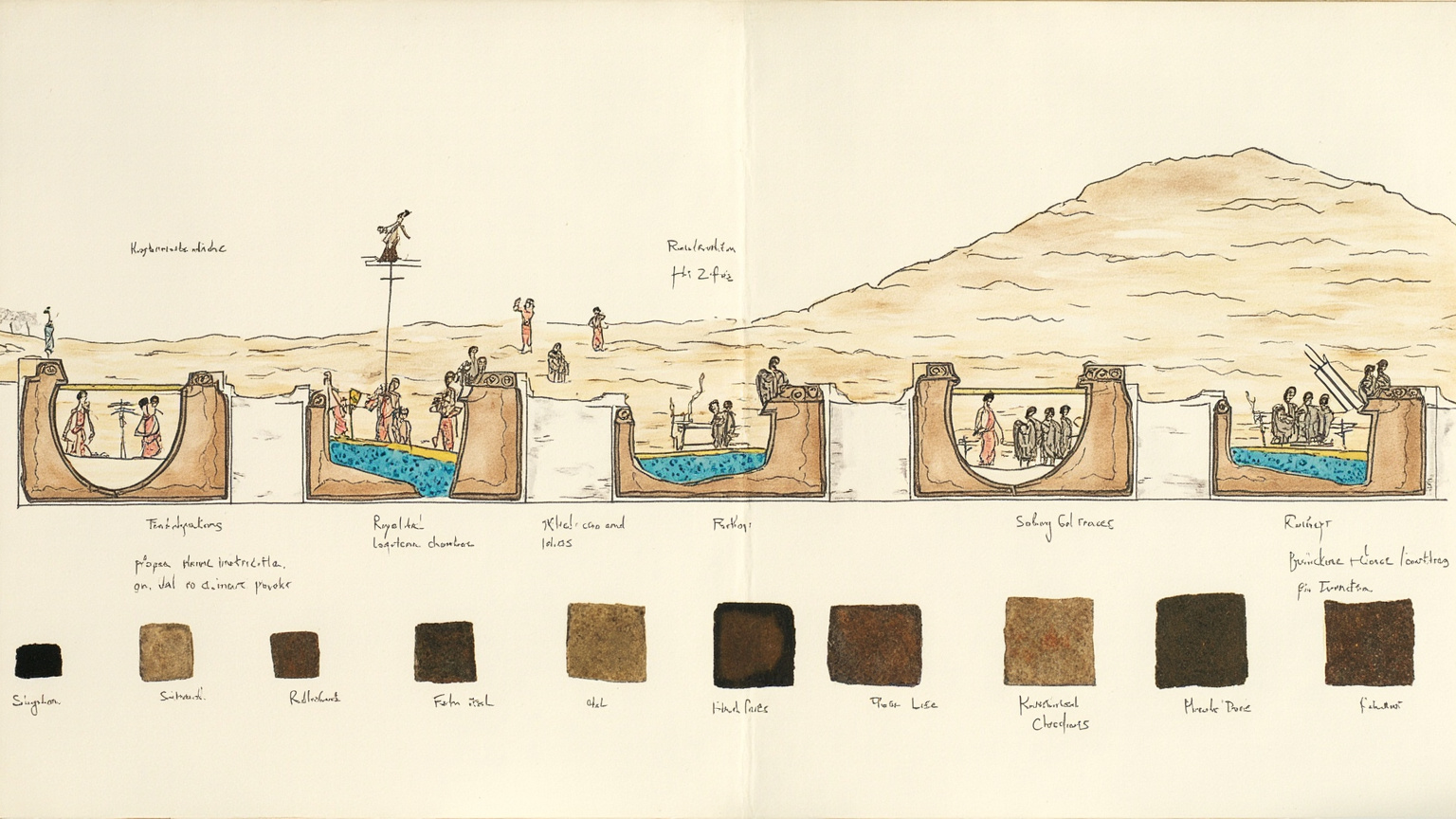
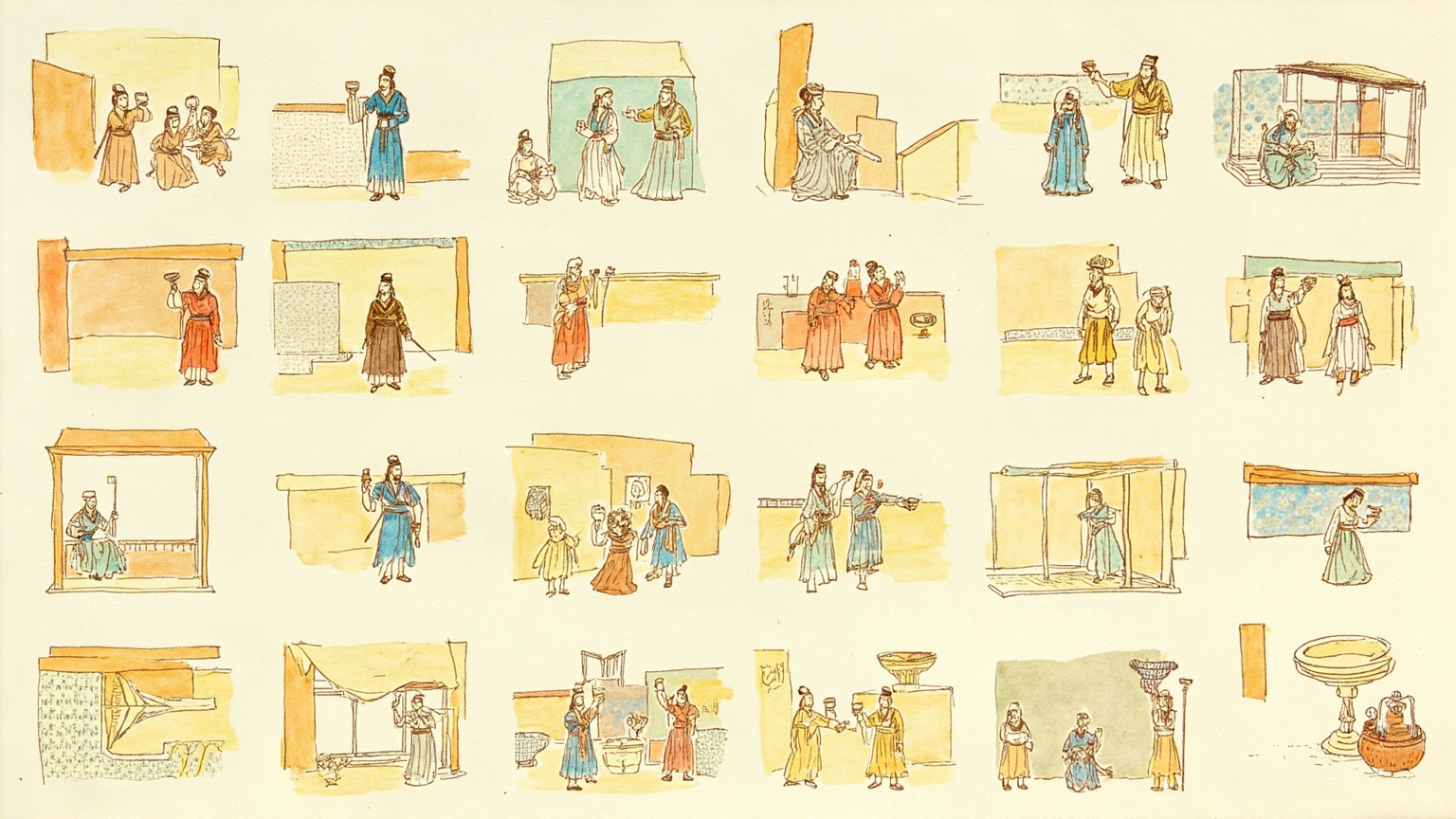
The world of the poem is the Karakhanid khanate of the mid-eleventh century, stretching from what is now western Xinjiang into Central Asia. The author sets it in Kashgar: markets by the poplar trees and karez wells, blue-green glaze on the palace gates, a court crowded with carpets and copper vessels, caravans moving day and night along the Silk Road. The Karakhanids called themselves Tavghach, part of China, so the poem's worldview draws on two sources at once: the statecraft tradition of the Chinese heartland, and the poetic tradition of the Old Uyghurs.
The world is wide, yet the heart that knows itself needs no kingdom to dwell in.
世界再宽,一颗自足的心便是它自己的国土。
金句 · 第3章 · 觉醒论知足
How the Plot Moves
Yusuf was born around the start of the eleventh century in Balasagun, on the south bank of the Chu River in what is now Kyrgyzstan, into a well-established family that gave him a solid education. He learned Arabic and Persian, traveled east to Kashgar as a young man, and spent decades there studying, teaching, and working quietly.
Past fifty, Yusuf began to write. In eighteen months he pressed decades of learning, thought, and observation of Central Asian society into eighty-five chapters of rhymed couplets in aruz meter. He presented the finished work to Tavghach Bughra Khan, the ruling khan, who was so pleased that he granted him the title Khass Hajib — Privy Chamberlain, a post combining royal attendant and senior advisor.
The poem opens with the king, Rising Sun, brooding: he wants a worthy minister and cannot find one. Full Moon, standing for fortune, hears of this and offers himself; he is made vizier, and from then on king and minister sit across from each other in dialogue. It opens as a debate on statecraft. Full Moon argues that just law is what makes a kingdom strong, and maxims follow in its wake: tyranny is fire, and law and ritual are water.
Tyranny is fire; law and courtesy are the water that quenches it.
暴政如火,礼法如水。
金句 · 第6章 · 日出与月圆论治道
The real turn comes when Full Moon falls ill and, on his deathbed, recommends his son Highly Praised to succeed him. Highly Praised takes the post, grasps knowledge and reason thoroughly, and picks up the dialogue with Rising Sun where his father left off, working over claims like: knowledge is what has made humankind great. This is not a court-intrigue plot. There is no scheming in the shadows, only two generations of vizier and the same king, talking across a table, first about government and then about how to live.
Highly Praised deeply respects his kinsman Wide Awake, the hermit who stands for contentment and the world to come, and goes to him three times in person to ask him to leave his retreat. Wide Awake, stubborn in his coarse robe, content with his quiet discipline and indifferent to rank, turns him down three times. But each time he refuses, he adds the same counsel back: contentment is good, but governing the state matters more, and Highly Praised still owes the country his service.
What results is a rare tension among four ideas: justice, fortune, wisdom, contentment, each arguing its own case while trying to win the others over. The king seeks justice, Full Moon answers with fortune, Highly Praised pushes forward with knowledge, and Wide Awake advances by retreating. The poem's plot is really just this back-and-forth argument, but what the argument produces is the whole political ethics and philosophy of life of the medieval Karakhanid world.

Man has risen above all creatures today by the grace of knowledge.
人类因有知识,今天变得高大。
金句 · 第14章 · 贤明论知识之用
The poem closes on the ongoing dialogue between King Rising Sun, Highly Praised, and Wide Awake. A prose preface at the end states the purpose plainly: to offer readers knowledge that brings happiness, adorned, again, with the maxims of the sages of Chin and the poems of the scholars of Machin. The last sound is a quiet one, an old poet closing the book.
The cleverest thing about how it is written is that the author folds knowledge, law, ethics, Silk Road trade, and the practical business of every profession into the talk between these four people. In other words, this poem with almost no plot carries an entire encyclopedia of the Karakhanid world on dialogue alone. Just when you think it is debating first principles, the next passage is weights and measures. Just when you think it is describing trade, the one after that is law. Just when you think it is philosophy, the next line is the marketplace.
Theme and Craft
What the poem is really asking is how worldly justice and otherworldly contentment can coexist. On one side stand Rising Sun, Full Moon, and Highly Praised: a ruler must build the state on law and knowledge. On the other stands Wide Awake: life is short, fortune is unreliable, and contentment is where it all ends. Both threads are laid out at once through the four characters, with no resolution and no winner. The author simply lets them run side by side.
The regard it has earned since rests on three things. As form, giving abstract ideas human bodies who argue with each other is a rare pattern in the literature of China's ethnic minorities. As culture, it fuses Han Chinese maxims of statecraft with the poetic tradition of the Old Uyghurs into a single alloy. As a historical record, it is a mirror held up to eleventh-century Central Asia, and since the nineteenth century it has been unavoidable ground for Turkology and Oriental studies.
Take what is enough, and let the world pass; the sober heart outlasts the throne.
取你所需便止,让世界流过;清醒的心,比王座更耐久。
金句 · 第28章 · 觉醒三辞召
The most immediate modern jolt of reading it is realizing that someone was already doing this a thousand years ago: turning ideas into characters and setting them to argue, and doing it thoroughly.
A poem with almost no plot, four ideas given bodies and set down to talk, laying out an entire kingdom in verse — that is Kutadgu Bilig's quietest and most extravagant ambition.
Why Read the Text Itself
A guide like this one can tell you what the four characters stand for, and why literary history remembers this poem. What it cannot give you is the tight, steady breath of the couplets themselves, rhyme after rhyme in aruz meter — read enough of the masnavi's turns and returns and you will suddenly understand why the king could not put the book down. Nor can it substitute for the density of that encyclopedia: the details of law, knowledge, and Silk Road trade are woven into the verse itself, and there is no way to feel how a Central Asian poet wove an entire society's texture into rhyming couplets without reading the lines. That ground belongs to the text alone.
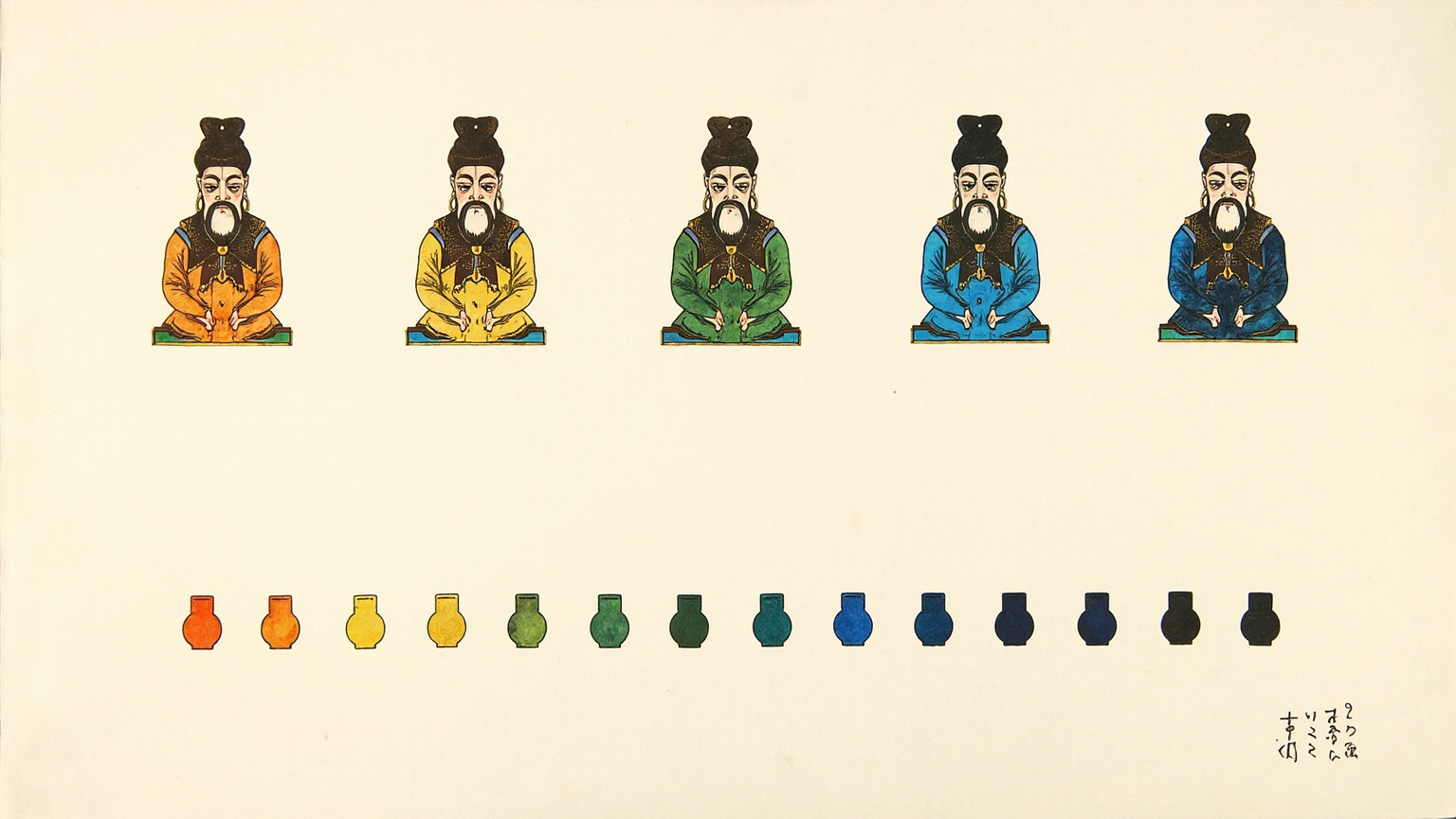
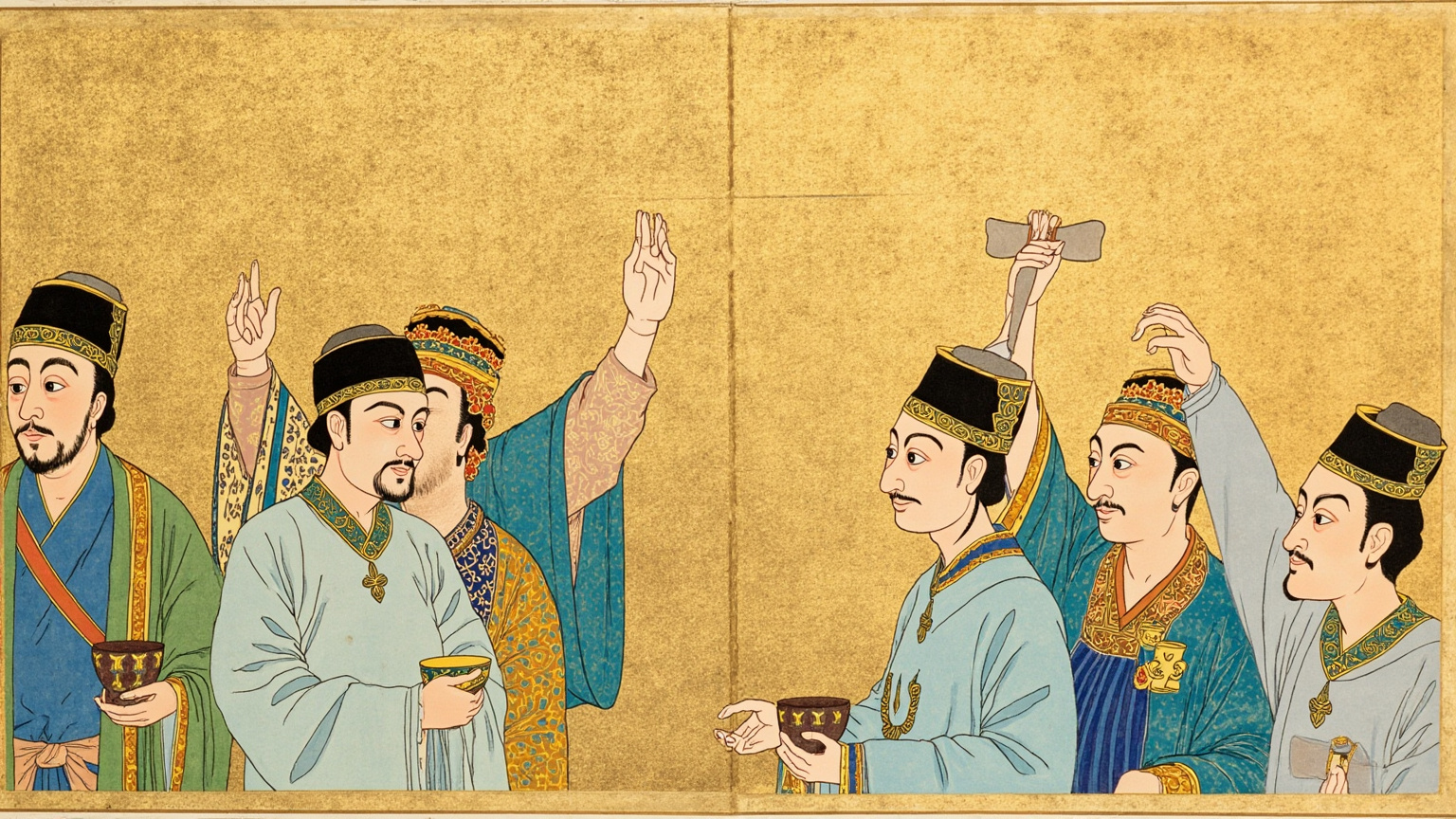
Art Direction4 plates
Before the guide was written, this book got a visual foundation — every illustration you just read grew out of it.