La Araucana · Companion Guide
阿劳加纳
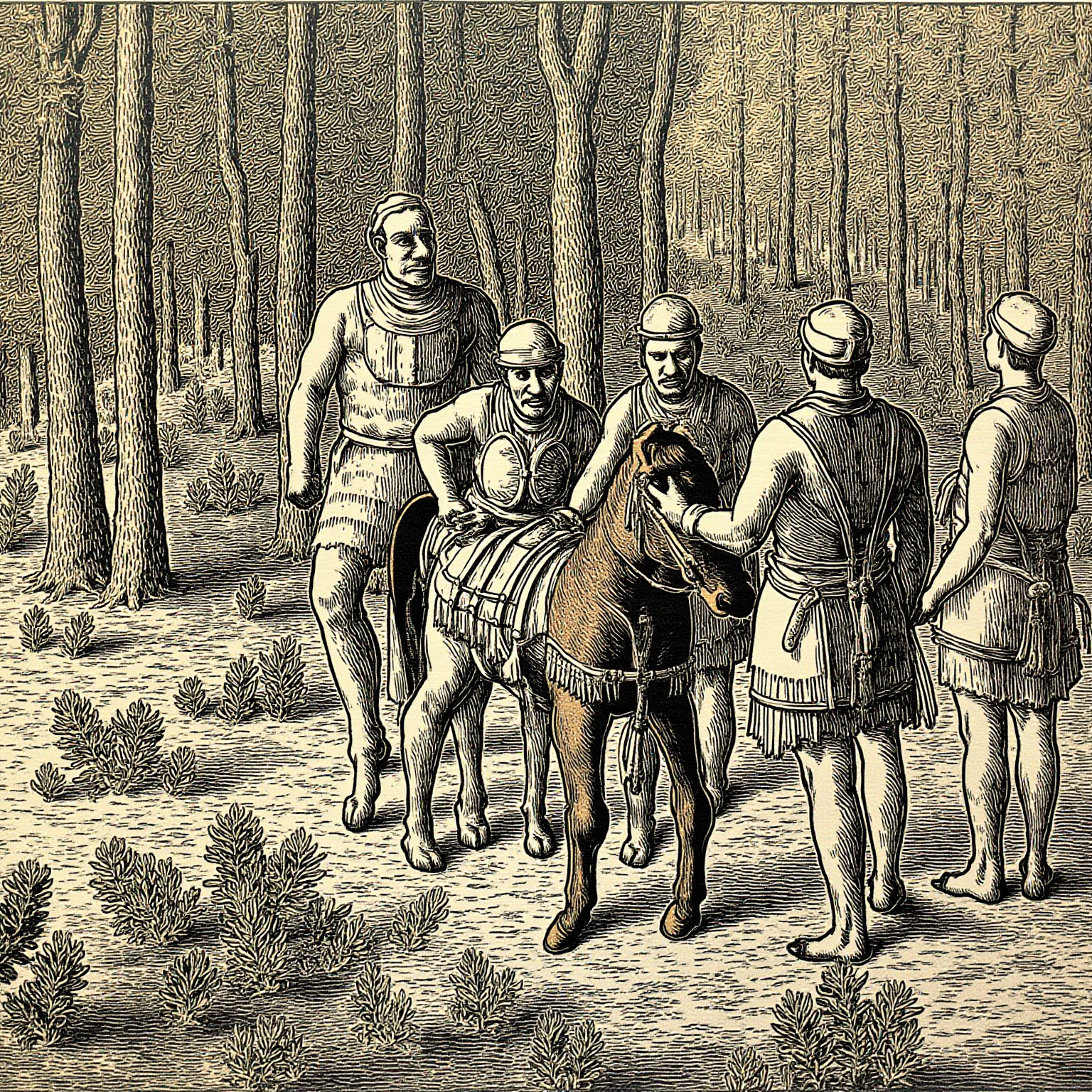
1557年冬雨林深处,帝国铁甲与原木扛起的战时领袖遥遥对望——谁才是这片潮湿边境真正的主人?
A Log Carried for Two Days and Two Nights
A young Mapuche candidate hoisted a thick log onto his shoulder and walked through the crowd. The rule was simple: set it down and you were out. Two days and two nights later, every other candidate had collapsed. He was still standing. The whole people acclaimed him toqui — war leader. A young Spanish officer stood at the edge of that crowd, wearing iron armor and holding a quill, and wrote the scene into a chapter that has almost no equal in European literature.
The Strange Identity of This Book
La Araucana is a long narrative poem from the late Spanish Renaissance, published in Madrid in three parts: 1569, 1578, and 1589. The whole work is built in strict octava real, eight-line stanzas of eleven syllables each, thirty-seven cantos across the three parts. Its author was Alonso de Ercilla y Zúñiga, a young noble officer who marched south to Chile with the Spanish expeditionary force. The motive behind it was orthodox enough: to lay the campaigns of the Arauco frontier at the feet of King Philip II. But the work dedicated to that king gives its lead roles almost entirely to Mapuche war leaders — Caupolicán, Lautaro, Galvarino. These are names every Latin American schoolchild knows, and exactly the kind classical European epic would never let onto its page.
Who Was Mapuche, Who Was Spanish
The story unfolds in the second half of the sixteenth century, in a stretch of wet, rain-soaked country in southern Chile that runs from the Biobío River down to the foothills of the Andes. Along this narrow strip, the Arauco frontier, the Spanish brought iron armor, matchlock guns, the cross, and colonial paperwork from the north; the Mapuche tribes met them with hide armor, wooden spears, forest councils, and terrain they had known for generations. Neither side is a cardboard cutout. Among the Spanish there were conquistadors who mixed courage with obsession; among the Mapuche there were war leaders, and elders who argued for sitting down at the table instead. This is the judgment the record leaves us: the original poem writes both sides as people worth putting on the page, not as heroes against villains.
The Mapuche are a people who are still here — the "Araucanians" of the title is the sixteenth-century Spanish name for them, "Mapuche" is what they call themselves — not a fossil out of legend. Any portrait of them in La Araucana has to be read with that historical weight in mind. Caupolicán and Lautaro, the two central war leaders, are drawn without condescension and without cheap exoticism, closer to the reverence Homer gives his heroes. This is a point the record keeps pressing.
The author himself, Ercilla, does not just sign the poem — he is its "I." In his early twenties, a young noble in service, he marched to Arauco in 1557 under General Alba's second expedition south. In Canto 15 there is a scene that nearly cost him his life: surrounded with his comrades, fighting on with a broken sword, and getting out alive only by luck. He wrote these stanzas in the gaps between such moments, and that double life is why the whole work reads as both document and eyewitness account, still warm to the touch.
How the Campaign Opened in the Rainforest
The poem opens with the second southern expedition of 1557. Wet forest, a winter that never stops raining, burned palisades, the sudden war cry of Mapuche fighters bursting out of the trees — set against the full kit of iron armor and firearms the Spanish hauled over from Europe, this pairing of images is the poem's visual signature from the first canto to the last.
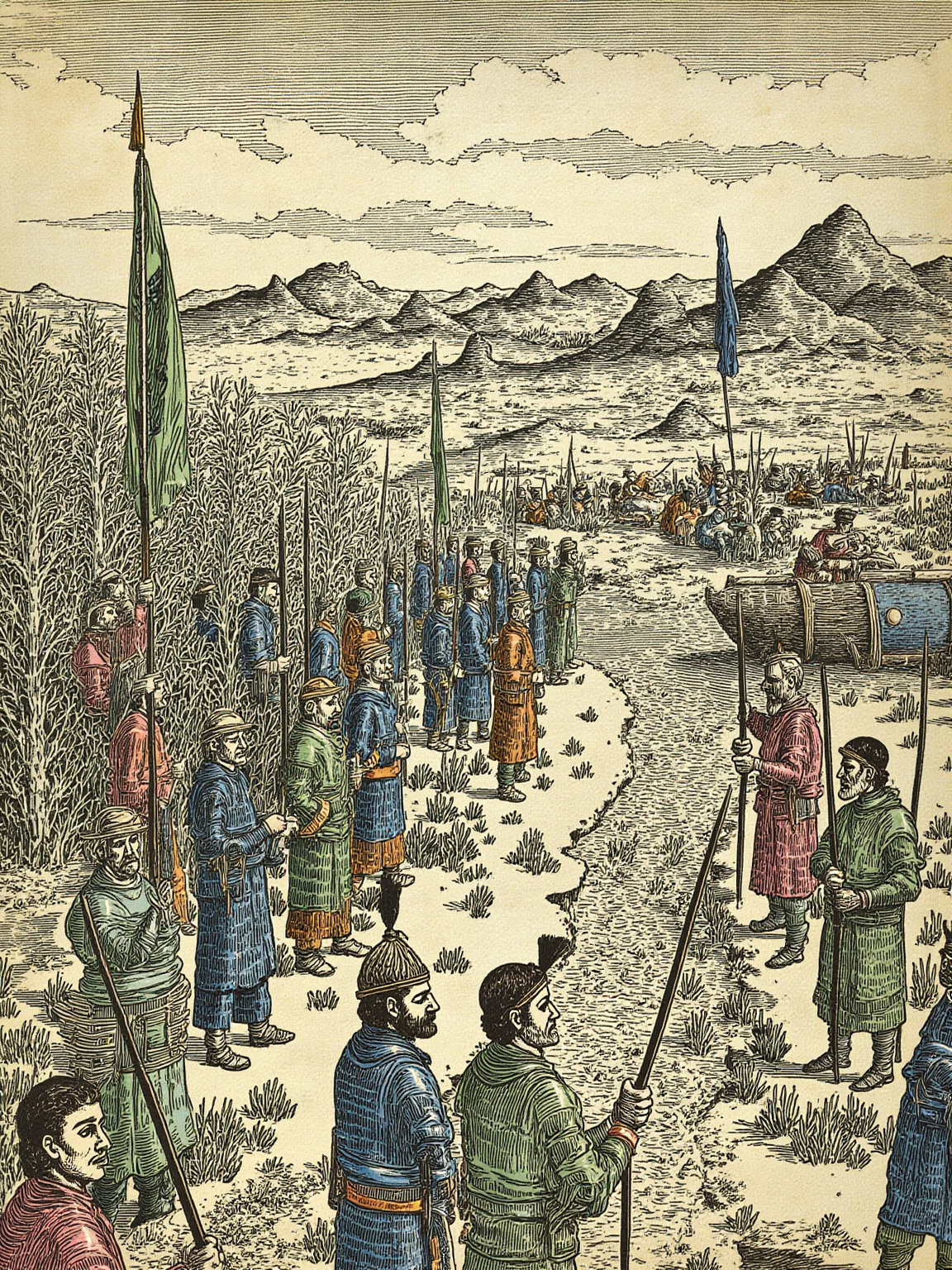
The land is wide, the climate harsh, the region of Araucana so fierce by nature and by custom that none has ever subdued it by force.
这片疆土辽阔,气候严酷,阿劳加纳之地因天性与风俗而凶悍无比,从未有人凭武力将它真正征服。
金句 · 第一部 · 总序与南征启程
Ercilla went into that war zone as a regular soldier trading ground with native forces at the front, not as a young man out to write literature. He wrote scenes down on the march and only published them properly in Madrid years later. The easiest thing to forget while reading this book is that it was written on the spot. These stanzas are not a study's daydream.
The Morning Caupolicán Stepped Forward
The ritual for choosing a war leader is one of the poem's grandest passages. Each candidate shouldered a log of equal weight and walked the council ground, forbidden to set it down before time was up. The log was a real test of the body — a man who carried it without breaking proved his strength, his endurance, his will, in front of the whole tribe watching. Caupolicán finished the course. The writing here is close to Homer. Candidate after candidate went down; he alone walked the whole distance and was acclaimed toqui by unanimous voice. That moment gives him the weight of a man of consequence, and it is where every battle that follows draws its legitimacy.
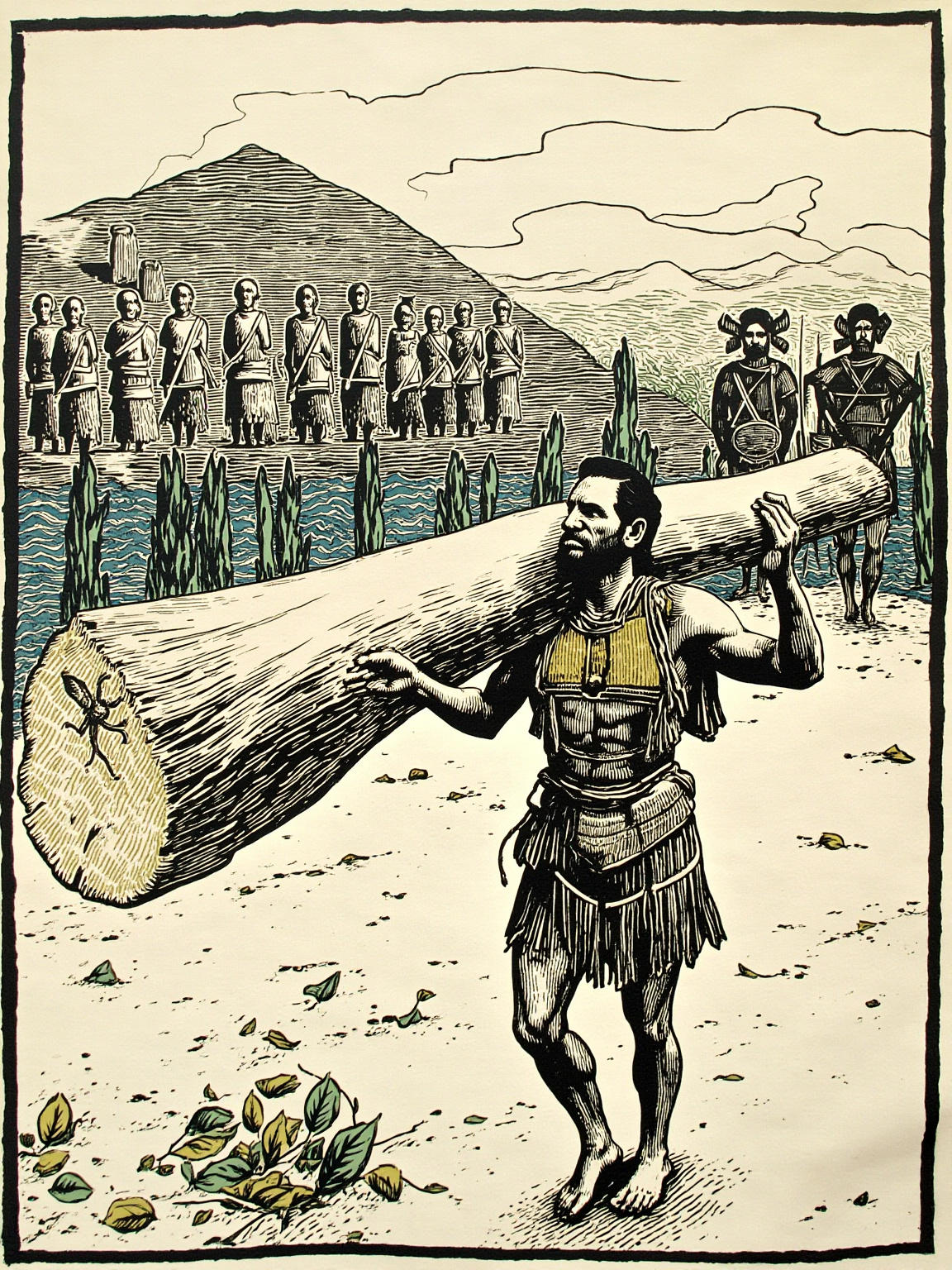
He took the heavy trunk upon his shoulder, bore it through the night and the following day without pause, and the people chose him Toqui.
他把那根粗重的原木扛上肩头,整夜又整日不曾歇脚,族中众人遂一致拥戴他为托基。
金句 · 第二部 · 考波利坎的推举
Lautaro's Reversal
Caupolicán is the toqui, the pillar the battlefield almost never breaks. But the figure who really keeps a reader from sitting still is Lautaro. Young, once captured and put into service as page to a Spanish cavalry captain named Vitaqui, he learned at his master's side things he had no way of knowing before: the cavalry charge, tight formation, where an armored horseman is weak. Once he got back to his own people, Lautaro turned that training against the Spanish. He knew the mountains, the forest trails, which gully made a good ambush, which wetland would swallow a horse's hooves, and he knew formations he had effectively stolen from the enemy. He is the poem's second pillar, and later Chilean nationalism would go further and crown him a forefather of independence, a hat the poem itself never puts on him, though the wit and the physical grace it gives him on the page are vivid enough on their own.
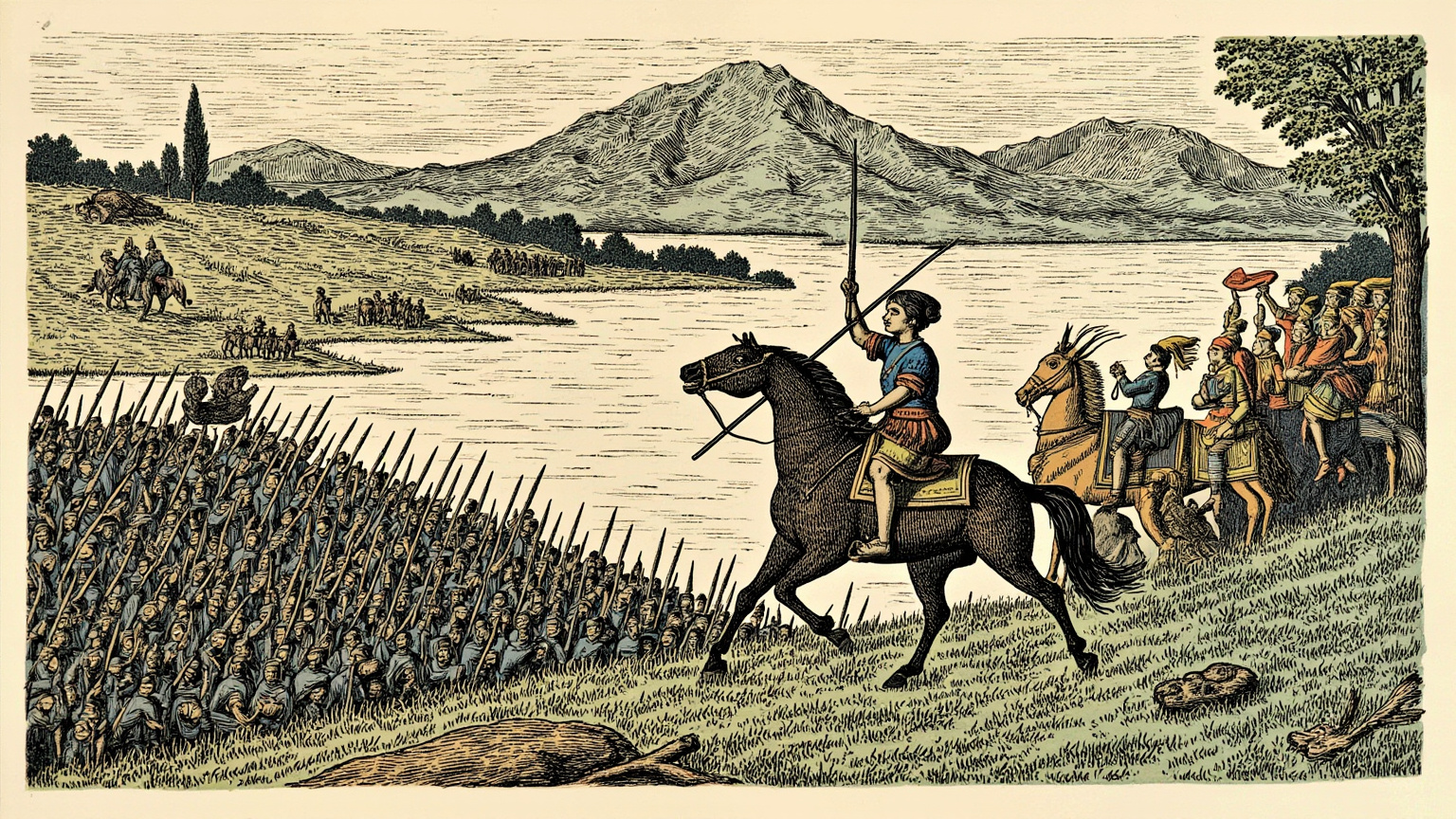
Lautaro, once captive among the Spaniards, turned the conqueror's own arts back against them, and struck terror into the ranks he had served.
劳塔罗曾为西班牙人鞍前马后,如今反以征服者的战法回敬他们,令他曾服役的军阵为之胆寒。
金句 · 第二部 · 劳塔罗的反戈
There is a rare move in this stretch of the poem: the damage Lautaro does to the Spanish comes not from some native style of raiding but from their own methods turned back on them. It reads as tribute laced with irony, a man the conquerors trained comes home and beats the conquerors. The record calls him one of the figures who breaks the old rule that an epic has to stand on the conqueror's side.
Galvarino's Chapter
The most moving and most brutal chapter in Part Two belongs to Galvarino. Captured in battle, he had both hands cut off by the Spanish as punishment, then was sent back among his people, meant as a tool of public humiliation. What the poem does next is not what that punishment was built for: he did not weep, did not surrender. Instead he strapped his shield to the stumps of his arms and charged the enemy line again, until he was killed. The stanzas built around this scene draw a man who will not bow down under the worst that can happen to him. The record adds a caution here too: this is the figure any adaptation or illustration has to handle with the most care, never rendering the severed limbs, the wounds, the torture head-on. The same weight of tragedy has to be carried instead through distance shots of the battle line, profile views, symbolic objects.
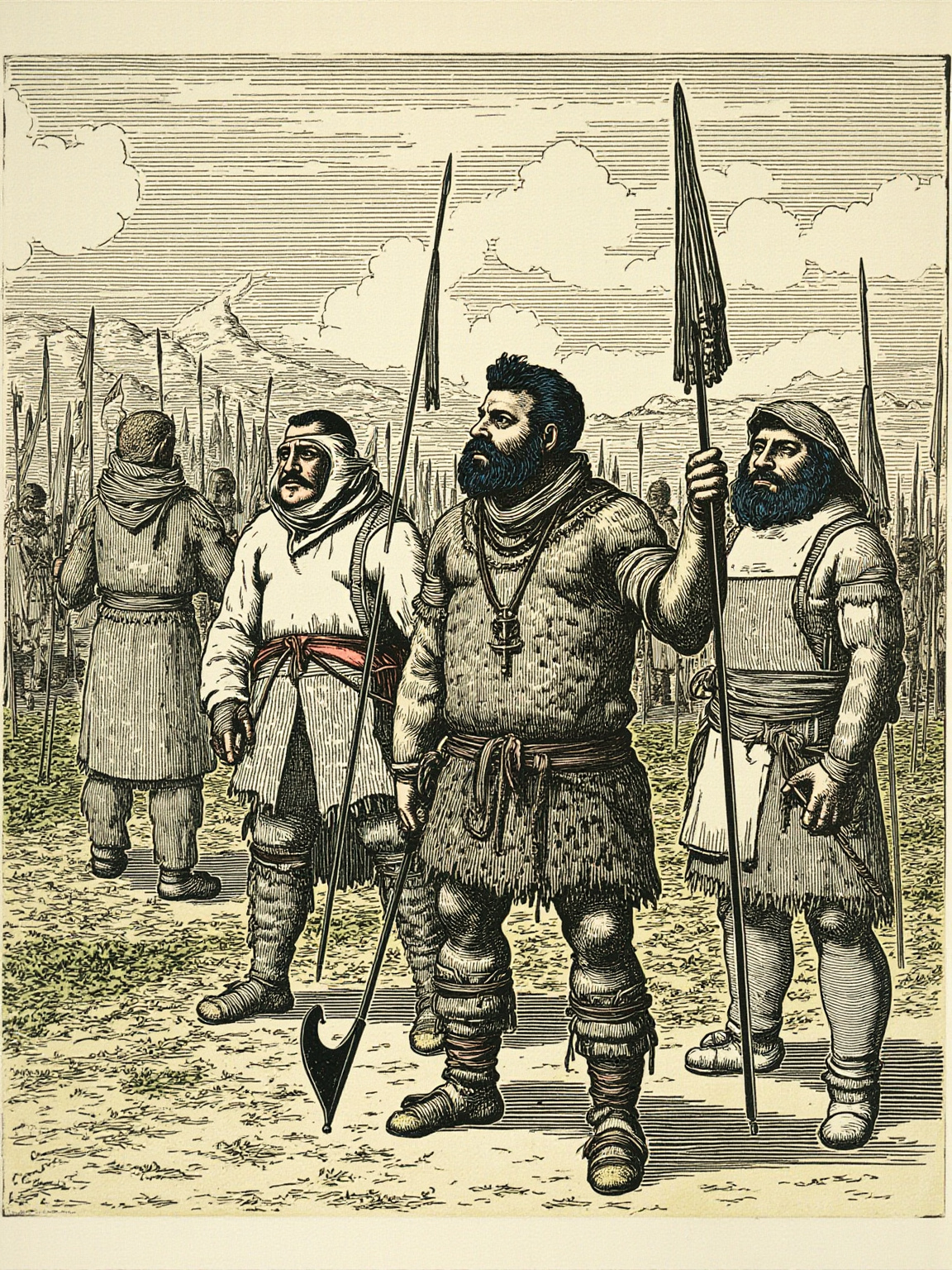
Galbarino, with both hands severed, returned to the battle, bound the shield to his bleeding arms, and fought on until he fell.
加尔瓦里诺双手已断,仍重返战场,把盾牌系紧在淌血的残臂之上,挥杀至死方休。
金句 · 第二部 · 加尔瓦里诺之死
Caupolicán's End
The toqui who was raised up for carrying that log was finally lured into an ambush and taken by seven Spanish horsemen in the forest. The poem then walks through his trial and execution, ending under colonial law with impalement. Ercilla refuses to trade mourning for cursing; he writes Caupolicán as a man who does not bow to fate. The weight given to this elegy outweighs, in the poem itself, the funerals given to more than a few Spanish commanders. Caupolicán's dignity as a defeated man is not a nod to being fair-minded, it is built into the structure of the poem: an enemy put to death is written as someone who deserves a whole canto of praise on his way out.
Caupolicán, captured by treachery, faced the cruel death with a steady soul; and I must lament the man I could not praise as a vassal.
考波利坎以诈术被擒,面对残酷之刑而神色不变;我只能以悼歌相送,再无法以臣子之名颂他。
金句 · 第二部 · 考波利坎的处决与悼词
My first reaction the first time I read Caupolicán's elegy was disbelief — here was a young noble writing verse for his king who had just spent a whole canto grieving the enemy commander he had been fighting days before. That disbelief is the most important thing about this book. It is not anti-colonial propaganda, and it is not a tool for the empire either. It is something harder to name.
Why the Third Part Goes Further
The first two parts mostly finish off local pieces of the war. The third lifts the whole Arauco War into something closer to a fated struggle: every step the Spanish empire's will pushes south has to be paid for in Mapuche courage and blood, and the terrain and organization of the frontier make a final conquest impossible. The poem still closes under the shell of a tribute to Philip II, but the part that carries real weight is a Spanish officer's salute to the people he was sent to conquer. That closing move is what makes the record's recurring point hold: the poem is dedicated to the king on paper, but its strongest literary passages are the ones it gives to the conquered.
Why It Has Been Remembered This Long
La Araucana is generally counted as the first founding epic, epopeya fundacional, in all of Latin America. In Chile it has been read since the war of independence as the point of origin for the national literature, and it still sits on the reading list in Chilean schools today. Why would a poem written by a young officer on the Spanish side of a sixteenth-century conquest end up as the founding epic of the people that army conquered? The irony is still generating arguments.
As craft, it is octava real at its late-Renaissance best. As a historical source, it preserves the ground-level detail of the Spanish-Mapuche war that matters most. But its place in literature is not just about being well written or useful. It writes indigenous leaders into the European literary tradition at hero scale, a break with tradition that happened remarkably early and that almost no one else managed. It closes a gap that runs through the whole body of indigenous-resistance narrative, and that same fact is what makes any reading of it as simple pro-empire propaganda fall apart.
Where This Guide Has to Stop
A guide can give you the skeleton: the matched dignity given to Mapuche war leaders, the ritual of the log and the toqui, Lautaro's reversal, Galvarino's refusal to bow, the third part turning the whole imperial expedition into a fated dead end. What actually moves you while reading is what lives between those bones, the rhythm of the octava real, the first-person breath of a man writing at the front, calling himself a witness in one stanza and stepping back to judge in the next. There is also something a guide can never give you. You have to go listen for yourself to how wet that rainforest gets, let those two days and two nights of carrying a log walk slowly through your own head. The way the original poem writes an elegy for a defeated enemy leader only lands, in all its awkwardness and its force, once you have read the whole thing. That is what the text itself gives you.
A poem written for a king that made the king's enemy its hero — that is the story La Araucana still has not finished telling, six hundred years on.
Art Direction4 plates
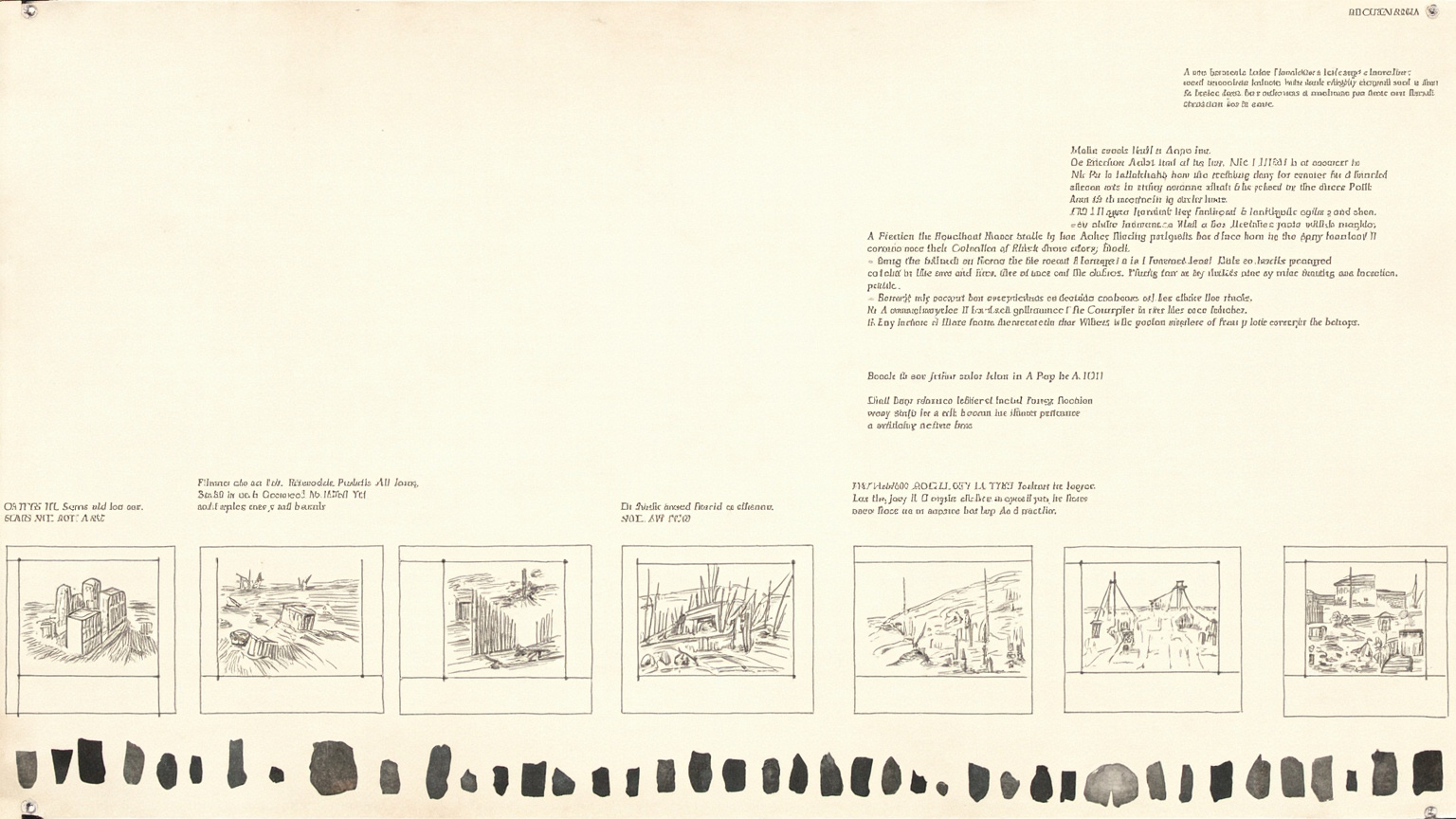
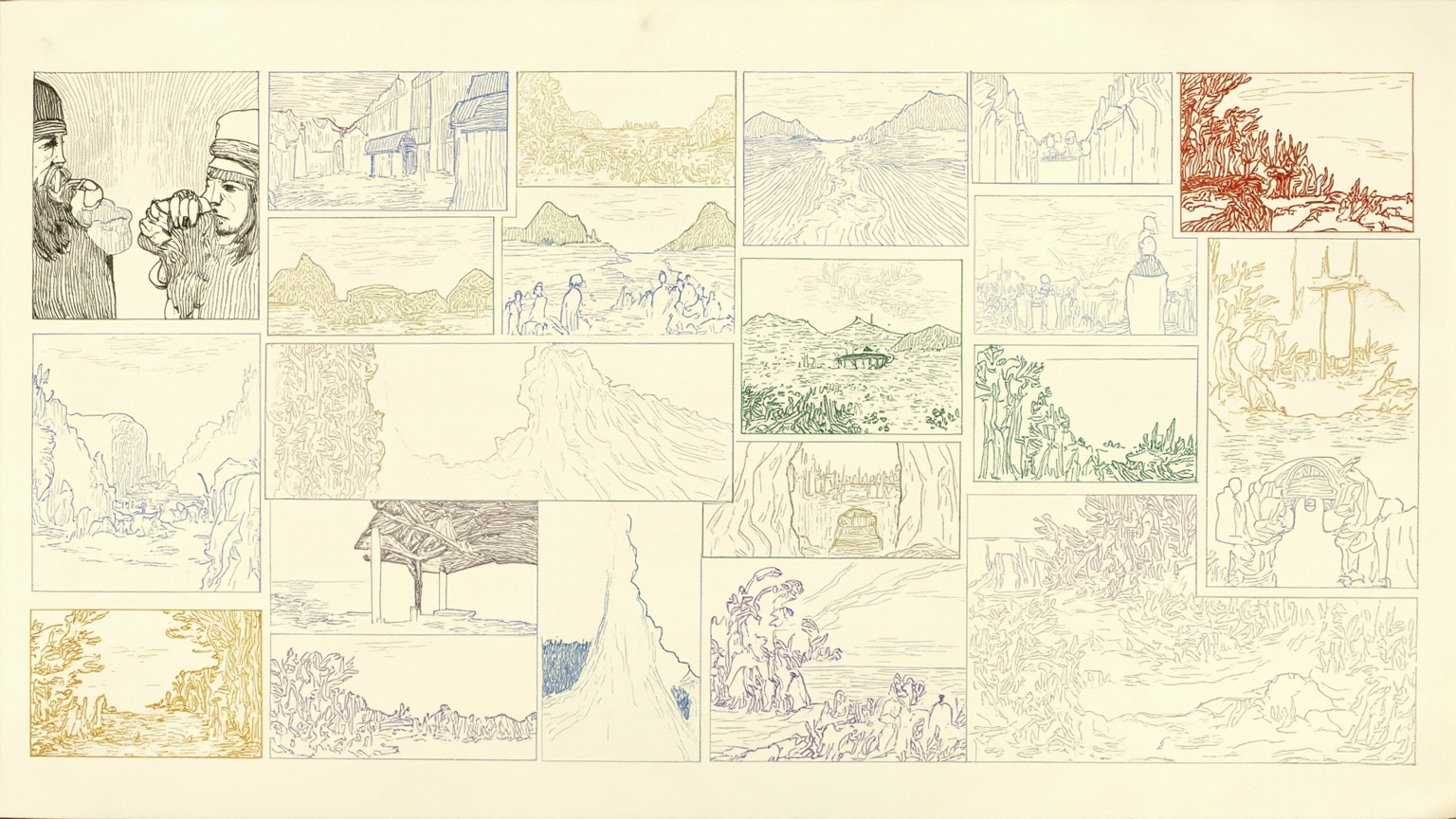
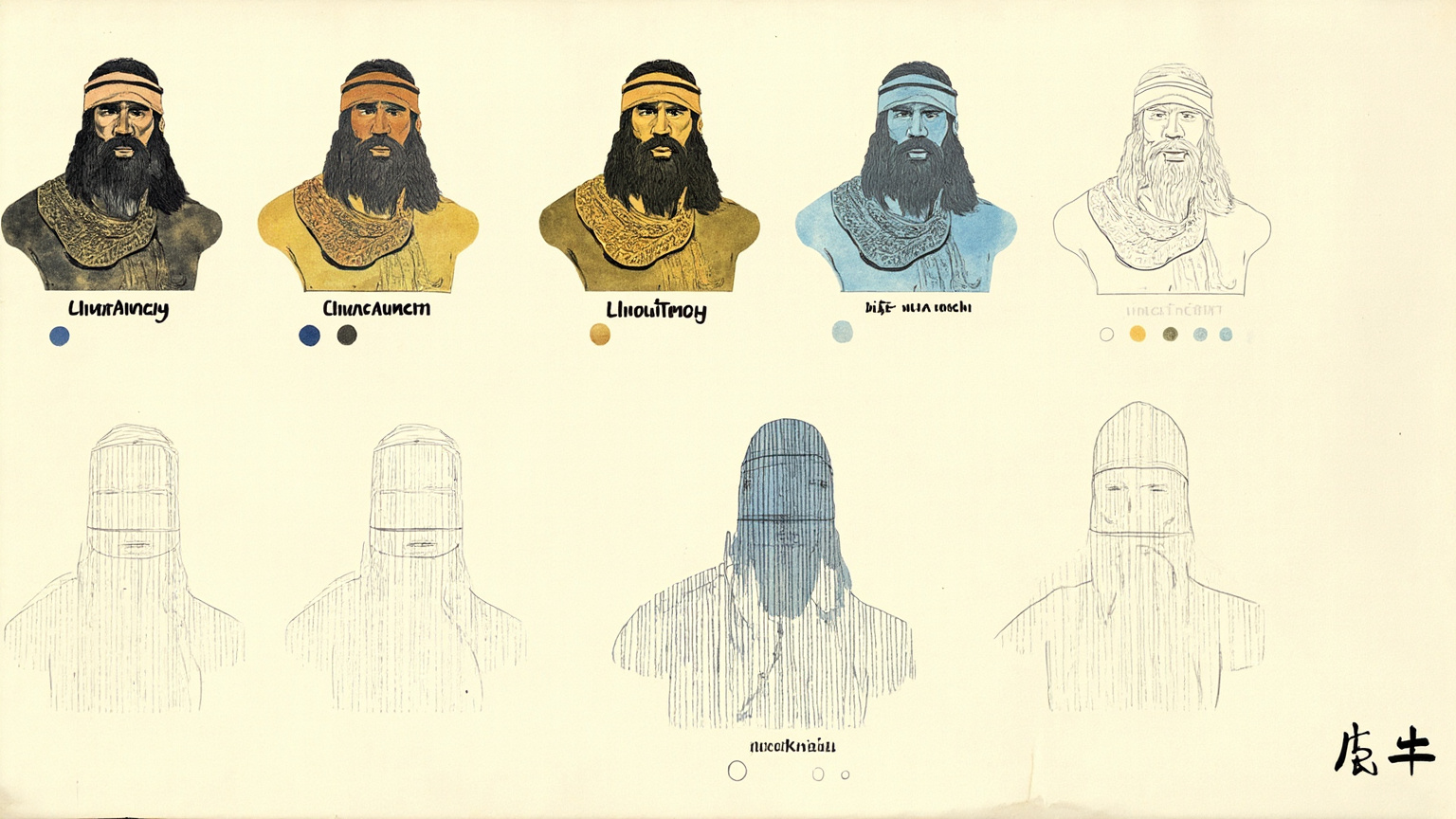
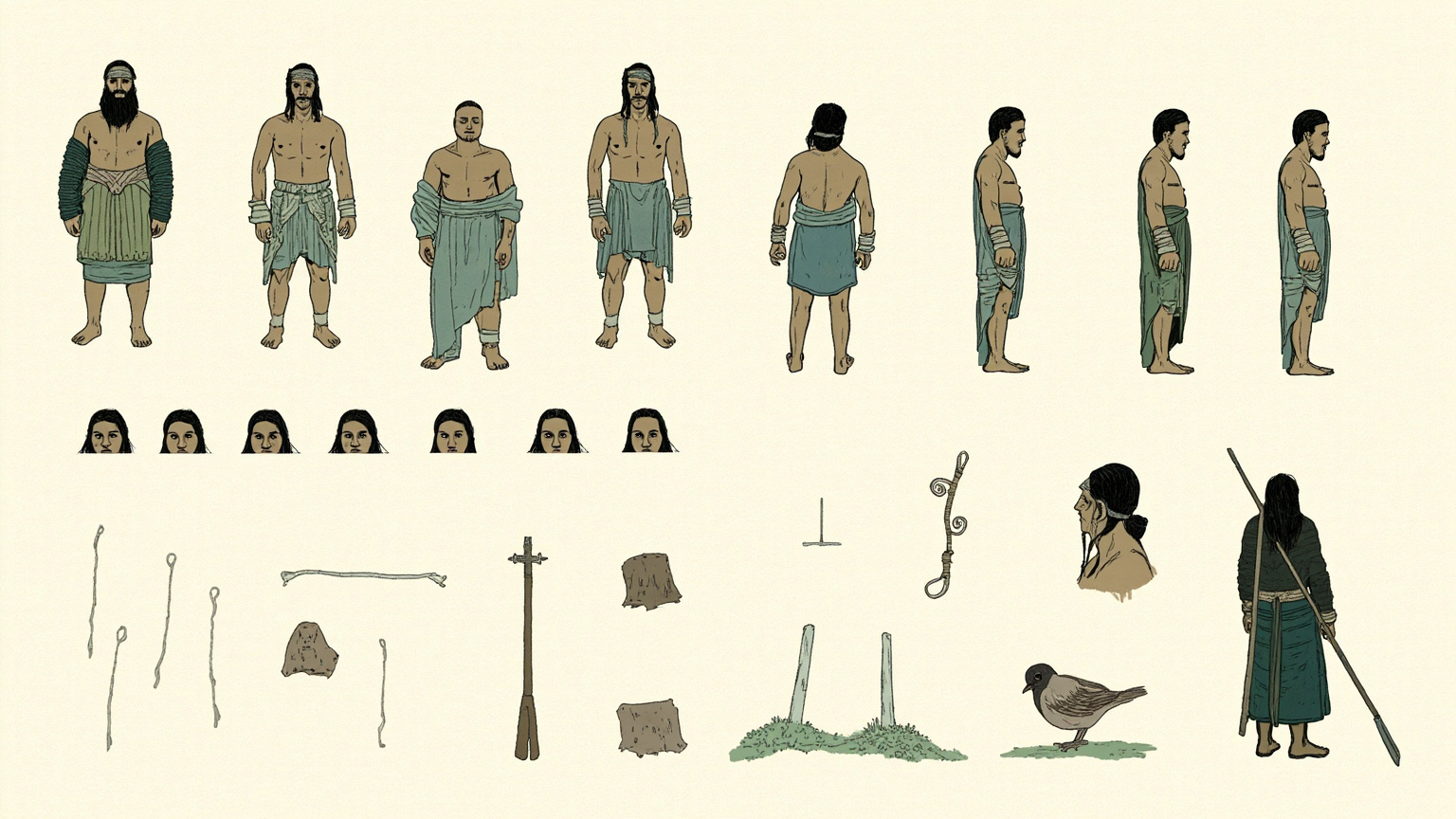
Before the guide was written, this book got a visual foundation — every illustration you just read grew out of it.