Laxdæla Saga (The Saga of the People of Laxardal) · Companion Guide
拉克斯代拉萨迦
兄弟歃血未干,两个男人便同时爱上同一个女人;十世纪冰岛的峡湾里,婚约薄如羊毛,账本却比刀还冷。
Opening: a dying woman speaks the cruelest line she knows
In a longhouse in the Laxardal valley, a woman named Gudrun lies dying. She runs through her lovers, her husbands, the people who betrayed her, one by one, and tells the person beside her: I was cruelest to the one I loved most. That is when the book's real blow finally lands. Every ambush, every marriage contract, every sworn brotherhood before it was only setting the knife in her hand.
What kind of book this is: Iceland's verdict on its own past
Laxdaela Saga was written down around the mid-thirteenth century by an author whose name is lost, in Old Icelandic. The story it tells is older: Iceland in the tenth and eleventh centuries, a land of fjords and volcanoes where free farmers had not yet been fully swallowed by the Norwegian crown. The people in its title are not a nation in the modern sense but one local clan settled along the Laxardal valley. It has lasted because it braids a family ledger, a list of debts owed in blood, and a love triangle into a single cord, and writes all three with a restraint as cold as a northern winter wind, the knives kept hidden under the calm.
People and world: longhouses, fjords, and a clan's good name
Gudrun comes from a great family, beautiful, proud, and iron-willed, and she sits at the emotional center of the whole book. She is not a prize passed between two men; she chooses her own partners, marries them, and leaves them when she is done. Kjartan and Hoskuld are sworn brothers, young, capable, and certain of each other, the kind of bond that is supposed to outlast everything. Once Gudrun enters the picture, that certainty starts to crack. Melkorka runs a quieter thread through the book: an Irish princess taken captive and sold into Iceland as a slave, silent for years, who eventually builds her own farm and raises the son who will turn the family's fortunes around, Olaf Peacock. The stage is fjord-side longhouses, assembly grounds, and open ice fields, under one simple law: honor is life, harm must be repaid, and a blood debt cannot be allowed to outlive a generation.
How the plot moves: how love becomes a debt, and debt becomes a blade
The story opens with the Hoskuld family putting down roots in the Laxardal valley, and generations of marriages, inheritances, and land divisions get laid out first, the way a bookkeeper tallies a household's assets. This stretch reads calmly, but it breeds every blade that follows. You need to know whose land this is and whose ledger the debt sits on before the later killing makes any sense. The author is in no hurry to hand you feeling; property, livestock, and marriage contracts pin the family down in hard detail instead, which is exactly what gives later choices their weight.
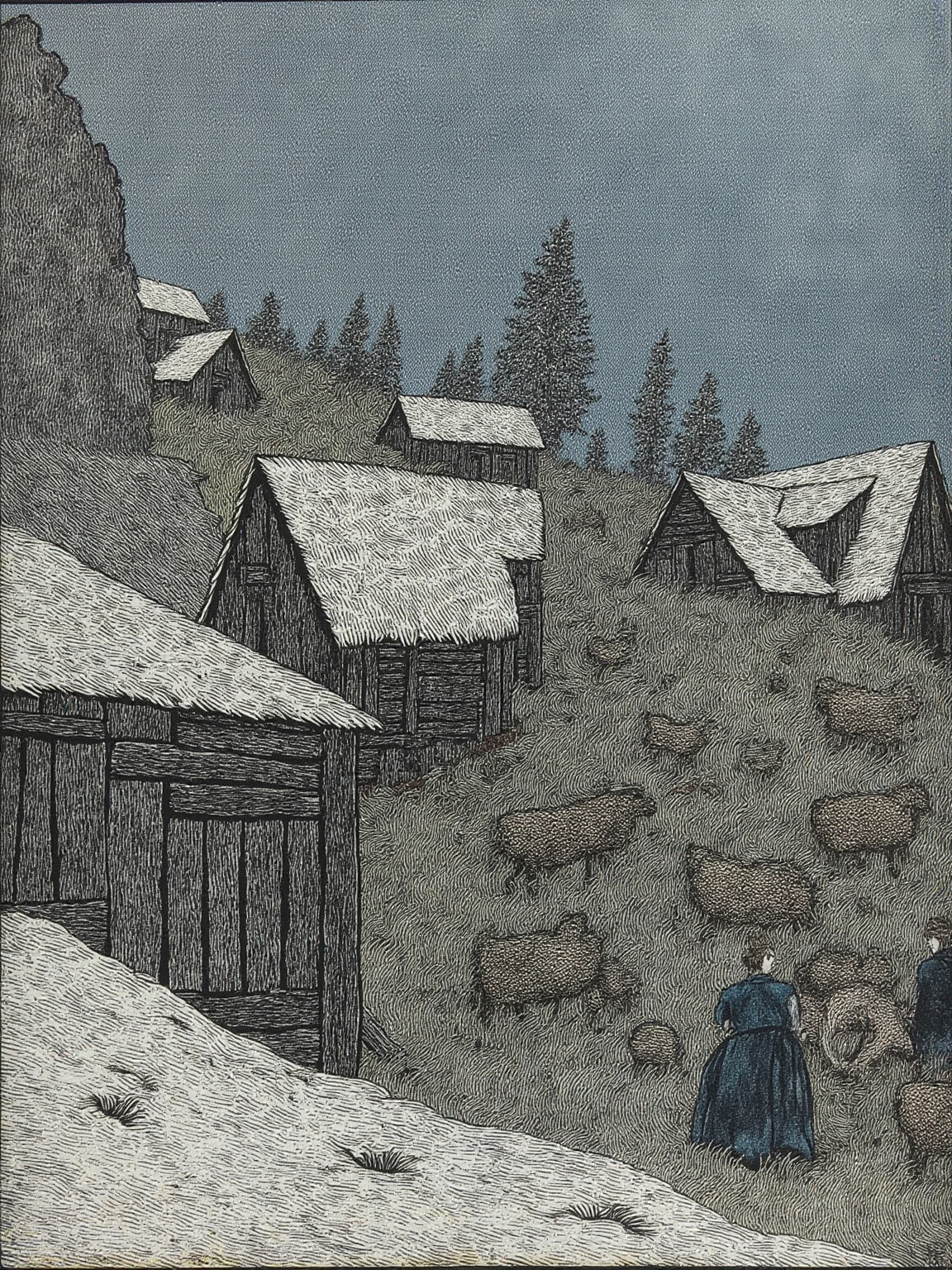
He who has never been in the Thing, nor seen the fire of the long-house, has little to boast of.
未曾踏过议事场、未曾见过长屋炉火之人,实在无可夸耀。
金句 · 开篇序章 · 拉克斯河谷的地与账
The scene where Kjartan and Hoskuld swear brotherhood is one of the few warm moments in the whole book. They are close in age, alike in temperament, and swear to share good fortune and bad. Among Norse clans, brotherhood of this kind is not a figure of speech; it is a contract harder than blood. Gudrun enters the negotiations soon after: she comes from a good family, and her dowry, standing, and marriage value travel with her wherever she goes. She forms the deeper attachment to one of the two first, and the balance between the brothers begins to tip. Watch how the author writes that tilt: no shouting, no thrown cups, just a look, an absence, a visit put off, dragging the crack out an inch at a time.
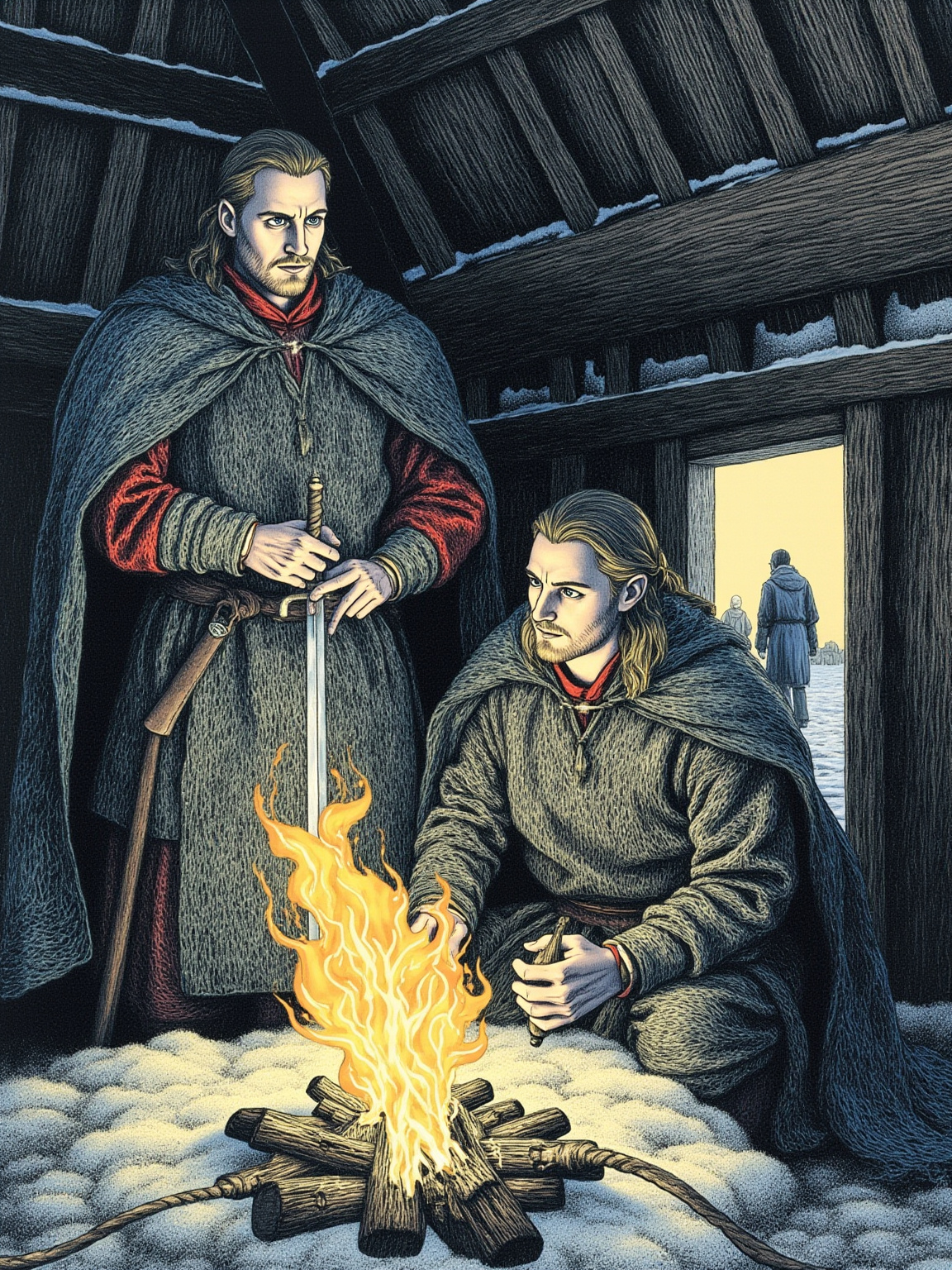
He gave his word, and his word was the bond between them, stouter than any kinship of blood.
他既已许下诺言,那诺言便是系住他们的绳结,比血缘更牢。
金句 · 第三章 · 结拜兄弟
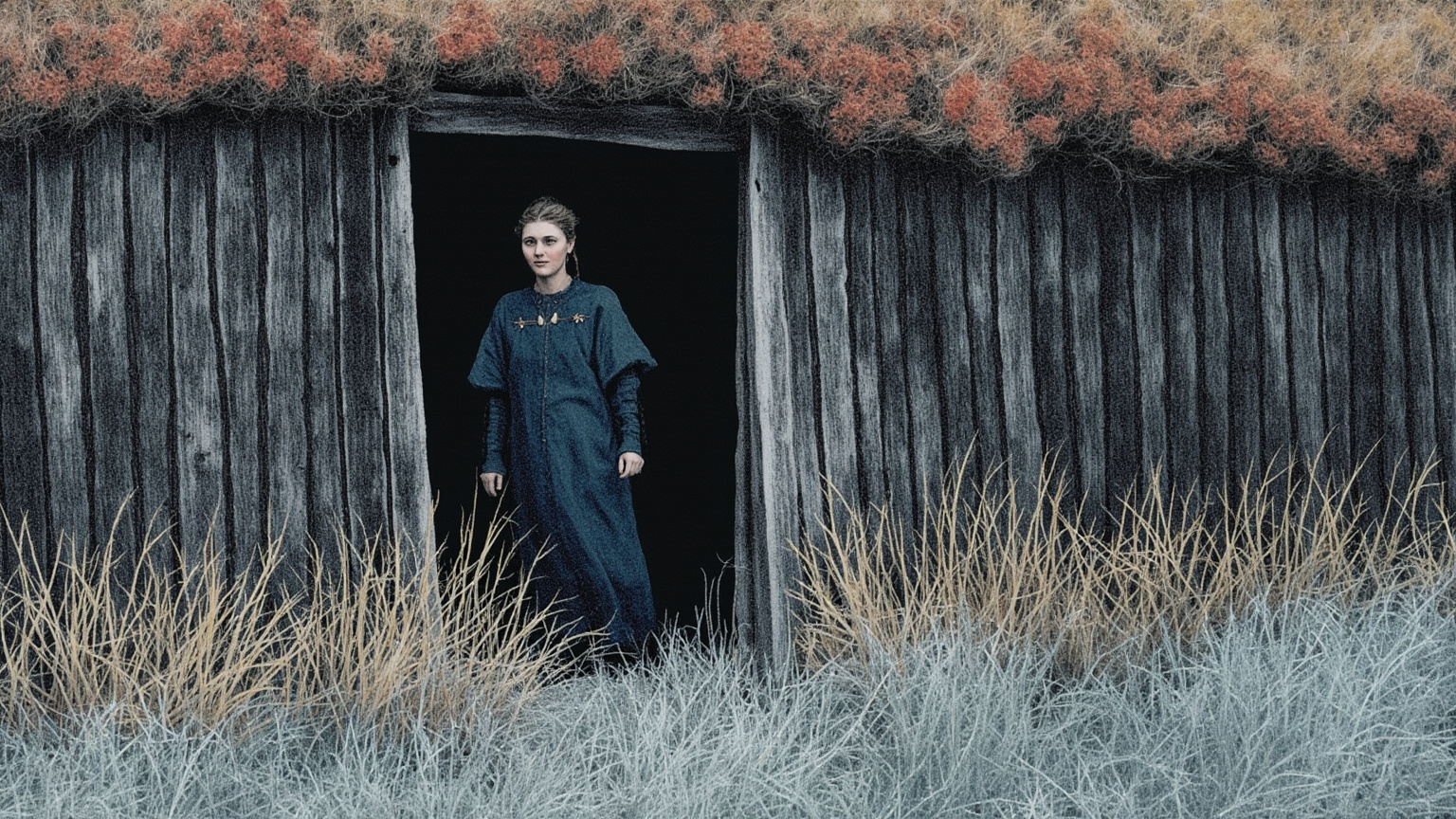
Gudrun marries one of the two. In a separate marriage, elsewhere in her history, she ends up with a violent husband. The author gives that marriage barely any weight, a few lines at most: she does not endure it, does not weep over it, does not write anyone a long letter about it. She simply ends the marriage and walks out the door. This is not a modern awakening; it reads more like a proud woman holding her own line inside a system built by and for men, and holding it absolutely. The author's restraint here is deliberate: no dwelling, no speech of accusation, just the act of leaving, which carries enough weight on its own.
The ledger starts turning into a blade. Olaf Hoskuldsson, Hoskuld's son, the son of the man who once swore brotherhood with Kjartan, inherits the family duty to avenge his father's generation and gathers men for an ambush on the ice fields. Kjartan is caught alone and unarmed, surrounded, and killed. The ambush is written with an unnatural calm: no roaring, no long speech before the fight, only the ice, the snow, and a few dark figures closing around one man. This is the saga's own method: violence turned into ritual, into procedure, killer and killed both moving by the rules, and that is colder than any scream would be.
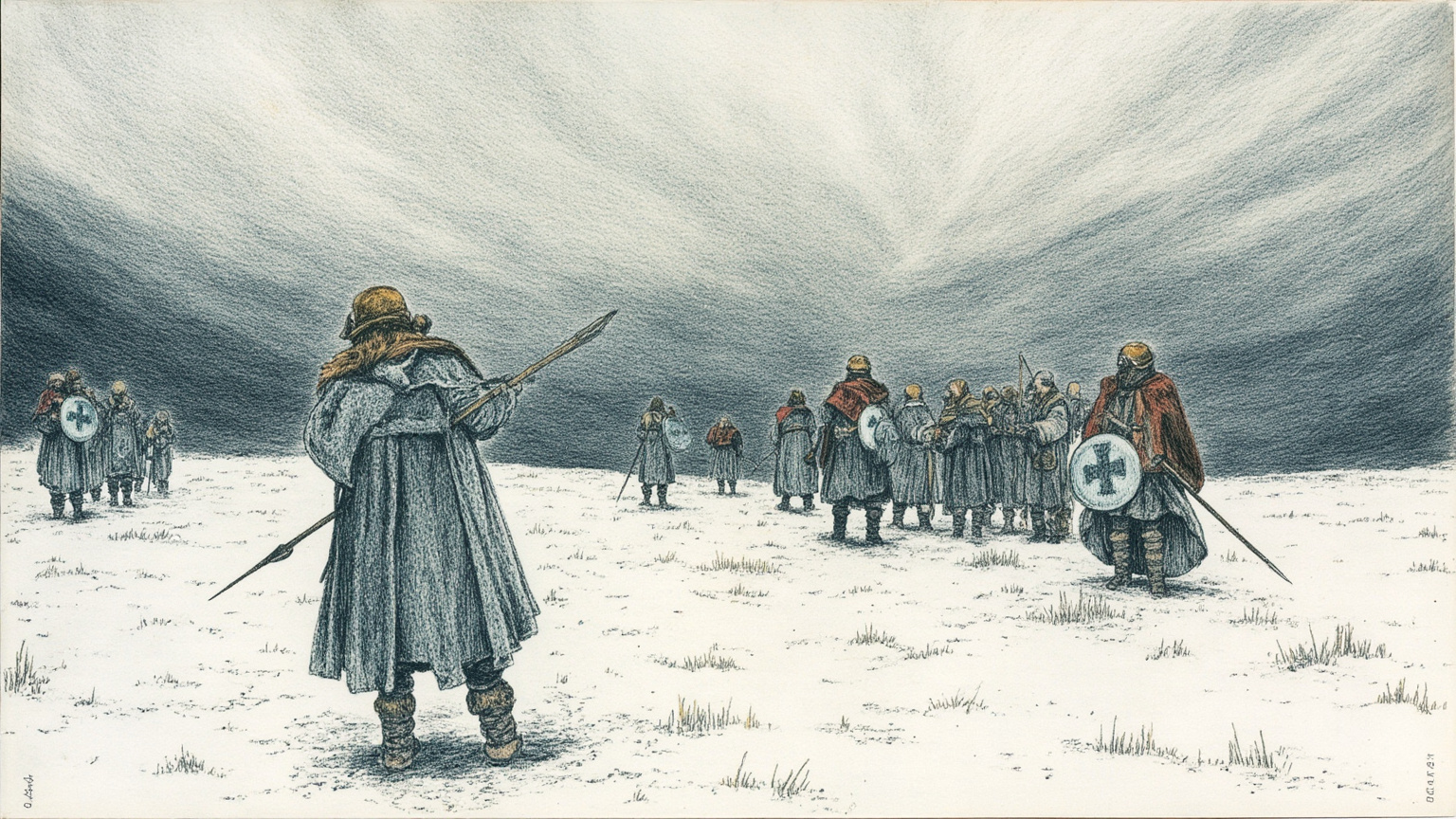
Many a man has lost his life by trusting the silence of the fell.
多少人丧命,正因误信了冰原的沉默。
金句 · 第四十九章 · 冰原伏杀
With Kjartan dead, the story settles into its true rhythm: negotiation, alliance, and another hand reaching for a weapon. Hoskuld is caught in the middle, holding old brotherly affection on one side and a new family duty on the other. He refuses to take part in certain acts of revenge, but fate has already signed his name to one. Years later, his own son-in-law tricks him and has him killed. This blow is not settling an old debt; it opens a new one, and daughters, grandchildren, and in-laws all get pulled into a cycle that only grows harder to untangle. The sharpest move in the writing is this: every act of revenge has a reason that sounds fair, and every fair reason breeds a fresh debt in blood. The reader looks for someone to blame and finds no one, only a machine that keeps turning on its own.
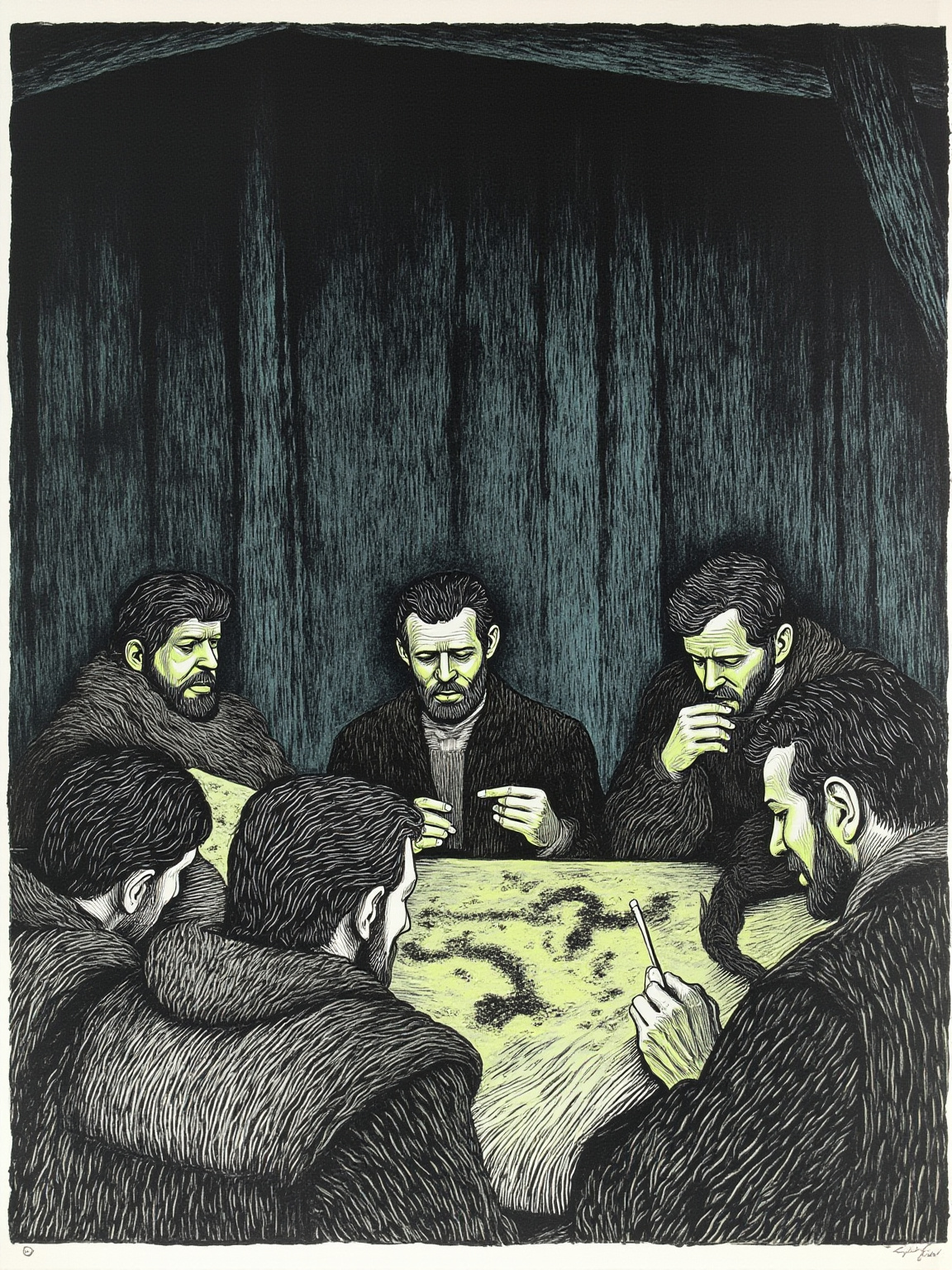
It is a saying among us that a man is wise after the deed.
我们冰岛有句老话:人总是在事情发生之后才变得聪明。
金句 · 第五十二章 · 父辈之仇
Cut to Melkorka's quieter storyline. She was still close to a girl when she was taken captive to Iceland and placed in a household as a slave. She does not speak, not because she cannot, but because she chooses not to. She keeps her true origins under her tongue and raises her son, Olaf Peacock, alone. Once he has made his own way in Iceland, she moves out on her own and builds a farm that belongs to no one but her. This thread looks like a digression from the main story, but it runs deep: outside every revenge cycle driven by men, one woman carves out a place to breathe using nothing but silence and a house of her own.
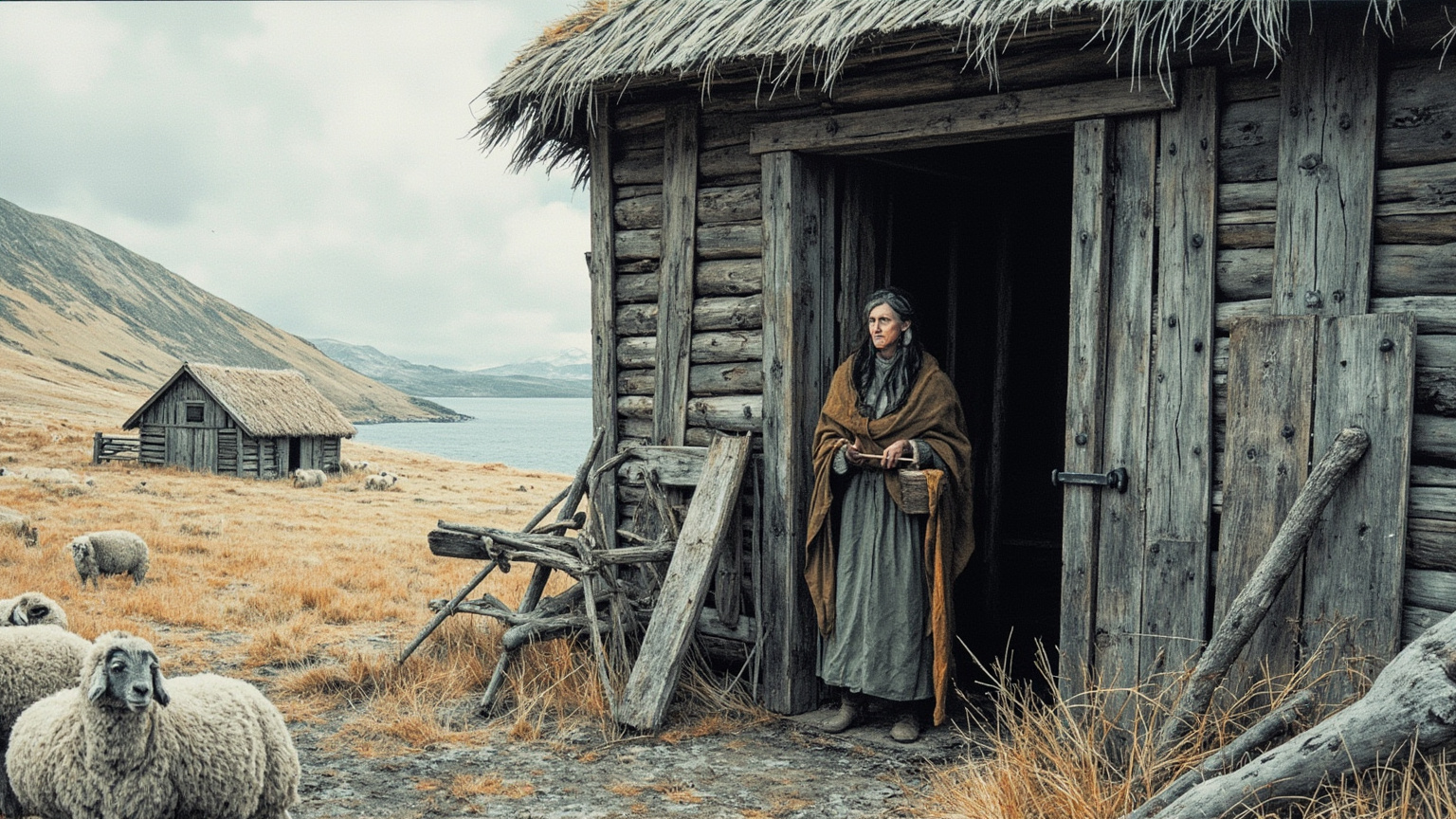
Grown, Olaf Peacock travels to Norway and wins a high place at court. His mother's hidden origins, the mystery of his own birth, and the Hoskuld family's unsettled blood debt all rest on his shoulders. He directs certain actions, completes part of the family's revenge, and brings the ledger to something like a workable settlement. The character recalls Michael Corleone from The Godfather: decisive to the point of coldness, nearly without mercy, with an entire generation's debts standing behind him. He is not likable, but no one can say he cannot hold a room.
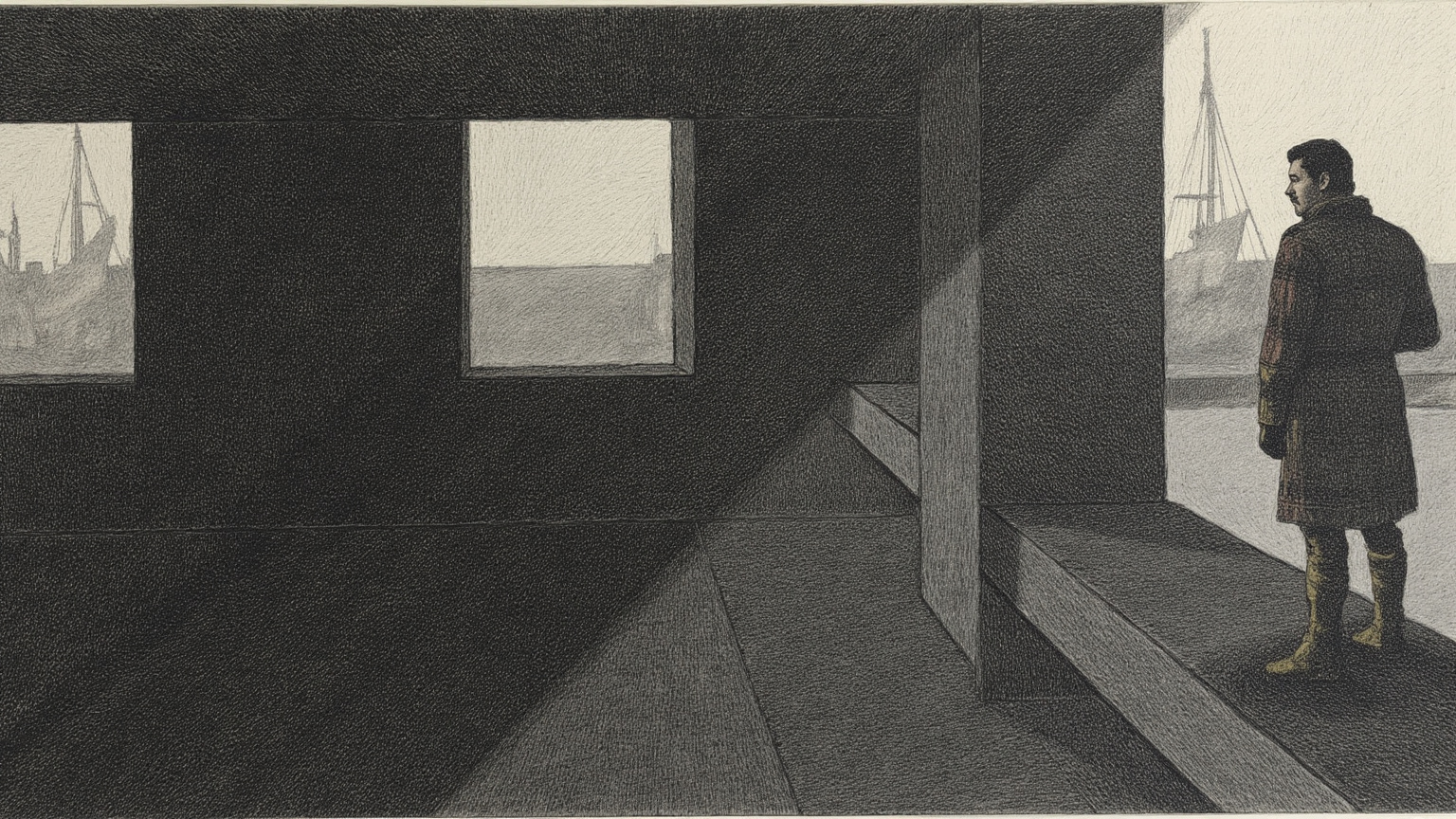
A man should be judged by the lineage he keeps, not the fortune he inherits.
看一个人该看他守住了什么家声,不看他承继了多少家业。
金句 · 第七十八章 · 佩科出仕
By this point the cycle should be closing. Revenge is settled, peace is made, and a new generation takes over the land and the assembly grounds. But the book's real climax is not in any of the killing; it lies on the bed at the back of the longhouse. Dying, Gudrun settles her accounts, one by one, with everyone she loved, everyone she wronged, everyone who wronged her, and finally says the line: I was cruelest to the one I loved most. Only then does the reader see that every act of revenge, every ledger, every broken brotherhood before it was a footnote to this one sentence. She does not fail to understand love; she understands it completely, and understanding it is exactly what tells her where it can wound her deepest.
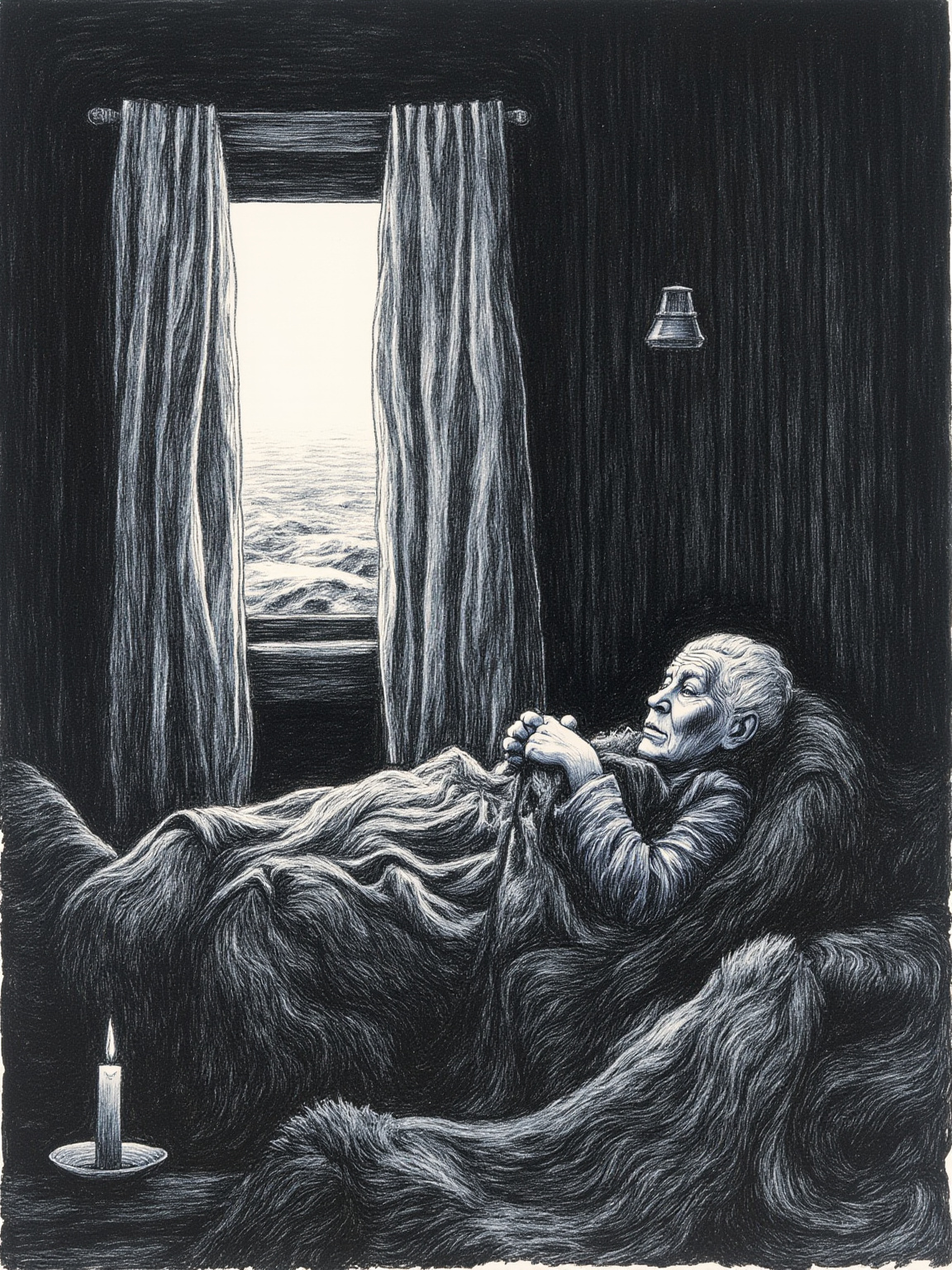
I was hardest of heart to him I loved most.
我对最爱的人最狠。
金句 · 终章 · 古德蕾恩临终之言
Her death pulls the whole book back out of the family ledger and into one person's chest. The revenge cycle has stopped turning in the outside world, but the account of feeling never balances. This blow cuts deeper than any ambush on the ice, because no one else deals it. She turns the blade on her own heart and signs the book's name herself.
Theme and craft: a cold pen for hot events, the aesthetics of northern restraint
The book has one real theme: the deepest feeling can also open the deepest wound. Gudrun's dying line is its banner, but the author does not raise that banner by shouting. He works through ledgers, through contracts, through an ambush on the ice and a low conversation in a longhouse, compressing feeling into objects and actions and leaving the reader to weigh it. Honor, revenge, marriage, and a woman's right to choose her own life are all footnotes to that one theme. Melkorka's silence is this same theme echoing through another woman: she says nothing, because saying it would save no one; she builds her own farm, because it gives her, at least, a place where her voice finally counts.
What makes the saga formidable is that it never feels anything on the reader's behalf. It only sets people down in specific scenes: an oath of brotherhood, an ambush, a woman walking out, a line spoken while dying. All the emotion sits under the action, and the reader has to dig it out alone. Read today, it still lands, because it is writing about a dilemma that is both very old and very current: you cannot choose family, reputation, duty, and private feeling all at once, and whatever you do not choose always comes back, in some other form, to collect.
It does not refuse you tears. It freezes every one of them into snow on the ice field and waits for you to walk in and feel it under your own feet.
Why the ending being spoiled still leaves the book worth reading
This guide gives you the map. The saga itself is the snowfield the wind has been crossing for a thousand years. You already know Gudrun's last line, already know who killed whom on the ice, already know how Melkorka walked out of silence and into a farm of her own. But you have not read the look the two brothers trade at the moment they swear their oath, or the horses pawing at the snow, restless, the night before the ambush, or the particular quiet of a longhouse candle burning down to nothing just before the old woman speaks. None of that survives being retold. It only reaches you the way Old Icelandic delivers it, in short sentences, one action set down after another. The book is worth sitting down in that longhouse for.
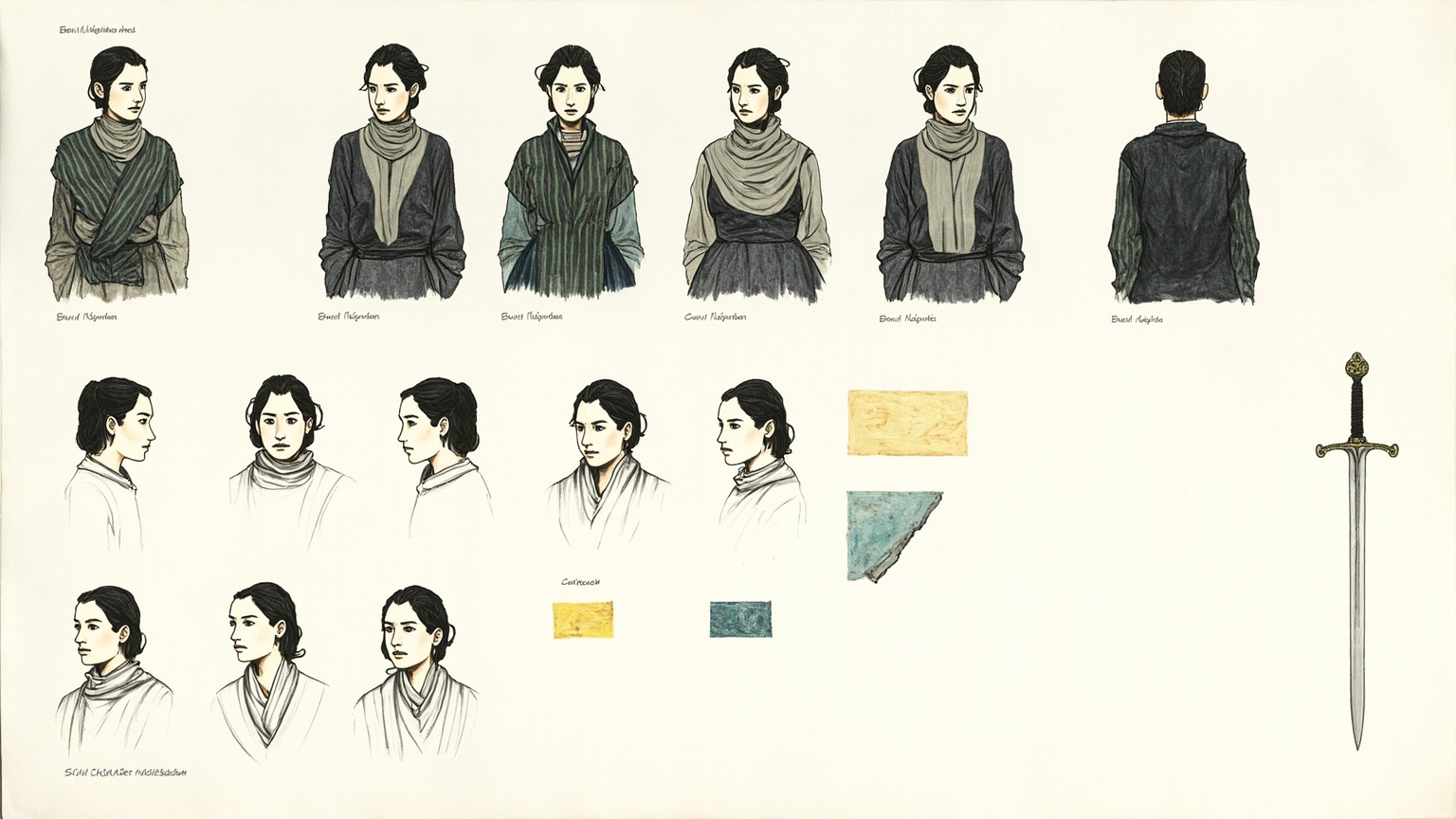
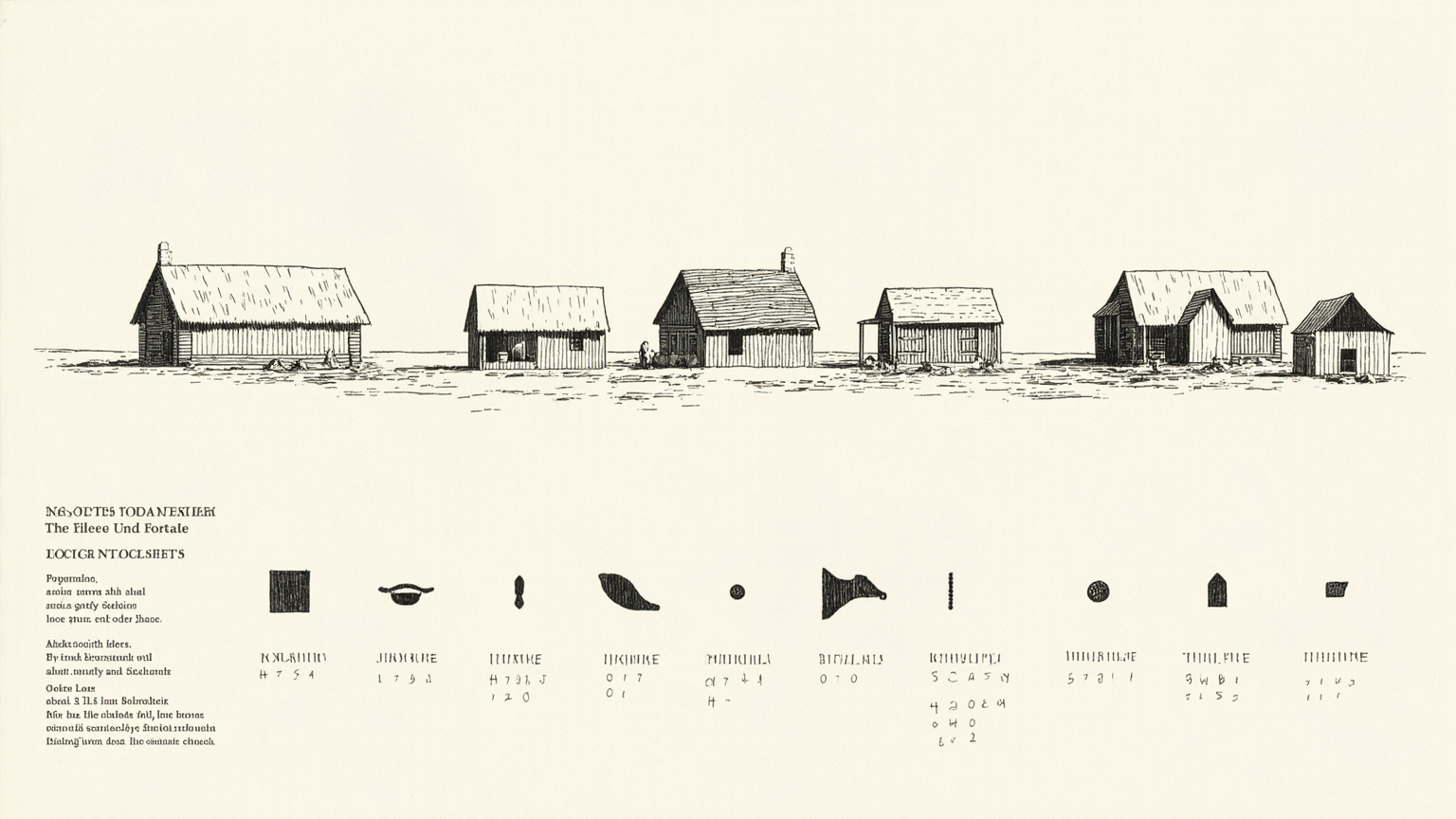
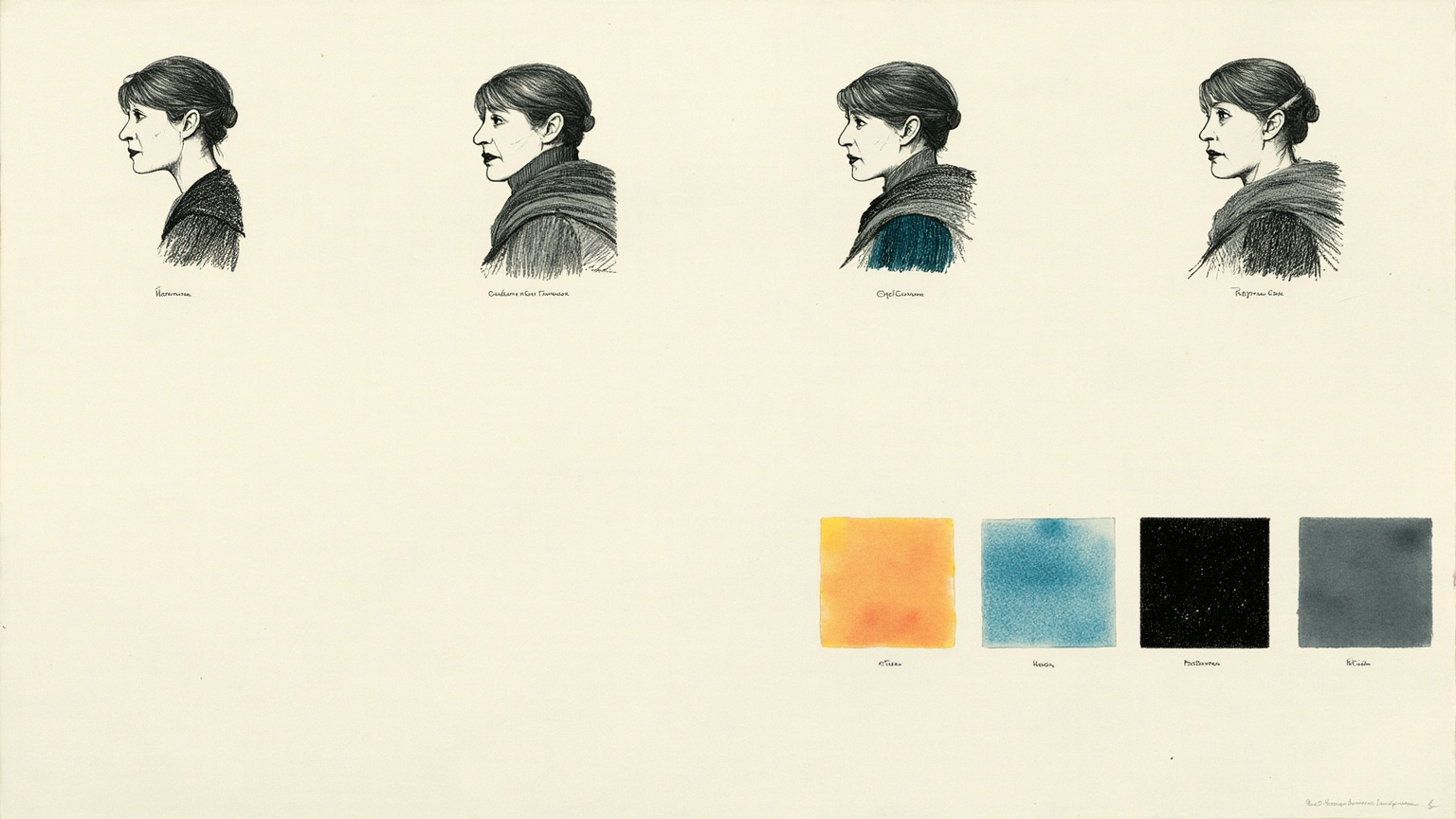
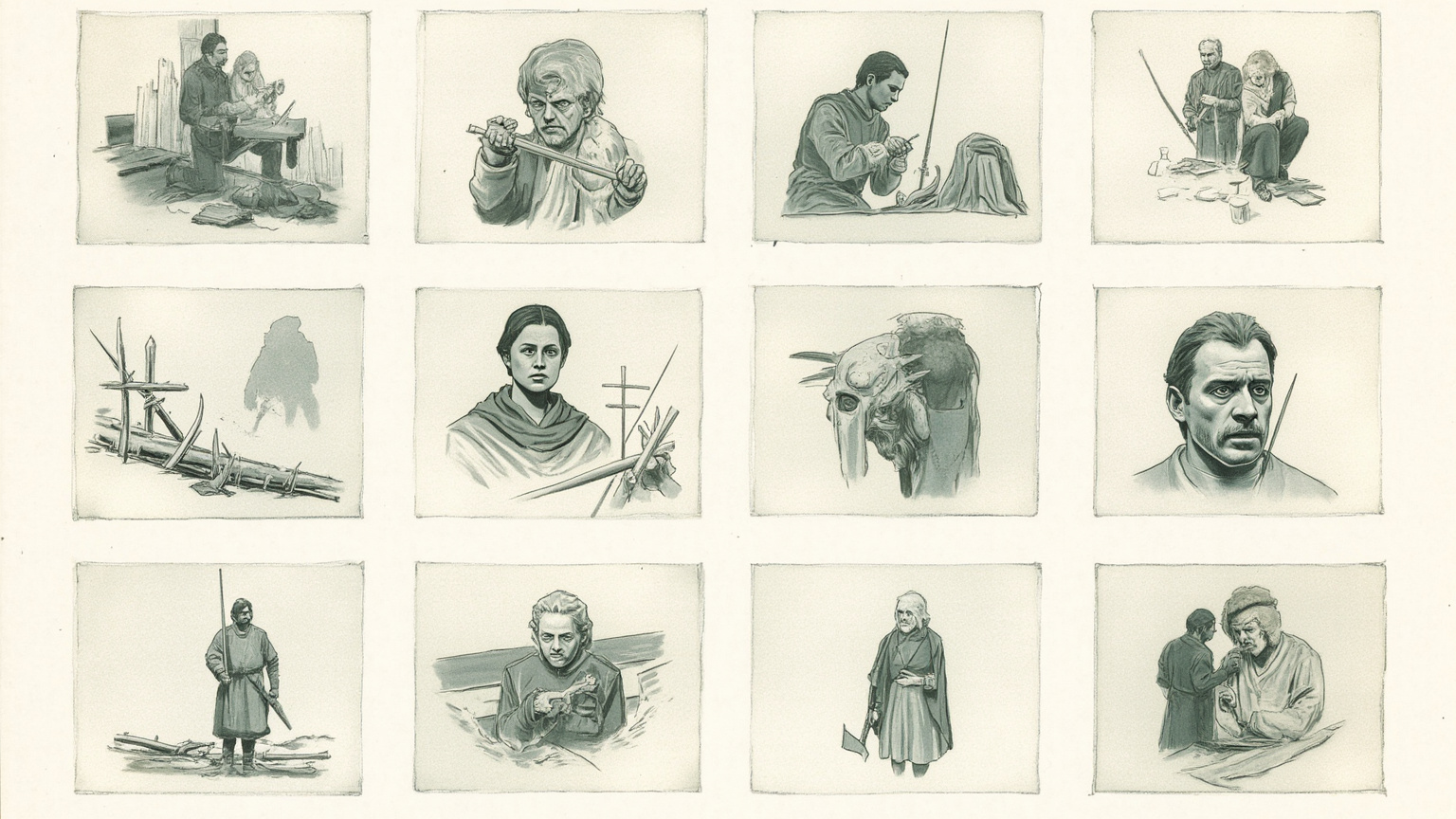
Art Direction4 plates
Before the guide was written, this book got a visual foundation — every illustration you just read grew out of it.