Layla and Majnun (Leyli o Majnun) · Companion Guide
蕾莉与马杰农
两片沙漠的少年隔一道部落鸿沟相爱,一辈子不见面,只靠诗稿在两族帐篷间来回走。
Opening: A Name Carved in Moonlit Sand
A crescent moon hangs over the dunes. There is no village in the wasteland, no lamp lit anywhere, only a gaunt young man walking barefoot along a ridge of gold-brown sand, a young gazelle cradled in his arms. As he walks he traces a name in the slope with his finger. The wind comes and smooths it away. He writes it again. The wind smooths it away again. Behind him there is no path. Ahead of him there is no home.
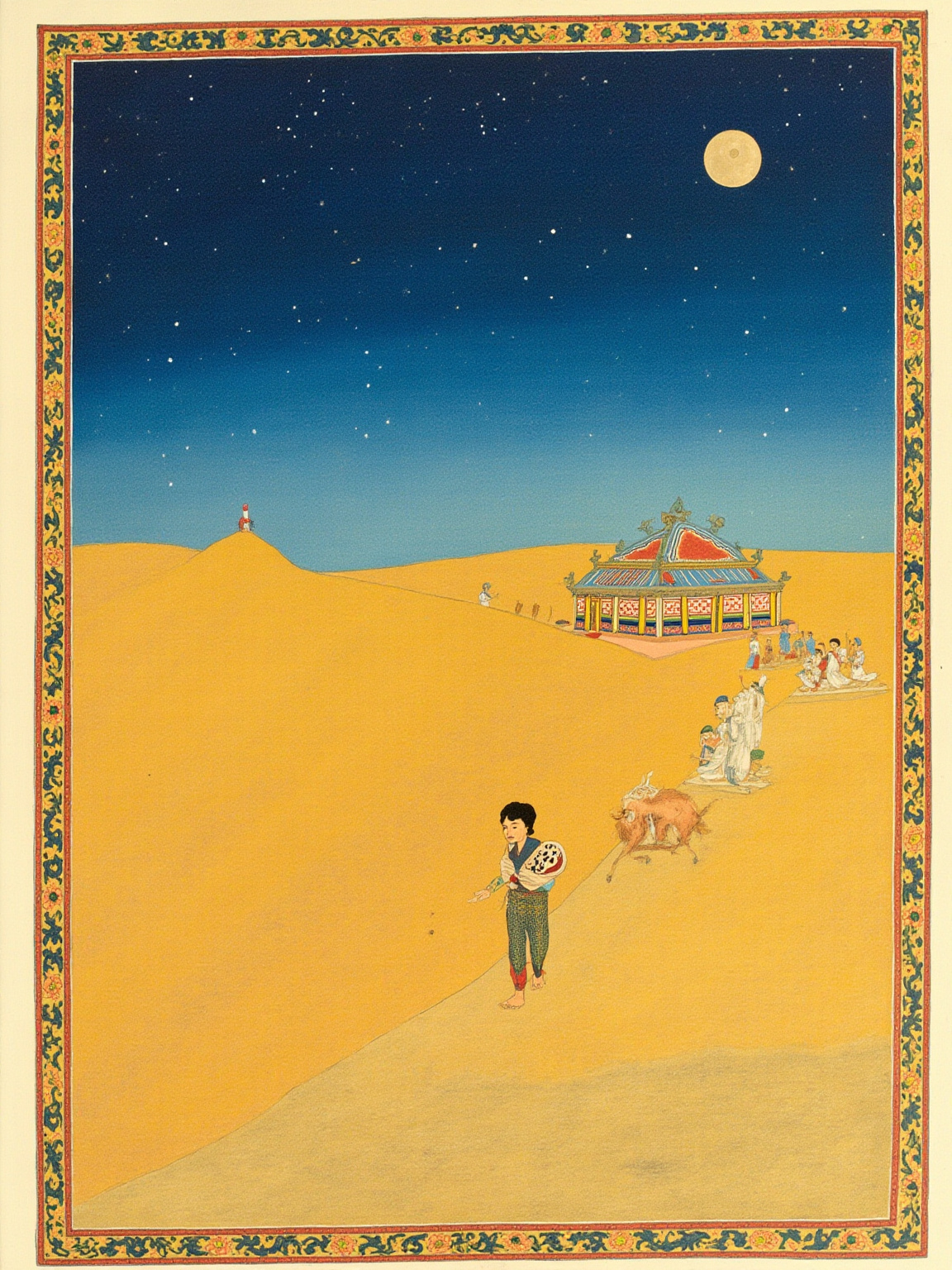
He writes her name upon the sand, and the wind writes it away.
他在沙上写下她的名字,风一来,字就抹平;再写,再抹。
金句 · 开篇 · 沙上刻名
This is the central image in the twelfth-century Persian poet Nizami's telling. He never lets the two lovers meet again: for the rest of their lives, only verses travel back and forth between the tents of two hostile tribes. It is the quietest, and the most violent, poem about love that a Persian court poet ever wrote, over a thousand years ago.
What Kind of Book This Is
Layla and Majnun, in Persian Layli wa Majnun, was written by Nizami Ganjavi at a Persian court around the end of the twelfth century, in what is now Ganja, Azerbaijan, as a long narrative poem in six-line verse. It stands as one complete work within Nizami's Khamsa, the Five Treasures, and it was retold again and again afterward by Persian, Azerbaijani, North Indian, and Ottoman painters and musicians. In the nineteenth century Goethe read it and wrote his famous West-Eastern Divan in response, which is how it landed squarely in the view of European Romanticism. It laid the groundwork for an Eastern Romeo and Juliet more than two hundred years before Shakespeare, but its core does not come from a family feud. It comes from the Bedouin desert, from the collective will of two tribes, from poetry standing in for a meeting that never happens.
Characters and World
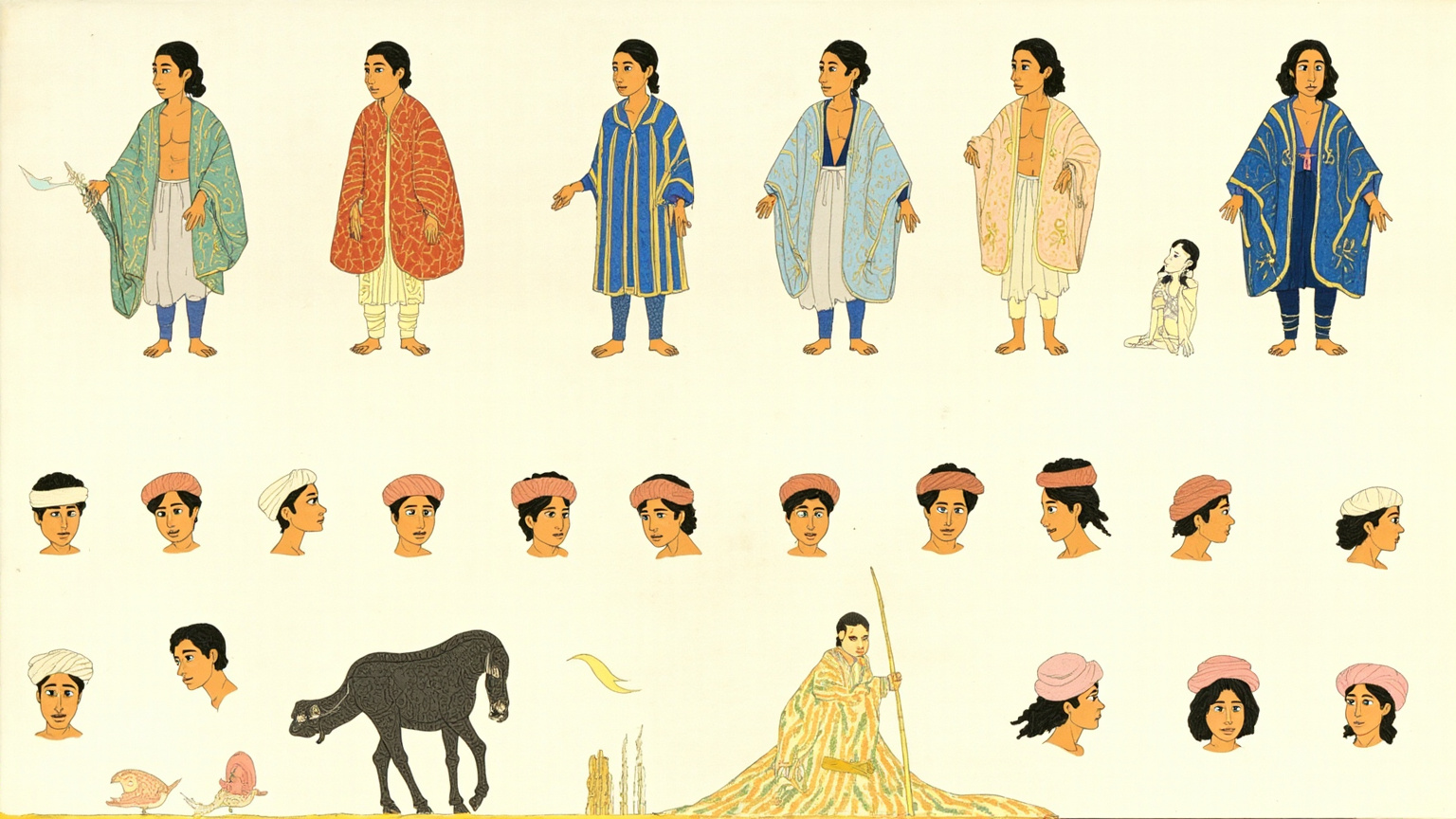
The male lead's given name is Qays. Later generations called him Majnun, which in Arabic means, literally, a man possessed by jinn, a madman. But nowhere in the poem is he a figure of horror. He is a young wandering poet stripped of every social identity by love: long-haired, barefoot, pacing the dunes all day, talking to gazelles and wild geese, reciting verse to the moon.
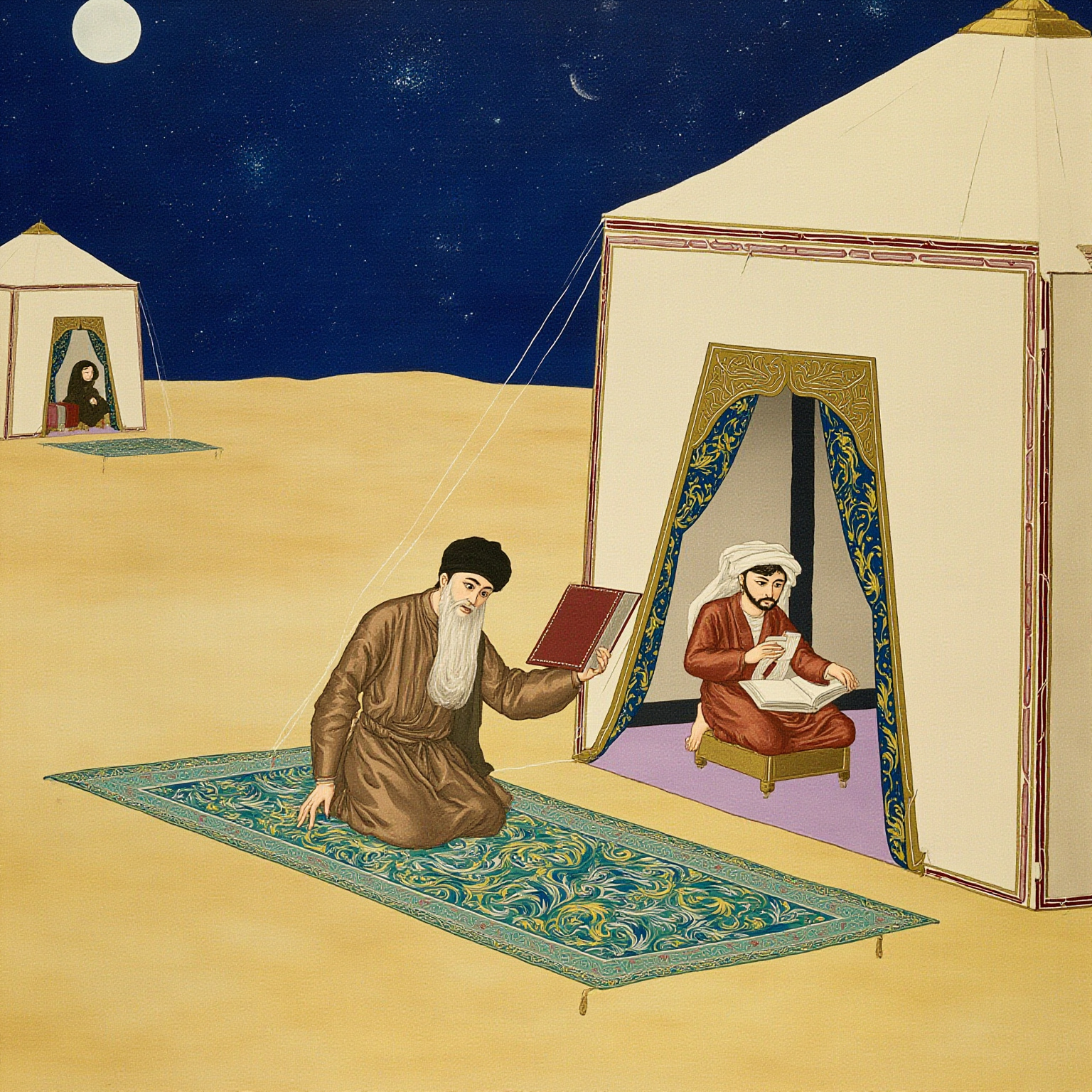
Her very name is Night; his very name is the one bewitched by her.
她名为夜,他便成了夜所覆体的痴人。
金句 · 人物志 · 蕾莉与马杰农
Layla does not go mad. In the poem she is the embodiment of the night and the moon: her name, Layla, means night in Arabic. After the two tribes force the lovers apart, her family marries her off to Ibn Salam, a decent, wealthy man from another tribe. Her heart belongs to someone else; she refuses her husband her bed, and her body fails her a little more each day. Pining day after day, she wastes away and dies young. Ibn Salam is not a villain. He treats her well, and the poem holds him with sorrow, not contempt.
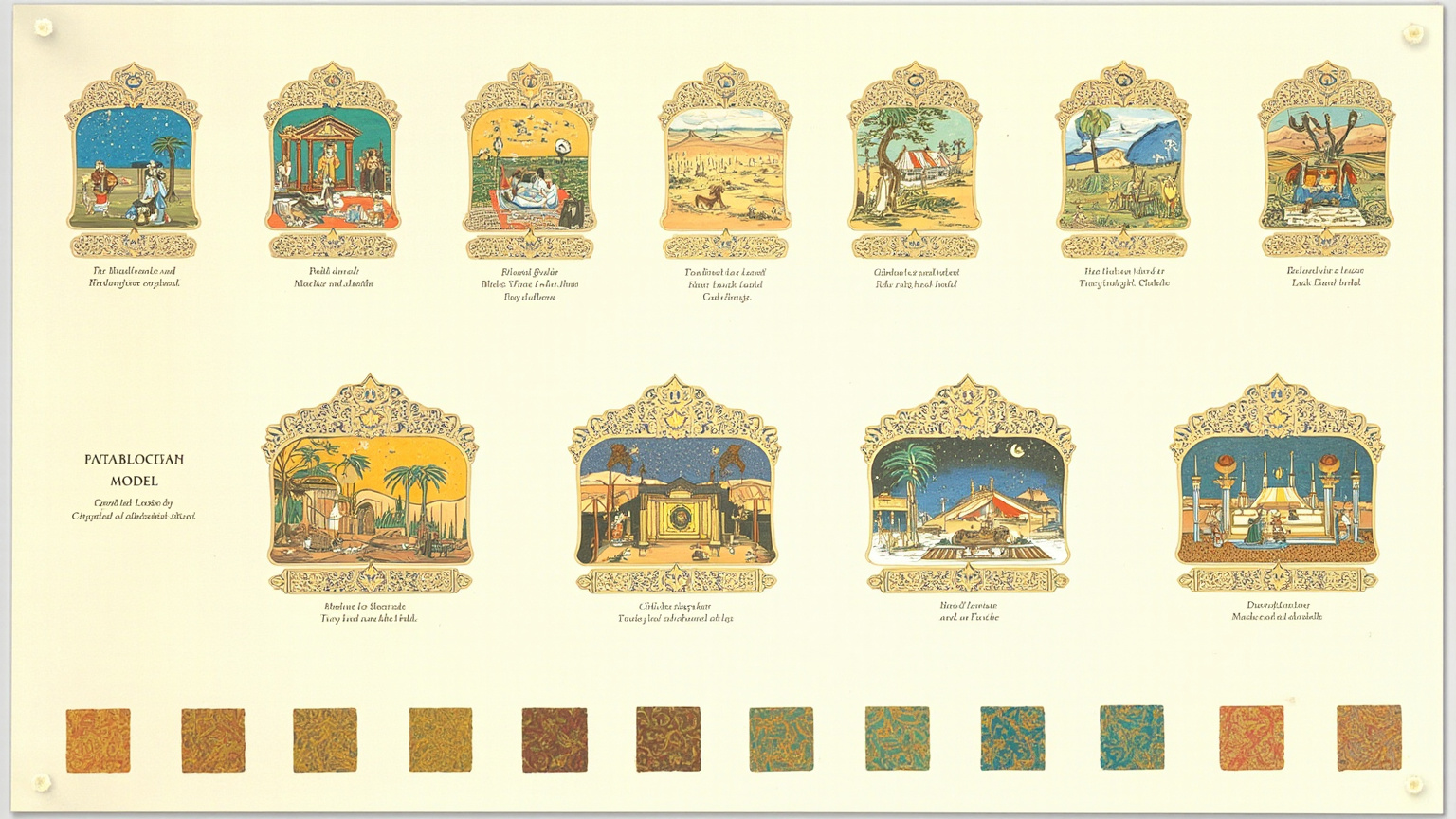
What stands between them is not a villain. It is the tribe, the qaum, itself. Layla's father is a chieftain, and so is Majnun's. Both old men are decent, and neither does anything wicked; it is simply that no one can move the rule that a daughter does not marry outside her own tribe. The world of this story has no palace, no war, no city. Only black wool tents, dunes under moonlight, spring pastures, camel caravans, and a desert emptied of everything else.
How the Story Moves
1. Classmates at the Qur'an School: An Innocent Beginning
The story opens at a Qur'an school in a Bedouin tribe. The boy Qays and the girl Layla sit in the same class, sharing pages, passing them back and forth. What grows between them is entirely innocent, the kind of feeling where a child just wants to see the same page the other child is looking at. The visual register here has to stay as clean as a children's illustration: soft light inside a black tent, two earnest young faces, nothing adult about it at all.
The two tribes notice quickly. Both families step in and pull the children apart, forbidding them to meet again. This is the first rift in their love, and the decisive one, not because anyone acts out of malice, but because the structure of the tribe itself will not allow the two of them to stay together.
2. Flight into the Wilderness: Qays Becomes Majnun
Qays goes mad from here on, but the poem renders this madness with real beauty. He leaves home with his hair loose and his feet bare, vanishes into the wilderness, and never comes back. By day he keeps company with gazelles; by night he recites verse to the moon, carving Layla's name into the dunes. The wind erases it, and he carves it again. When a camel caravan passes, he sends his verses along with it: this is the whole of what passes between them.
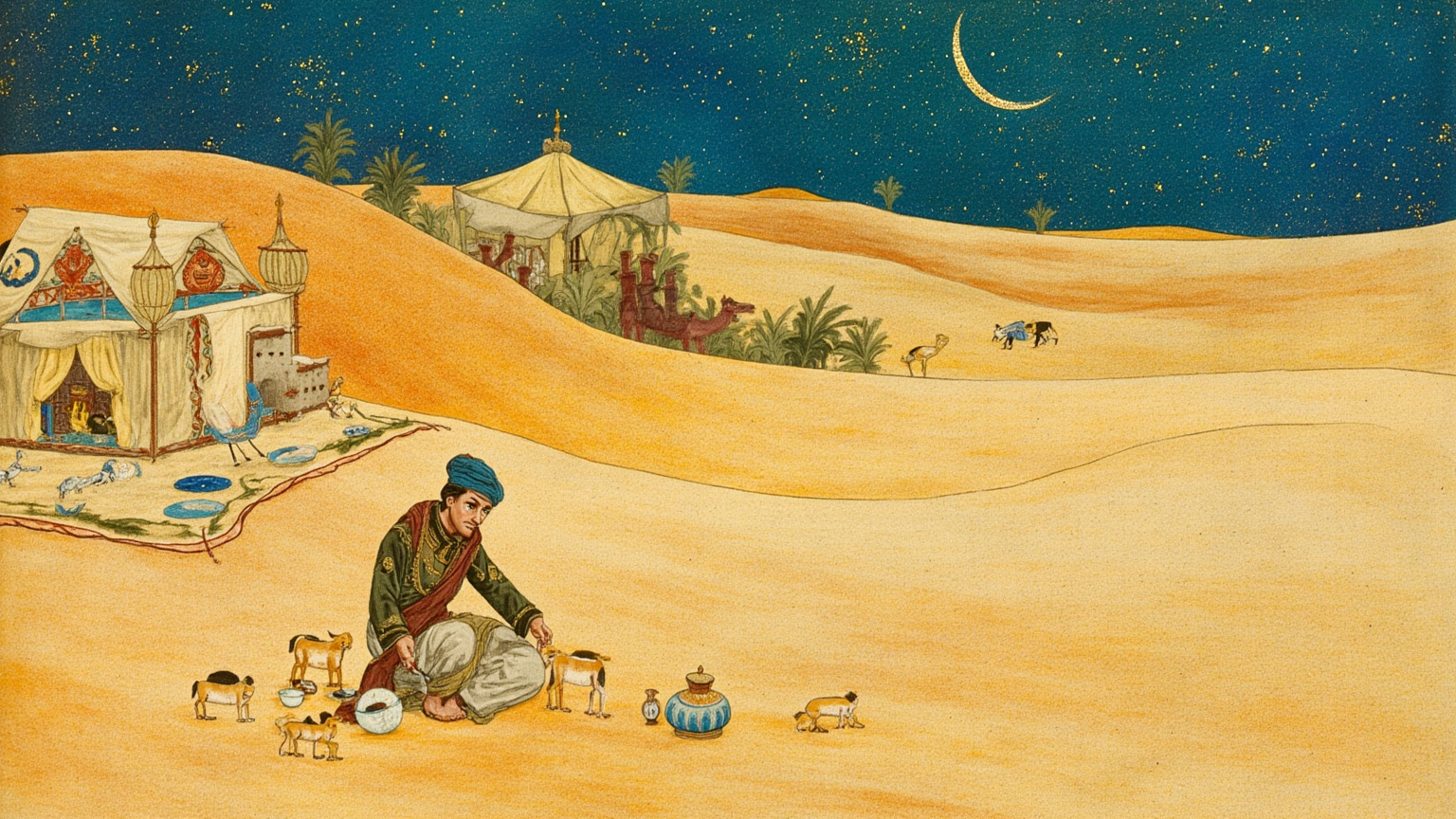
His bed is the dust; his companion is the gazelle; his only tongue is verse.
以沙为床,以羚羊为伴,以诗为唯一的舌头。
金句 · 中段 · 遁入荒漠
Here the poet makes a decision: the two of them will never meet again. Western adaptations love to give them a reunion somewhere, an embrace. That is not Nizami's original. In Nizami's poem, the two of them meet exactly once, and it is after death, when they are buried side by side.
3. Poetry in Place of Meeting: An Old Man Carries Verse Between the Tribes
Now comes the quietest scene in the poem, and the one most rooted in its own tradition. Majnun's father asks a wandering old man to carry the verses his son has written in the desert, cross both encampments, and deliver them to Layla's tent. Layla answers in verse from behind the tent curtain. The two of them never see each other's faces again in their lives, only a single sheet of wool between them, and poems passed across it.
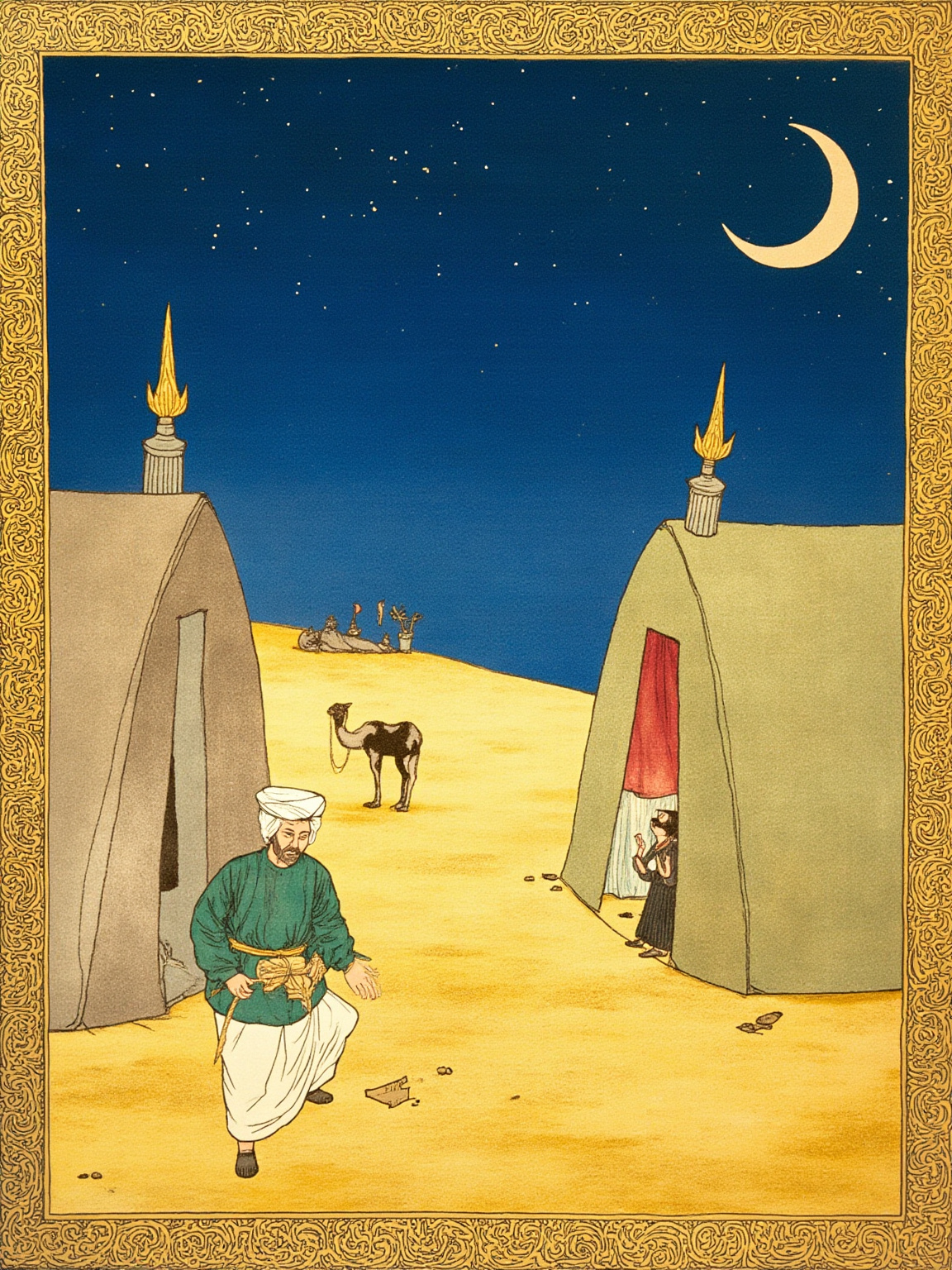
Between two hostile tents there travelled nothing but paper and ink.
两族之间往来的,不是使者,是诗稿与墨迹。
金句 · 中段 · 传诗老者
What makes this passage work is that poetry becomes the only means of contact. Not letters, not tokens, the poems themselves. There are no way stations in the desert. The verses are the courier.
4. The Father Searches for His Son: The Poem's Most Painful Moment
Majnun's father first rides to the rival tribe bearing gifts to ask for Layla's hand. He is refused and comes home brokenhearted. Later he rides alone into the wilderness to find his son, who has gone mad. He finds him, and cannot bring him back. Under the moon, the old man watches his son murmuring to himself with the gazelle in his arms, understands that this home can no longer hold him, and turns back to the tent. This is the most painful moment in the whole poem: not the lovers' pain, but a father's, watching his own child swallowed by the desert and unable to do a single thing about it.
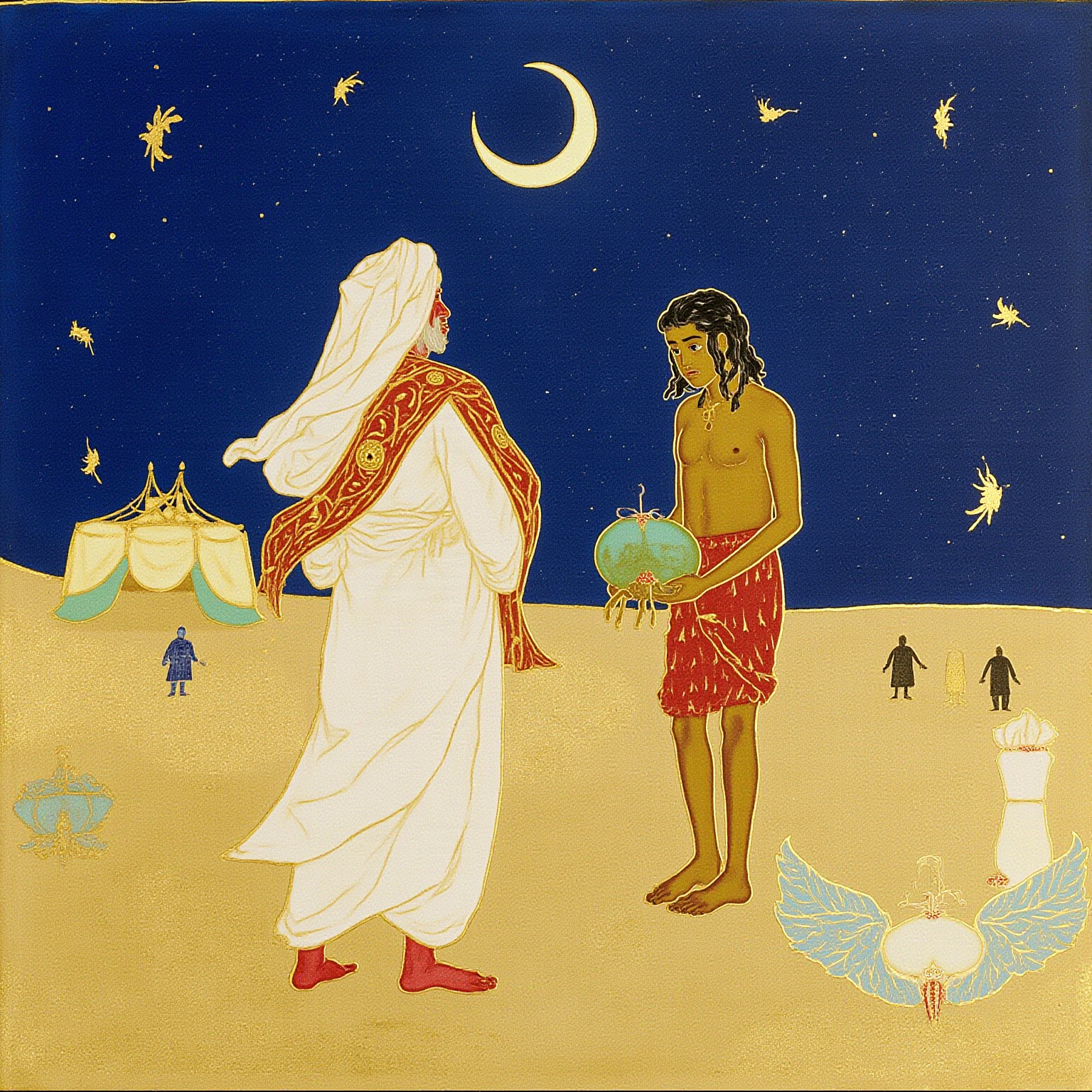
5. Layla Marries: A Second Tragedy, Silenced Inside a Tent
The poem now settles into a mirrored structure for its middle section: on one side Majnun grows wilder and his verses grow more intense, and on the other Layla withdraws further, her silence deepening. Her family marries her to Ibn Salam, a decent, wealthy, respectable man from another tribe. The wedding is a tribal celebration; Layla weeps through it. Ibn Salam is good to her, but her body fails her, piece by piece. She grieves for Majnun, wastes away, and dies young.
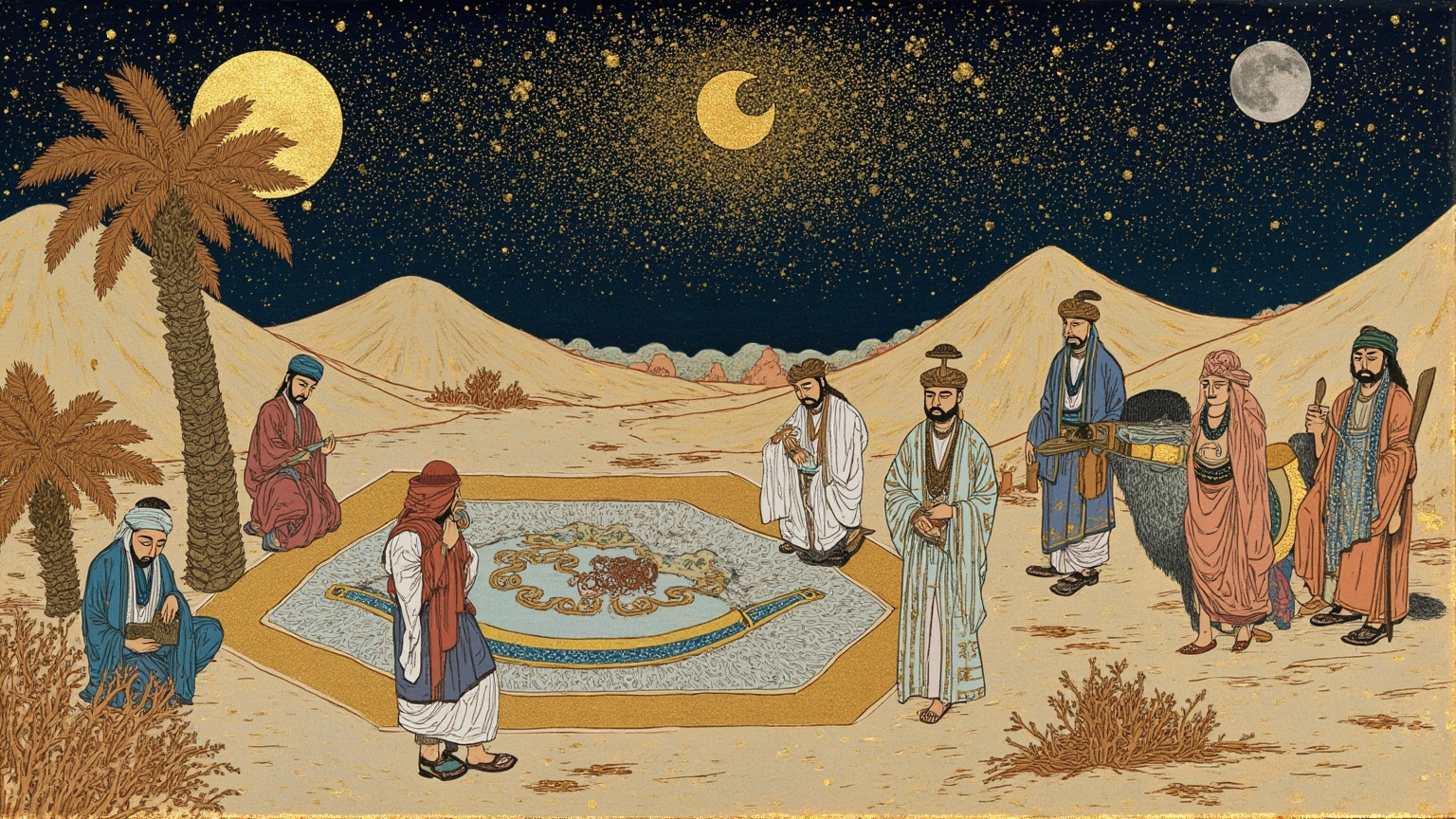
She wept behind the veil; the bride-bower kept only her sigh.
新帐之内无人听她哭,整场婚礼只留下她的叹息。
金句 · 下篇 · 蕾莉出嫁
This section is not staged as a conflict of desire. It is a social tragedy: a marriage arranged by the family, and a body paying the bill for the collective will.
6. Mourning at the Grave: Burial Together, the Only Meeting
Word reaches the wilderness, and Qays comes to Layla's grave. He collapses over it, chants his verses in mourning, and keeps chanting until he dies. The tribes set their old grievance down and bury him beside her: two people kept apart their whole lives by their tribes, lying next to each other at last.
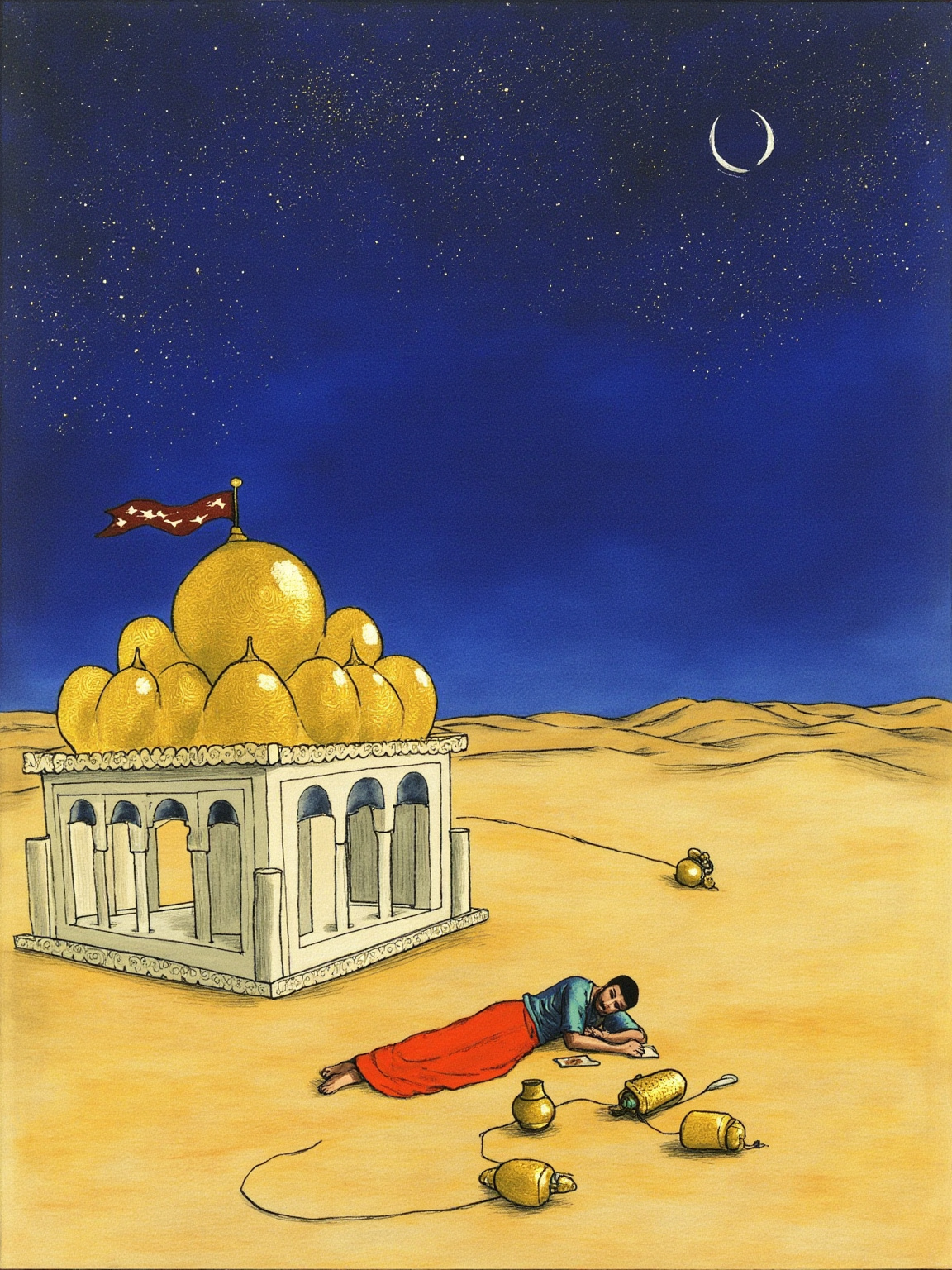
At last, side by side, the two the tribe had sundered sleep.
部落一生都拆不开的两个人,终于并排睡在了一起。
金句 · 终章 · 合葬
The poem closes here. No reunion, no embrace, no last-second miracle. Burial side by side is the only meeting they ever get, and it arrives a whole lifetime too late.
Themes and Craft
What this book is really about is not love itself but something colder: how a collective will grinds two people down, and how nobody in the process is a murderer. The father is a decent father, the husband is a decent husband, the chieftain is a decent chieftain; it is only that the structure of the tribe will not permit otherwise, and so two young people are handed over, one to the wilderness and one to a marriage.
The other pillar is the image of poetry standing in for a meeting. There are no way stations in the desert; the verses are the courier. For their whole lives, the two of them see only each other's poems, never each other, and this pulls the poem's temperament away from romance and toward something closer to religious devotion. Love here is not possession. It is a chant repeated, self-sacrificing, and useless.
Nizami's sharpest move as a craftsman is making madness quiet. Majnun's madness is not loud, not violent; it is a wasteland with nothing left in it but wind, moon, and a wandering poet holding a gazelle. A quiet madness like this is harder to sit with than any howling. The first time I read the lines where he carves the name in the sand, the wind smooths it away, and he carves it again, I closed the book and sat still for a long time.
Their whole lives were not torn apart by any villain. They were pried apart, quietly, by two stretches of desert and a rift called the tribe.
Why Read the Poem Itself
A companion guide gives you the map. The poem is the ground itself. Its real texture lives in the language: the rhythm of the six-line Persian verse, the recurring motif of ishq, love that becomes obsession, the rotation of the desert's four images, sand, moon, gazelle, verse. You have to hear it in the lines yourself. Knowing the ending is still worth the read, because what Nizami gives you is not what happens next but what it feels like to stand alone in an empty wasteland, saying one name over and over. That physical sensation only comes through in the sound of the original Persian. Goethe felt the same jolt reading the same lovesick Majnun, and it is what made him write his West-Eastern Divan. That jolt only comes back if you open the original for yourself.
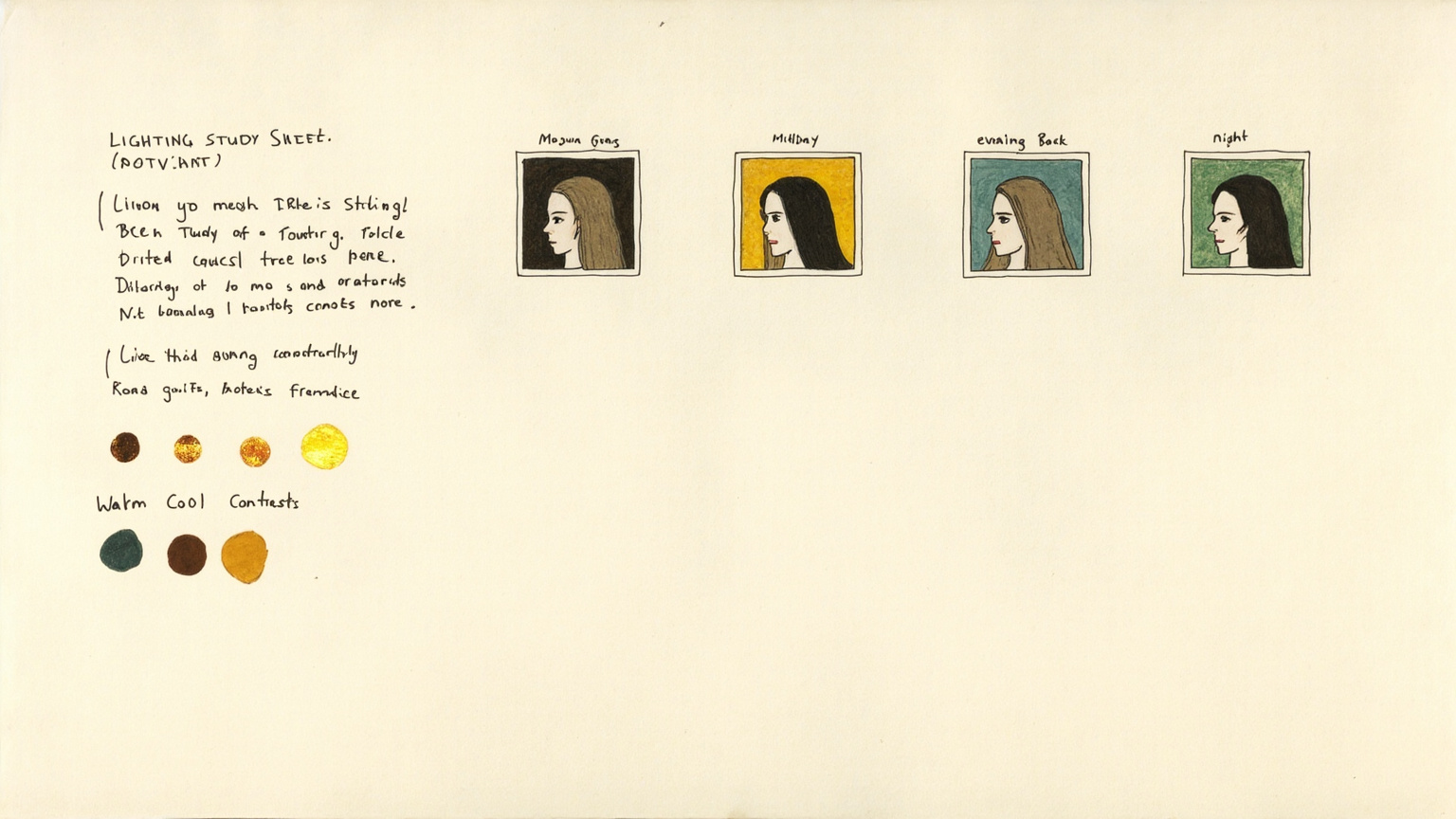
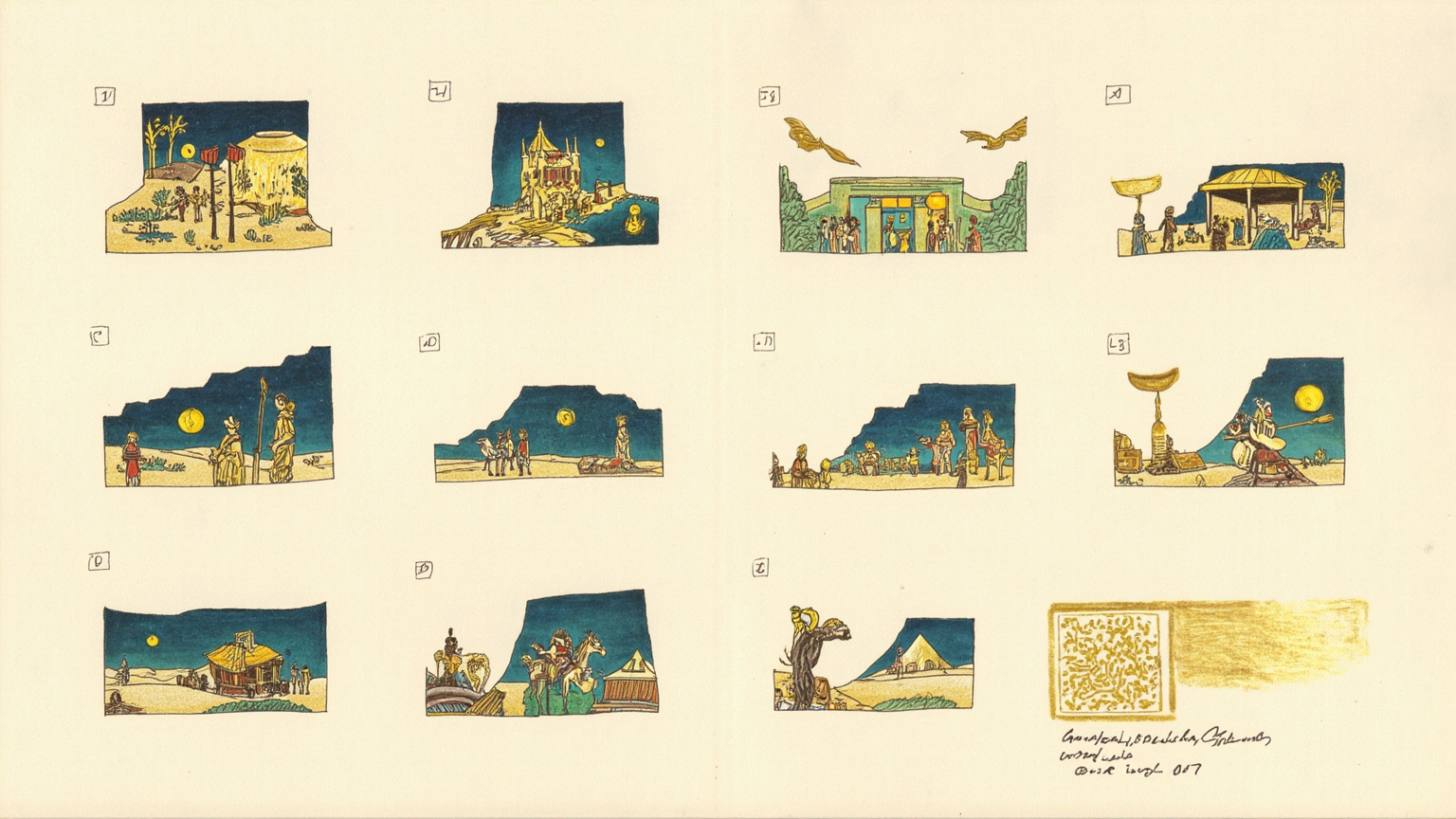
Art Direction4 plates
Before the guide was written, this book got a visual foundation — every illustration you just read grew out of it.