The Legends and Myths of Hawaii · Companion Guide
夏威夷神话与传说
末代国王用一支别人的笔,把火山、禁忌与口传传统装进一八八八年纽约的幻灯片——主权将倾时的文化自证
Evidence Handed to the World
A volcano still smoking. In 1888, a New York publisher put a book on the shelf credited to 'the King of Hawaii, in his own hand'—gold-stamped cover, and inside it, a Pacific kingdom's whole answer to where it came from. The book was called Legends and Myths of Hawaii. Its compiler was Kalakaua, known as the Merrie Monarch—the last man who ever truly sat on Hawaii's throne. As he wrote these stories down, his kingdom was being stripped away from him, piece by piece, by the world outside.
What Kind of Book Is This
Shelve it under ethnography: a compendium of a people's oral myths, compiled and signed by the reigning monarch of a sovereign nation himself, with almost no second example in the world's ethnographic record. It is also a cross-section of an era, how a Pacific kingdom faced imperial pressure in the late nineteenth century, given the shape of a book by a king. New York was not an accidental choice of publisher. The act of compiling it was itself a piece of cultural self-testimony addressed to the English-speaking world: we too have our own creation, our own fire god, our own order; write it down.
But the manuscript was not something Kalakaua wrote alone in his palace. It was heavily rewritten by the American editor R. M. Daggett, who also wrote the preface, and the 'in his own hand' credit has been disputed since publication. This layer of textual history cannot be skipped; it is part of the book's own story. A Hawaiian mythology signed by the last king, rewritten by an American, printed in New York and sold back into the Pacific. That mismatch is itself a footnote to the fate of Pacific island nations in the nineteenth century.
People and World
Understanding this book starts with two people. One is Kalakaua, the nominal compiler—outside the book, in the preface and the byline, he is the monarch trying to leave evidence of his civilization behind. The other is Daggett, the actual writer, who rewrote it from outside the text. Inside the book, the protagonists are not people but gods and institutions. Chief among them is Pele, goddess of the volcano, whose fire family shapes the volcanic landscape of the Hawaiian islands; Pele lives in the crater of Kilauea, and no later understanding of Hawaiian volcano worship gets around her. Another layer of protagonists is the chiefs and priests, the enforcers of the kapu system of taboo and the human pillars of old Hawaiian order.
The world of the story runs on two timelines. The real one is the Kingdom of Hawaii in 1888, its sovereignty already unsteady after two generations of large-scale contact with the outside world, with Christianity and foreign merchants squeezing the old religion. The legendary one reaches further back, to the era of rival chiefs before Kamehameha unified the islands—the actual soil these oral stories grew from. The three pillars of the old Hawaiian order, kapu taboo, human sacrifice, and the special marriages within the royal line, are laid out in the book only at the level of institution, never staged as bloody scenes. They are pillars, not plot.
A Genealogy Written in Fire
The physical form the whole body of legend takes is the volcano. Every island, every crater, every lava flow in Hawaii is charged, in the oral tradition, to the fire family's account. Pele's family does not just shape the land; they quarrel, migrate, get driven out. Read these myths and you start drawing a volcanic chronicle in your head, each island the scene of some family dispute. The first time I read that Pele was chased off one island and climbed back out through a crack in another, I flipped back a page and read it again—it is not a figure of speech. She climbs out of the ground, literally.
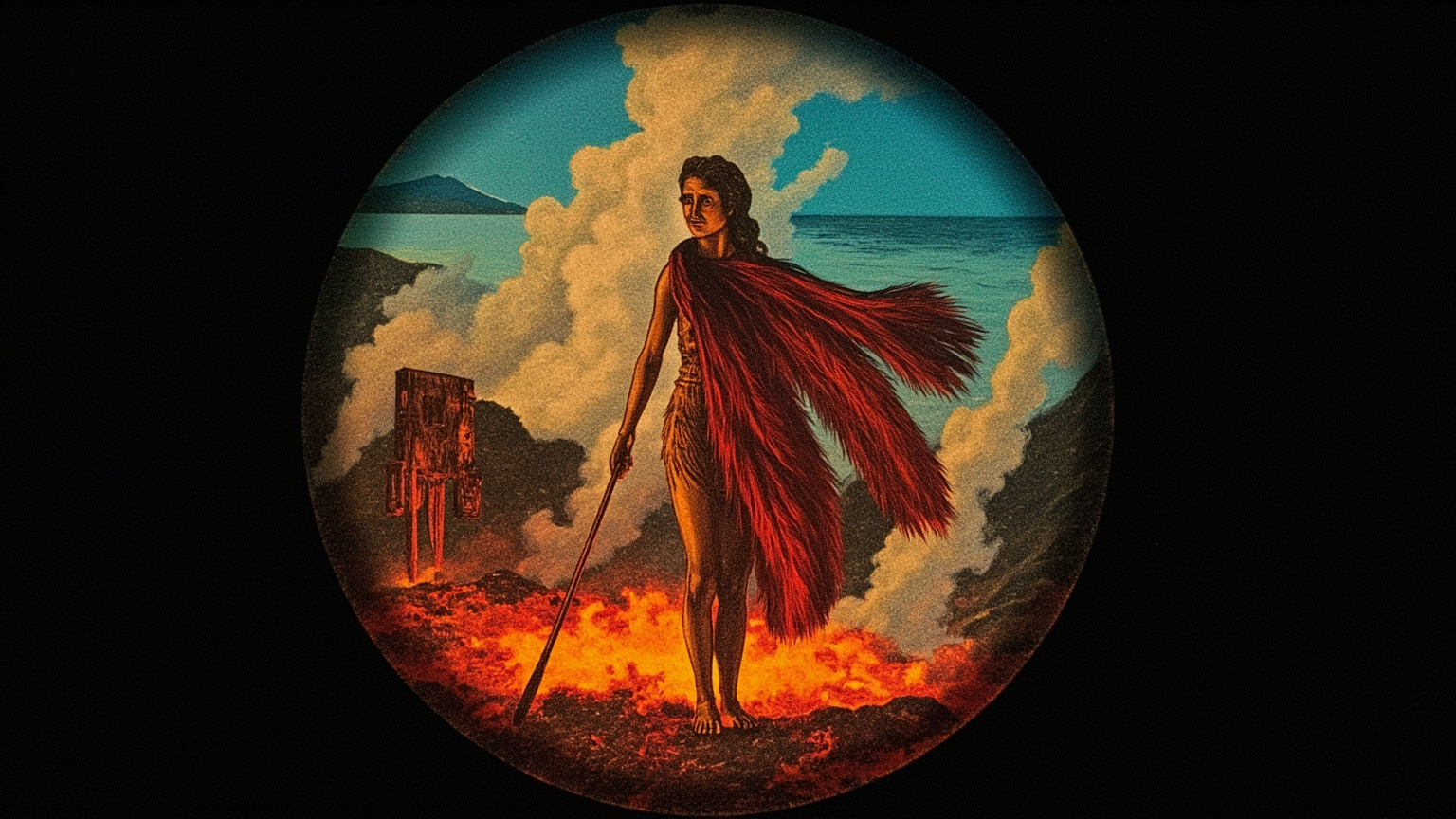
The fire-pit of Pele is the fire-pit of the Hawaiian race; every island is a leaf of her burning family chronicle.
佩蕾的火口就是夏威夷种族的火口,每一座岛都是她那份燃烧族谱上的一页。
金句 · 火家族编年与佩蕾迁徙
The human storyline carries the reader back to before Kamehameha's unification. The islands were not yet one; rival chiefs each held their own ground, and the bays between them saw raiding, intermarriage, and sacrifice in turn. It is an oral history painted in fire and sea, where the will of the gods tends to show itself through which chief wins. Any reader interested in Polynesian culture today, opening this book, runs into the same handful of names, Pele, Kamehameha, kapu, names this book was the first to fix in place.
Kapu: The Pillar That Held Up the Whole Society
Old Hawaiian society stood on a system of taboo called kapu. Who could eat what, which days no one could put to sea, which ground a god's shadow had crossed and so could never be stepped on: breaking kapu was a capital offense, carried out by chiefs and priests. It was not a moral suggestion; it was the physical skeleton of order. Human sacrifice and the special marriages inside the royal line were parts of that same system, not standalone events. The book covers these places only as institutional statement, never unfolding the execution, the instruments, the bodies. That restraint is one face of the book; its face as an ethnographic document is the other.
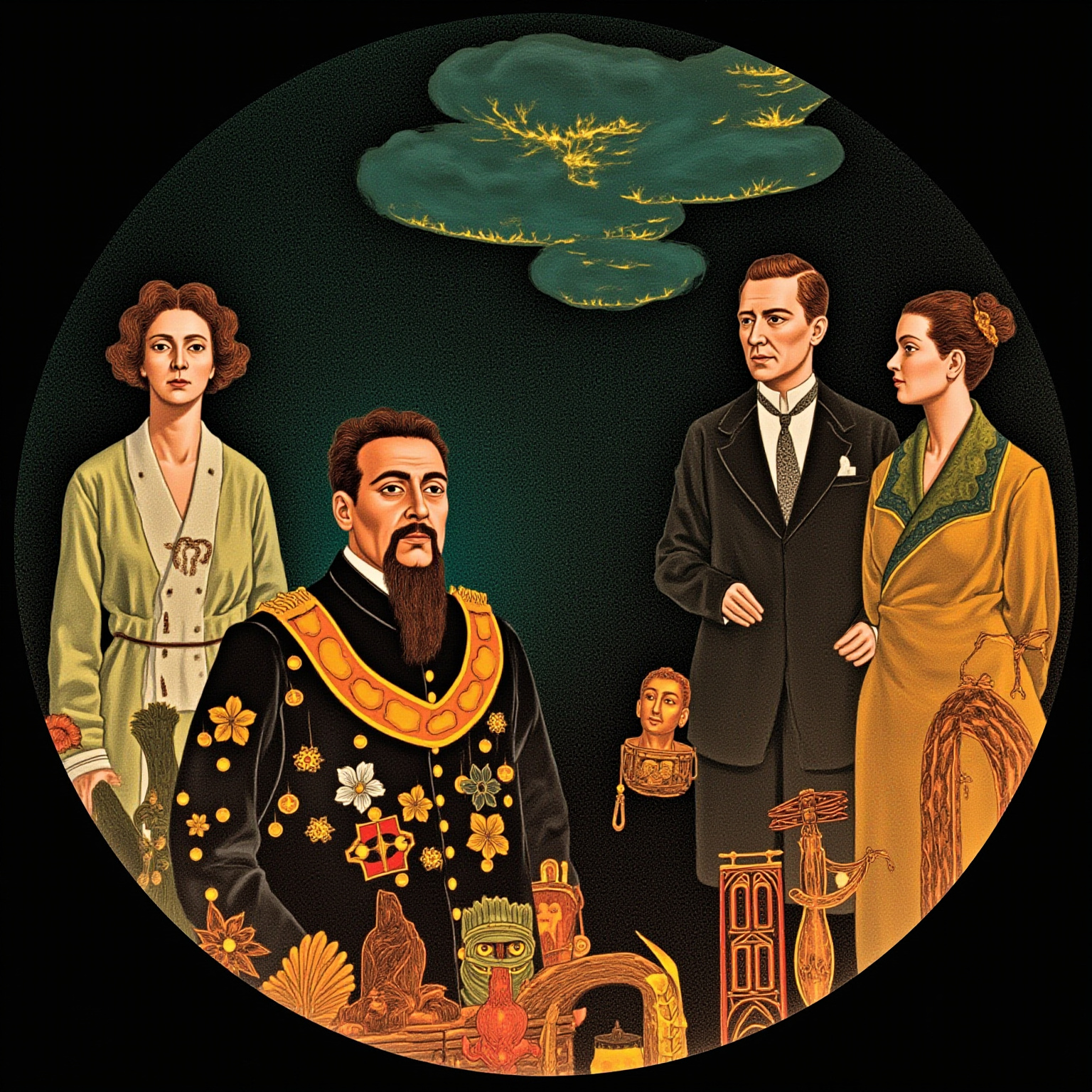
The kapu was not counsel but the very bone and sinew of the social body; to break it was to die.
禁忌不是劝诫,而是这具社会躯体本身的骨骼筋腱——触犯它,就是死。
金句 · 禁忌之柱与祭司的执行
For a reader used to treating myth as a bedtime story, this layer brings you up short. Kapu was not one chief's bad temper; it was an entire system that meshed divine authority, royal power, and the daily business of eating and dressing into one machine. Read this layer and Pele's legends stop looking like fairies brawling; every volcano, every turn a lava flow takes, could be kapu working itself out.
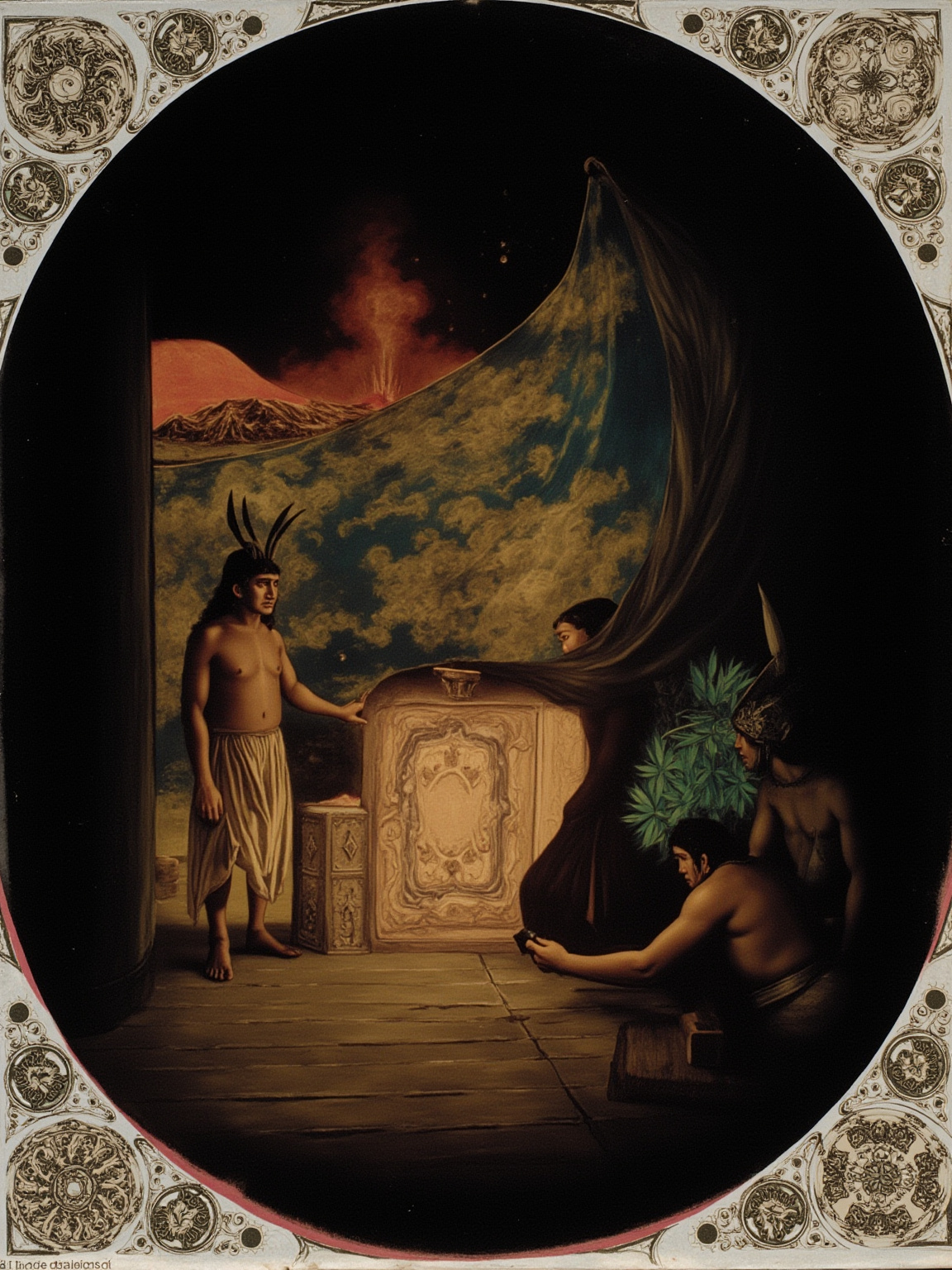
When the high chief spoke the kapu, the gods listened; when the priest enforced it, the people were still.
大酋长念出禁忌时,诸神侧耳;祭司执行时,万民屏息。
金句 · 神权与王权咬合之处
Rival Chiefs, the Last Sea Before Unification
The liveliest stretch of the legendary world is the period before Kamehameha unified the islands in 1810. Rival chiefs each ruled their own patch, divine favor changed hands on the battlefield, and bays that were allied by marriage one day were at war the next. This oral history is not there to settle who won which war; it exists to explain why a unifier eventually appeared. Kamehameha's name is already faintly visible in these stories—he is both the endpoint of the book's historical narrative and the last flare of the old order before it went out.
What's interesting is that the book stops telling the story once unification happens. Kalakaua left his own generation out of it: the 1887 Bayonet Constitution and the 1893 overthrow of the monarchy appear nowhere in these pages. The book's world ends at the oral era 'before unification,' a line the author drew on purpose. Folding the later political history in is the easiest mistake to make reading this book.
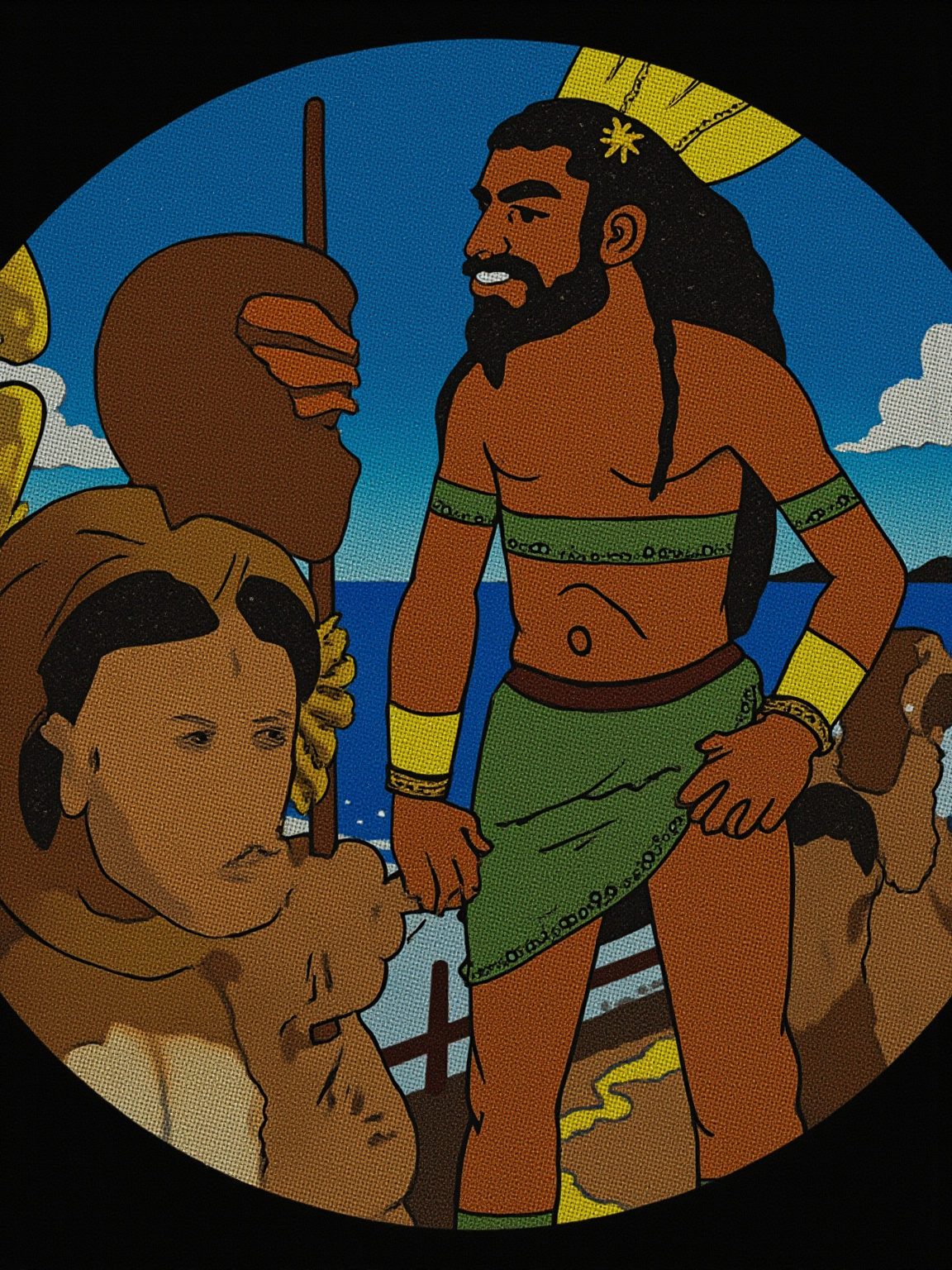
Before Kamehameha there was no king of all these islands, only chiefs whose gods shifted like the trade winds.
卡美哈梅哈之前,这群岛没有共主,只有那些神祇随风向换来换去的酋长。
金句 · 统一之前诸部纷争
Why This Book Matters
Three things earn it a place on the shelf. First, who compiled it: a sovereign nation's own monarch preserving his civilization's memory, something with almost no second example in world ethnography. Second, the text's own history: a kingdom compiling this while its sovereignty crumbled, a disputed byline, an American editor's rewrite, all of which make the book a document of nineteenth-century Pacific cultural history under imperial pressure. Third, it is still the standard entry point into a living tradition; Pele, Kamehameha, and kapu are terms almost no English writing on Hawaii today can avoid running into by way of this book.
There is a dimension often overlooked: this book asks the reader to treat its gods as living beings. The volcano is still smoking, waves still hit the shore, new rock is still giving off heat—for the Hawaiian tradition still practiced today, Pele is not a fantasy character and Hawaii is not a postcard. The patterns carved in wood, the shape of an altar, the way sacred cloth is hung: these are all ways the gods stay present. Read it as a fossil of a dead mythology and you lose half of what it is.
It Is Still Speaking Today
For a reader picking this book up today, it works on two levels. On the surface, it's a story: a volcano goddess's family feuds, the bay politics before unification, the old order kapu held up. Underneath is a history still being rewritten as we read it: a New York publisher in 1888, the byline of a last king, an American editor's rewrite, a three-way tension that is itself nineteenth-century Pacific history in miniature. Understand this layer and any piece of English-language reporting on Hawaii you read afterward carries half a page more background.
Deeper still: it shows one way a small civilization under imperial pressure tries to save itself. Kalakaua did not pick up a gun; he picked up a pen—or rather, had an American pick one up for him, and poured an oral tradition into an English book. Whether that was tragedy or strategy is still being argued.
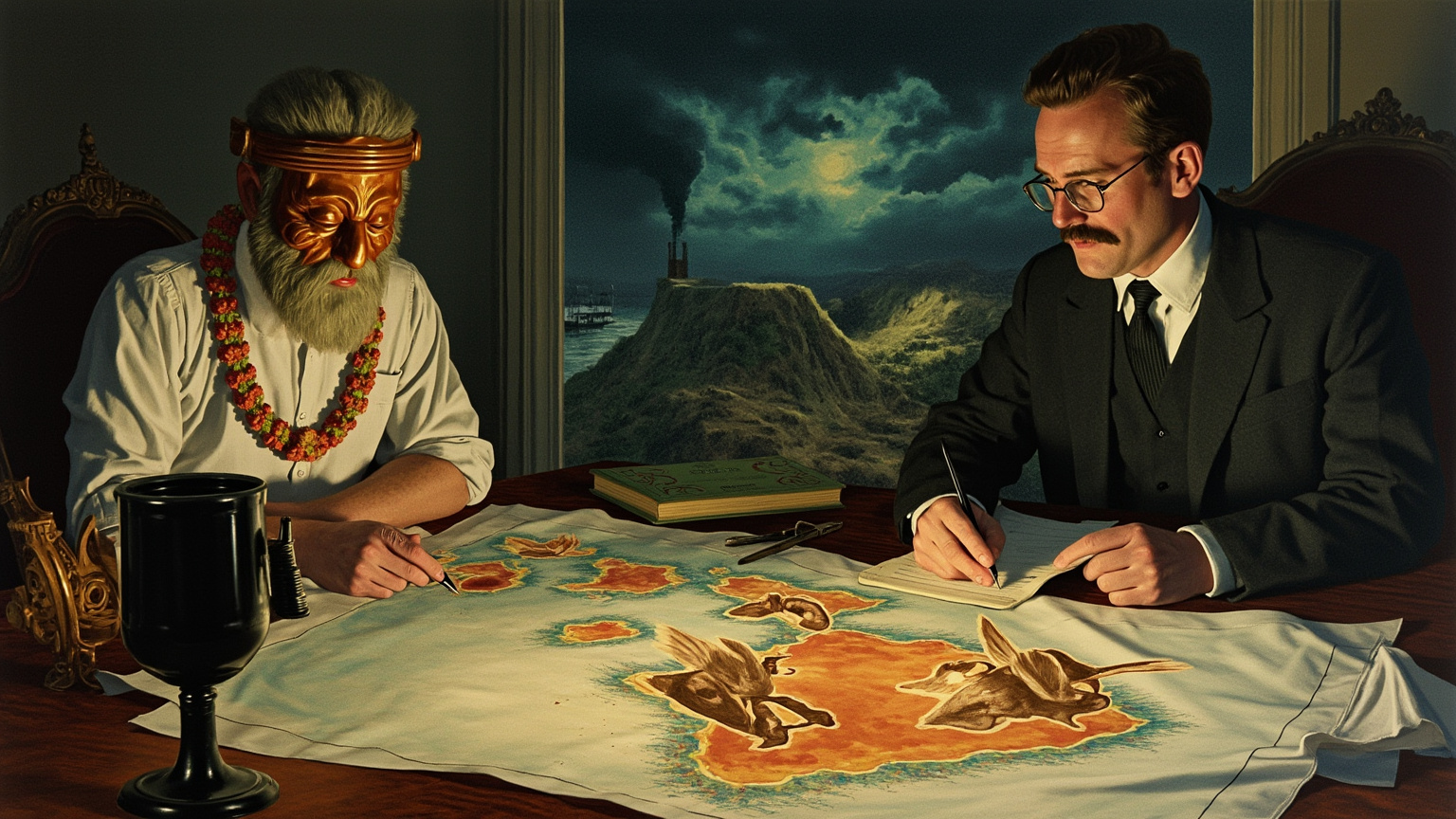
He took not the spear but the pen, and bade another hand hold it, that the voice of his people might cross the sea.
他没有拿枪,他拿起笔——他请另一只手替他握笔,只为他族人的声音能渡得过这片海。
金句 · 末代国王的辑录与署名之辩
You Know the Plot. Why Read the Text Itself
A companion guide gives you the map; the text itself is the ground. What this guide truly cannot give you is the half it replaces—the sulfur-smelling specifics in Pele's legends, the tone of a chief reciting the kapu code word by word, that hard-to-place distance between 1888 New York and Honolulu, somewhere between collaboration and being written out of your own story. That only seeps in when you open the original and stand in the sentences Daggett laid down for Kalakaua. Read it after you already know the plot, and you will be looking at a different book.
One thing a sovereign nation under imperial pressure can still do is leave evidence of itself—even if that evidence has to be handed over in someone else's hand, someone else's language, someone else's press.
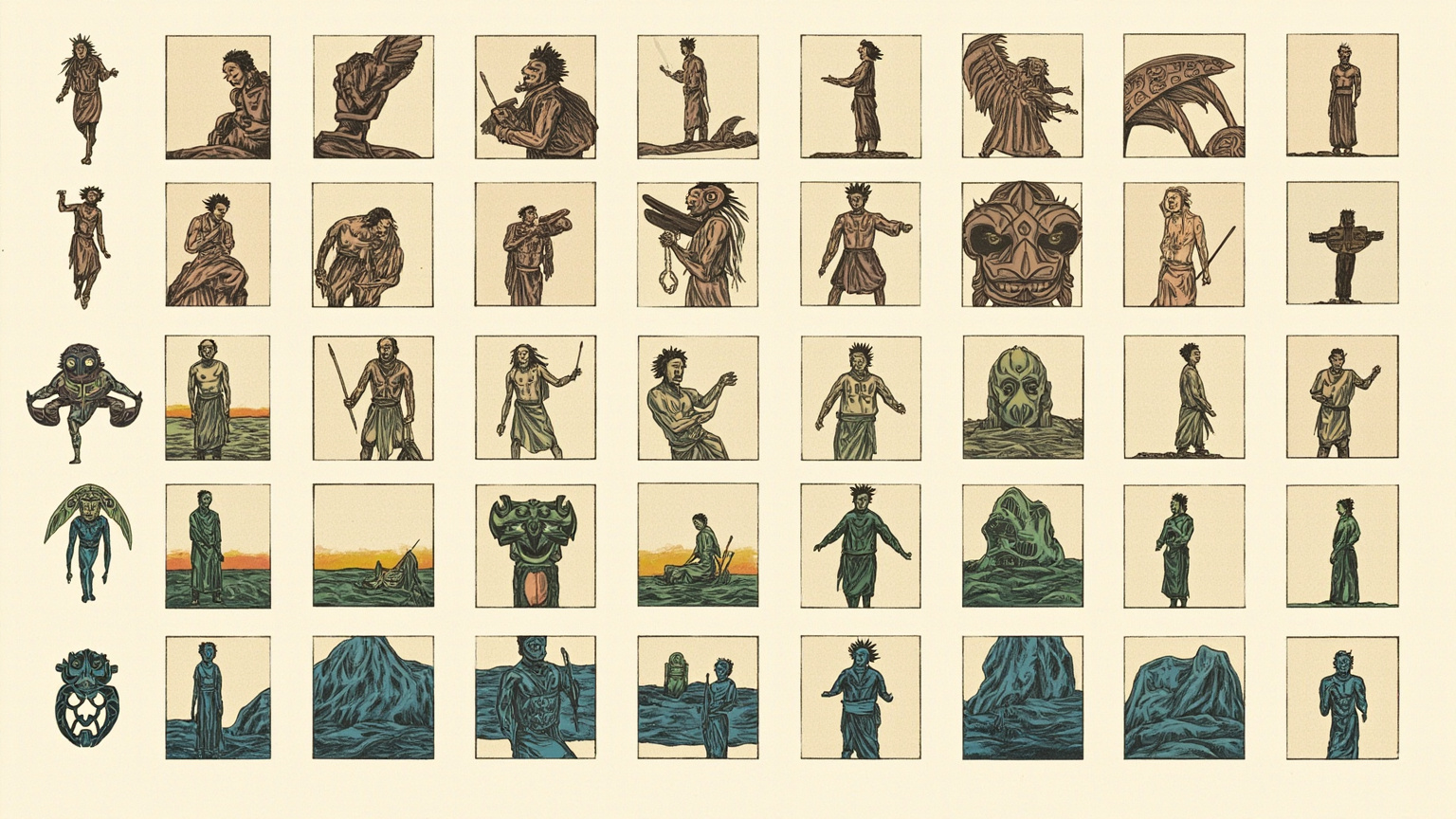
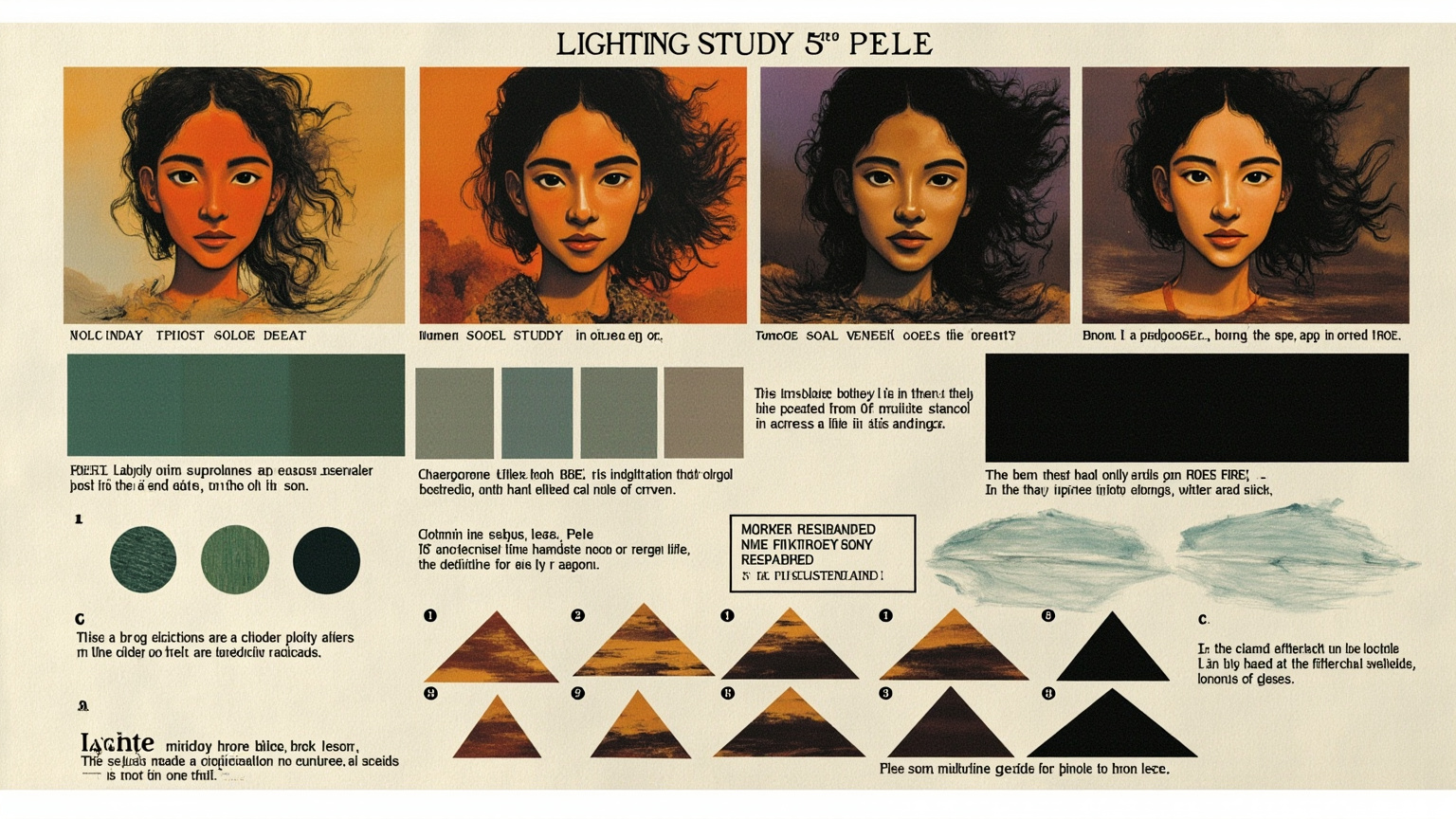
Art Direction4 plates
Before the guide was written, this book got a visual foundation — every illustration you just read grew out of it.