Liaofan's Four Lessons (Liao Fan's Four Instructions / Le Fan Ssu Hsün) · Companion Guide
了凡四训
一个被算尽五十三岁死期的人,把朱笔一划,把命从纸上一笔一笔刻回去——改命不是奇迹,是日课。
Opening: A Fortune Slip, A Temple, A Man Read to Death
At a fortune-telling stall outside Ciyun Temple, the young Yuan Huang handed over his birth chart. The fortune-teller Mr. Kong glanced up at him once and wrote out his entire life on the spot — his rank in the county examination, his rank in the prefectural examination, the year he would pass the provincial exam, the exact day he would set out for the capital, how many years he would serve as an imperial tribute student, that he would die without a son, and that he would die at noon on the fourteenth day of the eighth month, at age fifty-three. Yuan Huang went home. He didn't cry, didn't protest — he simply stopped wanting anything. He would stop at whatever exam rank he was given and stop trying at whatever office he was given, then wait to die on schedule. A living man had just been nailed shut by a sheet of paper.
This is how Liaofan's Four Lessons opens, in its first chapter, 'Establishing Destiny.' The cruelest cut in the book isn't a hard fate — it's a fate calculated too accurately. Accurate enough that the man believed it. Accurate enough that he spent the next twenty years simply lying down and letting it happen.
What Kind of Book Is This
The author, Yuan Huang — later known by his sobriquet Liaofan — lived through the Jiajing and Wanli reigns of the Ming dynasty. He held the jinshi degree and served as magistrate of Baodi County, and late in life he wrote these four instructional letters to his son. He isn't remembered for his prose. He's remembered for what actually happened: he broke every line on that fortune slip himself. Due to die at fifty-three, he lived to sixty-nine. Fated to have no son, he had one. Capped at tribute student, he passed the jinshi exam. The book is his record of breaking his own fate, plus the four lessons he wrote for his son, Yuan Tianqi.
Outside the shelf of self-cultivation classics that includes Vegetable Root Discourse and Instructions for Practical Living, Liaofan's Four Lessons is the longest-printed, farthest-traveled book in the Chinese-speaking world's morality-book genre. For four hundred years, from scholars' studies to village ancestral halls, from Japan to Southeast Asia, it has been reprinted, hand-copied, and tucked into the bottom of dowry chests. Its place is a strange one — not a Buddhist sutra, not a Daoist text, not orthodox Confucian philosophy, but a late-Ming household manual that melts Chan Buddhism, Confucian ethics, and karmic cause and effect into one book.
The Cast and Four Settings
There's a family story behind why Liaofan ended up at that fortune-telling stall at all. His father died young and, on his deathbed, told him to give up scholarship for medicine — to heal and support people. It was that detour into medical study that took him past Ciyun Temple and put him in front of Mr. Kong. Without his father's dying wish, he never would have sat down at that table. Only a handful of people actually appear in the book. Liaofan is both narrator and protagonist — he speaks as a father to his son Tianqi, so the book reads as a letter home, not a sermon from a master. Mr. Kong is the fortune-teller who calculated him to death, with a precision that's almost frightening. Chan Master Yungu is the monk at Mount Qixia, or a nearby temple in the Jiangnan region, who sat across from Liaofan for three days and nights and pulled him out of his own fate. Yuan Tianqi is the letters' recipient and also living proof that his father's fate-breaking worked — a son who, by the original reading, should never have been born, and who went on to pass the imperial examinations himself.
Four settings recur throughout. The fortune-telling stall at Ciyun Temple near Jiaxing, in Zhejiang — where the story begins. The government office of Baodi County, near Beijing — where he served as magistrate, cutting taxes, managing floods, and building schools, treating his official duties as spiritual practice. A Chan meditation hall somewhere in Jiangnan — the turning point. And finally, a lamp in a Jiangnan study, where he sat alternating a red brush and a black one, tallying his own merits and faults, line by line.
Act One: Twenty Years of Living a Calculated Death
Mr. Kong said he would rank fourteenth in the county examination. He ranked fourteenth. Seventy-first in the prefectural exam. Seventy-first. He predicted the year Yuan Huang would pass the provincial exam — a year he'd given up hoping for — and that year, he passed. Kong even named the exact day he would set out for the capital as a tribute student. Yuan Huang deliberately chose a different date to dodge the prediction, but on the appointed day, the education official forced him onto the departure list anyway. The date didn't move an inch. The fortune-teller had turned a man into a puppet on strings, without even leaving him room to struggle.
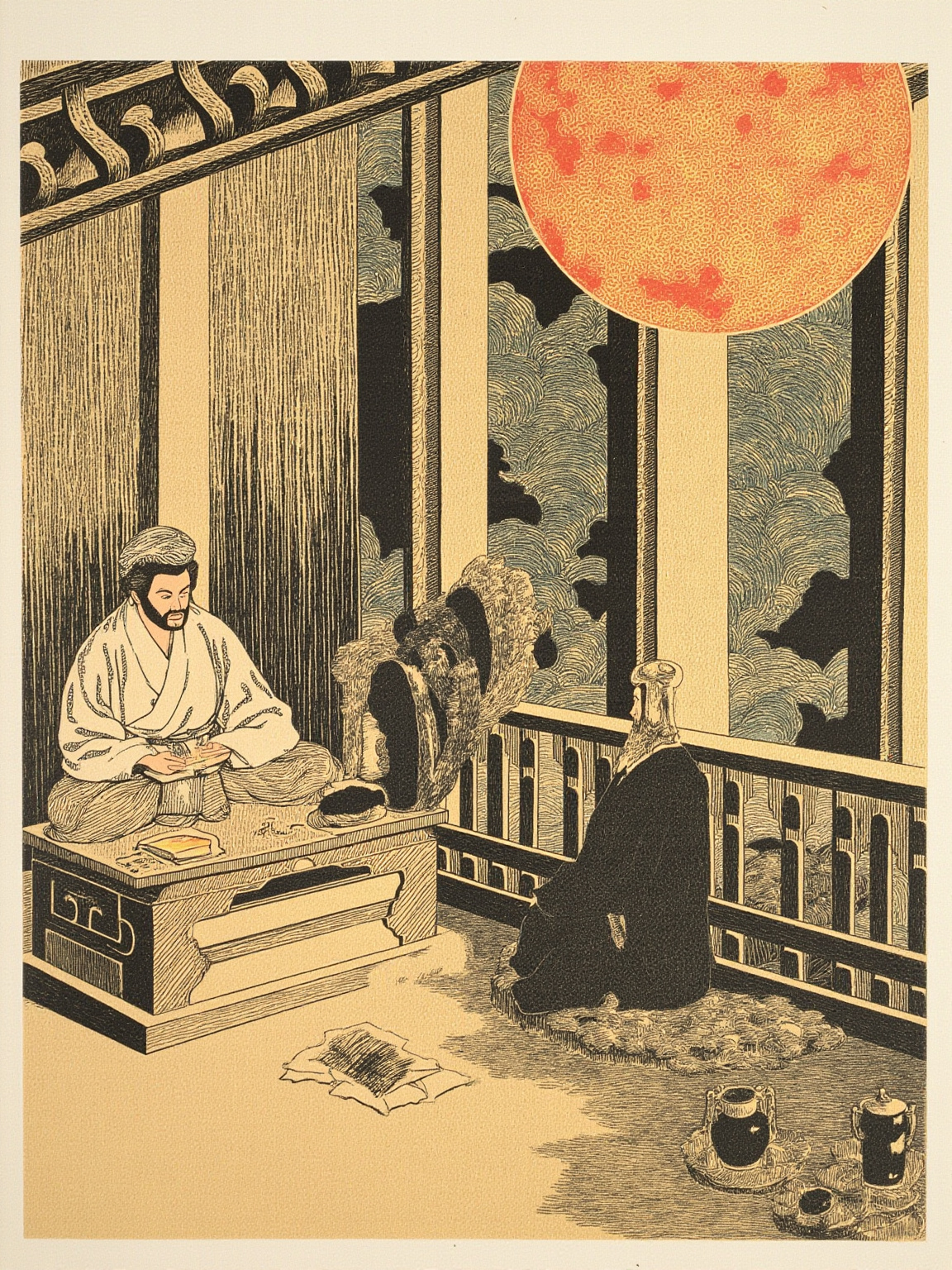
He numbered every year of my life, and I lay down beneath it for twenty years without a single struggle.
把我一辈子的数都算尽了,我也就安安静静地躺在这数里,过了二十年,没有一念要去翻它。
金句 · 立命之学 · 慈云寺卜摊
What's striking is how little drama the writing gives this. Liaofan tells it in a tone so flat it borders on cold, and that flatness is more chilling than any lament would be. A man who has fully surrendered to fate doesn't cry out in pain. That coldness runs under the whole book.
Act Two: The Line Spoken in the Meditation Hall
At thirty-one, Liaofan went to see Chan Master Yungu at Mount Qixia, or a temple nearby in Jiangnan. The two of them sat facing each other on meditation cushions for three days and nights without a word. Finally the master spoke: 'Why haven't you risen?' Liaofan recited Mr. Kong's entire prediction back to him, point by point, and said his life was already fixed — there was nothing to rise for. The master fixed him with a look and said: You make your own fate. You seek your own fortune. Every field of blessing lies within a single inch of the heart. Seek it there, and nothing fails to answer.
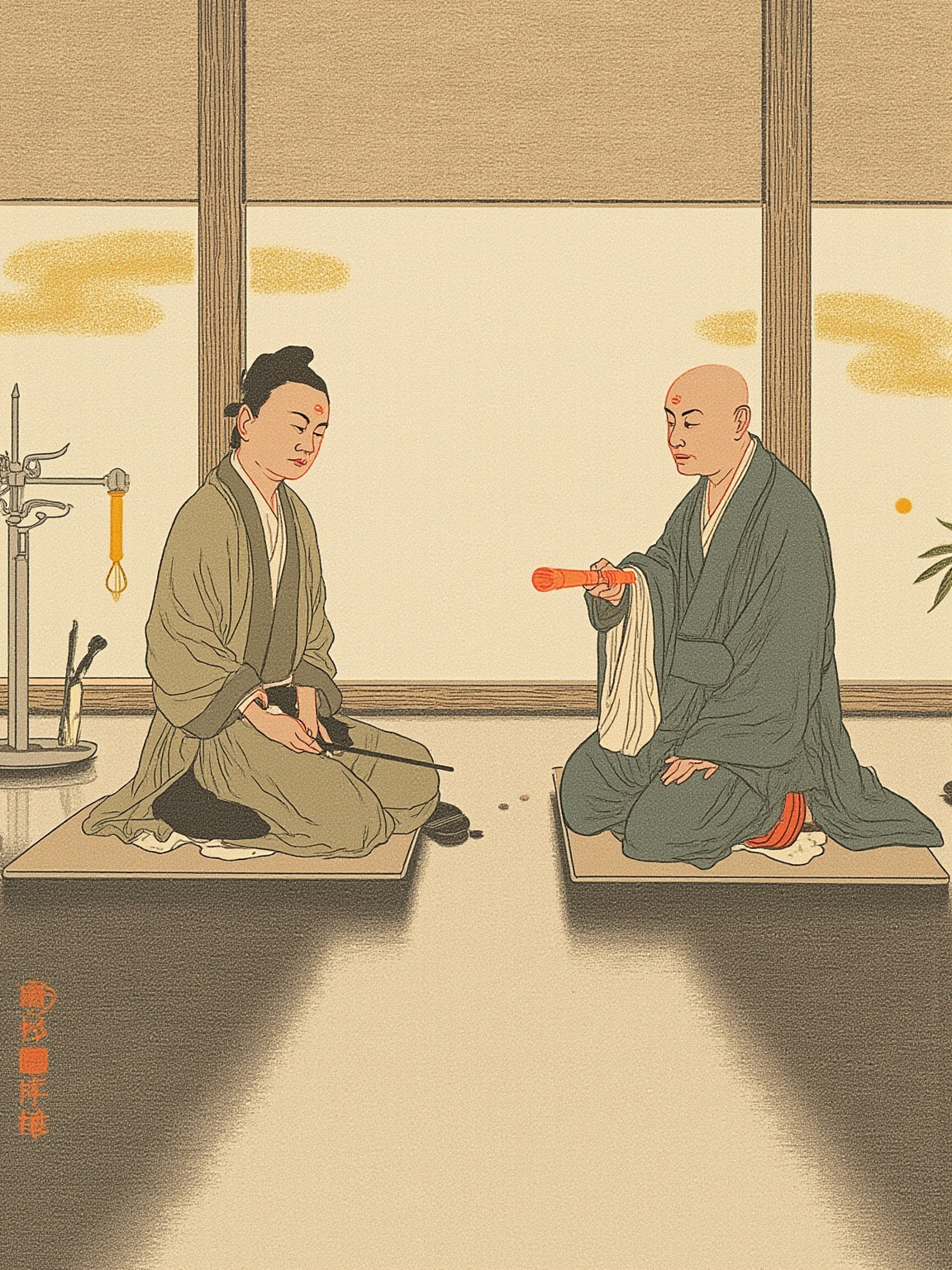
Fate is of my own making; blessing must be sought by oneself. Every field of merit lies within this single inch of the heart.
命由我作,福自己求;一切福田,不离方寸。
金句 · 立命之学 · 栖霞山禅房
The best move in the writing is the emptiness of those three days. Almost nothing happens in this passage — there is only sitting. But once the sitting ends and that one line lands — you make your own fate — the whole book pivots on it. Every earlier scene of dead-accurate prediction exists only to give this moment its weight. Yuan Huang took a new name after this: Liaofan, meaning one who has finished with being an ordinary man bound by fate.
Act Three: A Ledger in Red and Black
So once you've decided to make your own fate, what do you actually do? Chan Master Yungu didn't hand him a slogan and send him off — he gave him a practice: the ledger of merit and demerit. Open a notebook, and every night before bed, go back over the day. Every good thought gets a stroke of red ink, one merit. Every bad thought gets a stroke of black, one fault. It starts with three states of mind — shame, at ever having entertained such a thought; fear, that cause and effect never misses; and courage, to correct it on the spot. Red for good, black for wrong, one entry a day, the count climbing line by line.
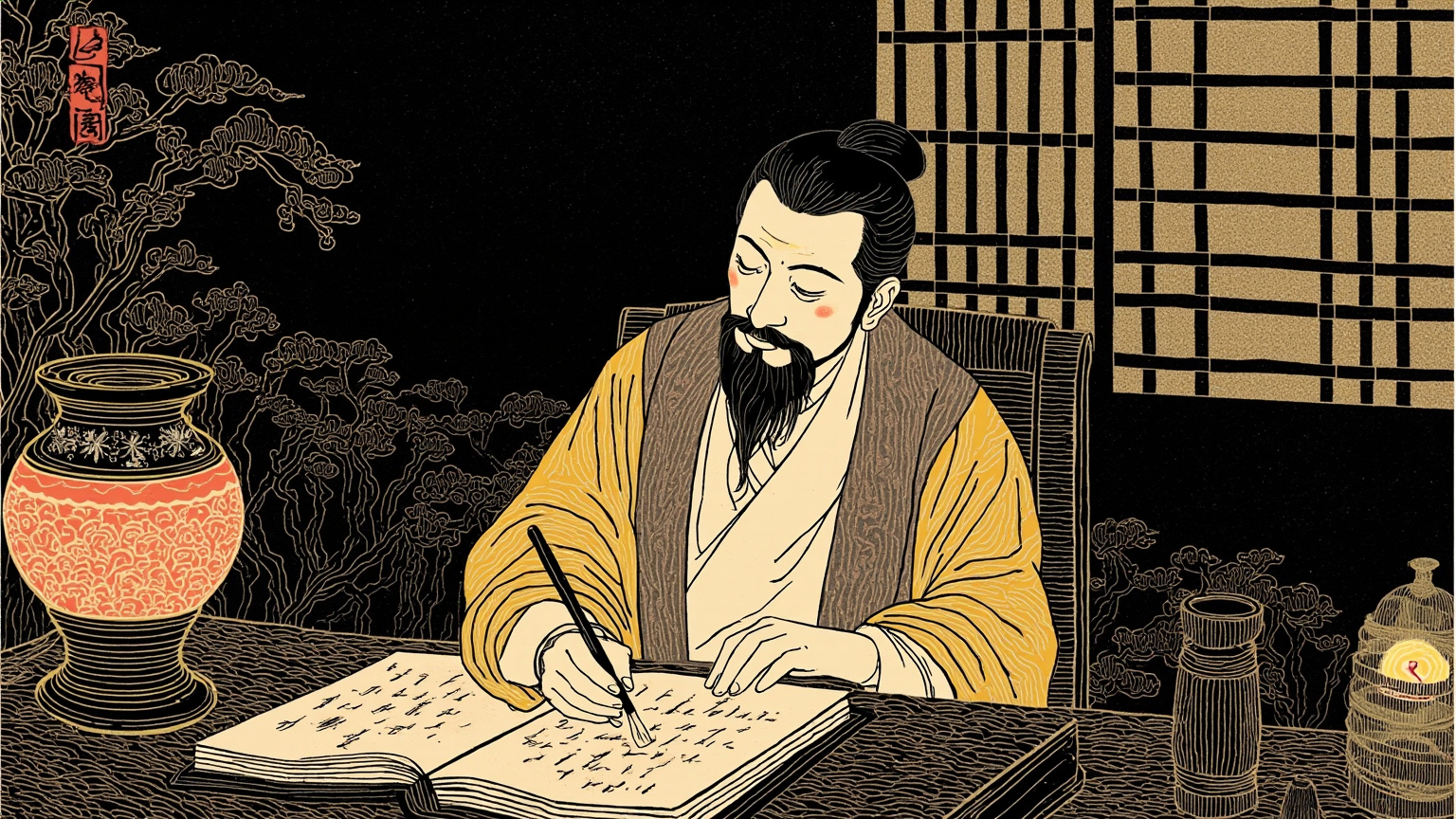
One good thought, mark it in red; one trespass, mark it in ink. Day after day, the account closes against you or for you.
一念之善,朱笔一画,记一功;一念之过,墨笔一画,记一过。日日相对,便是账对人了。
金句 · 改过之法 · 朱墨功过格
This is the most concrete thing in the whole Ming-dynasty tradition of merit-ledger self-cultivation — it takes Yungu's principle, you make your own fate, and turns it into a book you can flip open every night. It isn't inspirational talk. It's bookkeeping. Whoever you want to become, you start entering the numbers today. Lu Xun later recalled finding a notebook like this on someone's desk as a child — a small sign of how deep this habit ran.
Act Four: The Dream of Ten Thousand, in the Baodi County Office
He first vowed three thousand good deeds in exchange for passing the provincial exam, and he passed. Then he vowed ten thousand in exchange for a son — and this one dragged on for years. It took him a decade to reach three thousand, and the remaining seven thousand refused to add up. Then he became magistrate of Baodi and vowed to cut the entire county's grain tax to ease the burden on its people — a single act of goodness large enough to touch every household in the county. One night he dreamed of a divine figure descending from the sky, who told him: that one vow alone has already cleared ten thousand.
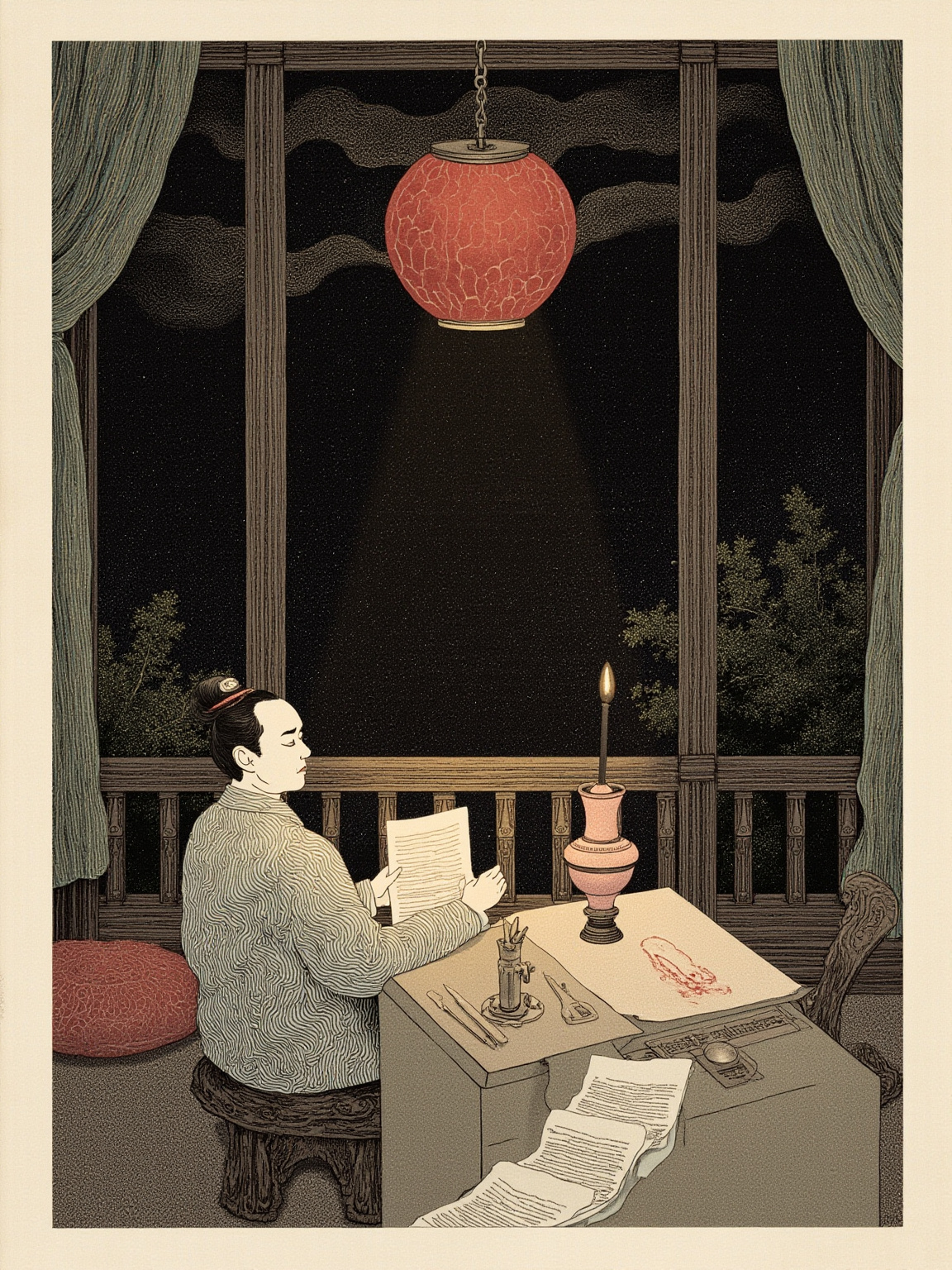
I had counted ten years and barely reached three thousand; one night's dream told me Heaven keeps its own ledger too.
我十年才数得三千,一夜梦中,神人来报:你的数已过万——老天爷,也不过是个记账的。
金句 · 积善之德 · 宝坻县衙破万之梦
The writing stays remarkably restrained here — no supernatural spectacle, just a man sitting in his office counting numbers, hearing one line in a dream, then waking up and going back to work. The divine figure doesn't appear in a blaze of mysticism, doesn't offer cryptic guidance — he just comes to deliver the tally. This vision of heaven as nothing more than an accountant is one of the clearest-eyed things in late-Ming folk religion.
Red for good, black for wrong — self-cultivation as a Chinese art form: run yourself like a company.
Act Five: The Fortune Slip, Torn Up Line by Line
In 1586, the year Bingxu of the Wanli reign, Liaofan passed the jinshi examination — a line nowhere on his original chart. His son Tianqi was born, and later passed the imperial examinations too — despite a chart that stated plainly, no son for life. Liaofan lived past fifty-three. He lived to sixty-nine. The fortune slip that had scheduled his death for noon on the fourteenth day of the eighth month, age fifty-three, was crossed off item by item, until the whole sheet was void.
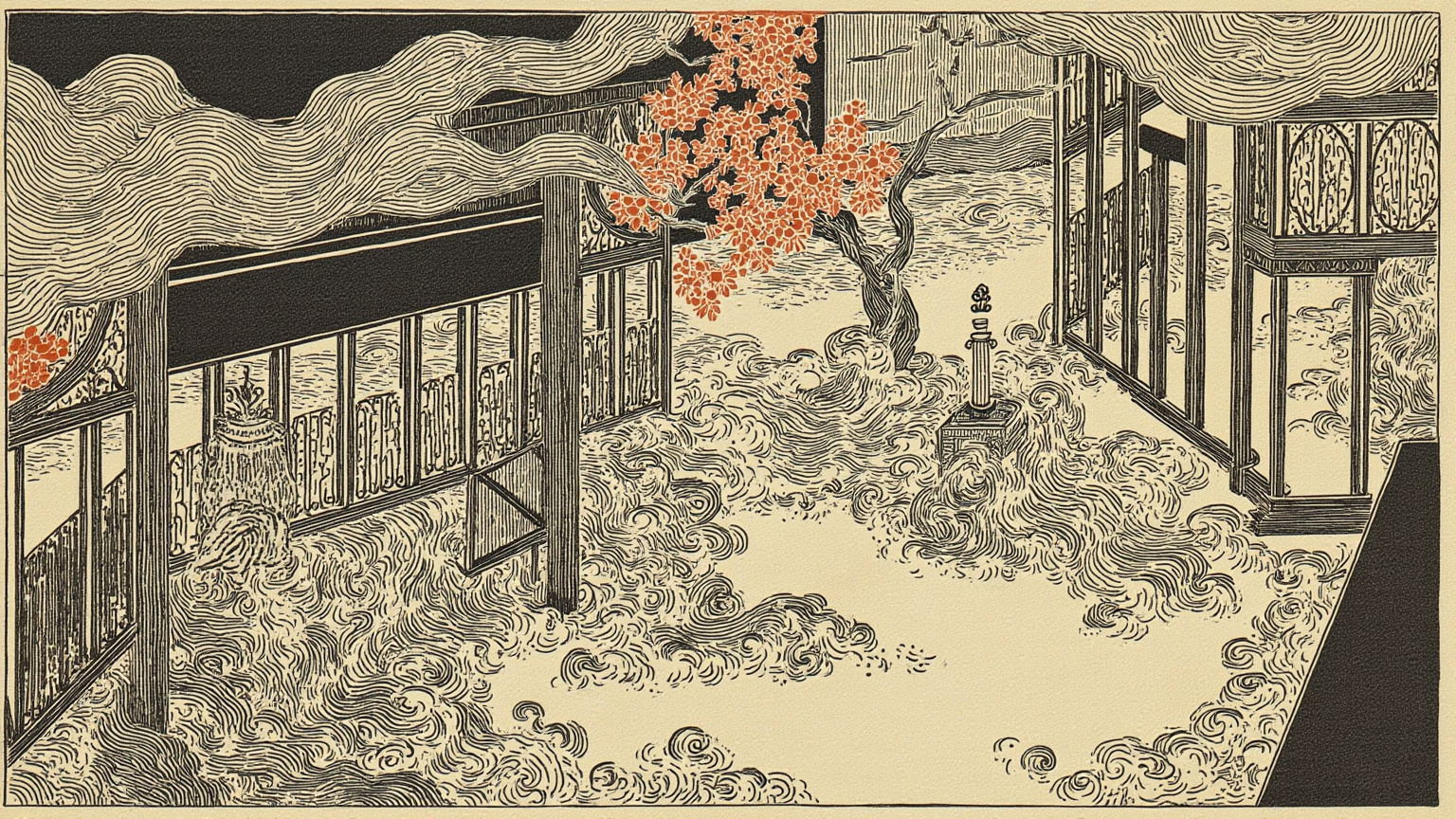
What the old diviner wrote upon my page has been crossed out, one line by one line, with my own red brush.
那张命纸上写定的字,被我一笔一笔,用朱笔勾掉,又添上新的。
金句 · 谦德之效 · 命纸一张张被撕掉
The book could have ended here, but Liaofan kept going. He wrote all this down not to show off that he'd broken his own fate, but to give his son a working model: you can do this too, with your own life. From here his tone shifts — from memoir to instruction. His fate was settled, but the lesson wasn't finished. Three more chapters of instruction still lay ahead.
Act Six: Ten Kinds of Goodness, Made Concrete
One note before this gets confusing: in the chapter 'Accumulating Goodness,' the ten categories Liaofan lists — doing good alongside others, holding love and respect in the heart, helping others complete their good aims, urging others toward goodness, rescuing people from danger, undertaking projects of great public benefit, giving away wealth to build fortune, protecting the true teaching, honoring elders and superiors, and cherishing living things — aren't ten separate stories. They're ten categories, each illustrated with real people doing real things. An official cutting taxes. A local gentleman funding a bridge. A scholar mentoring someone junior to him. A woman saving her husband's family from ruin. None of this is delivered as a lecture — it's neighborhood gossip, family history, stories about colleagues. Two or three of the more vivid ones are enough; there's no need to cover them all.
This chapter is the most grounded part of the whole book. People tend to file Liaofan's Four Lessons under mysticism, but roughly half of it is case study. It isn't arguing believe this — it's showing how someone else actually pulled it off. That kind of evidence-based storytelling carries more weight than any line about making your own fate. See your neighbor, the scholar Wang next door, fund a bridge and then pass the exam, and something in you shifts.
Act Seven: By Lamplight, Closing on Humility
The last chapter, 'The Effect of Humility,' is the thinnest and the most important. Liaofan tells his son again and again: fullness invites loss, humility gathers gain. Your father didn't change his fate because he was extraordinary — he changed it because he never again let himself feel that he was. Fate can be remade, but a full cup cannot be filled. The instant the thought I've done enough good arises, everything accumulated before it starts leaking away. The whole book closes on this single word, humility — establishing fate, accumulating goodness, correcting error, all of it held up by nothing else.
The first time I finished this chapter, I sat back, surprised. A book so many people read as a self-help manual for rewriting your own fate ends by warning you not to think too much of your own power to rewrite it. It's the coldest splash of water in the entire book. It gets you excited, then immediately pins that excitement down. This is what the late-Ming literati were actually good at — they believed all of it, and they still wouldn't let you believe it too hard.
What This Book Is Actually Saying
Liaofan's Four Lessons really argues one thing: a person has both the power to shape their own fate and the responsibility to do it. It isn't fatalism — it grants that Mr. Kong's calculations were correct down to the smallest detail. And it isn't a simple triumph of will over heaven either — it grants that fate really can be calculated. Its structure holds both at once: fate is real, and fate can be changed. Neither hand lets go of the other. That tension is exactly why people keep coming back to it.
The late-Ming merging of the Three Teachings takes a concrete shape here: Chan mind-method, through Yungu, breaks the hold of fixed destiny; Confucian practice, through self-examination and correcting one's faults, grounds it in daily life; and karmic cause and effect, unfailing and exact, runs underneath the whole thing. What comes out is a program of daily self-cultivation that both scholars and ordinary people could actually use — more approachable than Instructions for Practical Living, more actionable than Vegetable Root Discourse, more concrete than any sutra.
Why the Original Is Worth Reading
What this guide gives you is the skeleton — the reading, the meditation hall, the ledger, the county office, the exam pass, the ten good deeds, humility: seven turning points. What the original gives you is the tissue between those turns. The exact moment Liaofan stops mid-signature at his desk because a phrase of scripture crosses his mind. The hesitation before the red brush touches paper, which is a real hesitation, not a performed one. How old his son Tianqi actually was when this letter arrived, and whether he laughed reading it. None of that is something a guide like this one can hand you.
There's one more thing no guide can carry over — the feel of the thing. It is a long letter from a father to his son, not a sermon, not a collection of sayings. Reading it, you can feel the lamp, the desk, the red brush, still there the whole time. A father and son sitting across from each other at a table that's never really been cleared in four hundred years, the father laying open a lifetime's ledger for you to read. No guide can hand you that feeling. You have to sit down at the table yourself.
Fate can be changed — but only after you pick up the red brush yourself. That's the real edge of Liaofan's Four Lessons.
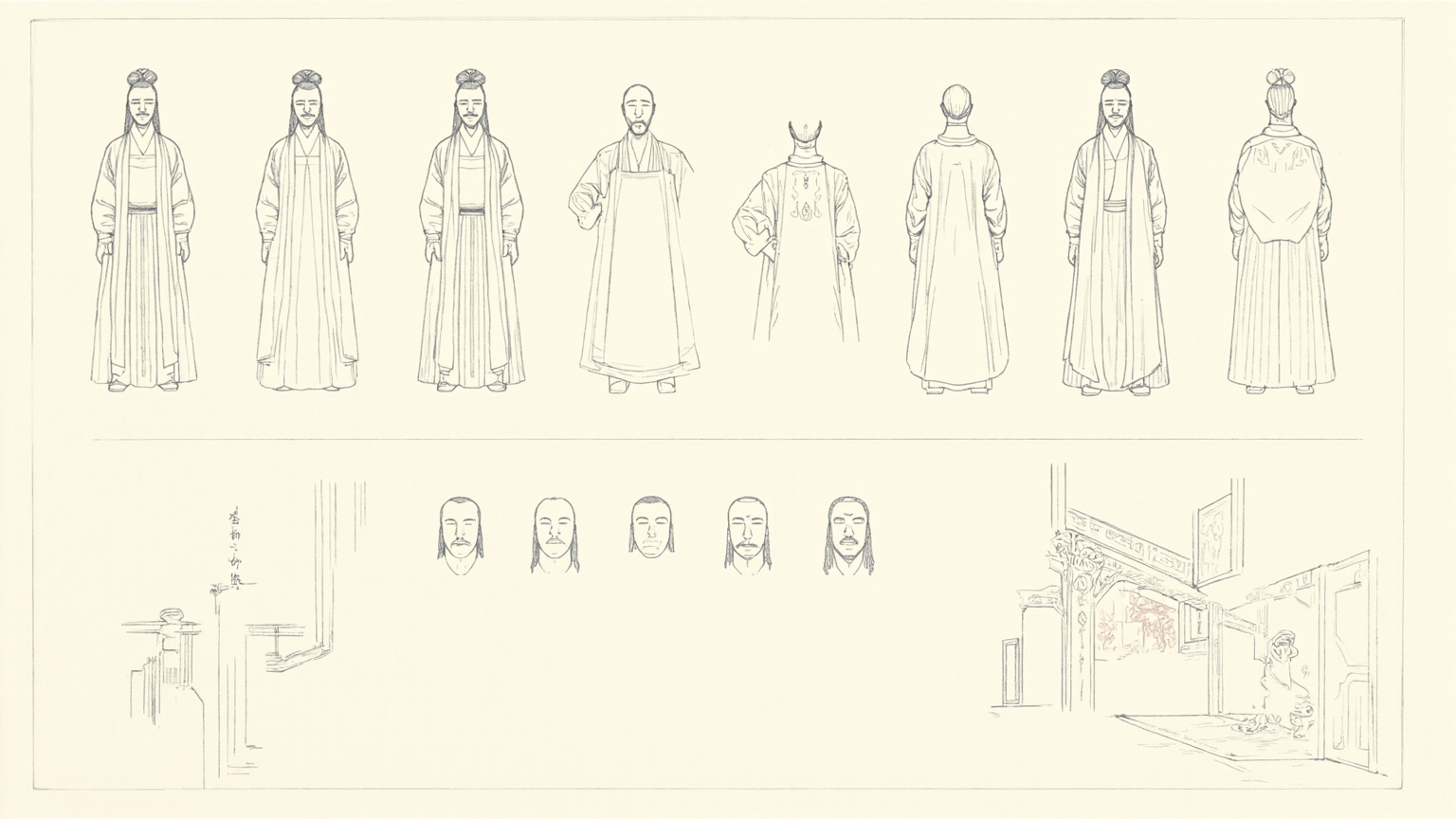
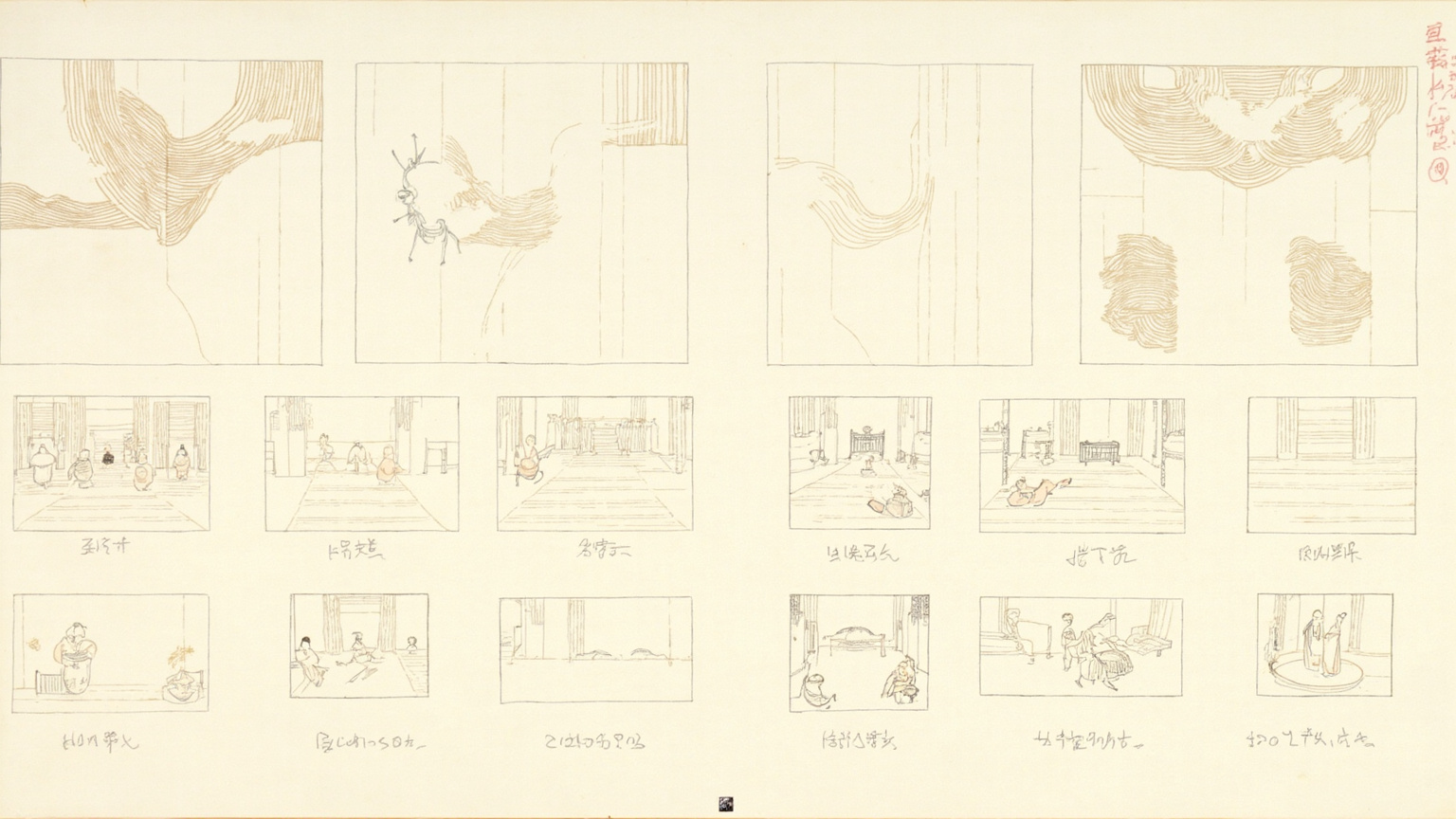
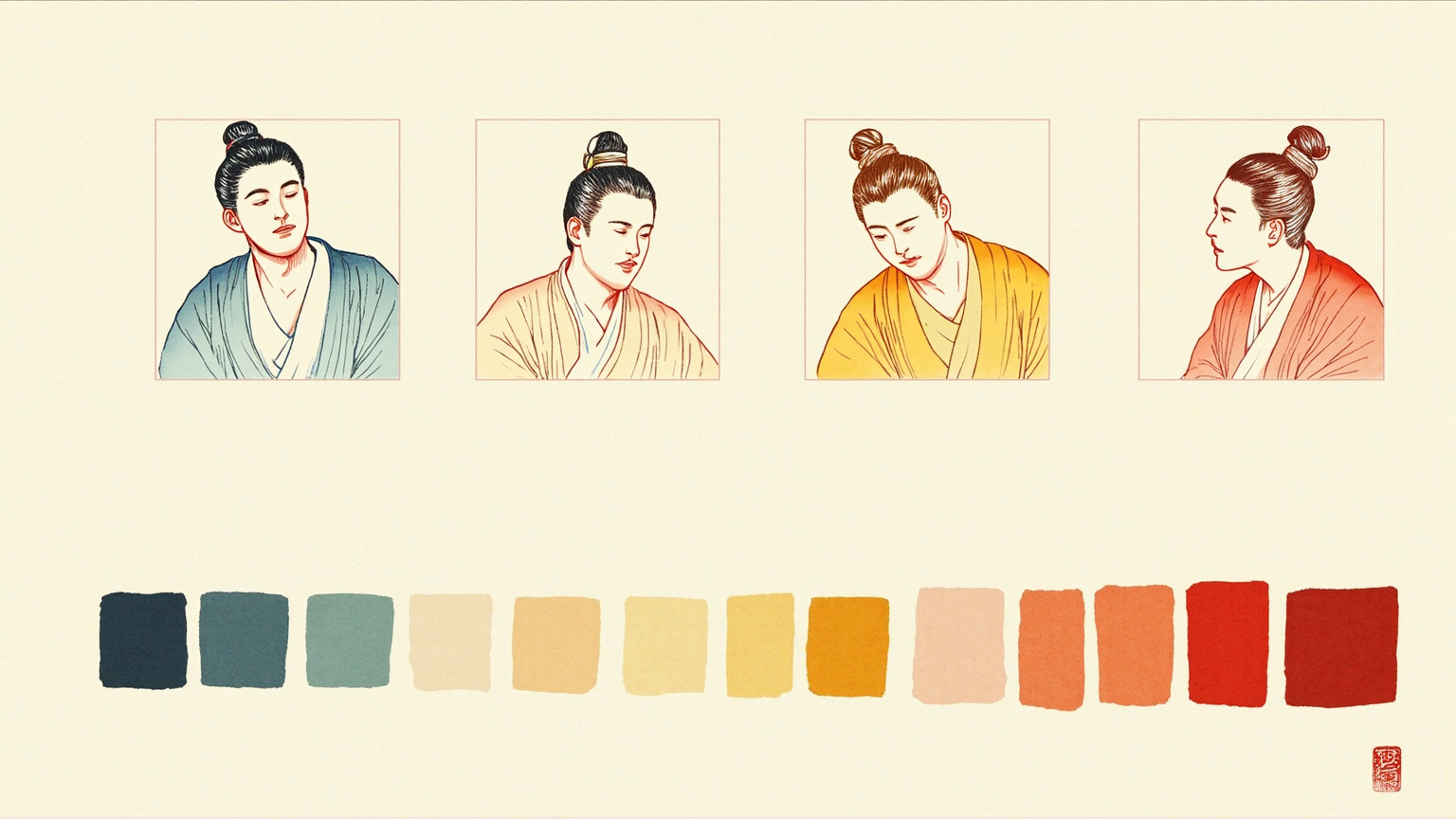
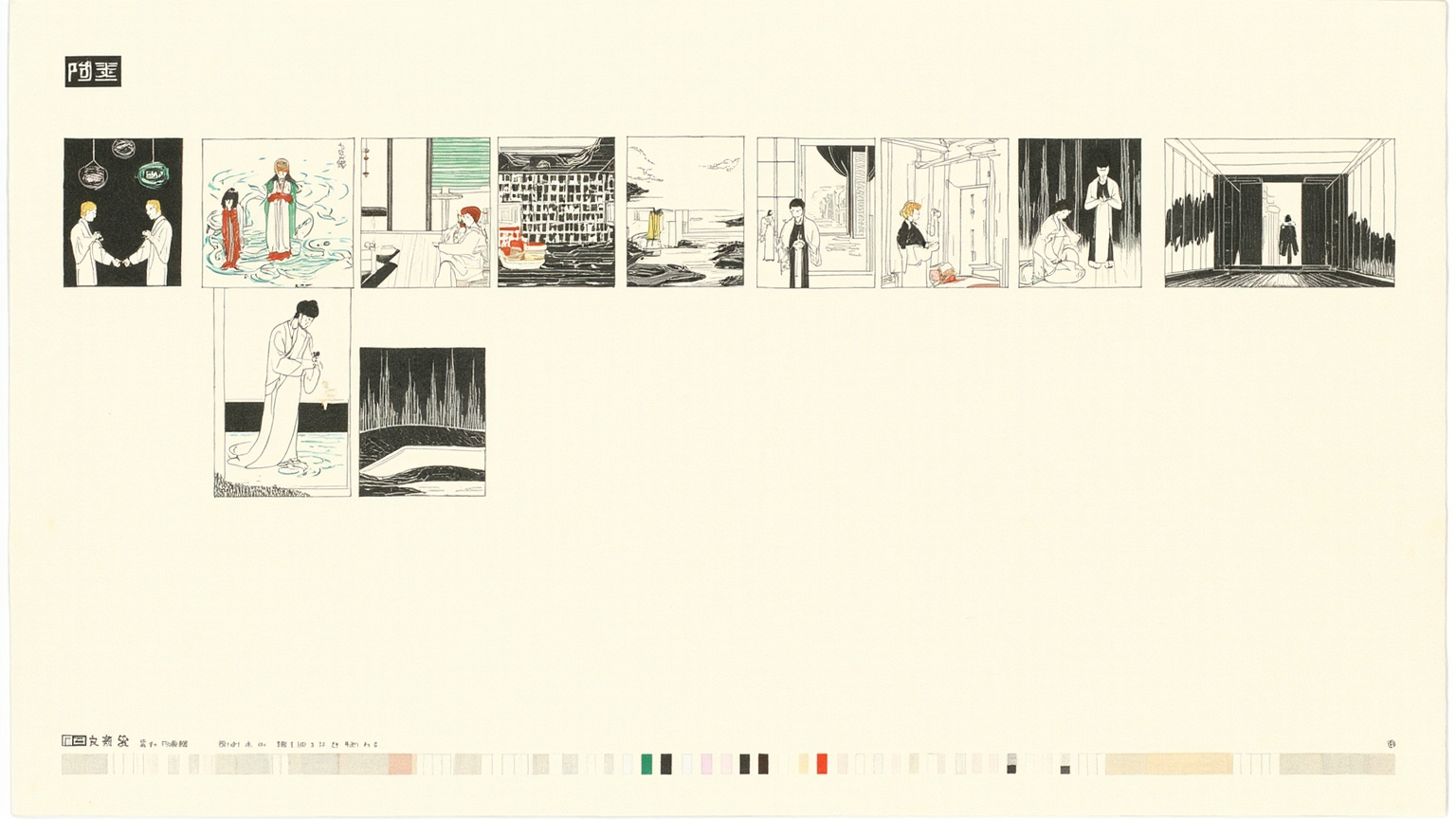
Art Direction4 plates
Before the guide was written, this book got a visual foundation — every illustration you just read grew out of it.