The Life of Saint Antony (Vita Antonii / Athanasius. Vita Antonii) · Companion Guide
圣安东尼传
一个不识字的农夫之子,逐级撤退到沙漠深处,把殉道之后一千五百年的基督教灵魂路径走出来
A Stack of Coins, Out of Nowhere
The dunes burn red-brown at sunrise. An old man in coarse brown sackcloth stands alone before a mud hut at the foot of a mountain, a scattering of villages along the Nile behind him. He is looking at a heap of silver coins — they simply appeared on the path, no tray, no hand, nothing. He glances at it twice, turns, and walks away. The coins dissolve into flecks of light and scatter into the sand. This is the strangest scene in the book, and the source of the single most repainted image in Western art history. Fifteen hundred years later, Bosch, Grünewald, Michelangelo, and Dalí all painted it again — none of them painting what the original book actually describes.
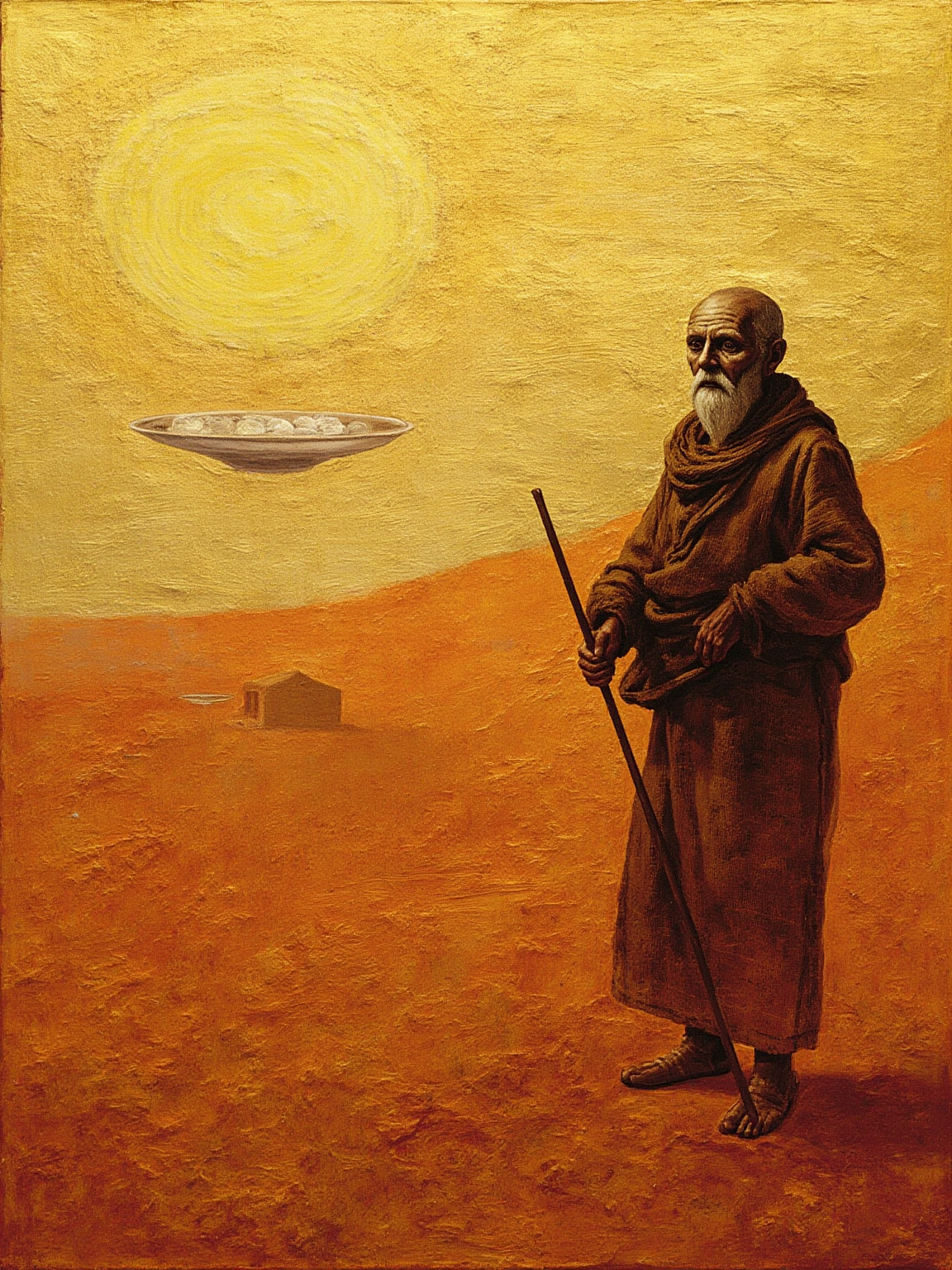
Go, sell what you have and give to the poor, and come, follow me.
去,变卖你所有的,分给穷人,然后来跟随我。
金句 · 序言·伊格那丢书 · 听到的那句话
What Kind of Book Is This
The Life of Antony was written in Alexandria in the mid-fourth century by Bishop Athanasius, a heresy fighter exiled five times over his life, more than seventeen years of it spent in flight. Its subject is not Athanasius but his friend, an illiterate Egyptian farmer's son: Antony. Athanasius wrote in Greek. Evagrius of Antioch translated it into Latin around 374, and that Latin version made the book one of the best-known texts in the medieval Christian world. It is not a story so much as a work order — the fifteen-hundred-year project of Christian monasticism starts from this one slim book.
The People and the World
Antony was born into a well-off Coptic Christian family in Egypt. Both parents were dead by the time he was eighteen or nineteen, leaving him with a young sister. One day in church he heard the words meant for him: sell everything, give it to the poor, hand your sister to someone's care, and follow me. He did exactly that — placed his sister with the local community of virgins, picked up a single cloak, and walked out into the sand beyond the village. That departure became the template for every monk and nun who left the world after him: the village edge is the starting point, the tomb is a way station, the abandoned fort is twenty years of solitude, the mud hut at the foot of the mountain is the end of the line. Each step back geographically matches an inch deeper spiritually. Athanasius himself was no mere bystander. In middle age, during one of his exiles, he sought Antony out and saw with his own eyes what the old man looked like in the mountains near the end of his life. The subject withdraws into the wilderness; the author stays behind and writes his life from outside it. Don't get that structure backwards.
Hearing the Call, Giving Up the Inheritance
After that reading in church, Antony didn't go home to talk it over, didn't write his sister a letter, didn't draw up a will. He divided the family estate, placed his sister in someone's care, and left that same day. This is the first thing in the book worth lingering on: Athanasius doesn't write him as a hesitant saint. A man who acts the instant he hears something is usually written as impulsive, but Athanasius does the opposite. Acting instantly is exactly what proves the decision wasn't his own idea. A family drama that would occupy most men in their twenties is dispatched in three sentences.
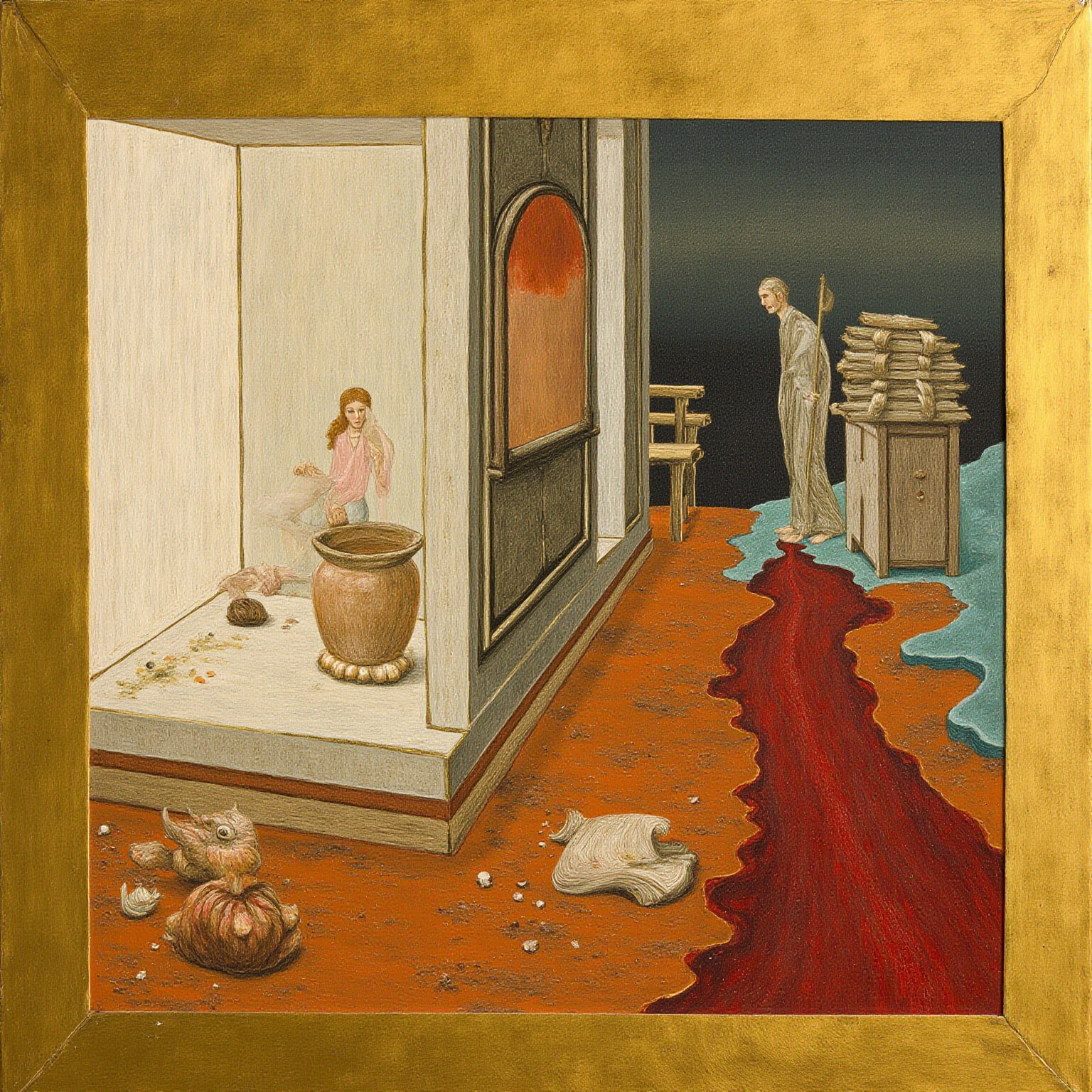
I will not be dominated by you; my trust is in the Lord.
我不会受你辖制,我的依靠在于主。
金句 · 第9章 · 旧墓室中的争战
Invisible Warfare in an Old Tomb
He didn't go far for his first step. He settled into an old Roman tomb at the edge of the village, a place where pagans had buried their dead: dark, quiet, wind seeping in through the cracks in the stone. What Athanasius calls the devil's harassment is, on the book's own terms, light, heat, blowing sand, and stretched-out shadows. The temptation is a heap of silver coins that appears out of nowhere in the wilderness. Satan vanishes, then not long after sets down a pile of gold in the same spot; Antony doesn't even look up, throws the gold into the fire, and it shrinks and dissolves into flecks of light. Nothing like the fleshed-out monster later painters would give it. The line that stopped me the first time I read it was he stood firm by faith. This isn't a duel between martial masters. It's one man standing in the sun, seeing through an illusion, and the illusion simply comes apart.
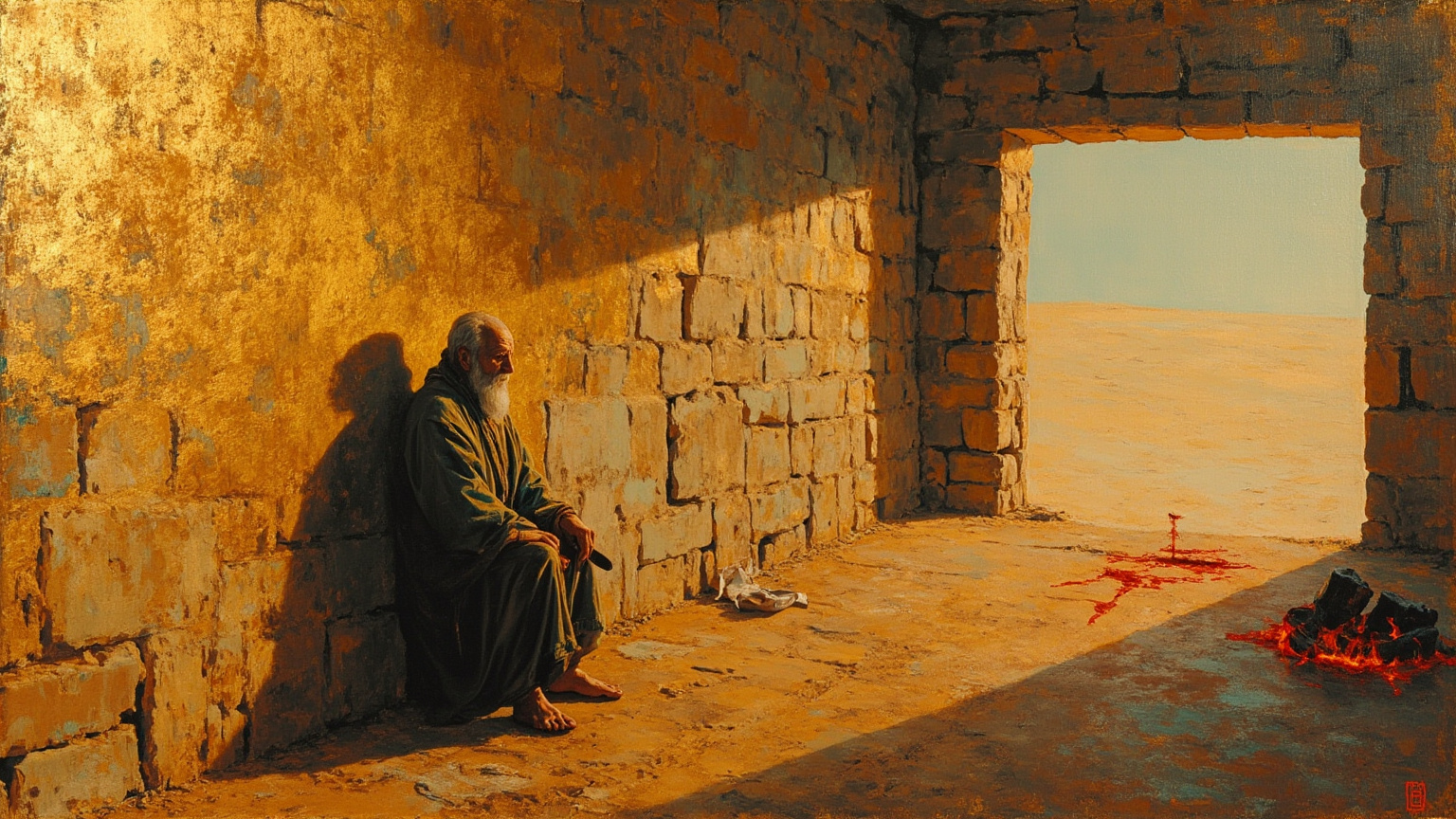
When the sham of demons faded, Antony was left alone, and the Lord was with him.
当鬼魔的虚妄一一散去,安东尼独自留在那里,主与他同在。
金句 · 第14章 · 堡寨中的二十年
Twenty Years in a Ruined Fort, Alone and at War
Around age thirty-five, he moved further out, into an abandoned Roman military fort, and lived there alone for about twenty years. This second withdrawal is the most thickly written section of the book. Inside the fort he went hungry, took the sun, and fought hallucinations, with no visitors and no audience. But the crowd outside the walls kept growing, until people literally forced their way in and dragged him out of his solitary life. Being dragged out to go teach people — the image itself is absurd. That was the first time a monastic community formed around him. He had withdrawn into the desert alone; now a crowd followed him into it.
The Long Sermon: A Charter for Monastic Theology
After coming out of the fort, Antony delivered a long address to a crowd of seekers, and roughly forty chapters in the middle of the book are essentially this one speech. He talks about relying on grace in spiritual discipline, about seeing through the devil's tricks, about how withdrawal isn't fleeing the world but fighting a deeper war within it. The moment Athanasius wrote these words down, fifteen hundred years of European monastic spiritual theology had its founding text. This illiterate old man became, in that act, the teacher of an entire spiritual tradition.
Seeking Martyrdom and Being Refused — A Paradigm Shifts
During the emperor Maximinus's persecution of Christians, Antony put on his cloak and went in person to Alexandria, asking to be jailed and suffer alongside the believers there. God stopped him. On the surface it looks like a wasted trip. But buried in Athanasius's account is the book's most important turn: the age of martyrdom is passing. Imitating Christ once meant bleeding; now it means withdrawing into the wilderness. A new way of following Christ takes over, handed off by an old man who wasn't allowed to die for it.
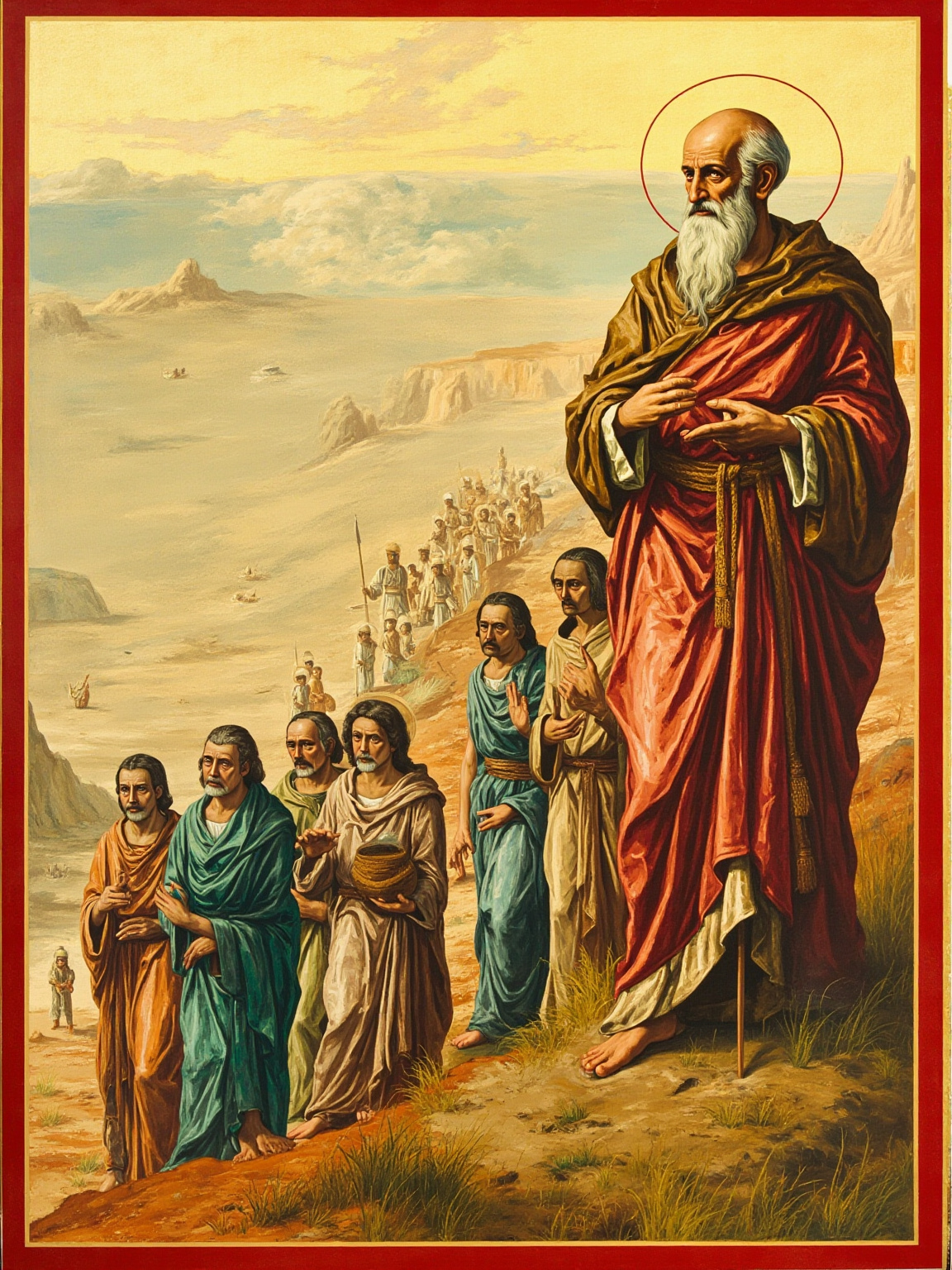
Though he wrote nothing, his fame was spoken of throughout the whole world.
他一字不写,他的名声却传遍了整个世界。
金句 · 末章 · 死后的名声
The Mountain Hut: The Last Withdrawal
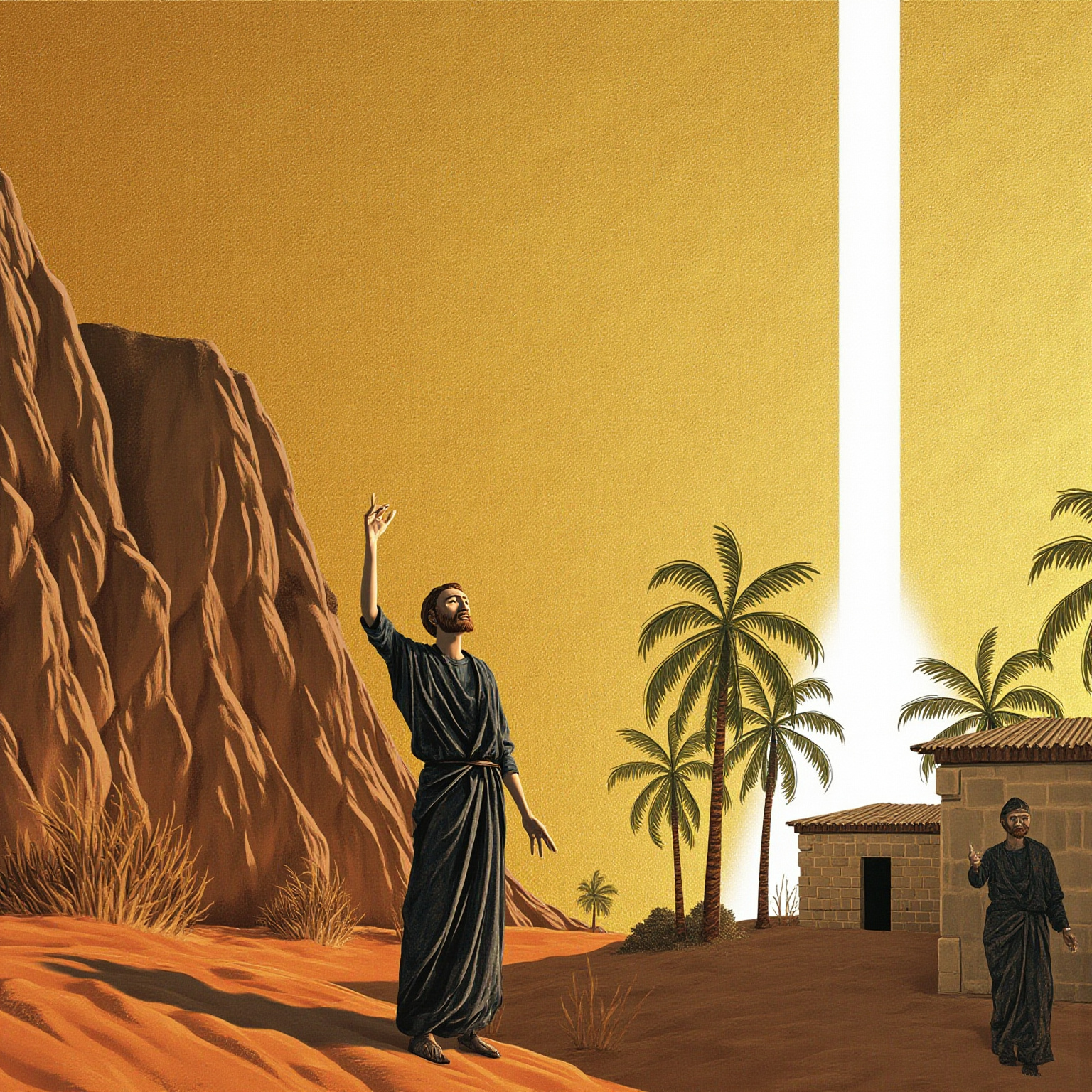
To escape the crowds of visitors, Antony followed a voice he heard in a vision, guided by Saracens, and moved further out into Upper Thebaid. He finally settled at the foot of a high mountain. This is his last stop geographically, and his conclusion spiritually. Here he still tended to visitors, worked miracles, and gave counsel. Once he saw with his own eyes the soul of Amoun of Nitria being carried up to heaven by angels, a column of light rising into the sky — one of the few visions in this book concrete enough to paint. A man withdrew to the far edge of the world, and it was there that he caught the most people.
Be diligent, then, as soldiers of Christ and as servants of the one King, for your warfare is not against flesh and blood.
要勤勉争战,争战的不是血肉之敌,乃是那些属灵的、暗中行事的势力。
金句 · 第28章 · 长篇训词
Death: Refusing the Custom, Giving Away His Clothes, Leaving Instructions
At a hundred and five, Antony knew he was dying. He disliked the Egyptian custom of wrapping bodies in linen and displaying them above ground, so he withdrew deeper into the mountains to be buried in secret, leaving his clothes to two bishops, Athanasius and Serapion. Athanasius closes the book with this: the old man never wrote a word, and yet his name reached the whole world, as far as Spain, Gaul, Rome, and Africa. There is no deathbed speech here, no last work left behind. The ending is as clean as a man walking off into the sand.
Themes: Withdrawal, Trial, Paradigm Shift
What this book is really about is a politics of retreat. From the village edge to the tomb, from the tomb to the fort, from the fort to the mountains, every geographical retreat transfers the authority to define what imitating Christ means, moving it out of the hands of public martyrs and into the hands of a man alone in the wilderness. Early Christianity gained, through this, a new path that didn't require a martyr's blood. Athanasius buries a second thread underneath the first: even as he writes Antony withdrawing into the wilderness, he has Antony's own voice denounce the Arians. Nicene orthodoxy and the monastic movement end up propping each other up, inside the same slim book.
Temptation in the original was never a naked demoness — just a heap of silver appearing out of nowhere in the wilderness, and a pile of gold thrown into a fire. The fleshed-out demons painters spent centuries inventing were never in the book.
Why It's Remembered
This book is a work order. Augustine read it before his conversion, Luther praised it, and the famous scene of opening a book at random in Petrarch's Ascent of Mont Ventoux is lifted straight from it. The whole later art-historical motif of the Temptation of Saint Antony, from Bosch to Grünewald to Dalí, traces back to this one slim book. It is short, light, with no literary ambition to speak of. And yet it took one man walking away and turned it into fifteen hundred years of Europe's spiritual posture.
Why Read the Original
A companion guide can hand you the map. It can't put you in the sand yourself. There are specific reasons to read this book firsthand. First, Athanasius's restraint in handling invisible trial: no bloodshed, no combat, no monster ever appears in the whole text, and yet real fear comes through, a lesson none of the later paintings of embodied temptation ever learned. Second, this illiterate old man's sermon: he never quotes scripture, never argues a case, only talks about discipline and seeing through illusion, and that plainness comes closer to a livable life than any theological treatise. Third, the martyrdom that never happened: a man wants to die for his faith and God stops him, sends him to live out his years at the foot of a mountain instead, and that denied heroism holds up to rereading better than an actual martyrdom would. Knowing how it ends actually slows you down on a second pass. You start noticing what the companion guide already skipped, and how it still sounds, faintly, in the sand.
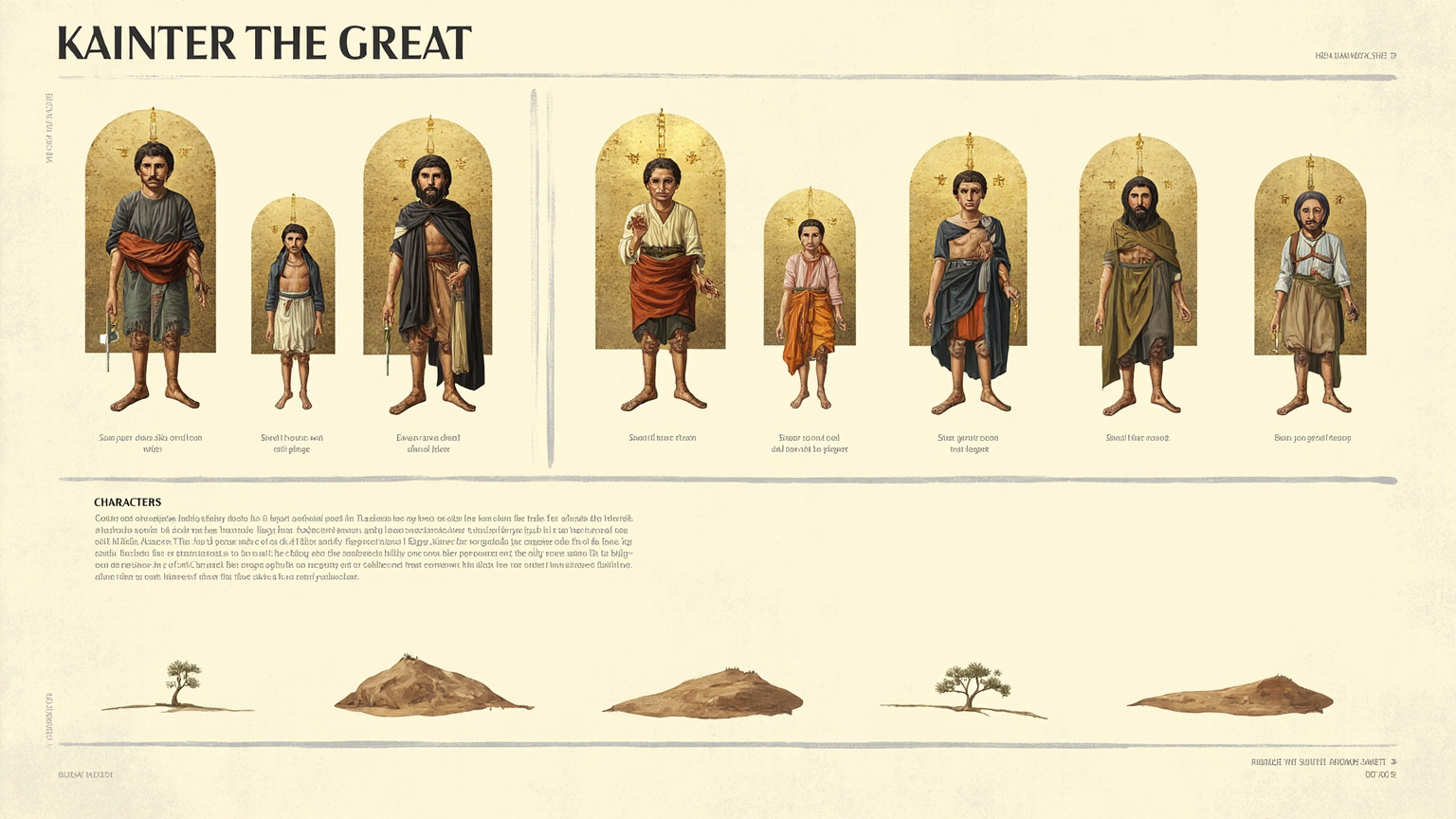
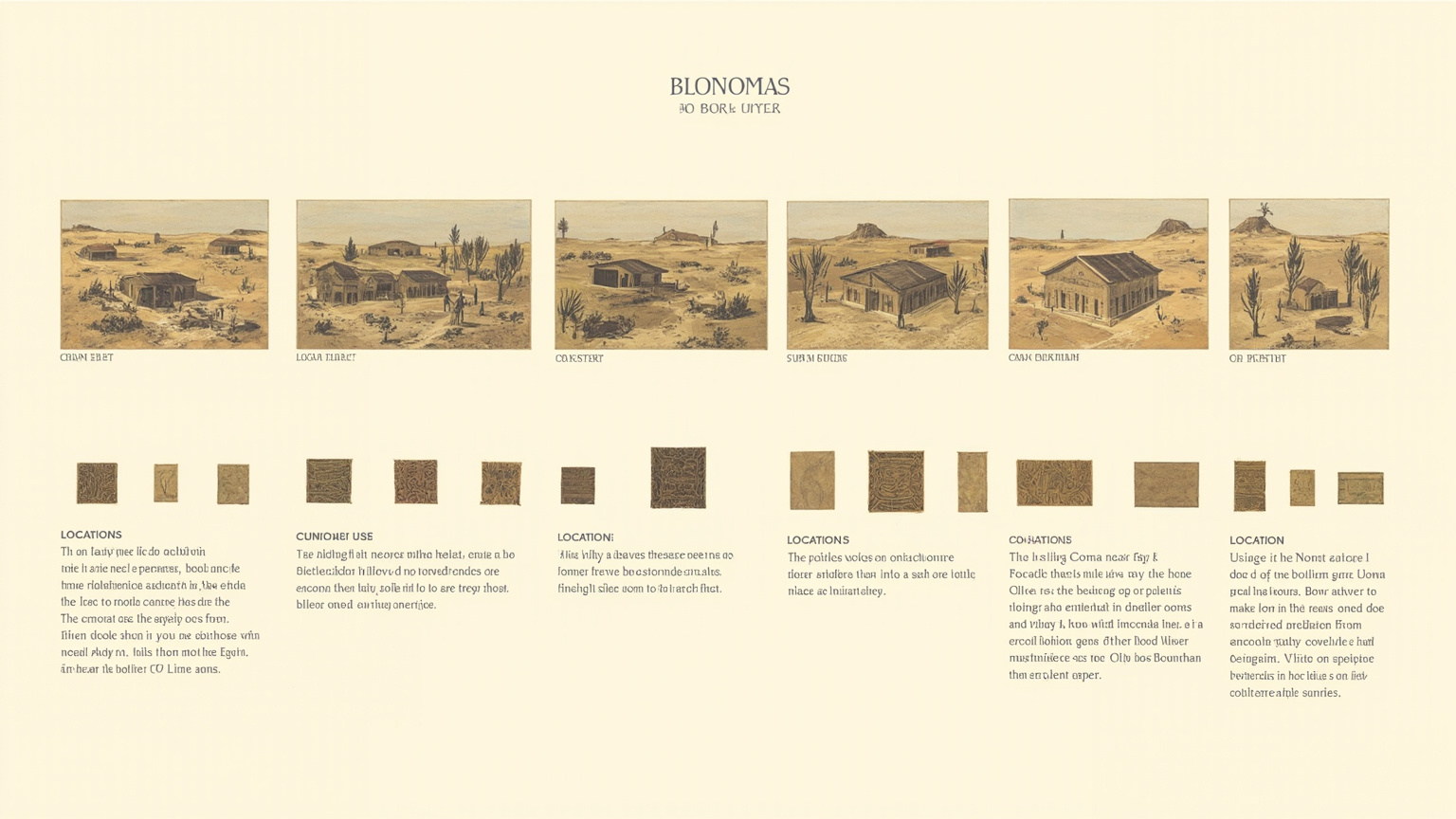
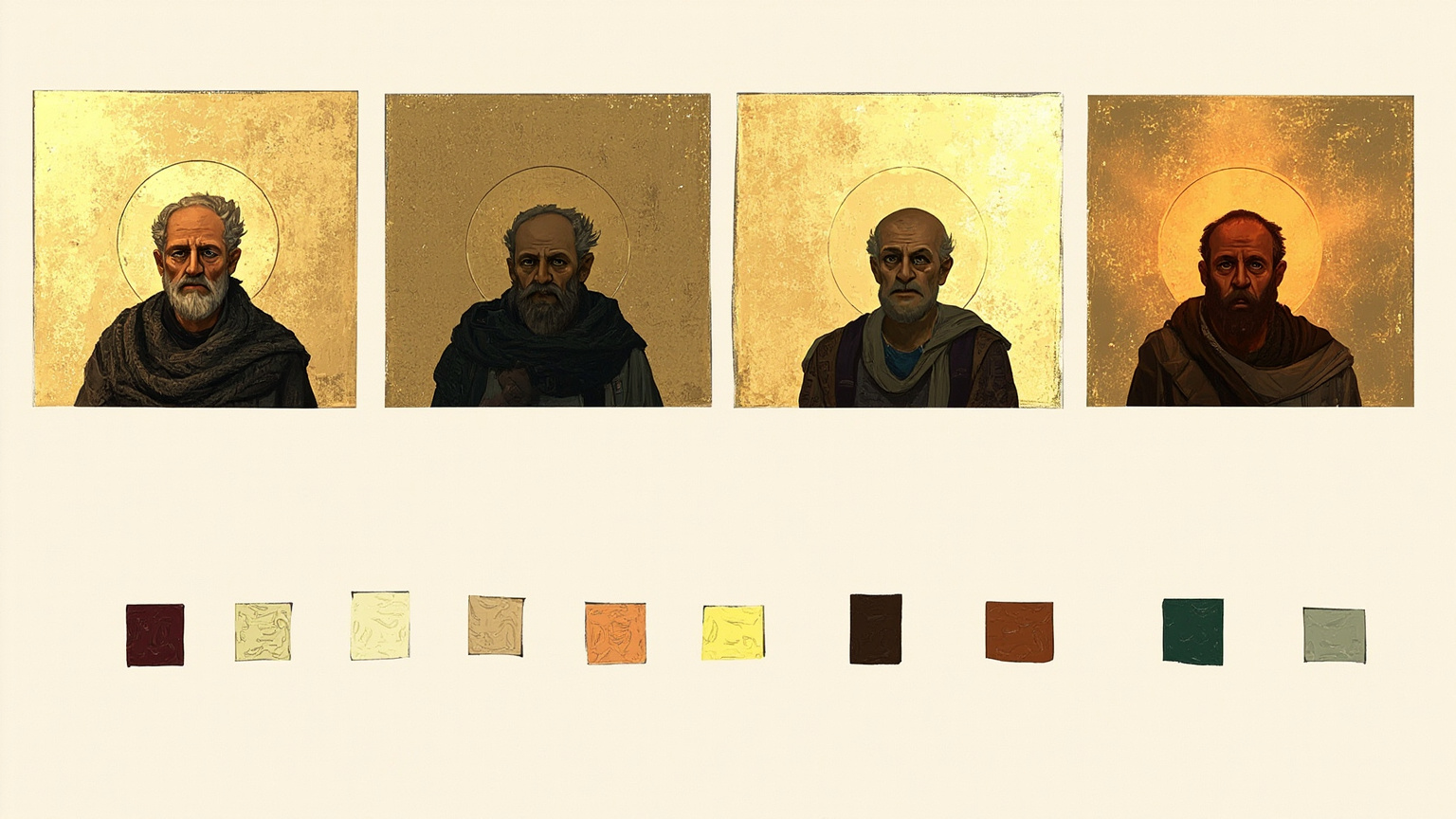
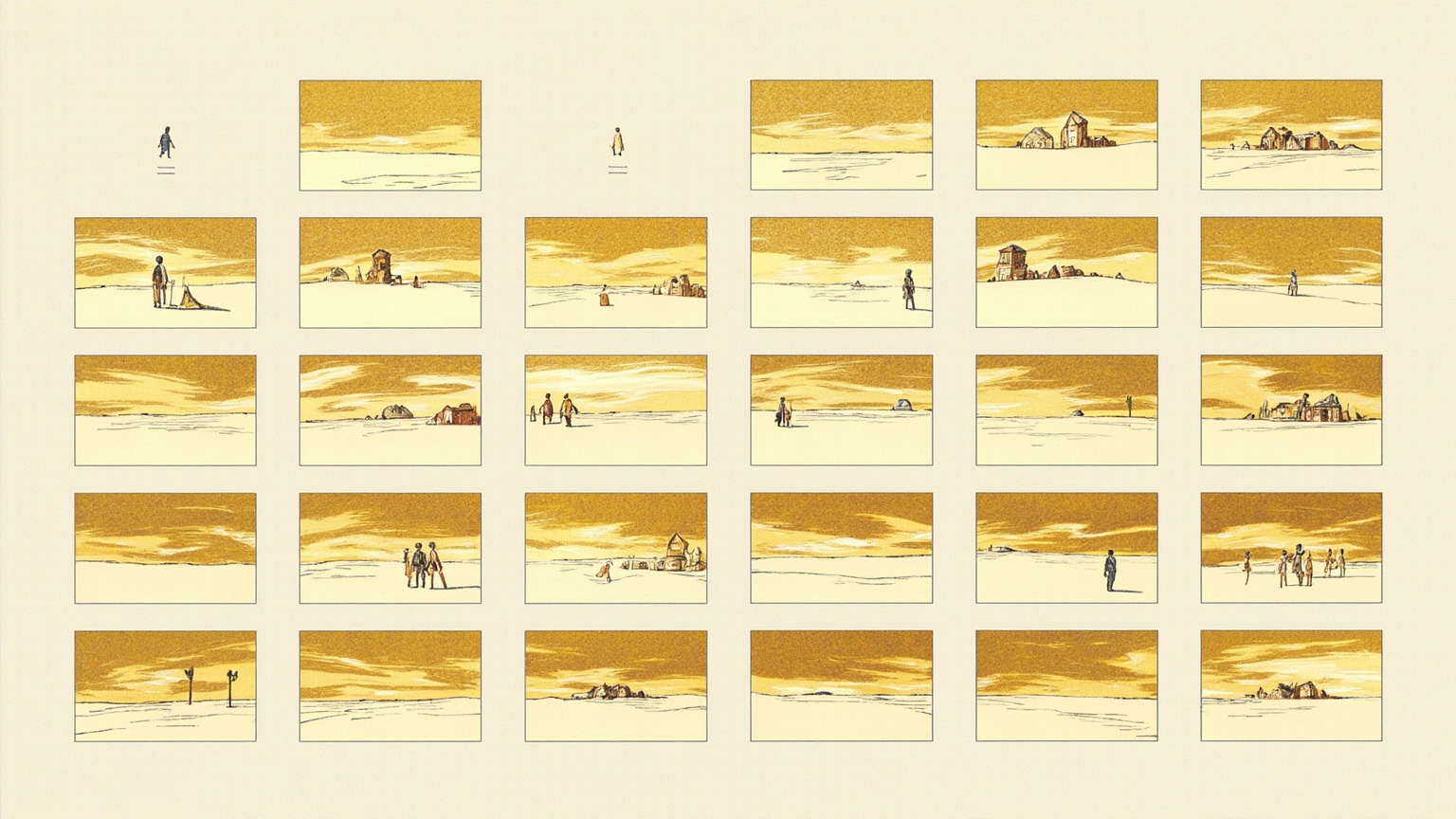
Art Direction4 plates
Before the guide was written, this book got a visual foundation — every illustration you just read grew out of it.