Light in August · Companion Guide
八月之光
一个挺肚子的女人沿土路走来,一个找不到自己的人被木头围着;八月那过分明亮的光,同时照着两条命。
Opening
A young woman with a swollen belly, setting out from the dirt roads of Alabama to find her child's father in Mississippi. She isn't married, doesn't have much money, but her steps are steady. The sun beats white and harsh on the road; she lifts her skirt, wipes the sweat from her neck, and takes another step.
Her name is Lena Grove. This journey sounds like a tired old melodrama—but in the town she walks into, another person is being slowly torn apart by the question of who he actually is. Faulkner twists these two lives into the same stretch of story, letting the August light fall on them both.
What Kind of Book Is This
Light in August was published in 1932, written by William Faulkner—a Mississippi man who spent his life building the fictional Yoknapatawpha County. For most Chinese readers this book is the first door into his universe: manageable in length, clear in narrative, yet none of the raw power is watered down. It sits between 'Southern Gothic' and 'modernist novel'—meaning the setting is the earth and timber of a Southern small town, but what fills it is a modern person with nowhere to put themselves.
Faulkner's greatest skill is peeling away the noisy external drama and letting the unremarkable things of Southern daily life—sawmill wood chips, a rocking chair on the porch, wagon ruts in the dirt road—speak the characters' hearts for them. This book doesn't rely on plot explosions; it's the tension inside the characters that slowly tightens around the reader.
Characters and World
The main character is two threads. Lena Grove, a young pregnant woman, naive and stubborn, her belly growing bigger but her steps never stopping. Running alongside her is Joe Christmas, a young sawmill worker, his eyes always seeming to dodge something—his whole life caught on one question: whether he is actually Black. Someone had hinted at it, he'd doubted it himself, but he couldn't produce an answer, yet the whole society insisted he must give them one.
Two other men in town are building a bridge between them. One is Byron Bunch, a sawmill worker who sings in the little country church every Sunday, shy as a poplar tree, secretly helping Lena the moment she arrives in town. The other is Reverend Hightower, a former preacher now dismissed from his post, shut up all day in an old house on the edge of town, brooding on his grandfather's days as a cavalryman in the Civil War—and between him and Joe Christmas, somehow, a kind of unspoken understanding develops that no one can quite explain.
The story takes place in Jefferson, Mississippi, in the 1930s. The sawmill, the dirt roads, the pine forests, the white clapboard church, the cabins in the old slave quarter—Faulkner packs them all into the book. The August heat is ferocious, the light strangely intense, and the whole town lies beneath this glare with no place to hide.
Plot Overview
The scene of Lena setting out from Alabama is the lightest touch in the whole book. She walks the dirt roads, receiving water, a meal, an occasional ride from country people along the way. She does not complain, does not hurry—only this one thought: once she gets there, that man will have to make good. Faulkner writes her walking without sentimentality, writes her wiping sweat, resting her feet, making conversation with strangers—that quality in her of just keeping on makes this long journey feel like a slow secular pilgrimage.
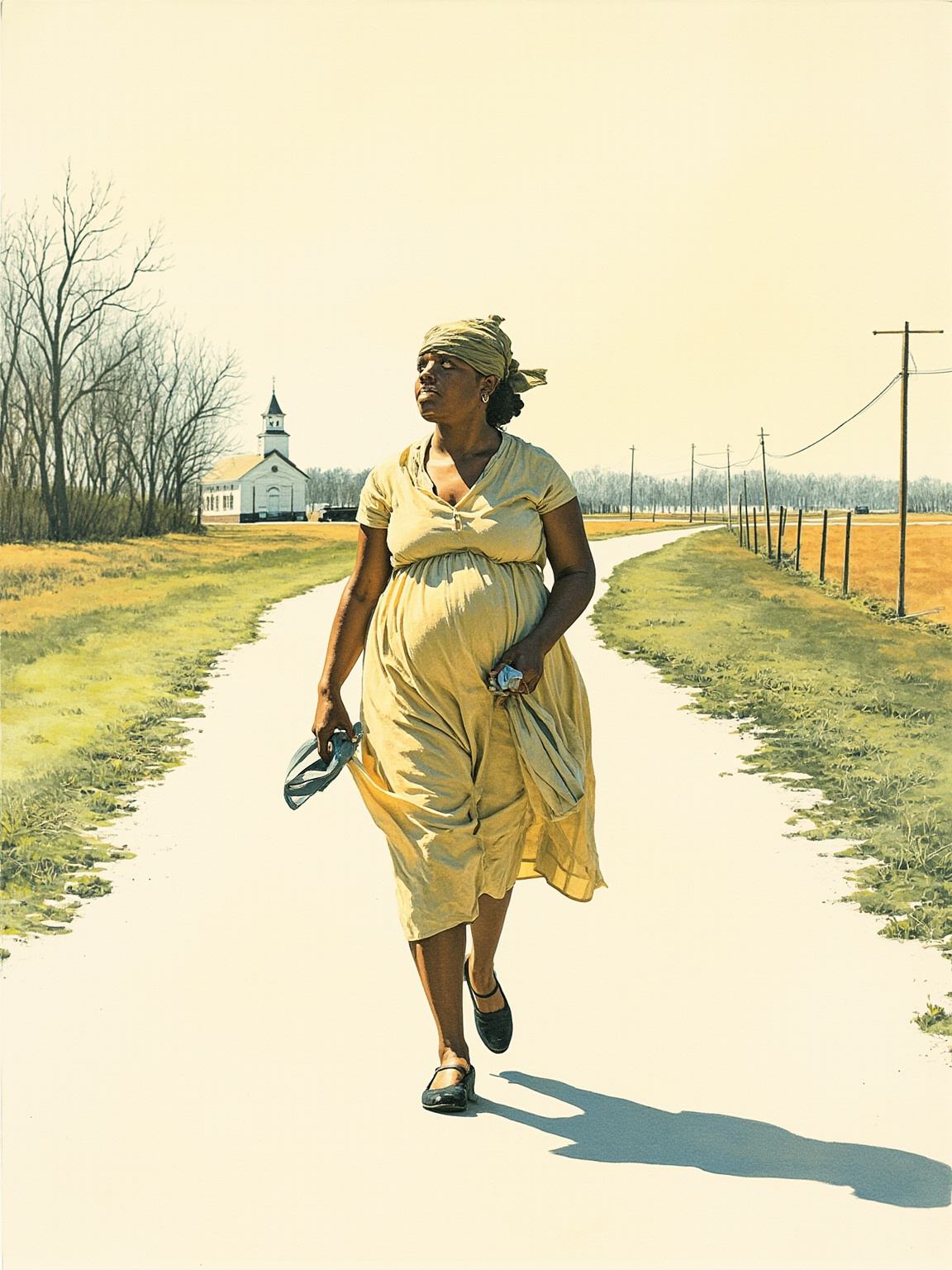
She walked on, in the dust, toward the dark line of trees.
她继续走着,踩在尘土里,朝远处那一条黑沉沉的树线走去。
金句 · 第1章 · 莉娜上路
When she reaches Jefferson, she's a stranger in an unfamiliar place, standing at a street corner holding a letter asking for directions. The one who catches her is Byron Bunch—a sawmill worker who sings in the little church on weekends. He doesn't say much, but the blush on his face speaks for him. He finds her a place to rest, asks around for news, and as Lena's belly grows bigger, he stays closer. This romance is written with extraordinary restraint, shy to the point of awkwardness, yet it's the warmest light in the novel.
Lena doesn't know that the man she's looking for is actually at the same sawmill—Lucas Burch, going by the name Joe Brown in town, working and hiding from her all at once. Faulkner gives him no interior life, only lets him hide in the crowd, never appearing. A man who should take responsibility hides his name, disappears into the wood and sawdust—and this is precisely the other side of the coin to Byron, who actively steps forward.
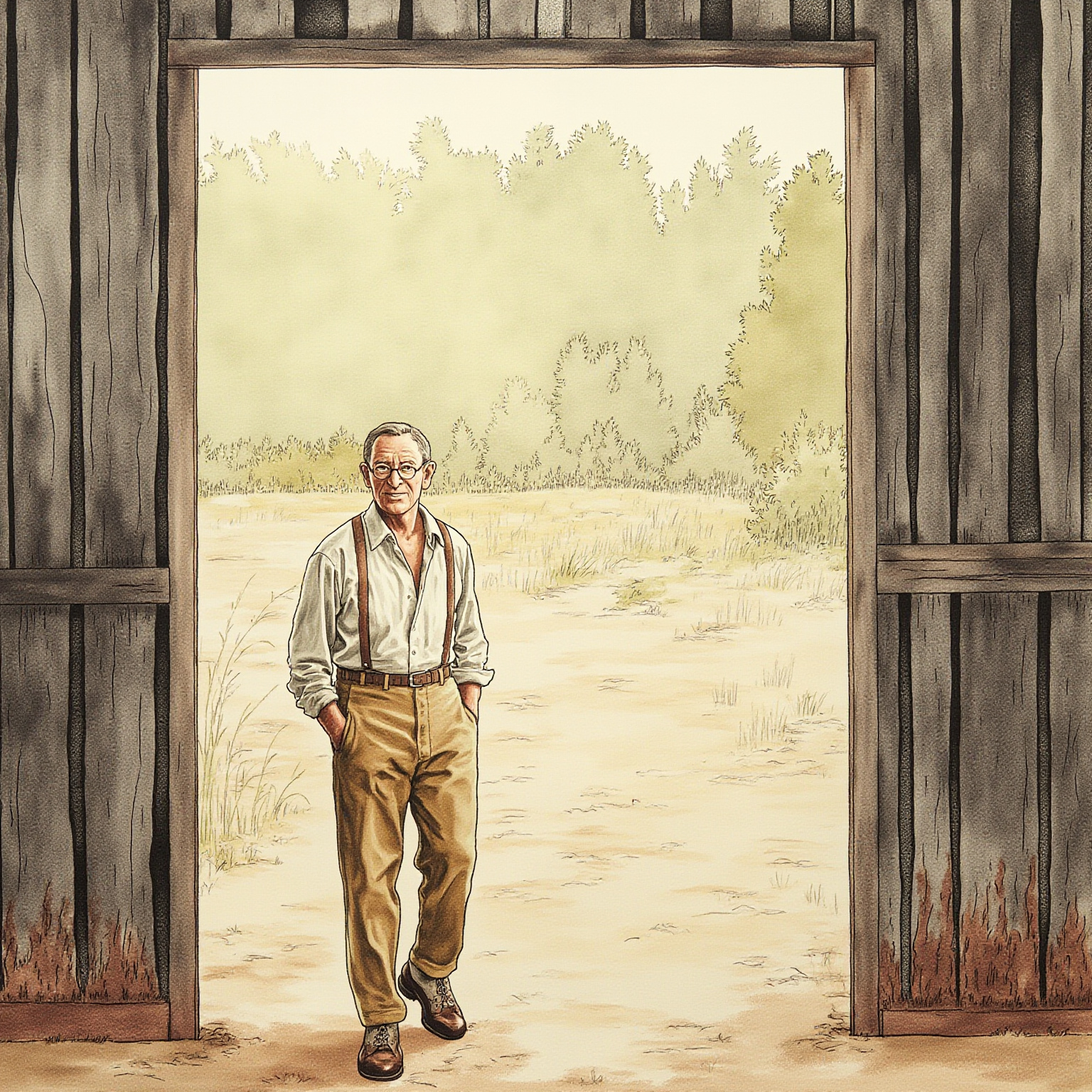
He watched the sawdust and the slow shape of the boards come up out of the log.
他瞧着木屑飞起来,慢吞吞的板子从原木里吐出来。
金句 · 第5章 · 锯木厂
At the same sawmill, Joe Christmas is also at work. When Faulkner writes him, it's not through any major events but through small gestures: he doesn't talk to anyone, his eyes fixed on the wood in his hands, but always as if he's grappling with the air. His "problem" is never brought out into the open in the book, only seeps through now and then—someone mentions his background to his face, someone mutters about it behind his back, and he himself hasn't the strength even to go investigate. It's not that he doesn't know; it's that he doesn't know what to do with "knowing."
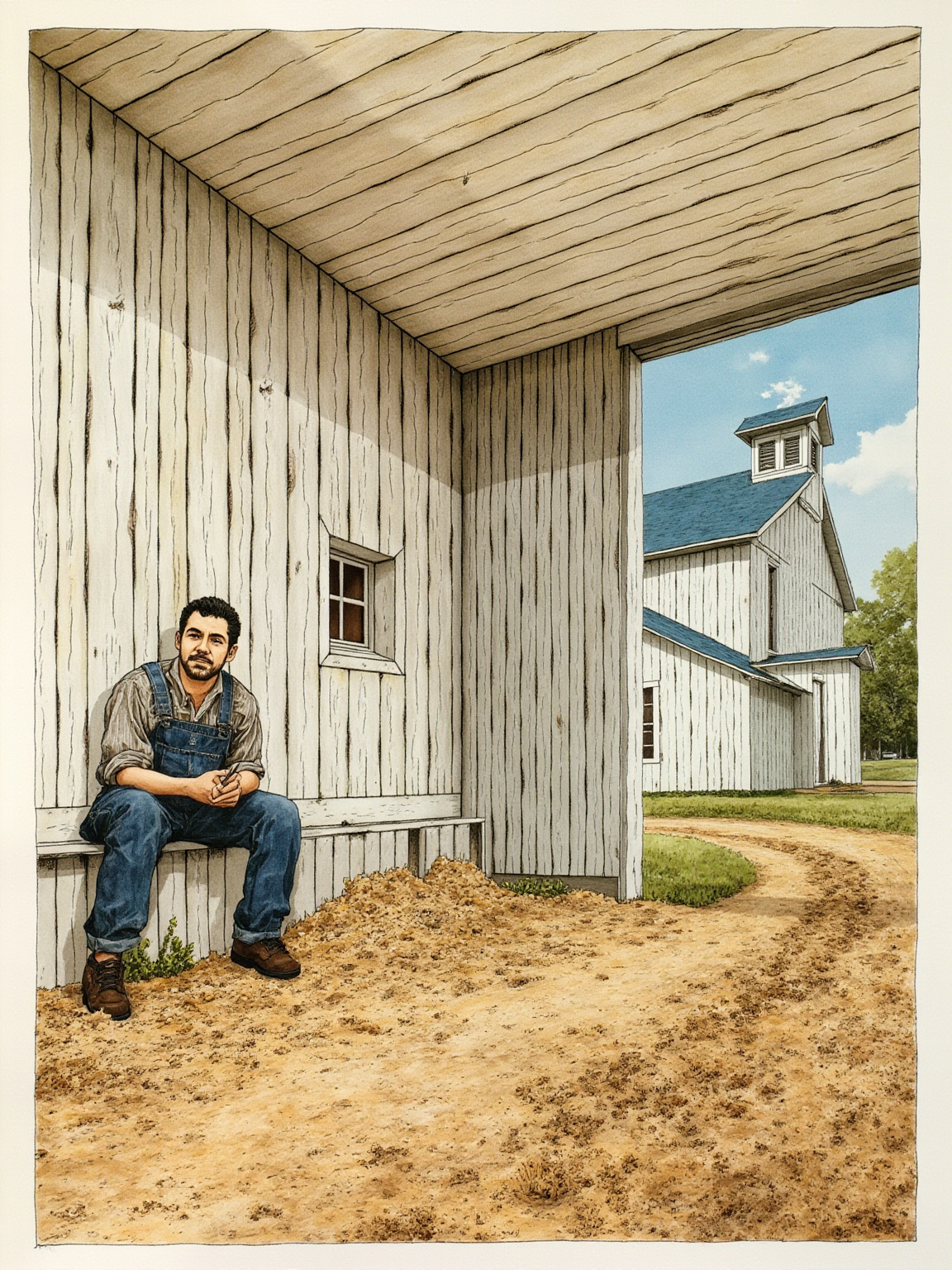
He did not know what he was, and so he was what he was not.
他不知道自己是什么人,于是只好做着他不是的那种人。
金句 · 第6章 · 克里斯默斯
The hole in Joe's heart gets torn wider by two relationships. One is with Joanna Burden, a solitary woman who came from the North and lives in an old house outside town—the relationship between her and Joe is filled with undercurrents of gender, class, and race (Faulkner only lightly touches on this, leaving large blanks for the reader to suffer through). The other is with Reverend Hightower—this old man crushed by his grandfather's faded glory, yet between him and Joe there develops a strange mutual recognition: both of them are living in scripts written by others, and neither can escape.
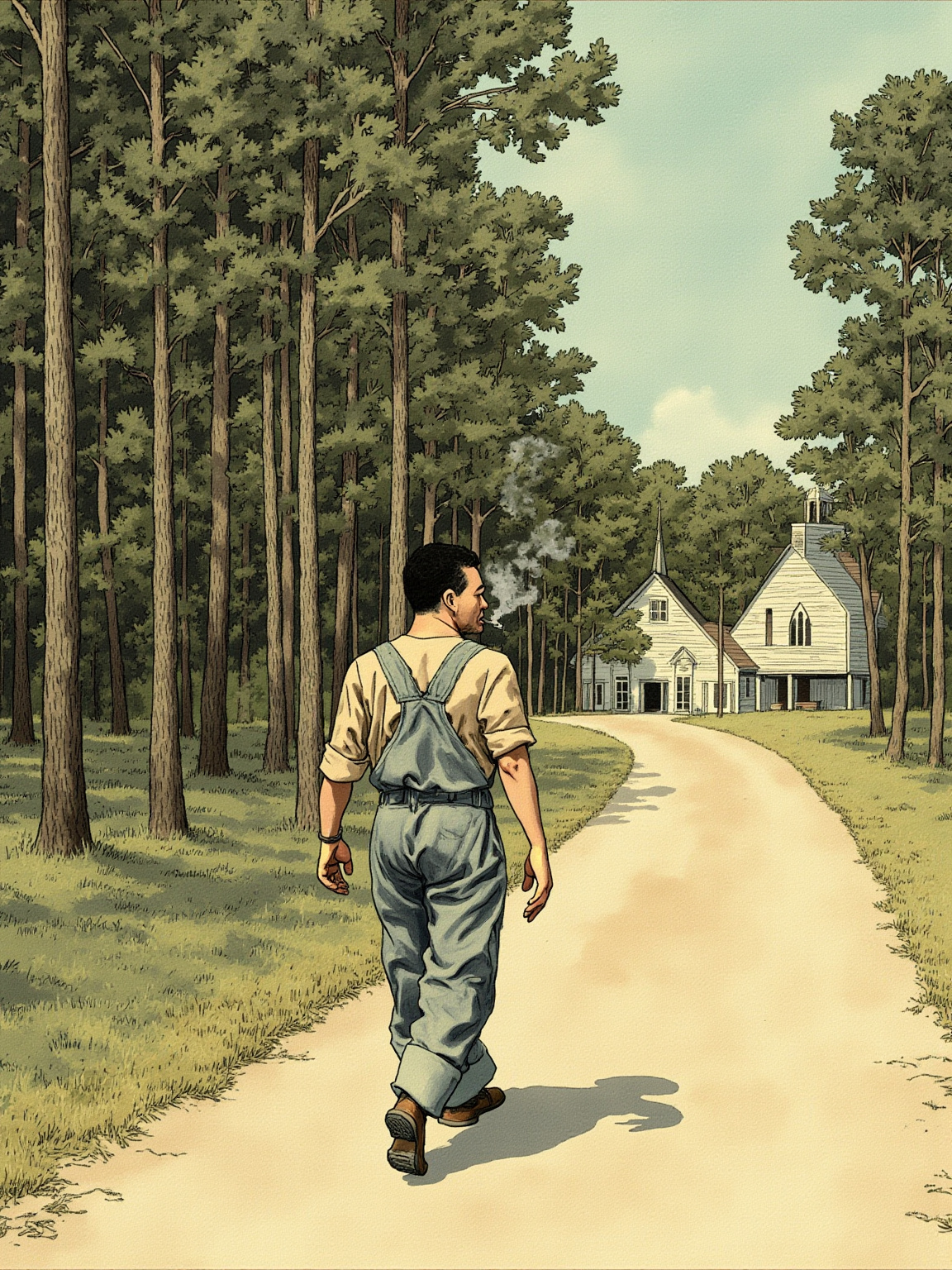
Memory believes before knowing remembers.
记忆在认知之前就先相信了。
金句 · 第8章 · 海托华
Life in the town went on as usual. Services continued in the white clapboard church, rocking chairs creaked on the porches, sawdust kept drifting from the mill. Pastor Hightower rode his horse to the small church on the edge of town—the one where Byron sang in the choir every week—his words floating above the pines, no one quite catching all of it. Faulkner's skill lies here: he doesn't rush, letting the everyday slowly marinate the characters.
Lena's belly grew heavier. Byron stayed by her side, Hightower helped too, but the anonymous man never showed. The child was about to be born when the novel stops there. Faulkner gives no clean ending—he lets that too-bright August light keep shining, warm on Lena, scalding on Joe—the same beam, falling in completely different places.
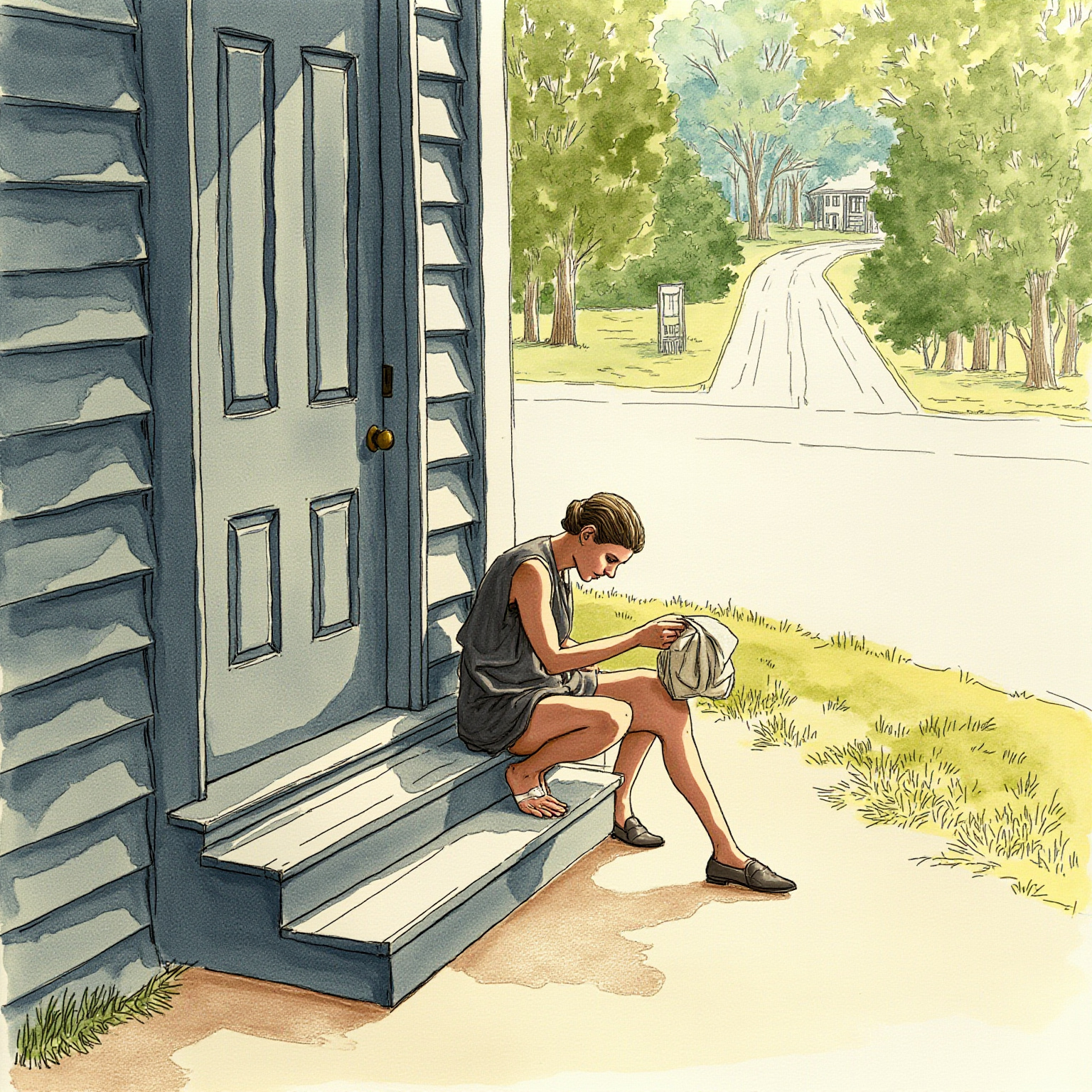
The dark was filled with the smell of pine and the sound of slow breathing.
黑暗里满是松脂的气味,和一阵一阵慢慢喘着的声息。
金句 · 第18章 · 临盆
Theme and Technique
What Light in August is really saying is this: once society gets its hands on the question "Who am I?", what shape does a person get squeezed into. Joe Christmas's misfortune isn't about whether he is or isn't some kind of person—it's that he has to choose from the boxes others have prepared for him—choosing isn't optional. Faulkner writes this as an inner predicament, one that can't be wrapped up in a single sentence. Lena is the opposite: she doesn't choose an identity, doesn't choose a box, she just keeps walking, and that walking itself saves her.
In terms of craft, Faulkner doesn't use dramatic conflict to drive the story—he uses space. The mill, the church, the dirt road, the porches, the old slave quarters—each place carries its own Southern smell and rules, who enters which door, who greets whom, which porch they sit on—the characters are carved out through these tiny everyday choices. The book is called Light in August, and that light isn't gentle morning light—it's that overexposed, inescapable brightness of a Southern August—he uses this same beam to shine on a road reaching toward the future, and on a person trapped in the past and in labels.
For today's readers, this book hasn't aged. The question "Who am I?" never goes stale in any era that tries to stuff people into boxes. Faulkner's South is specifically rendered, but that feeling of being pressed down by collective memory, crushed by other people's definitions—that's recognizable anywhere.
Faulkner never answers the question "Who am I?"—he just puts the person asking it in August, lets the Southern light shine on them, and watches what they do.
Reasons to Read the Main Text
The explainer gives you a map. A map can point out the landmarks—but the heat of the road, the softness of pine needles underfoot, that sudden stumble in the middle of a sentence: these are things only the text itself can hold. Much of what Faulkner does in the book is take an ordinary verb, an unremarkable detail, and in one motion untangle the knot in a character's heart. When you're reading the actual text, you have to encounter these moments yourself—you have to stop for a second and think. That moment of discovery can't be read by proxy.
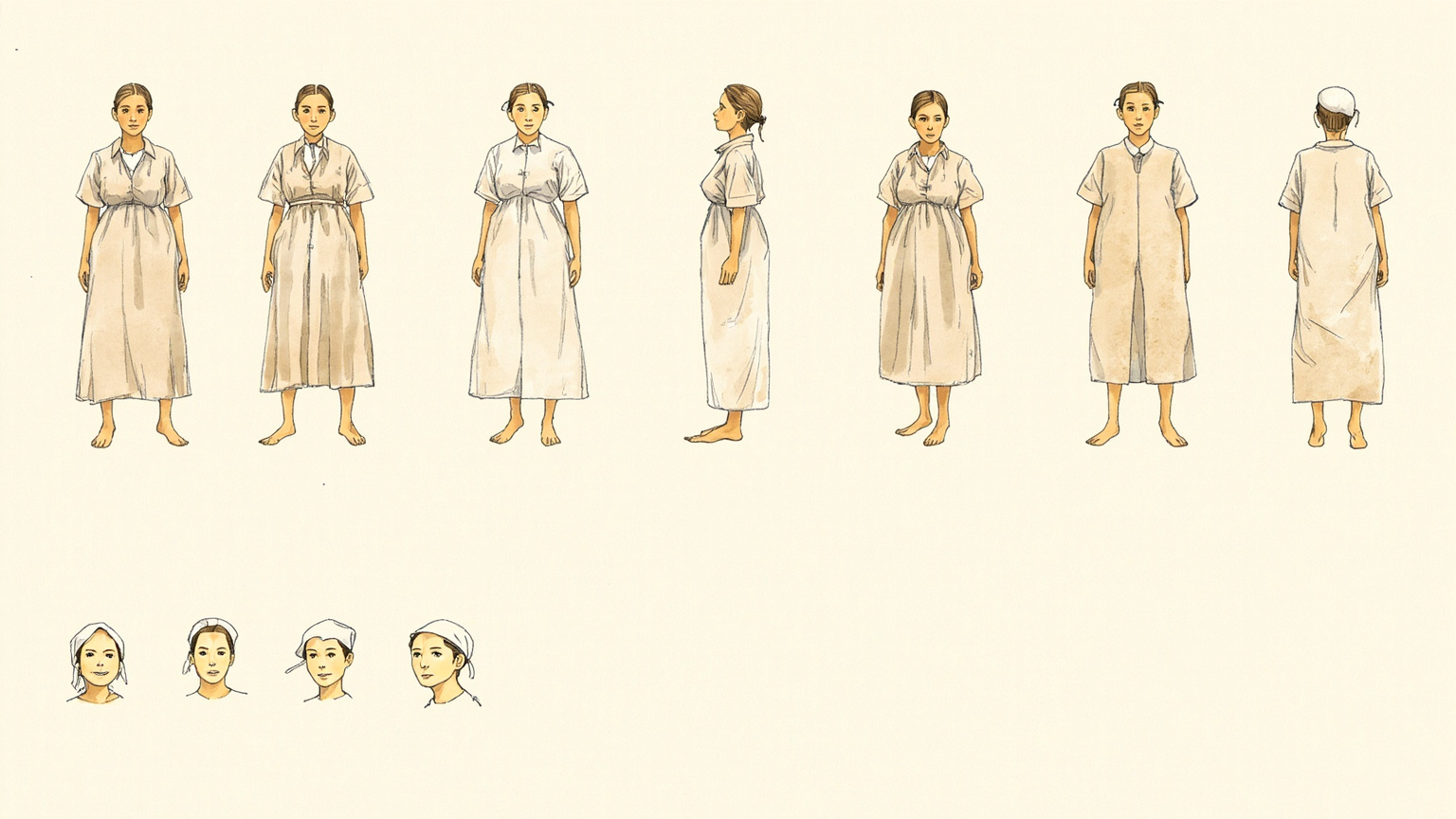
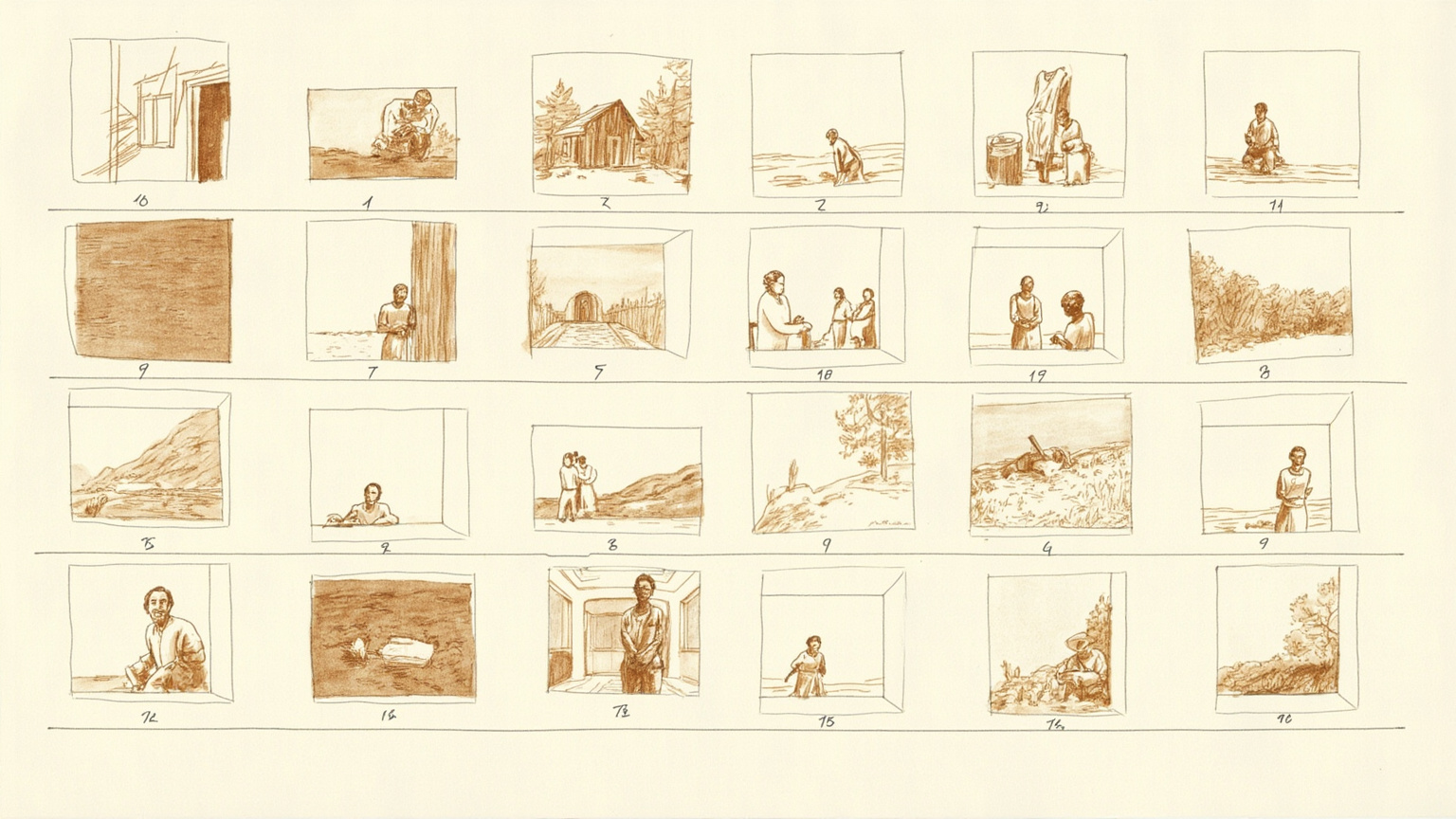
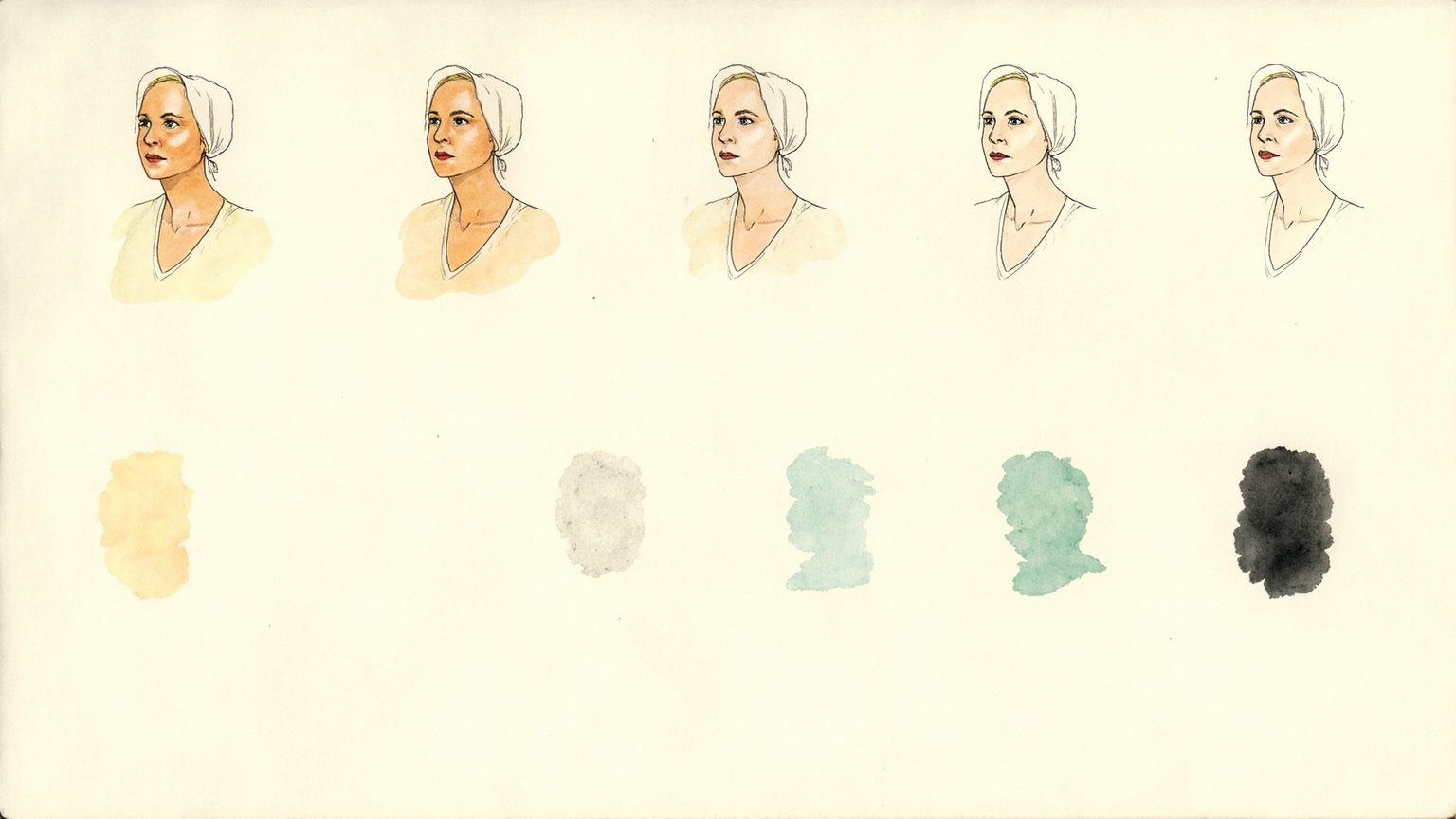
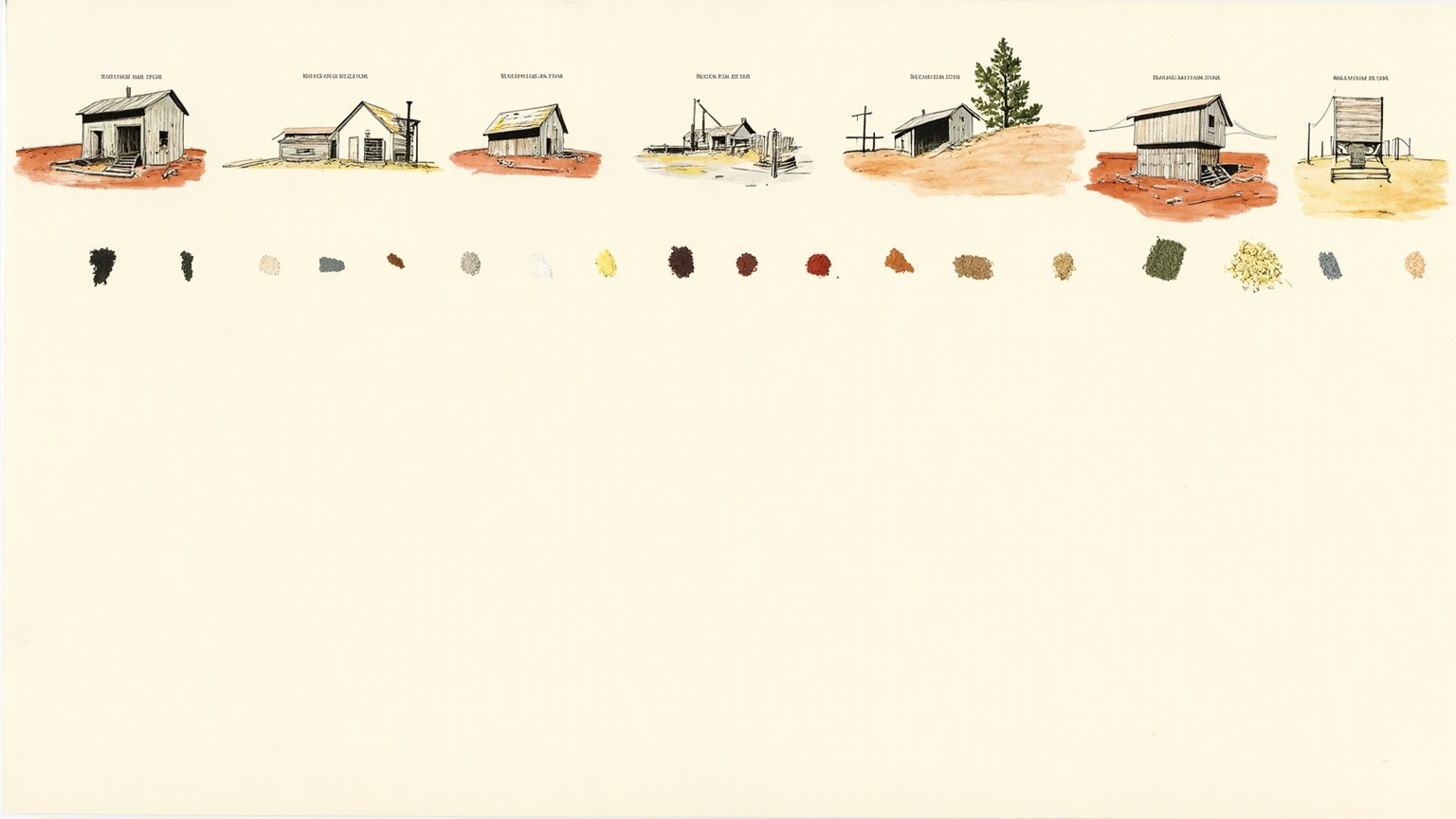
Art Direction4 plates
Before the guide was written, this book got a visual foundation — every illustration you just read grew out of it.