Wondrous Tales of Linh Nam (Lĩnh Nam chích quái) · Companion Guide
岭南摭怪
蛟龙求婚于水底宫殿,仙卵裂开百子,雒越从此有了户籍与传说。
The Opening: One Egg, a Hundred Sons
An egg splits open, and a hundred children crawl out.
The father is a dragon lord, the mother an immortal, and the marriage follows the same template at first as Liu Yi Delivers a Letter, the Tang tale where the Dragon King of Dongting marries off his daughter. But carried to the banks of the Red River, the motif bends: a hundred eggs hatch a hundred sons, who scatter in every direction and found the Lạc Việt tribes, the line that produces the Hùng Kings. This is the earliest text in Vietnam's classical Chinese canon to fix the ancestry of the Bách Việt on a single thread — dragon lord, immortal's egg, hundred sons — and it is the core chapter of the whole Lĩnh Nam chích quái: the Tale of the Hồng Bàng.
What Kind of Book Is This
Lĩnh Nam chích quái took shape around the fourteenth century, written in classical Chinese. Tradition credits the compiling to Trần Thế Pháp, a Confucian scholar of the Trần dynasty, though almost nothing certain is known about the man himself. The text we read today did not settle into its final form until 1492, when the Lê-dynasty scholar Vũ Quỳnh arranged it into two scrolls of twenty-three tales; the following year Kiều Phú revised it once more, trimming and tightening, and that is the version that has come down to us. The scholar Dai Kelai calls it one of the most important primary sources in classical Chinese for studying Vietnam's founding myths — in the history of Vietnamese literature, it does the work of a Shan Hai Jing and a Soushen Ji stacked into one book.
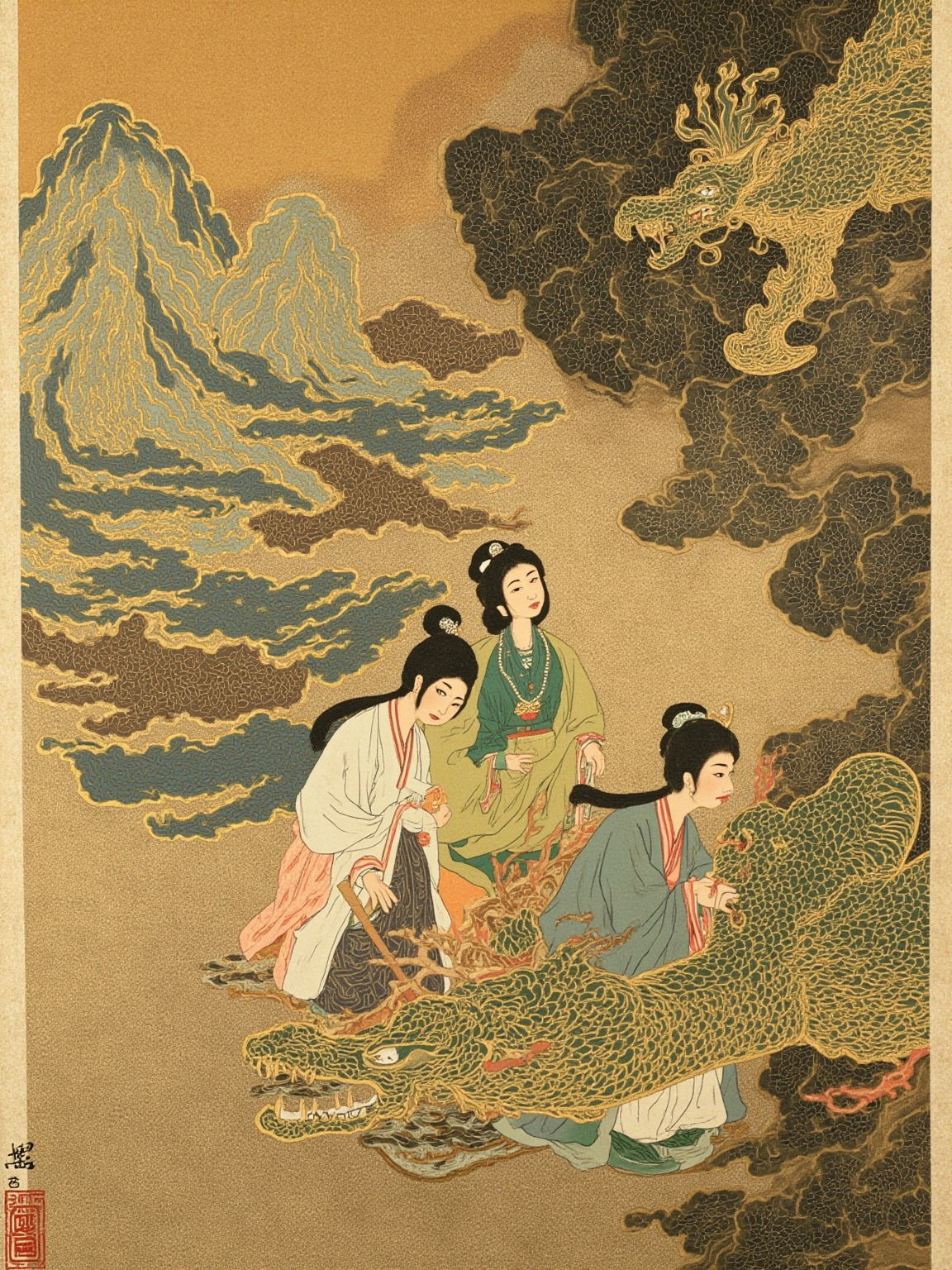
In the era of the Lý and Trần, scholars of great learning first drafted it; later gentlemen fond of antiquity and broad in refinement polished it.
草创于李、陈之鸿生硕儒,后来好古博雅之君子润色之。
金句 · 武琼跋序 · 校刊缘起
The Cast and the World
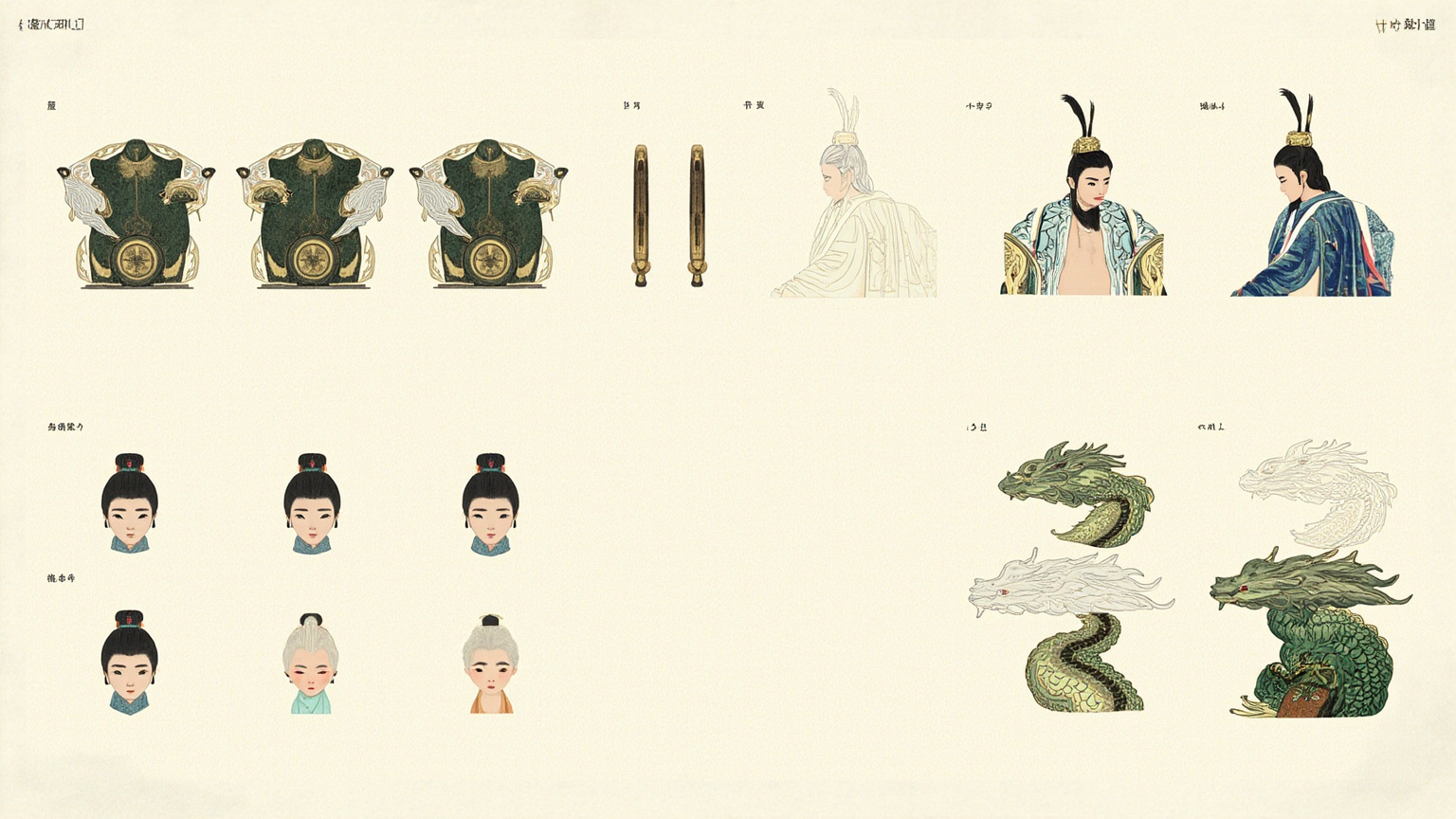
Start with four figures. Lạc Long Quân is a dragon lord's son, Âu Cơ an immortal's daughter, and their marriage is where the Bách Việt begin. Phù Đổng Thiên Vương rides an iron horse and carries an iron staff, a folk hero who beats back invaders. The Trưng Sisters are two women who rose against the Han dynasty; they belong to a different order of figures than Phù Đổng Thiên Vương or the Mountain God of Tản Viên, but the compilers folded them in anyway, because the thread they were following — the descendants of the Hùng Kings — runs from the founding myth straight through to a much later rebellion. The Mountain God of Tản Viên commands an army of mountain and water spirits, fighting over territory and a bride, the liveliest crowd scene in Vietnam's ancient cult of mountains and rivers.
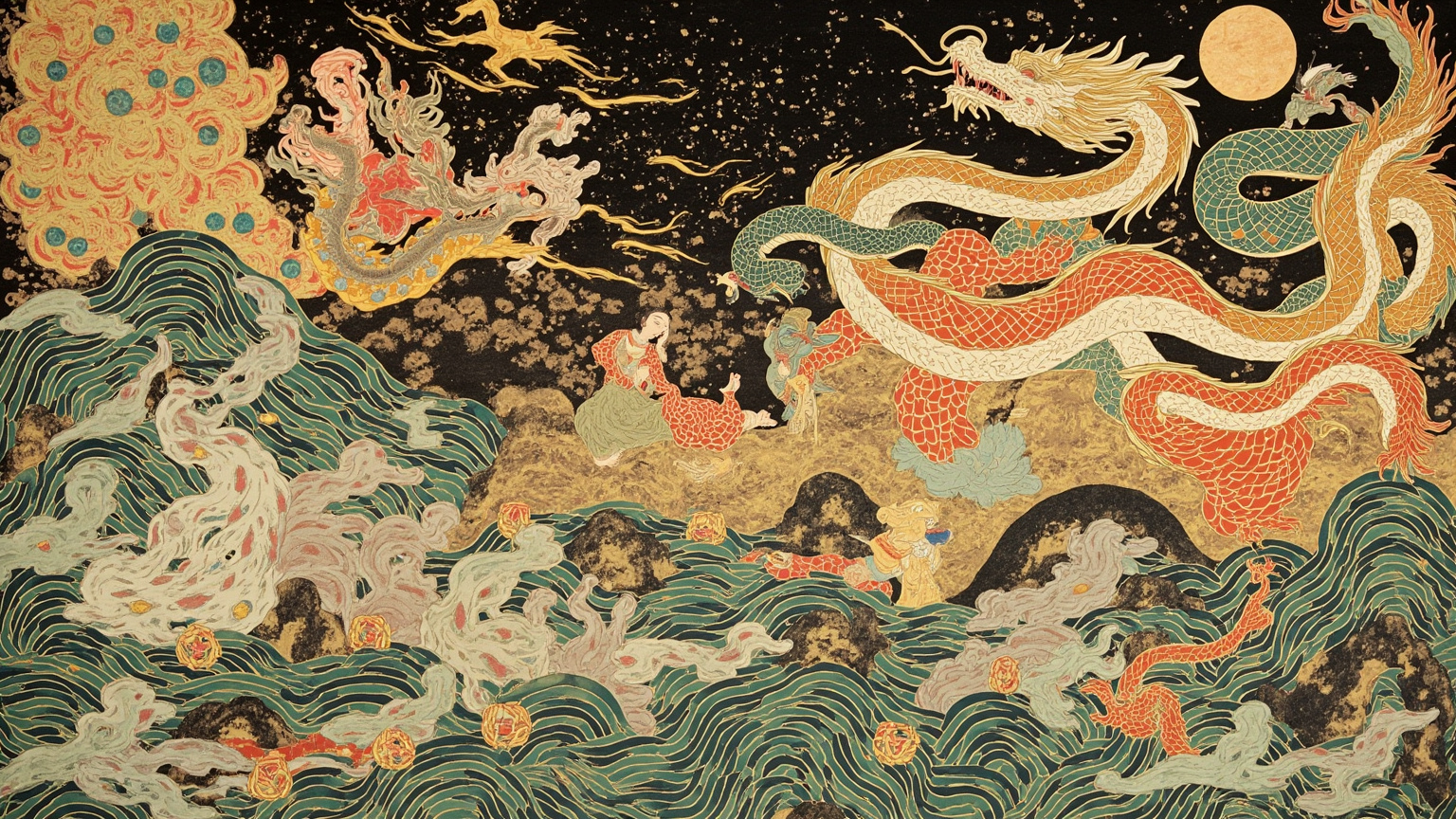
From a single womb, a hundred eggs; from the hundred eggs, a hundred sons — these are the ancestors of the Bách Việt.
一胞生百卵,百卵生百子,斯百粤之祖也。
金句 · 卷一 · 鸿庞氏传
Compilation: How a Book Gets Assembled
This book has no single author, only a succession of editors.
Great Confucian scholars working between the Lý and Trần dynasties produced the first draft, and tradition assigns the founding work to Trần Thế Pháp, a Trần-dynasty scholar — but that original text is lost. What survives is Vũ Quỳnh's 1492 revision: he cross-checked it against other sources, weighed variants, cut what was excessive, and arranged the scattered pieces into two scrolls of twenty-three tales. The following year Kiều Phú took another pass at it, and what remained is the version fixed for good. The compilers said as much themselves: drafted by the great Confucian scholars of the Lý and Trần, polished by the learned gentlemen who came after and loved antiquity. It is a text built up in layers, decades of oral memory passed through one generation of scribes after another until a book slowly took shape.
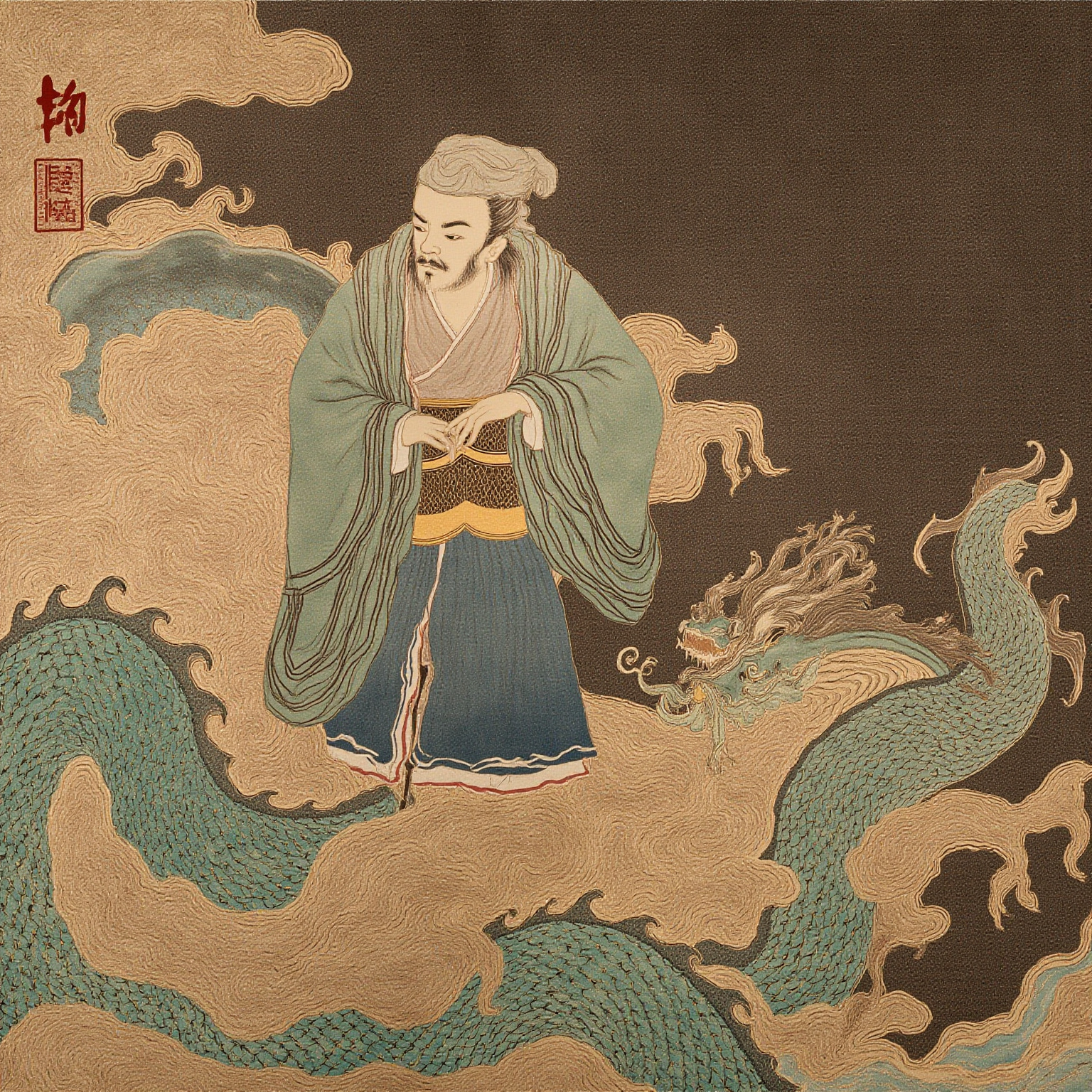
Vũ Quỳnh collated other books, weighed and sifted, cutting away the redundant; two years later Kiều Phú passed through once more with the blade.
参校他书,辨证删繁;越二年,乔富复过其刀。
金句 · 跋 · 武琼刊定本
A Hundred Eggs, a Hundred Sons: Anatomy of a Founding Myth
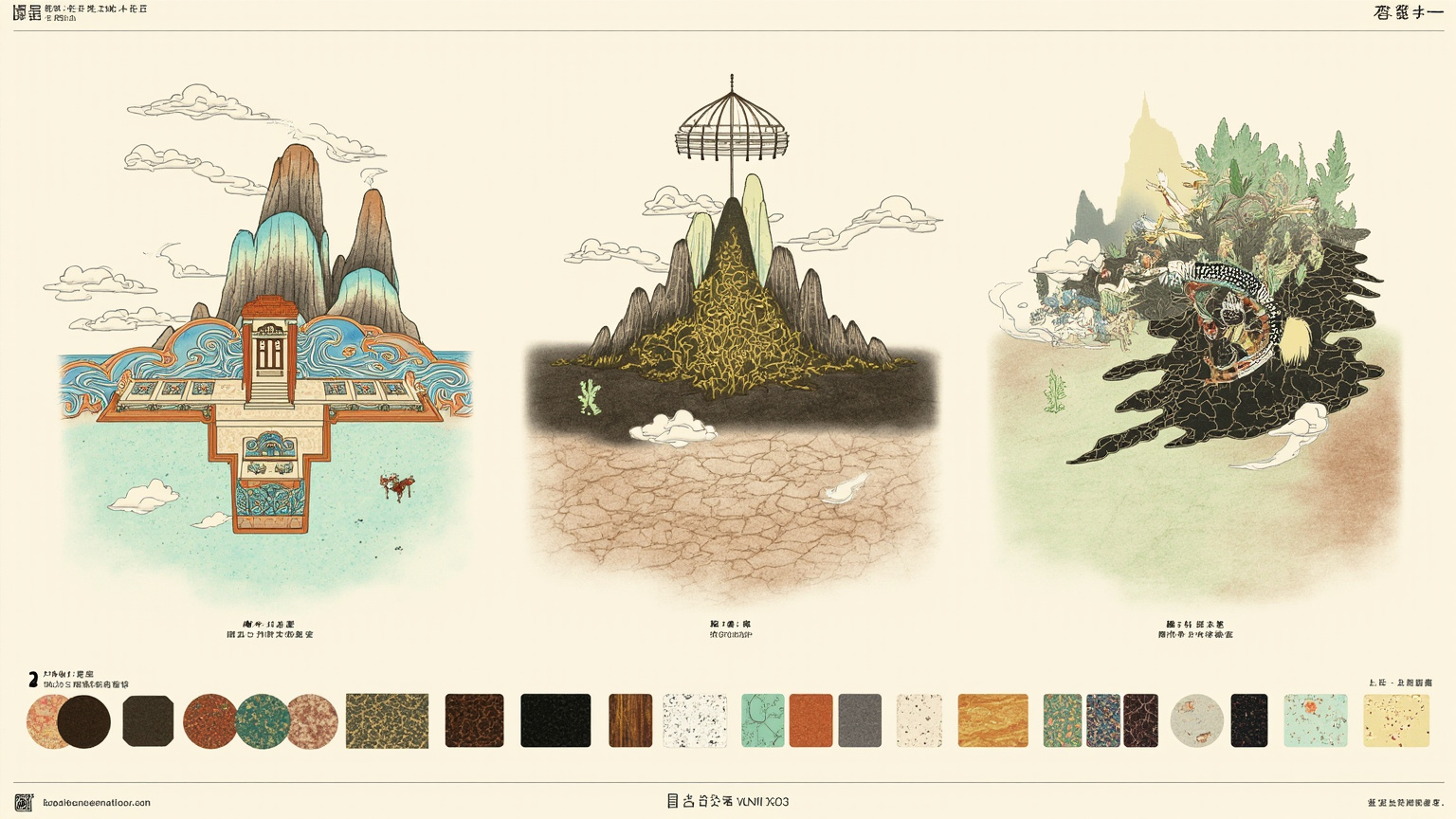
The scene where Lạc Long Quân comes courting is lifted almost line for line from Liu Yi Delivers a Letter: the dragon's son sailing a boat, the palace at the bottom of the lake, a dragon king marrying off his daughter. But once the scene crosses over, Âu Cơ is no longer the daughter of the Dragon King of Dongting, and what she carries is not one child but a single womb of a hundred eggs. The eggs hatch, and a hundred children crawl out — the ancestors of the Bách Việt. In the Tang tale the same story is a romance between a mortal and an immortal; on the banks of the Red River it becomes a founding myth. The motif crossed an ocean, and once it landed somewhere new, it meant something entirely different.
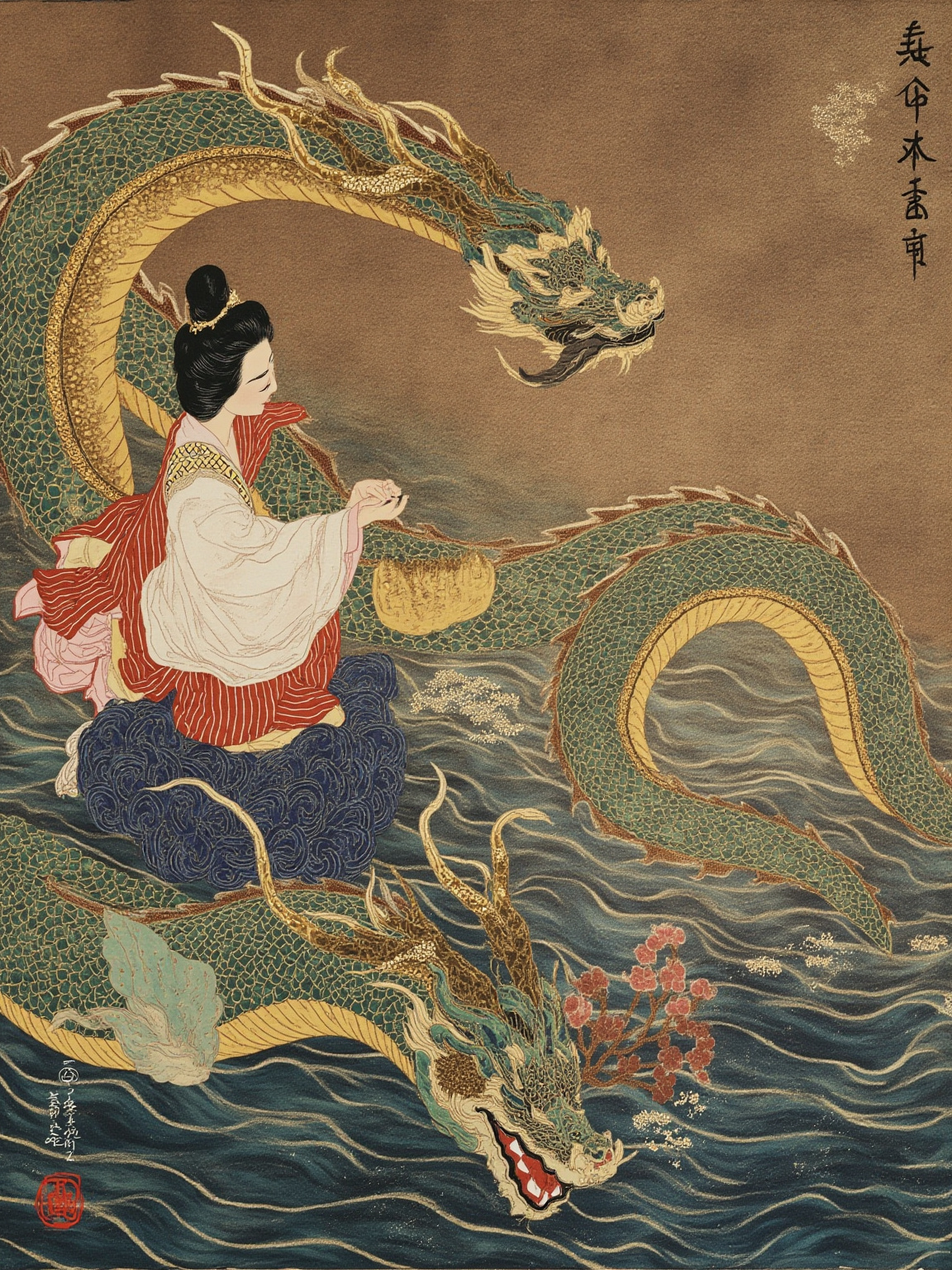
The dragon's son took a boat to the depths of the lake; in the palace below the waters, the king gave him his daughter.
龙子驾舟至于湖底,宫阙在水中,王以女妻之。
金句 · 卷一 · 鸿庞氏传
The Founding Heroes: Phù Đổng Thiên Vương and the Mountain God of Tản Viên
The Hùng King story is not only about the hundred eggs. Phù Đổng Thiên Vương is another founding hero out of oral tradition, riding his iron horse and swinging his iron staff, rough and forceful in a way that has nothing to do with the refined pedigree of a dragon's son-in-law. The tale of the Mountain God of Tản Viên is wilder still: he wants a neighboring kingdom's princess, and when a rival mountain and water spirit shows up to steal her away, he calls up storms and piles up mountains until the rival gives in. One hero is courtly, the other is rough; one belongs to the center, the other to the frontier — and the compilers put them side by side anyway, building out the full founding lineage under the Hùng Kings.
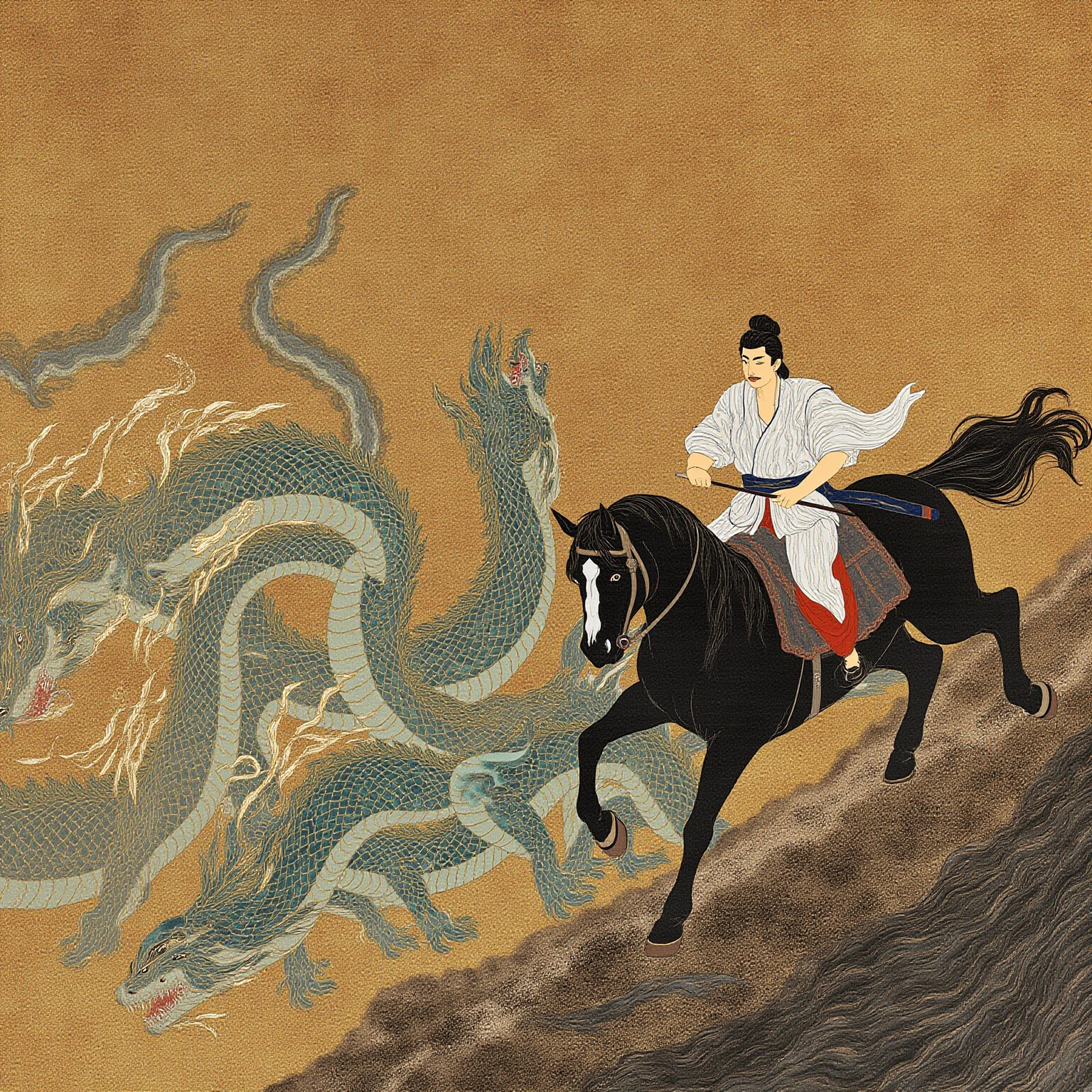
He mounted an iron steed and grasped an iron staff; wherever the horse trampled, no enemy force could stand.
扶董天王骑铁马、执铁棍,所践之处,敌兵莫能当。
金句 · 卷二 · 董天王传
The Trưng Sisters: How a Historical Figure Enters a Book of Marvels
The Trưng Sisters led a rebellion against Han rule, and they sit much closer in time to the compilers, close enough that history can verify them. Yet the compilers still gave them their own chapter, the Tale of the Trưng Sisters — and that choice matters: it shows that the myth in this book is not sorted by era but by bloodline, by descent from the Hùng Kings. From the dragon lord's son to the rebel queens, the chain of national narrative reads as continuous to the compilers, and the Trưng Sisters are its most recent link.
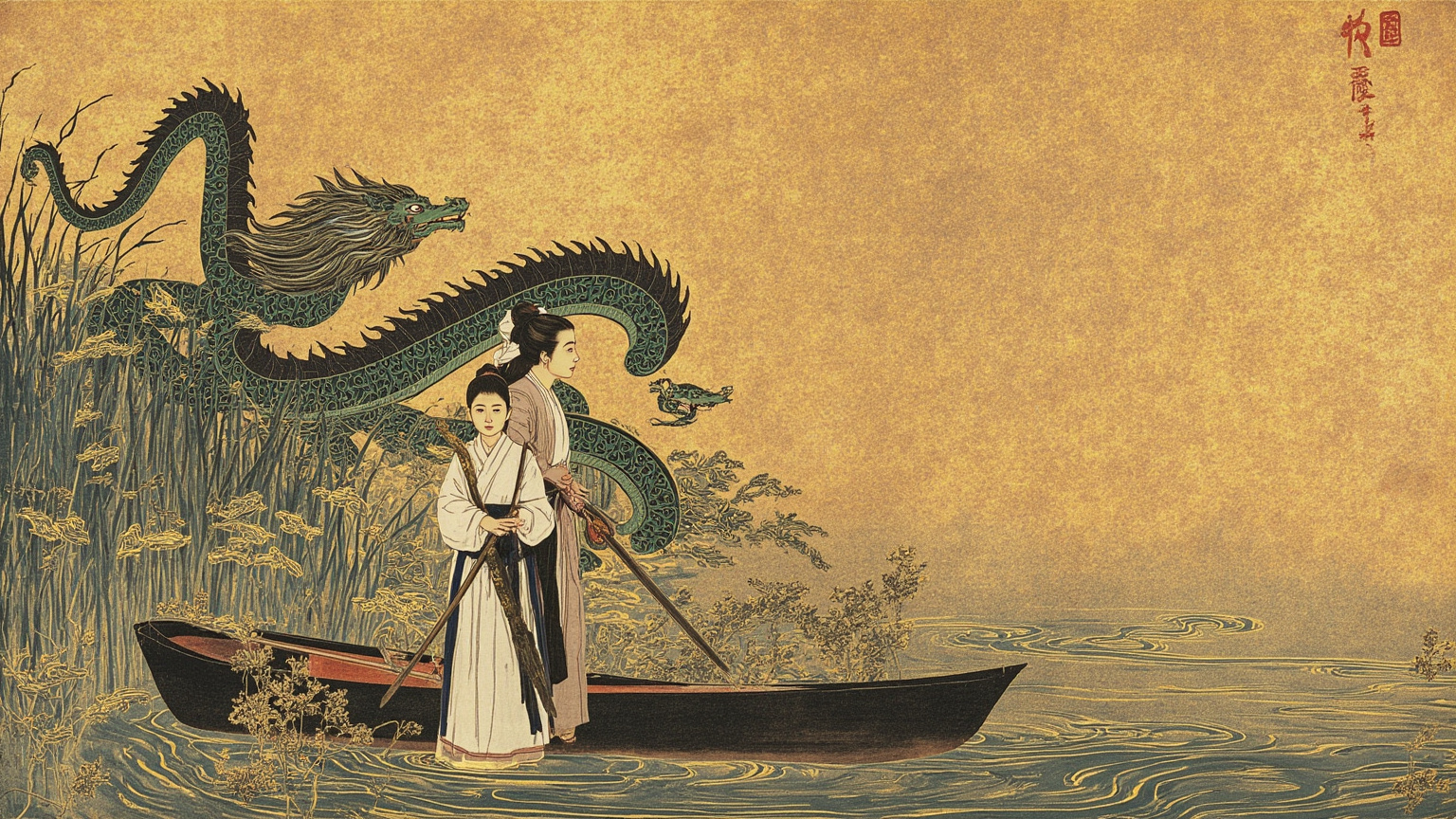
The two sisters raised the banner of revolt against the Han; their wrath burned across nine districts in a single night.
二徵举兵抗汉,一夕之间,九郡皆愤。
金句 · 卷二 · 二徵夫人传
Three Rivers Meet: Native, Chinese, Indian
It is easy to misread this book as a pure collection of native Vietnamese myth, when it is really three rivers running into one. The native strand is the most visible: the origin stories for betel nut, steamed cakes, and watermelon, plus the founding legends of Hồng Bàng, Phù Đổng Thiên Vương, and the Mountain God of Tản Viên, all drawn straight from local oral tradition. The Chinese strand hides between the lines. The courtship scene in the Tale of the Hồng Bàng is lifted from Liu Yi Delivers a Letter, the Tale of the Việt Well borrows from the Tang-Song collection Cai Gui Ji and from Wu Lai's Yuan-dynasty Record of Ancient Traces of the South Seas, and the Tale of Lý Ông Trọng folds in the Qin-dynasty story of Ruan Wengzhong. The Indian strand is the most hidden of all, recoverable only by scholars: the Kingdom of Monkey Spirits in the Tale of the Yaksha King has been identified as a Vietnamese version of the Indian epic Ramayana, with the monkey king Hanuman slipping across two thousand years into a book of marvels on the banks of the Red River.
The Biography Form: How Native Myth Gets Canonized
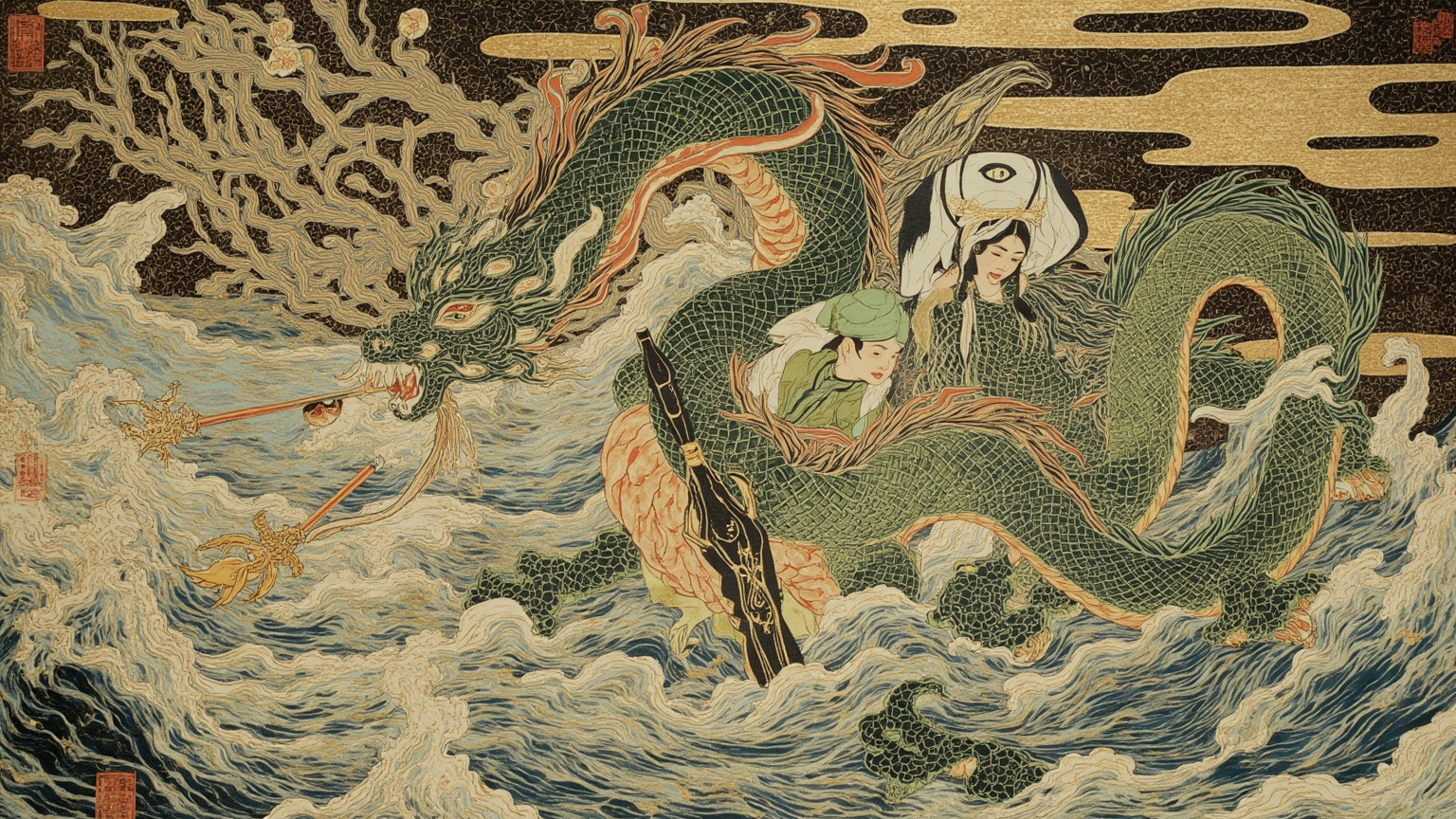
Writing it in classical Chinese, and writing it in the biographical form, is the most interesting move this book makes. Cramming mountain gods, river gods, dragon kings, spirits, and the origins of local customs into the biography format that goes back to the Records of the Grand Historian effectively issues native Vietnamese legend an official-history ID card. The compilers may not have thought it through this way, but the effect is there on the page — from this book onward, the dragon lord and his hundred eggs, the Mountain God of Tản Viên, could sit at a scholar's desk as equals alongside the Queen Mother of the West in the Shan Hai Jing or Ziyu and Han Zhong in the Soushen Ji.
A Few Boundaries: Don't Get This Wrong
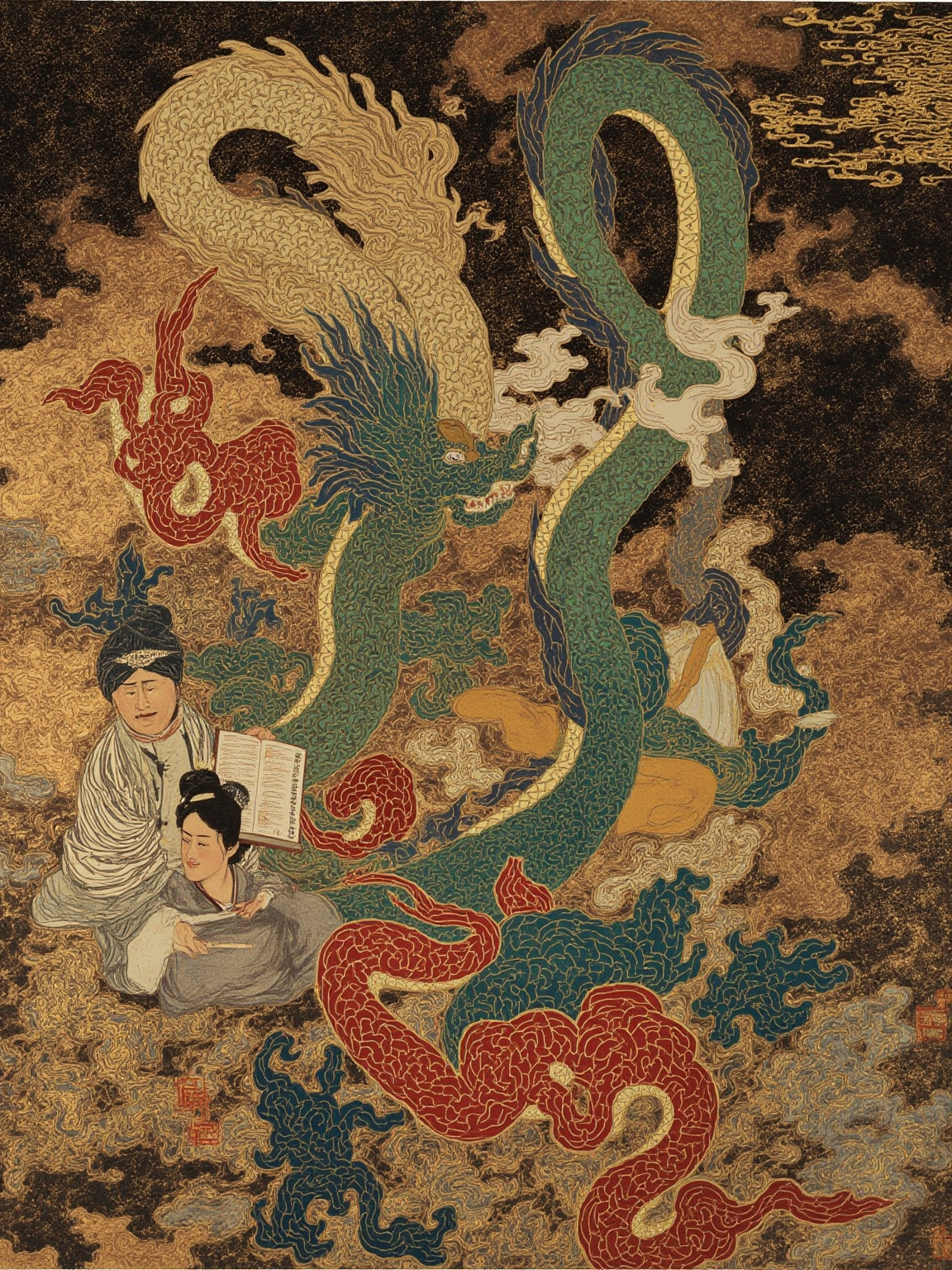
A few boundaries are worth drawing clearly. Lĩnh Nam names the whole cross-border stretch of land south of the Five Ridges, covering both Chinese Lingnan and northern Vietnam; it means neither Guangdong alone nor Vietnam alone, and that double reach is exactly what lets the book tell a three-source story. The original was written in classical Chinese, not in Nôm, and it draws from the same pool as Chinese tales of the strange. It runs to twenty-three chapters and covers more than founding myths: customs, Buddhist and Taoist miracle stories, and local place-name lore all belong here, so treating it as a single-theme book sells it short. And keep the categories straight: the Trưng Sisters are historical figures, while Phù Đổng Thiên Vương and the Mountain God of Tản Viên are mythological ones — the first belongs to recent history, the second to the layer of myth.
Lĩnh Nam chích quái is not a book so much as a relay race decades long, editors passing local oral legend into the Chinese biographical form until an Indian monkey king and the Dragon King of Dongting's daughter end up sitting together on the banks of the Red River.
Why Read This Book Today
For anyone trying to understand how ancient Vietnam imagined its own people, the sacred nature of kingship, and the origins of its customs, Lĩnh Nam chích quái is close to unavoidable as a primary source in classical Chinese. What makes it more interesting still is how it works as a textbook case of a story motif traveling across East Asia — a motif that sets out from India, passes through southern China, lands on the Red River, and gets reworked into Vietnam's founding myth — which makes this book a living fossil for studying how stories travel. The barrier to entry is not high, since the original is classical Chinese, but the editorial instinct that took local legend seriously is something no modern translation fully hands back to you.
A Reason to Open the Original
A guide gives you the map; the text itself is the land. How exactly Lạc Long Quân closes the marriage deal in his palace under the water, just how iron Phù Đổng Thiên Vương's iron horse really is, how the monkey king in the Tale of the Yaksha King gives away his Ramayana ancestry — none of that shows up until you open the original. The classical Chinese is restrained, tightly wound, but underneath it is the weight of thousands of years of Red River legend. An essay can tell you what is on the page. It cannot give you the damp air that hits you when the page itself falls open.
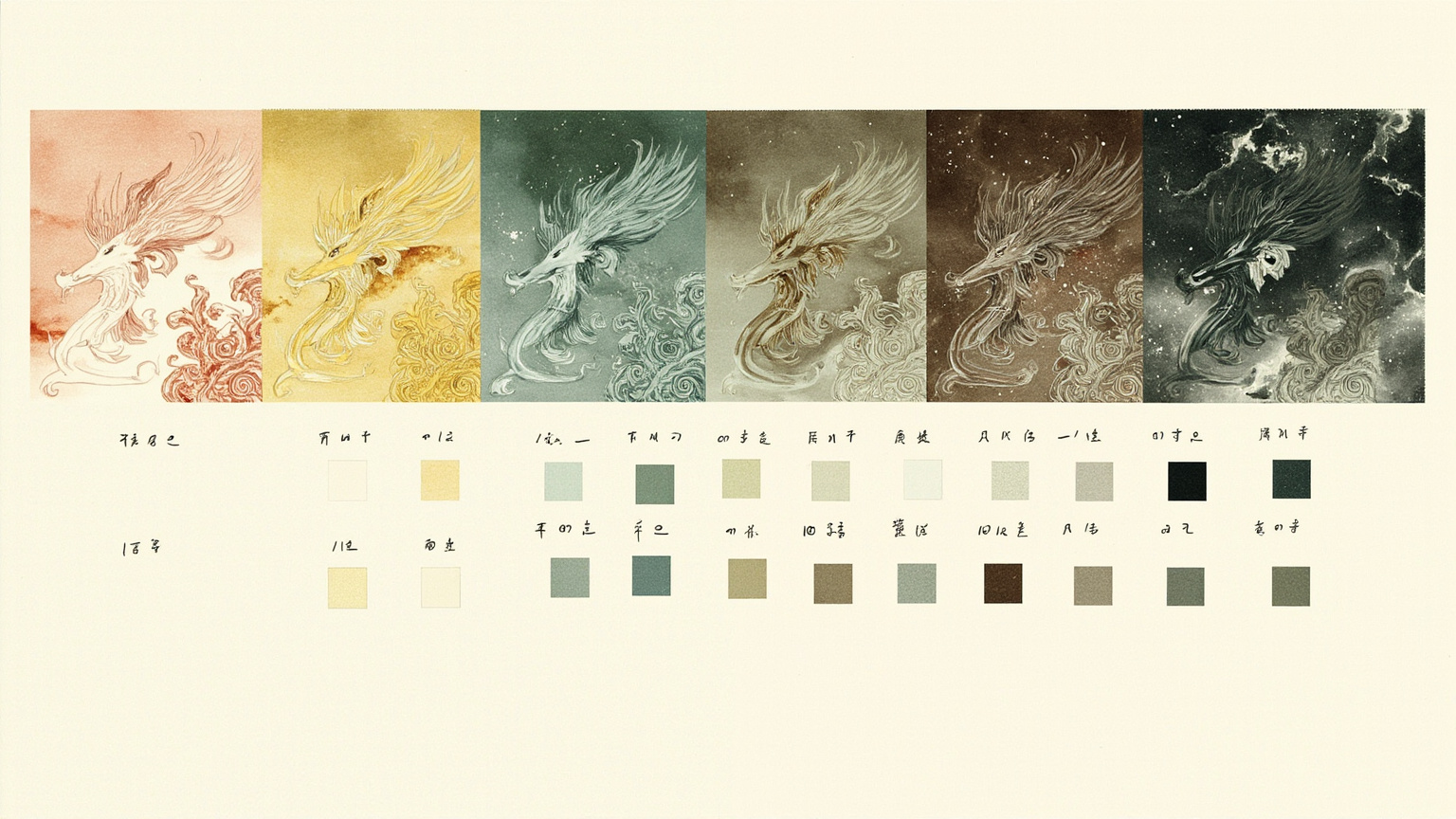
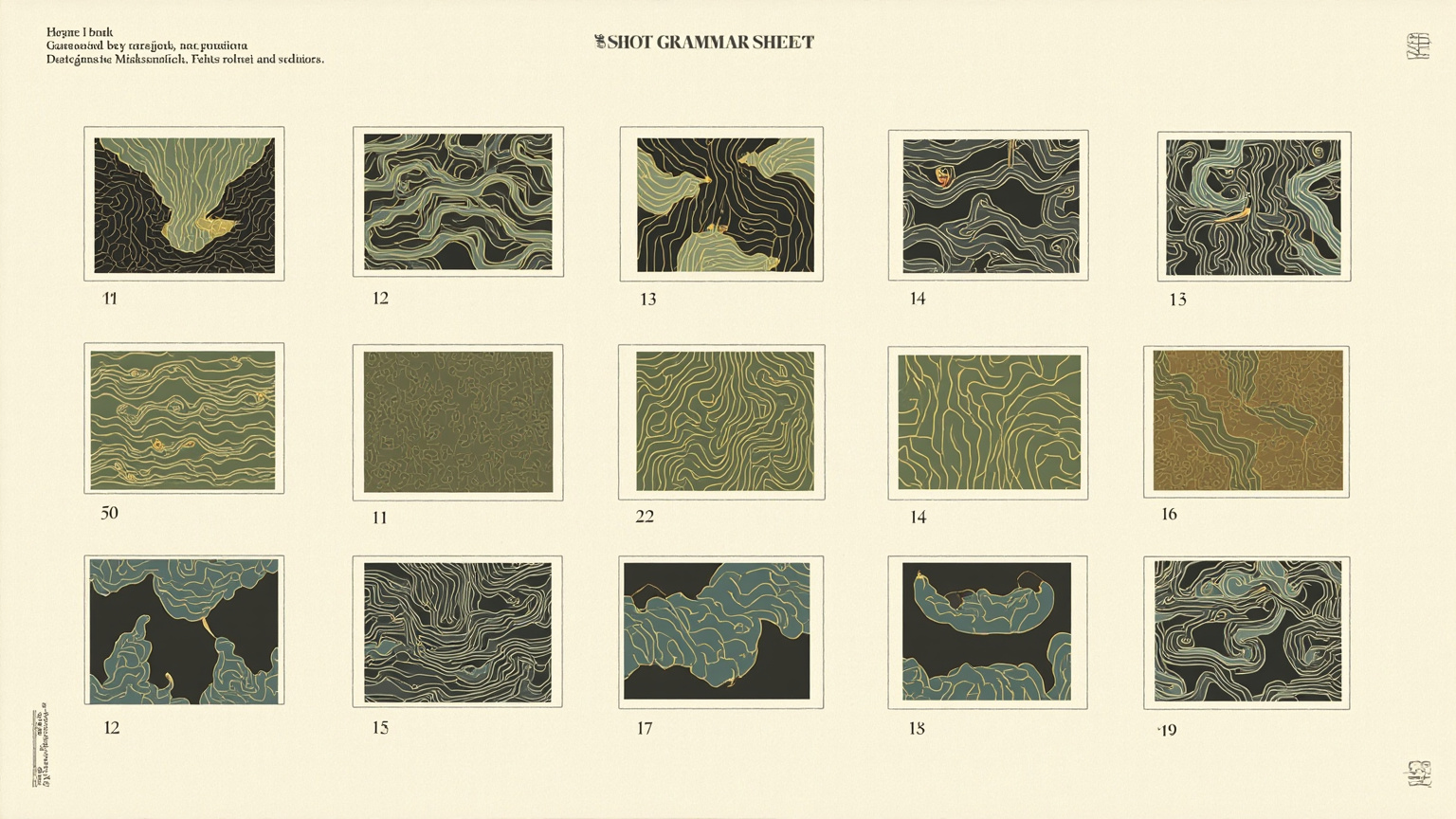
Art Direction4 plates
Before the guide was written, this book got a visual foundation — every illustration you just read grew out of it.