Vast, tender, prejudiced: why a book nearly a century old is still worth reading today
Text and illustrations produced by the pipeline


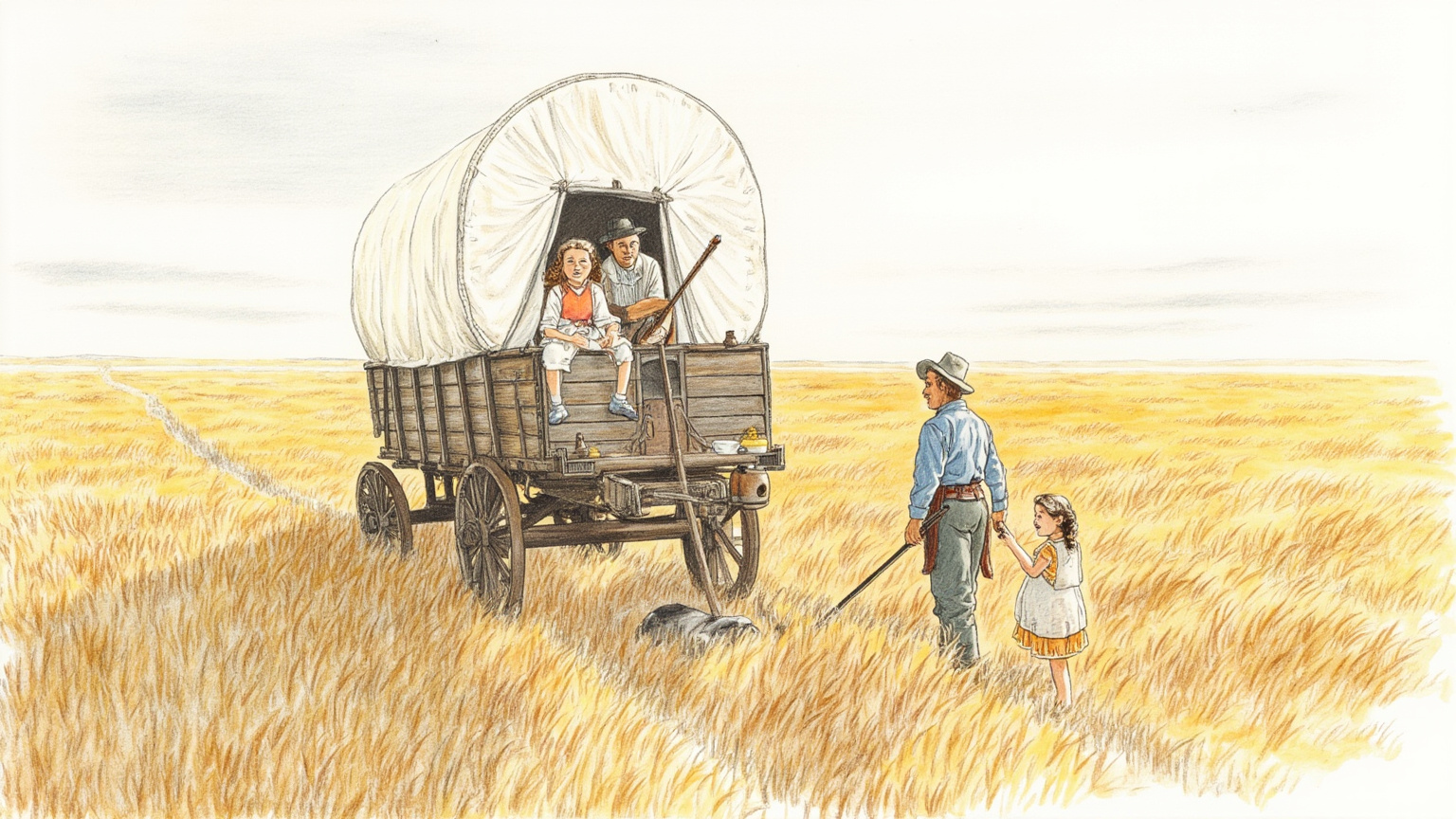
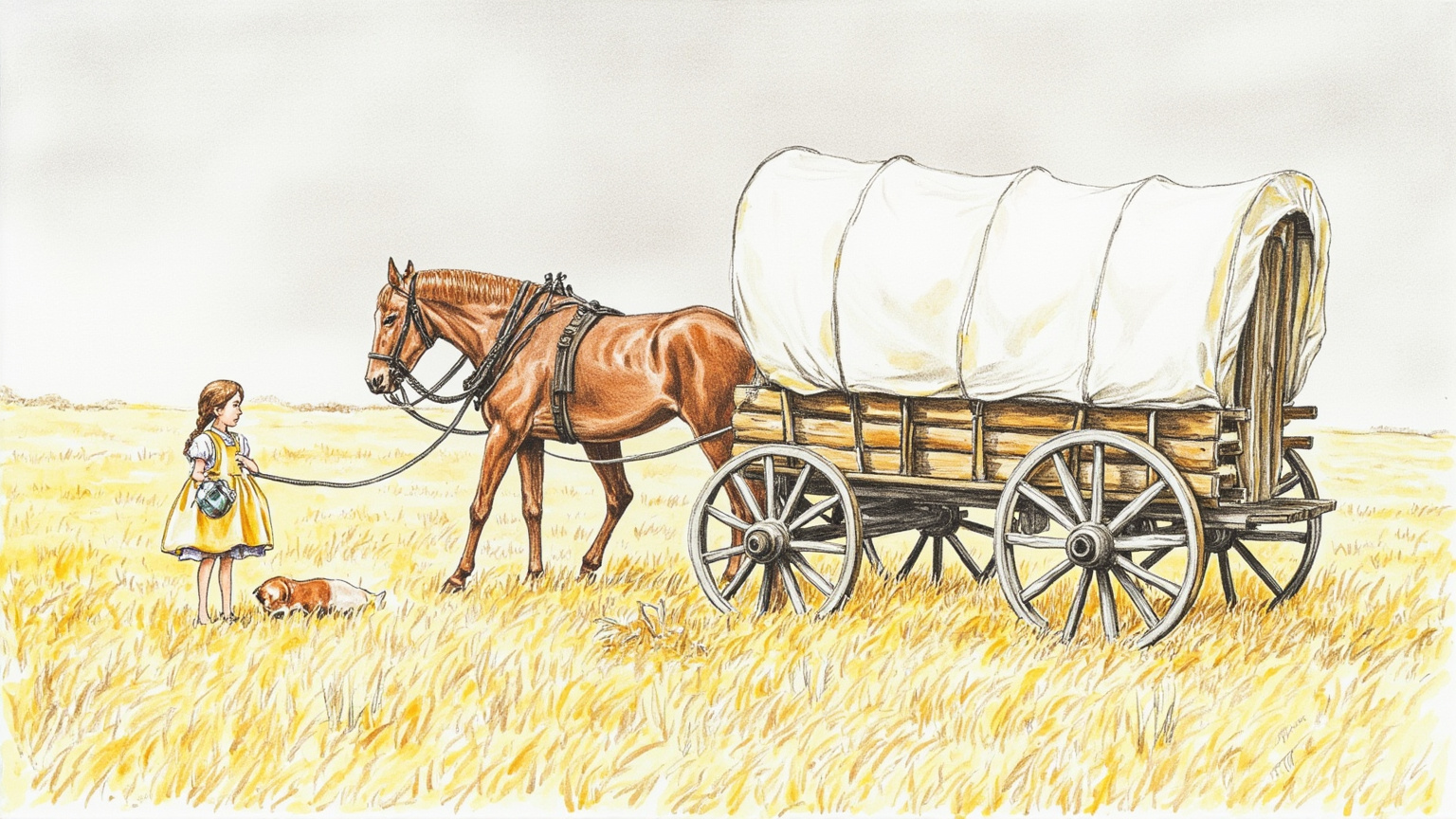
A sheet of white canvas stretched over a wooden frame. Two horses pulled the wagon, one bay and one dappled, and inside it a six-year-old girl leaned out to look at land she had never seen the like of. The grass stood taller than the horses' bellies; when the wind swept through, the whole prairie moved like a green lake, and far off a few black walnut trees stood alone against the sky, like islands in a pond. This is the opening of Little House on the Prairie -- Laura Ingalls Wilder's account of the day, at seven, she first laid eyes on the Kansas prairie.
It is one of the defining works of children's literature about the American frontier. Published in 1935 by Laura Ingalls Wilder, then in her sixties, it covers two years she spent as a seven- or eight-year-old with her parents on the Kansas prairie. For American schoolchildren it is the most direct entry point into their own early history, and the cleanest window onto the myth of westward expansion: the white-topped wagon, the log cabin, the little tin cup on Christmas Eve -- these images shaped an entire generation's idea of home and of setting out. I first knew this story from the old television series of the same name, but going back to the text made clear that everything the show had smoothed over was, on the page, sharper and more unsettling.


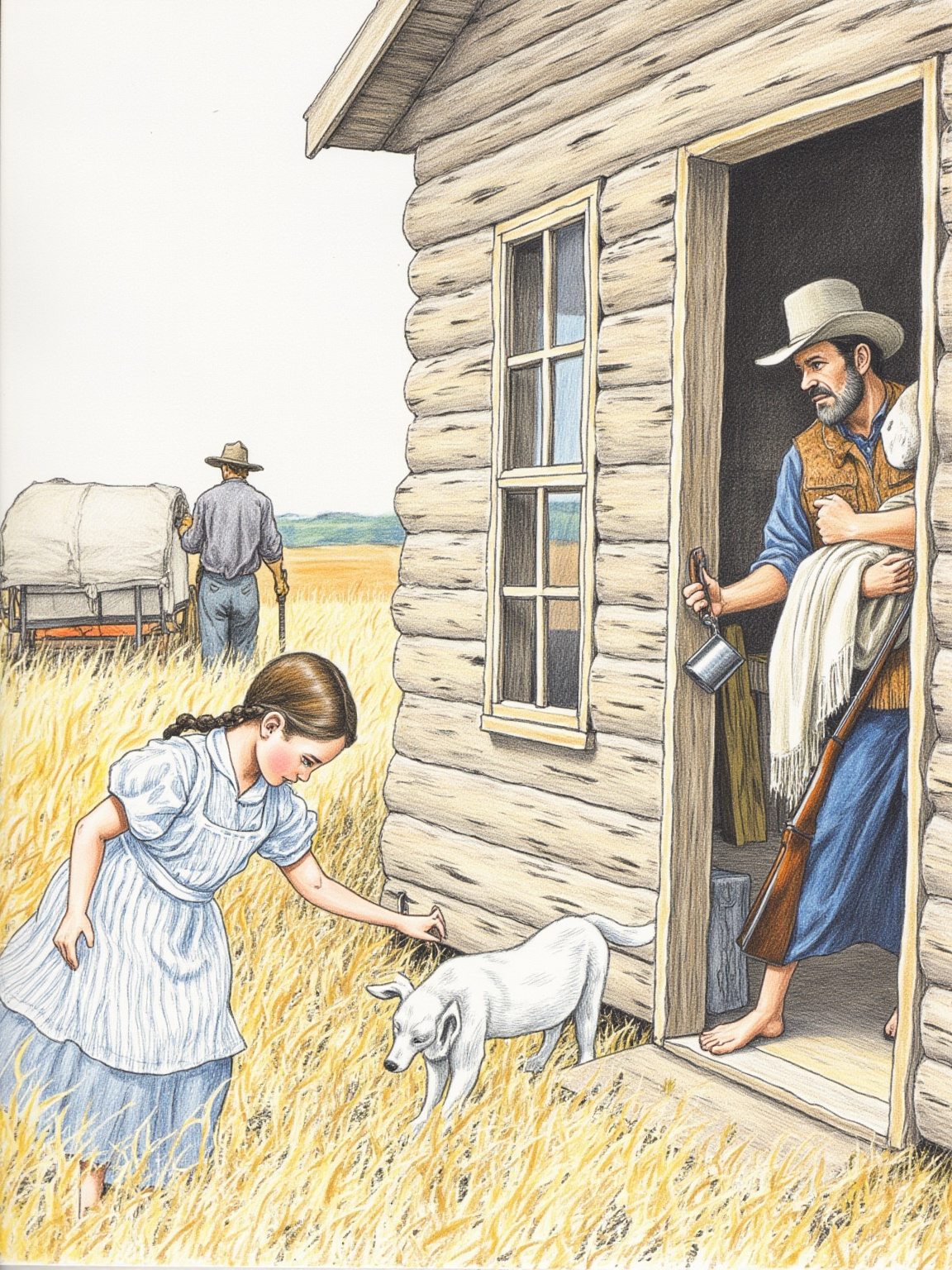
There is no gunfire at the end, no confrontation. A colonel passing through steps into the house and politely states his business: Washington's orders, the land has been set aside as reservation, and no white settler may stay. The Ingalls family doesn't resist, and no one forces them out -- they are simply informed. The window frames come down, the door is taken off, the wagon is hitched back up to Pet and Patty, and they drive back to Minnesota. This is the part the myth of westward expansion leaves out: the white settlers, too, were pieces the government could move or discard at will.
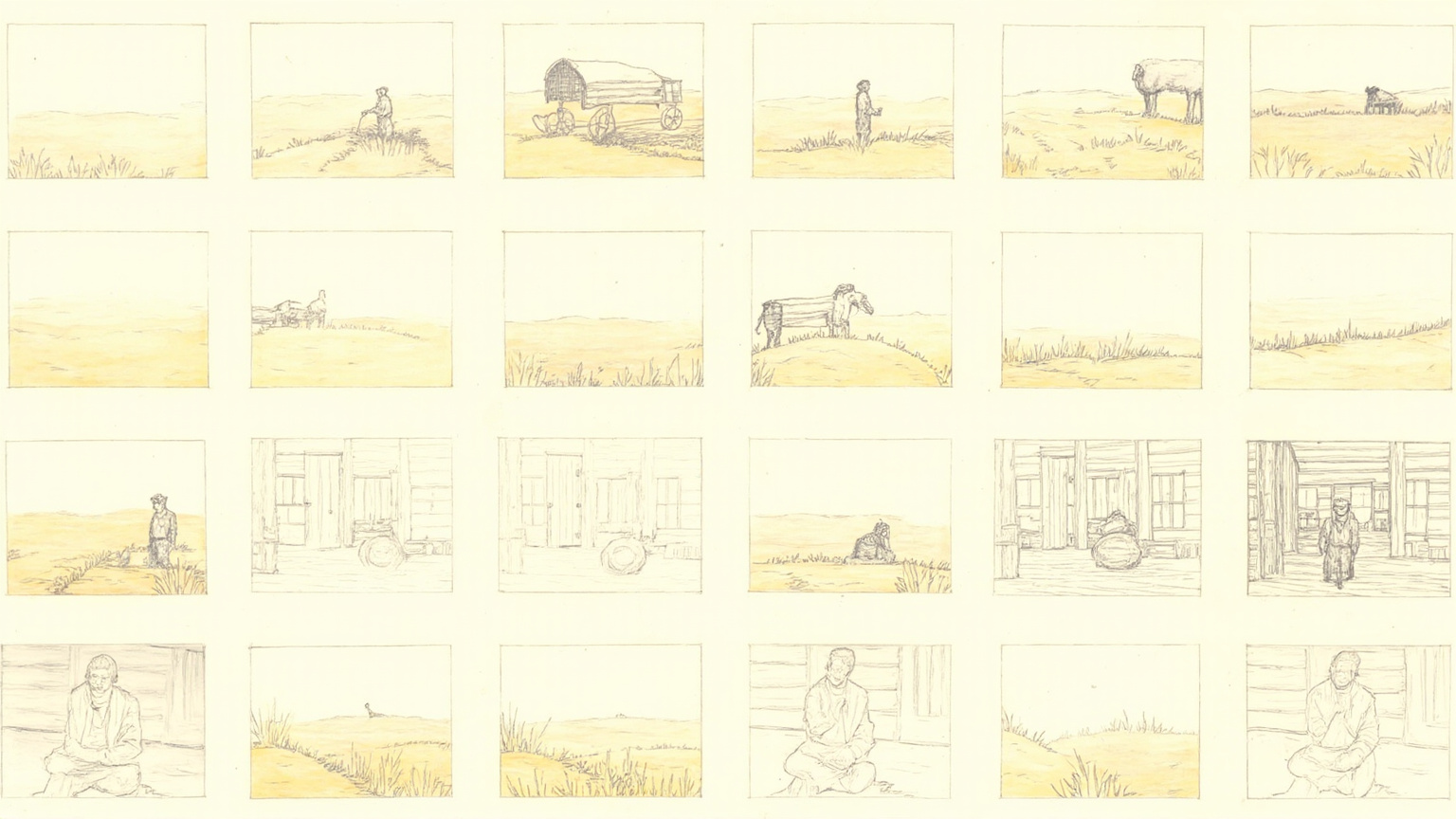
Before the guide was written, this book got a visual foundation — every illustration you just read grew out of it.
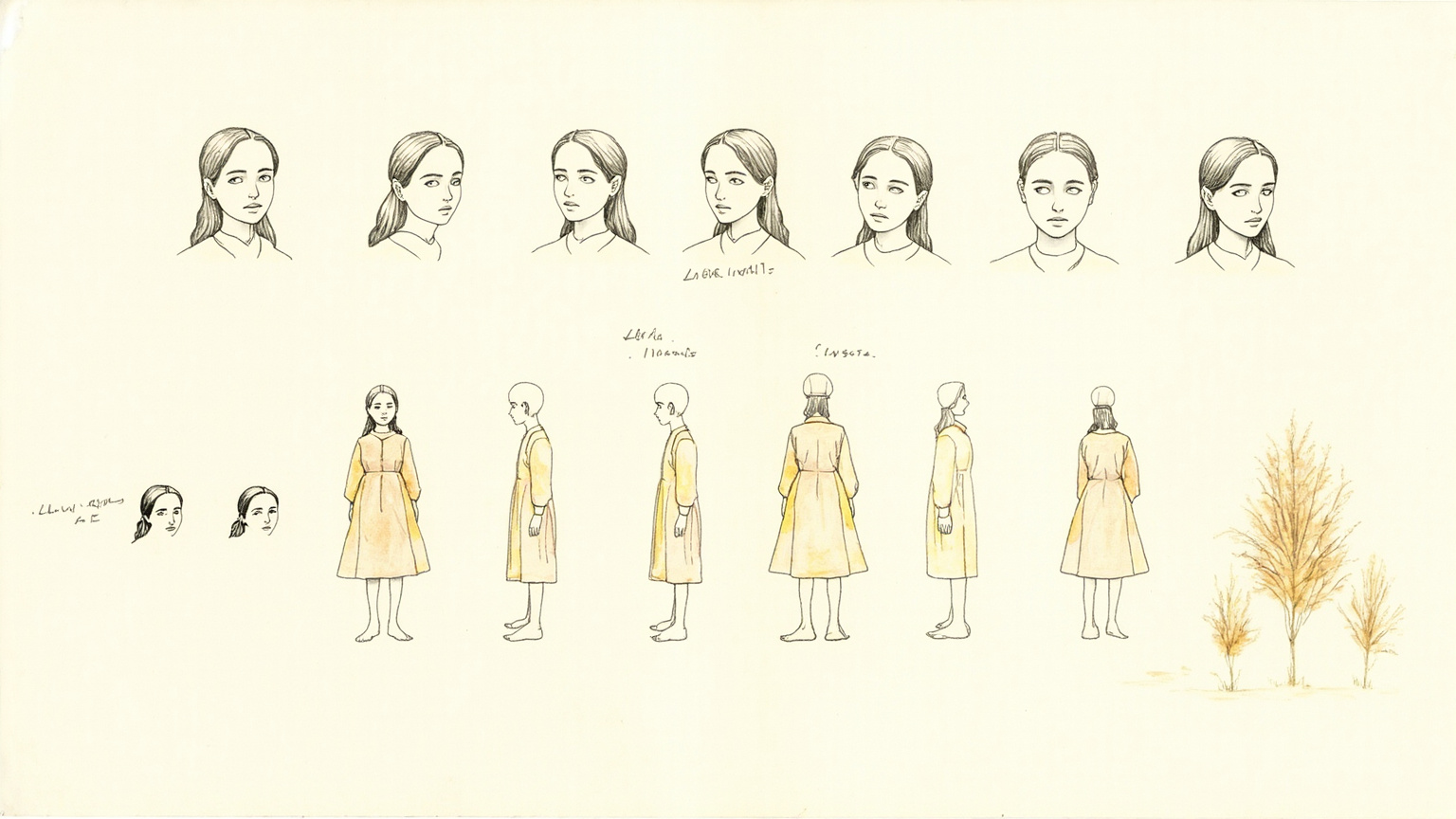
Six of them were packed into that wagon, and then packed onto the stretch of prairie that would become the little house. Pa, Charles Ingalls, was a self-taught fiddler and a competent carpenter -- the whole cabin went up by his hand, from felling the first tree to the last shingle. Ma, Caroline, was the one who kept up appearances: salt was rationed, the children minded their manners, and a measure of civilized order held against the roughness of the prairie. Mary, the older sister, was gentle and quiet, weak-eyed, and by the book's end scarlet fever would take the rest of her sight, sending her away to a school for the blind. Laura is the narrator -- watchful, sensitive, the one who remembers the tin cup at Christmas and also the tightness in her mother's face when a line of Indian horsemen rode past the house. The youngest, baby Carrie, was still an infant in arms, the kind of baby whose fever makes the whole household hold its breath.
This is Kansas in the 1870s, land not yet opened to white settlement. By law, the Ingalls family was breaking it the moment they stepped onto the prairie. They made do at first with a lean-to by the bluff -- one wall of timber, the other three canvas -- before Pa felled the trees himself and raised the real log house, and the day they struck good water in the well, the whole family celebrated like it was a holiday. This is where the book does its cleanest work with scale -- the vast, unbroken grass against one small child, a house built by hand, and the whole of a child's world held inside it.
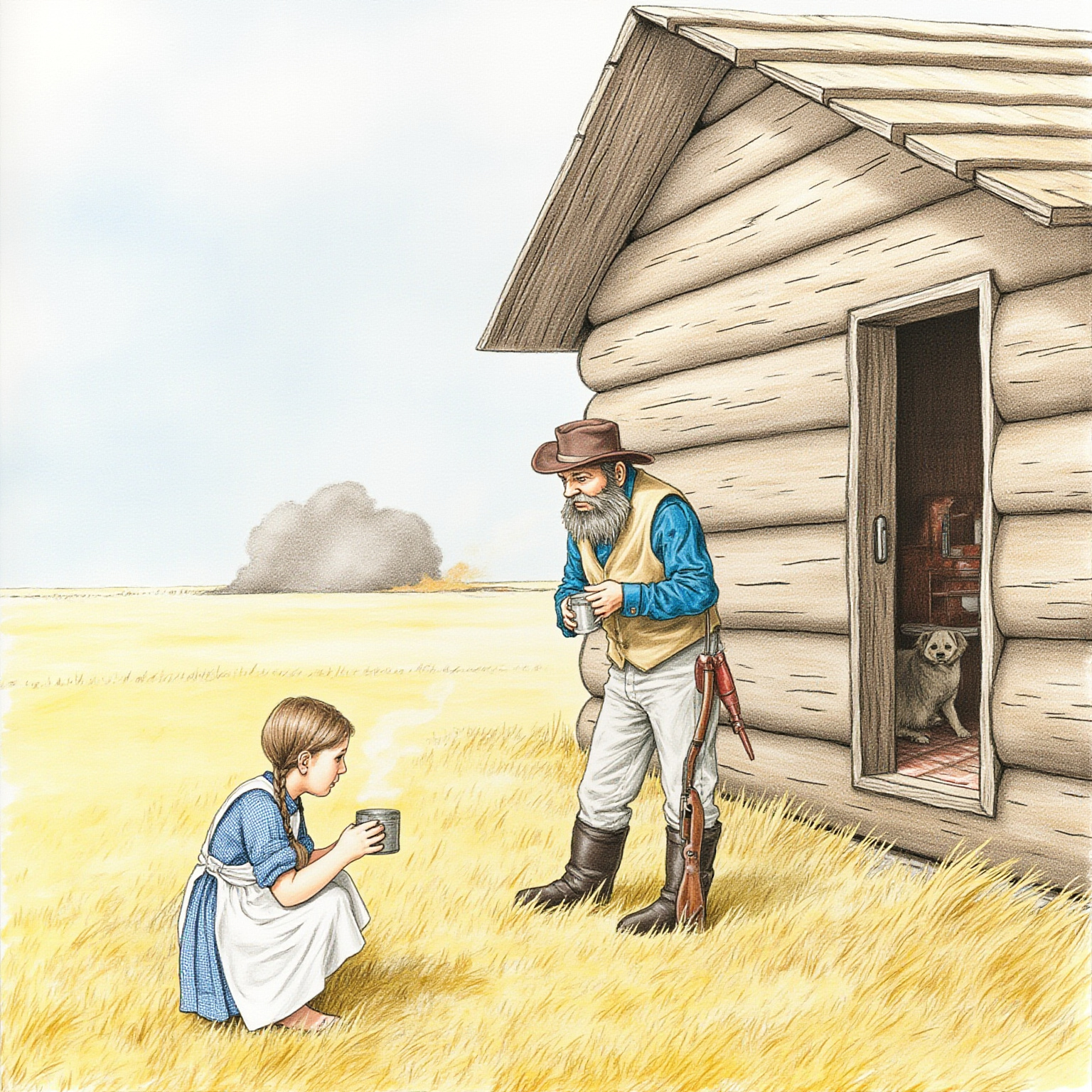
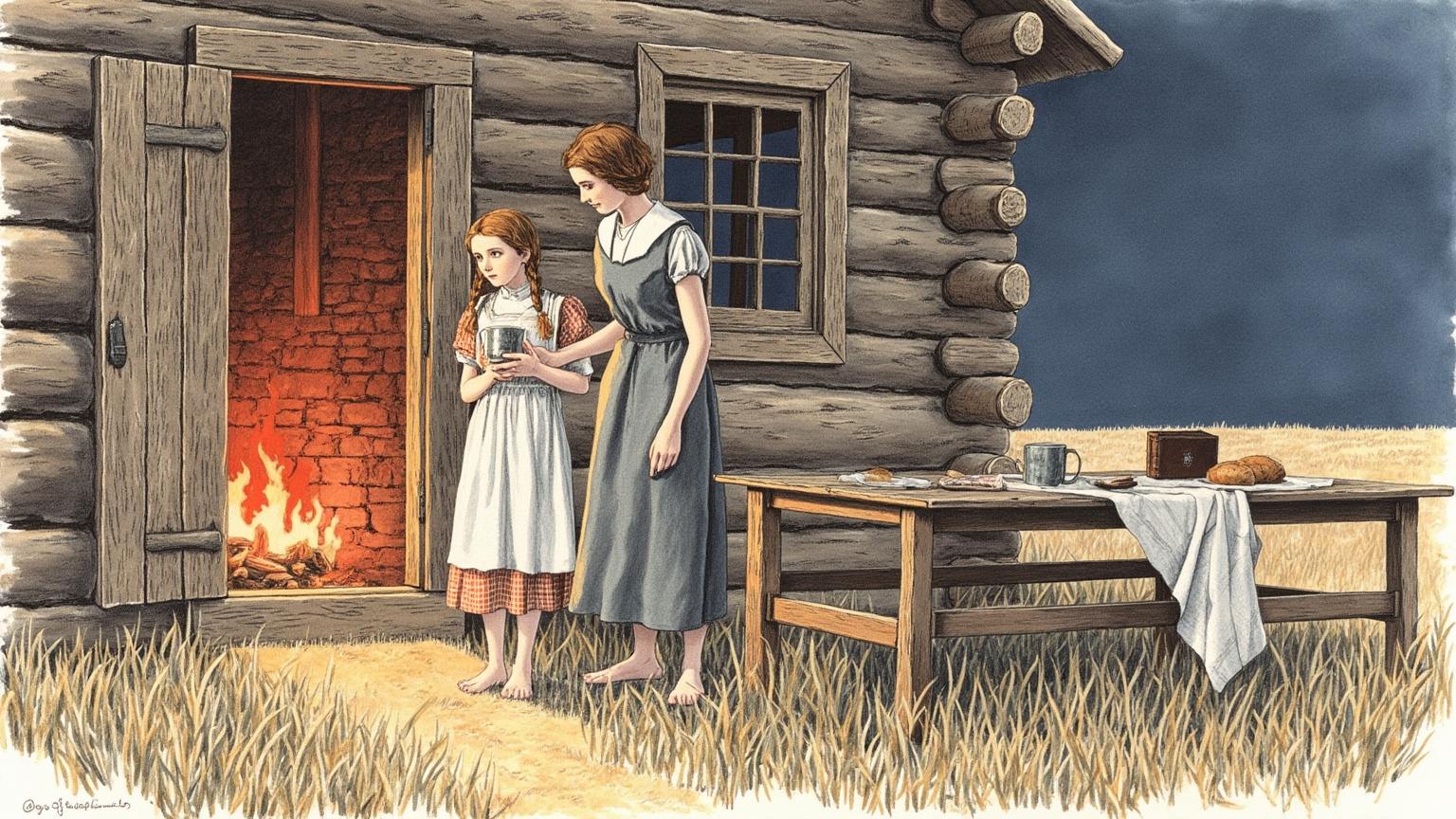
Frontier life was a string of small, exacting tasks: planting corn, salting pork, smoking venison and hanging it under the eaves, hunting prairie chicken, spinning your own thread, dyeing cloth for clothes. Material goods were scarce, but every one of them was made by hand -- a length of Ma's calico became a little shawl for Laura, a gift she remembered for the rest of her life. On Christmas Day, Pa rode into town and came back with a small tin cup for Laura and a stick of candy for Mary. On the leanest night of the year on the prairie, that scrap of metal and that twist of candy paper are written with the weight of gold. This is not nostalgia -- it is the fact of a family making things with their own hands, scaled down to the size a child's eyes can hold.
The good times didn't last. Around the start of winter, first came a prairie fire -- flames rolling in from the horizon, the grass cracking in the wind, the family turning up earth and hauling water, burning off the grass in front of the house themselves to make a firebreak before the blaze arrived. It saved the house. Right after came the fever 'n' ague, and one by one the whole family went down with it, baby Carrie nearly not pulling through. This is the book's unromantic side, and its most honest record of frontier life: the cold, the coughing, a child crying in the night. Wilder never turns this into a Western's gallop through flame -- what she writes is survival close to the ground, adults digging, a child carrying water, the ground in front of the house burned bare before the fire ever arrives.
This honesty is one of the most affecting things about the book: it does not look away from the roughness of frontier life, and it does not dress up poverty as poetry. The family was happy on the prairie, and the prairie very nearly swallowed them. That is why the book still has weight when you read it today.
A line of Osage riders passed the house and stopped a little way off, watching the family. Pa called them neighbors who meant no harm. Ma, pointing at the tall man riding in front, told Laura: only bad Indians came this close to a house. That man looked filthy, she said, and his face was ugly. The line appears more than once in the original. It states, without flinching, the real fear and prejudice of a white frontier family -- and it states, just as plainly, the standard imagination mainstream American culture held of Indians when the book was published in the 1930s.
The worthwhile thing to do with this book today is not to cut that layer out, and not to simply condemn Ma for it -- it is to hold it alongside the book's tenderness and its honesty, together. The same sincerity that makes the book true about the prairie, the family, the labor, is what let it set down its prejudice so plainly. Because it is a complete mirror, a reader today can see exactly how a generation was shaped by the biases of its own time. That is the real reason the book is still alive after nearly a hundred years -- it puts an honest question to children and adults alike: can you hold Ma's line and the openness you feel on the prairie in your hands at the same time?
The irony doesn't end there: the Osage had lived on that land for uncounted generations and were moved off their own home by a single government order -- and the same government, with another order, moved the Ingalls family out of the cabin they had just finished building. Within one book, two different peoples are pushed along by the same invisible hand, one after the other. This isn't a metaphor Wilder built on purpose -- it is simply what was happening across the American West in the 1870s. At the end of the book the family sits in the wagon on a snowy night, and the world outside owes them no explanation. Mary's eyes can no longer see the snow past the window.
It's a thin book, a handful of events, and it pulls off three difficult things. First, it holds the vastness of the landscape and a small girl's smallness in the same sentence -- a sense of scale as clean as anything in children's literature. Second, it brings the American myth of self-reliance back down to its real temperature: not a slogan, but a man planing wood by hand, digging a well by hand, making a tin cup for his daughter by hand. Third, it is honest -- honest about the openness of the prairie and honest about Ma's line, honest about the joy of the day the cabin went up and honest about the bewilderment of being sent away by a government order.
The single thing most worth saying about the craft is this: the whole book is written from the vantage of a seven-year-old girl, so the adult world's decrees, prejudices, and survival calculations all get lodged in a child's memory as specific actions and specific objects -- a tin cup, a stick of candy, a little calico shawl, a line of horses stopped in front of the house. These small things carry more weight than any stated meaning could.
The book is still worth reading nearly a hundred years on because it shows you both the openness of the westward myth and the prejudice buried beneath it -- and it never pretends the second one isn't there.
A companion guide gives you the map; the book itself is the land. The grain Wilder holds back and lets you find on your own -- the sound of wind moving through the grass, Pa tuning his fiddle late into the night, a child not knowing how to hold a knife and fork the first time she eats roasted venison, Ma using the same salt jar on the prairie until its markings wear smooth -- those things you can only meet by turning the page yourself. So is the exact context and tone of Ma's line, which no retelling can substitute for. And the cabin Pa built with his own hands, taken apart on that snowy night while the wood still carries the smell of summer sawdust -- that image, go and see for yourself.