Lives of Eminent Philosophers (also translated Lives and Opinions of Eminent Philosophers) · Companion Guide
名哲言行录
一部用木桶、灯笼与毒酒杯写成的希腊哲学家谱——轶事压过论证,画面吞下体系
The History of Philosophy, Told from a Barrel
In broad daylight, in the streets of Corinth, a man walks through the crowd carrying a lit lantern. He isn't watching the road. He's watching faces, hunting for one honest man. He lives in a large clay wine jar, goes barefoot, and wears a cloak too ragged to be decent. One day Alexander, the Macedonian conqueror, comes looking for him and asks what he needs. He answers: stand aside, you're blocking my sunlight.
This is the most famous scene in Book Six of Lives of Eminent Philosophers. The book is about philosophers, but what you actually get isn't argument, isn't system, isn't a school's doctrine. It's a barrel, a lantern, and a line that leaves a king speechless. Its author was Diogenes Laertius, a third-century biographer who left almost no trace of his own life. He strings together dozens of philosophers, from the sixth century BC through the Hellenistic age, across ten books, not through philosophical treatises but through anecdotes.
What Kind of Book Is This
Strictly speaking, this is a collection of classical biographies fused with a compendium of philosophers' sayings and fragments, written in the first half of the third century in Greek. By genre it is neither a Platonic dialogue nor an Aristotelian systematic treatise. It is philosophical gossip, written by someone else about everyone else, and it has become close to a one-stop archive for anyone studying Hellenistic philosophy. Many fragments of the pre-Socratics, otherwise lost, survive only because this book preserved them.
Why has it survived two thousand years? Because it drags philosophy out of the study. Every philosopher here has a body: a bulbous nose, a barrel for a house, a habit of staring at the stars until you fall down a well. You don't need to understand metaphysics to be struck by these images.
The Cast and Their World
The book's cast is drawn mostly from the philosophers of the classical and Hellenistic ages: Thales, founder of the Milesian school and the first man in Western philosophy; Socrates, the sculptor's son who argued barefoot in the Athenian marketplace and was eventually sentenced to death by the city's court; Plato, Socrates' student, who founded the Academy on the northwestern edge of Athens; Aristotle, who moved from the Academy to Alexander the Great's court and then to the Lyceum; Diogenes, the man from Sinope who turned philosophy into performance art; and Epicurus, who founded the Garden school in Athens.
Each stands for a different way of living: one gazes at the stars, one loathes crowds and retreats to the wilderness, one carries a lantern hunting for an honest man, one teaches in a garden that true wealth lies in wanting little. Running through the book is a lineage of teachers and students that links these figures into a single tree. Here philosophy is a family line passed down through generations, not a stack of separate books.
From Falling Into a Well to Drinking the Hemlock: How the Story Moves
The whole book opens with a myth: Heracles. The Cynics claimed him as their spiritual ancestor, because he could endure hardship and overcome monsters. Diogenes called himself a follower of Heracles the wanderer. It's a statement of intent right at the start: the philosophy this book has in mind is asceticism, a way of living, not a treatise.
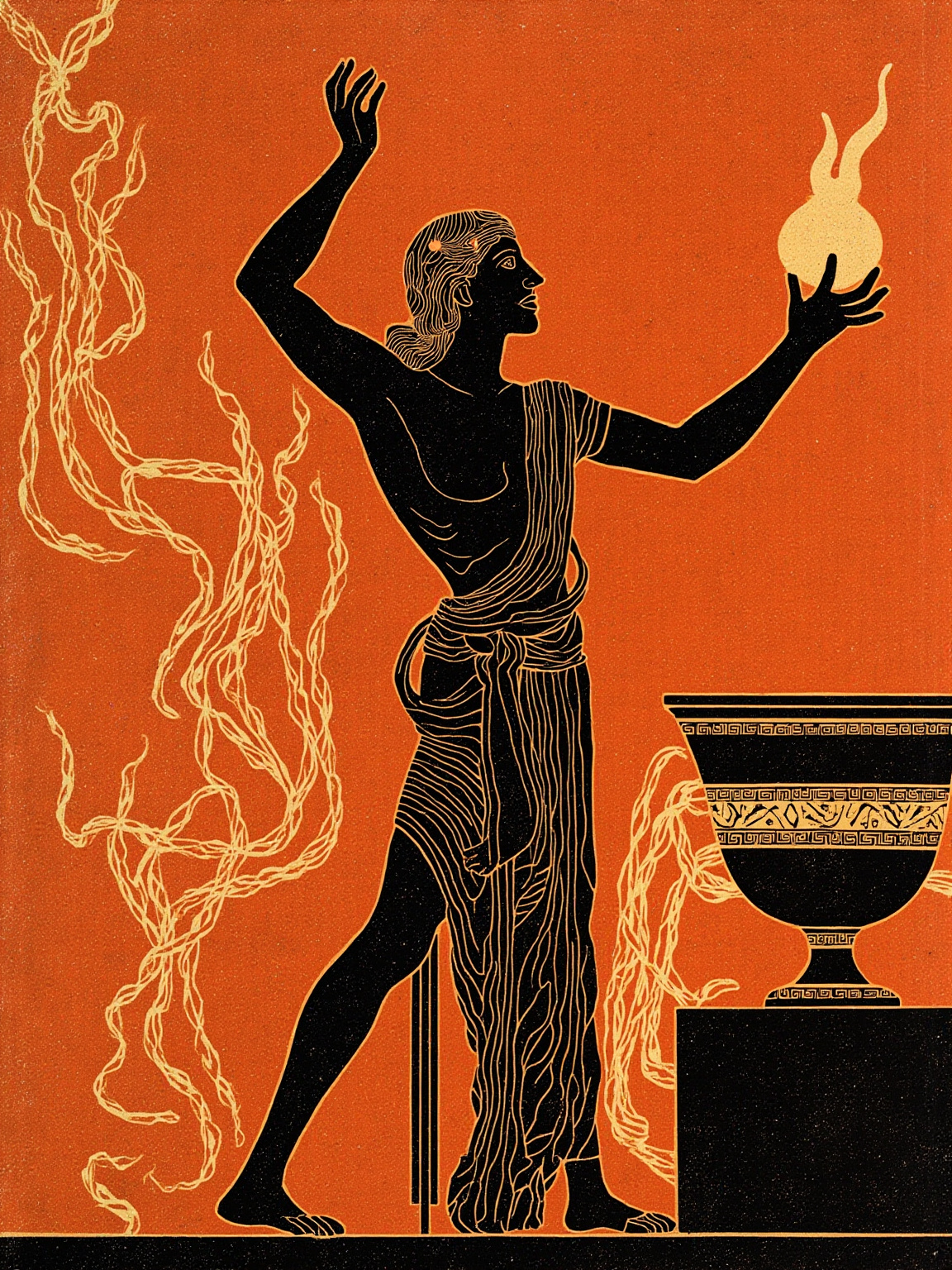
Hard is the contest, yet toil becomes a light thing when the toil is the path to virtue.
劳苦本是难事,但通往德性的劳苦,便化作了轻省。
金句 · 卷一 · 赫拉克勒斯篇
The birth of the Milesian school is captured in a joke. One night Thales was so absorbed in watching the stars that he stepped straight into a well by the road. A Thracian servant girl passing by laughed at him: you can't even see what's under your own feet, so how do you expect to see what's in the sky? The first act of pre-Socratic philosophy opens with a missed step.

You cannot judge what is in the heavens, yet you cannot see what lies at your feet.
连脚下的土地都看不清,又怎能看清天上的星辰?
金句 · 卷一 · 泰勒斯轶事
Heraclitus is the opposite extreme. Born into the royal house of Ephesus, he gave up his claim to his brother, exiled himself, and lived on roots and bark, and is said to have died buried in cow dung. He wrote On Nature and hid the entire manuscript in the Temple of Artemis. The man who said no one steps into the same river twice ended up living as his own riddle.

The Gadfly of Athens and His Cup of Hemlock
Socrates is the center of Book Two. He was not handsome: a bulbous nose, thick lips, small bulging eyes, short and stocky, wearing the same coarse cloak year-round, arguing barefoot with whoever he could corner in the Athenian marketplace. The city's court condemned him to death, the charges being impiety and corrupting the young. When the cup of hemlock was brought to him, he drank it down.
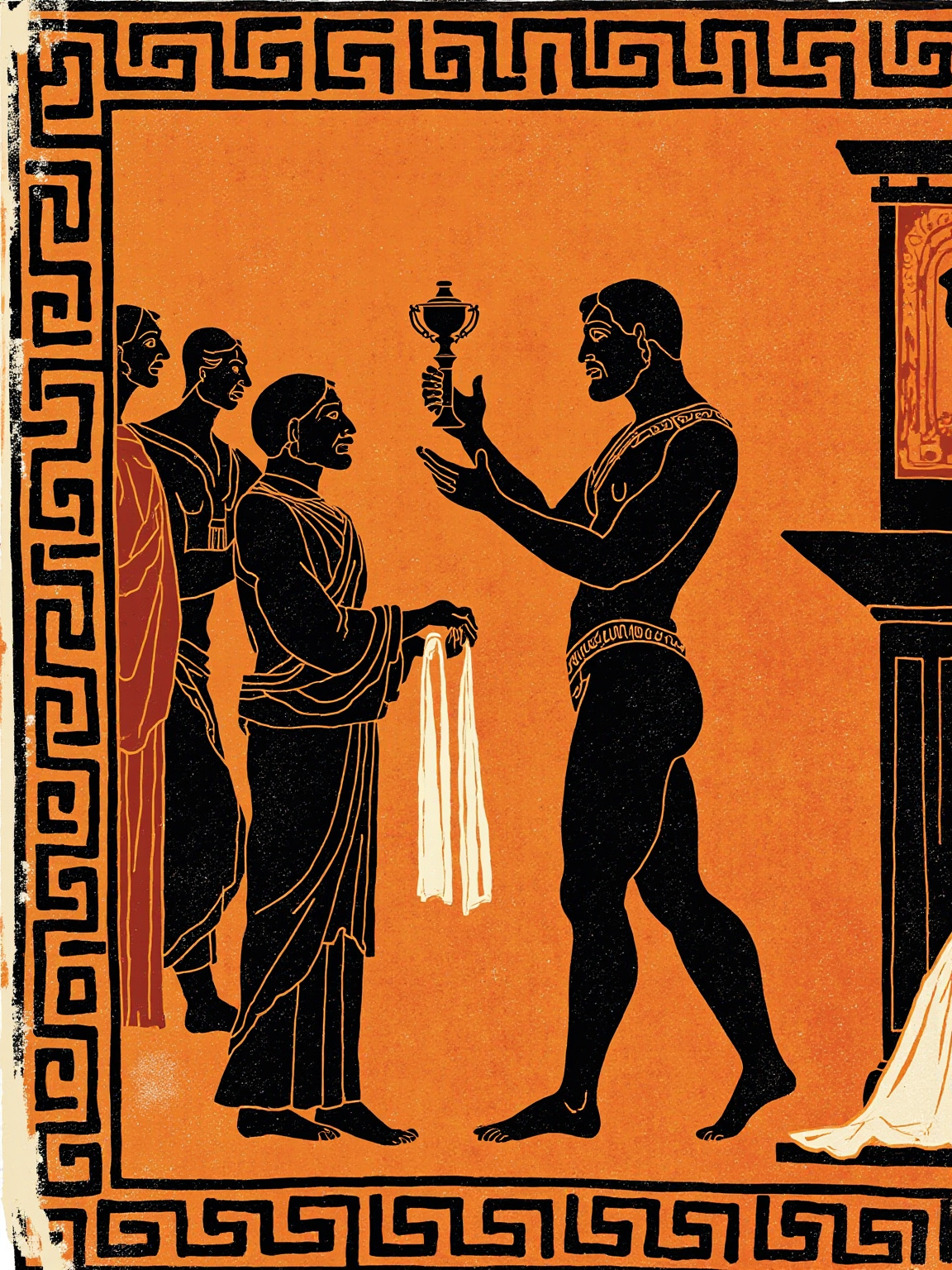
I owe a cock to Asclepius — pay the debt, and do not fail.
我还欠阿斯克勒庇俄斯一只鸡,务必替我还上,莫要忘记。
金句 · 卷二 · 苏格拉底临终之言
There's an irony here: in Plato's writing, Socrates is the embodiment of inner beauty, but this book insists on showing you his bulbous nose. The author uses his looks to cut through the philosopher's halo. He is a specific person, not a saint on an altar.
After Socrates, philosophy moves into institutions. Plato, his student, was born Aristocles and picked up the nickname Plato for his broad shoulders (some say for his eloquence); he founded the Academy outside Athens to teach the theory of Forms. Aristotle went from the Academy to tutor Alexander the Great, then returned to Athens to found the Lyceum. The book records all of this, but next to the earlier peaks of anecdote, these stretches feel tepid. Institutionalized philosophy starts losing the color of barrels and lanterns.
The Barrel, the Lantern, and a King Turned Away
Book Six is the soul of this work. Diogenes made his home in Corinth, living in a large clay wine jar, walking around by daylight with a lit lantern in search of an honest man, eating his meals in public. His whole life was a mockery of respectable society. Alexander the Great, having conquered the world, went out of his way to meet him. The philosopher was lying on the ground sunbathing and didn't so much as glance up. The king asked what he wanted. Diogenes said: stand out of my sunlight.
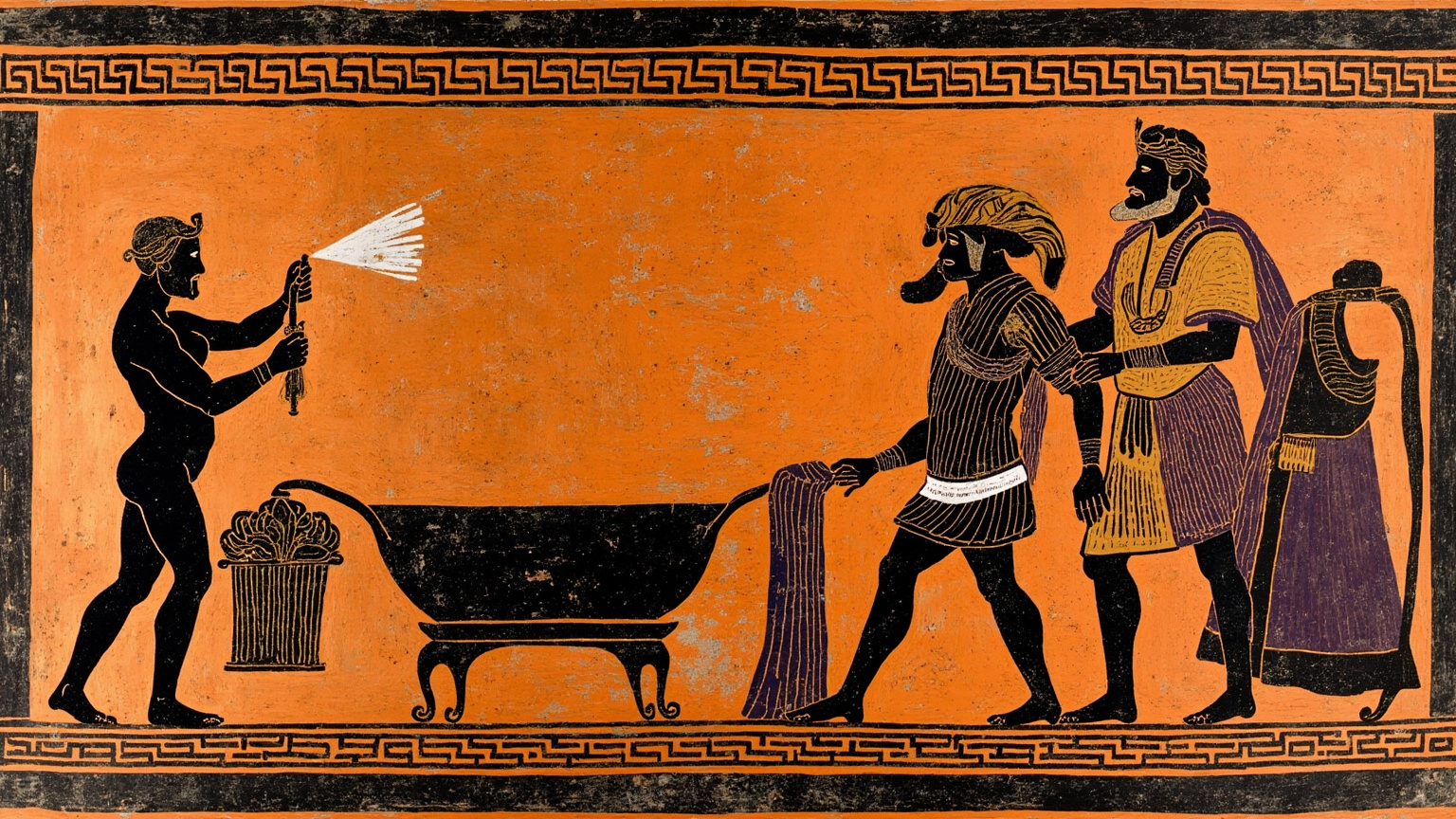
Stand a little from between me and the sun.
请别挡住我的阳光。
金句 · 卷六 · 第欧根尼对亚历山大
Another scene is just as famous. Surrounded by a crowd jeering at him, holding a cup of water, he slowly raised it and smashed it in front of everyone. Look, he said, I can pour the water out without drinking it first. In one line he rejects consumption, possession, and the whole idea that you have to finish something before it counts as yours.
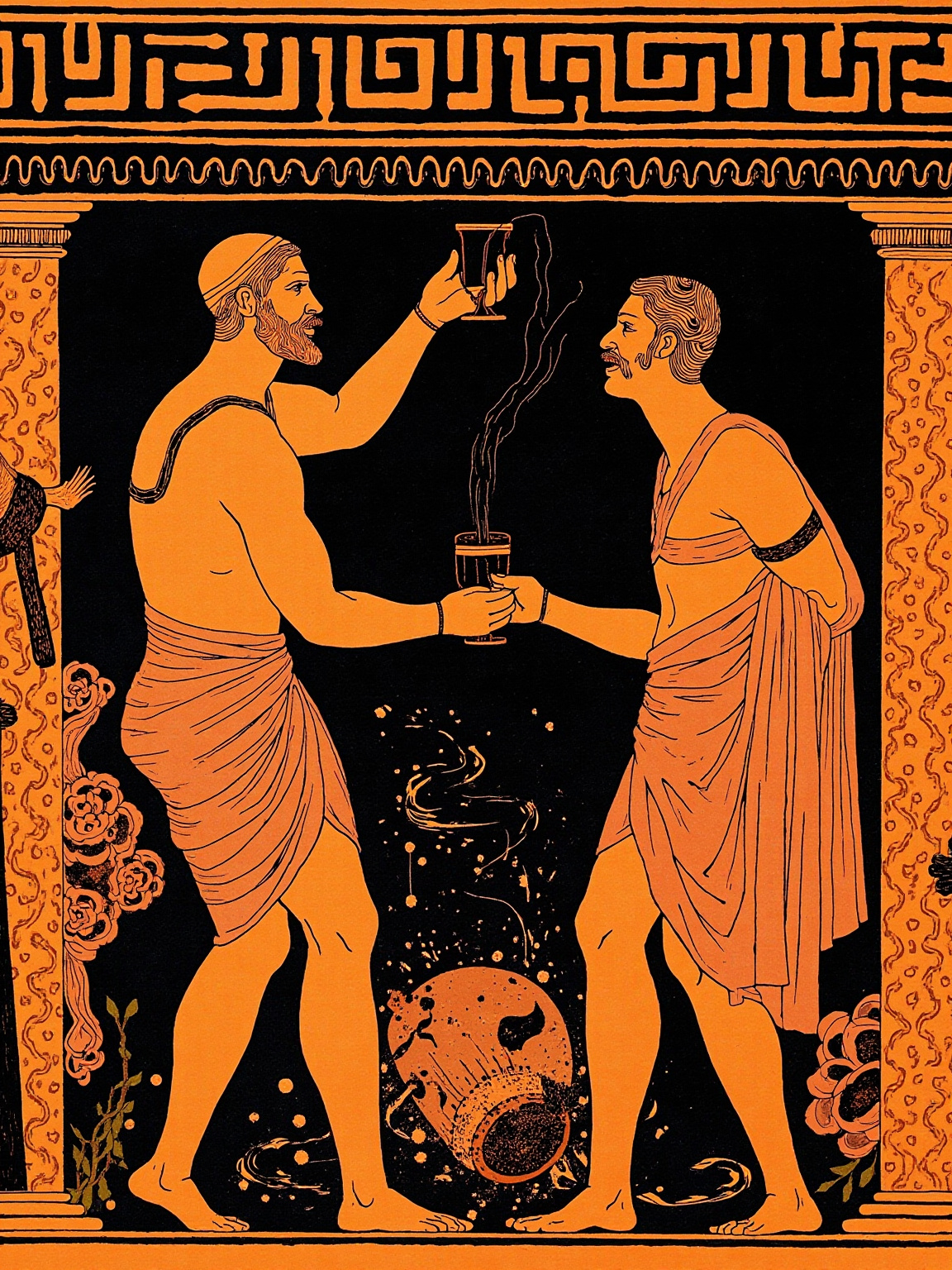
You see, I can get rid of the wine without drinking it all.
你看,不必喝完,也能把这一杯泼掉。
金句 · 卷六 · 第欧根尼碎杯
Diogenes pushed philosophy to the extreme of performance art. What he rejected wasn't a particular idea but the premise that philosophy has to be solemn and respectable in the first place. That is exactly why the Cynics have kept people uncomfortable for two thousand years.
Themes and Method
What this book is really arguing is that philosophy is not a profession but a way of living. None of its figures are abstract thinkers; they're people with bodies, specific quirks, specific deaths. One lives in a barrel, one falls in a well watching stars, one drinks poison, one teaches contentment in a garden. What a philosopher ate, what he wore, how he died, matters more here than what he wrote.

Wealth, if measured by nature's bounds, is great and boundless; if by vain opinion, very small.
以天性为度,财富广袤无边;以俗见为度,则微不足道。
金句 · 卷十 · 伊壁鸠鲁格言集
This is a book that makes philosophy read like biography: first you see Diogenes's barrel and lantern, then you hear him tell Alexander to get out of his sunlight, and only then do you realize a whole school's spirit can fit inside a single gesture.
Why This Book Works
What matters most is the imagery. Diogenes's most famous performance-art moments, living in a barrel, walking by daylight with a lantern, telling Alexander to get out of his sunlight, belong to this book alone; no other source gives you these pictures. Each biography also carries its own chapter of last words and sayings, leaving behind a stock of quotable lines that could each stand as a single illustrated page.
Why Read the Text Itself
A companion guide gives you the map. The text is the actual ground. The map tells you where the well is, where the barrel is, where the cup of hemlock is; in the text you can smell the damp clay, hear the crowd snickering, see the lines on Socrates' fingers as he takes the cup. There's one thing a guide can't give you at all: in Book Six, right after Diogenes tells Alexander off, an attendant offers him gold and silver, and he tosses the whole lot into the well beside him without a second thought. A guide can only gesture at that moment; you have to meet it in the text to feel its weight. Then there's the tangle of teachers and students running through all ten books, like an old tree that has grown its branches slowly over time, and you have to trace the bark yourself. Once you've seen these pictures, the details in the text finally grow roots.
Art Direction4 plates
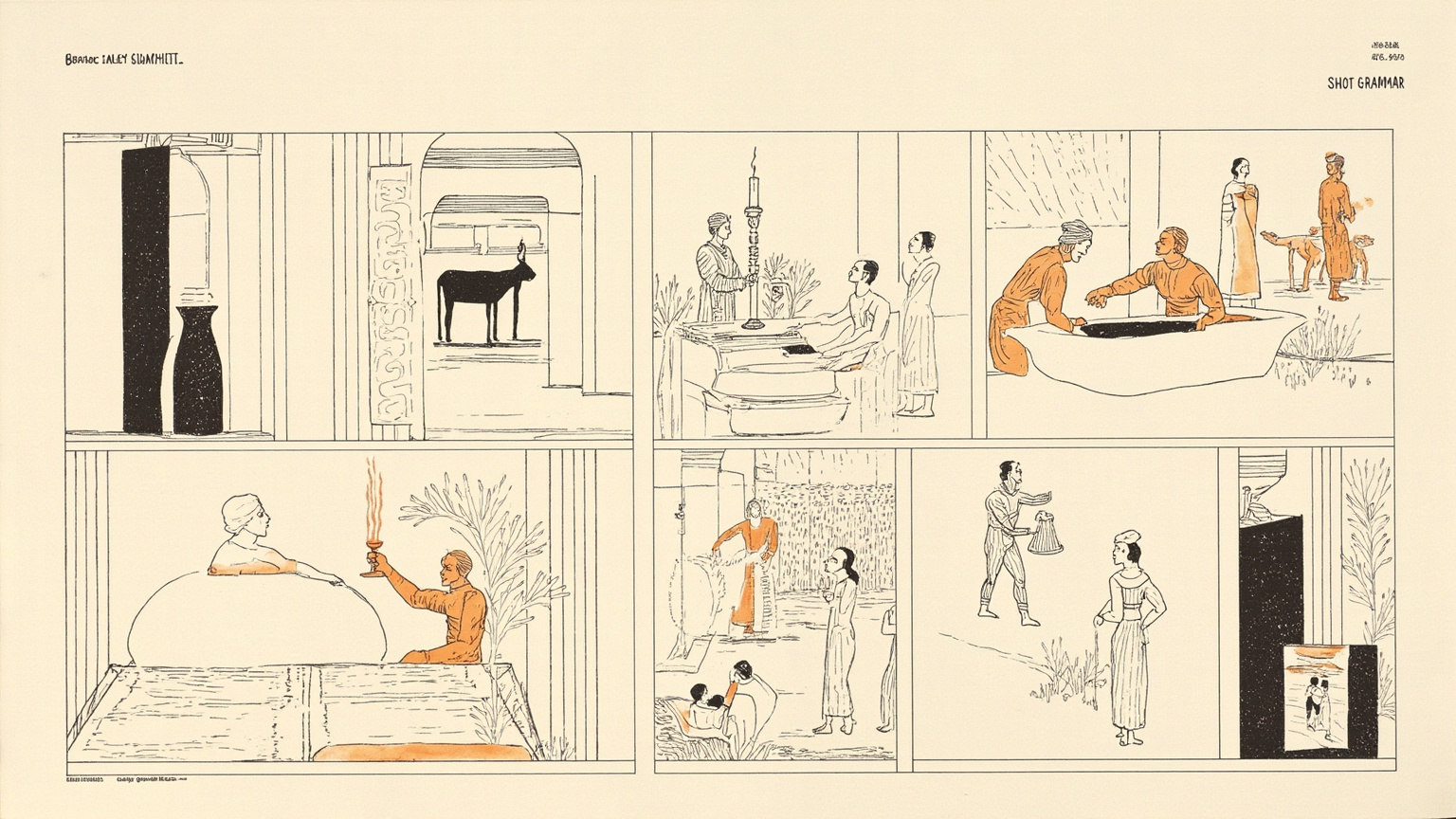
Before the guide was written, this book got a visual foundation — every illustration you just read grew out of it.