The most famous escape fantasy between the wars, which happened to invent a place name
Text and illustrations produced by the pipeline
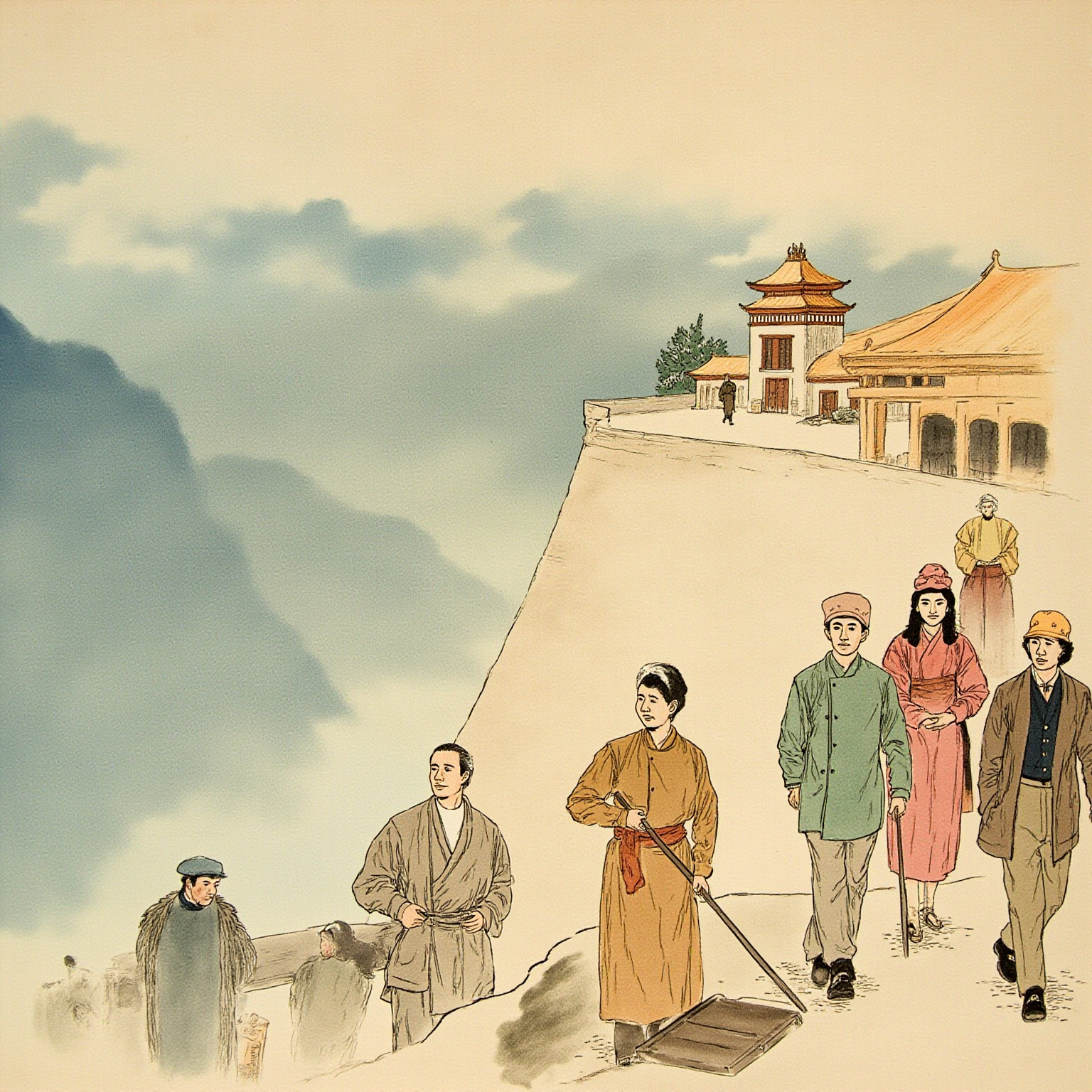
Remember this one gesture first: a Eurasian stewardess pulls the evacuation plane's door shut, and a flight that should have landed back in India banks, calmly, into the Himalayas. The four passengers have no time to ask why. There is Conway, the British vice-consul; Mallinson, his impulsive young deputy; a retired colonial governor; and an American financier passing through, plus the pilot, five men swallowed whole by the snow mountains. This is not a crash. It is an abduction. The story takes off from here, toward a lamasery none of them has ever heard of.
Lost Horizon is James Hilton's 1933 novel, published in English the same year by William Collins in London and Macmillan in New York. It is remembered for two reasons, and both belong in the history of literature and of publishing. First, it coined the word Shangri-La. A city in Yunnan, China later renamed itself after it, the most successful utopian christening of the twentieth century. Second, it was Pocket Book No. 1, the title that launched the 1939 paperback line and the first book to sell as a true mass-market paperback bestseller, the founding text of the format itself. The novel itself is short, cleanly built, dense with images, the kind of story built to be storyboarded frame by frame.
Conway is the type of Englishman shaped by a war-hero past and years in the diplomatic service, tired, composed, well-bred, the last of the four to come down from the mountain, and the one who, by the end, ages years in days on the streets of Calcutta and turns into someone else. Mallinson is Conway's young deputy, impulsive and headstrong, desperate to get back to England, scornful of the idea that the mountain keeps you young, until he falls for Isabella, a mixed-blood girl raised by a lama in the lamasery, and decides he has to take her with him. Bernard is the oldest of the four, a retired colonial governor, easygoing as a man on holiday, absorbed in a library the mountain's visitors have called the finest in the world. Brent is the only American, a financier from New York, doing sums from the moment he arrives, the first of the four to lose patience and want back to civilization.
The mountain is home to a community of long-browed lamas whose age seems to have stopped somewhere on the plateau. The oldest of them, the High Lama, turns out to be Portuguese, over two hundred years old, his English gracious and still faintly accented with home, and it is he who will hand Conway the mountain's secret before he dies. The one who leads them in is Chang, a young lama fluent in English, courteous, schooled in Western manners, whose job is to walk newcomers across the glacier and bring them through the gates. The world here runs on exactly two rules: outside is a civilization about to destroy itself, inside is a greenhouse keeping its seeds safe.


Knowing the plot does not make the novel itself expendable. A guide like this one gives you the map; the novel is the ground, especially its air. How Hilton uses light, water, the ring of bicycle bells in the street to write the physical sensation of time being handed back to your body, during those days Conway ages on the streets of Calcutta, no summary can give you that. The same goes for that held breath in the scripture hall, the moment a Westerner first turns a page and realizes he is holding the best surviving copy in the world. And this short 1933 book reads lighter than you would expect. It was built to be a few hours of escape, not a research project, so when you pick it up, read it at the speed it was built for.
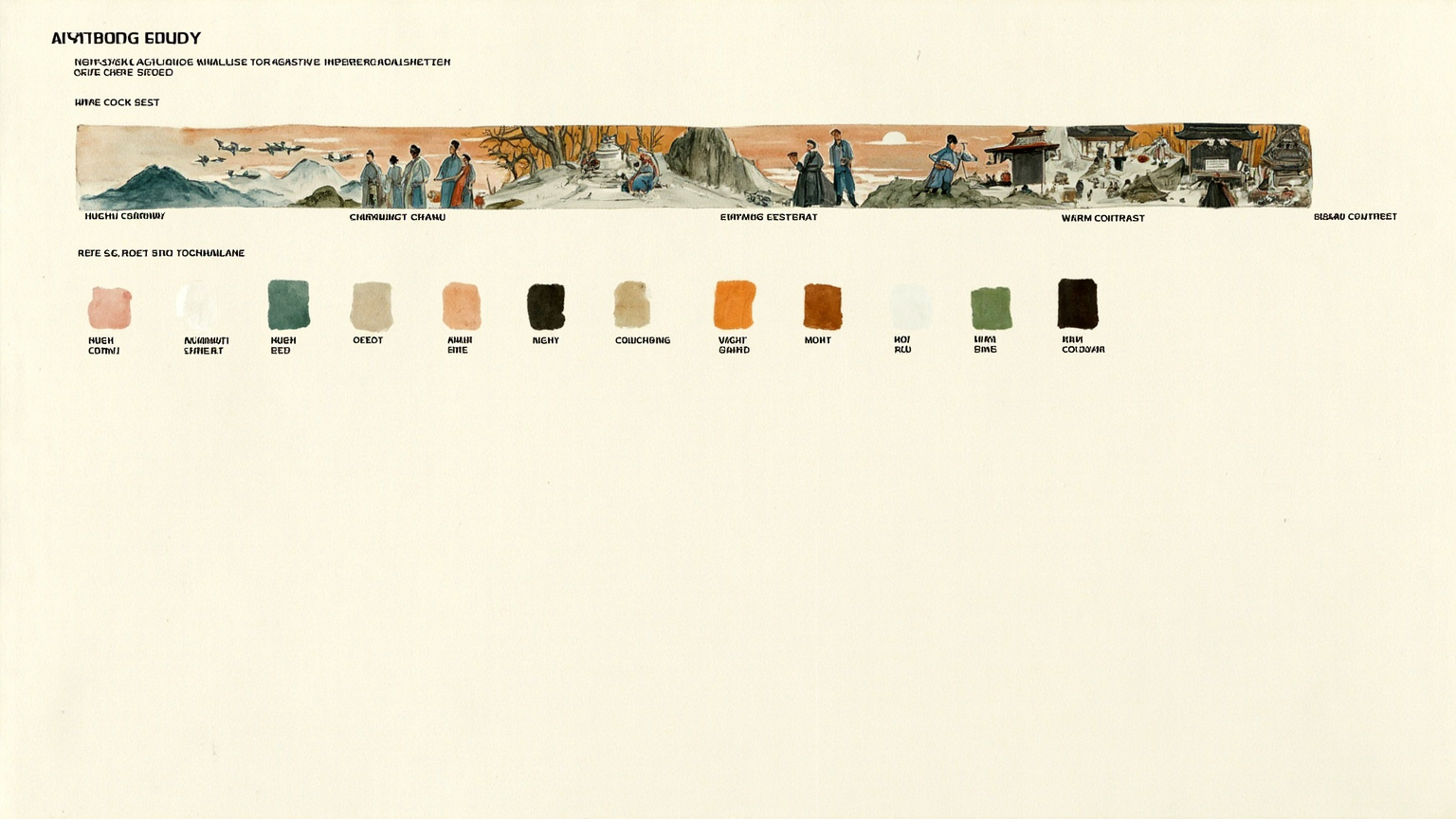
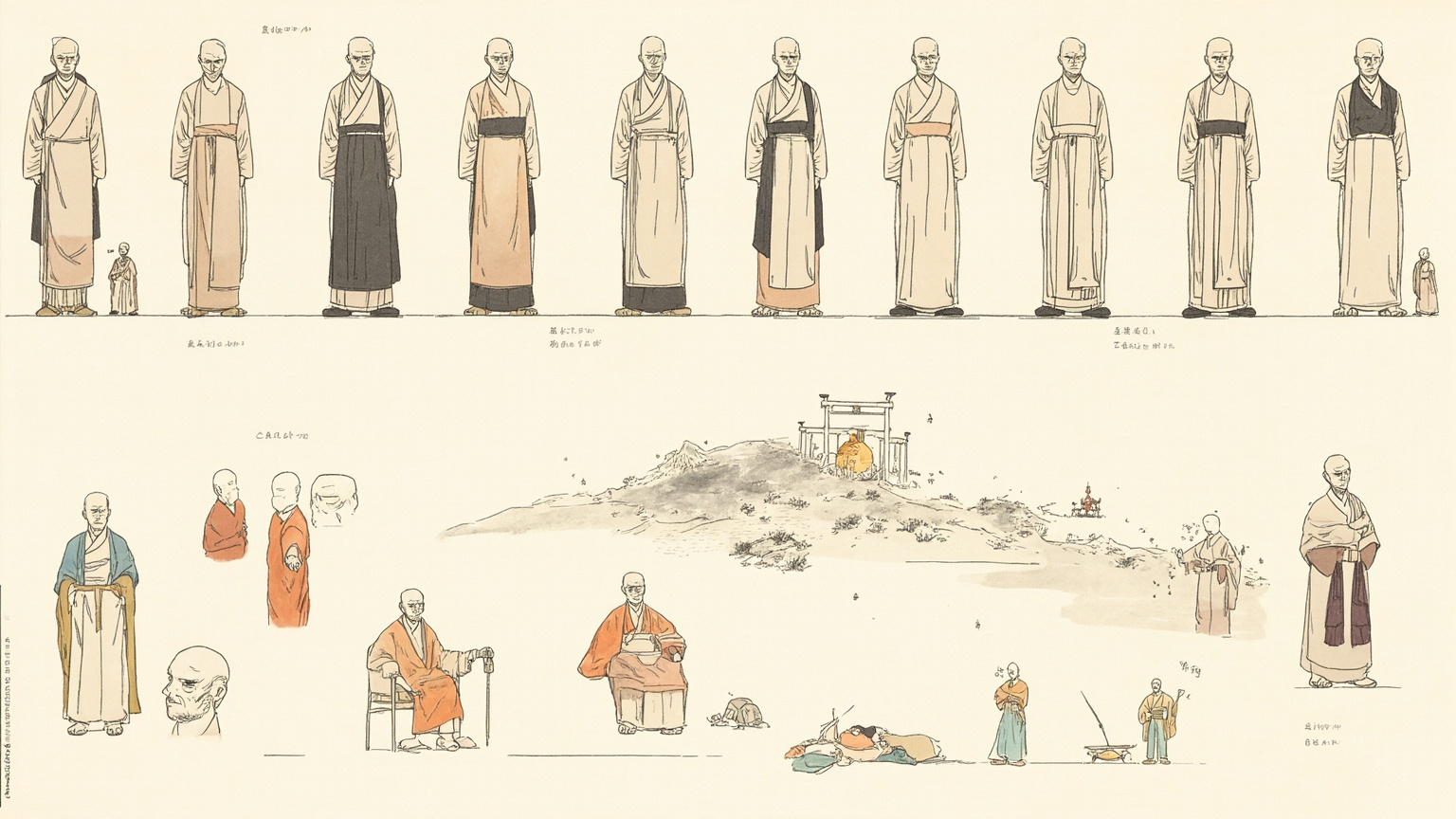
Before the guide was written, this book got a visual foundation — every illustration you just read grew out of it.
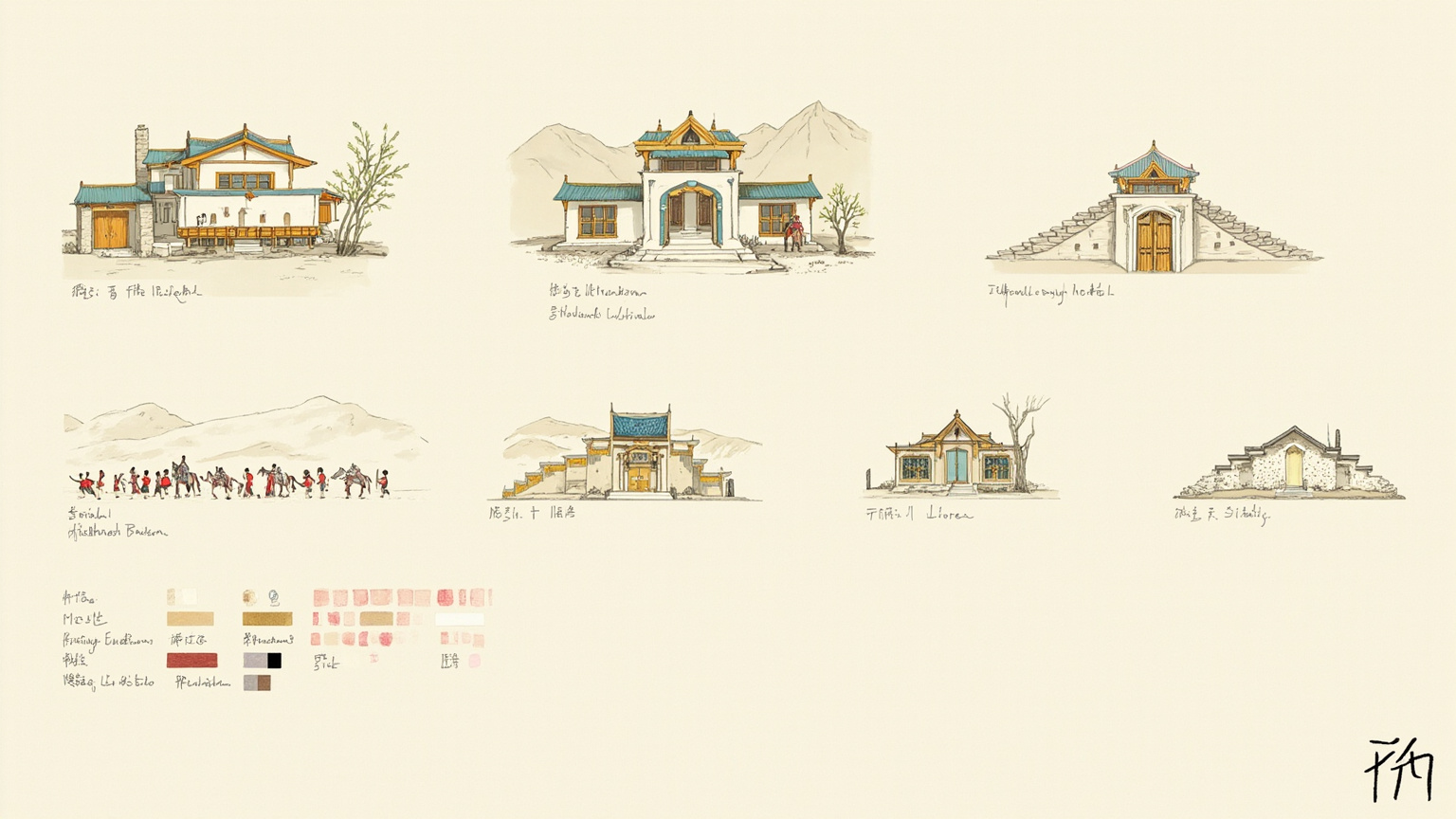
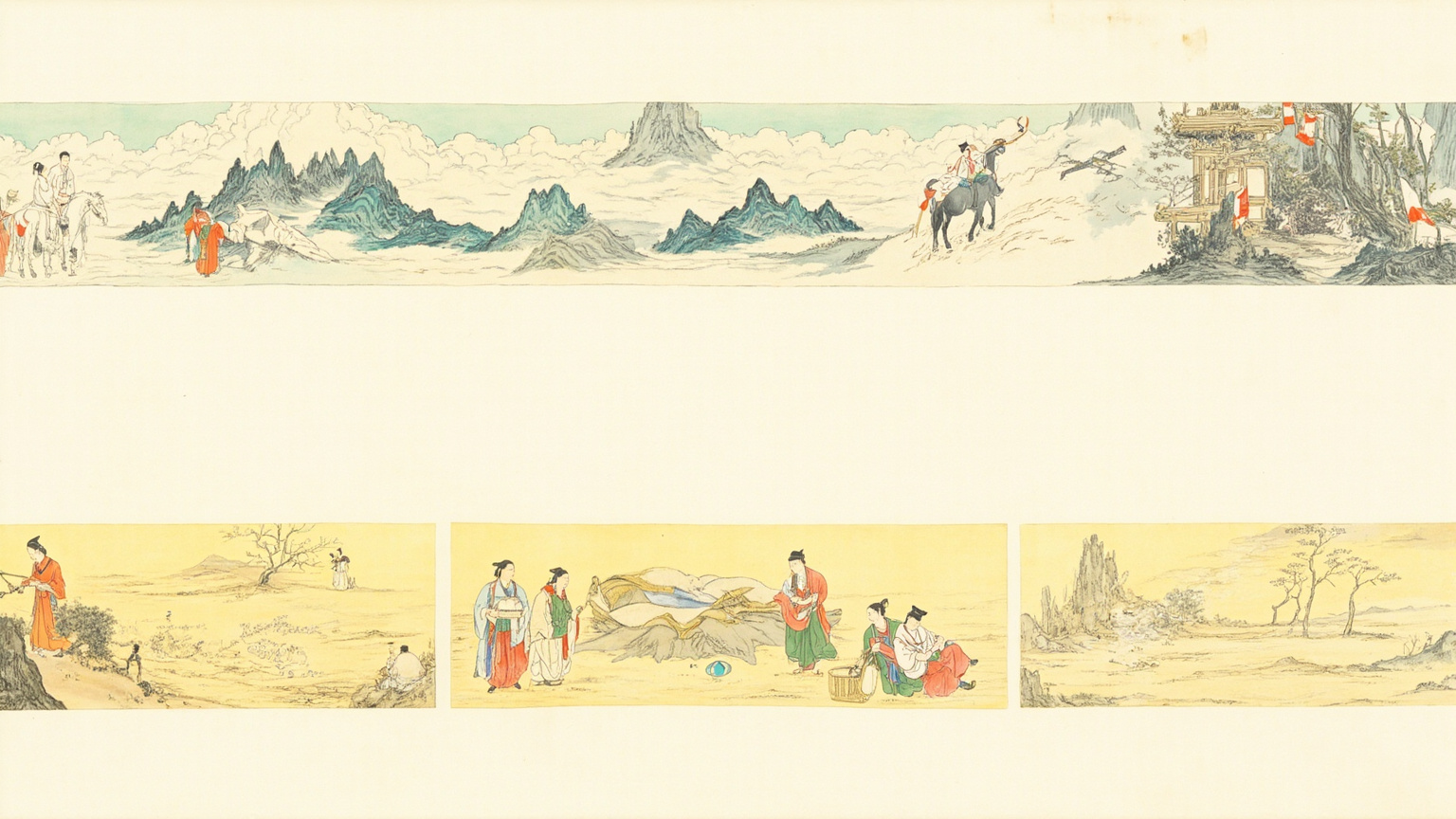
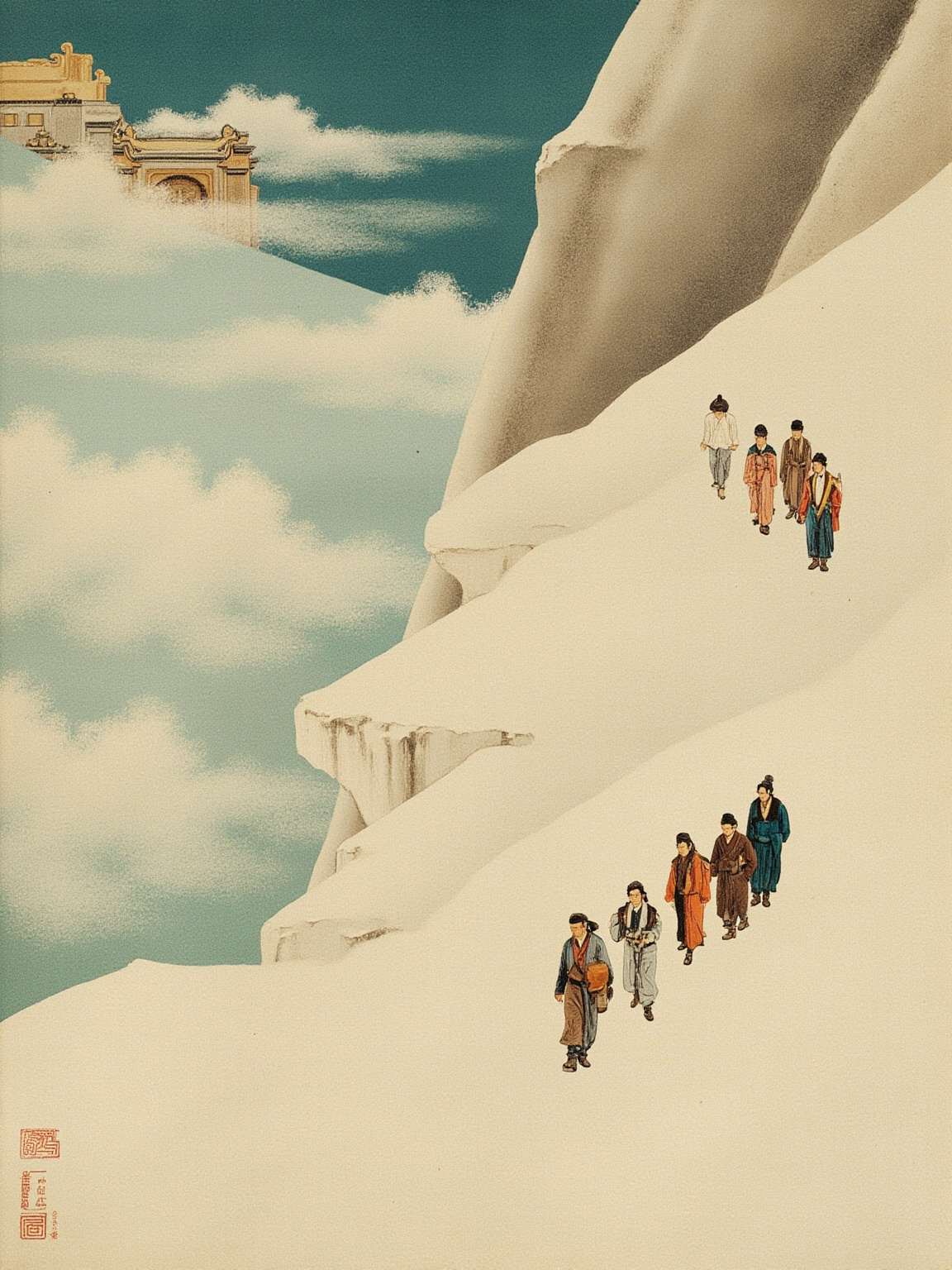
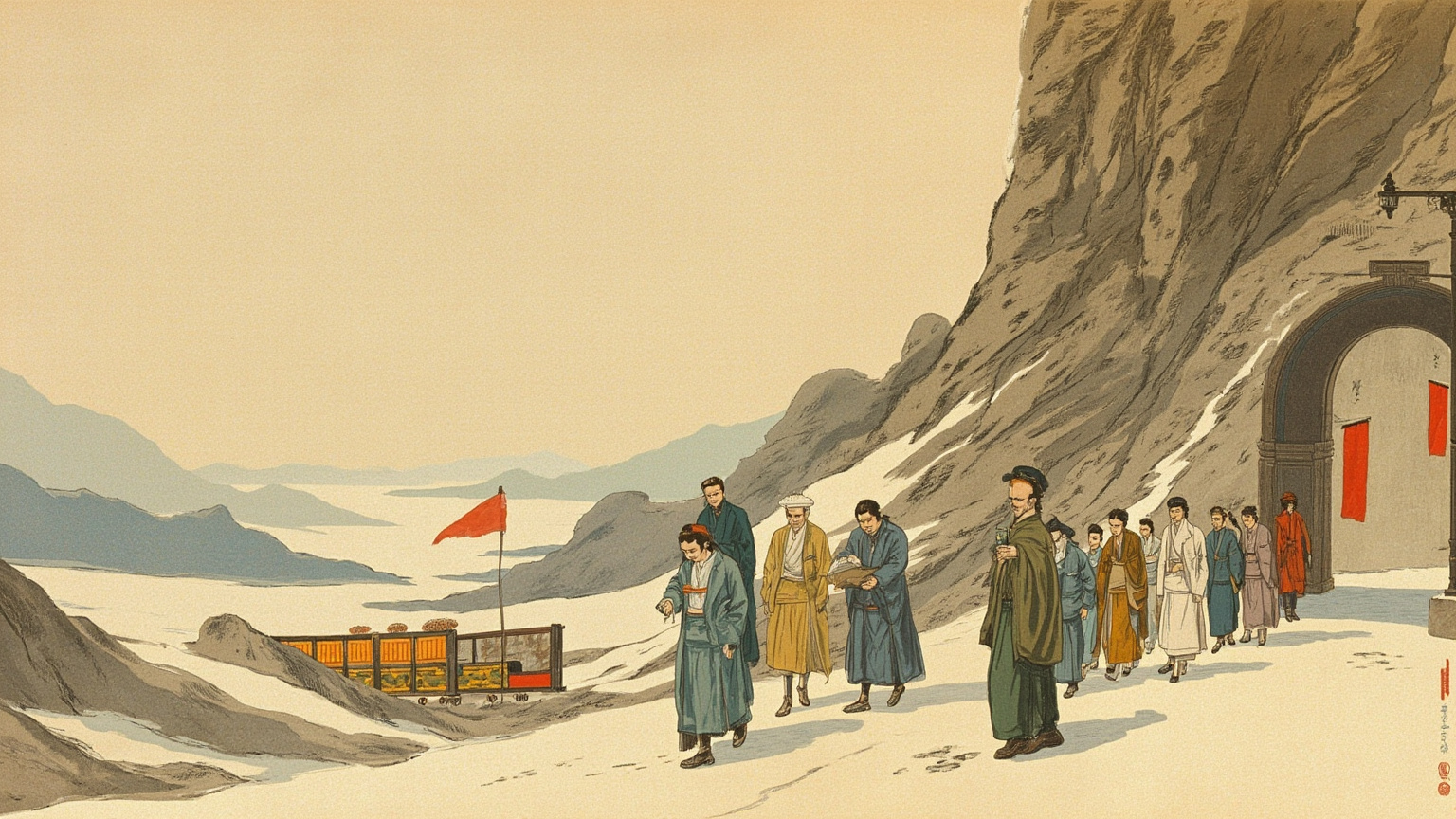
The story opens in a fictional princely state on the Indian border in the early 1930s, under British consular authority. Baskul is caught in a coup and a scramble to evacuate foreign nationals; the British consulate rushes an evacuation together, and the last plane out is hijacked. Conway is the last man to board, the one who should have been left behind and is instead scooped up by the stewardess at the final moment. The plane takes off, turns the wrong way, crosses the Himalayas, and goes down in the snow at the edge of Tibet. The young lama Chang and his attendants carry the five survivors out of the snow, across the glacier, into a place called the Valley of the Blue Moon.
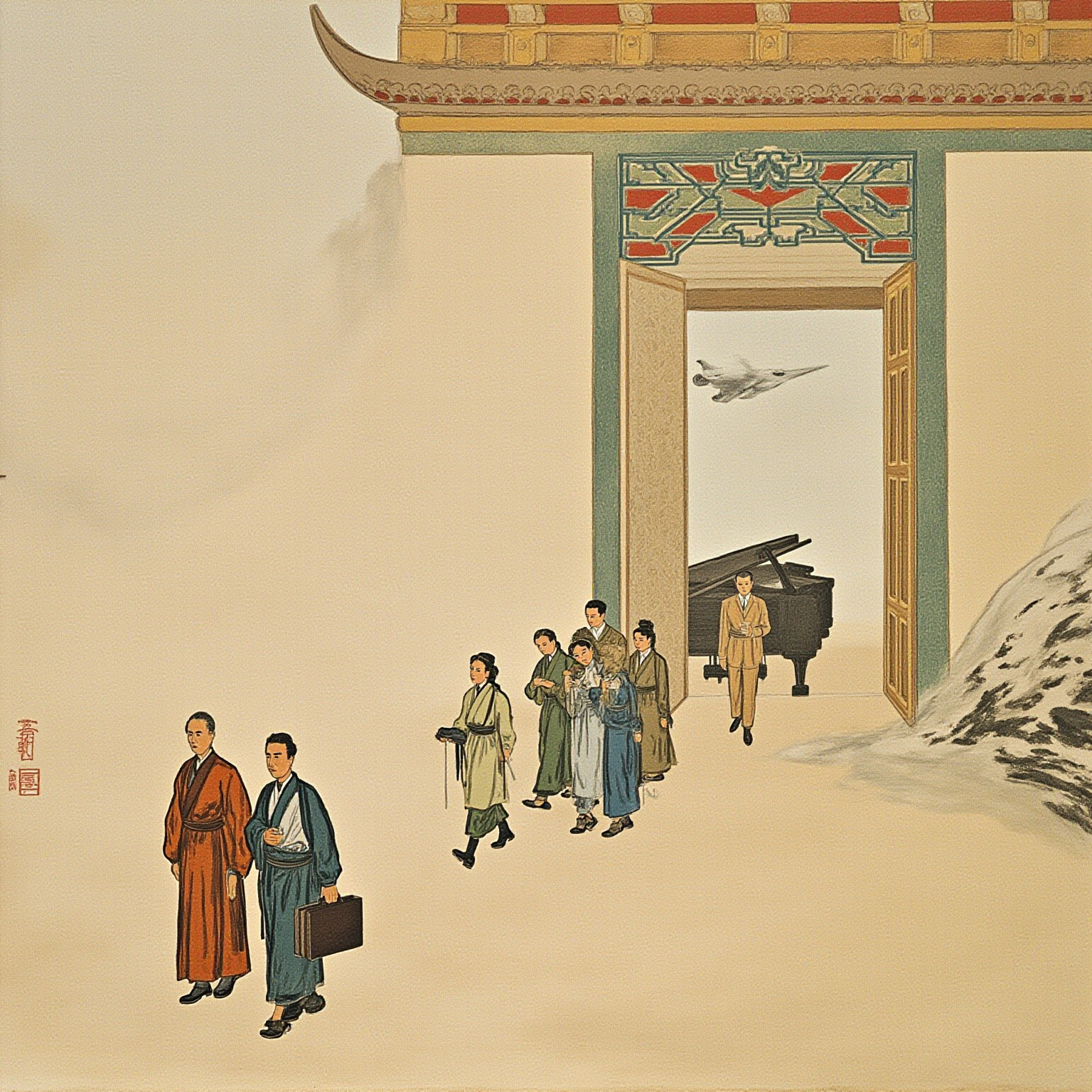
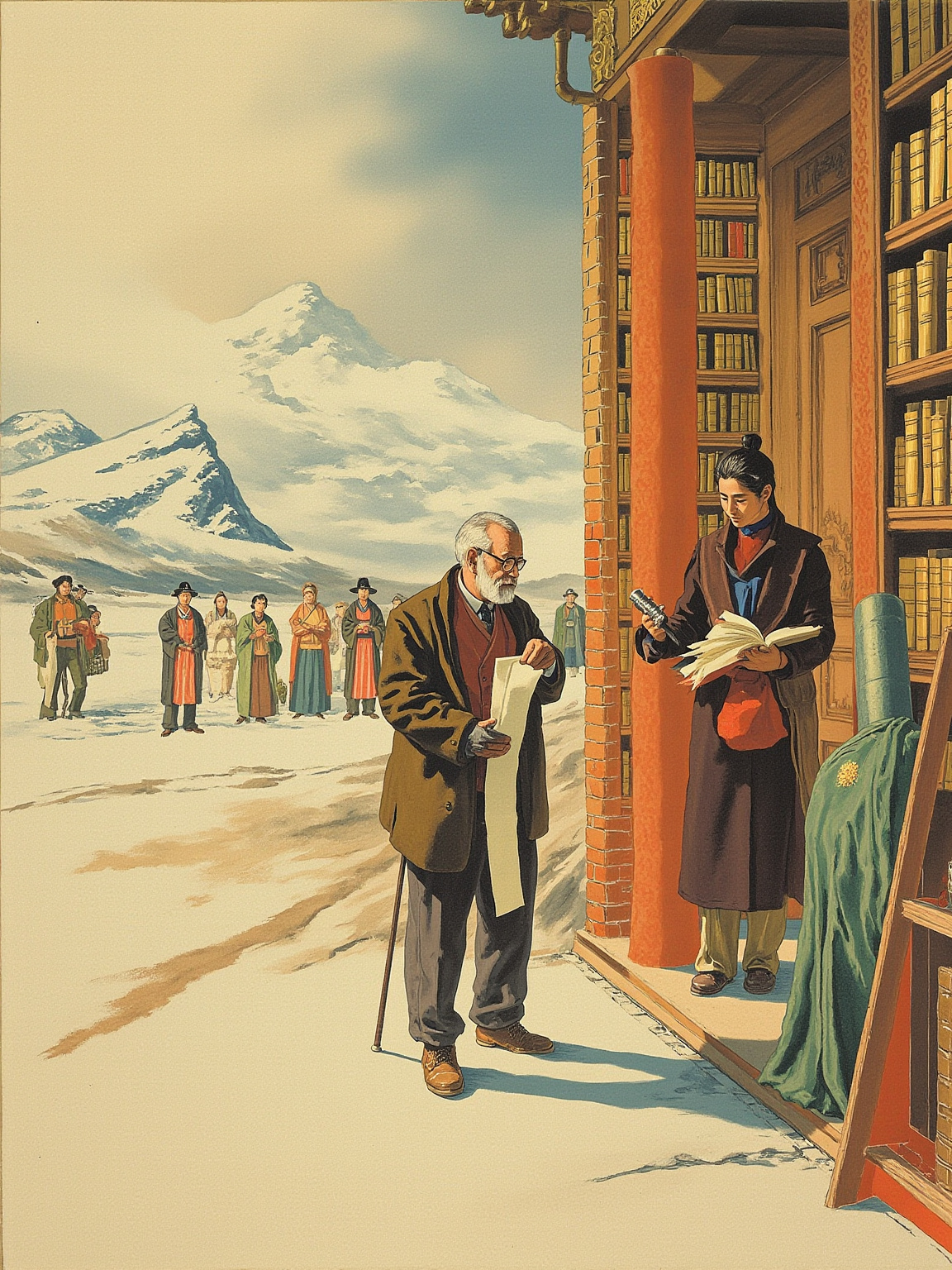
The lamasery sits at the center of the valley. From outside, it has everything a Tibetan monastery should have: sloped roofs, long-browed monks, prayer wheels. Walk inside, though, and something is off, the Tibetan shell hides central heating, bathtubs, a generator, a gramophone, a piano, and a library visitors have called the finest in the world. This mismatch is the novel's single best move: an Eastern facade packed with a greenhouse built for the whole of European civilization. Conway is entrusted with running the Karakal monastery's affairs and its grand scripture hall; Bernard buries himself in the library and never resurfaces; Brent starts doing sums within weeks and can't wait to get back down the mountain; Mallinson and Isabella meet somewhere in the lamasery and something catches fire between them.
They spend months in Shangri-La. Hilton does not write rituals or meditation into these months; he writes what hooks each of the four Westerners. Conway is hooked by the scripture hall, not by the scriptures themselves but by the unspoken promise behind them: the best things in the world have all been brought here and kept safe. Bernard is hooked by the library itself. Brent is not hooked at all; within the first month he starts calling everything fake, calling the lamas' agelessness an act, and he is the first to go down the mountain alone, back to civilization. Mallinson is hooked by Isabella, a colonel's daughter, European in feature, raised inside the lamasery, her English carrying an accent. Her romance is the one exception Shangri-La ever makes to its rule of never letting an outsider leave with someone from inside.
In these months Hilton does something clever: he lets the four men read the same mountain four completely different ways. Conway sees a calling. Bernard sees a library. Brent sees a ledger. Mallinson sees Isabella. It is the same mountain, but seen through four sets of eyes it becomes four different stories, and whichever one the reader follows decides what kind of person he becomes once he comes back down.
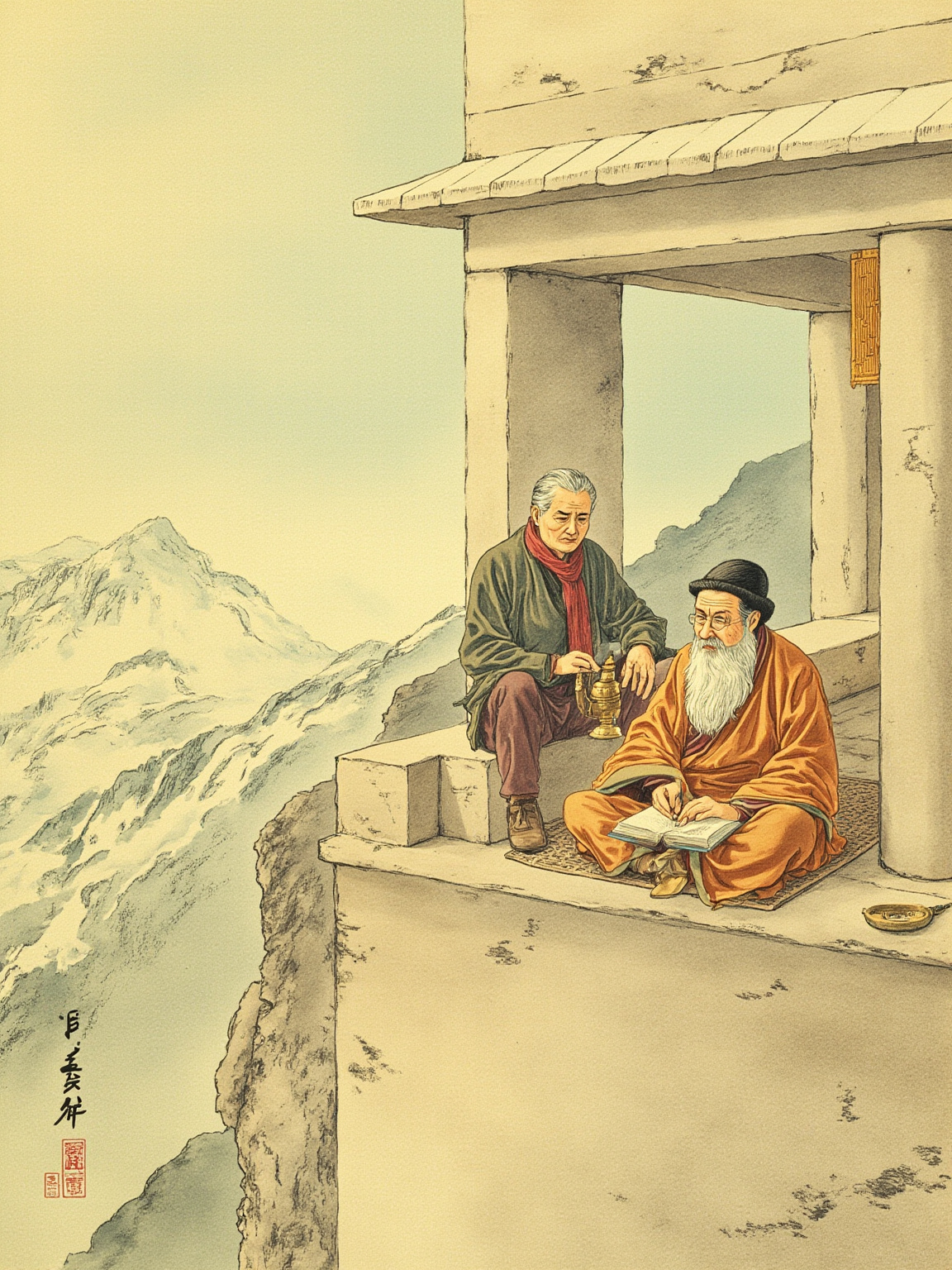
Months later, the High Lama, over two hundred years old, calls Conway to him alone. His dying charge is a single passage, and it says everything the book is for: the world outside is walking, step by step, toward its own destruction, and Shangri-La's work these past decades has been to bring the world's best books, its best music, its clearest minds into this mountain and keep them, so that once the destruction has passed, the survivors can carry them back down and plant them again. He puts the task, and the keys to the whole mountain, into Conway's hands.
This is a stance a certain kind of interwar European intellectual actually held: no longer believing this world could be improved, and so hiding civilization's essentials in a mountain to be rebooted after the end. Hilton keeps it restrained. He never lets the High Lama turn this into a speech; the old man says it quietly, seated on his cushion, and then he dies. That unhurried way of laying out the fate of the world is what lets a premise that could easily sound like wishful thinking hold up inside the book.
After the High Lama dies, the plot starts heading down the mountain. Bernard is asked to stay behind and mind Shangri-La, and he is glad to; there is almost no struggle in the decision. Conway resolves to leave, to carry the planting mission back into the world. Here Hilton plants one brutal detail: time inside the mountain had not touched Conway at all, and the moment he steps out of the Valley of the Blue Moon, the outside world's clock takes hold of him. Mallinson and Isabella follow soon after, and the three of them walk out of the valley together and back to Calcutta. Brent has already gone down alone, long before, and his story simply stops there.
Coming down is the book's genuinely cruel move. Conway ages fast on the streets of Calcutta, not gradually, but into another man within a few days. What Mallinson finds when he rushes back to the consulate is an old man carrying enormous unexplained debts, unable to account for who he is, and neither of them can ever find the way back up the mountain. Taken apart, the four men's descents run differently: Brent goes down alone first, and his story simply cuts off there. Conway, once he decides to leave, ages on the streets of Calcutta faster than Mallinson can make it back to him. Mallinson and Isabella follow after, and their ending is left unfinished in the original text. Bernard is asked to stay and never leaves at all. Shangri-La has sorted them, one by one.
Start with the craft. Hilton's prose is packed with images at a very high density: snow peaks, glaciers, a lamasery on a cliff, a scripture hall, a piano and a generator hidden inside the same building. Pair after matching pair of visuals stacked on top of each other, and the stacking alone builds a first-rate piece of cinema. He pins the whole story to two lines: a Tibetan shell wrapped around a greenhouse of European civilization, and time that stands still on the mountain but comes due fast at the bottom. Those two contrasts carry the entire book; nothing else is needed. And he keeps a utopia-of-escape novel short and clean, never letting his own sense of mission drag it into a sermon, which is still rare to find today.
Then there is its place outside literary history. It coined the word Shangri-La, giving a Western utopia a name people could actually say out loud. It was also Pocket Book No. 1 in the 1939 paperback line, the first book to become a genuine mass-market bestseller as a paperback, the founding text of the format. Understand those two facts and you understand why it keeps getting singled out in both publishing history and pop culture.
The mountain in this book is not Tibet. It is the reset button London, Paris, and Berlin wanted, between the wars, when they looked east. The Tibetan lamasery, the long-browed old lamas, the piled-up imagery of yoga and gold treasure, are a romantic projection the English of that decade laid over Tibet. The actual society of Tibet and the specific teachings of Tibetan Buddhism are not what this book cares about. Shangri-La is the West carrying a European utopia into an imagined Tibet: outside, a civilization about to destroy itself; inside, a greenhouse keeping its seeds safe. The first time I read this passage I went back and reread the High Lama's speech, and realized he was not talking about a mountain at all. He was describing his own generation's dignified surrender to the idea that this world could no longer be improved.
Shangri-La is not Tibet. It is a reset button interwar Europe borrowed from the East.