The Lotus Sutra (Saddharmapuṇḍarīka Sūtra / 妙法蓮華經) · Companion Guide
妙法莲华经
释迦于灵鹫山放白毫光、开三显一,多宝塔自地涌出、二佛并坐——一切权设终归唯一佛乘。
A Father Burns Down His Own House to Get the Children Out
Hold this scene in mind first. A great house is already on fire, the flames running from the east wing to the west, and inside, a crowd of children are playing, oblivious. Their father stands at the gate and shouts, but shouting does nothing, so he tries something else: outside, he says, there are carts waiting — a goat cart, a deer cart, and a great white ox cart, and whoever comes out first gets to ride. The children pour out in a rush. That reckless father is Shakyamuni Buddha. The children in the burning house are you and me.
What Kind of Book Is This
The Lotus Sutra, in full the Sutra of the Lotus Flower of the Wondrous Dharma, is the most widely chanted text in Mahayana Buddhism. The Sanskrit original took shape in India around the first or second century, and in 406 the monk Kumarajiva, born in the kingdom of Kucha, translated it into Chinese at Chang'an — seven scrolls, twenty-eight chapters, and from then on the standard text across East Asia. Lotus here means the white lotus: it rises out of mud untouched by it, the way the ultimate truth of the One Vehicle opens out of the mud of birth and death. No single author wrote it. Buddhist sutras are traditionally unsigned, compiled by disciples from what they remembered hearing. Kumarajiva is simply the man who carried it into Chinese — later writers called his pen one of the Eight Talents — but he was never its author.
Characters and World
The setting is Vulture Peak, near Rajagriha in India. Shakyamuni Buddha presides; the chief questioner is Shariputra, foremost in wisdom among the hearer-disciples, with the bodhisattvas Manjushri and Maitreya nearby, and eighty thousand monks, eight thousand bodhisattvas, and a whole retinue of gods, dragons, and other spirit-beings gathered around. One image runs through the entire sutra: a jeweled stupa rises out of the earth and hangs in the sky, and seated inside it is Prabhutaratna, a Buddha of a past age — Shakyamuni opens the stupa by his own power and sits down beside him. That stupa is the sutra's single most striking image, and the one the painters at Dunhuang returned to again and again in their narrative murals. Time here has no line to follow; nothing happens in a given year or month. The whole text unfolds its meaning through a run of parables, like a symphony built from seven movements.
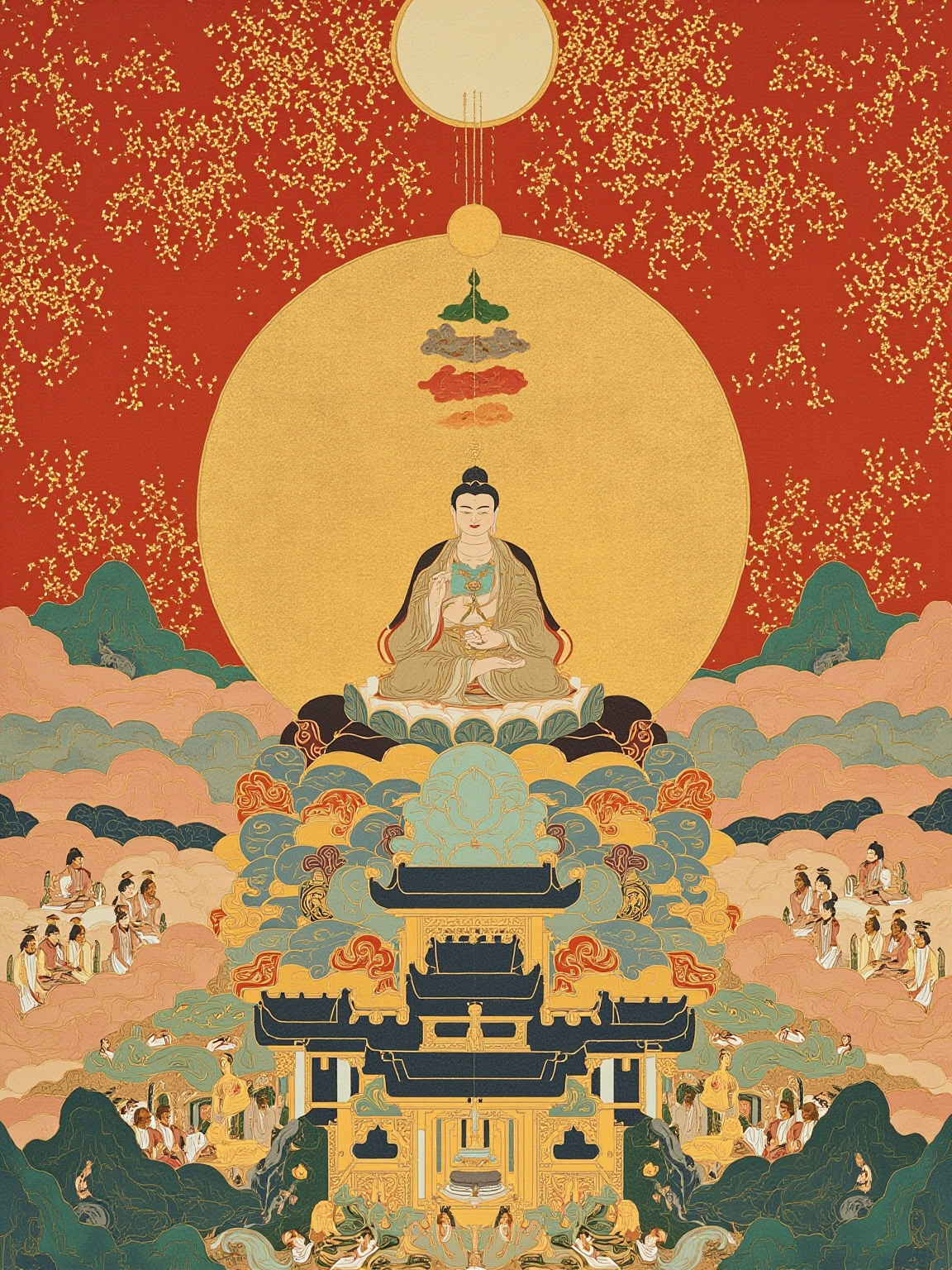
From between his brows the white tuft light streamed forth, illuminating the eighteen thousand Buddha-lands of the east, and sixfold tremors shook the world.
佛放眉间白毫相光,照东方万八千佛土,地皆六种震动。
金句 · 序品 · 放白毫光动地
Light and Tremor: How the Sutra Begins
The Lotus Sutra doesn't rush to explain anything. It opens with light. The Buddha enters meditation, a beam pours out from the curl of white hair between his brows, and it sweeps across eighteen thousand Buddha-lands to the east, shaking the ground six ways as it goes. This isn't a miracle for its own sake. It's a question mark planted in front of the eighty thousand people watching — what comes next is too large to explain in the dark, so every lamp in the house gets lit first. That's how the assembly begins, and how the whole sutra begins. I remember stalling out the first time I read this: a text about the deepest teaching opens with a light show.
There Is Only the One Vehicle: The Buddha's First Words
With the lamps lit, the Buddha speaks, and his opening line sets the key: the wisdom of the buddhas runs too deep, and the gate to it is too narrow. He appeared in this age of the five turbidities for one great purpose alone — to open the Buddha's own insight to all beings. To make that purpose workable, he split the single vehicle into three: the vehicle of the hearers, the vehicle of the solitary realizers, and the vehicle of the bodhisattvas. The three vehicles are steps, not the destination; only the one Buddha-vehicle is final. This move has a name — opening the provisional to reveal the real, opening the three to reveal the one — prying open the door of expedient means so people can see what stands behind it. Centuries later the Tiantai school, sorting the Buddha's teachings into five periods and eight categories, ranked the Lotus Sutra as the highest pronouncement, the Perfect Teaching at the top of the ladder, and built its whole school on that ranking.
The Burning House and the Three Carts: The Sutra's First Great Parable
The light show is over, but no one dares pick up the thread. Shariputra asks three times for the Buddha to explain further, and three times the Buddha holds back. When he finally gives in, he answers with a story. The burning house — the wealthy father, the crowd of children, the goat cart and the deer cart and the ox cart, the great white ox cart waiting outside — is the single most quoted passage in the Lotus Sutra. The goat cart and the deer cart are the bait; the ox cart is the prize; the great white ox cart outside the gate is the Buddha's own insight in its true form. What makes this move so good is what it does to the word expedient: instead of treating it as a lesser thing to be discarded once the truth arrives, the parable makes it a synonym for compassion. The Buddha's skillful means is a father crouching down to speak in words his children can understand.
Once Shariputra hears the parable, he says he understands, and offers one of his own: the parable of the poor son. A rich man's son runs away from home, drifts for years, and ends up destitute. His father recognizes him from a distance and wants to hand him the family fortune outright, but he holds back — how could a beggar simply believe he was born to all this? So instead the father sends for him quietly, puts him to work as a laborer, promotes him step by step to steward, and only then, bit by bit, shows him the estate is his. This is my favorite parable in the whole sutra: the Dharma doesn't drop the truth in your lap. It walks to wherever you happen to be standing.
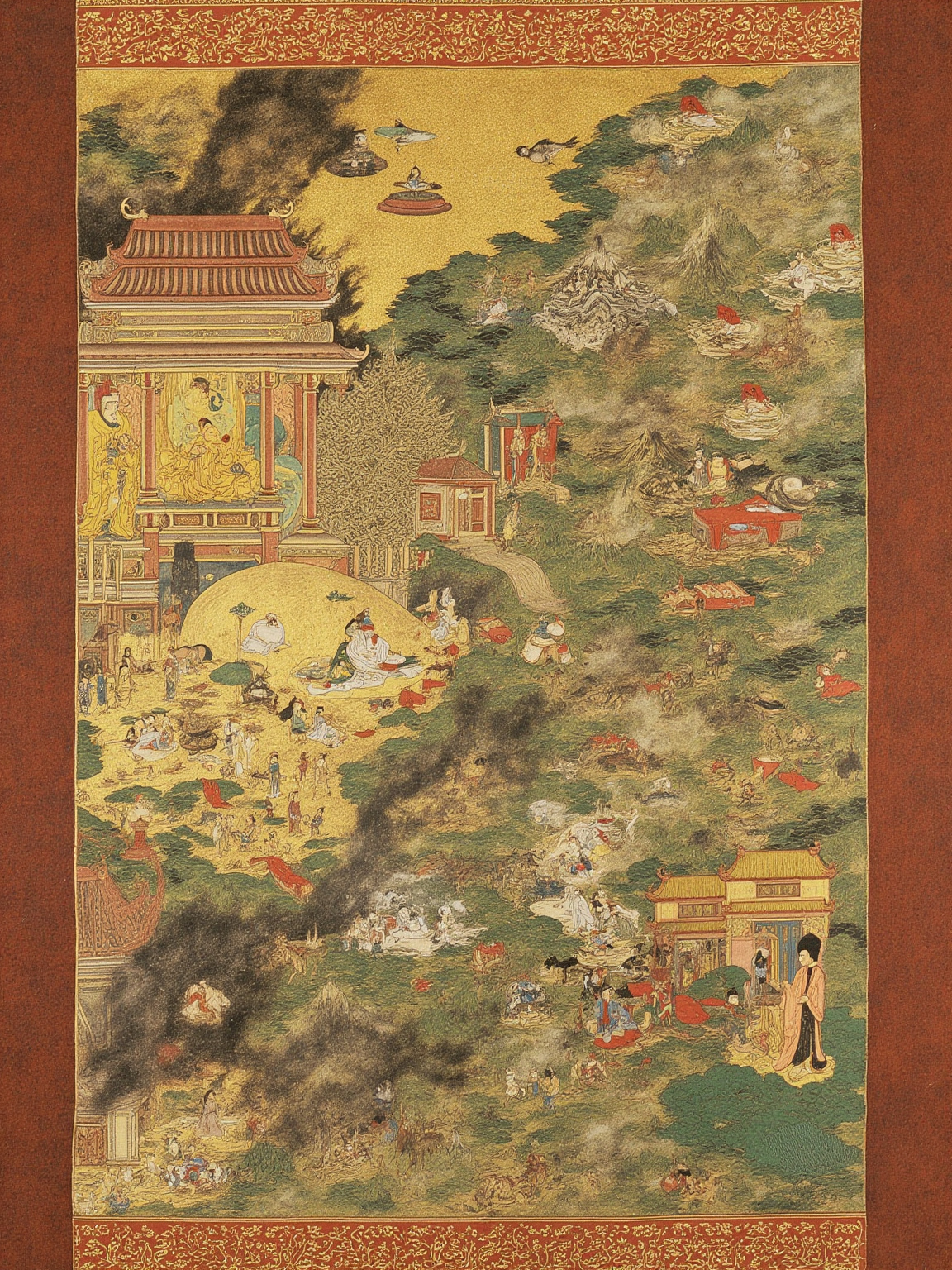
The house is on fire, yet the children within, careless of peril, run to and fro playing at their games.
三界无安,犹如火宅,众苦充满,甚可怖畏。
金句 · 譬喻品 · 火宅三车
The Phantom City: A Rest Stop Is Not Home
The Buddha keeps telling stories. In the chapter of the Phantom City, Purna — foremost in preaching among the ten great disciples — tells of a group crossing five hundred yojanas of dangerous road. The travelers grow too tired to go on, and a city appears ahead of them, offering rest. Once they've recovered and set out again, the city vanishes — it was a city the Buddha had conjured, purely to let them rest. The point is direct: the nirvana reached by the hearer's vehicle is a rest stop the Buddha built on purpose, not the destination. Stopping there to catch your breath is fine; staying there is mistaking a waystation for home. This parable pushes the idea of opening the provisional one step further — the three vehicles aren't just different rungs on a ladder, but the very act of stopping has to be questioned too.
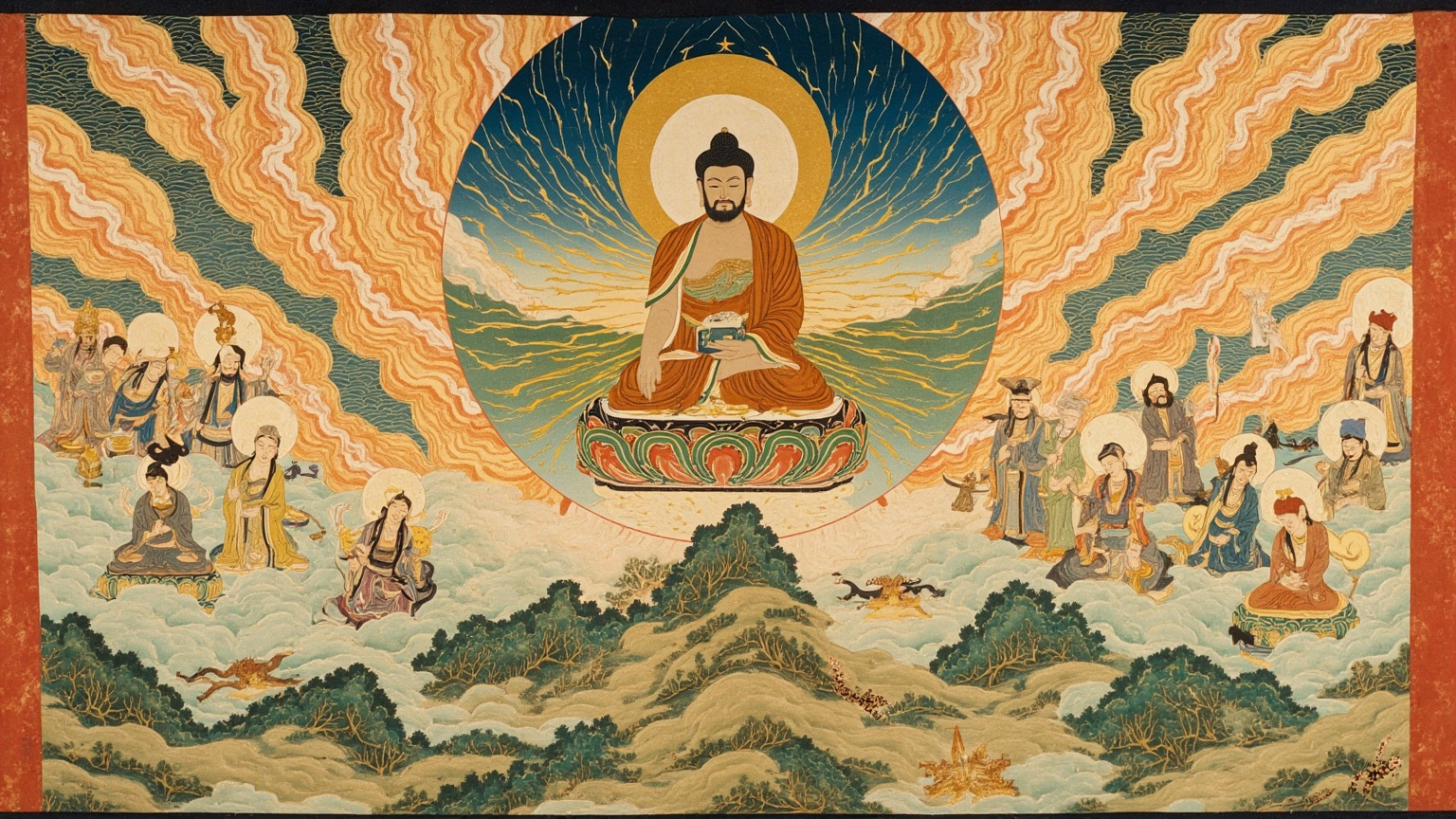
I, the guide, by my miraculous power, conjure up a resting-city, that the weary may pause and take heart.
导师以方便力,于险道中化作一城,息其疲怠,然后灭之。
金句 · 化城喻品 · 权设歇处
The Stupa of Many Treasures Rises: The Sutra's Signature Image
Partway through the assembly, something happens that appears nowhere else in the Buddhist canon. The ground splits open, and a jeweled stupa containing the relics of Prabhutaratna — a Buddha who reached enlightenment countless incalculable eons ago — rises out of the earth and hangs in the air. The Buddha opens its door with his own power, and Prabhutaratna makes room on his seat and invites Shakyamuni to sit beside him inside the stupa — two buddhas, seated together. Prabhutaratna had once made a vow: wherever the Lotus Sutra is preached, he would appear to bear witness to it. This scene became the sutra's visual fingerprint, painted over and over in the narrative murals at the Mogao Caves in Dunhuang. Readers may not remember every parable, but they remember the stupa that rose out of the ground.
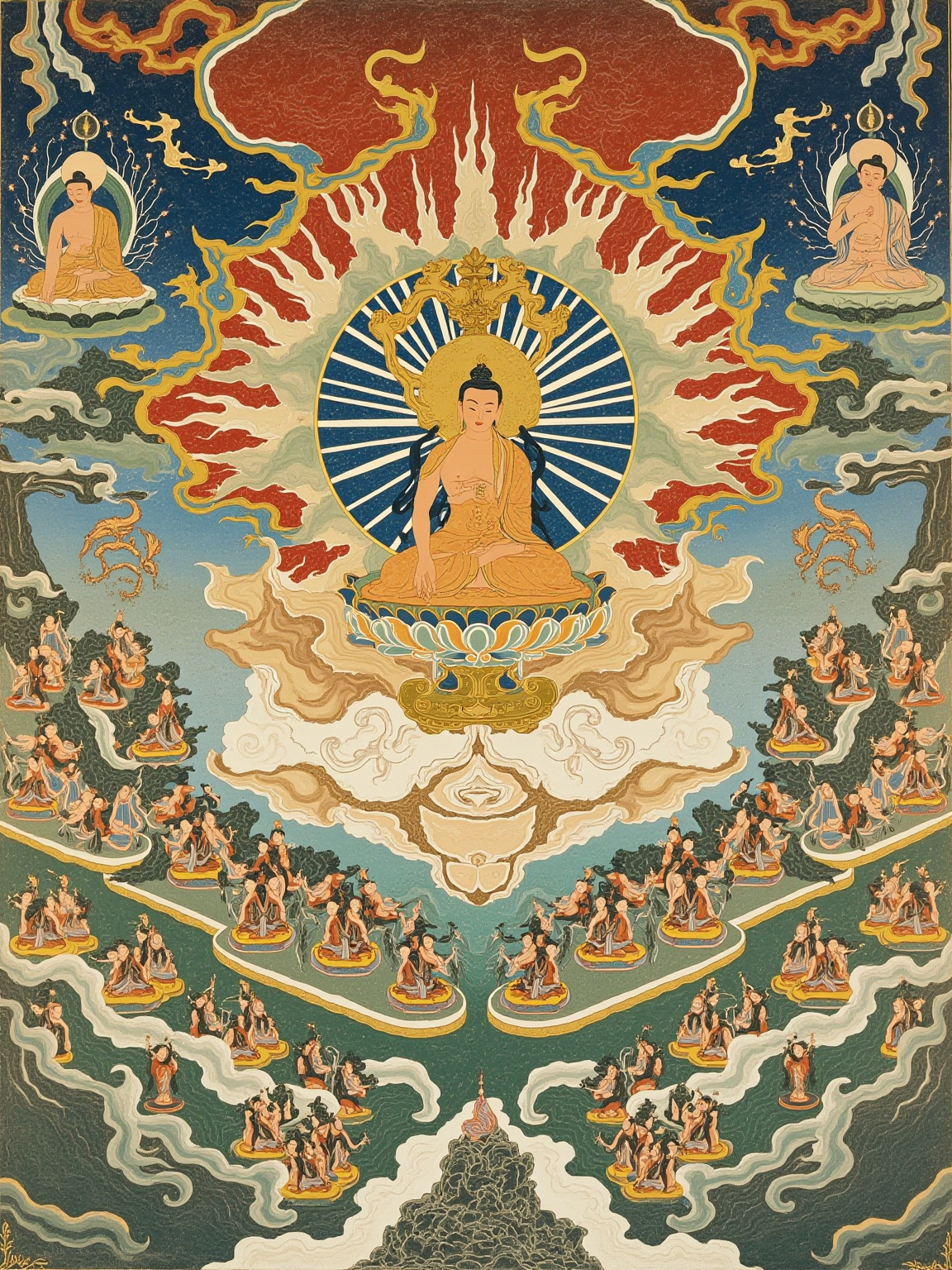
From the ground there springs forth the stupa of Many-Treasures Buddha; suspended in empty space, two Tathāgatas sit side by side in one tower.
多宝佛塔从地涌出,悬于虚空,二佛并坐于塔中,分半座以证此经。
金句 · 见宝塔品 · 二佛并坐
The Dragon Girl Offers a Jewel: Can a Woman Become a Buddha
The Devadatta chapter throws out one of the sharpest questions in Mahayana Buddhism: can a woman become a buddha? Can an animal? And how long would it take? The answer stops everyone cold. The Dragon Girl offers the Buddha a jewel and attains buddhahood on the spot. Her line cuts straight to it: entering the Dharma is a matter of the heart, not the body, of faith, not form. This isn't a side anecdote — it's the doctrine stated outright. Every being can be assured of buddhahood under the one Buddha-vehicle, regardless of sex, caste, or capacity. The later folk habit of painting Guanyin as a woman, or telling the Dragon Girl's story as a tale about a clever little girl, all came afterward. What the sutra itself hands down is a path to buddhahood that doesn't ask where you started.
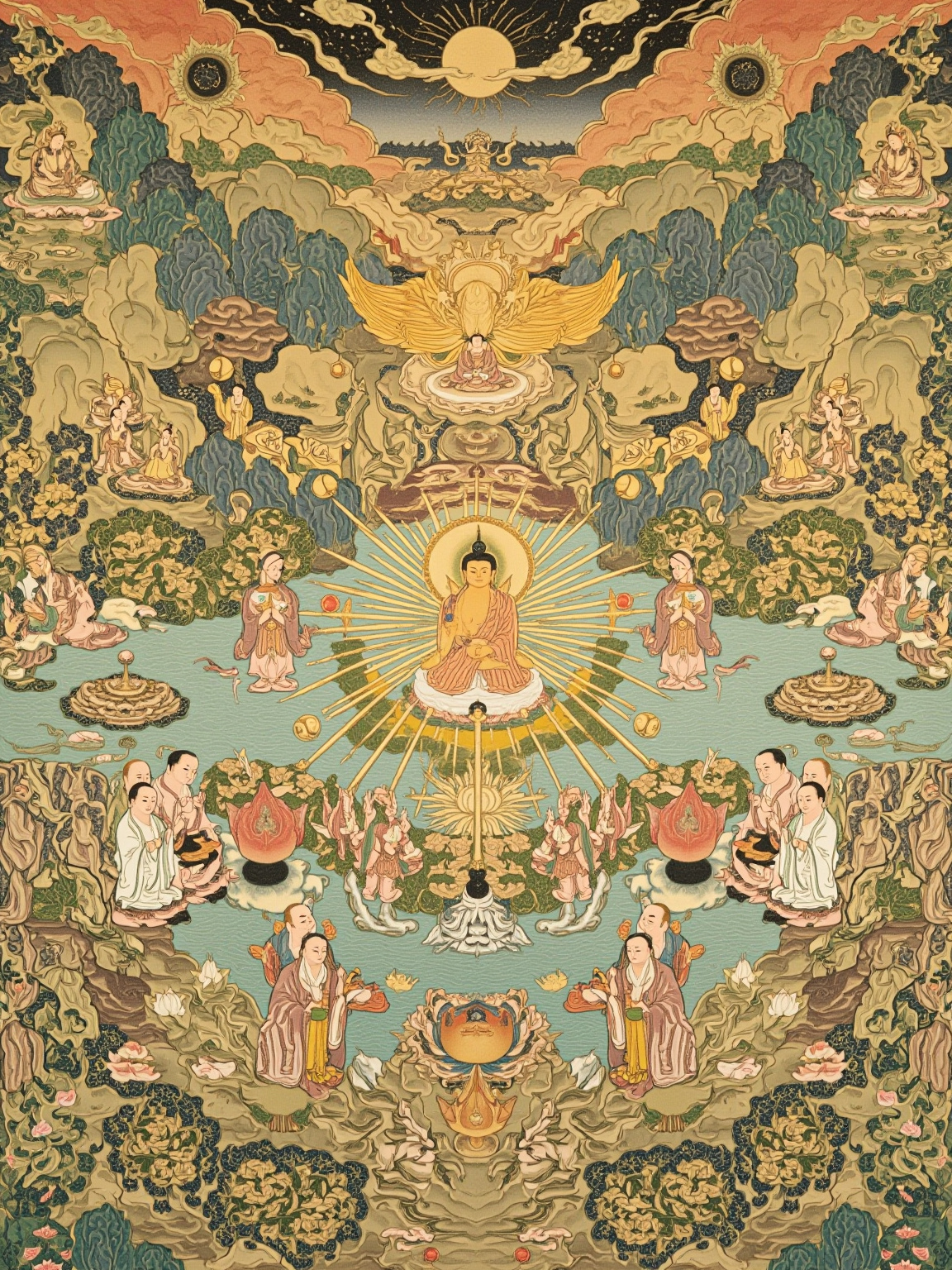
When the dragon-king's daughter offered her jewel to the Buddha, she straightway awakened to the Supreme Way — the Dharma looks to the mind, not to the body.
龙女以一宝珠献佛,当成佛道。佛道悬隔,悟不在身,而在信心疾迟之间。
金句 · 提婆达多品 · 龙女献珠成佛
Manifesting Everywhere: Guanyin, Kshitigarbha, and Samantabhadra Close the Sutra
The second half of the Lotus Sutra spends a long stretch on a single question: once the Buddha is gone, who protects the teaching? The chapter on the Bodhisattva Avalokiteshvara's Universal Gate says he answers every cry for help by taking whatever form the sufferer needs to see, and lists fourteen kinds of fearlessness granted to those who call his name. This chapter circulates on its own across the Chinese-speaking world as the Guanyin Sutra, and it's the root of the folk saying that every household keeps Guanyin. The chapter on the Bodhisattva Kshitigarbha's Fundamental Vows closes with his vow to protect the teaching to the end: not until hell stands empty will he claim buddhahood, not until every being is saved will he accept enlightenment. And the Bodhisattva Samantabhadra's chapter of encouragement closes the sutra outright — he arrives riding a white elephant to stand witness for everyone who will chant this text afterward. The order in which the three bodhisattvas appear traces the whole chain of protection, from the sutra bearing witness to itself to its life in the hands of everyone who comes after.
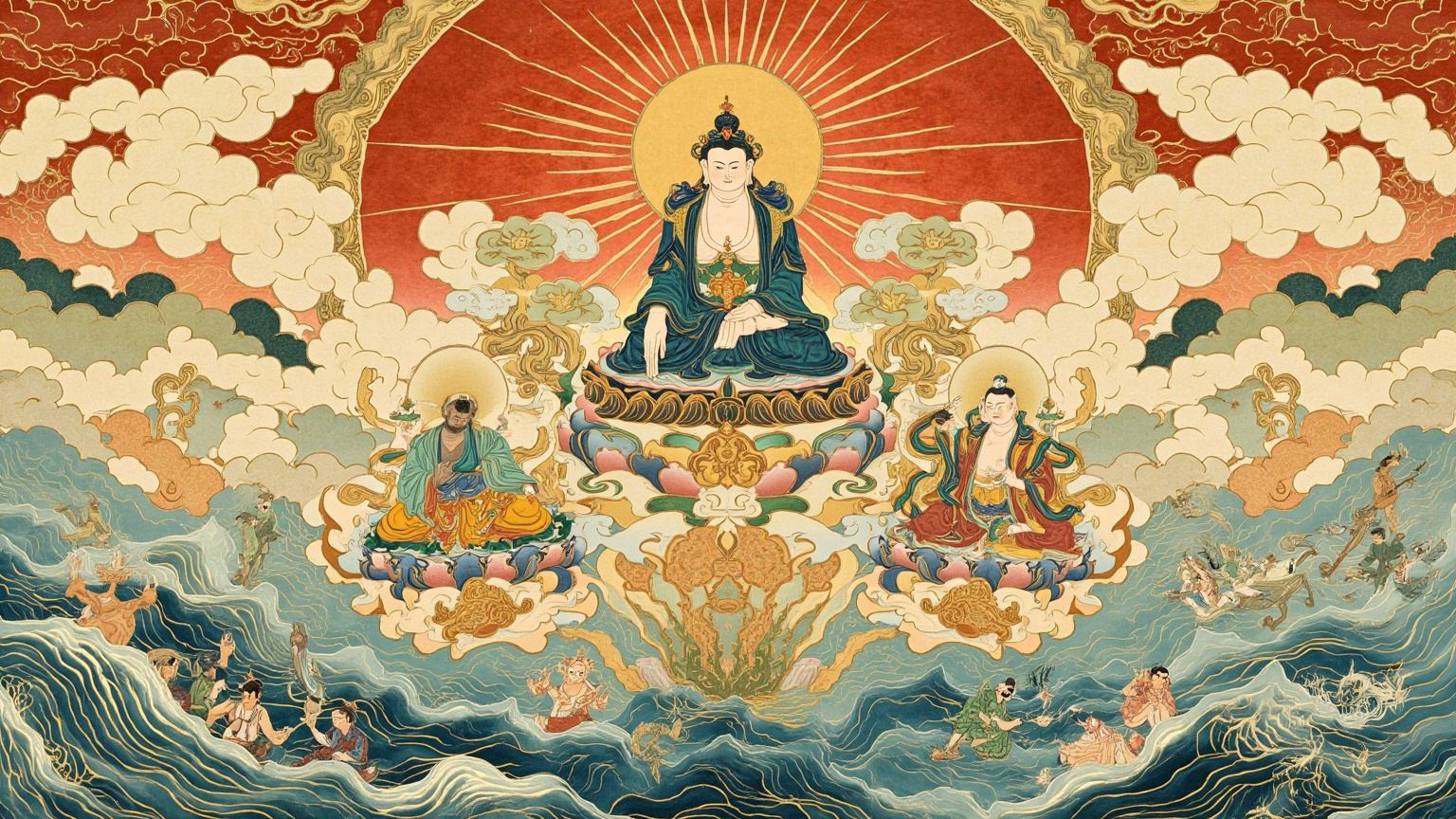
Avalokiteśvara, of thirty-two responding forms, saves the suffering of every land; in whatever guise a being may be saved, in that guise he appears to teach.
观世音菩萨以三十二应身,寻声救苦:应以何身得度者,即现何身而为说法。
金句 · 观世音菩萨普门品 · 普门示现
Theme and Craft: What It's Actually Saying
One claim carries the whole Lotus Sutra: the three vehicles are all expedient means, and only the one Buddha-vehicle is final. Around that claim it builds the largest set of parables in any Mahayana scripture — the burning house, the poor son, the phantom city, the jewel in the robe, the medicinal herbs, the physician and his sons — seven movements circling back to the same point. The Tiantai school later ranked it the supreme pronouncement of the Perfect Teaching, and the Nichiren school built its entire practice on it. It has been chanted for sixteen hundred years, and not only on the strength of doctrine. The parables have a literary life of their own — the father in the burning house still lands, today, on anyone who has ever raised a child.
Its finest craft move is opening the provisional to reveal the real. It never disowns the lesser vehicles or brands the hearers and solitary realizers as lost. It says: that teaching came from the Buddha too, and it's good too — it's just not the end of the road. That move still holds up for a modern reader. Any system mature enough to rank its own expedient truths against its ultimate one, without disowning the lesser ones, is rare and worth noticing. Second, the sutra carries its central claim through parables rather than argument. A father burning down his house, children running out the door — that image reaches a reader before any scholastic language could.
Knowing the Plot, It's Still Worth Reading the Text
A guide gives you the map; the text itself is the ground. Kumarajiva's translation moves in a rhythm of four, five, and seven-character lines falling in and out of step, and that rhythm alone rewards slow reading. The passage where Shariputra asks three times and is refused three times almost holds its breath, and the reader's own chest tightens along with it. The moment the Dragon Girl offers her jewel, the light of the jewel meeting the light of the Buddha — no modern narrative cuts that clean. And once more: the father in the burning house is Shakyamuni Buddha, and he is also every person who has ever turned a lie into an act of mercy. Knowing how the story goes does nothing to blunt it. Read the actual words, and it still lands.
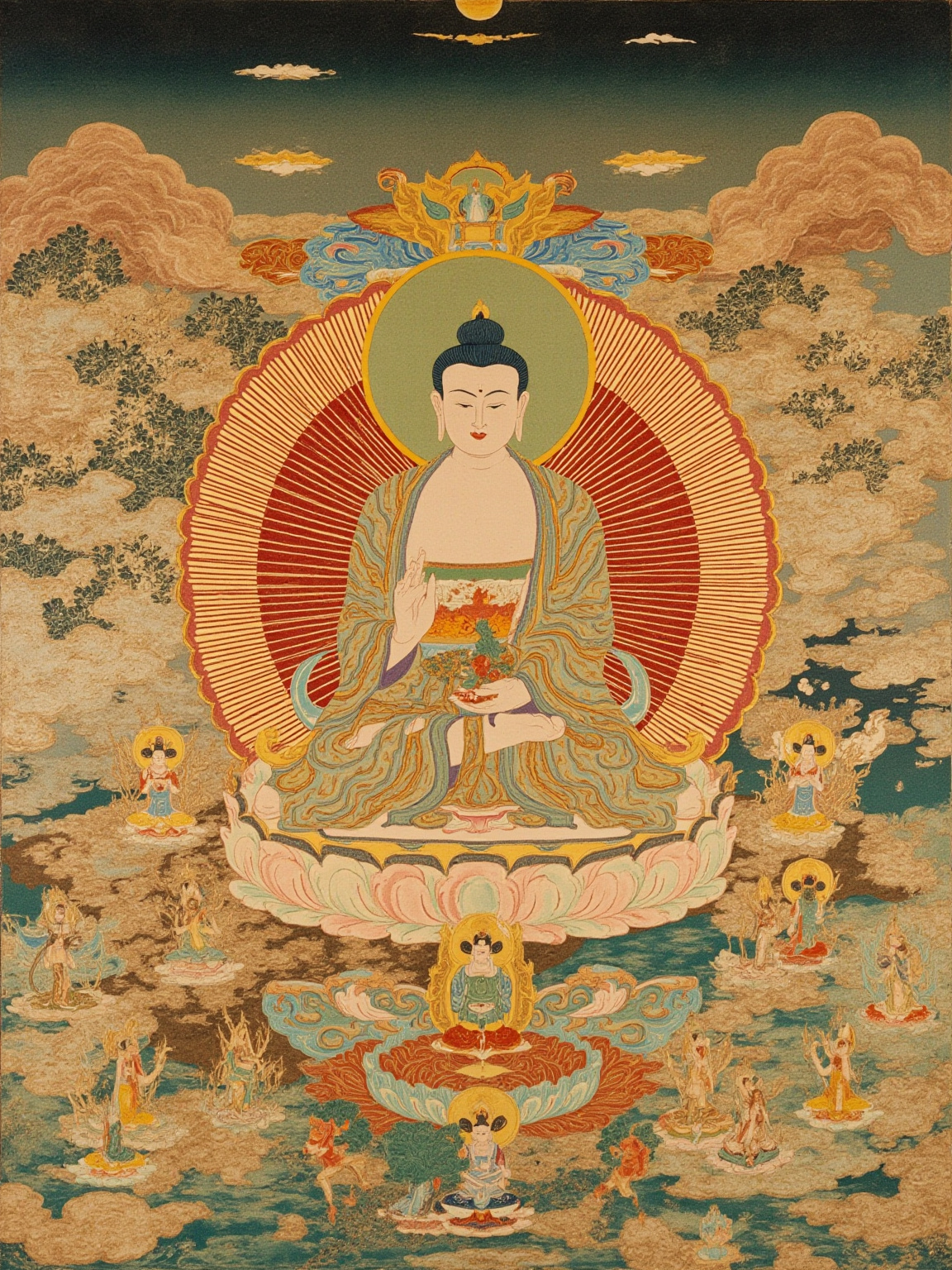
The father in the burning house is not a liar. He is mercy — he isn't lying, he's just casting a lure his children can understand.
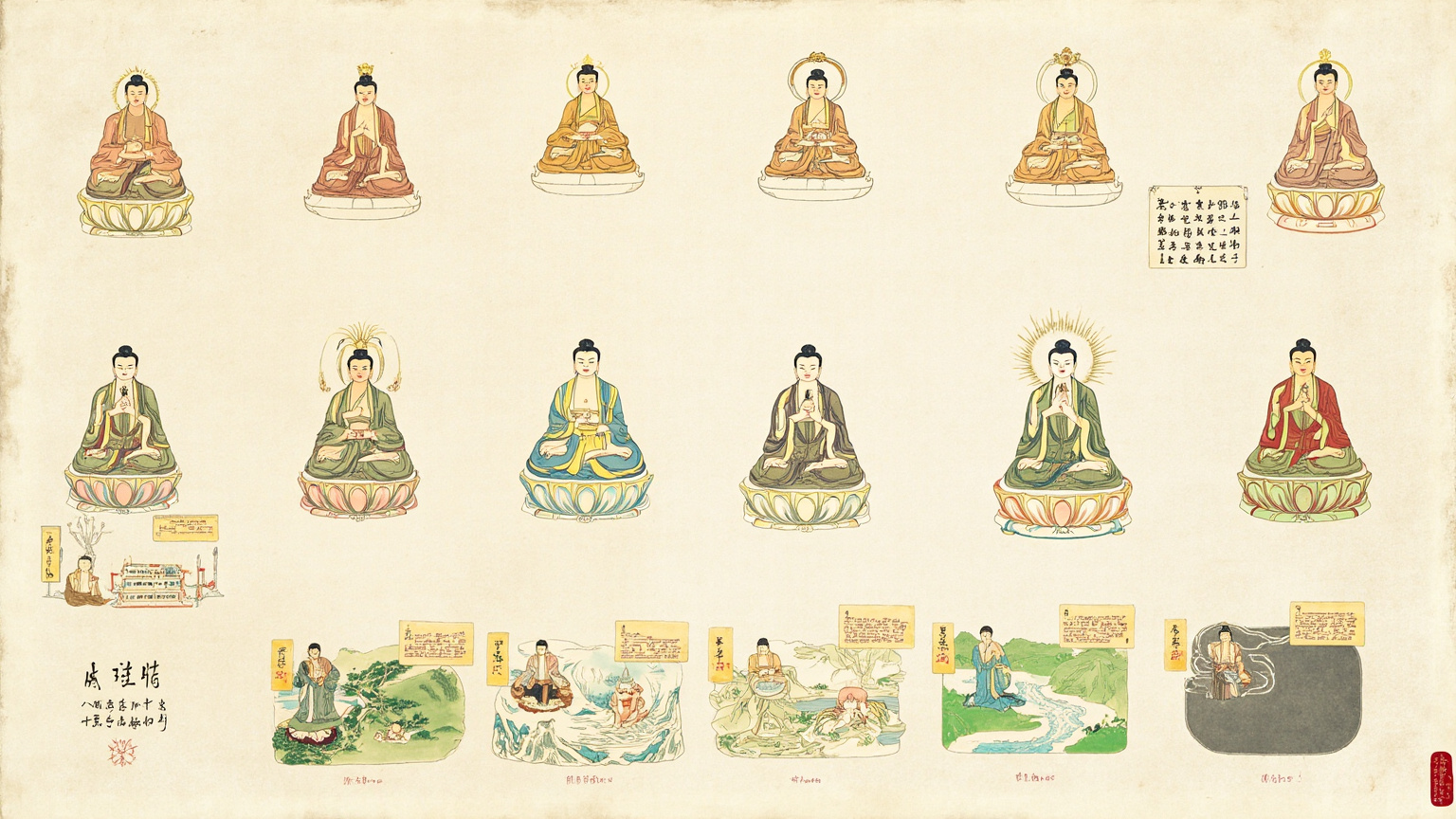
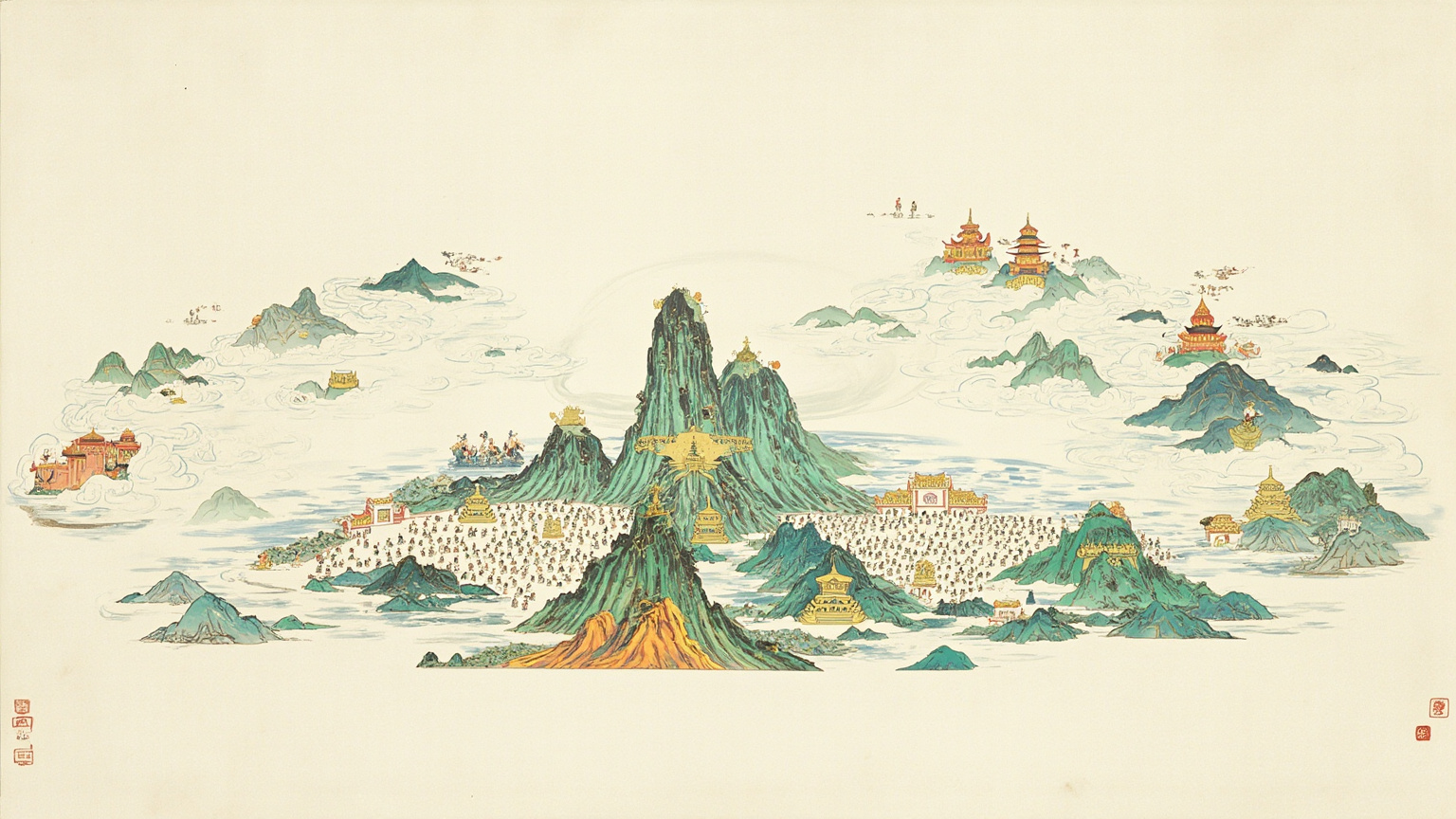
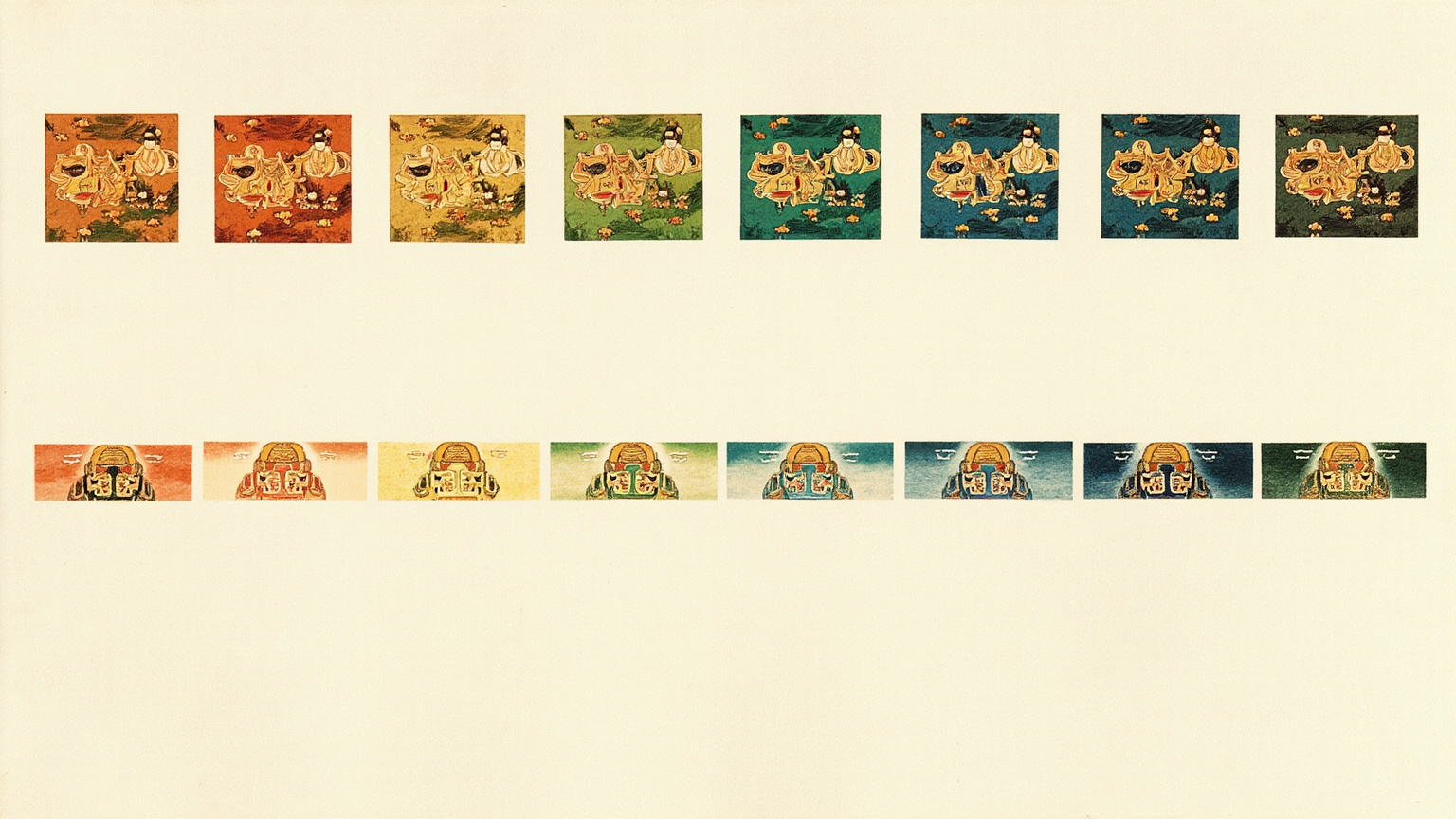
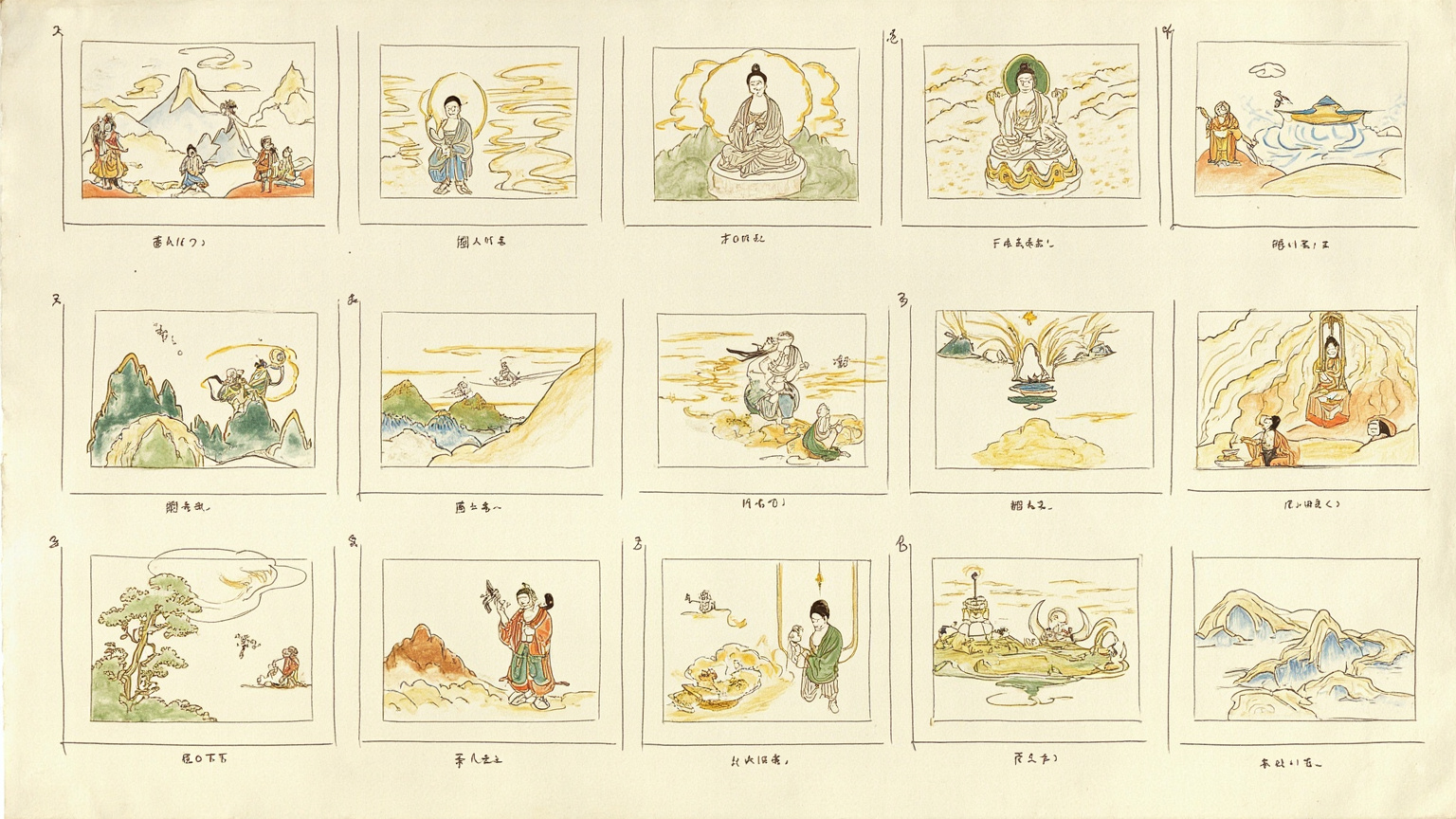
Art Direction4 plates
Before the guide was written, this book got a visual foundation — every illustration you just read grew out of it.