Magellan's Voyage: An Account of the First Circumnavigation / Il Primo Viaggio Intorno al Mondo · Companion Guide
麦哲伦环球航行记
五艘船、两百四十人出门,一艘船、十八人回到圣卢卡尔港——海上的一千零八十二天,只剩一支笔记得完整。
The Opening Hook
The biscuit was crawling with maggots, the water casks stank of urine, and the crew cut strips of hide from the sails, soaked them soft, and chewed them down. A rat was carried out on deck and sold for half a ducat. By then the men had been at sea for nearly a hundred days without sighting a scrap of land.
The man who wrote this down was Antonio Pigafetta, a nobleman from Vicenza and a self-taught scholar in the Renaissance mold, the one man in Magellan's fleet who kept a pen moving every single day. He sailed from the south coast of Spain in 1519 with more than two hundred others. Three years later, he and seventeen more were the only ones who came back. This slim book is everything he brought home to prove it.
What the Book Records
Its original title is Il Primo Viaggio Intorno al Mondo, The First Voyage Around the World, written in Italian and first published sometime around 1524 to 1525. What survives today is mostly manuscript: one Italian copy and three French ones, the finest and most complete of which sits at Yale, its twenty-three color maps still intact. This is not literature. It is a day-by-day sea log pinned to real dates, real charts, and a real, gnawing appetite.
It is remembered because it did something no one had done before: it took the claim that the earth is round out of guesswork and theological argument and turned it into a route you could draw on a chart. This is the first place the name Pacific Ocean appears in print, the first time the Strait of Magellan was set onto a European map, the first documentary record behind every textbook entry that carries Magellan's name. All of it rests on one man's pen.
People and World
Magellan designed the route. As a young man he had sailed with the Portuguese to India and reached the Banda Islands in the Moluccas, where he saw with his own eyes what a basket of cloves or nutmeg was worth. That was the real engine behind the whole voyage: spice. Pushed aside in Portugal, he took his case to King Charles I of Spain and signed a contract with one bare aim: go west around South America and pull the spice trade out of Portuguese hands.
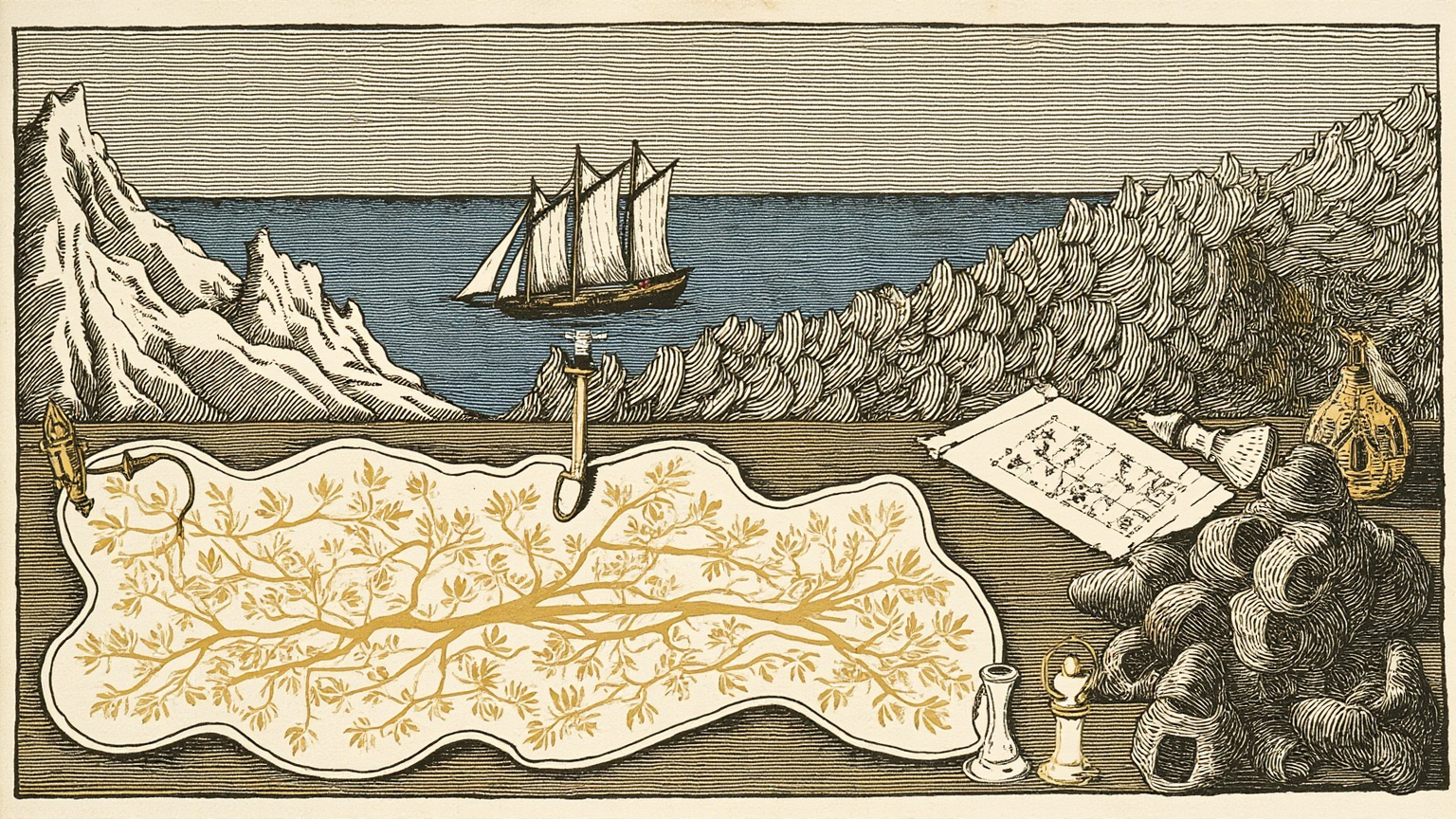
We set out from Sanlúcar de Barrameda with five ships and two hundred and forty men, and the greater part of us, knowing that we were undertaking a voyage that no man had ever made, were sick with fear.
我们从圣卢卡尔港出航,五艘船,两百四十人;我们知道自己在做一件从来没有人做过的事,恐惧像病一样缠住了大多数人的身子。
金句 · 卷首 · 启航之前
Pigafetta served as the fleet's chronicler. The job sounds modest, keeping the log, tracking the stars, recording latitude and longitude and wind, but on this voyage it turned out to be the one thing that mattered. Of more than two hundred men, he alone wrote down every day. Three years later, he and seventeen others survived, and of those eighteen, he was the only one who turned the three years into a manuscript, saw it into print, and had it copied again and again. This is not Magellan's voyage. It is the one pen on that voyage that never stopped.
The fleet's world was small and specific: five carracks, Trinidad, San Antonio, Concepción, Santiago, and Victoria, crewed below deck by sailors from nine different countries, working with nothing but a compass, an astrolabe, a sandglass, and charts drawn on parchment. It was the first time late-Renaissance Europeans staked their lives on proving that the earth was a sphere you could sail all the way around.
Setting Sail: A Ledger of Spice
September 20, 1519, the port of Sanlúcar on Spain's south coast. Five ships cast off their lines, and more than two hundred men bet their lives on a route no one had ever sailed. What Magellan told the public was the Moluccas. What he told the king's ledger was also the Moluccas, cloves, nutmeg, mace, the goods every kitchen and every apothecary in Europe was fighting over.
Here is where the craft shows: Pigafetta does not write about grand ambition. He writes about the barrels on board, the waterskins, the biscuit that still tasted normal on the day they left port. The whole book is almost free of emotional adjectives; everything in it is something you could touch. A good sea log does not open with feeling. It opens with an inventory.
South, and a Mutiny
The fleet crossed the Atlantic and worked its way down the eastern coast of South America. At Rio de Janeiro in Brazil, they traded with the people there; farther south, at Port San Julián, a bay in Patagonia raked by cold wind, they stopped to wait out the winter. It was during that long winter camp that the Spanish crew mutinied. Pigafetta recorded, day by day, how Magellan put it down: who struck first, who was cut down, who was set ashore and sent back to Spain.
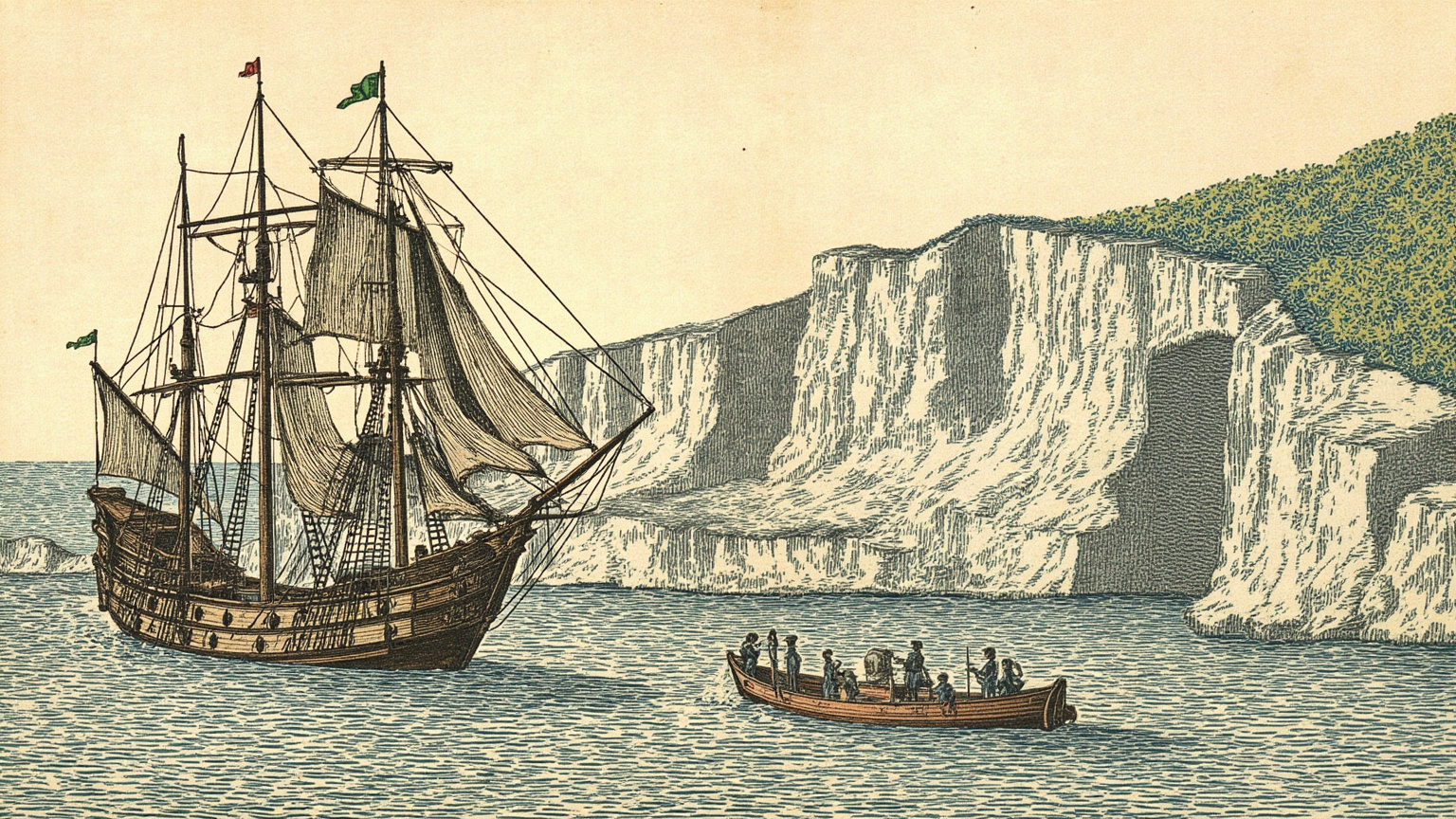
On the twenty-sixth day of the month of November, 1520, we came forth out of that strait into the Pacific Sea, and there we remained three months and twenty days without taking on any fresh provisions.
一千五百二十年十一月二十六日,我们驶出那条海峡,进入了那片叫作太平洋的海;之后整整三个月又二十天,我们再没得到过一点新鲜吃食。
金句 · 卷二 · 出海峡西口
It is the book's first real moment of the fleet coming apart at the seams. Magellan crushed the mutiny with the same hard hand he had brought from Portugal, but it cost him. The Santiago was wrecked not long after; the San Antonio, once the strait had been found, turned around in secret and slipped back to Spain. By the time the fleet actually sailed into the strait, five ships had become three.
Through the Strait, and Naming a Sea
In late October 1520, the three remaining ships pushed into the twisting channel between the South American mainland and Tierra del Fuego. We call it the Strait of Magellan today; that name came later. At the time, Pigafetta simply logged the date, the wind, the shape of the shores on either side. The passage took weeks, doubling back on itself, throwing off dead ends, and more than once the crew thought they had reached the far side, only to round a bend into more open water. He writes that feeling of almost-arriving with real restraint, and it is exactly that restraint that makes it believable.
On October 28, 1520, the three ships cleared the western mouth of the strait into water that opened up almost frighteningly wide. The sea lay eerily flat, the wind gave them little help, and they had no idea yet how long they would be drifting across it. So Magellan named it: Pacific, the peaceful sea. Pigafetta put the word on paper. The whole world has called it the Pacific ever since, and the historical record credits him with being the first to write it down.
Three Months and Twenty Days of Hell
The crossing of the Pacific is the most quoted stretch of the whole book, and the part that reads most like a march log. Pigafetta records three months and twenty days without sighting land, somewhere between ninety and a hundred and ten days, depending on how you count it.
The biscuit had crumbled to dust and smelled of urine. The water had gone yellow and foul. Strips of ox hide and canvas cut from the sails were soaked soft and eaten. Wood shavings were boiled and choked down. A rat went up for auction on deck at half a ducat. Then scurvy began taking men one by one. Pigafetta records the detail himself: gums swollen past the teeth, unable to take in food from either jaw, until the men simply died of it. He logged each death, one line at a time; this stretch alone accounts for nineteen of them.
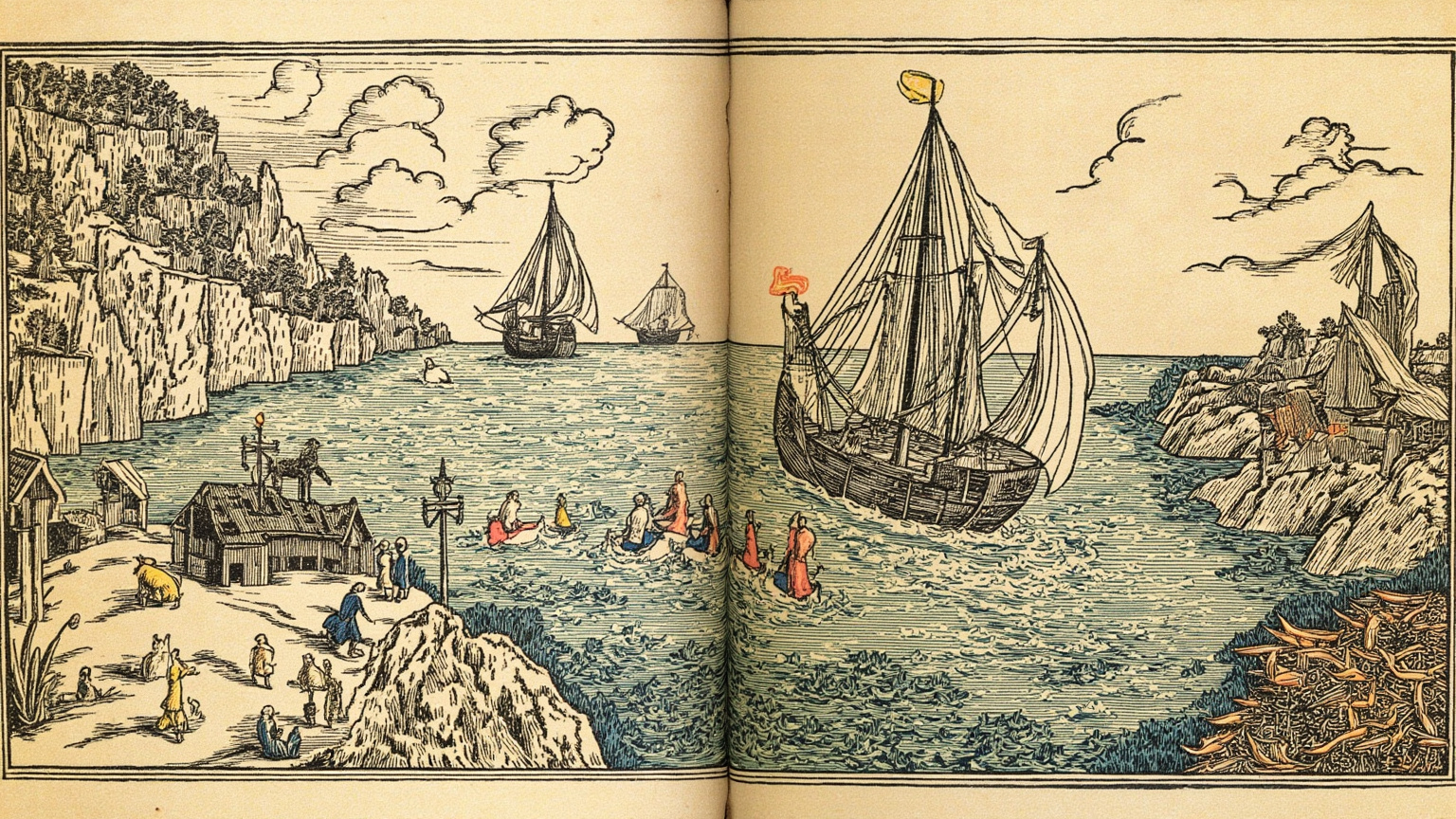
We ate the biscuits, but they were full of maggots and stank strongly of the urine with which they had been wetted; we also ate the oxhides which were nailed beneath the forecastle to keep the great guns from chafing, after soaking them in the sea for four or five days.
我们吃饼干,那饼干里全是蛆,还带着一泡尿的臊味;我们也吃牛皮——那是钉在艏楼底下垫大炮的皮,事先在海水里泡了四五天。
金句 · 卷三 · 太平洋上的给养
This is the craft again: he never writes that the men fell into despair. He writes what they ate. What sailors ate is the hardest, most specific fact of the Age of Discovery, and it does more to chill a modern reader than any adjective could. It is also why naval historians and nutrition researchers keep returning to this book. The lesson that long ocean voyages need fresh food and vitamins traces back, as a primary source, to this stretch of Pigafetta's log.
The Philippines: The Captain Falls Short of the Finish
March 1521, Guam. It was the first fresh food they had touched in ninety-nine days. Further on lay the Philippine islands, Cebu, Mazaua. The fleet had finally caught sight of what looked like the edge of the spice islands they were actually after.
In late April 1521, Magellan was drawn into a local conflict in the Philippines and killed. The book spends page after page on collapsing supplies, scurvy, ninety-nine days without land, and then, a few miles short of the finish, the man in command dies on a beach. The route he designed, the mutiny he crushed, the sea he named, he himself never set foot in the Moluccas.
The fleet lost its commander. What remained of the crew handed command to the Basque sailor Juan Sebastián Elcano, who took the survivors onward to the west. Pigafetta writes this passage with real restraint, no elegy, no grand mourning, just a single line: on such a day, Magellan died.
Spice Loaded, One Ship Home
In November 1521, what was left of the fleet reached the Moluccas, home to cloves, nutmeg, and mace. The economic destination of the whole voyage had finally arrived. The Victoria loaded up with spice and made ready to round the Cape of Good Hope back to Spain. The return crossing of the Indian Ocean, around the southern tip of Africa, and up the Atlantic to Sanlúcar took nearly a full year.
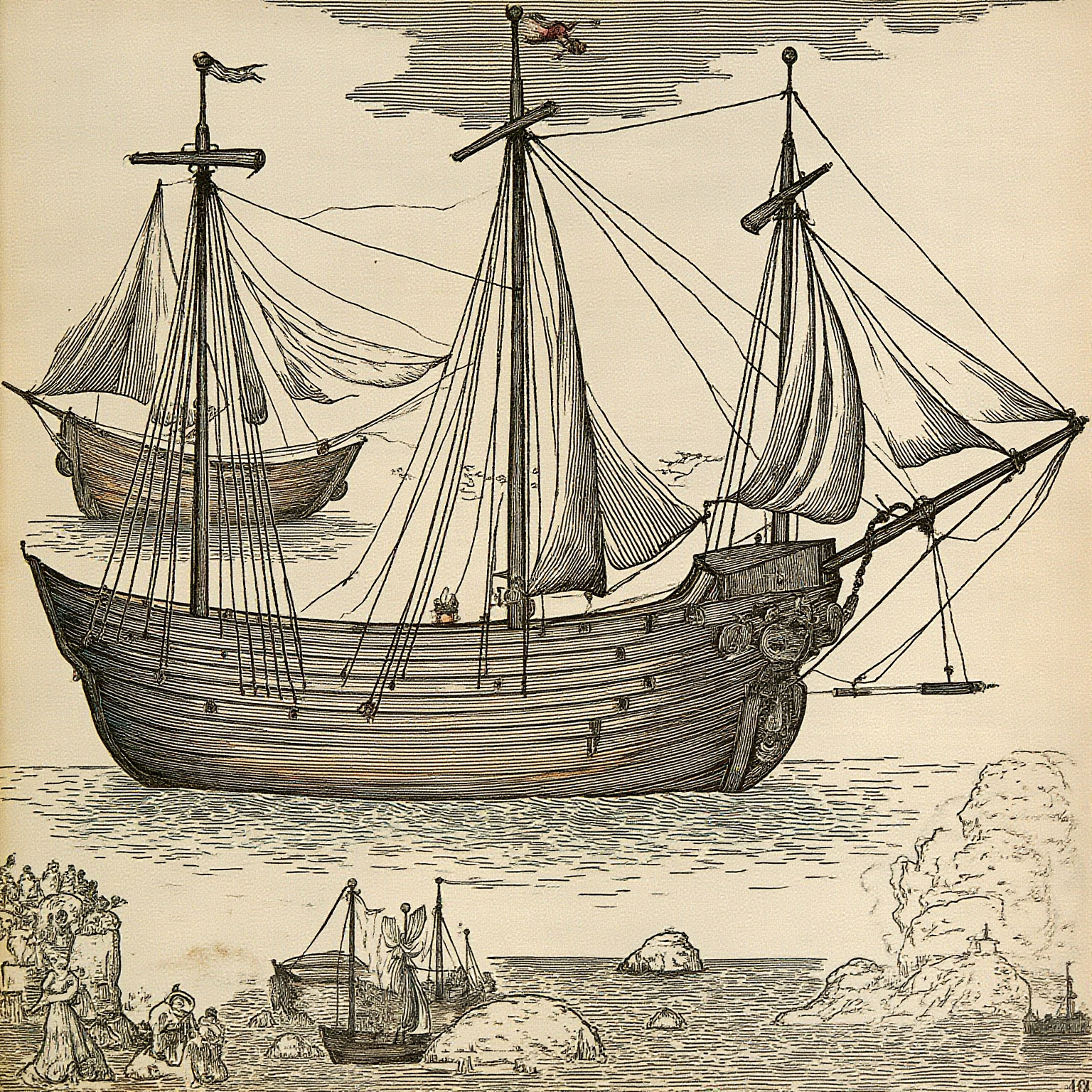
The commander, João Lopes Carvalho, set out from the island of Buru with the ship Victoria, laden with cloves, and we were eighteen men, the sole survivors of two hundred and forty who had set out from Spain.
指挥若昂·洛佩斯·卡瓦略,带着『维多利亚号』离开布鲁岛,船上装满了丁香,而我们——当年从西班牙出发的两百四十人里——只剩下十八个。
金句 · 卷四 · 独船归航
September 1522, the port of Sanlúcar. One ship, eighteen men. The sails were too tattered to tell their original color; the sailors on deck were skin and bone. The spice the Victoria carried home was, by some accounts, worth enough to cover the cost of the entire expedition. It was history's first complete voyage to prove the earth was round and turn a profit doing it.
Why This Book Matters
Its value has nothing to do with brilliant prose. It comes from scarcity. More than two hundred and forty men set out, eighteen came back, and of those eighteen, only Pigafetta kept a daily record across the three years, turned it into a manuscript, and had it copied down through the centuries. The reason Strait of Magellan, Pacific Ocean, and Magellan's circumnavigation can sit in a textbook today comes down to this one pen.
Reading it also means reading the hardest lesson of the Age of Discovery: crossing an ocean was never romantic, it was a supply-chain problem. Weevil-ridden biscuit, yellow rotting water, men eating hide and wood shavings, nineteen dead of scurvy, none of this is literary flourish. It is a case study in logistics falling apart. Every later rule about carrying fresh food on a long voyage, about sailors needing citrus, traces its earliest firsthand record back to this.
One byproduct often gets overlooked: Pigafetta brought back a word list of Visayan, the language spoken around Cebu, among the earliest European records of pre-colonial Philippine language. But that is a bonus for ethnography, nothing more. What earned this book its place in the literary tradition and in history textbooks is still the sea log itself, not any passage of fine writing.
Whether a book can change the map of the world has nothing to do with how fine its adjectives are. It comes down to whether its dates hold up.
Reasons to Read the Original
A guide like this can only tell you what happened: five ships went out, one came back, eighteen men reached Sanlúcar alive. What it cannot give you is the sour feeling in the stomach. What Pigafetta wrote down, line by line, was never numbers, it was food. A rotting biscuit, a rat put up for sale, a strip of soaked hide, details like these only carry their weight when you read them in his own words.
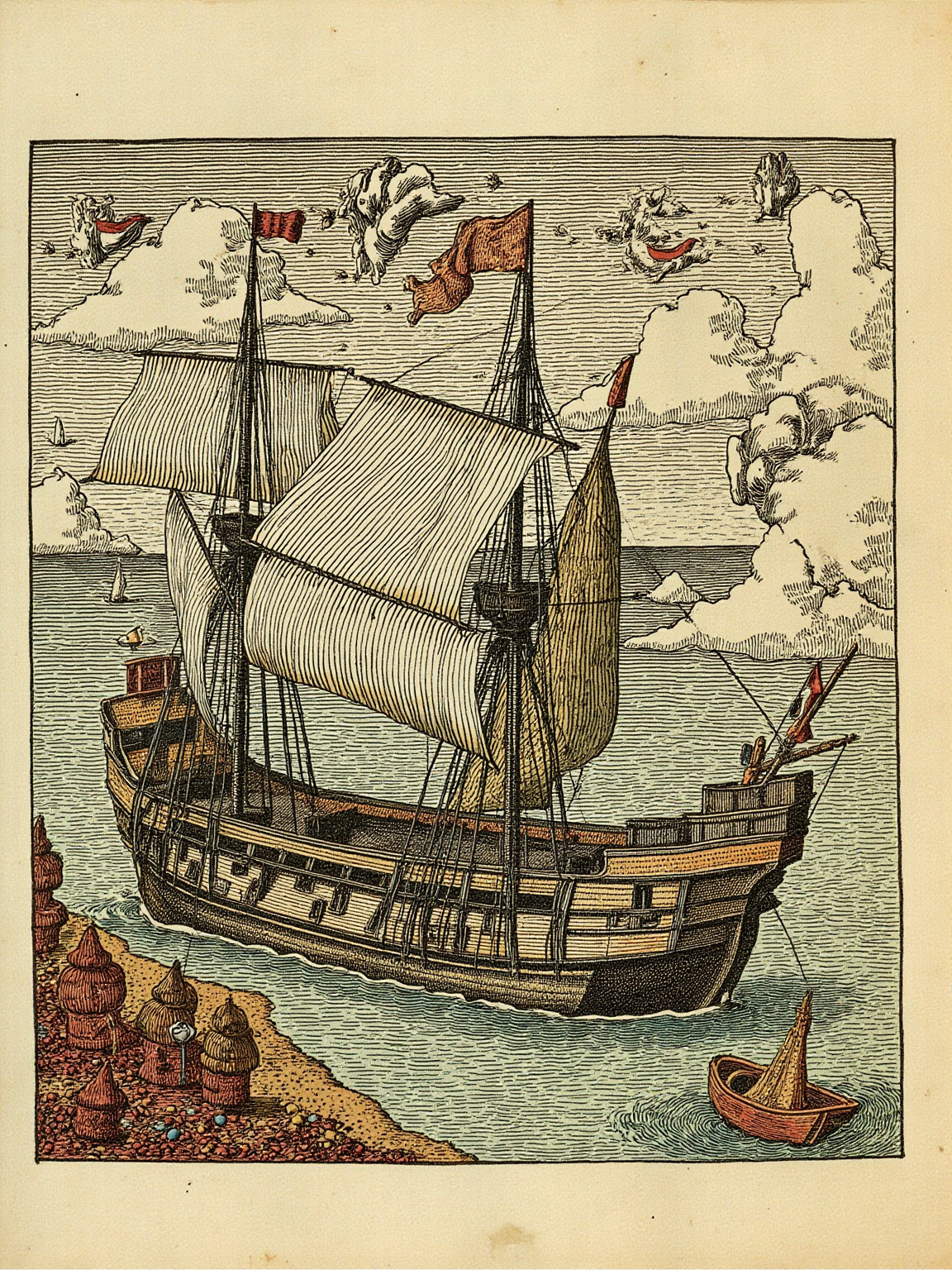
There is also the sense of the map itself. We take the roundness of the earth so much for granted today that we forget how much brute effort it took early sixteenth-century Europeans to prove it. Pigafetta writes the process, not the conclusion: how he tracked latitude, how he logged the wind, how he turned back from a dead end in the strait and tried again. Reading his log is like watching a sixteenth-century map of the world get filled in, line by line, in real time.
The last layer is the voice itself. A Renaissance scholar of noble birth from Vicenza, self-taught in astronomy, geography, and mapmaking, carried a compass and an astrolabe on board, and when he wrote this book, the language of Europe was still being reshaped by the voyage accounts of Columbus and da Gama. An abridged English version of it was already circulating in London by the 1550s; Shakespeare could have read it. Open it today, in other words, and you are not reading a cold historical document. You are reading the exact tone late-Renaissance Europe used the first time someone got to write, I sailed around the world.
Knowing the ending, one ship, eighteen men, a half-full hold of spice, does nothing to spoil the book. What is worth reading was never whether they made it back. It is how Pigafetta wrote down a single meal, every day, through those ninety-nine days.
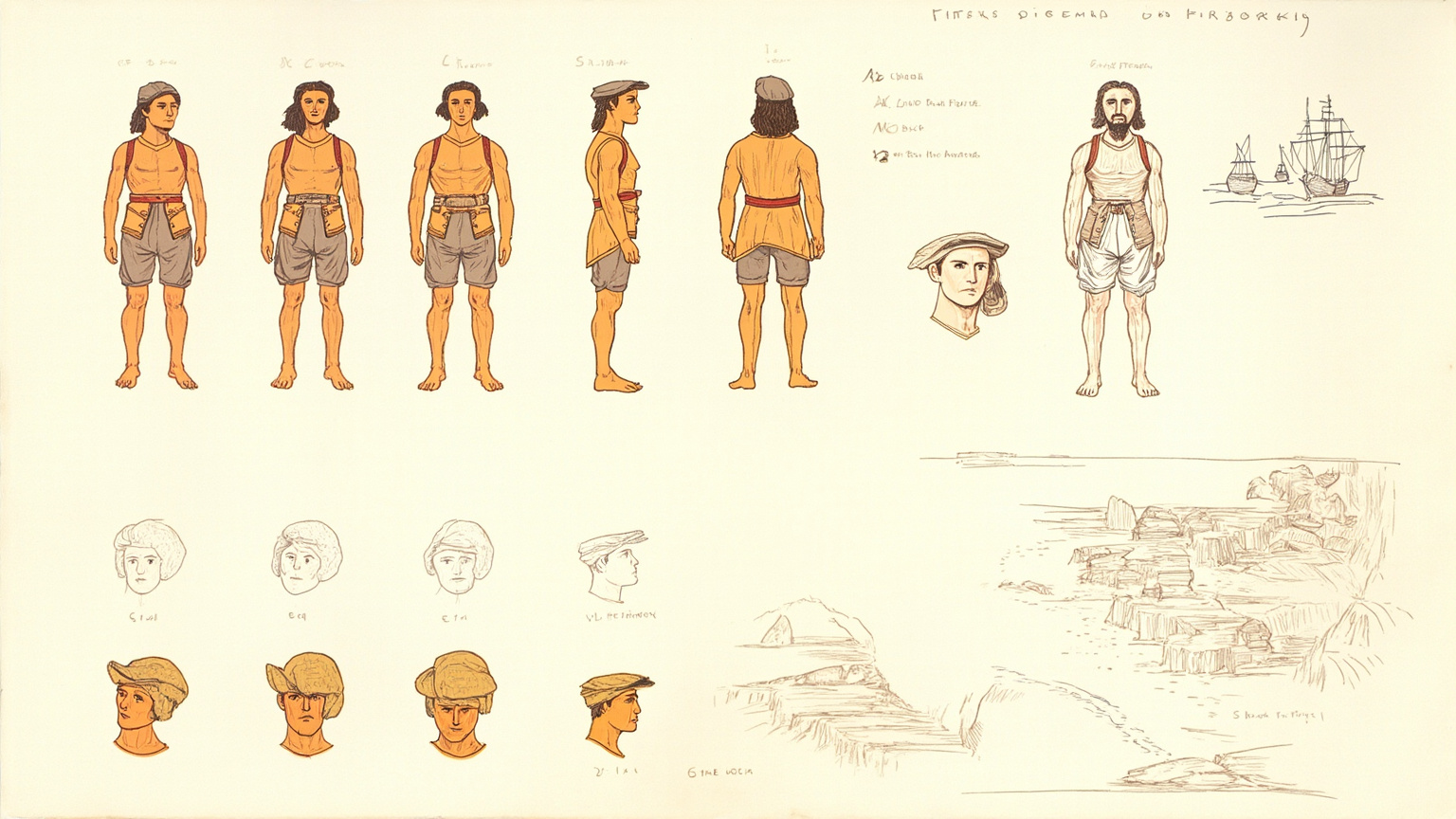
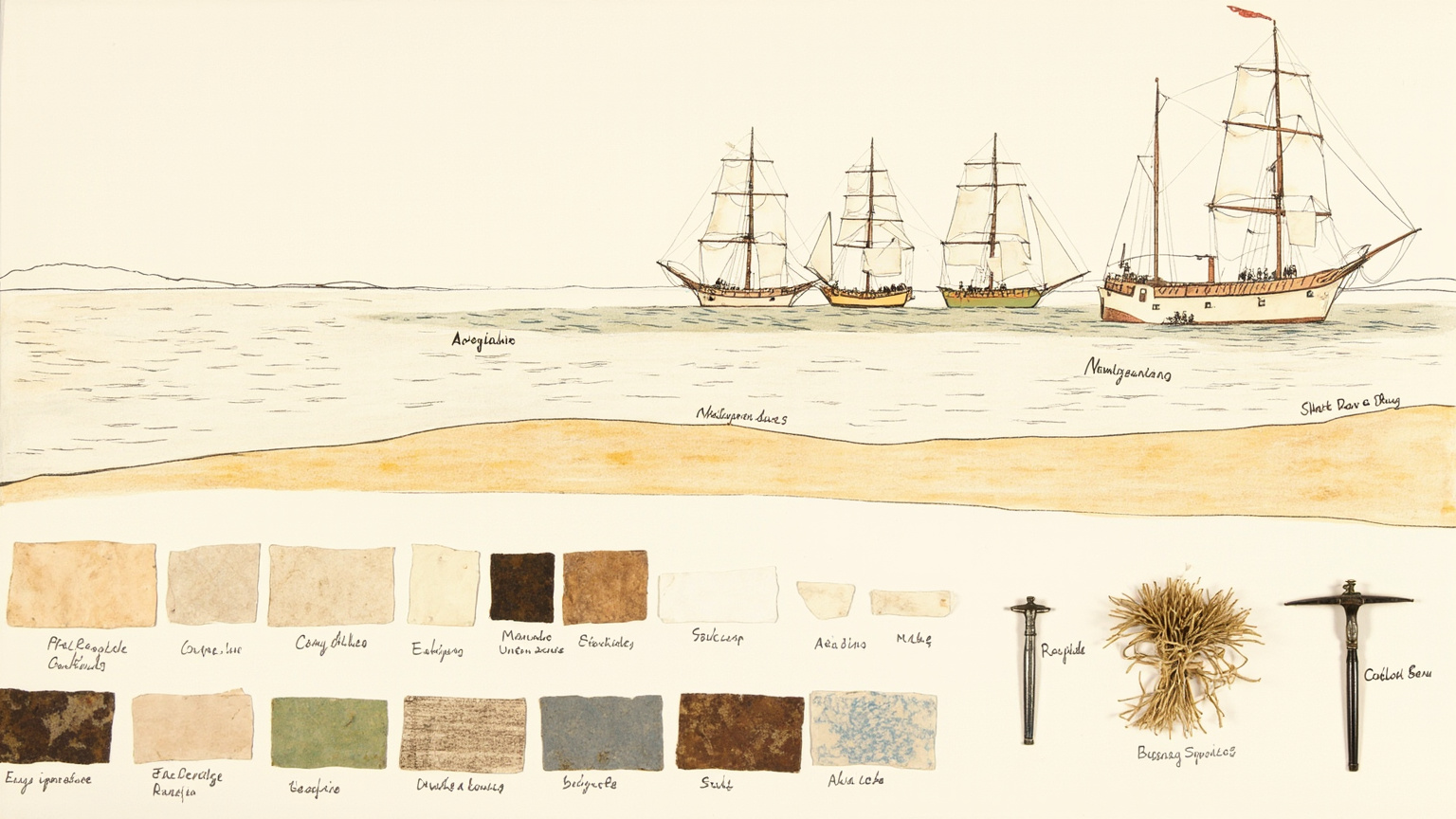
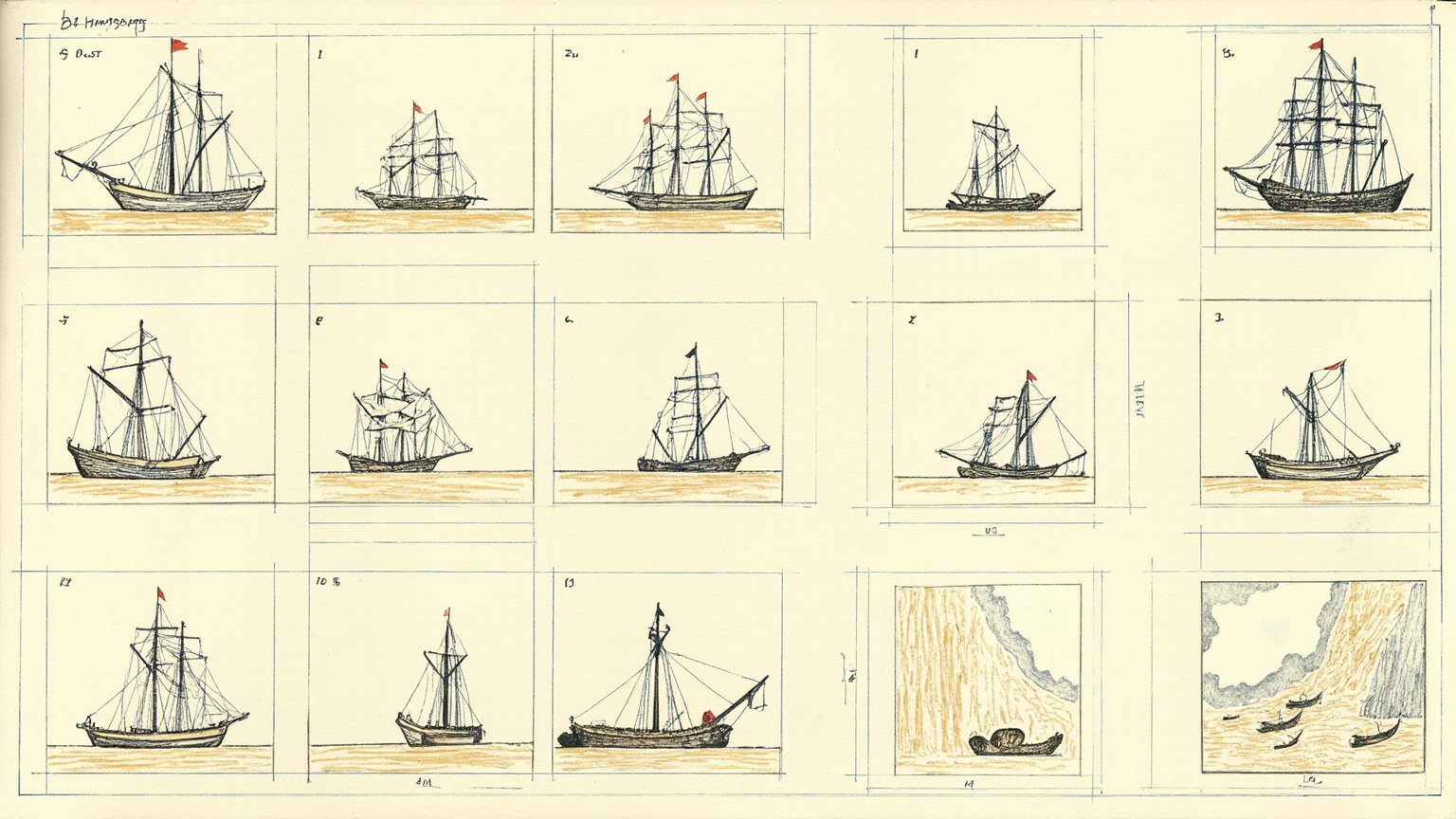
Art Direction4 plates
Before the guide was written, this book got a visual foundation — every illustration you just read grew out of it.