Mama Blanca's Memoirs (Las memorias de Mamá Blanca) · Companion Guide
白妈妈的回忆
加拉加斯城里一个小女孩敲开白妈妈的门,听她把一座甘蔗庄园的童年慢慢讲成回忆——日记落在下一代手里,庄园便这样活了下来。
A Promise Unlocks a Plantation
In Caracas, a little girl peeks around a door and knocks. Inside sits a white-haired old woman — Mama Blanca. Widowed, living alone, a yellowed diary open on her lap. She doesn't send the child away. She pulls her close and starts telling stories from her girlhood on a sugar plantation. When she finishes, she gives the girl the diary. The whole book grows out of that gesture: a plantation childhood remembered, half spoken aloud, half written down.
What Kind of Book This Is
The author is the Venezuelan writer Teresa de la Parra — this was her first novel, published in Europe in 1929. She started late and died before fifty, yet she already ranks among the first women admitted into the modern Latin American canon. In Venezuela, generation after generation of children have dog-eared this book. It fills a gap most Latin American coming-of-age shelves leave empty: a whole, complete half of childhood written from a girl's side of it.
The Cast and the World
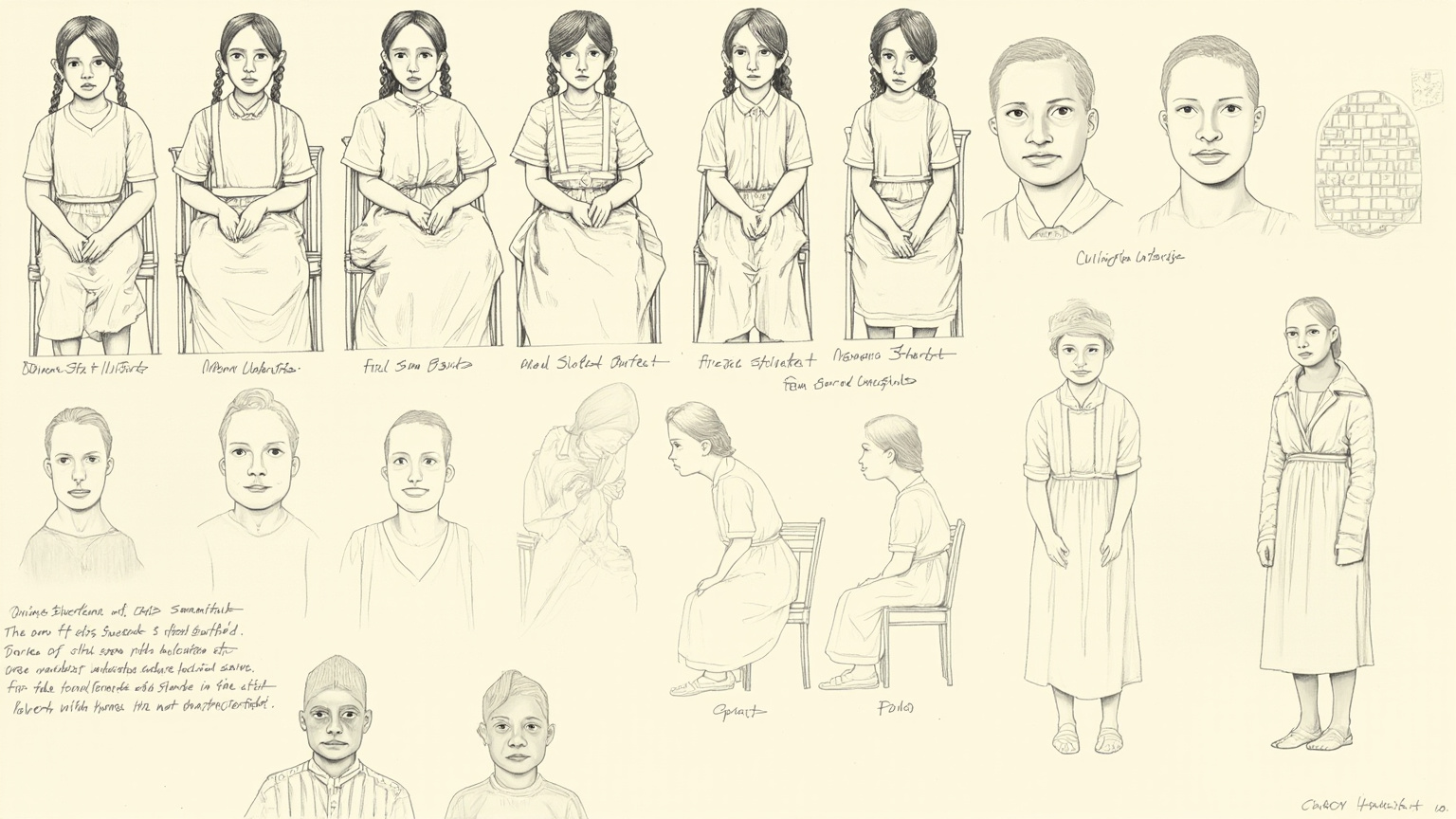
Mama Blanca is both narrator and subject — an elderly woman now living alone in the city, looking back. Her five sisters populate the plantation years, drilled in their lessons by the strict English governess Evelyn, held together by a mother who keeps the household's moral order. The father, master of the plantation and devoted to medicine, dies young, and his death redirects the whole family's course. Rounding out the plantation are the learned, luckless cousin Juancho, the self-taught old hand Cochocho, and Daniel, the herdsman who talks to his cows — together they hold up the other half of the plantation's social sky.
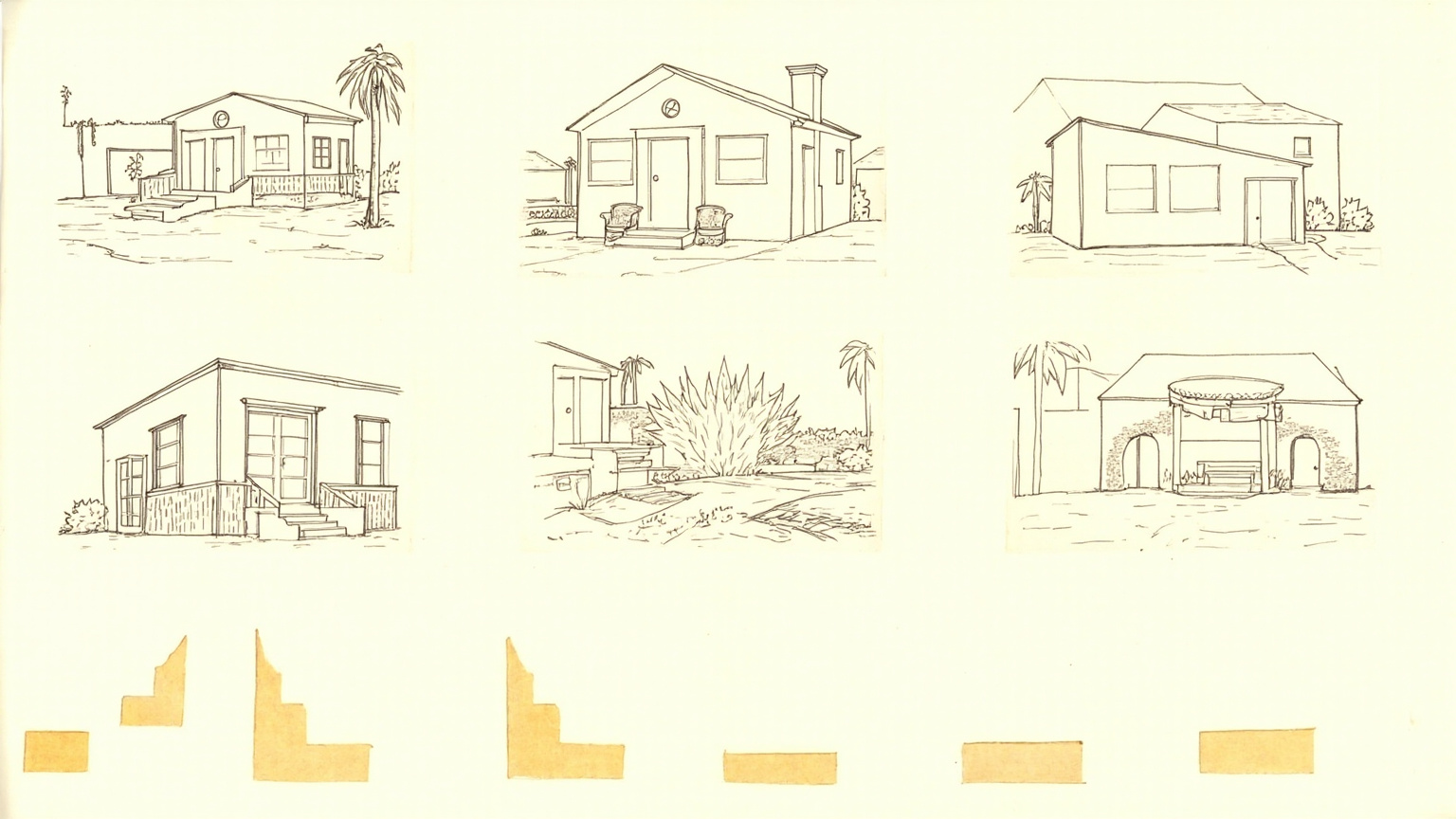
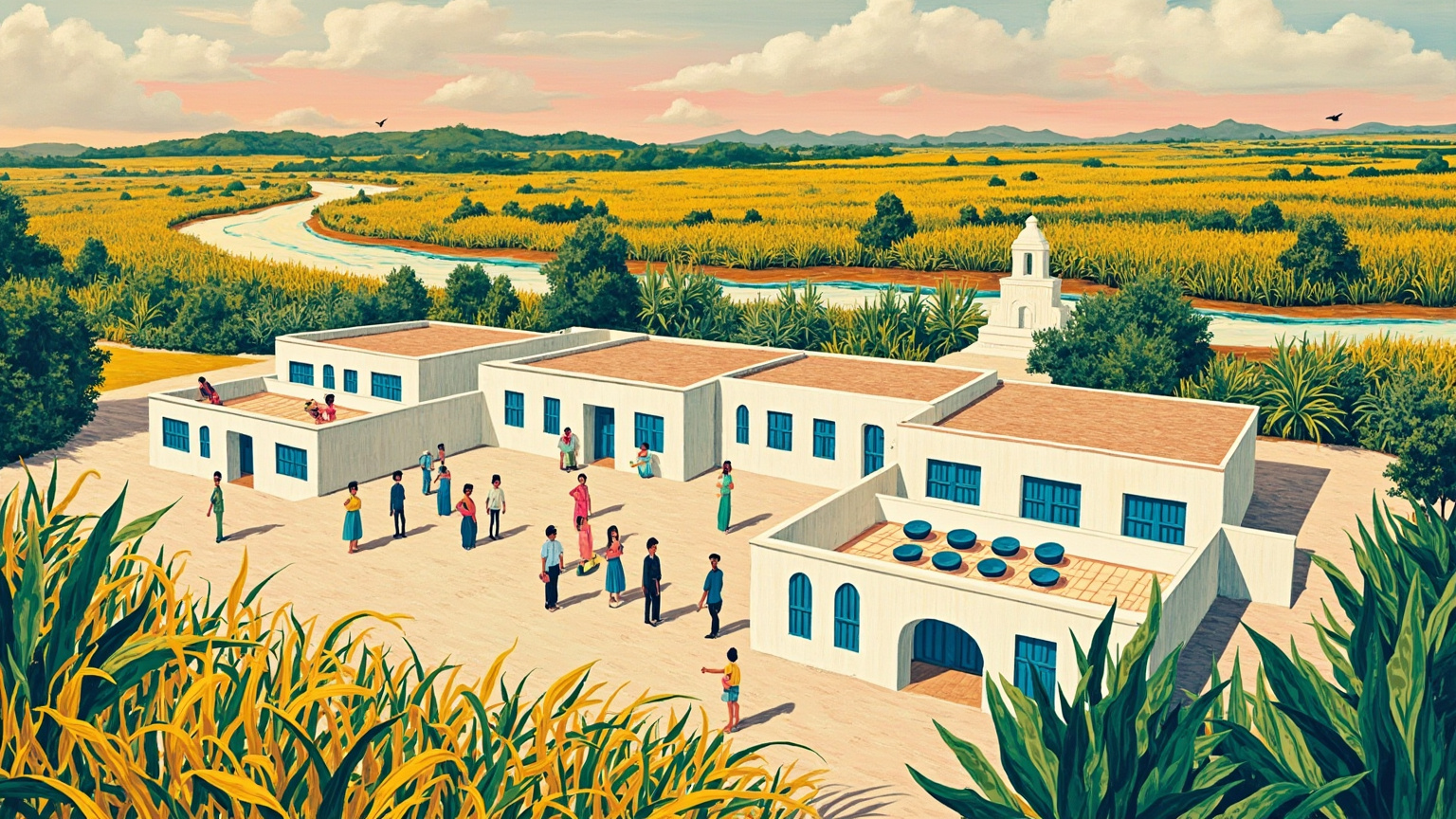
The story is set on an inland sugar plantation called Piedra Azul, modeled on Tazón, the hacienda near Cúa where the author actually grew up. A whitewashed house with a wraparound gallery, hammocks, wicker chairs, shuttered windows; outside, cane fields, a wooden press, copper kettles, hardening sugar, mango trees, coffee blossoms, guavas, columns of ants, cattle, morning fog. This isn't a Caribbean coastline hung with palms, and it isn't Cuba on the eve of revolution — it's a slow-moving plantation in a Venezuelan valley at the close of the nineteenth century, and everything in the book circles back to it.
Morning at Piedra Azul
The six sisters' childhood grows out of mornings, one after another. Before the light breaks, the hammock on the gallery sways, the mango tree lays its shadow flat on the ground, the cane press hasn't started up yet, and the frogs wake the plantation before anything else does. The girls slip into the courtyard over cool tile, bare feet on dew-wet stone steps. Cane leaves catch the light in the morning mist; the milking shed murmurs with cattle. A maid passes with a copper jug, and the sweetness of coffee blossom drifts in from the back garden. Detail piles on detail this way, sense by sense, until the whole plantation is laid out in front of the reader.
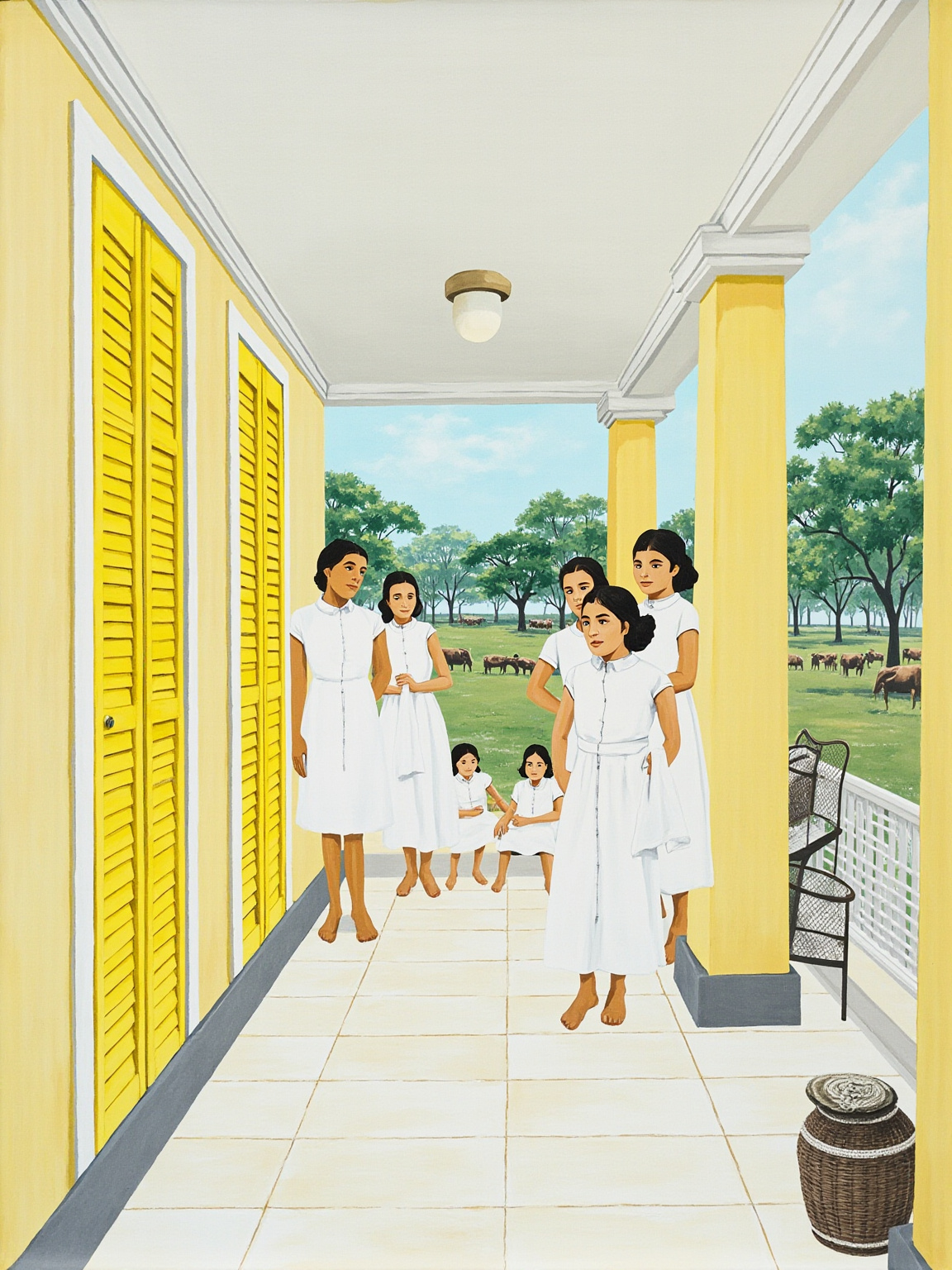
At daybreak the hammocks on the porch swayed gently, and the mango trees cast long shadows on the ground before the mill had even begun to wake.
天刚亮,回廊上的吊床轻轻晃着,芒果树长长的影子先一步落在地上,榨汁机还沉睡着没醒。
金句 · 庄园清晨段落 · 蓝石庄园的清晨
Evelyn's Rules
The sharpest edge in Mama Blanca's memory belongs to an Englishwoman. Evelyn is a strict governess, ramrod straight, ruler in hand, and she runs the six sisters' lessons, posture, and table manners with total control. Fumble a recitation and you stand in the corner; wear an unironed dress and you change it; write a crooked line and you erase it and start over. The sisters trade looks behind her back, flick ink at each other's hems the second she turns around. Her rigidity is the hardest line running through this childhood — and it's exactly that line that gives the childhood its shape, its edges, its specificity.
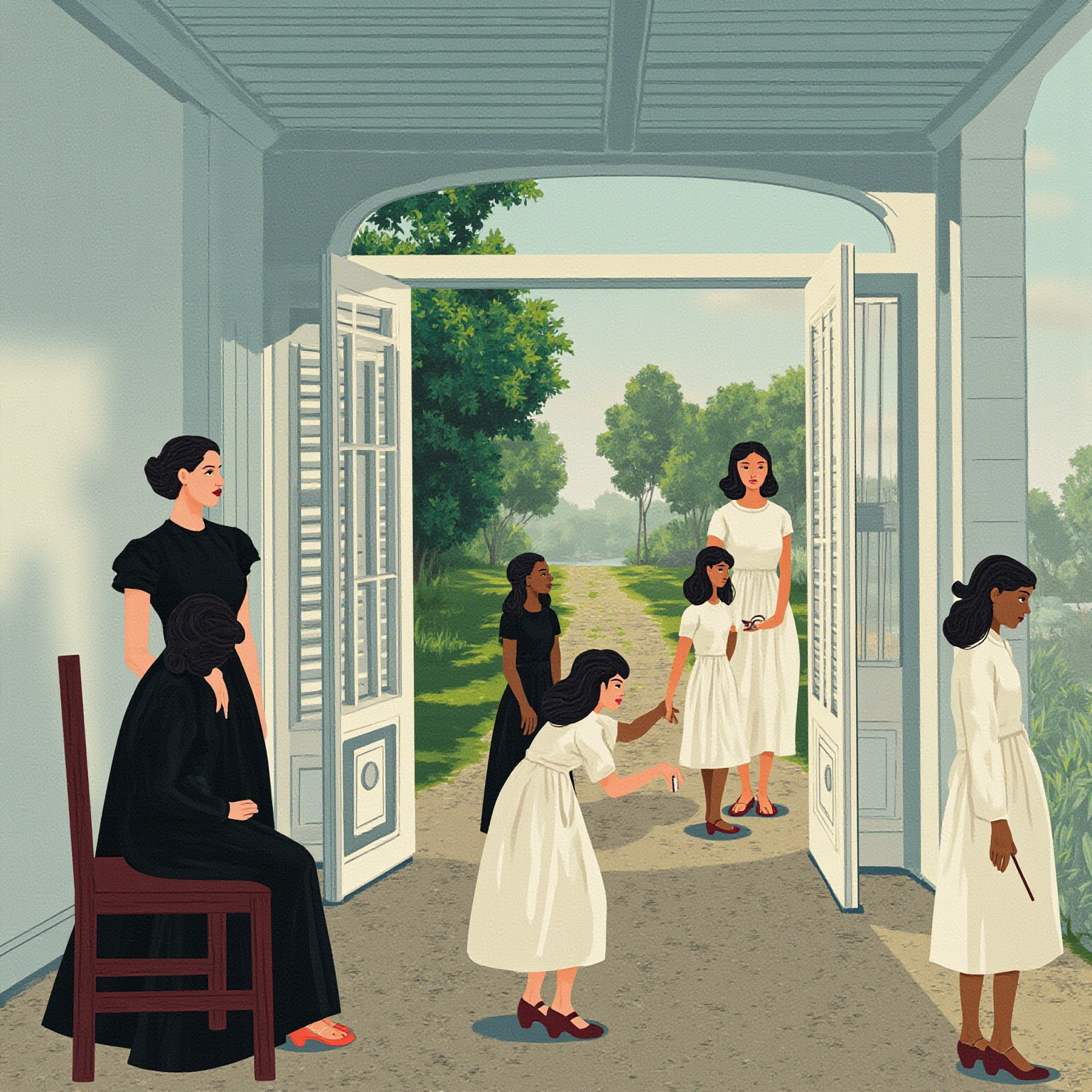
Miss Evelyn stood straight as a ruler herself, and with her ruler she measured our backs, our grammar, and the crease of our pinafores without mercy.
伊芙琳小姐站得跟一把直尺一样笔直,她就用那把直尺毫不容情地量我们的背、我们的文法,还有我们裙子上每一条褶子。
金句 · 伊芙琳管教功课段落 · 伊芙琳的规矩
The Plantation's Cast of Characters
The other half of the plantation's sky rests on a cast of minor characters, each cut from different cloth. Cousin Juancho, the learned one, reads too much in the study and carries a permanent trace of melancholy. Cochocho, the old hired hand, is small and wiry, taught himself medicine out of borrowed books, and argues himself red in the face with the father, who is just as devoted to the subject. Daniel the herdsman hums to his cattle at dawn, earning the nickname the man who talks to cows, laughs with his whole face creased up, and carries a bit of the traveling quack about him. Together they give the plantation its particular density of human warmth — master and servant, father and daughters, neighbor and neighbor, all rubbing against each other across the cane fields and the courtyard until each relationship finds its own temperature.
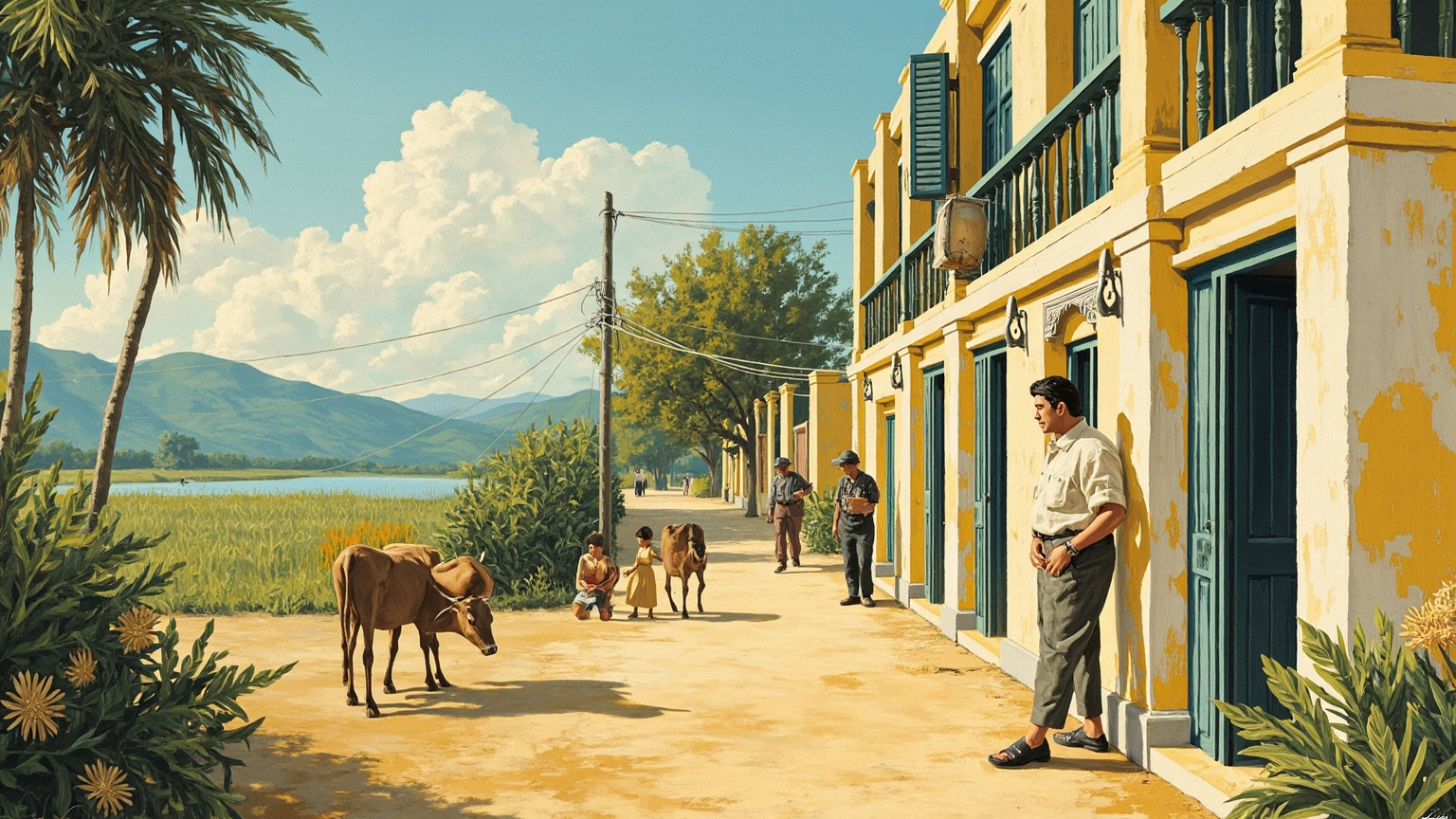
The hacienda was held up by its small people: my poor cousin Juancho buried in his books, old Cochocho arguing medicine with Father, and Daniel who talked to his cows as if they were old friends.
庄园是靠那些小人物撑起来的:可怜的表兄胡安乔埋在他的书堆里,老科乔乔跟父亲为医术争得面红耳赤,丹尼尔则跟他的牛说话,仿佛它们都是老朋友。
金句 · 庄园小人物段落 · 庄园里的小人物
The Father's Early Death, the Mother's Decision
The father dies. The book doesn't dwell on how — a man devoted to medicine, long unwell, who goes in a rainy season. The mother doesn't grieve out loud. She makes a decision: take the six daughters and leave Piedra Azul for school in the city. The trunks go onto the ox cart, the gallery empties, the hammock comes down, and no small bare feet run across the courtyard again. The door to the plantation world swings shut behind them, quietly — no dramatic farewell, just life turning a corner. Childhood gets cut off here, clean, in one stroke.
Memory Passed On
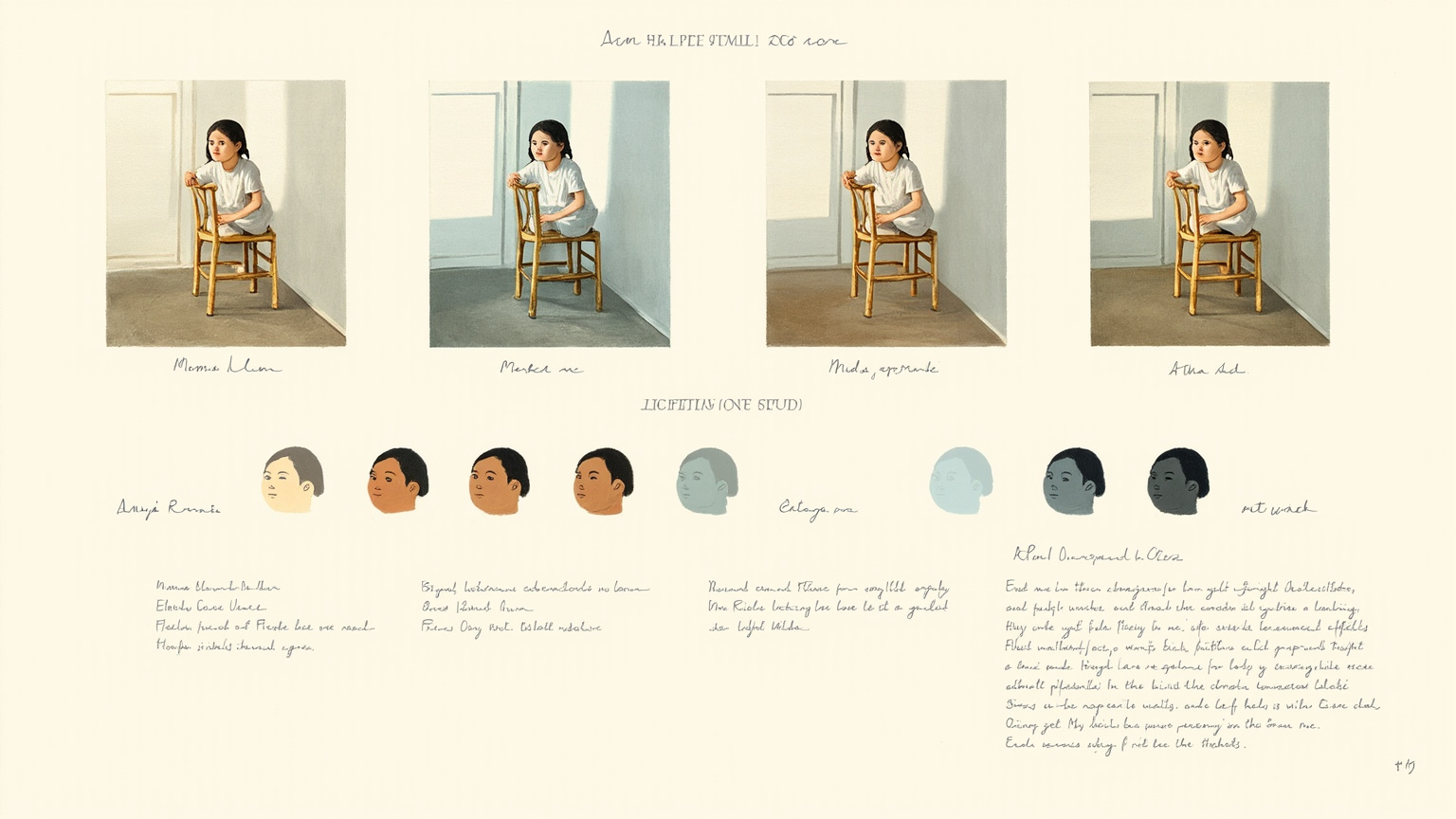
Years later, the six sisters are scattered across the city, each living her own life. Mama Blanca lives alone in an old house in Caracas, a diary of girlhood memories open on her lap. A restless little girl from the neighborhood comes to visit — Mama Blanca looks at eyes as bright as her own once were, and starts talking about Piedra Azul. Partway through, she makes up her mind: she gives the girl the diary. A memory passes, this way, from one woman's hands into the next woman's hands.
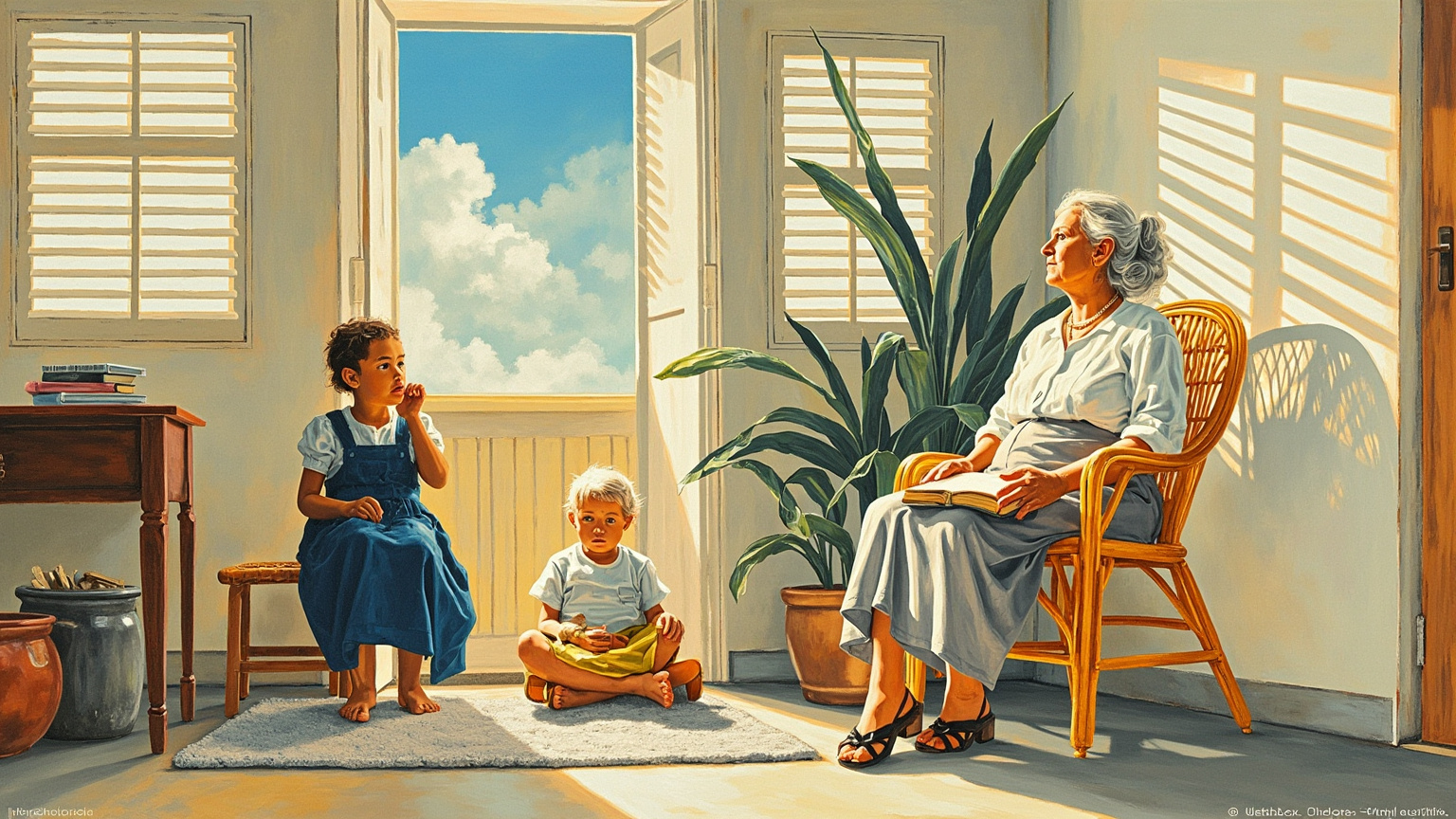
I promised the journal to the little girl who came to visit me, for memory is a thing one must hand on before it fades into the walls of an empty house.
我把日记许给了来看我的小女孩——记忆这东西,得趁它还没化进空屋的墙壁里,交给下一代才行。
金句 · 白妈妈口述与托付段落 · 记忆落到下一代
Theme: Tenderness Filtered Through Memory
There's no protest in this book, no political program, no social critique — the author said as much herself, in her letters. What it gives instead is a plantation childhood run through the filter of memory: bright, unhurried, tender with a little self-mockery folded in. To a child, the plantation is a complete world, and the book takes in the smell of cane, the sound of rain, the frogs, Evelyn's ruler, Daniel murmuring to his cattle, all of it, without judging any of it and without dressing it up either. That's exactly why generation after generation of Venezuelan children have kept this book close. It holds a shape for childhood that nothing else quite does.
Childhood is not a thing to accuse but a thing to recall, slowly, many years later, when the frogs have long stopped singing in the sugar cane.
童年不是用来控诉的,是用来在多年以后慢慢想起来的——那时甘蔗地里的蛙鸣早已停歇。
金句 · 主题段落 · 被回忆滤过的温柔
Why This Book
On the shelf of Latin American coming-of-age classics, the standard titles run through a boy's eyes — Don Segundo Sombra, The Mangy Parrot, The Time of the Hero, all of them. This book fills in the other half: six sisters growing up under one roof, held together by their mother, shaped by a strict governess, set off against a cast of very different minor characters. It's one of the sources you can trace Latin American women's writing back to, and it's a model for taking in an entire plantation society through a child's eyes. It's a book written for anyone who once had a plantation, a gallery, a summer afternoon of their own to remember.
Childhood isn't for accusing anyone. It's for remembering, slowly, years later.
Read the Book
A companion piece can only tell you what the plantation looks like, who the characters are, which way the plot moves. Reading the book itself gets you something else entirely: how Mama Blanca's sentences learn to slow down, how the frogs keep singing three pages in without letting you skip ahead, what that look means when the sisters catch each other's eyes as Evelyn's ruler comes down. Knowing how it ends doesn't spoil anything; this book runs on warmth, not suspense. Read it, and go sit for an afternoon at Piedra Azul.
Art Direction4 plates
Before the guide was written, this book got a visual foundation — every illustration you just read grew out of it.