The Manuscript Found in Saragossa (Manuscrit trouvé à Saragosse) · Companion Guide
萨拉戈萨手稿
一卷被战火烧出来的手稿,六十六天里嵌套嵌套再嵌套——每一次在绞刑架下醒来,都是新一轮试炼的开始。
A Manuscript Shaken Loose by War
Eighteen ninety-nine — no, eighteen-oh-nine. The siege of Saragossa has just ended, and in a house whose roof cannon fire has half torn away, a French officer sits down and starts leafing through a bundle of paper. It's in Spanish, the ink already old, telling of a young officer's strange adventure seventy years earlier in the Sierra Morena. After he's taken prisoner, a Spanish officer translates the manuscript for him word for word into French — and that French text is the book we hold today: The Manuscript Found in Saragossa.
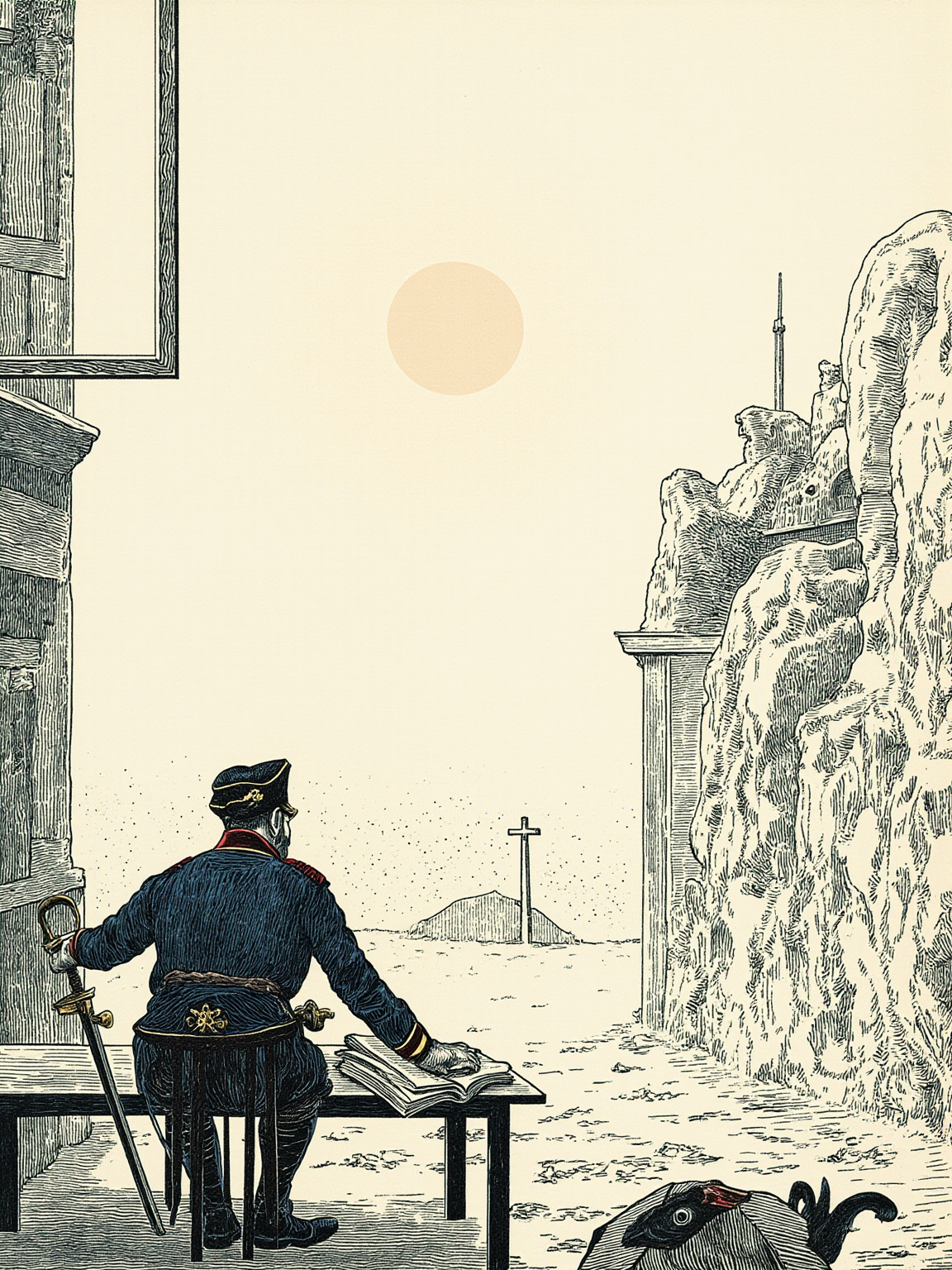
I have found the way to bind the Sheik of the Gypsies to me for the whole night.
我有法子让吉普赛人的首领整夜都离不开我。
金句 · 开篇框架 · 法国军官发现手稿
Its author was not Spanish, or even French — he was a Polish count, Jan Potocki, born in the mid-eighteenth century: a traveler, an Egyptologist, and a linguist who could read in seven or eight languages. He wrote the whole novel in French and had a few chapters privately printed for friends; decades after his death it was translated back into Polish, then into English, and slowly became one of the strange solitary peaks of the European novel.
The Venta on the Rust-Red Ridge
In the summer of 1739, Alphonse van Worden, a young officer of the Walloon Guards, rides on horseback through the Sierra Morena in southern Spain, on his way to report for duty in Madrid. At night he takes a room in a stone inn by the road — a venta. Outside, the hills run a dull, dark red; inside there's a fire, wine, strangers he's just met — everything ordinary. But when he wakes the next day on the mountain road, he finds himself bound beneath a gallows, two dried-out corpses hanging beside him.
The inn becomes the book's physical stage from here on: thieves, bandits, nobles, prostitutes, Gypsies, a Jewish cabalist, two Moorish princesses — all of them take their turn by the fire at night, telling their stories. The firelight reddens one side of a stranger's face; he stops mid-sentence, someone pokes the coals with the tongs, sparks fly up. Alphonse's pen hovers half an inch above the page while the whole table trades looks — nobody dares finish the sentence. The first time I hit one of these pauses, I went back and reread the page before it.
The Loop Under the Gallows
Over sixty-six days, Alphonse blacks out again and again, and wakes each time beneath the same gallows. It's always the Valle de los Hermanos — literally, the Valley of the Two Brothers — the gallows looming, two withered shapes hanging beneath it, as if God keeps hitting replay. Seen at dusk from a distance, the frame throws a thin, long shadow across the rust-red ridge: nothing has happened, and nothing has finished being said.
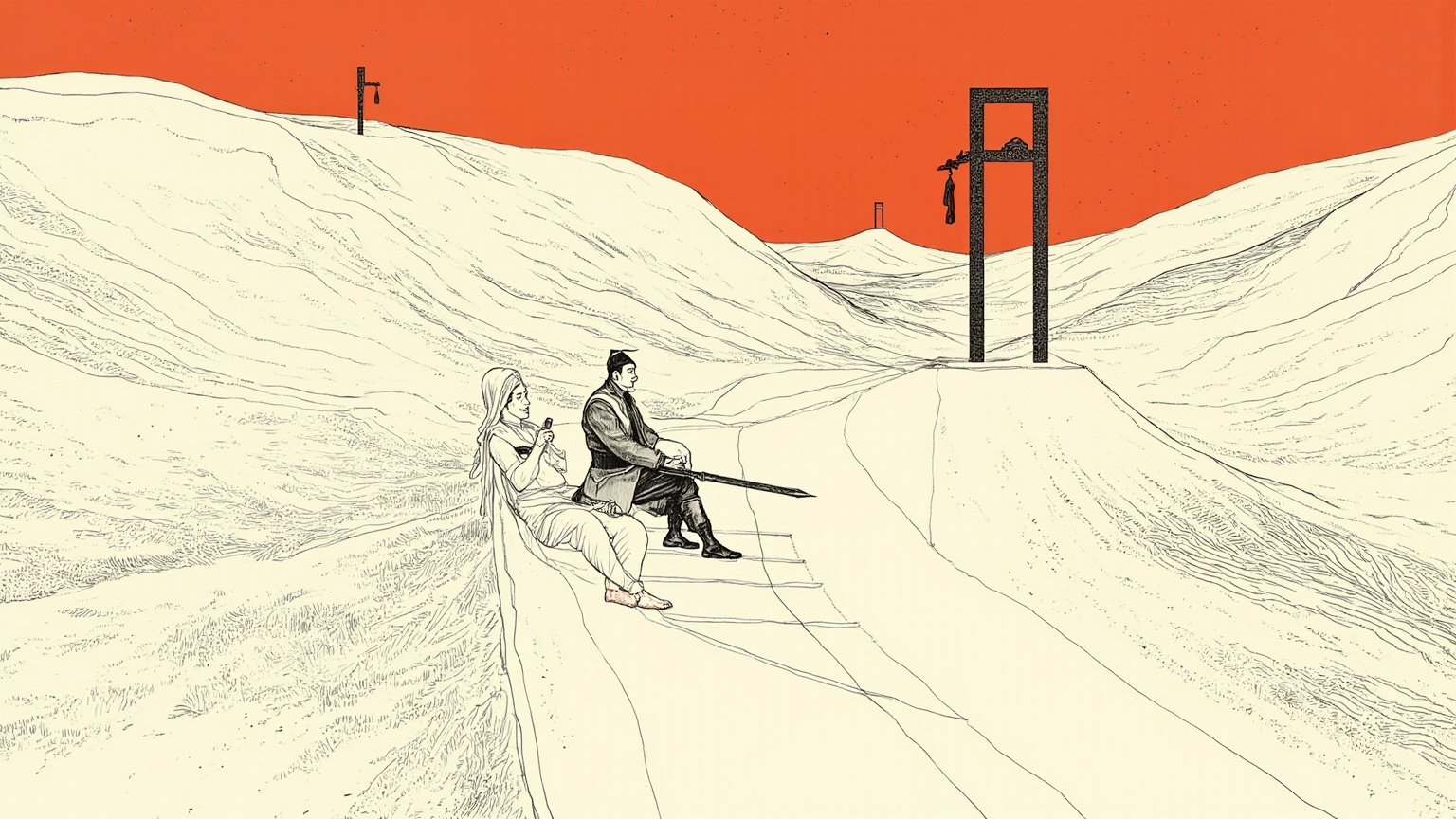
As soon as the moon rose I saw the two gibbets, and I could not doubt that I was again in the famous Valley of the Brothers.
月亮一升起来,我就看见了两座绞刑架;我不再怀疑,我又回到了那个著名的兄弟谷。
金句 · 卷一 · 兄弟谷之醒
The loop works as a Gothic hook and, at the same time, as the visual marker of an initiation being unveiled layer by layer. The reader is as lost as Alphonse: Is this witchcraft? A secret society underground? A Moorish palace exerting some old power? Or is somebody simply toying with him? The doubt itself becomes fuel — the book gets more addictive the further in you go.
Avadoro the Gypsy, and the Frame He Opens
The first to speak at the inn is the Gypsy chief Avadoro. His story alone takes up nearly a quarter of the book — he's the protagonist of an entire picaresque novel in his own right: birth, apprenticeship, robbery, flight, revenge, told out over several nights running. But he isn't telling a story just to tell it — every episode he finishes hands the floor to someone else, who arrives carrying a new one.
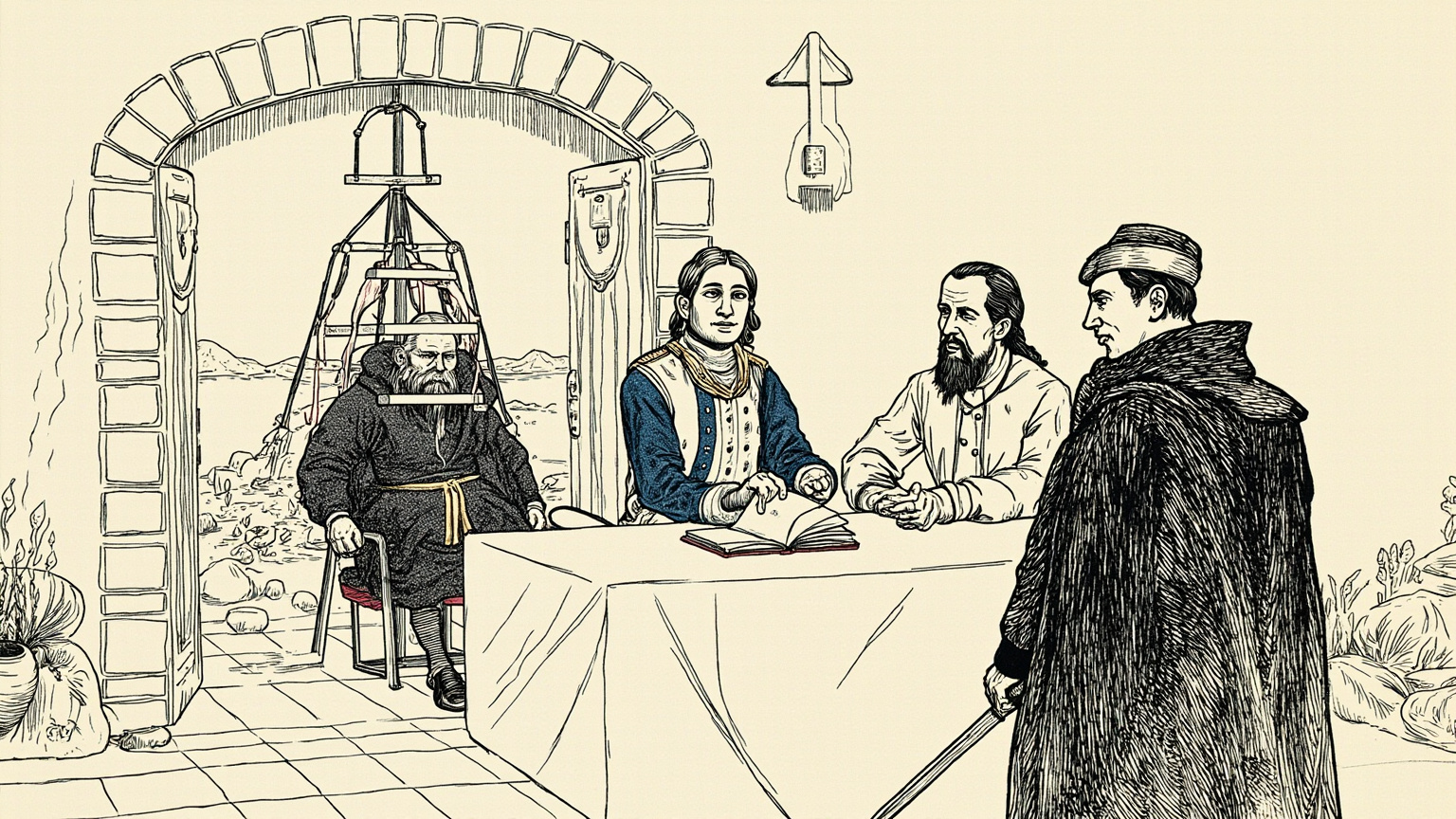
The landlord of the Venta had for some time past been counting the strangers who arrived, and it was plain that his curiosity was aroused by the number of them.
客栈老板这会儿一直在数进来投宿的陌生客,不用说,他是被这数目勾起了好奇心。
金句 · 卷一 · 阿瓦多罗入店
This is Potocki's signature trick: the nested box. Alphonse records Avadoro, Avadoro tells his own story, and the people inside that story tell the next one — layer stacked on layer, box inside box. Somewhere along the way you lose track of which level you're on; you just feel the floor giving a little beneath your feet.
A Philosophical Quarrel in the Tower
Another thread not to skip: a Jewish cabalist, Don Pedro de Uzeda, lives in the tower. He and a wandering philosopher, Athanagoras, argue themselves hoarse over one question — are vampires, ghosts, and Kabbalistic invocations real, or just the mind playing tricks? The two old men go at it fast enough to sound like a fight, and along the way they lay the whole eighteenth-century European argument over what counts as supernatural right in front of Alphonse.
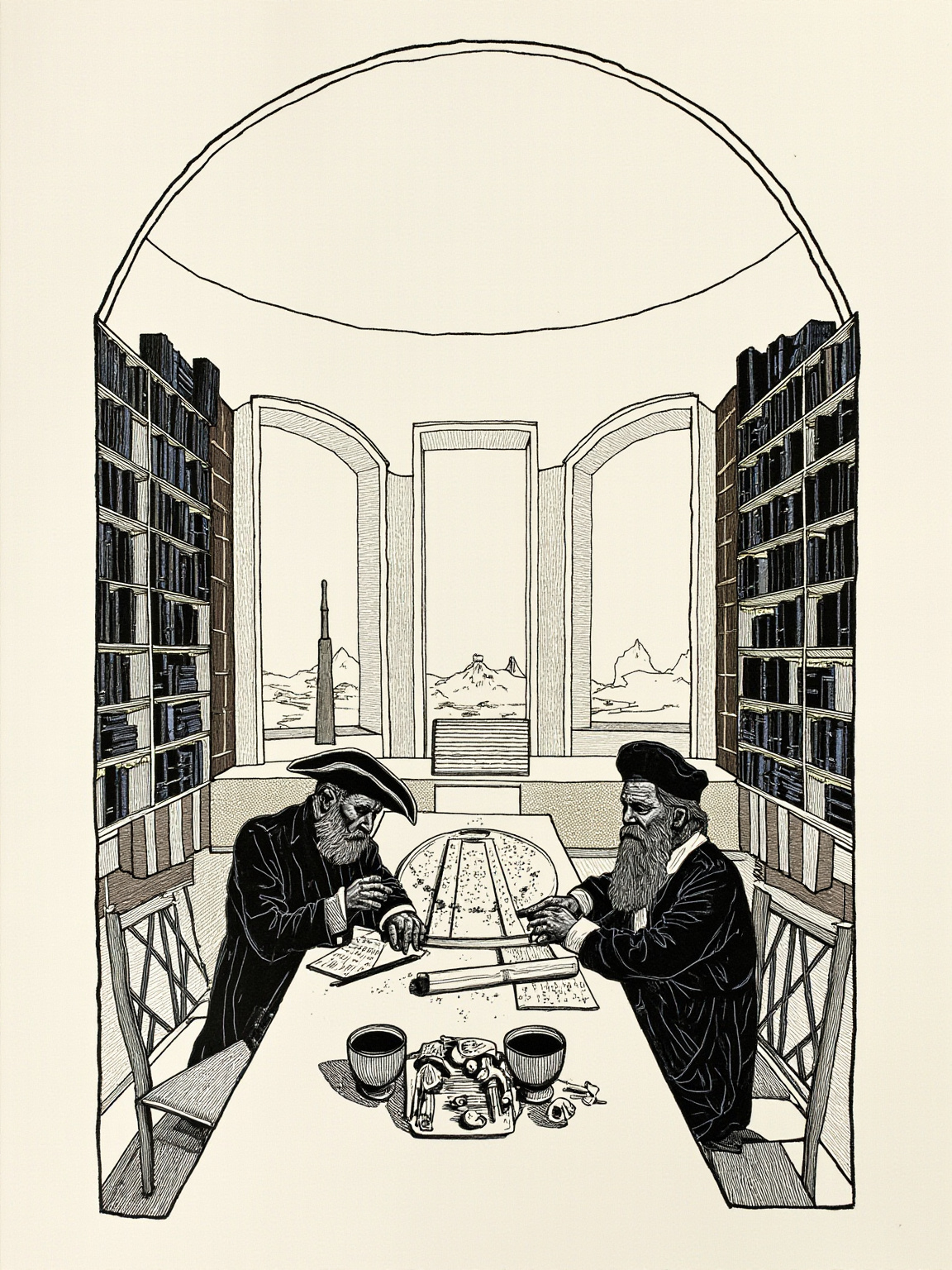
The cabalist replied that the instinct of curiosity was natural to all men, but that the difference lay in the objects that excited it.
卡巴拉学者回答说,好奇心人人皆有,所不同的,只在于被挑动起来的那件物事。
金句 · 卷三 · 塔楼论辩
The debate isn't just philosophical filler. It's the engine of doubt that drives the whole book: the moment you decide something is witchcraft, you're talked into believing it was only an illusion; the moment you settle on illusion, something even stranger knocks you over again. Potocki simply refuses to let you find your footing.
The Two Moorish Princesses, and Their Many Returns
Among the strangers Alphonse meets, two defy classification entirely — the Moorish princesses of the Sierra Morena, Emina and Zibeddé, sisters. They don't arrive with stolen goods like the thieves, or with a question like the philosophers; the way they appear is stranger still: a cup of tea handed over at the inn today, a murmured word under the moonlight at the gallows of the Valle de los Hermanos tomorrow, a different face again the day after in the corridors of an underground palace. Alphonse himself can't be sure — more than once he thinks he's seeing the same face, only to find, up close, that it's someone else.
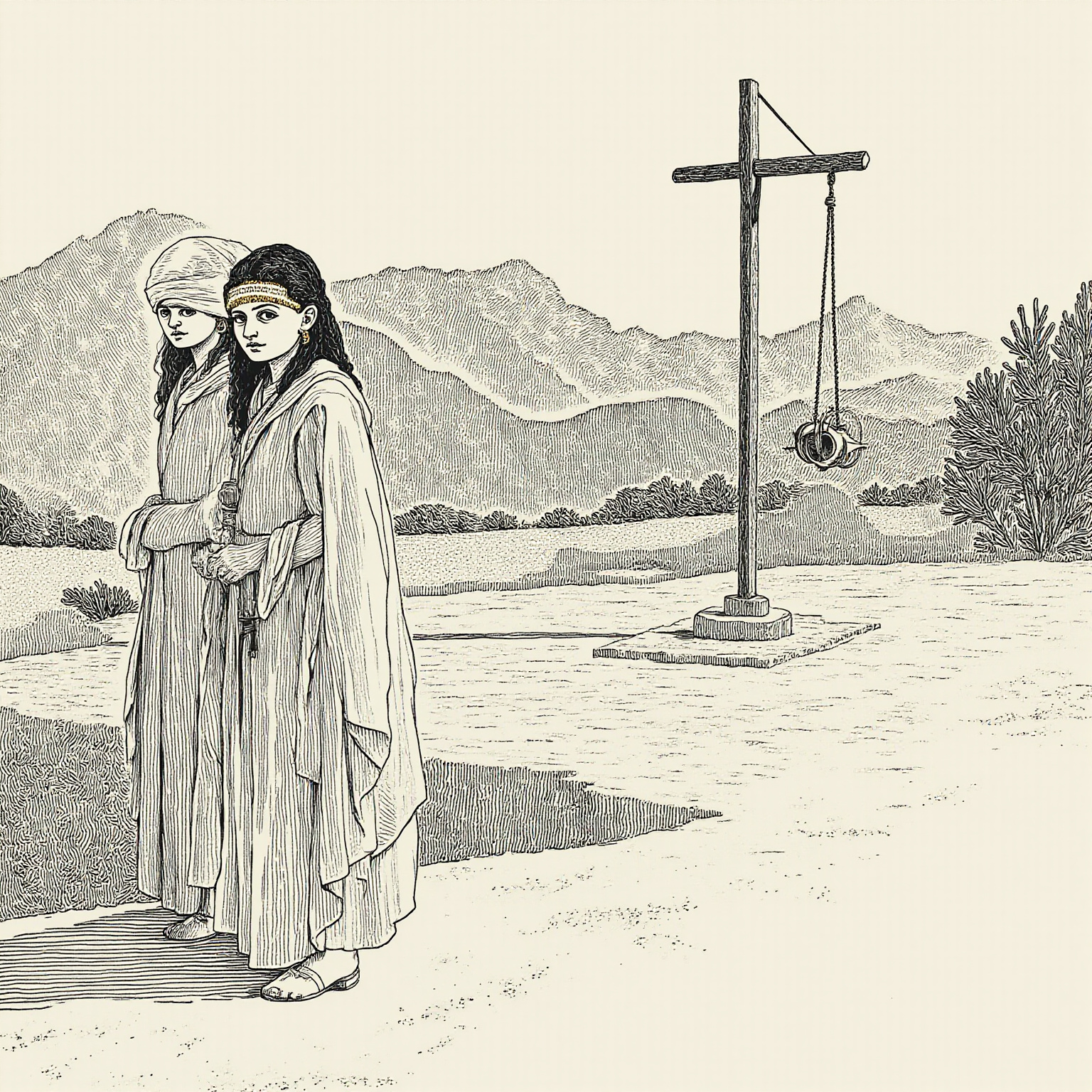
There is no event, however strange, that does not have its explanation in some Arabian chronicle.
再离奇的事,也都能在某一卷阿拉伯编年史里找到它的来由。
金句 · 卷二 · 摩尔人公主
They're the book's most unsettling shape-shifting figures. Their true identities point to an underground Muslim secret society — a network the head of the Gomelez family has run for centuries, quietly preparing to return to the surface world. The old man draws Alphonse through sixty-six days of trials, and the two princesses are the layer of that trial most likely to be misread: you take them for temptation, for desire, for a haunting, and only in the last chapter do you learn they've been watching the candidate for their patriarch the whole time. A good part of the book's answer is hidden in the pages where their faces keep changing.
The Trial, and the Man Behind It
Past the halfway point, the answer starts surfacing — not all at once, but skin by skin. Alphonse's ordeal turns out not to be a string of random events but an initiation staged from start to finish by the head of the Gomelez family. This elder, living out of sight underground, was in his prime forty years ago and is now nearing the end of his life, searching for someone to carry on a secret society centuries old.
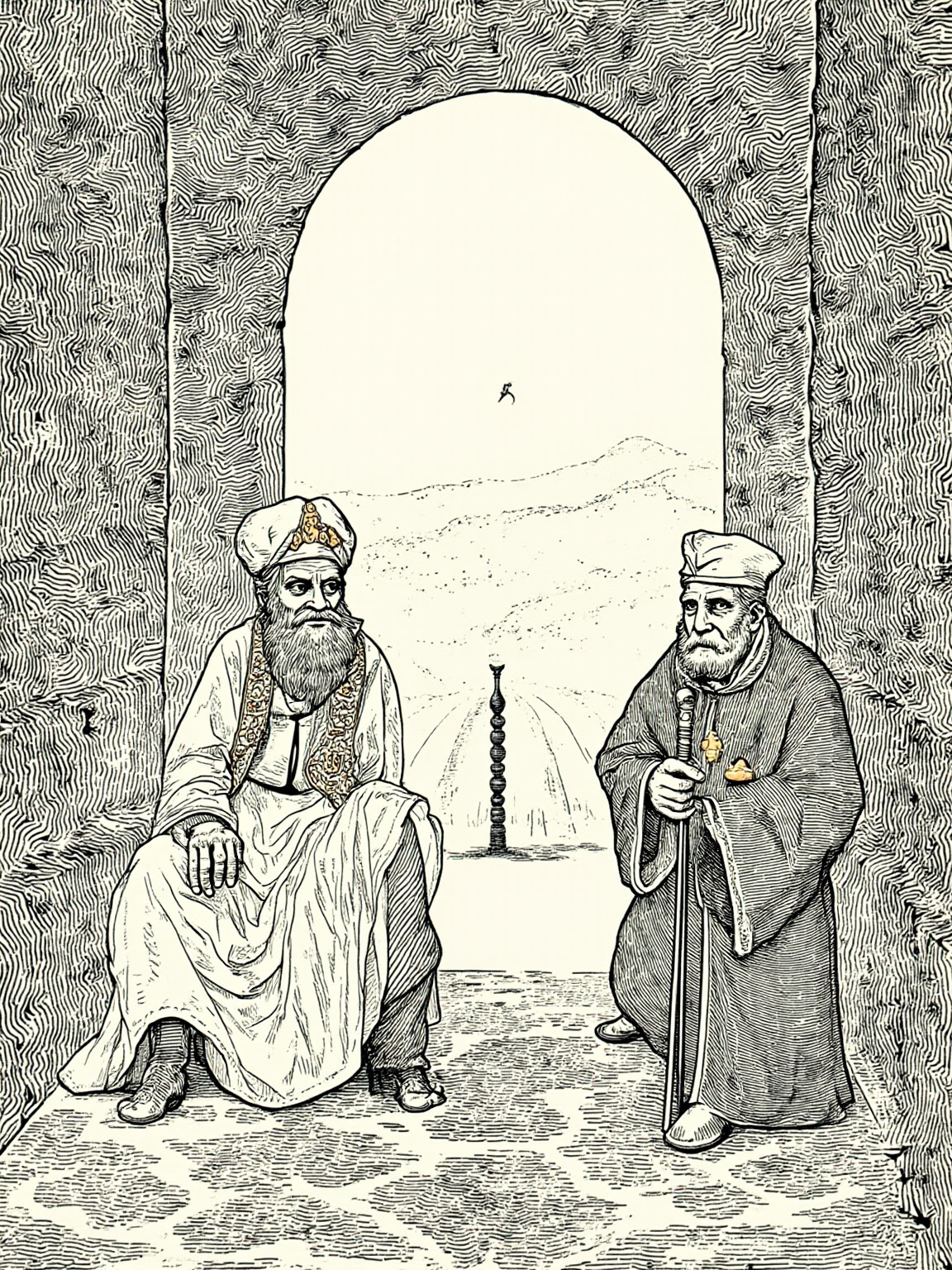
He had reached the age of forty years, that solemn turning-point of life at which great resolutions are taken.
他已到了四十岁——人生里那个庄严的关口,大决心都是在这一刻定下的。
金句 · 卷三 · 族长现身
The trials come one after another: keeping an oath beneath the gallows, working a long-handled hammer in an underground gold mine, surviving a flooded shaft. Each one he clears thins the fog a little, and a new story slots itself in — some just to pass the time, some laying groundwork for the trial to come. The sixty-six days Alphonse records in his diary are themselves a prop in this ceremony.
Sixty-Six Days, and the Door That Closes
By the end of the sixty-six days, Alphonse's courage earns him gold, honor, a marriage and children — a respectable place to land. The correspondence between the underground Muslim society and the world of the inn above is revealed: the palace, the mines, the water channels beneath those bare hills turn out to be a mirror of the inn's world, only flipped face down.
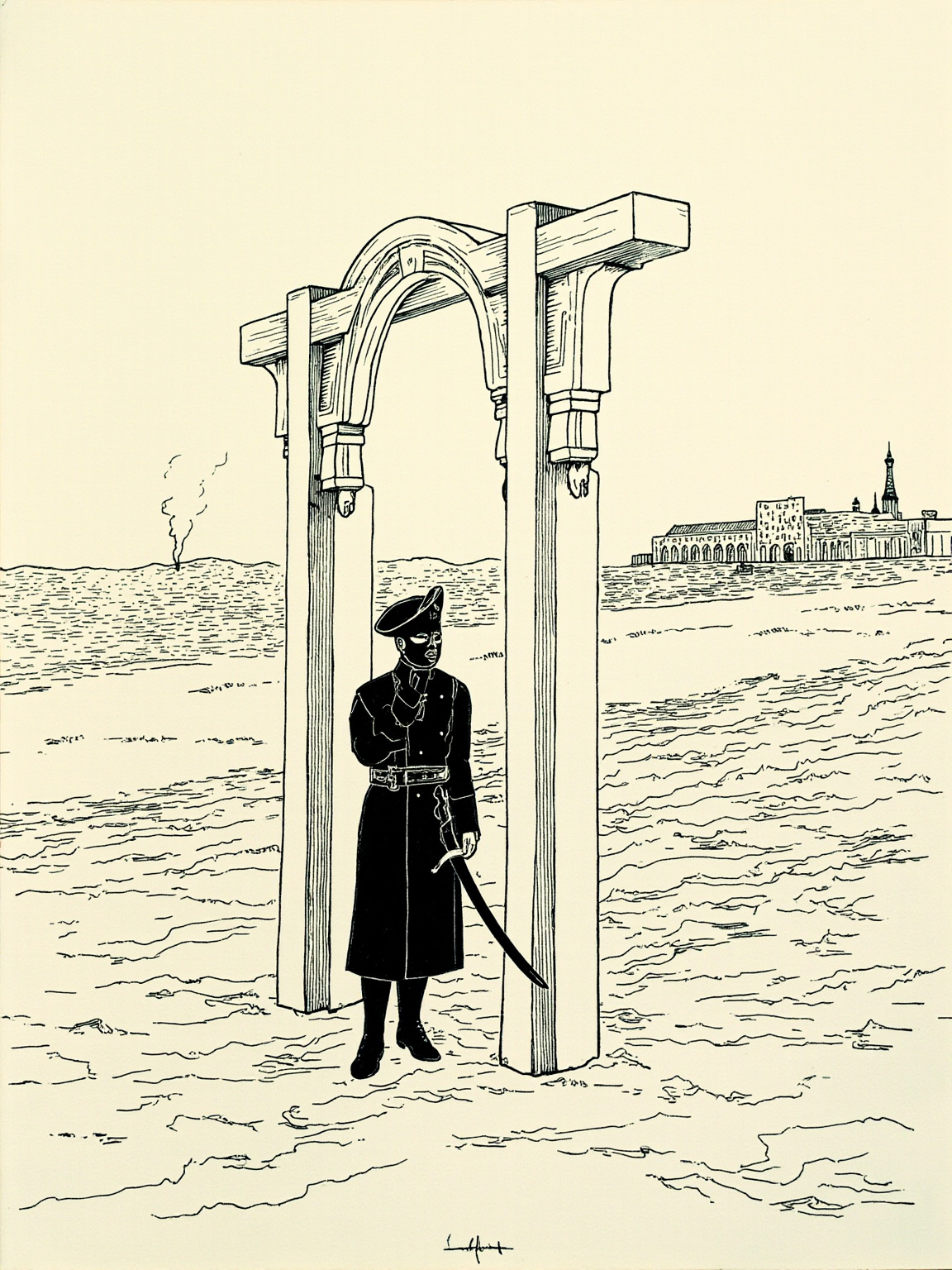
The nested boxes close their exit at the deepest point of the stack. The French officer on the outer frame is the finder, Alphonse on the inner frame is the recorder, Avadoro's story pushes the world out into the far reaches of the picaresque and then hands it back to Alphonse — a maze of stories with no real end, its door left open.
Why It's Remembered
Borges, Buñuel, Scorsese, Coppola, David Lynch, Calvino, Salman Rushdie, Pushkin — pick almost any name and odds are they've mentioned this book somewhere. Tzvetan Todorov even used it to define the boundaries of the fantastic as a genre. In 1965 the Polish director Wojciech Has turned it into a black-and-white film, later restored with money from Scorsese and Coppola, and it's still regarded as a classic of cinema today.
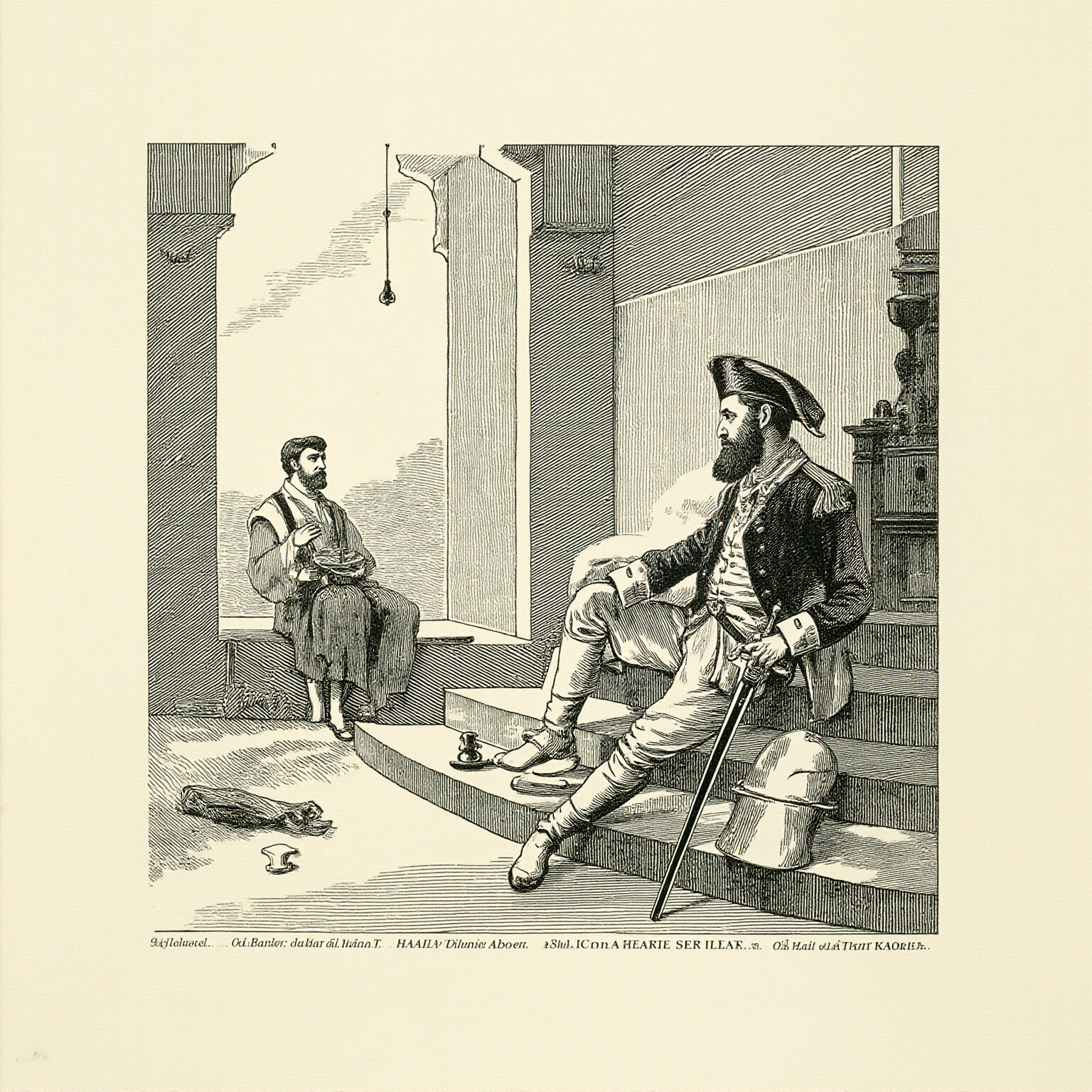
Reasons to Read the Book Itself
What the companion guide can give you is the map to the maze's entrance — where the gallows stands, who Alphonse is, how the boxes nest inside each other. But the text itself offers three things no companion guide can: first, every layer you read further into forces you to recalibrate your own line between reality and hallucination, and that's only available by walking through it yourself; second, those long stretches of dialogue between Avadoro and the old men in the tower read like a comedy duo if you rush them and like an academic shouting match if you slow down, and nobody else can hand you that rhythm secondhand; third, the book's close to nine hundred and thirty-six pages are themselves part of its argument — a story like this was never meant to be told in a few sentences. There's a fourth thing the guide can't give you, and it's the detail that lingers longest after you close this page: the cup Emina and Zibeddé hand Alphonse one night — is it tea, a drug, the last stage of the initiation, or one final test a princess is running for her patriarch. Their last words in the book come on a page near the close of the sixty-six days, and that fragment of dialogue is left half-written. You won't know how it ends until you turn to that page yourself.
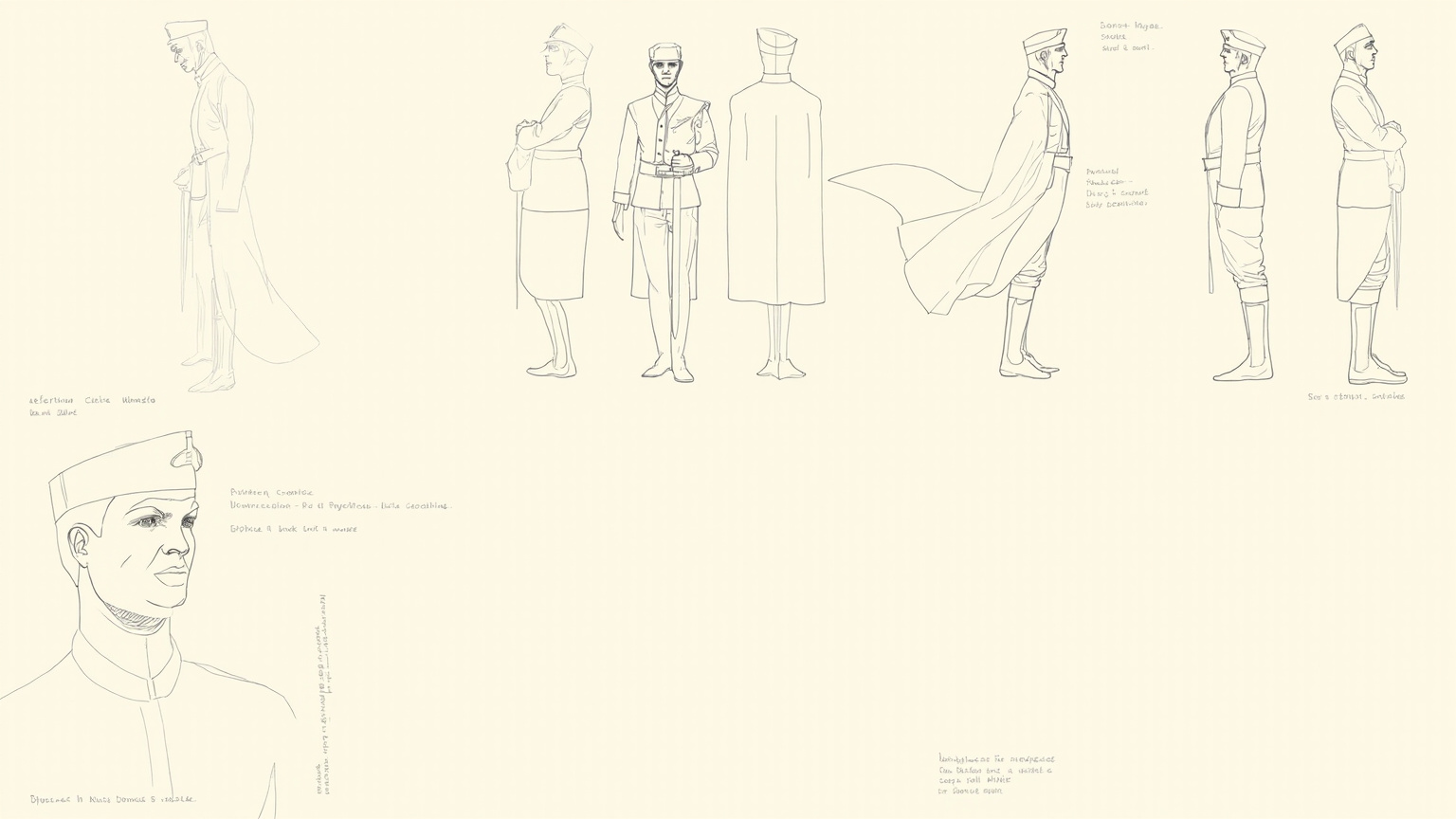
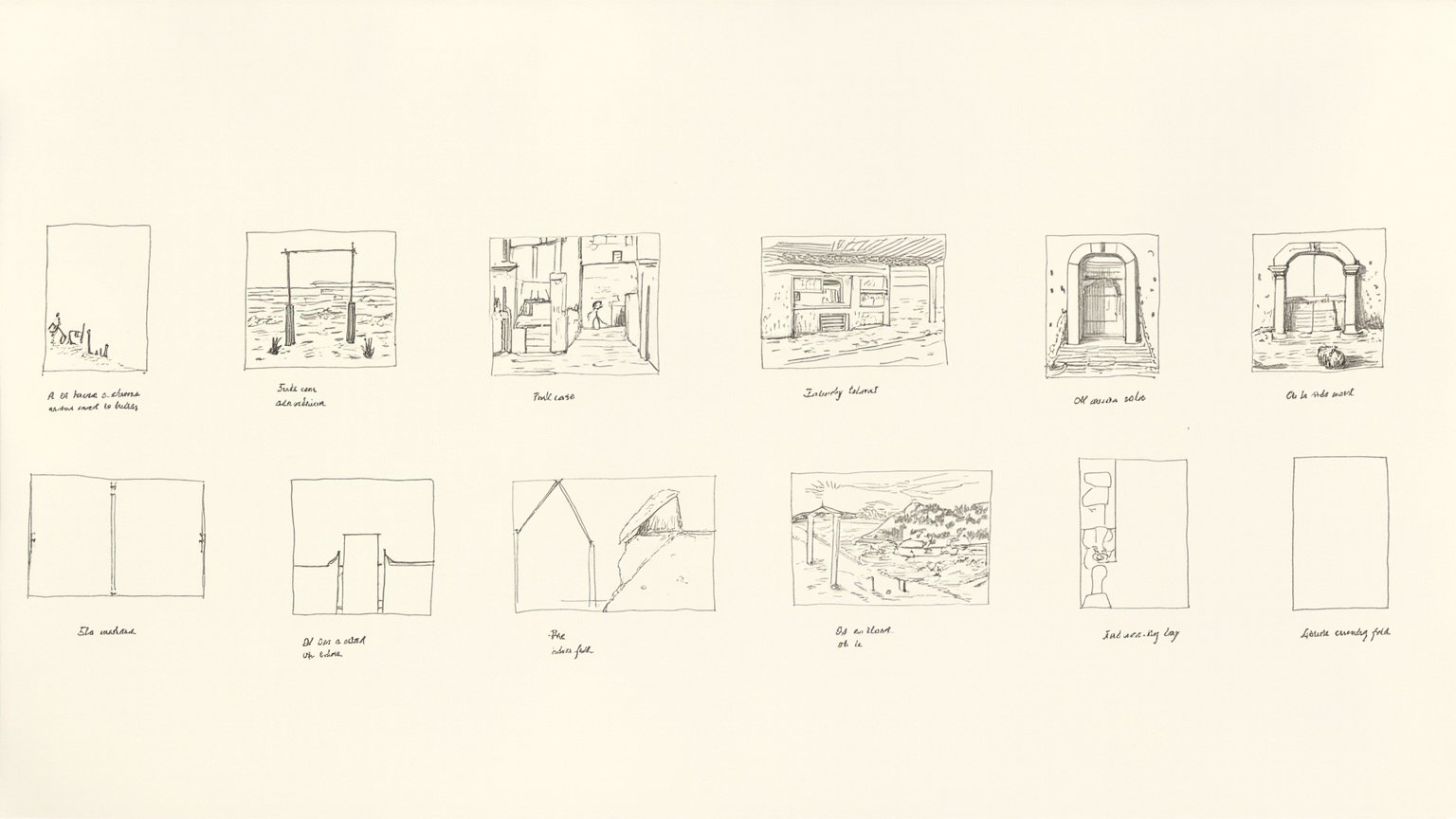
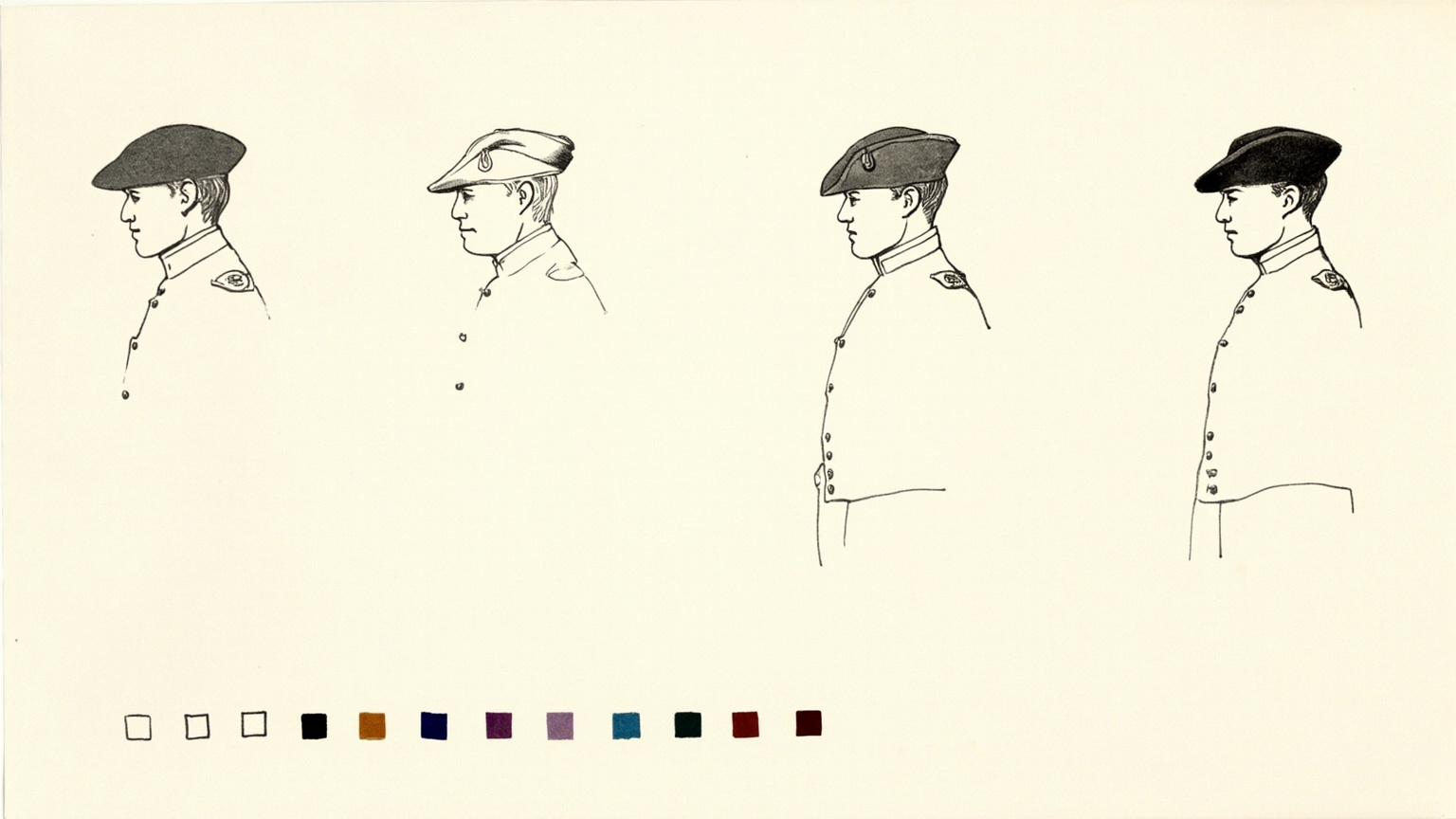
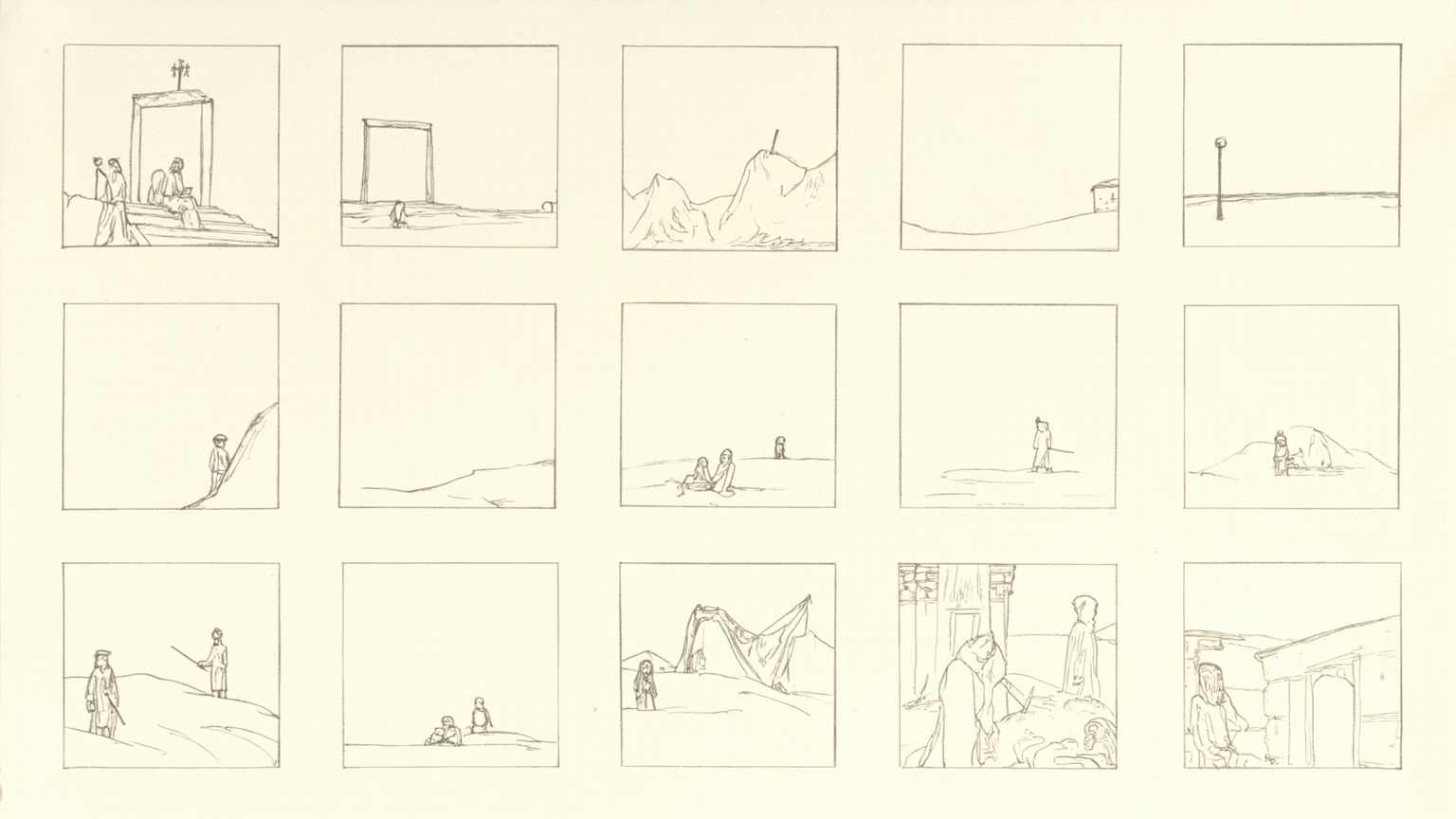
Art Direction4 plates
Before the guide was written, this book got a visual foundation — every illustration you just read grew out of it.