The Travels of Marco Polo (Il Milione / Livre des Merveilles) · Companion Guide
马可·波罗游记
一个威尼斯商人在热那亚牢房里的口述,把十三世纪的整个东方写进了一部《奇闻录》
Opening: A Prison Cell, an Extraordinary Book
The prison in Genoa was damp and cold. A Venetian merchant leaned against the wall; across from him sat a writer from Pisa. The merchant said he had been to the East, to a city called Dadu, where the palace roofs shone too bright to look at, where people bought things with paper money, and where a single street might carry a dozen kinds of spice. The writer took out a quill and wrote it all down. The year the ink touched the page was 1298.
What Kind of Book Is This
The Travels of Marco Polo was dictated in 1298, written down in a strange hybrid of Old French and Italian. Its original title was The Book of Marvels; the name that stuck was Il Milione, supposedly because Marco kept tacking a million onto every number once he got home, until his neighbors turned it into a nickname. It was the first book to make the East a place a European could actually walk to, and buy things in. Before Marco Polo, people in Europe knew the East had a khan, silk, and spices, but all of it came wrapped in legend. This book pulled the wrapping off and replaced it with lists: cities, tariffs, streets, weddings, funerals. Chinese readers tend to feel an old familiarity with this book, since it turns up in middle-school textbooks. It has become something like the first concrete footnote to the phrase exchange between East and West, and no reading list on the Silk Road or world history gets around it.
People and World
Four names are worth fixing in mind before anything else. Marco Polo, the Venetian merchant who traveled east as a boy with his father and uncle, is the voice of the book. His father Niccolo and his uncle Maffeo had already made one trip east before Marco was born; on the way back, Kublai Khan asked them to return, and this time they brought along seventeen-year-old Marco. Kublai Khan, founder of the Yuan dynasty and ruler from his capital at Dadu, is the eastern emperor Marco served for years as an adult. The book paints him not as a conqueror with a whip but as a curious old man who loved hearing stories about Europe. Last is Rustichello da Pisa, the writer who took Marco's dictation in prison. Rustichello had made his name on Arthurian romance, and he shaped the telling into the chivalric romance style popular at the time, which explains why a travel account is full of such ornate language.
The world of this story spans the whole of Eurasia in the second half of the thirteenth century. It begins at the Church of the Holy Sepulchre on the eastern Mediterranean coast, crosses Armenia and Mesopotamia, passes through Bukhara and Samarkand in Central Asia, climbs the Pamirs, follows the relay-station road along the edge of the Taklamakan, and finally reaches Kublai Khan's Dadu. This is a world stitched together by the Pax Mongolica: a merchant could carry gold coin from Venice to Beijing without trouble, as long as he stayed clear of the armies. One detail here surprises most readers. Cathay, in Polo's usage, means north China, and Manzi means the old Southern Song territory in the south. These are Mongol-era geographic terms, not the loaded words they became later, and should be read in a thirteenth-century voice.
1271: Three Travelers Set Out Again
In 1271, Niccolo and Maffeo left Venice with Marco, now grown, in tow. Ports on the eastern Mediterranean were their first stop: the mountains of Armenia, the salt air of the Persian Gulf, the old cities of Mesopotamia, places few Europeans had ever set foot in. Along the way they slept in the khan's relay stations, ate the flatbread and mutton kept there, and paid for everything with paper money the Yuan state issued, the Zhongtong note. A thin sheet of paper stamped with the khan's seal could be exchanged for gold, silver, and goods at any station or market. To a European it looked like a conjuring trick, but it was the world's first currency backed by state credit. Three years on, they crossed the Pamirs, entered the oasis towns on the edge of the Taklamakan, and followed the Silk Road east, reaching Dadu in 1275. Marco was just past twenty, exactly the age at which a merchant's son is worth betting on.
What stands out craft-wise in this stretch is pacing. Marco Polo does not paint scenery; he writes logistics: how relay stations swapped horses, how to tell real paper money from fake, how checkpoints levied tolls. The details a merchant cares most about turned out to be exactly what let fourteenth-century readers understand, for the first time, how this continent actually worked.
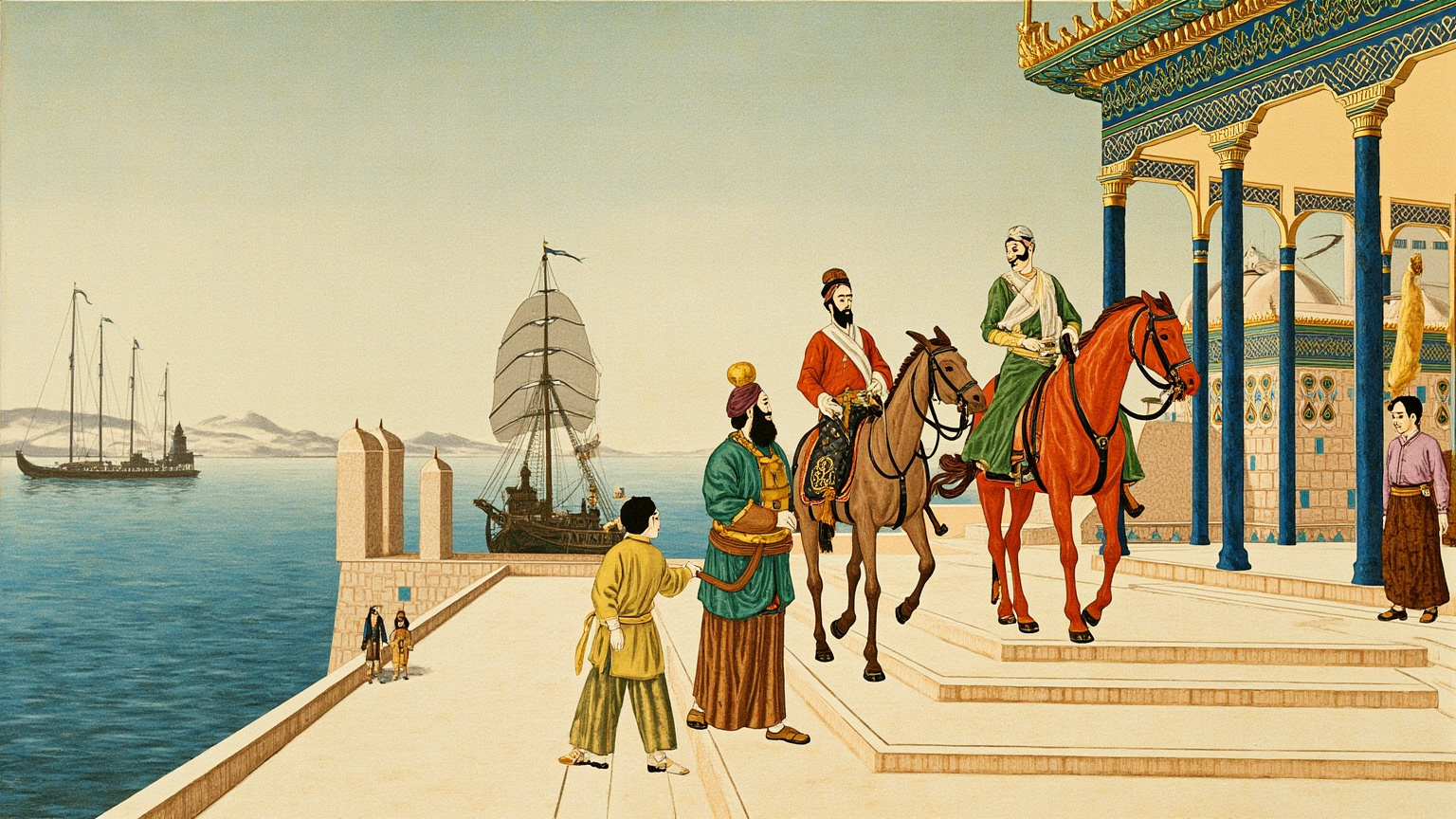
You must know that for three months of the year — December, January, February — the Great Khan resides in the capital city of Cathay, called Cambaluc.
你们须知:大汗一年之中有三个月住在大都,那城便是契丹的都城。
金句 · 第2卷 · 大都的三个月
Years in Dadu: A Man in Kublai Khan's Circle
Marco spent years in Dadu. He learned Mongolian and several other eastern languages, which made him one of the few Europeans in Kublai Khan's circle who could translate on the spot. He ran errands for the khan, touring the empire, carrying missions south, reporting back to Dadu. The palace roofs in Dadu were said to be gilded, and market stalls carried a dozen kinds of gem and spice. Yuan China already had paper money, a relay-station network, and cast cannon, all of it unheard of in Europe at the time.
The way the book portrays Kublai Khan is worth noticing. It does not show a conqueror on the battlefield; it shows an old man in his great hall who falls silent for a long time after hearing a story about Europe. Marco records, more than once, the khan's interest in Christianity and his curiosity about Western scholars: the high point of a thirteenth-century European fantasy about a wise ruler in the East, and also a real fragment of the transcontinental conversation the Pax Mongolica made possible.
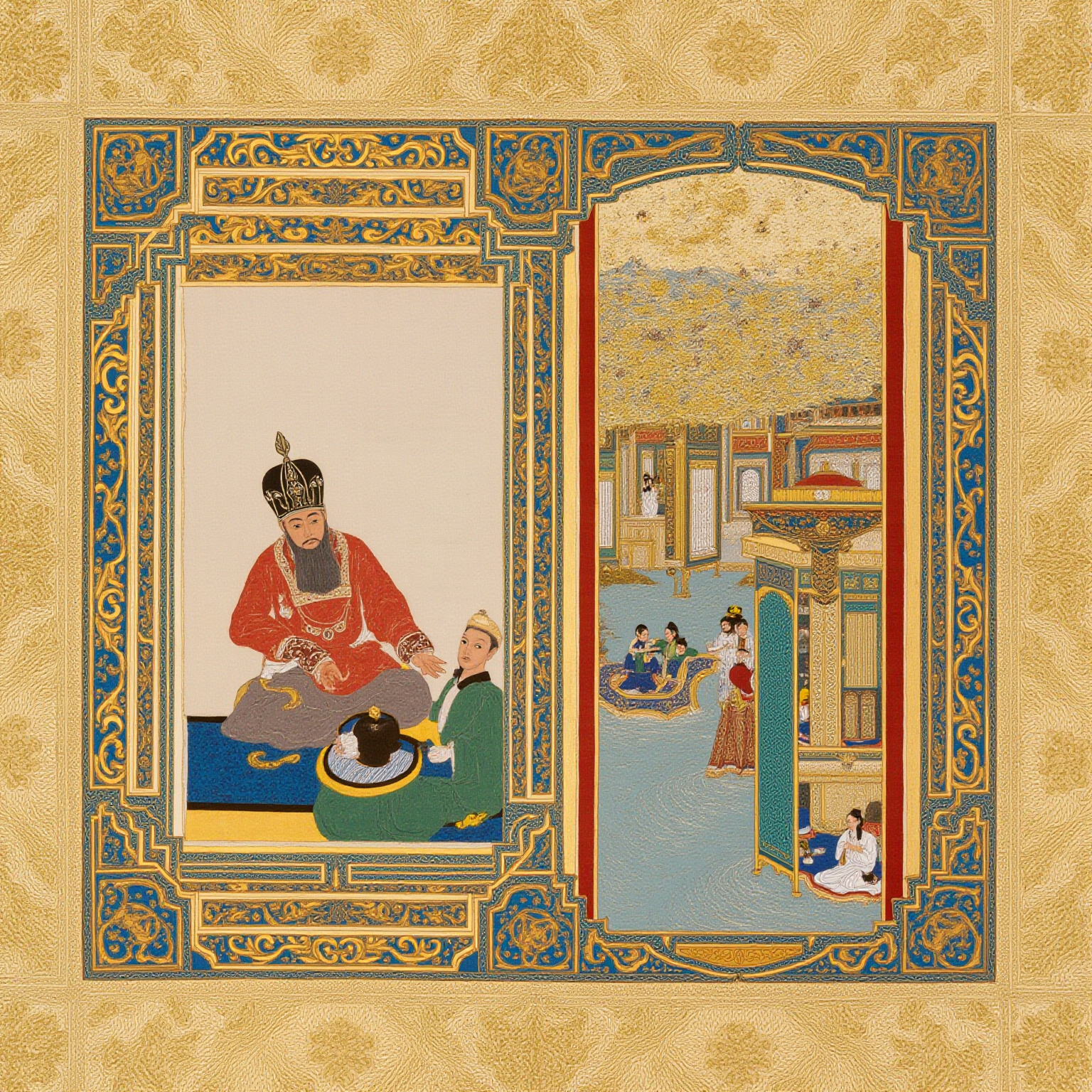
He it is who sends his messengers and envoys throughout the world, and he is the most mighty lord of all the Tartars.
他派出使节遍及天下,是鞑靼诸王中最有权势的一位。
金句 · 第2卷 · 忽必烈汗的威仪
North and South: Cathay and Manzi
Marco writes Yuan China as two halves. For Cathay, the north, he covers the palaces, markets, paper money, and relay stations of Dadu. For Manzi, the south, the old Southern Song territory of Jiangnan, he covers Hangzhou, Suzhou, Fuzhou, and Quanzhou. Hangzhou, in his account, is the greatest and noblest city in the world, its streets wide enough for ten carriages abreast, its lakes and bridges everywhere, silk and porcelain piled like small hills. Quanzhou was the greatest port in the East at the time, its harbor crowded with ships from Arabia and India, masts packed as thick as a forest.
Setting these two halves side by side gives the book a real cross-section of depth. A European reader discovers, for the first time, that China is not a single legendary Cathay but two entirely different textures of life: the steppe customs and relay-station order of the north, the canal cities and port trade of the south. I stopped here on my own reading, because this was the moment I understood why later navigators, merchants, and diplomats kept coming back to this book. What it hands you is not an anecdote. It is a map you can actually walk.
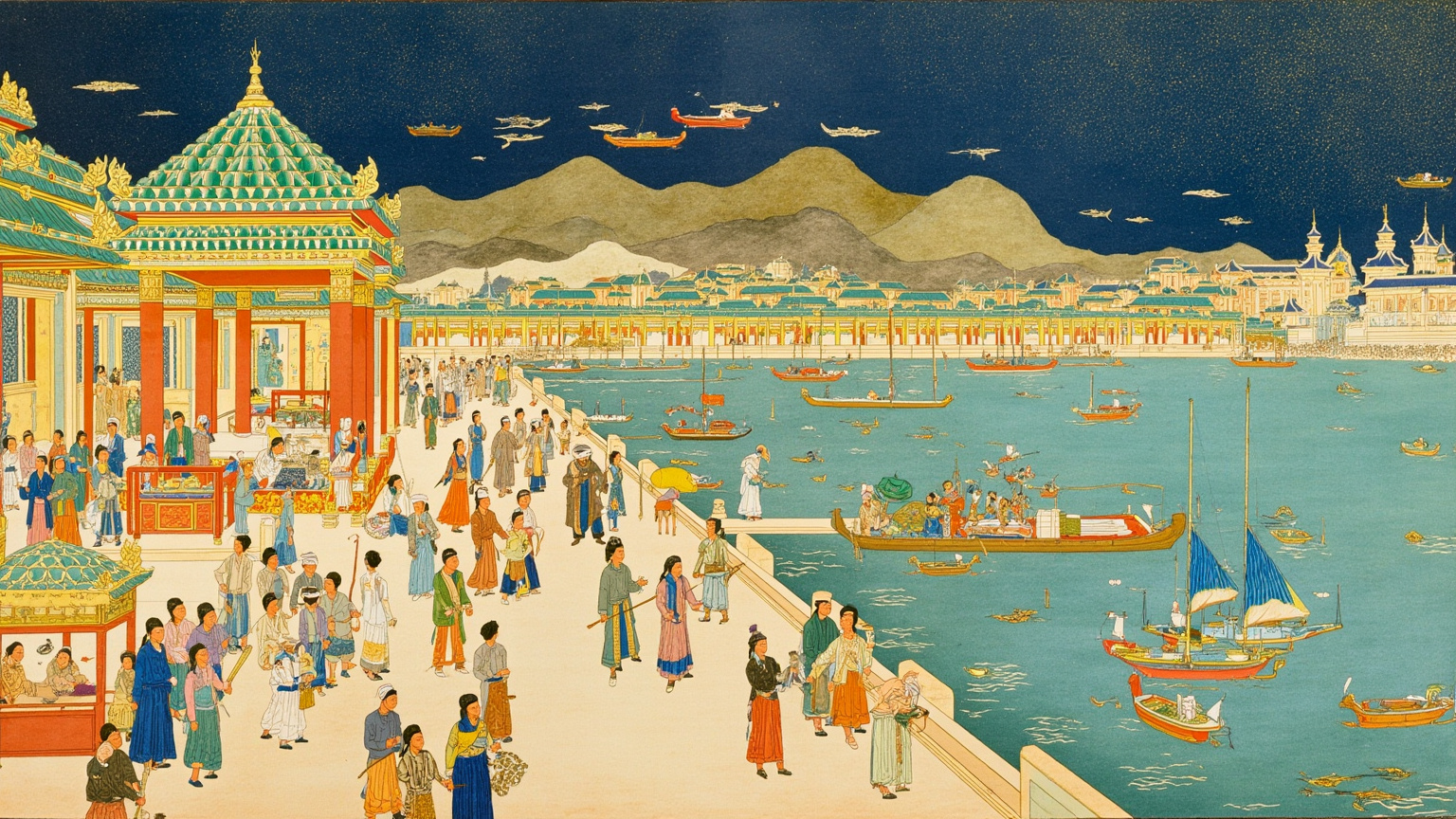
Quinsai is the finest and most splendid city in the world — so great that it seems past all belief.
行在(杭州)是世界上最华贵最宏伟的一座城,大到令人难以置信。
金句 · 第2卷 · 行在城
Southwest and the Southern Seas: From Dadu to the Land of the Gold Teeth, From Quanzhou to the Sea
Marco did not stop at Jiangnan. Southwest of Dadu, he traveled to what is now the border between Yunnan and Burma, territory the Mongols had only recently conquered. The local people there gilded their teeth, chewed betel nut until it stained their teeth, and plowed their fields with elephants. Marco records these customs plainly, without treating them as a curiosity and without romanticizing them, simply setting them down passage by passage for European readers. It stands as one of the closest, farthest-reaching accounts a thirteenth-century European left of this part of the continent.
Further east, he reached Quanzhou and boarded a seagoing ship. Sailing out of Quanzhou, he went south along the coast into the Indian Ocean. Calicut, on India's west coast, the same spice port Vasco da Gama would later reach, is already, in Marco's account, a clearing house for pepper, cloves, and cinnamon. Further south still, at Quilon, pearls and gems were priced by weight in the market, on Arab-style scales with counterweights. This stretch reads most like a merchant's ledger: no lyricism, just a count of the goods.
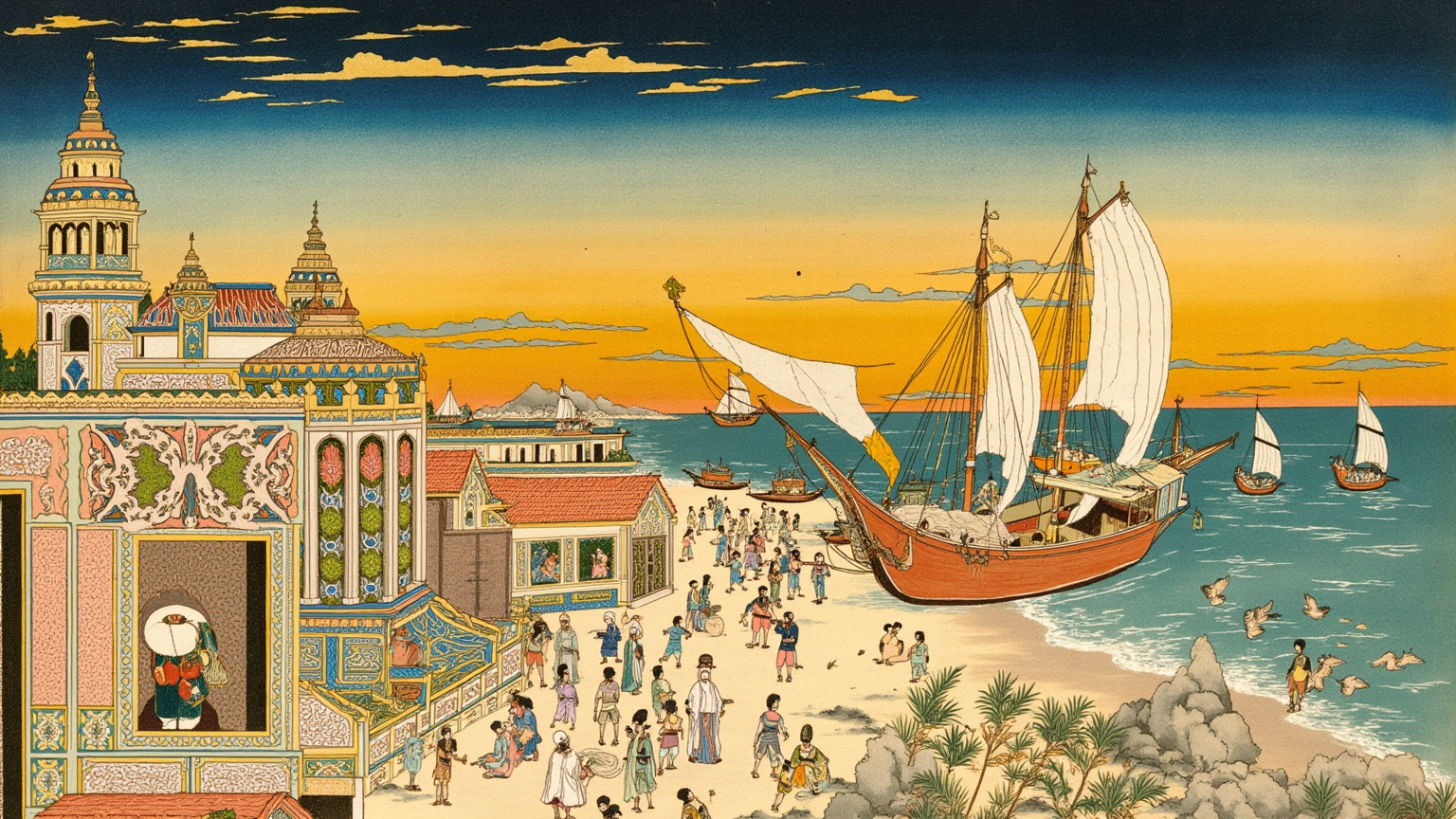
Know that throughout the year there come to this city of Calicut more than a hundred ships laden with pepper and other spices.
须知:每年来到卡利卡特港的胡椒船和其他香料船,有一百多艘之多。
金句 · 第3卷 · 卡利卡特胡椒港
The Journey Home: The Sea Mission of 1292
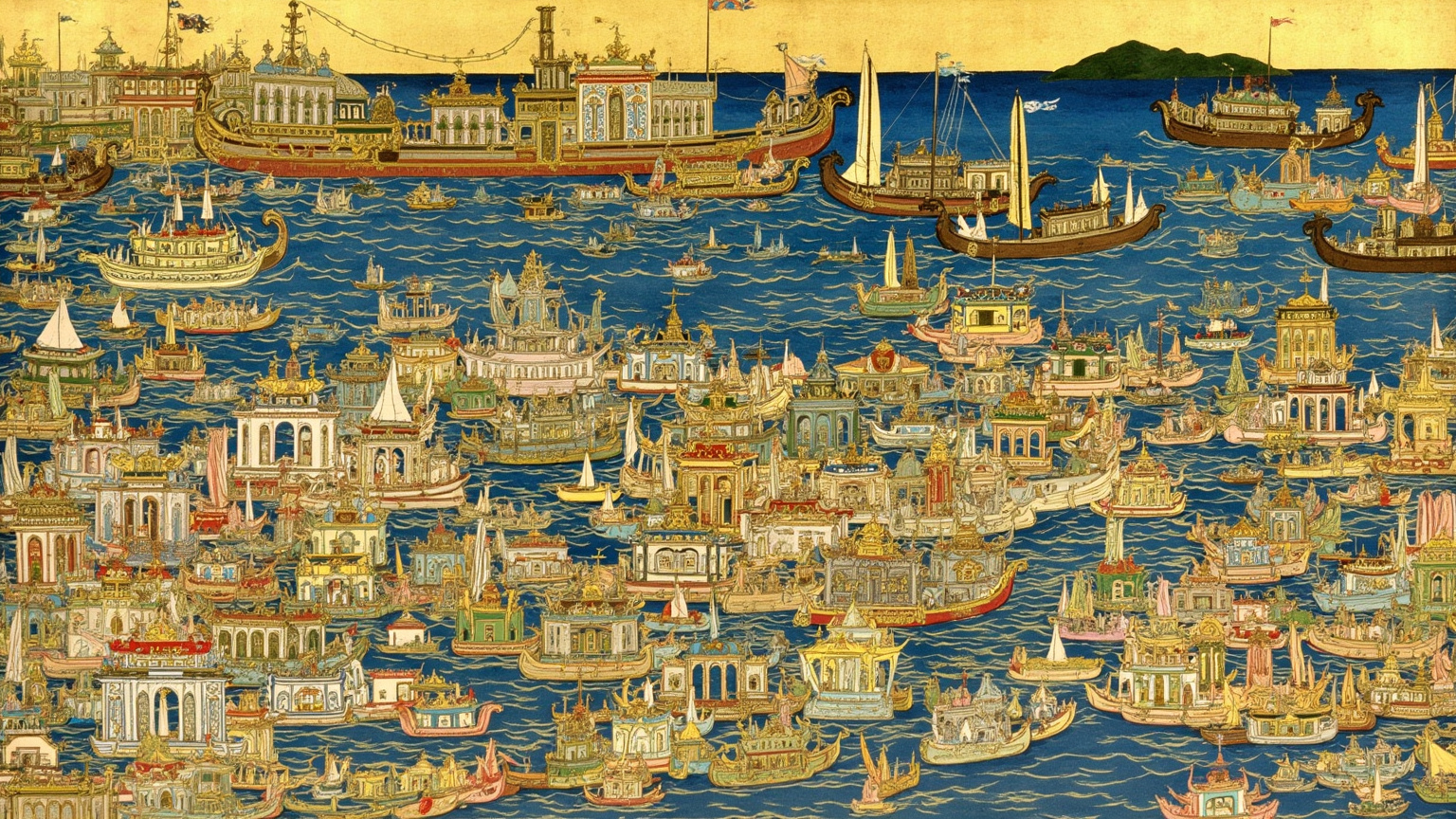
Around 1292, Marco was given an assignment: escort a Mongol princess to Persia for a political marriage arranged by Kublai Khan, and it became his passport home. He sailed out of Quanzhou, by way of Sumatra, Java, Ceylon, and the Arabian coast, then north to Hormuz on the Persian Gulf, overland through Baghdad and Tabriz, on through the Black Sea and Constantinople, and finally back to Venice in 1295.
Three years, by sea and by land. This is the most epic stretch in the whole book: a Mongol princess's wedding fleet, sailing from China to Persia. Marco records every port, wind, island, and product along the way, turning the book's final section into something close to an Indian Ocean sailing manual. One thing worth noting about the craft here: Rustichello's prose gets at its most romantic in this stretch, but Marco's material keeps the romance grounded. Dolphins, monsoons, pearls, coconuts: all of it solid cargo.
Epilogue: The Night the Pen Touched Paper in a Genoa Cell
Marco Polo, back in Venice in 1295, did not get to enjoy his quiet years for long. Three years later he was captured in a naval battle against Genoa and thrown into a Genoese prison. His cellmate happened to be Rustichello da Pisa, a writer who had already written the Arthurian romance Merlin and was casting around for new material. The two of them clicked at once: Marco talked, Rustichello wrote. A book took shape between the stone walls of a prison cell.
After the book was finished, Marco was released and went back to Venice, where he carried the nickname Il Milione for the rest of his life. He is said to have tacked a million onto every number he mentioned, and his neighbors took it for bragging, though he was probably just using the pricing habits he had picked up from eastern merchants. That last laugh closes out a book that spans two continents with a bit of gossip in a small Venetian square.
What It Is About, and Why It Is Worth Reading
On the surface, this book is about the East: palaces, paper money, spices, gems, relay stations, customs. What it is actually doing is one thing: placing a medieval European inside a cross-section of a unified empire and letting him look and count at the same time. How to spot a fake Zhongtong note, how tariffs were calculated, how relay stations swapped horses: these details are the spine of the book.
Its place in literary history is as the founding text of the travel-writing genre. Everything from The Travels of Sir John Mandeville to nineteenth-century expedition narratives carries its influence. But it also has a surprising honesty to it. It never mentions the Great Wall, foot-binding, or tea, the symbols of China that later imaginations would fixate on, and it never turns the East into either paradise or hell. What it delivers is a merchant's business report, and once a writer of romances polished that report, it moved Europe more than any praise could have.
For a reader today, it works as a two-sided mirror: it reflects thirteenth-century Yuan China, and at the same time it reflects how Europe of that era imagined China. Neither side gets it entirely right, but together they add up to a full scene of encounter, something that would not be told again until the Age of Discovery, and The Travels of Marco Polo told it first.
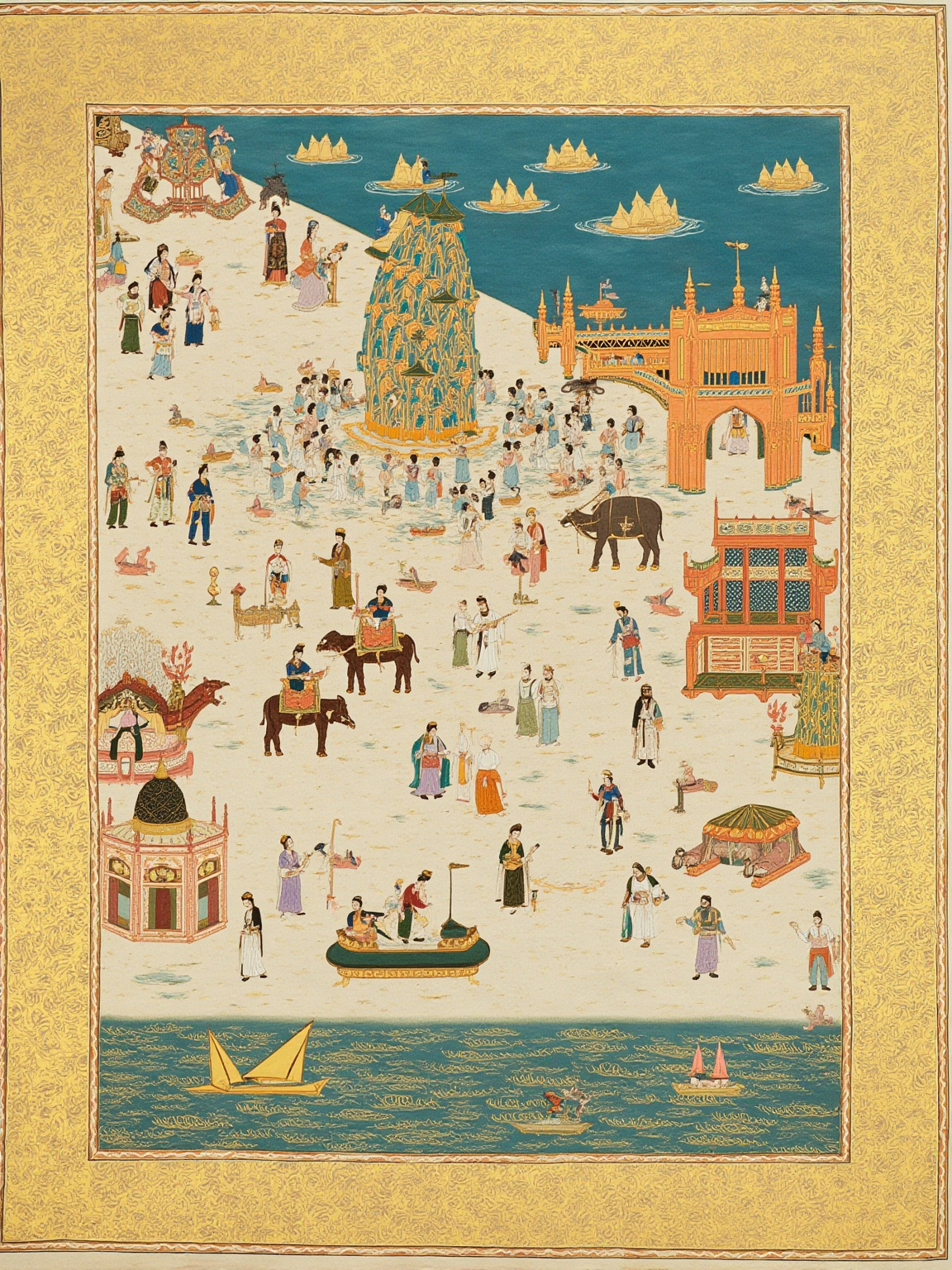
And so the two brothers departed from Venice with Marco, and journeyed toward the Great Sea.
于是兄弟二人带着马可从威尼斯启程,向大海进发。
金句 · 第1卷 · 重返东方之途
Why the Full Text Is Worth Reading Even After You Know the Story
A companion guide gives you the map. The text gives you the ground. You already know Marco went from Venice to Dadu, and from Dadu to the Indian Ocean, but you have not seen him standing on a bridge in Hangzhou, counting the boats going by, or watched the light fall across the hall as he knelt before Kublai Khan, or been inside his head as he looked up at Adam's Peak on Ceylon. That physical presence, that hesitation and wonder that exist only on the page, is something no plot summary can give you. Rustichello's romance-writer flourishes get almost comically overblown at times, but hidden inside the excess is a thirteenth-century European's curiosity about the entire world, a concentration of curiosity that is hard to find in anything written today. Open it.
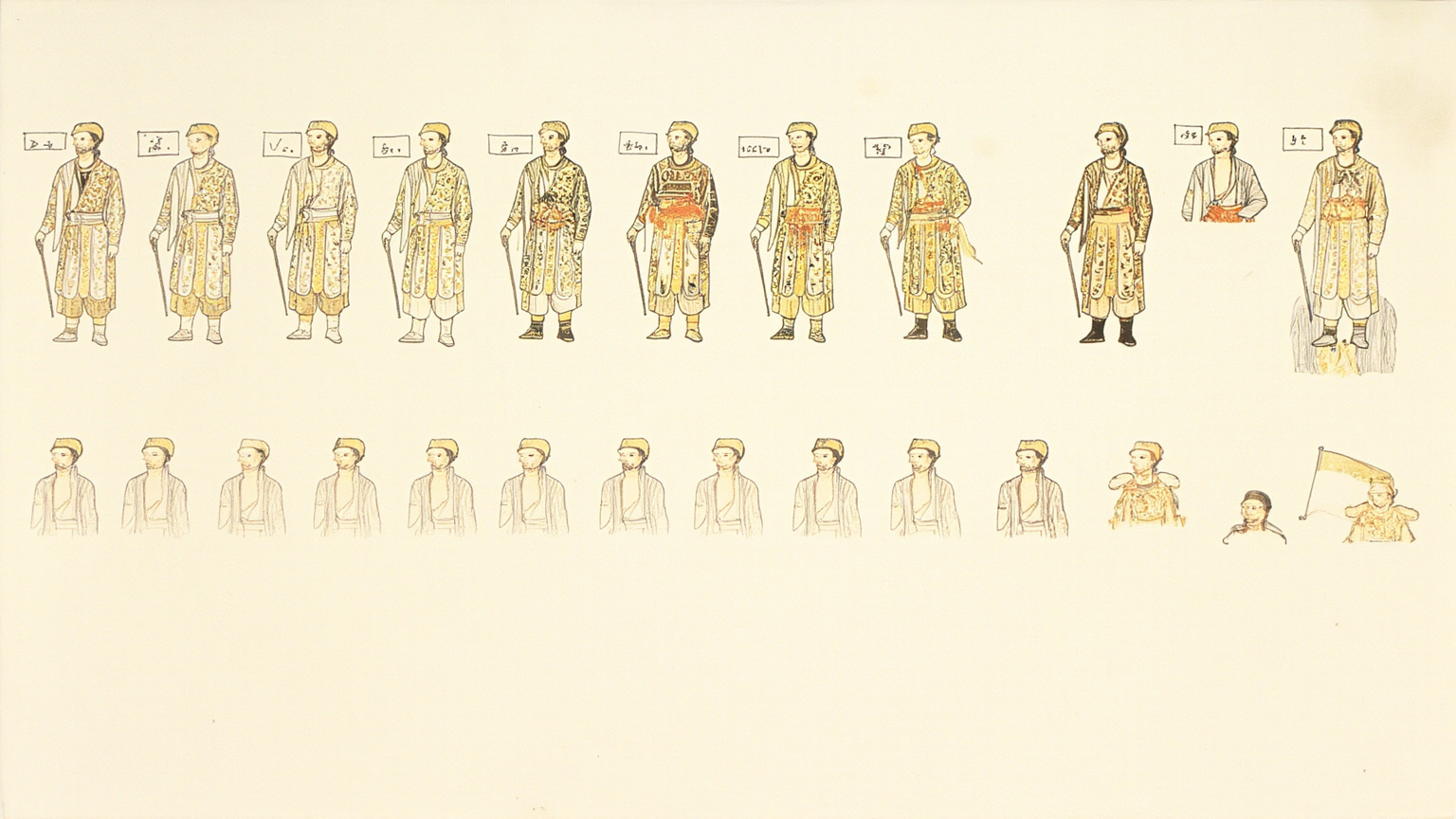
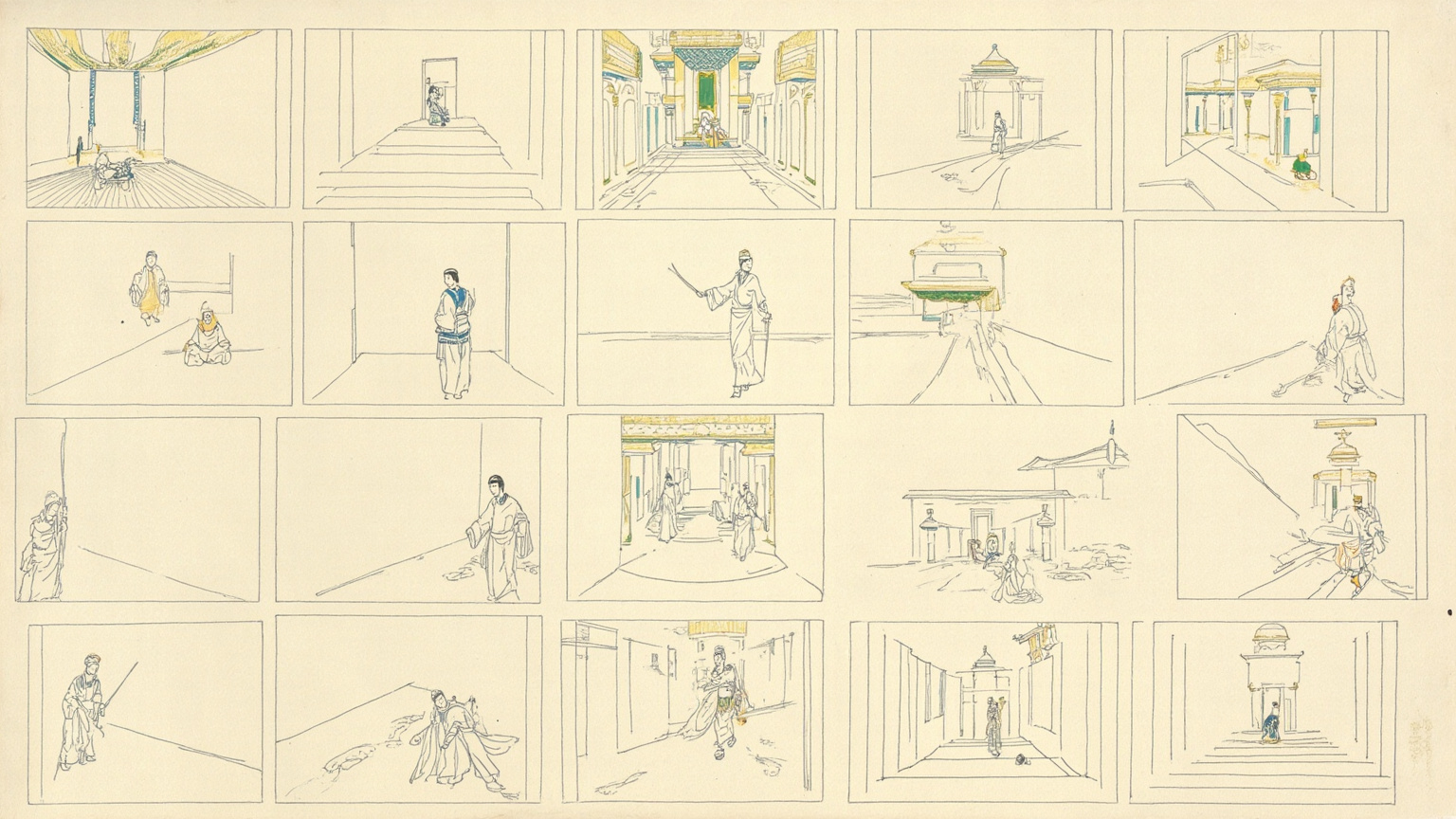
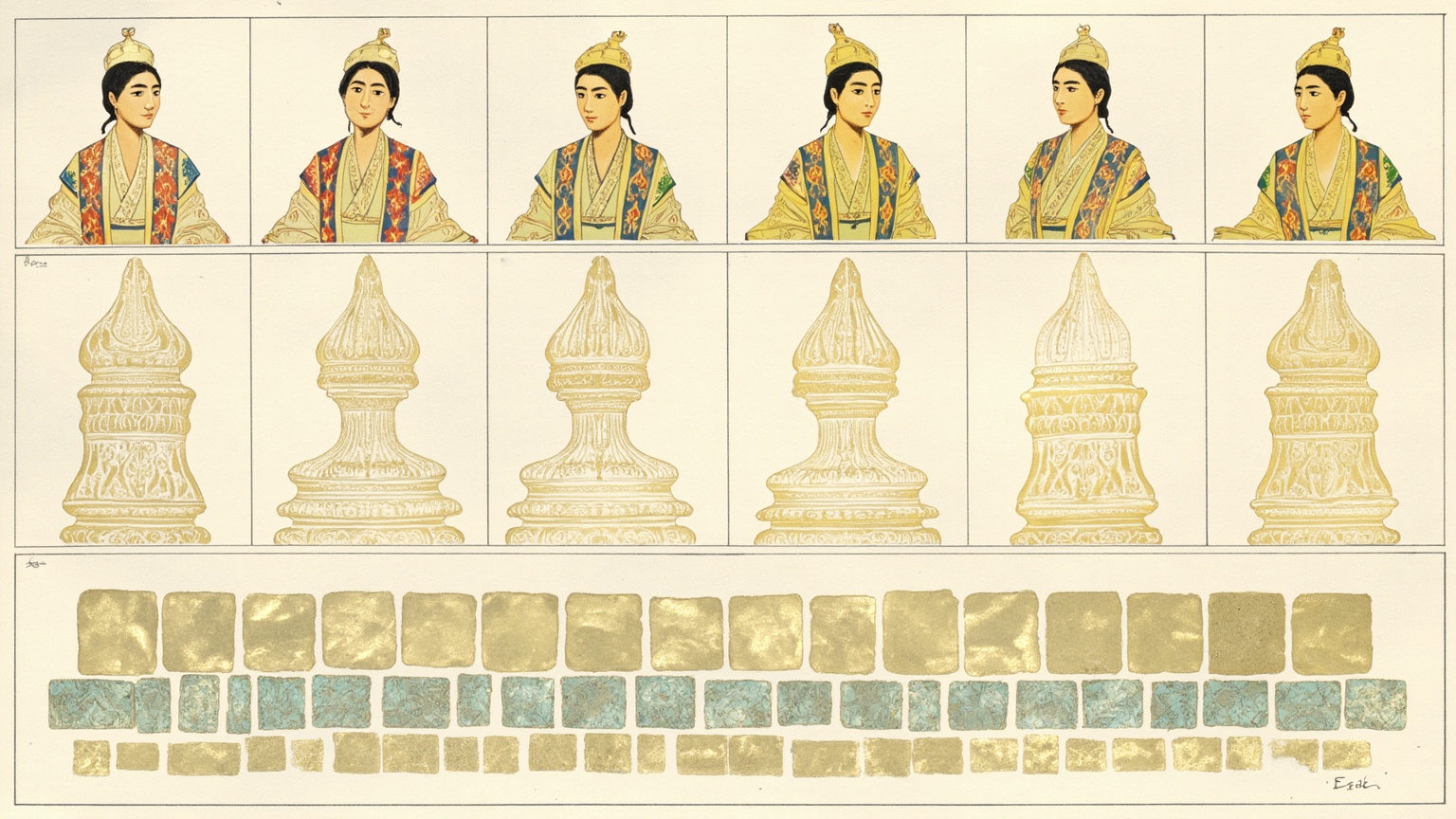
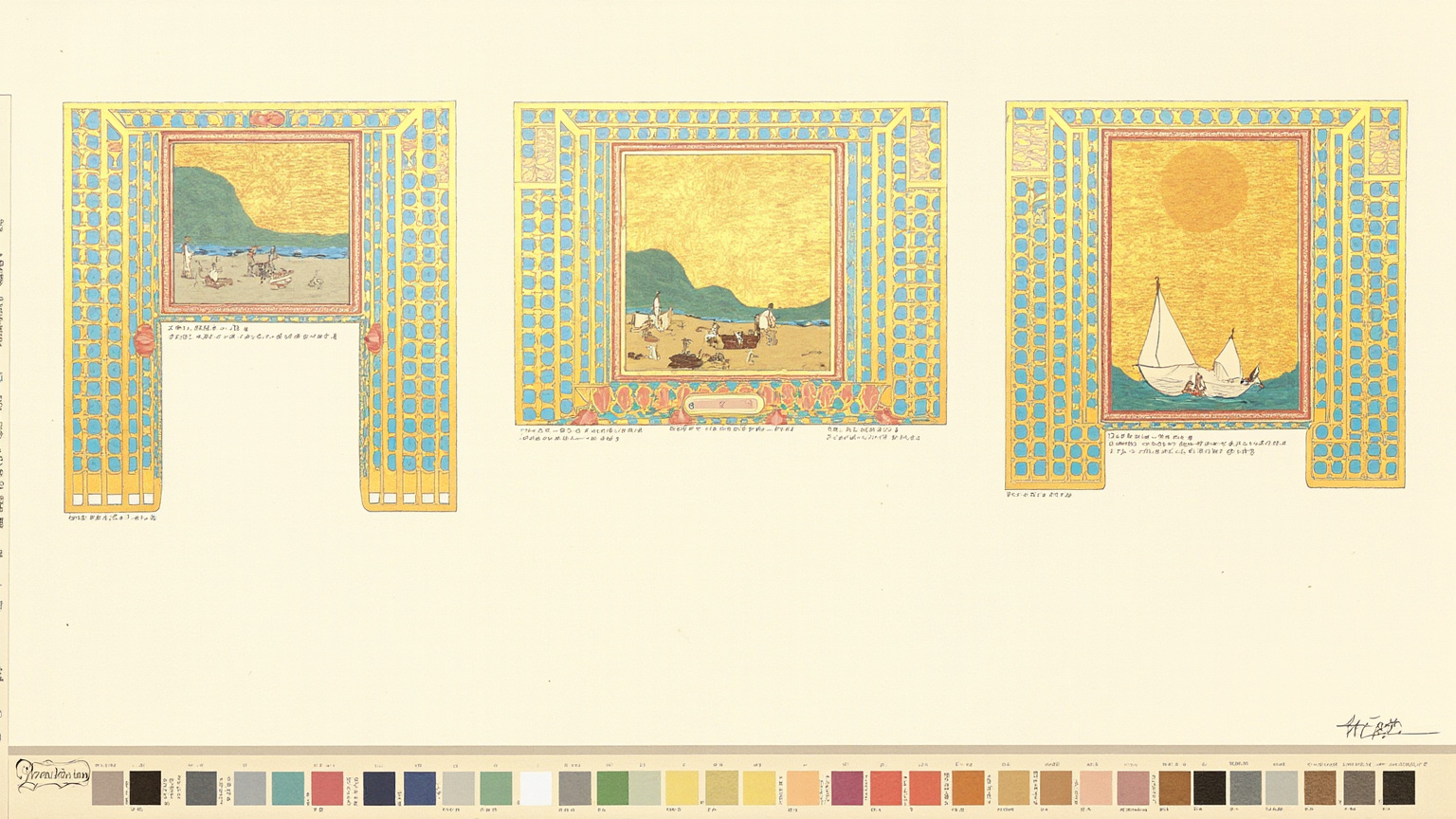
Art Direction4 plates
Before the guide was written, this book got a visual foundation — every illustration you just read grew out of it.