Melmoth the Wanderer · Companion Guide
流浪者梅尔莫斯
一幅褪色肖像始终盯着他,一扇锁门缝里漏着光——他翻开手稿,替身一个接一个拒绝了交易
An opening image: eyes that follow you everywhere.
In a garret of an old house on the Irish seafront, a faded portrait of a man hangs. The young heir John Melmoth stares at it for a moment, then turns to leave — but when he looks back, those eyes have followed him. At the far end of the garret there's a locked wooden door too, a sliver of light leaking through the crack. He can't explain either thing, so he straightens the picture frame and leans closer to listen at the door. This is the first image as you enter the book: the person in the painting is watching you.
What kind of book is this
Its author, Charles Robert Maturin, was born in late eighteenth-century Ireland. He was a clergyman by profession, writing Gothic novels as a hobby, and his most important work is The Wanderer Melmoth, published in 1820. In literary history it sits at the tail of a string of titles — The Castle of Otranto, The Mysteries of Udolpho, The Monk — those are the grandparents of Gothic fiction. Maturin's book represents one of the highest points Gothic was capable of reaching in that era. Its greatest value isn't frightening the reader; it's the way it dissects frightening into several layers.
Who's inside, who wants what
Melmoth — the Wanderer himself — is the core of the book. He made a bargain with some unseen force, trading for a life far longer than normal, but the price is this: while alive, he must find a replacement, someone to take on the debt. If they accept, he's free; if they bear it for him, they can't escape. He's both the tempter and the one trapped by that rule, unable to leave. John Melmoth, a young student and family heir, discovers the portrait and the manuscript in the garret and is gradually pulled into the story — he's the reader's surrogate within the novel. Adonijah, an elderly Jewish scholar, helps John read the manuscript and connect the fragments, a bridge with a practical function. Further in is Alonso Montecada — a Spanish monk who was approached by Melmoth and wrote his experience into his own diary. Deepest of all is Imra — a girl on a tropical island, pure as flower and bird, the one Melmoth finally confronts.
How the story opens, layer by layer
The order you read the book in is exactly the reverse of the path Melmoth himself took — he was drawn in from far to near. The first layer is John's garret: he finds the portrait, the locked door with light leaking through, the manuscript hidden inside. One manuscript opens a second layer: on the English coast, during a storm, a man named Stanton encounters Melmoth among the rocks. Melmoth makes an offer Stanton spends his whole life dreading to hear — Stanton turns and runs. The technique is clever — Melmoth's face in this passage is barely described at all, the fear entirely in the other man's reaction.
Turning further in the manuscript, we reach Spain. In a cloister beneath a monastery, a candelabrum rests in one corner of the floor, and Brother Muncada is bent over his copying. Melmoth is somehow already standing there. The same deal, the same condition—take my place, and I'll give you all my extra time. Muncada refuses. The writing's craft lies in the gradual seepage of darkness: the sound of footsteps, the candlelight flickering, the shadow on the ground lengthening by a fraction.
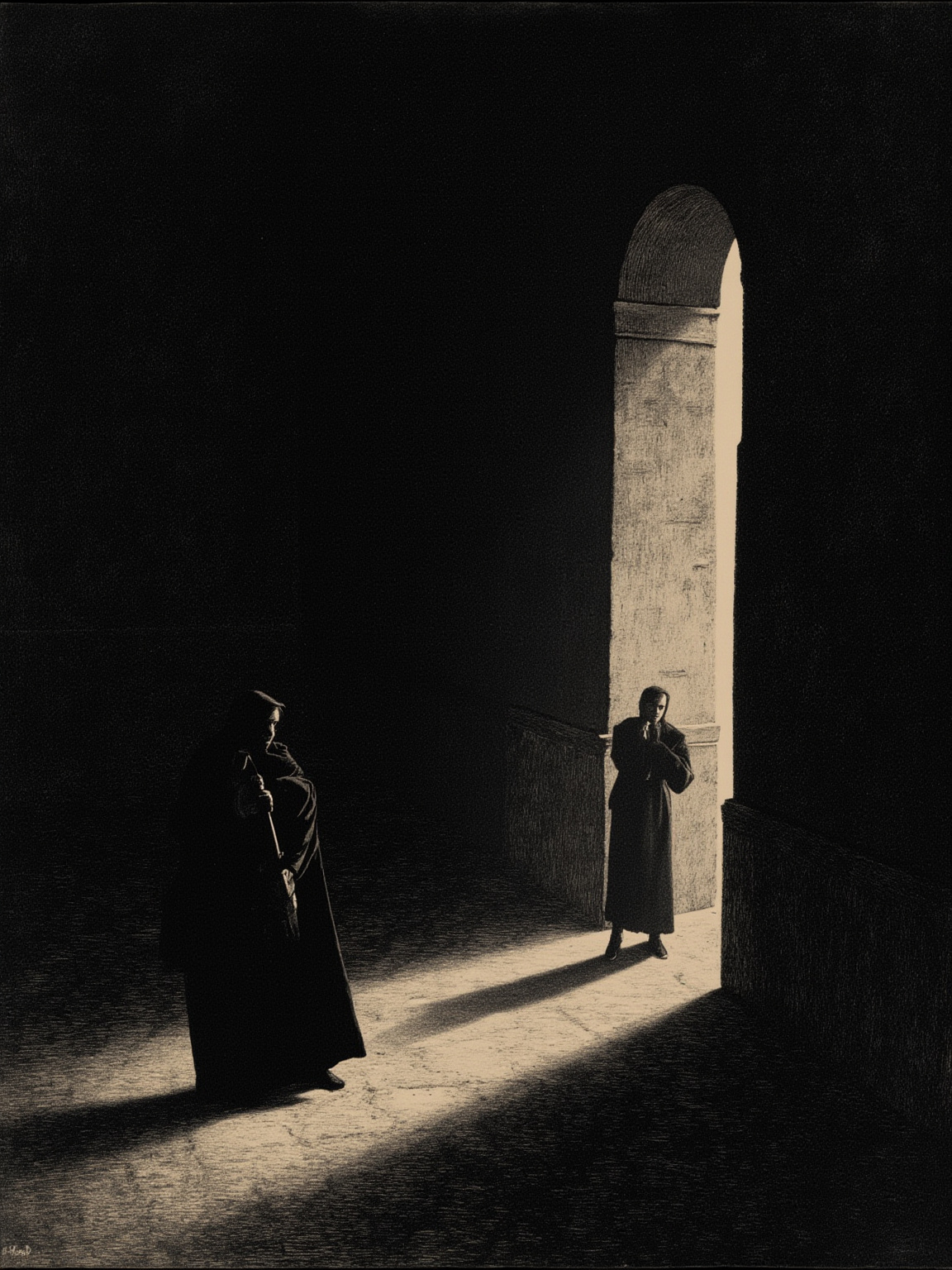
He saw before him a figure that seemed to have wandered from some far region of doubt and darkness.
他面前立着一个人影,仿佛从某片遥远的疑惑与幽暗之地漂泊而来。
金句 · 第二层手稿 · 修道院回廊
Reading on, the scene shifts to a tropical island. Another passage is wrapped inside Muncada's notes—this one is Melmoth himself speaking to Immarti: he found her on a tropical island surrounded by flowers and birds, clear as if the world had never touched her. He confesses the years he's bought, the desperate need to find a replacement, and begs her to take it. She looks at him and says no.
She refuses, and the cost falls on her. The hardest part of the story is how the refusal itself is written as a beam of light. It's not that she is saved—it's that this thing happened: a person entirely clean, faced with this deal, and chose not to sell. Maturin doesn't beautify her, doesn't demonize Melmoth. He just lets two forces stand in the island sunlight for an entire afternoon, facing each other quietly.
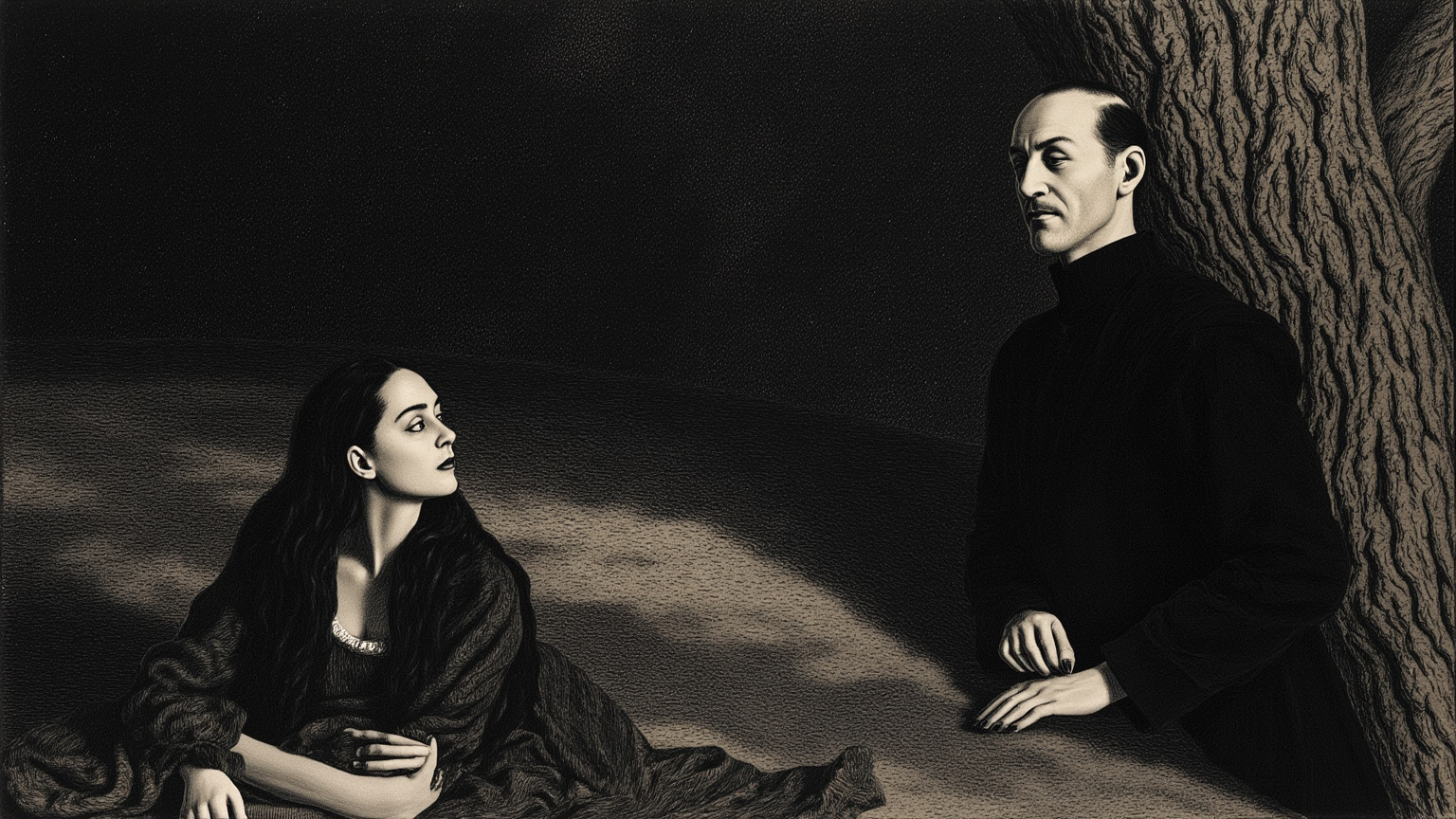
She was the creature of a purer and happier world; her eyes were like dews on flowers, her breath like the sighs of the rose.
她是更纯净、更欢喜的世界所生;她的眼眸是花上的露珠,她的呼吸是玫瑰的轻叹。
金句 · 第三层手稿 · 热带海岛
The story flips back to the frame. John reads page by page back toward the beginning, and only then sees the full picture: Stanton, Muncada, Immarti—all the ones who were found, all refused. Melmoth thought finding one person would free him, but the chain goes one refusal after another. This is the novel's coldest stroke: the deal itself becomes the cage that holds him. Everyone thinks the terms are too harsh.
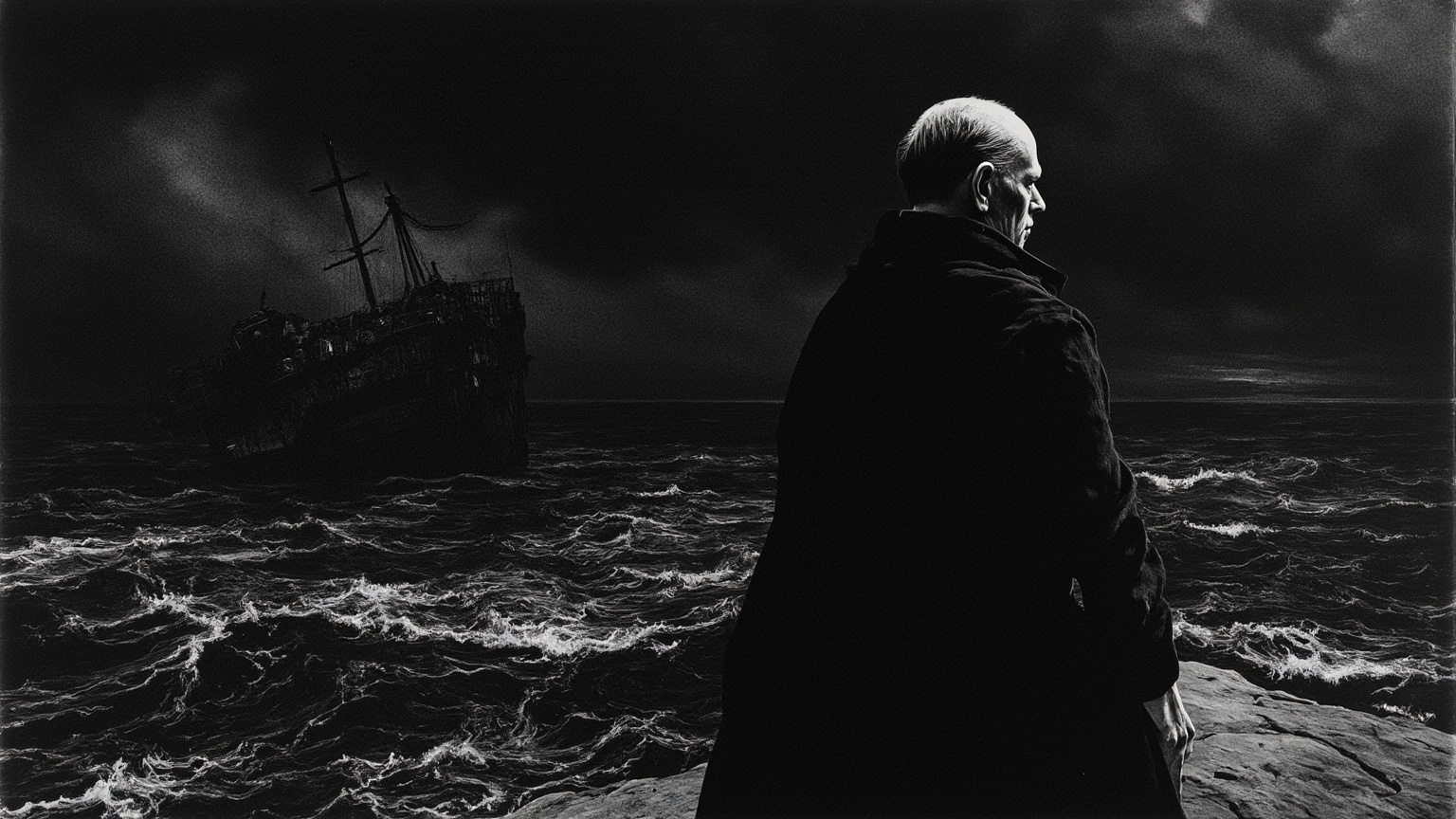
I have struggled with the Tempter through a long and lonely night, and I have triumphed — I have triumphed — not as the conqueror triumphs, but as the vanquished may triumph.
我与诱惑者搏斗了漫长而孤独的一夜,我得胜了——得胜了——不是征服者的得胜,而是被征服者所能得到的得胜。
金句 · 第二层手稿 · 蒙卡达的拒绝
The storm at the end rages the hardest. Melmoth runs through the last days of his contract, finds no replacement, and the unseen force comes to collect. As for how he was taken—Maturin draws no devil, no concrete form. He just lets Melmoth disappear into the wind. John closes the manuscript in the attic, looks up, and the painting's eyes no longer follow him. Only then does he understand what that gaze had been.
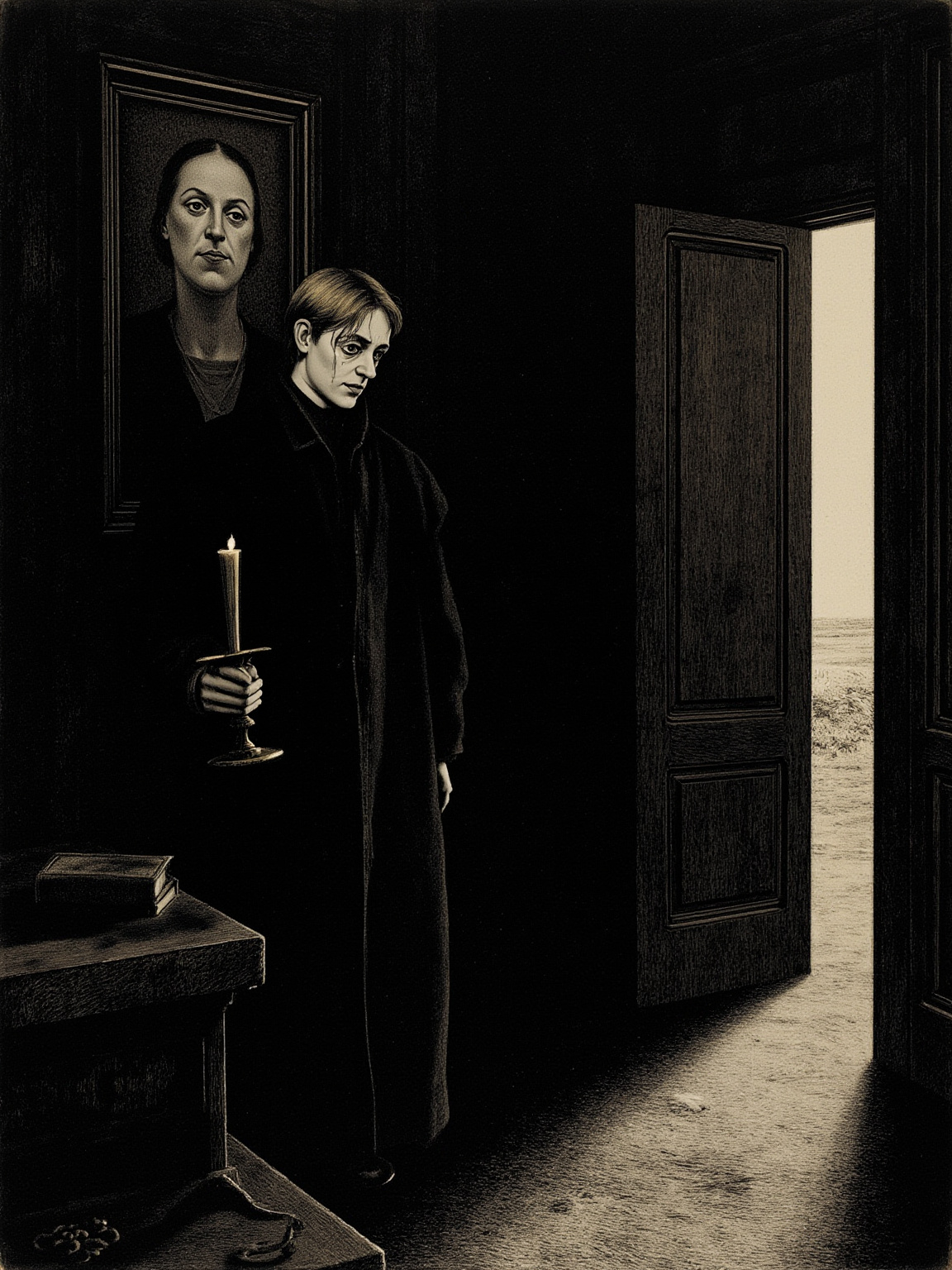
He has traversed the world in search of a successor to his inheritance of despair; and he has found none.
他走遍世界,要找一个继承他这份绝望的人,却一个也没有找到。
金句 · 收束 · 全景回望
What This Book Is Actually About
On the surface it's about an immortal and his curse; dig deeper and it's about the price of free will. Melmoth's deal isn't a battle of good and evil—it's about shoving the choice into someone else's hands. Every person he found could have taken it—taken it, and they'd be free; refused, and they'd pay the price themselves. But they all, in unison, chose not to take it. This isn't a moral victory. It's a very cold kind of human warmth: people will refuse to sell themselves to the devil, even when the cost of refusal is expensive.
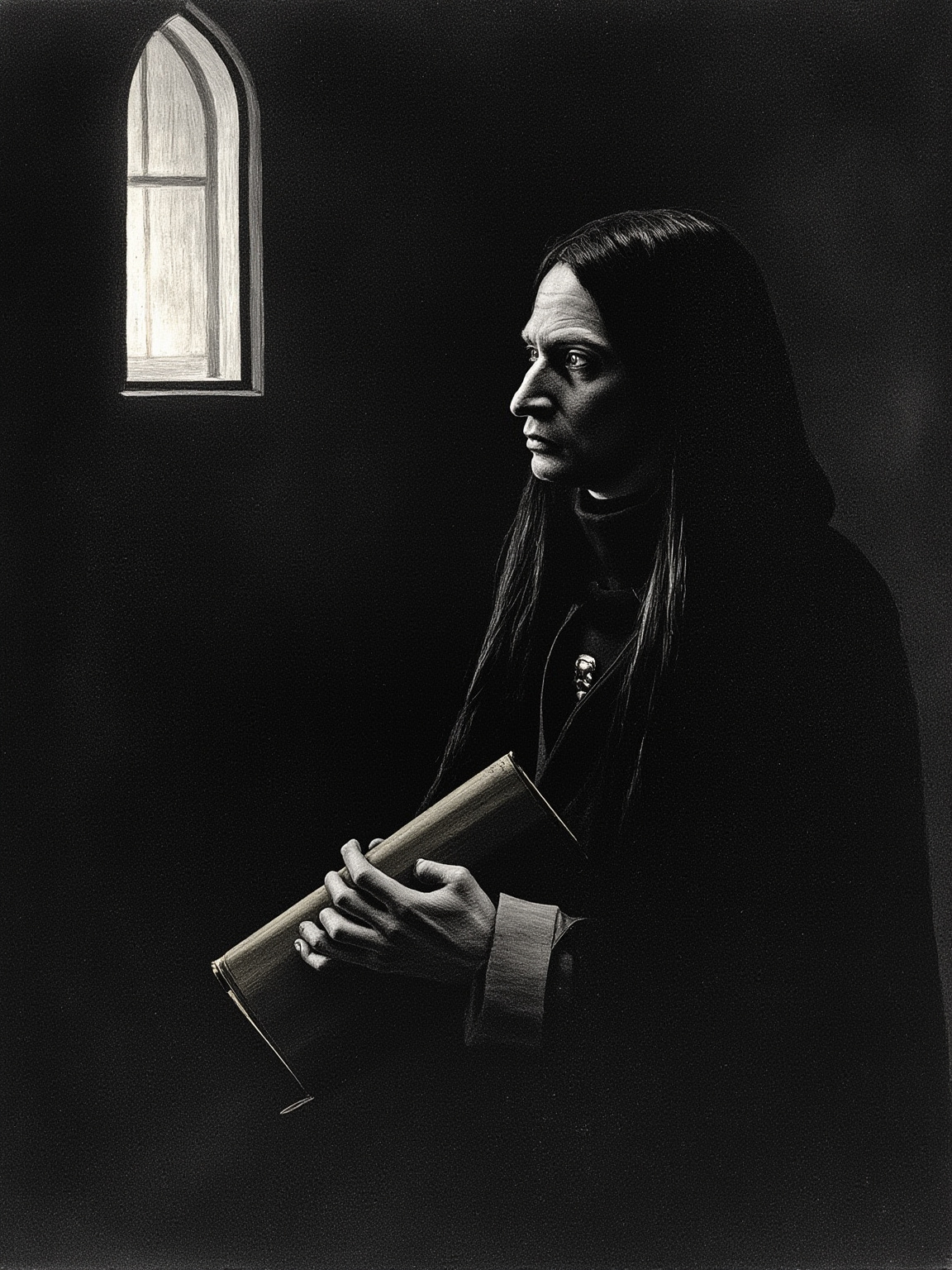
The being, who had so long baffled time and defied eternity, was at length reclaimed by both.
这个长久挫败时间、蔑视永恒的存在,终于被它们双双收回。
金句 · 结尾 · 阁楼合卷
Now for the structure. The book is written as a set of nesting dolls: the Irish attic contains the Englishman's notes, which contain the Spanish friar's manuscript, which contains Melmoth's own account from the island. The reader peels through like an onion, moving deeper and darker, until at the very center there's a sudden burst of tropical sunlight—and then they're pushed back to the frame to close. This technique was extraordinarily forward for 1820—it wants you to realize that "who is telling the story" is itself part of the horror. Maturin draws no devil, no grotesque visions. Everything is suggested through eyes, the light through a crack in a door, a candelabrum swaying. The fear rises from "the feeling of being watched."
Why This Book Is Still Worth Reading Today
First, it's a node in literary history. Later writers borrowed from it shamelessly: Wilde, after his release from prison, took the name Sebastian Melmoth, chosen specifically from this Melmoth; the nested narrative trick has been rehashed endlessly. Second, it pushed Gothic from "haunted castles" into "the psychological structure of a person" — take half a step further and you hit the modern novel. It proves you don't need to summon a ghost to frighten someone; a sliver of light under a door is enough.
I paused when I first read that passage about Imali — in a story about selling oneself for survival, the most moving part isn't the refusal itself, but the gentleness that accompanies it. She didn't curse him, didn't wail, just looked at this desperate wanderer in the sunlight and shook her head. That refusal sticks in the mind longer than any curse.
Fear at its strongest is never something chasing you — it's knowing something is watching you and not being able to find where it is.
Knowing the Plot, So Why Read the Text
Because when you peel this onion down to its last layer, the prose itself carries body heat. When Maturin writes about the island, you smell flowers, hear birds, feel the sun burning on your skin; when he writes about the monastery, you feel the cold of the stone floor rising through your shoes. These are things commentary can't deliver — it gives you only bones, the flesh you have to touch yourself. Then there's that feeling of being watched: in the attic, by candlelight, before the door, the whole book is whispering something unsayable from the corner of its eye. Knowing that Melmoth ends up with no one to take him off, that he's carried away in the storm — that's one thing; closing the manuscript in the attic yourself and looking up at that painting is another. I've drawn you the map; now you have to walk the ground.
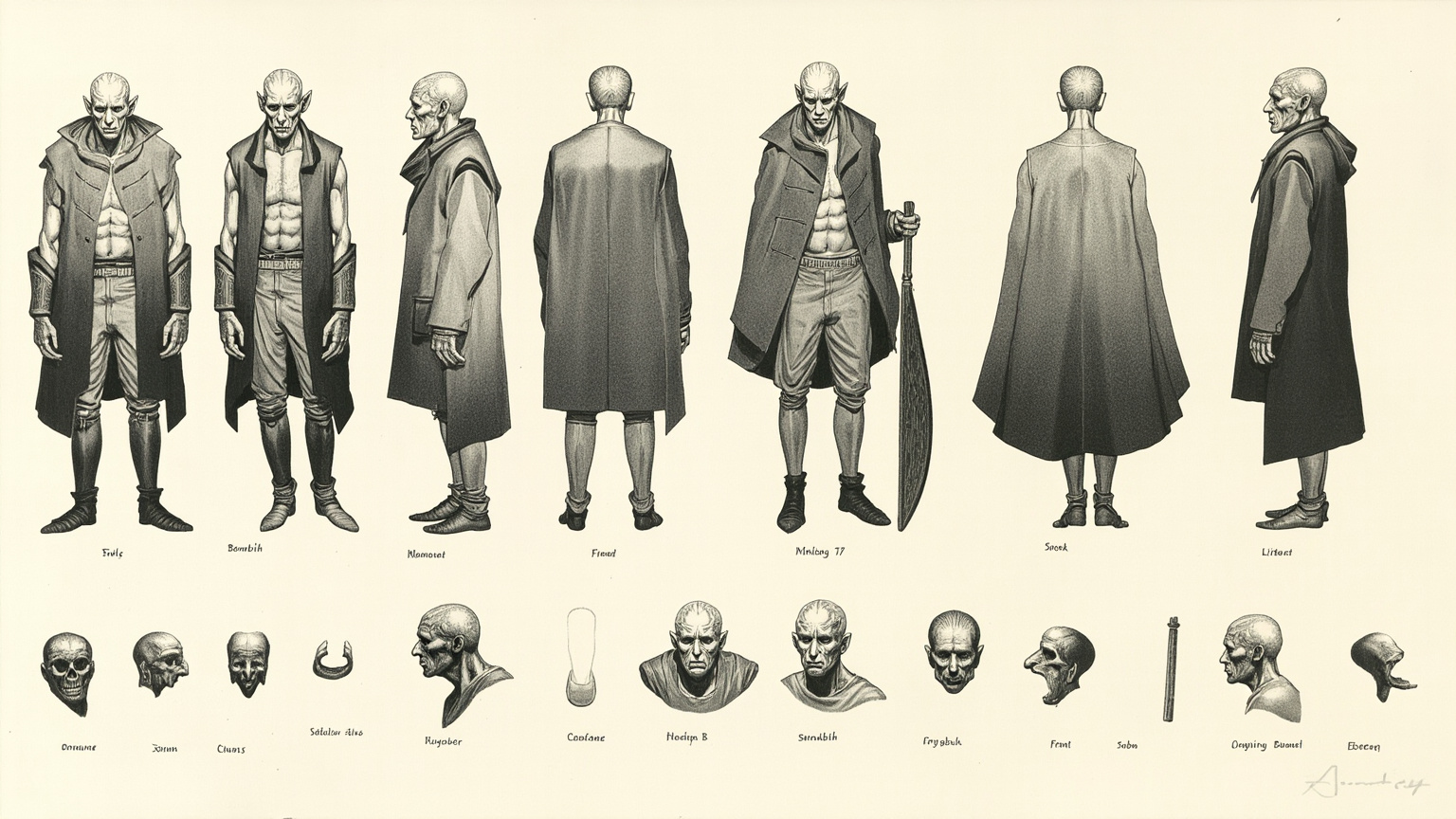
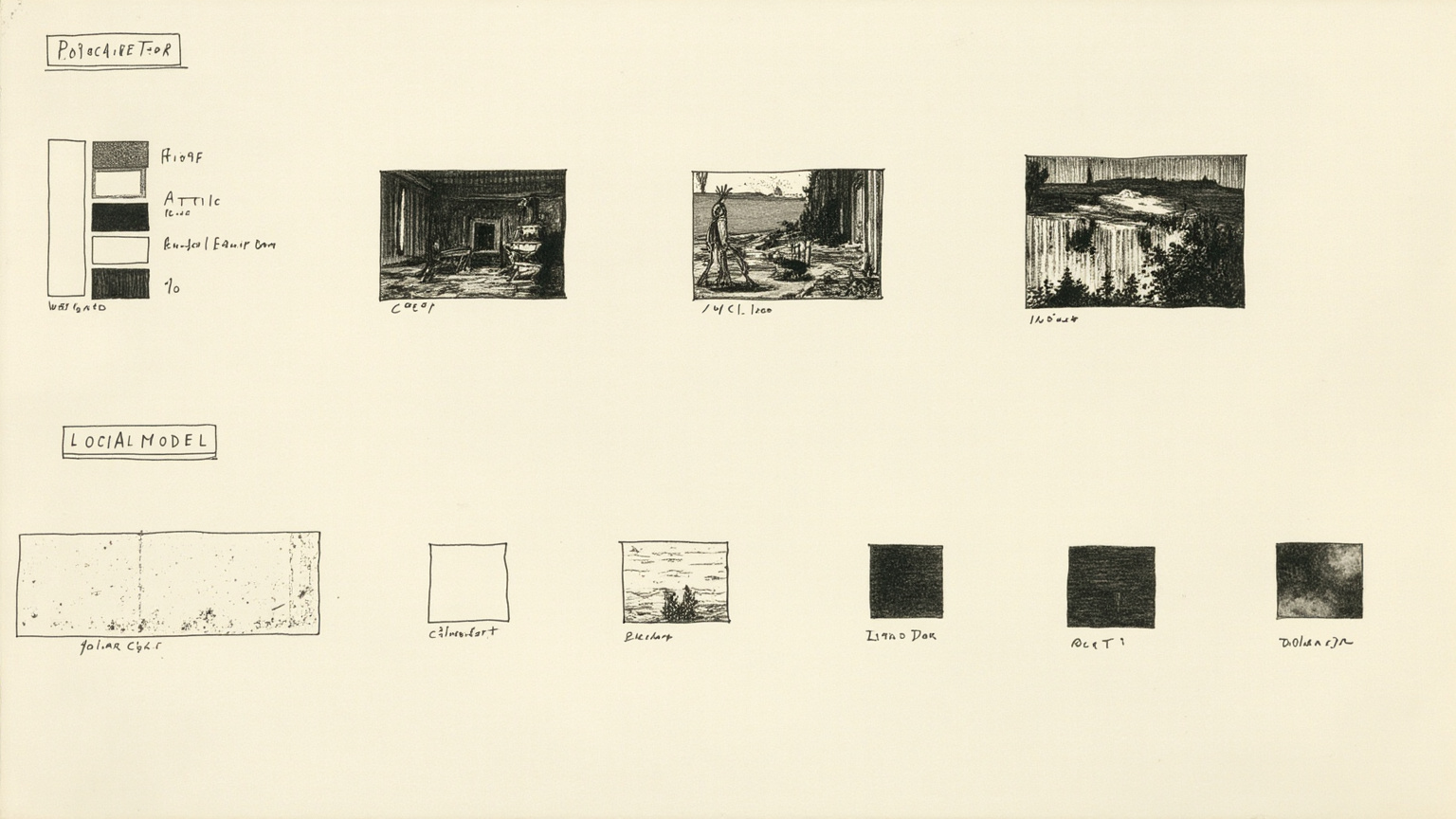
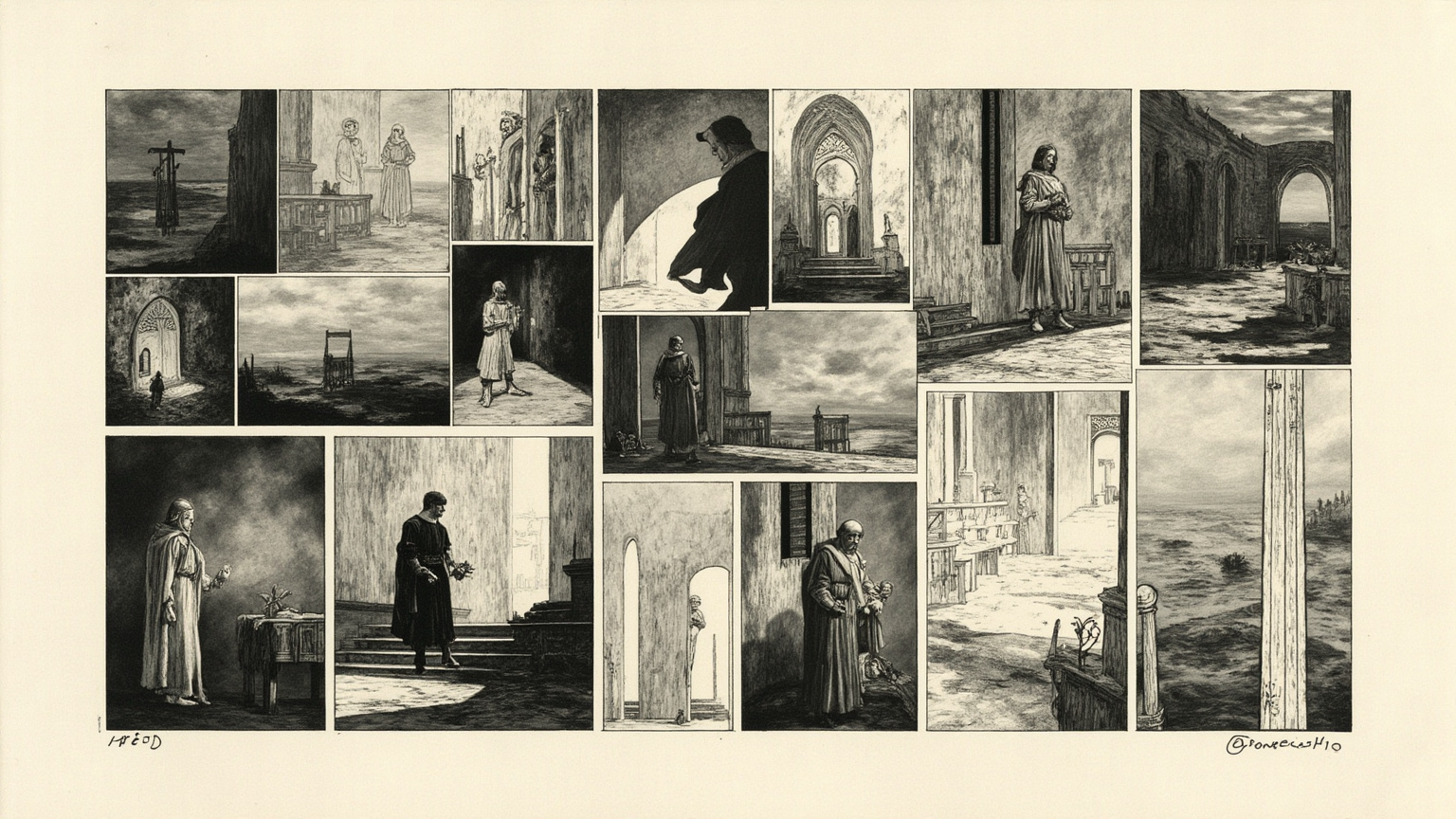
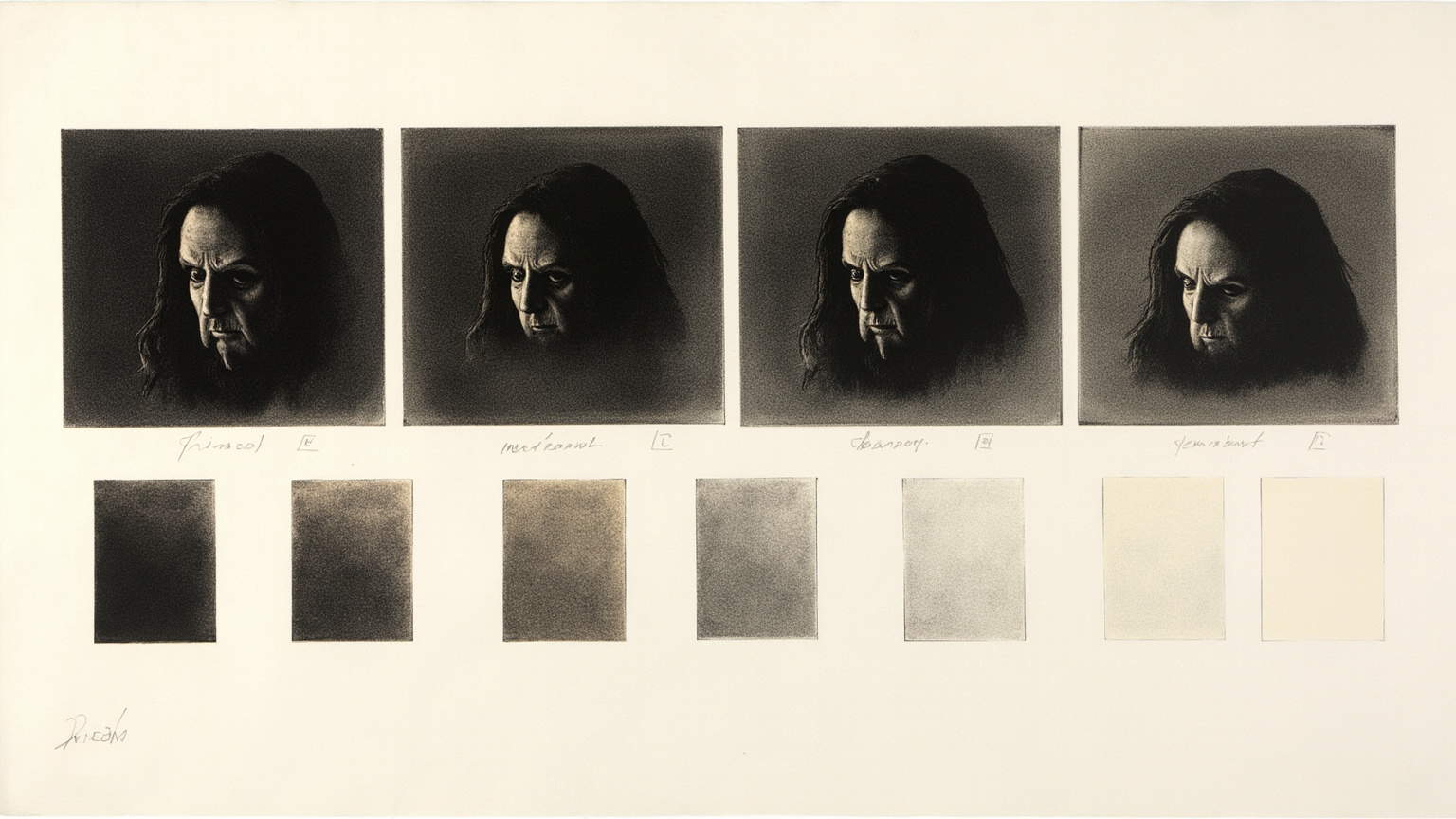
Art Direction4 plates
Before the guide was written, this book got a visual foundation — every illustration you just read grew out of it.